
Genre: Comedy
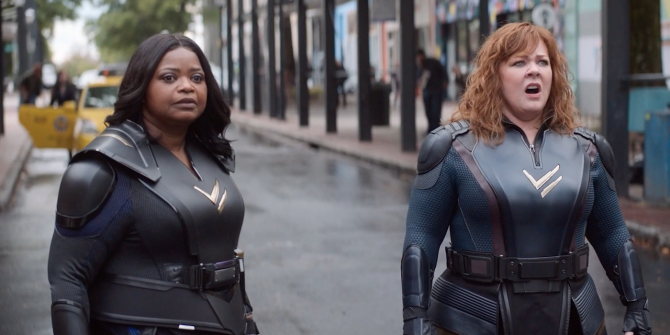
Premise: Two high school friends that had a falling out reunite and become superheroes as adults to take on the growing supervillain problem in the city.
About: Thunder Force is the latest collaboration between Melissa McCarthy and her husband, Ben Falcone. The two have made several movies together, including Superintelligence, Life of the Party, The Boss, and Tammy. Falcone does not contain any writing or directing credits that don’t include McCarthy except for The Looney Toons Show, which he wrote 12 episodes of. Possibly the biggest leap in the business without proving one’s self since Barbara Streisand’s infamous hairdresser, Jon Peters, made the leap to producing.
Writer: Ben Falcone
Details: 105 minutes
One of you made a good point the other day.
You said, “You should review Thunder Force because all of us have had some version of this idea at some point.”
Great observation. We’ve all had the ‘regular people become superheroes’ comedy concept before. We finally get to see what comes of that idea when you turn it into a movie.
Now you’re probably saying, “Really Carson? You’re going to review Thunder Force? What’s the point? All you’re going to do is bash it and marvel at how the untalented Ben Falcone gets to make stinker after stinker while much more talented writers are forced to wait on the sidelines.”
That’s true.
But, believe it or not, Thunder Force is a great movie to learn from. Not because it’s bad. That would be easy. No, Thunder Force is a great movie to learn from because it’s the most average average movie ever.
There’s an old saying in life. Play to win. Don’t play not to lose. Ben Falcone plays not to lose. And it’s going to teach all of us a lesson on how to be better comedy writers.
If you haven’t seen the film, it follows two girls who meet in high school and become fast friends. There’s Lydia Berman, a hard-partying scatterbrain who doesn’t take school seriously enough. And Emily Stanton, a geeky girl whose parents were killed by a supervillain. Because of this, Emily plans to dedicate her life to becoming a genius who can turn regular people into superheroes so they can beat the supervillains.
Oh yeah, regarding superheroes. Currently, the only kinds of superheroes there are in the world are villains, who the media have tabbed, ‘miscreants.’ This is why Emily must succeed at her job. If she doesn’t create superheroes, the miscreants will take over the planet.
Lydia and Emily had a falling out at the end of high school and, now that they’re adults, Lydia is finally ready to repair their relationship. She heads over to Emily’s gigantic tech-lab and, after reminiscing about old times, accidentally injects herself with Emily’s life’s work – a super-serum. Once the super-serum is in you, you can’t go back. Which means Lydia is permanently a superhero now. And Emily is forced to train her.
While Lydia trains (a process that basically involves getting stronger), Emily injects herself with her own superpower – invisibility. Once that takes hold, it’s off to fight the miscreants. The plot then boils down to a secret miscreant who’s running for mayor and Thunder Force (their new team name!) trying to take him and his miscreant team down before it happens. Oh, and just in case you were wondering, hi-jinx ensue!
Like I said at the beginning of this review, Ben Falcone is not bad at his job.
He’s average.
He gets away with it because he’s got a movie star wife. But there’s no getting around the fact that he’s mind-numbingly average.
What does that mean, average?
How can you make sure that you, the aspiring comedy writer who does not have a movie star spouse, are not average?
Simple. DON’T MAKE AVERAGE CHOICES.
Every decision you make in a screenplay is a choice. That line of dialogue you’re writing is a choice. The character you choose to play opposite your hero is a choice. The situations you put your characters in, they’re a choice. Bad writers make bad choices in these moments. Good writers make good choices. And average writers make average choices.
There is a formula for making sure you don’t make bad choices. It goes something like this.
Your talent level + Offsetting effort = good choice.
If your talent level is high, most of your initial choices will be good. If your talent level is low, you will have to work much much harder to create good choices. That means never going with your first or second choices, always digging deeper. And it means a lot more drafts than the talented writer. This is because more drafts means more opportunity to spot your subpar choices and change them.
But what does an average choice actually look like?
The most common average choice in comedy is a *dated joke.* In Thunder Force, because Emily doesn’t have a real superpower, Falcone gives her… a taser. Yes, that’s right. The taser joke, a joke that has literally been around for 12 years (remember it in The Hangover), is used prominently in Thunder Force as it is Emily’s main weapon. Ironically, the first character it’s used on in the movie is played by, you guessed it, Ben Falcone.
But the failure of this choice actually goes much deeper. You are writing a comedy about superheroes. WHY THE F&%$ ARE YOU GIVING ONE OF THEM A TASER?????? The operating principle of every script is mine your choices FROM YOUR CONCEPT. A taser could be in any movie. ANY MOVIE. Why are you using it in a superhero movie? This choice is unforgivable.
It also leads us to the movie’s main problem.
Emily.
Falcone came up with a solid dynamic between Lydia and Emily EMOTIONALLY. One of them was the big wild crazy one. The other was the reserved quite introverted one. That dynamic worked great when they were kids.
But it doesn’t work at all for the comedic purposes of the film.
Instead, the comedic dynamic is one-sided. It’s Melissa McCarthy doing her Melissa McCarthy thing and Octavia Spencer off to the side occasionally mumbling “Okay, so where do we go next?”
Whenever you write a comedy two-hander, you need to get three things right. You need to make the first character funny. You need to make the second character funny. And you need to make them FUNNY TOGETHER (see Rush Hour, The Other Guys, 21 Jump Street, The Heat). Falcone appeared to be so focused on getting the emotional dynamic right that he forgot to make Emily funny, which, in turn destroyed any chance of a funny dynamic between his leads.
There’s an early scene in a convenience store where Thunder Force is taking on some bad guys. Emily literally disappears and Lydia takes down all the bad guys herself. It’s such a one-woman-show that when Emily reappears, I’d forgotten she was still here. If you have an entire set piece in your comedy where your co-star doesn’t have a single joke, you’re doing it wrong.

I know exactly how Falcone stumbled upon this mistake.
He fell in love with this idea that Emily has always been “invisible” in life. Therefore, it would be the PERFECT SUPERPOWER TO GIVE HER! Right? Cause theme? Invisibility for the invisible girl! YES!!!! – I got news for you, sweetie. If you’re making choices in critical parts of your comedy that favor theme over laughs, you lose. I know some people are going to push back on that. They’re wrong. If we’re not laughing, YOUR COMEDY IS A FAILURE. Appeasing USC film professors doesn’t make up for a theater full of people not laughing.
Emily is a disaster of a choice. And since she’s in 85% of the movie, that means your movie isn’t funny. You can recover from an unfunny side character. You can’t recover from an unfunny co-star. And these are the choices average writers make.
The best way for average writers to play above their pay grade is to get tough feedback. You need people telling you, “These are average choices. You need to do better.” Melissa McCarthy doesn’t seem like the kind of person who’s going to tell her husband that Emily is the most boring character ever. I’m guessing he gets a lot of encouragement from her. Encouragement is THE WORST THING YOU CAN GIVE AN AVERAGE WRITER. They start living in dream land. They believe their stuff is better than it is. That they don’t have to try as hard when the opposite is true.
Recently, I’ve been getting a lot of feedback on the tennis script I’m producing and the feedback is HARSH. Stuff like, “THIS ENTIRE SUBPLOT WAS LAME.” I LOVE that. When you’re not one of the geniuses, you need people calling you out. It’s the only way you’re going to push beyond your skill level.
This is probably more analysis than Thunder Force deserves. Most people will watch this movie and forget it a day later. But I read a Thunder Force-like screenplay every couple of weeks – an average spec where the writer isn’t talented enough to write a half-baked execution of his idea. The bar is much higher than you think it is. On all scripts, but especially comedy. Unless, of course, your wife is the biggest comedy actress in the world.
[ ] What the hell did I just watch?
[x] wasn’t for me
[ ] worth the stream
[ ] impressive
[ ] genius
What I learned: Make structure work for you, not against you. If you’re using a screenplay structure that divides your script into sections (for example, eight 12-page sequences), don’t stubbornly keep to that if it’s not working. One of the early sequences in Thunder Force is a training sequence. That training sequence starts at minute 30 and ends at minute 42. It’s exactly 12 pages. The problem? Falcone only needed half of those pages. Within six minutes, we were already repeating beats. It was at this moment that I first started losing interest. So, look, don’t dogmatically stick to a section page count just because the structure says you have to. If it’s not working for you, rework it until you need all those pages or MOVE ON TO THE NEXT SEQUENCE.
And how can we steal their secrets for features?
The only thing that matters right now is that they’re finally building a real lightsaber. Not those fakey glorified glow-sticks but a real live lightsaber that rises up from the handle. I will be the first one to buy this when it comes out, even if it means dipping into my retirement fund. There are some things that are more important than long-term financial security. Five Guys French fries and lightsabers are near the top of the list.
In non-lightsaber related news, I was recently thinking about how rare it is to find a funny movie. Yet there are a ton of funny television shows. That got me wondering why television seems to be such a better format for comedy. I was hoping that, if I examined that paradox today, I might be able to discover a few things about why TV is better for comedy and steal those lessons for the feature world.
Let’s get into it!
The sit-com seems to be the master laugh-generating format. From The Jeffersons to Cheers to Seinfeld to Friends to Modern Family to South Park to Broad City to Curb Your Enthusiasm. These shows figured out a formula to keep you laughing for 30 straight minutes. And they do it week after week after week.
Meanwhile, how many great comedy features did we get last year? The most recent comedy studio release was The War With Grandpa. Anybody see that? I didn’t think so. 2020’s comedy behemoth was Like a Boss, a movie with a trailer so unfunny, it reportedly killed the editor’s ability to laugh. 2019’s big comedy was Goodboys, which is, arguably, the best studio comedy of the last three years. If that doesn’t tell you where we are in the feature comedy world, I don’t know what does.
Part of the problem is that all the things that make movies great don’t transfer well to comedies. With Hollywood movies, the sets are always bigger. The effects are always bigger. The locations are always bigger. The overall production design is stronger. This is what helped them create Titanic, The Avengers, Terminator 2, Fast and Furious, The Dark Knight Rises.
But none of those things matter in comedy. I suppose bigger locations and bigger sets are important for action-comedies like Spy. But there has never been a correlation between bigger budget and bigger laughs. In fact, I’d argue the opposite is true. The more expensive a gag, the dumber it usually is.
There’s a scene in Spy where Susan is on a private plane that gets hijacked and we get a five minute “comedic” sequence where they’re going in and out of zero gravity. There wasn’t a single laugh in the scene. And I’m guessing the sequence took 4-5 days to shoot and was one of the more logistically complicated scenes. I wouldn’t be surprised if the price for that scene came out to 4 million dollars. For zero laughs!
A good laugh usually costs nothing but the the actors you’re paying and the writer who wrote the joke.
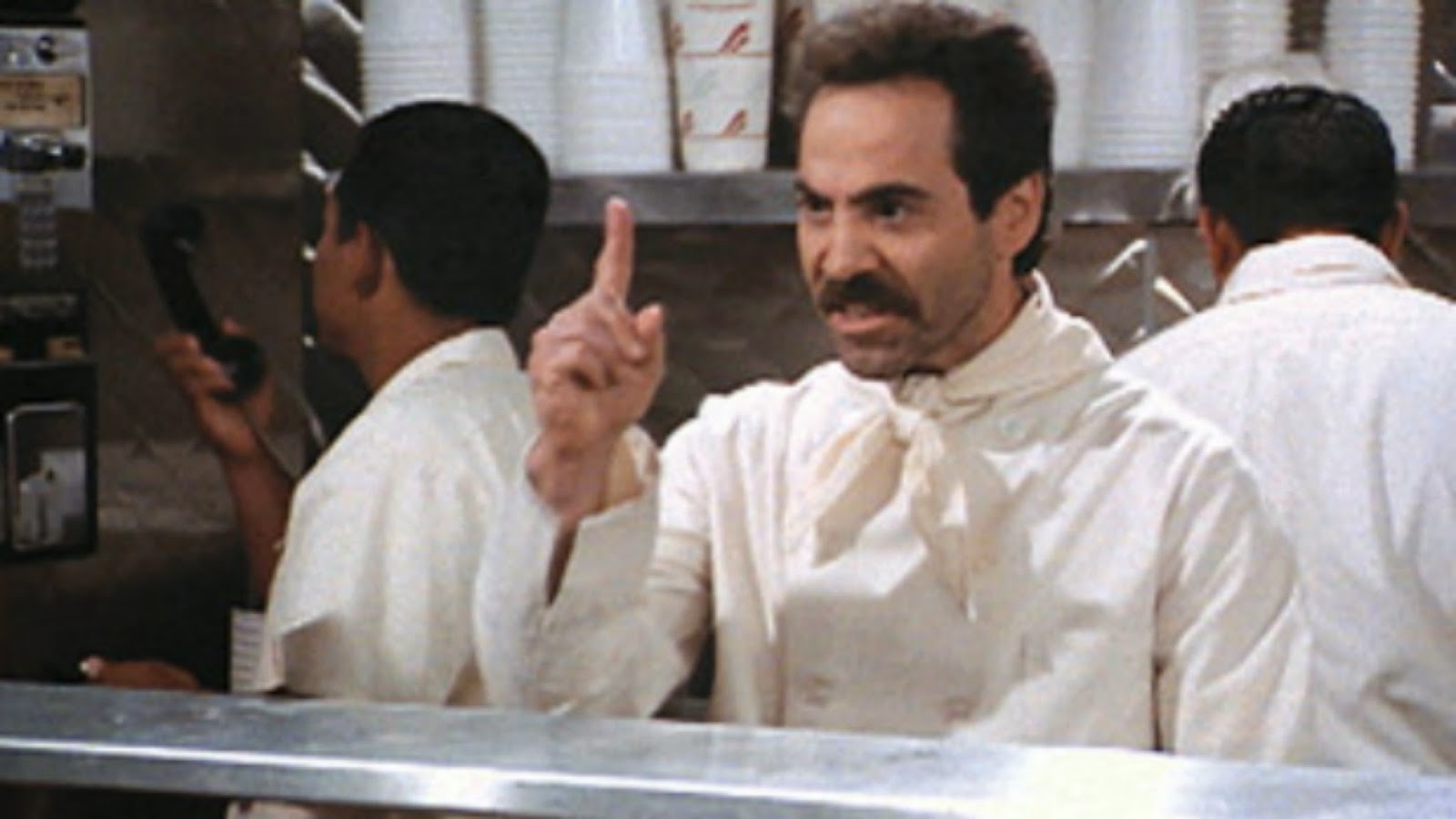
One big advantage TV has over movies is that, other than the pilot episode, TV doesn’t have to set up its characters. That is huge. Character set up is public enemy number 1 for feature writers. Before you can laugh at a character, you must understand who they are. You must first understand the contradiction of George Costanza (neurotic, dim-witted, yet oddly entitled) before you can appreciate his interaction with the soup nazi, a man he’s been told never to question, yet when he’s not given any bread with his soup, he can’t help himself. He must bring up the injustice.
But that George is not present in Seinfeld’s first five episodes. It takes a while for us to understand that that’s who George is. Unfortunately, movies don’t give anywhere near that much time to establish a character. You have two, maybe three scenes, to convey to an audience exactly who your character is. And that creates some limitations. Out goes complexity. Out goes subtlety. This forces you to create one-dimensional on-the-nose characters who don’t feel like real people.
That’s a key detail that a lot of people forget about comedy. Yes, almost every comedic character is an exaggeration. However, they still need to be based on people we feel like we know. In other words, they have to be based in reality. We all know someone like George Costanza who can’t help himself. He *must* die on that hill, even when all the data suggests it’s not a hill worth dying on.
So, character is the first hurdle feature comedy writers must leap. Spend as much time as possible coming up with really funny characters then figure out how you’re going to convey that particular brand of humor in a few short scenes at the beginning of your screenplay. I mean who doesn’t know who Annie in Briedesmaids is after her first scene?
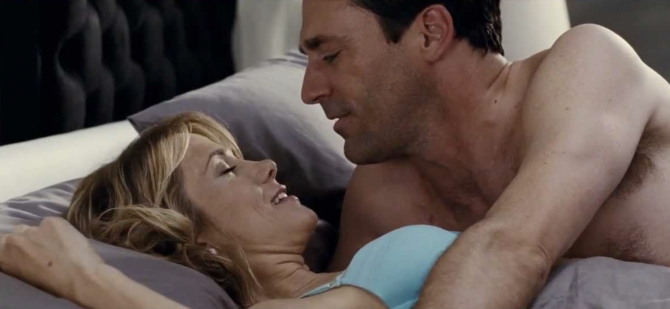
That’s the scene where Annie’s having sex with a douchebag character played by Jon Hamm and even though the sex is horrible, she’s desperate to be his girlfriend, sneaking into the bathroom before he wakes up the following morning to do her hair and make-up so that when he does wake up, she can pretend this is how she always looks. That desperation to find someone helps us understand Annie’s jealousy issues at her best friend getting married AND having to share maid-of-honor duties with the bride’s new best friend. Annie’s jealousy is the engine for almost her entire comedic performance and the setup of that character was a big reason why that worked.
The second big difference I noticed between comedy in TV and film is the way they go about their laughs. TV is mainly about creating a series of comedic situations. “Situation” is the “sit” in “sit-com.” “Situation-comedy.” So as a sit-com writer, you’re basically looking to find funny situations. Plot isn’t that important. There obviously needs to be some setup involved and that requires exposition and, possibly, an earlier scene or two. But if something requires too much setup, you don’t want to mess with it in television.
I’ve noticed that a lot of comedic TV situations are based on misunderstandings. One of my favorites occurs in Modern Family when Phil (the well-meaning but clueless dad) befriends a guy at the gym (played by Matthew Broderick) who he has no idea is gay. Phil invites the gym friend to his house to watch a basketball game (they share the same alma mater), having no idea that the friend is interpreting this as a hook-up opportunity. The *situation* plays out with Phil cluelessly rooting his basketball team on while high-fiving and hugging the gym friend, who keeps attempting to escalate the physical contact into something more (signals that Phil always misses).

Meanwhile, feature films, for some reason, shy away from situational comedy. Instead, they replace this with “set-piece” comedy. Set-pieces such as the famous dinner scene in Meet the Parents where Greg attempts to tell Jack that anything that has nipples can be milked. This both sort of makes sense to me and sort of doesn’t.
It would make sense that, because a movie is longer, you have the opportunity for longer scenes. But longer scenes require more setup to make them work. And setup is often unfunny. You try and make it funny, of course. But the underlying purpose of a setup scene ensures that it always feels like setup. And those scenes are always the most boring. One of the things that separates A-list comedy writers from everyone else is the ability to construct their setup scenes so that they’re individually funny scenes themselves and the audience doesn’t realize they’re being set up.
Think about that dinner scene in Meet The Parents – how much setup that required. You needed to establish that Greg had a ‘wussy’ job. This will be important later when you set up that Jack had a ‘manly’ job. You need to setup that Greg was just about to ask his wife to marry him before learning how important it is in their family to get the father’s approval first. You need to have Greg lose his suitcase on the flight. You need to set up her family and the wedding that’s going on that weekend. All of that stuff works its way into the dinner set-piece.
If you don’t do that or don’t know how to do that, you won’t have enough jokes to pay off. A joke punchline needs a joke setup and a set-piece is often the climax of a bunch of joke setups.
However, there’s something deeper going on here. I’m trying to imagine putting the Modern Family situation I mentioned above into a movie. Could you do that? I’m not sure you could. There’s something about a movie having a bigger overall theme and plot that would make a surface-level misunderstanding like that seem insignificant. And yet I don’t want to deprive comedy writers of such a strong comedic device. Obviously, something is wrong with the feature comedy format. We should be getting more than one funny studio movie every three years. Is the fact that it is so set-piece driven, and set-pieces are so much harder to pull off than situational comedy, the problem?
I need more time to study this but something tells me we can blend both situational comedy and set-piece comedy into a hybrid ‘situational set piece’ scenario that offers the best of both worlds. I’m sure some of you will point out movie scenes that do just this so I’m all ears. I’m ready to learn.
For now, though, those are the two lessons I want you to take away from today’s article. You need to put an insane amount of focus on figuring out your comedic characters and then even more focus on introducing them in a way where the audience immediately understands them AND what’s funny about them. Some sit-coms benefit from the fact that they’ve had two seasons to fully discover a comedic character. You don’t have that luxury so you need make up for it by nailing the introductory scenes.
The second lesson is that situational comedy is easier to pull off than set-piece comedy. And situational comedy is used so frequently in television shows that when a situation doesn’t work, you immediately have a shot with another one. Meanwhile, there’s so much time between set-pieces in movies that if even one of them doesn’t land, it could be the difference between a good and a bad comedy. Because who wants to wait 25 minutes for the next big laugh? For this reason, you must nail all the setup for your upcoming set piece so that you have a lot of jokes to pay off. And if a set piece isn’t working, you need to get rid of it and find another one. You don’t have the flexibility, like sit-coms do, to fail. Your set pieces all have to be the best you’re capable of.
I hope this helps!
I’m thinking of reviewing Stone Thunder or whatever that dreadful new Melissa McCarthy Ben Falcone superhero comedy on Netflix is called this Monday. I wouldn’t normally bother but it is a comedy and it’s obviously terrible so maybe we can learn something from it? Vote in the comments below!

Sorry for the late post. It’s a travel day so I didn’t have time to read and review a script. But I did want to share with you a comedy I recently watched that’s quite good. It’s free on Amazon Prime and it’s called Brittany Runs A Marathon.
I was researching the movie for something that had nothing to do with comedy but came away from it with a valuable comedy lesson.
When it comes to comedies, 99.9% of the time, you want your hero to be likable. Comedies are not thrillers. They’re not dramas. Their mission is to make people laugh. It’s hard to do that if we don’t like your hero.
I thought Brittany Runs a Marathon was great. But I didn’t like the main character. She complained a lot. She felt sorry for herself all the time. She was a downer. So why did I still root for her?
Well, Brittany Runs a Marathon reminded me that, even though it should never be your first choice, you can still make us root for your unlikable comedic hero as long as you make them *sympathetic.*
You’ve heard about sympathy and its affect on audiences before. But usually in regard to other genres. In comedy, a lack of likability is tougher to do. Which is why you need to consider whether it’s worth the risk.
The way they made Brittany sympathetic is by leaning into a universal insecurity – Brittany hates the way she looks. She hates that she’s overweight. They drive this home by showing Brittany out drinking one night and some douchebag comes up to her and says he wants to have sex in the bathroom. She doesn’t even know this guy so she’s disgusted.
Later in the evening, Brittany catches herself in one of club’s mirrors and, from her look, we can tell she’s disgusted by what she sees. A few minutes later, she runs into the same guy by the bathroom, and he gives her a, “Are we going in?” look. Brittany follows him in to get just the tiniest amount of validation, anything to push away the image she just saw of herself in the mirror.
From that moment on, we’re sympathetic towards Brittany’s plight. We want to see her succeed.
Again, when it comes to comedy, the best thing to do with your hero is to make them likable. But, if that type of character doesn’t fit the story you’re telling, you can still ensure that the reader will root for them if you make them sympathetic.
Today we review a big spec sale pitched as Knives Out in the White House!
Genre: Thriller/Mystery
Premise: The president is murdered during a private dinner, and Secret Service agent Mia Pine has until morning to discover which guest is the killer before a peace agreement fails and leads to war.
About: Pitched as “Knives Out set in the White House,” this one sold for big money to Paramount last year. Jonathan Stokes broke onto the scene with a hot script in 2011 called “El Gringo,” which would go on to get made. Since then, he’s had a ton of scripts in development and I’m sure he’s been working steadily on assignments. This was a spec script that went for high six-figures against seven-figures. It also got onto last year’s Black List with 9 votes.
Writer: Jonathan W. Stokes
Details: 114 pages

The Black List?
More like The Black Hole List.
The list where quality goes to die.
Where are all the good scripts? It’s gotten to the point where every time I open a Black List script, I expect it to be bad. There have always been bad scripts on the Black List but it used to be that the good ones outnumbered them. I don’t think that’s the case anymore.
We had a debate on here a couple of years ago where we discussed if there were any amateur scripts – IN THE ENTIRE WORLD – that were good enough to be on the Black List. And one writer was actually saying, no, there wasn’t. Which is ridiculous of course. But I think even he would now concede that the bottom half of the Black List is basically a randomized group of scripts that ended up being in the right place at the right time.
Or is it?
I am hoping that with today’s high concept premise and already sold status, we’re getting a different level of writing. Join hands and pray with me for Murder in the White House!
30-something secret service agent Mia Pine is having sex with someone in an office in the White House when she hears a scream. She quickly gets dressed, runs to the Oval Office, and sees the first lady, Gail Wood, hugging her dead husband, who’s been stabbed in the neck with a knife.
That night, the president was having an exclusive dinner with six people. They included Vice President tough guy James Steele. Speaker of the House, Terra Brookes. Russian Ambassador Pyotr Kamenev. World renowned Israeli cellist, Adara Lehava. The president’s wife. And someone I’m forgetting.
After taking pictures of the crime scene, Mia brings everybody into the War Room and explains that they’re going to wait until tomorrow morning to announce the president’s death. But right now, they’re going to figure out which of them is the killer. Because the president was killed with a rare steak knife that there are only six of, and each of the guests had one of those knives during dinner.
The early assumption is that it’s the Russian ambassador, of course. Especially since the Russians moved into Syria less than an hour ago. Everyone assumes the two things are related. But the person who has the most to gain from the president’s death is obviously the VP, an intense war-hungry man. If he kills the president, he becomes the president!
You would think the wife wouldn’t have killed her beau. But Mia happens to know that the husband has cheated on her several times. Could this have been a revenge murder? Especially since this hot Israeli cellist isn’t exactly White House dinner quality. Could she and the president have been having an affair?
Meanwhile, Mia has to hide the fact that the reason she wasn’t around when this happened was because she was bumping uglies with White House Chief of Staff, Holland Atkinson. Should that get out, all her credibility would be shot. So Mia must hope nobody solves her mystery while attempting to figure out who murdered the president. And she’s only got six hours to do it!
So, did Murder in the White House break the streak?
While the script was a step above a lot of the amateur-ish writing of other scripts in this vote-range, it still didn’t crack the ‘worth-the-read’ threshold for me.
I like the idea of an Agatha Christie murder mystery in the White House.
And there’s no doubt the contained setup of this high-stakes situation is fun.
But something was missing.
The script made a critical mistake early on, in my opinion, by starting Mia off having sex with some guy. This created a slew of problems. For one, it’s not the greatest way to introduce a character that you want us to root for. Someone who can’t control their sexual urges to the point where they have to sneak off with their bang buddy in the white house while they’re on duty? Errrr….
This issue continued into Mia’s interactions with Holland (the man she slept with). During Mia’s individual interrogations of everyone, Holland comes in and they start making out and joking around. It undermined her entire character. You’re supposed to be leading one of the ten most important murder investigations in the history of this country and you’re still horny? What’s wrong with you?
But the biggest of all the issues is the fact that we learn Mia WAS SPECIFICALLY BROUGHT HERE TONIGHT BECAUSE THE PRESIDENT THOUGHT HE’D BE MURDERED. And STILL you’re doing the horizontal happy dance with some guy?? You couldn’t keep it in your pants on the one night you’re being asked to guard the president’s life?
No matter how many good moments occurred in the screenplay, that problem was always in the back of my head.
But there are some lessons to learn from this script.
One thing I noticed was that the script was stumbling for a good 20 pages early on as the characters rushed in and out of different rooms. It’s a mad scramble that, while dictated by the crazy circumstances, felt wild and sloppy. I was losing interest quickly.
Then Stokes added an interrogation sequence. For about 10 pages, Mia interviews, one-at-a-time, all the major suspects. I’m not going to say the sequence was amazing. But, for the first time in the script, we had structure. And this reminded me just how powerful structure is as a storytelling mechanism.
By the way, when I say “structure,” I’m not talking about the three acts or the 8 sequence method. I’m talking about anything you can add to your story that gives it boundaries – a setup that the audience understands and can participate in.
For example, if you were writing a movie about a company, you could write a bunch of scenes where we’re bouncing all over the office seeing different people and different situations. But if you did that for too long, it would start to feel unfocused. And when a script becomes unfocused, it’s only a matter of time before the reader loses focus.
However, if you bring 10 of those office members into a boardroom for an important meeting that determines the future of the company, now you have something structured. We’re all inside a space. We all have a clear objective. There’s form to this setup that isn’t there when we’re randomly jumping around to a bunch of people.
And Murder in the White House has a lot more jumping around than it does structure. Which is why my mind was wandering half the time.
So always be conscious of that. Look for opportunities to add structure to your story, especially if you’re writing something big and unwieldy with lots of characters. The Godfather is something that could’ve become big and unwieldy. But it knew how to structure scenarios to keep us focused. Like the wedding. Like the assassination in the restaurant. Like the attempt to kill the dad at the hospital. All of those moments were meticulously structured.
I liked this idea. And it’s a smart pitch on the heels of Knives Out’s success. But the execution didn’t do it for me.
[ ] What the hell did I just read?
[x] wasn’t for me
[ ] worth the read
[ ] impressive
[ ] genius
What I learned: The Emotional Reality Of The Situation – Mia has been waiting for her CSI technician, Nancy, to get to the White House all night. When she finally does, the first thing Nancy says is, “I love what you’ve done with the place.” “Nancy, thank god. Tell me good news,” Mia replies. “The Cavaliers won tonight,” Nancy says. Now you tell me something. Does this sound like the exchange two people would have less than two hours after the president was murdered? Of course not. And yet, I’ve made this mistake myself. We rewrite and re-read a script so many times that we become numb to it and forget what the current emotional situation would really be. We end up dropping knock-knock jokes twenty minutes after a school shooting. Be aware of the emotional reality of the situation always and write dialogue accordingly.
Week 0 (concept)
Week 1 (outline)
Week 2 (first act)
Week 3 (first half of second act)
I’m sure some of you were hoping I would review Godzilla vs. Kong today. If you were hoping for that, I apologize. And then again, I don’t apologize. But I do apologize for making you think I would apologize. Cause I would never apologize for not watching that movie. I know we’re all starved for big-budget Hollywood entertainment but come on!
The second that little girl – King Kong’s Keeper – appeared on screen, I let out a big, “Uh oh.” First of all, nobody’s going to let a little girl near a 100 foot tall 20 ton gorilla, regardless of how much he likes her. But then the deaf thing came in and it was lights out for me.
Deaf characters are so hard to make work (they’ve become such a trope) that the only time you want to use them is if the concept encourages it. In a movie about noise, for example, A Quiet Place, a deaf character makes sense. But when you’re only giving your character an impairment to gain sympathy from the audience, that’s when it’s problematic.
Then again, these blockbusters are meant to please everyone. And I suppose that the average 10 year old doesn’t care if the screenwriter is adding an ariticial impairment to make someone likable. Still, I see tons of blockbusters that don’t stoop to this level. Marvel is good at keeping the lazy stuff out.
But none of that matters today, anyway, because we’ve got bigger problems to tackle. Yes, bigger than even giant lizards! We’re talking about the original King Kong, the second act. The act that separates the men from the boys. Casual screenwriters will often give up during the second act because it’s so hard. Real screenwriters understand that the challenge of the second act is a battle they have to get through in order to win the war.
What often happens while writing your second act is you realize you don’t have as much plot as you thought you did. As a result, you begin writing scenes you know aren’t good, hoping they’ll somehow lead you back to better scenes. But as reality sets in, each subsequent scene gets worse, not better. Eventually, you write so many bad scenes, you begin questioning the script as a whole. And in the most frustrating of scenarios, you give up.
This issue is compounded when you write a comedy because in addition to the plot falling apart, you aren’t laughing as much. And, in a desperate attempt to save the script, you try harder and harder to “write funny.” But it doesn’t work. All of it feels try-hard and, therefore, the opposite of funny.
Of course, there’s a reason why it doesn’t work. When you don’t have scenes that set up the goal, the stakes, the conflict, the scenes don’t have a point. They’re only being written in an attempt to make the reader laugh. And that’s the quickest way to ensure the reader doesn’t laugh.
But I have good news for you: This is a necessary part of the screenwriting process. Just like your characters struggle, you, the writer, will struggle. Especially in the second act. First draft second act is where a ton of writers quit. Don’t quit. There is a light at the end of the tunnel. You just have to keep driving. Don’t judge the writing. Keep getting pages down, no matter how agonizing it feels. We’ll fix the problematic sections in the rewrite.
Let’s recap where we are in the process. We’re basing our draft on a 100 page page-count. First week was pages 1-25. Second week was pages 26-50. That took us to the midpoint of the script. You should’ve written something at the midpoint that changed the course of the story in a way so that the second half of the movie feels different from the first half.
This week, we’ll be writing pages 51-75. This is known as the second half of the second act. And it’s a challenging section for many writers. However, the good news is, we know what we’re writing towards. The end of the second act (page 75) will be your character’s lowest point (the “All is Lost” moment). This is when your character will feel like giving up. They feel as if they’ve tried everything and nothing works.
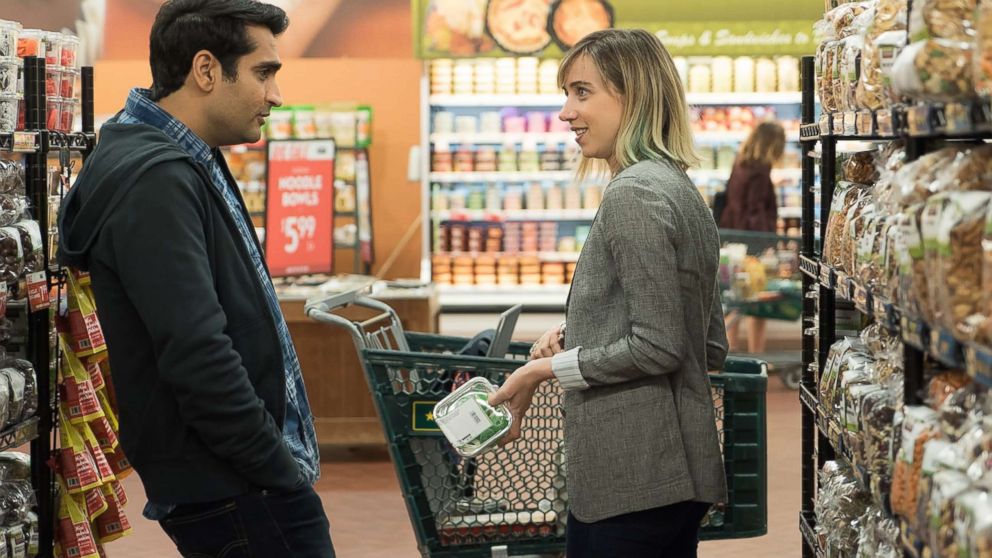
The end of the second act in The Big Sick is when the parents have to make a critical decision about whether to move Emily (who’s in a coma) to a different hospital. The infection inside her body has moved to her heart. This struggle is shown through Kumail having a breakdown during one of his stand-up sets, venting to the audience how helpless he feels. It is not just the lowest moment in the movie. It’s the lowest moment OF HIS LIFE. Which may be a good way to approach your own “lowest point.”
But that might be too long of a path to walk without guidance. So let’s continue what we’ve been doing, which is to break our second half of the second act into two sequences. Both of them will be [roughly] 12 and half pages. We know what we’re doing with that second sequence. We’re building towards the “All is Lost” moment. The hero thinks, “That’s it. There’s nothing left I can do.” So you can write your second sequence with that directive in mind.
What about the first sequence, though (pages 51-63.5)? What do we do there? That depends on a couple of factors. The first is whether your midpoint is a positive one or a negative one. The second is whether your story is objective-driven or life-driven. I’ll explain the difference between objective-driven and life-driven in a second because it’s the harder lesson to learn. But let’s start with ‘positive’ vs. ‘negative.’
A positive midpoint is going to set your character off on a positive path. In the movie, “Spy,” which I mentioned last week, the midpoint shift is a positive one. Susan befriends the villain, Rayna. So as we move into the second half of the movie, the two are working together in a positive way. It doesn’t mean they don’t still encounter obstacles. In fact, one of the very first things that happen to them is they’re attacked on Rayna’s private jet. But the two of them are working together positively.
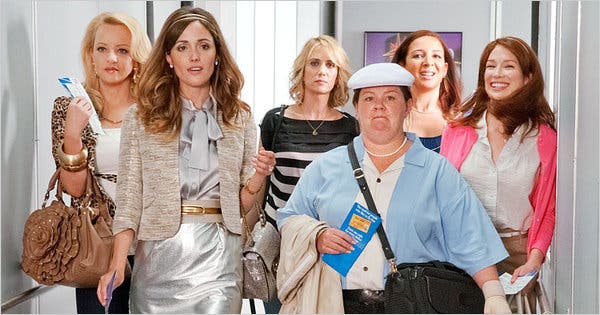
Meanwhile, Bridesmaids has a negative midpoint. This occurs when all the women try to fly to a bachelorette party and Annie (Kristin Wiig) has a meltdown that causes the plane to divert. Afterwards, Lillian (the friend who’s getting married), tells Annie that it would be best if she stayed off the wedding planning team. She’s going to let her other friend, Helen, organize everything from now on.
Since this is a negative midpoint, it sets Annie off on a negative path. Her life starts to wander. She goes on a date with the policeman to find some focus, but she freaks out that it’s going too well and sabotages the relationship. Nothing in her life is going the way she wants it to. She eventually gets out of the funk after a pep-up talk from Megan.
Now, what does “objective-driven” mean. That means your hero has a tangible objective they’re trying to achieve. In Spy, Susan is trying to locate and take down the bad guys who have the nuclear bomb. Objective driven movies are always easier to write because no matter where you are in the movie, the main character is always trying to achieve the objective. So after the midpoint of Spy, Susan gets right back in there and attempts to find the bomb. Or find the people who can lead her to the bomb.
“Life-driven” movies are tougher because there isn’t some immediate ‘object’ that the main character has to obtain. This leaves your hero in a much less active place. And it’s always harder to push your plot forward with an inactive hero. That’s where Bridesmaids finds itself. Technically, Annie doesn’t “need” to do anything after she’s booted off the wedding crew other than go back to “life.”
How do you solve this quagmire? There’s no single way. But a lot of times, what life-driven movies will do, is they’ll detour into their subplots. That’s what Bridesmaids does. Annie calls up the policeman because she’s bummed out. They go on a date. They sleep together. He wants to make breakfast. She freaks out and leaves. So that’s probably what you’ll do as well. Hopefully, you’ll have set up some subplots throughout the first half of the story that you can tackle in this section.
Bridesmaids had more subplot options if it wanted them. One of the subplots is Annie’s failed cake business. They could’ve gone to that immediately after the plane incident if they wanted to (they do so later but they could’ve easily made that a bigger focus right away). I’m just trying to help you realize you’re not limited. You have multiple options. And, if you don’t have any subplots set up, maybe still write a subplot sequence for pages 51-63.5 with the intent of setting it up in your rewrite. There’s no screenwriting law that says you can only pay things off that you haven’t already set up in THIS DRAFT. If you’re thinking three-dimensionally, you can always set up payoffs in the next draft.
I know we got technical today and some of this is confusing. But if you’re ever stuck in this section, write down the two checkpoints you have to get to – page 63 and a half and page 75. Write down what happens on those pages and then write towards those moments. If you know, in The Big Sick, that you’re going to write that scene where Kumail breaks down during his stand-up routine on page 75, that’s easier to write towards that scene than if you’re writing towards a black hole.
So there you have it. At the end of this week, we’re going to be in our third act! Just 25 pages left until we finish our first draft. How awesome is that! Until then… KEEP WRITING.
