
Genre: Drama/Thriller
Premise: When a young widow’s son mysteriously disappears in Crater Lake National Park she will have one week to find him before the snowy season begins & buries any trace.
Why You Should Read: Much of my writing has always been complex, so I took this opportunity to write something simple, short, sweet and a quick read. I call it Flightplan in the woods. Mother loses son and will do everything to get him back, but has everything in her way. Singular park location with limited characters, a mysterious level of suspense and intrigue, mixed with the paranormal. As this is my first foray into something this simple, I’d love to hear any feedback the group has and take in any suggestions.
Writer: Treaty
Details: 97 pages

It’s official “Kids Disappearing Weekend!” That’s right. If you’re looking for some entertainment, you can check out the computer screen missing daughter thriller, “Searching,” at your nearby multiplex. Or you can stay home, spend a lot less money, and read Crater Lake!
Today’s screenplay is as simple a movie premise as you’ll get. Son goes missing. Mom must find him. I talk about the importance of simple premises all the time. But when is a movie idea too simple? That’s the factor I’ve always struggled with. Because often I’ll read a script with a simple concept and be bored out of my mind.
I think Crater Lake answered that question for me. A movie is too simple when it’s both simple AND predictable. If we’re 40 pages ahead of the story the whole time, we’re going to be bored. So the trick is, when writing these uber-simple premises, to keep throwing in unexpected plot beats, misdirects, surprises, mysteries – anything that keeps the reader curious.
Crater Lake introduces us to 30-something therapist widow Zoey Hayes. After finishing up a weird session with a patient who believes in parallel worlds, Zoey heads home and starts getting ready for a weekend adventure with her 7 year old autistic son, Sam.
The two are going to national park, Crater Lake, where Sam will get to do his favorite thing in the world, take pictures of birds. The two have a perfect system going, with Sam dictating the majority of the operations and scheduling.
Driving along the highway on the way to the park, Zoey spots something in her rearview mirror and screeches to a stop. We never see what she saw, only Zoey jumping out and chasing after whatever it was. She comes up empty handed, chalks it up to her imagination, and the two complete the drive.
After setting up camp, Sam begins bird-watching, and Zoey walks down to check out a nearby stream. Only a few minutes pass, but when Zoey returns, Sam is gone. Zoey freaks out, running around and asking other campers if they saw her son. Nobody has. Soon she finds a park ranger, and a full-on search party is formed to look for Sam.
Strangely, there isn’t a trace of him anywhere. And when staunch female cop, Sheriff Collins, shows up, she’s not much help. In fact, she’s not even convinced Zoey is telling the truth. Nobody at the park saw her come in with her son. And there’s not a shred of evidence that he was in the spot where she supposedly last saw him.
As a result, Zoey is forced to go out into the park and find her son herself. It’s there where she meets mysterious hermit, Aaron Stevens, who it turns out lost his little girl to the park many years ago. According to Aaron, there are mysterious forces working in this park, and that Sheriff Collins has been covering up disappearances for years. Zoey doesn’t care about any of that. She just wants to find her son. Will she?
I absolutely loved the first half of Crater Lake for the reason I listed above. It was simple, but it kept you guessing. There were these great little mysteries tossed in every 10 pages. One of my favorites was them finding Sam’s camera miles away from where he’d supposedly last been seen coupled with us learning that Zoey had been secretly drinking the whole trip. Might she have been responsible for her son’s disappearance and not known it?
However, little things would pop up here and there that gave the impression the writer hadn’t put 100% into his story. The script was written to make us think they were in some remote park with no one around. However, the second Sam went missing, there were all of a sudden a million campers to talk to. Whether they’re isolated or around people is an important detail to establish in a missing kid script. We shouldn’t be finding out there were all these people around after the fact.
Or one second Zoey has an asthma inhaler and the next second it’s gone. Not just gone but completely irrelevant. She never had a single moment from that point on where she struggled to breathe. So why bring up the inhaler in the first place?
Whenever I see stuff like this, I get worried. Especially in mysteries. Because mysteries are all about intricately plotting a story to have a shocking, but more importantly, satisfying, final reveal. So if the writer is flippant about the small stuff, they’re going to be flippant about the big stuff as well.
Sure enough, the ending didn’t live up to the hype. The story introduces this notion of the park being a supernatural place where people can transfer to parallel worlds. The rules for these parallel worlds were fuzzy at best. There was a vague implication that water was how the worlds connected. And… well, that was all we got. Not to mention we’re learning these rules with, like, ten pages to go.
Naturally, when it came time to explain where Sam was, the fuzziness took over, leading to an unsatisfying ending that was a big let down. And I say that because I was so invested in Sam’s survival. That alone is so hard to do – make a reader care about a fictional person who’s an accumulation of words. So when a writer accomplishes that, yet botches the ending, you’re so mad.
With that said, the script is worth developing. I would ask Treaty to consider a draft without the supernatural stuff. OR. Or you can have the hermit believe in the parallel worlds theory, and tease that as a possibility, but in the end it turns out it’s something he’s using to cope with what he knows, deep down, to be true – that his daughter is dead.
I think the better storyline is beefing up Sheriff Collins. She’s a villain with a huge upside. I saw her as a potential rival to Nurse Ratchet for best female villain of all time. If you could build a scenario by which she’s orchestrating all this to cover her ass, and has been doing so for years, that could be a really satisfying ending.
Oh, and you also HAVE to do more with the lost camera. Lost cameras with full rolls of a film in them are gold mines as far as creating mystery. There should be several weird pictures on there that don’t make sense and only lead to more confusion.
There’s SOMETHING to this script. No doubt about it. But right now it feels like a speed-draft where the writer hasn’t done his due diligence of exploring the full potential of the story.
Script link: Crater Lake
[ ] What the hell did I just read?
[x] wasn’t for me
[ ] worth the read
[ ] impressive
[ ] genius
What I learned: Act like you’re going to give the audience an answer, then make them wait for it. Treaty does a TREMENDOUS job of using this device. It was one of the main reasons I stayed so invested in the story. For example, Zoey informs a young ranger who’s helping her about the hermit, whose daughter also went missing mysteriously. So we watch the ranger look this up. And we see him find the story, and he’s about to read it, and we’re about to find out what really happened with this weird recluse and his daughter and right as we’re about to get our answer… we cut back to Zoey’s pursuit of her son. Noooo! Now we have to keep reading before we can find out the truth about the daughter’s disappearance.
TIP 1: Have at least one character in your script who experiences a major transformation.
TIP 2: Beware “I can do that too” writing, where you’re basically rewriting your favorite films.
TIP 3: Avoid “dirty” pages. These are pages with a lot of dashes, ellipses, bolded or italicized text. Keep things clean and easy to look at.
TIP 4: There should always be a sense of doubt that your main character will succeed. If there isn’t, why would we care?
TIP 5: For every solution you provide your character, make sure it leads to a new problem.
TIP 6: If a scene is boring, it’s usually because you haven’t injected any conflict into it.
TIP 7: If a scene has an adequate amount of conflict and is still boring, it’s usually because there’s nothing on the line (If you write a breakup scene where neither character cares whether they break up, we’re not going to care when they break up).
TIP 8: Unless voice over is organically infused into the story’s presentation (Fight Club), it’s almost always a lazy device.
TIP 9: If you haven’t combined at least two of your characters into a single character by your third draft, you’re not consolidating enough.
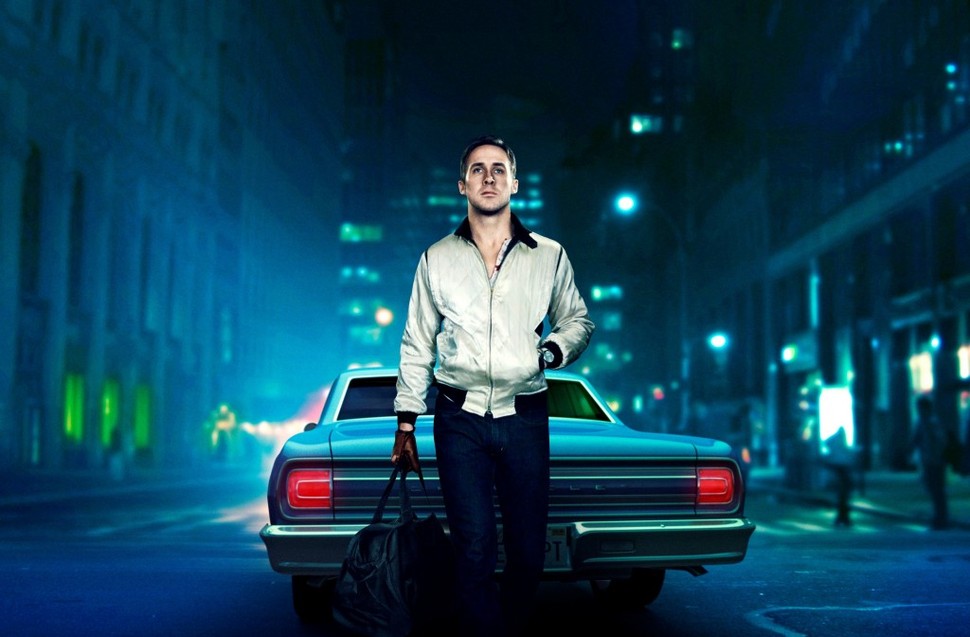
TIP 10: The less your hero speaks, the more active he needs to be (Drive, Mad Max). Nobody likes a quiet hero who doesn’t do anything (Mute).
TIP 11: The comic relief is not the guy trying to be funny. It’s the guy being himself who is inadvertently funny.
TIP 12: If you’re strong with concept and plot, gravitate towards features. If you’re strong with character, gravitate towards TV.
TIP 13: If a character is boring, start back at their introduction. You’ll almost always find that they have a flaccid boring intro. Give them a stronger intro and they instantly become a stronger character.
TIP 14: Due to the insane number of bad screenplays Hollywood has had to endure, everyone who reads your script will go into it assuming it’s bad. This is why it’s so important to yank them in right away with a great first scene.
TIP 15: A sudden twist (the hero’s boyfriend is the killer!) impacts the audience for five seconds. Dramatic irony (the audience knows the hero’s boyfriend is the killer but she does not) can impact the audience for half a screenplay.
TIP 16: At some point in the third act, your hero should face an impossibly hard choice.
TIP 17: If you wouldn’t watch what you’re writing, why would you expect anyone else to?
TIP 18: That’s you guys. Leave your best tip in the comments!
Genre: Horror
Premise: (from Blood List) When a pregnant social worker is called upon to investigate a murder involving a teenage mother, she uncovers an insidious plot with possible ties to the occult that has her questioning her sanity and the very nature of her unborn child.
About: Today’s screenplay landed on the 2017 Blood List, a list of the best horror, sci-fi, and thriller scripts of the year! This writing team made last year’s Blood List as well with “Summer of 84,” which went on to get produced.
Writers: Matthew Leslie & Stephen J. Smith
Details: 106 pages

I’m a sucker for pregnancies in horror films. It dates back to how well it was done in Rosemary’s Baby but I also think it’s a naturally horrifying plot element to inject into the genre. When it isn’t just your hero who’s in danger, but their unborn baby, it’s like getting double the meat on your Subway sandwich. Everything is twice as tasty.
Not only that, but a late-stage pregnancy works as an invisible ticking time bomb for your story. Whereas everyone else is forcing these artificial, “You have 72 hours to find your wife or I blow up Manhattan” time constraints, we know in any pregnancy horror flick that the movie is ending when that baby is born. So you don’t even have to think about the “Urgency” component of your GSU.
Needless to say, I’m excited for this one. Let’s check it out!
A bloodied 16 year-old Alexis Rose stumbles out of a field holding her newborn baby. She walks up to a highway, blankly stares forward, then HURLS her child into traffic.
Cut to social worker Lauren Madden, who’s 8 months pregnant. Lauren’s finally moving past the death of her husband, Ben, using the age-old coping mechanism of throwing herself into her work. And boy did that work get interesting. She’s been assigned to Alexis Rose’s case.
Lauren tries to find out why Alexis would do such a thing to her child, but Alexis doesn’t remember what happened other than hearing voices that said she had to kill her baby.
The case is so bizarre that Lauren starts sniffing around, only to find out that there have been two other recent cases of young women killing their newborns. All three women are tied to a Doctor Bellamy. So Lauren finds Bellamy and asks him what’s up. Bellamy has no idea why this is happening, but something about the guy screams “sketchy,” so Lauren puts a pin in him while she keeps looking around.
Eventually, Lauren finds that these women may have inadvertently been tied to the occult. And when she starts looking into that, she finds that more and more people are interested in her own unborn child. At one point, a random man corners Lauren in her car, says, “They’re wrong about you,” pulls out a gun to shoot Lauren, only to have a truck whip by and turn the man into fender meat.
But the real clincher is when her doctor tells her that due to the timing of her husband’s death, it would be impossible for him to have gotten Lauren pregnant. Since Lauren hasn’t slept with anyone else, how could she possibly be pregnant? As Lauren becomes more confused and more afraid, she risks repeating exactly what the rest of these women did – killing her newborn child the moment it’s born…
This was a solid script.
The decision to make the main character pregnant paid many dividends. I’ve read plenty of screenplays where the writer wouldn’t have thought of this. They would’ve made the main character a normal woman. Or even a man. By making her pregnant, our heroine becomes directly connected to the story.
Leslie and Smith also do a good job of BUILDING their story. You guys hear me talk about this a lot – the importance of “building.” Every ten pages needs to feel slightly bigger than the previous ten pages. You do this by upping the stakes, adding new storylines, throwing bigger obstacles at your characters, unveiling revelations. This script is a very good example of that. Unlike yesterday, there were no dead spots. Things were always escalating.
This is also a textbook case of how to pull a reader in immediately. There’s no genre where a teaser is more important than the horror genre. You really have to grab us with that opening scene, preferably with something we’ve never seen before. I’ve definitely never seen a young mother stumble out of a field with her newborn baby then hurl it onto the highway. If I was in any way blase about the read, that changed it.
But the big thing I want to talk about with today’s script is the notion of enriching your character’s existence. One of your goals as a screenwriter is to make your hero (and, really, your core group of characters) feel as realistic as possible. The more we see your hero as a real person, the more invested we’re going to be in their journey.
The best way to do this is by showing us meaningful parts of your hero’s life, usually through relationships. So, for example, here, Lauren’s mother is in hospice care. Lauren visits her a few times over the course of the story, usually to decompress from all the craziness that’s going on in her investigation. In addition to this, we meet Lauren’s sister, who has some issues with Lauren’s level of commitment to seeing her mom, causing conflict between the two.
Now you don’t NEED to include any of this in the screenplay. In fact, if you take this subplot out of the story, nothing changes. The plot is exactly the same and nothing needs to be moved around. However, what you do lose is a piece of your hero that makes them more human to the reader. Without this personal struggle, Lauren loses a dimension, and becomes closer to that dreaded “2-D” character readers hate.
The trick to getting this enrichment right is not to linger in these side stories. You want to get in and out of the scenes quickly so that they add depth to your character but don’t interfere with the pace.
And keep in mind, this changes from genre to genre. If you’re writing a drama, then these scenes will be longer, maybe even centerpieces of the story. But this is a horror film with a tight plot where the mother is an ancillary character. Hence, she’s there to enrich your hero, not take over the plot.
If I had a beef with the script, it’s that it was too predictable. I could’ve used more surprises. For example, once it’s established that all the girls who were pregnant hadn’t had sex with anyone, I was waiting for the obligatory scene where Lauren found out that Ben didn’t get her pregnant. And it came 60 pages later. I think this writing team would do better if they threw more unexpected moments into their screenplays (I felt the same thing about Summer of 84).
With that said, The Harrowing does have a nifty last second twist that I DID NOT see coming. If they could bring some of that surprise and shock earlier into the script, this would’ve gotten a higher score from me. As it stands, it’s still a solid horror entry.
[ ] What the hell did I just read?
[ ] wasn’t for me
[x] worth the read
[ ] impressive
[ ] genius
What I learned: CANCER AND CAR CRASHES – As someone who’s read a countless number of screenplays, I can tell you that 90% of backstory deaths (death of a spouse or death of parents) are written as cancer or car crashes. In The Harrowing, for example, Lauren’s husband, Ben, died in a car crash. I know why writers do this. Both options read as “tragic.” But if you want to stand out, work harder. Come up with something not as obvious. I just read a script where the main character’s mother died from complications from Huntington’s Disease. It was so specific that it made everything feel more believable. Keep that in mind the next time you’re killing off a spouse! :)
Genre: Period/War
Premise: In the 1st century, a woman defends the country of Briton against a Roman empire determined to conquer the world.
About: While I don’t like to designate anybody by who they’re dating, today’s script is unique in that it’s written as a female Braveheart, and the writer, Rosalind Ross, is dating Mel Gibson. I find that serendipitous. Don’t you? The script landed in the middle of the 2016 Black List with 11 votes. Since then, Ross has signed on to adapt “Hell From the Heavens,” a book about the greatest kamikaze attack in World War 2.
Writer: Rosalind Ross
Details: 107 pages

After seeing the trailer for the Netflix movie, The Outlaw King, I found myself in a festive mood. I looooooooove Braveheart. And this film is clearly taking its cues from that classic, positioning itself as a pseudo sequel. In a completely unrelated situation, I learned that Mel Gibson, star of Braveheart, has a girlfriend, Rosalind Ross, who is a super-fan of Braveheart, so much so that she wrote a female Braveheart! It’s like Braveheart everywhere you look. Braveheart over here, Braveheart over there.
I still consider that film to be a screenwriting masterpiece. It does everything I say not to do (namely tells a story with an endless number of characters and an unclear end point in a period setting where it’s easy for the viewer to become bored). Yet it still works. And that’s due to the fact that its main character is the most driven and motivated character in cinema history (Goal = obtain freedom for country, motivation = avenge wife’s murder). It goes to show that if you put a jetpack of a goal on the back of your hero, it can turn any narrative into Superman.
Which leads us to today’s script. I still think playing around in distant period settings is one of the bigger challenges in screenwriting. It was a slower world back then and modern audiences don’t do well with slow. But there are ways around that challenge. Let’s see if Ross discovered any of them.
It’s the first century AD and Rome keeps invading Briton. It gets to a point where Briton’s king, Prasutagus, offers Rome a yearly sum of money if they’ll leave Briton alone. Boudicca, Prasutagus’s wife, is none too pleased by her husband’s cowardly actions, to the point where she wonders if she should’ve married her childhood crush instead, the cool-as-a-cucumber Aedan.
When Prasutagus dies of an illness, Rome rips up their truce and steals all of Briton’s able-bodied men, leaving everyone else to fend for themselves. A furious Boudicca teaches herself to hunt and to fight, always with an eye on doing what everyone else is too afraid to do: fight back.
That day comes when the Romans murder Boudicca’s daughter, prompting Boudicca to unite the local tribes, slip into Rome and massacre hundreds of people. Nero, Rome’s emperor at the time, has Boudicca captured so that he can watch her die in a Colosseum battle. But Boudicca easily kills her adversary, a tiger, then gets some help escaping.
She heads back home where she teams up with Aedan and finalizes her army in preparation for attacking Rome. But Rome attacks first. In a devastatingly brutal battle, there are very few survivors. Is Boudicca one of them? Or will she go down in folklore as a martyr?
Ahhhhhh!
I reallly realllllllly really wanted to like this script.
At one point I even put on my Scriptshadow pom-poms and gave it a cheer.
Braveheart and Barbarian
Both start with “B”
Please both be good
So it earns a “worth the read”
And the script starts off well. I like how Boudicca’s father is killed by the Romans. That gives her instant motivation. I liked the love story with Aedan, how she was forced to marry a man she didn’t love. And I liked how the man she was forced to marry wasn’t a dastardly on-the-nose asshole, like we usually see in these scripts. He was just a normal guy who Boudicca didn’t love.
All that was good.
Where the script goes south is in its lack of momentum and frustrating pacing. It has a very start-stop nature to it, with a lot more stopping than starting. We’d attack the Romans and then sit around in the village for an endless number of scenes. And I wasn’t really sure what any of these scenes were for.
I’m fine with slower moments in screenplays. Not everything can be an epic battle set-piece. But then the slow scenes need to have dramatic value. Interesting stuff needs to be happening. And I struggled to find any of it interesting.
The closest we got was Nero’s relationship with his mother, Agrippina. The two had some weird sexual mommy-son stuff going on. And I liked how Nero began to shun his mother once he found a regular girlfriend.
But this movie wasn’t about Nero and Agrippina. It was about Boudicca!
And a lot of her scenes were boring. We’d sit in the village. She’d talk with her friends, with her daughters, with Aedan occasionally. And during these moments all script momentum would die.
One of the reasons Braveheart was so good was that he was always moving forward. William Wallace was always conquering the next city. And if he wasn’t conquering, he was scheming on how he would conquer. I can’t remember us ever hanging out in any village in Braveheart for more than one scene.
And I’m not saying every period piece has to do that. Not every story is going to be constructed so that the hero keeps moving from city to city. But if you don’t have a setup like that which keeps the story moving, you have to be aware of that structural weakness and figure out a way to overcome it. Because nobody likes dozens of scenes with people sitting around in a village chatting.
There needed to be more tension, more conflict, more outside pressure so that our characters were never comfortable. So that we – the reader – were never comfortable. And unfortunately, it was the opposite for me. Whenever we were back in Briton I could lay back and feed myself grapes because I knew that nothing bad was going to happen for a long time.
On top of this, I was never sure what the ultimate goal was. In Braveheart, the goal is clear as day: FREEDOM. It was mentioned two-dozen times. With Barbarian, I went back and forth wondering whether Boudicca was trying to conquer Rome or just be a pest so that Rome would stop bothering Briton. It was never clear.
Nor was the scope of the story. The way it’s described, Briton is made up of like 500 people, most of whom were women, children, and seniors. So the whole time I was thinking, “How are they realistically going to defeat Rome, the city of a million people with the mightiest military in the world?” There’s a disconnect there that wasn’t being explained.
This is why period scripts are so tricky. There’s a lot of knowledge required to know who’s who and what’s what and where we are in history and the scope and scale of all the cities involved. It’s either you exposition us to death or don’t explain these things, risking the reader being confused, which is what I was.
Since I never quite knew what Boudicca wanted and I never understood why the mightiest army on the planet couldn’t destroy a village of 500 people, I couldn’t get into this. Which is too bad. Because I really wanted to.
[ ] What the hell did I just read?
[x] wasn’t for me
[ ] worth the read
[ ] impressive
[ ] genius
What I learned: Never give your hero a free pass – ESPECIALLY!!! – late in the script. The later in the script you get, the harder things need to be for your hero. You need to throw the biggest obstacles at them, and your hero has to use everything at their disposal to overcome these obstacles. Late in Barbarian, after Boudicca is captured by the Romans, one of the Romans just… LETS HER GO FREE! She literally gets a free pass. Seeing your hero use their unique skills and intelligence to overcome obstacles is what makes us fall in love with them! Make them figure it out. Never give them a free pass.
Genre: Sci-Fi
Premise: (from IMDB) Set in the near-future, technology controls nearly all aspects of life. But when Grey, a self-identified technophobe, has his world turned upside down, his only hope for revenge is an experimental computer chip implant called Stem.
About: Writer-director Leigh Whannel had been working with the Blumhouse team for awhile, even directing one of their films, Insidious: Chapter 3. But what Whannel REALLY wanted to do was make his dream project, a sci-fi flick about a paraplegic who gains the power to move again via futuristic technology. The problem was that the budget for his movie was AT LEAST 30 million, probably more. The film, which was set in the future, had elaborate fight scenes, groundbreaking camera work, and self-driving car chases. But instead of going out and trying to fetch that kind of money from financiers or a studio – a task that some filmmakers spend their entire careers trying to do – he decided to stay in house, telling Jason Blum that he would make the movie for a Blumhouse-friendly 5 million dollars. Blum took a chance on Leigh, and that risk resulted in an underground hit. While the movie didn’t do as well at the box office as they had hoped, it was lauded by critics (85% on RT) and anyone who went to see it.
Writer: Leigh Whannel
Details: 100 minutes

One of the stranger moments I’d had in a movie theater this year was watching the trailers for Upgrade and Venom back to back. The audience and I stared up at the screen, confused. Uhhh, did we just see the same trailer? Guy gets taken over by something that controls his body and then the thing inside him beats up a lot of bad guys. Originality really is dead I guess!
I didn’t know what to make of Upgrade. The casting of an actor you only vaguely recognize in a sci-fi film is usually a guarantee the film will be awful. You can count the number of sci-fi films that have come out of nowhere and been good on one hand. So I didn’t think much of it. But then I started to hear people online praise the film. I even had a couple of friends tell me to check it out as soon as possible.
I did some digging and learned the particulars of the project – how Blumhouse was trying to expand out of horror – and realized that the movie was sort of an experiment. Could Blum do the same thing for the sci-fi formula that he did for the horror formula (basically, make them for super-cheap)?
I was skeptical. The reason horror is cheap is because scaring people doesn’t cost a lot of money. Stick a woman in a nun costume, add some creepy make-up, place that character in the shadows a few times and as long as the story is decent, the audience feels like they’ve gotten their money’s worth.
In the case of sci-fi, the audience’s demands are much higher. They want effects. They want action. They want cool sci-fi eye candy. None of these things come cheap. If you pinch pennies on a chase scene, we’re going to know it. Just to give you some reference on how difficult it is to make a movie with all these things for 5 million dollars, Ex Machina, which took place in a single location and had no action scenes, cost 15 million dollars.
But I strolled into this one with an open mind. Let’s see how it turned out.
Set in a near future where human-computer augmentation is becoming as ubiquitous as upgrading your phone, mechanic Grey Trace refuses to upgrade. That shit destroys your humanity is the way he sees it.
One day he’s driving with his wife and the two get cornered in a seedy part of town. Out of nowhere a bunch of men pop out of a car, kill his wife, then shoot Grey in his spine. This means that Grey survives, but he’s a paraplegic.
While recovering in the hospital, a rich client of his, Eron, says he has something that can help Grey walk again. It’s a new super-intelligent chip he’s created called “Stem.” Of course Grey wants in, and the next thing he knows he’s got a pseudo second brain in him that can control his limbs.
There’s a catch, though. This second brain is its own “Hal,” and can communicate with Grey. Now that Grey can move again, he decides to find out who killed his wife and why. One by one, he corners the attackers from that fateful night, and then allows Stem to kick their asses (Stem can move Grey’s body at computer-like speeds).
While at first, Stem works in tandem with Grey, it’s clear that he wants more control. We get the feeling that if left to its own devices, Stem would get rid of Grey completely. So Grey will not only need to find his wife’s killer, but figure out what to do with Stem… before Stem figures out what to do with him.

Hmmmmmm…
I don’t know about this one.
It definitely wasn’t as good as everyone hyped it up to be. There were too many sci-fi tropes in play. This idea of people being upgraded has been around for 50 years. Having something in your head talking to you is a well-worn trope. The plot itself is Robocop meets The Matrix and Blade Runner.
It was hard to find the originality within all that.
I liked the visual language Whannel created in his fight scenes. The way the camera moved with the character, who, himself, fought with a strange puppet-like urgency (due to being controlled), was something I’d never seen before.
And the dramatic irony inherent in the “disguised superhero” format made for some fun scenes. What does that mean? One of the reasons disguised superhero movies work is that when our civilian clothed superhero gets in a jam, we know something that that bad guys do not. That he’s a superhero! This adds a charge to the scene since we can’t wait for the cocky bad guy to get his head bashed in.
When Grey rolls into a bar in his paraplegic wheelchair and starts talking shit to everyone and they all laugh at him, we’re the ones laughing inside. We know that they’re all in deep shit. And it’s supercharged because he isn’t just a normal schmoe. He’s as handicapped as a person can be.
But the script begins to falter as it moves beyond the “fun and games” section of the story. The “Stem” thing was kind of confusing. At first I thought it was a computer that helped him. But then it develops its own agenda, and once that happens, it becomes a completely different movie about fighting the brain inside of him. That was never interesting to me.
Also, I was never clear on who these “upgraded” guys were that were chasing him. The Matrix establishes “Agents” in the VERY FIRST SCENE of the movie. Later, Morpheus explains VERY CLEARLY who the agents are and what they’re capable of. This is why Agent Smith and his team make such a strong impact. The guys chasing Grey in Upgrade seemed to be there simply because the story needed guys to chase Grey. They weren’t well-established at all.
This is par for the course on writer-director projects where the artist is more director than writer. So I was surprised to learn that Leigh actually has an extensive background in screenwriting, writing the Saw and Insidious movies.
I see Blum struggling if he continues to outsource his horror formula to science-fiction. Audiences don’t grade on a curve. They don’t give you points for entertaining them on lower budgets. All movie tickets cost the same, which means they’re going to judge you just as harshly as they do an Avengers film. Is that fair? No. But it’s reality. So while I was impressed as hell with how much they were able to get out of such a small budget, Joe Moviegoer has no idea and doesn’t care how much Upgrade costs. He just knows whether it’s good or bad. And the truth is, even with how much bang Leigh got for his buck, Upgrade still feels small in places where it needed to feel big. It still takes place mostly in rooms. The special effects are neat but never jaw-dropping.
With that said, if I’m taking everything into account here, I’d say Upgrade’s worth checking out on digital. As hard as I’ve been on it, it’s waaaaaay better than those movies that go straight to digital (Singularity, Anon, Beyond Skyline). I’d even place it above Blade Runner 2049, which cost 30 times as much to make. The only way you’re going to have a problem with this movie is if you go into it with unrealistic expectations. It’s a fun little sci-fi flick and that’s okay.
[ ] What the hell did I just watch?
[ ] wasn’t for me
[x] worth the price of admission
[ ] impressive
[ ] genius
What I learned: It seems weird that I should have to point this out, but you have to ESTABLISH who characters are in a screenplay. If we don’t know who the people are that are chasing your hero, if they just show up out of nowhere and begin beating your hero up, why should we be invested in that? We don’t know who they are! It’s your job to tell us who they are and what their motivation is so that we understand why they’re chasing your hero. That way we’re clear on what everybody wants.
