
Genre: Superhero
Premise: (from IMDB) Imprisoned, the mighty Thor finds himself in a lethal gladiatorial contest against the Hulk, his former ally. Thor must fight for survival and race against time to prevent the all-powerful Hela from destroying his home and the Asgardian civilization.
About: Thor: Ragnarok was projected to make a little over 100 million this weekend. It defied expectations, bringing in 121 million. That’s a full 30 million more than the last Thor film. The Thor-quel (Thor threequel) was a gamble from the get-go. They hired Taika Waititi, a New Zealand director who’d only directed two indie New Zealand films (one of them a mockumentary – so not even a real film). He then came in saying he wanted to make an intergalactic road-trip film with Thor and Hulk. You wouldn’t have been wrong to call Marvel crazy for taking a chance on this guy. And yet, like Marvel always seems to do, they pulled it off. But the gambling doesn’t end there. The writers of this script were guys who’d mostly done TV, video games, or animation writing. None of the three credited writers had a feature credit to their name before this film.
Writers: Eric Pearson and Craig Kyle & Christopher Yost (based on comics by Stan Lee, Larry Lieber, and Jack Kirby)
Details: 2 hours and 10 minutes
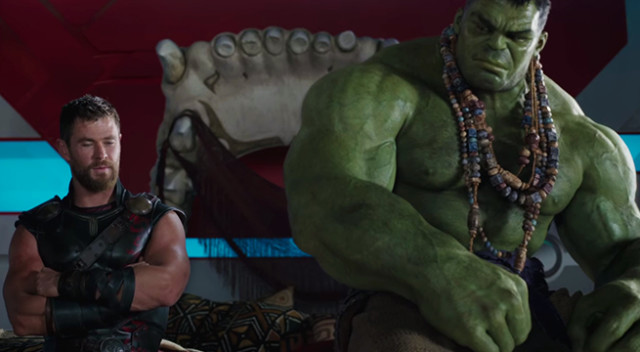
I’d been warned going into this movie. People complained that Thor: Ragnarok was too goofy and relied too much on humor.
To these people I say: If this too much humor, then you live a sad miserable existence!
What I love about TR is that Taika Waititi knew exactly what kind of film he wanted to make and he made it. He wanted a fun adventure film. He even said: “I tried to imagine the film that the six year old me would want to see.” And that’s the film he made! I mean, he even has Cate Blanchett cracking jokes on the regular. And it works! Why does it work? Because he stays consistent with it. He sets the tone early on and never deviates.
Tonal problems, which are a major indicator of newbie screenwriters by the way, happen because writers feel that tone should be dictated by whatever they’re feeling in the moment. Feel serious? We’ll do twenty pages of intense conversations. Feel goofy? We’ll do fifteen pages of prat-falls.
Tone gets established in your very first scene. What tone you convey to the audience in your opening is the tone you need to stick with throughout. How does Thor start? With Thor goofily explaining to us how he got trapped in this cage. So for the rest of the script, that is our baseline. That doesn’t mean the script can’t be serious at points. But the level of seriousness can never reach the level of, say, “Detroit.” Your serious floor will be lighter and fluffier.
Moving on, what I REALLY loved about Thor: Ragnarok, is that it’s the best-structured screenplay of all the Marvel movies. To understand why, you have to know the plot.
Ragnarok follows our titular golden-haired god after his father, Odin, dies on Earth. On the way back to his home planet, Thor’s kicked into space during the beam transfer (which is how he got to earth in the first film). He then gets spat out onto some junk planet that exists outside time and space.
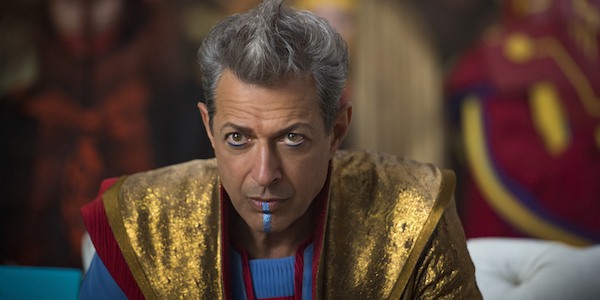
That planet is run by the single greatest actor in the history of movies. I’m talking about Jeff Goldbloom, who plays the Grandmaster here. Jeff plucks up Thor and throws him into one of his gladiator tournaments, where it just so happens that he’ll be fighting the Hulk. How the Hulk got here is anyone’s guess. My guess would be: Because it makes a cool movie.
Meanwhile, back on Thor’s planet, his evil older sister, Hela, has taken over in dead dad’s place, raised an army of the undead, and threatens to ruin thousands of years of progress on the planet. That means Thor’s got to convince Hulk to join him, escape this weird non-time planet, and get back to his planet and stop Hela before she can execute her plan.
One of my pet peeves with these Marvel movies is that the narratives are complete disasters. That’s because there are too many characters with too many motivations, which forces us to zig-zag around too much, never allowing a clear story engine to emerge, and often leading us to wonder what the heck is going on until the last 20 minutes.
Thor: Ragnarok keeps things simple. Thor must escape this planet and… wait for it… stop his sister. That’s it! How many times have I told you guys? If you want to write a good screenplay, start with simplicity. To do that, stick with the Scriptshadow basics. GSU. Goal, stakes, urgency.
With that said, Thor altered the format a bit, implementing a nifty “double-goal” approach. FIRST they had to escape the planet. THEN they had to defeat Hela. By instituting two goals instead of one, you keep one goal close enough to the hero that we stay invested. If you only have that one big goal at the end, that means that at minute 45 of the film, your audience is still 60 minutes away from the goal. If you throw in a big goal BEFORE that final goal, now they’re only waiting 30 minutes before something important happens.
Getting back to the “controversy” surrounding the film, some folks have issues with the dialogue, that too much of it is goofy and improvised. The argument goes like this. How important can the story be if actors are allowed to joke around, improvise, and say whatever they want?
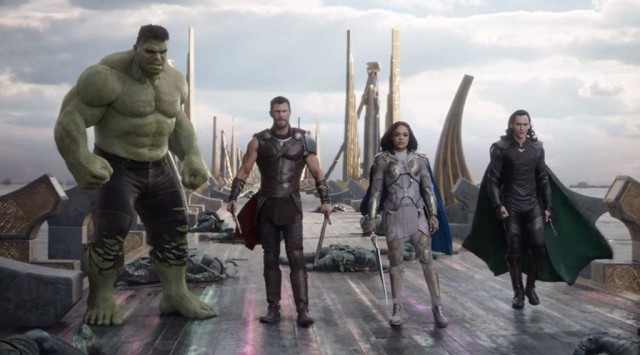
For me, overtly humorous dialogue is okay as long as the story’s moving forward. For example, if Thor and Hulk are making fun of each other for three minutes and that’s all the scene is, I have a problem with that. But that’s not what happens. When Thor and Hulk are taking jabs at each other, it’s while Thor is trying to convince Hulk to help him escape the planet.
I will say this, however. Chris Hemsworth isn’t as funny as he or the people surrounding him think he is. There’s been this grass-roots internet campaign promoting Chris Hemsworth as the second coming of Jerry Seinfeld. Let’s be honest. Chris Hemsworth is funny for a hunk. But he’s not going to be stealing gigs from Patton Oswald at The Hollywood Improv anytime soon. So they probably could’ve reined him in a bit.
Speaking of issues, Loki (Thor’s brother, played by Tom Hiddleston) should not have been in this movie. He has little to no effect on the story at all. But the bigger problem is that he’s just not a good character. There should be lots of fresh conflict to explore via Thor and Loki’s sibling rivalry, yet every scene of theirs feels like a slight variations on one of the other 50 scenes we’ve already seen between them. This is one of the issues with these Marvel movies. Once you’ve established a character as a major player in the universe, you can’t get rid of him. It’d be nice if it were like Star Wars. Jar-Jar a bad idea? No problem. We’ll limit him to 3 minutes in the next film.
What I love about Thor: Ragnarok, and most Marvel movies I see, is that I always walk out of them with a smile on my face. I genuinely feel like a happier person when I leave the theater. And this movie left me with the biggest smile of all the Marvel movies yet.
[ ] What the hell did I just watch?
[ ] wasn’t for me
[xx] worth the price of admission
[ ] impressive
[ ] genius
What I learned: If you have to continually fight to find scenes for a character in your story, it probably means that character needs to go. That was clearly the case with Loki. He was so non-essential to the events that almost every scene he was in started with him in the background and someone calling him over. We all fall in love with certain characters we write. But if someone’s not working, you gotta get rid of them.
I got two words for you, baby. Thor. Ragnarok. This weekend. Review on Monday. But while you’re waiting, why don’t you dive into some amateur offerings and find the next great screenplay.
How to play Amateur Offerings: Read as much of each script as you can and submit your winning vote in the comments section. Votes will be counted through Sunday, 11:59pm Pacific Time. Winner gets a script review next Friday!
For those who want to play in the next Amateur Offerings, send me a PDF of your script, along with the title, genre, logline, and why you think people should read it (your chance to really pitch your story). All submissions should be sent to Carsonreeves3@gmail.com.
Title: KILLING THE REAPERS
Genre: Sci-fi/fantasy
Logline: After a young paramedic’s soul is prematurely taken by a grim reaper, he must navigate a confusing and dangerous afterlife to find the way back to his destined life.
Why You Should Read: Originally, I was interested in the idea of a young man who has his whole life ahead of him and gets cheated out of it on what should be his happiest day. I wanted to create an afterlife that exists in the real world, where life and death are under the purview of a decaying bureaucracy filled with undead civil servants who act as grim reapers. I was intrigued by the concept of a hero whose job was to save lives and must now save those whose job is to end lives. — I sincerely appreciate anyone who checks out even a few pages of my script. I look forward to anxiously reading insightful comments from Carson and the learned SS community.

Title: Native Blood
Genre: Thriller
Logline: A Native American woman is forced to seek vengeance against the Bollard Gang, an infamous group of scalp hunters responsible for the extinction of her people.
Why You Should Read: Hey Carson, longtime fan and lurker here. I just relocated from Philadelphia to Los Angeles to pursue the dream. Native Blood is a brutal revenge thriller that transcends the genre by bringing to light the horrors of America’s westward expansion. The story takes an unflinching look our nation’s history in the hopes of creating an authentic Native American folk hero. After the first ten pages I guarantee you’ll be hooked.

Title: SNAPPING TURTLE
Genre: THRILLER
Logline: Legendary drinker, brawler, and keelboat captain Mike Fink travels down the Ohio River, unaware that one of his passengers is plotting kidnapping and murder – and has accomplices waiting downstream to attack the boat.
Why You Should Read: Some background. After the American Revolution, the frontier was the Northwest Territory (Ohio, Indiana, Illinois, Michigan, Wisconsin and eastern Minnesota. Americans called it, “Indian Country.” The British called it “The Indian Reserve” and tried to preserve it as a buffer between the US and the British colony of Canada. The Ohio and the Mississippi Rivers were the residents only means of moving freight. Big, slow moving rivers – average current velocity about 2 mph. You could walk faster. But if you walked you couldn’t carry freight or passengers. For that, you needed a boat. Practically anything would go downstream – rafts, barges, flatboats. But if you wanted to travel upstream as well, you needed a keel-boat – a long narrow boat, with cleated running-boards on each side of the cabin, for the crew to walk on and pole the boat. They were up to 120 feet long, and able to carry up to fifty tons of freight as well as passengers. Mike Fink was the Chuck Norris of his time, but where Chuck’s record was in point karate, Mike’s was in the no rules combat called rough-and-tumble, eye-gouging, or simply gouging. I was surprised to learn that Fink was only portrayed once on film, in two episodes of Disney’s Davey Crockett series (during the fifties). I think this script contains everything Carson has blogged about in the context of thrillers: Dramatic irony throughout the script, ticking time-bombs (figuratively, not literally), and a MacGuffin. Did I miss anything?
I had some great source material for this one: antebellum folklore, history, and pulp – everything long out of copyright. Thanks to everyone who checks out the script.

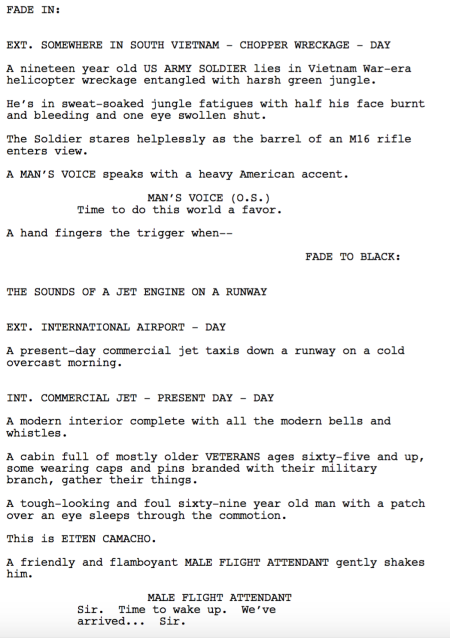
Title: My Sojourn In Hell
Genre: Thriller, Drama
Logline: A Vietnam POW struggles to survive captivity to seek revenge on the group of soldiers who betrayed him and left him for dead.
Why You Should Read: Been at this incredibly rewarding and gut-punching craft for seven years now. I’ve had my share of contest placements and even turned one of my ten scripts into a multi award-winning book, however, I’m still on the hunt for that big breakthrough. For this script I stepped way out of my comfort zone and broke some of the so-called “rules.” This is a past/present script that is part The Revenant, part Apocalypse Now, and part Saw. Would love the invaluable feedback from the Scriptshadow community to make it the best it can be.
Title: DARK HORDE
Genre: Sci-fi
Logline: In the Middle Ages, two warring military commanders, one Christian and one Muslim, must team up to stop an alien force from weaponizing the Bubonic plague to annihilate humanity.
Why You Should Read: Dark Horde combines the structure of films like PREDATOR and PITCH BLACK with the historical heft of films like GLADIATOR. I think you should review DARK HORDE because it is not only exciting, suspenseful, and a hell of a good read, but it also brings something brand new to the Sci-Fi genre.

A quote doesn’t always become part of the screenwriting lexicon because it deserves to. A lot of times, a quote becomes famous simply because it sounds good. And there’s nobody better at creating sexy-sounding quotes than writers. I mean, that’s their job, right? So today I wanted to sift through some of the sexiest writing quotes throughout the years and determine which advice is actually good, and which you should ball up and toss in the wastebasket.
“If you want to send a message, go to Western Union.” – This was uttered by a famous studio head in the Golden Age of Hollywood in response to screenwriters who argued that their stories should be about more than surface-level entertainment, that their movies should actually contain a theme, or “message.” Here’s the thing about this piece of advice. I think what the studio head was referring to wasn’t themes in screenplays. He was responding to bad writers clumsily executing over-the-top themes in screenplays. Of course your script should be about something. But if you’re on-the-nose and clumsy with the way that theme is executed, people aren’t going to respond well. As is the case with most aspects of screenwriting, you must integrate the component invisibly.
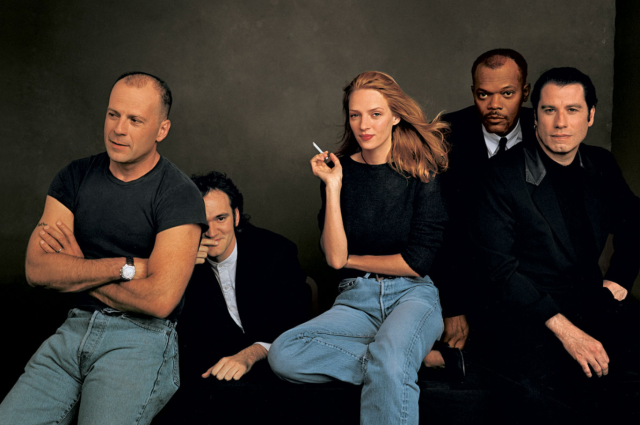
“Every story should have a beginning, a middle, and an end. But not necessarily in that order.” – This was one of the most famous screenwriting quotes to come out of the 90s, and it was born out of the success of Quentin Tarantino, specifically Pulp Fiction. The advice itself is fine. But it set a bad precedent to aspiring screenwriters, encouraging them to write these wild out-of-sequence narratives before they knew how to tell a simple story. Who cared about a narrative spine, stakes or compelling characters when you could rapidly cut back and forth between disparate storylines? As such, I would be wary of this advice. Learn to tell simple stories first and then move on to more complex narratives like Pulp Fiction.
“Kill your babies” – This popular piece of advice has been around for half a century, and the idea behind it is simple. Writers – especially beginner screenwriters – believe that every thing they write down on the page is gold. As in, once it’s there, it cannot be erased. Ever. To be a great screenwriter, you must be willing to eliminate that character, that scene, that subplot, that dialogue exchange, if it doesn’t keep the story moving forward. This is the essence of “Kill your babies.” You have to be a harsh editor. This advice was relevant when screenwriting was invented, and it will be relevant for as long as screenwriting is around.
“A professional writer is an amateur who didn’t quit.” – I remember when I first heard this quote and it kind of blew my mind. You can’t fail if you never give up. Death is literally the only thing that can stop you. But I do think the quote is dangerous. There are people who are 15 years into their pursuit of screenwriting (or whatever artistic endeavor they’re pursuing) who aren’t living productive lives. You have to be smart about it. As you get older and “adult” responsibilities creep in, you shouldn’t be hedging every aspect of your life on selling that big screenplay. It’s cute at 25. Not at 35. However, the awesome thing about writing is that it’s the cheapest of all the artistic pursuits. So make sure you’re giving the rest of your life ample attention and squeeze in time to write after those duties are over. As long as you love to write, there’s no reason to stop.
“Always ask yourself, what’s the worst thing I can do to my hero right now? Then do that.” – There are a lot of variations of this quote. Another comes from Kurt Vonnegut: “Be a sadist. No matter how sweet and innocent your leading characters, make awful things happen to them—in order that the reader may see what they are made of.” One of the biggest mistakes young writers make is that they’re too kind to their protagonists. Every aspect of their journey is too easy. You gotta put your protagonist through the wringer, man! For the exact reason that Vonnegut points out. We only find out who a person truly is when they’re faced with adversity.
“If there’s a problem in the third act, it’s because of an issue in your first act.” Of all the famous pieces of screenwriting advice out there, this is one of the ones I like the least, mainly because it’s vague. And there’s no quicker way to confuse a newbie screenwriter than to give them vague advice. I think what the advice is trying to say is that if something isn’t working in your third act, it means you didn’t set it up properly. For example, if your hero kills the dragon with some potion he randomly found two seconds prior, that would’ve worked better had you set the potion up earlier. But it doesn’t mean you needed to set it up in the first act. You could’ve just as easily set it up in the second act. So the advice here is more, “If something isn’t working in your climax, you need to set it up better somewhere.” Of course, that doesn’t sound as flashy, which is one of the problems with famous quotes.
“If you show a gun at any point in your story, it must be used later.” – I agree with this one. And note that “gun” is a stand-in for any weapon. Crossbow, hunting knife, bomb. And this is mostly due to the way we’ve been conditioned by cinema. It’s happened so many times in movies before, that if you DO show a weapon and don’t use it, it’s confusing to the audience. I remember reading a script once where the writer went to great lengths to highlight this sword on a wall. He described every crevice of the thing. I was convinced it would be used later to decapitate someone. Nope. It was never mentioned again. Drove me crazy.
“If I have anything to say to young writers, it’s stop thinking of writing as art. Think of it as work.” This one comes from Paddy Chayefsky and it’s something I’ve come to appreciate more as I’ve grown older. Screenplays only reach their potential during rewrites. And, unfortunately, when you’re on your 7th draft and nothing about your story is fresh or fun to you anymore, busting the computer open isn’t as easy as it was during that stream-of-conscious rollercoaster ride of a first draft. The good writers buckle down and they get the work done, even when it’s not fun. So I totally agree with Paddy here.
“Write drunk, edit sober.” – I don’t know who said this (was it Hemingway?) but this is the very definition of what’s wrong with famous quotes. This is such a sexy quote and so fun to say but it’s terrible advice. While writing drunk is fine to do every so often, you do not want it to become a crutch. You’ll be convinced that the only way you write good stuff is to get wasted, and that’s not sustainable. However, I do like the cousin of this quote, as it captures the spirit of it in a much healthier way: “Write from your heart; rewrite from your head.” Be non-judgmental when you write. Let yourself feel things without right-braining them to death. Then, when it’s time to rewrite, bring a more logical assessment to the writing.
“Grab’em by the throat and never let them go.” – This comes from Billy Wilder and I think it’s one of the most important pieces of screenwriting advice you’ll ever hear. Too many writers put the burden of investment on the reader. “You owe me,” is how they look at writing. No no no no no. Readers don’t owe you anything. It’s up to you to keep them invested. And the second you drop that ball, whether it’s on page 1 or page 50? They’re gone. They’re done with your script and they have that right. You want to grab your reader with the very first page and then every subsequent page, ask yourself, “Do I still have them?” If you don’t think you do, rewrite the scene until the answer is yes. That doesn’t your script should be one long action set-piece. You can use mystery, suspense, foreshadowing, conflict, dramatic irony, confrontation, anticipation, an intriguing new character, and, sure, a kick-ass action scene we’ve never seen before. You have hundreds of tools available to yourself. You are in control of whether your scenes are good or boring. Never take that for granted.
Carson does feature screenplay consultations, TV Pilot Consultations, and logline consultations. Logline consultations go for $25 a piece or 5 for $75. You get a 1-10 rating, a 200-word evaluation, and a rewrite of the logline. I highly recommend not writing a script unless it gets a 7 or above. All logline consultations come with an 8 hour turnaround. If you’re interested in any sort of consultation package, e-mail Carsonreeves1@gmail.com with the subject line: CONSULTATION. Don’t start writing a script or sending a script out blind. Let Scriptshadow help you get it in shape first!
Genre: Horror/Action
Premise: When a discarded top secret military weapon resurfaces on a research ship, the crew must fight for their lives to survive the bizarre technology.
About: Cary and Chad Hayes have become Hollywood’s go-to A-List Horror writers, scripting both The Conjuring and The Conjuring 2. But that success didn’t come overnight. The brothers wrote in television for a dozen years before getting their first shot at the feature world (2005’s House of Wax) and then went almost an entire decade before they had their first major breakout hit in The Conjuring.
Writers: Cary and Chad Hayes
Details: 104 pages – 2011 draft

I’ve always wondered, how do you make a blob scary? It’s a blob, the goofiest monster ever. It doesn’t even have a personality. It’s a blob.
I like reading these scripts, though, because I’m always curious what writers pitched to win these “no-win” assignments.
For those of you who will be lucky enough to break into this business, you’ll be asked to pitch no-win takes on assignments all the time. You could say that the writers who last the longest in Hollywood are the ones who consistently come up with solid takes on bad ideas.
Remember, it was Charlie Kaufman who, tasked with adapting a book about flowers, came out the other end with Adaptation.
I personally don’t believe it’s possible to write a good Blob movie. But I’m ready to be proven wrong. Let’s see if the Hayes brothers pulled it off.
Shannon Cole is a member of a research team on the high-tech vessel, “Indigo.” Besides researching ocean life, Shannon also likes researching her hot Navy boyfriend, Colin Hawthorn, who she’s constantly trying to sneak Skype sessions with whenever possible. The two discuss how it’s only a matter of time before they can be together, sans ocean in the way.
And then a plane crashes next to the Indigo. And not just any plane, but a military plane. Members of Shannon’s team are able to save the sole survivor, a dude named Steve Walker, but they sense something is off right from the start. Especially when Steve hightails it off the ship. As in, he leaps off and starts swimming away. What in the world would cause a man to swim into an endless ocean as opposed to stay on a ship?
Answers start coming in the form of the NAVY, who radio Indigo to tell them to watch out for this Walker fellow. Oh, and to avoid any gelatinous masses that happen to have snuck on the ship. Oops, too late for that. The secret weapon that Walker stole, and which was responsible for the crash, has made its way onto the Indigo.
Once Shannon and her crew spot this thing, they begin attacking it. But it’s pointless. There’s no way to actually destroy gelatin. It just eats up their bullets, their weapons, and eventually, their bodies.
Shannon calls for help from her nearby NAVY boyfriend, but he tells her this call is above his pay grade. The military is so terrified of this blob weapon that they’re going to let it do its damage and, hopefully, disappear forever afterwards. That means Shannon and her crew will have to figure out how to defeat this thing on their own. A task they’re realizing may be impossible.
Okay, let’s approach The Blob the way any screenwriter tasked with adapting this idea would. You’ve only been given one quota: A “blob.” You can do anything you want with that, as long as there’s a blob. What do you do?
The Hayes’ brothers opted to place the blob on a ship. On the plus side, you’ve created a classic horror scenario. A monster. A contained location. A bunch of people stuck in that location.
But the first thing I asked was, “Is a research ship really the most interesting location for this concept?” Not really. You’re limited, pretty much, to your blob squirming around the hallways of a ship. I’m not sure if you’re getting the most out of the idea there. Had the Indigo been researching something that could’ve conflicted with the blob in some way, that might’ve been cool. But it didn’t. In fact, I was never clear on what this ship was researching.
Specificity guys. You have to think in terms of specifics, not generalities. Because there was nothing unique on this ship, nearly every scene was identical. People hiding in rooms. The blob banging on the door. Sometimes getting in. A battle would occur, they’d go to another room. Variety isn’t only the spice of life. It’s the spice of screenwriting. You have to differentiate your scenes. And because all the elements here were so generic, there wan’t much opportunity to change things up.
Also, the one advantage you have with a villain as unique as a blob is that you can look for things that only this specific “monster” can do, and play around with that. Take Freddy Kruger. He can haunt your dreams. So you can write a lot of cool scenes where Freddy is stalking you in your dreams, where you’re not sure if you’re asleep or awake, where he’s luring you to sleep – the kind of things that ONLY THAT CHARACTER offers to the story. That’s part of the fun of screenwriting, is finding those unique avenues that only your specific concept can provide.
But the blob never gave me that. There was one moment early where a character gets swallowed up by the blob and we watch him see the world through his POV as he’s being digested. But that was pretty much it. Otherwise it was just a blob banging away on doors and eating folks. Any monster can do that.
The best opportunity for a memorable scene came when the crew gets stuck in the shark lab. A tank full of sharks? A blob. Your team can’t leave the lab? The possibilities are endless, right? What if the blob keeps banging on the door and the shark tank starts cracking. Bang. Crack. Bang. Crack. The group realizes that either they stay in here and get eaten by sharks or they take their chances with the blob.
OR maybe the blob eats the sharks, which are swimming around in its gelatinous mass, some of their shark heads sticking out, chomping like crazy to get away, and our team now not only has to deal with a killer blob, but a killer blob of crazed sharks!
No, we don’t get any of that. Our team simply looks up after a moment and notices that all the sharks are gone. The blob has eaten them. And that’s the end of our shark lab scene.
I don’t think you can write a blob movie that isn’t a comedy. This is something you have to build a goofy premise around and then really have fun with it. I could see, for example, a group of people getting caught inside a 50s movie universe. They come to some deserted town, where they’re attacked by things like the Fog and the Blob. And you just get goofy. I could see the Blob swallowing people up, but then releasing them out later, and they become these slime-soaked blob marionette zombie things that do the blob’s bidding. Shit like that.
Trying to turn a blob into a serious action movie? I don’t see any audiences being interested in that. Feel free to offer your own blob takes in the comments section. I’m curious if anyone can actually pitch a good idea off of this.
[ ] What the hell did I just read?
[x] wasn’t for me
[ ] worth the read
[ ] impressive
[ ] genius
What I learned: I learned that if you have a weird starting point – like a blob – you need to embrace that weirdness and get weird with it. To try and take a weird concept like this into straight territory is a bad idea.
Genre: Thriller
Premise: (from Blood List) A monster-obsessed kid witnesses a murder in his neighborhood and must defend his house when it comes under siege by the killers.
About: Today’s script finished #2 on the 2017 Blood List, Kailey Marsh’s list of best unproduced horror, thriller, and sci-fi screenplays. A familiar script to Scriptshadow readers finished at the top – MEAT. Nightlight sold to Sony earlier this year.
Writers: Chris Lee Hill & Tyler MacIntyre
Details: 92 pages
Hollywood’s confused right now.
After September unleashed a record-breaking box office, October’s done the opposite. Nobody’s going to see anything this month.
This is proof-positive that there isn’t some overall declining interest in movie-going, as some doomsday sayers have attempted to propagate. But rather – if you come out with movies that look good (September), we’ll go and see them. If you come out with movies that look bad (October), we won’t. I mean, who’s going to see a movie called “Suburbicon?” Is that, like, what happens when a suburb transforms into a robot?
A more accurate box office analysis may be the one that’s most recently making the rounds – the Rotten Tomatoes Theory. Under this theory, Rotten Tomatoes scores drive the majority of moviegoers’ decision-making. This would line up with my above hypothesis that people go to see good movies and skip bad ones.
Who knows what the ultimate truth is? I just like tweaking Hollywood every once in awhile. Despite all of their research and models, they still can’t find that elusive sure proof formula.
So would today’s script, Nightlight, land in the September of the October category of movie? Let’s find out.
It’s 1989. 10 year-old Stanley is a bit of a misfit. He’s got a stutter. He spends all his time looking up the Lochness Monster and Bigfoot. Everyone thinks he’s a weirdo. To pour salt on the wound, Stanley’s parents are recently divorced and he’s still learning how to live alone with his mom and sister.
One night Stanley sees, what looks like, his female neighbor getting attacked by men in her home. The curious Stanley creeps across the street to check it out, only to watch as, indeed, a couple of men kill the woman. He’s spotted by one of the prowlers, who sees him run back to his house across the street.
When Stanley tries to tell his mom what happened, she thinks it’s all a result of his overactive imagination. The family then gets a call from the police, who inform Stanley’s mom that her daughter’s troublemaker boyfriend has been picked up, and that he was hoping she and Stanley’s sister could come pick him up.
This is a ploy by the prowler, of course, who moves in to the house the second the mom and sister leave. However, the prowler soon learns that Stanley is craftier than he looks. Stanley’s able to move around inside the house’s many hiding spaces (laundry chutes and such) to avoid the intruder.
Stanley’s plan is to play this game of hide and seek until his mom and sister get back. But when the prowler becomes desperate to tie up this loop, Stanley will have to use all of his craftiness to get out of this nightmare alive.
I should preface my breakdown by saying I’d sped through the logline and thought I was reading something different. I assumed this was going to be Home Alone but with monsters trying to get into the house. I thought that was a really cool idea. When I realized it was just one guy trying to get in, I was disappointed, and that definitely colored my reaction.
Regardless of that issue, this was a weird read. There were many moments where I’d come across a scene and say, “Wait, what?” For example, Stanley’s mother sends him up to clean leaves out of the roof gutters. As in, on a ladder.
Wait, what??
This would be dangerous even for an adult to do. Yet Stanley’s mom is sending her ten year-old – a boy we’ve established is frail and weak no less – to clean out gutters on the roof?
Or there was the moment where the “police” call to have Stanley’s mom come pick up his sister’s boyfriend. Not only were we never informed that Stanley’s sister had a boyfriend in the first place. But why would it be up to the unrelated mother of a boyfriend to pick this guy up? There was a lot of this, leaving me constantly scratching my head.
There were lots of missed opportunities, as well. For example, at a certain point, the prowler makes it clear to Stanley that when his mom and sister get home, he’s going to kill them. This added a new wrinkle to the problem. Up until that point, Stanley could just keep hiding. However, knowing his mom and sister would be in danger when they got home, this meant hiding was no longer an option. He’d have to take this guy on. I thought that was a great choice.
However, it’s negated the second we find out that the mother and sister are coming home with a police escort. So they’re actually in no danger at all.
But the biggest missed opportunity was in how Stanley fends off the attacker. It’s all with basic generic tricks like clever hiding places and such.
When you write a story like this, it’s the perfect opportunity to use WHAT’S UNIQUE ABOUT YOUR HERO to help him survive. Stanley is set up as this monster expert at the beginning of the movie. It’s the reason everyone thinks he’s so weird. So what better better way to save your life than with the knowledge that, up until this point, everyone’s used to make fun of you?
What would the Loch Ness do? What would Big Foot do? Their unique abilities could have inspired Stanley to keep outwitting the intruder.
Something that could really help this script is more attention to setups and payoffs. Things like the sister having a boyfriend come out of nowhere instead of being properly set up ahead of time. And because these moments are major pillars in the advancement of the plot, it’s too easy to question them. Ditto the ending, which I won’t get into, since it’s a spoiler. But a character we’d never met until that point has a huge influence on the climax.
Now some of you may ask, “Well, Carson, why did this sell when my script is stuck in Nobody Gives a Shit Land?” Here’s the thing. Despite the problems I’ve listed above, we still have a MOVIE here. What I mean by that is we still have a clear situation with high stakes and lots of conflict, and an easy-to-market concept. Those things matter.
Whenever people complain to me that bad scripts sell while their great scripts are stuck on the shelf and I actually read those scripts? They’re not even at a level where you can compare them. They might be obscure tone poems. They might have second acts that deviate completely from the setup. They might not have a single marketable component to them. At least Nightlight is a movie, flaws and all.
It was an interesting reading experience nonetheless, even if it wasn’t my cup of hot cocoa.
[ ] What the hell did I just read?
[x] wasn’t for me
[ ] worth the read
[ ] impressive
[ ] genius
What I learned: One of the easiest ways to strengthen a shaky plot point is to set it up earlier. For example, all we needed to do to strengthen the forced plot point where the fake police lure Stanley’s mom and sister out of the house was to SET UP an earlier fight between the sister and her boyfriend. Now we’ve seen the boyfriend’s volatility. Now we KNOW the boyfriend. This way, when we learn the boyfriend is in jail, we’re like, “Oh, of course he is. That guy was crazy.”
