
As I was combing through all the amateur scripts I read this year to come up with this list, I realized I was looking at scripts in a way I rarely do. As a distant memory. Which led to an unexpected question: What did I remember about the script? Was it amazing, terrible, strange, not bad but had potential? Or was it the word which shall never be mentioned in screenwriting circles? Was it… forgettable? In the case of half these scripts, I didn’t remember a single thing about them.
I bring this up because I want you to imagine someone coming across your script four months after they’ve read it. What would they remember? If your idea is similar to a lot of other ideas, if your characters are, for the most part, like every other character we’ve seen in films, or if you’ve given us nothing new or different, there’s a good chance your script won’t be remembered at all. To that end, I challenge you to write the “Instantly Remembered After 4 Months” script. You should either have a big idea, take lots of chances, have a really unique voice, or create an eccentric unique character.
Nearly all of my Top 10 list from yesterday falls into this category, but I’ll give you another example from a script I actually didn’t like. It was an amateur script I reviewed called Game of 72. I didn’t like it, but as soon as I saw the post, I remembered everything about it. That’s because the writer took chances and had a unique voice. The same holds true for The Libertine. Hated it. But I’ll never forget it. The point is, it’s better to write something people remember, even if they don’t like it, than something safe that people won’t remember at all. And achieving that usually comes down to taking chances.
Below are my Top 10 Amateur Reads of the year. They came from Amateur Friday, script consultations, and scripts that landed in my hands one way or another. Take note that there are no Scriptshadow 250 scripts in here. That will all be separate. Ready? Here we go!
Number 10
Title: Insatiable
Logline: When a law student’s girlfriend mysteriously vanishes from a truck stop diner, he suspects a shady trucker is to blame. But as he races to save her life, he discovers that the only thing more terrifying than her captors is the reason she was taken.
Writer: Michael Morra
I believe that one day, Michael Morra will be writing horror movies that we plop down good money for. I’ve read three of his scripts now, and they all show a technical skill way beyond the average amateur. If Insatiable has a flaw, it’s that it’s too familiar. And that may be an area where Morra wants to push himself in the future. Even so, this script starts big and doesn’t let go. For those of you who love a good creature feature, you’ll want to check Insatiable out.
Script link: Insatiable
Number 9
Title: The Runner
Logline: Back-stabbed by his employer and marooned in Mexico, a tough, drug-running pilot struggles to fly himself and the family that rescued him back to America alive.
Writer: Jeffrey Doka
The Runner feels like one of those easy-going 70s-style movies someone like Sean Penn or George Clooney would like to make. Pair one of them up with a European director who hates Taken-obsessed Hollywood and you may have yourself a movie package. I didn’t fall in love with The Runner, but both times I read it, there felt like there was something there, both in the story and the writer. I feel like a good producer could guide this into something with a little more punch, while keeping its European-style roots firmly in place.
Script link: The Runner
Number 8
Title: Damn Nation
Logline: Five years after a vampiric plague has overrun the United States, a Special Ops unit from London is sent back into the heart of the US in an attempt to find the cure.
Writer: Adam Wax (Based on the comic, “Damn Nation,” written by Andrew Cosby and illustrated by J. Alexander)
More than any other script on this list, Damn Nation screams “movie.” It helps that it’s based off some high quality illustration work by J. Alexander, but there’re more to Damn Nation than studio dollar signs. The story has some nice plot twists, and the characters feel like newer upgraded versions of their 80s and 90s inspirations. Damn Nation also happened to be one of the most controversial entries of Amateur Friday, due to some believing the script was a straight copy and paste job from the comic book. My take? If turning a comic like Damn Nation into the page turner we get here is that easy, studios wouldn’t hire writers, they’d hire typists. But I’m sure the controversy will live on!
Script link: Damn Nation
Number 7
Title: Ivy
Logline: When her older brother — a notorious NYC graffiti writer — is murdered, a teenaged fine arts student must infiltrate this underground world in order to find her brother’s killer.
Writer: Mystery Writer!
The funny thing about Ivy is it’s a movie I’d never see. But that’s when you know a script is good – when it’s keeping you invested despite the fact that you’re not interested in the genre. The target crowd here is teenagers, and Ivy builds an exciting story for that demo based around infiltrating a dangerous graffiti gang. It’s like Veronica Mars meets Save the Last Dance meets Step Up, but actually done well. If you’re a producer trying to tap into this demo, you’ll definitely want to check Ivy out.
Script link: Ivy
Number 6
Title: Time Upon a Once
Logline: A film crew follows a medieval servant as she searches for the princess who can save a cursed prince — a prince she secretly loves herself.
Writer: Angelo Campos
Don’t bother looking for this one on the site. It came to me via a consultation. Easily one of the more inventive scripts I read all year, Time Upon a Once reminded me of a cross between Enchanted and What We Do In The Shadows. What I liked most about the script is how much it turned clichés on their head (for example, instead of a princess that needed to be kissed, it was a prince). Usually mockumentary scripts turn out awful. The writer’s over-reliance on the interview cutaway becomes a death trap of “cutting to an annoyed face for the 30th time isn’t funny!” But Angelo is more interested in telling a story here, and that’s what sets this apart from the rest.
Script link: Contact Angelo at angeloxcampos@gmail.com
Number 5
Title: Wars of Eternal Spring
Logline: A rebellious-minded woman in ancient China seeks the help of Shaolin to save her village from a love-obsessed General and his bloodthirsty Captain.
Writer: Elizabeth Barilleaux
When I started today’s post, I talked about memory – what comes into your mind the moment you think of a script. With Eternal Spring it’s “beauty.” I remember, more than any other script, feeling transported to this time and place. And the reason Elizabeth was able to achieve this was because she is obsessed with every word she writes. You can tell she’s thought about how each word will affect the reader. The story itself feels like a cross between Crouching Tiger and Braveheart. The only reason this didn’t finish higher is because it’s not really my thing. Add a few jedis and then we’d be talking. But even Force-less, Eternal Spring is a force to be reckoned with.
Script link: Wars of Eternal Spring
Number 4
Title: Unlawful
Logline: A troubled detective operates outside the law when he buys an underage prostitute to perform “favors.” But when a 16-year-old girl goes missing and he must use her diary to reconstruct the events that led to her disappearance, an unimaginable truth emerges.
Writer: Carver Gray
Reviewed back in June on the site, Unlawful would later go on to make The Blood List and The Hit List. And I’m not the least bit surprised. Carver understands that if you’re going to do dark thrillers, YOU HAVE TO GO DARK. You can’t go PG-13-dark or repackage the dark from previous thrillers. Carver goes full-on with his tortured drug-abused hero and doesn’t let up until the last page. Not to mention this is a mystery that will keep you guessing. Congrats to Carver on all his success!
Script link: Unlawful
Number 3
Title: Shelby
Logline: Shelby, a 40-something woman still trying to figure out how to be an adult, heads back to her hometown where she finds herself regressing even further into her juvenile tendencies.
Writer: Beth Rigazio
I’m going to get pummeled for this but I don’t care. Rigazio has some produced credits. But they’re from so long ago that I feel like she has to hustle as hard as everyone else on this list. And I’m not sure anyone’s going to find out about this script otherwise. The reason this screenplay made the list is simple: Shelby Wood. Shelby is one of the top 5 characters I’ve read all year. You WILL NOT forget this character, I promise you. Rigazio has sort of a Diablo Cody voice going for her, but where Cody has limits, Rigazio is just getting started. Take, for example, our 45 year old female hero starting a sexual relationship with a 15 year old. I mean, it gets dark. But the thing is, you NEVER STOP LAUGHING. It’s clear that Rigazio knows Shelby inside and out, and that’s what makes this script unforgettable.
Script link: Contact Beth Rigazio at bethrigazio@gmail.com
Number 2
Title: The Only Lemon Tree on Mars
Logline: When recent, inter-global events threaten to disrupt the idyllic life on the first Mars Colony, a woman with a secret to hide must do all that she can to prevent neighbors in her small town from taking up arms against each other.
Writer: Chad Rouch
There are some scripts that stay with you. You find yourself periodically remembering them, like a good vacation or an old friend you haven’t spoken to in awhile. The Only Lemon Tree on Mars is one of those scripts for me. Maybe it’s the title, which is so original, you instantly remember the screenplay when you read it (never forget the power of a unique title!). Or maybe it’s Rouch’s deft ability to paint this struggling alien planet a billion miles away in a way we haven’t seen before. I think that’s the key. This isn’t The Martian. It’s much deeper. There’s a lot more going on. And while it’s not perfect (the ending needs to be bigger), I would love to see what happens after Rouch goes through a couple of rewrites and really irons out the wrinkles. This was the nicest Amateur Friday surprise of the year.
Script link: The Only Lemon Tree on Mars
Number 1!!!
Title: Sonata
Logline: After a genius self-destructive orchestra conductor falls from grace, he sees his way back to the top in an inner-city teenage girl with more musical talent than anyone he’s ever met.
Writer: James Thoo
Every year, Sundance celebrates one music-focused feature. I have no doubt that Sonata will one day be that feature. It’s just too darned good. James writes his main character, William Garland, as a smarter-than-everyone-in-the-room alcoholic, drug-addict, prostitute addict mess of a man who you could imagine a young Paul Newman playing. This man’s version of Trainwreck would make Amy Schumer look like Thomas the Train. So when he’s scraping the bottom of the barrel, ordering his umpteenth whiskey shot at the bar, and he hears the most beautiful soulful voice he’s ever heard outside, free-styling with some random homeless guy, you know you’re in for one hell of a ride. I’ve always been a sucker for heavily contrasting main characters, and a classically trained 40-something white orchestra conductor teaming up with a 14 year old black inner city girl is about as contrasting as you can get. I see this as the next Hustle & Flow. I absolutely loved this script.
Script link: Contact James here. jamesthoo@googlemail.com
That’s it ya’ll! I’m down for the count. See ya in the new year!!!!!

Yesterday things got ugly. But you know what the great thing about this industry is? When you pay for a movie and it sucks, you’ve earned the right to complain about it. But today, we’re going to journey to the happier side of Hollywoodland as we celebrate the films that achieved the rare feat of doing more right than wrong. And since these lists are always asterisk-ridden, I should preface this with mine. I haven’t seen The Hateful Eight (going to see it in 70mm when I get a shot). I haven’t seen Spotlight (bored to tears by the script). And I haven’t yet seen Sicario or Joy (both of which I’m dying to see). There’s a chance one or two of these would’ve made the list had I seen them. With that in mind, let’s begin!
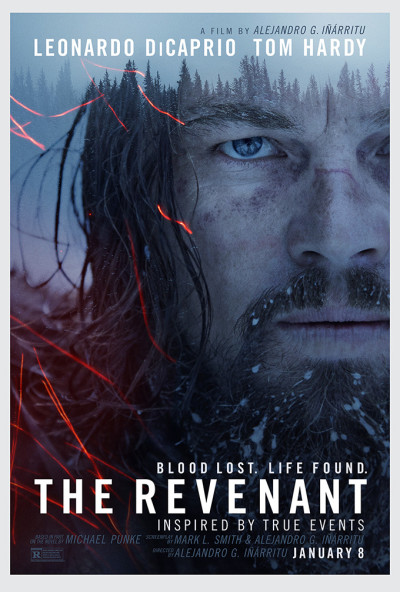
10) The Revenant – I will never see this movie again. Actually, I don’t even know if I can call this a movie. Over time, audiences have become hip to the plot beats that dictate a story. When the score dips and the close-up comes, and the plot machinations start getting spouted – we’re very hip to how all that works. And in a way, it’s comforting, that we’re being led along so politely. But there is no moment like that in The Revenant. Every remnant of plot is stripped away to give us the impression that we’re really out here in the middle of nowhere with these men. Conversations are left dangling, characters break into random thoughts, a fucking bear could attack you at any moment. This movie is anti-structure, and it works because Innaritu is such an amazing visionary. My only complaint is that it’s too brutal, too real at times. And after awhile you start to wonder if the experience is worth it. But there’s no doubt that you’ll never forget this film as long as you live. It’s a once-in-a-lifetime movie.
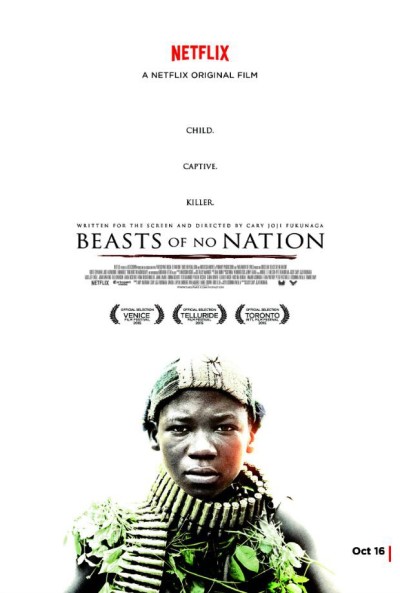
9) Beasts of No Nation – “Beasts” gets my vote for “biggest surprise” of the year. I expected to be bored out of my mind with this one. It looked way more like a history lesson than a piece of entertainment. For those of you who’ve assumed the same, I challenge you to watch the first ten minutes of the film. It’s a wholly original and beautiful little sequence where a group of poor kids use a stripped-down television to put on made-up shows in an attempt to “fool” the local militia into buying the TV. I’ve never fallen in love with characters faster. Reed Hastings, the CEO of Netflix, said of “Beasts,” “This wasn’t a film that was audience tested.” And you can feel that. This is a movie where they trusted the writer and director. It gives you hope that outlets like Netflix will change the way movies are made, maybe ushering in a new killer director class who rebel against Hollywood oversight.
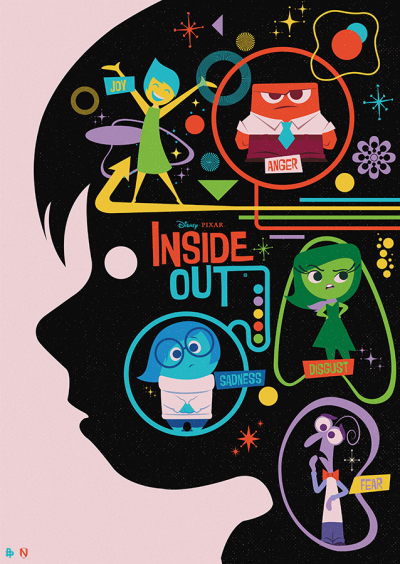
8) Inside Out – Pixar continues to achieve this amazing feat. They manage to build their story around heart, yet never devolve into the cheesy over-the-top after school special version of heart that is so commonly seen from everyone else. And the way they do this is by balancing the heart with darkness. You see it in Toy Story 3 (the toys are being left behind forever). You see it in Up (the first ten minutes sets up a man losing the love of his life) and you see it here in Inside Out… pretty much everywhere. Having to say goodbye to your childhood, to your imaginary friend forever? A young girl battling a mix of anger and depression. Tally that on to the most original Pixar premise to date, and there’s no question why this has become one of the best movies of the year.
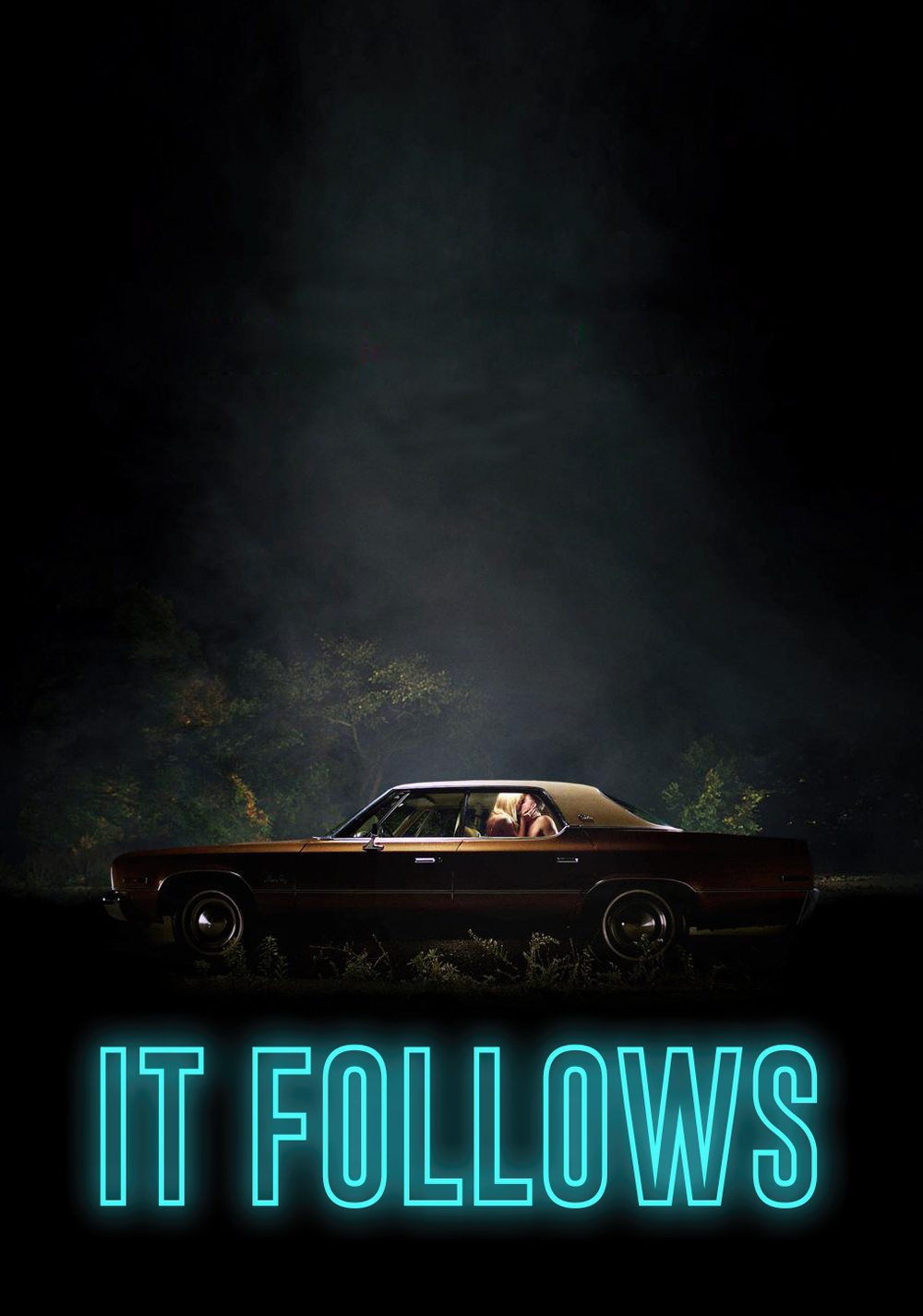
7) It Follows – It Follows was this year’s number one victim of post-celebratory internet backlash. I do think It Follows starts to fall apart a bit once you begin dissecting its screenplay. Regardless of that, this is a “Best Movies of the Year” list. Not a “Best Screenplays of the Year” list. And there’s no question that director David Robert Mitchell is a true auteur. His haunting 360 degree snail’s pace pans were the perfect call for a film where anybody could’ve been the next follower. Not to mention, Mitchell could introduce a character using only music and imagery and have you feel like you’d known them your whole life. I read scripts every week that can’t establish a clear character after giving them a six page monologue. This guy is doing it with a girl wearing a cast in a backyard swimming pool. It Follows is a messy film, but it’s messy in all the right ways. A lot like The Revenant, there are no overt plot beats being dictated to the audience. Everything’s seamless and natural. And that’s what makes this film feel unlike anything else you’ve seen in 2015.
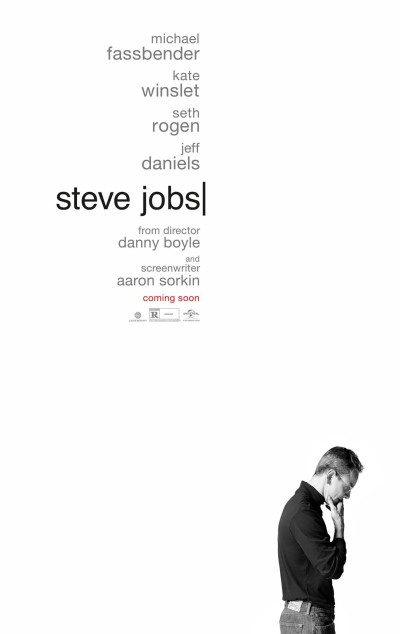
6) Steve Jobs – Boy do I get some extreme reactions on this one. One person will tell me they absolutely loved Steve Jobs. The next is threatening to find every print of the movie and dump them in the nearest volcano. Here’s the reality of the situation. Steve Jobs is a very screenwriterly-like script. It’s overtly structured. It’s dialogue heavy. The visuals of this world are non-existent so that all the focus can be on the characters. And that artificiality turned a lot of people off. But to me, I thought Michael Fassbender’s performance was amazing. He really brought Jobs to life. And I love how Sorkin found a way to infuse a personal slant to it all, with Steve’s imperfect relationship with his daughter. I thought that was genius and the key to the movie working. But this will always be one of those movies that Hollywood people go see and the average Joe is confounded by. Which I totally understand. But since I’m in the former category, I loved it.
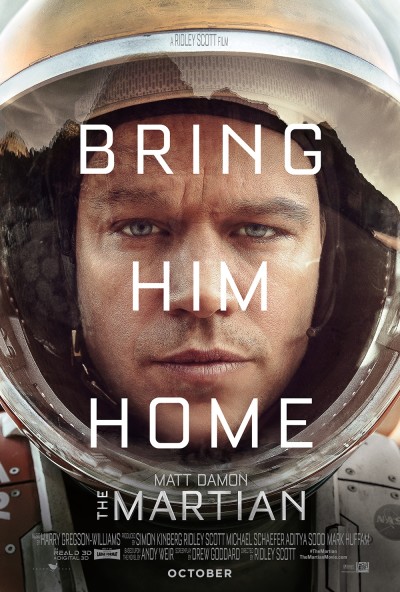
5) The Martian – Ridley Scott, you’re my hero. This movie was both a cinematic and screenwriting feat. There were so many interesting challenges with the script (how do you keep things urgent with a 4 year timeline?) and Drew Goddard conquered them all. I also loved the rags-to-riches story of the writer, Andy Weir, who wrote the original novel and released it for free! Only to have it gain recognition on quality alone before becoming a national bestseller. How could you not root for this film to do well? The only issue I have with The Martian is one that’s come with time. Matt Damon’s performance wasn’t that memorable. I mean when you compare him to Tom Hanks in Cast Away, it’s like a minnow swimming in the shadow of a shark. And that minnow just got speared by a bearded bad-ass Tom Hanks. But he does a good enough job to sell what needs to be sold, and other than a certain awakening that involves a certain force, this is the must-see “event” movie of the year.
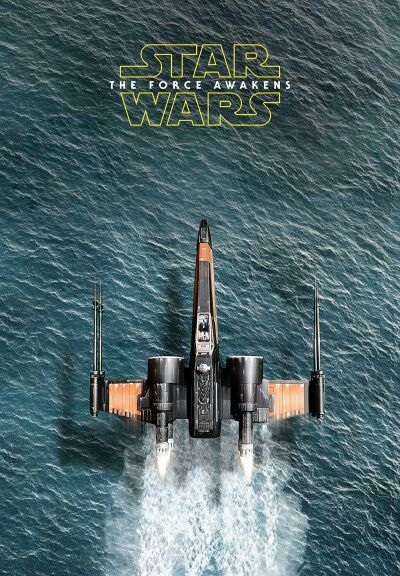
4) The Force Awakens – What??? Carson, you’re not making The Force Awakens number 1? I thought you looooovvvved it. Calm down, calm down. I still love this movie. But I’m not saying it doesn’t have flaws. It’s clear to anyone who watches the movie that the screenplay was written too fast, and we see the results of that. Han Solo’s been looking for his ship for 12 years and just happens to bump into it the second our characters fly it off their planet? And since when does Han Freaking Solo lose the Millennium Falcon?? But even with its flaws, The Force Awakens is, without question, the most enjoyable movie of the year. It’s just so darn fun! Let me give you an idea of how big of an impact this film has had on people. I’m a closet sports geek and I spend a little too much time listening to sports talk radio podcasts. In every one of these podcasts I’ve listened to, these big macho sports dudes have dedicated segments to reviewing Star Wars. Which have nothing to do with sports at all! And they all loved it! In a world with hundreds of channels and thousands of TV shows and billions of websites, there’s no such thing anymore as a movie that captures the entire nation’s attention. And yet The Force Awakens did it. Praise J.J.
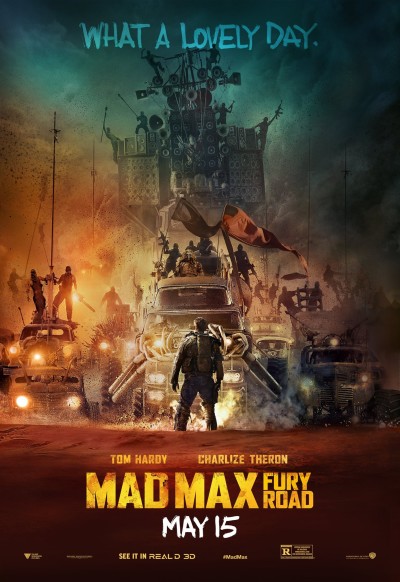
3) Fury Road – If Force Awkaens was non-stop joy, Fury Road was non-stop awe. Who even attempts to make a film with a 100 minute car chase that contains 100 cars? George Miller, have you gone insane? Have you been around too many pigs and penguins? To me, Fury Road is the best action movie ever. Usually you can point to one cool original action sequence in a movie. Here, there are a dozen. The amount of creativity and imagination and originality and pushing the limit that went into this film is just staggering. My only issue with it is the lack of chemistry between Tom Hardy and Charlize Theron. There was something missing between those two that stripped the movie of that “personal” connection that a film like Steve Jobs was able to find. That kept this from being the number 1 film of the year.
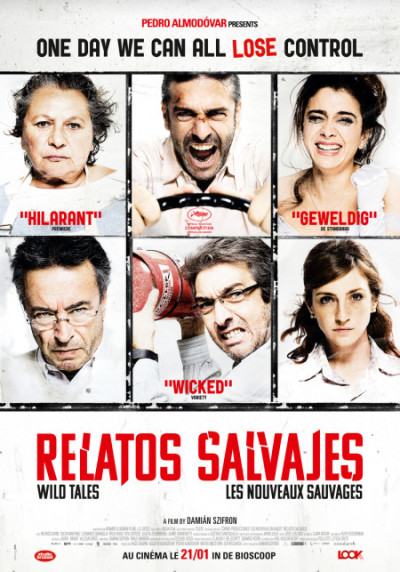
2) Wild Tales – This was the most delightful surprise of the year. It’s so rare for me to go into a movie not knowing anything, even what language it’s in, and that movie turn out to be great. What’s so surprising about this film, which is actually a series of short films, is that each story is so good. Usually with these things, someone has a good idea for a short, and then they try to come up with several other ideas to stretch the thing out to feature-length. I dare you to watch this film and not fall in love with every single short. The first one, which occurs on an airplane where something very strange starts happening to all the passengers, is so weird and so wild, you immediately know you’re about to experience something different. And then you get the road rage short, and the poison short. It’s so good, guys. I’m wanting to talk about this but not spoil it in the process so I’ll just say, go rent this movie. It’s not just a great film, but a great study in how to use suspense and mystery in your screenplays.
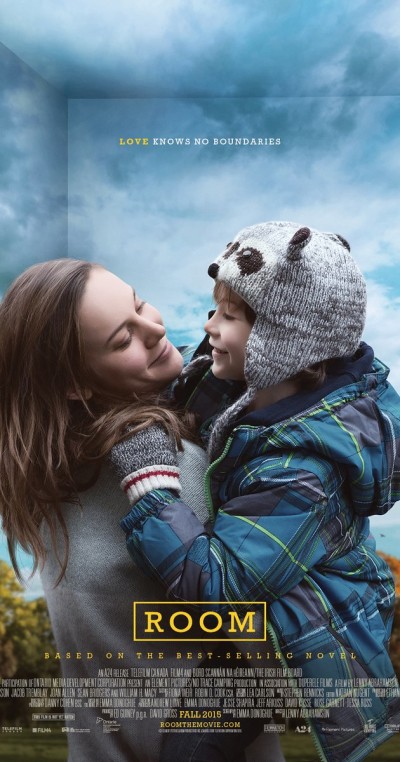
1) Room – There was no question after I came out of Room that it would be my favorite film of the year. I have not seen better acting… maybe ever. There is something so real, so honest about this movie, that it isn’t a movie. It’s reality. It’s us in this room with this mother and child. The clincher for me (spoilers) was the moment the child who has never been to the outside world, must escape into the outside world and get help to save himself and his mom. Everything about it, from the decision the mom makes to potentially sacrifice her son – the only thing in this world she loves – to have a chance at escaping. To trying to explain to a 6 year old child who’s never been outdoors before what he will need to do once he’s outdoors in order to save them. To the child only knowing this little room and therefore not even wanting to escape. To the clumsy nerve-wracking edge-of-your-seat escape itself. I mean that escape is better than any action scene I saw in Mission Impossible, Furious 7, James Bond, or Star Wars. It was so raw and so infused with love and depth and complexity, it was everything that movies are supposed to make you feel. If Brie Larson doesn’t win the Oscar for her performance her, fuck movies. And I wouldn’t be surprised if the kid is in the running for an Oscar as well.
Either Tomorrow or Thursday – My Favorite Amateur Scripts of the Year!
I don’t like trashing movies. I really don’t. By and large, Hollywood is a place where people love movies and are doing their best to make good ones. “Nobody sets out to make a piece of shit,” some producer once said. And so you don’t want to trash someone who tried like hell and just couldn’t get it poppin. However, there are instances where people who don’t value the opportunity they’ve been given get to make films, or times where ego dictates a film getting made, or where the almighty dollar becomes more important to the studio than making a good movie. And in those cases, I think it’s okay to call the movie out. Almost every movie on my Worst Of List falls into one of these three categories. So yeah, I’m going to vent a little bit here. But in order to give the post some value, I’ll throw in a few screenwriting lessons along the way. Let’s get started, shall we?
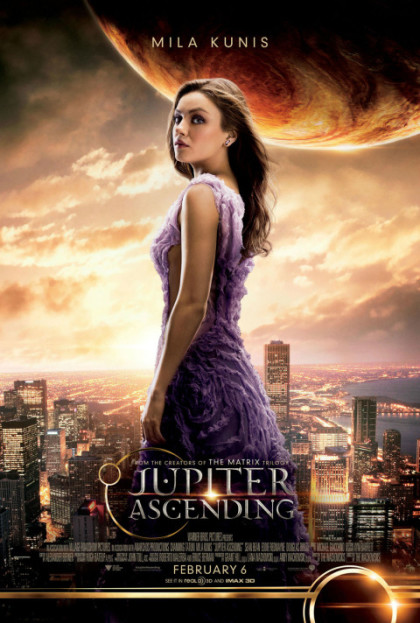
10) Jupiter Ascending – Calling the Wachowskis misguided at this point doesn’t do their status justice. Sure, the two are the original imagine dragons and they possess spoon-bending directing skills. But they’re stuck in “M. Night Shalaman Land,” unable to realize how badly their writing is screwing up their movies. Jupiter Ascending is a classic case of writers trying to cram way too much story into their script. George Lucas had to come to terms with this with the original Star Wars, which was supposed to have most of the stuff that ended up in Empire and Jedi. He finally relented, realizing it was too much story to tell, and focused on a more contained version of the story (by the way, there isn’t a sci-fi adventure script I’ve read that didn’t have too much story in its first few drafts). What that script gained in the process was urgency – becoming one of the greatest chase films of all time. Jupiter Ascending, with its bulky and bloated plotting, was the antithesis of this, a lumbering leviathan, and a lesson to all aspiring screenwriters to KEEP YOUR STORIES LEAN!
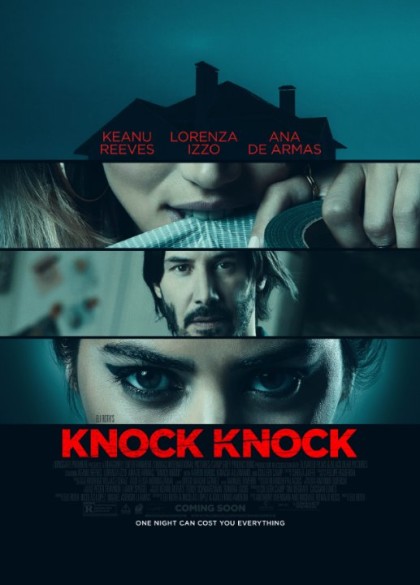
9) Knock Knock – Maybe it’s serendipitous that our number nine slot involves the actor who helped bring the Wachowskis into the public spotlight. This one really hurts though. For like two seconds, Keanu Reeves was cool again. John Wick brought the “Whoa” back. Which meant we could look forward to a Keanu who would receive better scripts, get better offers, and reclaim his spot on the A-list. Except Knock Knock. Who’s there? Eli Roth. If there is a working director with a bigger name who is less talented than Eli Roth, I’d like to know who he is. Knock Knock takes a somewhat interesting premise – a married man who lets two stranded trouble-making teens into his home while his family is out of town – then writes half a screenplay out of it. That’s right. Knock Knock runs out of story 60 minutes through. The whole idea with a premise like this is you make it a one-night ordeal – a series of escalating problems that climax before daylight. Yet Roth and his writing crew inexplicably send the girls home the next morning, only to have them show up a day later to, I guess, inflict more pain on Keanu. Except by that point, ALL THE TENSION IS GONE, leaving us confused as to what the point of the story was anymore. The screenwriting tip on this one is pretty obvious. Once all the air is let out of the balloon, you can’t blow it back up again.
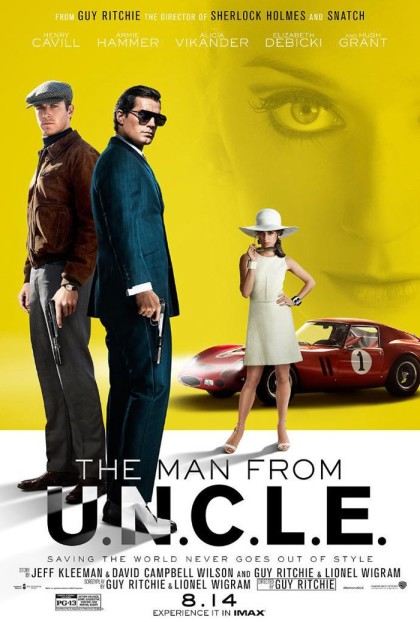
8) Man From U.N.C.L.E. – This was the most bizarre movie experience I had all year. I have never seen a movie with more beautiful cinematography and more talented directing come across so dead on the screen. It didn’t help that everybody in the film looked like they’d just smoked a pound of herb! Oh, and that Henry Cavill and Armie Hammer have the collective personality quotient of a monk at a hospice center. Luckily, not many people had to suffer from these performances since THIS MOVIE HAD THE WORST TITLE OF THE DECADE and therefore NO ONE SHOWED UP!!!! Okay, just work with me for a second on this. You’re John Smith living in Minnesota and you want to see a movie this weekend. I tell you the movie, “Man from U.N.C.L.E.” is playing. What do you think the chances are of him having any idea what the movie is about from that title? I’ll give you a hint. NEGATIVE 9 BILLION PERCENT! But for shits and giggles, let’s let him watch the trailer. That should make things clearer right? Um… sorta? It seems to be a buddy cop movie set in the 1960s? And one of the guys is Russian (when has a movie that featured a Russian accent in one of the main roles EVER done well in America????)? And they’re trying to stop something? And what do you tell your friend John when he asks why “uncle” has a bunch of periods inserted into it? I have no idea why anybody thought this movie had a Jawa’s chance in the Sarlac Pitt of doing well. Screenwriting lesson: Make sure your title helps sell your movie!
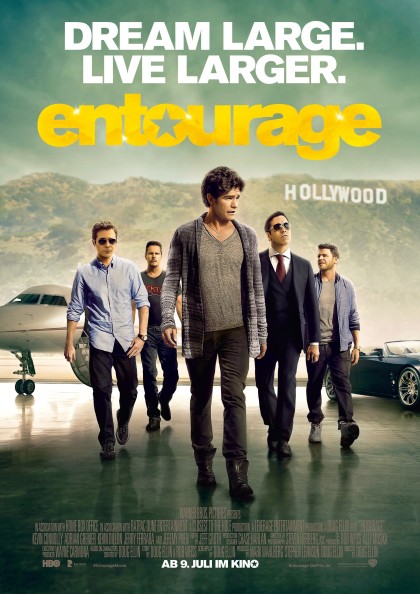
7) Entourage – This one seems like easy pickens. But it’s on the list because it’s bad in a way that none of the other movies are bad. It’s bad because it’s empty. More than all of the other entries, Entourage has the least story to tell. Indeed, when the end credits roll, it seems like we’ve been watching for 30 minutes. Vince (the lead character) directing a movie is supposed to be the “big hook” that makes this Entourage story worthy of feature-status. But Entourage the Movie is an example of why some stories are best kept on the small screen. Entourage has always been about the dialogue and the interaction between its lively group of characters. What it never purported to have was STAKES. You never felt like if the characters failed that anything bad would happen to them. And since movies are one event (as opposed to 100), the stakes need to be giant in them. Since Entourage had never operated in that arena before, it didn’t know what to do when given that mandate. And, oh yeah, since we were talking about Mary Sues the other day, isn’t Vince the biggest Mary Sue in the history of television? No movie felt like it had robbed me of my money more than this one.
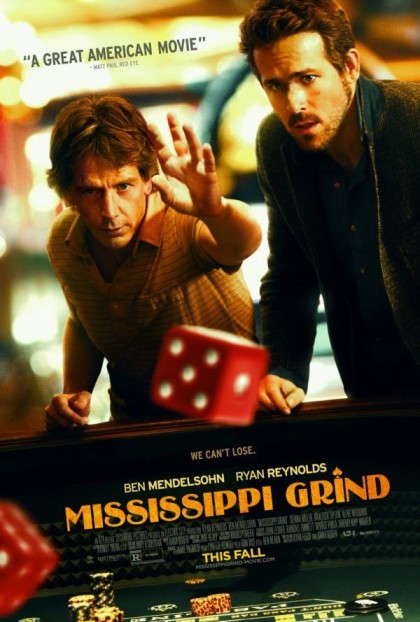
6) Mississippi Grind – No film implored me to want to scrape my eyeballs out with rusty sporks in 2015 more than Mississippi Freaking Grind. I consider the hack that got Mississippi Grind made one of the industries biggest issues, and a loophole that bad writer/directors will continue to exploit if financiers don’t stop funding these. Basically, what you do is you write a non-story that centers around two miserable characters. Actors love playing miserable characters! So even though the story sucks balls, they sign on. And once you have known actors, you can get funding. And hence Mississippi Grind gets made. But the ridiculousness doesn’t stop there. Critics typically give these movies high marks because they’re different from Hollywood flicks and there’s at least one good performance. These factors help mask the fact that movies like Mississippi Grind are absolutely awful. Nothing happens in this fucking movie!!!! Two people gamble and talk and wallow in misery. FOR FUCKING TWO HOURS!!!!! There is never a point to any of it. These self-indulgent pretentious exercises in filmmaker masturbation do nothing other than convince a few poor souls to mistakenly lay down $5.99 for an Itunes rental. A mistake, I’m ashamed to admit, I made. I should’ve known better.
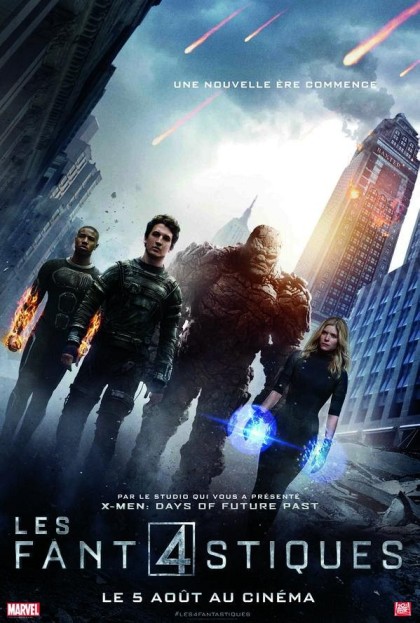
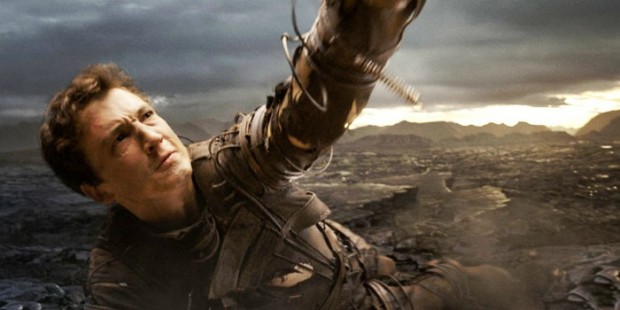
5) Fantastic Four – I know. Another gimme. We all heard about what happened. The director stayed in his trailer half the shoot, preferring to snort lines instead of help his actors read them. He’d get kicked off directing duties for a future Star Wars movie as a result (thank God!). They needed to bring in other directors to try and save the film. It was a mess. But movies have been saved from doom before. Maybe Fantastic Four could do the same? I’m afraid not, my friends. My best guess, from watching the film, is that the only stuff director Josh Trank shot before he went crazy was the first act. Because that’s all this movie is! One giant first act. I can’t tell you how many scenes there were of people in labs or on computers “researching things.” In a typical Hollywood blockbuster, those shots would’ve been relegated to a 60 second montage. Here they’re the main souce of plot for an entire hour! At a certain point it became a game of “How many computer generated DNA strands can characters look at in a single film?” Then, when we FINALLY get to the point where they go to the “other dimension” that they’ve spent 90 minutes researching, it’s a terribly composited incredibly ugly half-CGI empty moon-like surface. THIS IS WHAT WE’VE BEEN WAITING FOR THIS WHOLE TIME???? TO COME HERE??? This movie probably would’ve finished higher on this list if I didn’t feel so bad for all the people who had to work on it.
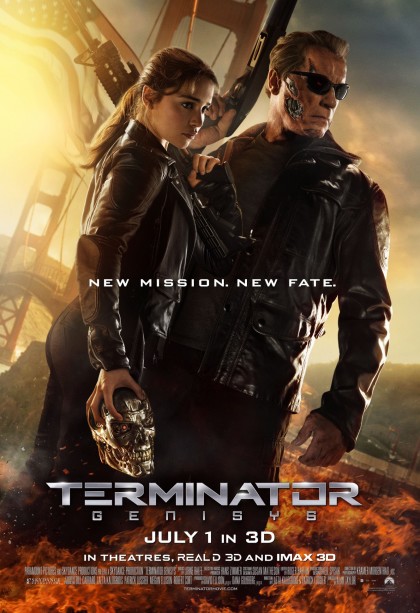
4) Terminator: Genisys – Here’s some advice for Hollywood studios. Do not, under any circumstances, deliberately spell a word wrong in your sci-fi title. It is a guarantee that your movie will suck. I’m serious. Star Wars was not spelled, “Star Warz.” Or “Starr Worrz.” Is there any person on this planet who didn’t know this movie was going to be terrible as soon as they saw this misspelled title? And yet still, after lowering the bar that much, Terminator: Genisys still somehow managed to disappoint us. As I’ve always said on this site, if you’re going to do time travel, KEEP IT SIMPLE. Time travel is inherently confusing. Trying to mash multiple time-jumping storylines together is a recipe for movie suckage. To me though, it comes down to this director. Here’s a guy who took one of the most iconic scenes in science-fiction history, the naked Terminator walking up to a gang of punks and demanding their clothes, and changed the haircuts of the punks (from blue spiked hair to black normal hair and from a short cut to a green mohawk) because he “felt like it.” Any director who doesn’t understand why you don’t change the hair of the characters in that scene SHOULDN’T BE ALLOWED TO FUCKING DIRECT THE MOVIE. What’s interesting about this film is that it was casting at the exact same time as The Force Awakens, and each production was fighting over the same actors. I can only imagine if JJ Abrams would’ve brought Emilia Clarke into the Star Wars universe. His pitch would’ve been so simple: “Come with me if you want your career to live.”
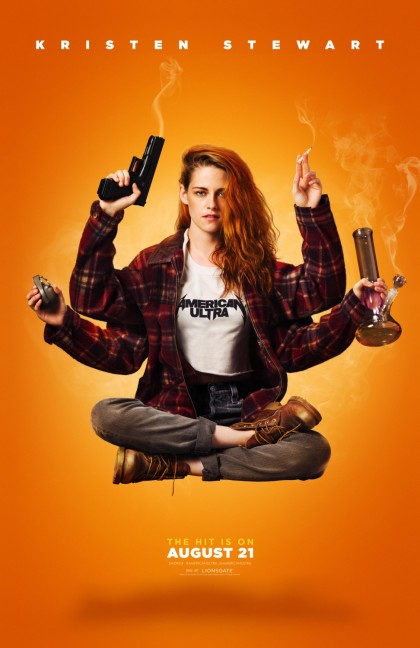
3) American Ultra – American Ultra puts every rant Max Landis has made on Youtube and Twitter into question. If he thinks this movie is good writing? I don’t think you can trust anything the guy says, whether it be about Mary Sues or lookie loos or piles of doo-doos. I can’t remember the last time a movie has made me hate its main characters so quickly. Our “hero” is a loser who smokes pot all day (why do I get the feeling this “trait” was based off of someone the writer knew?), refuses to do anything, doesn’t try to make his life better, whines all the time, and is generally a miserable worthless human being who has no interest in bettering his life. His girlfriend isn’t much better. She ALSO smokes pot all day, stays in like her boyfriend, gets pissed when her boyfriend doesn’t want to do anything, and is generally a humorless annoying excuse for a human being. THESE ARE OUR HEROES!!!!! What Max Landis doesn’t realize is that nothing he writes after he’s introduced us to these two people matters. It doesn’t matter if our protagonist all of a sudden gains Jason Bourne like powers. BECAUSE WE HATE HIM! A script can recover from a morally questionable character introduction. But it CANNOT RECOVER from a character the audience detests to the very core. But even if Landis managed to get that right, this is still a confused premise that’s only celebrated at 3 in the morning after everyone’s too trashed and too high to know a good idea from a bad one. “Like, he’s a stoner, who’s also, like, Jason Bourne. Wouldn’t that be awesome?” “Yeah dude. Max, you should totally write that.” “I can probably belt out a first draft by breakfast.” “Can I play the dealer?”
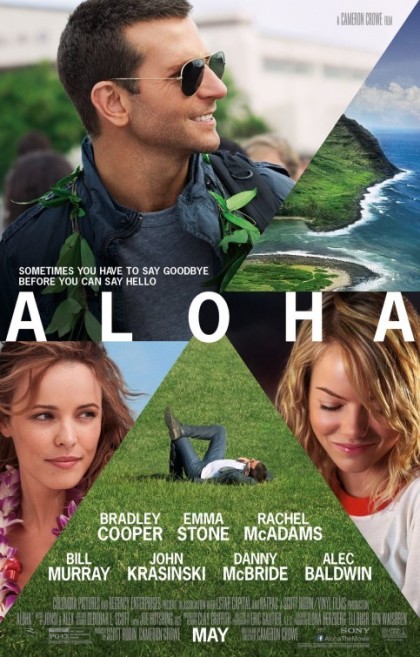
2) Aloha – This is the most significant of the movies I’ve put on this list because when I first reviewed this script, which was beyond awful, I got a call from one of the producers of the film chastising me for reviewing an early draft of the script (strangely enough, I kid you not, the final draft of the script added a major villain character named, “Carson”). Yet I knew, just knew, that there was no way this could ever become a good script. And it wasn’t because of the writer. This is Cameron fucking Crowe we’re talking about here, writer of Jerry Maguire and Say Anything! But the premise was so confused, so unsure of itself, that rewriting it was be akin to reorganizing the sheet music on a Nickleback song. Let this be a warning to all of you that if your concept is flawed from the beginning, there’s no way to save it. You can’t rewrite something that never had legs to stand on in the first place. And I know you’re all wondering, “How do you know if your concept is flawed?” There’s no universal answer to that other than GET FEEDBACK. If people look confused when you pitch them your idea? Or if you get a lot of polite observations that the concept is kind of hard to wrap their head around? That’s usually an indicator that your concept doesn’t work. In this case, it was that the concept was unfocused. There was no clear unifying idea, like in, say, Jerry Maguire: “A top sports agent must start back at the bottom after being excised from the biggest sports agency in the world.” What’s the unifying concept in Aloha? “A pilot comes to Hawaii to make sure a satellite launch goes well to stave off a rival Chinese company while rekindling two separate love interests and keeping the local Hawaiian government at bay?” I think some writers assume they can write their way out of a sloppy concept. It never happens.
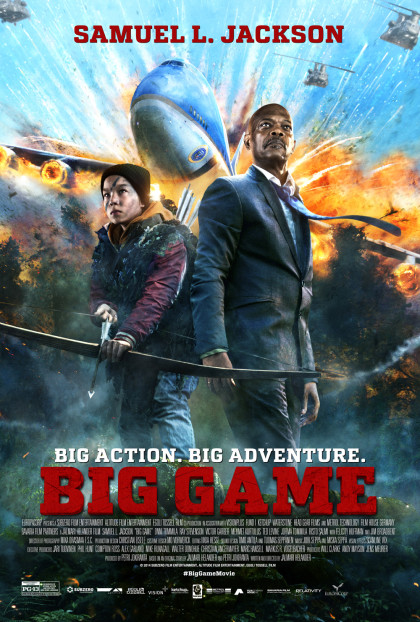
1) Big Game – We’ll finish this list on a lighter note. I did not hate this movie. But it is unquestionably the worst movie of the year. The plot plays out like a bad 1980s Sylvester Stallone movie. The dialogue is so on-the-nose, you leave each line with a fresh blackhead. The characters are so over-the-top, you wonder how they keep climbing back onto your side. Just the premise alone – a stumbling-over-his-lines Samuel Jackson as president gets teamed with an Inuit boy who uses his hunting skills to help the president evade a Middle Eastern terrorist who doesn’t just want to kill the president, but hunt him down like a wild animal – is so bizarrely conceived you’re wondering if this is one of those MTV Movie Award comedy promos where someone’s decided to use the leftover footage and try and turn it into a feature. I was so fascinated by this awful collection of ideas, I went looking for more info on the film, and only then did the picture become clearer. The director is a Finnish guy from Helsinki who had, up until this point, only directed short films. I began to imagine a backstory for this man, one similar to the family in The Wolfpack, where he’d been chained to his bed-post growing up solely on a diet of cheesy 1980s action movies. What I’m about to say next is going to sound preposterous. But I swear to you I believe it’s true. I think this script was originally written in Finnish and the director simply put it through Google translate to get the script we see now. Like that’s how wonky this movie is. I cannot believe that this movie exists. I just can’t!
Tuesday is Best Movies of 2015!
Wednesday is Best Amateur Scripts of 2015!
So yesterday, a Scriptshadow reader sent me this video of a roller coaster. Why he sent it to me, I’m still not sure. He’s kind of weird. But I’m glad he did. Because as I watched the video, I realized it contained the perfect screenplay lesson.
You see, there’s a reason that rollercoasters don’t start the ride at the top of the track. By making you start at the bottom and go up that hill, that endless clickity-clack-clack-clack hill, they are creating something called anticipation. With each inch closer you get to the top, the more terrified of what’s about to happen you become.
MAJOR FORCE AWAKENS SPOILERS BELOW
Anticipation is a powerful storytelling tool. And it basically works like this. Imply that something big and important is about to happen, then instead of throwing your character into it, make them go up that hill. A perfect example is the death of Han Solo in The Force Awakens. Han Solo doesn’t run into Kylo Ren willy-nilly and boom-bam kill-em dead. Abrams and Kasdan have Han walk across that endless bridge before getting to Kylo. And then they give us a long dialogue exchange before Kylo finally kills him. The scene is pure anticipation.
What you eventually learn after screenwriting for awhile is that it’s never the actual event that impacts you. It’s the anticipation of that event. And so I give this gift to you to play with. Find some time after opening presents to write ONE SCENE that’s centered around anticipation. Feel free to trade scenes with each other in the comments.
Have a wonderful holiday. And try not to get too drunk. Ya freakin alcoholics.
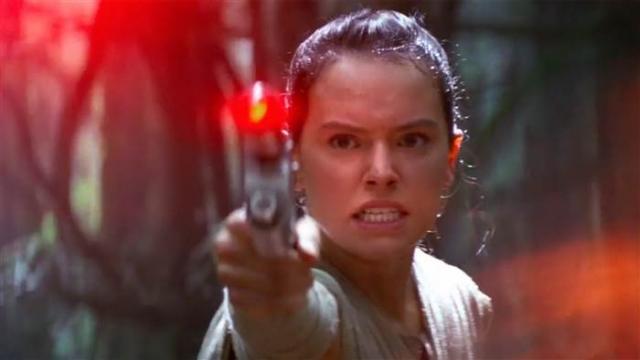
So the hot topic in screenwriting at the moment is that The Force Awakens sucks because its main character (Rey) is a “Mary Sue.” I don’t know if Max Landis is the one who started this argument or he’s just the most prominent person to weigh in on it, but his involvement has brought more attention to the “problem” either way.
Basically, a “Mary Sue” is a female character who is great at everything and experiences no resistance in her journey. Rey can easily use the force. Rey can easily fly a ship. Rey can easily fight a lightsaber battle. The big issue here is that nothing is “earned.”
The roots of this go back to fan fiction, where [mainly] female writers would write themselves into Harry Potter or Twilight storylines and, as a form of wish-fulfillment (along with being bad storytellers) made their characters amazing at everything. Cause, you know, it’s funner that way!
I will say that I never thought about this while watching The Force Awakens. Nor had I ever heard of this term before yesterday. So is this a legitimate concern? Or is it yet another thing the internet masses had to make up as a “legitimate” excuse to hate something?
It’s funny, I look back to one of my favorite scripts, The Equalizer, and you could argue that that protagonist was a “Gary Sue.” He was great at everything. He encountered no resistance. So apparently this isn’t something that bothers me that much.
What may have happened here is that JJ Abrams had such a mandate to write a kick-ass female character, that maybe he went overboard? He made her too kick-ass? Or is there nothing to see here? Internet trolls determined to take something down that’s universally beloved? What’s your take?
