
Can one of the biggest sci-fi screenwriters in town infuse some life into Universal’s vaunted monster franchise?
Genre: Horror/Fantasy/Action
Premise: After a black ops team awakens a 2000 year-old mummy, they must prevent him from opening the gates of hell.
About: Many of you may have read how Universal was going to create a universe/franchise (a la Avengers) out of their monster IP. This project, The Mummy, was going to be their flagship film. Then, for whatever reason, they slowed the train down, and while it appears they’re still going to unleash these monsters onto the world at some point, they’ve decided to hit the pause button for the time being. What this means for the Spaihts’-written script of The Mummy, we’ll have to see. Jon Spaihts, as many of you have heard, broke into Hollywood with his Black List topping script, Passengers, and then went on to write an early version of Prometheus. Sony just recently decided to take a chance on that Spaiht’s marketing-challenged script, with The Imitation Game’s Morten Tyldum directing and Jennifer Lawrence and Chris Pratt attached to play the leads.
Writer: Jon Spaihts
Details: 125 pages – 7/11/2013 draft

I know some of you wanted me to review Friday the 13th, but I asked a few industry folks about it and they said it was one of the worst scripts they’ve read all year, which makes sense, since the studio decided to scrap the script entirely and start over again. So alas, there will be no goalie masked Jason Voorhees love today.
While Jon Spaihts’ last name may be impossible to spell, his particular brand of sci-fi is some of the best in the business. If there was a sci-fi film you watched within the last five years, chances are he wrote a draft of it. That makes Spaihts’ move to the Mummy franchise a little surprising, but as you’ll see with the direction they went, it may not be that surprising after all.
Navy Seal Tyler Colt was just following orders while on a secret mission in Iraq. But when his team stumbles upon an ancient tomb, they all inexplicably go crazy and start killing each other. Tyler escapes, but for the next two years is haunted with specific nightmares about ancient kings and armies killing each other in terribly brutal ways.
Eventually, Tyler is approached by Colonel Gideon Forster, a member of a special weapons group that does the same kind of stuff as they chronicled in that bad George Clooney movie. Forster wants to go back to that tomb because he thinks there’s something valuable in there. Tyler resists, but in the end goes along with it because this is the movies.
Forster also brings along Jenny Halsey, a sort of female Indiana Jones, except instead of raiding tombs, she uses her female assets to con greedy billionaires into giving her their ancient amulets and such (which she then returns to museums). Needless to say, Tyler and Jenny don’t see eye to eye.
The group goes and raids the tomb once more, stealing the coffin inside, then hopping on a plane back home. Everything seems great until their plane hits an unexpected storm and crashes into the middle of Rome (later it looks like the storm wasn’t an accident). The mummy within the coffin (who we’ll later learn was King Ashurbanipal, the most violent king in history – he made Genghis Khan look like a girl scout), gets loose and – this is the first time I can use this phrase literally – all hell breaks loose.
The Mummy is looking for his crown and his sword, ancient artifacts that are somewhere in Rome, which forces Tyler and Jenny to find these items first. As Jenny tell us, if the Mummy gets these items, he will open up the gates of hell. And once that happens, it’s game over, insert new coin.

Let’s get this out of the way. This ain’t your Brendan Fraser’s father’s Mummy. Universal has decided to go with the darker edge that made all those superhero films between 2006-2012 so popular. It worked for superheroes. Why can’t it work for monsters?
Of course, 2013 was right when the audience tone pendulum started swinging in the other (lighter) direction. This may be why Universal pushed its planned monster franchise back. They want to wait and see how the tone dust settles before investing 175 million dollars into something.
With that said, I liked the more serious tone. Those old Mummy movies played like they were written by a third grader, especially the last couple, which were borderline embarrassing. What Spaihts has done is he’s brought the same attention to detail that he brought to his sci-fi offerings and made you believe in this mummy.
I’ve said this before about screenwriting but that’s where the men leave the boys behind. An amateur screenwriter will fill in the mummy’s backstory with his imagination. The pro will actually research their mummy and make him a real person. And that’s what Spaihts did. Ashurbanipal is a badass mummy with this entire history of being the most violent king in history and being obsessed with the underworld. Therefore when he gets loose in the present, he actually carries some weight. It’s not just a guy wrapped in toilet paper.
I also liked how the backstory for Ashurbanipal was handled. It wasn’t like, “Oh, he ruled the land in 300 B.C. and first found his Caniful Sword in the Battle of Rysaficus when he was seven…” Our characters HAD to learn his backstory in order to figure out how to defeat him, in order to understand what he was doing. So any backstory we were given was relevant, as it held clues as to how to take down the villain.
Spaihts also does a good job keeping all characters goal-oriented, including the villain. Remember, a character with a goal is an ACTIVE character. So you want as many characters with goals as possible. And, as you can see from this synopsis, it’s okay to give the heroes and the villains the same goal (the crown, the sword). As long as the characters are after something and being active, they can be after the same thing, different things, whatever.
If the script has a problem, it’s that Spaihts focused TOO MUCH on the Mummy. I mean, I get it. The movie is called “The Mummy.” But because the Mummy is so fucking cool, our heroes, Tyler and Jenny, get overshadowed.
The two KIND OF have something going on. For Tyler, he’s been haunted by these terrible mummy nightmares for a couple of years after the Iraq invasion and that’s made him unable to function in society (a commentary on PTSD maybe?) and for Jenny, she’s paid a ton of money to run around with billionaires and coerce them into giving away their artifacts, so she’s burdened with the stigma of putting money ahead of duty.
But I’m not sure either of those things registered with me. For a character to pop, I feel like he/she needs to have a flaw that the masses can relate with. To bring up one of Spaihts’ favorite movies, Aliens, Ripley was racked with distrust, which drove the majority of her actions and really made her accessible. It was more of a human emotion than a script-created screenplay 101 “problem.”
And it’s not like Spaihts doesn’t know how to do this. His best script – the one he broke in with, Passengers – is all about human emotion. I think there’s just a pressure with these action-adventure popcorn movies to keep the leads light and fluffy. Make them dislike each other a bit so there’s a lot of conflict-fueled banter (Jurassic World anyone?) and the studio heads will be happy. Still, I would’ve liked a little more depth to these two. I mean, having a great villain is great and so few writers put enough thought into their villains. But if the audience doesn’t love their hero (ahem, Indiana Jones) then they’re not going to be as engaged.
So despite the fact that we probably won’t see this version of The Mummy, I thought Spaihts wrote a solid draft. If you can find this one, check it out. It’s a good blueprint for how to write a PG-13 studio-friendly family-friendly film with just a teensy bit of edge.
[ ] what the hell did I just read?
[ ] wasn’t for me
[x] worth the read
[ ] impressive
[ ] genius
What I learned: If you want an unconventional way to grab your reader, start your script with a scene that’s the complete opposite of your subject matter. That’s what I liked about The Mummy here. I’m sure when I say “The Mummy” to you, the first thing you think of is being in an Egyptian pyramid somewhere 2000 years ago. Spaihts’ version of The Mummy starts with a team of Navy Seals invading Iraq through an underwater oil pipe. That caught my interest immediately, making me sit up and pay attention.
Genre: Horror-Thriller
Premise: A group of young adults channel their inner Charles Manson and attempt to terrorize a rich couple in their remote home. But they soon realize that they picked the wrong couple.
About: This one was written by brothers Justin and VJ Boyd, who are relatively new on the scene. This script actually won the Screamfest Screenplay Contest, which has since resulted in VJ securing a writing job for the TV series, Justified. The two brothers also created a comic called Ghost Cop, fortifying the Scriptshadow rule of “Go out there and attack the industry in as many ways as possible.”
Writers: VJ Boyd & Justin Boyd
Details: 96 pages

It was not a pretty weekend at the box office. The Last Witch Hunter ended up getting hunted by much better movies. People always talk about Vin Diesel’s amazing social media presence, despite the fact that it doesn’t seem to do anything for him outside of Fast and Furious. Jury’s still out on whether a star’s social media affects ticket sales.
“Jobs” only made 7.3 million bucks. To put that in perspective, the Ashton Kutcher version of Jobs made 6.7 million bucks on its opening weekend. As for why this happened, I think you strip away all the industry talk and just admit that Steve Jobs isn’t a topic the average person is interested in. With that said, I loved this movie, and hopefully we’ll see it play through the Oscars.
One of the more baffling things about the weekend was the release of Jem and the Holograms, which couldn’t even scrape together 2 million bucks. The film doing badly wasn’t a surprise. What was a surprise was how sure mega-producer Jason Blum was that the movie was going to do well. Of the ten films he released this year, this is the only one he tabbed as a “sure thing.”
I don’t know a single person on this planet who would’ve agreed with Blum here. This looked like a bad idea from the get-go. It just goes to show that even someone as plugged into the Hollywood machine as Jason Blum can be completely off-base about an idea. That’s scary.
Speaking of scary, I’m here to recruit a little anger from you readers, a little frustration, a little HATE. 17 year-old Cassie is just trying to fit in at school. She’s finally got one of the popular girls, the mean-spirited Stacy, taking an interest in her. So when Stacy suggests bringing Cassie out for a night to remember, Cassie doesn’t hesitate.
However, she starts having doubts when she meets Stacy’s older boyfriend, JP, who the Boyd’s describe simply as, “He looks like one of the Columbine shooters.” Cassie’s ready to bail until the last member of the group shows up, the uber-sexy, Razor. All of a sudden, Cassie thinks the night is worth a shot.
The group heads out to a remote location where they find a beautiful large home. Cassie soon picks up on the fact that our trio holds a grudge against the rich, and are ready to make an example out of the couple who live here. Cassie is not down but as Razor explains to her, “Where are you going to go? We’re out in the middle of nowhere.”
The group eventually sneaks in, targeting Kurt and Gail, a seemingly helpless pair in their forties. But there’s something off about it all. Even when they tie these people up and hold guns to their heads, they don’t seem scared.
I think you know where this is going. All it takes is one mistake and Gail and Kurt are able to get free. Just like that, the hunters become the hunted. As our group runs around the house, trying to save one another, they discover a series of Nazi paraphernalia. Each side goes all in, set on taking the others down. May the side with the most hate win.
I’ll be the first to admit, I love home invasion scripts. LOVE’EM! I don’t know what it is about them but if you look through all my reviews, I always give these scripts high marks, and Hate Night is no exception. I didn’t think it was as good as some of the other stuff I’ve read, but I still enjoyed myself.
And even if you aren’t a home-invasion lover, you could learn a couple of things from this script, namely, how it pulls you in via its use of suspense.
You see, most writers don’t know how to use suspense. Sure, if you asked them what suspense is, they’d probably have an answer for you. But as far as effectively utilizing suspense in one of their screenplays? Don’t count on it.
With Hate Night, right away Stacy and JP are acting creepy towards Cassie, hinting at things to come, which makes us wonder if they’re going to do something bad to her. We also know there’s a plan being put into action here, which likewise keeps our interest.
It’s for this reason that the Boyds have us wrapped around their finger. We ARE GOING TO READ until we find out what this plan is – and what’s going to happen to Cassie. That’s suspense 101 right there. And the typical amateur screenwriter doesn’t know how to do this. They instead write linearly. By that I mean they write whatever comes into their head at the moment, unable to forward-think the situation into a suspense-driven version.
My issue with Hate Night was that once we got to the home, much of that suspense was replaced with shock value. And while I’m not against shock value, it’s definitely not as effective as a well executed line of suspense.
The reason is simple. Shock takes up one second of screen-time. A character bites off another characters mouth. That’s fine. I’ve seen that work in movies before and it might work effectively when put on screen here. But it’s over within a second. There’s nothing left to extract from a “one person bites off another person’s mouth” moment.
With suspense, you can draw things out for minutes, even hours. One of the reasons It Follows worked so well is because its premise is inherently suspenseful. We know it’s only a matter of time before the next “follower” is coming. And we’re on guard about who or where they could be.
Hate Night had the opportunity to extend its suspenseful approach with the Nazi stuff. Start with something small so the audience wonders what’s going on, then with each new series of scenes, reveal a little more about the Nazi stuff, until a big explanation of how the couple is connected to that world is revealed. But Hate Night chooses not to explain these things. And I suppose that’s fine. But I guess I was looking for anything that would keep me invested the way those the first 20 pages did.
Despite this, I still enjoyed Hate Night. I love the genre in general. I like that the Boyds twisted things around and made the hunters the hunted. And I liked how the main characters didn’t represent a united front (with Cassie being against this). The reality in these situations is that even on the “attacking” side, there’s going to be dissent, and I read too many scripts where everybody on the bad side agrees with each other, which isn’t realistic.
I’m glad to get Halloween Week started off right. And by the way, if you know of any good horror scripts from the last couple of years you want to see reviewed, let me know. I have the new Friday the 13th script, but I didn’t know if you guys would be interested in that, seeing as it’s part of an overly-exploited franchise. But if you’re interested, I’ll review it. Let me know in the comments!
[ ] what the hell did I just read?
[ ] wasn’t for me
[x] worth the read
[ ] impressive
[ ] genius
What I learned: Create LINES OF SUSPENSE to keep your scenes engaging. Think of a “line of suspense” as a literal line between when you hint at something happening, and when it actually happens. The longer the line, the longer the suspense. To understand how this works, I want you to write two practice scenes for me. In the first scene, I want you to put characters JOE and LISA in a room together and have them talk. I don’t care what they talk about. Just write 2-4 pages of a scene with those two talking. When you’re finished, come back here. Okay, now I want you to write the same scene, but this time, have the two preparing the room for something (cleaning, arranging), then start with this dialogue. JOE: I thought she was supposed to be here by now. LISA: You know how busy she is. JOE: I just can’t believe she’s coming here. — Continue to write the dialogue between the characters however you want until this third person shows up. What you’ll notice is that the second scene works much better because you’ve created a LINE OF SUSPENSE. The audience is now anticipating the arrival of a character. And not just any character, a seemingly important character. So the reader is clearly going to want to find out who this person is. This is how to use a LINE OF SUSPENSE to keep the reader engaged.

Today’s Amateur Offerings are a HOLIDAY SPECIAL. I mean, how can we not review a horror script on October 30th??? I’m including both horror/Halloween entries from last week, plus three new entries. Will the returning contestants leave the newbies in a blood-soaked pile of discarded candy wrappers? I don’t know. Movie geeks loooooove Bruce Campbell. Which could lead to a ghoulish upset…
Title: LRKRZ (new draft!)
Genre: Horror/Slasher
Logline: Deep in the twisted and lawless labyrinth of San Francisco’s Golden Gate Park, a hip sociologist named Vega and her dirty gutterpunk friends are viciously hunted by the Lurkers, a pack of deranged, homicidal hobos — or maybe something even worse.
Why You Should Read: It’s always a lucky day when an idea picks you. Here, I had no desire to draft a horror screenplay, but frequent walks through San Francisco’s parks got me obsessed with what goes on there after dark. I mean, if the City streets are this sketchy during the day, then the nighttime park must be a fucking murder zone. And so the Lurkers were born, and now I’m half convinced they’re real. Definitely dirty business. — I’m more than a little over the current state of horror movies, so this is my effort to take it old school, with a focus on characters and a slow build. But for the shots of San Francisco it would cost little to make, so I hope I can convince an edgy director to take a chance. — Thanks again for all your hard work, Carson, it’s a real inspiration.
Title: Team Halloween
Genre: Adventure/Sci-Fi/Comedy
Logline: A group of Halloween-obsessed friends stumble across an otherworldly device and turn everyone in town into their Halloween costumes! They team up with a wacky scientist to fight through the chaos, get the device back, and make sure the world doesn’t turn into Halloween for real–forever!
Why You Should Read: Because it’s the perfect time of year for it! And because, in no uncertain terms, I wanted to create a go-to, all-ages Halloween ‘staple’ movie (the kind of movie that you have to watch whenever the season rolls around, like ‘It’s A Wonderful Life’ is for Christmas, ‘Jaws’ is for the Fourth of July and ‘Groundhog Day’ is for Arbor Day), and I wanted to see what the world’s biggest group of smart script-readers think about it! Hardly anyone agrees on what movie they HAVE to watch every Halloween, and almost none of them are appropriate for parents to watch with their kids. I genuinely want a movie that groups of people will get together to watch for decades to come. I want parties dedicated to it. I want the title to become a verb. I want a movie that kids, teenagers, adults–literally everyone–will want to see because it’s funny, smart, thrilling, and touching. It’s a heartfelt return to the glory days of blockbuster movies that know how to have fun. It’s Back To The Future meets The Monster Squad (which was, of course, The Goonies meets Halloween); it’s big, it’s exciting, it’s all-ages (read: FOUR QUADRANT, baby) and it doesn’t overstay its welcome. Plus the title is catchy as hell, isn’t it?
Title: Blood Soaked Moon
Genre: Action adventure horror.
Logline: After her encounter with Dracula Mina Harker seeks revenge for her husband’s death, whilst trying to prevent a vampire from becoming a day walker, thus enslaving the world.
Why You Should Read: Franchise. That’s what Hollywood is after these days. Plus this story is set in the 1800’s which isn’t done that many times in films. Also it serves as a sort of sequel to Dracula. Mina Harker is also a very active hero who’s driven by revenge. — All the right elements are there story and structure wise too. Not only that you have two legends: Van Helsing and Dracula (who does have a small cameo). This adventure romp is also well paced and never seems to slow down. On this site you are always emphasizing urgency and active heroes, so I’ve taken your advice and used them to the best ability I can. — Finally I know you might be able to tell it’s an early draft, but please don’t let that put you off. The main reason I am sending this to you is so I can improve it. I hope you like this script and I have plenty more for you.
Title: Sandbox
Genre: Sci-fi Horror Thriller
Logline: A Military Psychologist summons an Exorcist to an abandoned Air Force base when its classified technology becomes infected by a devilish entity.
Why You Should Read: Awesome setting, an abandoned air force base coupled with drones used in an unexpected way. Add the fierceness of a female military psychologist with a goal that only the devil can cherish.
It’s a complex tale with lots of meat for thought. Jump scares, creepiness and a touch of fun. I am often complimented on the time I give to other scripts on AOW but I feel a freedom in doing so. I can always find something good in those entries I read, I can see the time and energy expended, the hopes of the writer. I can’t see those things about my own writing, just a gnawing feeling I’ve come up short again. I don’t even know what hopes I have for each one. I may think like many writers do, that someone else will carry this out of the fog into some shining light, but that is, I know, my task to perform. I think I’m getting closer with this one, out of the fog that is.
Title: The Corpse of Bruce Campbell
Genre: Thriller/Dark Comedy
Logline: A penniless horror-obsessed filmmaker tries to steal Bruce Campbell’s corpse for a wealthy necrophiliac in order to finish financing his film.
Why You Should Read: I once attended a screenwriting workshop at Film Independent that was hosted by Corey Mandell (Yes, the writer of Battlefield Earth), where he was trying to convince the crowd that careers are no longer jumpstarted by marketable spec scripts, but instead by scripts that can go viral. Scripts that may not seem like they’ll every get made, but are so intriguing that everyone in Hollywood is being told they need to read it. It seemed crazy at first, but it made a lot of sense. The best way to get a writing assignment is to actually get someone to want to read your script, and if you look at some of the scripts that made it onto the blacklist, such as I Am Ryan Reynolds or Balls Out, they fit the “viral” theory pretty perfectly. So with that in mind, I believe The Corpse of Bruce Campbell has the potential to become the “Two Girls and One Cup” of Hollywood. It’s as funny and suspenseful as it is absurd and outrageous. Plus, anyone who doesn’t consider Bruce Campbell an American hero is either a communist or listens to Macklemore.
Get Your Script Reviewed On Scriptshadow!: To submit your script for an Amateur Review, send in a PDF of your script, along with the title, genre, logline, and finally, something interesting about yourself and/or your script that you’d like us to post along with the script if reviewed. Use my submission address please: Carsonreeves3@gmail.com. Remember that your script will be posted. If you’re nervous about the effects of a bad review, feel free to use an alias name and/or title. It’s a good idea to resubmit every couple of weeks so your submission stays near the top.
Genre: Dramedy
Premise (from writer): Two estranged sisters from New York travel to rural China to receive an inheritance from the father they never knew. Once there, they find themselves on a wild journey of self discovery as they race the clock to pass physical and psychological tests set forth in their father’s will that will earn them his mysterious legacy.
Why You Should Read (from writer): I’ve been an avid reader of SS since its inception, and in fact had two of my first [very shitty] scripts privately reviewed by Carson around the same time he moved to LA. The good news is I managed to get both those scripts to a point where they received 7s on the Blacklist and made finalist in a handful of competitions, the bad news is that the concepts were inherently flawed and would never move beyond this, or get me any read requests. — 4 years and 6 scripts later, I finally feel like the new scripts I’m currently tackling could be ‘the ones’. — Made in China is not one of those scripts. ;) But it is the only script I’ve ever pitched to prodcos and actually got read requests from (no callbacks). So, as ready as I am to throw this script in a draw and move on, I feel like I owe it one last chance to find out why the logline appeals (over 2:1 pitch-/request ratio) and where I’m failing to deliver what I promise in the premise. I’m hoping the generous SS community could tear this apart. I like brutal honesty, it’s the only way to grow. :) Thanks!
Writer: Billie Bates
Details: 92 pages (this is an UPDATED version of the script from last week. Billie has incorporated some of the notes you guys gave her. Of course, I have no way of knowing how much is the same and how much is different)

I was looking forward to reviewing this. I read a couple of Billie B’s scripts a couple of years back when she was just starting out . Although it’s been awhile, I remember her struggling with the typical new-screenwriter problems. Unfocused concepts. Unfocused narratives. Stories that didn’t seem to know what they were.
To see her win an Amateur Offerings round shows just how far she’s come. And it’s a reminder that you can get better with practice and dedication.
One of the advantages I always felt Billie had was her one-of-a-kind life experience. She got to do things that the average person did not. That can allow for a unique perspective when you write. Let’s see if that, along with a couple of extra years of hard work, has resulted in a script of significance.
26 year-old Chinese-American, Lin, is all work and no play. She works for a wind energy company in New York and her mentor boss, Sandra (somehow even MORE work and no play) has Lin in line for a dream promotion if she can land two major deals, one in China and one in Detroit.
On the other side of town is Lucy, Lin’s sister and a 21 year-old VIP bottle service girl. Lucy’s life is… well… a little less focused. She gets drunk at work every night and then posts party pictures to her half-ass party blog the next day. It goes without saying that the two don’t see eye-to-eye on things.
The two get a surprise call from their grandmother who informs them that their absent Chinese father who they never knew just died, and they need to go to China to collect the inheritance. Lucy’s cash-strapped and excited to go. But Lin’s got better things to do than travel halfway across the world to collect a couple hundred yuan.
However, Lin’s company’s Chinese client says they’re making a decision on the account soon, and Sandra encourages Lin to go there and wrap things up. If she does, Sandra assures her, she’ll get that giant promotion.
Lucy’s ecstatic when her older sister wants to go to China with her, having no idea that the real reason Lin is going is for work. And so the trip starts out awkwardly, with Lin looking for ways to ditch Lucy and get her account details taken care of.
Unfortunately, the inheritance turns out to be no simple matter. The holder of the estate, an older Confucius-like figure named Ming, tells them that their father required them to find four separate keys spread throughout the area. Then, and only then, will they receive their inheritance.
Lin is annoyed but Lucy is excited. The two find themselves travelling outside the city to a small village where their mother (who died during Lucy’s birth) and father supposedly met. It is in this serene town that the sisters are finally forced to put down their electronics and busy lives and focus, for the first time, on one another. Fixing their broken relationship, it turns out, will be their true inheritance.
Made in China is a quirky mix of Rain Man, Lost in Translation, and The Descendants – a unique script that takes us on a journey we haven’t quite seen before.
My first thoughts? Wow, Billie has improved A LOT. You can see it in the very first scene. I love the detail where Lin’s over-stressed boss, Sandra, is raking a Japanese garden inside her office, and hands the rake to a confused Lin, informing her to continue raking while she fills her in on the company’s state. The look on Lin’s face as she quietly rakes and listens to her boss is a wonderful little “movie moment.”
The writing was better too – crisper. For example, here’s the description of Lucy: She’s 21, Chinese American, hair extensions, eyelash extensions, nail extensions. Could do with brain extensions.
A lot of the writing is like that – non-perfunctory where you could tell some real thought was put into it (more on that later in the “What I Learned” section).
As I said in the opening, my big question was, could Billie write a script with some actual focus? It’s been so long since I read her first script, but I distinctly remember it was about an elite flight attendant who had gotten a rare job flying around a Saudi Prince, but that that same character also wanted to become a five-star chef.
I was so confused. The character, in addition to flying around with this prince, was practicing cooking, and at one point wanted to be a 5-star AIRLINE chef. And look, we all have this problem in our first few scripts. We seem oblivious to the concept of focus. We feel that as long as we can think it up, we should include it in our story, regardless of whether it has anything to do with the subject matter.
I’m happy to say that Made In China knows exactly what it wants to be. This is about two sisters figuring out their relationship amongst the background of a quirky China trip. Billie does a good job adding a time constraint (they only have a week before Lin must be back for work) as well as stakes (Lucy needs to complete the inheritance quest cause she’s broke – Lin needs to land this account or she loses the promotion). Overall, it was a much cleaner story.
So here’s the 64 thousand dollar question: What’s preventing this script from selling? Or getting Hollywood interested?
This is always hard to answer when you have a competent script, which Made in China is. Sometimes it’s a matter of writing the right script at the right time – you just happen to write a sister-adventure at a moment that Reese Witherspoon is looking for a sister-adventure.
But because you can’t account for those things, you have to look at the script as a whole, and there are a couple of things that popped out to me. First of all, this isn’t a saleable genre. There’s no romantic component here. And while I know that’s becoming a popular war-cry amongst the female screenwriting community – writing a script about women where men don’t play a role in the story – I think that unless you’re writing inside a saleable genre, that Hollywood is still scared of that approach. As forward-thinking as Hollywood is, the average woman in the flyover states sees nothing wrong with plunking down 15 bucks to see a woman swoon over Bradley Cooper.
The other issue is that while Made in China’s execution is good, it’s not great. The relationship issues between Lin and Lucy started to get repetitive quickly. Lin is uptight. Lucy is loosey-goosey. They don’t see eye-to-eye. Are we really exploring any new angles on that on page 65 that we didn’t on page 35? I’m not sure we do.
And that, at least partly, goes back to the lack of a romantic interest. One of the nice things about the similarly constructed Rain Man, about two brothers trying to fix a non-existent relationship, was that there was a third romantic interest character. What that does, besides add the romantic component, is take some pressure off the brother relationship to do ALL the character lifting in the movie. It gave the movie a chance to go off and breathe sometimes away from the brothers. And we didn’t get that here.
And the more I think about it, the more I wonder if this sister relationship was broken ENOUGH. These two didn’t see eye-to-eye, but it was more of a surface-level difference of opinion in the way each lived their lives. There were no deep-rooted issues there. And again, if you’re struggling on page 65 to find a different angle to explore your key relationship from, it’s going to help if the issues in that relationship are more deeply rooted.
Finally, while I thought the end was fun, I’m not sure I bought it. (Spoilers) Ming being the dad was definitely a surprise. But I, surprisingly, didn’t feel anything when that was revealed. A big reason for that was that Ming himself was so surface level (he was basically a much lighter version of Mr. Miagi). Had Billie given Ming more to work with and injected him into the story more thoroughly, I’m sure his reveal at the end would’ve landed with more gravitas.
So in the end, Made in China suffers one of the most frustrating fates a screenplay can suffer from. It’s a “pat on the back” script – a script you read and say to yourself afterwards, “Not bad.” Here’s the thing to remember though. That’s a TREMENNNNNNDOUS accomplishment. The large majority of scripts out there are unreadable past page 15. But, unfortunately, it’s not the kind of script that opens doors. It’s not the kind of script where you go, “Whoa. I have to tell someone about this right away!” To do that, you gotta have something extra (a big concept, something controversial, a super-unique voice, a flashy key character). And I suppose that’s why it’s not kicking up more interest. Still, Billie should be very proud of how far she’s come. Keep at it!
Script link: Made In China
[ ] what the hell did I just read?
[x] wasn’t for me
[ ] worth the read
[ ] impressive
[ ] genius
What I learned: I notice a lot of writers putting in strong line-by-line writing effort in the first act, who then abandon that attention-to-detail later on in the script. It’s not a mystery why this happens. As writers, we tend to spend five times as much time on our first act than the other acts (a big mistake, by the way). But if you really want to impress the reader, make sure you’re bringing that line-by-line attention-to-detail just as much on page 70 as you did on page 20. I loved that description of Lucy early on: She’s 21, Chinese American, hair extensions, eyelash extensions, nail extensions. Could do with brain extensions. But I wasn’t getting those kinds of lines later in the script.
The article title may seem like an outrageous claim, but I’d bet my life on it. Read on to find out more!
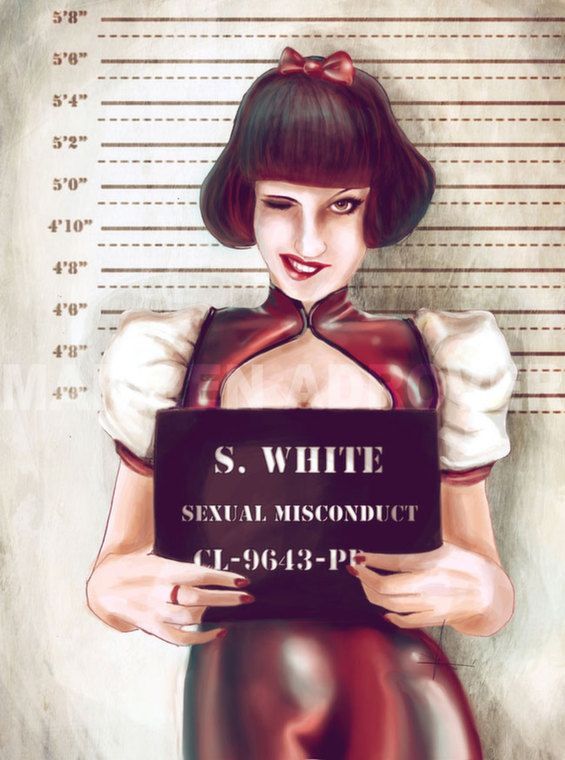
I’m going to let you in on a little industry secret that will increase your chances of selling a script one hundred-fold. That is no exaggeration, my friend. Of course, a major concession will have to be made. You will need to write somebody else’s story. Or, at least, the core of the concept will not be yours. But this shouldn’t matter to you. Writing other peoples’ ideas is how the Hollywood screenwriting business operates.
So how does this magical pill work? Well, we all know that Hollywood is an IP-driven business. They want their Twilights, their Avengers, their Lara Crofts, because all of these properties already have a built-in audience. That’s what Hollywood is paying for when it buys a Harry Potter. An audience they know will spend money to watch their films.
But there’s a loophole to this strategy – a way to appeal to audiences just as big, but that will cost the studio nothing more than the price of your script (pennies compared to a deal for The Hunger Games). If you’re a studio head looking for any bargain you can find, that sounds like a deal too good to pass up. So what’s the loophole?
The public domain.
These are properties that have lapsed past the required 92 years in which a property can be owned, and are now available to anyone to write about. There are TONS of great (and popular!) stories that are available to you in the public domain.
And Hollywood loves these properties. Sure, they don’t have the “newness” factor of, say, a Katniss Everdeen. But in a way they have something better. LONGETIVITY. A proven track record that they’ve worked over and over again.
Now when I first started writing, I hated the idea of the public domain. Why would I write some bunk idea from a guy who died 200 years ago? Ahh, but here’s the thing. Nobody said you had to write the same story they did. And actually, you don’t want to write the same story. You want to put a NEW spin on the story. You want to make it yours. And the options to do this are as endless as your imagination.
You could write a version of Alice in Wonderland that takes place in the BDSM world. Or Romeo and Juliet set 3000 years in the future. You can also invigorate a property by changing up the genre, time, or origin of the character itself. Write a romantic comedy about Dracula. Write a Western about Frankenstein. Turn Cinderella into the bad guy. Or a man! I actually had that idea once, about an average-looking plumber named Syd E. Rella who finds himself at a large charity auction and strikes up a flirtationship with the beautiful CEO of the biggest company in the city.
There are so many examples of these scripts selling. There was a dark serial killer script where Peter Pan was the killer and Hook was the detective that sold a few years ago. A script about The Count of Monte Cristo set 30 years in the future that sold two years ago. Snow White and the Huntsman sold for 1.5 million bucks and we all know how much money that movie went on to make. One writer even got creative and went past Pinocchio to focus on his father, Geppetto.
The point being: Let your mind roam free. Find a popular property in the public domain and put your spin on it. I PROMISE you that saying, “I have a script about a bored suburban man who builds a time machine in his basement that’s based on H.G. Wells, “The Time Machine,” is going to get a lot more attention from agents than, “I have a script about a bored suburban man who builds a time machine in his basement” by itself. Whether it’s fair or not, that’s how the business works.
So with that in mind, here are the top 25 works/authors in the public domain. Feel free to suggest any that I missed in the comments section. If they’re obvious ones, I’ll add them.
THE 25 MOST BANKABLE WORKS/AUTHORS IN THE PUBLIC DOMAIN
1) Alice in Wonderland
2) The Wizard of Oz
3) Cinderella
4) Frankenstein
5) Peter Pan (better lay off this one for awhile)
6) Robin Hood
7) Sleeping Beauty
8) Edgar Allan Poe’s work (The Raven, Tell-Tale Heart, etc.)
9) H.P. Lovecraft’s work (selected stuff – do your research)
10) H.G. Wells’ work (The Time Machine, War of the Worlds)
11) Pinocchio
12) Brothers Grimm (Hansel and Gretel, Little Red Riding Hood, Rapunzel)
13) Jules Verne’s work (Around the World in 80 Days, 20,000 Leagues Under the Sea)
14) Mark Twain’s work (Tom Sawyer, Huck Finn)
15) Robert Louis Stevenson’s work (Dr. Jekyll and Mr. Hyde, Treasure Island)
16) All the Greek myths (Zeus, Medusa, etc.)
17) Shakespeare’s work
18) The Count of Monte Cristo
19) Dracula
20) Robinson Crusoe
21) Sherlock Holmes (This is touchy one though. Do your homework)
22) Sleepy Hollow
23) The Great Gatsby (just entered the public domain)
24) Gulliver’s Travels
25) Charles Dickens’ work (Oliver Twist, A Christmas Carol, Great Expectations)
My suggestion would be to find one of these characters/stories that appeal to you and then find an angle that’s never been done before. That’s how your script is going to stand out. Feel free to test your public domain loglines in the comments below. Upvote the best ones and who knows, we may just find a few great scripts to write. For more works in the public domain, check out this link here, and this one here. Looking through each list, I’ve already found a handful of ideas I’d want to turn into movies. Richard Connell’s “The Most Dangerous Game?” Sign me up!
