
Scriptshadow 250 Contest Deadline – 60 days left!
Today we have not five, but SIX Amateur Friday contenders. Why? Well, I’ll be honest with you. I don’t think writers are bringing it with their concepts. They’re not bad ideas, but remember, when you’re an unknown screenwriter, you need your idea to STAND OUT. You want it to be exciting and different. Heck, a good half-dozen of Thursday’s IRONIC LOGLINES, which seemed to have been made up on the spot, were better than all the loglines I received in my Amateur Offerings inbox this week. By expanding the field, I’m hoping to increase the chances of finding something good. Good luck to all!
Title: The Patron
Genre: Psychological Thriller/Crime Thriller
Logline: Fresh out of prison, a young Brooklyn artist attempts to restart his career, but his plans are derailed when a seductive older socialite blackmails him into murdering her husband.
Why You Should Read: I know in the past you’ve said you love a good psychological thriller, and this is a dark one with more twists and turns than Taylor Swift’s love life (okay, I guess it hasn’t been that exciting lately). I set out to write something in the vein of classics such as “Fatal Attraction” and “Basic Instinct”, but with a different, unexplored central dynamic – specifically, one between an older woman and a younger man (40s and 20s, respectively). The power imbalance between the characters due to her wealth and his recent incarceration only serves to heighten the conflict in the story. The script received high-enough ratings to place it on the Top List page of the Black List website; I humbly submit it here in hopes that it will be met with similar regard. On a final note, I was a Quarterfinalist in the 2013 Nicholl competition, so I’d like to think that my writing skill is at a level that won’t leave you wanting to gouge your eyes out. (Sorry to end with that disturbing image, but it felt appropriate).
Title: THE THREE DEGREES OF SEPARATION
Genre: Psychological Thriller
Logline: To help her sisters cope with their parents divorce an intelligent and highly imaginative teenager fabricates fantastic stories, not realizing elements of those stories are manifesting in the home and drawing their father deeper and deeper into the dark world of his id.
Why You Should Read: Some of you may recognize this script from when it was featured last year on AOW. I received many notes that weekend for which I am eternally grateful. I put it away the script for some months and worked on other projects while trying figured out how to address the story with a whole new approach. Needless to say I woke from a dream one night to find none other than Billy Wilder standing at the foot of my bed. Together Billy and I took the story by it’s horns and wrestled it into submission. We even gave it a new title. The sun came up, Billy was gone and The Three Degrees Of Separation was ready for discerning eyes. Love it or hate it, it will leave an impression on you. I think you will love it. But if you hate it, blame it on Billy.
Title: Damn Nation
Genre: Horror/Action Thriller
Logline: Five years after a plague has overrun the United States, turning most of the nation into feral vampiric creatures, a Special Ops unit from the President’s current headquarters in London is sent back into the heart of the US in a desperate attempt to find a group of surviving scientists who claim to have found a cure for the disease… but not everyone wants to see America back on its feet.
Why You Should Read: I believe screenplays are evolving. With the advances of technology in the last couple of decades such as the internet, computers, ipads, smartphones, etc, screenplays can be more than words on paper, they can be visual and even interactive experiences. I’m not the first and I won’t be the last person to integrate artwork into my screenplay, but I think this approach, if done right, can add a lot of value to a project. Integrated artwork is just the tip of the iceberg though. I believe soon people will be adding a lot more elements, such as photo references, storyboards, video, sound effects, music, and other audio-visual components embedded into their scripts. The possibilities are endless.
However, I know that my view on things is going to be vastly unpopular right now. I think most people will have an old school attitude and believe that writers should write, leaving the fancy bells and whistles to someone else.
With that said, I do believe nothing is more important than the words themselves. Above all else, I hope my script is judged on the words, not the images. Everything else I’ve added is just a bonus.
Title: Sarah’s Getting Married
Genre: Comedy
Logline: Harry, wrongfully accused of embezzlement, escapes from prison in order to get to his daughter’s wedding and walk her down the aisle.
Why You Should Read: Concept is king. It’s something we’ve all heard, and I feel this script has a great concept that can really sell. This is an idea that I’ve had for years, and it has gone through many changes. But I finally came up with a good, fun way to tell this story and I want to share it with everyone who is willing to take a look at it. Besides, who doesn’t like a good comedy that has heart?
Title: Lifeline
Genre: Dramedy
Logline: A womanizing dockworker is forced to take in his estranged, brain-injured father after the old guy is ousted from a nursing home.
Why You Should Read: I’ve placed my story in the port city of Halifax, Nova Scotia because I wanted the setting to set the tone of the script and influence the characters. It’s a “relationship” dramedy that’s fun and poignant and has a lot of heart (I hope!) Sorry, no guns, explosions or time travel. I’ll save that for the rewrite!
Title: THE PINSTRIPED PRIMATES
Genre: Family
Logline: Three talking gorillas escape from captivity and enter the world of professional wrestling. The two older brothers – managed by the intellectual younger brother – take a run at the tag-team championship.
Why You Should Read: It’s something different for both of us. For me, it’s a shot at lighter writing. For you, it’s a chance to escape from the usual AOW ghetto of contained thrillers, gross-out comedies, and derivative horror. Have you ever reviewed an amateur Family screenplay? — Also, this script Quarterfinaled in the 2014 Fresh Voices contest. This is intended as live action with latex makeup, like the original Planet Of The Apes – not animation.
Yesterday’s Irony Logline Winner has just been announced. Go back to yesterday’s post if you missed the competition. Please keep all reactions to the winners in the above linked post. All comments today are limited to Insatiable discussion. Thanks!
Genre: Horror
Premise (from writer): When a law student’s girlfriend mysteriously vanishes from a truck stop diner, he suspects a shady trucker is to blame. But as he races to save her life, he discovers that the only thing more terrifying than her captors is the reason she was taken.
Why You Should Read (from writer): I need the help of the ScriptShadow community! I like scary things and enjoy a good horror film. I’ve been writing for quite some time and have advanced in some of the more well known contests including Nicholl. INSATIABLE was a semifinalist in Austin in 2011. A revised version was a finalist in ScreamCraft last summer and a semifinalist in Page. It has received some positive feedback, yet here it sits on my laptop. My question is this — is the story worthy of a movie? Can it get over the hump? Is the script worth revising or should I consider it a building block, leave it on my laptop, and move on? Please help!
Writer: Michael Morra
Details: 110 pages

I’ve always been a big fan of Michael Morra’s writing. He’s a guy who I’ve felt has been on the verge of breaking through for awhile now. And when you open one of his scripts, you’ll see why. He knows how to pull you in (what a great opening scene!), he writes in a way that yanks your eyes down the page, his writing is descriptive but never overbearing. And he writes in one of the most marketable genres – horror, a genre he clearly knows well. I feel like if a guy like Jason Blum gave this guy a shot, he’d deliver.
So what about Insatiable? Does it live up to my high expectations of Michael? Let’s find out.
Insatiable starts out hot. And I mean literally. At a popular truck stop diner just outside of the Appalachian Mountains, a dilapidated pregnant woman stumbles into the station, grabs one of the pumps, douses herself with gasoline, and then sets herself on fire. Without even paying!
As we ponder whatever the hell THAT was, we jump a few counties over to 24 year-old Jake. Jake’s one of those lucky young men who won the genetic and financial lottery. He’s got a pretty perfect life, and he’s about to officially share it with his farmer’s daughter girlfriend, Brooke, who he plans to propose to this weekend during an impromptu vacation with their friends Austin and Claire.
When they stop to grab a bite to eat (at that, um, exact same truck stop), Brooke drops a bombshell on Jake. She’s got one of those human beings growing inside her. Yup, she’s preggies. Jake doesn’t take the news nearly as well as she expected, a fight ensues, and Brooke storms outside in anger.
Jake decides to let her cool off, until a bunch of time goes by and Brooke still hasn’t returned. He heads outside, looks for her, and finds scattered drops of blood instead. He calls in the cops, who key in on a well-known trucker named Winston. Winston looks all sorts of guilty but they can’t seem to find any evidence linking him to the disappearance.
Jake’s not so sure though, and decides to head up to Winston’s house to get to the bottom of this. Meanwhile, Austin and Claire stay local and snoop around, looking for clues.
Just when it seems like Winston might not be their guy, Jake discovers a deep dark secret. That Winston’s wife is… well, how do I put this lightly – A FUCKING MONSTER! A monster who feeds off the blood and guts of the living. It’s her who’s kidnapping pregnant woman, so she can finally have the baby her husband was never man enough to give her.
One of the ways you can spot a writer on the verge is that they’re not precious about their material. Newcomers will hold tight to even the most banal idea. Every character, every page, every sentence, is treated as if Shakespeare himself wrote it.
Seasoned writers want to know if something’s not clicking so they can stop wasting their time and move on to the next idea. Which is the question Michael has posed to us today.
Unfortunately, the answer isn’t easy but I can definitely see why this script has advanced over the majority of the competition only to fall short of the final prize. Michael’s clearly a good writer, but there’s something about this script that feels – I don’t know – too familiar.
Horror is really a genre where you have to bring one of three things…
1) A fresh idea
2) A fresh take
3) A fresh voice
This idea doesn’t feel fresh to me. A woman gets kidnapped. That’s common. And then there’s some scary creature involved. Also common.
As for the “take,” I suppose it’s a little bit unique (I’ve never seen a bat creature before) but even that brings me back to the winged creature in Jeepers Creepers.
And finally, while the writing is excellent, I wouldn’t say the voice is unique. When you read a script like, say, February, there’s a very distinct flavor to that writing that you haven’t experienced before. And I’m not one to say that your voice HAS to be unique to sell a script. I see scripts sold all the time from writers with no voice. But, like I said, the script does need to be fresh in one of these three areas: idea, take, voice, and while Insatiatble knocks on the door of a couple of those, it never breaks through.
Now as a pure script, the setup and structure are solid, which is why a screenplay like this – while not perfect – advances past 90% of the material in a screenplay competition.
We have a girl that goes missing. A girl in peril always works. This then gives our characters a clear goal – find the girl. The stakes and the urgency emerge naturally from that. We’re even reminded that if she’s not located within 48 hours, their chances of finding her alive are cut in half.
And we’ve got a solid mystery box too. Why would a pregnant girl set herself on fire rather than live? What was it, exactly, that was growing inside of her?
I guess the reason this perfectly sound structure didn’t work on me is a combination of a couple of things. First, this isn’t my type of movie. Unless a creature-feature is done flawlessly, I’m more into the “real life” horror variety. I’m much more afraid of, say, the family in Texas Chainsaw Massacre since, theoretically, that could really happen. I know that I’m never going to run into any bat people any time soon, so I’m not nearly as scared.
And two, there was nothing new about the story. As I read through it, all I kept thinking was, I’ve been down this road before. And it’s for that reason that I’d probably encourage Michael to move on to the next idea. Insatiable puts his solid writing skills on full display. But this isn’t English class, where you get marks for “solid.” The movie world wants to be WOWED. They want something they’ve never seen before. And Insatiable, at least to me, didn’t meet that criteria.
I still wish Michael the best and encourage him to keep writing. And also, don’t just go by my review here. I want to hear from people who like creature features and get their take as they’re more familiar with the genre. Good luck, buddy. ☺
Script link: Insatiable
[ ] what the hell did I just read?
[x] wasn’t for me
[ ] worth the read
[ ] impressive
[ ] genius
What I learned: The “sort of” ticking time bomb that’s still a ticking time bomb. You know I like ticking time bombs. Create a deadline for your characters to achieve their goal or else everything goes to shit. It’s a tried and true device. But sometimes, when you use an EXACT TIME DEADLINE, it can feel artificial. “Man has 37 hours to deliver the drugs or the world explodes!” A nice alternative are these “sort of” ticking time bombs where there isn’t an exact time, but an implied time. Michael does this here and they did this in Taken as well. The cop in Insatiable says, “If we don’t find her within 48 hours, our chances of finding her alive are cut in half.” In Taken, Liam Neeson’s CIA buddies tell him, “If we don’t find her in 72 hours, stats say she’s probably gone forever.” Again, this isn’t a HARD TIME – it’s just a baseline. But it plants that seed in the audience how important time is without creating a LITERAL ticking time bomb that can seem artificial.
Yesterday we had a mini-contest to come up with the best ironic screenplay idea. The winner got an automatic bid into The Scriptshadow 250.
Well the winner(s) have been announced. I decided to create a new post so congratulations comments wouldn’t get buried in the previous post.
***AND THE WINNER IS: “NO ANIMALS WERE HARMED” FROM RIPLEYY!***
A trip to Eastern Europe goes horribly wrong for a group of PETA employees when they find themselves being hunted down by blood-thirsty animals
***SECOND PLACE: “BORDER PATROL” BY FRANCIS B!***
A tough and remorseless US Border Patrol Agent is kidnapped by a lower class Mexican family and forced to lead them safely on the other side of the Rio Grande.
Both writers get AUTOMATIC BIDS into the Scriptshadow 250. Good job, guys!

I had a lot of fun reading the ironic loglines in last week’s Three or Out post. So much so that, today, I’d like to expand on that. A good ironic premise stands out so much from other ideas, that the more you can practice these puppies, the better chance you’ll have at constructing a “must-read” script. Remember how down I was on dramas yesterday? Well, if you add irony do your dramatic premise, it instantly becomes a hundred times more readable.
Unfortunately, irony isn’t an easy concept to grasp. Alanis Morisette wrote an entire song about irony only to later find out that her definition of it was wrong. Famous literary theorist J.A. Cuddon says that irony “eludes definition.” There’s even a website dedicated specifically to whether things are ironic or not. You can submit an ironic observation and people vote on its irony quotient.
Indeed, when I looked up definitions online, I found dozens, if not hundreds, of varying takes on the elusive trope. However, when in doubt, go back to the good old English Oxford Dictionary. And while it’s not a perfect definition for our purposes, it’s pretty strong: “A condition of affairs or events of a character opposite to what was, or might naturally be, expected.”
A few examples:
1) A suicide prevention hotline worker eagerly prepares for his own suicide.
2) A lowly janitor is the only person at MIT to solve an impossible math equation.
3) The world’s first unsinkable ship sinks on its maiden voyage.
4) A lawyer who cannot lie for a day.
5) A priest becomes the city’s most ruthless criminal.
I think you sense what’s coming. That’s right. Whoever comes up with the best ironic logline gets an automatic entry into the Scriptshadow 250. It doesn’t have to be the premise you enter the contest with, but it certainly wouldn’t hurt. Although the final decision will be up to me, please up-vote your favorite premises to move the best ideas to the top. Good luck and have fun!
To learn more about The Scriptshadow 250 Contest, go here.
***AND THE WINNER IS: “NO ANIMALS WERE HARMED” FROM RIPLEYY!***
A trip to Eastern Europe goes horribly wrong for a group of PETA employees when they find themselves being hunted down by blood-thirsty animals
***SECOND PLACE: “BORDER PATROL” BY FRANCIS B!***
A tough and remorseless US Border Patrol Agent is kidnapped by a lower class Mexican family and forced to lead them safely on the other side of the Rio Grande.
Both writers get AUTOMATIC BIDS into the Scriptshadow 250. Good job, guys!
Will the adult diaper in Pale Blue Dot become the next Wilson the Volleyball?
Genre: Drama (based on a true story)
Premise: When a female astronaut returns home after her first trip into space, she finds her family life unwinding due to the unique pressures of her job.
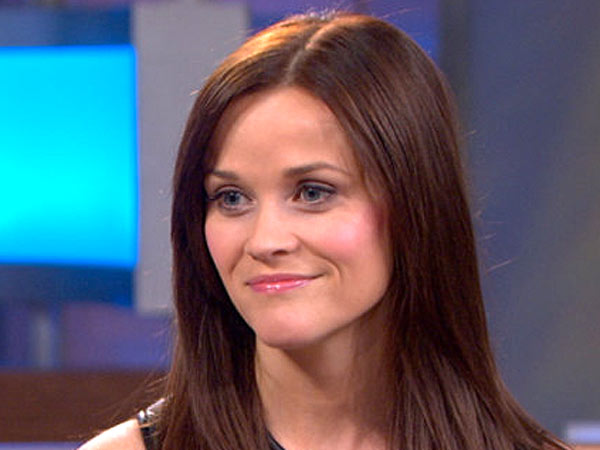
About: Pale Blue Dot is a rarity – a DRAMA spec sale. The script started gaining buzz early in the year and then when Reese Witherspoon hopped on, was summarily snatched up. The writing team of Brian C. Brown and Elliot DiGuiseppi are coming off the buzz of landing on last year’s Black List with their biopic, “Uncle Shelby,” about cartoonist Shel Silverstein.
Writers: Brian C. Brown and Elliot DiGuiseppi
Details: 121 pages (undated)
Well shit. I didn’t know this was the crazy astronaut diaper story!
The way they presented this in the trades it was some gloomy drama about an astronaut trying to re-adjust to life on earth. But this is the story of that crazy astronaut chick who wore a diaper on a cross-country road trip to go murder the lover of her lover.
Which means we’ve got ourselves a screenplay!
Or do we?
At its heart, Pale Blue Dot is a drama – and the drama genre is a dying player in the movie business (unless we’re talking about biopics). I suppose this is kind of a biopic. It’s a true story, at least. But Pale Blue Dot exemplifies why dramas are on life-support. They just don’t generate the kind of heat that today’s busy audiences require to stop their lives and come to the theater.
Laura Pepper has achieved what very few people in history have achieved, especially women. She’s an astronaut. After coming home from her first mission, Laura should be on top of the world. And yet, minutes after touching down, all she can think about is when she’ll go back up again. This is despite having a wonderful loving husband and three amazing children.
While Laura struggles with these selfish feelings, she meets one of NASA’s hotshot astronauts, Mark Goodwin. The cocksure Goodwin is everything her husband isn’t. He’s carefree, he’s cool, he’s dangerous. And Laura needs danger right now – anything to fill the void of not being up there.
The two begin an affair almost immediately and things go from fun to serious. Or at least they do on Laura’s end. Laura can’t go a day without needing Mark. She needs to touch him, feel him, be next to him.
But the two are both married and there are unwritten protocols at NASA that astronauts can’t get involved with one another. For now, they’ll have to hide their love. But Mark assures Laura that all of this is temporary. They’ll figure out a way to be together soon.
And then Erin comes along. Erin is the hot new recruit who immediately catches Mark’s eye. Laura notices something between the two but convinces herself it’s nothing.
Unfortunately, it turns out Mark isn’t exactly the committed affair type after all. And when Laura learns the two are meeting up in another state to bang, she jumps in her car, determined to stop them. What follows has become one of the most infamous stories to ever make the news, and destroyed the lives of all three astronauts involved.
Let’s start with the obvious. We’ve got a drama spec sale here (a rarity). But before you drama writers start crafting your battle cry, keep in mind that this script is based on a true story. There’s no doubt that that played a huge role in the sale. I don’t think this gets past the first reader if it’s fiction.
And that’s because Pale Blue Dot is a lot more interesting as a discussion piece than it is a screenplay. It blasts off into territory most screenwriting teachers would tell you to avoid, the most obvious being our unlikable female protagonist. One of the first pieces of advice I heard when I started writing screenplays was: Male protagonists can cheat, female protagonists can’t.
This is not some sexist creed scratched up by male studio heads. It was formed after hundreds of test screenings over the years. When the audience – both male and female – saw the female main character cheat on her husband, they hated her, and hated the rest of the movie as a result.

Well, Pale Blue Dot takes this to a whole new level. Laura isn’t just cheating on her boyfriend or her husband. She’s got three kids! She’s choosing cheap sex over an entire family. I don’t know if I’ve ever seen this attempted in a movie before (with the female as the main character). It flies in the face of everything they’ve told us audiences will accept, so it’s a really bold move by both the writers and Reese.
But I think the script has far bigger problems to worry about. Cheating lead character or not, there isn’t a whole lot that happens in the movie.
I recently watched an interview with Francis Ford Coppola and he conceded that when he was editing The Godfather (a movie he initially didn’t want to make), he was afraid audiences would think it would be some long boring drama.
And this is the problem with drama. It doesn’t have those devices that help you easily keep an audience’s attention. Fear, thrills, action. The only thing you have to keep your audience watching is, well, drama. And in a world where the average person’s attention span has been cut in half since the year 2000, it’s become debatable whether that’s enough.
I used to hate when scripts started with a wild opening sequence only to jump back to “1 month earlier” or “1 year earlier.” I thought it was a cheap lazy device. But I’m realizing that with drama, it’s the only device to use if you want a shot at keeping your reader’s attention.
Pale Blue Dot starts with our heroine, Laura, wearing a wig, carrying a gun, and changing her soiled adult diaper right there in the middle of a gas station. It’s an intriguing series of events that definitely caught my interest. But then we cut to “1 year earlier” and we have to endure 100 pages of a woman feeling sorry for herself because earth isn’t as cool as space.
I have to admit though that if Brown and DiGuiseppi didn’t write it that way (with that opening scene), I never would’ve made it past page 20. No matter how bored I got, I had to see what happened with that diaper! So as annoying as those opening scenes are, I have to admit this one worked.
What didn’t work was Pale Blue Dot’s second act. It’s a woman feeling sorry for herself (a terrible trait in any character), wishing she was back in space, building a relationship with another astronaut. Even the affair felt restrained.
I mean, had Laura actually killed this woman, this would be Academy Award bait all the way. But when you don’t have a dead body, and your star scene is a soiled adult diaper, you need to start questioning whether you have enough meat for a screenplay.
On top of all of this, Pale Blue Dot struggles to explain how this love triangle is different from any other love triangle. I mean couldn’t this have just as easily been salespeople at a car dealership, waiters and waitresses at a restaurant, attorneys at a law firm? Having your astronaut characters say things like, the rest of the world “doesn’t understand us,” doesn’t make this an astronaut-specific story. And if it’s not astronaut-specific, you’re not exploiting half your hook (the other half, of course, being adult diapers).
With that said, the writers achieved what everyone who visits this site is trying to achieve – they got a major attachment and sold their script. So if there’s any advice to come out of this, I’d say it’s when writing a drama, write a part that a major actor/actress would want to play.
Laura’s astronaut-turned-diaper-wearing-scorned-lover character is, without a doubt, the kind of mind an actress would want to jump into. And so if there’s a saving grace to Pale Blue Dot, that would be it.
[ ] what the hell did I just read?
[x] wasn’t for me
[ ] worth the read
[ ] impressive
[ ] genius
What I learned: Dead bodies change everything. Seriously, if you have a drama you’re struggling with right now, figure out a way to get a dead body in there. I guarantee your script becomes 100 times more interesting. Look at one of the most famous dramas of all time, American Beauty. The movie starts with a dead body. Our main character’s. – Pale Blue Dot’s Achilles’ heal is that nobody got hurt. Nothing bad actually happened. And that hangs over the story throughout, leaving the reader with a distinct feeling of, “That’s it?”
