
Genre: TV Pilot – dark comedy
Premise: When a coup by a crazed military leader throws Pakistan and its nukes into disarray, the U.S. must make a difficult decision on whether to start World War 3.
About: Writer Roberto Benabib is probably best known for his writing on Showtime’s successful show, Weeds. He also wrote for the hit show Ally McBeal. Here, he teams with his brother to write the show, who’s getting his first produced credit (the show was officially picked up for series yesterday). The pilot for The Brink is being directed by comedy directing titan, Jay Roach (Meet the Parents, Austin Powers, The Campaign). It stars Tim Robbins (Shawshank!) and Jack Black (Tropic Thunder). It will air on HBO. Gotta admit that I’m confused why Showtime, who worked so closely with Benabib on Weeds, didn’t produce The Brink.
Writers: Roberto & Kim Benabib
Details: 34 pages – 6/12/13 draft
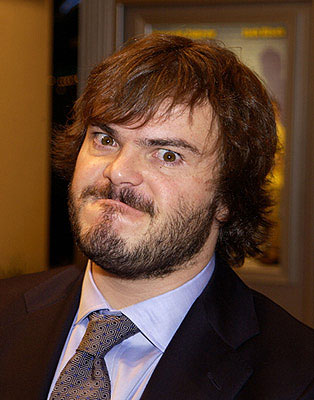
It feels like there’s a battle going down. That battle is between HBO and Netflix. The powerhouse DVD subscription-based service shut down one of the biggest entertainment businesses in the world (Blockbuster) in big part because the company didn’t take them seriously. So as they’ve moved into new spaces, companies have fortified their walls and drafted their soldiers. They’re not going to become the next Blockbuster.
The new thing seems to be to casting big film actors in TV rolls. Kevin Spacey with House of Cards on Netflix. HBO retaliates with Matthew McConaughey in True Detective. And now they’re bringing in Jack Black for The Brink. HBO is making it clear that if you want to play with fire, they still have the biggest matches.
None of that explains what’s going on with this show though. It’s one of those projects that makes you go, “Hmmmm.” A show about the end of the world starring Jack Black? A nuclear comedy? I guess it’s been done before, but not in TV form. I admit I was the same way when Jack Black was cast in King Kong. Funny Chubby Singing Guy starring in Peter Jackson’s epic? That didn’t turn out so well. Let’s hope this one does.
Alex Coppins (Jack Black – although he’s described in the script as “think a young Robert Downey Jr.”) is a junior foreign service officer for the CIA. If you’re wondering what that means, the rough translation is: “a low-level nobody.” Alex is a good guy trying to do good things in Pakistan, but on this particular day, everything changes. There are riots in the streets. Locals start throwing rocks at him. So he runs away to safety with his driver, all the while wondering what the hell is going on.
Cut to 60-something Walter Hollander, the Secretary of State (described as: “Think Bill Murray”). He’s a drunk prostitute-abusing politician, everything that’s wrong with Capitol Hill. The difference is, this guy’s got some real power! He’s torn away from an Asian hooker when this Pakistan business blows up, and he’s one of the first to learn that a crazy military psycho has just taken over the country and is threatening to send a bunch of nukes at Israel.
Naturally, this leads us to the president (progressively cast as Hispanic), who’s being pressured by his advisors to take out all the nuclear missile sites in Pakistan before this new army can move the arms and hide them. It’s a tight window and he has to act fast.
The final piece of the puzzle is a Top Gunner pilot named Zeke (“Think Owen Wilson”) who’s less concerned with world wars than he is with expanding his illegal prescription pill operation throughout the armed forces. But the man’s job is to push buttons when the prez needs them pushed so he goes over Pakistan waiting for the final confirmation to rain down nukes and kill a bunch of innocent people’s lives.
In a final “add-on” paragraph at the end of the pilot, we’re told that over the course of the series, all of this will take place in REAL-TIME, much like 24. Then, once the season is over, a new danger will be presented in the following season, and the same principle actors will be involved. I’m not quite sure how they’re going to do that since everybody here (particularly Alex) is so entwined in this specific Pakistan situation.

But that’s a good jumping off point to discuss the pilot. When you think about it, this is why TV is being so celebrated. It’s because they can make shows like this, which don’t fit into any traditional category. I mean you basically have a comedy here about nukes and millions of innocent lives potentially being eliminated.
On the flip side of that, there’s a reason why material like this is considered “challenging.” It’s hard to know if people are going to get the tone. And that was certainly my problem while reading it. I wasn’t sure if I was supposed to laugh or not. The way this doomsday scenario plays out is all rather real and scary. If a nuclear war goes down, it’ll probably be something similar to this (a weak country with nukes gets taken over by a crazy lunatic in a military coup). To that end, I wasn’t laughing.
Problematically, the humor that was on the screen was kind of cliché. The biggest attempted laugh was Walter Hollander banging a prostitute when he’s called to the White House by a presidential female aid.
Here’s what I don’t understand about this kind of scene. It sets up the character well. We see Walter banging the prostitute while drunk and immediately know what kind of person he is. It’s ironic (person in power is such a mess) which is what every screenwriting teacher in the world teaches you to do. But isn’t all of that marred by the fact that we’ve seen this exact same scene a billion times before? “Oh, a politician who’s drunk and bangs hookers.” What’s new about that? Yet I keep seeing it all the time. So I don’t know if my standards are too high or this is as lazy as I think it is. Thoughts?
Not that everything is lazy. I mean, I’ve never seen a comedy TV show that’s dealt with subject matter like this before, so I have to give the Benabib brothers that. But when you’re on the fence about any piece of writing, one lazy choice can result in the reader giving up on the script. I didn’t’ quite get to that point, but Walter’s cliché entrance nearly brought me there.
As for other characters, Zeke was the most original. He’s got a deal with his pharmacist ex-wife to sell oxycontin to all his fellow soldiers (that Weeds show is the gift that keeps on giving!). I’m definitely seeing more scripts covering pharmacists who are abusing their privileges for pleasure or monetary gain (the upcoming “Better Living Through Chemistry” comes to mind) so it’s maybe not as original as the writers think it is, but I the idea that Zeke is divorced from but still working with his wife in an illegal international drug operation for the sake of their kids. That was unique enough to keep me invested.
And then, of course, with any show, it’s all about “Would I want to keep watching?” What’s the hook that’s going to bring the viewer back next week? The premise here practically guarantees that’ll happen. Who’s not going to want to see how we get out of this? The stakes are sky high (the fate of the world) and presented in a way we haven’t seen before. I mean, we’ve seen the fate of the world at stake in a million movies, but rarely in a TV show that puts us right on the brink of it all. That was a really clever hook on their part.
In the end, this show is going to live or die on how the tone is handled. I don’t envy Jay Roach’s job. How you’re going to balance a comedy with a situation this terrifying – I honestly don’t know how you do it. But there’s enough on the page here to at least give it a shot.
And despite some of my criticism, I want to congratulate companies like HBO and Netflix on continuing to push the medium. Not every show’s going to work, but when just one does, it can quickly change the storytelling landscape.
[ ] what the hell did I just read?
[ ] wasn’t for me
[x] worth the read
[ ] impressive
[ ] genius
What I learned: So I was reading a particular dialogue exchange in The Brink that I didn’t like. Alex’s Pakistani driver takes him back to his house to lay low for awhile. As they’re walking up to the house, Alex says: “This is nice. You live here?” “What were you expecting?” “A mud hut. Stray goats.” “What does it feel like to be such an asshole?” “Face it. The world is run by assholes. Bows to assholes. Show me one person in a position of power who isn’t an asshole.” “My father.” “Your mother might beg to differ.” I don’t think this dialogue is bad. But personally, I hate these little “button” jokes at the end of exchanges that seem to be there more out of necessity than because they’re funny. “Your mother might beg to differ.” That line falls dead to me, mainly because you can feel the line trying too hard. I bring this up because for a long time, I’d see stuff like this and say, “If they’re doing it, I must have to do it too.” So I’d write stupid little button jokes at the end of scenes that weren’t really funny because I thought I had to to be taken seriously. What you eventually learn, as a writer, however, is that if you don’t like something, you don’t have to do it. Because if you don’t like it, then there are people out there who aren’t going to like it either. Those are the people you’re writing for, people who respond to the way YOU like to do things. So never write something because you believe you “have to.” Write it your own way. That approach is what will set you apart from others and help define your unique voice.
Genre: Sci-fi Drama
Premise: A pair of aliens masquerading as humans take over a farm house on earth. The female alien then begins to lure men into the house, and KILL THEM.
About: Co-writer and director Jonathan Glazer doesn’t make movies often, but when he does, they usually make a lot of noise on the indie circuit. His best-known film is Sexy Beast, but in 2004, he made a movie called Birth that had one of the creepier scenes I’ve ever watched. The film is about a woman who’s convinced her dead husband has come back to her in the body of a young boy. The scene in question has them bathing together. I’ll let you figure out the rest. The point is, the man takes chances, so when he puts something together, it’s worth paying attention to. Under the Skin hits theaters this April (in the U.S.), and stars, surprisingly, Scarlett Johansson. It was developed with the assistance of FilmFour and the UK Film Council. Glazer got his start in commercials and videos, and won MTV’s prestigious “Director of the Year” award back in 1997.
Writers: Walter Campbell and Jonathan Glazer (based on the novel by Michael Faber)
Details: July 10th, 2008 draft – 121 pages

Under the Skin was pitched to me as a thinking-man’s sci-fi drama inspired by movies like 2001: A Space Odyssey. I don’t know if the person who said this had actually seen 2001, but I am here to tell you, this is definitely not 2001.
WHAT “Under The Skin” is is another question entirely. We have a writer-director here, which almost always means someone who sees the writing aspect as a means to an end. Indeed, if you watch a movie like “Birth,” it’s more about mood and tone than dialogue and story. And when you start saying things like, “directing is more important than the script,” you get people like Carson riled up. Because while a strong argument can be made that that’s true, a director can’t do anything unless something is written first. And it doesn’t matter what kind of imagery you put in that cineplex if your story sucks. So why not get the script right?
Under the Skin starts with a farmer in the Scottish highlands who swears he saw a dead man, a little black alien creature, and a bird, having a conversation the other day. His friend, of course, thinks he’s hilarious, not realizing that he’s serious. In fact, the bird comes and visits him at home some days and talks to him. Of course, in true indie form, this trio has little to nothing to do with the story.
Meanwhile, two aliens are born in outer space and turned into human beings, who then land on earth near a farm. Lucky for them, the farm was recently deserted, so they come in and start living there. The male alien is named Raymond, and his “wife” is named Laura.
Laura is shapely and beautiful and everything a man desires. Which is important, because her sole purpose seems to be pulling men in then sending them to her barn prison, which has an alien liquid floor that traps the men inside before slowly dissolving them. Why she does this is not clear, but who are we to question an alien’s motivation?
In the meantime, Raymond, the hubby, becomes obsessed with building a fence around their new property. He saw some chaps hunting foxes on his farm the other day and that just isn’t okay with him (a possible intergalactic PETA connection?). So he spends, literally, the entire movie setting up the construction of this fence.
Eventually, one of the men Laura entraps escapes, dying before he can get to the cops, and an investigation begins (with about 20 pages to go). Will the locals discover that their neighbors are really aliens? And if so, whatever are our human-impersonators going to do?

I can just tell that the way Glazer will shoot and score this, it’s going to be creepy. You can feel that eeriness on the page, which gets into lots of little details, the way these mood-dependent movies often do (“A drone slits the air and a fly lands on the female’s collarbone. She freezes, held by this intrusion. The fly moves on.”).
But it kills me because despite every little wonderfully descriptive passage, the story here is glacial. Very little happens. And what does happen is usually some variation of something that’s already happened. Like Laura luring men in for example. I get that that’s what she’s here to do. But each instance of these men being entrapped is virtually identical to a previous instance. Whether it’s on the street or in a club, she lures the guy in with her looks, chats him up, then brings him back to the barn.
Repetition is one of many mortal enemies of the screenwriter. Stories should evolve, change. If all that’s happening is the same stuff we already saw 10 pages ago, and then 10 pages before that, we’re going to get bored.
Now there are some scripts, like this one, where the very nature of the plot requires the protagonist to do repetitive things. Laura is here to lure in men, so I get that we need to see her do it again and again. But for that to work, each one of her attempts must feel new and different, with unique challenges and stakes.
That was the thing. Laura’s experiences were never difficult. Every guy she approached was so damn easy to get. There were never any obstacles. They looked in her eyes and she had them. Without obstacles, there’s no drama. There’s no, “Oh my God, how’s she going to get out of this?” The reader being unsure about what’s going to happen is what makes us want to keep reading. If what’s going to happen is never in doubt, we get bored.
The thing is, even if Glazer and Campbell were able to make this work, the script still had a couple of steep mountains to climb. First, I had no idea why Laura was trapping these men. It wasn’t like Invasion of the Body Snatchers, where the goal was clear (you get more humans in order to turn them into aliens). She just seemed to want to kill them. But for what reason? Are you really going to travel billions of miles to come to earth to become a serial killer? If I don’t know why you’re doing what you’re doing, it’s hard for me to care.
Also, both characters, because they were emotionless aliens, had very little presence on the page, which made them boring. This is a problem you’ll run into EVERY TIME you try to write emotionless characters. It’s just hard to make those characters pop. One solution is to add another character with a big personality to balance out the lack of personality in the silent character. With The Terminator, for example, The Terminator is emotionless and doesn’t say much, but Sara Conner’s pretty prickly. She’s got some personality, which evened things out. We didn’t get anything like that here.
One of the benefits of studying screenwriting and reading so many scripts is you figure out the things that consistently work and the things that consistently don’t. It doesn’t mean you can’t use one of these “proven bad things” and figure out a way to make it work. It just means you make the job harder on yourself. And the more of these “proven bad things” you stick in your script, the more you skew the odds against yourself.
Here we had a) characters repeating themselves throughout the script b) doing things for reasons we didn’t understand c) never encountering obstacles when doing these things (it was always easy) d) who lacked personality. I’m not saying it’s impossible to make a story like this work. But I can guarantee you it’s not going to be easy.
Sometimes I feel like there’s a book out there called “Indie Screenwriting” that only indie writers and directors know about. In this book, you’re taught to take a really long time to get to your plot points. You’re told to avoid conflict because too much conflict is “cliché.” To make your main characters really introverted and therefore devoid of any emotion. And to never explain what’s happening. Just have things happen.
If more indie writers took traditional approaches to storytelling, I feel they could be telling the same stories they want to tell, but reach a much bigger audience, because there will be clear goals and stakes for the audiences to get involved in. I mean one character in Under The Skin spent 80 pages talking about building a fence. Not even building it. Just talking about building it. What are the stakes behind that? Why do we care if this fence is built?
If he needed to build a fence quickly because they had bodies piling up that Laura was accumulating which they needed to bury – then AT LEAST now the fence would have purpose. But to keep out hunters who have no influence on the story? Who cares, right?
It’s just little things like that that, if taken care of, make the script much better, whether it’s an indie or mainstream movie.
Not going to lie, this one was a little frustrating.
[ ] what the hell did I just read?
[x] wasn’t for me
[ ] worth the read
[ ] impressive
[ ] genius
What I learned: If things are too easy for your protag, we get bored. Laura catching her prey (men) was way too easy. It’s okay if the first one is easy, but each successive man should be harder to get. The stakes should be higher. Things should go wrong. Bigger obstacles should get in the way. That’s how you infuse drama into your scene. You create doubt!
Genre: Sci-fi
Premise: (from Black List) An epic love story set in a time where a dying scientist is able to upload his consciousness into the internet and, facing its global implications, must fight against the forces who are actively working against the existence of a singularity.
About: This was one of the hottest projects in town last year, born from a script that sold for a lot of money. It became hot when Christopher Nolan’s longtime director of photography, wanting to make his directorial debut, attached himself. Johnny Depp signed up soon after. Then Morgan Freeman, the girl with the dragon tattoo’s sister, Kate Mara, and Iron Man 3’s Rebecca Hall. The film is in the can and will be hitting theaters in April, trying to grab that pre-summer sci-fi slot that’s proven so successful for a few projects. As for the writer, Jack Paglen, this is his breakthrough script! However, he didn’t start writing yesterday. He actually had a script on the 2007 Black List, with 3 votes (called “Joy”), and was teaching screenwriting at the New York Film Academy in L.A. (isn’t that an oxymoron?) while writing Transcendence. Transcendence finished with 7 votes on 2012’s Black List.
Writer: Jack Paglen
Details: 5/01/12 – 131 pages

This is not the first time I’ve seen this idea. In fact, I’ve seen people trying to crack this story (or stories like it) for awhile. There was even a huge spec written in the 1990s by Kyle Wimmer that tackled very similar territory. But without question, Transcendence transcends the idea. Paglen cracks it. All of the pitfalls inherent in this concept (which there are many of), he found ways around them. To understand this script, you have to imagine 2001 occurring here on earth. On a global scale. Sound ambitious? Well, this is an ambitious script. And while I wouldn’t put it in the category of “great,” I’d say it’s pretty damn good.
30-something neurosurgeon Max Waters is one of a handful of scientists across the world who is making strides in artificial intelligence. Their goal is to reach the “Singularity,” a nerdy term for when computers become as smart as humans. From there, it’s assumed, computers will become twice as smart as humans, then four times, then eight, then 16, and so on very quickly, til the point where their intelligence level will literally allow them to do anything, and anything may include getting rid of us.
Which is exactly why a renegade group out there known as the “RIFT” is trying to assassinate these geeks. They believe once the singularity is reached, our planet will be in danger. They manage to kill most of these scientists, but strike out with Max. They do manage to shoot Max’s best friend, Will, however. Lucky for Will, the shot is a flesh-wound. Unlucky for him, the bullet is laced with uranium. Will (who I’m assuming will be played by Depp) will be dead in weeks from radiation poisoning.
Will’s wife, Evelyn, however, is very close to figuring out how to copy an organic brain into a digital drive. And she gets this wild idea that they should do this for Will before he dies! Max thinks this is way too weird, but Evelyn is so passionate about it that he goes along with it. We also get the feeling that Max has a bit of a crush on Evelyn, and that he’ll do anything she asks.
A week later, Will dies, but Evelyn gets him copied by the skin of her teeth. Naturally, it’s a little weird talking to your husband when he’s inside of your PowerMac, but I guess it’s not that different from Skype, right? I mean, outside of the fact that he’s eternal and lives inside the internet and controls the stock market? Besides that, it’s just like any other form of electronic communication.
It doesn’t take Will long to realize what he’s capable of. So he starts making money off the stock market, transferring that money to offshore accounts, having materials shipped to an area in the middle of the desert, and paying construction crews to come there and start building a new “super-town/base” with those materials.
Max gets creeped out by Will’s aggressive need to expand, and warns Evelyn to shut him down. But there’s no way Evelyn’s killing her husband, even if she knows he’s acting like a Digital Hitler. Oh, but it gets worse. Since Will has all the information and knowledge and intelligence in the world at his finger…err, at his keyboard-tips, he’s able to build a new breed of nanotechnology that starts building shit on its own.
He uses this technology to infiltrate his workers, essentially making them slaves, and turning them into extensions of himself. And once his mini-city starts coming together, Will is able to create a hologram of himself, so he can be right there by his wife’s side.
Back in the boondocks, Max has realized just how dangerous Will has become, so has teamed up with the group who originally tried to kill him, the RIFT. Let bygones be bygones, right? I always forgive the people who try to kill me.
The RIFT are far far FAR off the grid so that Will can’t touch them. But the stronger Will gets, the less that will be the case. Everything is controlled by computers. Which means Will can use just about anything to mount a strike. Knowing this, Max and the RIFT put together an all-or-nothing offensive to take down Will’s stronghold. They know they’re only going to get one shot. And if they fail, humanity is doomed.
We were talking about set-pieces awhile back on Scriptshadow, how they need to be big and original. Transcendence showcases what this means with one of the cooler action scenes I’ve seen on the page. In it, the RIFT attack Will’s base. They utilize old cannons that can’t be controlled by computers. When the cannons shoot, the nanotech move towards the target area, creating a blockade. When some shells do get through, blowing parts of the building up, the nanotech quickly rebuild the damaged area. At the same time, Will’s men are being controlled by nanotech, allowing them to run at lightning speed, exhibiting feats at 100x an average man’s strength. So they’re throwing cars, bashing tanks. I could see that scene playing in the theater now. It would be AWESOME!
But what surprised me the most about Transcendence was that it was driven by a really heartfelt story – this broken love between Will and Evelyn. I loved the conflict going on within Evelyn, how she knew Will was going too far, and that the right thing was to shut him down, but she loved him too much to do that. Conflict within characters is always good!!!
But on top of that, Paglen created conflict BETWEEN the characters, specifically in that Max loved Evelyn. So his choices were never easy either. Was he telling Evelyn to shut down Will because Will was getting TOO dangerous? Or was he telling her to do it because he wanted Evelyn all to himself? These are the kind of nuanced character issues you want to be setting up in every script! Plot only interests a reader so much. It’s the people within that plot that truly draw us into a story. If those people don’t have anything interesting going on between each other, then who gives a shit?
We also talked about (in that set-piece article) putting things in your blockbuster script that producers can see in the trailers. Once characters started getting rigged with nanotech and had super-human abilities, shit just got cool. I can see how that’s going to look onscreen – them knocking around tanks and cars in the middle of the desert. It’s going to sell tickets. There’s no question about it.
The script also reminded me that a good writer can take his time getting into his blockbuster. Paglen doesn’t hit us with anything huge right away. He builds slowly. We do have things happening (assassinations and assassination attempts) but much of the first 40 pages is dedicated to Will being transferred into the computer and understanding his new powers. After that though, the script really builds (remember – a blockbuster must build!) in exactly the manner any big movie is supposed to.
The only reservations I have about the script are logic-related. Why didn’t the army come over and take down Will’s base? How was this huge thing allowed to be built up over so long a period of time without any interference? I know most of the army’s equipment is run by computers but you’d think they’d still TRY. The army doesn’t even make an appearance here, which I found to be a little strange.
In the end, Transcendence contains excellent execution, good characters, a heart at its center, and some great never-before-seen action scenes. Assuming Pfister’s direction is as strong as his cinematography, this should be a can’t miss film.
[ ] what the hell did I just read?
[ ] wasn’t for me
[xx] worth the read
[ ] impressive
[ ] genius
What I learned: Every idea, whether it be a character or a relationship or an action set-piece, has a known ceiling. This ceiling is where any average person would take it. Your job, as a writer, is to go beyond that ceiling, to the places the average person never would have thought of. That’s what makes you a writer, is that you see things other people don’t. So here, most writers would’ve placed Will in the computer and had him start screwing with the banks and using public cameras to follow his enemies (something very “Eagle Eye-ish”). That’s expected. You have to go beyond that. I believe the nanotech really brought this story to the next level. I wasn’t expecting it, and was surprised when it had such a strong impact on the story (and the action!).
NOTE: No newsletter went out this week – expect it this upcoming Friday! :)
This is your chance to discuss the week’s amateur scripts, offered originally in the Scriptshadow newsletter. The primary goal for this discussion is to find out which script(s) is the best candidate for a future Amateur Friday review. The secondary goal is to keep things positive in the comments with constructive criticism.
Below are the scripts up for review, along with the download links. Want to receive the scripts early? Head over to the Contact page, e-mail us, and “Opt In” to the newsletter.
Happy reading!
TITLE: Boom Box
GENRE: Adventure
LOGLINE: When his war-hero grandfather dies, a young man returns home to collect his inheritance — an audio cassette tape of old bedtime stories — but discovers the tape also holds a dark secret that a sinister group of agents wants back at any cost.
WHY YOU SHOULD READ: “Because fun, genuine adventure movies for kids and teenagers — without superheroes — are a rare thing these days and I want to mount a comeback. This one’s filled with action, humor, romance and intrigue, dastardly villains and honest heroes. It’s not perfect, but I hope you enjoy reading it as much as I enjoyed writing it (and re-writing it, and re-writing it), and I would love everyone’s help in making it even better.”
TITLE: The Milky Way
GENRE: Adventure / Fantasy
LOGLINE: When eight-year-old Oliver’s parents plane crashes, he becomes convinced they actually landed on the moon. With a little luck and the help of a friend he’s able to get to the moon, but can he find his parents before the Dark Side covers the whole moon and he’s stuck there forever???
WHY YOU SHOULD READ: “This is a two year labour of love. And it’s a lean mean 95 page reading machine.”
TITLE: The Tragic Life of Dexter Strange
GENRE: Dark Comedy
LOGLINE: A colorful but washed-up bad boy recounts his epic rise and fall in Hollywood on an online video blog.
WHY YOU SHOULD READ: “Imagine walking into Dylan’s Candy Bar in NYC and receiving a grab-bag of delicious wonderment– a daze of brilliantly colored candies in odd shapes, colors, and textures. In fact, when you first open the bag a pop of glitter explodes in your face. You suddenly get slapped on the back by Christopher Walken, then an adjacent clown blows a bull-horn in your left ear. You’re not quite sure what just happened, you don’t 100% understand… but you think you like it. That’s how reading this script feels.”
TITLE: DARK
GENRE: Drama
LOGLINE: A young man navigates the perils of youth after he is enlisted as protégé to a ruthless drug smuggler in 1970s Canada. Based on a true story.
WHY YOU SHOULD READ: “I received my first ‘payment’ for screenwriting for this work. 600$ cash as I was being whisked out of a truck, late for my flight at the Albuquerque International Sunport. This script took me from a frigid cannery in Alaska to dusty New Mexico, to meet a man I had never met about a story I was told would leave an indelible impact. I am now home in Oregon and have spent the past three months writing that story. I don’t know what to say other than that I risked everything for this script and I hope you enjoy. The journey to Amateur Friday has been arduous.”
TITLE: LION.pdf)
GENRE: ACTION THRILLER
LOGLINE: After being kidnapped and raised by African rebels, William Hughes is a fascination, a target and a madman when he is found by the American government 14 years later.
WHY YOU SHOULD READ: “LION got to be No 1 on the Blacklist 3.0 where it was also selected for the Warner Bros Blind Deal (out of thousands of other screenplays). Just recently, this script helped me secure representation at an established management company.”
Get Your Script Reviewed On Scriptshadow!: To submit your script for an Amateur Review, send in a PDF of your script, along with the title, genre, logline, and finally, something interesting about yourself and/or your script that you’d like us to post along with the script if reviewed. Use my submission address please: Carsonreeves3@gmail.com. Remember that your script will be posted. If you’re nervous about the effects of a bad review, feel free to use an alias name and/or title. It’s a good idea to resubmit every couple of weeks so your submission stays near the top.
Genre: Animation
Premise (from writer): When a young canary discovers the true purpose of canaries in a 1930s coal mine, he teams with a boy miner to improve working conditions for birds and boys alike.
Why You Should Read (from writer): Canary in a Coal Mine is a Nicholl Fellowship semi-finalist and Austin Film Fest Second Rounder. It was discussed on John August’s ScriptNotes podcast as part of their 3-Page Challenge, and it’s garnered attention from Disney and Sony Animation. So it’s got that going for it, which is nice. — As for me, I’m a persistent writer who has submitted to ScriptShadow 8 or 9 times, but this is the first in 2014. I love the website and the scripts. However, I’ve noticed one thing missing — CANARY MINERS. You need canary miners wearing tiny helmet lamps and speaking Scranton lingo to be complete. Trust me.
Writer: Steven D’Arcangelo
Details: 108 pages
You’ve heard it here before. Don’t write an animation spec. Animation specs don’t sell. Well, they have sold, but at a rate of something like one every ten years.
Ya gotta wonder why that is. I heard once that animation studios don’t like to give all the fun away. If they’re going to spend five years making a movie, why hand the idea off to some schlub in Burbank when they can all come together and make one up themselves!
That never made sense to me though. Cause then why do other studios buy material? Why don’t they just “come up with it themselves” also? I guess because they’re responsible for more output. I don’t know.
But ya gotta think that despite the odds being waaaaaaay way way way against you, that if you did write an amazing animated spec, that someone would buy it. Because that’s the one rule that’s true across the board in Hollywood. I know some people will argue with me on that. But to me it’s obvious: If you write something great, no matter what it is, SOMEBODY will pick it up, because great material is hard to find.
But therein lies the catch. If you’re writing spec animation, “Good” isn’t good enough. “Really good” isn’t even good enough. It must be amazing. And those are some lofty goals to shoot for. Does Canary in a Coal Mine meet those goals? Or does it chirp and tweet its way to mediocrity?
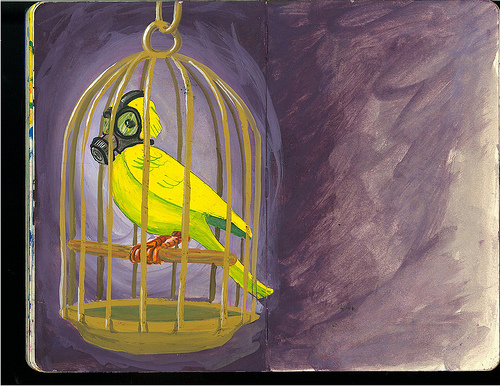
“Canary” follows a young crooning canary named Cole in the rip-roaring year of 1937, a time where it seemed like every other town had a mine full of coal. Which is, in fact, relevant, as every coal mine needs itself some canaries.
We aren’t sure why this is at first, but Cole’s assumption is that all canaries sing wonderful happy tunes, tunes that keep coal miners upbeat and enjoying their jobs.
In the canary world, getting one of these coveted mine-spots, where you actually GO IN the mine and sing, is decided by a sort of Pigeon Idol, where you sing in front of a group of bird judges and they decide if you have the goods. And if you’re REALLY good, like GREAT, you graduate to the ultimate mine, a far off place known, angelically, as “Skyhaven.”
Cole doesn’t have to worry about Skyhaven though. Cause he can’t carry a tune to regurgitate his feathers. He’s stuck in the aviary with all the other “normal” canaries, watching the studs go off to work every day.
Until he gets curious. You see, Cole’s dad graduated to Skyhaven a long time ago. The problem is, none of the canaries have actually seen Skyhaven. Wanting to see his long-lost papa again, Cole heads outside the aviary, only to eventually stumble across the REAL Skyhaven (spoiler), which is a actually a graveyard!
Yes, the truth is, canaries are used to identify carbon monoxide in the mines. If they keep singing, that means that section of the mine is okay. If they stop, that means they’re dead! And the miners know not to go there. Cole rushes home to tell everyone in Canary Country the truth. But when they don’t believe him, he’s forced to save people on his own accord.
I’ll give Steven this, he wasn’t afraid to get dark. I admire that. If you’re going to invade this space, a space that’s nearly impossible to sell a script in, you gotta take some chances. And a dreary setting, some intense adult themes, and more canary deaths than you can shake your tailfeather at, is a fearless way to go about it.
But he probably went too dark. Here’s the thing. With any animated film, I think you SHOULD go dark. The animated films that resonate the most typically go there, dating all the way back to Bambi. The threat of death, the most final of finalities, ups the stakes of the story. Because if we know someone can die, then nobody is safe. And there’s something that works even better with that in an animated setting for some reason. Cause animated movies, with their cuddly characters and bountiful colors, are supposed to be safe. That juxtaposition makes them feel harsher for some reason. So I believe Steven probably made the right call there.
But when you write, you gotta know your audience, and with the key demo being kids here, I don’t see snuffing out the lives of a bunch of canaries, singing their cute little songs until they can’t breath anymore, resulting in kids leaving the theater asking about a sequel. It’s a tad morbid.
Also with these animated movies, since they always involve animals, you have to come up with universal rules on how the animals communicate with each other, and if they can communicate with humans. If the rules aren’t clear, the audience gets frustrated. I remember this was a problem with Jerry Seinfeld’s “Bee Movie” a few years back. In that universe, bees could apparently talk to humans. That didn’t fly well with a lot of viewers. So if you introduce an unbelievable rule, you can kill the suspension of disbelief, which has repercussions throughout the script (once you stop believing, it’s hard to stay invested).
Here, Cole could communicate with the young boy who takes care of the birds. They talked to each other in English. But the birds couldn’t talk to the adult miners for some reason. I guess kids have a “special” level of intuitiveness that makes this somewhat believable, but it was hard to buy at face value. Something felt a little off about it.
Finally, the second act didn’t pack enough punch for me. Everything else being equal, you keep readers reading with a good plot. Which means your plot points have to be interesting. (spoiler) Skyhaven being a graveyard wasn’t a big enough plot point for me. We all knew something like that was probably coming, so the 25 pages that surrounded that plot point felt kind of obvious. It wasn’t until we realize that canaries we know are in danger of dying in the mines that the script ramps up. And unfortunately that happens really late.
If I were Steven, I’d try to get to that part of the story sooner. The sooner we know the canaries are in danger of dying, the sooner we can introduce a goal, a ticking time bomb, and all of that. So say we set up that the miners are going to a new part of the mine, the deepest part of it yet, a tunnel that’s been closed for 20 years because of how dangerous it was (but they need more output – so the evil owner sends them down there). There are tons of carbon monoxide pockets in there. They will need almost all the canaries. Many many canaries are going to die. And Cole has to stop it all somehow, despite the fact that nobody believes him. If we got to that sooner, the narrative would be a lot simpler, and the second act wouldn’t feel so janky.
There’s definitely SOMETHING here and Steven is a good writer for sure. That was almost enough for a “worth the read” (it was super-close) but the tone going too dark and a slow-going unfocused second act kept this from meeting its potential.
Script link: Canary in a Coal Mine
[ ] what the hell did I just read?
[x] wasn’t for me
[ ] worth the read
[ ] impressive
[ ] genius
What I learned: Sometimes we believe our reveals are better than they actually are, and waste too much time building them up. Since the audience already knows what to expect, the reveal (i.e. Skyhaven being a graveyard) doesn’t hit with the intended force, and the reader’s frustrated because he spent the last 20 pages prepping for a twist that he already knew about. If you have a big reveal, make sure it truly is a) BIG and b) unexpected. That may mean being more original, it may mean hiding the reveal better, or it may mean throwing in a few red herrings. But if I know a specific twist is coming 20 pages before it happens, the story is in trouble.
