
Genre: Comedy
Premise: (from me – based on limited info) A frustrated middle-aged family man who hates dealing with all of life’s bullshit finds out about a man who solves people’s problems by jumping into their minds. He enlists this man to eliminate the problems in his life, with unexpected consequences.
The Setup: JIM (our schlub) hates his job, his marriage, his life – he’d rather just avoid everything. So when he meets a guy in a bar who gives him a number of another guy – BOB – who can help him do just that, Jim is intrigued. He calls the number, and this mysterious, intimidating Bob character tells him to be at his place in one hour. Here’s the scene that follows…
Writer: Ethan Furman
Details: 7 pages
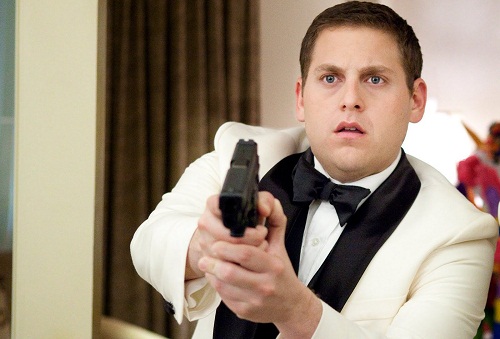 Jonah Hill for Bob?
I think people outside of Los Angeles believe that we Los Angelinos walk around bumping elbows with celebrities all day. You take your dog for a walk, there’s Tom Cruise grabbing a hot dog at Pink’s. You grab a bite at Chipotle, oh, there’s Angelina Jolie, complaining about the lack of guac on her burrito bowl. And when you get home, Ken Jeong is sitting on your steps practicing new characters via Skype with Bradley Cooper.
Sadly, celebrity sightings are few and far between unless you’re one of these obsessive stalker types who go to all the events and track their celebrity buddies’ whereabouts on Twitter. But if you’re just walking around randomly, you ain’t going to see many celebs. So when you DO see someone big, it’s kind of cool. And today, for the first time in a long time, I had a celebrity sighting, and it was awesome.
The setting? El Carmen. A pleasant Mexican dive bar/eatery. There were a total of 10 people in this bar. And then who walks by? Just marching forward like it’s nothing? Sean Penn! Sean fucking Penn. And let me tell you this: This guy looked like just as much of a badass as he does in the movies. He slid into a back booth with some ladies he was (I’m guessing – but who knows, since it’s Sean Penn) meeting there. I think the reason it hit me so hard was because it was such an empty place. And so it’s odd to spot a big celebrity around no other people. It just feels off. Like a crew of 50 people should be following him around or something. Anyway, it was rad.
What does this have to do with Scene Week or today’s scene? ABSOLUTELY NOTHING! I just wanted to tell you my cool Sean Penn story. And now that I think about it, it wasn’t that cool at all. I just saw a man walk by me. It would’ve been a lot cooler if I had tried to talk to him and got decked in the face. I’ll try that route next time.
So, what’s today’s scene about? Glad you asked. Our hero, Jim, comes to this guy Bob’s house. As he walks in, hookers stumble out. When he gets to the living room, Bob’s playing a grand piano in shorts, snorting coke. After Jim’s WTF reaction, Bob asks him why he came. Jim tells him he has to fire a guy at work that he likes and doesn’t want to do it. Bob responds by explaining to Jim his super-power. He can jump into people’s minds! That means Bob can jump into Jim’s mind, fire his friend at work, and an hour later, Jim won’t remember a thing. He can continue on with his life guilt-free. Hesitant at first, it’s clear that Jim is intrigued. Let the craziness begin!
 My good friend.
Okay, so what’s so great about today’s scene? Well, here’s the thing. This kind of scene, in my opinion, is the easiest kind of scene to write. It’s the “Premise” scene. It’s when you essentially reveal the concept and hook of your story. And in that sense, it begins the story. Because once your hero is introduced to this moment, the train starts moving.
So in that sense, Ethan kind of cheated. There is no subtext here. There are no twists. There’s no dramatic irony. There’s nothing in this scene that’s difficult to do and shows skill. But here’s the reason I included it. Out of all the scenes I read this week, it’s the only one that inspired me to want to read more. I thought this was a pretty nifty concept and one I hadn’t seen before. I wanted to know what would happen when this guy entered our hero’s head. I could see the story possibilities flow. One hour, your life is fine, then you wake up an hour later and everything in your life is backwards. Or Bob screws up the first time, has to mind-jump again to fix it, messes up even more, tries to fix it again, keeps making it worse. You could do a lot of stuff with this premise.
But let us get back to the actual scene. Just because Ethan picked the easiest kind of scene to write doesn’t mean it’s guaranteed to work. I’ve seen thousands of easy scenes get screwed up. In any scene, it comes down to one thing: Are you interested in the characters and what they’re dealing with? If you’re not, the scene isn’t going to work no matter how well it’s written.
I liked Jim. His situation is relatable. And I thought Bob was fun (as well as mysterious). I liked how he used to be an Olympic athlete. I liked how he was casually playing the piano when Jim walked in. I thought the hookers and the cocaine were a little cliché, but they were organic to the character so I went with it.
Assuming you’ve got the character issue taken care of, the next step with a scene like this is dialogue. While I’m not going to say this dialogue was amazing, the combination of it and the intriguing premise was enough to keep me entertained. I will say I like when characters are played against type – when their actions and disposition don’t match up with the way they speak. And we get that with Bob, who’s presented as kind of a wild guy, yet is really smart and on point when he speaks.
“Well, enough with the engaging small talk, Jim. You’re here because you have a problem.” “Um. Yes. I do.” “And what is the nature of this problem?” “Well, uh, specifically, my boss is making me fire my assistant.” “And why is that a problem?” “Well…I like him a lot. I feel sick about it.” “Ah. So you weren’t being specific.” “Excuse me?” “You said your problem was that your boss is making you fire your assistant. But in reality, the specific problem is that it makes you sick to do it. It’s something you don’t want to do.” “Yes. I guess that’s right.” “Yours is a problem of guilt. Guilt makes us feel bad. Hurting someone – firing your assistant, breaking up with your girlfriend – these things must be done sometimes. But the guilt is very unpleasant. Correct?”
That sort of unpredictability, of Bob seeming like a doofus then showing he’s quite intelligent, in combination with the suspense of finding out what it is Bob does… that kept me invested.
I also liked how Ethan anticipated expectations and flipped them on their head. Bob: “Here’s what’s going to happen, Jim. I’m going to explain what it is I do. You’re not going to believe me. Then there will be this little back and forth about whether I’m crazy, full of shit, et cetera. I like to skip over that part, because it bores me, so we can just get down to the business of solving your problem. You with me?” It was lines like this that, again, kept me intrigued.
I think my only suggestion for Ethan is to shorten up the scene. Whenever you’re dishing out exposition, even if it’s fun exposition (that’s what I call premise exposition, since it’s usually the fun part of the script, unveiling the premise on the audience), you MUST BE AS SUCCINCT AS POSSIBLE. Because no matter how interesting the exposition is, if the reader feels like they’re being talked to for too long, they start getting bored. And after the “climax” of this exposition, Bob revealing how this whole mind-jumping thing works, I didn’t have enough energy left to listen to Jim’s query (“If your mind is in my body, then where does my mind go?”). The answer with the “mind spa” stuff was cute, but again, you gotta know when you’ve hit your scene’s climax and then get out. It’s like the end of Rocky. The fight’s over. We don’t need to see Rocky shower.
As for what you do with that extra exposition, which might be necessary, is you just put it in a later scene. For example, right before they’re about to mind-jump, Jim can realize: “Wait a minute! What happens to my mind while you’re inside of me??” And Bob answers the question then.
So yeah, I liked this. Again, it had some cracks, like all the scenes this week. But it passed the biggest test of all. After I read it, I wanted to read more. What did you guys think?
[ ] what the hell did I just read?
[ ] wasn’t for me
[x] worth the read
[ ] impressive
[ ] genius
What I learned: Avoid the cheap jokes. The gay jokes. The hookers. The coke. Those are cheap laughs. And what I mean by that is, you’re going to get a laugh from some readers, but it will be a hollow laugh. If you can find a new angle on one of these jokes though – a way to make it fresh, then by all means use it. For example, I read a script once where gays were discriminating against a guy for being heterosexual. It was a clever 180 on a tired joke so it worked. Just know that the cheapest jokes – they’re the ones readers see ALLLLL THE TIME. And if you’re a good writer, you don’t want to be like everyone else. Do you?
Genre: Sci-fi
Premise: (from me – based on limited info) A group of shuttle astronauts find the world scorched and dangerous upon returning home.
The setup: The year is 2045. The space shuttle Excalibur has completed its routine satellite conservation mission only to find that the Earth has perished overnight- crystal blue waters replaced by dark crimson, white clouds now a gory hue, continents indiscernible. After much debate, and resources depleting, they have no choice but to go down. They arrive and
find themselves in a deserted wasteland, dead and burnt cities, a graveyard civilization. Lifeless.
Writer: Rzwan Cabani
Details: 7 pages

I think one of the hardest things about scenes is that, if you’re doing your job right, you’re trying to cram key information into every one of them, as you want each scene to push the story forward and tell us a little bit about your characters. The problem is, when writers do this, they often go overboard with this information, or they convey it in the wrong way, stilting the scene and making it more about information and character development than pushing the story forward.
And that’s the trick. First and foremost, every scene should be about PUSHING THE STORY FORWARD. All the other stuff should be hidden inside of that, instead of taking precedence. There are exceptions of course, and this approach will be treated differently in an action movie than, say, an indie character piece. But for the most part, it doesn’t matter what kind of movie you’re writing. The scene should exist primarily to push your characters towards their current objective, not bore us with information.
This happened with the most recent amateur script I read. A large number of scenes existed only to show two characters in a room talking about things that did happen, were happening, or were GOING to happen. Information-heavy scenes like this can be the death of a screenplay (and one of the easiest ways to spot amateur writers). In general, you want your characters chasing goals or leads or objectives that have them moving towards the next plot point. Along the way then, you cleverly drop in that information (what’s often called “exposition”), so it’s not the focus of the scene, but rather a secondary aspect of it.
I’d say a good 50% of the scenes sent in were dismissed for this reason. Characters weren’t going after anything (like yesterday, where our character was trying to get his girlfriend back) or reacting to anything (like Monday, where our characters had to avoid a swarm of aliens). They were just talking about other characters, or about the plot. And unless there’s something compelling that needs to be hashed out between the characters, or just a ton of conflict, talking scenes are borrrrrring. Never forget that.
Today’s script follows astronauts, Max, his love interest Amanda, Russian Sven, and the grizzled vet, Berkely. The four have just landed back on earth after being in orbit for awhile and boy, are things different. The planet’s been scorched. It doesn’t look like there’s any more water. After looking around from the safety of the ship, they spot a man sitting in this barren field, facing away from them. They leave the ship and go to him, only to find out he’s a decoy. It’s a trap. They hear something big and angry emerge out of nowhere and they start running. They get back inside the ship, only to be repeatedly rammed by whatever this is. Just as it looks like their ship is about to break, the banging stops, and a man in a cloak emerges from the shadows, beckoning them to open the door. He can help.
There were a few things I liked about this scene. First, there’s suspense. What the hell happened to the earth? Next, there’s this guy just sitting out there in the desert. Who is he? Why is he facing away from them? More suspense! They approach the guy. What’s going to happen?? We don’t know but we want to find out!
And what we find out is that he’s a decoy. They’ve been lead out here on purpose. Knowing they’re in trouble, they run back. And what I loved is that Rzwan did NOT SHOW the huge monster chasing them. We only HEARD it. This is an indication to me of a writer who knows what he’s doing. Amateur writers tend to blow their load and be completely obvious with every situation they write. They would’ve shown this monster in an instant, erasing all the mystery behind it. Because we don’t know what it is, we must imagine the monster ourselves, just like our characters. And just like our characters, our assumption is probably a lot scarier than whatever the writer could’ve come up with.
This is followed by the arrival of the man in the cloak, which creates another “mystery box” that is intriguing enough to get us to the next scene. Add all that to some really slick writing (Rzwan’s prose is lean, crisp and quite descriptive) and you have yourself a nice little scene.
Frustratingly, despite it being better than the majority of scenes that were sent in, it wasn’t perfect. The arrival of the cloaked “person” in the chair wasn’t introduced clearly enough. I’m presuming we landed here in this huge barren landscape where we can see all around us. Nobody saw anything then?? Their first look around once they’d landed produced the same result. Nothing.
Then, all of a sudden, there’s just some guy sitting in a chair? How did they miss that?? Even worse, we’re never told how far away he actually is. Is he 10 feet away? Is he 500 feet? These things matter, particularly when we’re trying to figure how this figure who’s sitting on a chair in the middle of the desert can be missed.
Remember, one clarity error in a scene can KILL that scene. Every single little thing you were trying to accomplish, from the location to the setup to the characters, can be capsized by a single clarity error. And the truth is, we can’t always catch these. In our minds, because we can see the whole thing in our head, the setting is clear as day. So of course we’re likely to under-describe. On the flip side, if we over-describe the scenario and get TOO detailed, the scene gets bogged down in text and reads like molasses.
So you have to find that balance. All you can do is ask, “Have I made all the key elements to this scene clear to my reader?” And then, of course, before you send it out officially, you get a few people to read it and see if they understood it as well.
As for the rest of the scene, I like the mystery of Max (the cloaked man who approaches at the end), but a) I’m wondering how yet another character could’ve just appeared out of nowhere in this endless barren desert, and b) When I see cloaked people in deserts (which believe it or not I’ve seen a few of in the last few weeks via script reads), I immediately think of Star Wars. And when you’re writing sci-fi, you want to avoid stuff feeling too similar to the most popular films in that genre.
So to summarize, I liked the machinations of this scene. I liked what Rzwan was doing to create anticipation and suspense. I love how he didn’t show us his monster. But some of the details needed more explaining, like how people in chairs can just appear out of nowhere. And maybe we could’ve milked that build-up a little bit more. More discussion/arguments before going out to look at Chair Guy. More description of the eerie landscape. When you have a suspenseful situation like that set up, you want to milk the suspense!
[ ] what the hell did I just read?
[ ] wasn’t for me
[x] worth the read (just barely)
[ ] impressive
[ ] genius
What I learned: Information (exposition) should never be the focus of the scene. It should be a secondary directive only.
What I learned 2: If you can’t come up with a creature scary enough, don’t show it! Or only show pieces of it. Let the reader imagine what it is himself. The version in his head is probably a lot more freaky!
Genre: Rom-Com
Premise: (from me – based on limited information) A young man finds his relationship threatened when the former love of his life, now a famous singer, makes an unexpected visit.
About: A couple of interesting points to make. One, this is Illi’s first screenplay. And two, it was a finalist in two New York screenwriting contests (the New York Screenplay Contest and the Screenplay Festival).
The setup: John has been dating a girl, Lucia, who has no idea that he used to date the famous singer, Verena, who’s currently in town. John actually bought the ring to propose to Verena a long time ago but never did. Lucia finds the ring and believes John is proposing to her. John tells her the truth in an inadvertently asshole-ish way, and she dumps him. So John goes to the supermarket where she works to apologize and get her back with a big surprise.
Writer: Illi Ferreira
Details: 7 pages
 Aaron Paul for John? Why not!
As I went through scene submissions, one of the most interesting things I found was which scenes people picked to send. I quickly realized that WHAT a person sent was a quick indication of where they were as a screenwriter. Some scenes were literally two pages long, bridge scenes, that had our characters moving from one place to another, discussing immediate plot points, probably the most un-dramatic moments in the entire script.
Others thought huge action scenes were the way to go. I know that’s what I reviewed yesterday, but that’s because the scene was constructed soundly and well-written. Typically, big action scenes aren’t what a script is about. A script is about the characters and what’s going on between them, whether those problems be familial, relationship-based, or work based. A good scene to pick, I think, would be something revolving around one of those relationships, that showed a clever set up, intriguing conflict, a surprise or two, wrapped in a slightly unexpected package. That’s what I was looking for. Scenes that made you think a little.
Instead I got a lot of obvious straight-forward scenes where characters were saying exactly what was on their minds (no subtext). A lot of shooting. A lot of yelling. A lot of plot-reciting. At least with today’s scene, the writer put some thought into his characters and came about their interaction in a slightly different way.
For those too tired to download the scene, it has John, our main character, show up at Lucia’s work (she’s a cashier at a grocery store) to apologize for being mean the other day. Of course, because she’s working, he has to buy something – each item a sort of “time credit” for him to continue his apology. She’s not hearing any of it though, and is trying to speed him through the line. Customers appear behind him, putting pressure on him to hurry up. Can he get her to accept his apology in time? Or will he fail and lose Lucia forever?
You remember the term “scene agitator” from my book, right? This is when you add an element to the scene that agitates your characters, that makes it more difficult for them to do… whatever it is they’re doing. Here, we see that agitator in the form of a checkout line. John cannot speak freely with Lucia because she’s at work. In order to talk to her, he must buy something like everyone else. Then, when he gets in line, he only has until the end of the sale before he has to leave.
I thought this scene would be fun to discuss because it presents the writer with a choice. That’s the thing with writing. It’s never one simple route. Often, you’re going to have tough choices, with each choice having its own pros and its cons.
So here, John gets in line and starts pleading his case to Lucia. The idea is to make things tough on John, right? We want time to be running out for his apology. So traditionally, you’d put someone behind John – preferably someone very impatient. And that’s what Illi does here. He puts an old woman behind him.
But Illi decides to go another route and pull some laughs out of the situation. In order for John to continue to talk to Lucia, he needs to keep buying things. So he keeps grabbing a new bag of chips off the rack every five seconds or so. After awhile, seeing what he’s trying to do, the woman behind him starts grabbing chips for him. She starts helping him, which is kind of funny.
In other words, there was a choice. We could go with the option that provided the most drama for the scene. Or we could add some humor. Illi opted for humor. Which is fine. But the scene did lose a little bit of that urgency as a result. If we would’ve seen an impatient businessman behind John, and every 30 seconds another impatient shopper got into line, now we’re REALLY going to feel some dramatic tension.
When you’re writing any sort of character interaction, I think you’re trying to put your characters in less-than-ideal situations to have that conversation.
Have you ever set up a plan to tell someone you liked them? And you have it all worked out perfectly how you’re going to do it? You’re going to go to their work, wait for them outside, greet them with a surprised ‘hello,’ offer up a few carefully practiced jokes, then casually ask them out to a movie? But it never goes like that does it? You wait for them outside their work. They end up being late. So it gets dark. Now you look like a stalker. A night time guard approaches you, suspicious. He asks you what you’re doing out here. You nervously tell him you’re just waiting for a friend. He doesn’t believe you, so he stands nearby and watches you. The girl finally comes out. You’re freaked out about the guard so you look nervous and jittery. She picks up on that and now she’s creeped out. Right before you get to your first joke, some guy comes out, puts his arm around the girl. “Hey, you ready?” he asks. She looks at you. “Yeah, just a second. (to you) What were you about to ask me, Joe? Something about a movie?”
Whenever you want to talk to anyone about something important, it NEVER goes how you plan for it too. And that’s really how good dialogue scenes work. Whatever was planned goes out the window because all these unexpected things should be popping up. Sure, the perfect “nothing goes wrong” scenario is wonderful for real life. But it’s boring as hell for the movies.
I liked how Illi created that imperfect scenario, which is why I liked his scene. That doesn’t mean there weren’t problems. I couldn’t put my finger on it but the scene itself felt a little clunky. There were too many action lines between the dialogue, making it difficult to just read and enjoy the scene. I thought the dialogue was okay, but not exceptional. And in rom-com spec sales, the dialogue is always really strong. So Illi still has a ways to go. But this was a solid effort for sure.
[ ] what the hell did I just read?
[ ] wasn’t for me
[x] worth the read
[ ] impressive
[ ] genius
What I learned: Dialogue scenes benefit immensely from a time limit. Create some reason why your characters have to get their conversation over quickly, and you’ll find that your scene instantly feels snappier, more energetic.
Okay folks. Doing something different this week. Many months back, I had people on my mailing list send me their best scenes from their current scripts. The plan was to read them all, then review the full scripts of the best scenes. Due to a couple of factors (the primary one being that I didn’t find anything that blew my socks off), I’ve changed my mind. Instead of reviewing the entire script, I’m only going to review the scenes. I realized that in all the reviewing I’ve done on this site, I rarely analyze and break down individual scenes. And obviously, with scenes being the primary building blocks of a screenplay, that’s kind of absurd! So this week, I’m going to review five scenes, and then, whichever one gets the best feedback, I’ll review the entire script. Let the fun begin!
Genre: Action/Sci-Fi
Premise: (from writer) ALIENS meets THE MATRIX as a troubled soldier leads a group of mercenaries into a hostile, alien dimension to retrieve an ancient artifact. Against his wishes, his estranged father is along for the ride and is the only one that can lead them out.
Scene setup: The writer’s setup is too elaborate to include, but basically we’re in a gigantic alien hive lit by a river of flowing lava.
Writer: Logan Haire
Details: 7 pages
Download and read the scene here.
As I started reading the scenes for Scene Week, I learned the most valuable lesson I’ve learned in a long time. Let me set the scene (heh heh). I was at a café for reasons beyond my control, and so had to read some scene submissions in a busy place with people constantly walking in and out of the door just a few feet away from me. It was Distraction Nation. Which meant I had a hard time concentrating.
So I’m trying to read page after page but something’s always happening. A click. A bang. A loud laugh. Something always caused me to jerk up, to see what was going on.
That’s when it hit me.
When you write, you have to write in such a way that the reader CAN NEVER LOOK AWAY. You have to make it IMPOSSIBLE for them to look away, no matter what kind of distraction pops up.
I remember reading a book a couple of years ago – “Before I Go To Sleep.” It was told from the perspective of a woman waking up with amnesia who was in bed with a man she didn’t recognize. She was scared, confused. She needed answers. She realized this wasn’t the “long night out, wake up the next morning” type of forgetfulness. This was a deep forgetfulness. Something bigger and more terrifying. Then, when she walked to the bathroom, when she looked in the mirror, she almost fainted. She saw someone 15 years older than herself staring back at her. Why the hell did she look like this?? The scene continued like this and even though I HAD to go to sleep because I had a big day the next day, I couldn’t stop reading! I NEEDED to figure out what had happened to this woman.
I felt the same way when I read The Disciple Program and Django Unchained. Tyler and Quentin wrote these scenes that you just COULDN’T look away from, even if you wanted to. They pulled you in and never let you go. Sadly, I can’t say a single scene I read here (out of hundreds of submissions) compelled me to keep reading. Don’t get me wrong. There were a lot of SOLID scenes. There was a lot of professional-level writing. But again, there was nothing that made me want to read the entire script.
For that reason, I think it’s best to look at this week more as a learning experience than a “These are the best!” set of posts. The truth is, I haven’t spent a lot of time breaking down scene-writing on the site. So I’ll probably learn a few things myself.
As such, even though I know it will make the comments section messy, feel free to pitch your scene (and provide a link to it) if you felt like your scene was INDEED “Must Read” worthy. If a bunch of commenters verify that, yes, your scene kicked ass, I’ll be more than happy to review it. So again, I found about 20 decent scenes that were all of similar quality, and I’m basically picking at random between them for the 5 reviews.
For those who didn’t read the Harbinger scene, it’s basically about a group of military dudes who find themselves in some sort of alien hive. As they’re walking through this thing, they see the aliens (or demons, as they’re known) skittering through the hive walls, watching them. What starts as just watching, slowly evolves into an attack, and our guys start running and shooting in a desperate bid to save themselves. They even enact a “nano second skin” that can’t be penetrated as part of their defense. But with the demons are growing in number and with our team running out of solid ground, even that may not be enough.
I chose this scene because, while it didn’t do anything mind-blowing, it was a solid action scene that kept me entertained, that I could visualize, and that I could imagine on the big screen.
The first thing that stuck out to me is something that barely ANYONE did with their scene submission, and that’s create suspense. We see the shadows of these demons running through the hive walls as our military group is walking. We know it’s only a matter of time before they come out. So we’re on edge. That anticipation is getting us all antsy, scared of WHEN they’re going to attack. That’s how you want your audience to be. All antsed up! You never want them to be relaxed.
You know when you have one of those impossible days? You have to write, work, read a friend’s script, pick up your dry cleaning, get your girlfriend a card, pay a few bills, be home for the cable installation, etc., etc.? Add to this that you woke up late. So you’re already behind on the day. Just the thought of doing all these things in such a small amount of time stresses the hell out of you. I want you to imagine that feeling. That’s the kind of feeling you want your reader to have when they’re reading your script! They have to feel like there’s so much that needs to get done and there’s no way your characters can do it.
I also like how this scene builds. It progresses. It isn’t just stagnant and one note like a lot of the scenes I read. Aliens start slinking out of the hive, bit by bit. So the threat is getting more intense. In other words, the situation is DIFFERENT from how it was one page ago. And the threat will be even worse one page later, growing again.
I also like how when the action begins, it’s told inside 1-2 line paragraphs (with an occasional 3-liner). I see a lot of bad action scripts that pile in 3-4 line paragraphs one after another during huge action scenes. If stuff is supposed to be happening fast on the screen, shouldn’t it be happening fast in the reader’s head? To do that, you have to keep the lines short and sparse.
Likewise, Logan’s prose was very clear. And you may be saying, “Shouldn’t that be a given?” The answer is yes, but it’s something I saw a LOT of writers in Scene Submissions struggle with. And here, it’s INCREDIBLY important, because we’re talking about an alien world, an alien setting, multiple characters, and a lot of action. It’s easy for a reader to get confused if a writer isn’t doing his job.
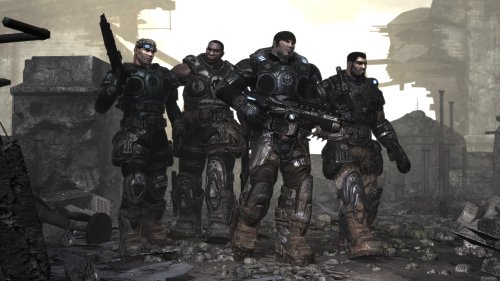
My worry here is that the scene (and concept) is too familiar. It’s a lot like a video game (Gears of War for me, and of course, Aliens on the film side), and the lava stuff reminded me of the dreadful CGI ending to Revenge of the Sith. This kind of stuff seems like it shouldn’t matter. But it does. Anyone who reads your script is going to get a little weary if it’s too similar to something else. We want to see originality, something new and different, and that’s not what I got here. When I said earlier, “None of the scenes I read propelled me to want to read the scripts,” for Harbinger, is was that “too familiar” feeling that did it in. I’ve been in this world numerous times already. So why would I want to revisit it?
With that said, I might give it 10 pages. Logan has proven he can write a scene. And for that, I have to give him props.
[ ] what the hell did I just read?
[ ] wasn’t for me
[x] worth the read (barely made the cut)
[ ] impressive
[ ] genius
What I learned: I didn’t see this in Logan’s script, but his sparse writing reminded me of it. — Isolate character names during big action sequences to create more of a “vertical” read. A “vertical” read just means that a lot of the text is near the left side of the margin and all the action lines are sparse, allowing a reader’s eyes to fly down the page “vertically”). I don’t like to see this used just anywhere in a script. But it’s a GREAT approach to adapt for action writing. For example, instead of:
Jetson lands hard on the concrete, shaking the room. He spins his gun out of his holster and shoves it into Frank’s face. Frank stares down the barrel of the gun, half an inch from his nose.
You’d write:
JETSON
Lands hard on the concrete, shaking the room.
He spins his gun out of its holster, SHOVES it into Frank’s face.
FRANK
Stares down the barrel of the gun, half an inch from his nose.
Get Your Script Reviewed On Scriptshadow!: To submit your script for an Amateur Review, send in a PDF of your script, along with the title, genre, logline, and finally, something interesting about yourself and/or your script that you’d like us to post along with the script if reviewed. Use my submission address please: Carsonreeves3@gmail.com. Remember that your script will be posted. If you’re nervous about the effects of a bad review, feel free to use an alias name and/or title. It’s a good idea to resubmit every couple of weeks so your submission stays near the top.
GENRE: Sci-fi Thriller
Logline: (from writer) A callous identity-thief-for-hire, who specializes in genetically altering his clients so they can assume another person’s identity, falls for his latest victim and must risk his own life to protect her from his ruthless employers.
Why You Should Read: (from writer) I set out to write a fast-paced, action thriller with a hint of real-world sci-fi, grounded by an intriguing protagonist and a tangible setting that is a character itself. A movie with a marketable concept and a strong theme that would appeal to producers, directors, and actors. A movie inspired by gritty ‘70s thrillers that takes the audience on a breakneck ride. I’d very much appreciate the opinions of Carson and the Scriptshadow community to tell me if I’ve succeeded.
Writer: Mark Townend
Details: 107 pages
 This sounds like it could be a Liam Neeson movie
Today we’re reviewing a sci-fi thriller, a genre I like a lot (and one that does well on the spec market). But I’ll be honest. I was hoping something else would win this week because we’ve reviewed a lot of these on AF already and maybe I’m a little sci-fi thrillered out. However, you can’t go against public opinion. And public opinion says that they want to be procured!
And I have to admit, it’s a nifty premise with a lot of possibilities. So if writer Mark Townend has really taken advantage of said premise, I’ll have forgotten all about my sci-fi thriller sunburn by the end of the review.
40-something Simon Walker lives a very emotionless life. Maybe that’s because of his job. He’s a “procurist,” someone who kills people and replaces them with an imposter, someone who’s genetically modified to look exactly like the person they’re replacing. Walker facilitates this process by training the people taking over the lives of the target to be like said target, and then being a sort of ongoing tech support whenever they run into trouble (ring-ring: “Uh, hi, this is Daisy. Can you remind me what year I was born in again?”).
So Walker comes into work one day and is informed that their next client, a woman named Meredith Pierce, wants a 72 hour rush job done on a journalist named Natasha Lloyd. Rushes are rare and always carry with them an air of suspicion. Why the rush?
But Walker does it, only to find out before the assassination that Natasha is writing an article about the underground practices of his company, as well as other procurists. It appears that Meredith is coming in to replace her so that when the article goes live, she can say that it was completely made up, discrediting herself and letting the world know “there’s nothing to see here.”
That gets Walker’s Spidey senses tingling, so instead of killing Natasha, he saves her. He then goes on the run with her while questioning who this Meredith Pierce bitch is and why she’d want to replace Natasha. Walker’s main co-worker, a doofus named Barnes, is the first to catch on to Walker’s plan and becomes the primary guy chasing him and Natasha down.
Eventually, Walker’s own past is revealed (he’s replaced numerous people throughout his life, which is why he has no family life – they’re not his real family) and something about trying to save Natasha makes him question that past, and if he really wants to be living this life forever. He’ll have to decide soon, because it’ll only be a matter of time before Barnes and the rest of the company catch him.
Townend pointed out his 70s influences in his WYSR above, and you can see that in the script for sure. This had a Chinatown vibe (Townend? Towne? Can’t be coincidence, can it??), mixed with present-day works like Looper and Inception. It’s sort of a brilliant combination as the script can then appeal to young and old Hollywood alike. When you add how easy it would be to market a film like this, I can already see executives licking their lips, hoping for a home-run so they can snatch The Procurist up.
I would love nothing more than to announce that home-run, but The Procurist lands somewhere between a single and a double instead. You know, sometimes I forget to give credit to writers like Mark for simply getting their script to this point. The way this thing is written? As far as the sparse, clean, descriptive writing? It’s pro-level all the way. You can tell Mark knows his shit. But there were some things bothering me here, and maybe me pointing them out can help Mark both with the future of this script and others.
First, I never really understood the setup of the story. Okay, so there’s this guy who works for an organization that replaces people with imposters. They find out the person their latest client is replacing is writing a story exposing their business, and that the replacement plans to sabotage that plan by saying she made the story up.
Isn’t the problem then taken care of? Why snoop around and ask questions? It would be like winning a basketball game on a last second shot, then complaining to the ref that you got fouled. Uhh, you just won the game. Who gives a shit if you got fouled!
Then there was Walker saving Natasha. Why did he do that? The best I could come up with was that Walker “saw something” in her. That’s majorly lazy motivation. So it started the second act off on a strange note.
The script would’ve been better off creating a conspiracy that HURT the company. That way, action would’ve been required, instead of your main character taking action off a “gut” feeling, which isn’t very convincing.
On top of this, the script runs into a classic “on-the-run” thriller issue. Once all the cool concept-y stuff is out of the way in the first act, the script becomes a straight-forward chase. I think a good 40 pages went by with our characters on the run, and that’s all that was happening. They were just on the run. If I’m going to open a script with a cool premise like this one, I expect a lot of mind-bending plot points and reveals the whole way through, not typical thriller chase scenes that I could see in any of 500 Jason Statham movies.
I like my thrillers to evolve with plot as they move along, not promote chase porn. The exception is when I really love the characters and I’m really into them achieving their goals. But like I already said, The Procurist didn’t check either of those boxes. I couldn’t understand why everyone was making a big stink about someone who was trying to HELP them. And I couldn’t understand why Walker was trying to help this woman in particular.
I think Mark’s plan was that we’d be intrigued by Walker’s illogical obsession with Natasha. Because we didn’t understand it, we’d read on to see it explained. And the reason is explained later. But I don’t know. It didn’t work for me. I would’ve liked saving her to have a more direct correlation with the plot. Which would’ve happened if the Replacer (Meredith) was malevolent instead of helpful towards Walker’s company.
You know, as I was reading through The Procurist, I was wondering if a different story angle would’ve yielded better results. Whenever you write these trippy sci-fi thrillers, the best stories tend to come form the people experiencing the change as opposed to the ones executing the change. For example, with Source Code – how interesting would that script have been if we had started out with the people in the control room?
I couldn’t help but think it would’ve been cool to start The Procurist with a character whose wife (or husband) starts acting strange. They’re not being themselves. They don’t remember obvious things. And they finally learn that this person is a fake, maybe trying to get information from them (maybe our character is the CEO of a big company, or someone in the government). They have to get out, go on the run, and find out what’s going on. I don’t know, I just think you get more mystery and suspense from your main character being in the cold. The sci-fi twist ends up being a little cooler that way as well.
Then again, Inception tells the story from the “Inceptors,” so I understand it’s a choice that can go either way.
If I were Matt, I’d suggest one giant change moving forward. And I believe that change will solve a lot of the other problems along with it. Change the reasoning for why the client is replacing Natasha. It has to be something that threatens Walker’s company. This whole “newspaper article” plot is not only thin, but it has too many holes in it. I mean why go through this whole dog and pony show of “You publish the article, then we replace you and tell the media that we were just making the whole thing up?” Just kill Natasha before she hands in the article and problem solved!
I think Matt is a really good writer. Any agent who pops open his script is going to feel like they’re reading a pro. But that’s supposed to be the given part. You gotta bring sun-like heat with the story, and The Procurist feels more like a comfy space heater.
Script link: The Procurist
[ ] what the hell did I just read?
[x] wasn’t for me
[ ] worth the read
[ ] impressive
[ ] genius
What I learned: Build the foundation of your story on something big, or else the rest of your story will feel small. The Procurist never had a chance after its weak setup. Cause you can’t put a skyscraper on a foundation meant for a 2-story home. The conspiracy had to be something bigger than a newspaper article. And it probably shouldn’t have been stated right away. Keep the reasoning for Meredith taking over Natasha’s life a mystery, and as the script goes on, Walker finds more and more clues that point to how big this thing is.
