

I have never started Mish-Mash Monday talking about a movie starring Blake Lively before but I guess there’s a first time for everything!
It Ends With Us just passed 120 million dollars domestically. If there’s anyone scoffing at that number, note that it’s probably going to end up with more money than 50 year old franchise offering, Alien: Romulus. Blake Lively beating aliens at the box office?? Gossip girl power right there.
But most of the talk surrounding It Ends With Us is focusing on what’s going on off-screen. The world is learning that Blake Lively is a really bad person. And while, normally, this wouldn’t be a topic of conversation on Scriptshadow, the reason I’m noting it is because her husband, Ryan Reynolds, is universally known as the nicest person in Hollywood! So why would he be with such a bad person? Opposites attract maybe?
Of course, the more relevant conversation (at least on this site) in regards to It Ends With Us is why the story has connected so strongly with audiences (female audiences in particular). Why is it that the original story (in book form) became the best-selling novel of the year? Colleen Hoover has been writing books for a while and none of them came anywhere close to breaking out like this one.
I think the answer is similar to the reason why Baby Reindeer became such a sensation earlier in the year. The writer wrote HONESTLY. Richard Gadd didn’t just write the obvious version of a stalker story, a la Fatal Attraction, where you only focus on how crazy the stalker is.
Instead, he wrote about his own flaws and the ways in which he, himself, screwed up. He showed that it takes two to tango and that commitment to honesty is what elevated simple subject matter (a stalker) into something infinitely more powerful.
Similarly, Colleen Hoover did not just say, “Man abusive, man bad, man taken down, The End.” That’s the obvious version of the story. And while that take can certainly connect with readers, it’s not truthful. The truth of domestic abuse is way more complicated than that. It involves the man, or woman, sometimes being loving, sometimes being a great partner. And it was that that Hoover tapped into, allowing a lot more readers who have been in those kinds of relationships to connect with the story on a deeper level. Because it was sharing a story that they, themselves, had experienced. That’s what writing is. It’s sharing experiences that are relatable.
And look, that’s not to say you can’t write on-the-nose versions of these stories. Big Little Lies leaned into the 100% evil abuser route and that book (and series) did great. But if you want to truly connect with readers, you have to include the things that are uncomfortable and provide nuance to the story, and not just the over-the-top obvious stuff. Over-the-top and obvious will only get you so far.

There has been a lot of talk about how Zoe Kravitz’s directorial debut, Blink Twice, barely mustered a fourth-place finish at the box office this weekend with 7.5 million dollars.
I believe I’m the test case for why the film didn’t perform well because I love any idea that involves being stuck on an island. It’s one of the best plot devices there is. A trapped character is instant conflict, instant tension, and instant suspense. Plus, setups like this, where you go to the island in a positive mindset create a ticking clock in the reader where they know it’s only a matter of time before things go wrong and they all love turning the pages to get to the “wrong.”
Yet I had zero interest in seeing this movie. So, if we figure out why I didn’t want to see it, we can conclude why others didn’t as well. It’s called math.
It comes down to a problem Hollywood has had since the 80s. You cast who can get you the money rather than casting who’s right. Channing Tatum as a billionaire? Don’t buy it. Channing Tatum as someone smart enough to become a billionaire? Don’t buy it. Channing Tatum as someone who can justify a 20 million dollar budget? BUY IT!
Channing Tatum looks evil THE SECOND WE MEET HIM. He looks evil in the opening interview of this trailer. So there’s no evolution to the story. He acts evil. We know he’s evil. So why is everyone on this island so surprised when he’s evil?? You followed an evil person to a location where they have total control over you! Bad things are probably going to happen.
What they needed to do was cast someone to play more of an Elon Musk type. An autistic character maybe, socially uncomfortable, awkward. Someone who you’d never suspect in a million years would be evil. That way, when he becomes evil, it’s more of a shock.
Kravitz did a bad job casting the two lead girls as well. Both of them seemed like normal smart people. You needed to cast a couple of girls you could imagine going to Burning Man – the kind of influencer types who make stupid mistakes like this and, for the first time in their lives, are going to learn what repercussions are. I’d rather see them in this scenario than two normal everyday people.
These things matter in screenwriting. You need to think long and hard about the archetypes you’re placing in the major roles. Cause a nerdy archetype is going to play differently against a rogue archetype than a black widow archetype will. It changes the story. Especially in ensemble pieces like this.
With all that said, I don’t think a more “sinister” version of Knives Out is a bad script idea. I actually think there’s potential in the idea. But you need good writing to flesh that idea out. And it looks like these two writers (Kravitz and Feigenbaum) didn’t have the experience necessary to wring all the potential out of this concept.
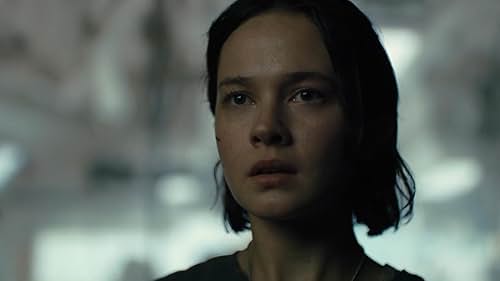
Finally, let’s talk about Alien: Romulus. Alien: Romulus made 16 million bucks this weekend, putting it in second place on its second weekend, which isn’t bad at first glance. However, it dropped 61% from its opening weekend.
The reason that’s relevant is because percentage drops from first to second weekend are almost ENTIRELY due to screenwriting. Remember, when someone goes into a movie, they’ve only seen the trailer. They don’t know how the story plays out. Therefore, if the story is told well, they’ll tell their friends, they’ll talk about it online, and the movie will have a respectable second-weekend drop.
For example, Deadpool and Wolverine only dropped 54%. Which is amazing when you consider how gigantic its opening weekend was ($211 million).
Which is weird because Alien: Romulus was a pretty good movie. It’s getting decent reviews. So what happened here? It’s a simple explanation, folks. And it’s something that every screenwriter in the world should take note of: The reason for the 61% drop was AN ENDING THAT FELL APART.
It may be unfair, but even if you write two good acts, IF that third act is bad, THAT’S THE ACT THE READER (OR THE AUDIENCE MEMBER) LEAVES WITH. So everybody left that Alien: Romulus ending saying, “That was dumb.” Which prevented them from recommending it to friends and prevented them from talking about it online.
Your. Ending. Matters.
It’s a tale as old as time. We tend to write from the top down.
Therefore, we go over and rewrite our first acts a lot more than we go over and rewrite our second acts. We go over and rewrite our second acts more than we go over and rewrite our third acts.
The truth is, the third act gets the least amount of love from the screenwriter. And if you want to write a good script, that needs to change. Because there’s nothing worse, as a reader, than excitedly racing through a script, and then everything gets messy at the end. It’s not even that it gets bad. It’s that you can tell the writing isn’t as tight, that things weren’t as thought-through as earlier in the script.
So, instead of writing that first act of yours for the 30th time, spend that time on your third act! Make it great. Because the flip side of ending with a bad third act, is ending with a great one. And that’s when you get ALL THE LOVE. EVERYONE talks about your script. Everyone who hears about it wants to read it. There’s a reason that The Sixth Sense and Titanic had ZERO DROPOFF in their box office from weekend to weekend. It’s because they had great third acts. Neither had giant poorly designed white CGI monsters. :)

So, when I first started consulting on screenplays, I thought I had this revolutionary idea. I would create a real-time chart that would show the writer EXACTLY how interested I was at each point in their screenplay. Every 5 pages, I would mark on the chart, from 1-10, what my current interest level was.
The idea was that the writer could visually pinpoint the exact moments in the story that needed work. This is how I imagined a typical screenplay might look…

But I very quickly learned that that’s not how consultation scripts charted. The large majority of them would start out at around 6 or 7, sometimes 8. Then around page 15, we’d be down to 6. Page 20, down to 5. Page 30, we’re at 3. And then, the rest of the script would hover around 3 or 2. In other words, the majority of the consultation scripts I read looked like this…

I won’t even get into how demoralizing this was for a writer to receive feedback like this. Who’s going to be excited to jump into a rewrite with feedback that not only cognitively tells you your script is a disaster but VISUALLY throws it in your face as well!
So I dropped the visual consultation method.
But important lessons were learned. Two actually. 1) Most scripts go downhill quickly. 2) When a script falters, it rarely recovers.
If you know these things – which you now do! – you can work to make sure they don’t happen to you. You see, what these disastrous chart results kept reinforcing to me was how important the first act was. The first act is the foundation of your entire story. The more solid that foundation, the more likely you’re going to be scoring 8s and 9s the rest of the script as opposed to 2s and 3s.
So we have to then ask: What does a strong foundation look like?
In the world of screenwriting, it comes down to nailing five key things.
- Create a goal that propels the story through the second act.
- Create a character who we want to root for.
- Create a character who’s battling something internal that they must overcome by the end of the story.
- Establish stakes that feel important.
- Have a real plan for your story.
Let’s look at these five things individually.
Create a goal that propels the story through the second act.
A lot of writers don’t set their story up to succeed because they head into their second acts with barely any steam. A good goal THRUSTS us into the second act. The more robust the goal is, the longer it’s going to carry us through that act. Goals are usually born out of problems. Take the most recent box office king, Alien: Romulus. The main character, Rain, is desperate to get to a planet with a sun. But she’s stuck here due to her work contract. That’s the PROBLEM. When her friends offer her a chance at a cryo bay to help her get there, she joins them to go and retrieve it (GOAL).
Create a character who we want to root for
If we don’t want to root for your heroes, it doesn’t matter what else you do. Your script will almost immediately plummet to 2s and 3s the whole way through EVEN IF your plot is decent. The best ways to make us root for someone are by making them likable or sympathetic. And you can supercharge characters by making them likable AND sympathetic. A recent movie that showed us how effective this is is Deadpool and Wolverine. Deadpool is both likable (he’s funny) and sympathetic (he’s lost his purpose in the world and needs to get it back). Wolverine maybe isn’t the most likable guy. But he’s definitely sympathetic (he’s responsible for destroying his entire team back in his world).
Create a character who’s battling something internal that they must overcome by the end of the story
This is pivotal once you get to the second act. Because if you only give us a likable character and a goal in your movie, you get an Adam Sandler flick. Adam Sandler movies are fine. But there’s a reason they feel like empty calories. There’s no depth to them. This rule gives you that depth. Either give your hero a conflict they’re dealing with internally (maybe the death of a loved one that they haven’t properly gotten over) or a flaw (selfishness, stubbornness, arrogance). You do this because, throughout the second act, you need to be putting your hero into scenarios that challenge these things that they’re internally battling. For example, the hero might come face to face with the person who’s responsible for the death of the family member they’re mourning. By having these internal battles, the scenes will have more depth to them.
Establish stakes that feel important
Have you ever been watching a movie where you’re about 45 minutes into it and you think to yourself, “I do not care about ANYTHING that’s going on right now.” This often means the stakes that were set up in the story are too low. I read this consultation script once where a 20-something guy came back to his hometown for a weekend and went around and talked to a bunch of old friends. I got into a spirited discussion with the writer about how low the stakes were. There was one storyline in particular that drove me crazy. The main girl in the story… he didn’t even like her. She was the ONLY thing the story could’ve built stakes around – if he had always loved this girl and this was his only chance to get her, at least you have SOMETHING going on. But the writer was adamant about making the script feel “real” and I was trying to explain to him that true reality is boring. Movies are about the bigger moments in our lives. Movies, ideally, are covering the single most important moment in your hero’s life up until this point. That requires high stakes. So whether you’re writing a big Hollywood movie or an indie flick, make the stakes as high as you can relative to the situation.
Have a real plan for your story
This is the most important tip of them all. You need to go into your script with a plan. Not just a plan for how to get through the first ten pages. Or the first act. But a plan to get through the ENTIRE SCREENPLAY. The main reason scripts fall apart in the second act is because the writer never had a plan. They knew how it was going to start and they *hoped* they would figure things out along the way. That is a deadly strategy if you’re a screenwriter and almost surely will lead to failure unless you’re committed to writing 20 drafts, giving you ample time to clean up the weak foundation you built your story on. If you don’t know how to plan, go to Amazon and order a copy of The Sequence Method. It’s the best screenwriting book for how to plan out an entire screenplay.
One screenwriting tip I’ve heard a ton over the years is that the key to a great third act is a great first act. But the truth is, the key to a great second act AND third act is a great first act. That first act REALLY has to be solid in setting those key things up. And it goes without saying that you come into your screenplay with a good concept. Cause if your concept is weak, these five tips won’t help you much!
I consult on first acts. So if you want me to check out your first act and tell you if it’s working, I can do that for $150. And if you want a full-on script consultation, I can give you a $100 discount (I’m offering 3 of these). Just mention the “Real-Time” article in your e-mail. caronsreeves1@gmail.com
Genre: Thriller/Mystery
Premise: Psychologist Dr. Martin Park specializes in working with clients trying to curtail extreme violent urges. However, when a series of brutally murdered bodies are discovered in his small New England hometown, it’s up to Martin to figure out which of his patients is responsible.
About: This script finished in the bottom third of last year’s Black List. The writer has a previous credit, a small movie called, Twelve Days of Christmas. He seems to like numbers in his titles.
Writer: Michael Boyle
Details: 109 pages
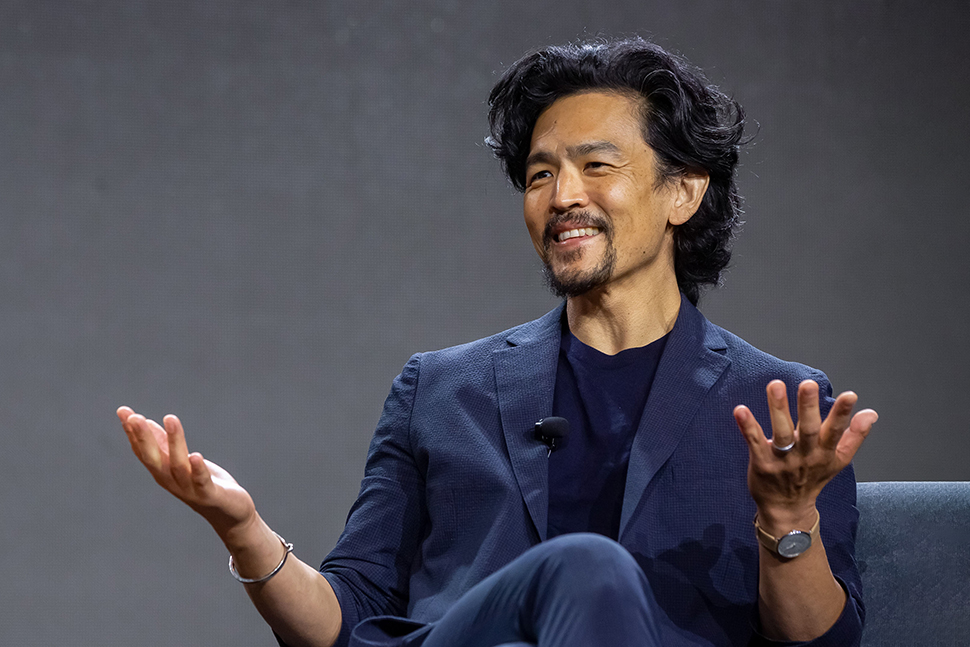 We gotta cast John Cho in this, right?
Did somebody say….. MURRRRRDERRRR?
Ooh, that sounds like a delicious appetizer.
The entree? A little something called SERIAL KILLING.
One of the most reliable spec script subject matters in the biz. Yes, I said ‘biz’ instead of business. Deal with it.
You know what I’ve been noticing? A lot of writers are writing to rounded-off page counts. So, they write 90 pages. Or 100 pages. Or, in today’s case, 110 pages. But, what they actually do is they write one page less (89, 99, 109) so that, with the title page, the PDF doc rounds it out to 90, 100, 110.
I actually think this is a good strategy. It feels more purposeful, like you have discipline. As opposed to if you have some sloppy page count like “114.” Who writes a 114 page script?? Dare I say that person is a psychopath?
Oh, look at that! A perfect segue into today’s script. :)
We’re in a small beautiful town called Raven Lake. Dr. Marvin Park (Korean-American), who’s come here with his gorgeous wife Jessica, is a world-famous psychiatrist who’s known for his best-selling book on how to spot serial killers. Marvin has parlayed that success into becoming the GO-TO guy who treats people with murderous tendencies.
Unfortunately for Raven Lake, that means a bunch of psychopaths have moved into town so they can be treated by him. Marvin’s little practice is going great until his secretary, Zoe, is dismembered and her body pieces spread out all around the office (her arm is even used as a fifth fan blade).
This brings suicidal FBI agent Helaine Ross into the mix. Ross, who’s only doing this job to stave off a shot to the head for a while, immediately starts blaming Martin for this problem. He brought these serial killers to town and now one of them is finally wreaking havoc.
The potential killers include Fred Vasquez, who loves to mix sex and violence. There’s Terry Tomlinson, a closeted black gay man who wants to kill men. There’s Kyle Egan who’s obsessed with his mailman and has lots of dreams about killing him. There’s Dustin Kelly who feels an inherent need to kill any woman who dares to dress provocatively. And there are a couple more suspects.
Once a second victim is killed by burning him alive then roasting marshmallows above his burning body, Martin realizes that this is a lot worse than he thought. You see, Martin’s flaw is that he believes he’s a miracle worker. He believes his work keeps these people from acting out their urges. In order for Martin to help Ross, he’s going to have to come to terms with his worst fear: That there’s someone he wasn’t able to help.
Today’s script suffers from a type of problem that’s hard to explain. The best word I can use to describe it is: inelegance. We’re dealing with intense subject matter – killing – that’s being balanced out through comedy. That requires a deft touch as a writer. If you get even a little sloppy, the ruse is up. We can see behind the curtain. That’s where the inelegance comes in.
For example, the first person who gets killed is Zoe, Martin’s secretary. Not only is she killed, she’s dismembered in horrifying fashion, her body parts spread throughout the waiting room. A day after this happens, Martin asks his wife, Jessica, to fill in for her until he finds somebody permanent.
I know that, at first, Martin is insistent that one of his patients is not the killer. But even so, your job as a husband, first and foremost, is to protect your wife. To place her in the very same situation that led to the brutal killing of his previous secretary doesn’t make any sense whatsoever.
The writer might argue that to do this is funny. Because it’s so ridiculous. Of course you would never place your wife in such a dangerous position. But I’m not buying that. When the writer uses humor as an excuse to do illogical things, they’ve lost me. You do not get to lean on the comedy-card to get away with weak story developments.
And then you had stuff like Agent Ross, who we see putting a gun to her head to kill herself just before she gets the phone call to join this case. Tonally, that’s too dark. Way too dark. You’re using humor when it’s convenient (hey wifey, I need you to take the position that just ended in another attractive woman being hideously murdered) and darkness when it’s convenient (Ross’s suicidal tendencies feel like they were pulled from a deleted scene in Requiem for a Dream).
This is what I mean by inelegance. If you’re aiming for a complex tone, you can’t miss. You can’t run a restaurant that serves Olive Garden bread rolls, grade-A prime rib steak, and cinnamon sticks for dessert. It’s gotta be all one thing or all another.
Despite these choices, I was hanging on to this script with the tips of my fingernails because I wanted it to work so badly. Every once in a while, the script would have a moment that pulled me back in, such as some funny dialogue.

But then the script would revert back to another dream sequence. Dream sequences are one of the BIGGEST indicators of weak screenwriting. Unless they’re baked into the story (Nightmare on Elm Street), out of 10,000 scripts I’ve read, there have been maybe 3 that have used dream sequences effectively. There’s something inherently sloppy about them. And if you have any doubts about that analysis, ask yourself if any of your current favorite films use dream sequences. They don’t. They’re the screenwriting equivalent of nuclear waste.
So what about who the killer was? Good reveal?
Unfortunately not. The writer telegraphs who the killer is almost from the very first moment they enter the story. Granted, it’s hard to surprise an audience these days with a killer reveal. We just talked about that on The Best and The Brightest. But it’s possible. It just takes work. You have to push yourself beyond the obvious choices.
This script needed more of a deft touch to handle the tone it was going for. In yesterday’s script, the writer knew EXACTLY what he was going for. As a result, his script felt confident the whole way through. Here, the writer doesn’t know what kind of movie he’s writing so the story feels a lot less sure of itself. What do I mean by less sure of itself? I’ll give you an easy comp: Amsterdam. The tone of that movie was all-over-the-place. It was often unclear where the comedy stopped and the drama began. I felt the same thing here.
I’m not saying you can’t make these scripts work. I thought The Voices (the script more than the movie), captured this tricky tone well. But because the tone can feel like a moving target, if you don’t have an ASSURED PLAN for the execution, it will unravel on you quickly.
[ ] What the hell did I just read?
[x] wasn’t for me
[ ] worth the read
[ ] impressive
[ ] genius
What I learned: The reason I hate dream sequences so much is that you only have 50 scenes in a script. Each scene, then, is precious. You should want to put the best possible scene forward in each of those 50 slots. If you add a dream sequence – a sequence that doesn’t push the story forward and only operates as a flashy momentary distraction – you are wasting one of those precious 50 slots.
Genre: Action/Thriller
Premise: Two young women are kidnapped, brought deep into the woods, given a head start, and then hunted down by their sadistic captor all for the pleasure of the online fans of “The Nowhere Game.”
About: This script finished with 9 votes on last year’s Black List, by far the writer’s, Alex Pototsky, biggest achievement. Pototsky commutes between Dublin, Ireland and Los Angeles, California. He’s been at this for over a decade. In 2013, at 19, he wrote a musical about Steve Jobs.
Writer: Alex Pototsky
Details: 89 pages

It is a spec script conundrum we all face. Give the reader the fastest read possible but still create enough depth and plot that we care about what’s going on. Can today’s script achieve that? I want to believe!
Note: This is one of those scripts you probably want to read before you read my review because in order to speak about pivotal parts of the script, I have to reveal major spoilers (someone will probably have the script in the comments).
Allie and Carin, both 20, on their way to explore the great white north together, end up getting kidnapped by a man we will only know as The Hunter. The Hunter drives them waaaaaaaay further up than either of them planned on going into the northernmost part of the United States, presumably Alaska (although we’re never told exactly where they are).
When they wake up, they’re in a cabin. The Hunter casually explains to them that they’re about to start a game and that the game will be streamed on the black net. The good news is, he’ll give them 6 hours to get as far away as possible. The bad news is, they’re in the middle of nowhere. So, chances are high that it’s only a matter of time before he hunts them down.
Of the two, Carin is the tough one. She’s the hiker outdoorsy type. Allie is the one who likes to stay in, screw around on the internet, and do nothing. So, naturally, Carin is the leader. And her first order is KEEP MOVING. They quickly get to a maze-like area where there are six directions to go and each is marked with a roman numeral. In other words, this is a very thought-out game.
They hurry off in the direction that seems most promising and soon start coming across notes from some girl named Becca, one of the previous contestants. Becca left these notes in hidden places to help other girls. So they use Becca as their guide. This ultimately takes them to a river but The Hunter catches up to them and is able to shoot and kill Carin. Allie is able to jump in the river before she’s killed, and that river gets her very far away from The Hunter.
But she knows The Hunter is coming. So she has to prepare. She eventually comes upon the corpse of Becca who, it turns out, escaped The Hunter. But she died out here of starvation. The fact that Becca didn’t get murdered infuses Allie with a newfound confidence. She then gets a crazy idea. She’s going to team up with Becca to take The Hunter down for good.
This script surprised me! The logline was so simplistic that I didn’t think it had legs.
But the script does all the basics well (Goal, stakes, urgency, conflict, likable protagonists, hated villain) and it has a few tricks up its sleeve that elevate it to a double worth the read.
But let’s start with the choice to go with two girls instead of one. That’s a big creative choice you’re making right there. Because, if you go with one girl, which I’ve seen plenty of writers do in the past, you don’t have any dialogue. That’s a dangerous direction to go in because readers need dialogue. If they don’t have it, they don’t have any “breathers” in the script – where they can cover 2 pages in 20 seconds. Readers like those breathers.
On the flip side, two people makes the reader feel safer than one. So you lose a little bit of the fear you would’ve gotten by placing a girl out here alone. Personally, I think the writer made the right choice.
I also liked the way he explored it. He starts with Carin as the tough one and Allie as the weak one. And then, late in the second act, Carin’s killed and Allie must become tougher to win. So we get this really nice character transformation. Every reader (and audience member) loves a good protagonist transformation.
I also noted something interesting about Carin’s death and how it affected the story. Once Carin dies, Allie instantly becomes a much deeper character. Why? Because she’s experienced the death of her best friend. These are the kinds of things that a lot of writers are forced to do via backstory.
For example, in a lesser version of this screenplay, Allie would’ve been kidnapped alone and then we would’ve found out, throughout the story, that she recently lost her best friend. The writer would’ve tried to add depth to Allie’s character through that backstory.
But when we get to see that death with our own eyes, it hits a thousand times harder. And now we’re REALLY rooting for Allie because we feel her past. I know it’s weird to think of it this way but, essentially, if you started this story with Allie waking up after her best friend was killed out here in the forest, Carin’s death is technically backstory.
But what really elevated this script for me was Becca. I’m always looking for ways to create unique characters. Cause how many different ways can you portray a person? Not that many. That’s why it’s so hard to create fresh characters that pop off the page. But clever writers can do it. And this one did it by making a dead character the third biggest character in the movie.
Because all Becca is doing is leaving notes. Leaving trails to follow. Leaving hope. And we even see her, at the end – her body at least. I don’t know if this is going to become a trend but Dead Becca plays a huge role in the climax (we just saw a dead character play a major part in a battle in Deadpool and Wolverine). She’s almost as big of a character as Carin is. That’s really something. To create somebody so memorable who’s not technically in the story.
That triple combo: Losing Carin, Allie’s character transformation, and teaming up with Dead Becca to take down The Hunter, were what elevated this script above your average action-thriller spec.
Something else I liked about this script is that the writer deftly avoided some of the yuckiness that could’ve been attributed to it. You read this logline and it reads like a 2004 logline, 12 years before the #metoo movement where hunting girls in scripts was commonplace. So I was wondering if that would make it feel dated.
But, oddly enough, The Hunter is barely in the story. He’s there at the beginning. He’s there at the end. Very briefly in the second act he shows up. But that’s it. The rest of the script focuses on the girls moving through the forest. We hear him sometimes in the distance. But we never jump back to him. Which had an interesting effect. I think I felt more fear from NOT seeing him. Because, like the girls, I often didn’t know how close he was. So all I cared about was getting further away. It added a ton of intensity to the story.
I’m really happy that I came across this script because it’s a wonderful reminder that if you can tell a simple story well, you’re a screenwriter.
Honestly, I almost gave this an “impressive.” The only reason I didn’t is because it wasn’t making a bigger statement about the world. It was more about survival. And I think the ceiling for that formula is a double worth the read. But it’s definitely worth checking out, especially if you’re studying how to write a kick ass spec-script.
[ ] What the hell did I just read?
[ ] wasn’t for me
[xx] worth the read
[ ] impressive
[ ] genius
What I learned: Learn how to tell a simple story well, like The Nowhere Game, and you’ve set the bedrock for your career as a screenwriter. Cause there’s nowhere to hide in a simple story. You have to be good with plotting and character. Once you’ve proven you can do that, you’ve graduated to being able to tackle more complex stories.
Genre: Sci-Fi/Horror
Premise: A group of young poor workers on a remote moon hatch a plan to steal cryo-bays from an abandoned orbiting space station but run into some unexpected trouble once they get there.
About: Alien Romulus proved that the Alien franchise isn’t dead yet. It scored a 5 million dollar increase (41 million) over the opening weekend of the last Alien film, Alien Covenant, although it was 10 million shy of the last Alien film before that, Prometheus, which took in 51 million. The film was directed by Alien lover, Fede Alvarez, who wrote the script with longtime collaborator, Rodo Sayagues.
Writers: Fede Alvarez and Rodo Sayagues
Details: 2 hours long

You know, I thought after Alien Covenant that the franchise was done. That movie was so so soooo very bad. The scene where robot Michael Fassbender nearly has sex with robot Michael Fassbender was the low point of the franchise, one I did not think it could recover from.
But Alien Romulus proves that audiences have a short memory and, as long as at least five years have passed, you can reboot anything.
Today’s movie reminds me that there isn’t just competition in the overall movie space for writers and directors, but that there’s this secret world of competition within franchises themselves. If the primary creators are no longer interested in making films for a particular franchise, studios hold “open calls” for creators to pitch their ideas.
I know so many people who want to make an Alien movie. And many of them have pitched their idea to 20th Century Fox. So when one of these ideas gets greenlit, it means that take beat out 100 other takes. You’re getting, what the studio believes, is the best version of Alien out there at the moment.
Now whether it’s ACTUALLY the best version is not up to the studio. It’s up to the audience. And I, in this very moment, am the audience. So I shall decide if they did a good job or not.
Rain, who looks 12 but who I think is 25, lives on some moon outpost with a bunch of other blue-collar workers barely scraping by. They’re all virtual slaves here and Rain lives with her brother, Andy, who’s a robot synthetic.
Rain’s old friends, led by her ex, Tyler, contact her and say they’ve got a beat on some cryo-bays up in an abandoned space station orbiting the moon. If they can get those bays, they can escape to a planet that actually has sunshine. The reason they need Rain is because her bro, Andy, is a Weyland-Yutani synthetic and the base is Weyland-Yutani. He can speak to it.
So off they go and head up to this station. Everything’s going all right at first but when they find the cryo-bays, they don’t have enough fuel in them. So now they need to find cryo-fuel. However, by turning the base back on, they’ve inadvertently restarted Weyland-Yutani’s alien program. So all these little face-huggers thaw out. And when the face-huggers see humans, they become aliens-in-heat. Of course, our crew has no idea what these things are and will have to learn the hard way.

Alien Romulus was a lot better than I thought it would be.
I say it all the time on this site: Every writer/creator gets in this business to remake their favorite movies. And there’s no question that Fede Alvarez loves Alien. He goes out of his way to capture the mood, look, and tone of that original film.
But there’s something I’ve learned over the years that’s been hard for me to accept. Which is that, no matter how much you love something, it’s impossible to mimic the original.
There have been many creators who love George Lucas’s Star Wars who have gotten a chance to contribute to that franchise. Yet, every one of those movies and shows lacks something. You can’t always put your finger on it. But there’s something about the unique mix of elements in a person’s head that makes them impossible to recapture.
You could even argue that the person THEMSELVES is unable to recapture them once they get older because, when you’re older, you’re no longer the same person. I tried to watch Attack of The Clones recently and it was so far removed from what made the original Star Wars great that it was downright depressing!
But we’re talking about Alien Romulus here. And look… you can tell if these movies are gonna work or not pretty much within the first 5 minutes. Those early scenes where the writer and director are setting up the characters tell you a lot. Cause characters are hard to get right. So if we come out of those wanting to follow the characters, the movie is going to work.
I liked Rain. I liked her situation. There’s an early scene where she’s finally gotten enough work hours to travel to a nicer planet but when she goes to claim her travel papers, they tell her the company is now requiring twice as many hours of service. So she’s got another five years on this rock. That alone made me want her to succeed.
I thought the use of such a young crew was an interesting choice. I don’t think it was the right move though, at least from a story perspective. There’s something about these lifers, who were in that first film, that made every scene feel lived-in. My guess for why these characters were so young was simply because the studio wanted to recruit new fans to the franchise. That and this is essentially a creature feature. Creature features work well with young casts. So that may have been how Alvarez justified it.
I noticed a unique thing while watching the latest Alien. Which is that, the fact that we all know aliens are coming later allows the script more time to develop characters.
Think about it. If everyone knows that our favorite aliens are coming, we’re going to be more patient. That patience allows the writer more leeway to set up his characters. That’s always the hardest thing to do in scripts because, usually, the reader doesn’t know what’s coming. So they’re impatient. Which means you have to rush through your character setups in an attempt to keep them turning the pages. But it’s a trap. Because, the less you set them up, the less we care about them. So a lot of writers will rush to the good stuff too fast, erroneously believing that, by doing so, they’re keeping the reader’s interest. But you have to make us care about the characters first and, whether you like it or not, that’s going to take time. It’s one of the trickiest balancing acts in screenwriting.
Because Fede accurately understood that we’d wait to see the infamous xenomorphs, he was able to use that first act to set Rain up, set Andy up, set their past up, set their future up, set some of the crew up, set up past relationships Rain had with them. It wasn’t perfect but it felt real enough that I was in.
Since all of that was properly set up, I enjoyed the second act, where they pay off a lot of those earlier character revelations.
HOWEVER.
Come on with that ending.
Come on. With that ending.
I understand that you’re trying to evolve the mythology. You want to make your own mark. But isn’t this the exact same mistake they made in Alien 3 (or was it 4)? They tried to create some alien-baby hybrid and it totally backfired. The creature design was nothing to write home about. Also, they had to stretch the plot and exposition earlier in order to make sense of why a baby is able to grow from 15 inches to 9 feet tall within 5 minutes. It made zero sense and was dumb. Which is too bad because, up until that point, I was very into this movie.
So, we’re going to split the difference here. Really good first and second acts. The climax fell apart. But a fun movie overall.
[ ] What the hell did I just watch?
[ ] wasn’t for me
[x] worth the price of admission
[ ] impressive
[ ] genius
What I learned: We often talk about the main character’s goal in a screenplay because that goal will motivate a large portion of the plot (Rain must get the cryo-bays). But there’s another goal all writers should be aware of which I call the “life goal.” The life goal is something that happens beyond the end of your story. And it’s something that gives your character more depth. In this case, Rain is trying to get this cryo-bay so she can have a new life. So she can live on a planet with a sun. Notice how that goal creates a larger scope for your hero and allows the reader to see beyond the here and now.
