

Adam Sandler was just on the Joe Rogan podcast and a big portion of the interview focused on stand-up. Before Adam Sandler became a movie star and even before he was on Saturday Night Live, he did stand-up.
Sandler talks about those early days when he would go up on stage and bomb. The crowd wouldn’t be laughing at ANYTHING. He said that every night he went back home after he bombed and was not phased at all. Cause he just KNEW he was going to make it.
Rogan said the same thing happened to him. He was stumbling around Hollywood not really connecting with anything. But he knew that he would make it. He called it the “value of being delusional.”
When he said this, I knew exactly what he meant. I had the exact same feeling when I first got to Los Angeles. I worked at an editing facility in the Valley and I would use it to edit stuff that I shot. I would put these shorts and videos together in the back editing bays and, occasionally, co-workers would come through and watch them and, most of the time, have very confused looks on their faces. They didn’t really understand what I was doing.
But it didn’t bother me at all. I’d think, “Clearly they have bad taste if they don’t realize this stuff is brilliant. Because it is.” I genuinely thought I was going to be some big director on the level of Quentin Tarantino. I’m not lying. I genuinely believed that.
Not only is it great to be delusional. It’s required. Because what you eventually learn is that you’re not competing against a dozen other people. You’re competing against hundreds of thousands of people. And the top 50,000 of those people will do anything to make it. If you’re not delusional in those early stages, you’ll give up.
That’s what delusion provides you. It provides you with confidence while you hone your craft and actually get good. That’s what happened with both Sandler and Rogan. Their early stuff sucked. But they were delusional long enough to get better until they both got their break (Sandler with SNL and Rogan with News Radio).
But that’s the rub, isn’t it? This only works if you find that first success before the delusion wears off. Once you understand what you’re up against, and how difficult it is to succeed in this town, you start playing scared. Your doubt starts to overwhelm you. Every page you write is the worst page ever. And every script you write that isn’t received well feels like one more nail in your screenwriting dream coffin.
This led me to today’s question: How does one succeed if they never experienced success before their delusion ran out?
Or, more pointedly: What replaces delusion as your main motivational force?
You have to change the way you perceive success. If success is only getting a movie you wrote into 2000 theaters, then of course you’re going to feel more and more like a failure with every failed script. And let me tell you something. I know writers who worked their asses off to finally achieve that feat and you know what almost all of them told me? They’re upset the movie didn’t do better. Or they’re upset that the producers changed things. Or they’re upset at all the b.s. they had to go through behind the scenes which took all the fun out of it.
In other words, even when you find success, you will move the goal post so that you can continue being frustrated.
Happiness, when it comes to screenwriting (or any art), must be internally motivated. It sounds cheesy but in order to succeed at screenwriting after the delusion wears off, you have to love what you write. As long as you sit down and write something and you love writing that story, you’re winning.
Because while you may not be receiving the financial benefits the professional writers are, I can almost guarantee that you’re having a better writing experience than they are. You’re writing something you love. They’re writing to make sure people aren’t disappointed in them.
Okay, that’s all well and good, Carson. Rah rah rah! Write for yourself. Stay poor your entire life. Never find success. The career we all dreamed of. Thanks for the help.
That’s not what I’m saying. I still want you to succeed and I still believe you will succeed. Here’s how that happens: Write the ideas you personally love so that you continue writing. As long as you continue to write, you will keep getting better. If you keep getting better, you have a shot at becoming a professional.
BUT! You still have to be your own agent. With every script you finish, you want to push it out there to as many people as possible. If you don’t know people, pay for contests. If you don’t have money, put your scripts up on message boards and trade feedback. You should be aiming to get AT LEAST 25 PEOPLE to read every script you finish. That’s the bottom required number for you to hit if you want any realistic chance of selling a script, or getting an agent, or getting hired for a job.
You’re going to get a lot of no’s no matter WHAT. Even if you have that ‘in’ at Lionsgate – the number 4 executive there who told you you can send him a script any time. Even if that guy likes it, it may not be the right fit for the company. So you can’t just send the script out to 3 or 4 people then move on. That’s one of the biggest mistakes screenwriters make. They never give their scripts a chance.
If you get your script to 25 people and they all read it and the feedback is underwhelming… MOVE ON TO THE NEXT ONE. If you get your script to 25 people and 5 of them say there’s something interesting there but it needs more development, consider writing more drafts to meet that potential. If you get your script to 25 people and the feedback is good, you may have something on your hands and you should start REALLY pushing that script. To 50 people. To 75 people.
Because you’re going to get a lot of no’s no matter what. Even people who really like your script are going to have to say ‘no’ for one reason or another. That’s why you give it to a lot of people. I think the Black List is suss sometimes but if you can afford 4 reviews, that’s 4 people you just got it to. And if one or two give you an 8, you’re onto something.
You can give it to me. I’m not cheap but you can ask me straight up, “Carson, is this script worth pursuing or should I move on to the next one.” I’ll give you my honest opinion. What I recommend you do, though, is get multiple logline consultations from me BEFORE YOU WRITE THE SCRIPT so I can save you time on stuff that won’t get reads (e-mail me at Carsonreeves1@gmail.com).
And don’t tell me finding 25 people to read your script is hard. You want to know what’s hard? Finding 25 people to read your script before the internet. THAT WAS HARD. Finding 25 people to read your script when you’re connected to 8 billion people is a piece of cake. I’m sorry but you’re not getting my tears if you can’t figure that out. Trust me. If you want it bad enough, you’ll find those 25 people.
The way you pursue screenwriting after the delusion wears off is to love the act of screenwriting. As long as you’re enjoying telling stories, you are winning and you are getting better. And as long as you’re getting those scripts out there once you’re finished, you’re giving yourself a shot at becoming a professional. Never stop doing that and, eventually, your day will come.
Black Swan meets Promising Young Woman?
Genre: Drama/Thriller
Premise: A woman who discovers she is suffering from severe synesthesia gets recruited into the secretive, cult-like industry of color design by a mysterious corporation but then uncovers the bloody, dark, and twisted reality of what it really takes to make the world’s next great hues.
About: Palette is written by Zack Strauss and received 9 votes on last year’s Black List. Strauss was a writer on the comedy show, “SMILF,” as well as “NCIS: New Orleans.”
Writer: Zack Strauss
Details: 101 pages

This feels like a Saoirse Ronan part
When I wrote up my evaluation of every Black List entry from 2023, only two of them got a coveted “must read.” This was one of them. I love this concept. It’s weird. It’s different. Most of the time, us readers read the same old concepts again and again. If we’re lucky, we read a fresh take on a familiar idea. But if we’re really lucky, a concept like this drops into our laps – something that’s truly original.
That doesn’t mean it’s going to be good! As the old saying goes, “You can’t execute the target if you can’t shoot straight.” I just made that up. Nobody’s ever said that. But the point is, you have to execute your unique idea. Let’s see if our color-hungry writer has given us a pot of gold at the end of this luxoriously colorful rainbow…
When Dolly was a kid, she got bullied. In a fit of rage, she jammed the tip of a rake into her bully’s eyeball, inadvertently killing him. Cut to years later and Dolly is an adult. Dolly believes that her overstimulated hearing, which helps her see colors others can’t see, was the reason she attacked the boy. So she now wears noise-canceling earplugs. Essentially, she operates as a deaf person even though she isn’t deaf.
But life as a handicapped person with a murder on her record doesn’t get you the best work. So she’s basically working as a slave at a printing factory. That is until, one day, on the subway, her earbud pops out, allowing her to see colors better. She sees an ad that says, “If you can see this, come to our company. We’ll give you a job.” When she puts the earbud back in, the advertisement turns red and the message is gone.
She goes to the company, called Palette, where she meets a manager there, Latrice. Latrice gives her a color test (line up 100 objects, all the same color with tiny variations, from brightest to darkest). Dolly refuses the test, saying she can only do it if she takes out her earbuds but taking out her earbuds makes her violent. Latrice leaves the room, allowing Dolly to remove the earbuds and she aces the test.
Latrice brings her into the fold, explaining how valuable color is. Color can pretty much make anybody do anything. It’s the OG hypnosis. And the good news is the company is dedicated to finding colors that save lives. That’s important to Dolly who, even 20 years later, still holds a lot of guilt for taking a life.
Dolly’s main rival in the company is a girl named Sidney. Sidney is unlike the rest of the colorists in that she’s not as talented as them, but she’s willing to do anything to find the next game-changing color. For example, she tortures a bear in the lab because this unique bear has a particular bile color that can potentially save lives. Sidney’s arguments are sound (what’s one bear if we can save thousands of people?) but Dolly doesn’t like her.
Late in the movie, Dolly and Sidney have a blow-up and Sidney starts calling her a freak, just like that bully did so many years ago. (Spoiler) Let’s just say it doesn’t end well for Sidney. But because Palette is so dedicated to the cause, they overlook this minor infraction. Dolly is still their best colorist and they need her if they’re going to continue the mission!

So, there’s a phase in the writing of every script where you’re trying to find your script. Because, when you came up with the idea, you had a good feel for what the movie was going to be. But once you laid that idea down onto 100 pages, you realized that there wasn’t enough there yet and you needed to fill things in.
This is an exploratory phase of the screenplay that you *want* to go through. Actually, to me, it’s the most fun phase of screenwriting. Cause you find all this cool stuff that you didn’t think of initially. This phase has no set number of rewrite drafts. It could take you 2 drafts. It could take you 10 drafts. It all depends on how easily you’re able to find your script.
After you’ve figured out your script, you usually need several “solidifying” drafts. This is where you take all of the threads that didn’t go anywhere and get rid of them. This is where you take that big plot thing you finally figured out and set it up better (as opposed to bringing it in late without much explanation). This is where you solidify that big important thing you finally figured out about your main character. This is where you tighten the screws.
The mistake a lot of writers make is they stop one or two drafts before they get to the “solidifying” stage. So the script has all these promising pieces. But they don’t come together yet. They’re these individual things that you appreciate but they’re not yet part of a movie.
This is exactly where I would place Palette. It’s 1-2 drafts shy of finishing the exploratory phase. And then it would need at least a couple of drafts to solidify.
For example, this concept of alchemy keeps coming up in the story so you’re under the impression that we’re heading towards a reveal where we learn this color company is a front to recruit people who can help create gold. Instead, this obsession with alchemy is never paid off.
Then you have this overly complex rule set in regards to Dolly’s character. When she hears things, it causes her to imagine violent colors and therefore she becomes violent? So she wears ear plugs. Yet, this cuts off her natural ability to hear heightened colors. Every time I read that, my face got scrunched up because it was more complex than it needed to be. Just make her good at seeing color! Why the wacky rule set?
Then there’s the overarching plot. There was none! We’re just watching her come to work every day and work on colors. There’s no bigger plot. Which is a fairly simple fix. You just give them a really big client and this client needs a rare color. If they don’t deliver, it could result in the entire company getting shut down. So there’s a race to find that color.
Despite these issues, the script had its moments! There’s an early scene where Dolly is touring Palette and is unsure if she wants to join. They then explain to her how important color is. There were a ton of men in Tokyo committing suicide in subway stations. Then they started putting a certain type of blue LED light in those stations. That shade of blue was known to calm people. So suicides went down 94%.
That’s a cool fact. And it helped it feel like our protagonist’s work was important.
Then, of course, later, (big spoiler), we have the murder of Sidney. Any time you have a dead body in a story, you’re in good shape because there are real stakes involved now.
But these little bright stars in the script were way too far from the center of the galaxy. They felt like outliers. Because of that, Palette reads more like a dream than it does a screenplay. Maybe it’s meant to be this artsy film that doesn’t work on the page. But that doesn’t help me as a reader. I just want to be entertained and Palette didn’t give me enough of that.
One final note. People make fun of E.C.’s lit expression. But this script could’ve used some lit expression. It’s a script about color yet the whole thing was written in black and white. It’s very hard to get people to imagine color that way.
[ ] What the hell did I just read?
[x] wasn’t for me
[ ] worth the read
[ ] impressive
[ ] genius
What I learned: You need humor even in sad scripts. There’s an overarching sadness to every beat in this story. Audiences don’t like when the rollercoaster never dips or rises. They need SOME VARIETY in their emotion. And humor is a great way to provide those rises.
What I learned 2: You know how you don’t want to take banana bread out of the oven too early? Same thing with your script. It’s got to bake the full 90 minutes. Not 75 minutes. Not 85 minutes. Not even 88 minutes. 90 MINUTES!
Deadpool and Wolverine ($54 million) continues to rule the box office.
But you know what almost took it down?
It Ends With Us.
It Ends With Us???
What the hell is that, Carson?
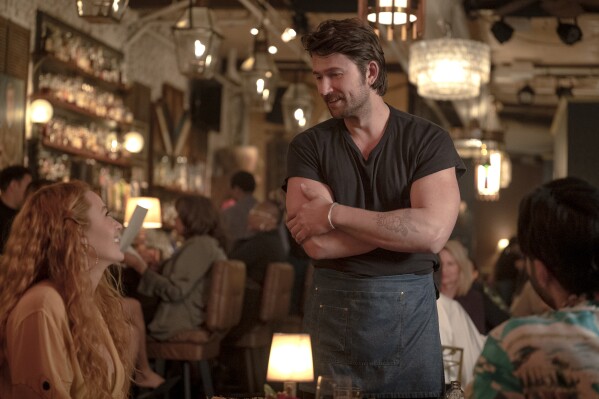
It’s a movie about an abusive marriage love triangle! Where have you been?? The movie starred Ryan Reynold’s wife (Blake Lively) and, ironically, is a title that could’ve been used as a subtitle for Deadpool and Wolverine.
The movie has a lot of drama going on behind the scenes. Justin Baldoni, who’d directed a couple of tiny drama movies, secured the rights to the book back in 2019, when nobody thought these drama romances would ever make money again.
It’s a great reminder to all screenwriters: Don’t follow the trend. Write about that thing that nobody else is focusing on. Cause that’s the thing that’s going to be hot in a few years.
Baldoni, who also stars in the movie, seems to have had a falling out with co-star Blake Lively, throwing out this dart during the press tour when asked if he was going to direct the sequel: “I think Blake should direct the sequel.” No doubt that was a shot at Blake taking control of the movie and, likely, backseat directing everything.
If you need more evidence that Mrs. Reynolds was a megalomaniac control freak, she proudly announced during an interview that she and her husband wrote one of the more talked-about scenes in the movie (the rooftop scene), not screenwriter Christy Hall.
Hall was clearly rattled after seeing the scene during the premiere. When she was later told that Lively and Reynolds wrote it, she stumbled through the most professional response she could muster. “When I saw a cut I was like, ‘Oh, that’s cute. That must have been a cute improvised thing.’ So if I’m being told that Ryan wrote that, then great, how wonderful.”
Why is this relevant? Because in a movie, the star already gets most of the press. The screenwriter rarely gets credit. To steal the only thunder the screenwriter has by saying, “Oh, she didn’t even write that good scene. I did!” It’s unprofessional behavior. Especially since adapting bad romance books into movie scripts is one of harder jobs for a screenwriter.
An interesting side note to this movie is just how little Hollywood understands the female audience. They continue to live in this world of “give them what we want them to want,” as opposed to “give them what they want.”
This book features a masculine man with toxic tendencies. He’s positioned, in many ways, as a female fantasy. Yet because he’s abusive and the wife doesn’t kick him to the curb immediately, the progressive lens through which Hollywood sees him says, “Women don’t want that.” Which is why they overlooked the book. And then the demographic breakdown of this weekend’s box office came out and 82% of the audience at It Ends With Us were women. So, obviously, Hollywood doesn’t understand what women want.
Masculine beefcakes who live by their own rules still sell tickets. Hollywood hates this reality but the longer they don’t embrace it, the more money they’re going to lose.
Let’s talk Star Wars.
This weekend, Disney had their annual D23 fair where they released a bunch of trailers, finally giving us a Star Wars: Skeleton Crew trailer. This is the next Star Wars TV series.
It’s just that… I don’t feel like these two worlds go together. Star Wars and Goonies are two distinctly different properties. Even that Spielberg 35mm blowout lighting looks weird in the Star Wars world.
With that said, it AT LEAST makes this look different. All these other Star Wars shows have looked the same (they all have that same shot of that singular “main street” with aliens and humans selling wares).
And you know what it also has? Someone who knew how to use a budget. The scope looks much larger than the last three Star Wars shows. I still can’t believe The Acolyte cost 180 million dollars and 90% of it was characters walking in a forest. At least we’re in, you know, space here. With big set pieces.
Oh, and it actually has aliens! I was getting annoyed that all these Star Wars shows were packed with humans. Finally, we have a bunch of freaking aliens. That’s cool.
So it’s got some things going for it. But how can we not be skeptical after what you’ve given us lately? I’ll reserve judgment but I will, for sure, watch the pilot.
Okay, onto the other big Star Wars trailer of the day, Mandalorian and Grogu. Yes, this is the next Star Wars movie. And it’s coming out in 2026! They’ve only been shooting for 2 weeks yet, somehow, they already have enough footage for a trailer.
I would be more confident if there was a clearer character journey for Baby Yoda. They kinda screwed the pooch when they brought Baby Yoda back after perfectly completing his arc in Season 2 then proved they had no idea what to do with him in the messiest Star Wars TV show season yet, Mandalorian, Season 3.
I want to root for it but we need more than cuteness. It looks like they’re using the old “Divide and Reunite” plot here, which is what they did with The Empire Strikes Back. Split the main characters up then we eagerly keep watching to see them come back together. Din and Grogu get split up and now they have to reunite. It’ll be the cutest adventure ever!
If you want to watch a trailer that personifies where we’re at in the movie business, check out Snow White, which, outside of Blade, has been the most trouble-laden production in Hollywood.
 “Hi-ho, hi-ho, it’s off to CGI we go…”
Oh wait, they at least have one dwarf in there. Needless to say, that take didn’t go over well. So they’ve gone back and replaced all the diverse adults with… CGI dwarfs! The amount of money being spent in studios to wiggle around nonsense these days is outright astounding. If you would’ve just stood strong in the first place and not bent the knee to the Twitter police, you would’ve saved 50 million dollars.
The rest of the movie doesn’t look bad but it’s very hard, once a production is cursed, for it to rebound. We’ll see if Snow White can be one of the few.
I leave you, once again, with the true winner of the box office this weekend: the Australian breakdancer who proved that confidence is always more important than talent…

So, originally, today, I was going to talk about Noah’s Choice and those pesky video cameras but, after reading Bedford, I’d rather use today’s post on helping Joseph make his script as good as it can possibly be.
When I do these script reviews, half of the review is dedicated to explaining what the script is about so I rarely get the time to suggest actual fixes. That’s what today’s post will cover. And if you like some of the notes I give here, hire me! I can practically guarantee your script will get better and, if you mention “Bedford,” I’ll give you 100 bucks off.
Now that I’ve had a day to think about the script, one of the things I’m worried about is that it does feel THIN. Scott put together a technical analysis of the screenplay and learned that it contained 16,000 words, which is low. You want to be closer to the 20,000 word mark. The low word count made sense to me based on how the script felt. The plot zips along like lightning but, in doing so, there aren’t many moments where you get to slow down and smell the flowers.
This is one of those universal challenges you face when you write a screenplay. You know you have to move things along to keep the reader engaged but you also have to make them feel something in order to stay engaged. And if all you’re doing is moving the plot forward, the experience feels empty.
This leads us to Bedford’s first issue, which is its stilted emotional subplot. Emily has a daughter. The daughter wants to spend more time with her father. Emily is not on good terms with the father. So she’s not supportive of this reunion. The irony, of course, is that the father ends up being on the plane that’s gone missing. Which ties our emotional plotline together.
But is that the best version of an emotional plotline we can get out of this story? I’m not convinced it is.
Let’s look at the father storyline. Emily doesn’t like the father. The father is on the plane. Well, is there much drama in that? If the worst-case scenario happens and the military gets rid of this plane, Emily’s in a pretty good position! Now she doesn’t have to worry about this a-hole father screwing up her daughter’s life anymore.
I know that Joseph would say the reason it works is because, even though it’s no sweat off Emily’s back if the dad disappears, Emily knows that it would destroy her daughter. So, in Joseph’s argument, it’s a more nuanced decision that Emily has to make. Does she save the man she despises in order to make her daughter happy? Theoretically, I understand this argument. But I didn’t feel any emotional way from that choice.
For starters, I winced when I learned the dad was on the plane. It felt too cute. Too “wrapped up in a bow.” You’re already asking for a huge buy-in with everything that’s going on. Throwing “dad on the plane” in there is the equivalent of, after asking a friend for a 500 dollar loan, you then, an hour later, ask them for another 100 bucks.
Here’s how I was thinking we could fix this. Move the father out of the story. The daughter, who’s at college, is flying in tomorrow. We would set this up through a conversation between Emily and Crane. He notes how happy he is that she’s finally taking her vacation days off. She points out that, yeah, her daughter is flying in for the week and she wants to spend as much time with her as possible.
If you really wanted the dad in here, We could reverse the Emily-Husband dynamic. In this version, the daughter goes to school next to her father and therefore spends most of the time with her father. She rarely comes home anymore. So Emily is making the most of her daughter’s visit. After we establish that backstory via a conversation between Emily and Crane, we would not hear anything else about that storyline for 25-30 pages.
Then, in the midst of the plane mystery deepening, either through the dad texting Emily or the daughter’s friend texting Emily, she learns, shockingly, that her daughter came in tonight on an earlier flight. She’s ON THE ATLAS FLIGHT.
To be clear, I’m still not sold on any family members being on the plane. It’s too much of a coincidence to me. But the reason I like this new version better is because the setup of Emily not coming until tomorrow makes the surprise that she’s on this Atlas flight TRICK the audience into focusing on the surprise rather than the coincidence.
Another reason I like it is because, in these contained movies, you need as many shocking moments as you can get away with. The repetition of the environment necessitates that we find exciting story beats anywhere we can. This would be a good one.
Okay, let’s move on to Mike and his lack of fuel. This is one of those story choices that feels right from a screenwriting perspective. You’re giving this important character a ticking time bomb (he’s running out of fuel and needs to land) which adds an additional layer of suspense and tension to the story.
But not every story component that TECHNICALLY works ORGANICALLY works. Sometimes the coolest screenwriting tricks in the world don’t work within the larger context of the story. That’s how I’d label this choice. We’re so baffled by how dismissive Emily is towards Mike and his SOS situation that we get annoyed by it. The guy’s got less than a gallon of fuel and you’re asking him to fly around and tell you what he sees?? That’s not realistic. For either Emily or Mike (if I were Mike I’d tell her to F off).
This is an easy fix, though. Mike is already in a really crazy situation. He was in the UK five minutes ago. Now he’s in the U.S. What we should do here is establish that Emily isn’t allowed to land a plane that isn’t cleared in the US. But she can try and get a special landing clearance for him, which will take a few phone calls. That allows us to keep Mike up in the air while Emily attempts to solve his problem. And, as long as he’s up there, he might as well help her out.
Getting back to the emotional side of the story, there’s a version of the Mike storyline that’s A LOT DEEPER that allows for a bigger, more impactful, climax. It would go something like this. Similar to Wade Wilson in Deadpool and Wolverine, Mike is not in a great place in life. His life didn’t go the way he imagined it would. And he regrets the fact that he didn’t do something bigger with his life.
In this version of the story, Emily and Mike’s talks would be a little deeper. They’d get into some of that stuff.
This way, when the climax comes around, you could set it up so that the military is about to take down the aliens and the plane. It’s a foregone conclusion. UNLESS Mike sacrifices himself. If Mike could somehow disrupt the shot by crashing into the missile launcher, he could give them just enough time to get away. Essentially, Mike finally does something that matters in his life.
Obviously, that’s a darker ending. I suppose there’s a version of that ending where Mike could still survive the crash. Because I do like the idea someone had of Emily and Mike finally seeing each other in the end (similar to John McClane meeting the cop at the end of Die Hard). You could even hint that there’s some romantic potential there. All of these different choices will alter the tone so you have to figure out which concoction best suits the movie you’re imagining.
As for our ending where Emily and Crane leave the tower and drive out, I’m on the fence about this. On the one hand, it makes the ending different from the first two acts. I like that. All the movement does make things more exciting as well. So I like that.
But it’s also kind of messy, which I don’t like. And Crane is such a weak character that he almost single-handedly destroys this scene. Crane might as well be an AI powered human body, he has so little depth to him. And what’s frustrating about that is that it’s an easy fix.
Let’s establish who Crane is in that first act! I imagine him similar to the sheriff character Jeff Bridges played in Hell or High Water. He’s almost retired. All he cares about is his pension. The guy’s mantra is: Don’t rock the boat. When all this shit starts going down, Crane keeps saying to Emily, “Let it go. It’s above our pay grade.”
That way, when Crane is driving the car at the end, it actually means something. Because he’s transformed as a character. But even without that, note how much better you know my version of Crane than the version in the story. Just by that one paragraph I wrote. That’s how easy it is to give a character depth. So, even if it’s not my version of the character that you go with, come up with your own version. As long as Crane isn’t some faceless wordless shadow in the back of the room.
Finally, I want to talk about where this movie ends. I feel like it should end in the tower and I have two examples I want to share for why. The first is Pearl Harbor. Pearl Harbor is a terrible movie. But there’s one thing I remember from that movie. Ben Affleck plays a pilot who’s the greatest pilot in the entire Navy. When the Japanese start attacking and there’s pure chaos on the ground, all Ben Affleck is trying to do is get up in a plane. Because that’s where he belongs. That’s where he’s the best. He can’t do anything for anyone down here. He’s useless.
I like characters like that. They’re so great at what they do that that’s where they need to be to shine the brightest. Assuming Emily is great at her job, she should know that her best chance at saving the plane is up in that tower. Cause that’s where she shines the brightest.
The second example is Wedding Crashers. In that movie, the writers, Steve Fabor and Bob Fisher, couldn’t figure out their ending for draft after draft after draft. Then one day one of them said, in the most obvious of statements, “Our movie is called Wedding Crashers. It needs to end at a wedding.” And that’s how they came up with their ending.
This script is similar in that, it’s about an air traffic controller. It needs to end in an air traffic tower.
Yes, I understand that that makes the ending LESS cinematic. But if the FBI is guarding that tower and Emily has to sneak back in, there are elements there that can be cinematic (not to mention, it would be cheaper to shoot).
Those are my thoughts on how to improve Bedford. If any of these ideas have inspired you guys to come up with even better ideas, please share them. The more feedback Joseph has going into this next draft, the better. :)
I would even ask Jospeph to come up with a 2-3 page document detailing what he’s going to do for the next draft and I would post it here. That way, we can spot any potential problems ahead of time and adjust the outline accordingly.
Genre: Sci-Fi/Thriller
Premise: During a graveyard shift in a local air traffic control tower, a passenger flight goes missing, setting off a series of unexplained occurrences in the sky and leaving it up to a single determined tower operator to untangle the mystery.
About: Today’s script is the culmination of our 7th month journey toward the Mega-Showdown. Congratulations to Joseph Fattal for claiming the top prize!!!
Writer: Joseph Fattal
Details: 98 pages

Major spoilers throughout this review. I recommend you read the script yourself first.
Coming up with a great concept is hard. Most people WHO WORK IN THIS BUSINESS don’t even come up with a single great concept in their entire career. So when you run into someone who’s come up with two of them, as today’s writer, Joseph Fattal, has, you want to know what their secret is. If you don’t remember Joseph’s previous awesome concept, here it is: An Amazon truck driver is ambushed in Mexico by a group of mobsters who mistake him for a drug cartel deliveryman and must survive using only the packages inside his van.
So I went to the source and asked Mr. Fattal what his concept-generating secret was.
“I don’t have a magic bullet, but my best advice on this front is to just brainstorm a lot, hedge your bets, come up with a TON of story ideas and write them all down. I have folders with hundreds of concepts and I section them by genre. Then I do a lot of field testing, pitching the best concepts to anyone who’ll listen.
As for technique itself, I try not to get too attached to the initial logline when I start developing ideas. Like, I think of things very technically. I come up with a concept and then start attacking it from all angles of screenwriting techniques to make it better (lots of techniques that I learned from Scriptshadow). Does it have clear GSU? What market does this appeal to? Is there a good main character in this? Can I convince studios that this will make more money than it would cost to produce? And then I adjust it accordingly.”
So there ya go. I’m sure Joseph will be in the comments willing to answer more questions about this topic. In the meantime, let’s check out his contest-winning entry…
Emily is an ATC operator at a small airport on the east coast of the US called Bedford. When we meet her, she’s dealing with a passenger jet from Atlas Airlines that is frustrated with some bad fog that they’ve hit on their descent. The only problem is, Emily doesn’t see any fog on her radar.
Things get worse from there. Their call sign disappears from her radar and none of the other planes in the area seem to be able to find Atlas. Emily makes the other controller in the room, Crane, aware of the situation, but he doesn’t seem too bothered by it.
When Emily finally gets Atlas back on the line, the captain’s voice sounds clipped and awkward. He’s still looking for landing coordinates but Emily can’t even figure out where he is so she can’t help him.
Soon after that, she hears some angry military guy on her radio demanding help. He keeps talking about “Delta” formation and insists that Emily clear a landing strip for him. Emily has no idea who this guy is or where his airplane is. This is then followed by a lot of different languages over her radio, culminating in a guy named Mike in a Cessna who claims that he’s come from Cambridge… IN ENGLAND.
Now Emily is really freaking out. Mike says that he’s almost out of fuel and he needs to land but Emily refuses because they’re not allowed to just let any plane land if they don’t know who they are. So she, instead, keeps him up in the sky, and starts asking him to look around for her and see if he can spot Atlas.
To make matters worse, we learn that Emily’s ex-husband is on the Atlas flight. This husband is not a good guy and Emily has zero contact with him. But he’s coming here to spend time with their daughter. And her daughter is very excited about that, which Emily has mucho conflicted feelings about.
As Emily continues to try and figure out where Atlas is, the FBI invades her radio and tells her to stay the F away from Atlas. Atlas is their focus now. She’s been dismissed. But Emily is not giving up that easily. She’s determined to get Atlas down safe. But to do that, she’s going to have to get around not just the FBI, but the US freaking military!
Now that we’re at the end of the contest, I can confess, this is the script that I was hoping would win. It has a lot of the things I love in a spec script. Airplanes! Contained location. Condensed time frame. An angle into a subject matter we haven’t seen before. I always loved that scene in Close Encounters of the 3rd Kind where they’re in the control tower tracking a UFO that’s about to crash into a plane. To create a feature-length version of that? Sign me up!
Was the feature-length version of that a perfect landing? Or an epic Tenerife-like crash for the ages?
Good news.
Bedford is a lot closer to the former than the latter.
This script does a lot of things right but the biggest thing it got right was the mystery. I’ve read a lot of screenplays and seen a lot of movies so I know my way around a plot prediction. But I was STRUGGLING to figure out what the heck was going on here all the way until the last twenty pages.
Usually, when that happens to me these days, it’s rarely because the script is written well. It’s more often because the script is such a mess that it’s impossible to decipher much of anything that’s going on.
But Fattal’s script is purposeful all the way through. He understands his mystery and he understands how to dole out clues, red herrings, side mysteries, and escalating plotlines in a way that makes you want to turn the pages. Which is all this game is really about – is your script good enough to get the reader to keep turning the pages? And this script is!
To give you a little more insight into HOW page-turnable-it is, there are three levels of page-turnability for Scriptshadow. One is that it’s not page-turnable at all. So I stop reading. Two is that it’s “script review page-turnable.” That’s when I’m interested enough to keep turning the pages but if I wasn’t reviewing it, I probably wouldn’t. Three is legit page-turnable. I would keep turning the pages even if I wasn’t reviewing the script. Bedford is the third one.
The thing that Fattal did that really got me was he created four mysteries that were all interesting in their own right but they were different enough that I was desperate to figure out how they connected. Why was Atlas frozen in place? Why was Atlas’s communication so weird? How did a Cessna from England get to Bedford? And who was this angry military type who kept yelling at Emily from the radio?
I needed to see how all those puzzle pieces fit together! That kept me racing through the script all the way til the end. I didn’t even check the internet! Which is RARE when I read a script these days.
I believe Bedford will be made into a movie.
But there are certain things it has to improve in order to get there. Some of them are easy. Some are quite difficult. But the good news is, there’s a path forward to production for this script. How often do we see that here even with professional scripts?!
Let’s start with Crane. Here Emily is going through the strangest craziest series of events that have ever happened to her and have probably ever happened to any ATC controller, yet here Crane is, over on the other side of the room just chilling out! Give this a guy a six-pack of Mountain Dew and a Nintendo Switch and he’s just fine hanging out in his own little world the rest of the night. We need to do something about Crane. His lack of action does not match up with the situation at all.
Next, we have the personal storyline – daughter and absent dad. I commend Joseph for trying to connect the personal story to the plane story. But it just doesn’t feel right. The dad being on the Atlas plane is way too coincidental. And the connection between the daughter and the dad is okay but not nearly as compelling as it could be. We have to rethink that part of the story. It’s too cute, like you can feel the writer wrapping everything up in a perfect bow, which is why it reads false.
Mike.
Mike Mike Mike Mike Mike.
I like the idea of Mike. But Mike has some issues. For one, I still have no idea how he got to the US. So there’s that. Two, Emily is WAY TOO FREAKING CASUAL about poor Mike who LITERALLY has 2 gallons of fuel left in his plane and he’s desperate to land. Yet she turns him into her own personal errand boy, having him fly all over the place looking for clues. It was like, “DUDE! EMILY! GET THIS MAN DOWN ON THE GROUND! HE’S ABOUT TO CRASH!” And why is Mike listening to her?!? He would be way more focused on living. Not every plot beat needs the ultimate ticking time bomb. Maybe Mike has plenty of fuel. He’s just confused as hell about how he ended up in the US.
I kind of like Emily and Mike (via his plane) coming together at the end. But something tells me there’s more we can get out of this moment. Maybe, for example, Mike has to fly into the triangular alien formation to save the plane or something. Having him just safely crash-land nearby was anticlimactic.
The real thing that scares me, though, is the ending. It’s kind of cool but I’m afraid it won’t hold up to scrutiny. It’s better than M. Night’s infamous ending to Signs, where aliens visiting a planet with 80% water realize that water kills them. But I’m not convinced that aliens would need humans to help them triangulate the path back to their planet. I’m not going to say to get rid of that as the ending. But I wasn’t totally buying it.
I’ll wrap this up by saying I like the concept of the “Contained Adjacent” genre. What that means is, you spend MOST OF THE TIME in the contained location. But then, in order to create some variety in the plot, you take them out of that contained location late in the script, like Joseph did here. With that said, I think there’s a version of this ending that needs to end in the control tower. That’s what our hero does best. So let’s put her back in there (think about how Tom Cruise must get in a plane at the end of Top Gun because that’s where he’s most effective).
I definitely dug this script and I’m curious what everybody here thinks as well. Some of you guys give really great notes. I think, together, we can help Joseph solve these problems and turn a “worth the read” into an “impressive.”
Great job, Joseph! Had a lot of fun with this one. It’s worthy of the Mega Showdown Title. :)
Script Link: Bedford
[ ] What the hell did I just read?
[ ] wasn’t for me
[x] worth the read
[ ] impressive
[ ] genius
What I learned: This one comes from Joseph himself. Try not to get too attached to your concept because there could be a better concept inside of it. Here’s Joseph…
“Here’s a fun story about Wish List (my script about the Amazon driver). It was originally called Extermination and was about two government guys in a post-apocalyptic world that get sent to drive a truck containing an exterminating bomb into the heart of a zombie-infested city. I really wanted to write a contained thriller, and I chose a truck/van to be the contained setting. And it was around Covid, I wanted something to do with viruses, so I put in the whole zombie angle.
But it didn’t feel right, it was too much “fantasy” because it was a post-apocalyptic world (and I’m not great with fantasy), and the story just felt very forced in a lot of ways. So I started rethinking it entirely one day, even though I had already spent so much time outlining it. How do I make it more marketable? Can it be a van in the modern world? How do I add more elements that drive the story forward (i.e. the Amazon packages)?
Then I came up with the Amazon angle. And I loved it, and everybody I pitched it to loved it. Even then I had a hard time throwing away the original idea, because I had spent weeks on the treatment at that point, and I was emotionally attached to a lot of aspects of that story. But I’m glad I redid the whole thing. Because now I’m 4 years into Wish List and many drafts later, and still manage to get eyes on the script and showcase my writing because people love the idea. So I try not to get too attached to the ideas, that way I can better determine what works and have the strength to throw out what doesn’t, even if I already worked super hard on it. This has been a very useful mindset for handling feedback, too.”
