
Search Results for: F word
Genre: Period/Supernatural
Premise: (from Black List) A young slave girl named Lena has telekinetic powers she cannot yet control on a plantation in the 1800s.
About: This script finished on last year’s Black List. The writer, Sontenish Myers, an NYU grad, received the Tribeca Film Grant to make the film. The Tribeca Film Grant provides film budget grants for under-represented groups.
Writer: Sontenish Myers
Details: 114 pages

The other day I was talking to someone who is not in the screenwriting world. They like movies but they’re by no means obsessed with them like you and I are. Anyway, she was curious about my job, particularly when it came to deciphering the difference between a good script and a bad script.
“It’s all subjective, right?” She said.
This is not the first person I’ve run into who believed that the only difference between one script and another is the subjective nature of who reads it. The variable these people never consider is that a script must meet a basic standard of quality before it can be judged subjectively against other scripts. If it has not met that standard, then it is objectively not as good as other professional screenplays.
I don’t know if everyone here remembers Trajent Future and his bullet time dreams. But that classically bad amateur script was objectively worse than its professional brethren.
The question I then get is, how do you objectively know the difference between a beginner script and a professional script? Well, that answer is long and varied because there are a lot of things one must learn to write a professional-level script. But we’re going to go over a couple of ways to spot a problem script today to give you a feel for how readers assess these things. Let’s take a look.
The year is 1802 and 11 year old Lena is a slave on a cotton plantation with her mother, Alice. We learn early on that Lena can make things levitate. Like bottles or buckets of water. As a kid, she has fun with the power despite the fact that her mother keeps reminding her that if anybody finds out about this, they’re dead meat.
One day the decision is made to bring Lena inside and make her a house slave. So she and her mother are split up. Lena then tries to befriend all the other house slaves (all of whom are older) to mixed results. She also struggles to keep her telekinesis under control.
Then, one day, when she’s out getting water, a mysterious black woman approaches her and takes her back to her secret underground home. She’s seen Lena use her powers and wants to help her hone them. This interaction leads to the best exchange in the script. “Why do you live down here?” “Down here I’m free, up there I ain’t.” “Freedom is a lot smaller than I thought.”
In addition to Lena’s weekly telekinesis lessons, she also finds a 14 year old slave – Koi – who ran away from a neighboring plantation. Lena introduces Koi to the mysterious underground witch woman who feeds him and prepares him for his next journey.
After weeks of daily chores and strengthening friendships with the other house slaves, Lena’s worst nightmare comes true – her mother is sold. Lena slips away to Koi and the Telekinesis Witch and demands that they do something – use their powers to get her back. But will the two help Lena? Or do they consider the task too risky?
“Stampede” is an example of a common beginner concept mistake. A writer will give a character a power and believe that that power has given them their story. Unfortunately, it doesn’t work like that. Giving Lena telekinesis doesn’t give you a screenplay. All you’ve done is give your character a trait, not unlike the ability to play baseball or be a really good businesswoman. What about your story? What is going to happen that will make that trait interesting? That will put that trait to the test? Most beginner writers don’t know the difference between the two and therefore cobble together a disjointed narrative while occasionally going back to the power in the hopes that it will do some heavy story lifting.
Look at Get Out. The beginner screenwriter version of that is a black man dating a white woman. That’s it. The writer hasn’t thought beyond that. But the veteran screenwriter knows that all he’s done is set up the characters. He still has to come up with a story. So he adds that the girl is taking the boyfriend to meet her parents for the weekend and something bad is going on at their home. We never get anything like that in Stampede. It’s a narrative with no singular focus.
To be honest, I think this script would’ve been a thousand times better without telekinesis. The telekineses only serves to distract from the more poignant story about a young slave. It also makes the reader keep waiting for the telekinesis to become a bigger part of the story. And since it’s only a minor component, we never get that payoff. That makes the power a story distraction rather than a story ally.
Also, it seemed like there were better directions to take the story. But, in another common beginner mistake, the writer always took the path of least resistance – the path that made it easiest to write. You want to do the opposite. You want to go in those directions that are scary for you and harder on your character. If the slave owners would’ve discovered Lena’s powers, for example, maybe they try to use them for their own nefarious goals. Teaming up a slave and slave owners is where you’re going to find those messy but more interesting storylines.
But the biggest problem with the script is that the narrative isn’t purposeful. There is no goal. There are little, if any, stakes. And there’s definitely no urgency. Combined with the fact that the hero is stuck in one location, the story feels passive. There’s nothing for the characters to do. This leads to the writer coming up with all these small side stories, like the witch, like the 14 year old slave boy, like the friendships with the other slaves, that have no narrative thrust. There are no engines beneath these stories so whenever we’re participating in them, we’re asking ourselves what the point is.
How do you give a script narrative thrust? Simple. You create a big goal with high stakes attached. At around page 90 in this script, Lena’s mother gets bought by another slave owner and taken away. I’m not going go into some of the ancillary problems with this plot choice (we hadn’t seen the mom for 65 pages so we didn’t feel anything when she was sold). But what you could’ve done that would’ve been a lot better for the plot is to have the mother bought on page 25, the event that forces Lena to be moved into the house. Now you have a clear goal – Find and reunite with her mother again. It really is as simple as that. And that doesn’t mean you have to send her off on the journey. The entire movie can be her planning her escape and how she’s going to get to her mother and then the final act is her executing the plan.
Finally, you need your super-power to connect to your story better. Or else it just feels random. And that’s how this power felt. What does lifting bottles up have to do with anything in this subject matter? There’s literally zero connection – plot wise or theme wise. This tends to be another beginner mistake. The young screenwriter gets so hung up on the thing that they personally think is cool (in this case, telekinesis), that they never consider whether it’s relevant to the story they’re actually telling.
Last week, with The Paper Menagerie, the mother character had the power to make origami animals that came alive. That power had a ton to do with the story. It was cultural. It was the only way she knew how to connect with her son. They were a poor family so those animals were the only toys he had. They were also his only friends. And the animals ended up having messages within them that gave us our surprise ending. In other words, the power was organically connected to the story. We never got that here.
This script was just way too messy for me. I’m kinda shocked it made The Black List.
[ ] What the hell did I just read?
[x] wasn’t for me
[ ] worth the read
[ ] impressive
[ ] genius
What I learned: Period stories tend to work best when they’re set during a time of transition. All I could think while reading this was how much more intense it would’ve been had it been set in the months leading up to the end of slavery. The slave owners would’ve been more on edge. There’s uncertainty in the air. There’s more anger and, therefore, more potential for violence. This script was definitely missing an edge. That could’ve provided it.
Genre: Sci-Fi
Premise: An archeologist father and his young daughter must attempt to decipher an ancient alien message on a distant planet.
About: This is the big package that is bringing back a lot of the same team from “Arrival,” as this is another thinking man’s sci-fi story. The short story comes from Ken Liu. Shawn Levy of 21 Laps is the one who purchased it.
Writer: Ken Liu
Details: Short story about 15,000 words (an average screenplay is 22,000)
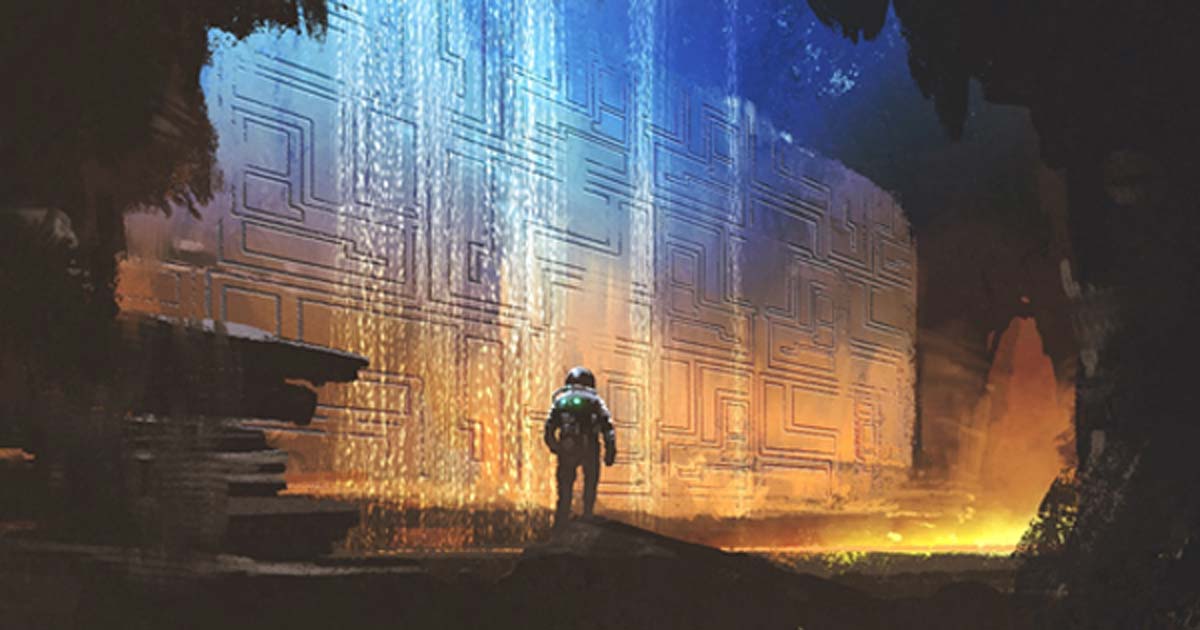
I’ve been all over Ken Liu since reading his amazing short story, The Paper Menagerie. When I heard he’d be teaming up with the new king of Hollywood, Shawn Levy, to adapt his short story, The Message, into a movie, I couldn’t remember any project announcement that got me more excited this year!
But one thing I’ve realized as I’ve studied Ken Liu is that he’s realllllyyyy smart. Intimidatingly so. Check out this answer he gave in a recent DunesJedi interview regarding his approach to science fiction versus fantasy…
“I think of all fiction as unified in prizing the logic of metaphors over the logic of persuasion. In this, so-called realist fiction isn’t particularly different from science fiction or fantasy or romance or any other genre. Indeed, often the speculative element in science fiction isn’t about science at all, but rather represents a literalization of some metaphor. I like to write stories in which the logic of metaphors takes primacy. My goal is to write stories that can be read at multiple levels, such that what is not said is as important as what is said, and the imperfect map of metaphors points to the terra incognita of an empathy with the universe.”
I’ll have to get a doctorate in Smartness at MeThinkGood University before I’m fully able to digest all of that. But the parts I did understand speak to one of the debates we’ll have later on. “The Message” has a lot of pressure on it as it’s coming after the perfection of The Paper Menagerie. Let’s see if it delivers.
Our story takes place in the way-off future. Our narrator, an exo-planet archeologist, flies around the galaxy to ancient civilizations in order to learn about extinct alien races. They’ve found a lot of these civilizations. But, so far, nobody has been able to find a LIVING alien race.
Just before he’s about to explore his latest planet, the narrator learns that his wife has died and he must now take care of their 11 year-old child, Maggie. He’s never even met Maggie so how do you say “awkward” in archeology-speak? Due to the fact that they’re going to blow up the latest ancient civilization planet soon, the narrator doesn’t have time to drop his daughter off and must bring her along.
Together, the two walk around the pyramid-infested city, which died off over 20,000 years ago. Their goal is to decipher “the message.” There are a lot of hieroglyphics everywhere and he’s convinced they’re all trying to say something. With the help of Maggie, who’s also into archeology, they do their best to decipher all the mysterious pictures.
Meanwhile, Maggie passive-aggressively needles her father about prioritizing his work over staying with the family and raising her. Why the heck does he care more about long-dead alien civilizations than his own family?? It’s a good question that takes a back seat when the dad finally cracks the message (spoiler). The message is that this is a highly radioactive area. Stay away. Stay away. Stay away.
This means they are both dying quickly. The dad can put Maggie in stasis which will halt the radiation poisoning until they get her to a hospital. But since the ship was damaged during landing, the dad will need to manually fly it back up into the atmosphere. By that point, the radiation poisoning will have reached a point of no return. He’ll die. Which means that just as this father-daughter relationship was about to get started, it’s already over. The End.
You would think ancient alien civilizations would be ripe subject matter for a movie. A sweeping shot of the long dead alien city alone is a money shot for your trailer. And yet the last two Alien movies proved that maybe ancient alien civilizations aren’t as cool as we thought they were. And this latest dive into the subject matter isn’t giving me a lot of confidence that that trend won’t continue.
Then again, Liu always seems to be more interested in the human element of these stories than he does the science element. If the character stuff works, it’s going to make the ancient civilization plot work by proxy. Unfortunately, the character stuff doesn’t work. Which is surprising considering that Liu wrote such a great parent-child storyline in The Paper Menagerie.
Today’s story proves that there’s a razor thin line between emotional effectiveness and melodrama. When the emotional component is working, it’s like magic. Our stories seem to come alive right from under our fingertips. When it’s not, it’s frustrating because you’re never completely sure why. It *should* work. A dad and the daughter he’s never met before are forced to team up to solve a puzzle. She doesn’t like him. He doesn’t understand her. The subtext writes itself.
However, something about this relationship feels on-the-nose compared to Menagerie and therefore never connects with the reader. I think I know why. If you look at The Paper Menagerie, the mother-son relationship was built around a very specific issue – she refused to speak English. He refused to speak Chinese. The story was about lack of communication. It was specific.
The Message doesn’t have that. There isn’t a specific problem in their relationship. It’s general. He ran off on his family so this is the first time they’re together. General is derived from the same tree as Generic. When you generalize in storytelling, you are often being generic. That’s what this felt like. Your average generic daddy who has to take care of a daughter he never knew he had story. Hollywood comes out with five of these a year. So if you don’t work to specify the relationship in some way, like Liu did with Paper Menagerie, the story is never going to take off.
More importantly, the emotional beats aren’t going to have the same oomph. This is why it’s so easy to shoot for a big emotional scene only to have the reader rolling their eyes.
Getting back to what Liu was talking about in that interview, he says that fictional writing should be all about the metaphors. I’m not sure I’ve heard an author say that before. I suppose it could be a short story thing. But I got the impression he was talking about all fiction. I vehemently disagree with that approach.
I got the sense that this ancient civilization had a metaphorical connection with the dad’s fractured relationship with his daughter. But I couldn’t make out what that connection was. Maybe someone can help me out. But even if I did understand the metaphor, it would not have made me connect with these characters any better. It would not have fixed the fact that the plot is basically two people walking around an empty city the entire time. Those are genuine story weaknesses that could’ve been improved if the focus was more on the storytelling and less focused on metaphor.
I’ll go to my grave saying that telling a good story should be the priority of every script you write. If you want to win new friends in your English class, go metaphor-crazy. But if you want to write a story that people actually enjoy, focus on the storytelling. Drama. Suspense. Irony. Unresolved Conflict. Problems. Goals. Obstacles. Stakes. Inner transformation. Urgency. And here’s the catch. You have to do all of these things IN A WAY THAT’S NOT DERIVATIVE. The story, along with the elements within the story, have to feel fresh and specific. The Message didn’t pass that test.
[ ] What the hell did I just read?
[x] wasn’t for me
[ ] worth the read
[ ] impressive
[ ] genius
What I learned: Work vs. Family is one of the most powerful character flaws available to writers. This is because it’s such a universal flaw that everyone understands. Even if you don’t yourself have the flaw, chances are there’s someone close to you who does. Which means you understand it. That’s what you’re looking for with character flaws. You’re trying to find flaws that all human beings can relate to. Here, the father chose work over raising his child. Liu didn’t nail the execution (in my opinion) but I still see this character flaw working in a lot of stories. I know writers often struggle to find a flaw for their main character. Well, this one is one of the easier flaws to show and execute as a character arc. So keep it in the hopper.
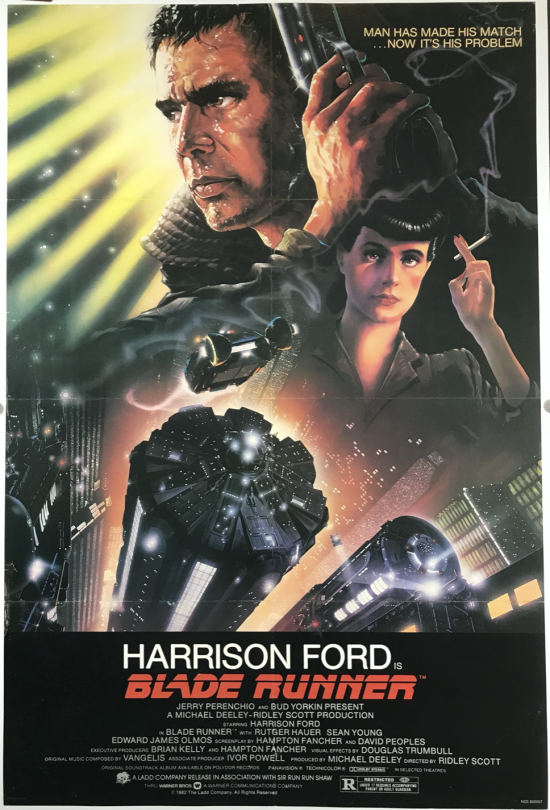
Titles are one of the most under-analyzed elements of screenwriting. That’s because titles don’t truly become important until the movie is being marketed. And since titles are only a few words, potential script buyers know they can easily change them. However, a good title can make a great first impression, getting a reader excited before they’ve even opened up your script. A *great* title can even get someone to greenlight a movie (as it famously did with the title, “Monster In Law”). So it’s worth carving out some time to come up with the best title possible. Here are a few all-timers…
Cool Hand Luke
No Country For Old Men
Eternal Sunshine of the Spotless Mind
Slumdog Millionaire
The Devil Wears Prada
One Flew Over the Cuckoo’s Nest
Things to Do In Denver When You’re Dead
Blade Runner
Apocalypse Now
Kill Bill
Inception
Trainspotting
Tinker Tailor Soldier Spy
Full Metal Jacket
The Last Picture Show
Jaws
Back to the Future
Dude Where’s My Car
Midnight Cowboy
To Kill A Mockingbird
Touch of Evil
On that note, I’ve found that talking about titles in the abstract doesn’t do much for screenwriters. In order to understand what makes a title good or bad, you need to SEE the title. So what we’re going to do today is look at 25 titles from The Last Great Screenplay Contest and I’m going to give each of them a 1-10 rating, as well as some insight into how I came to that rating. I’m also going to include the genre because you can’t really get a feel for a title unless you know the genre.
By the way, if your title shows up here and I give it a poor rating, that has no bearing on whether I liked your script or not, as I’ve gone into every script so far only focused on the first 10 pages. Today’s article is about titles and titles only. Feel free to share your thoughts about each of these titles below and how you’d rank them. Let’s get to it!
Title: We’re Doing Just Fine
Genre: Black Comedy
Analysis: Solid title. It’s not going to win any awards but the combination of the genre and the irony of the title (“Just” conveys that they’re doing anything but fine) imply that the writer gets comedy. To see how this title could’ve gone south, look what happens when we give it a more straightforward treatment: “We Are Not Doing Fine.”
Rating: 7 out of 10
Title: Out of Time
Genre: Time Loop/Thriller/Action
Analysis: “Out of Time?” Really? Come on!!! A time loop thriller titled, “Out of Time?” You couldn’t come up with anything more original than that?
Rating: 2 out of 10
Title: The Commune
Genre: Contained Horror
Analysis: The problem with titles like this is that they imply you’re not tuned into the business you’re trying to break into. I think there have been a dozen movies titled, “The Commune.” I’ve probably personally read 20 scripts titled, “The Commune.” It’s a very very common title. It’s your job as a writer to know this because I guarantee you every industry person you send this title to is going to dismiss the script based on its generic nature.
Rating: 2 out of 10
Title: BIG TROUBLE IN BRECKENRIDGE
Genre: Action/Sci-Fi & Fantasy
Analysis: You want titles like this to have some contrast, some fun. Look at its inspiration: Big Trouble in Little China. See how much better that reads with the contrasting of the words “Big” and “Little?” Overall, the title inspires more of a visual than most of the titles today but it’s random and not very well thought out.
Rating: 5 out of 10
Title: The Good People
Genre: Horror
Analysis: A fairly decent title. Maybe a teensy bit too bland? But I could see this inspiring some reads with a good logline.
Rating: 6 out of 10
Title: Way
Genre: Drama/Romance/War/Historical/Action
Analysis: There’s information. There’s not enough information. And then there’s this. “Way?” This title literally feels like a mistake was made – that the writer was in a rush and mistakenly forgot to put the whole title in. Yikes.
Rating: 1 out of 10
Title: Candyflip
Genre: Drama/Thiller
Analysis: Easily one of the most original titles submitted. Gets you thinking. Wondering what the movie is about, which is good. I’m a little thrown by the “drama” tag. If this was a straight thriller or action movie, I think the title would work even better. But definitely one of the best on this list.
Rating: 8.5 out of 10
Title: When Tomorrow Starts Without Me
Genre: Thriller
Analysis: I like this one! It definitely gets you thinking, which is always good. Why would tomorrow start without our hero? There’s a mystery there I want to know the answer to.
Rating: 7 out of 10
Title: Tigers
Genre: Thriller
Analysis: I’m going to break my code and provide a little insight on this one. It’s got a really good premise and it made it into my “Maybe/High” pile. “Tigers” doesn’t tell us nearly enough about this story. It’s just too darn generic and doesn’t provide the level of curiosity a good script like this deserves.
Rating: 3 out of 10
Title: A Violent Noise
Genre: Drama/Action
Analysis: Too obvious. When you think “noise” you think loud, so a “violent” noise isn’t that far off. Which smacks of redundancy. Look for contrast in these types of titles. “A Violent Whisper” feels like a title I’ve heard before so I’m not claiming it’s amazing. But it’s definitely better than the on-the-nose “A Violent Noise.”
Rating: 4 out of 10
Title: The Arcanum
Genre: Fantasy/Action
Analysis: It’s a fantasy-sounding title. So I’ll give it that. But it loses points due to the fact that I have no idea what an “arcanum” is.
Rating: 5 out of 10
Title: Lotus
Genre: Psychological Thriller
Analysis: On the plus side, intriguing mysterious single-word titles can work. Especially in genres like horror, sci-fi, and psychological thriller. The trick is picking a word that is genuinely intriguing but also original. Hard to do. I think that’s where “Lotus” stumbles. It uses a word that has me intrigued. But I feel like I’ve seen too many titles like it before, which puts it in the good but not great category.
Rating: 6.5 out of 10
Title: Dark Lands
Genre: Action/Fantasy
Analysis: Easily up there with one of the most generic titles you can come up with for a fantasy film. Fantasy is one of the more imaginative genres out there. You need to give us a title that displays some level of that. Let’s get that imagination going, man. Not use something from Tolkien’s trash bin.
Rating: 2 out of 10
Title: Dolly
Genre: Horror
Analysis: One of the more effective things you can do with a title is to juxtapose it with your genre. That’s what we’re doing here. “Dolly” is a positive, almost jovial, word. So when it’s contrasted against horror, it creates intrigue. Conversely, if your horror script is titled, “Axe Murderer,” that’s pretty darn boring.
Rating: 7 out of 10
Title: Goodnight Nobody
Genre: Contained Thriller/Horror
Analysis: If we’re going on title alone, I’m not sure I get this. Maybe it’s a play on “Goodnight everybody?” I think that’s a phrase. But the turn-of-phrase doesn’t play off the original phrase organically enough to feel clever. – Now, I also happen to know that this script is about snakes. Why you have a script about snakes and don’t imply that anywhere in your title, I don’t know.
Rating: 3.5 out of 10
Title: Skin
Genre: Sci-Fi
Analysis: This is one of those rare occasions where the sparse, almost innocuous, title works perfectly in conjunction with the genre to imply something cool. Skin can imply so many things in the sci-fi genre, both literal and metaphorical. So I’d give this title a positive grade.
Rating: 7 out of 10
Title: Getaway
Genre: Horror/Thriller
Analysis: It’s not the worst title. The word “getaway” implies characters taking action, which is always good for movies. It creates an image in the reader’s head of what the movie is about. But I think I’d tell the writer, is this the best you can do? Yeah, it’s solid. But there’s definitely an unimaginative quality to it. Here’s a pro-tip for everyone. With movies, the title doesn’t have to be as splashy because it’s being displayed along with the trailer, or along with a billboard. So we have additional visual context to what the movie is about. With a script, you don’t have that. So it’s in your interest to come up with something that grabs the reader.
Rating: 5 out of 10
Title: The Little Friend
Genre: Horror
Analysis: This is one of the weaker titles I received. It doesn’t provide any working visual in my head of what the movie is. It actually achieves the opposite. It makes me think of weird things like a friend who’s 18 inches tall. If this was a comedy, that would work better. But it’s a horror film. And nothing about this title scares me. Make sure you’re thinking about the image your title is putting into the reader’s head.
Rating: 1 out of 10
Title: Hexagram
Genre: Action Horror, Supernatural Thriller, Contained
Analysis: Ahhhh! The dreaded triple-genre genre. Stay away from triple genres, people! Two at most! This title is just boring. I’ve come across hundreds just like it. Pentagram, Hexagram, Octagram. Well, maybe not Octagram. But you can be a lot more imaginative than using “Hexagram” as your title.
Rating: 2 out of 10
Title: The Player Agent
Genre: Sports/Biopic
Analysis: Something about this title reads weird. I want to put an apostrophe-s after “Player” so it reads, “The Player’s Agent.” I don’t know what a player agent is supposed to be. Like, he’s good with women and sports agenting? Is he an athlete and an agent? I suppose if that’s the case, it makes sense but no title should create this much confusion.
Rating: 4 out of 10
Title: Better
Genre: Psychological Thriller/Horror
Analysis: Too little info. There are simple one-word titles and then there are words that provide so little insight into the story, they’re pointless. But I have some good news for the writer, Rosario, so that this analysis goes down a little easier. Your script made it into the Maybe/High pile.
Rating: 4 out of 10
Title: Bring Me The Head of Harvey Valentine
Genre: Action/Adventure
Analysis: One of the few titles I’ve received that really goes for it. It wants to make a statement with its title and I like that. It’s one of the more memorable titles I received. My only pushback would be that it’s not that original. I’ve come across that phrase enough that it doesn’t do a lot for me. Even the name is unoriginal. Had the name been something more outlandish, that would’ve helped the title a lot.
Rating: 5.5 out of 10
Title: Almost Airtight
Genre: Horror
Logline: I would avoid using words like “Almost” in your title for anything other than comedy scripts. The word has a flimsy implication and therefore doesn’t line up with horror. Words like “Maybe,” “Almost,” “Basically,” – these are comedy title words.
Rating: 4 out of 10
Title: Do Us Part
Genre: Rom-Com
Analysis. Obviously, we’re playing off the phrase, “Til Death Do Us Part,” but not in a way that’s clear. It took me a coupe of reads to understand it. This feels like one of those situations where the writer is trying to be too clever by half.
Rating: 3 out of 10
Title: Get Woke
Genre: Buddy Comedy
Analysis: Anything that makes fun of a current public ideology is ripe for a comedy title. The trick with comedy titles is that, while they don’t need to make you laugh, they need to imply a world where you can imagine laughing a lot. Which this title does.
Rating: 7 out of 10
Now that we have our 25 titles, let’s rank them. Yes, I know these don’t perfectly reflect my ratings but this is how I ranked them from memory. From worst to best!
25 – The Little Friend
24 – Hexagram
23 – Dark Lands
22 – Way
21 – The Commune
20 – Out of Time
19 – A Violent Noise
18 – Tigers
17 – Better
16 – Goodnight Nobody
15 – The Player Agent
14 – Getaway
13 – Do Us Part
12 – Arkanum
11 – Big Trouble in Breckenridge
10 – Almost Airtight
9 – Bring Me The Head of Harvey Valentine
8 – Get Woke
7 – Dolly
6 – Skin
5 – Lotus
4 – When Tomorrow Starts Without Me
3 – We’re Doing Just Fine
2 – The Good People
1 – Candyflip
Is this the best sci-fi fantasy short story ever written?
Genre: Short Story – Drama/Fantasy
Premise: A young half-Chinese half-American boy struggles to connect with his Chinese mother, who doesn’t speak English.
About: This is a multiple award-winning short story by Ken Liu from his short story collection, “The Paper Menagerie and Other Stories.” You can find it on Amazon. I don’t think the short story can be found anywhere online, unfortunately.
Writer: Ken Liu
Details: Around 4000-5000 words

Ken Liu is really starting to blow up. The team that made 2018’s, “The Arrival,” is turning one of his short stories, “The Message,” about an alien archaeologist who studies extinct civilizations and reunites with a daughter he never knew he had, into a film. AMC is developing a series based on his short stories called Pantheon. You also have Game of Thrones creators David Benioff and D.B. Weiss, adapting Ken Liu’s English translation of the epic sci-fi novel, “The Three Body Problem,” (which won the 2015 Hugo Award for Best Novel, making it the first translated novel to have won the award) for Netflix.
When I started looking into Liu, I learned that his big blow-up moment came upon the release of the short story, The Paper Menagerie. That story achieved something that had never been done before, which is sweep the Hugo, Nebula and World Fantasy writing awards. Everybody says this short story is amazing.
Which has inspired a secondary question as I go into this review. If this is his best work, why isn’t anyone trying to adapt it? There might be an obvious answer to this by the time I finish (some stories just aren’t easy to adapt) or, if not, maybe this article will be the impetus for someone finally buying it.
With that in mind, let’s do this!
(by the way, this story is best enjoyed without knowing anything so I’d suggest reading it first if possible)
Jack is a young boy who lives in Connecticut with his American father and Chinese mother. Jack informs us right away that his father found his mom “in a catalog” for Chinese women looking for American husbands. Even at this young age, Jack considers this weird and something to be ashamed of.
Because his mother was a Chinese peasant, she doesn’t know any English. She tries. But the words never come out right and she becomes embarrassed. Because his father makes him, Jack learns Mandarin, but he resents that his mother isn’t trying harder to learn English, and therefore refuses to speak her native tongue.
However, Jack’s mother finds another way to communicate with her son. One of the skills she learned from her village was creating special origami animals that are alive!
His family, being poor, couldn’t afford the fancy toys at the time (like all the Star Wars figures) so these origami animals became his toys. He would play with them for hours in his room, never tiring of them.
But when he became a teenager, his resentment for his mother skyrocketed. All this time and she still hadn’t properly learned English, meaning she couldn’t have a conversation with anyone, even her own son. Jack began talking to his mom less and less and even boxed away all her origami animals and threw them in the attic.
During his college application process, his mom gets sick. Her insistence to not be a bother to anyone had meant, by the time she checked in with a doctor, her cancer had spread too far to be treated. Even at this moment, Jack could not muster up any emotion for his mother. Here he was about to pick a college and his mom was still finding a way to mess it up. When he goes out to school in California, his mother dies.
Years later, Jack’s girlfriend finds his old box of origami animals and after she leaves for the day they, once again, come alive. Jack plays with them and it’s just like he was a kid again. Then he spots something on his favorite animal. As he unfolds it, he realize his mother has written a note inside. But it’s in Chinese. So Jack goes to someone who can translate it for him, and the woman reads his mother’s letter to Jack, which tells him the full story of her devastating childhood and how her life was meaningless until he showed up in it.
Okay.
I challenge anyone to read this story and not start bawling from the get-go. This is the saddest story ever. But good sad. “Gets to the heart of broken mother-son relationship” good sad.
I read a lot of screenplays that try to make you cry. Rarely do they achieve it. People think all you need to do to make a reader cry is give someone cancer. Have them die before ever saying “I love you” and people will eat it up. Making people cry is surprisingly difficult. There’s something about the act of trying to make someone cry that keeps them from crying. It’s almost like they know what you’re up to. For emotion to hit on that level, it has to feel like real life. Not like a writer trying to manipulate your emotions.
But one thread that seems to be present in a lot of cry movies is an unresolved family relationship. It could be a man and his wife, a father and daughter, a sister and brother, or, in this case, a mother and son.
I’m not going to pretend like I know the exact code for why this worked because I think nailing an emotionally brilliant story is always going to be a “lightning in a bottle” scenario. But I found it interesting that Liu reversed the typical roles in this kind of story. Instead of the parent being the one who disassociates from the child, it’s the child who pulls away from the parent. And for, whatever reason, that’s more heartbreaking. A child isn’t supposed to despise his mother.
That’s also a big reason why we’re turning the pages. Whenever you set up an unresolved scenario between two characters, we’re naturally going to want that relationship to be mended. It’s painful to walk away from something this emotionally powerful without knowing how it ends. Just by setting this scenario up, you’ve ensured that we’re going to read the full story.
But where Paper Menagerie separates itself from the 10 million other stories that have also tried and failed to make you weep, is this “strange attractor” in the origami animals. The story isn’t just mom and son arguing every day, which is the typical scenario I encounter in similar setups. The mom speaks to Jack through the animals. They become the only way the two communicate. And that adds a special element that elevates the story.
Another small detail was the meanness of Jack. Now, normally, you don’t want your main character to be mean. Once you cross a certain threshold of un-likability for your protagonist, the reader dislikes them and no longer cares about their journey.
What this does is it scares writers into always writing nice protagonists. The problem with that is that there’s nobody on the planet who’s perfect. We’re all flawed. We all have unpopular opinions. Mean thoughts. And if you take that arena away from your hero, you also take away their truth. You are now constructing something that doesn’t exist. And readers pick up on that.
The reason why it works here is because WE UNDERSTAND WHY JACK FEELS THIS WAY. That’s the key to making “mean” protagonists work. As long as we understand where their anger or meanness comes from, or, even better, we can relate to it in some way, then the meanness is going to work.
Jack is lonely. He is half-Chinese in a town where there are no other Chinese kids. Everyone knows his mom was purchased. When friends come over, his mom never speaks because she doesn’t know English. As a kid, this is embarrassing. Cause you have to deal with the effects of that every day. Of course you’re going to have resentment towards your mother. Once you’ve grounded the central story emotions in that reality, you’re golden. Because now we believe what we’re reading to be true and our focus shifts to, “Will this broken bridge ever be mended?”
Finally, I want to talk about the big final letter. The “final letter” scenario is actually something I see quite a bit in screenplays. Everyone thinks they’re being original when they do it but, trust me, it’s not original. And most of these writers fail gloriously with these letters. The reason being that they write something too obvious. “I always loved you. I think you’re going to become an amazing person. I wish we could’ve been closer but I’ve learned with time we will always be together spiritually… blah blah blah.”
This letter hit on some of those things, but it wrapped them around two key choices that elevated the letter beyond your typical “end of movie letter moment.” The first was she told the story of her childhood. Again, most writers are thinking literally: “I need to have mother tell son how she feels.” That’s obvious and rarely works. So to instead talk about her childhood shifts the focus away from her feelings about him and tells us about her. It was unexpected and her background was so detailed and interesting that it was almost like a story in itself we wanted to know the ending to.
The second thing Liu does (spoiler) is that the letter doesn’t end on a happy note. It isn’t one of those, “Go out there and seize the day!” endings. It’s more of a, “I was devastated we could never communicate and I always wished you gave me more of a chance” endings. That simple shift takes this from a perfect wrapped–in-a-bow Hollywood ending to something more realistic, more true to life.
I see now why everyone went nuts for this. It’s almost a perfect story. I don’t think they can turn it into a movie though. It works because its short form allows it to stay hyper-focused on the relevant variables (the mom, the origami animals). Once you extrapolate that and add a bunch of other plot, the concept becomes distilled and the animals don’t make as much sense.
I don’t know. Maybe someone would be able to figure it out. I’m surprised no one’s tried. Like I said earlier, maybe they will now.
[ ] What the hell did I just read?
[ ] wasn’t for me
[ ] worth the read
[ ] impressive
[x] genius
What I learned: Ken Liu has an interesting philosophy in how he treats his first draft. He calls it the “Negative First Draft.” Here is his explanation to tor.com. – I usually start with what I call the negative-first draft. This is the draft where I’m just getting the story down on the page. There are continuity errors, the emotional conflict is a mess, characters are inconsistent, etc. etc. I don’t care. I just need to get the mess in my head down on the page and figure it out.The editing pass to go from the negative-first draft to the zeroth draft is where I focus on the emotional core of the story. I try to figure out what is the core of the story, and pare away all that’s irrelevant. I still don’t care much about the plot and other issues at this stage.
The pass to go from zeroth to first draft is where the “magic” happens — this is where the plot is sorted out, characters are defined, thematic echoes and parallels sharpened, etc. etc. This is basically my favorite stage because now that the emotional core is in place, I can focus on building the narrative machine around it.
In the newsletter I just put out, I talked about mindset shifts (“Don’t be Park Exercise Douche Guy!”). Mindset shifts are important in all areas of your life. But they’re especially important for artists. Unlike traditional business structures where there’s a clear path to move from A to B to C to D to vice-president, art is something where you disappear into a dark room then come out with your creation and get politely told by a lot of people, “No thank you.”
This is the main reason why so many people fail in Hollywood. Hearing the nos over and over again can become debilitating and even reach levels of PTSD for some. But it’s even worse for writers. For a writer, you’ll work on something for a really long time, unveil it to a group of individuals, they all tell you it’s “okay,” or “not bad” or even “good,” but their actions speak louder than their words because they didn’t like it enough to want to do anything with it. So now you’re back to square one.
So you go back into your cave and you write a new script with the additional knowledge you’ve gained from writing the last one and then emerge once more 6-12 months later and maybe you encounter a bit more enthusiasm than last time but the answer is still the same. “Not something I can do anything with. Sorry.” Imagine going through that three times, four times, five times, a dozen times! That’s psychologically debilitating for most people and they don’t want to keep subjecting themselves to it. It’s one of the reasons I think you have to be crazy to be an artist. Or, at the very least, a masochist.
The question, then, is, “How do we stop that cycle?” “How do we overcome that constant rejection and succeed?” I know the answer to this. You probably do, too. But there are psychological factors going on that are preventing you from realizing it.
Most writers put so much emphasis on writing the script itself that they forget it doesn’t matter how good of a job you do if people don’t like your concept. So you’re spending all this time researching, creating, and beta-testing this lipstick that you think is going to change the world. But when it comes time to sell it, you’re putting it on a pig.
This is a roundabout way of me reminding you that concept is king. It isn’t everything. But it kind of is. Of course character and plot and dialogue and actually knowing how to tell a good story are massively important. But if people don’t like your idea, they won’t ever get to your great storytelling. Even the ones who do read your script are likely doing so as a favor. They know you so they’re willing to give anything you write a chance. But they pretty much know, before they’ve opened the script, that they’re not going to like it. Because the concept is lame.
Look no further than the script I reviewed in the newsletter – Unknown Phenomenon. Now it just so happens I went into that script cold. So I didn’t know what it was about. But had you told me ahead of time it was about a mysterious small sphere that misbehaved and ruined a family’s lawn – I would never have read it. Or, if I had to read it for work or because someone needed me to, I would’ve mentally decided that there was a 99.999% chance the script was going to be bad going into it. Even if they would’ve miraculously managed to write a good script off that idea, the odds were I would’ve mentally checked out long before it got good. That’s the kind of effect a bad idea has on a reader. It can frame their opinion of the script before they’ve read a word.
Unfortunately, there’s no universal way to identify a bad concept. Just like everything in art, movie concepts are subjective. But you shouldn’t use this as cover for going with a low-concept idea. You shouldn’t be saying to yourself, “It doesn’t matter that Jake said my idea isn’t big enough to build an entire feature around. Ideas are subjective.” Instead, you should assume the reality of the business – which is that the large majority of script ideas are bad – and therefore push yourself to make sure you don’t end up in that majority.
I’m going to provide you with a hack on how to achieve this. I call it the “DO ME A FAVOR” test. Early on in my writing career, I tried to get people to read this road trip romance I’d written. At the time, I was so in salesman mode that I wasn’t able to pick up on some social cues I was getting that would’ve helped me realize it was a less than stellar idea. But later on, when I was able to get some distance from the experience, I noticed that over the course of pitching the script, my tone and demeanor were very much, “Please do me this favor and read my script.”
Now when you’re a nobody (and especially a beginner), you’re going to be in this situation regardless of what you write. Of course anybody in the industry will be doing you a favor by reading your script. But that’s not what I’m talking about here. What was happening with me was that I knew, deep down, that my script wasn’t commercial. It wasn’t high concept. It didn’t even have a clever ironic twist that smaller scripts need to stand out. It was just a normal unoriginal road trip story. And for something like that to get made, it was going to take people moving mountains. So my mindset when I was pitching it to people reflected that. Even when I talked up a big game, my subconscious was saying the opposite – Please do me a favor and read this. Please give this script a shot. I need your help to get this script made.
Now that I’ve had some distance from these attempts to sell scripts, I’ve realized that, at the concept stage, I should’ve been conceiving of script ideas that did the opposite. I should’ve been writing ideas that, when it came time to go out there and get people to read it, I WAS DOING THEM A FAVOR.
I want you to think about that for a second. Because it’s REALLY important. When you look at your current screenplay, is it an idea that’ll require you to ask others to DO YOU A FAVOR? Or is it a script where you’re going to make somebody the luckiest person in the world to have discovered your script first? That’s your concept-creation hack. You want to write ideas that, later on, when you give your script to people, YOU ARE DOING THEM A FAVOR. Because the first person that buys this thing is going to be rich and successful.
That doesn’t mean, by the way, that you should say that to people, lol. “I’M DOING YOU A FAVOR HERE, PAL.” But it should exist in your body language, the confidence in which you talk about it, and in your overall excitement for the script. You know you’ve got a “DOING THEM A FAVOR” concept when all those things happen naturally. You don’t have to force them at all.
This is hard for a lot of writers because when you spend a lot of time with anything – especially a script – you learn all of its flaws. So you’re afraid to oversell it. Which is all the more reason to think hard about what you’re going to write next. Cause you already know the script is going to beat you down during the writing process. They all do. That means you have to start with the strongest piece of oak you can get your hands on. That way, you know, when you call and e-mail and meet the people you’re going to give your script to – you’re going to remember that the idea you chose was one that was going to help others. Not one that was only going to help you after you somehow conned a bunch of people into getting your movie made.
Since I know the concept world is such a subjective one, I’m going to give you some examples of “PLEASE DO ME THIS FAVOR” and “I’M DOING YOU A FAVOR” screenplays. Keep in mind that it’s hard to give examples of bad movie ideas because they have to be successful enough that you’ve heard of the example. So remember that in many of these cases, the bad ideas only got made because of factors such as the writer was also an established director and therefore could’ve gotten financing for any idea they had. You must think of these ideas in the context of YOU pitching them, an unknown writer. Likewise, there are going to be bad movies that get the label “I’M DOING YOU A FAVOR.” That’s actually strengthening my point, not weakening it. It reinforces that concept is everything. Producers know that a good concept can withstand bad execution whereas a weak concept has to have an almost perfect execution. Okay, here we go…
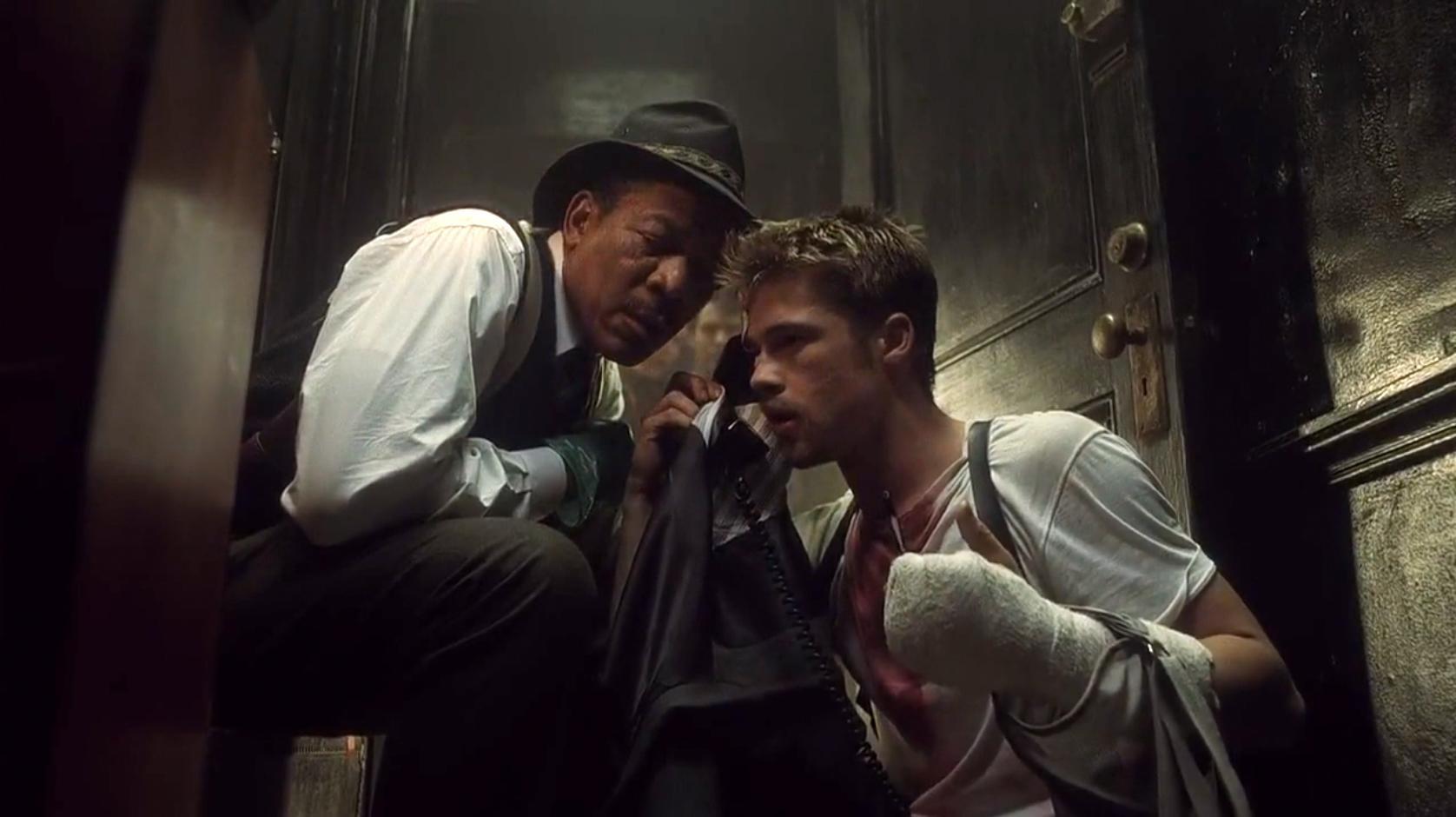
WAIT! I have an idea. Before you see the examples, I’m going to give you all the movies. See if you can guess what they’re going to be before I tell you (PLEASE DO ME THIS FAVOR or I’M DOING YOU A FAVOR). If you get them all right, it means you have a good eye for concept creation. Bonus points for whoever lists their answers in the comments BEFORE they see if they’re right. Okay, here are the movies: Moonlight, The Invisible Man, Eighth Grade, Columbus, Gemini Man, A Quiet Place, The Kind of Staten Island, Seven, Honey Boy, Cabin in the Woods, O Brother Where Art Though, and Fantasy Island.
All right…
Now onto the answers!
Moonlight – PLEASE DO ME THIS FAVOR
The Invisible Man – I’M DOING YOU A FAVOR
Eighth Grade – PLEASE DO ME THIS FAVOR
Columbus – PLEASE DO ME THIS FAVOR
Gemini Man – I’M DOING YOU A FAVOR
A Quiet Place – I’M DOING YOU A GIGANTIC FAVOR
The King of Staten Island – PLEASE DO ME THIS FAVOR
Seven – I’M DOING YOU A HUGE FAVOR
Honey Boy – I’M BEGGING YOU TO DO ME THIS FAVOR
Cabin in the Woods – I’M DOING YOU A FAVOR
O Brother Where Art Though – I WILL GIVE YOU MY FIRSTBORN CHILD IF YOU DO ME THIS FAVOR
Fantasy Island – I’M DOING YOU A FAVOR
So, what about concepts that don’t fit nicely into either of these categories, but rather land in the middle? You’re not quite doing them a favor but you’re not doing yourself any favors either. “The Rental.” “Booksmart.” “The Secret Life of Walter Mitty.” “The Tax Collector.” “Vivarium.” Are these ideas okay? Yes, they’re okay. But you have to realize that the further away you stray from a clear “I’M DOING YOU A FAVOR” concept, the harder your life is going to be when you finish the script. If you’re a hustler and like trying to get people to read your script, you can afford to write something with a little less zing on the concept. But if you’re like most writers and want the writing to do the talking, I would stay away from these middle class concepts. The execution almost has to be as great as the execution on a weak concept to get people interested.
Just remember, when you’re trying to decide which idea to write – close your eyes and put yourself across from the person you most want to pitch your script to when it’s done six months from now. Does it feel like you’re asking them for a favor or does it feel like you’re giving them the opportunity of a lifetime? If it’s the former, you probably want to go with another idea.
Carson does feature screenplay consultations, TV Pilot Consultations, and logline consultations. Logline consultations go for $25 a piece or $40 for unlimited tweaking. You get a 1-10 rating, a 200-word evaluation, and a rewrite of the logline. They’re extremely popular so if you haven’t tried one out yet, I encourage you to give it a shot. If you’re interested in any consultation package, e-mail Carsonreeves1@gmail.com with the subject line: CONSULTATION. Don’t start writing a script or sending a script out blind. Let Scriptshadow help you get it in shape first!