
Search Results for: F word
Genre: Dark Comedy
Premise: (from Black List) After discovering his secret songwriting partner dead, a country music star struggling to record new material makes a Faustian bargain with a family of possums who have taken up residency within his walls.
About: This script finished with 16 votes on last year’s Black List. Screenwriter Isaac Adamson is no stranger to scripts about animals and humans, or the Black List for that matter. His script, Bubbles, a biopic about Michael Jackson told through the point of view of MJ’s chimpanzee, topped a former Black List. That project, which was moving full steam ahead, was halted suddenly due to one of the unflattering Michael Jackson documentaries that came out. So Adamson went back to one of the surest formulas for getting back on the Black List – mix humans and animals together in some weird way. Adamson also has a Chippendale’s biopic project set up with the director of I Tonya, Craig Gillespie.
Writer: Isaac Adamson
Details: 96 pages

Is there better catnip to the Black List than weird human-animal movies? Actually, human-to-animal transformation movies have been around long before The Black List. I remember when my dad took me to the old black and white version of The Fly. The words, ‘Help me, help me,’ still ring in my ears today.
There’s something about someone transforming into something else (in this case, an animal) you’re going to want to stick around to see. This is what good stories do, people. They come up with reasons for us to stick around. So when Eddie Vesco starts turning into a possum, I couldn’t help but wonder just how drastic the final transformation was going to be.
32 year old Eddie Vesco has it all. He’s a platinum selling country rock star with a model wife. Sure, she’s decided to become a “painter” in her post-modeling day, but you take the good with the bad, right?
Speaking of, Eddie’s in need of some good. It’s been forever since his last album and he’s already spent all the money he was advanced to record his next album. Which means it’s time for Eddie to get back to work. Eddie has a system for recording hit records. He’s got a cabin out in the middle of nowhere, complete with a recording studio. So he goes there, gets inspired, and comes back with 13 new songs.
But when Eddie shows up at the cabin, we immediately learn there’s more to the story. A beaten down 42 year old heroin addict named Otis is sitting in the corner of the living room, half-hidden in the shadows. You see, Eddie doesn’t know how to write songs. So this guy does it for him. Secretly of course. The whole reason it’s been so long since the last album is that Otis was in prison. He’s finally got out.
Eddie tosses him 5 grand and tells him to get to work. There’s only one problem. That night, Otis OD’s. Which means… you got it… Eddie, for the first time, has to write his own songs.
After Eddie throws Otis’s body in the woods, he notices that he has a possum problem. Possums are always coming in and out of the many holes in the walls. Eddie doesn’t realize just how bad his possum problem is, however, until one of the possums starts talking to him. In English.
Possum Jack explains that HE was the reason Otis could write those songs. And that he can do the same thing for Eddie. All Eddie has to do is bring food for him and his pregnant possum wife, Possum Jill. But when Eddie grabs some junk food from the local gas station, Possum Jack makes it clear that they need more nourishing food. Preferably, roadkill.
Eddie’s about had it with these pesky possums but after Possum Jack helps him record his first of thirteen songs and the song is amazing, Eddie’s willing to do whatever it takes to get the other 12. So he gets roadkill for the possums but they say the roadkill is too old. They need fresher meat. So Eddie gets a live cat from the animal shelter. But these picky possums want something better. Like, say, HUMAN meat.
During this time, poor Eddie starts growing big thick whiskers on his face. Possum Jack informs him that this is part of the deal and it will keep happening until their deal is over. Eddie asks if there’s any way to stop it. The only thing they’ve seen stave off the transformation is what Otis was doing. As in, heroin. Which means now Eddie will have to become a full-on heroin addict.
All of this comes to a head when Eddie’s manager and wife show up. But, by this point, Eddie is so far in it, so determined to get those 13 songs, that he can even rationalize sacrificing them. It’s at this point that we realize… maybe nobody survives these possums.
Let’s start with the structure here.
One of my rules is that if you’re going to write something wacky, you want the rest of your screenplay to be structured. This grounds your story. And Adamson did a good job here. He set up the parameters well. Goal – go record 13 songs. Stakes – if he fails he’ll owe the recording company the full advance they gave him, which he’s already spent. Urgency – he’s got two weeks.
In addition to this, the setting itself is contained (to this farm house). Which further structures the story. Every time you add a border or a time limit or anything that acts as a container around the story, the story is easier to tell. And it’s easier to follow as well. This just as easily could’ve been about some singer who spends a year doing a bunch of concerts and at night he has possums talking to him and they’re really funny and they won’t leave him alone and he records a great final record and… whatever else you wanted to throw in there.
I know that sounds ridiculous. Who would write that? you say. If you’re writing one of your first three screenplays, you’re probably writing stories just like that. They’re all over the place. Messy. Directionless. I know because I read them. So, yes, you do need to worry about structure when you write, especially with subject matter like this.
Where Possum Song loses its melody is in it world-building. And this is where a lot of writers get lost in the weeds if they’re not careful. Once you start developing your world and its rules (in this case, the possums and how they operate) you can become seduced by that world and expand it too far.
We have a guy who relies on another guy to write his songs. Who it turns out is relying on a magic possum to write those songs. And this possum only performs this magic act if you bring him food (possums can’t find their own food?). But processed food isn’t good enough. They need real meat. But then older meat isn’t good enough either. They need recent dead meat. And then recent dead meat isn’t good enough either. Now they need human meat? And part of the curse means you start turning into a possum. But you can stop your possum-turning by doing heroin?????
Sometimes, in the unlit shadows of a 3am writing session, you can talk yourself into these things. “Yeah, that all makes sense.” But when the harsh morning sun shines down, that’s when you have to be honest with yourself. Because writers can talk themselves into anything. So you need to have that ‘come to Jesus’ moment with yourself when dealing with rules, rules, and more rules.
Because the power of a script like this is in its simplicity. It’s a dude using possums to record songs. The more convoluted you make that, the quicker you’re going to run into trouble.
This wasn’t as good as Bubbles which had that “lightning in a bottle” effect going for it. And I would’ve liked to have seen more of a physical transformation in Eddie. I think people are coming to this movie for the Jeff Goldblum level “Fly” transformation. So that would’ve been more fun. But it’s still a good script. It’s an especially good script to read to understand what kind of zaniness the Black List responds to.
[ ] What the hell did I just read?
[ ] wasn’t for me
[x] worth the read
[ ] impressive
[ ] genius
What I learned: The time constraint before the time constraint. The time constraint of this screenplay is two weeks (that’s how long he has to record the songs). But that two weeks isn’t up until the end of the movie. So what you can do is you can create a more immediate time constraint somewhere in the middle of your script, which acts as a way to keep tension up in the second act. Here, Eddie’s wife, who’s pregnant, is having the sonogram on Wednesday, where they’re going to find out if it’s a boy or a girl. She really wants Eddie to be there, which he promises to be. This is the time constraint before the time constraint. It’s something we know we’re leading up to, and therefore one more way to add a little tension and direction to the script.
Genre: Drama/Thriller
Premise: After a real estate agent in the richest suburb in America is brutally murdered in a home she was showing, a Boston detective zeroes in on her dangerous ex-boyfriend.
About: This will be Grant Singer’s official feature directing debut. Singer is best known for directing Super Bowl singer, The Weekend’s, videos. You can see one of those videos here. Singer co-wrote the script with Ben Brewer. The film will star Benicio Del Toro.
Writer: Grant Singer & Ben Brewer
Details: 127 pages

Guys, before we get started, SEND ME THE SCRIPT TO BULLET TRAIN (carsonreeves1@gmail.com). I have to find out what’s attracting all these actors to this movie. Most scripts have 1 or 2 juicy parts. Outliers have 3 or 4. But for a script to have this many interesting characters that they’ve nabbed this many big actors?? I have to know what’s going on. So send it to me! I will buy an animal style double-double from In and Out in your honor.
Okay, on to today’s screenplay.
I went into this script not knowing much about it. When I began to realize it was a murder investigation story, I tensed up. These are incredibly difficult stories to do anything new with. You’re not only competing with similar movies that came before it. But a good 70 years of television has been covering this genre as well. I mean, how are you going to come up with any murder scenario that’s unique at this point?
For this reason, these scripts tend to depend on the strength of their characters. The characters have to be above and beyond your average movie characters if the script is even going to sniff ‘decent’ territory. Let’s find out if Reptile was able to achieve this.
30-something Will Grady is the kind of rich you only become if you were born into money. And Will was definitely that. His mother, Camille, is richer than anybody in town. She’s also attached to Will at the hip. If you marry Will, you marry his mother.
Which is probably why Will’s wife, Summer, is so bummed out. It seems like every occasion she and her husband attend includes Mommy Dearest. Well, that’s not going to happen much longer. Cause when Summer (who’s a real estate agent) goes to show a new house, she’s brutally murdered inside of it.
Local detective and all-around good guy, Nichols, comes onto the case, and the immediate suspect is Summer’s ex-boyfriend. Word around town was that he always used to beat her up. Feels like an open-and-shut case. But the further Nichols digs, the more complicated things get.
For example, every one of the houses Summer has sold this year is currently empty. She may have been involved in a scam whereby she helped wealthy criminals launder money. And, if that’s the case, it means the ex-boyfriend is the least of Nichols’ worries. In fact, the more Nichols keeps pushing, the more he realizes no one wants to help him – even his own police department. Could they be involved in this?
Just when things can’t get any worse, Nichols learns that some podcaster is out there chronicling the case in real time, giving the potential bad guys important information that can help them win their case, should it go to trial.
But Nichols pushes on and eventually learns that the companies who have been buying all these houses from Summer are connected to Will’s mom herself! Is she the one who murdered Summer? Or could it be someone close to her?
Reptile suffers from the problem I noted at the outset. It’s not giving us anything new. There was one tiny moment where Nichols confronts the podcaster where I thought, “Okay, I’ve never seen this before.” But, in the end, it was no different from detectives having to fend off traditional media. It was just that the form of the media was new.
With that said, the script is pretty good. It’s certainly better than the last movie that came out in this genre – The Little Things – because, ironically, it does a lot of the little things differently. For example, we spend a lot of time inside the crime scene throughout the first three-quarters of the screenplay, and the writers deliberately don’t show us the body. They keep hinting at how horrific the murder is, which does a wonderful job of keeping the reader turning the pages. The longer you don’t show the crash, the more we’re going to want to see the crash! So that was smart.
Also, the relationship between Will and his mother felt different. I’m sure one of these crime procedural shows have done a mommy-son suspect thing before. But there was something fresh about this emasculated husband that made him interesting. We find out, at some point, that Summer was still sleeping with her ex-boyfriend, the guy who used to beat her. So the fact that this woman was resisting a “perfect” life to be with this abusive terrible person made the characters a bit more complex.
I found myself wondering what I was supposed to feel. I didn’t like the husband, Will. And, of course, I didn’t like the ex-boyfriend. But, in a way, I didn’t like Summer either. Because she was cheating on her husband to willingly be with this man who abused her. It didn’t exactly endear me to her. Yet when you were in a room with Will and his mom, you could see how someone would perceive that as a living hell. So you kind of sympathized with her choice as well.
I give the script credit for that. It makes you think. And it makes you think about uncomfortable things.
But the script was plagued with a lingering messiness that, like a groundhog, kept peeking its way above the surface. Important information wasn’t always presented clearly. For example, the first thing we’re told when Summer is showing this house is that all the houses on the block are empty. So what does that tell you? That this is a poor neighborhood, right? Everybody went bankrupt and left town. The suburb is dead.
However, 70-some pages later, another detective casually mentions that this is the richest suburb in the entire nation. Uh, what? How was I supposed to know that? Little blips like that would show up every 20 pages or so that kept me from really being able to invest in the story.
I also think this is an example of having a certain vision of what you want to do in a script and not changing that vision when it’s clear that certain things aren’t working. The podcaster guy had some interesting moments. But he had no broader connection to the story. In other words, if you got rid of him, nothing else in the story changes. This is all about Nichols. It’s his investigation to win or lose. The podcaster is an annoyance. And with the script being 127 pages, you can probably excise 15 of those just by getting rid of him.
Remember. You only want to include things in your story that push it forward. If characters aren’t pushing the story forward, you have to decide whether to keep them or not. Good writers are able to make that difficult call. They don’t want to get rid of characters they like and that they’ve spent so much time developing. But they know it’s best for the story.
If you’re into slow dark murder investigation movies, you’ll probably like this. Despite its occasional messiness and familiarity, the plot has been well thought-out and, therefore, results in a satisfying climax. It ain’t going to break any streaming records. But it’ll be worth watching.
[ ] What the hell did I just read?
[ ] wasn’t for me
[x] worth the read
[ ] impressive
[ ] genius
What I learned: Extremes help a logline. If you can say that something in your idea is the “biggest,” “the most dangerous,” “the richest,” “the most decorated,” “the CEO of the most successful company in the United States.” Extremes like that add weight to your idea. Cause you’re not just talking about any old thing. This is the biggest, the best, the most important! That’s why people pay attention. “After a real estate agent in the richest suburb in America is brutally murdered in a home she was showing, a Boston detective zeroes in on her dangerous ex-boyfriend.”
Genre: TV – 1 Hour Drama
Premise: The elite special agents of the Investigative Services Branch who are tasked with solving the most complex and heinous crimes committed within the diverse and majestic National Parks of the ISB’s Pacific West region.
About: Kevin Costner is expanding his Yellowstone empire. Not content with his hit show, Costner is doubling down for a more modern exploration of the national park world. This will be Costner’s first ever TV writing credit.
Writers: Aaron Helbing, Jon Baird, & Kevin Costner
Details: 63 pages

It’s a TV Wednesday. Time to get our TV on. As someone who’s spent his only TV time lately watching episodes of Storage Wars, I could use a good show. Let’s see if Costner delivers the In and Out Animal Style burger version of a TV show. I’ll take fries with that, thank you.
Off-Duty ISB (Investigative Services Branch for the National Parks Service) agent Erica Breen is checking out a complaint from a married couple who say a kid broke into their car and tried to steal from them.
Breen finds an old cabin in the Yellowstone National Park area that a family squats in. She heads up to ask if they know anything about this break-in and finds Adele, a white-trashy type, lingering about. As she begins questioning Adele, she spots kids eyeing her sinisterly. And then a few older kids. And then, behind her, a few older kids still. And then young adults. And then adult adults. They seem to be everywhere, lingering in all 360 degrees of the forest surrounding her. As Breen tries to stay calm, they eventually attack. And Breen suffers a horrible violent death.
Cut to a few days later and we meet the rest of the ISB crew, led by 30-something Lincoln Kane and 50-something Cal Foster. They’ve found the body of a dead woman in a lake and are trying to lift her out. While this is happening, they get word that Breen has been missing for a couple of days. Lincoln takes stock of this.
But for right now, the priority is the woman in the lake, and the team is highly suspicious the woman’s ex-husband might be involved. Meanwhile, we meet this nasty dude, Lee, who hikes out into the park with a couple of girls and then shoves them off a cliff to their deaths. It’s one more problem the ISB unit is going to have to deal with. But first, they find a trail camera that recorded Breen’s death. And after witnessing the horrible things the family did to their friend, they stop everything to find and take this family down.
National Parks has the kind of teaser all TV writers should study.
It’s a wonderfully suspenseful scene that follows this out-manned woman observing as more and more people begin appearing around her. The scene takes its sweet time, making us squirm just as much as the poor character. We’re hoping against all hope that she’s going to find a way out. And since I assumed the scene was setting up our heroine, I thought she would figure out a way. So color me shocked when she didn’t.
The reason I want you to study this scene is because I read too many weak TV teasers. Just the other night, I read a teaser where a guy talks to his wife on a phone call in his car. That was it. That was the opening scene of the show! Sure, the scene gave us some insight into the characters and their marriage. But it wasn’t dramatized. It was information. An opening scene without dramatization is like peanut butter and jelly without bread. How do you even get it into your body?
A good way to explore this challenge is by contrasting the first scene in National Parks to the second scene. The second scene is a group of people trying to fish a dead body out of a lake. Technically, there’s something going on here. We’ve got a dead body. We’re not sure who it is yet. You could argue that that mystery creates some drama.
But is it as good as the opening scene was? No. Not even close. The opening scene was turbo-dramatized. This scene had minor drama at best. It’s not like the body was wedged down under a rock in the water that was hard to get to and required scuba divers to go down and release it and then something goes wrong while they’re down there. It’s just logistically getting a body out of a lake.
That second scene is what most writers start their pilot with. Assuming you’re not so clueless that you’re writing that car conversation scene, this second scene, to most writers, feels like it’s sexy enough to start a pilot. I’m here to tell you it isn’t.
If you’re going to start with a dead body scene, it needs to have more going on than simply the logistics of getting a body out of some water. True Detective is a good example of dramatizing a “found body” scene. Here, something much weirder and more sinister took place. Seeing that death scene was uncomfortable. And trying to work out what the killer did and why they did it keeps the scene interesting.
Sorry to go so deep on that but the opening of any script, TV or feature, is so important. And it’s done the wrong way so often I feel it’s my duty to scream from the mountain tops – “THIS IS HOW TO DO IT THE RIGHT WAY!”
Once National Parks gets rolling, it encounters the typical Pilot challenges, namely that you’re introducing a lot of people in a very short amount of space and it becomes hard to remember who’s who. And in more severe cases, there are so many characters that it’s hard to know who the main one is. That’s an issue I had for a while here. I was halfway in when I realized Lincoln was the show’s main character.
I think the reason this happens so much in TV Pilot scripts is because most pilots are written to be made (as opposed to be sold). So they’re not as worried about readers not knowing who’s who. In their mind, that will be taken care of in the casting.
However, it’s good practice either way to make your characters different from one another. The more you can make them stand out on the page, the more distinct the characters will be on the screen. Unfortunately, I don’t know many people willing to go the extra mile to get this right. And National Parks suffers a little in that department.
But the pilot has enough going for it that I was into it until the end. Besides my desire to get justice for poor Erica Breen, it was fun to see the investigation for the second lake murder unravel. Overall, National Parks does it right. It finds a lane in the TV procedural that hasn’t been explored before then makes sure all its major plotlines could only exist in this unique environment. Worth the read!
[ ] What the hell did I just read?
[ ] wasn’t for me
[x] worth the read
[ ] impressive
[ ] genius
What I Learned: Not taking into account reader assumptions – Often times, we get so wrapped up in our stories that we start assuming the reader knows everything we do. Where this becomes a problem is during major scenes or important plot beats. If you overlook reader assumption, your reader could end up reading a completely different show than the one you intended. The opening scene of this pilot has a group of people killing ISB Special Agent Erica Breen. We then cut forward in time (we’re told it’s been a couple of days) and a bunch of ISB agents are pulling a dead woman (who they can’t yet identify) out of a lake. You tell me what the average reader is going to assume in this moment. 99% of them are assuming the dead body is Breen. One of the agents even gets a call that Agent Breen went missing a couple of days ago. However, it turns out this is a completely different woman and a completely different scenario that led to her death. It took me another four pages to understand that. And that’s something you don’t want the reader to misunderstand. I know it was obvious to the writers that these were two totally different women. But you showed us a woman getting murdered then cut to a dead woman in a lake. Under what circumstances would we NOT connect the two? You either have to rethink putting these scenes up against each other or be VERY CLEAR that two totally different things are going on.
Genre: Comedy/Satire
Premise: (from Black List) When Tabitha, a struggling foster kid, wins a contest to become part of the BIRDIES, a popular daily YouTube channel featuring the radiant and enigmatic Mama Bird and her diverse brood of adopted children, she soon learns that things get dark when the cameras turn off.
About: This one finished with 16 votes on last year’s Black List. The writer, Colin Bannon, has been working in the industry since 2008, when he was a Location Production Assistant for Kingdom of the Crystal Skull! He also wrote another Black List script, “First Ascent,” about a mountain climber who does a climb on a haunted mountain.
Writer: Colin Bannon
Details: 108 pages
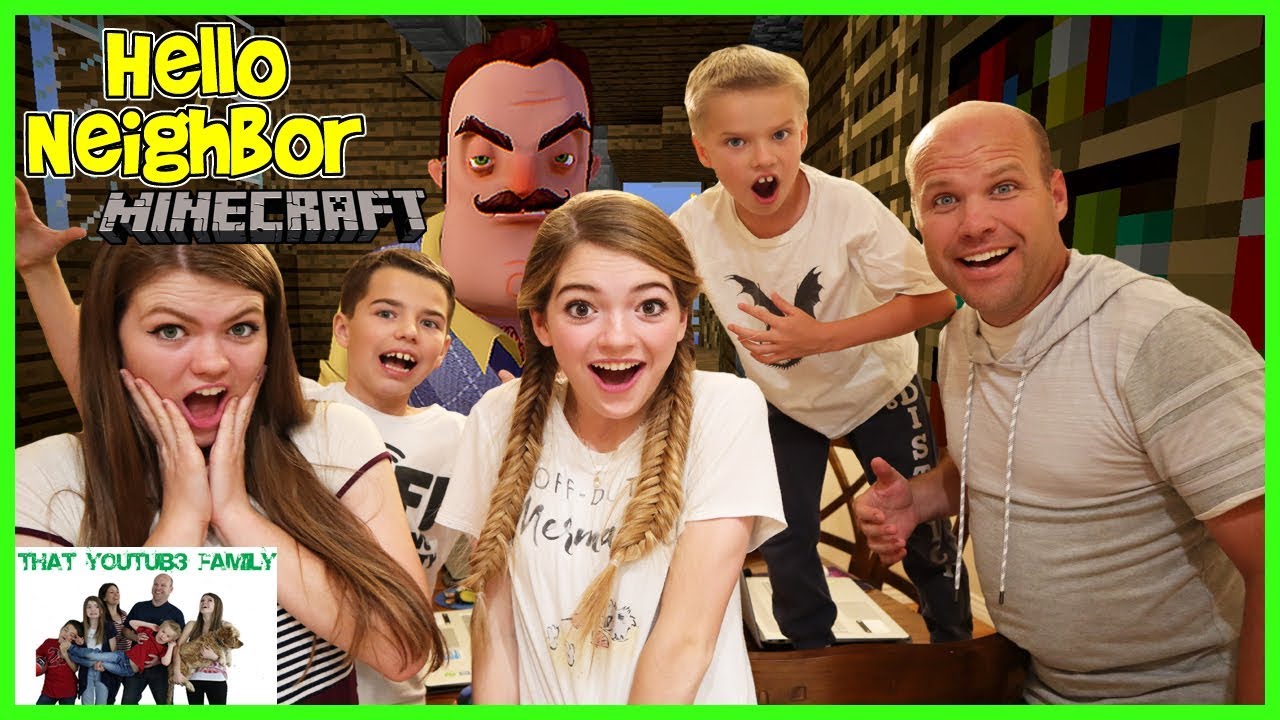
Have you ever watched these family Youtube channels?
When I was at my brother’s place recently, my niece was obsessed with them. And while, on the one hand, they were fun, I couldn’t help but wonder what psychological effects the channel would have on the children. No matter how you spin it, it wasn’t healthy.
So I was expecting someone to write a script about this sooner or later. It’s too juicy of a topic not to and it’s a fresh take on the child star phenomenon, which is something that hasn’t had a fresh take in a while. Youtube (and social media in general) has created this new fertile plot of land for movie ideas, and today’s script might be the best commentary on that world I’ve seen yet.
Tabitha is a 13 year old orphan who lives in a miserable “Annie” type orphanage. Her only happiness comes form her favorite Youtube reality show, “The Birdies,” about a married couple who adopted a bunch of kids and now has one of the largest audiences on the service.
That’s changing, though. The family’s all-star daughter, Nightingale, has finally turned 18, which means she can legally leave the home and go off-grid, as far away from cameras as she can get. The good news for Tabitha is, this means they need to adopt someone new into the family! And that’s, like, Tabitha’s dream!
So Tabitha sneaks out to Best Buy to record an audition tape on one of the sample iPads. When the blue-shirted Best Buy employee spots what she’s doing, he charges forward to stop her. She rips the iPad off the security chain and goes running through the store while the video waits to upload. Just as she’s at 97%, the employees grab her and kill the upload. NOOOOOOOOOO.
After hours of crying, the other orphans tell Tabitha that her video went viral! Someone else in the store taped her. Which means – you guessed it – SHE GETS PICKED! The next day, Mama Bird (always dressed to the nines), Papa Bird (always holding a camera) and the other five children, all of them a perfect rainbow of diverse ethnicities, run to greet their new sister.
The next thing Tabitha knows, she’s IN THE BIRDIE MANSION, the home she’s been watching religiously every day for the past 8 years! And she has her own room. And she gets a brand new digital camera, iPad, iPhone, iwatch – everything an influencer needs. Yes, that’s right. Tabitha is now a content creator. And she’ll be expected, just like the rest of the family, to generate content for the daily show.
Tabitha then learns the truth about Mama Bird. When the cameras turn off at 8pm every day, so does big happy charismatic Mama Bird. She’s replaced by a cyclone of depression, of Youtube burnout. Of worry and fear and obsession. All Mama Bird has cared about for the last decade are subscribers and views. And both are plunging every day due to Nightingale leaving. What Tabitha doesn’t know is that Mama Bird is counting on her to save the channel. And for that, she will expect Tabitha to do many things she doesn’t want to do.
The first thing I want to point out about this is the clever setup, which is easy to miss since it’s subtle. Bannon is satirizing the “Youtube Family” genre by doing what any good writer would do. You take someone who doesn’t know that world and throw them into it. They then act as an avatar for us, as we ourselves don’t understand that world either. So when Tabitha is thrust into this family, we feel a connection with her and want her to succeed.
But Bannon faced an interesting problem in this setup. You can’t create a new 13 year old family member out of thin air. So how do get your heroine (Tabitha) into this family? The solution Bannon came up with was to make the entire family orphans. Now it makes sense why they would want to bring someone new into the family.
In addition to this, it adds more edge to the concept, since “adopting” isn’t that different from “casting.” You have to be a certain type of person (bubbly, charming, energetic) to make it into the family. From there, the level of love you receive is dependent on how many views you get.
Which is why this is such a clever idea. In the past, they explored similar concepts (child stars being worked like dogs) on TV shows. But in those shows, you *expected* the producers and executives to be assh*les. It came with the territory. But here, the producers are also the parents. So work and love are intertwined. Which is way more f*cked up for a child than simply needing to get ratings for your boss.
And Bannon understands this concept so well. I read a lot of scripts where the writer has come up with a good idea, but they don’t totally understand that idea, which results in a lot of non-specific scenes and characters that don’t leave an impression. It’s the difference between me making a cheeseburger and In and Out making a cheeseburger. In and Out eats, sleeps, and breathes cheeseburgers. They know that world so specifically that there’s nothing I could do to make a cheeseburger as delicious as theirs.
But let me give you a more specific example from the script itself.
There’s this great moment not long after the first act. Tabitha has just moved into the Birdie mansion, and after they finish taping for the day, Tabitha goes upstairs to see her bedroom for the first time. This is the first time in her life that she’s had her own room. So she breaks down. One of the other kids sees this and gives her a puzzled look. “The cameras are off,” the kid says. Tabitha looks back at him, quizzically. “You don’t have to cry. The cameras are off.”
It’s a perfect encapsulation of what these kids’ lives are. Every seemingly important moment requires a camera-worthy response. They’ve been trained to give that response when needed. If someone’s emoting without a camera taping it, that doesn’t make any sense to them at all.
Also, this script is another point for the power of simplicity – in this case, the power of a simple theme. A writer recently sent me the theme of their movie and it was like 8 sentences long and I chuckled and said, “This isn’t a theme. This is a thesis statement.” Big chunky long themes are not only unhelpful, they can actually hurt your script. The more you’re trying to manipulate the story so that it connects with every component of your giant unwieldy theme, the more confused the reader’s going to be.
The theme here is: The grass isn’t always greener on the other side.
The theme is powerful not only because of how simple it is, but because every person on the planet understands it. Simple almost always means ‘powerful.’ That power comes from the theme sticking with us. Someone who watches this movie is definitely going to remember it whenever they’re thinking of quitting their work or leaving a relationship. Is the grass really going to be greener? Or does the other side of the hill have a Mama Bird waiting for us?
There’s only one part of the script I didn’t get. The midpoint shift has Mama Bird turning Tabitha into Nightingale (signified by giving Tabitha Nightingale’s old wig) to stop the views from plunging. I’m not sure why she would think this was a good idea. The viewers aren’t going to mistake Tabitha for Nightingale. Actually, they’re probably going to get mad. (“why is this girl pretending to be someone she isn’t?”). So I wasn’t gung-ho about that choice. But everything else here is spot on. I enjoyed the heck out of it. Good stuff!
[ ] What the hell did I just read?
[ ] wasn’t for me
[ ] worth the read
[x] impressive
[ ] genius
What I learned: The “Eventually Is Gonna Snap” Character. I recently spotted this character on the show about the finance industry, “Industry.” This one worker was so determined to make it at the firm that he never left work, never went home, never did anything social. You just KNEW he was going to crack. And he did, in a horrible way. Here, we get that character with Bustard, one of the “birdie kids” in the family. Bustard isn’t as quick-witted or charismatic as the other kids and is, therefore, constantly being reminded by Mama Bird to up his game. You can see him desperately trying to do better – going so far as to repeat the word “subscribers” out loud thousands of times so he can say it without his foreign accent. Eventually, Bustard cracks and becomes suicidal. Why do these characters work? It’s the car-crash principle. If there’s a car crash up ahead, you spend all that time inching forward in your car anticipating how bad it could be, and, of course, when you get there, you have to look. A “Eventually Is Gonna Snap” character ensures that the reader will keep reading because they have to stick around to see that character wreck.
A reader e-mailed me yesterday and asked a good question: Do you write a logline before you write the script or do you only write it afterwards? The question stemmed from an idea that “Save The Cat’s” Blake Snyder promoted, which is that he would never write a script until he had the logline figured out.
The reason he gave for this proclamation is that unless you can conceptualize your screenplay in a single sentence, then the idea doesn’t work as a movie. His theory boiled down to good movies have a “point.” They have a “goal.” And as long as you have one of those two things, you should be able to convey it in one sentence.
Parasite is about a poor family that tries to take over a rich family’s home. Invisible Man is about a woman trying to take down her abusive dead boyfriend. Knives Out is about solving a murder. Tenet is about… oooooh, wait a minute. We may have something to discuss here.
What is Tenet about? Tenet is a movie you cannot summarize well in a logline. Is it a coincidence, then, that the movie is unwieldy and difficult to understand? There’s no way to prove it for sure but I just shook my magic 8-ball and it came up with “Signs point to yes.” Christopher Nolan would probably shoot us for saying so but had he sat down and distilled his concept into a logline, he may have discovered its weaknesses and changed some elements around until Tenet became stronger.
One of the biggest enemies of screenwriting is vagueness. Wherever there’s vagueness, there is a story unsure of where to go. So if you’re vague before you’ve written your script, there’s a good chance portions of the script itself are going to be vague. Now in a logline, those portions may amount to a word or two. But in a screenplay, they may amount to 10 to 25 pages at a time.
Let’s take this further and think of a good movie that covers a lot of ground and therefore, theoretically, shouldn’t be able to fit into a single logline. Can The Godfather be summarized in a logline? I did a google search and found this: “The aging patriarch of an organized crime dynasty transfers control of his clandestine empire to his reluctant son.”
This would seem to say “no.” It’s too vague and doesn’t convey any direction in the story. But I’ll give you a logline tip. Always try and write the logline from the point of view of the character driving the story (which is almost always the hero).
Therefore we’d get something like this: “A reluctant son is forced to take over his father’s organized crime dynasty while fending off the other mob families in town who are determined to eliminate his family for good.” This clearly conveys what The Godfather is about without any trickery or vagueness. So I say it passes Blake Snyder’s logline test.
Let’s challenge ourselves further, though. What about Joker? That’s a good movie. But, on first glance, it wouldn’t pass the Blake Snyder logline test. There isn’t a clear goal in the movie. I’m not even sure there’s a clear point. It’s more about a man’s descent into madness and the things that come about due to that madness. It’s also sort of a “divided in two” movie where the first half of the film is about Arthur Fleck trying to make a living as a comedian and the second half is about him fighting back against the city and losing his mind. It’s not easy to write a logline where the direction of the film changes midway through.
We’re getting into a complicated area here that necessitates a nuanced discussion. But, generally speaking, character pieces are harder to confine to a logline because the journey happens inside the character as opposed to outside. And that never reads well in logline form. “A man with mental health problems attempts to deal with his demons in an increasingly violent New York City while trying to become a stand up comedian.” It’s okay. But notice the main thrust of the logline is “deals with his demons.” That’s an internal battle. The logline still lacks plot clarity, which, 99% of the time, means the script is going to wander. It just so happens that Todd Phillips is aware of this pitfall and made sure to troubleshoot it so that the script still worked.
Which is to say, YES, it’s possible to write a good script without having a good logline, but there are mitigating factors. It’s usually a character piece. The writer inherently understands the weakness of his narrative and gameplans a way to counter that weakness.
The writers who I deal with aren’t even aware that there’s a pitfall in their concept in the first place so, of course, they can’t troubleshoot it. Which results in a messy unfocused screenplay.
Which is a long way of me saying, “Yes, you should try to write a logline BEFORE you write your script. Because not only does doing so force you to learn what your script is really about (distilling anything down to its essence will achieve this). But you may be able to identify holes in the story that you wouldn’t have otherwise noticed.
I received a logline recently that went something like this (I’m going to change some things around to protect the writer’s idea): “An older woman gets a call that the baby who was taken from her 30 years ago wants to meet her.” At first glance, this logline sounds like a movie. There’s definitely something interesting about your baby being stolen from you and never meeting them until they’re an adult. But where is the story? Or, a clearer way to put it: “And then what?” Does her daughter show up, say how much she missed her, and then leave? Where does the movie go? Cause all that you’ve given me is the first act.
Here’s a better logline. I’m writing this literally off the top of my head so I’ll be the first to admit it’s not perfect. But it’s an example of how figuring out the logline can help you discover what your movie is really about. “After an older woman is reunited with her daughter, who was stolen from her 30 years ago as a baby, she begins to suspect that the visitor is not who she says she is, and that her ultimate plan is to harm her.”
Let me reiterate. Not a movie that’s going to be made any time soon. But you can see more of a movie in this version than the previous version. We get the “and then what” part of the story that was missing from the initial logline. Too many writers start writing their screenplays without figuring out the “and then what” part. So when they get to that moment in the screenplay, it’s no coincidence why they run out of ideas.
Now, to answer the original writer’s question, just because you’re basing your movie on the logline you wrote ahead of time, that doesn’t mean you won’t discover a better movie along the way. And, if that happens, you should go back to your logline and write it again. And if your story improves again while you’re writing it, go change your logline again. And when you’re finally done, you’ll write the big final logline that reflects what the script became. This will be the logline you send out to people.
I know lots of screenwriters think loglines are evil. But they can help you write a good movie if you let them. The more vagaries your concept includes, the more you should turn to your logline as a way to figure out the script’s problems.
So go forth and write those loglines, my friends! And if you’re having trouble, I offer two services that can help. One is a quick-and-dirty rating and analysis of your logline that goes for $25. The other is a more involved process where we can e-mail back and forth, collectively working on your logline until we get it right. That’s $40. E-mail me at carsonreeves1@gmail.com with the subject line “logline help.”