
Search Results for: F word

Just TWO DAYS LEFT to get your scripts in for The Last Great Screenplay Contest. July 4th. 11:59pm Pacific Time. carsonreeves3@gmail.com. I cannot wait to see what you’ve got in store! But first…
Story time!
When I was a wee little tyke screenwriter, long before the days of Scriptshadow, I made a lot of mistakes. In fact, if there was a mistake to be made, I probably made it. But one of the biggest mistakes still haunts me to this day. Not because, if I hadn’t made that mistake, I would’ve sold the screenplay. But because it was embarrassing. I still cringe whenever I think about it.
When I used to teach tennis, I had a tennis student who was high up on the food chain at a certain prestige cable channel. I had been carefully mentioning my writing aspirations to her every few lessons and, over time, she started asking me what I was working on. It just so happened that the genre of the script I was working on was exactly what the channel was looking for at the moment.
So this lesson of mine put her reputation on the line with the head of the company, saying that she had a script from someone that was just what he was looking for. Long story short, there was this very specific time frame where he could read it. She came to me one day and said, “He can read it this Saturday on his flight. This might be your only chance to get it to him.”
Now, for the most part, my script was finished. But, of course, the excitement of this opportunity got to me and I was determined to make the script as good as it could possibly be in the next five days. I came up with an exciting new opening scene, which I wrote. I realized a chunk in the middle of the script would’ve been better served if I moved it up 20 pages. A secondary character I never quite liked was ditched in favor of a brand new character I came up with on the spot. And then, of course, I went through every single scene, rewriting lines of dialogue and lines of description to make them as good as they could possibly be.
I literally finished 20 minutes before I had to deliver the script. I printed it out (yes, this is when we had to print scripts) and raced to my lesson’s place, proudly handing her the script. For the next three days, I dreamed of my ascension into Hollywood and being the hot new screenwriter in town. It wasn’t even a dream. It was manifest destiny.
But then the next week something funny happened. My lesson canceled. And then, the week after that, she showed up, but she avoided any talk of screenwriting with me, hastily scurrying away the second the lesson ended. “Hey,” I yelled, “We still have to clean up the balls!” Next lesson, same thing. Operation Scurry Off. Finally, I just came out and asked her, “What happened with the script?” And I saw her body crumple as if her entire insides had deflated.
She explained to me that her boss “tried” to read the script. “Tried” being the operative word here. But it was so incomprehensible that he gave up after the first 20 pages. Although she didn’t say it out loud, the vibe I got from her is that this lowered her a peg in the company. This man’s time was extremely valuable and she wasted it on a script that wasn’t even ‘not good.’ But a script that was so bad you didn’t even understand what was going on.
Now being a young defensive screenwriter who believed that everything he wrote was genius, I blamed this on “Hollywood bullshit.” He probably wasn’t paying attention. He never gave the script a chance. Because I didn’t have a big agent, he didn’t give me the same amount of respect as he would an “established” screenwriter.
But let me tell you, a year down the road, I opened that script back up. And it wasn’t just bad. It was unreadable. In the moment, all those last-second changes that I’d come up with made perfect sense. But because I never allowed them to sit and never came back to the script with an adequate amount of time passed and fresh eyes, I couldn’t see just how messy the script was.
All of this is to remind you not to make the same mistake I did. When you have a script deadline – whether it be The Last Great Screenplay Contest, the Nicholl, an important contact who wants to read it this Saturday – you have to understand what you can and cannot do when there’s only a few days left. And I’m going to help you with that right now.
First – your script should be finished. If you’re still writing the last act right now, don’t bother sending your script to me. I’m serious. I will hate it. I can guarantee that. The ending is everything. It ties the story together. It’s the payoff to everything you’ve set up. If you don’t even have that written yet, that means there’s so many things you haven’t figured out about your story.
Second – and this should be obvious – don’t you DARE mess with the structure. This is the fastest way to destroy a screenplay with so little time left. Structure always takes the most time. So, if you’re two days away and you see a structural mistake (“The bank robbery scene should probably be moved to the midpoint”), I’m sorry but you can’t change that. It’s going to have massive ripple effects which you won’t realize for a couple of months.
Third, it’s too late to get rid of, change, or add any characters. Even characters with a limited number of scenes. You’re not going to create any character of substance in two days. Don’t mess with that. Trust me.
Next, don’t f$%# with the first five pages. The first five pages will be the most tempting to play with. But more often than not, a change you make in those first few pages is going to hurt you. A new first scene can change the way the whole script reads. We just talked about this with The King of Staten Island. Originally, the first scene of the movie, Pete driving his car with his eyes closed, was in the middle of the film. They decided to put it at the beginning and it gave you a much better feel for who the character was. But they tested that change. They had people watch both the old and new version before they committed to it. You’d be throwing in a new scene at the last second and hoping it works. That’s not a good strategy when sending a script to anyone.
Next, stop rewriting any lines in the first ten pages – any description, any dialogue – don’t rewrite lines. The chances of you misspelling a word go up 500%. I know this because every time I change a sentence right before I post an article on Scriptshadow, those are ALWAYS the sentences with the misspellings in them.
So what can you do? Proofread. That’s all you should be doing with two days left. Make sure the sentences read cleanly and don’t have any mistakes in them. All your creative work should’ve been done by now. It actually should’ve been done two weeks ago. If you see a truly glaring error that requires you to rewrite a page or a scene… I mean… I guess you can change it. But those changes have a much better shot at hurting you than helping you.
Art is a weird thing. Any change needs time before you can see it objectively. So if you’re rewriting anything of substance this late in the game, do so at your own risk.
A screenplay is not a school assignment where there’s this romanticization of barely finishing the paper on time and getting it to your professor with just minutes to go. A screenplay is your lifeblood. It’s your story. It’s your emotion. It’s what’s inside of you. It’s supposed to be the most beautiful representation of your self-expression that you can achieve through this medium. Therefore, it should be the best you can possibly make it. If you’re having to change scenes with two days to go, your script probably isn’t ready for consumption yet. I want to see your best. Not your rushed best.
Good luck to everyone. I can’t wait to see what you’ve written!

This is not an official post. The following thoughts you read will not be coherent. This show does not deserve coherent thoughts. But since there wasn’t going to be a post today, I thought I’d give you my stream-of-conscious thoughts on Ozark Season 3. A TON of people recommended this season to me. To the point where I was expecting one of the all-time great seasons of television.
That is not what I got.
What I got was shoddy writing, awful acting, and an all-around disaster of a season. But let me start with the good. The bi-polar brother character was good. His storyline worked. But he was the only storyline that worked. Everything else ranged between bad and terrible.
The thing that frustrates me most is that no one on this show knows how to write towards a goal. The season started out with a plan. The Byrds buy a casino boat they can launder money on. Okay, that’s something we can use to build a storyline around. But by the fifth episode, the casino had become background noise, something the Byrds occasionally went over to and checked on.
By the way, I’m three seasons into a show about money laundering and I still don’t know how money laundering works. And I’m positive that half the writers on this series don’t know either. Whenever money laundering is brought up, it’s done so in general terms. Some character over in the corner is doing it. Or if Marty is doing it, he keeps to himself about it. There’s never any explanation of how much money is being laundered or what the ultimate goal is other than there’s some guy in Mexico who “needs his money laundered.”
Speaking of Marty, HE HAS NOTHING TO DO ON THE SHOW!!!! The only purpose of this character is to come into a scene when two other characters are arguing and say, “Guys! Guys! We need to focus here. Okay?” I swear he said a variation of that line six million times in the season. Isn’t Marty supposed to be your main character?? Why doesn’t he have anything to do!
In Marty’s one big episode, that I call, “The Laughably Awful Excuse for a TV Episode” episode, Marty is kidnapped and taken to Mexico so the big drug cartel guy can scare him a little. The awfulness of the writing was confirmed to me when they cut to Marty, in a cell, ravenously ripping rice off a bowl with his bare hands, jamming it into his mouth, desperate for food. The problem with this moment? Marty had only been in Mexico for a FEW HOURS!!!! And he’s already starving to the point where he’s ripping food off bowls. It’s classic amateur writer hour. They want all the drama and none of the logic. It’s probably going to take your character longer than a few hours to be starving. This sequence is intercut with some faux important flashback of Marty as a kid waiting in the hospital when a parent is dying and he keeps playing one of the video games down in the waiting area. I’m sure to the writer, this video game had a ton of significance. It was symbolic. It was a metaphor! To us, it was, “WHY THE F%$# ARE YOU FOCUSING SO HARD ON THIS RANDOM STUPID VIDEO GAME??”
Oh, and don’t get me started on Ruth. The actress who plays that character is one of the single worst actresses I’ve ever seen allowed on a professional TV set. She makes the wrong choice on EVERY SINGLE LINE she reads. It’s clearly meant to be read one way and she, without fail, always emphasizes the wrong word or says the sentence the wrong way, completely killing the meaning of the line. It’s actually quite spectacular that you can make the wrong choice that many times in a row. And I didn’t keep count, but she says the word “f%$king” at least 1000 times over the course of the season. It’s one thing to keep a character’s verbiage consistent, it’s another to be plain lazy. Give the character SOMETHING to say other than “f%$king” every single time she opens her mouth.
But I soldiered on. I kept going. Because everyone said the ending of the season was great. I figured this had to all come together somehow. That something world-changing was going to happen.
I guess (spoiler) everyone was talking about the fact that they killed off the brother. And that was a nice moment. But I was expecting more.
And the baffling part about that is they killed him in episode 9. So episode 10 rolls around, after all the air had been let out of the balloon, and as a result they had NOTHING TO DO IN THE EPISODE. It was like watching a real-time 60 minute car crash. It was clear the writers had no idea where to go or what to have the characters do. Every scene was characters either standing around outside discussing something that had already happened or sitting down inside discussing what already happened.
YOUR FINAL EPISODE SHOULD NOT BE ABOUT WHAT ALREADY HAPPENED! IT SHOULD BE ABOUT WHAT’S HAPPENING NOW!
I couldn’t believe what I was watching.
And look, I’m not here to tell anyone who loved this season that they’re wrong. I get that when you become attached to characters as an audience, you don’t see the same flaws other viewers do. So if you cared about these people, your experience was likely different. The only person I cared about was the brother. But every other character was so poorly written (except for Wendy and the lawyer lady at times) that I couldn’t muster even a microcosm of interest in what happened to them.
I feel like I spent 10 hours watching a show where two things happened. You watch a season of Breaking Bad and a million things happen.
I don’t get it. Sorry. I had to get this out of my system.
Curious to hear your reaction. :)
Genre: Horror
Premise: (from Black List) After strange deaths and suicides skyrocket in a dying Appalachian coal town, Maggie – a first responder – wages a personal war against the local coal mine, unearthing a disturbing past that the company has kept secret within the waters of the local lake.
About: This script finished on last year’s Black List with 10 votes (ranking it just outside the top 20). It is the writer’s, Ezra Herz’s, breakthrough screenplay.
Writer: Ezra Herz
Details: 105 pages

Reader RT posted a great quote after yesterday’s script from writer David Koepp: “This is my 30th movie/script and storytelling is a mystery every single time. Things that you think will work, don’t. Things that you didn’t expect to work, do. Things go together that you didn’t imagine. You’re uncovering stuff as you go. Every single one of them is HARD.”
Never have words rung so true.
Every screenplay is a leap of faith. You know what you’re trying to do. But you won’t know if it works until you finish. Because scripts look different on 110 pieces of paper than they do as an abstract idea in your head.
Which is why you want to start with the best concept possible. The weaker the concept, the more it’s going to break down over 110 pages. A strong concept gives you the best chance at mitigating those things Koepp was talking about.
What’s a strong concept, Carson? Isn’t that subjective? Yes, it is. But all I’m saying is, you’re better off starting with an idea like Knives Out than Portrait of a Lady On Fire. You’re better off starting with an idea like Yesterday than Manchester by the Sea.
Today’s script has some mad potential for scariness. But when it’s all said and done, the fear factor is diluted – a scare fest in search of a focused story.
Maggie Dawson is a first responder in a small Appalachian town that’s participating in an upgraded coal delivery system called mountain shaving, a recently developed technology whereby you blow off the tops of mountains so you can pluck the coal from them right out the top.
Maggie’s town has been dealing with mining issues for decades. Many of the people here worked in the mines and developed black lung, including her father, who she has to steal morphine for from the hospital every day.
When Maggie starts to notice that many of the people she treats have a black rash on them (and commit suicide later), she suspects that something more sinister is going on, especially because every time anyone walks past an open mine, they hear creepy whispers coming from inside.
Maggie already had it bad seeing as her mom went crazy and died which led to Maggie’s husband leaving her and him restricting access to their 12 year old son (as far what happened with mother, that remains a mystery for the majority of the script).
Convinced that the mining company is behind all of this mayhem, Maggie goes digging, which leads her to a river by the local dam, where an entire town has been buried beneath the water. She scuba dives down to the ruins, sees a bunch of dead people in the houses (despite nobody else seeing them) and that’s when she knows it’s time to take this evil mining corporation down for good!
My experience has been that if a horror script not associated with Nightmare on Elm Street is using nightmares excessively, the script isn’t working.
If your scares are coming from random nightmare scenes as opposed to emerging organically from your concept, you probably have a weak concept. Or, at least, an unfocused one.
This is two horror scripts in a row (along with yesterday’s “You Should Have Left”) where we’re getting nightmare after nightmare scene. And, to be frank, it feels lazy. Even when it works it feels lazy because you’re cheating. You’re slapping together an easy scare sequence because nightmare scenes don’t need to connect with anything. For example, you can have a dead character come alive in a nightmare scene and then not have to explain it.
So whenever I see that, I know a script is in trouble. It’s not that it never works. But it’s one of those works 1% of the time deals. Take The Exorcist, for example, considered to be the best horror movie of all time. There’s no dream sequence in that movie. Good horror doesn’t need cheap nightmare scares.
Ripple is a frustrating script.
There’s something here. You have elements that could lead to a good horror film. But there’s way too much going on. We have a mother who went crazy backstory. We’ve got a father who’s dying from black lung. We have eerie orbs that pop up at night. We have a mysterious black rash showing up on everyone. We have people losing their minds and committing suicide. We have an evil mining corporation. We have strange whispers that come from the caves. And to top it all off, we have an underwater town that was flooded when the damn was built.
It’s idea overload.
I know you’re sick of hearing this but screenplays need FOCUS. Make your characters as complex as you want. But the plot needs to be reasonably simple. And today’s script is anything but simple. At one point a girl who was saved from a fire starts showing up behind our heroine when she’s at the hospital, then disappearing when our protagonist turns around and all I’m thinking is, “What does this have to do with anything?” It feels like a scare always took precedence over logic.
This week is a reminder of just how hard writing a script is. Because yesterday we had what I’m arguing for today, which is a simple story. But yesterday’s script was weak too. And that was written by one of the top screenwriters in Hollywood! I guess it’s a reminder that you’re always striving for balance. You don’t want things to be too sprawling. But a script that’s so simple there aren’t any toys to play with isn’t fun either.
There is one consistent thread between these two scripts, though. When you write a horror script, the horror element needs be clearly defined. Both of these scripts fail in that department. Yesterday’s script was about a haunted house that was brand new which sometimes had time displacement and disappearing doors?? Today’s script is about a mining operation that gives people black rashes and forces some to commit suicide which is tied back to strange orbs and a town underneath the water??
Contrast that to movies like A Quiet Place: If you make a noise you’re dead. The Exorcist: A demon has possessed your daughter. It: An evil clown kills children in a small town. Midsommar: Four friends visit a remote strange cult that starts killing them. The horror element in all these movies is very clearly defined.
I suppose if you’re making an argument against this line of thinking, you would use a movie like, “The Ring.” You’ve got a video tape that kills anyone who watches it after seven days. You’ve got a scary wet dead girl who comes out of a TV?? People die in frozen screams (but are also somehow aged into a mummy state when they die??). You’ve got dead horses. A bizarre 8mm film. A little boy with psychic powers. An island with a lighthouse. It’s a weird combination of elements, for sure.
But to be clear, I didn’t say it was *impossible* to make these sorts of horror scripts work. Only that it’s harder. A lot harder. As weird as The Ring was, the story connected together well. The setups and payoffs were strong. Everything that happens in that weird 8mm VHS tape film is a setup for things they encounter later in the movie.
I didn’t get that same sense after reading “Ripple.” The elements felt too raw and too disconnected. Then again, this is screenwriting. You can always write another draft and keep connecting those dots. That’s actually what rewriting is all about. Using each draft to make everything feel a little more connected than it was before.
I wanted to get into this script because I like the setting. I like the idea of putting a horror film in this environment. But it was too messy for my taste.
[ ] What the hell did I just read?
[x] wasn’t for me
[ ] worth the read
[ ] impressive
[ ] genius
What I learned: I’m all for creating conflict and strife in your main character’s life. But it feels manufactured if EVERYBODY in their life has some form of conflict. Here we have the mom who went crazy and died. We have a dad who’s dying of cancer. We have a husband who left our hero and doesn’t trust her. We have our protagonist’s kid who she’s not allowed to see. It’s too much. There has to be some normality SOMEWHERE in your character’s life or their life won’t feel real.
What’s David Fincher’s next movie? THIS is David Fincher’s next movie.
Genre: Biopic/True Story
Premise: The story of Herman Mankiewicz writing Citizen Kane for Orson Welles, and the wild Hollywood ride that led up to it.
About: We’ve got David Fincher’s next project! This one comes from his father, Jack Fincher, who was obsessed with Herman Mankiewicz, the writer of Citizen Kane, which most cinephiles believe is the greatest movie of all time. Rosebud! I’ve heard that the script is now in Eric Roth’s hands (Jack Fincher died in 2003). This is the Jack Fincher draft. Here is an article on Mankiewicz that I confess I haven’t read yet.
Writer: Jack Fincher
Details: 120 pages
One of the most frustrating things a screenwriter can do is when he has a large cast of characters but he doesn’t give you any indication, as these characters are introduced, who’s going to be important and who isn’t.
For example, let’s say you’re introducing the second biggest character in your script and you do so by saying, “BOB, 31, takes a drink of soda.” Meanwhile, three pages later, you introduce some character who’s only going to be in the script for two scenes. And with him, the description is, “DAVE, 40, thick with rage and beaten down by alcoholism, is an asshole of the highest order, the kind of person you turn away from when you see him on the street.”
To a reader, this is frustrating. Because one of the toughest things for a reader to do is keep track of who’s who in a script, how everybody knows each other, what the specifics of their relationships are, etc. And one of our only clues is how a character is introduced. If they’re getting big thoughtful introductions and we stay with them for 3-4 scenes in a row, that’s typically an indication that THIS IS A PERSON YOU NEED TO REMEMBER.
So when a character is introduced like Barely Introduced Bob is, then 30 pages later he comes back and becomes this super important character, the reader doesn’t remember who they are or how they’re connected to the story. They vaguely remember someone named Bob being introduced, but the introduction was so quick, they assumed the character wasn’t important.
This is only exacerbated when you have a script like Mank where you’re jumping around in time. It’s 1940. Then it’s 1932. Then it’s 1941. Then it’s 1934. Your script is almost designed to make people forget your characters because there are entire sections of the script where key characters aren’t around. Then when we jump back to their year, we have to reset our minds and try to remember who’s who, a tall task when half the “whos” were given blink-and-you-miss-it introductions.
This is why I’m not a huge fan of period pieces that do a lot of time jumping. All these characters are second nature to the writer, as he’s spent months/years with them. But we’re meeting them for the first time. And if you create a story where characters disappear for 30 pages at a time then, when we come back to them, they’re major lynchpins in the film, the average reader is going to be thrown.
I’m not saying it’s impossible. But you need to be an expert in the art of character introduction (great descriptions, memorable introductory scenes) and great with character development in general. Interesting people. Flaws that resonate with audiences. Personalities that distinguish one character from the next. Those are the things that make characters memorable enough that, regardless of how complex the narrative is, we always remember who’s who.
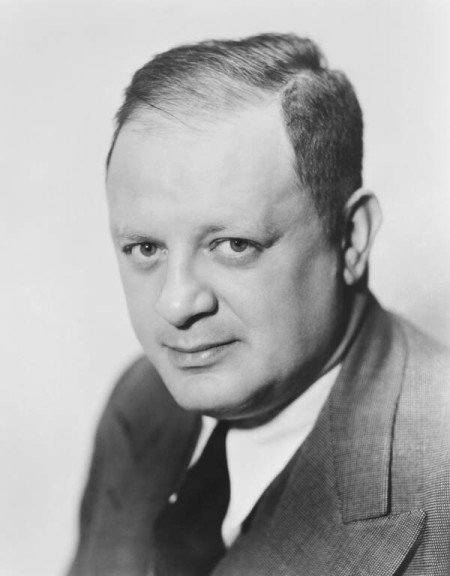
I opened up Mank expecting it to be about Herman Mankiewicz’s (Mank) relationship with Orson Welles during the writing of Citizen Kane. But that’s not really what the story explores.
We meet Mank in 1939 when he’s commissioned to write Citizen Kane for Orson Welles. Mank is in his 40s and a big fat drunk. He’s given a secretary, Rita (who types 100 words a minute – ON A TYPEWRITER, THANK YOU) and he starts to write. However, we barely spend any time with Mank in this setting. The majority of the script is flashbacks.
We flashback to the early 30s where the country is in a depression. As far as I can tell, Mank is still an alcoholic back then, too. He’s just not as bad of an alcoholic. One of the most interesting storylines is that Mank used to be friends with newspaper magnate William Randolph Hearst, who is the figure Citizen Kane is famously based on.
He’s also friends with Hearst’s mistress, Marion, and routinely goes up to Hearst’s mansion. There is an opportunity to show the disintegration of Mank’s friendship with Hearst which, we presume, is the reason he’s now recklessly skewering him in this screenplay, but this potentially intriguing plotline is barely covered.
Instead, Mank’s biggest storyline involves the political aspirations of Upton Sinclair, a former writer turned politician who was running on an “End Poverty” campaign who Hollywood hated. Sinclair was famous for getting shafted via false propaganda films that will have some seeing shades of Bernie Sanders.
To be honest, Sinclair’s life sounds interesting. But I’m not reading a script about Sinclair’s life. I’m reading a script about Herman Mankiewicz’s life. Which led to me wondering, “Why is the titular character of the movie playing second fiddle to a politician who was introduced on page 60?”
If you want to be a screenwriter, one of the most important things you must master is focus. Focusing your narrative is everything. If you try to cover eight different storylines, no matter how interesting each of those storylines is individually, you’re going to have a tough time keeping the reader invested.
There’s a quote in the script where Mank’s manager says to him regarding his early Kane pages, “Well I hate to say this, old man, but I am afraid the story as told is a bit of a jumble. A hectic hodgepodge of talky episodes. A collection of fragments that jump around in space and time like – like a bag of Mexican jumping beans.”
I was so struck by how accurately this line explained “Mank” itself that I thought, maybe, Fincher was doing it on purpose. Maybe he was trying to have the script mimic the broken alcohol-ridden mind of Mank himself. But while that sounds great in theory, you’re playing with fire when you’re making your script a metaphor. A script has to work on its own.
If I were producing this screenplay – and I’m guessing that would be David Fincher’s worst nightmare – I would get rid of the Sinclair stuff and focus on a) the current timeline and Mank’s battle with Welles to get the script done, b) his former relationship with Hearst. And c) maybe his relationship with his younger brother, which had potential. That’s all you need. You’ve got yourself a doable interesting biopic that covers a pivotal moment in Hollywood history.
And just to remind everyone – when you’re doing these biopics, YOU CAN’T INCLUDE EVERYTHING. No matter how much you want to. Or how much you can convince yourself that these peripheral stories like Sinclair’s election connect thematically with the rest of the script. This is a movie. It’s not a novel. It’s not a TV show. It’s a movie. And a movie needs to be focused. Which means getting rid of stuff you love. That’s part of the deal you sign when you join the screenwriting club.
HOWEVER!!!
I would like to add a theory I’ve come up with about this project. And if this theory is correct, it throws everything I just said out the window.
This project was given to Eric Roth. What is Eric Roth’s most famous movie? Forrest Gump. What was my least favorite part about Mank? That Mank is the least important character in the story. He weaves in and out of all the Hollywood elite players from that time, each of them getting these big juicy moments. So WHAT IF that’s what they’re going for? Mank isn’t even the key character. He’s more like a Forrest Gump who stumbles into the rooms of these major Hollywood titans. If that’s what this movie ends up being, that could be really cool. I mean, who doesn’t want to see David Fincher’s version of Forrest Gump?
Roth was recently interviewed on Barstool Sports’ “Pardon My Take” podcast and he sounded really excited about this project so, could it be that’s what he’s doing? We’ll see!
[ ] What the hell did I just read?
[x] wasn’t for me
[ ] worth the read
[ ] impressive
[ ] genius
What I learned: They say don’t write movies about Hollywood. There’s a caveat to that. You can write movies about Hollywood THAT ARE SET BETWEEN 1930 and 1979. Directors and studios absolutely love this era of moviemaking. So they always love to go back to it when they can. We just saw it with Once Upon A Time in Hollywood. They love creating the Hollywood of old. So if you’re ever going to write about Hollywood, that’s the era to set your screenplay in.
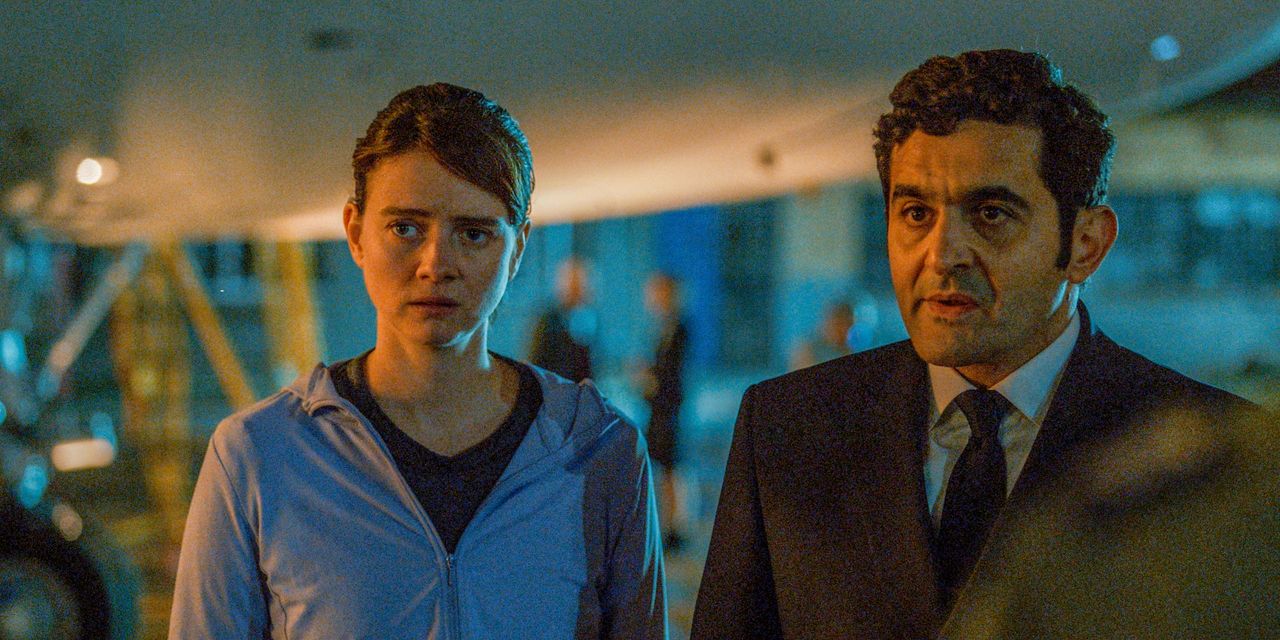
So I finished Netflix’s Into the Night and I can honestly say it’s the best TV show of the year so far.
I haven’t encountered a show with this level of urgency in a long time. The closest I can think of is Netflix’s Black Summer. But what makes Into the Night so much better is that the urgency is organically built into the premise. They have to keep flying to avoid daylight.
There are three screenwriting tips I want to bring up in particular with this show. It should go without saying that I’m including spoilers. Watch the show first if possible. I guarantee that once you start, you won’t be able to stop.
Oh, and fun little piece of trivia. This show is based on a book. And the creator adapted the entire first season from the FIRST PAGE of the book.
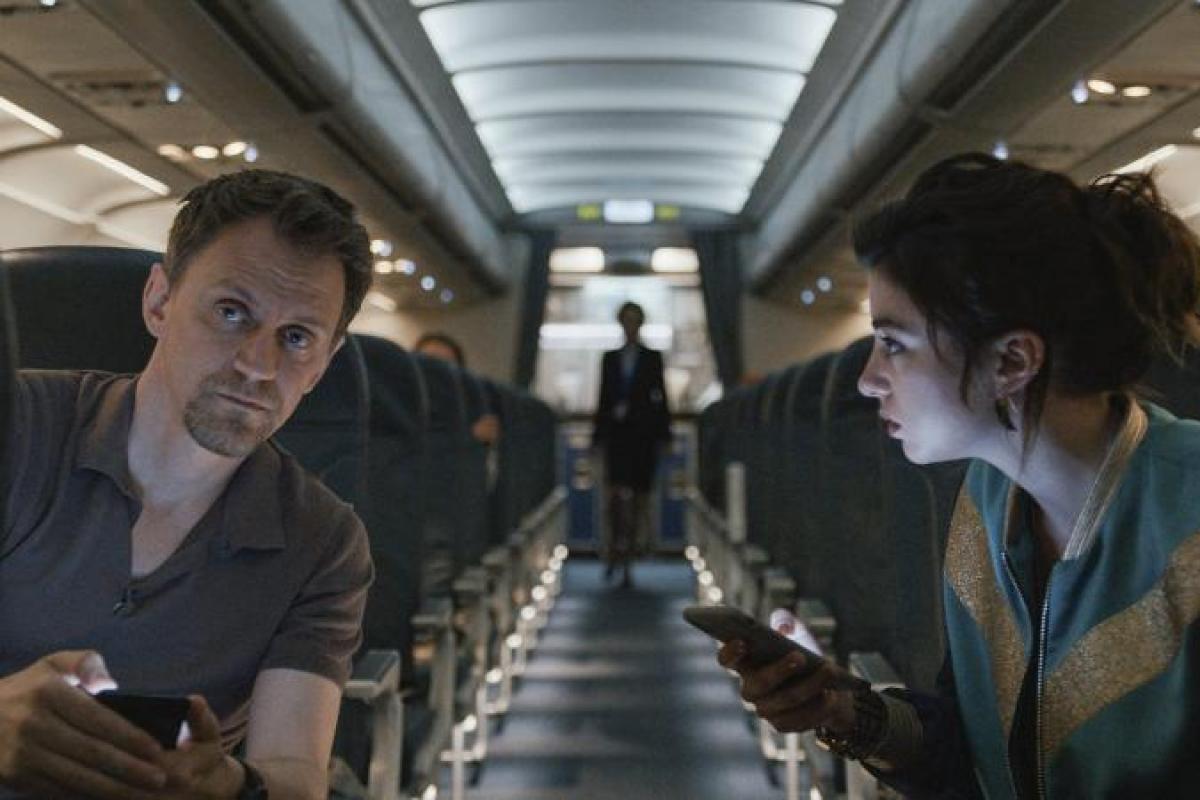
The first concept I want to talk about is called sandwiching.
There comes multiple times in every TV or Feature script (but TV especially) where you’ve got to write a scene with boring exposition or two characters who don’t have a lot going on. This could be the C-story in a TV episode. You’ve been told you have to write the scene and there’s nothing interesting going on between the two characters.
In these situations, you want to SANDWICH the scene with something really big before and PROMISE something big is going to happen after. If you do this well, we’ll tolerate the scene.
So there’s this moment in episode 5 of Into the Night where Sylvie, our helicopter pilot protagonist, goes back to the apartment of her dead boyfriend and mourns. Another character shows up to try and convince her to come back.
Now before this scene, we just showed a major fight between two characters in another location where one character beats the other one to near death. He then leaves that character to get back to the plane. That’s the first piece of bread on this sandwich.
The second piece is we have to leave within an hour! That’s when the sun comes up. So we have to get back to the freaking airplane NOW! This is our exciting second piece of bread which is a PROMISE that something interesting is coming. And it’s for that reason we tolerate this slow decent-but-mostly-boring scene of Sylvie trying to get over her dead boyfriend.
Where writers get into trouble is when they get lazy, when they stop sandwiching boring scenes, when they try to pile 3 or 4 boring scenes inside a sandwich, or when they don’t understand the technique at all. Because that’s when you’re at risk of writing 20-30 pages of boring story.
In an ideal world, every scene would be riveting. But it’s just not possible. You need to set certain things up for later scenarios to be exciting. And setup can be boring.
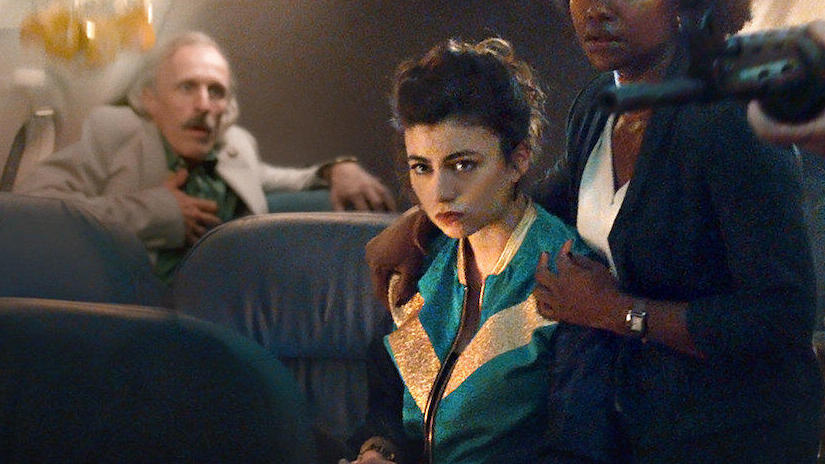
Moving on, tip 2. Dialogue doesn’t matter as much as you think it does. Into the Night is one of the most riveting TV shows I’ve ever seen. But it’s in another language. And I don’t understand that language.
Therefore, I have to use subtitles. Now, for those who don’t know about the job of subtitling, these people do not directly translate what the characters are saying. Instead, they give the bare bones generalized idea of what they’re saying in its most basic form.
If you want to have some fun, turn on the dubbed English audio and also put on English subtitles. You’ll see that their dubbed words don’t even match the subtitles. That’s because two different people are doing those jobs and they’re both just putting up their generic interpretation of what’s being said.
I bring this up because everybody talks about the importance of dialogue when shows like Into the Night and movies like Parasite are amazing yet we’re basically watching them with 3rd grade level English dialogue translation.
Does this mean you shouldn’t strive to write great dialogue? Of course not. But it’s a reminder that it’s what’s SURROUNDING the dialogue that’s most important. If you get that right, a scene will work regardless of how basic the dialogue is. Shows like Into the Night prove that.
Add conflict. Add tension. Add dramatic irony. Come up with an interesting scenario, like 7 passengers questioning an 8th passenger on if he’s really who he says he is.
From there, do the best you can with your dialogue. But it’s setting up the situation surrounding the dialogue that matters most.

Finally, one of the writing devices I like the best is when the writer makes it seem TRULY IMPOSSIBLE that the characters are going to succeed in the end.
And I stress “truly” for a reason. Because most writers set up an ending where they’re already thinking of how they’re going to get the characters around the obstacles in their way, and therefore, it doesn’t TRULY feel impossible. We can sense the writer carving that escape hatch that the characters are going to find and be okay.
Instead, you want to write your ending almost like you hate yourself. You want to make it as hard as possible for you the writer to figure out how your characters are going to get out of this.
Into the Night aces this test and then some.
(Major Spoilers)
While on their final flight – they’re not going to have fuel after this – the group has located an old Soviet bunker in Bulgaria that government officials are fleeing to. So their plan is to land the plane at the Bulgarian airport and haul ass to the bunker.
Now get this.
There’s no guarantee they’re going to get inside. It might be locked. It might be full. So right from the start, it’s bad news.
Next, they don’t know exactly where the bunker is. They’re working with some janky old map.
When they land, they have half an hour until sunrise. So they have to find a mystery bunker that they only vaguely know the location of in a country they’ve never been to before, driving on roads that are completely foreign to them, and then hope they get inside when they get there.
Only one person can carry the map but there are 9 people so they have to split up into two jeeps. So the first jeep is speeding away. The second jeep has to try and keep up with them on these winding roads. If they lose them, there’s no way to know which way to go.
Three quarters of the way there, the second jeep crashes. So they have to walk the rest of the way. Meanwhile, the first jeep crosses a gate that automatically closes behind them, locking the second group out.
The second group eventually gets to the gate but it’s electric, so they can’t even climb over it. There’s only 12 minutes left before the sun rises, by the way. They don’t even know if they’re close to the bunker or not. Also, nobody knows where the bunker entrance is. It’s not like a McDonald’s with Golden Arches signaling the location. It’s metal doors built into a hill.
I was sitting there watching this both in awe of the show, in how well it was crafted, and in awe of the writer, who so boldly made things difficult for himself.
Because it would’ve been easy to throw one mildly difficult obstacle at the characters. To throw THIS many obstacles requires a lot more work. Because now you’re stopping the characters more. You’re having to come up with solutions to these problems you’ve created. And bad writers don’t want to do that. It takes way longer to write the obstacle overcoming scenes and requires a lot more brainpower.
So I was rooting for both the characters and the writers simultaneously with this ending because I couldn’t have asked for a better end to this season.
Those are my Into the Night tips. Take them with you, into the night, and use them on your next screenplay!