
Search Results for: F word
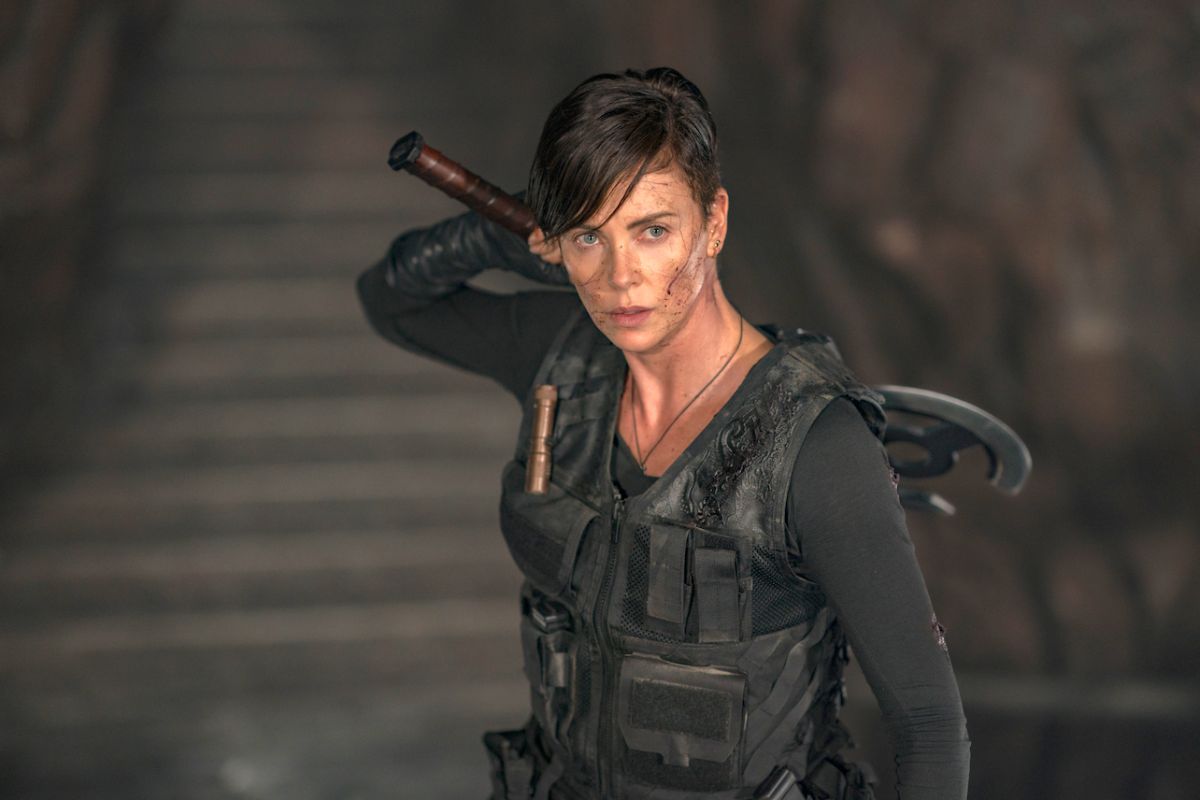
It’s a true Mish-Mash Monday as the television/movie landscape has become more diversified than ever. Do you watch The Old Guard on Netflix? Greyhound on Apple TV? Palm Springs on Hulu? My Spy on Amazon?
In the absence of big juicy Hollywood theatrical releases, the B-movie (or second-tier movie) has become the alpha. The problem is, the places where you can watch these movies are so spread out that you don’t know where to find them, or that they even exist.
How confusing is it for someone who watched Tom Hanks dominate the box office for two decades to see his latest film debut on Apple TV? Your initial thought is, “It can’t be that good or else it would’ve been in theaters.” But is that true? Or is the line between theatrical and home movies blurring so much that a home movie can make a bigger splash than a theatrical one?
The answer may come in the form of The Gray Man, the new Russo Brothers project that will star Chris Evans and Ryan Gosling which will have a budget of 200 million dollars. This signifies Netflix’s first true commitment to a theatrical level experience on the small screen. They’ve dabbled. The Irishman and Extraction being two examples. But 200 million is theatrical level money.
The Gray Man is a book series Hollywood’s been trying to put together forever. I remember Adam Cozad wrote a draft that made the Black List back in 2010. I believe that got him some work on a Bond film but that he didn’t get final credit. He later wrote Jack Ryan: Shadow Recruit. And while he had a long stretch of no film credits, he recently wrote the sexily-shot sci-fi flick, Underwater. Maybe I’ll review his draft of Gray Man tomorrow.
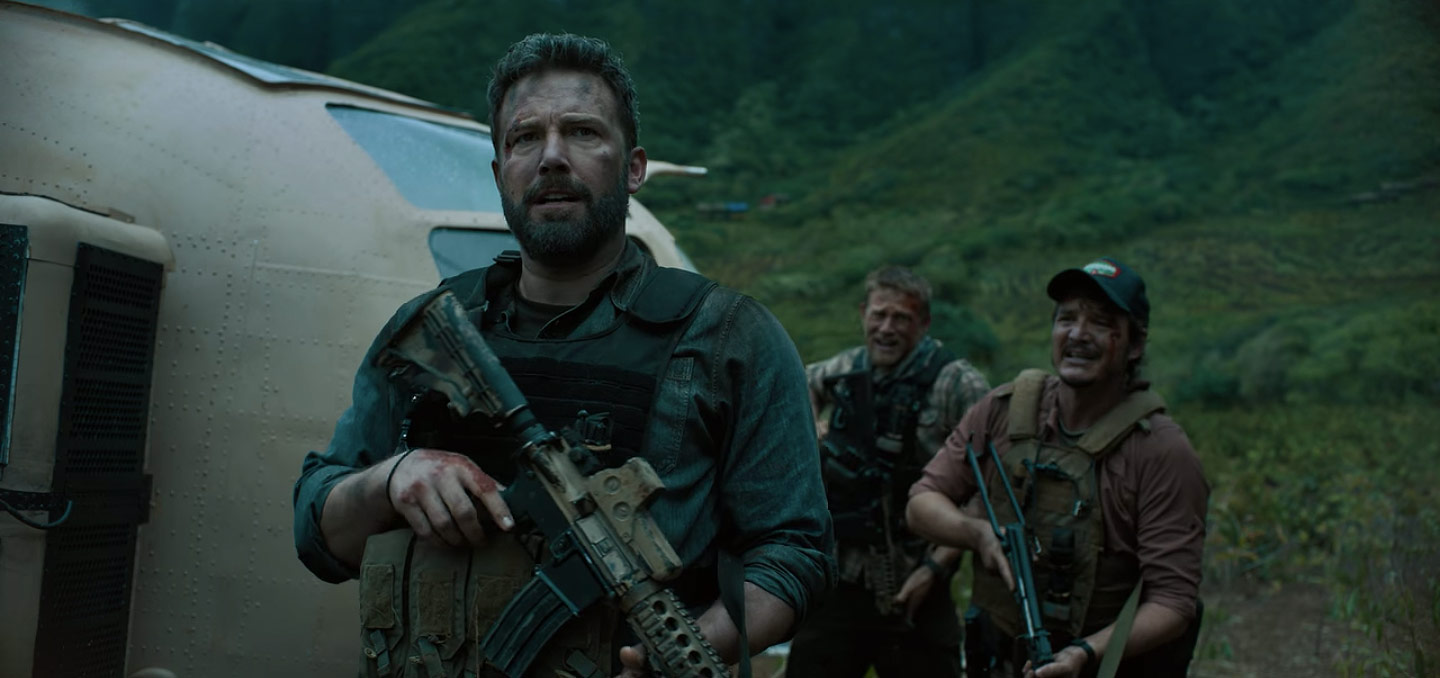
The Gray Man appears to be building on the revelation that Netflix’s most popular movies are big splashy action flicks. The Old Guard, Extraction, Triple Frontier, 6 Underground. Who would’ve thought that even on the small screen, action would reign supreme? Why does action reign supreme? Because it’s like the language of love, baby. Everyone in the world understands a car chase.
Hence, if writing an action script has ever tickled your fancy, this is a good time to massage that tickle. All these streamers are global (or thinking global in the future). And since action is global expect Apple and Amazon to copy Netflix’s formula.
The question is, what kind of action script should you write to get Netflix, Amazon, and Apple to take your call?
As we established during Action Showdown and its subsequent winning script, one of the biggest hindrances of the genre is that it’s inherently generic. Extraction is about a guy extracting a kidnapped kid. Triple Frontier is about guys stealing money from drug lords. The Old Guard is about a de facto black ops team that’s immortal (and fights with swords!). Are any of these concepts all that unique?
If the answer is no, which it is, how are they getting made? Well, something to keep in mind is that these movies are being made for a lower barrier to entry. Tenet requires that we plan, drive, park, pay, and watch. The Old Guard requires that we click two buttons. We don’t even have to move our body.
So that takes care of SOME of the reason it’s okay for these ideas to be generic. But not all. Because these projects are still beating out other projects to production. The Russo Brothers of the world are still drawn to these projects over that recent script of yours about a Chicago cop teaming up with the FBI to take out a Ukrainian drug lord. Why?
The only thing I can identify from a story component is that they all have one slightly different angle. Emphasis on the word “slightly.” Extraction was about an extraction in India. We hadn’t seen a big action movie like that set in India before.
Triple Frontier took a similar route. It built its concept around this almost mythical area in South America known as the “Triple Frontier,” which represents more drug dealing per capita than any other place in the world. It was also somewhat of an extraction narrative in that they were extracting money and then had to escape with it. That was kind of unique.
The Old Guard is a black ops movie with a vampire component to it. The group is immortal. It’s a slightly different take on those kinds of movies. I read a lot of black ops scripts. So if one comes along with a twist like immortality, it *will* catch my eye.
And yet, if you sent me of any of these scripts as aspiring professional writers, I’d probably say, “There’s not enough here.” Cause I know from passing on scripts to the people who make these movies they’ll say, “There’s nothing different here. I’ve already seen this movie.”
This is where we get into the stuff aspiring writers hate, which is that most of these projects getting made stem from IP. I know that’s the case with The Old Guard. I know that’s the case with Extraction. There’s something about previously published material that makes creatives and suits comfortable. It allows them to say, “Well, it might not be that original. But I liked the graphic novel so that’s good enough.” You’d be surprised how effective it is to let a bean-counter see what you’re trying to do. There’s something about seeing pictures that helps people understand what the end result will look like. That’s always better than giving someone words.
Which brings us back to aspiring action writers. Since your idea isn’t based on a graphic novel or a comic, how do you compete? This is where the rubber meets the road. Cause the truth is, you are held to a higher standard than the established creative professional! I know that sounds unfair. But it is what it is. You have to come up with an action idea that’s better than these ideas. Or you need to deconstruct the action film in some way. Or you need to find a new angle.
That might sound impossible in the action genre, which has hundreds of thousands of films in the vault but it’s possible. Look at Greyhound. Here’s a World War 2 movie. How many of those have been made? 20,000? I don’t know. Yet they found a cool new angle. A caravan of war ships heading across the ocean for a major battle are led by a sub-hunter — a ship whose sole purpose is to hunt down Nazi subs so that they don’t sink any of the ships in the fleet. Fresh ideas can be found.
I think a trick you can use to come up with a fun original idea is to think in terms of a SITUATION rather than a catch-all action premise. For example, The Hunt. A group of conservatives are dropped into a Hunger Games like playing field and hunted by liberal-elites. Inception. A team of specialists must travel into a man’s mind and insert an idea. 300. 300 men must take on an entire army.
Do that rather than, say, follow a new black ops team that deals with even more difficult missions than before. By creating a situation, you put more of a movie into the reader’s head.
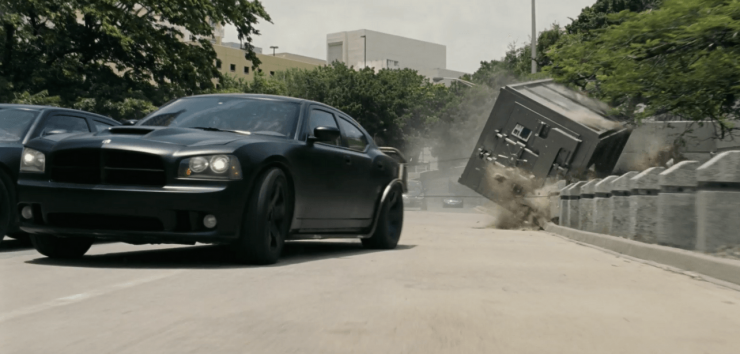
And from there, execute. If you create great characters and keep us guessing with a riveting plot. If the basics are all in place (strong clear goal, urgency, HIGH STAKES). If you’re giving us amazing action set pieces that we haven’t seen before. Your script is going to stand out. I’ll never forget that scene in Fast and Furious 5 where they bypassed breaking into the 5-ton safe and instead just rigged their cars to it and dragged it out of there, resulting in a crazy car chase throughout the city. I’d never seen anything like that in an action movie. You want to write action set pieces that get potential directors excited.
That’s another thing to remember. Action is a director-driven genre. Maybe more so than any other genre. It’s why a script about a man who hunts down cliche Russian gangsters because they killed his dog can become a billion dollar franchise. Weak concept but amazing direction. Your job, then, is to excite the director who’s looking for something to direct.
I guarantee you if you give them something unique that has some great set pieces, you have a shot.
By the way, let me be clear about something. You CAN be one of the lottery winners who writes a generic action script and someone somewhere chooses it because it was a ‘right time, right place’ scenario. You could write, say, “Skyscraper,” that dumb Rock movie, and it just so happens that a new Lionsgate executive who loved Die Hard has gotten a green light to make a huge action film. He reads that script and says, “That’s it. That’s the one I want to make. My Die Hard!”
Or you can write something original that gets EVERYBODY who reads it excited. In other words, you can make things hard on yourself or easy on yourself. We already know that writing words on a page and hoping someone likes them is a stratospherically difficult profession. With that in mind, it makes sense to align the rest of the variables in your favor.
I know we have some big time action movie connoisseurs on this board. Feel free to offer your own action screenplay insights. :)
Okay!
Time for our second update of The Last Great Screenplay Contest. The good news is that a lot of scripts are getting in the “Maybe High” pile. A bigger percentage than I would’ve thought. There was a string of scripts I read, about ten of them, where six went into the “Maybe High” pile. That’s a lot of good writing.
(for an explanation of the four piles I’m dividing scripts into, check out the FIRST UPDATE of The Last Great Screenplay Contest)
I’ve also come across the best script title so far. That would be “Dwayne Johnson vs. The Hollywood Zombie Apocalypse.” I don’t think anyone’s going to dethrone that title but we’ll see.
On the not-so-good front, I continue to receive scripts where the writer mentions that this is an “old” script.
I want to ask you a question. Let’s say we’re hanging out and I said to you, “Oh, you have to read this script I wrote 17 years ago.” What would you say? I would hope you’d say, “Don’t you have anything newer?”
There is no business, except for maybe the music business, where having something fresh and new matters more. I don’t care if your script is old. JUST DON’T TELL ME. And by the way, make sure, if you are reanimating an old script, to adjust everything for modern times. Cause if the characters aren’t acting like they live in the modern day, I’ll know you sent me something old.
The worst example of this was when a writer sent me a script and everybody was described like a hippy, there were a lot of hallucinogenic drugs, people were trying to save the rain forests. There wasn’t a single cell phone mentioned in the story. And no, this wasn’t a period piece. It was supposedly set in modern day. I asked the writer how long ago he’d written the script. He told me, “About 40 years ago.”
But, overall, I’ve been pleasantly surprised with how many scripts are catching my attention. We’ve got some really good writers who’ve entered this contest.
Now, let’s get to today’s article, which is about DIALOGUE SCENE-WRITING.
I’m encountering a lot of dialogue scenes that could be stronger.
I’m coming up against two major mistakes. The first is the scene fragment. The writer has the best intentions in mind. They’re trying to keep their scene short and sweet – only the bare essentials – so that the script keeps humming along.
The second is writers who write long dialogue scenes, but those scenes feel pointless and rambling. The dialogue may even be good. But it keeps going on and on and you’re not really sure what the point of the conversation is.
The problem with the first issue is that scenes never get a chance to fill out. They end almost as quickly as they begin. Therefore, the reader doesn’t feel like they got anything out of them. Also, if your characters only ever talk to each other in brief spurts, we’re not going to get to know your characters. And that’s the real danger here. If your script is devoid of fully fleshed out dialogue, we won’t know the characters and, therefore, we won’t care about their journey.
The problem with the second issue is that you’ve exposed yourself as someone who doesn’t structure anything. If your scenes ramble, 99% of the time, the script will ramble as well. It’s an easy tell for a reader to spot. If a writer is writing long directionless dialogue, they know it’s going to be an unfocused script experience.
I’m going to help you solve both of these issues.
Here’s what you need to do.
When you’re writing a relevant dialogue scene (I’ll define “relevant” in a moment), you want to structure the scene like you would structure a script. That is to say, you want to give it a beginning (the setup), a middle (the conflict), and an end (the resolution).
What that means from a character’s point of view is that one person in the scene, usually your protagonist, will need to come into the scene WITH A GOAL. That’s what the setup is for. You’re establishing what it is your character wants (his goal) in the scene.
Let’s say Doug and Joe are at In and Out Burger after finishing their amazing meal of five Animal Style French fries. There’s a cute girl working the register who Doug wants to ask out. That’s the GOAL. Which you will SET UP. “I need an excuse to talk to her,” Doug says. “Go order another animal fry,” Joe replies. “And then ask her something to get her talking. Like, why is it called ‘Animal Fries?’” You’re setting things up now. Doug will then get in line, and when it’s his turn, he will attempt to have a conversation and, ultimately, ask her out.

From there, you have your second act of the scene. The CONFLICT. The conflict here could be other people waiting in line behind him. They are hungry for In and Out burgers too! And don’t care that Doug likes this girl. Doug will ask her about where the name animal style fries came from. She will say, “I don’t know, I just started here.” CONFLICT! You want to make things hard on your hero. Doug will ask her when she started. Or about In and Out’s notoriously difficult hiring process.
He might get her talking more. Things are getting better. But then her boss pops up, “Jenna!” She turns around and looks at him. He points at this watch. Shit, Doug has to hurry up.
And here’s the big difference between screenplay structure and scene structure. In screenplay structure, the hero usually achieves the goal at the end of the movie. But in scene structure, the hero often fails. Why? Because it’s more interesting and it means that the hero has to try again. And keep trying. If your hero wins every scene battle, you’ve probably got a boring movie on your hands.
Let’s get back to that “relevant” moniker. What is a “relevant” scene? This is not a universal term, by the way. I’m using it here specifically to help you out. A “relevant” scene is a scene that is important to the story in some way and has some weight to it. Which, if you’re a writing a good script, many of your scenes should fall under that category.
In my movie, “The In and Out Love Triangle,” with Doug, Joe, and Jenna, the example scene I mentioned above would obviously be a scene that was important to the story and have some weight to it. However, if I’m writing “Eight,” which is my serial killer sequel to “Seven,” some side subplot of asking a girl out probably isn’t that important (it could be, if she ends up being the serial killer, but it probably isn’t). In that case, you don’t need to write some big long dialogue scene with a beginning, a middle, and an end. If it’s just Detective Doug trying to get some action that night to take his mind off things, you would look to condense the dialogue as much as possible.

Literally, you might show Doug ordering his meal, Jenna looking up to him with a smile. Jenna saying, “Anything else?” Doug smiling back, and saying, “Yes. One more thing,” and then you’d cut to them in bed together.
The point I want to make clear is that NOT EVERY DIALOGUE SCENE will have a beginning, middle, and end. Just the ones that are important enough to warrant it.
Now if you’ve ever heard the 50 year-old screenwriting tip of, “Come into a scene as late as possible,” what I wrote might be confusing. “Aren’t we supposed to skip the beginning part, Carson, and come into the scene right when the good stuff begins?”
That’s a good point. So, to be clear, you can set up a scene BEFORE the actual scene. I just did it above. Before Doug talks to Jenna, we set up what he’s trying to do, which is ask her out. That way, we’ve taken care of the relevant exposition of what your character’s goal is so that we don’t have to spend the beginning of the scene setting that up. This is done a lot in scene-writing and is perfectly okay.
But let’s say we didn’t include the pre-talk of Doug and Joe before he went to talk to Jenna. Let’s say Joe isn’t here with Doug. Doug is all alone. He waits in line, his turn comes, and only when he walks up does he realize he likes this girl. Without the benefit of that earlier conversation to cue the audience in on what he’s doing, we need to do the setup right here in the moment.
That might be us noticing the way Doug looks at Jenna. He clearly has eyes for her. After he says his order, he might also say, “I like that necklace you’re wearing. Where did you get it?” Now, you’ve SET UP the scene. This guy likes this girl. He’s going to attempt to ask her out. From there, you can move to your middle stage (conflict), and your ending stage (resolution).
Another thing to remember is that the more important to the story the scene is, the longer everything will be. You’re going to have a longer beginning, a longer middle, and a longer end.
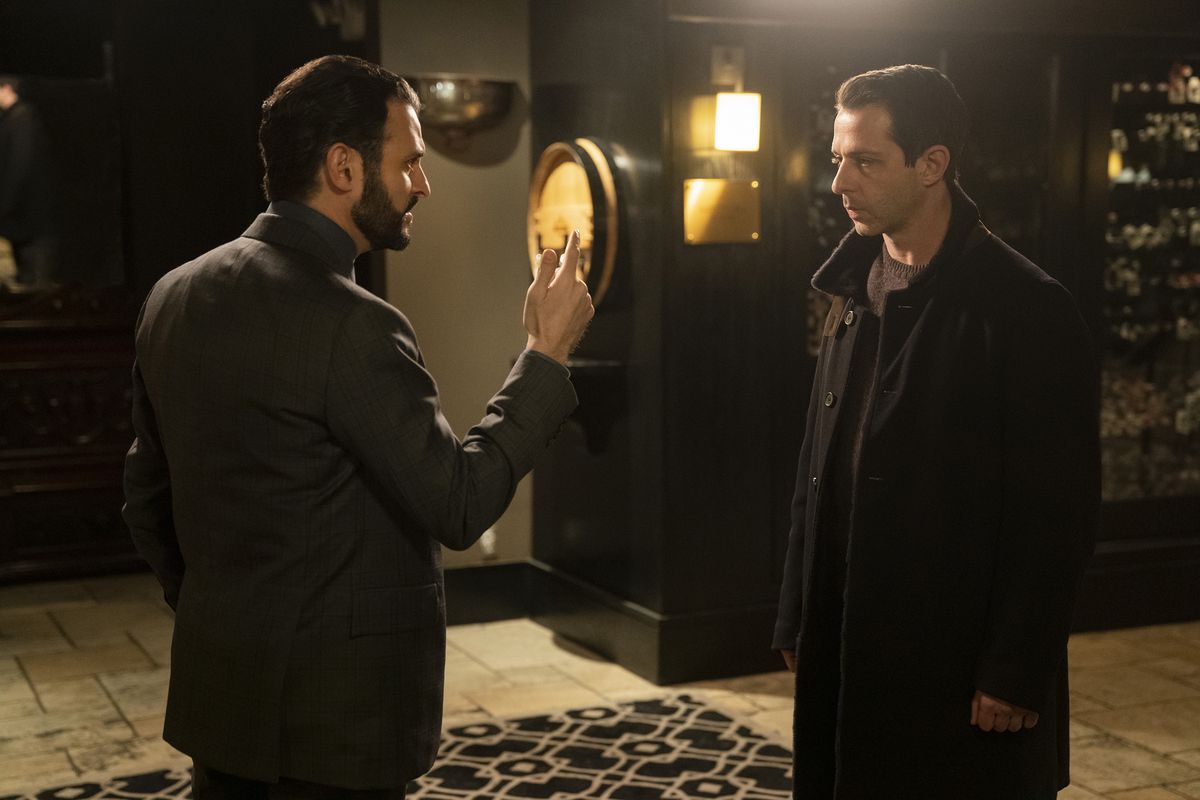
For example, let’s say we’re writing a script about a tech billionaire whose company is under threat of being bought out by a bigger company. Something you might see in the show, Succession. In that hypothetical scene, let’s say that MORRIS, the CEO of the buying company, has come to talk to SEYMOUR, the CEO of the company that doesn’t want to be bought.
The scene starts with Morris being shown into Seymour’s office by a secretary. Since this is a scene between two of the most important characters in the movie. Since this is the only time they’re going to talk. And since what’s at stake from this conversation is so high, this is the kind of scene that is going to have a longer beginning, a longer middle, and a longer ending.
In other words, this is the last scene you want to use the “come into the scene as late as possible” screenwriting tip on. If anything, you want to do the opposite. You want to linger in the buildup to their conversation. When Morris goes to pour Seymour a drink, you want to focus on the sounds of the ice cubes rattling against the glass as he stirs. You want to focus on the subtext of the “meaningless” chit-chat the two titans exchange before they talk about the takeover. This scene is where you want to bathe in the “setup” phase.
I bring all this up because it doesn’t seem like enough writers know what to do in a dialogue scene. Like I said, they try to come in late, like the screenwriting books tell them to. Then they leave as early as possible. Meanwhile, the exchange between the characters is so brief that, sure, we may have learned some relevant plot information from the dialogue. But we sure as heck didn’t learn anything about the characters.
So from now on, identify the relevance level of your dialogue scene, and if it’s an important scene, make sure it has a proper beginning, middle, and end. If it’s a lighter scene or a scene where you only want to get some exposition across, you can cut into those scenes later and end them sooner. But if LOTS of your scenes look like that, we won’t get to know your characters and, therefore, we won’t care about their journey.
Hope this helps!!!
Keep writing!
The Batman director, Matt Reeves’, big secret Netflix project.
Genre: Short Story (Science Fiction)
Premise: Set in the near future where, instead of criminals going to prison, their memories are wiped and they’re allowed back into society, a family man with no memory of the horrible crime he committed must learn to reintegrate back into his old life.
About: BIG bidding war on this one. Last year Matt Baker had a string of big short story sales. One of those went to Noah Hawley. This one went to Matt Reeves. All the studios plus all the streamers bid on this project with Netflix and Apple duking it out in the finals. Of course Netflix always wins when they want something bad enough, snagging the adaptation rights for 7 figures. Although Matt Reeves hasn’t officially been announced as director, you’d think the bidding war had a lot to do with him saying he’d likely direct it. You can read the short story yourself here.
Writer: Matt Baker
Details: 10,000 words (your average screenplay is about 25,000 words)
We’re going BIG CONCEPT again today, baby!
It’s like we’re back in the spec boom where every project was high concept.
You may have to go into the short story universe to find some of today’s high concepts but they’re still out there.
My biggest question today is, what made everybody so crazy about this? It’s rare, these days, that you get this many entities bidding on something. With such a big premise and so much interest, I’m expecting to get knocked out of the park here. Join me so we can get knocked out together.
Washington, or “Wash,” arrives at his home for the first time in a year. There, he’s reacquainted with his wife, Mia, his 14 year old daughter, Sophie, and his third grade son, Jaden.
The thing is, Wash doesn’t know these people. They know him. But Wash’s memories of them and everything else have been wiped. His episodic memories, at least. Not his semantic memories. That’s when you know what a restaurant is but you can’t remember ever eating at one.
The reason Washington’s memory has been wiped is because he did something that warranted life in prison. And in the future, they’re able to use tax payer dollars to wipe away the parts of your life that led you to do your crime. The more serious the crime, the more memories they erase. Wash’s crime was as bad as it gets. So everything was erased.
He’s occasionally visited by a Reintroduction Supervisor, who explains all this to him. But it doesn’t help much. He’s still sleeping next to a woman he doesn’t know. He’s still eating dinner with children he has no memory of. They say they’re his family but it sure doesn’t feel like it.
However, Washington gradually works through the frustration. He gets a job washing dishes at a diner. He celebrates his anniversary with Mia. He takes the kids bow-hunting. And while there are aspects of his family that remain alien to him, he learns to love them again, even if it’s different from the way it used to be.
One day, while watching Jaylen play baseball, a fellow memory-wiped felon comes up to him for a chat. The conversation leads to the obvious. What did Wash do? Wash says he doesn’t know. They don’t have a computer at their house (Carson note: ????). The felon says they have computers at the library. He can go there.
Once his year-long reintroduction period is over, Wash’s curiosity gets the best of him. He goes to the library, rents a computer, and looks his name up. It’s what we’ve been waiting for for the last 9500 words. We’re finally going to find out what this story is about! What did Wash do!!!??? Well, I hope you’re not someone who likes answers. Because after searching, Wash decides not to click on any of the links. He walks away, content with living in the future instead of the past.
The End.
Ohhhhhhhhhhhhhhhhhhh boy.
If you witnessed any steam coming out of your computer just now, that would be originating from my ears. Because that’s how furious I am with the ending of this so-called short story.
Okay. Calm down, Carson. Calllllllm. Stay calm. Don’t freak out.
Grrrrrrrrr.
All right. I’m going to try and analyze this with an open mind.
Whenever you come up with a big idea, there’s a major step that follows that. That step is: WHAT’S YOUR ANGLE? What’s the angle you’re going to tell your story from.
For example, if you came up with a serial killer concept, you could tell that story from the angle of the person investigating the killer. Or you could tell the story from the serial killer’s perspective. You can keep the investigation inside the FBI. Or you can include a notorious second serial killer to help with the investigation.
The angle is just as important as the concept. This could’ve been about a criminal murderer whose memory was wiped who then gets brought back into a life of crime by his old crew.
Instead, the angle taken here is straight drama. And when I say straight drama. I mean STRAIGHT DRAMA. There isn’t a single cool sci-fi element in this story. It is 100% about a guy trying to reintegrate back into a family.
If you’re judging it strictly on that, I’d probably give it a C. Maybe a B-. Because even the family stuff here isn’t explored that well. I have little to no feel for his wife at all. And the kids even less so. It’s just a circular series of Wash thinking to himself, “I don’t know these people as well as they seem to know me.” And if the whole point of your story is to explore the family dynamic, shouldn’t I know all the characters intimately when I’m finished?
The only thing driving my interest was, what did Wash do? That’s all I care about. Admittedly, it’s a strong reason to keep reading. I was willing to push through all this family stuff to find out what he did. So when we get to that last line only to receive a Sophomore year in college Creative Writing exercise ending of “The End” right before we get our answer, I nearly had a seizure.
THAT’S THE ONLY REASON I READ TO THE END! AND YOU CAN’T EVEN GIVE ME THAT???
If you want to pull off one of these ambiguous endings – which are REALLY hard to do – the rest of your story has to be flawless. And this isn’t. In fact, very little of what happens makes sense. For example, why wouldn’t his family tell him what he did? They haven’t been instructed not to. He’s clearly curious, especially early on. Why aren’t they telling him?
I’ll answer that for you. IT’S BECAUSE THE WRITER DIDN’T WANT TO TELL YOU. Not because the characters didn’t. It’s because it worked better for the writer’s story if he kept that a mystery. So screw real world logic in order to keep us reading to the end. That’s a cheat.
Next, what kind of world are we living in where people don’t own computers? This is supposedly set at least 20 years in the future. There isn’t a smart phone mentioned in this story. Why? Because a smart phone would allow Wash to check what he did and we needed to keep that a mystery til the end. So we’ll just… create a false future where we have the power to erase specific memories in our heads but nobody carries around a smart phone. Sure, cause that makes sense.
I have a sneaking suspicion this is a really old short story this writer wrote way back when the internet started. Cause that’s how it reads. Nobody here acts like they know what the internet is.
Sorry, I’m going crazy trying to wrap my head around how this sold.
Here’s my guess. I have three potential scenarios.
The first is the most unlikely but I concede it’s a possibility. Maybe it’s the very fact that the writer explored this concept as an emotional drama that attracted everyone – that the writer didn’t take the concept down an obvious route. Not to mention, like we were talking about yesterday, this version of the idea is the cheapest version you can shoot.
Option 2 is that Matt Reeves liked the story and everyone was bidding on Matt Reeves, not the story itself. I believe this sold not long after Reeves got The Batman gig, which means he was really hot at the time and everyone was looking to get in bed with him. They simply trusted what Reeves was going to do with the material. He could’ve pitched them a movie about a man repairing a lawnmower and they would’ve begged to be involved.
The final possibility is that Matt Reeves liked THE CONCEPT of this short story but not the execution, which he plans to change. This actually happens a lot with adaptations. I haven’t read The Godfather novel but everybody says that it’s horrible and nothing like the movie. Ditto, Die Hard. So he may well be taking this concept down a more exciting road.
I sure hope he does because if you adapt what the story is now – which is a guy moping around for 90 minutes about his boring life and then going to see who he murdered but changing his mind at the last second? If you give us that movie, there are going to be whatever the Netflix equivalent is of riots in the streets.
I’m kinda baffled here, guys. I was hoping for so much more when I read this.
[ ] What the hell did I just read?
[x] wasn’t for me
[ ] worth the read
[ ] impressive
[ ] genius
What I learned: Memory is a fun thing to play with in storytelling. Amnesia in Bourne Identity. Rolling memory loss in Memento. Digital memories inserted in Total Recall. If you can craft an idea that plays with memory in a creative way, chances are you’ve got a good screenplay on your hands.
First off, congratulations to everyone who got their script in before the deadline. You’re probably wondering how many screenplays I’ve received and the answer is I’m not sure because I haven’t counted them all yet. But it’s somewhere between 800-1200.
I’ve read the first 10 pages of 50 of those scripts. It’s been a fun exercise so far. You never know what you’re going to get. Literally, someone sent me a script with the message, “Fun Fact: I wrote this entire script on my cell phone.” And then, in the very next entry I got a Nicholl winner. So the level of competition is all over the place.
Let’s start by detailing my filtering system. I’ve created four folders. They are, “YES,” “MAYBE HIGH,” “MAYBE LOW,” and “NO.” A “Yes” means the first ten pages were really good! When I go back for my second round of reading, I will read the entire script for any “Yes.”
“Maybe High,” means that the pages held some promise but they weren’t good enough to get me jumping up and down like I did with the yeses. When I go back for my second round of reads, I will at least read these scripts to the midpoint. If I’m bored at the midpoint, sayonara.
“Maybe Low,” is a script that hasn’t kept my interest through the first ten pages but there’s something tugging at me to give it a second chance. It may be that I like the writing. It may be that while the plotting is weak, there’s a character I’m curious about. During the second round of reads, I’ll read at least another ten pages of these scripts and, if they manage to reel me back in, I’ll keep reading.
A “No” script is pretty clear. I’m done with that script. A “no” script can basically be broken down into two categories. There are writers that can’t even write properly, like the “I wrote my script on a cell phone” guy, and then boring scripts. These are writers who obviously know the basic principles of screenwriting but their first ten pages were boring.
And if there’s one big tip to give off these first 50 reads, it’s one we discuss all the time here on Scriptshadow, which makes it all the more frustrating that it continues to be a problem.
That tip is, start off with something interesting happening. Now “interesting” is a subjective term, obviously. Some people found Hamilton interesting. I did not. But here’s a new definition for your screenwriting dictionary. Whatever you think is interesting enough to capture a reader in the first ten pages, TRIPLE that and now your scene actually has a chance at being interesting.
Cause there were a lot of opening scenes where the writer could make the technical argument that something interesting was happening. But the scene was still lame.
For example, a common start to a script is a dead body. Or a murder that just happened. Now you may say to yourself, “That’s INTERESTING!” Except that you’re competing against hundreds of other scripts that start with a dead body or a murder. So what are you going to bring to the table that’s going to make your opening murder scene more interesting than everybody else’s?
And then we have the writers who start with their characters going through their day. They wake up. They make breakfast. They do chores. I mean, come on. Even if you’re attempting a “quiet before the storm” scenario, I’m already bored on page 4 of your script. That’s the last place you a want a reader to be.
The best script I’ve read so far DOES start with a “quiet before the storm” moment but the ‘quiet’ part lasts HALF A PAGE. Not four pages. Or eight pages. Screenplays are like New York real estate. You can’t buy the land and put up some lazy generic building. You’re competing with 50,000 other buildings. You have to stand out somehow.
Anyway, back to my process.
I start off by reading the first ten pages. I do not read the logline. I avoid this because I want to see if the writing and the story pulls me in without a logline. However, if I’m struggling through the first ten, I will go back to the e-mail and check if it’s a good logline. I do this to hopefully give the read a boost, as, assuming it’s a good logline, I’ll go back into the script with more optimism.
I also check the logline after every ten page read regardless.
Now to the results so far. I have 42 “No’s” so far. I have 5 “Maybe Lows.” I have 2 “Maybe Highs.” And I have exactly 1 “Yes.”
What did the yes do that got me to say yes? Hmm, let’s see. It was a very graphic opening scene that grabbed me right away. The writer used some irony in that we start the script with a little girl walking and then she stumbles upon something that is basically the most horrible thing you can imagine. Actually, you can’t imagine it. And that’s actually a good point to note. What the girl saw was literally something I’ve never seen before. 98% of these other scripts are giving me the same stuff I’ve seen already. The same images. The same characters. The same tricks. So it really matters when someone shows me something I haven’t seen before.
But it wasn’t just that. The writing was colorful. It did a great job pulling me into the writer’s world. This is something that a lot of “NO” writers struggled with. Their writing was generic. Bland. The words and phrasing they used were basic and common. So it was hard to get pulled into their worlds. And, to be honest, when someone wrote like that, it was accompanied by similar problems in other areas. The dialogue would be very basic and bland. The scenes themselves would be unimaginative and bland.
With that said, I’ve read a couple of entries that had the opposite problem. They were vastly overwritten. So even though they were painting a more visual movie on the page than the bland writers, the paragraphs went on for too long, the words became too numerous, and it got to the point where it was gumming up the read.
Lol, so I understand your frustrations. This craft is tough. You have to strike that perfect balance.
Another common scenario I ran into was the abbreviated “exciting” opening that was then followed by 9 boring pages. It’s almost as if these writers said, “FINE, I’ll give you your exciting opening. But then I’m going to set up all my characters and my plot gosh darnit!” So they get the teaser out of the way as quickly as possible so they can say they did their job of hooking the reader right away, then follow that with nine pages of setup sauce.
It doesn’t work that way. You’re not supposed to begrudgingly give the reader their “entertainment” so that you can get on with the “more important stuff.” Regardless of whether you’re writing “fun” or “serious” scenes, they should always ALWAYS be entertaining.
As for how this is going to go moving forward. I’m going to read through this first round of 10 pages. Then I will do my second round where I start reading the good scripts in more depth, which I’ll share with you when that starts. And then I’ll probably have a group of scripts where I have to figure out who wins. Whether that be one person, two people. I’d be lying if I said I wasn’t worried that no script was good to enough to win. That’s happened to me before in a contest. But we’ll just hope that doesn’t happen here, lol.
I think I originally said I’ll announce the winner (along with the close-call scripts) somewhere around mid-September. But that’s going to be pushed back with the extended deadline and all the Covid stuff. So I’m expecting I’ll announce the winner somewhere between mid-September and mid-October. But don’t worry, I’ll be keeping you updated. I’m probably going to use these Thursday entries to talk about the contest. So you can always check back every Thursday to get the latest.
And one last thing. If you ever happen to write a screenplay on your cell phone, don’t use that as your marketing pitch for why people should read your script. :)
Genre: Sci-Fi
Premise: A woman wakes up on a spaceship that has landed on a distant planet but has no memory of how she got there or why her uniform is covered in blood.
About: This came from the 2018 Hit List. I’ll paste the info from there about the writer: “Jonni is a German-Brazilian screenwriter who has seen every inch of the globe. Born in Switzerland and raised in Spain, he moved to London to get his degree in Film & Television Production. Since then, he’s worked in advertising and the broadcast department for the London Olympics. He’s recently found himself in New York where he received his MFA in writing from Tisch School of Arts. Since finishing ASH, Jonni is working on several projects for both film and TV.”
Writer: Jonni Remmler
Details: 108 pages

It’s been a rough few days. I suffered through ten hours of people singing and dancing about the Constitution. After that, I battled through a script that had more description in it than the Bible if it were translated by Leo Tolstoy. And while my gym has finally reopened, they’ve mandated that I wear the equivalent of a hazmat suit to work out. As if I didn’t have enough excuses not to go the gym already!
It was clear what was needed. The ultimate Scriptshadow picker-upper. The thing that got me juiced to start this website in the first place. The SCI-FI SPEC! To me, sci-fi and spec screenplays are the screenwriting world’s equivalent of peanut butter and jelly, the special sauce in an In and Out burger, the blinking “Hot Now” sign on the Krispy Kreme marquee.
I needed a shot of all those things directly into my bloodstream. So take a trip with me into outer space, Adam Driver Inside Llewyn Davis style. Link hands script friends and pour yourself a milky way sarsaparilla. Actually, pour the drink first, then link hands. We’re about to be blasted off into spec script nirvana. At least I hope we are…
28 year-old Riya has just woken up in a strange futuristic room. Her uniform is covered in blood, seemingly from a large gash in her forehead. The large metallic room has all its furniture pushed up against the only door. Riya stumbles over and looks through the window in the door. There’s a hallway with a large blood stain in it. Uh-oh, don’t want to go in there.
Luckily, there’s an automatic food processor in the room so Riya can easily stay fed. In the meantime, she tries to figure out how she got here, and we experience that with her via flashbacks. She remembers earth, something about the planet dying, and possibly being part of a crew that may have fled the planet.
Eventually, Riya gets out of the room and starts seeing dead members of her crew, who all seem to have been beaten to death. She also finds a window to the outside, and that’s when she realizes she’s on some distant volcanic planet. Riya continues to remember bits and pieces of her past and zeroes in on how one member of her team, Jones, is missing. She must be the one who’s killing everybody.
Before Riya can test this hypothesis, a man named Brion shows up. He says he came down from an orbiting ship that’s part of the same team she’s on. And that he’s here because SHE sent a distress call. Since a sand storm is moving in, they’ll have to wait two days to walk back to his shuttle.
In the meantime, they try to find Jones. But, of course, there is no Jones. (spoilers!) Brion ultimately reveals himself to be the killer. And to make things worse, he’s not even human. He’s an alien entity from this planet who has slipped inside Riya’s own brain! Which means that Brion isn’t even real. Brion, aka the alien, is Riya herself. Unable to process that she’s the killer, Riya asks what happens next. Brion explains that he will slowly consume all her brain functions and she’ll cease to exist. The End.
There’s nothing bad about this script. In fact, it would’ve easily passed the Last Screenplay Contest First 10 Pages Challenge. Waking up into a strange situation with no memory of how you got there is an easy way to quickly pull readers in.
But this is the definition of what all screenwriters should be wary of: the standard execution screenplay. Standard Execution is when you have a concept and you execute it the same way 99% of other screenwriters would’ve executed it.
A girl wakes up on a spaceship with amnesia.
There’s a mystery about someone killing crew members.
A mysterious man shows up outside. Wants to be let in. He appears to be friendly. But is he?
I’ve read this exact scenario in screenplays, maybe 250 times. Not long ago, we reviewed a script about how earth lost all its oxygen and a family in a bunker lets in a couple of strangers. So it’s a common setup. And to be clear, it’s used a lot because it works. But it only works when you play with the formula in unexpected ways.
And while I wouldn’t say this feels exactly like other films. It’s familiar enough that you’re always ahead of it. That’s where you don’t want to be as a writer. ESPECIALLY if it’s a mystery script like this one. Because the whole point of adding a mystery is to give the reader an unknown experience, something where they’re constantly trying to figure out what’s going on and then you keep pulling the rug out from under them.
I’m not sure anybody reads this and doesn’t know that Riya is the one who killed everyone long before the third act reveal occurs.
Another thing I wanted to point out was there’s this prevailing belief that budgetary constraints lead to more creative choices. When 90s vagabond director Robert Rodriquez was the hottest thing in Hollywood for making an $8000 movie, he would talk about this all the time.
But I’m not so sure this is true. Because while I read this, it felt like a lot of uninspired choices were made due to wanting to keep the movie cheap. Like the fact that there’s an alien involved, but he’s always strategically in human form. Humans are cheaper to shoot than aliens. But aliens are so much cooler than humans. So did budgetary constraints in this instance really make the movie better?
And now that we’ve had some distance from Robert Rodriquez’s filmmaking heyday, can we really say that the choices in his movies made them any better? He’s certainly good at making a lot of goofy nonsense. But maybe we shouldn’t be taking advice from a guy who’s basically become the D-level version of James Cameron.
All of this is to say that special effects are getting cheaper by the year. The Stagecraft technology that they use on The Mandalorian shows just how far a dollar can go these days. So yes, you want to be aware of budget as a screenwriter. I’m not telling you to write World War 7 set on Mars in 2744. But don’t let it handcuff you if you have a really cool idea in an otherwise low-budget film.
Again, I didn’t dislike this script. I always get excited when I read a sci-fi spec and I’m always looking for the writer who’s come up with the next Source Code. I’ll continue to champion everyone writing in this genre. But this script played out too predictably for me. It needed to take more chances in its plotting.
[ ] What the hell did I just read?
[x] wasn’t for me
[ ] worth the read
[ ] impressive
[ ] genius
What I learned: One of the things you should be trying to do in a script is make your characters sound different from one another. But never do this at the expense of logic. So here, Brion comes in and he says things like, “You don’t remember none of that.” He likes to use the word “ain’t” occasionally. Astronauts are some of the most highly educated people in the world and, therefore, would never talk like this. So yes on talking differently. No on talking nonsensically. (note: this is *sort of* explained at the end but not convincingly enough to void this lesson).