
Search Results for: F word
Genre: Crime
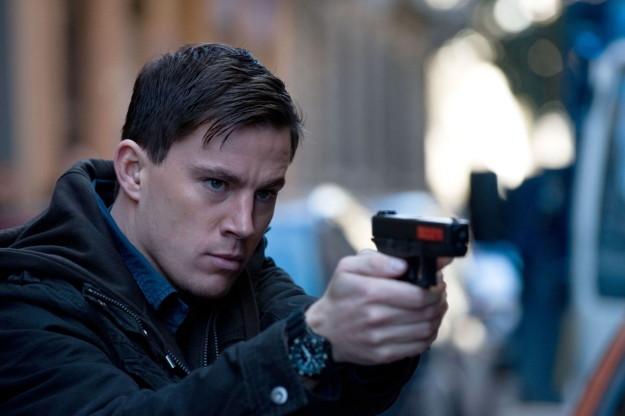
Premise: When a dirty Los Angeles cop’s partner is killed by a Korean gangster, he follows the gangster to Seoul to get revenge, teaming up with a Korean bodyguard-for-hire who has his own reasons to kill the target.
About: In what would have been a game-changing experiment, this 2007 project was set to be made in Korea. There would be two cops, one played by Channing Tatum, the other played by a Korean actor, and two movies would be edited, one with a focus on the Korean cop for the Korean market, and the other to focus on Channing Tatum’s cop for the American market. The script was close to ready, but just as they were about to shoot, the writer’s strike happened. Since then, the project never got up and running. Doug Jung is best known for having the near impossible task of turning what was once a good script, The God Particle, into what would eventually become Netflix’s, “The Cloverfield Paradox.”
Writer: Doug Jung
Details: 111 pages
It’s so hard to get a project to the finish line. If even one thing gets in the way, it could destroy all momentum. And if that momentum isn’t picked back up soon, the film may never see the light of day. People in high positions getting fired has been the harbinger of doom for thousands of projects throughout the years. Just look at Fox. Half their slate was wiped out when Disney took over. And that was just for the movies that were finished. An untold number of projects in development were wiped out as well.
But the event that doomed this 2007 project was the writer’s strike. Channing Tatum, who was the most desired actor in the world at the time, was ready to make his Departed. They were mere months away from shooting and then… writer’s strike. The project never found its footing again. The irony is that 2019 seems like the ideal time to make a project like this. Who knows? Maybe this project isn’t dead yet.
Ethan is a Los Angeles cop who knows a thing or two about our justice system. Mainly that they don’t deliver. So when Ethan charges in on a man who’s murdered a woman after doing unmentionable things to her, he takes that man to the top of the building and TOSSES HIM OFF IT. Haters can suck it.
Because internal affairs can’t prove he tossed the man off the roof, Ethan’s off to his next gravity experiment. It’ll be a little tougher this time since his partner and best friend, Vincent, has been asked to keep a closer eye on him. While investigating a murder, the two find themselves in the middle of a high profile Korean criminal underground meeting. During the meeting, a dangerous Korean man named Moon kills the high ranking “president” in the room (this is what the Koreans call their major crime bosses). When all hell breaks loose, Ethan watches in horror as Moon slits Vincent’s throat then flees back to his country, where he plans to make a play for a presidency.
Devastated, Ethan gets on a flight to Seoul to get his revenge. But the Korean police don’t want him here. They know what he’s capable of and tell him to go home. Ethan sneaks away and eventually teams up with Park, the disgraced bodyguard of the “president” Moon killed. With Park’s knowledge of Seoul, Ethan figures he’s got a shot of finding Moon. But they’re going to have to act fast. Moon is moving up the ladder quickly. It’s only a matter of time before he becomes so powerful, he’s untouchable.
I’m always leery of these gimmicky movies (we’ll have one main character for one country and another main character for another country!). It’s hard enough to get a story right as it is. Less than 20 movies a year are able to do that. So how are you going to write a script that’s able to alternate main characters depending on the edit?
But it occurred to me that it’s not as hard as it sounds. You just write two really good characters. That way, it won’t matter who you cut to. We’re going to want to spend time with either.
Another thing I’m always reluctant about is generic cops and robbers scripts. These two elements have been explored so extensively over the years, that it’s nearly impossible to find a fresh way into the genre. And when you don’t have anything fresh, all that’s left is men with guns. And men with guns isn’t interesting.
For this reason, I was ecstatic that the bulk of this story took place in Seoul. I know a few of you hate when I use this word, but the Korean mythology – by that I mean the world-building of the Korean underworld – was unique enough to make this stand out from your average cops and robbers flick. I liked, for example, learning about the “presidents,” which were basically the Korean versions of mafias. I liked learning about the code between the cops and the gangsters. Everything about this universe was different from your average American cops and robbers movie.
The script also helped me realize what was missing from another recent ‘men with guns’ movie, John Wick 3 – a personal reason for all the killing. In John Wick, there isn’t a single emotional component to what John is doing. He’s just trying to stay alive. That was a big reason why all of his kills felt so empty. But in this script, Ethan is clearly torn up by his partner’s murder. And it’s for that reason that we care so much about his objective. We were there when Moon killed his partner. So we’re not leaving until we see him do the same to Moon.
Where the script faltered was in the character of Park. Park had an interesting story himself in that the man he was tasked with protecting was killed on his watch. But Park is more of a gun-for-hire. He had no personal attachment to the president that was killed. This leaves his emotional journey hanging, and not nearly as interesting as Ethan’s.
Still, I enjoyed the fish-out-of-water angle of Ethan being in Korea and Park helping him understand that it’s different here. You can’t just do whatever you want. You’ve got to operate with a sense of honor and respect, something Ethan is terrible at. It was sort of like a serious version of Rush Hour. It had that same kind of dichotomy between the main characters but without all the silly jokes and Jackie Chan jumping on busses. If you’re coming for Van Danzens, this is not your movie.
Despite enjoying this script, it never reached the level of the movie it was inspired by, The Departed (which came out a year earlier), because it didn’t have any flashy characters. There was nobody who popped off the page. And you need that in a script like this because you don’t have the big flashy concept. You have to find your flash in other places. The Departed had Jack Nicholson. We needed a character like that here.
Don’t give up on “Untitled” though. We may see this script come to life yet.
[ ] What the hell did I just read?
[ ] wasn’t for me
[x] worth the read
[ ] impressive
[ ] genius
What I learned: “Men with guns” movies aren’t going to work on their own. You need an angle. What we’ve learned this week is that a unique mythology, whether made-up or based on a real place somewhere else in the world, can be that angle. With John Wick, it’s the “honor among assassins Continental” mythology. With this script, it’s the Korean crime world. Basically, if you’re not bringing us something new that we haven’t seen before, what incentive do we have to watch your movie?
Genre: Action
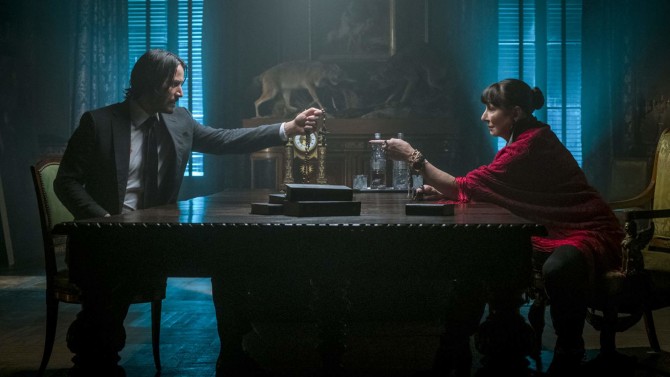
Premise: John Wick is being hunted by every single assassin in the world. And John Wick on a horse.
About: John Wick didn’t just kill the 200 characters who came at him in Parabellum. He killed Avengers Endgame, dethroning the box office behemoth with a 57 million dollar opening, almost twice that of John Wick 2’s opening box office weekend.
Writers: Derek Kolstad and Shay Hatten and Chris Collins & Marc Abrams
Details: 130 minutes
I have to be careful with today’s review.
The John Wick franchise is one of the best underdog stories in cinema history. The first John Wick script was laughed at by Hollywood. It was about a retired assassin who went on a killing rampage because of a dog. It starred an over-the-hill former movie star who was in the process of joining Bruce Willis and Nicholas Cage in the direct-to-digital doldrums. The movie, a likely candidate for direct-to-digital itself, needed to have literally every single critic who saw it say it was awesome to get publicity. And even when the first film did well, it didn’t do well enough for a studio to think it was worthy of a wide-release sequel. Still, Lionsgate took a chance on a bigger sequel, and the box office results legitimized the franchise, ensuring that more sequels would be in the works. John Wick is the little engine that could. And a wonderful reminder that there are still popular projects that can be birthed from screenwriters’ imaginations.
With that said, here’s my beef. John Wick started out so good, I thought I was in the process of watching a classic. But then each fight scene became less interesting than the previous one, when it should’ve been the other way around.
If you haven’t seen the film, it continues where the last one left off. John Wick has killed an assassin inside the sacred confines of The Continental hotel, a huge no-no. It’s such a no-no, in fact, that John Wick becomes the number one bounty in the world, at 14 million dollars. Since it’s rare for a head to pay that much, every single assassin on the planet will be after him. I want you to remember that for later, as it’s a pivotal area the movie could’ve improved in.
Priority number 1 for John Wick is to get out of New York City, which isn’t easy. But he eventually gains passage to Casablanca of all places, where he reunites with an old assassin friend (Halle Berry and her dogs) and tries to convince some dude high up on this bonkers Wickian mythology ladder to get this price off his head. The guy tells him he’s got to meet some other guy who literally lives in the middle of the desert, who tells him if he wants this, he has to kill the head of the Continental, sending him right back to where he started. It’s here where Wick takes on a late-arriving villain who’s been dreaming his whole life of killing John Wick. Is it finally the end for the king of the double-tap?
Okay so look. John Wick has always been about two things. Wacky assassin mythology and fight choreography porn. You could legitimately argue that these are the only two things that exist in the franchise. However, you would also have to point out that it does both of them really well. The mythology, in particular, is so weird, that you can’t help but bask in it. I love these tatted up bounty order-taking nurses. I love how there are a dozen different sacred coins, all of which mean something unique to this assassin community. I love how every tenth person on the planet is an assassin waiting for John Wick to walk past them so he can start following him. I love the way-too-dramatic look on everybody’s faces when an order is called in to “deconsecrates” the Continental. I love that they gave the movie a title that three people in the world knew the definition of.
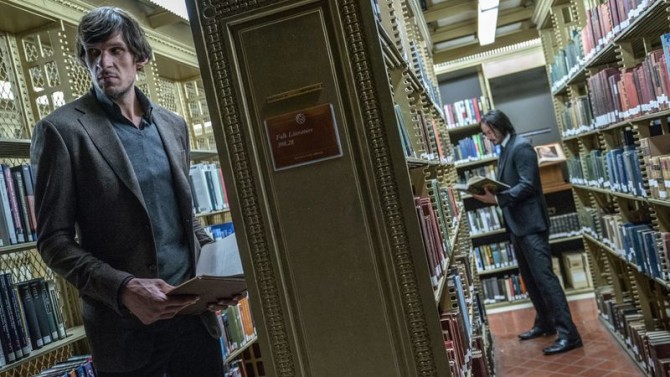
I absolutely loved John Wick killing a 7 foot man with a book, unofficially making the 300 year old author an accomplice. I loved John Wick using stable horses to kill assassins. I loved the “hallway of knives” fight. I even loved the motorcycle sword set piece, despite the fact that it felt like something we’ve seen before.
However, I didn’t like any of the fight scenes after that. I thought Halle Berry’s character was annoying – a classic case of a secondary character hating the main character for no other reason than to create conflict, not cause there was any actual organic reason. All of the dog choreography felt overtly staged, taking me out of the movie. And how many faceless bad guys does John Wick have to kill in a scene before it starts getting tiresome? The answer is 10. The movie thought the answer was 50.
Then Halle Berry just disappears, never to be heard from again. If they’re going to try that hard to spin off a new character, they might as well have admitted it. “I’ll see you again if the internet response is positive,” Berry should’ve left Wick with. Then Wick walks in a desert for no other reason than it looks cool to have a sharply dressed Keanu Reeves walk in a desert. This is where I started to lose faith in the film.
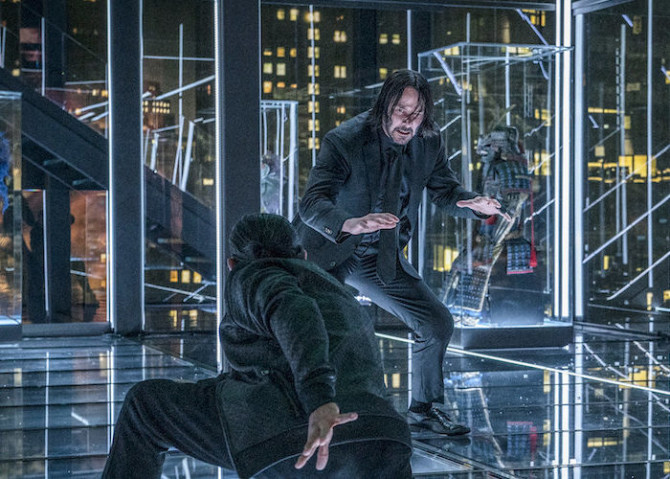
But what really bummed me out was that they went with beauty over ingenuity for the film’s climax. Having Wick fight three guys who I only found out afterwards were big action stars from another film in this glowing neon glass room that had zero reason to exist other than that it looked good on camera was disappointing. The whole reason I loved the library scene and the horse stable scene and the knife hallway scene is that Wick could use the unique environment to give us action scenarios we hadn’t seen before. The neon glass castle didn’t have any of that. And I suppose they could argue that they wanted the focus to be on the fight, not the gimmicky surroundings. But I didn’t have any idea who these rando guys were. And by that point, we’d seen John Wick punch and kick so many people, that any fight he was in now was going to look redundant.
The great thing about that library scene was how unique the opponent was. I figured, when they said that every assassin in the world was going to be after him, that we were going to get a couple of dozen unique characters like that, all of whom had different talents and fighting skills. Instead, they brought in every top Asian stunt man in the business and used them for Wick’s adversaries. I can’t figure out for the life of me why they didn’t give us more variety. I thought maybe they were saving the adjudicator (a tall short-haired woman) for a battle, which would’ve been cool. But nope. Nearly every bad guy he faced was similar.
And yet, I can’t get too mad at John Wick. If you love pure action, I don’t see how you can not love this movie. It’s only a tough watch for those who watch way too many movies like myself and who wouldn’t mind a little extra character development so we care more. Oh, and I love the fact that director Chad Stahelski and Keanu Reeves want to keep making John Wick movies til they die. I think that’s hilarious. In a world where snobby actors on hit shows and franchises are always ungratefully begging to get out of their contracts, it’s good to finally see two people who are like, “Nope, we’re good. We have no intention of stopping.”
But Reeves and Stahelski will have to watch out. If they get even a little bit lazy, this franchise could fall apart. Bring us whatever inspired the first half of John Wick 3 for future installments and I’ll happily make another reservation at the Continental.
[ ] What the hell did I just watch?
[ ] wasn’t for me
[x] worth the price of admission
[ ] impressive
[ ] genius
What I learned: A common screenwriting mistake is to get hung up on what you’re going to do in a scene and not be open to better ideas. John Wick 3 made a crucial mistake in one of its early scenes. John must go to an underground doctor to get a shoulder wound sewed up. The problem is, he’s only got 5 minutes before the bounty begins. The writers choose to use the scene to set up some plot. The doctor, an older Asian man, isn’t allowed to work on John once the bounty begins. So it’s a race against time to sew him up. Afterwards, they discuss what his plan is, which sets up the next sequence. — What they should’ve done instead is have the doctor work on him, giving John everything he’s got, cutting back and forth from the clock, time ticking down, time ticking down, time ticking down, and then, the SECOND we hit the top of the hour, the doctor should’ve switched from helper to killer, grabbing available weapons (which would’ve been fun in a doctor’s office) and trying to kill John to get the bounty. I think they were so locked in on making this an exposition scene that they didn’t see an obvious awesome scenario.
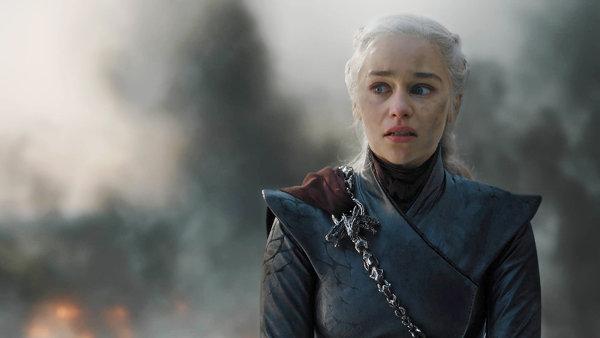
I have not been watching Game of Thrones like the rest of the universe. However, I’ve been paying close attention to reactions from the final season, since Game of Thrones creators Benioff and Weiss will be taking over my beloved Star Wars going forward. What everyone seems to be so upset about is that one of the main characters, Daenerys, made a major turn in the last episode that goes completely against her character. Staying with Star Wars, a certain other director who shall remain nameless (his name rhymes with Sighin’ Cronsohn) made a similar mistake in The Last Jedi, where he had the beloved Luke Skywalker act in a way he never would.
All of this got me thinking about one of the oldest questions in writing. Why are endings so hard?? Here’s how I see it. In a well-told story, everything is leading up to a clear resolution. For example, if your movie is about a cop in a building trying to stop a band of terrorists, the resolution is most likely going to be him stopping the terrorists. The problem is that if you give us the exact resolution we’re expecting, we’re going to be let down. For this reason, writers try to give us a different, unexpected resolution. Luke Skywalker refuses to fight Kylo Ren. Daenerys turns into the female Hitler. Unfortunately, it’s really hard to give us an ending we had no idea was coming and it still make sense. The whole point of your story is to set up what’s going to happen in the end. Now you’re telling us none of that was relevant?
Today I’m going to share six tips that should help you avoid making giant mistakes like this. Use them separately or combine them to create the ultimate ending super-weapon.
I’ll start with the most obvious and, unfortunately, most boring solution. IF WE LIKE YOUR CHARACTERS, WE’LL LIKE YOUR ENDING. It’s rare that I watch a movie where I love the characters and hate the ending. That’s because when you’re invested in the characters, you care more about them than some well-crafted plot twist. Look at Die Hard. Die Hard has a standoff between the hero, the villain, and the hero’s wife. It is a scene we have literally seen hundreds of times before. There’s nothing exceptional about the moment at all. The ending works purely because we love John McClane, we detest Hans Gruber, and we love John’s wife. Whatever occurs here, as long as our hero wins, we’ll be happy. So start by writing characters that we love.
You could extrapolate the flip side of this to The Last Jedi. Not many people liked the Luke Skywalker Rian Johnson created. He was crabby, defeatist, unhelpful, annoying, and drank green milk from a wildebeast’s teet. It could be argued that the dye was already cast for the ending. We disliked Rian’s Luke so much that it wouldn’t have mattered what he did.
Solution number 2 for a strong ending is the CLIMAX OF A PERFECTLY CONSTRUCTED CHARACTER ARC. This means that you’ve set up a well-defined flaw in one of your main characters, you have explored your character bumping up against that flaw the whole movie. And then, when the final battle occurs, they break through and overcome it. The best example of this I’ve ever seen is The Matrix. And I say that because the movie’s climax takes place in the most boring setting possible – a hallway – and it’s still amazing. The reason it’s amazing is because it’s all about Neo’s character arc. He spent the entire movie struggling with his belief in himself (his flaw), and now, when the pivotal moment arrives, he believes, and is thus able to defeat the villain.
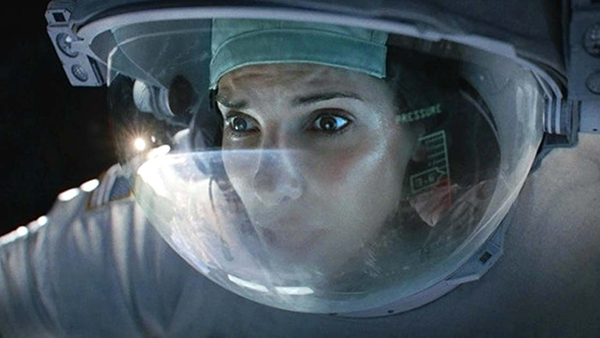
Solution number 3 is MAKE IT IMPOSSIBLE – The problem with a lot of writers is there’s this sort of uninspired inevitability to their story. We know where they’re going because they make it so insanely obvious that that’s where they’re going. From there it’s just a matter of connecting the dots. Take us through beat 1, to beat 2, to beat 3, and the movie is over. The way to conquer this inevitability is to make things IMPOSSIBLE for your hero. I’m talking you make it so difficult EVEN YOU DON’T KNOW HOW THEY’RE GOING TO DO IT. Then, and only then, is your hero’s success going to have the enormous impact you’re looking for. Take a look at the last 20 minutes of Gravity. Even though you’re watching a Sandra Bullock film, at every turn it seems like there’s no way she’s going to survive.
Solution number 4 is the SUPER PAYOFF – Audiences LOVE payoffs. They’re cinema crack. Therefore, one of the trickiest, yet most effective, ways of creating a great ending, is to pay off all those setups you’ve been planting throughout your script. And if you haven’t been planting setups to pay off in your climax, what are you doing? The two films I’ve seen do this better than anyone else are Back to the Future and The Shawshank Redemption. It’s payoff after payoff after payoff after payoff. Where was the payoff in Luke’s final trickery in The Last Jedi? I’ll give you a hint. There wasn’t any. Which is why it was so lame.
Solution number 5 is a DIFFICULT CHOICE(S). If characters have easy choices in your ending, you probably don’t have a good ending. A huge part of what makes an ending great is the uncertainty behind it. There are no easy answers. There are no quick solutions. Your hero is going to have hard choices to make. The most famous example of this, of course, is Casablanca. But you can see it in a lot of movies. There’s a great moment at the end of The Mule where the cartel tells Clint, “That’s it. If you deviate one more time, we put a bullet in your head.” And on that very mission, he learns that his ex-wife is sick in the hospital. She’s probably going to die. Does he finish the mission? Or go see the mother of his children and grandchildren before she’s gone forever?
Finally, solution number six is MINING EMOTION FROM THEME – This is really hard to do since theme can often work against you. By this I mean, you can have great story ideas but have to abandon them because they aren’t extensions of your theme. The worst thing that can happen is you sacrifice everything to service a weak theme. This is what happened at the end of The Last Jedi. Rian Johnson was trying to push some complicated theme that only made sense if you read a 3000 word Last Jedi think piece on the internet, and as a result, we lost what could have been one of the most epic lightsaber battles ever. However, when you do this right – when the elements gel together – it can be magical. Pixar does a better job of this than anyone. Their movies are theme-heavy, but the difference between them and Johnson is that their themes are incredibly simple. At the top of the heap is Toy Story 3, which pushes the theme of “moving on.” Closing out the movie with a scene of the toys being given to a new child who could love and enjoy them just as much as their previous owner was the most emotionally satisfying way we could’ve concluded that theme.
It should go without saying that, like everything in movies, your gut plays just as strong a part in nailing your ending as these tips. You could follow any one of these suggestions and come up with something lame. If it doesn’t FEEL right, you probably want to go in a different direction. Good luck. And feel free to share your own “ending” tips in the comments.
Carson does feature screenplay consultations, TV Pilot Consultations, and logline consultations. Logline consultations go for $25 a piece or $40 for unlimited tweaking. You get a 1-10 rating, a 200-word evaluation, and a rewrite of the logline. If you’re interested in any sort of consultation package, e-mail Carsonreeves1@gmail.com with the subject line: CONSULTATION. Don’t start writing a script or sending a script out blind. Let Scriptshadow help you get it in shape first!
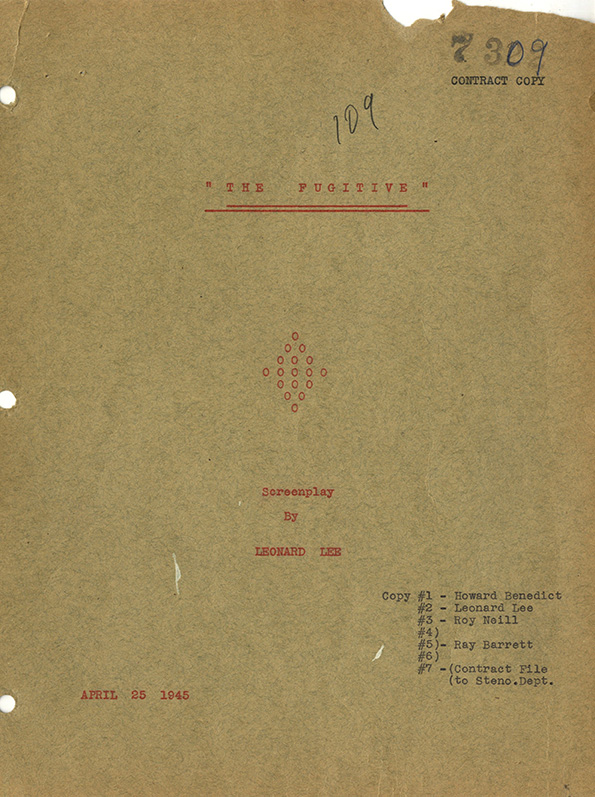
One of the things I remember when I started out screenwriting was the paralyzing fear of producing some sort of “tell” that I was a newbie. Something in my script would act as a giant flashing marquee that lit up my status as an amateur. Many shared in this fear. There used to be entire screenwriting message boards dedicated to whether your script should have two brads on it or three. Or if your script should have a cover page attached. Strangely, many of these debates are still being had! Should you use the controversial, “We see,” when writing? Can you include camera directions?
Well I’m here to give you the REAL, the DEFINITIVE, list on what readers really care about when they’re reading a script. We’re going to put all of your old fears to bed. And maybe provide you with a few new ones. And because I’m feeling generous, I’m going to list these factors in order of importance. Finally, we’ll be able to answer that age-old question: “Will a reader toss my script if I use two spaces after a period instead of one?” Below are the top 10 things a reader cares about when reading a script…
1) Formatting – If a script is not formatted properly (correct font and margins), it’s always a harbinger of bad things to come. The good news is, if you buy screenwriting software, you don’t have to worry about this! There, I just solved the number one problem for you.
2) Insane page counts – The FIRST THING a reader does is check the page count. If they see anything over 120, they’re mad. If they see anything over 130, they’re furious. If they see anything over 140, they’ve mentally committed to skimming half your script. 100-110 pages is the optimal screenplay length. Stick with it or I’ll stick that missing third brad in your face!
3) Readability – Is the script easy to read? Do my eyes move across the page effortlessly? Do they move down the page effortlessly? Or am I stopping a lot, re-reading sentences in order to understand them? Am I confused about why a character said something? Is getting through the text like walking through quicksand? Readability is so important.
4) Engagement – Am I engaged by the story? Am I immediately pulled in? Do I want to see what happens next? Do I want to turn the page? Do I want to keep turning the pages? This goes back to the 10 Page Challenge. Hook me then continue to provide reasons for me to keep reading. If you can do this, I don’t care about any other mistakes you make.
5) Characters – Am I pulled in by a character? Am I intrigued by a character? Is a character so darn charming I fall in love with him instantly? As soon as a reader likes one of your main characters, you’re golden.
6) The dialogue isn’t bad – You’d think I’d say, “That the dialogue is good.” Sure, that would be great. But the truth is, I read, maybe, three scripts a year where the dialogue is stand-out good. When I’m reading, all I care about is that the dialogue isn’t bad enough that it draws attention to itself. Cringe-worthy lines. Try-hard banter. On-the-nose exchanges. Overtly mechanical exposition. The second I start noticing weak dialogue, the script is a passenger on the Titanic.
7) Is there anything special about this writer/script? – The large majority of the time, I’m reading bland concepts with bland, by-the-numbers, execution. I’m always looking for a script that’s got that extra kick to it. Maybe the dialogue is snappier. Maybe the writing style is charged (a la Christy Hall). Maybe the scenes are playing out in unexpected ways. If you can find a script with one elevated factor, you’re probably going to recommend that writer to other people.
8) Spelling/grammar mistakes – I’ll let one mistake slip. But when I see two mistakes early on, my faith in the script plunges. Three mistakes in the first 10 pages? Forget about it. There are screenwriters who say this shouldn’t matter. THEY’RE WRRRROONNNNG!!! I’ve got the biggest sample size to work with in Hollywood. And I can tell you that of all the times I’ve seen three spelling/grammar mistakes in the first ten pages, 99.999999% of the time, the script is doomed.
9) Confidence – Does the writer seem comfortable in the medium? Does it feel like they have a clear plan for their story? Confidence implies that they’ve been here before, which more often than not means a better script. A writer who writes tepidly, who seems unsure of their choices and looks constrained by this weird screenwriting format is a writer whose script I usually dislike.
10) They know what to do after page 45 – 15 pages after the first act ends is when 90% of screenplays fall apart. If your script is still building and still has momentum after page 45, it’s a strong indication that you’re aces with structure, providing me with mucho confidence that you can get me to the finish line.
Carson does feature screenplay consultations, TV Pilot Consultations, and logline consultations. Logline consultations go for $25 a piece or $40 for unlimited tweaking. You get a 1-10 rating, a 200-word evaluation, and a rewrite of the logline. If you’re interested in any sort of consultation package, e-mail Carsonreeves1@gmail.com with the subject line: CONSULTATION. Don’t start writing a script or sending a script out blind. Let Scriptshadow help you get it in shape first!
Genre: Romantic Comedy
Premise: A schlubby political writer is scooped up by the Secretary Of State to help write speeches for her presidential run.
About: This script made the Black List – count with me now – EIGHT years ago. Never say die in this business, right? Dan Sterling, the script’s original writer, has written on The Office, King of the Hill, and South Park. Liz Hannah (The Post) came in to, presumably, add some authenticity and believability to Charlotte’s character. And then, of course, Seth Rogen’s uncredited gang of punch-up writers came in to add a lot of jokes, which I’ll be discussing in the review. Jonathan Levine, who’s worked with Rogen before on 50/50, directed the film.
Writer: Dan Sterling and Liz Hannah
Details: 2 hours long
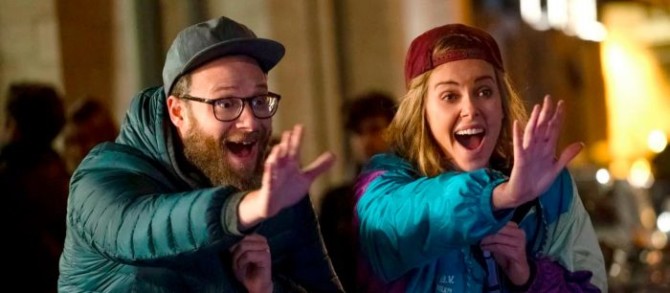
Before we get started, can we all take a second to appreciate how hard it is to make a good comedy? I mean, how many truly funny comedies have there been since the beginning of the century? Five maybe? If that? That’s one every four years. I came into this screenwriting adventure thinking comedy was the easiest genre. I now believe it to be the hardest.
The Long Shot took that handicap, shoved all its chips in, and said, “I’ll raise you another handicap.” They added politics to the mix. Yeah, because politics in 2019 isn’t polarizing at all. I actually think The Long Shot did a pretty good job handling its political plotline. But here’s the final word on The Long Shot. The movie is a couple of inches shy of being really good. And, unfortunately, those couple of inches are the difference between a comedy blowing up and fading away. I mean it was RIGHT THERE. What happened?
Charlotte is the Secretary of State and one of the top Democrat hopefuls to take the office of the presidency in 2024. But when the current president, unexpectedly, decides he’s not running for re-election, Charlotte decides to take a shot (a long shot) at being the U.S.’s first female president in 2020.
There’s a small problem. Charlotte’s numbers show that she’s not funny. She needs someone to help punch up her speeches with some humor. Enter Fred Flarsky, a dopey glorified blogger who writes scathing articles on big business. While these articles are a bit… aggressive, they’re also funny. And here’s the thing – Charlotte actually knows Flarsky. She babysat for him when he was a kid. So when the two bump into each other at a fund-raising event, it’s a natural fit.
Charlotte’s team hates Flarsky. He looks like one of those old multi-colored umbrellas wrapped around a potato. And outside of his writing, he’s kinda clueless. But Charlotte likes him. And as the two work together on her big environmental pitch, a romance blossoms. There’s only one problem. Everyone knows that the optics of this perfect specimen of a human being known as Charlotte being with Flarsky aren’t ideal. Which means, sadly, their relationship is doomed.
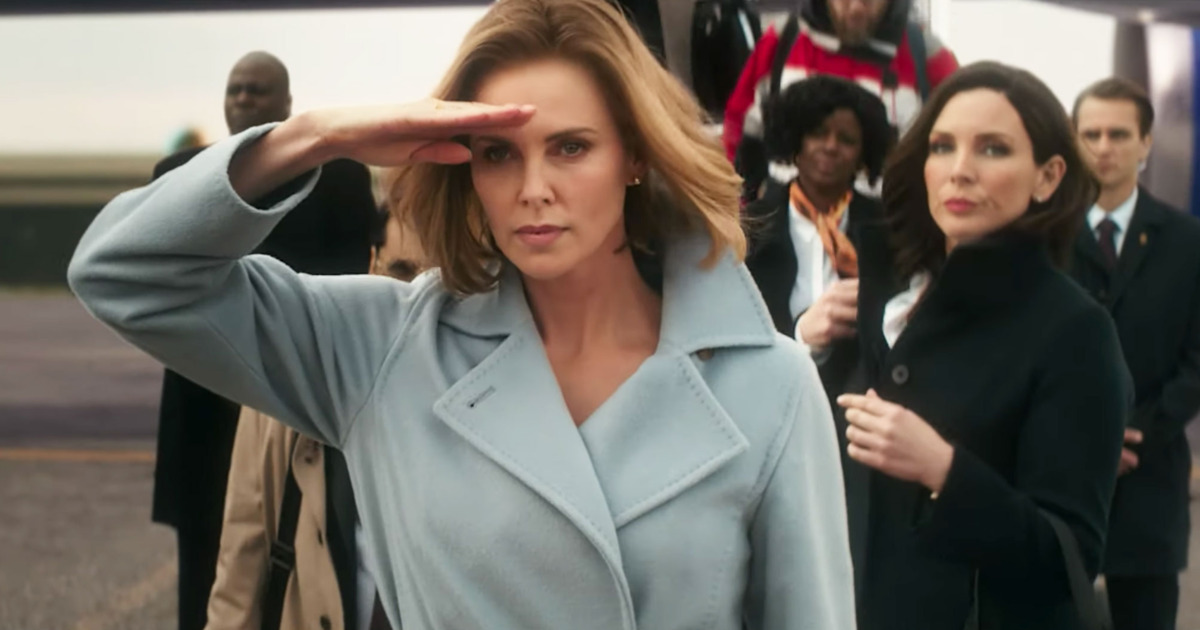
This movie does so much right! We’ve got a super-clear high-stakes goal driving the plot – Charlotte’s bid for presidency. We’ve got two characters who we want to be together but have several levels of conflict getting in the way. We’ve got lots of great dialogue. All of the characters except for a few minor exceptions are funny. O’Shea Jackson Jr. is a movie star in the making. What I could do with just an ounce of his charm. And on top of that, all of the romance works, which is the hardest part in these movies! Theron and Rogen, surprisingly, have amazing chemistry.
And like I said, it makes for a good movie.
But then why isn’t it a GREAT movie? What’s holding it back?
For starters, Rogen’s joke people need to step the f*&% off. For crying out loud. You had a good script as is. Then Rogen’s people came in and added 50+ s&*%, p&*%, vomit, b*&^er, and bodily fluid jokes. I mean, seriously? I get it if you’re making Pineapple Express, The Extended Edition. But this is a political romantic comedy. Why is there a scene where Charlize Theron explains that she once had to s&%* in her purse during a meeting? Why is the CLIMAX of the movie, no pun intended, Seth Rogen jacking off into his own face? Seriously? That’s how you’re going to end your movie?
And here’s the real problem. When they test these jokes on audiences, people WILL LAUGH. That’s because they’re obligatory laugh jokes. People laugh at the outrageousness of them even though they don’t actually find them funny. However, Rogen’s team can point out that people DID laugh and therefore the jokes should stay. Again, I have no issues with this humor when it’s appropriate. A bodily fluid joke makes sense in a movie like The 40 Year Old Virgin, which is about a man who’s never used his bodily fluids. It makes zero sense here. This should’ve been a sweet political romantic comedy. Instead, they raunchified it, confusing the tone.
Then we had seemingly small miscues that had much bigger ramifications than the filmmakers realized. One of the major plot machinations was that Charlotte’s “humor” number was down. That was the only thing out of all of her traits the public didn’t like. But here’s the weird thing. The number was still high. She had, like, an 89 out of 100. It just wasn’t *as high* as the other numbers. The reason this is a big deal is because the ENTIRE MOVIE is built on her needing a comedy writer to make her funnier! So why are they giving her a B+ level of humor?? In comedy movies, you work with extremes. Subtle doesn’t fly. Make her comedy number a 65 so that SHE ACTUALLY NEEDS HELP. Otherwise, there’s no need to have Flarsky in the movie.
Sadly, we have yet another case of over-development. I get that this script was ten years old. But the only thing you should’ve had to update was the political stuff. They shouldn’t have messed with everything else and they ESPECIALLY shouldn’t have stuffed in a bunch of lowest common denominator jokes. These guys are comedy veterans. They should know by now that different comedies require different types of humor.
I have one last thought. I remember there was this old belief, when movie stars didn’t do TV, that went something like this: “Why would they pay for you at a theater if they can get you at home for free?” It sounded good but there wasn’t any real way to prove or disprove the hypothesis since there weren’t enough people crossing over to a study on. But then the Franchinizing happened, and movie stars were forced into television. And I think I can finally say that when there aren’t any special effects or big concepts in a movie – when the film is just about the actors, as is the case with The Long Shot – it doesn’t feel special anymore. You’re sitting there watching the movie and saying, “Was this really worth 20 bucks?” The answer, unfortunately, is no.
But I have a feeling this is going to become a huge hit on digital. Had it debuted on Netflix, it would’ve been their best romantic comedy ever, and probably would’ve gotten a lot more fanfare. It’s a good movie. It really is. It just never gets over that “great” hump.
[ ] What the hell did I just watch?
[ ] wasn’t for me
[x] worth the stream (when it comes to digital)
[ ] impressive
[ ] genius
What I learned: I’m going to steal from myself and use my original Flarsky ‘what I learned’ tip – “The impossible choice. Force one of your leads into an impossible choice at the end of the movie. Here, Charlotte must choose between her career and Flarsky. If you set that decision up well (where each choice has devastating consequences), we’ll be dying to know what they choose.” I’d add to this that when you’re writing a character piece, the “impossible choice” is really the only way to end your movie. You don’t have a big action set piece to do the heavy lifting. It’s all character. And there’s nothing more compelling than one of your characters being forced to decide between two things that they desperately want.