
Search Results for: F word
Genre: Drama
Premise: (from Black List) A former FBI psychologist is called in to investigate when a young girl goes missing after the apparent murder of her father and brother by two strangers in a small Oklahoma town.
About: This script finished near the middle of the Black List with 12 votes. It was optioned in September with Charlize Theron coming on to produce and possibly star. Brandon Willer continues a trend of Black List writers who have made this year’s list a harkening back to the Black Lists of yesteryear, when more unknown talent was celebrated. While many have attacked the 2011 Black List for having a below-par selection of scripts, it’s to be expected that if the list caters to younger more unknown writers, the quality of those scripts is naturally going to be lower. Willer is just finishing up his only previous credit, a tiny indie film he wrote, directed and starred in called, “The Racket Boys,” about two men and a woman driving from L.A. to San Francisco.
Writer: Brandon Willer
Details: 111 pages (This is an early draft of the script. The situations, characters, and plot may change significantly by the time the film is released. This is not a definitive statement about the project, but rather an analysis of this unique draft as it pertains to the craft of screenwriting).
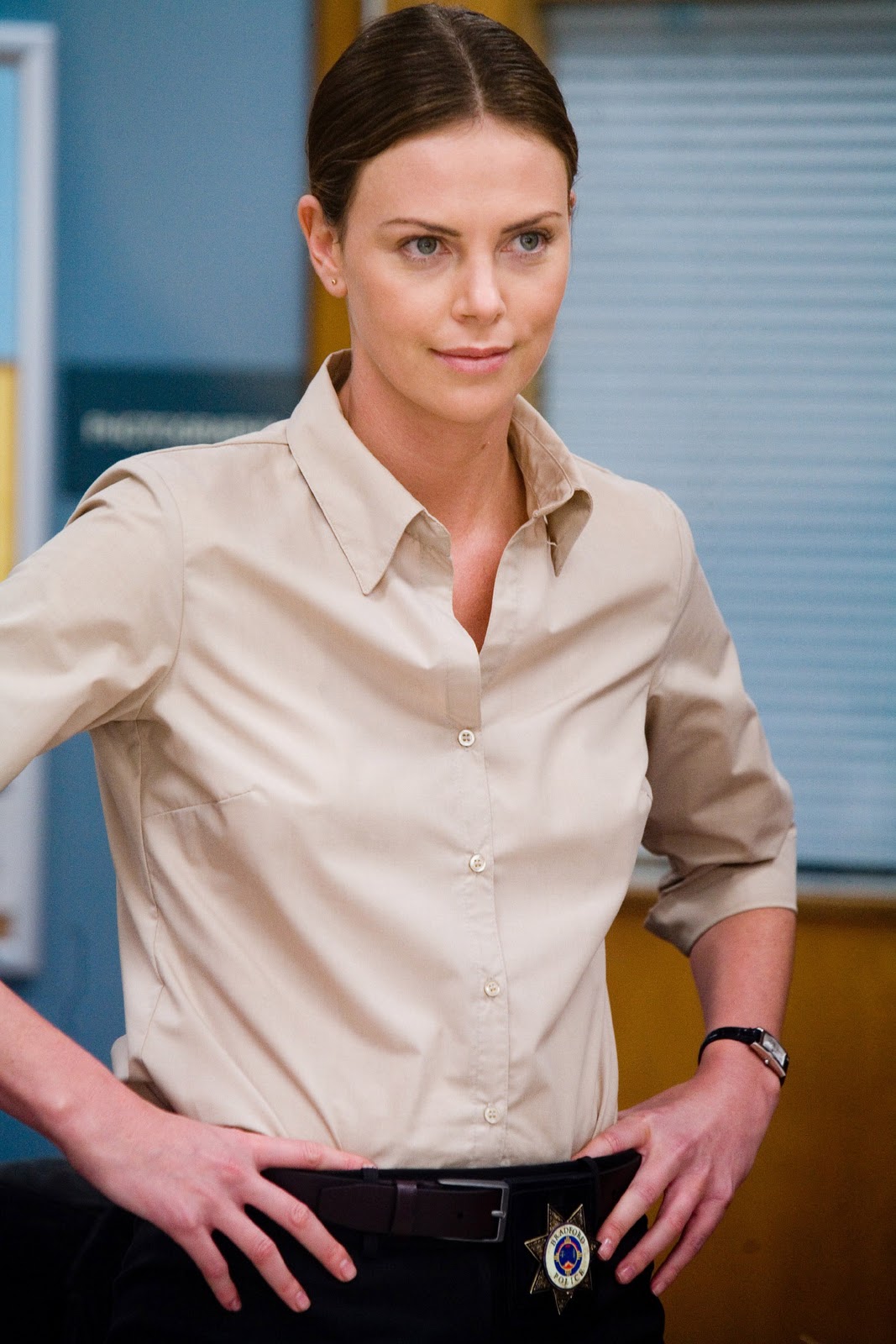
Welcome to Cities of Refuge, or as I like to refer to it: “Introduce-A-character-A-Thon.” There were more characters introduced in this script than live in India and China combined. This made Cities one of the hardest reads I’ve ever tried to get through. At one point I hired a second person to take notes for me because my Microsoft Word document – for the first time in history – gave me the error “out of space,” due to all the characters I had written down.
Cities of Refuge begins with 40-something Nathan Spiller, a former marine, hanging out with his two kids, 19 year old Colt and 10 year old Jenny. Nathan clearly loves his daughter more than anything, and even though he and Colt have issues, he loves him too.
Well I hope he loves them in DEATH! Because a group of three bad men sneak into Nathan’s house, apparently looking for money, and kill him and his son. When the cops arrive the next day, they find the bodies, but realize Jenny, the daughter, is missing. Did these thugs take her?
After the FBI gets involved, they recruit former FBI missing persons specialist, Brooke Benedict. This girl used to be the best in the biz. She had a perfect record for finding kids alive. But then one case went bad and she hasn’t investigated a missing child case since. But the FBI give her the hard sell and she decides to make a comeback.
When they bring in their lead suspect, a former nasty marine named Marcus, they want Brooke to see if she can get anything out of him. But the interrogation proves too much for her and she realizes that maybe she shouldn’t have come back – that she’s in over her head.
During this time, there’s a local drugpin (I think?) named Delgado who seems to be interested in the case for some reason. There’s also some guy who’s pissed off that the police aren’t looking into the case harder so he gets the town all riled up for a possible run on the police station, where Marcus is being held. Marcus starts becoming a lot like Hannibal Lecter. At first he hates Brooke but then he starts liking her for some reason and giving her clues about the case. Eventually all these stories come crashing into each other in the end.
Okay, so look. I’m not going to lie. I’m angry. It’s one thing to have a lot of characters in your story but it’s another to introduce a character per page. Having lots of characters in your screenplay is no sin. The story you’re writing will dictate how many characters you should have. Pirates of The Caribbean, for example, will have a lot more characters than Buried.
However, you have to be realistic about what the reader is capable of remembering. But before we even get into that, let’s deal with the industry side of this. Do you already have a producer on board? If you’re writing for a producer (as I’m assuming Willer was) who will later package your script and sell it to a studio, character count isn’t as big of a deal. You already have a producer on your side who likely knows the underpinnings of the story, so who cares if there are a lot of characters? To that end, Willer is off the hook.
Same thing goes, to a lesser degree, if you’re working with a manager or already have an agent. They’ll be able to get your script to important people so it’s not as big of an issue.
However, if you are an unrepped, unmanaged, un-anything’d as a writer, DON’T WRITE SCRIPTS WITH LOTS OF CHARACTERS! Don’t do it. Because your scripts will be the lowest priority for industry readers. Therefore they will have the LEAST AMOUNT OF PATIENCE for you. If they’re already confused about who’s who on page 20? You’re dead. They’re not going to go back and check who’s who. They don’t have time. They’re going to keep reading through it, subsequently being less and less sure of which characters are which, resulting in more confusion, resulting in more skimming, resulting in a snowball effect that leads to total confusion by the time your script ends. Your script may ACTUALLY make perfect sense. It might even be good! But because you made things so difficult on the reader with the character count, they wouldn’t know.
That’s why most people in the spec sale market favor simple easy-to-understand stories. Because they can easily keep track of who’s who and therefore what’s going on. That’s not to say you can’t have complications and twists and turns. You just have them on top of a story that a reader can actually follow. Source Code is a good example. It has a low character count and yet it has plenty of twists and turns and complications.
So I guess what I’m saying here is: Don’t write a movie like Cities Of Refuge unless you’re working with someone pretty high up in the business. And even THEN, you need to use a smart approach to your character count, your character content, as well as HOW you go about creating characters, so that the reader ACTUALLY has a chance of remembering them. For example, if I know a character is in only one scene, I’m not going to name him Bob Jensen. I’m not even going to name him Bob. This implies that we’ll see him again, which means the reader has to reserve a spot in his memory for when this guy comes back later. One more character in the memory banks means one more character to potentially mix up with ALL THE OTHER CHARACTERS. Instead of doing that, just name the guy, “Slick Guy,” or “Truck Driver.” This indicates to the reader that the person will only be in one scene.
There are about 10 tricks of the trade you can use to make characters memorable amongst high character counts – this being one of them. But even if you do have a producer or manager already on your side, you’re still trying to write the best story possible. You’re still trying to make the read as enjoyable as you can since other actors and producers are going to be reading it to see if they want to be a part of the project. So show some restraint. Look for ways to make it easy on them so they actually enjoy your story.
I suppose I should use this time to tell you what I thought of Cities of Refuge but I can’t. I literally had no idea what was going on by the midpoint. There were too many damn people. Not only did this make the character count high, but it added too many subplots, many of which I also found hard to follow because I couldn’t remember who was who.
I will say that the final act was pretty damn explosive and has tons of twists and turns. It might even be enough to save the movie. But as I preach to you on top of this broken record player, I will say this one more time – I didn’t understand what was going on during it. There were too many characters.
[x] Wait for the rewrite
[ ] wasn’t for me
[ ] worth the read
[ ] impressive
[ ] genius
What I learned: The best way to handle a story that requires a lot of characters is to ask yourself, “Do I really need all these characters?” You’d be surprised at who you can cut and which characters you can combine. Also, another little trick is to give lesser characters memorable nicknames. For example, instead of calling someone “Jim,” call him “Big Jim.” Jim I won’t remember. “Big Jim,” I will. But the real solution to this problem is the most basic one. Ask yourself: “Do I honestly need all these people to tell my story?” Chances are you don’t.
Genre: Comedy/Romantic Comedy
Premise: After committing her first ever one-night stand, a young woman begins her walk of shame, only to realize she’s been snowed in. But the worst is yet to come. When the man she slept with wakes up, she quickly realizes she hates him.
About: 2 Night Stand finished in the middle of the 2011 Black List. This is Mark Hammer’s breakthrough screenplay.
Writer: Mark Hammer
Details: 98 pages (This is an early draft of the script. The situations, characters, and plot may change significantly by the time the film is released. This is not a definitive statement about the project, but rather an analysis of this unique draft as it pertains to the craft of screenwriting).

I really hope today’s writer, Mark Hammer, isn’t the same Mark Hammer who starred as “Old Man” in Meet The Parents, seeing as that Mark Hammer died back in 2007. That would reflect REALLY badly on the Black List, if dead people were making it. Although I guess it would explain all the zombie scripts.
Lame jokes aside, it’s time for some lame jokes INSIDE. As in “Inside” this script. Haha. Actually, that’s not true. Two Night Stand is by no means a bad script. But unless you’re 22 years old, I’m not sure you’re going to like it too much. It’s sort of like Scenic Route but with a vagina. And if I remember correctly, you guys weren’t loving that one (I still stand by it as an interesting piece of screenwriting!).
But I will say this. You are one bold motherf*cker if you try and write a romantic comedy that takes place in one room. This isn’t a contained thriller where you can throw in a bunch of sweet twists and turns the second things go slow. It’s just two people talking about their issues and stuff. Which means if those two people aren’t captivating beyond all reason? And their dialogue isn’t the greatest dialogue in the universe? It’s going to be Bore City. So, is this script Ricky Gervais circa the 2011 Golden Globes or is it Ricky Gervais circa the 2012 Golden Globes? Read on to find out.
22 year old recent college grad (and I’m assuming very cute) Megan spends her days surfing the internet and watching TV. In other words, she’s my hero. Her gorgeous roommate, Faiza, has been enduring this for months and is finally fed up with it. She confronts Megan on why she’s been such a lazy worthless pile of excrement and tells her she needs to get a job!
But see, Megan’s still getting over her devastating breakup with her fiance and, as a result, can’t muster up the enthusiasm to re-enter society. So Faiza gets an idea. Megan needs to get laid. She needs to meet some random dude and take him to the bone zone! This’ll put a period on her mourning and allow her to move on. Megan’s a little reluctant at first but decides, “What the hell?” It just might work. Pause it. If I can just interject here for a moment. WHERE THE HELL ARE THESE WOMEN WHEN I’M OUT ON THE TOWN?? Unpause. Right, so, after Megan can’t get into a bar, she comes home and meets some random guy on the internet and asks him if she can come over and have sex with him.
Pause it again. WHERE THE HELL ARE THESE WOMEN WHEN I’M ON THE INTERNET??” Unpause. Megan goes over, the two get drunk, and we cut to the next morning, after a wild night of sexual escapading. Embarrassed that she’s stooped this low, Megan gets her clothes together and tip toes out the door, trying to disappear before the guy wakes up. Pause it.
WHERE THE HELL ARE THESE WOMEN WHEN I’M…
Kidding! Just a joke there ladies. Sort of. So yeah, Megan gets outside only to realize the biggest snowstorm in New York since Pocahontas and John Smith shared a tent, has trapped her in this apartment. With this dude. Who she doesn’t know. And had sex with.
Up until this point, I kind of liked the script. We were moving towards something. The story was pushing FORWARD. But here’s the issue with one-location scripts. Once we get into that location, there’s no more going forward. Your characters are stuck together. And now, it’s purely about how interesting those characters are and how entertaining you can make their interactions.
Your best tool once you’ve backed yourself into this corner is conflict. And that conflict has to be pretty intense because the whole movie rests on the drama in this room, and if you can’t create drama, you don’t have a movie. The problem with Two Night Stand, at least in my opinion, is I didn’t feel that conflict was authentic. I see this in a lot in romantic comedy scripts, where the writer knows he has to keep things interesting, so he makes the characters hate each other, without really knowing why. He just knows that it needs to happen.
So out of nowhere, these two just started hating each other. I don’t know how. I don’t know why. It just happened all of a sudden. This led to a lot of forced dialogue where they attacked each other about their sexual prowess, their relationship status and everything else in between. Some of it was definitely amusing but the whole time I couldn’t stop wondering what had caused these two to get so worked up about each other in the first place.
Here’s an idea (spoiler alert). Later in the script, Megan finds out that Alec (oh yeah, that’s the guy) has a girlfriend. Instead, she should’ve found that out right away, like as soon as she woke up. She finds some piece of evidence that proves he has a girlfriend. She’s disgusted with him. Tries to leave. And when she has to come back and face him, she just starts going off on him about it. THAT I could believe. Now the conflict has some basis in reality.
OR possibly she doesn’t tell him she knows, which could lead to all sorts of dramatic irony during their conversations. He could tell her that he’s one of the most loyal men in the universe. His middle name is loyalty. And Megan is just stewing inside, waiting for the right moment to pounce on him about what she knows.
I also would’ve looked for ways to involve the rest of the building somehow. You may not have the luxury of space to play with. But you do have, presumably, a building full of potentially interesting characters. Have a few memorable people you can shift in and out of the apartment. The creepy maintenance guy. The hot neighbor Alec formally had a fling with who does NOT like Megan at all and who Alec never officially “ended” it with. If the Koreans next door were also the managers, and Alec was late on rent, that could lead to some interesting conflict when Megan had to go over there to use the bathroom (the bathroom in Alec’s apartment has overflowed). Alec begs her not to go but she does anyway, which leads to the manager storming over and, of course, demanding Alec’s rent. I don’t know, it just seemed like there was so much more opportunity to play here, and instead we stayed focused on these two talking to each other for 60 straight minutes. It’s not that it’s bad. It just gets a little…stale. I mean usually when you pull out the “You wanna get high?” scene, it means you’re plum out of ideas.
I also had a bit of a problem with the tone. Parts of it felt like an indie-comedy (especially the premise), with a 500 Days Of Summer vibe to it. Other parts (like scaling the building) were broad enough to be outtakes from How To Lose A Guy In 10 Days. But I don’t think you can write a movie like that that takes place in a single apartment. I mean, this isn’t a part a Matthew McConaghey type would play. Not that there are rules to that sort of thing. But I just felt the indie vibe lent itself to a slightly more realistic tone.
Anyway, I’m probably over-thinking this. Like I said, the script wasn’t bad. It’s just that the forced conflict threw me and the single location got stale after awhile. I was hoping for a little more out of this one.
[ ] Wait for the rewrite
[x] wasn’t for me
[ ] worth the read
[ ] impressive
[ ] genius
What I learned: Do not repeat in your description what your characters have just said or done. In Two Night Stand, when Megan and Alec first wake up, they make a few jokes to defuse the awkward situation. Right afterwards, we get this line of description: “They’re making the best of the awkward situation with humor.” You don’t need to tell us that. We just saw it ourselves.
What I learned 2: Scriptshadow Moratorium. I am disallowing, from this point on, female character backstories that include finding out their old boyfriend/husband was gay. I have read this in possibly over 200 screenplays. I’m begging the writing populace out there. Stop using this. Please!
You may remember Adam. He wrote my favorite amateur script I’ve ever reviewed on the site, “Reunion,” about a bullied kid who decides to enact revenge on his tormentors at their high school reunion. You can check out the original review here, where you can also download a copy of the script. A lot of people have been e-mailing me asking what happened after all the buzz the review created, so I thought it would be fun to catch up with Adam as well as learn a little about his approach to screenwriting. Adam is currently looking for a buyer for his new comedy script, What If It Was, about a ghost writer forced to pen an outrageous fake memoir. I haven’t read it yet but am looking forward to it. You can download the script yourself here. Adam’s also always open to answering questions so feel free to e-mail him at adamzopf@gmail.com or ask him anything in the comments.
SS: First of all, for those not familiar with what you’ve been doing since the Reunion review, can you fill us in on what’s happened since then? You found a production house for the project, right? How did that all happen?
AZ: After the review, I got emails from a few managers but mostly a lot of independent producers and production companies. I then took meetings and half were interested in doing something with Reunion and the other half wanted to know about other stuff. Since then I’ve still been talking to them about other scripts, including the one I’m outlining now. And overall, everyone was very cool and I really didn’t have any bad experiences. But I settled on Two Ton Films for Reunion about a month ago. Two Ton’s Justin Zackham (writer of “The Bucket List”, creator of F/X’s “Lights Out” and writer/director of “The Wedding” starring Robert DeNiro, Diane Keaton, Susan Sarandon, Robin Williams, Amanda Seyfried and Topher Grace which will come out in the Fall) was incredibly up front through the entire process, telling me to take my time and ask him any questions I had. And through that I really got the sense that, as a writer, he was treating me the way he thought writers should be treated, which led to a certain amount of trust that that would continue if I went with them. He had his own war stories and in the short time I’ve spent with him, I’ve learned an incredible amount. At some point it came down to “I just like this fucking guy and more importantly I believe in him, his company and their vision for the movie and how to get it actually made.”
SS: You had expressed to me that you wrote for a long time without any success. What are some of the mistakes you think you made in regards to how you approached the industry? Things that might have hindered your progress?
AZ: I don’t think it was anything I did or didn’t do but really just circumstance that befall a lot of people here. If you don’t luck out, you will go through every stage of the process before something happens. And that’s fine because it’s just more battle testing for when it actually counts. It really doesn’t get any more straight forward than 1) I took about a year to write my first script, 2) I wrote 3-4 more super personal scripts that were hot messes, 3) I wrote about four pretty okay, finally looks like a movie scripts, 4) Wrote another 5-6 that were actually enjoyed by people but just weren’t good enough to get made, 5) Wrote five scripts that could conceivably get made but I just didn’t get the right break for a few years and now 6) One of those gets noticed and here we are. And I still haven’t sold anything or even have representation yet but once I’m in a room I can talk scripts and ideas all day. I know my process inside and out and can deliver on opportunities rather than where I might have been say four years ago, which is still green. So I guess – and this is super hard when you just can’t express the ideas you have in your head or you keep almost getting the right script with the right opportunity – but I would have had more patience overall. Just don’t get frustrated. But that’s easy to say and hard to do.
SS: If you could do it all over again – if you were just arriving in Los Angeles today – what would you do differently?
AZ: Outside of writing, I would’ve come to LA sooner. Get on a set quicker. Get on multiple sets quicker. I moved here in 2003 at 25 and hadn’t seen a single film shoot until 2005 at 27. And this was on a truly awful indie movie but it was a gigantic deal to see someone say action and cut in person. So just demythologizing movie-making and getting the dream out of my head and a plan into it. You aren’t going to win an Oscar or write a $100 million movie your first time out. There isn’t anyone who’s going to give you the key to “Show Business” and a million dollar check. Start looking at things practically earlier. If I met someone who just got here, I’d say get the traditional way out of your head because that’s just a byproduct of your “dream.” Write stuff and shoot it. Work at a production company. Find a director working in small films or even commercials and offer to do whatever as long as you can see them work. Get an entire vision of the process from script to actual product. It makes it more real. It puts stuff like budgets, locations, casting etc. in your head just as someone who could actually make your script has it in theirs. You are miles ahead of the masses slaving away at their laptops if you know what it takes to actually make a movie.
SS: What inspired you to write Reunion and how long did it take you from first draft to last?
AZ: I was rewriting a comedy I’d gotten a director attached to (a talented person who was getting a lot of notice at the time) but I was having to wait on him a lot and I had to get something else on paper or I was gonna pull my own Fat Pig. I put up the antenna for a new idea and there was a new $5-$10 million horror movie coming out every week. Which makes total sense. Those movies are the safest bets in entertainment. And if one hits, not only do you get that but it’s an immediate property. But most of them suck, so alright smart guy, come up with one then. Then it just Stay-Puft-Marshmallow-Man’d into my head one night. Guy who gets revenge at a reunion. And nobody had done it. And it’s totally something that someone will do in some form in actual, real life. By that I mean bring a gun into the Holiday Inn because they’re drunk and their high school sweetheart is married but still… But if I took that basic revenge idea and movie’d it up? There you go. And I’d also wanted to write a movie that took place in a condensed time period for a while so that also helped. But from there it went much faster than usual because there’s just no other place for the story to go. Have to show him plan, have to show the actual reunion, he has to get them back there, has to get them in the collars, have to have the scene where he lays it all out for them and then what places in a school would make the best set pieces? Pool, library, shop class, gym, lunch room… People have to start getting picked off. The flashback story took a bit to plan out but all told it was 6 weeks from idea to having essentially what it is now. Not the usual but I had a lot of structural factors because of the genre and the idea I picked that combined to make it a pretty quick process.
SS: One of my favorite parts about Reunion, as you know, is the character development, particularly the character of Fat Pig. Can you tell us what your approach is to character development and was for that character in particular? How do you craft a character like that?
AZ: Inevitably story and the main character go hand in glove. Most likely story idea first, then “What would be the optimal character to put through that story?” Kind of like how you need music first to write lyrics to. And then supporting characters, whether they be with the main character or opposing them, have differing viewpoints that bring about the most conflict. So I have the idea for Reunion. Now: “Who is the best main character for this?” Well, making him fat is kind of a stock approach. However, it’s that way because it’s true. Society as a whole feels comfortable judging fat people, especially 10 years ago. It also gives me a visual character and someone who I can change physically to not only differentiate his past and present, but that also shows character. He has turned himself, through rage, into a Discipline Machine built for revenge. Which gives me most of how he is in the present. Exact. Calculating. Patient. Vicious. It’s all gonna pour out during that night. So where did it come from? Now I work through the flashback story and think about what could be his goal. Acceptance. Just a day that isn’t hell. How does he do that? Etc. And as I start to build that story, I think of these small moments. Terror (the popular kids, the sea of regular kids, swim class, the bus, etc.) mixed with any relief he can find (food and someone, anyone who is nice to him… Then I have Maria). Now I have who *she* is. So who is her husband? And all the way down the line. Everything is hopefully an organic reaction and that includes the characters and their dynamics. And once you get that process going of what would work with this (oh wait, if I did *that* then I could do *this*) and so on and so on, it takes on a life of its own. You just let the story become what it wants to and the characters who they need to be to tell it.
SS: What about the rest of your approach? What are the three most important things you focus on when you write a screenplay?
AZ: 1) The main idea. What is the essential story and am I serving it at absolutely all times? Anything that doesn’t add, subtracts. (Carson note: VERY IMPORTANT!!!)
2) External and internal goals and them being extensions of each other. This is a HUGE lesson to learn. You get this solid and follow it through and your script is automatically going to be halfway there. A 60 year old man tries to climb the highest mountain in the world. Eh… A 60 year old man grieves for his dead 25 year old son. Eh… BUT… A 60 year old man sets out to climb the highest mountain in the world because his 25 year old son died 200 feet from the top? You still got to write the fucking thing, but it’s at least an actual potential movie.
3) Entertain these fucking people. Once you’ve figured out your structure and done all the work, you owe it to yourself to nail down each scene with the best possible execution. You can have the right scene and intent and it’s just kind of lying there, so maybe toss something in out of the blue and see what happens. I dunno… It’s a feel thing, but you get as many chances as you want so don’t be happy until you’re actually happy. And even then, there’s always gonna be a few things you still feel you’re only 80% there on.
SS: You do something in this script a lot of screenwriters are told to avoid: Flashbacks. Are you aware of the resistance to this technique and how did you approach the flashbacks in your script to avoid this?
AZ: It’s one of the first rules you learn because 99% of the time it’s done poorly as a lazy way to “show” and not “tell” exposition. But there is a reason flashbacks exist, because on occasion you need them. If I hadn’t put them in Reunion, it would’ve felt flat. “How hard could it have really been for this guy?” the audience is asking. So I have to show you. And I think a key in doing flashbacks well is committing to them as an actual plot line rather than a momentary cheat to get information out. Like if you have a character just appear and then you never see them again, it feels like a cheat. But other than that, two other things worked in my favor. One, the juxtaposition of the two types of brutality, torture and bullying, are both painful in their own ways, so it helps to ground the violence in something we’ve all experienced or witnessed or even participated in. And by the time Fat Pig’s high school story reaches an apex with the attack on him, it feeds right into the violence of the story 10 years later, so it really is one whole series of events cut in half and then shuffled together like a deck of cards. And two, the flashbacks serve as a way to break up the “horror” stuff and allow me to reset characters spatially in the present. So you have something I could’ve easily fucked up five years ago but now, because it happened naturally, I could use it as a way to structurally fortify the script rather than take away from it.
SS: One of the most popular genres on the spec market is contained thriller/horror. Unfortunately that’s led to a lot of people writing boring “been there/done that” contained thrillers, a problem you’ve managed to avoid. What do you think the key is to making a contained thriller work?
AZ: I think you wrap yourself in the warm blanket of the structural advantages the genre offers: Keeping it as short as possible. Only a certain amount of characters. A need to develop characters on the fly, because, you won’t have time to do it otherwise. And a place that they can be trapped in but also explore. Now what circumstances bring these together where I can also give a strong reason for someone to put all of this into motion? A lot of these scripts fail basic logic tests right there. Then, you probably need a device to bounce out of the main story. It helps visually and also pacing-wise because A) you can balance action with quieter moments (otherwise everyone is dead in 45 minutes) and B) you can jump ahead a little time-wise when you need to move characters around/do basic stuff that keep the script from being 25% longer than it needs to be. I had present and past. Someone could do present and future. A classic is inside the bank with hostages, outside with the negotiator – whatever it is… It only has to be a contained movie in that people are stuck in a bad situation. Alien, Predator, Speed, Die Hard… They all boil down to a bug in a jar and your hand is on top of the lid. But each finds a way to open the movie up and give you different looks so that it feels like a nice big meal while also keeping the screws on the characters tightened.
SS: Something I don’t talk about enough on this blog is rewriting. Can you take us through your rewriting process?
AZ: I tend to have pretty comprehensive first drafts due to outlining a lot and also taking breaks from writing to edit during the first draft, so once I’m done with it, it’s pretty much what it’s going to be. Then a few days later I take it out and just read it. This is where experience helps a lot because some stuff will feel off and some stuff I know will stay almost-as-written throughout. But mostly I’m looking for ways to do things quicker. Cutting little ‘back and forths’ that aren’t adding anything to a conversation. Beginnings and endings of scenes. One thing I learned through the years is that when you rewrite, you want to be doing what’s already in the script but better, and that means planning out ahead of time so you’re only doing the cutting afterward. Adding characters or plot lines after the fact is just gonna put stress on parts of your script that weren’t conceived with those things in mind. That’s why I really consider writing outlining. Your time writing the actual script should be it just flowing out of you.
SS: Tell us a little more about your outlining process then. When did you start outlining in your screenwriting journey and why?
AZ: Outlining is where I’m actually creating the story. I didn’t do it my first script (which promptly took about 10 months). Second script I went to note cards which really helped me see the entire movie for the first time. I did that for the next eight scripts and then at some point I went over to outlines because there got to be too many note cards and too much detail. Now I do about a 15 page outline and note cards just for scene headings (but even that’s kind of fading out of my process). The outline can contain any random thought I come up with, and as I start to get to the 5 or 6 page mark, I begin to organize and delete things that new ideas have made obsolete. That’s when I start organizing the scene ideas into an order and then group those by sequences and acts. So the movie is being assembled at the top while I have a section for Random Bits (random story pieces – scenes, lines of dialogue, cool moments – that haven’t found a home yet), Characters (notes on them, their arcs, etc.), Themes/Big Stuff (Movies my idea shares DNA with. For example, Reunion is structurally similar to Willie Wonka and the Chocolate Factory). And as I vomit out all the ideas I have, they eventually find a home and then the top of the movie starts to take shape so I start writing those scenes. And as I write them, I delete everything from the outline I’ve used. The outline then gets shorter at the front, longer at the back and like a conveyor belt it just feeds scenes into the script. So as I’m writing at the computer, I have everything pretty well planned out and then when I get bored of writing, I work on the outline and back and forth until I have like a four page nub of an outline full of unused ideas. But I’ll outline for about two months and write a script in about six weeks. And for anywhere between a couple of years to a few weeks I could be kicking around the idea before that process begins.
SS: What do you think is the hardest thing about screenwriting and how do you tackle it?
AZ: It varies at all stages of your path but personally, now, it’s coming up with an idea that’s worth writing. You get some crappy scripts out of you and then an under-discussed longer stage is when you write a lot of simply “good scripts.” They make perfect sense, have laughs or thrills or whatever, but aren’t good enough to get noticed. And once you get past that, you really need to focus and come up with something cool no matter how high or low concept it is. It just has to get you hyped to write it and do all the work that at this point, you know is going to be a pretty thorough process. It’s a struggle to get to the point where you can express what’s in your head and heart on the page. But once you get there, it’s just as much of a struggle with each script because you know how good you can make it. I get done with something now and I’m not smiling as it comes out of the printer. I’m fucking exhausted. So you really have to find something you’re into to make it worth it. That takes time.
SS: Just for kicks, let’s say we compared two horror scripts, one written by Adam from eight years ago and one written by Adam today. What would be the biggest difference?
AZ: The one eight years ago would’ve been flat out ‘shoulder shrug’ material. A big fat, “Eh.” It would make sense and be cool in spots but it would be the equivalent of me going on the internet for a lasagna recipe and making it versus someone who spent 12 years learning to be a chef making it. Edible does the job but not much more.
SS: What’s next on the horizon?
AZ: Well, Two Ton and I will kick into gear on Reunion shortly – going through the script and ironing out anything they might want to take a look at. They’ll also be trying to put the movie together on their end. I’m taking meetings on my new project, a supernatural thriller that’s a step up in budget. People are responding well so far, so I’m hoping to find a home for it before I sit down so I can involve them in the process. Then it’s finding a home for comedy stuff which is my actual bread and butter. Whether that’s a manager or someone interested in a specific script, who knows? And I probably need to solve the representation question at some point. Right now, I’m just dealing with people myself which is kind of cool as I’m relying on word of mouth that’s built from SS and being good in the room to foster relationships. It seems to be working which is a good confidence builder. But it is a bit of a job on top of my writing job on top of my actual day job, which I still have. So hopefully soon someone will step forward who I feel comfortable with and can take some of this off my plate. Other than that, just keep writing. Got me this far. Seems like a good plan.
This is an example page. It’s different from a blog post because it will stay in one place and will show up in your site navigation (in most themes). Most people start with an About page that introduces them to potential site visitors. It might say something like this:
Hi there! I’m a bike messenger by day, aspiring actor by night, and this is my blog. I live in Los Angeles, have a great dog named Jack, and I like piña coladas. (And gettin’ caught in the rain.)
…or something like this:
The XYZ Doohickey Company was founded in 1971, and has been providing quality doohickies to the public ever since. Located in Gotham City, XYZ employs over 2,000 people and does all kinds of awesome things for the Gotham community.
As a new WordPress user, you should go to your dashboard to delete this page and create new pages for your content. Have fun!
Genre: Drama/Thriller
Premise: (from the Black List) A man goes on a three state crime spree with his eleven year old daughter.
About: This script famously sold a few months back for half a million bucks. Matt Damon originally tried to buy it himself, then Warners swooped in and tried to outbid him, and then somewhere amidst it all, the two decided to work together, with Warners buying and Damon attaching himself as director. The way I understand it, not everybody likes working with studios to develop a script. You get a lot more notes. You don’t have nearly as much control. If Damon bought it himself, he could develop it at his own pace and do it the way he wanted. That’s why he was sort of pissed that Warners came in, at least according to what Nikki Finke was saying. But anyway, it looks like Damon will make this his first directing project and the rumor is he wants John Krasinski (from The Office) to star. For the love of all that is Holy, let’s hope that’s just a rumor. I’d have more confidence in Hugo from Lost playing the lead. “Dude, just like, go rob the store daughter chick.” (edit: one of the commenters pointed out Matt and John are doing a different project together, not this one). This is Matthew Aldrich’s first spec sale.
Writer: Matthew Aldrich
Details: 107 pages (This is an early draft of the script. The situations, characters, and plot may change significantly by the time the film is released. This is not a definitive statement about the project, but rather an analysis of this unique draft as it pertains to the craft of screenwriting).

First of all, I just want to welcome all of you back. I know it was hard last week not having any reviews. I heard that a few of you actually resorted to going out and, like, doing real world stuff. I am so so sorry you had to experience that. Luckily, we have a mountain of Black List scripts and an entire year to get things back on track. Well, at least until the whole Mayan thing ends the world. That reminds me, what’s the next “End Of The World” date that comes after 2012? Do we have one? I remember the world was going to end in 2000. It was going to end last year with the whole “End Of Days” thing. What happens after 2012 ends? The nutties can’t operate without a doomsday scenario.
Like Charles Barkley, Theo is not a role model. Theo, actually, is the exact opposite of a role model. He’s a deadbeat. A drunk. He’s that pathetic loser you see hanging at the end of the bar at 11:30 on a Sunday morning. But things are starting to change. Theo is climbing out of the bottle so he can be the one and only thing he cares about in this world – a better father.
His daughter, 11 year old Maggie, has desperately been waiting for this moment. She’s stuck with a mother who doesn’t love her, and so even though she’s aware of her father’s problems, she’d rather be with him than her. Problem is, Theo is barely getting by. He works at Jack-In-The-Box of all places, and while their Crispy Chicken sandwich is delish, dead birds can’t pay rent.
Which is why he’s forced to steal tampons when Maggie unexpectedly has her first period. It doesn’t take long for the cops to realize what happened and that means Theo, who’s on parole, is going back to jail. But Maggie will do anything to avoid living with her mom again, so she locates her father, who’s since relapsed, steals his friend’s car and starts driving.
When Theo wakes up, he’s shocked to find that he’s 500 miles away from home with his 11 year old daughter at the wheel. She has a plan – to go back to the cabin they used to stay at when she was younger – when everything was perfect. At first Theo’s not onboard, but then he sees the desperation in her eyes and decides to go with it.
Meanwhile, his ex-wife is raising a shitfest with the cops, and as a result this becomes a Federal kidnapping case. Everybody in the country is looking for Theo and Maggie. The two are forced to rob and steal in order to keep their journey alive, but as you’d expect, it all catches up to them. In the end, Theo will have to decide whether to do the right thing, even though it means leaving the person he loves most in this world, or doing the wrong thing in order to stay with her. What will Theo do?
Father Daughter Time was a good script. I don’t know what the hell the title means but it sounds cool when you say it out loud so I’m down. The biggest thing with a script like this is capturing that father-daughter relationship. If you can make that honest, if you can make us believe in and care about it, you have yourself a screenplay. Aldrich makes us believe.
He actually achieves this in the very first scene, which tells us everything we need to know about the characters. In it, his daughter has just gotten her first period so they go to the convenience store to buy some tampons. Obviously, this is awkward for Theo, who would have trouble with this even in ideal circumstances. But the fact that he hasn’t been around his daughter much makes it more awkward.
After guessing on the right kind, he gets to the counter only to realize he can’t afford the 12 dollar box and must beg a disgusting convenience store clerk (who gave his daughter a slimy smile when he realized the tampons were for her) to let him have them anyway. After the clerk says no, he goes outside, rethinks the situation, then goes back in and robs the store – for tampons.
Let’s take a look at how this scene reveals character. We start off with Theo and Maggie walking in and looking through the tampon section together. Both look confused. But Maggie is looking to her father for answers, a sign that she trusts him. We can also tell that these two don’t know each other well. There’s no shorthand here. They *want* to know each other but they don’t yet.
Next, we go up to the counter and realize Theo can’t afford the box. This tells us that our main character is poor, another important character detail. When the clerk eyes Maggie, connecting her to the tampons, and smiles, we see the fury in Theo’s eyes. We know that even though these two aren’t around each other much, he’s still hugely protective of her. After going outside then and rethinking it, Theo decides to go back in and rob the place, which tells us that this man will do anything for his daughter.
This is what good scenes do. They reveal character by placing the characters in a series of situations that require them to make choices. When those choices are made, we learn about them. Look at all we’ve learned here. This father and daughter haven’t spent a lot of time together. Maggie looks up to her dad. Theo is poor. Theo will do anything for his daughter.
As for the rest of the script, like I said, it was solid. My only real beef is that it wasn’t edgy enough. I guess when I heard about the project, I assumed what made it so popular was this idea of a father and daughter going on this raging crime spree. But it’s more like the two are just trying to survive, trying to get to the next destination on the map. There is one scene where something really bad happens, but for the most part it feels like a very “polite” crime spree. I realize it’s a thin line because if they become too aggressive, we might not root for them. But I still would’ve liked this to feel more “R” and less “PG-13.”
Can’t wait to see what Damon does with this. I just hope Hurley and his daughter don’t end up back on the island with Locke.
[ ] What the hell did I just read?
[ ] wasn’t for me
[xx] worth the read
[ ] impressive
[ ] genius
What I learned: Overall, I think I know why this sold. It has that rare combination of being a character piece (which actors love) as well as a genre piece about fugitives on the run (which producers love). In other words, it meets everybody’s criteria. This is the exact same thing that happened with The Town. At its heart, it was a character piece about a man’s relationship with his best friend and a girl. But the producers were able to market it as a heist film, which is why it was still able to make a bunch of money. Keep that in mind as you’re writing your next spec. If you can check both of those boxes, you probably have something marketable on your hands.