
Search Results for: F word

Screenwriting is hard. Every year I’m reminded of that. Most scripts can be divided into two categories. There’s the script that’s trying to tell the same old story as exceptionally as it can (something like Taken or Pretty Woman). And there’s the script that tries to do something different (District 9 or Pulp Fiction). The pitfall with the first option is that you have to nail every single rule in order to get the script right. And the pitfall with the second is that when you have to make up your own rules, which typically results in the script being all wrong. So it’s sort of like a “pick your poison” deal. That said, ten scripts rose above these complications to become my favorites of the year. As has been the case in the past, this lineup reflects my feelings at this specific moment. In other words, the list may not coincide with my Top 25. I wouldn’t say anything truly blew me away in 2011, but a few scripts came close. Let’s take a look.
10) Reunion by Adam Zopf
Premise: At their ten-year reunion, a formerly bullied outcast decides to enact revenge on the cool kids who made his life miserable.
I’d read 60 straight Amateur Friday scripts before Reunion, and while a few of them were decent, there was nothing I would’ve told a producer he had to check out. Reunion was the first script to buck that trend. And what I loved about it most was the character exploration. 99 out of 100 amateur horror writers would’ve chosen to ignore what made their characters tick. Adam was the one who realized that no matter what genre you’re writing, the thing that the audience cares about the most, whether they know it or not, is what’s going on inside of the people. That’s what makes you care about them. And that’s what makes you care about what happens to them. I don’t think this script has been picked up yet so if you’re a producer looking for some great material, check out Reunion now.
9) The Imitation Game by Graham Moore (based on “Alan Turing: The Enigma” By Andrew Hodges)
Premise: The story of how Alan Turing cracked the impossible “Enigma” code, which helped the Allies win World War 2.
It’s rare that I get e-mails from people saying, “You have to read this now.” I get plenty of e-mails saying I should “check this out when you get a chance.” But people so excited they want me to stop what I’m doing *this minute* to read a script? That doesn’t happen often. The Imitation Game is a spec script that proves if you write a compelling main character dealing with an extraordinary situation, your script will sell. That’s because every producer in town knows that if they find a script with a challenging main character, every A-Lister in town will want to play him. I also loved how this biopic was a story, with a goal, stakes, and urgency. Not just a highlight reel of Turing’s life. I didn’t expect to like this one. But boy did I ever.
8) Your Bridesmaid Is A Bitch by Brian Duffield
Premise: After agreeing to groomsman duties at his sister’s wedding, Noah Palmer realizes he may have made the mistake of his life after finding out that the woman who broke his heart is also part of the bridal party.
This is going to be a running theme throughout the Top 10. The reason this script is elevated beyond your run-of-the-mill rom-com is because the characters are so great. Not only do you feel the main character’s pain, insecurity, flaws, fears, and history here, but I loved what Brian did with Anna, the girl Noah is hopelessly still in love with. I think most writers would’ve made her a complete bitch. But Brian makes her cool, makes us understand why Noah fell in love with her. That steered us away from black and white – which is where 99% of romantic comedies exist – and into grey, where the world is way more interesting. It would be easy for us if Anna was a bitch. But because she isn’t, we don’t know what we want. I wish I read more rom-coms that made interesting choices like this.
7) Inherit the Earth by JT Petty (based on the graphic novel by Chris Ryall & Ashley Wood)
Premise: The last human on earth, a young girl, is protected by an army of robots against an even bigger army of zombies.
With the sub-par box office showing of Cowboys and Aliens, it’s looking less and less like this film will ever get made. But the reason I liked it so much was because it actually asked the question, “What would a ten year old girl really be feeling during this experience?” That may seem unimportant. But when you have zombies and robots battling for world supremacy, you need something honest anchoring the story. A little girl who just wants to be loved, who wants a mother and a father – that’s something real people can identify with and understand. For those of you paying attention, that’s four scripts so far, and four examples of me ogling over the character exploration. Have I convinced you to do more character development in your next script yet?
6) The Mighty Flynn by Lorene Scafaria
Premise: After a cruel heartless efficiency expert gets fired, he meets a strange 16 year old girl who unexpectedly helps him turn his life around.
This script is Jerry Maguire for a new generation. People keep saying it will never get made because of Up In The Air, but it’s so damn different from that movie. I mean, does Up In The Air remind YOU of Jerry Maguire? No, because Jerry Maguire is a lot more fun, and that’s the feeling I got from this script. It’s fun. Scafaria, besides being cute and having a cool last name, is really good at mixing drama with comedy. And I love the unexpected pairing she came up with here, not only because it’s different, but because she didn’t take the obvious route and create some sleazy romantic relationship between the older guy and the younger girl. It’s just a unique friendship. The only fix that needs to be made here is the ending and this script could be perfect.
5) Nautica (Riptide) by Richard McBrien
Premise: An investigator tries to solve a murder case on a ship which involves a handyman, a stock broker and the stock broker’s girlfriend, which won’t be easy since each suspect has a different version of the story.
This script has had a long journey and a lot of close calls and for whatever reason, still hasn’t been made. This is Dead Calm but with a more complicated backstory. There have obviously been a fair share of Rashamon-inspired films, but this is one of the few that lives up to the technique. I remember going into this with no idea what it was then coming out exhilarated after all the twists and turns. The characters here are interesting. The story is interesting. I can’t see anyone not wanting to be involved with this project. So let’s boot this out of development hell already.
4) How It Ends by Brooks McLaren
Premise: A man must race across the US to save his pregnant wife as the apocalypse rains down around him.
Here I am, trumpeting the importance of character development for six straight entries, yet my number 4 script barely peeks beneath the surface of its characters. I think that’s what turned people off and made them wonder why I ranked it so high on my Top 25. Commenter JakeMLB responded to this critique best. Brooks decided to take a realistic approach to his story. He wanted to put you right there in the action, attempting to mirror how it would really be. When you take that approach, an artificially constructed character flaw can feel forced and artificial. For example, it’s okay for Han Solo to finally overcome his flaw of being selfish at the end of Star Wars. But had we done the same with Will, it starts feeling like a Hollywood movie as opposed to a real situation. It’s a fine line and I almost always lean towards creating a flaw, but in this rare case, it worked. Not to mention, this is about as intense a script as you’ll read all year.
3) When The Streetlights Go On by Chris Hutton & Eddie O’Keefe
Premise: (from Black List) In the early 1980s, a town suffers through the aftermath of a brutal murder of a high school girl and a teacher.
Let the controversy continue! “Streetlights” inspired some of the more intense debate over a script’s quality as we’ve had all year. Some people were moved by it. And some people wanted to move it into their toilet. Count me among the former. I’m a big believer in this script and more than a week after reading it, I’m still moved by its haunting tone and chilling ending. At the beginning of this article I talked about the two types of scripts you can write, the predictable one and the chance-taking one. “Streetlights” takes chances almost every step of the way. An ongoing voice-over. Lack of a clear protagonist. A period piece. A love story that doesn’t emerge until the final act. And yet, somehow, it all comes together. If anyone can tell me how these guys are only 21 years old, I’d love to know.
2) Seeking A Friend At The End Of The World (no link)
Premise: As a life ending asteroid shoots towards Earth, a lonely man befriends a strange woman and the two embark on a road trip to say their goodbyes to their loved ones.
Writer: Lorene Scafaria
This is another one that just stayed with me. I love Scafaria’s knack for going quirky, yet still making her choices relevant to the story. For example, one might complain that Keira Knightly’s character’s sleep issues (the girl can sleep through the world falling apart) are a bit on the “Ooh, look how different I can make this character” side. Yet her sleep issues turn out to be a big set up for a later payoff during the climax. On top of this, I’m just a sucker for stories where two misunderstood people find each other. I never reviewed this script on the site but Scafaria, in her directing debut, finished shooting it earlier this year, so we should get a trailer soon.
1) After Hailey by Scott Frank (based on the novel by Johnathan Tropper)
Premise: After a newlywed war photographer’s wife dies, he must decide whether to help out her troubled son from a previous marriage or move on and start a new life.
What can you say about After Hailey? It’s one of those scripts where every character is perfectly written. It walks that inexact line between comedy and drama exceptionally. It’s got a great central unresolved relationship at its core, and one we’re not used to seeing – a man stuck with parenting a stepson he barely knows after his wife dies. I know I talk a lot about “heart” on this site and maybe I don’t explain it all that well. But if you want to know what heart reads like, check out this script. It just makes you feel good inside and it tackles a lot of identifiable situations we all deal with in our everyday lives, but in an amusing and heartwarming way.
Now that 2011 is over, I want to set a personal challenge to all of Scriptshadow Nation: Let’s dominate this list next year. We got one on the list. Let’s try for 3 or 4 in 2012. The things I preach on Scriptshadow aren’t revolutionary. But I believe that the people who follow this site understand the essentials of storytelling way better than the people who don’t. So let’s do this. Get out there and start writing. Create something great. I’ll be here to celebrate it when you’re finished.
Genre: Drama
Premise: (from Black List) In the early 1980s, a town suffers through the aftermath of a brutal murder of a high school girl and a teacher.
About: This script finished Number 2 on this year’s Black List. Drew Barrymore has been attached to direct. It’s unclear to me if she became involved before the script made the list or after. People might think this is a strange marriage between director and subject matter, but let’s remember that Drew Barrymore had a really dark childhood, and this movie is set during the decade when she had that experience. So she may be using this film to exorcise some demons. Embodying the spirit of the Black List, this is writers’ Hutton and O’Keefe’s breakthrough screenplay.
Writers: Chris Hutton & Eddie O’Keefe
Details: 108 pages – June 29, 2011 draft (This is an early draft of the script. The situations, characters, and plot may change significantly by the time the film is released. This is not a definitive statement about the project, but rather an analysis of this unique draft as it pertains to the craft of screenwriting).
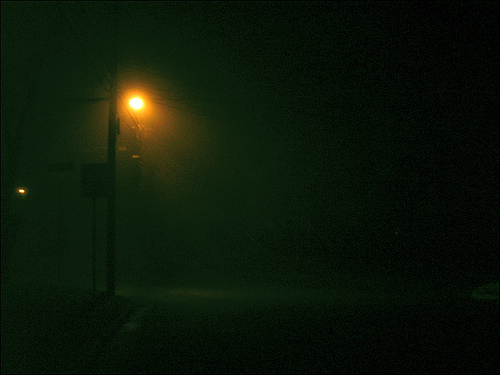
I have to say I was surprised when I put word out that I might give this script an “impressive” and got back a few e-mails telling me I was crazy. I can understand why someone might not like this. It’s different and doesn’t tell its story in a traditional way. But I think it’s hard to argue that the writing here is impeccable. Maybe an entire week of amateur screenplays lowered the bar for me. I don’t know. But when I read this, it moved me. I *felt* this story. That happens so rarely these days, that when it does, I celebrate it.
“Streetlights” is told by a narrator, Charlie Chambers, who’s remembering the summer of 1983 in Colfax, Illinois, when he was 15 years old. It was during that summer that the most beautiful girl in town, 17 year old Chrissy Monroe, was found murdered with one of her high school teachers.
Charlie, who works at the school newspaper, wants to do a story on the piece and his teacher gives him the go-ahead. What he finds is a town rocked by the murder and desperately looking for a suspect. All signs point to Casper Tatum, a rebellious troublemaker who’s had some scrape-ups with the law in the past. But some are eyeing Chrissy’s boyfriend Ben, who may have found out that his girlfriend was seeing a teacher and took matters into his own hands.
In the meantime, we meet Becky Monroe, Chrissy’s little sister. Because of Chrissy’s immense popularity, Becky has always been overlooked. But with her sister now dead, and Becky’s own beauty emerging, she is quickly becoming an alternative darker version of her sister.
So it’s no doubt a shock when the main suspect for killing Chrissy, Casper, falls in love with Becky from afar. The reclusive Becky fends Casper off for awhile, but he eventually grows on her, and probably because her parents hate him so much, she soon finds herself in a relationship with him.
During this time, Ben has taken a liking to Becky as well. And when she shuns him only to go out with this loser Casper? Well, let’s just say that Ben doesn’t take the news in stride.
Our narrator, Charlie, who has secretly liked Becky ever since they shared a kiss in grade school, watches all of this unfold from afar, but eventually finds himself pulled into the fray, just before the most shocking thing that could’ve happened does.
Streetlights is one of those stories where it isn’t easy to explain why it works. There’s a lot going on here. Multiple protagonists. An ongoing commentary that spans the entire screenplay. So I’ll leave it to one of my readers to sum it up. “It’s just a well-told story,” he e-mailed me. And I agree. There are a lot of rules broken here. There are a lot of layers to this story. There are a lot of characters and risky shifts in tone. But somehow it’s all beautifully managed.
What really stood out to me were the tone and the voice. The script almost plays out like a song from your youth. You know how when you hear a tune from when you were 15 and you’re just immediately transported back to that year? That’s what this felt like. And the voice was so unique. It was like a combination of American Beauty (the suburban vibe) Donnie Darko (the 80s vibe) and Election (the humor vibe).
As far as structurally, this script is a rule-breaker’s manifesto. Voice over during the entire story. No true main character. And not a whiff of my precious GSU! So why do we still care? Simple. The MYSTERY component.
“Who killed Chrissy Monroe?” That’s the question driving the plot – much like we want to know who kills Lester Burnham in American Beauty. There’s another mystery component as well, but to get into it would spoil the script’s great ending.
The lesson here is, putting us in the middle of a suburban neighborhood with people bumping up against and getting to know each other in a vacuum is boring. But once you add the murder of a precious girl, where everyone’s a suspect? Now you have yourself a movie.
And since we’d just talked about the importance of the first 10 pages last week, I should say that this script, despite its deliberate pacing, offers up a great first 10 pages. When we meet 17 year old Chrissy, we see her slip out of her seemingly perfect household and jump into a car with her thirty-something teacher. I wasn’t upset about this choice, but I was kinda like, okay, we have another story about an inappropriate relationship. Average City.
Then a second later a man jumps in the back and puts a gun to the teacher’s head and says drive. He forces them into the woods, tells them to strip, and then shoots them dead. The moment that man jumped in the back of that car with a gun, I knew I was reading a good script, because it was unexpected. And when writers do unexpected things as opposed to boring predictable things, it usually means you’re in good hands.
Where I think these writers became geniuses though was in the third act (spoilers ahead). This entire story is told from the point of view of an uninvolved third person, Charlie. Something that’s kind of sad because we know he has a thing for Becky and realize he’s never going to get a chance with her.
So when the relationship between Becky and Casper ends, and Becky and Charlie start hanging out together, it takes you by such surprise, that it’s way more powerful than any script-long relationship between the two of them would’ve been.
It’s kind of like seeing your team down by 20 in the fourth quarter, only to watch them win the game on a last second hail-mary. Sure it would’ve been great to see them blow the team out from the first snap. But that’ll never feel as good as snatching victory from defeat. I’m not going to get into the details of what happens next, but it’s what elevates this screenplay beyond your average Saturday night read, and into a very deserving #2 slot on the Black List.
So why no Top 25? Hmmm, I don’t know. I need to sit on it for awhile. It might creep its way in there at some point. I think it’s because of the main character issue. There really isn’t a protagonist in this, and while it all worked out in the end, there were portions of the screenplay where I felt too removed from the story. I didn’t have anybody to identify with, anybody to guide me. So it felt kind of lonely. It’s hard to describe but that’s the best I can do. Either way, this was a VERY solid screenplay and well worth your time.
[ ] What the hell did I just read?
[ ] wasn’t for me
[ ] worth the read
[x] impressive
[ ] genius
What I learned: Atmosphere. These guys reminded me how important atmosphere is in a screenplay. Sometimes we get so focused on the facts of the story that we forget to bring the story to life. Things like the crackle of a record player as the needle hits the record. Children playing on a Slip-n-Slide on a sunny day. The way friends are described (“They are the kind of friends you only have at fifteen and never again. Blood brothers.”). Becky carefully retracing her barefoot steps in the snow when leaving Charlie’s house. These guys really fill their universe out. You never want to go overboard with this stuff. But if you want your script to breathe – to have life – it’s something you need to pay attention to.
Genre: Contained Thriller
Logline (5th Place): Posted out to a remote nuclear waste dump site in the Australian Outback to secretly assess the mental state of the ex-addict Aboriginal worker who mans the plant, an anxious young female psychiatrist is forced into a fight for survival when they find a mysterious stranger stranded in the desert.
About: Welcome to the first annual “First Ten Pages Week.” What I did was have readers send in loglines then vote on their favorites. The top five loglines, then, would get their first 10 pages read. With any of this week’s reviews, if the comments are positive enough, I’ll review them in full on a future Amateur Friday.
Writers: Adam Gyngell and Fred Fernandez-Armesto

Some people expressed surprise by the fact that this logline made the top five, and I can understand their skepticism. Although the idea clearly has potential, it sure takes a long time to explain it. It seems like we’re getting some unnecessary pieces of information here. The trick with loglines is to give the reader every single piece of relevant information to your story in as few words as possible. This logline could clearly benefit from a Dianne Cameron intervention.
The first 10 pages of Deep Burial begin with a scientist killing himself for mysterious reasons. Afterwards, we meet the seemingly unaffiliated Robinson, a mixed race Aboriginal who’s taking care of a nuclear waste dump facility out in the middle of the Australian desert. Soon after, a young woman named Abby shows up. She’s been sent by the corporation to make sure the place is running smoothly. She’s surprised to learn that Robinson has been here all by himself for a couple of years now. She also learns that he doesn’t take kindly to visitors.
Deep Burial starts off strong and not so strong. We watch as a scientist sets up a camera, tells his family he loves them, then shoots himself. That’s a compelling way to open a movie. But I don’t like that the scientist is described as thin, receding hairline, with birdlike features. In other words, he looks exactly like the prototypical scientist. What were we just talking about yesterday? BE DIFFERENT! Don’t go with the first, most obvious, choice!
Generic choices within the first ten pages indicate that I’m going to be reading an entire screenplay full of generic choices. So now I’m grumpy. Why can’t this scientist be well-built? Why can’t he be handsome? Why can’t he be Spanish? Why can’t it be a woman instead of a man? Anything but the prototypical version of a scientist we’ve seen so many times before.
This is also the third script this week that’s had a mistake on the very first page. “The Scientist’s stares straight into the camera.” There should be no “apostrophe s” there. And why is “Scientist” capitalized? If the word “the” is in front of it, “scientist” shouldn’t be capitalized.
Luckily, things quickly get better. I absolutely love the image of a man in a hazmat suit whacking a golf ball in the middle of the desert. That’s a great image that I’ve never seen before. In addition, it tells me a lot about this character. Clearly, this guy is a little off, and that makes him intriguing. I want to learn more.
We then jump to a helicopter, where we meet Abby, and now I’m starting to see some skill on display here. I love the way the exposition is handled. As the pilot gives Abby a rundown of who this guy is, it feels like the exact sort of conversation that would happen in this circumstance. So the fact that it’s all exposition explaining Robinson’s past doesn’t really register with us. It’s sort of a “resume moment” coming from a third party. The only thing about the scene that doesn’t work is that Abby’s surprised Robinson is out here alone. I’m pretty sure she would’ve been briefed about this before coming out.
When Robinson is finally introduced to us, I get the best description, and therefore the best sense of a character, of any of the characters introduced this week (italics are mine):
Leaning against the door, a mixed-race Aboriginal Man. Sallow, grey skin, dark bags under the eyes.
Abby’s visibly surprised. She didn’t expect him to be…
This is ROBINSON: late-30s, but he wears the years heavy. Three day beard on his face. Sinewy. Weathered. He’s taken a few hits, but he rolls with the punches.
That’s a character I can imagine. I especially love the line, “but he wears the years heavy.” I do have an issue with the last sentence, but I’ll save that for the “What I Learned” section.
Unfortunately, the arrow starts pointing down when Robinson starts talking. Up until this point, we’ve been presented with the notion that this guy is nuts, he’s crazy, he’s off his rocker. I’ve been anticipating this moment for the last six pages. However, when he opens his mouth, it turns out he’s just a bitter old curmudgeon. There’s nothing very interesting about him to be honest. And I’m annoyed by him fairly quickly. His vocabulary seems to revolve around different ways of saying, “Get out of my way.”
This leads to a bigger issue, however. And it’s something I see a lot. You’re always looking to create conflict in your screenplay. That’s what makes a story dramatic. But you have to do so INVISIBLY. You can’t force it. There may be more to Robinson we learn later. But right now, I find it odd that he doesn’t seem to have any reason to hate this person and yet he does. I mean I could imagine him being distant. But his reactions are way over-the-top whenever Abby tries to say anything. So the conflict feels forced and therefore false.
On the plus side, I like that the goal is established right away. Abby is here to inspect the place and make sure everything’s working efficiently for the company. If it isn’t, the company is going to shut the place down. Since Robinson needs this place, that means we now have stakes and a ticking time bomb. So right away, within our first 10 pages, we’ve established our characters as well as the goals for those characters. That’s a good sign.
So overall, this is a mixed bag. The writing is clear. The writers understand how to set up characters and a story. There’s a lot of intrigue (remote nuclear waste dump has all sorts of possibilities). But there are a couple of cliché choices and our star character comes off as underwhelming. You can’t build up this crazy character then leave us with Average Angry Dude.
Go back and do a character biography on Robinson. Where did he grow up? What is his relationship with his parents? What kind of person was he at school? Did he have friends? Was he a loner? Has this man ever been married? What was he doing in the five years of his life previous to this job? What was he doing five days ago before your story started? The answers to these questions are going to filter into your character’s actions/personality/dialogue/etc. The more questions you ask, the more rounded your character will be. The golf stuff was a good start. But you need a lot more.
Would I keep reading? – Yes. Right now I’m on the fence about this script but as you guys know, I love these types of stories. Remote area. Just a few characters. Lots of potential for conflict. Lots of potential for secrets, twists, surprises. If I were to start a production company tomorrow, this is the kind of movie I would probably make first. Even if the script wasn’t perfect, I’d have confidence that I could develop it with the writers.
Script link (First Ten Pages): Deep Burial
[ ] What the hell did I just read?
[ ] wasn’t for me
[x] worth the read
[ ] impressive
[ ] genius
What I learned: Don’t double up on your character description. Here’s the description of Robinson again: “This is ROBINSON: late-30s, but he wears the years heavy. Three day beard on his face. Sinewy. Weathered. He’s taken a few hits, but he rolls with the punches.” That last sentence is redundant. “But he wears the years heavy,” combined with “three-day-old beard” implies that he’s taken a few hits and keeps going. Yes, we want to describe our main character as best we can. But it’s annoying when the writer repeats information, especially if it’s information from one sentence ago.
Genre: Action Comedy
Logline (4th place): When a meek and universally abused copy editor is mistaken for the professional killer she accidentally bumped off, she decides to take on this violent new identity until the killer turns out to be not so dead, and very pissed off.
About: Welcome to the first annual “First Ten Pages Week.” What I did was have readers send in loglines then vote on their favorites. The top five loglines, then, would get their first 10 pages read. With any of this week’s reviews, if the comments are positive enough, I’ll review them in full on an Amateur Friday.
Writer: Emily Blake (check out Emily’s Blog – Bamboo Killers)

When this logline first came in, I admit I didn’t think much of it. I mean it was good enough to make the Top 50, but I wasn’t sure it would fare well against everyone else. Then it started getting all these votes and I was like, “Hmmm…Let me take a look at this again.” When I read it a second time, I realized it had more potential than I originally thought. In fact, it had the best title and logline *combination* of the five entries. What I mean by that is, of all the combos, I got the best sense of what the movie was by looking at the title and the logline together. And I can’t tell you how huge that is. When you’re on the outside of those pearly studio gates, your logline and title are the only two things advertising your script. So if you can come up with a combination that sells your story clearly, you’re in really good shape. For contrast purposes, compare this to Stationary, where we got a sense of the movie but didn’t get the full picture.
The first 10 pages of Nice Girls Don’t Kill start with southern Belle assassination queen Lana walking into a library and killing a librarian who owes her boss money. Cut to Mary Beth, who is the polar opposite of Lana. We observe her backing down from a confrontation with her defense class teacher, backing down from a trainer who bullies his way onto her treadmill, and backing down from an obese woman who cuts in front of her in line. Mary Beth is a girl who seriously needs to step up her game, but from what we’ve seen, it doesn’t look like that’s going to happen.
The pages…
First of all, we have a solid opening scene. Some nice atmosphere is created with an empty library at closing time, thunder cackling through the windows. A seemingly innocent girl taps on the door, asks to come in, and then assassinates the librarian. We have some nice dialogue in the scene: “Listen, honey. I’m a nice girl. I don’t do that whole bamboo under the fingernail shit, but if you paw at me again I will shoot off your shriveled old Willy, put a knife in your gut and leave you to bleed to death. Are we clear?” The only thing I didn’t dig was Lana singing “Cherry Pie” to her ringtone as she cleaned up her kill. It just felt a little forced. But overall, I was into it.
However once we cut to Mary Beth, Emily starts working a little too hard to convey her heroine’s fatal flaw. Conveying a protagonist’s fatal flaw is an art. You want to make it clear. But you don’t want to whack us too hard with it or it feels forced. In this case, we see Mary Beth kicking ass when she’s banging on the punching bag, but then unable to hit her instructor when he (she?) tells her to. The instructor goes apeshit on her for her weakness and even calls Mary Beth a giant pussy.
We follow this with Mary Beth on the treadmill staring at a slutty client flirting with a trainer. The duo then comes over and boots her off, and she meekly retreats to the locker room without saying a word. We then get a scene in the locker room where Mary Beth observes some badass woman taking charge. If only she could be that tough… We then follow THIS with a scene in the bus line where someone cuts in front of Mary Beth and she doesn’t say anything. And then, in addition to all of this, Mary Beth keeps spotting numerous advertisements for an energy drink called…yes…“Potential.”
I think it’s safe to say that Emily drove the character flaw nail into the 2×4, then kept slamming it until she split the board in half. Selling a character flaw is good. But at some point, you gotta let the customer experience the product for themselves.
Afterwards, Mary Beth walks up the stairs to her apartment, and there her landlord is, asking for rent. I have no problem with this scene. It raises the stakes and forces your character to act. But you have to realize, I’ve read maybe 800 scripts (no exaggeration) where a landlord wants rent from the protagonist. All I ask is for from the writer is to show this moment in a unique way. Simply having the landlord yell, “You’re late with rent,” is boring and predictable. You’re a writer. This is what you do. You come up with unique ways to spin familiar situations. Maybe Mary Beth comes home and finds her refrigerator gone. In its place is a note. “You steal from me? I steal from you. Pay your rent!” Maybe this is even a common practice. There are notes all over the apartment from things that have been stolen by the landlord. That may be a dumb idea. I don’t care. It’s better than the tried-and-true landlord (who, although not in Emily’s script, is almost always Eastern European) standing at the doorway and demanding rent when our hero comes home from a long day.
Nice Girls, all in all, was probably the toughest of the five entries to judge. There’s nothing really wrong here. I mean, yeah, there’s the fatal flaw repetition I mentioned above. But that’s an easy fix. Just cut a couple of those scenes and we’re fine. But there’s nothing I got too excited about either. Nice Girls falls into that dreaded category of “Good but not great.” Or, as the Hollywood types like to say it: “Liked it didn’t love it.”
So then how do we bring this up to a “love it?” Well, I’m going to offer the same advice I offer everyone. Professional readers spend *all day* reading scripts with the same scenes and the same plot points and the same characters and the same devices used to make us like or hate those characters. It’s all so familiar. So what gets us on the edge of our seat? When writers TRY HARDER. When they don’t go with the obvious choice. The “rent is due” scene is the perfect example. You need to TRY HARDER and give us something slightly different from what we’ve seen before. And you need to do that FOR EVERYTHING. If you even have an inkling that you’ve seen the scene you’re writing before? Try to come up with SOME SPIN, some FRESH POINT OF VIEW, that makes it read differently. Nice Girls Don’t Kill is too familiar in its current incarnation. And I think that if Emily were pushed more – had a development person on her ass – that she wouldn’t be taking these safe routes. She’d be pushing herself and coming up with better, more original, material. Since not a lot of us have a development person calling us on our bullshit, we have to depend on our inner development person. In other words, you have to call your own bullshit.
Would I keep reading?: Maybe. Truthfully, this is one of those scripts where I’d probably say, “I’ll give this until the end of the first act to pick up.”
Link: Nice Girls Don’t Kill (First Ten)
[ ] What the hell did I just read?
[x] wasn’t for me
[ ] worth the read
[ ] impressive
[ ] genius
What I learned: Beware of “Pause scenes.” – “Pause scenes” are any scene where you pause your story to put something in that doesn’t push the story forward. The treadmill scene is a classic “pause scene.” There is no story information in this scene whatsoever. The only point of the scene is to tell us something about our character. And in this case, it’s to tell us something about our character that we already know, since we just saw Mary Beth back down from her instructor a scene ago. I’d argue that the changing room scene and the bus scene are also pause scenes. So how would you unpause the treadmill scene? Well, maybe Mary Beth’s best friend is on the treadmill next to her and they’re setting up later story points (“You’re coming out tonight to meet Bob. You know that right?” “You mean Ear-hair guy?” “He is a nice man with an ear-hair issue okay. And he’s a book nerd. Like you. You’re not getting any younger you know.” “Fine.”) Now you have STORY INFORMATION conveyed in the scene so the scene itself is actually necessary. If all you’re doing with a scene is telling us about your character, you’re writing a pause scene.
Genre: Drama
Logline (3rd place): When a prison guard falls in love with the wife of a death-row inmate, he’s forced to choose between his love for her or reveal the discovery of crucial evidence that will save her husband’s life.
About: Welcome to the first annual “First Ten Pages Week.” What I did was have readers send in loglines then vote on their favorites. The top five loglines, then, would get their first 10 pages read this week. With any of the five reviews, if the comments are positive enough, I’ll review them in full on an Amateur Friday.
Writer: David Birch

I think The Oswald Solution may have the best *crafted* logline of the Top 5. Why? Well, there’s a clear and compelling dilemma at the heart of the idea. Would you save a man’s life if it meant losing the woman you love? That’s a question I’d want to find out the answer to. So I went into this one with a lot of hope.
The first 10 pages of The Oswald Solution introduce us to the Governor, Lamar Snyder, rejecting a stay of execution for a man named “Jefferson,” a former member of his organization. This leads the media to believe that there are ulterior motives going into Snyder’s decision. We then meet an alcoholic correctional officer named Melvin Delray who is sent to pick up Jefferson from the courthouse. When his car is attacked by a mob of ferocious protestors, however, he heads back to the jailhouse where he convenes with a bunch of fellow employees.
The Oswald Solution starts off bumpy. I don’t understand why writers refuse to describe their characters. If someone is out there telling you that you shouldn’t describe people because you don’t want to limit your casting options, don’t listen to that garbage. Right now, all that matters is you paint a picture of your story for the reader. And that means telling us something about your character when they’re introduced so we get a sense of them. Lamar might as well be invisible because I have no idea what he looks like or what kind of person he is.
A page after Snyder is introduced, I see him talking in front of a cluster of microphones as if he’s the Governor or something. Wait a minute. *Is* he the governor? He certainly wasn’t introduced as the governor. I went back to see if I missed something. I notice that in the slugline it says “Governor’s Office.” So technically I should be able to draw the connection between, “This is the governor’s office,” and “This is a man in the governor’s office.” Therefore he’s probably the Governor.
But “Governor Office” is sometimes used to refer to an entire building, so even though that’s a clue, it doesn’t definitively tell me anything. The bigger problem here is that we’re introduced to “Lamar Snyder.” We’re not introduced to “Governor Lamar Snyder.” Just that one single word could’ve taken care of this confusion. In fact, “Governor Snyder” is used one page later. Why would we do that *after* he’s introduced as opposed to *when* he was introduced?
You may think this kind of stuff doesn’t matter but TRUST ME, it does. The fact that I’ve already had to go back and check something two pages into the script is a tell-tale sign that I’m in for a bumpy ride.
On the second page, we use “anyone” instead of “any one.” Quickly after, a young reporter asks: “Jefferson was a high ranking member of your political organization, how do respond to the reports that he is requesting you attend the execution?” Not only is there a missing “you” in there but the comma after “organization” should be a period. An isolated mistake every 30 pages can be overlooked. It’s when mistakes compound that I get worried.
We then shift out of the office and meet correctional officer Melvin Delray. As he’s driving, he’s drinking from a flask. This was the first good moment in the screenplay. That’s an action that tells me immediately who this character is. This is someone in an authoritative position who’s drinking on the job. I like the irony. I like the complex character.
Unfortunately, I had no idea how Melvin was affiliated with any of this and where he was driving his car. We get a really confusing scene where he and his partner hear a bunch of sirens and then simply crash into a pole. I know he’s drinking but if you’re a professional driver, is it that hard to pull off to the side of the road? He’s then attacked by the giant mob right in front of the courthouse, and in the middle of this terrifying situation, we simply CUT to the jailhouse. Wait a minute. What just happened?? Did they get hurt? Did the crowd break in??
It was only afterwards that I figured out they were going to pick up Jefferson and it all went wrong. However, it looks like Jefferson was still transferred to prison. But how if these guys didn’t do it? I’m not sure since we cut away from that mob scene.
A lot of this confusion could’ve been avoided by Melvin making a call a block away from the courthouse and saying something like, “Pickup for Jefferson a block away.” But that still doesn’t explain to me who the police cruiser and ambulance were. Were they just a random police cruiser and ambulance speeding by? That’s kind of coincidental. With this huge mob scene, I’d think that if anything was speeding anywhere, it would be to here.
We then get back to the correctional facility and proceed to meet a dozen correctional officers within two pages. Names were coming at us faster than Trajent Future insults. This is almost always a bad sign. Professionals know that a reader only has so much space in their brain to remember people. On top of that, they know to never throw a ton of characters at a reader all at once because they’ll be lucky if the reader remembers 25% of them. Indeed, I’d forgotten over half these names less than a page after I’d read them.
In addition, the script doesn’t seem to be going anywhere anymore. We’re stuck in this correctional facility with a bunch of people talking. There is only so much time in your first act. Every scene needs to be pushing the story forward. You don’t have time to dwell on insignificant people and insignificant moments. And unfortunately, that’s what I’m seeing here. We’re just stuck in this place trying to remember people, trying to figure out who’s who, trying to figure out why we’re here.
These first 10 pages suffer from the same thing a lot of scripts suffer from – a lack of clarity. It feels like David understands what he’s trying to do, but he doesn’t understand what he needs to put on the page so that we understand it as well. David gives us clues and generalizations and pieces of what we need to know, but not enough for us to breeze through the read with no questions asked. These pages need to be cleaned up, streamlined, and clarified. Currently, it’s too much of a jumble.
WOULD I KEEP READING? – Unfortunately, no. Too many characters. Too confusing. Too many grammar and punctuation mishaps.
Link: The Oswald Solution (first 10 Pages)
[ ] What the hell did I just read?
[x] wasn’t for me
[ ] worth the read
[ ] impressive
[ ] genius
What I learned: Clarity is such an issue for new screenwriters because they’re simply unaware of the fact that the reader isn’t in their head with them. They just assume that because it’s clear to them, it will be clear to everybody else. For that reason, it’s a good idea to take a chunk of your screenplay, say 10 pages like this, then give them to a friend and ask, “Is this clear?” “Do you understand everything that’s going on here?” “Did you have to reread anything to get it?” What you’ll find is that you actually have to give the reader more information than you think you have to. Now it’s a balancing act because you don’t want to burden your script with too much explanation. But you want to make sure that every key moment is dead clear on the page, or else you’ll lose your reader.