
Search Results for: F word
Sideways meets A Christmas Carol in Alexander Payne’s latest project.
Genre: Drama
Premise: A professor at a prestigious all-boys academy in 1970 is stuck babysitting the one “holdover” over Christmas break, a student whose parents have ditched him for the holiday.
About: This is the big re-teaming (it’s Re-teaming Week here at Scriptshadow!) of Alexander Payne and Paul Giamatti (Sideways). The writer, David Hemingson, has been writing on TV shows since the 90s! This is a major departure for him and a huge new direction for his career. The Holdovers is filming in New England as we speak.
Writer: David Hemingson
Details: 117 pages
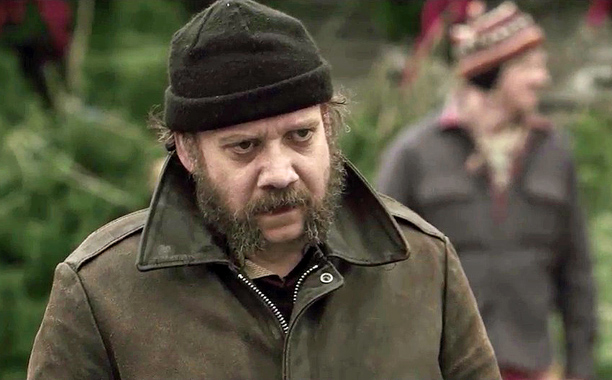
It’s crazy how dramatically one bad movie can damage a filmmaker. Even if that filmmaker has had decades of success. Payne, a darling in the indie world and a two-time Oscar winner, hasn’t made a movie in five years. All because his last film, Downsizing, was too weird and lacked a compelling plot.
But alas, we should not be punishing those who take creative risks. We should be rewarding them! In theory, at least. Let’s be honest. We’re all supportive of taking risks unless those risks turn out to suck hay bails.
50-something professor, Paul Hunham, described as “a heap of rumpled corduroy” is the most hated professor at Deerfield Academy (circa 1970). Paul is the only professor unafraid of the school’s prestigious alumni, as he proves by flunking a senator’s son, which prevents that student from being able to go to Princeton.
Because Paul is such a Scrooge, he doesn’t have any friends. Therefore, when winter break comes around, Paul has nowhere to go, and is assigned to take care of the “holdovers,” those kids who couldn’t go back to their families over Christmas for various reasons.
At the top of this reject list is 15 year-old Angus Tully, whose presence as a holdover is the direct result of his mom getting re-married to some loser who would rather go on a honeymoon than be around his new step-son. And hence the chip-on-his-shoulder Angus must stick around at a dead campus with nothing to do. A kid’s worst nightmare.
To make matters worse, all the other holdovers leave. That means it’s ONLY Paul and Angus left. And neither of them want to be anywhere near each other. They endure this for a while, having meals and studying under a series of angry glares. But they ultimately get invited to a Christmas party by a fellow female teacher, Miss Crane, who Paul has a crush on, and things pick up a bit. This begins an unexpected friendship between Paul and Angus, even if it is one explored primarily under duress.
The Holdovers feels like it’s made for a targeted audience. By that I mean, people who have gone to school at one of these all-boys academies. It’s very specific in that way, which made it hard to relate to.
And, unfortunately, I think the script made some questionable creative choices that prevented it from being better. For one, the dynamic between Paul and Angus wasn’t charged enough. Angus kind of doesn’t like Paul. Paul kind of doesn’t like Angus.
I don’t like “KIND OF” conflict. I like “ACTUAL” conflict.
There was another kid named Jenesen who was a total brat. Just a bad dude. He felt like a much bigger adversary for Paul. Those two would’ve gone at each other relentlessly and, therefore, made for a better script, in my opinion.
Speaking of, the original setup, which had five kids on holdover, sounded much more promising. Now you’ve got Dead Poet’s Society meets The Breakfast Club. A coming-of-age film with a group of kids getting in trouble. That’s a winning formula that has delivered time and time again.
The mismatched duo is also a winning formula. But only when the two opposing characters have clear conflict with one another. And like I said, these two only have “kind of” conflict with each other.
Taking this one step further, one of the big themes of the script is entitlement. These are all rich kids who have been handed everything in life. So keeping them here at this rich kid’s school doesn’t really test that. What would’ve been better is if they had to leave the school for some reason (it was temporarily shut down over the break) and stay in town, in a world that’s completely foreign to what they’re used to.
But again, we didn’t even have a group of kids. We decided to go with one kid.
I know it’s stupid to write reviews whose main focus is, “This is what I would’ve done!” But I bring it up to remind screenwriters that you always have choices in your story. And you should be asking yourself, “Is this the most dramatically interesting choice? Is there a different route that’s potentially more entertaining?”
We get major tunnel vision as screenwriters. We get so stuck on that original idea we wanted to write that we don’t see there’s a much better version of it right around the corner. This especially happens if you’re drawing on your own life experiences. You’re likely to lock in on exactly what happened to you and write that story only. Which is myopic. You have to be more dynamic as an artist.
I brought this up a couple of years ago with the movie “The Big Sick.” Now to be clear, The Big Sick was a great movie. I don’t think it’s bad by any means. But if you’re looking at the script objectively, they missed a much more dramatically interesting opportunity.
That film was about how Emily goes into a coma and Kumail has to deal with her parents during the experience. But Kumail had next-to-zero conflict with her parents. So that storyline wasn’t very compelling. Meanwhile, Kumail’s parents did not want him marrying a white woman under any circumstances. They wanted him marrying a Pakistani. Therefore, the better person to put in the coma would’ve been Kumail. That way, you would’ve put the characters who had the most conflict with each other – Emily and Kumail’s parents – around each other the whole time.
Of course, that wasn’t what happened to real-life Kumail and real-life Emily, and therefore it would’ve been difficult for them to imagine that version of the story. But the point is, you shouldn’t lock yourself into a particular storyline without considering if there’s a better dramatic option.
With all that being said, The Holdovers does come together in one of those warm Christmas-y ways where you feel good cause everyone takes down their walls and connects with one another. I can imagine watching this on Christmas Eve and feeling that good “everything’s right in the world at least for this moment” feeling that other good Christmas films like It’s A Wonderful Life give you. It’s just a hard script to wrap your head around because it keeps changing into different movies as it goes on and by the time you figure out what the actual movie is, you’re thinking, “Why didn’t we just start with this?”
[ ] What the hell did I just read?
[ ] wasn’t for me
[x] worth the read
[ ] impressive
[ ] genius
What I learned: I know some of you are terrified of character descriptions. I was once terrified of them as well. So here’s a tip. Don’t write clever character descriptions unless you’re good at them. And if you do, don’t overcomplicate them. Clever character descriptions from writers who aren’t naturally good at them are too long and come off as try-hard. Here’s an example of what I mean: “TREY, 31, has a dollar to his name but makes up for it with a million dollar smile.” What is this other than, “Look at me?” It emphasizes clever over information. If you’re going to be clever with a description, do it AS SIMPLY AS POSSIBLE. That’s why Paul’s description is so good. “A heap of rumpled corduroy.” Five words and we get it. The simpler you keep the clever description, the more likely you are to pull it off.
What I learned 2: If you want to attach Paul Giammati to your project, write a Christmas movie. This is his third Christmas movie (All is Bright and Fred Claus are the other two). He obviously likes the holiday.
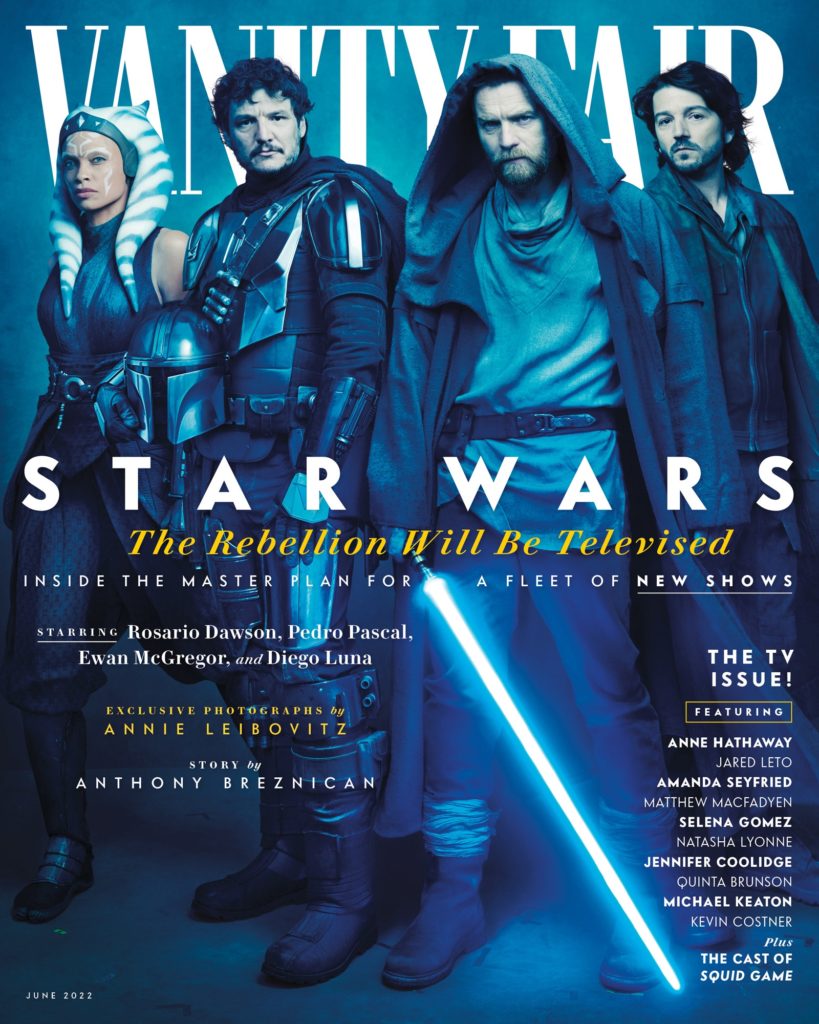
As we ramp up to next week’s debut of the Obi-Wan Kenobi show, the Star Wars heads have reluctantly started doing press to build excitement for the Disney Plus series. I say “reluctantly,” because Kathleen Kennedy hates press. She hates it because any discussion about the background workings of Star Wars will eventually lead back to her and any discussion about Kennedy ultimately shines a spotlight on the fact that she hasn’t done a very good job.
There are some who would contest this point. Four of the five Star Wars movies under her watch made over a billion dollars. And the instant success of The Mandalorian helped spawn a giant batch of new Star Wars shows for Disney Plus. But as is the case with most things, the Sith is in the specifics.
Kennedy is personally responsible for sending the new trilogy off a cliff. The fact that it ended with even a modicum of the brand still intact is a minor miracle. She chronically changes her mind, hiring and firing everyone under the sun. This has turned every established filmmaker against the Star Wars brand, which is why nobody big will touch the franchise.
We’ve gotten a new peek behind the curtain in the now annual Vanity Fair Star Wars photo shoot article. Kennedy was mostly tight-lipped, as she knows that anything she says will be seen negatively by the fans. But she did admit that recasting Harrison Ford was a mistake and seemed to imply that, moving forward, they’re going to perfect this digital likeness technology.
In addition to Kennedy’s comments, we learned that Dave Filoni was vehemently opposed to Baby Yoda. That was shocking. We also learned that Spider-Man director Jon Watts has a Goonies-like Star Wars show in development, as it will follow a group of young kids in the Star Wars universe.
All of this got me thinking about how the Star Wars brand has fared since Disney bought it. And I thought, what better way to express my thoughts about the post-Lucas era than with a list! So I’m going to rank the 20 biggest Star Wars elements since the acquisition. These include movies, shows, characters, creators, and overseers. Anything Star Wars since 2015 is in play. Read on. You might be surprised!
Note: Excuse some of the snarkiness. I get very passionate when I write about Star Wars!
20) Maz Kanata – Maz Kanata represents, ironically, just how big of a genius George Lucas was. Because when we meet a character like Yoda, we don’t question why he was made or how he was made. He just “is.” That’s how convincing the character is. But Maz Kanata shows us just how hard it is to create a weird character. There’s no roadmap to weirdness. It’s a gut feeling you go with. That’s what Lucas was a genius at. He’d put a stormtrooper on a giant lizard, riding it like a horse, and someone would ask him why he did that and he’d shrug his shoulders and say, “Ehhhhh, it’s whimsy.” The new trilogy misses Lucas’s whimsey. And the failure of Maz Kanata embodies that loss.
19) Rose Tico – There may not be a bigger example of a director not understanding the movie he’s making than the creation of Rose Tico. I know people have been trying to pretend Rose Tico is popular or something ever since the film came out. She’s not. If you ever want to see how much a Star Wars character is liked, check out the toy line. That’s where you know something is popular or unpopular. And can you get Rose Tico action figures for micro-pennies on the dollar if you want her. It was a badly conceived character. It was bad casting. Trying to fit her into a love story was a terrible decision. She didn’t work on any level.
18) Solo – I wasn’t a huge Alden Ehrenreich hater. I thought he did a pretty good job as Han Solo. The problem was he was in a movie that never felt necessary. But there were all sorts of choices that led to this film’s demise. I remember being a month out from this film’s release and there being zero awareness that it was coming out. Nobody knew. Of course you’re going to have a terrible opening weekend if nobody’s talking about a Star Wars movie a month before it comes out. Also, the film felt rushed. I remember watching it and thinking, “This looks really dark. I can’t tell exactly what’s happening.” I got the feeling that the film was so rushed, it didn’t have time to go through the proper post-production channels where they take care of stuff like that. It was just a disaster pretty much from the get-go.
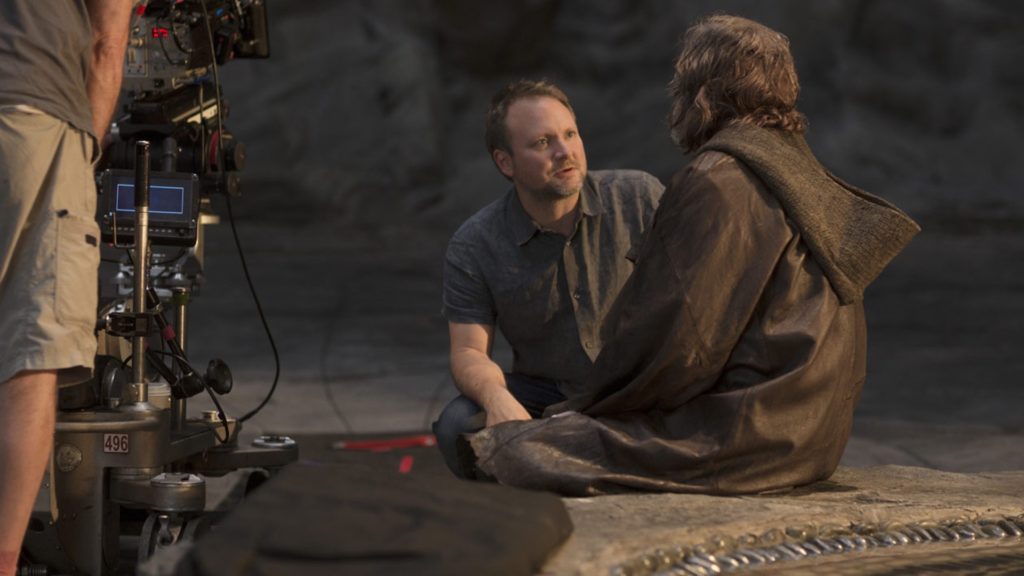
17) Rian Johnson – Rian Johnson simply never understood Star Wars. What he understood was his weird quirky indie film sensibility and he used Star Wars as a trojan horse to give one of those indie stories the big-budget treatment. The result was a couple of memorable moments, but overall, a complete misread of the mythology, which culminated in the assassination of the series’ lead character, Luke Skywalker. If that wasn’t bad enough, he gave the series nowhere to go in the final film, forcing JJ Abrams to bring back a dead bad guy. Johnson is one of the worst decisions the Star Wars brand has ever made.
16) Finn – Let’s be honest. Finn ended up being a disaster. And it didn’t help that the actor who played him, John Boyega, had a public meltdown in the middle of it all. There’s so much that went on here, it’s hard to pinpoint where the blame lies. But I think I have to blame Rian Johnson. JJ clearly had a bigger story in mind for Finn. Rian, meanwhile, had no idea what to do with him. So he forced a love story onto two characters with zero chemistry. Word on the street is that JJ wanted Finn and Rey to end up together but Disney said no because he was black. It’s up to you if you decide to believe that. But clearly all sorts of behind-the-scenes issues contributed to this character imploding. Cause he was actually kinda cool in the first film.
15) Poe Dameron, Jyn Erso – Never have two characters lacked personality more than these two. They were soooooo so so so very boring. Just writing their names down made me bored. Jyn Erso is an interesting case because word on the street is that the original performance of the character made her seem like a b*tch. So they took out all of the b*tchy moments, which is why the character seems so lifeless. Cause she wasn’t allowed to display emotion. Poe is different in that he’s a high-energy guy. So he *should* be exciting. Yet he, too, was boring. I think in JJ’s attempt to not make him a Han Solo clone, he stripped away any negative sides to Poe, and, in the process, stripped him of the duality many characters need to come across as complex.
14) Cassian Andor – Never have I seen a franchise try to push a character who didn’t deserve it more than Star Wars has tried to push this character from Rogue One. The character is weak. The actor isn’t very good in the role. Literally nothing about the character pops off the screen. And now we’re going to get an entire series of him! Talk about a weird decision. The series is being written and directed by Tony Gilroy, who’s openly admitted he doesn’t even like Star Wars! So we’re getting a show about a character nobody likes written by a guy who doesn’t like the world the character exists in. Buckle your seat belts for six episodes of bounty hunting boredom.
13) Kathleen Kennedy – You can’t completely poo-poo what Kennedy achieved. She picked the perfect director to bring the series back to life, which resulted in an unprecedented 2 billion dollar box office haul. She’s also spearheading a gigantic property that has a lot less certainty than her in-house sibling, Marvel. Those guys just have to find a popular comic run and turn it into a movie. Star Wars is much more of a guessing game. And that’s the problem. Kennedy doesn’t understand Star Wars and therefore guesses badly. I don’t know if “Solo” would’ve been a masterpiece had Lord and Miller not been fired by Kennedy. But I know for a fact it would’ve been better than that vanilla ice cream excuse of a movie they came up with. Kennedy just doesn’t “get it,” and it seems that whenever Star Wars has a hit, it’s because of someone else, not because of her.
12) Dave Filoni – I go back and forth on Filoni. I know there isn’t a bigger Star Wars fan in the universe. And I love the story of him moving up the ladder from a research assistant at Lucasfilm to directing live-action episodes of Star Wars. I can only imagine how exciting that must have been for him. Here’s my issue with Filoni though. It seems as if the only reason he got the job is because he was the only person in Lucas’s orbit who unabashedly liked the prequels. Lucas got hammered on those prequels so much that meeting someone who actually liked them created a Stepbrothers moment (“DID WE JUST BECOME BEST FRIENDS??”). From that point on, he was pretty much anointed a superstar in the company. And he could do no wrong. Therefore, even though he’s achieved great things at Lucasfilm, you still get the feeling whenever you watch one of his episodes that you’re dealing with a fanboy as opposed to a director. I’m just not convinced he has any creativity of his own. And the fact that he tried to kill the biggest thing to come out of Star Wars in 20 years – Baby Yoda – makes me even more skeptical of him.
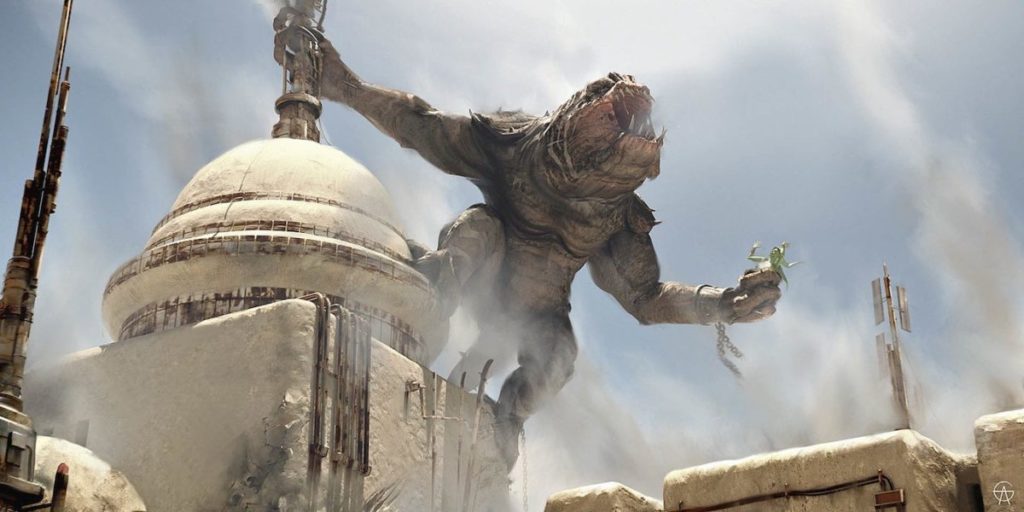
11) Boba Fett Show – Trying to consolidate my thoughts about the Boba Fett show is like trying to consolidate my thoughts about the evolution of the Sports Illustrated swimsuit issue. There’s too much to wrap my brain around. The show, at one point, DITCHED BOBA FETT! For two episodes it just said, “Byyyy-yeee” to its main character! At the same time, it gave me Jabba The Hutt’s twin cousins and Boba Fett riding a Rancor! I don’t hate this show. Yes, I do hate this show. No I don’t. Yes I do! If we’re being totally honest, I don’t think they had any idea what they were doing when they made this show. But it’s got some cool moments and that final episode was pretty darn entertaining.
10) Snoke – While I didn’t love Snoke at the outset, I began to warm up to him. And I thought some of Rian’s best stuff in Episode 8 was Snoke. Until he killed him off. I still contend that there was stuff you could’ve done with this character. I’ve always loved the idea of a crazy Sith hiding out in the Outer Rim, waiting for his moment to take over the galaxy. But Rian ruined all that. I’m guessing this is one many Star Wars fans will disagree with me on. But I always thought Snoke was pretty cool.
9) JJ Abrams – Now that I’ve had a little distance from the new trilogy, I don’t see JJ with the rose-colored glasses I did at the time. But I still think he made a fun first movie that recaptured some of the magic that had been lost in the prequels. Those early scenes of Rey struggling to survive on Jakku worked well. And JJ understood something key about the original movies, which is that they all moved quickly. I also thought he did an amazing job salvaging the franchise from the sarlac pit Rian Johnson hurled it into. That the final film was even cohesive is a testament to his understanding of story.
8) The Mandalorian (The Character) – What’s so interesting about the Mandalorian character is that he’s not very interesting on his own. How can he be? We never see his expression. And he doesn’t talk that much either. A lot of who he is is expressed through his relationship with Baby Yoda. And just the fact that he will fly to the ends of the galaxy to protect this guy makes The Mandalorian lovable. There’s still some weird stuff going on behind the scenes about Pedro Pascale not wanting to wear the helmet and that ruining the climax of the second season when he takes his helmet off (since he already took it off two episodes prior). But there’s no doubt that the character is near the top of the list in the post-Lucas Star Wars rankings.
7) Rey – I always liked Rey. I just never loved Rey. But she was a great underdog character to pin the story on in the first film. And one of the things I thought Rian Johnson did right was the sexual tension he built between Rey and Kylo in the second film. It was a good evolution of her character, and a little unexpected, especially from Captain Bad Idea. Ultimately the character’s inner journey became muddied and we weren’t really sure what she was after. I mean, yeah, she wanted to know who her parents were but since so many people kept coming in and out of the creative process, that revelation kept changing, and you could see it in the way Ridley played the character. With that said, I still think the character was a success.
6) The Mandalorian (The Show) – The Mandalorian show was, without question, a major step forward for the franchise. It proved that you could make Star Wars on a TV budget, even if it was a juiced up Disney Plus TV budget. I think someone said in that article that you’re making Star Wars shows on 1/5 of the features’ budget in 1/3 of the time. You wouldn’t think so watching any of the Mandalorian episodes. And the show introduced this new digital background technology that’s changing the game not just for Star Wars but for all of filmmaking. Not to mention, it had some really fun episodes. My favorite was the one where the Jawas stole the Mandalorian’s ship parts.
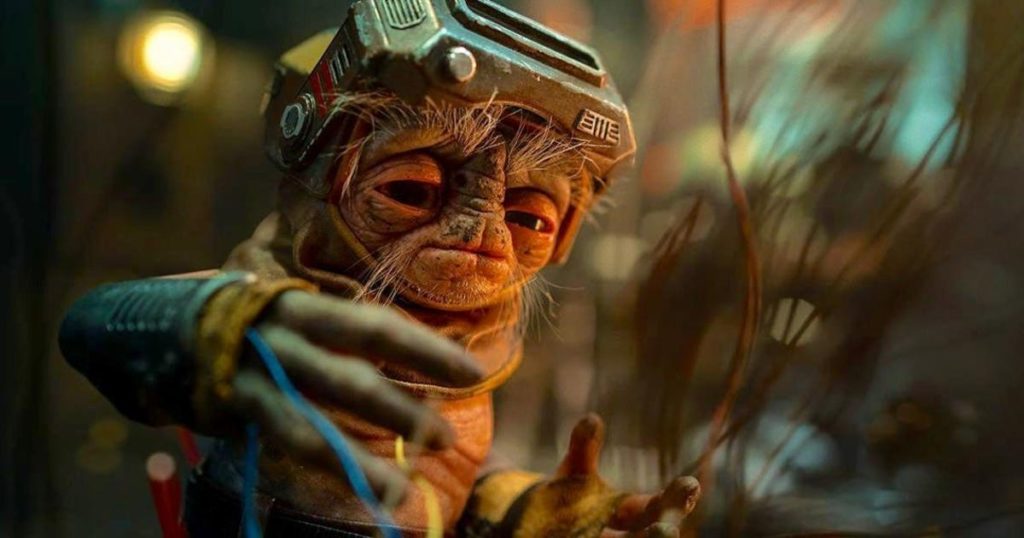
5) Babu Frik – One of the hardest things on a Star Wars production must be when you’ve put everything together and a character who you didn’t think much of at the time turns out to be an amazing breakout character, yet you don’t have the time left to expand their role. Babu Frik was that character in Episode 9. He was so fun. If you could’ve put him on the mission with the guys, he would’ve been comedic gold. Instead we get the giant packet of boring sauce that was Zori Bliss, who had about as much humor in her entire existence as Babu Frik had saying his name out loud. JJ’s ability to create these fun little characters was highly underrated (he did it with D-O as well).
4) BB8 – BB8 was Baby Yoda before Baby Yoda. I remember when I saw that famous Thanksgiving weekend trailer JJ surprised everyone with which featured that shot of this soccer-ball droid shooting across the desert landscape and thinking, “Oh my god. He’s done it! He’s given us a brand new Star Wars story!” It was so exciting. And it was one of the things in the original film that lived up to the trailer. The only thing I don’t like about BB-8 is that there isn’t a Saturday morning cartoon about him and Baby Yoda going on a road trip across the galaxy.
3) Jon Favreau – Jon Favreau is the guy Kathleen Kennedy needed from the start. If he was there giving her advice from the outset, we might’ve seen a completely different trilogy. But Favreau was not the force he was in the industry in 2015 and had to fight his way up through the Star Wars ranks, to get where he is now, which is unofficially running the TV side of the Star Wars universe. I don’t think Favreau is perfect. But he, all by himself, conceived of the first Star Wars character since the original trilogy that became part of the public zeitgeist, in Baby Yoda. For that choice alone, he’s gotta be near the top of the post-Lucas Star Wars rankings.
2) Kylo Ren – Behind that bundle of green joy, Kylo Ren is the biggest risk the post-Lucas franchise took. He’s this young whiney leader of the galaxy. It doesn’t make sense. But you know what they say about big risks? They have big payoffs. The unpredictability of the character brought something new and exciting to the Star Wars universe. We were used to Darth Vader, a guy who was structured and thoughtful about everything he did. Kylo was emotional and impulsive. I loved what that did for the series. It could be argued that Kylo Ren saved Star Wars. If they had gone with a more traditional villain, the trilogy might have been so boring that the franchise was permanently scarred. He’s such an interesting Star Wars character, Kylo. Also, JJ gets major major Star Wars points for casting Adam Driver.
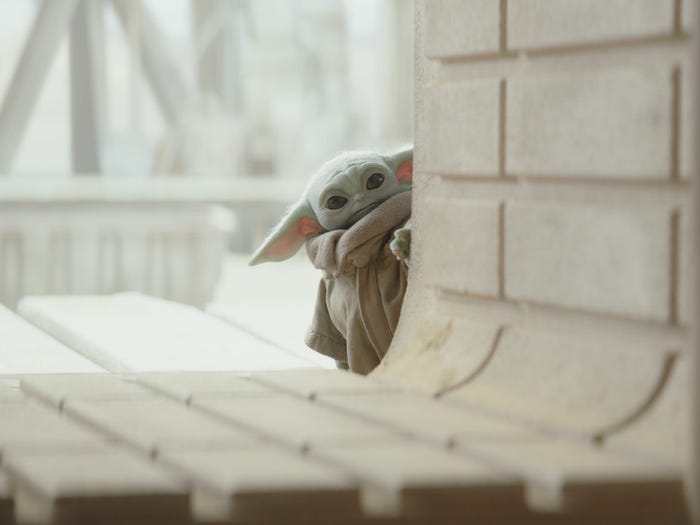
1) Baby Yoda – If there’s one thing everyone can agree on, it’s Baby Yoda. He’s just wonderful. And adorable. This is how I know this character is amazing. I have a friend who haaaaaa-aaates Star Wars. Hates it with every bone in her body. Yet *she* was sending me Baby Yoda memes during The Mandalorian’s run. Seeing Baby Yoda raise his little cute baby claw and channel the force to crush a giant robotic tank — the performance they’re able to get out of that little puppet warms my soul. It really does. It brings me back to the original Star Wars where everything was practical and that practicality contributed to making the universe feel real, because it was real! If you were on set, you could touch it. Favreau understood that. And it’s led to the best thing Star Wars has given us in decades.
Finally! The Bee Keeper script is here!
Genre: Action-Thriller
Premise: When his elderly neighbor is duped out of her entire life savings by online scammers and subsequently commits suicide, a bee keeper goes on a rampage to take the scammers down.
About: Yeah baby! Bzzzbzzzbzzzz! We’ve got a spec script that sold for over a million bucks. We’ve got Jason Statham playing the lead. David Ayer just signed on to direct the film two weeks ago. This is the kind of script writers who want to make a big splash in the business should be writing. Tyler Marceca just made a million dollars for a fun action thriller, Stay Frosty. Shay Hatten blasted onto the screenwriting A-List when he wrote a fun action thriller in Ballerina. This is a very lucrative genre for a screenwriter. And if you want to study someone who does it best, read Kurt Wimmer’s scripts. They’re some of the easiest funnest specs you’ll ever read.
Writer: Kurt Wimmer
Details: 106 pages
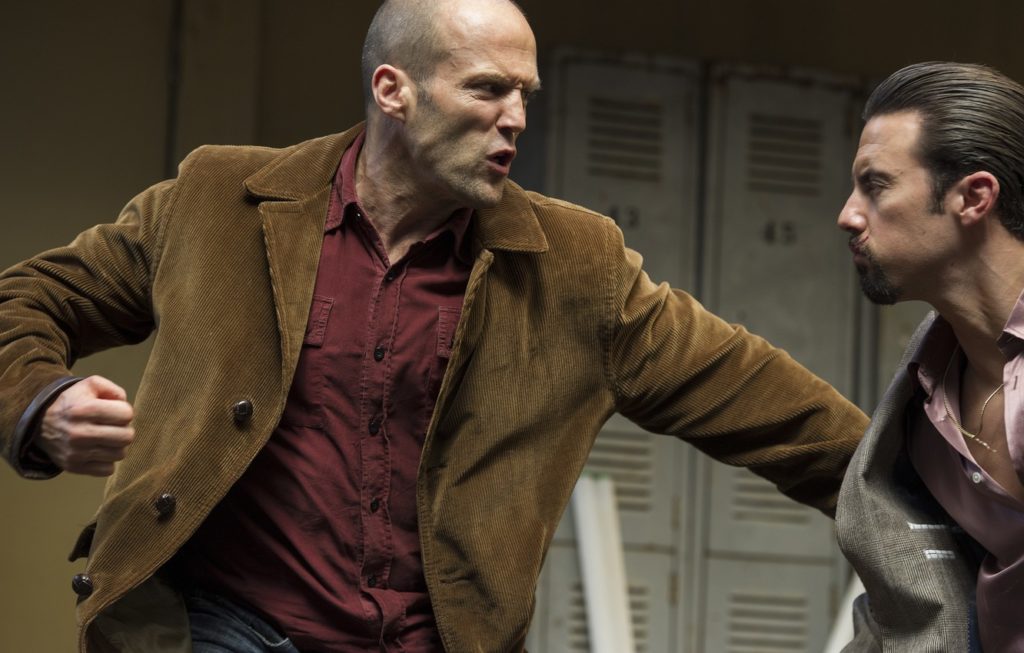
I’ve been really excited for this one.
Not only is it written by one of the most successful spec screenwriters of all time, Kurt Wimmer. It’s such a weird subject matter that my curiosity meter is off the charts. An action thriller…. About a bee keeper? Tell me more, please!
An old woman in rural Tennessee named Eloise is on her computer when she gets one of those spam warnings that most people ignore (“Your computer is infected. Call this number to fix it.”). Unfortunately, in an attempt to fix her computer, she calls the number. Within 5 minutes, her entire life savings has been stolen. That night, Eloise commits suicide.
The next day both her FBI agent daughter, Verona, and her reclusive bee keeper neighbor, Adam Clay, who she was friendly with, show up. After they both learn the truth, that a company located in Memphis called “Data Group” did this, Adam shows up at Data Group’s building the next day and burns it down.
Data Group, as it turns out, is a branch of a much larger corporation called Evermore Enterprises, run by the former director of the CIA, Westwyld. And when they find out some dude just burned down their building, they send four heavies to take him out. Except they do not “take him out.” They get taken out in some of the best action-fight writing I’ve seen in years.
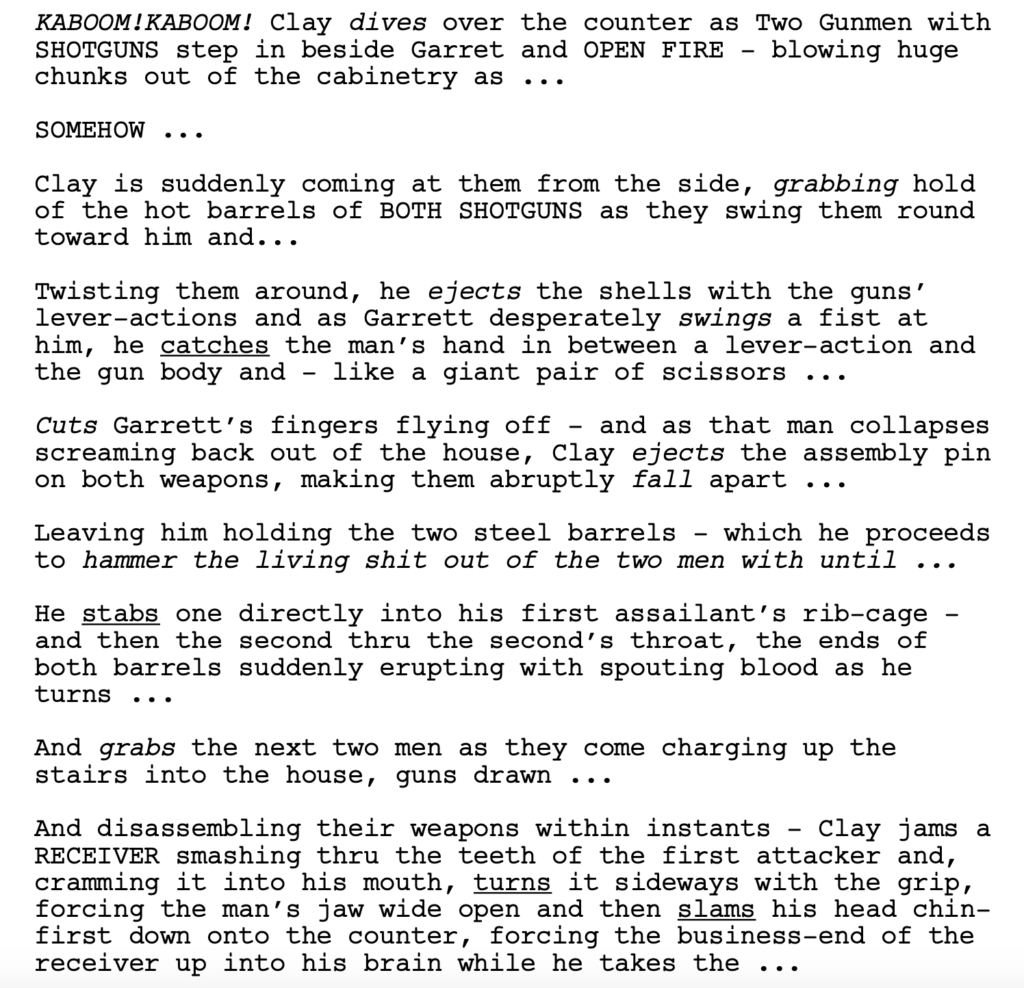
Clay then calls Westwyld and tells him he’s coming for him. It is then that Westwyld realizes he is not dealing with an ordinary man. He’s dealing with a “bee keeper.” No, not a bee keeper in the traditional sense. A type of secret agent that is so top secret not even the freaking president knows who he is. These beekepers are part of a larger “hive” who keep the country running by any means possible. I’ll let Westwyld explain…
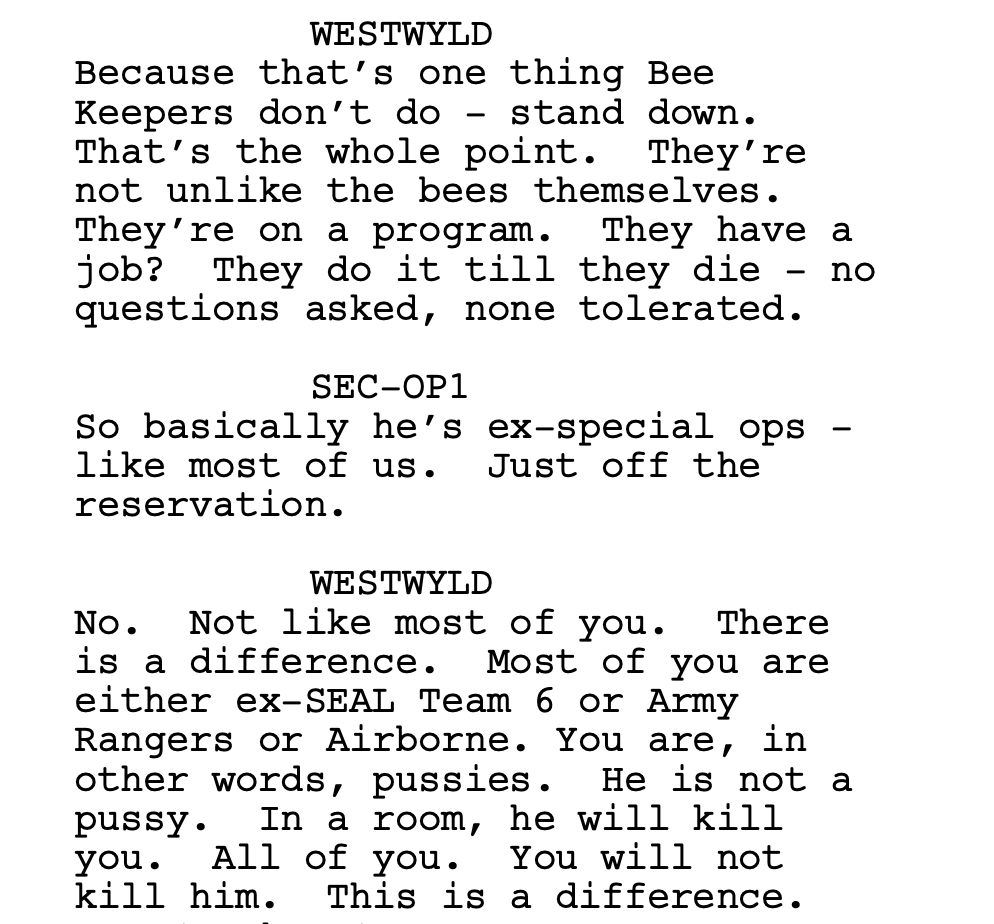
This forces Westwyld to ask for help from the Secretary of Defense! Who says that the only way to stop a bee keeper is with another bee keeper. Which they reluctantly agree to deploy. And this is where things get crazy, lol! When bee keepers fight each other, they use honey, they use bee puns, they use bee tactics. It is truly a marvel to behold. To say anything more about this script would be to betray the joy of reading it yourself. So find it and read it now! I’m sure someone in the comments can send it to you.
Hoooo-weee! I can’t remember the last time I forgot I was reading something. I totally forgot I was reading a script while reading Bee Keeper.
That’s because Kurt Wimmer is a master at writing spec scripts. And take note of the “spec” part of that declaration. There’s a difference between being great at writing a script and being great at writing a spec script. With a spec script, you have to keep a tighter grip on the reader. If you try to take your time and build something up for 15 pages without anything interesting happening in the meantime, you’ll lose the reader.
Wimmer understands this better than maybe any screenwriter in the business. Not only does he make sure each page keeps you reading. He makes sure before he’s even written a word that the concept and execution are going to create enough situations where he can keep you invested all the way through.
Beginner and even intermediate writers will decide to write a script with no idea if they can keep it entertaining the whole way through. They’re hoping they’ll figure it out “along the way.” Great screenwriters suss this stuff out ahead of time. Wimmer clearly did that here.
I don’t know why I’m surprised but I saw so many things here that were smart. For example, Wimmer does something really complicated in the screenwriting world with effortless ease. He has to make it make sense that Adam Clay will put his entire life on the line to get revenge on these people. And he has to do that through Adam’s connection with Eloise.
The problem is, he has to kill off Eloise quickly because she’s the inciting incident for the whole movie. Her death is what propels him to go on this journey. So he only has a brief amount of time to create a relationship between the two that emotionally resonates.
Complicating this is that you want to start these scripts off BIG. It’s an action-thriller. Starting with a character scene is not the best idea. So that was the puzzle Wimmer was challenged with solving.
What he did was he created this slow opening character scene between Clay and Eloise by inserting a problem – she had a wasps’ nest in her house. This allowed Clay, who’s a bee keeper, to come take care of it for her.
Now one of the tricks you can use to make a slow scene interesting is teaching us something interesting during it. Which is what Clay does. He explains what’s going on with the wasps. He tells us that wasps destroy beehives. Which is why it’s best to terminate them. We show him do some very technical interesting things to destroy the wasps’ nest, allowing us to both learn something cool and establish a relationship between these two so that we understand why he goes after the bad guys later.
On top of all this, we’re learning who our hero is. What he does.
The best scene-writing, especially in the first act, does multiple things at the same time. And Wimmer is doing that on expert-mode here. But he’s not just achieving that. He’s achieving it invisibly. We don’t see any of the mechanisms that are creating this effect because they’re seamless and invisible. That’s great writing.
He also does something really clever with the bad guys. Sometimes we can get lost in trying to create an interesting bad guy. But you can make that job a lot easier on yourself by doing what Wimmer does here – creating a villain with “built-in hate pedigree.” The villain is a scammer (everybody hates scammers) and not only that, but they target the elderly (everybody hates people who take advantage of the elderly).
So before we’ve even met our scammer, we hate him. And that does SO MUCH OF THE WORK FOR YOU when you write the script. Because if we hate the villain, we’ll almost want to keep reading to see them go down MORE than we want to see our hero achieve his goal.
I can’t emphasize this enough. The big secret hack when it comes to writing great screenplays is to make the reader feel EMOTION. Once you have a reader emotionally invested — actually, hold up, let me think about how to phrase this…
You know how when you meet someone who you really really like and want to be with? All you can think about is them and being around them? That’s because you’re emotionally hooked on that person. They’ve triggered you on an emotional level.
It’s the same idea with a screenplay. Just like you can’t convince a person to like you logically, you can’t convince a reader to like a script because you’ve done everything the proper way it’s supposed to be done.
You hook the reader by making them feel something. As strong as you can make them feel it. And we feel it here immediately when we have this nice old lady get taken advantage of by these terrible people. And we’re in! That’s it! We’re in. We want to see that person go down. Which is why this script works so well.
The rest is gravy. It’s a fun ride where this guy tries to kill the bad guys.
The only thing I didn’t like about this script was the idea that there was no recourse for someone illegally jacking into your bank account and transferring all of your money out of it without your permission. Especially when you consider that the woman’s daughter was a federal agent! Talk about kicking the hornet’s nest. The FBI would be able to take this enterprise down within 72 hours.
So I didn’t like that. But crazy enough, the writing was so darn amazing that I didn’t care. It was such a fun exciting and FUNNY ride. I loved this quirky concept of a bee keeper taking the bad guys down. It was so different. And the mastery of Wimmer just made it a dream read. Every screenwriter should read this script to see how to make their own scripts read. It’s truly impressive stuff.
[ ] What the hell did I just read?
[ ] wasn’t for me
[ ] worth the read
[x] impressive
[ ] genius
What I learned: This is a little dialogue trick I’ve learned that always works in scripts like this. The formula goes something like this. Your hero approaches one of their targets and runs into some foot soldiers (guards, heavies, in this case, security) and the foot soldiers ask what your hero is doing here. There’s a tendency to think logically about how your hero will answer that question. They might say, “I have an appointment here and I’m late.” Maybe he tricks them by calling a fake number and letting them talk to the person to “confirm” that he indeed has an appointment. But where’s the fun in that? Instead, when Adam Clay goes to the Data Group building and encounters security outside and they suspiciously ask him what he’s doing here, he responds, “If this is Data Group – the call center – I’m going inside. I’m going to burn it down.” In other words, have your hero say EXACTLY what he’s going to do. You can do this anywhere. If you’re writing a movie in the 1700s and a William Wallace like character walks up to the castle and the guards say, “What do you want?” “I’m planning on walking into your castle here, heading up to the king’s throne room, and gut him before cutting off his head and tossing it out the window.” I’m telling you, it works pretty much every time.
The team that brought us Arrival, Ted Chiang and Eric Heisserer, is back with an adaptation of another one of Chiang’s stories.
Genre: Drama/Light Sci-Fi
Premise: After being released from a mental hospital, a brilliant mathematician comes up with a theory that could destroy the entire mathematical field.
About: This project just came together recently. It reteams author Ted Chiang with Eric Heisserer, who adapted his short story, The Story of Your Life, into the surprise hit sci-fi film, Arrival. Heisserer will be producing this time around. Henry Dunham, who directed the super-interesting (and killer script), “The Standoff At Sparrow Creek,” will be adapting and directing. This comes from a story that Chiang wrote all the way back in 1991. You can read the short story for yourself here.
Writer: Ted Chiang
Details: 5500 words (for reference, a screenplay is a little over 20,000 words)

I have to give it to Eric Heisserer. He’s the one who saw something in “Arrival” that no one else did. Because when you read Ted Chiang’s stories, it is not an effortless experience. His stories tend to be vague, metaphorical, and feelings-based rather than having some clear plot that one could easily sculpt a feature film out of.
That is, without question, why we haven’t heard of anything from Ted Chiang since Arrival. As soon as that movie became a hint, Hollywood scoured through all of his short stories, of which there are many, and came away with bupkis. They just couldn’t find anything.
That’s why this development is so interesting to me. For one, it says that if there’s one person who knows how to figure Chiang out, it’s Heisserer. He’s the guy who can get into his head and know how to bring one of these weird stories to life. And two, this is one of Chiang’s earliest short stories. He wrote it all the way back in 1991. That implies that maybe this is one Hollywood missed when they went digging into Chiang’s work – a gem just waiting to be plucked and sold at Sotheby’s for tens of millions of dollars.
We shall find out together if said belief is true.
Our story follows a 32 year-old mathematician named Renee, who’s just been released from the mental hospital for unknown reasons. She heads back home with her supportive husband, Carl, and immediately gets to work on a mysterious new mathematical theory.
The tale is told in mini-chapters roughly 250-500 words long. Between each chapter is a history lesson on how math has evolved throughout the centuries. A recurring theme in these “Did You Know?” snippets is the idea that arithmetic has never entirely been proven infallible.
Back at home, Renee, for whom happiness is so foreign it appears she’s never so much as giggled in her life, spends the majority of her time in her office, working on this math theorem. Carl, in the meantime, starts to wonder if he actually likes his wife anymore. I would counter that by asking Carl why he liked Renee, you know, in the first place.
Around this time, we get some odd backstory that Carl was once in a mental hospital in his early 20s as well! And Renee had been there for him, nursing him back to health after he’d tried to commit suicide. I think the point here is to create this dynamic by which Carl can’t leave Looney Renee since she was there for him during his time of need.
I’m sure you’re all wondering what this theorem is that Renee came up with. My decision to create some suspense before telling you is far more of an attempt to entertain the reader than anything I read in this short story.
The theory Renee proves is that all of arithmetic is false. She has proven that the number 1 can equal the number 2. Not only that, but that any number can equal any other number. And, therefore, there is no such thing as math. Everything we have built our world around is false. Or something. The End.
 Amy Adams completing the band getting back together?
Sorry.
I couldn’t hide my disgust for this story in the summary.
Here’s the thing. I’ve read so many of these “the world is the universe is math is numbers equals equations that kind of sort of explain the meaning of life” stories and they never ever deliver. Because they can’t.
You’re not going to be the writer who figures out something about math that nobody’s ever figured out before and then lay it out in a fashion that is going to be anything other than vague, frustrating, and, ultimately stupid. Go watch Interstellar if you don’t believe me.
I guess the question is, does Heisserer plan on using Division By Zero as the starting point of an idea or the idea itself? I would posit that he approach it as a starting point. Because two people fumbling around their house talking about mathematical equations and also remembering suicide attempts isn’t compelling storytelling.
What I’m hoping for is that this is the kernel for a much bigger story Heisserer has in mind. Because if you extrapolated someone disproving math to affect the entire world, there might be a movie there – another “thinking man’s sci-fi movie” like Arrival was.
For example, maybe this is a mathematical proof that, if it was released into the world, it would cause complete chaos, since no form of math matters anymore. But let me stress that nothing like that was ever mentioned in the story.
In fact, in the short story, Renee publishes her proof and a bunch of mathematicians collectively shrug their shoulders. That was one of my biggest problems with the story. There was zero stakes. Who gives a rat’s behind about some proof if it doesn’t affect anything??
But again, Heisserer might already feel this way and have plans to fix the issue.
For those wondering what makes a short story “adaptable,” there are two questions you want to ask yourself. 1) Should the story be adapted? This is divided by zero into two secondary questions. A) Is the concept good? And B) Are the characters worthy of building a movie around? The second question is, 2) Do you have a good angle to adapt the story into, something that can fit nicely into a feature-film structure?
So let’s quickly answer these questions. Should this story be adapted? The concept of disproving all of math has potential. So I’d say, “Maybe.” But there are zero characters in this script. Renee is way too harsh to be anything other than hated by audiences. And Carl’s just boring. So Heisserer would need to completely rewrite these characters.
Finally, is there an angle here? Again, the “math isn’t real” thing has some potential but I’m not sure I see an angle into it. You could go the stupid route of the theorem being placed on a thumb drive and everyone’s after it, some to expose it, others to keep it hidden.
You might be able to do something like Margin Call meets Don’t Look Up where we watch this theorem work its way up the mathematical world hierarchy, getting to bigger and more influential mathematicians, each of whom are terrified by the prospects of the theorem getting out and what it would lead to.
A third option – and I suspect this is the one that may have attracted Heisserer to the story – is to go the A Beautiful Mind route. There’s some stuff in the story about, is Renee going crazy or not? I suppose you could shoot for the Best Actress Oscar with that. But you’d need to find a way to make Renee at least tolerable. At the moment she’s about as relatable as a Pythagorean theorem.
In conclusion, this feels like an “almost idea.” It’s one of those ideas where you think, “Yeah, there’s something interesting in there. But it doesn’t add up to anything.” And yes, I just went there. Because 9 minus 5 still equals 4 so why not? :)
[ ] What the hell did I just read?
[x] wasn’t for me
[ ] worth the read
[ ] impressive
[ ] genius
What I learned: Despite what I’ve said today, I do think that you can mine short stories for great concepts even if the execution of the story sucks. We’re all just searching for that great idea. So if you like the core of a story but not the rest, get in touch with the writer and see if they like your idea of changing it. Remember that one of my favorite shows, Into the Night, about a group of people on a plane trying to outrun the sun, was based on the very first page of a 400 page novel and nothing more. Most writers want to see their stuff turned into TV shows and movies so the smart ones will listen to you.
What I learned 2: Avoid repeating yourself. For example, Renee attempted suicide and stayed at a mental hospital. Later we learn that Carl, when he was younger, attempted suicide and stayed at a mental hospital. Whenever the same things happen to your characters in a way that’s not necessary for the plot to work, it reads as lazy. Like you couldn’t think of anything original for the other character so you just copy and pasted. It seems as if Chiang was trying to create a dilemma for Carl in that Renee once helped him out of this problem so it is his duty to help her out of hers. But you could’ve easily achieved this by creating a separate tragic event that required Renee to help Carl. Maybe he lost his sister or something and she helped him through it. You don’t want or need to use the exact same experience.

As a kid who grew up on Star Wars, and who loves the original Star Wars more than anything, you would think that A New Hope would be the most memorable movie from my childhood. But that actually isn’t true. Both Empire Strikes Back and Return of the Jedi were more memorable.
The reason for this is, Star Wars began a new expectation in Hollywood that, with each new blockbuster film, you were going to see things you had never seen before. And when I went to those sequels, that’s exactly what happened. I saw AT-AT walkers and tauntauns. I saw aliens with lobster heads and speeder bikes shooting through gigantic trees.
Back then, Star Wars was the defining franchise for Hollywood’s new mantra: GIVE THEM SOMETHING NEW AND FRESH. Every movie that had aspirations of being a hit had to give audiences something genuinely new. It’s why Jurassic Park did so well. It’s why Men in Black and Independence Day and The Matrix and Aliens did so well. Hollywood operated off of this idea that why would someone see a movie if all you were going to give them was something they’d already seen?
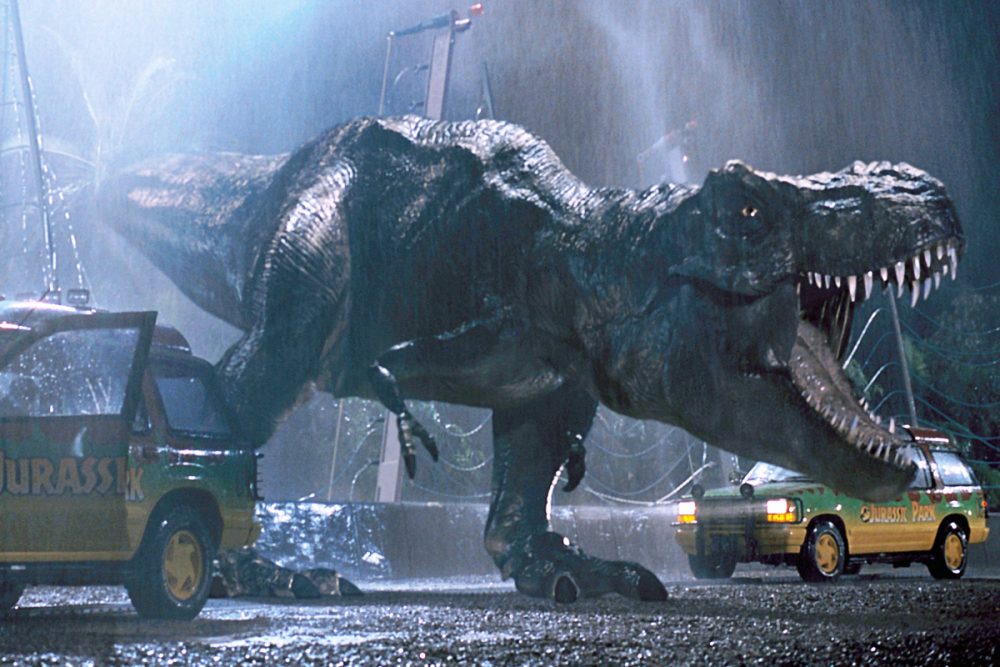
But somewhere around 2005, when comic book movies started to take over and special effects companies were able to create anything you could imagine, it all of a sudden became a lot more difficult to give audiences something new. Once you have a man in an iron suit fighting a giant green monster in the sky or five-story tall robots hurling each other into city buildings… what can you really show audiences at that point that they haven’t seen?
Marvel realized that this was going to be a problem. Whether intentional or not, they had opened up Pandora’s Box. How do we tempt audiences to come to theaters when we’ve already given them everything? They’ve come up with a temporary solution. More superheroes. You cram more spidermen, more Avengers, and more surprise guest caped crusaders into your flick, because, technically, you are still giving audiences something new. You’re giving them more superheroes to play around with.
And Marvel has a quasi stay of execution since they now own 20th Century Fox. People are going to be excited to see the X-Men hanging out with Thor. They’re going to be excited to see the Silver Surfer cutting a jib with Starlord. They’re going to love when the Fantastic Four goes on an adventure with Spidey. But eventually, even that will peter out. At a certain point, people are going to say, “What’s new? What’s next?”
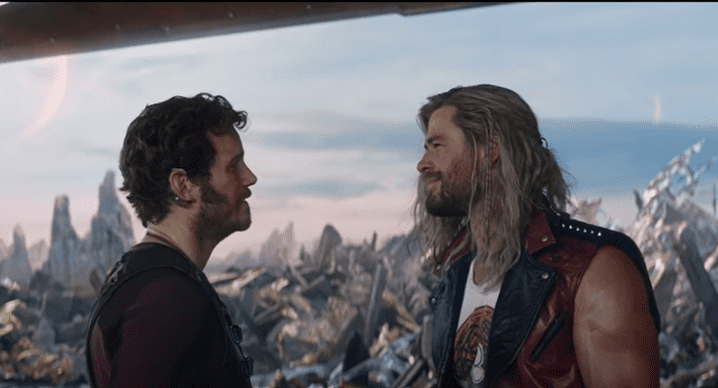
I think about this a lot because you – as in you, reading this article right now – are the solution to this problem. It will be up to you to come up with the next big thing. The question is, is it possible to come up with the next big thing anymore? Is it possible to shock readers anymore? Is it possible to show them something they’ve never seen before?
As someone who reads pretty much everything, I can’t remember the last time I read something totally fresh. I’m not even talking about the whole script. I’m talking about one set piece I haven’t seen before.
There are scripts that are KIND OF unique. Colin Bannon, who wrote yesterday’s script, for example – he wrote a script about ultra marathon runners who participate in a death race where an evil mythological creature kills the runners one by one. Have I ever come across that specific concept before? No. But I’ve read plenty of scripts where people get killed by a creature in the woods.
Which leads us back to the question, can writers come up with anything truly new? Like an AT-AT Walker attack on a snow base in 1982?
Probably not. But that doesn’t mean we can’t still write movies that wow a reader or an audience.
And by my estimation, there are still two ways to do that.
There’s a way for the ultra-talented screenwriter. And there’s a way for the workhorse screenwriter.
For the ultra-talented screenwriter, the answer is A UNIQUE VOICE. Back in the 90s, concurrently with all these big Hollywood movies that were giving us stuff we’d never seen before, the indie scene was also giving us stuff we’d never seen before, but not through big expensive effects, like dinosaurs. But rather through their own unique lens. Tarantino, Paul Thomas Anderson, Spike Lee, Charlie Kaufman, Wes Anderson. They would lead us into the 2000s where we got Diablo Cody, Alan Ball, Alfonso Cuarón, M Night, Edgar Wright, and Jordan Peele. These writers showed us the world in ways we had not seen on film before.
You can’t really strategize a voice. Your voice is inherently yours so you can’t change it around. But voice tends to break out when it’s different from what we’re used to seeing. That’s the whole point of today’s article. You’re giving them something new. So if you’re writing “male romantic comedies” at a time when Cameron Crowe was the biggest screenwriter in the world, your unique voice probably isn’t going to be appreciated, since there’s already a strong voice dominating that sub-genre.
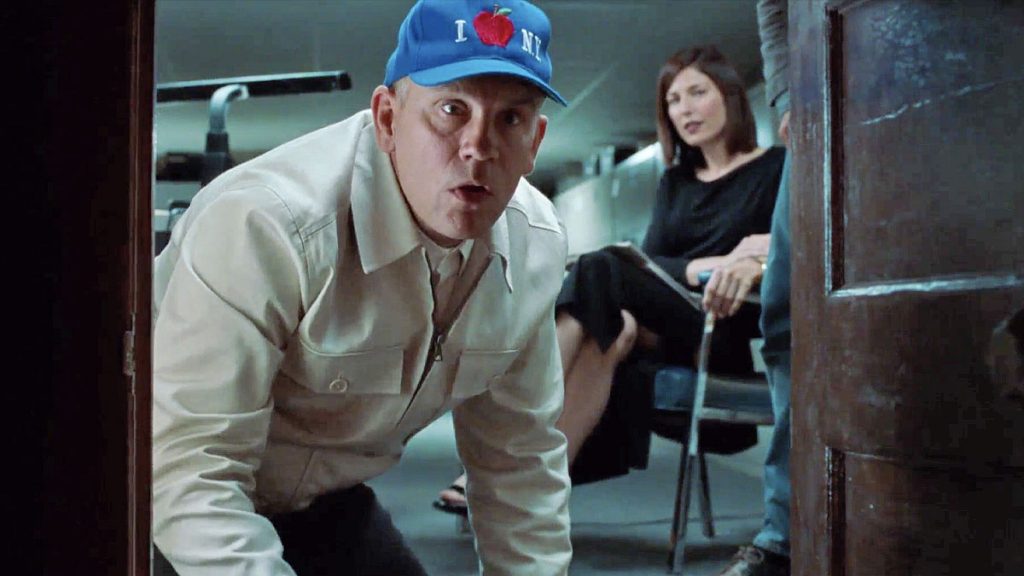
But nobody knew what hit them when Charlie Kaufman started getting movies produced. We’re in John Malkovich’s head?? What the hizell is going on right now??? Ditto Diablo Cody. We hadn’t heard heightened dialogue that fun and lyrical since John Hughes. Nobody else was doing that at the time.
Fortunately, if you’re one of the lucky lottery winners who have an industry-changing voice, you don’t need this article. You’re probably going to be okay. So let’s switch over to what the workhorse writer can do.
First off, like I said, you should still be trying to come up with new ideas. Whether it be concepts or set pieces or even an idea for a scene that’s never been done before (the opening sequence from Promising Young Woman, where the prey shockingly becomes the predator, for example). The more “new” you can get into your script – even if it’s not world changing new like an Old West bar full of aliens, you should include it. Cause all those little *slightly new* things add up.
But here’s where you should really be focusing. Because this is the hack that will allow you to write even a traditional story that people fall in love with.
The way that the workhorse screenwriter can circumvent the blueprint is to write a great main character into their script. And let me explain why. When a reader falls in love with a character, they don’t care that much about anything else but following that character around and seeing what happens to them.
This is the secret sauce that will work now and until the end of time. It is the reason why, even though we in the movie business can no longer provide audiences with things they’ve never seen before, we can still make them feel things. We can still jack into their emotional circuit board and take them on a ride that will feel just as powerful as their last relationship. That will fill them with just as much love and pain as the trials and tribulations they go through with their own family. And when they finish that ride, they will feel a much deeper connection to that film than all the CGI dinosaurs combined.
Okay, Carson, that’s great. Write a great character. Duh. That’s still really hard to do, though.
It is hard. But, at this point, it’s way more doable than trying to create something nobody’s ever seen before.
So let me give you two recent films that achieved this that you can learn from. The first was Joker. And the second was Everything Everywhere All At Once.
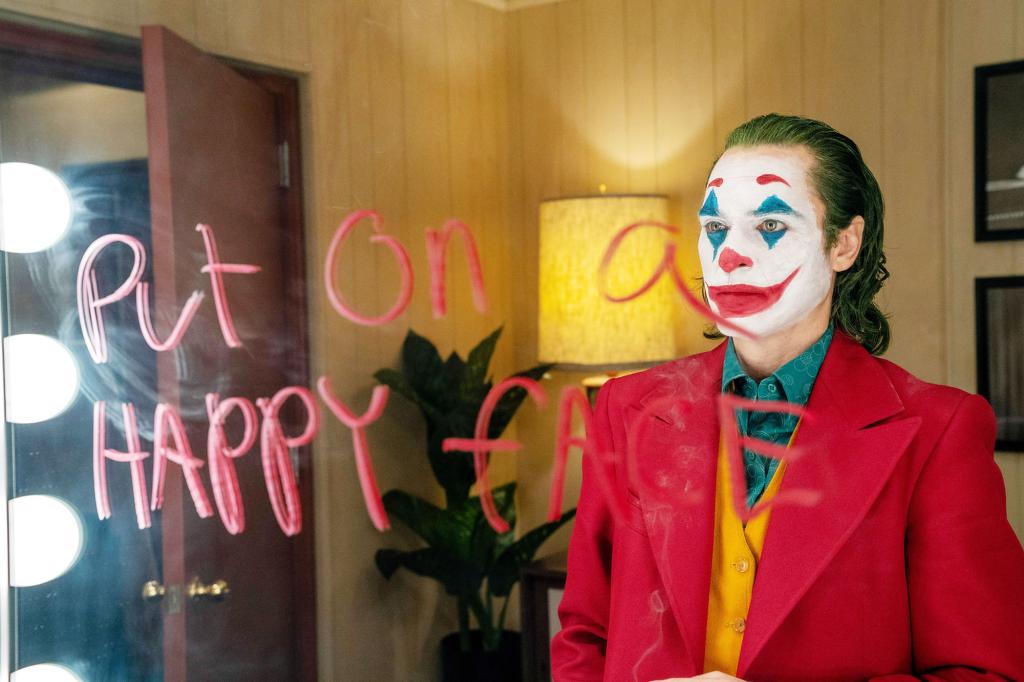
Joker, more than any movie in the last ten years, proved that if you focus on creating a really compelling main character, you don’t need anything else to be new. And you don’t need big fancy effects either.
The reason Arthur (the Joker) worked is because the movie made him sympathetic – someone who was picked on and made fun of wherever he went. He had a mental condition, which created more sympathy. We liked him because he took care of his mother. But also, we saw how difficult that was for him and how it shaped him (limiting his opportunities to create a social circle), adding complexity. He was an underdog in his pursuit of the pretty girl who lived in his building. So we rooted for him.
But here’s where the character took off. Cause if you stopped there, you could’ve placed that character in a romantic comedy. The reason the character becomes iconic is because he hates the world and he starts to have a severe mental breakdown. Going so far as wanting to hurt innocent people.
Severe contrast within a character (you’ve got this really good stuff and this really bad stuff swirling around in the same body) is often what makes them compelling and interesting to watch. And Arthur Fleck had that in spades. We wanted to watch him to see what he did because what he did was usually interesting.
Everything Everywhere All At Once was a completely different beast in that it was an ensemble piece and it actually was giving us bits and pieces of “new” (I mean, there’s a universe where everyone has hot dog fingers). But where the film really excels is in its characters.
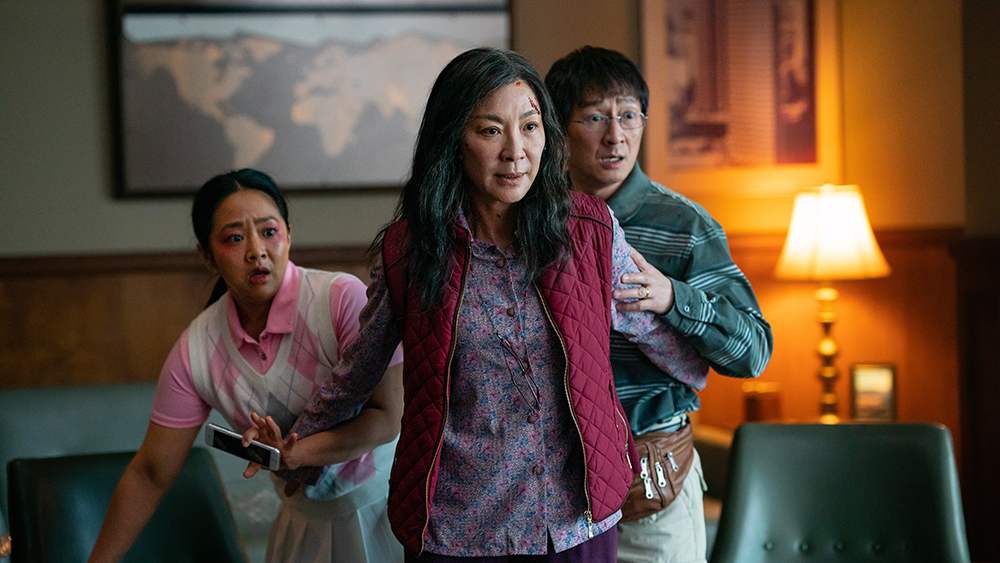
The mother, Evelyn, has this really complex backstory where her father warned her not to marry this wimpy man. She ignored him and did anyway. And it turns out her father was right. Her husband never amounted to anything and, because of this, she’s 60 years old and managing a crappy laundromat that’s being held together by rubber bands and popsicle sticks.
She’s got a daughter who’s gay and it’s really really hard for her to accept that. If you slide over to the husband’s storyline, he loves his wife more than anything and is dealing with the fact that she wants to divorce him. She’s loveless. He’s hopeless. The daughter is miserable. And all of that stuff is rooted heavily in a backstory that was extensively reserached because it had to be since the movie would explore hundreds of different versions of that same backstory in other universes.
The climax of the movie is not a big fancy Marvel showdown but rather, by the Daniels’ (the directors) own admission, an “empathy fight.” It’s this family trying to connect for the first time in years.
I bring this example up because it would’ve been easy to write paper-thin characters and just focus on the fun kung-fu and multiverse gags. By making sure the characters were all complex, it turned a movie with a wacky concept into something that will stay with you for the rest of your life.
THAT’S WHAT YOU NEED TO BE DOING.
Create characters with interesting well researched backstories, who have intense unresolved inner conflict, and who also have unresolved conflict with other characters in the movie, who, to the best of your ability, you give the same fully-fleshed out treatment to.
Cause if you can write characters we love (the husband in Everything Everywhere) or are fascinated by (Arthur Fleck), those characters will get their hooks in the reader/audience, and everything else about the script becomes so much easier to pull off.
To summarize, if you’ve got that idea that nobody’s seen before, great. Write it. If you’ve got that set piece or scene that nobody’s seen before, great. Write it. As I’ve said before, producers will buy a script if it has one amazing “going to look great on screen” movie scene. If you don’t have either, try to include as much “kinda new” stuff as you can in your script. Cause it adds up. Finally, even if you don’t have a single new thing in your script, you can still write something great if you have a great main character or a cast of extremely strong characters. Unless you’re the next David Lynch, character-creation is your biggest weapon as an unknown screenwriter. Now go use it!
*********************
SPECIAL DEAL!!!!
Two script consultation slots just opened up this week. So I’ve decided to offer two SUPER-DEALS. 4 pages of notes on your feature or pilot for just $199. That’s 60% off the feature rate and 50% off the pilot rate. I know that half of you will be asleep when I post this, so here’s what I’m going to do. The very first person who e-mails me RIGHT NOW at carsonreeves1@gmail.com the word, “DEAL,” gets the first deal. And then, whoever e-mails me first starting at 9am Pacific Time tomorrow (Thursday), gets the second deal. This is a rare opportunity. If you’re someone who’s always held back because my consultations don’t fit your budget, this is the time to strike!