
Search Results for: F word

If you’re an aspiring professional writer, this question is probably a familiar one:
What if you’re just not good enough?
I’m here to tell you that this question shouldn’t scare you. It should invigorate you. Because all it means is that you’re an artist. To be an artist is to doubt yourself. It’s baked into the cake.
Of course, that doesn’t help you in the moment, when you get word that your script didn’t advance past the first round of a screenplay competition. Or you send your script to a friend for feedback and they tell you, as nicely as possible, that it blows chunks.
In those moments, it’s impossible not to wonder if you’re good enough.
Let me alleviate some of that fear right off the bat.
Almost all doubt is b.s.
If it was real, the second you achieved something, the doubt would stop. It would say to you, “I’m sorry, I was wrong. You’re definitely good enough. My bad.”
When you make the Black List for the first time, you will ask yourself, “Do I belong here?” When you sell your first script for a million dollars, you will ask yourself, “Was it a fluke?” When you get your first big studio credit, you will ask yourself, “Am I an imposter?”
I know a very famous screenwriter, someone who’s arguably in the top 10 most successful screenwriters of the last 30 years – and even he expressed to me that he thinks, “Have I lost touch?” “Do I not know what audiences want anymore?”
I tell you this so that you see doubt for what it really is – a leech that thinks it’s doing you a favor by lowering your expectations so you don’t get upset when something doesn’t go right. You’re an artist. Therefore, you will always doubt yourself on some level and THAT’S OKAY.
What’s not okay is allowing the doubt to control you. Writers, by and large, are introverts. They live in their heads. This is extremely dangerous when things aren’t going well because the writer will start asking the question, “Am I good enough?” And it will loop. “Am I good enough?” “Am I good enough?” “Am I good enough?”
If you don’t put a stop to that loop, perception becomes reality. You aren’t good enough because you’ve convinced yourself you aren’t good enough. And that’s when the true damage sets in. The less you believe in yourself, the less you’ll write. The less you’re writing, the less chance you’ll write the thing that catapults you to the next level.
So while the question, “What if I’m not good enough?” will always be there, it shouldn’t dictate your belief in yourself or your writing output.
I remember resisting starting Scriptshadow because I didn’t think I was a good enough writer. I’d read a million articles in newspapers and magazines and I didn’t think of myself as someone who could match that level of professionalism. I wrote in a sort of goofy informal manner, the exact opposite of what “professional” writers did, and that nearly prevented me from starting the site.
In the end, I tricked myself by labeling the site “non-professional.” If the site itself was non-professional, then I didn’t need to be professional. It did the job and in the intervening years, I learned that professionalism, while important, wasn’t the whole ball of wax. There were other factors that make you a good writer like your writing style, your sense of humor, your ability to entertain, your point-of-view. All of these things could bridge the gaps you have in your writing.
I’m embarrassed to admit that when I started the site, I did not know that you always put quotes AFTER the punctuation. But had I convinced myself that I wasn’t good enough to start the site, I never would’ve learned that and fixed it.
Probably the biggest reason this question comes up is time. When you’ve been writing for a long time and nothing’s come of it, it’s hard to identify any reasons to continue other than blind faith. And while blind faith works for the first couple of years, it seems to depreciate exponentially every year thereafter.
Every rejection seems to reinforce that you weren’t cut out for this line of work. And since most writers don’t have a support network, they eventually fall victim to the negative voice in their head telling them that their pursuit is a waste of time.
But you know what I think?
I think that’s bull$hit.
The reason being: You can always get better.
Always.
There are hundreds of little things in screenwriting you can do that, once you learn, your screenwriting gets better. So as long as you’re constantly making those little 1% improvements here and there, you’re raising your overall ability as a screenwriter.
Maybe you write twenty practice scenes where the only thing you focus on is building conflict into the scene, so that your scene-writing becomes more entertaining. If you do that, you’re going to write lots more conflict-heavy scenes in your scripts, and I guarantee it will make them more entertaining.
Or when you write your next draft, focus on losing one line from every action paragraph. That will ensure your script is more lean, and therefore, faster to read.
Do a deep dive one month where you watch your 20 favorite movie characters and write down what it is about each character that you like so much. Take that research, identify the commonalities between the characters, then start writing protagonists with those qualities into your own scripts so that your main characters are better.
I’ve got 1000 “What I Learneds” on the site. Go through them all and use them as prompts for screenwriting practice. As long as you’re always learning something new each time you write, you’re improving. Therefore, it’s only a matter of time before your writing reaches a professional level.
It’s the writers who keep making the same mistakes, the writers who don’t seek out criticism, who will stay at the same level. And, yes, if you aren’t constantly trying to improve, then you probably will never be “good enough.” The landscape is too competitive not to be improving. Luckily, improvement is within your control.
I tell writers all the time during a consult: “This is what you’re doing wrong.” I’m very clear about it because I’ve found, over the years, that if I sugarcoat it, they don’t think it’s as big of a deal as it is. So I make it clear: don’t do this anymore. Yet they come back to me with another script a year later and they’re making the exact same mistake.
For example, they’ll be very obvious and clumsy when writing exposition. So I’ll go through the exposition and explain why it’s clumsy. I’ll explain how to write it so it isn’t clumsy. And yet, when the next script shows up, I see clumsy exposition again.
I understand that we don’t always grasp concepts the first time we hear them. But for a lot of aspiring writers, there seems to be an, almost, willful ignorance about these concepts. They either don’t think they’re as big of a problem as they are or they think that they’re special somehow, and that this particular issue doesn’t apply to them.
I know writers on this site who I want to shake and scream, “YOU KEEP MAKING THIS SAME MISTAKE! YOUR WRITING WOULD BE SO MUCH BETTER IF YOU JUST CHANGED THIS ONE THING!” For some of these writers, I’ve told them this! And yet the same mistakes are still there. And it baffles me. Cause I’ve led you to water. But you still have to be the one to drink.
What I’m saying is, any question regarding whether you’re good enough or not, is usually self-inflicted. You can have the goods if you’re willing to do the work. But if you’re stubborn, if you think your way is the only way, if you’re ignorant, if you don’t think it’s as big of a deal as I do, if you don’t have an “improvement” mindset – you’re going to be stuck in that “almost-pro” tier forever.
And I already know some users will decry this and say success still comes down to those who get lucky. Look, luck plays a part in everyone’s life. But luck favors the people who are ready for the luck to strike them. It doesn’t operate randomly. If some producer is reading Scriptshadow and sees an Amateur Showdown script that they decide to read a few pages of — that producer is not going to buy the script just because. They’re going to buy it because the script is good. And the script was good because the writer did the hard work, kept improving, until their writing was at a professional level.
What I’m saying is, you are good enough.
I truly believe that.
Outside of a tiny percentage of people who don’t have any sort of knack for writing, you are good enough. But you have to be constantly improving if you’re to have any chance at success. So please, always be seeking criticism. You need to know what your weaknesses are so you can fix them. Always be improving some aspect of your writing. Always be open to there being a better way than the way you’re doing it now.
There’s no way you can’t get to the top if you’re always improving. Period. The only way you won’t get there is if you stop. And 99% of writers either stop writing or stop trying to improve. Don’t let that be you.
Happy writing this weekend!
$150 OFF A SCRIPTSHADOW SCREENPLAY CONSULTATION! – To the first person who e-mails me at carsonreeves1@gmail.com with the subject line: “150.” I have a 4 page notes package or a more detailed 8 page option designed to both fix your script and improve your writing. I also give feedback on loglines (just $25!), outlines, synopses, first acts, or any aspect of screenwriting you need help with. This includes Zoom calls discussing anything from talking through your script to getting advice on how to break into the industry. If you’re interested, e-mail me at carsonreeves1@gmail.com and let’s set something up!
Genre: Period
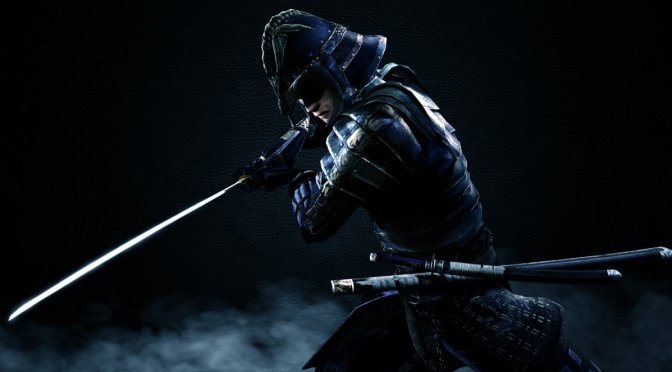
Premise: The true story of the first and only African Samurai in feudal Japan who rose from being a slave for the Jesuits to fighting as a Samurai in the unification of Japan.
About: Screenwriter Stuart Paul sold this project to MGM back in 2019. He also sold a spec around that time called “Terminal Point,” to Universal. Don’t know what that one’s about but the title sounds cool so if you’ve got it, send it my way!
Writer: Stuart Paul
Details: 121 pages
Period pieces.
What happened to them!?
They used to be a Hollywood staple.
I’m guessing it’s Marvel’s fault. I mean, samurais used to be bada$$, right?! These days? They’re superheroes without powers. And who wants that?
Not to mention, period pieces require patience in a world that no longer has any. So that might be why it’s so hard to push these through the system these days. Let’s see if Stuart Paul’s period piece is good enough to get made.
It is the late 1500s. Iosufe, 25 years old, is minding his own business in his home country of Mozambique when Portuguese warriors swoop into his village and brutally slaughter everyone, including his two children. Iosufe is then separated from his wife and thrown on a boat, sent to far off lands to be a slave.
Eventually, he meets Valignano, a Spanish aristocrat who is spreading the word of God across the world. Valignano has never seen a man as enormous as Iosufe, and so makes him a de facto bodyguard. Through Valignano, Iosufe starts to become educated and cultured.
After many months, the two hop on a boat to the Far East. The last place to conquer for Christianity is Japan, so Valignano sails there and begins his mission. The only problem is that there’s this guy named Nobunaga who is trying to take Japan from the current Emperor. And if he becomes Emperor, he will likely put an end to Christianity.
So Valignano and Iosufe travel to his city to negotiate with him. When Nobunaga sees the physical specimen that is Iosufe, he becomes obsessed with him. Seeing this, Valignano gifts Iosufe to Nobunaga in the hopes of gaining political favor from him. For the time being, at least, Nobunaga promises not to take over Japan.
Nobunaga immediately calls for Iosufe to be trained in the ways of the samurai, something the rest of the samurai aren’t so keen on. But after several trials, Iosufe, who Nobunaga renames, “Yasuke,” (meaning, “Idiot”), becomes a samurai.
Nobunaga then brings his army to the last major opponent between him and the Emperor, where Yasuke proves his worth by leading the charge and taking over the city. But after he learns that the women and children of the village will be slaughtered, and he will lead it, he must ask the question, has he become the very man who destroyed his own life? With renewed purpose, he plans his escape in the hopes of finding his wife and reuniting with her.
When you write a script like this, there are two things you must get right.
- There must be sophistication to your writing.
- You must be entertaining.
By sophistication I mean you must have a deep knowledge of the subject matter. You must write with specificity. You must write with discipline. The dialogue has to sound like people speaking back during that time. And there’s no room for messiness. Yesterday’s script, the Michael Bay comedy biopic, had endless room for messiness. These scripts don’t tolerate it, though. They must possess a novel-like attention-to-detail.
Ironically, if a writer can excel at the first thing, they tend not to excel at the second one (write entertainingly). This is because the writers drawn to this subject matter prioritize authenticity so heavily that they forget it doesn’t matter unless the script is entertaining. They’d rather accurately describe the architecture of Rome than write a baller conflict-heavy dialogue scene between the hero and the villain.
Yasuke gets an 8 out of 10 in the sophistication department and a 6 out of 10 in the entertainment department. Which averages out to a solid 7 out of 10.
On the plus side, the writer gets the main character right. It’s hard not to root for someone whose kids are brutally murdered in front of him (and when I say brutally, I mean brutally), whose wive is taken away from him, and who becomes a slave. I mean, if you’re not rooting for Yasuke, there’s something wrong with you.
But then the script runs into a unique problem. Our main character has zero agency over his journey. He’s a slave. So he’s not making any decisions. He’s not being active. He’s just following others around and doing what they say. This makes for a frustrating reading experience because whenever a big moment arrives, it’s whoever’s leading Yasuke that makes the decision, while Yasuke just stands there and nods.
I suppose the argument against this is, “Well, he’s a slave. Slaves can’t lead or it would defeat the point.” I understand that. But then you have to ask, was it the right call to write the script in the first place? Cause it was you who wrote a movie where your hero’s situation necessitated that they stay passive the whole time.
It’s not that Yasuke doesn’t have some great moments in this. He does. Heck, he fights a ninja. And he has this killer sword battle with his rival at the end. But these moments combine to make up, maybe, 7% of the movie. The other 93%, Yasuke is standing around, either watching or listening to people more decorated than him make decisions.
The script still does a lot of things well. One of the issues I commonly run into in scripts with tribes is that we’ll start the movie off with a hunt. The characters, and our hero, then kill the animal they’re hunting. A good portion of your audience isn’t going to love meeting your hero as an animal killer. Some people don’t care about this, obviously. But it’s dangerous in the sense that the audience is forming the majority of their opinion about your hero during their opening scenes. So if you want to make that character likable, you have to take that into consideration.
“Yasuke” had a clever solution to this. They had a lion kill a bunch of Yasuke’s cattle. So, now, when Yasuke and his tribe went off to kill the lion, they’re not just killing an animal for sport or food, they’re killing it for revenge. I noticed how much more I was rooting for them to take down the lion for that reason. So they showed how capable our hero was on a hunt, all without making him barbaric or heartless.
The writer also does a good job of keeping the plot going despite an elongated time frame of 5 years. The trick with this is to keep introducing goals.
-Now we have to go to Japan.
-Now we have to start a church.
-Now we have to convince the Emperor’s rival not to attack him.
-Now we have to take down Nobunaga’s rival.
The plot always had purpose. And as soon as one goal was reached, it was replaced with another. When readers complain about a “lack of momentum” or “weak pacing,” this is often what they are talking about. Writers aren’t staying on top of their hero’s goals.
The script reminds me a bit of that old Tom Cruise movie, The Last Samurai. It has just enough going on to keep us invested. But, in the end, it still feels like a movie you should see and not one that you want to see. It’ll make a great trailer. But I’d put the ceiling at ‘worth the read.’
[ ] What the hell did I just read?
[ ] wasn’t for me
[x] worth the read
[ ] impressive
[ ] genius
What I learned: The gap between your hero’s last accomplished goal and announcement of his next goal is where boredom gestates. So if Yasuke’s goal is to kill a rival bad guy, and he goes and kills him, that character goal has now concluded. Let’s say the next character goal is to escape Nobunaga. If you wait 15 pages after Yasuke killed Rival Bad Guy to announce that he plans to escape Nobunaga, your script will have 15 pages of stasis. You are not moving forward. You are staying in place. Stasis is where boredom sets in. So try to eliminate any of these gaps in your script.
Someone once said that the key to becoming successful in life is mastering the ability to delay instant gratification for long-term benefit.
In other words, if someone handed you 100 bucks, would you spend it all right now? Buy that video game you’ve been jonezing to play? Celebrate with a wild night out of drinking? Head over to farfetch.com and snag that fly pink polo you know you’d look great in?
Or do you put it in a savings account, let it accumulate interest over the years with all the rest of the money you’ve strategically saved, so that when it comes time to buy a house, or send your kids to college, you have more than enough in the bank?
I think there are benefits to both options. Sure, if you spend the money now, you don’t have it in the future. But in a world where happy memories are, arguably, more valuable than anything else, including money, who’s to say that spending that money today on a good time is a bad idea?
With that said, being 60 and broke ain’t the coolest thing either.
This debate is not limited to money. Do you do a fun low-paying job now as opposed to a boring high paying job that will set you up for later? Do you date the young crazy-fun partner now or do you find a mate who, while not as exciting, is more stable and good for you in the long run? These aren’t the easiest questions to answer.
You’re probably wondering why I’m bringing this up.
It’s because writing a screenplay brings up a similar dilemma. Do you try and write the best possible story for the moment, always keeping the script exciting on every page, knowing that you risk the screenplay burning out? Or do you stoke a reserved fire and pace yourself in the hopes that the larger story experience is more rewarding?
To answer this question, I want to talk about two screenplays I’ve read over the years.
The first is one I read a few years ago. The script was a sort of Quentin Tarantino inspired story that involved over-exaggerated characters and a lot of dialogue. And it was GREAT. The characters were all fun. The scenes were long with lots of tension-filled dialogue. It was a really enjoyable read.
What made this particular script such a shocking discovery was that the writer had sent me another script five years earlier and I had privately labeled it one of the worst scripts I’d ever read. It was a quasi biopic comedy about a famous person that, to be frank, was more boring than waiting for water to boil.
When I found out that the same writer had written both scripts, I had to know what he did with the latest script that he hadn’t done with the earlier one. And his answer surprised me. He said that with the first script, he’d carefully mapped out the story and was trying to weave a theme in there and write a traditional three-act movie. But with the second script, he hadn’t even intended to write a movie. Instead, he wanted to practice his scene-writing and write a series of scenes that were entertaining on their own.
He wrote four or five of these scenes before he realized, maybe I can connect these and turn them into a movie. However, even after he started connecting the scenes, he still wrote the rest of the script in the same fashion – just trying to write great scenes.
I was fascinated by this answer because what he was effectively saying was that, with this script, all he was trying to do was write a compelling scene in the moment. He was trying to entertain the reader immediately, with no plans of making a larger story work. He was the equivalent of the guy who spent his 100 dollars right away.
I didn’t put too much stock into this at first. Cause the way I saw it, this was a writer who’d had five more years to get better since his previous screenplay. Maybe he just got much better at writing in general and would’ve written a good script regardless of how he approached it.
But then, around a year later, a producer asked me if Tyler Marceca’s “The Disciple Program” was available cause he wanted to see if he could buy the rights and do something with it.
This got me thinking about The Disciple Program and I remembered the circumstances by which the script was written. It was written for a screenwriting contest (I think it was First Draft’s contest) and they had a very unique contest structure. Each week, you would send in 10 pages of your screenplay and a contest reader would give you notes on those pages to help you craft the next 10 pages. And then the next 10 pages. And so on and so forth.

What this did was force Tyler to only focus on making the current 10 pages as good as possible. Because he couldn’t, for example, write some slower setup scene that was going to get paid off on page 75. There was no reward to setting something up that the reader wouldn’t be able to read for another 8 weeks. So instead, Tyler focused on writing 10 really freaking exciting pages. And then 10 more exciting pages. And then 10 more exciting pages.
He basically wrote a series of ten really exciting 10-page segments.
Naturally, you can see the connection here. Just like the Quentin Tarantino writer, Tyler was focusing on entertaining the reader here and now as opposed to carefully crafting a longer, more deliberate, story.
I think you guys know where I’m going with this.
I’m a believer that you should spend that 100 dollars every 10 pages, instead of saving it all for your climax.
Obviously, there are challenges to this approach. Such as maintaining momentum when every section of your script has to be great. But it’s doable. Tyler’s script was a non-stop action ride. But the first script I mentioned was almost entirely dialogue. The writer just knew how to build up conversations in an exciting tension-filled way. For example, we’d know going into a scene, that Character 1 was planning to kill Character 2, but Character 2 didn’t know that. So there was dramatic irony and tension building during their conversation as we eagerly anticipated the attempted assassination.
And this is not to say you should throw out any pre-construction of your story. I’m not saying never plan your screenplay again.
But this approach does necessitate you do more organization on the back end. The idea is that you write for the moment all the way through your first draft. And then, once you see what you have, you use subsequent drafts to pull all those separate pieces together.
Can EVERY screenplay be written like this? I don’t know but I suspect not. For example, I don’t think you can take something like Lord of the Rings – which has an immense amount of backstory and exposition that needs to be conveyed – and just try to write that in the moment. Movies like that need more planning.
But I do think this strategy can work for most screenplays. And it has a precedent for working. I’m a big believer in The Sequence Approach, which is the process of breaking your screenplay down into eight mini-movies and trying to write eight of the best mini-movies you can. This 10-page approach just tightens that up a bit. Eight sequences in a 110 page script amounts to roughly 13.5 pages each. So you’re cutting that down by 3.5 pages to 10 pages each.
And just to be clear, there are no hard-and-fast rules here. If one of your sequences is 8 pages and the next is 12, that’s fine. The main thing is you’re writing for the here and now. You’re writing roughly 10 pages where your only objective is to make those pages impossible to put down. Put yourself in the reader’s head. Could they be bored by this? If the answer is yes, erase, go back to where it started getting boring, and write something better.
Keep in mind also that you’re writing a SPEC SCRIPT. A spec script does not operate by the same rules as a greenlit Hollywood movie. A greenlit Hollywood movie has the script written in-house. They can have a couple of slow-moving scenes because nobody’s judging the script. They’re all working together. When you’re writing on spec, you’re not working for anyone yet. You’re trying to write something good enough so that Hollywood will allow you to work for someone. For that reason, your script has to be more consistently entertaining than a Hollywood movie. I know it’s not fair but those are the rules, bub.
If you’re curious about what script did this better than any script I’ve ever read, look no further than Source Code. If you only ever saw Source Code the movie, you may think that’s a bold statement. But that original script was pretty much designed to be written the way I’m talking about today. So check it out…
Link: Source Code Original Draft!
By the way, you can still plan your story ahead of time. This is not an excuse to never outline. But when you sit down and write, you need to prioritize entertainment over everything else. If it comes down to you following your outline but your outline idea for the scene is boring? You need to throw away your outline and write something the reader can’t put down. That’s what Tyler did. That’s what the Tarantino writer did. That’s what Ben Ripley (Source Code) did. And that method produced three great screenplays. Why shouldn’t you take advantage of this approach as well?
Are you looking for help on your latest screenplay? – Let someone who’s read over 10,000 scripts help you. I have a 4 page notes package or a more detailed 8 page option designed to both fix your script and improve your writing. I also give feedback on loglines (just $25!), outlines, synopses, first acts, or any aspect of screenwriting you need help with. This includes Zoom calls discussing anything from talking through your script to getting advice on how to break into the industry. If you’re interested, e-mail me at carsonreeves1@gmail.com and let’s set something up!
Genre: Drama/Comedy
Premise: (from Black List) An autistic kid tries to do normal college things — making friends, figuring out if girls like him, getting over his mom’s death — while seeing life in his own “musical” way.
About: Today’s script finished on last year’s Black List. Augustus Schiff grew up in Los Angeles, went to the University of Chicago, then came back to LA and, against all the advice he’d received growing up, got into screenwriting. This is his breakthrough script.
Writer: Augustus Schiff
Details: 114 pages
 Timothee for Ben?
Man, it turns out all these scripts I’ve been avoiding from the Black List are actually the good ones!
You do understand why I avoided this script for so long though, right? Right at the top, we’ve got autism and mom dying. You play either of those too melodramatically, and we’re done before we even get started.
These are what I call landmine subjects. You step on them and they blow up.
That’s not to say you can’t use them. But you need to treat them a certain way. You can’t take them too seriously. You have to allow the reader to laugh at them (at times). You do that and maybe, just maybe, you can make them work. Which is the exact approach Schiff took.
19 year-old Ben, who’s autistic, spends an entire year watching his mother succumb to cancer and die. Immediately after her death, he enrolls in college at the University of Chicago.
Ben is totally unprepared for the university experience. People at college are so relaxed and fun and social and energetic. Meanwhile, Ben stays in his own little world, under his headphones, listening to music. That is until Carl, his floor mate, invites him over for drinks. There, Ben meets a cool new group of friends including Emma, a super cute girl who seems to like Ben.
On Ben’s first night ever getting totally wasted, he makes out with Emma, which is the talk of the group the next day. This was Ben’s first ever kiss, so naturally he likes Emma. He enlists the help of Carl to make her his girlfriend and Carl is more than happy to oblige.
During this time, Ben develops a separate friendship with his next door neighbor, Rebecca. Rebecca is extremely cold. Feelings are off-limits with her. But there’s something about Ben’s oddness that draws her to him, and the two form a cool friendship built around sharing music.
Even though Ben is hanging out with Emma a lot, it isn’t getting romantic. So Carl re-focuses the mission, eyeing a giant party coming up as the day Ben will make his move. Unfortunately, when the party comes, a lot of things go wrong, and Ben ends up getting too drunk. (Spoiler) When he finally does spot Emma, she’s kissing none other than Carl. Which infuriates Ben, who punches his friend.
The fallout is massive. His entire group of friends kick him to the curb because he’s “a psycho.” As Ben tries to process this betrayal, he comes to terms with the fact that he never properly mourned his mother’s death. Luckily, just when all is lost, Rebecca comes back into his life and picks him up, helping Ben to finally realize that it’s okay to be weird.
The rule with character pieces is that, because there’s no plot, we need two things. We need a main character we really like. And we need at least one unresolved relationship that we are desperate to see resolved.
Today’s main character, Ben, is nearly impossible to dislike. Audiences will root for nearly any character with a disability/condition, whether it be physical, mental, or intellectual. We naturally root for people to succeed who start out in life as underdogs.
But that’s not going to be enough to power an entire character-driven script. Since you don’t have a plot, you need at least one unresolved relationship. This relationship will act as the engine of your story. It will be the only reason we’re turning the pages. We want to see how the relationship gets resolved.
In “Weird,” that relationship comes in the form of Emma. Ben and her drunkenly kiss at a party. Ben likes her. He wants her to be his girlfriend. And, because he’s never had a girlfriend before, he enlists his friend, Carl, to help him, and we’re off to the races. The unresolved relationship here is Ben and Emma, since we’re curious if they’re going to get together or not.
But a little trick you can use in scripts like this is to add a secondary unresolved relationship, which I found to be the strongest creative choice in *weird. Ben also has this side friend in Rebecca and there’s just enough sexual tension there that we’re also wondering what’s going to happen with them.
I always like to point out that in one of the best character pieces ever, Good Will Hunting, there are four main unresolved relationships. There’s Will’s unresolved relationship with his psychiatrist, Sean. There’s the unresolved relationship with girlfriend, Skylar. There’s the unresolved relationship with math professor, Lambeau, and the unresolved friendship with friend, Chuckie.
I encourage writers to add one or two extra unresolved relationships in these scripts just to hedge your bets. Maybe one relationship doesn’t work as well as you want it to. But that’s okay if another one works great.
By the way, I still think that character-focused writers need to consider the plot in so much as if you don’t have any interesting plot developments at all, it’s hard for a story to stay compelling. This is true even if the characters are great. To that end, I loved (spoiler) the plot development of Carl hooking up with Emma. It made things messy and that’s what you want in a script. You want things to get messy because then your character has to figure out a way through that mess. And that’s why we watch movies. To see how they deal with the mess.
There were lots of other things I liked about *weird.
Schiff would do this thing where whenever someone was talking to Ben, they’d say something like, “You’re such a weirdo,” in a half-joking manner. And every time someone would say that word or a similar word, you’d hear this DING. “Off,” “Odd,” “Different,” “Strange,” “Unique.” DING. DING. DING. DING. We’re not really sure why we’re hearing the ding when these words are said. We just know from Ben’s reaction that he doesn’t like them. They seem to be code words that remind him he’s not like other people and that that’s somehow bad.
Then, late in the script, Rebecca says, “You’re weird.” But for the first time in the entire script, we hear a different sound: “Instead of a DING, he hears a lovely little chord progression.” It’s an aural cue to the audience that she didn’t mean it in a bad way like everyone else did. She meant it in an endearing way. And for the first time, Ben realizes that that word can be a good thing. It’s a really poetic and heartfelt moment.
Finally, this script reminded me that certain formats just work. One of those formats is fish-out-of-water. You wouldn’t realize that’s what this is at first glance because the main character isn’t a knife-wielding alligator hunter in New York belting out lines like, “Crikey!” But a fish-out-of-water story is ANY time you place a character in an environment they’re unfamiliar with. So we enjoy watching Ben navigate these foreign scenarios.
We haven’t had many good college movies over the years and I think Schiff found the secret. College is a such a cliched subject that it’s hard to portray it in a fresh way. It turns out all you had to do was change the point-of-view. Have us see college through the eyes of someone other than the average college kid. Excellent stuff.
Screenplay Link: *weird
[ ] What the hell did I just read?
[ ] wasn’t for me
[xx] worth the read
[ ] impressive
[ ] genius
What I learned: Here’s the logline the Black List gave for *Weird – “An autistic kid tries to do normal college things — making friends, figuring out if girls like him, getting over his mom’s death — while seeing life in his own “musical” way.” There are numerous reasons this logline doesn’t work (for those who don’t know, someone other than the writer often writes the Black List loglines, which is why a lot of them are so weak). But the main reason is that, even with a character piece, you should still approach your logline from a plot perspective. The reason being, it makes the story feel more purposeful. At its core, this is a script about a young man who meets, what he believes, is this perfect friend group. So that’s what we want to build the logline around. This is what I would’ve gone with: “After losing his mother to cancer, a young autistic man heads to college where he finds a seemingly perfect group of friends, only to realize that they’re unable to navigate the unique idiosyncrasies of his disorder.” If you wanted to work the title of the script into the logline, you could do this: “After losing his mother to cancer, a young autistic man heads to college where he finds a seemingly perfect group of friends, only to realize that they’re unable to navigate the unique – some might say “weird” – idiosyncrasies of his disorder.”
Logline Consultations are just $25! – Stop trying to get reads with a lame logline! Let me help you craft something way better. E-mail me at Carsonreeves1@gmail.com and we’ll get started
Genre: Action/Sci-Fi/Period
Premise: When an alien predator arrives on earth in 1719, it sets its sights on the great warriors of the Comanche nation, only to learn that one of them, a young woman, might be more than he can handle.
About: This movie comes from Dan Trachtenberg, who I’ve been a fan of all the way back to his “Portal” short film days, and then when he went on to make 10 Cloverfield Lane. I was surprised when his career stalled so I was very happy to hear he was entrusted with a franchise as iconic as The Predator. The script for Prey was written by Patrick Aison, best known for his work on Wayward Pines. The film cast the single coolest last name in all of Hollywood for its female lead warrior, Amber Midthunder.
Writers: Patrick Aison and Dan Trachtenberg (characters by Jim & John Thomas)
Details: 99 minutes

I was all over this when it was first announced.
I think my exact words were, “This is how you bring something fresh to an old franchise!”
The basic plot for Prey is that it’s America circa 1719 when the Comanche reigned. A young female member of a Comanche tribe named Naru isn’t happy that her male tribe members get to hunt and she doesn’t. So she’s always trying to tag along on their hunting excursions.
As the group attempts to hunt down a lion that maimed one of their tribe members, Naru sees a monster that easily kills a wolf, and later a bear. If it wasn’t hard enough to get her tribe to accept her, an insistence that monsters are in the woods isn’t helping.
So Naru goes out to hunt this thing (with her trusty dog) and finds herself, instead, out in the middle of nowhere being hunted. She will need to become her best hunter self if she has any chance at defeating… the predator.
I suspect that if I’d never seen the original Predator, I would’ve liked this movie a lot more.
I bring that up because, obviously, there are a ton of people watching Prey who’ve never seen the original film. To them, this will be new, fresh, and exciting.
But for me, having seen the first film, I was constantly comparing the two and, as a result, running into a lot of questions that didn’t have good answers.
What was so great about that first film was that it was a metaphor for American military might at the time and how muscles, machismo, and endless firepower could defeat anything – until it couldn’t.
Schwarzenegger’s “Dutch,” was a killing machine. Six foot two, 250 pounds of pure muscle, an unstoppable soldier who was both strong and smart. Yet he had to battle this alien tooth and nail all over the jungle just to barely – and I mean BARELY – beat him. You got the sense that there wasn’t a single other person on the planet who could’ve done what he did that day.
Yet now we’re supposed to believe that a 100 pound girl with bow and arrows is going to defeat a Predator?
Strangely, the screenplay leans into that. It knows its main character is tiny and unqualified, which creates the key screenwriting difference between the two films. As a screenwriter, you need to understand how these opposing choices changed each movie.
In one, the main character is already the strongest, and the movie sets about proving that he’s weaker than he thinks. In the other, the main character starts out weak, and the movie sets about proving that she’s stronger than we think.
It’s an interesting comparison – asking which starting point is better. Because, in theory, the underdog starting point should be better. And that’s “Prey.” But I enjoyed the original so much more because it was fun seeing our characters realize they were overmatched and, only then, become underdogs.
I, for one, would’ve loved if they’d gone more of the original movie’s route and made this Comanche tribe bada$$es.
The Comanche, let us not forget, were fearless and ruthless warriors who killed without remorse. Author SC Gwynn, who wrote a book on the Comanche, said this about them: “No tribe in the history of the Spanish, French, Mexican, Texan, and American occupations of this land had ever caused so much havoc and death. None was even a close second.”
Yet if this movie was your entry point into the Comanche, you’d think they were a sweet-natured group of malnourished, sometimes clumsy, teenagers, who put a premium on joke-telling. I mean, weren’t the Comanche the most skilled horse-riders in all of American history? Yet where are the horses here? Horse vacay?
Hollywood is probably terrified of portraying any Native American group as negative but it sure would’ve been nice to AT LEAST see the tribe kick some a$$. Cause then we’re thinking, “Okay, they have a shot against the Predator.” As constructed, I never once believed they had a shot at this thing without A TON OF HELP from the writer.
Heck, they didn’t even have a shot at REGULAR ANIMALS without help. For example, there’s a scene where our heroine is cornered on a tree branch by a lion, the lion lunges, she falls, hits her head and blacks out… and I guess the lion just goes home? What a nice lion.
Or when a bear is about to attack Naru, her dog runs past the bear, and the bear just decides, you know what? I’m going to play chasey-chasey with this dog now instead of killing this woman I ran up here to kill.
In screenwriting, you should be doing the opposite of this. You should be making it harder for your heroes. You should be slugging them repeatedly with obstacles that seem impossible to overcome. Audiences LOVE when you do this because it leads to much more exciting situations. It’s never exciting when your hero is magically saved from a difficult situation.
Despite this, there were a few things that I liked. I liked the decision to bring in the French army out of nowhere. They spiced up the movie at a time when it needed a boost. I liked the overall aesthetic of the film. I thought it was fun to look at. I liked some of the nature stuff, like being swept up in a river. And I liked the overall concept. That poster of a young female warrior being stalked by the infamous “Predator” gave you, “This could be a classic movie” vibes.
But the movie just never convinced me that Naru could defeat the Predator without the writer’s help. I’m still not sure if that had more to do with the writing or the casting. I just know that there were a dozen times in this movie where the Predator could’ve easily killed Naru and it didn’t.
Yes, I know there were reasons for this at times (It didn’t consider her “a threat” at first because she was a woman) but that’s still the writer helping out the protagonist. The writer doesn’t have to write that in. The fact that he did created a protective shell over our heroine for half the movie and that’s just not good writing.
With that said, this is an example of a great movie for the streaming experience. It’s not worth the price of a theater ticket. But 100 minutes of solid entertainment and all you have to do is point the remote control at your television? I do think it’s entertaining enough to warrant that. My expectations may have been too high here. However, if I’m looking at this objectively as, “Is this entertaining or not?” I think it is, which is why I’m going to give it a tepid ‘worth the stream.’
[ ] What the hell did I just watch?
[ ] wasn’t for me
[x] worth the stream
[ ] impressive
[ ] genius
What I learned: If I could leave only one piece of advice to the screenwriting community, it just might be NEVER SAVE YOUR HERO FROM A DIFFICULT SITUATION. ALWAYS HAVE THEM SAVE THEMSELVES. I know it is so much harder to do this. But it’s worth the extra effort because we always love to see our hero solve their own problems. For example, if you have your bank-robbing hero run outside the bank only to see ten cops pointing guns at him. And he can’t go back inside because five more cops are behind him. That’s a genuinely exciting scene to find our hero in. Do I know how to write your hero out of that situation? No. But that’s exactly why I want to see what happens next. I want to see our hero in an impossible-to-get-out-of situation and then see them somehow, get out of it! I don’t think we got much of that in Prey.