

Just to put everyone’s mind at ease, I want to give a quick update on the Blood & Ink Contest.
About a month ago, I asked all the entrants to check in and let me know how things were going. The most common response was simple and honest: they were behind. But the more telling response came from the people who didn’t email me at all. My guess is that a lot of them are stuck. They don’t think they have a movie. They don’t think they can finish. Nothing is working, so they’ve gone into avoidance mode and buried their heads in the sand.
I want to make something very clear, not just to the writers in this contest, but to all the writers reading this post. A lot of you think this problem is unique to you. It isn’t.
There has never been a writer in history who finished a piece of work without, at multiple points, wanting to quit. There has never been a writer who didn’t become convinced midway through their script that what they were writing was terrible. There has never been a writer who didn’t believe, at some point, that they were the worst writer on the planet.
That’s not a personal failing. That’s just how the writer’s mind works, dude!
Writers live in their brain matter. That’s their gift. It’s what allows them to imagine worlds, characters, and all that swelling emotional nuance. But it’s also a curse. Internal people are very good at spiraling. Very good at catastrophizing. Very good at convincing themselves that everything is broken and unsalvageable.
Once you understand that, you gain power over it. You can ignore those thoughts. You can cut them off. Or you can let them pass through you and keep going anyway.
Self-judgment is the enemy of output.
Stop judging yourself. Just get the pages down. Don’t worry about where the script will be in a month, a week, a day, or even an hour. Focus on the present moment and on moving new words onto the page. If you do that consistently, you will finish. If instead you obsess over the perceived quality of every little word you’re writing, continuing becomes impossible.
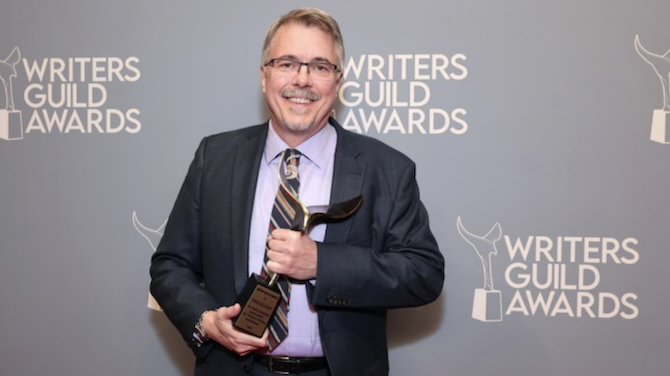
I watched an interview with Vince Gilligan recently, after finishing Pluribus, and he said, “Writing never gets easier. You’d think it would. It would be nice if it did. But it doesn’t.” And I know what he means. It always remains hard to discover those game-changing creative choices that bring a script alive. You gotta fight for them.
So do this for me. Don’t quit. Keep writing!
Now, moving on.
Since it’s the start of a new year, I want to talk about beginnings. Specifically, the beginning of ANY NEW SCREENPLAY you’re about to write. My job gives me a unique vantage point into the choices writers make at this stage, and there is one decision that comes up again and again as the most important of all. That is: deciding what kind of script to write.
That choice shapes everything that follows. Arguably, it’s the most important decision you will make on a screenplay. I’ve written a lot about choosing concepts, but over time I’ve realized there’s a variable that makes this decision especially tricky.
That variable is you.
As writers, we’re drawn to certain subjects. We’re fascinated by particular dynamics, themes, and corners of the human experience. The problem is that we often let our personal obsessions drive the idea, rather than stopping to ask whether those obsessions translate into something audiences actually want to see.
For example, I’m endlessly fascinated by people who have known each other forever, like married couples, quietly lying to each other in small, everyday ways. I find that dynamic riveting. But if I wrote a screenplay about a marriage built on tiny, constant deceptions, who’s lining up to buy a ticket to that movie?
My fascination alone doesn’t make it compelling.
This happens all the time. Writers inject their obsessions into scripts without asking whether those obsessions serve the audience’s curiosity. A screenplay should maximize dramatic conflict, deliver a compelling plot, and give audiences characters they want to root for. If the script exists mainly to indulge the writer’s personal interests, the result is a movie that only the writer enjoys.
With that in mind, I want to remind you of the three most effective ways to choose a script idea. I call these Tier 1 approaches. They consistently give writers the best chance of selling a script, getting a movie made, or getting hired for writing assignments.
First, the Big Idea

The Big Idea is baked into Hollywood history. It’s the idea that immediately feels like a movie, either because it’s high concept or extremely marketable. One of the easiest ways to figure out if you have a big idea is to imagine the poster. Is the poster exciting? Does it lean into a known genre and “type” of movie whose format we recognize? Or is it vague, confusing, or boring? Here are two posters. Which movie would you rather see?
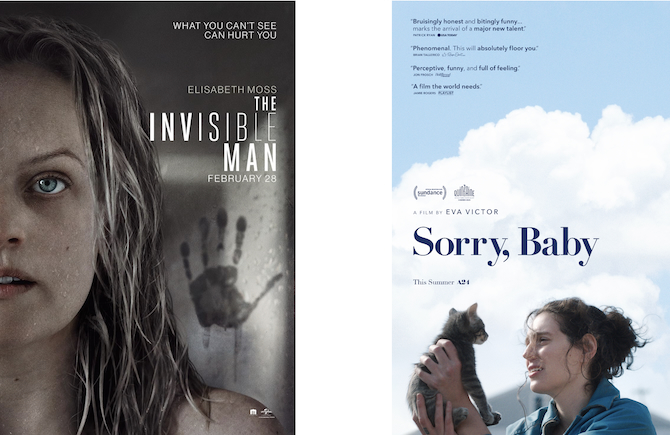
What helps is that the title is in sync with the image. When those two things don’t connect, it leaves the potential viewer confused.
The Housemaid is a big idea. The Running Man is a big idea. The Long Walk is a big idea. Good Fortune is a big idea. Sinners is a big idea.
On the other side of the spectrum are films like Train Dreams, If I Had Legs I’d Kick You, The Baltimorons, and Christy. I’m not making a value judgment here. This isn’t about what’s good or bad. It’s simply about illustrating what a Big Idea looks like. Big ideas are easier to pitch, easier to understand, and easier to get made.
Second, the Big Character
One of the great secrets of screenwriting is that if you have a big enough character, they become their own high concept. In that sense, the Big Character is the Big Idea’s close cousin.
I first heard this articulated by Wes Anderson. He said that he never starts with a concept. He starts with a character. That’s how Rushmore came to be. He created Max Fischer, a secretly poor student at an elite private school who signs up for so many extracurricular activities that he has no time left to attend class, and is therefore failing everything. Then Max falls in love with a teacher and chaos ensues. You could watch Max Fischer for hours. Which helped you forget that you were watching a very simple movie about going to school.
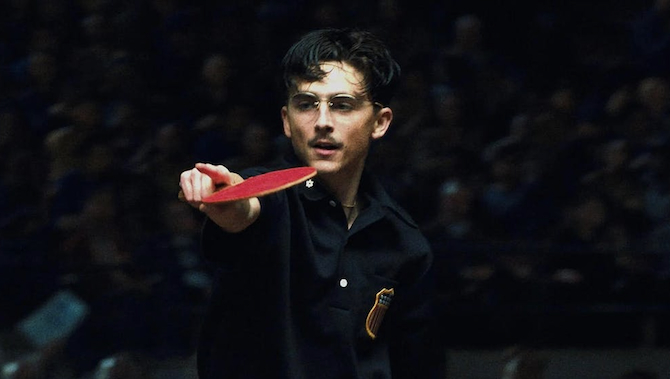
When you eliminate concept from the equation, you’re forced to work relentlessly to make the character fascinating, because that’s all you have. If the character isn’t shockingly interesting, the movie collapses. And ultimately, this is why people go to movies in the first place. We go to fall in love with people, not plots.
Recent Big Character movies include Marty Supreme, which I just reviewed, Christy from a few months back, Jerry Maguire, Tár, The Martian, and Anora. A good test is this: imagine a role so good that actors would happily stab each other in the back to get it. If that’s the case, you have a Big Character.
Third, the Big Voice.
The Big Voice is an interesting case. Having a strong, distinctive voice is arguably more valuable today than ever before, even though the golden age of the voice-driven screenwriter was fifteen to twenty-five years ago. That era gave us Charlie Kaufman, Diablo Cody, Quentin Tarantino, Richard Linklater, and Alexander Payne.
The media landscape is noisier now. We don’t really create household-name screenwriters anymore. But that doesn’t make voice any less important. If anything, it makes it more powerful. So many scripts today feel safe, familiar, and interchangeable. If you write weird ideas, see the world in an offbeat way, have a dark or unusual sense of humor, and your pages read unlike anyone else’s, you will stand out immediately.
The advantage of the voice writer is that the writing itself makes every page exciting to read. Even if no great character emerges or no great plot emerges, we enjoy reading the words on each page because those words are a direct link to a very unusual mind, which is a rare experience.
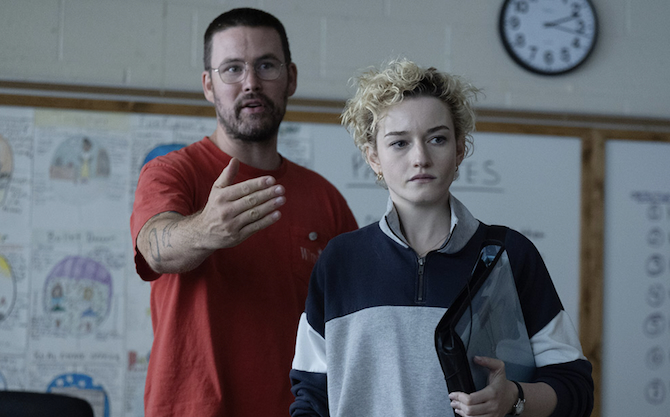
That said, this path only works if you truly have a voice. If your voice is vanilla AF, choose one of the other Tier 1 approaches. And if you do commit to voice, commit fully. Don’t hedge. Give us Bugonia, not Ice Cube’s War of the Worlds. Some contemporary writers working in this space include Charlie Brooker, Ari Aster, Zach Cregger, Alex Garland, Brian Duffield, Jesse Armstrong, Taylor Sheridan, Phoebe Waller-Bridge, and Vince Gilligan. When you read their work, it always feels unmistakably like them.
These three tiers will consistently give you the best shot at industry attention. They are not the only path in, but they are the most reliable. You can always choose to write exactly what you want and hope that passion carries it across the finish line. Sometimes it does.
But above all else, I’ll be happy if you just keep writing. Keep writing!! Don’t get discouraged. Writing is a peaks-and-valleys experience, and if we’re being honest, there are far more valleys than peaks. Let that knowledge empower instead of defeat you. When you expect the valleys, you’re better equipped to push through them.
Good luck in 2026. Here’s to a whole gondola full of you breaking in!
And in one of the oddest movie crossovers I’ve ever seen on the Black List, we have Promising Young Woman meets Just One of the Guys
Genre: Comedy
Premise: When a college student is sexually assaulted by a frat guy who faces no consequences, she and her best friend rush his fraternity undercover to get revenge – only to become the unlikely stars of Delta Iota Kappa’s pledge class and get in way too deep.
About: This script finished number 3 on last year’s Black List. The script appears to have been developed at Berlanti/Schechter Films, which has a first look deal with Netflix.
Writers: Read Masino & Cassidy Alla
Details: 116 pages
 I’m thinking the writers would love an actress like Nico Parker in the lead role
My plan is to read all five of the top 5 Black List scripts and pray that one of them is good. Because if all 5 are bad, the Black List is in a lot of trouble. Cause that’s never happened before. Typically, I love one of the top 5. And then there’s usually another solid script in the bunch.
So far, I’ve read the two top vote-getters, and each has fallen short in its own way. This is script number three on the list and the stakes are high. If it doesn’t land, only two chances remain.
Let us all briefly pray to the script gods. I would love nothing more than to read something great today. It makes my job so much easier!
Here we go…
Daisy is a freshman at college and one night, when she’s really trashed at a fraternity, the head dog of the frat house, Brad, picks her up and brings her to his room. He then starts forcefully making out with her, leading to heavier groping, leading to maybe full-on sexual assault (the sequence isn’t described very clearly so it’s hard to tell exactly what happens). Then, out of nowhere, Daisy projectile vomits over both of them and a grossed out Brad bails.
Daisy tells the story to her best friend Maddy, a lesbian who doesn’t go to college, and the more they talk about it, the more the wheels start spinning. Eventually, they come up with a plan to infiltrate Brad’s fraternity as male versions of themselves and figure out a way to collect evidence that Brad did this then take him down.
With the help of Maddy’s brother, the two create their male personas, Derek and Max. They then head over to the frat, where they learn that it’s pledging season. So they pledge. Along the way, Daisy meets hottie pledge Jake and starts to fall for him. Of course, it’s tricky because she’s not a woman when she’s around him. And Maddy falls for a stuck-up girl named Stephanie, who she romances as Max, even though she knows that Stephanie is not into women.
Along the way, they keep looking for opportunities to sneak into Brad’s room and look for “evidence.” But while Brad is always bad, he’s never bad enough to take down. So they decide they need to catch him when he’s at his worst. Hence, they target the frat’s big party of the year. There, he will almost certainly assault someone. And they’ll be there when it happens!
Let’s start here:

Why the white folk stray?
I want to know what goes on in a writer’s head that they think it’s a good idea to take a shot at any group of people. On the very first page of their script, no less.
It’s so hard these days to get anybody to back your screenplay. Why would you intentionally alienate half your readers?
I don’t get it.
But anyway, this script has problems beyond its low-key racism.
“Rush” wants to be Promising Young Woman but funny. So the central question becomes: Can sexual assault be funny?
“Rush” certainly tries.
But the script is stuck riding this delicate line of celebrating Superbad-level humor while continually having to come back to this uglier sexual assault plotline.
And the worlds never come into alignment.
It really is true that 90% of a script’s problems can be traced back to the concept. If the concept has any weakness at all, you will not be able to hide it in the screenplay. It’s usually the opposite that happens. That spotlight grows even brighter and lights up every crack in the foundation.
The thing is, the solution to Rush’s problem is simple. Replace the sexual assault storyline with something else. Getting back at the guy who dumped you, for example. Because the real hook here – the thing dominating this story – isn’t the sexual assault. It’s two girls pretending to be guys in a fraternity. That’s the whole movie. The sexual assault stuff only pops up every once in a while.
You want to find a concept that supports the best part of your idea. And the best part of this idea is the two girls pretending to be guys and infiltrating the frat house. When the writers focus on that, they have some success. There are some legitimately funny scenes here.
In this scene, Maddy forgets that she’s dressed as Max, a guy. So when she approaches a girl on campus, she thinks she’s approaching a fellow girl. But all the girl sees is a creepy guy coming up to her. And Maddy gets her first dose of what happens when a girl makes an assumption about you because you’re a man.
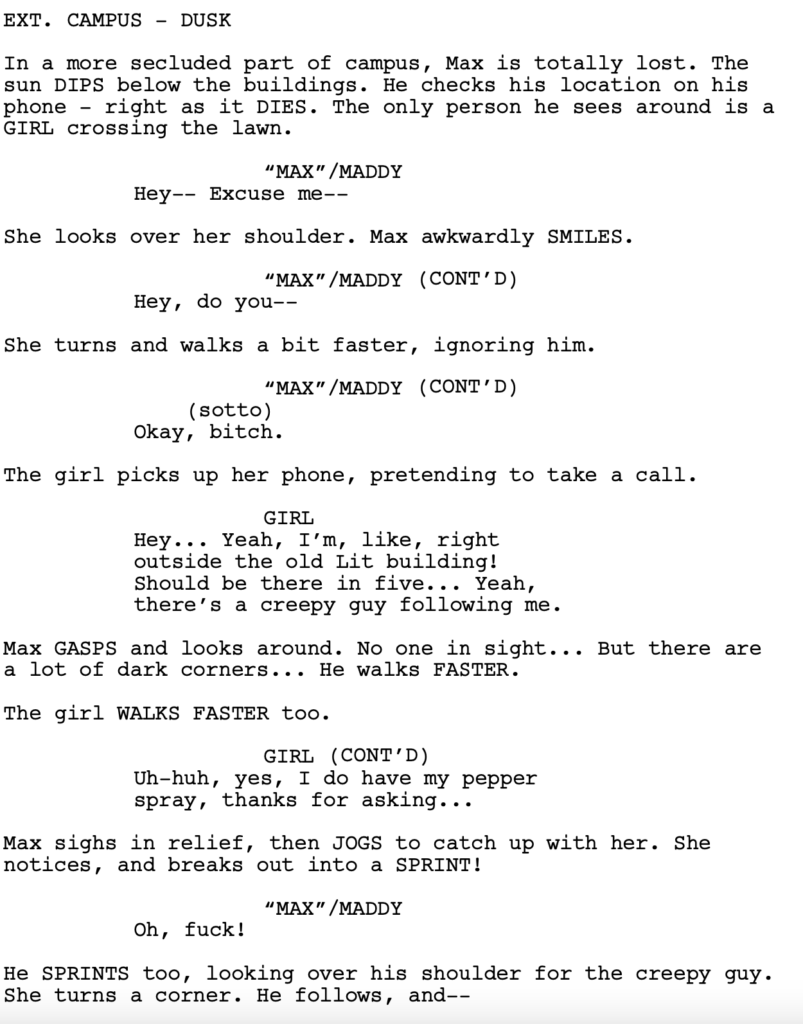

There’s also a later scene where Maddy and Daisy have to go on dates to a party where they must, at various times, present as both their male and female selves. And that scene is pretty clever.
But the script has to always come back to this bummer sexual assault storyline and it never works. One moment, we’re reading this really goofy 2025 version of She’s The Man. And then, out of nowhere, it’s rape talk. It’s weird.
This thing becomes way more marketable if it’s just a movie about a girl trying to get even with the boyfriend who left her, sort of a modern take on Legally Blonde. And if the response to that is: the script becomes less interesting cause it’s not dealing with anything “serious,” there are other serious things you can work into the story. And there are other more natural story setups to explore sexual assault in. After the Hunt is a great recent example.
No matter how you slice it, sexual assault and She’s the Man is a very inorganic crossover. One side of the script is always going to feel like it’s in the wrong movie.
[ ] What the hell did I just read?
[x] wasn’t for me
[ ] worth the read
[ ] impressive
[ ] genius
What I learned: It’s unfortunate that the concept for Rush was faulty, because these writers are the only ones among the top three entries who know how to write scenes. Go back and read the scenes in Equity then read the scenes here. You’ll notice that Equity rarely enters scenes with a clear point. Scenes are mainly used for exposition, with little structure or form.
Here, however, there are several scenes with strong form. Achieving this isn’t difficult. One of the simplest ways is to give your characters a problem and see whether they escape it or not. If the situation itself is funny, you’ll get a strong scene out of it.
There’s a scene where a fraternity hazes pledges by asking personal questions about one another (“Who did Joe lose his virginity to?”). If they answer incorrectly, they have to strip off their shirts to be humiliated. Obviously, if that happens to Derek or Max, they’re screwed, so the stakes are high. When Brad finally questions them, his frustration builds as they answer every question about the other pledges effortlessly because, of course, they’re women and actually listened during their conversations with the other pledges.
It’s a fun scene, but more importantly, it demonstrates that the writers understand what a scene is, something I can confidently say neither of the top two Black List writers did.
Is the number 2 script on the Black List a must-read??
Genre: Thriller
Premise: After an ambitious pharma founder sells a portion of himself to a charismatic billionaire magnate, his world spirals into a high-stakes battle to buy back control of his company, his future, and his life.
About: This script finished NUMBER 2 on last year’s Black List, a list of the best scripts in Hollywood. The script was acquired by Killer Films, who most recently produced The Materialists.
Writer: Ward Kamel
Details: 117 pages
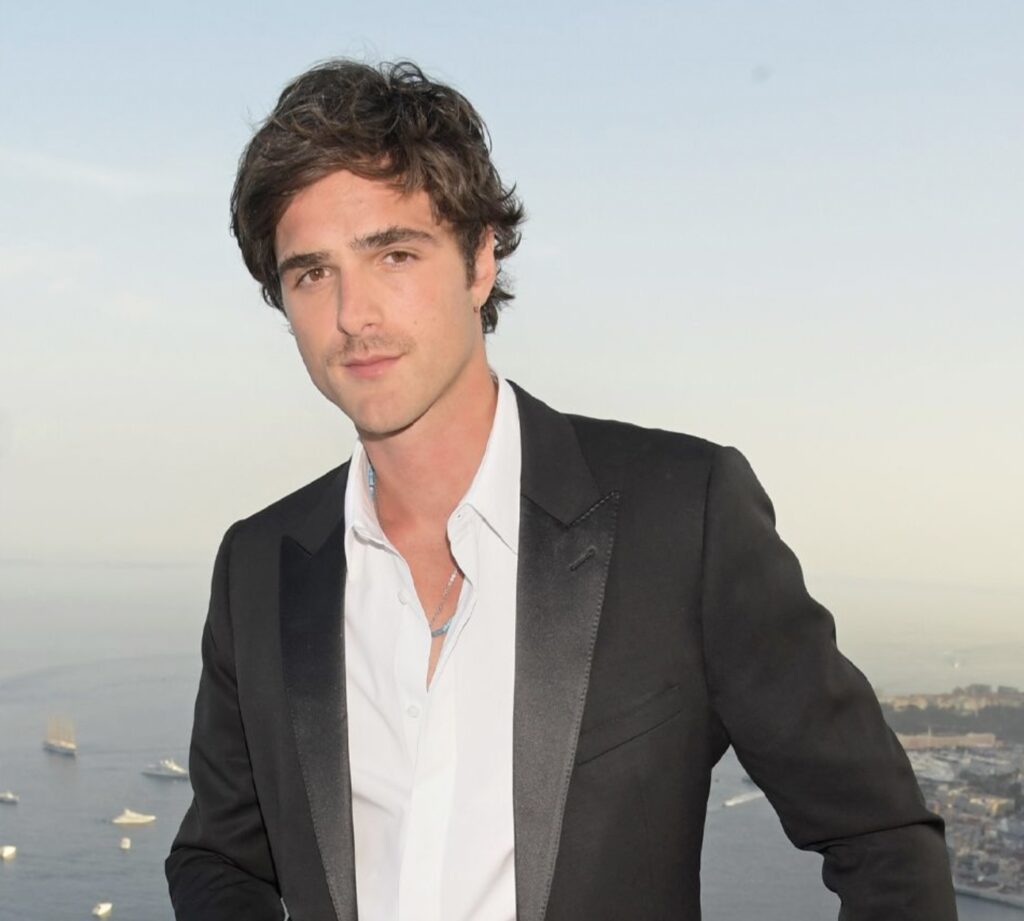 Elordi for Adel?
If there’s one thing I’ve been hearing a lot lately, it’s that movies need to step it up. I agree. There are way too many things competing for our attention these days. Half-ass studio efforts such as 1986’s Gung Ho, which used to be staples on a studio’s slate, aren’t going to cut it anymore.
To get people in the theater, you have to give them something that feels special and unique. Like they’re going to have an experience they can’t get anywhere else. That starts with the script. It’ll be up to people further down the line to create the hype around your movie, like the marketing team of Marty Supreme. But you gotta give them something to work with.
In the past, the Black List has been a place where you can find that material. It was this corner of Hollywood that was more imaginative than the people working at the studios. But that hasn’t been the case for a while and the Black List is on a new journey where it’s trying to find its footing again. Let’s see if Equity is the pair of shoes it needs to get back on track.
30-something Adel Rahma runs a medical startup called Yuca that has designed a gummy that can hold any medicine and therefore make it very easy for people to take their medications.
He debuts the product on Python Pit (Shark Tank) and catches the eye of the oddly named Mike Mukhtar (described as “Mark Cuban meets 2012 Elon”). But Mike says to him, “I don’t want Yuka. I want YOU.” He offers Adel half a million for 8% of him. It’s a weird offer and, for some reason, Adel takes it.
Cut to later on where Adel has his lawyer look over the contract. It’s all such new verbiage that it’s hard to see potential problems in the future but she tells Adel, yeah sure, go ahead and sign it. Adel really needs the money to keep Yuca afloat so he signs onto the deal.
Everything seems to be okay at first but then Mike blindsides him with an app that allows people to buy more stock in Adel. Not to worry, Mike says. It’s still up to you on whether you want to offer more stock. Still, this is the first moment where Adel realizes he may be in over his head.
Even his girlfriend, Cecilia, is starting to get uncomfortable. She’s wondering, if she marries him, will *she* be liable for whatever happens in this deal? Adel’s company then needs more money so Adel starts selling stock in himself. Just 20%. He still owns the large majority of himself. And he believes that it’s worth it if he can bring Yuca to market.
Then, one day, Adel wakes up to find that he only owns 20% of himself! Because of some loophole in the contract he signed, Mike was able to split the stock (or something – a bunch of techno-jargon I didn’t understand) and sell all these new shares of Adel. Which means that now Adel is over half owned by the public!
What does this mean for Adel? Um… I DON’T KNOW! I didn’t ever know. Which is the perfect transition into my thoughts on this screenplay. :)
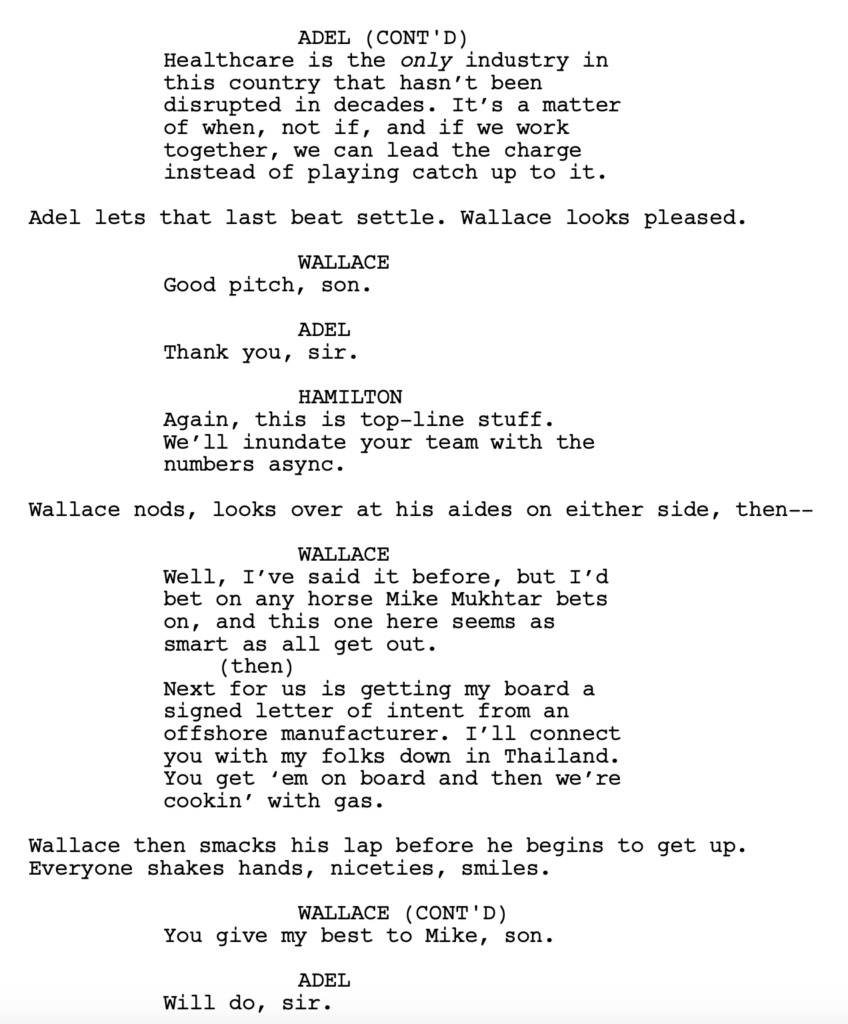
One of the main things you learn on your screenwriting journey is that a movie idea isn’t any good on its own. An idea is only worthy when the screenwriter comes up with an angle that maximizes the potential of the idea.
Let me give you an example. Cloning dinosaurs. That’s a movie idea right there. But there are a million angles to that story. Someone could’ve written a version of that idea where a kid finds a dinosaur egg and raises it in his bedroom. Someone could’ve written a version about cloning dinosaurs in secret and one of them gets loose and the army has to retrieve it. Someone could’ve written a version where the entire movie is the lead-up to the very first cloned dinosaur.
The person who came up with the ultimate cloning dinosaur idea, though, was Michael Crichton. He added the theme park element and, just like that, one of the biggest movie franchises in history was born. Why? Because Crichton found the angle of that idea that created the most entertaining story.
Until a screenwriter learns this skill, they end up writing a lot of scripts that people want to read – because the idea is intriguing – but that immediately become a slog – because the writer explored a weak angle.
That’s Equity.
This is an interesting idea at its core. That, in the future, we’ll be able to buy stocks of people. There’s definitely potential there.
But boy is this a boring version of the idea.
I actually don’t know if I could’ve come up with a less engaging version of the idea than this. It’s all drawn out boring company techno-jargon, like a poor man’s Succession. We’re talking about Adel’s boring business. And then we go over Michael’s equity stake in Adel from a thousand different angles. There seem to be 30 scenes dedicated to people having opinions on what this contract means for Adel and his life.
The only entertaining moments seem to appear as accidents. There’s a nice little conflict-filled scene when Cecilia says she doesn’t want to get married until she sees the contract Adel signed. Or there’s a brief burst of adrenaline when Adel learns that he barely owns any of himself anymore.
But for the most part, this script drags through repetitive scenes with Adel feeling lousy about the mistake he made signing this deal. Just endless scenes about that.
Beyond the unimaginative take on the idea, the script has zero GSU (goal, stakes, urgency). I suppose the goal is for Adel to succeed with his company, Yuca. But the goal-post for “succeeding” keeps moving throughout the script. And, as anyone who’s read this site for a long time knows, it’s nearly impossible to create stakes and urgency when you don’t have a clear goal. Because the goal is what creates the importance of meeting it (the stakes) and the timeline that must be met (the urgency).
People always ask me when I give low grades to these high-ranking Black List scripts, “Well, if it’s so bad, why did it make the Black List?” And my answer these days is, “I have no idea.” What I can tell you is that I trust the Black List way less today than I did ten years ago. Too many industry people have learned how to game the system. So, a little bit of that might be going on?
But I don’t let how many votes something gets ever affect my rating. I never have. If the script is good, I’ll tell you. If it’s not, I’ll also tell you.
If you pushed me and said, “Was there anything at all good about it?” I would say that the presentation is professional. And I do think that interesting ideas, like this one, get graded on a curve. I don’t think that’s wrong. That’s always been the case in Hollywood. Good ideas work as deodorant for bad execution. It’s why movies like Fight or Flight get made. So, maybe there’s some of that going on here.
But, if they’re hoping to turn this into a movie, it needs a page 1 rewrite. As in, a whole new angle. Cause this angle is boring. And it’s a bad omen for the Black List. Cause scripts number 1 and 2 were both weak. We need to step it up here if we want to save Hollywood.
[ ] What the hell did I just read?
[x] wasn’t for me
[ ] worth the read
[ ] impressive
[ ] genius
What I learned: Don’t make references that nobody can relate to and, therefore, nobody can understand. Here’s a character intro in Equity: “HAMILTON TRAN, a first-gen Vietnamese American 30-something bro — the kind of guy that invites his Raya dates to his squash tournaments.” Less than 100,000 people are on the dating app, Raya. I’d imagine even less attend squash tournaments every year. This type of writing alienates you from the reader, as they have no idea what you’re trying to say.
Today, I will share with you a key screenwriting lesson that’s easy to overlook
Genre: Drama/Thriller
Premise: In 1952, America’s fast-rising ping-pong star, womanizer Marty Mauser, attempts to defeat rising Asian dominance in the game, but must first navigate being a broke-ass in New York City.
About: This film has been killing it at the box office, defying all current expectations for an indie movie with a niche concept, pulling in 48 million. The film is the first solo effort from director Josh Safdie after his devastating breakup with his longtime collaborator, brother Benny Safdie (whose own sports-themed film, The Smashing Machine, bombed this summer). The film stars Timothee Chalamet, who was so all in on this character, he came on as a producer to help shape it.
Writer: Josh Safdie
Details: 2 hours and 30 minutes!
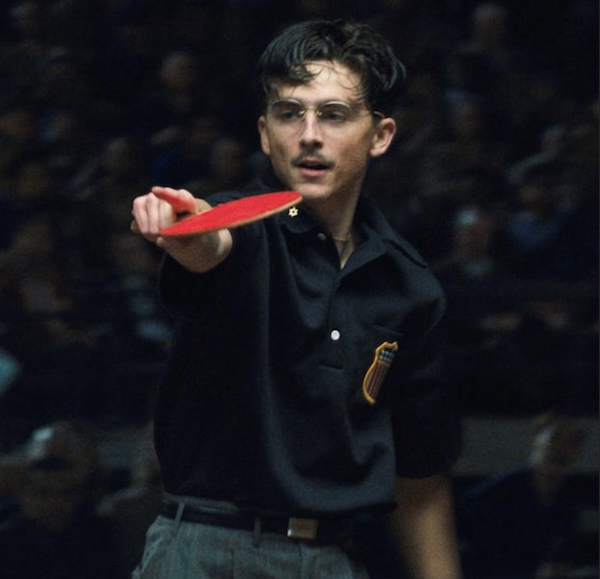
First of all, how awesome is it that this movie is kicking ass?
Do you know how difficult it is right now to do well as an indie movie? It’s basically impossible. And this movie made 30 million bucks on its opening weekend! That’s so insanely hard.
I have to give credit to Timothee Chalamet. There is no such thing as new movie stars anymore. But he doesn’t care. He’s determined to destroy that limiting belief and he seems to be the only young movie star who understands how to do it. The ease at which he can get attention for his films usurps all the other actors of his generation (Tom Holland, Zendaya, Robert Pattinson, Paul Mescal).
I asked several groups of people at the showing I was at why they chose to see this film and nearly all of them said either Timothee Chalamet or the stuff Timothee Chalamet was doing to promote the film.
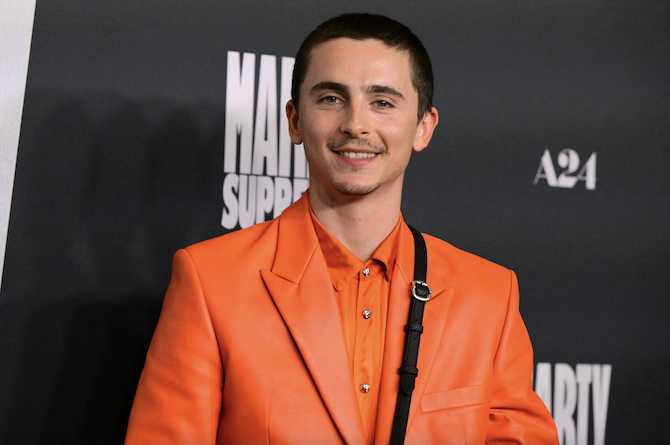
But Timothee Chalamet was NOT the reason I went to see the film. I had an ulterior motive.
I can’t handle the possibility that One Battle After Another wins Oscars. And this was basically the final movie that had a shot at taking it out. Even beyond that, this year didn’t have that one great stand-out movie. I was hoping this film was going to be it.
If you haven’t seen Marty Supreme, it’s about this guy, Marty Mauser, who lives in New York in 1952. He gets this girl, Rachel, pregnant. He then goes off to and makes it to the finals of the ping pong world championships, losing to Koto, who plays for Japan.
The whole way Koto plays is different from everyone else which an insanely arrogant Marty insists is the only reason he lost. Now that he knows what to expect, he’ll beat him next year at the championships, which are in Europe.
But there’s a problem. Marty doesn’t have any money! Like ZIP ZERO NOTHING. He finds his mark in former movie star actress, Kay Stone, who’s married to pen magnate, Milton Rockwell. Marty starts having sex with her, then uses her proximity to Rockwell to pitch him on investing in the “Marty” brand.
Rockwell eventually gets on board, pitching Marty to come to Japan for a rematch with Koto. However, Rockwell is hoping to expand his pen empire to Japan and, therefore, wants Marty to lose. Marty agrees only because it will get him overseas so he can compete in the championships. But Marty hates Rockwell so much, he decides to use the promotional match to humiliate him instead.
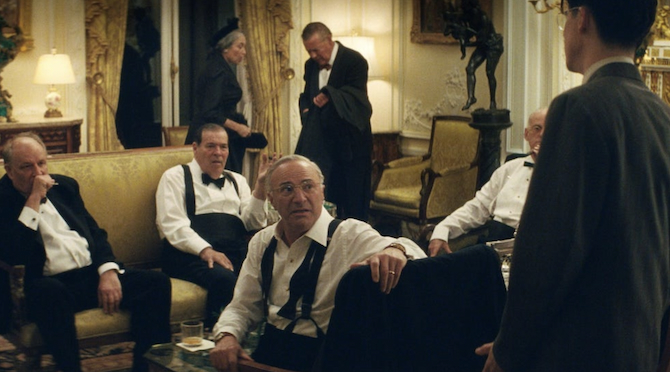
Let me start by saying, I love the way Josh Safdie directs. Everything he does has so much energy to it. It’s so fun to watch. One of my favorite things about him is how he casts movies. Talk about flexing with your casting choices.
We’ve got Fran Drescher, aka, the Nanny, in this movie. We’ve got Mr. Wonderful from Shark Tank playing a major role. I even spotted this one guy down in the ping pong den who looked very familiar but I couldn’t place him. Afterwards, I looked him up and realized he was this former voice over actor turned homeless man who went viral when an influencer helped him get a job and put his life back together. You can tell that Safdie isn’t interested in traditional actors. Half the people you see onscreen are real people.
Another thing I love about Safdie is his musical choices. He juxtaposes his music against his stories in really interesting ways (this is set in 1952 yet several of the songs on the soundtrack are from the 80s).
These things are what help make a Safdie movie feel different from anything else you watch at the theater.
BUT….
As I was watching this movie unfold, something felt off. And I couldn’t figure out what it was. Finally, it hit me. And to understand where this mistake was made, we have to go back in time. So, take a trip back to 2019 with me, when the Safdie Brothers debuted their first official film, Good Time.
It’s a great movie – a frenetic tension-filled race about a bank robber.
They followed that up with the amazing, Uncut Gems — a frenetic tension-filled race about a gambling addict.
What was the common factor in both of those films? A gigantic ticking clock. Each movie was super urgent because it was taking place in, essentially, real time. The first film takes place in under 12 hours and the second film takes place in under 24.
Why does this matter in regards to Marty Supreme? Cause Josh Safdie wants to do the same thing he did in Good Time and Uncut Gems, which is create this chaotic frenetic movie that races along from start to finish.
But there’s a huuuuuuge difference in Marty Supreme (and here’s that lesson I hinted at at the beginning of the post) which is that there’s no ticking clock. The time period of the movie occurs over 9 months, the time it takes Rachel to get pregnant and have the baby.
That’s not to say Safdie doesn’t attempt to add shorter ticking clocks within the narrative. But there is no overall ticking clock like there was in his last two films. And it kills the movie. Because Safdie is always fighting against the impossible – he wants to race along like he did in Good Time and Uncut Gems, but he has no choice but to slow down due to the fact he has to wait nine months for his final plot development (the baby being born) to happen.
There’s a key early scene that demonstrates this. It happens when Marty comes home to his apartment and a cop is waiting for him, handcuffs him, and says he’s going to jail. Marty’s uncle appears and says to Marty that he stole money from him (Marty took money to fly to the first ping pong championships) so now he has to go to jail for it.
Marty quickly sniffs out that the Uncle and the cop know each other and they’re just trying to scare him. So he says that to his Uncle. His Uncle finally concedes. He tells the cop to let Marty go. The cop un-cuffs Marty, and Marty heads to his room. The Uncle and cop share a few final laughs. They then check on Marty. But Marty is… JUMPING OUT OF THE BUILDING VIA THE FIRE ESCAPE!
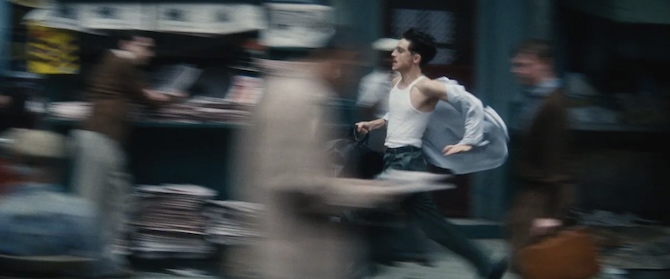
The cop leans out the window and yells to his partner. “There he goes! Get him!” The two cops then pursue Marty through the streets of New York in a frenetic scene with a lot of urgency EXCEPT FOR ONE THING…………
There’s nothing driving the urgency.
The Uncle and the cop already let Marty off. They admitted they were just trying to scare him. So why, all of a sudden, do they want to catch him again?
The answer is simple. Because Josh Safdie wanted that racing scene through the streets of New York. He wanted that urgency, the frenetic craziness that guided his first two films. Except in this film, it doesn’t make sense. Because there is no organic urgency built into the storyline. Which means Safdie has to occasionally manufacture it, or just throw it in there (like this scene) even if it doesn’t make sense.
The other issue in the movie is Timothee’s depiction of Marty Mauser. Half the time Chalamet is trying sooooooo hard to create an iconic character that the character feels like he’s going to blow up right in front of our faces. Every scene is an opportunity to make Marty iconic.
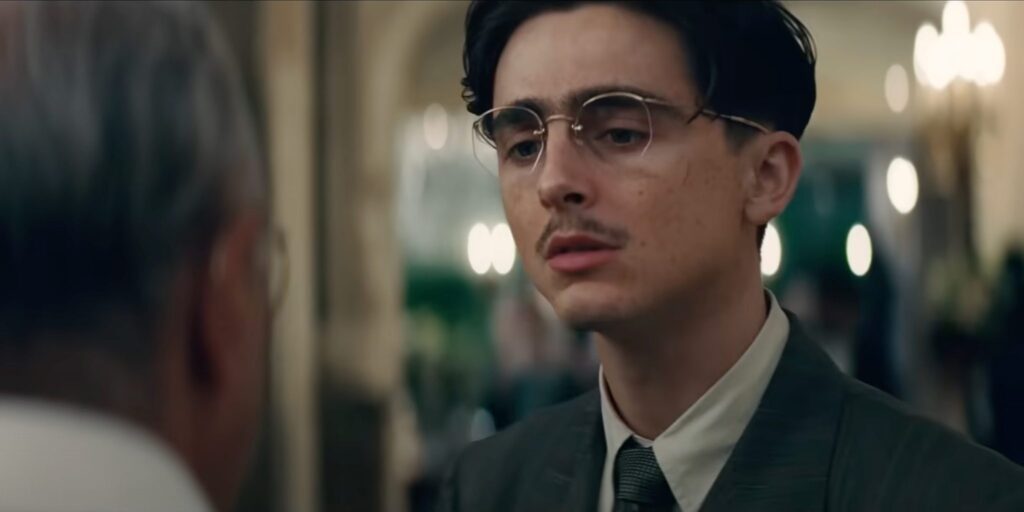
When he meets Mr. Wonderful for the first time and he’s pitching himself and how amazing he is and how he’s going to change the world as a ping-pong player — it just never felt authentic. It felt like an actor who wanted people to remember the scene. And that makes even more sense when you learn that Chalamet is a producer on the film. When you’re a producer-actor, you have a ton more influence on your character than if you’re just acting in the film. You can tell the director, “No, I want to do it this way.”
If you want to see the difference between doing this type of character well and doing it in a try-hard manner, go watch Jake Gyllenhaal’s Louis Bloom in Nightcrawler. Cause it’s the same character. But Gyllenhaal played the role realistically. I don’t think I looked at one frame of this movie and saw Marty Mauser. I always saw Timothee Chalamet.
It was the combination of those two things — trying to add urgency to a story that takes place over 1 year, and Timothee’s try-hard performance, that did this movie in.
This doesn’t mean the movie’s bad. I’m not saying that. I actually think it’s the most interesting movie of the year. I love that about it. But it doesn’t make up for the fact that the script was sloppy. The Safdie Brothers talked bout how they wrote 120 drafts of Uncut Gems. Josh Safdie did not write 120 drafts of this script. I don’t even think he wrote 6.
People who know this stuff, like me, can pinpoint exactly why a script hasn’t been rewritten enough. This ENTIRE MOVIE is about how hard it is to get money needed to buy a ticket to fly overseas so our hero can compete in the ping pong championships. You know how hard it is to fly back? A couple of soldiers who watched him play Koto invite him on their military plane. That’s sloppy writing. Why? Because it collapses the central obstacle of the film in under a minute, retroactively invalidating all the tension you spent the entire story building.
I suspect that if the Safdie Brothers were still working together, they would’ve corrected these issues.
I think if you’re a cinephile, this movie is worth seeing just because it’s so unique. But, as a movie, it never quite comes together.
[ ] What the hell did I just watch?
[x] wasn’t for me
[ ] worth the price of admission
[ ] impressive
[ ] genius
What I learned: Movie timelines built around pregnancies are almost always script-killers. Movies work best with timeframes that are 2 weeks or less. The longer you extend your timeline past that, the harder it is to write a good movie, because it’s hard to inject urgency into a months-long story. There are ways to do it, of course. But writing these movies requires THAT YOU KNOW THESE WAYS and understand how to use them. If anybody thinks this topic is important enough for an article, let me know and I’ll write an article about how to keep stories exciting even if they take place over long periods of time.
I’m giving 25% off two screenplay consultations to the FIRST TWO WRITERS WHO E-MAIL ME. So e-mail me at carsonreeves1@gmail.com if you want one of these deals!
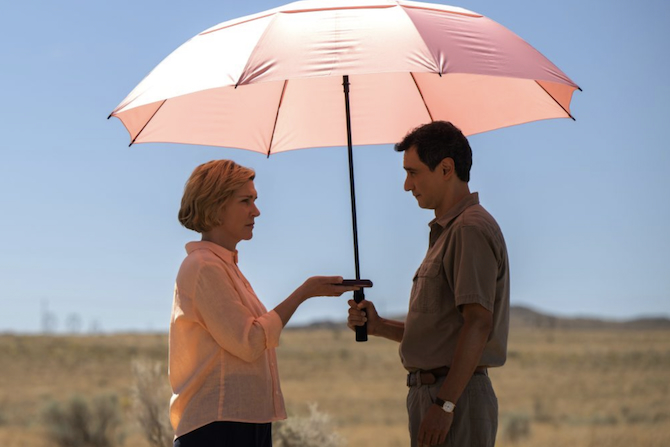
I watched a couple of things this past week, both of which I (mostly) enjoyed: The season finale of Pluribus and the Oscar-contending film, Sentimental Value. For those unfamiliar, Pluribus follows the last two people on earth who haven’t fallen victim to a global virus that turns humanity into a hive mind. And Sentimental Value is about a theater actress who has an extremely contentious relationship with her director father, who left the family when she was a child. He comes back into her life and wants her to play the lead role in his latest film.
What stood out to me about both stories was that the writers (either purposefully or ignorantly) were writing on hard mode. Writing on hard mode is the act of choosing a concept that doesn’t generate consistently dramatic scenarios (scenes).
Writing on easy mode is the opposite. It means choosing a concept that naturally generates dramatic situations. The most basic example is a zombie script. Zombies are always after you. They are a threat wherever you go. Because of that, you don’t have to work hard to create entertaining dramatic scenarios. The story can simply introduce the next wave of zombies, or the next survival challenge in a post-apocalyptic world, and the tension takes care of itself.
Writing on hard mode is like writing with one hand tied behind your back. You never get that strong inciting moment that launches a scene in an immediately engaging way. Instead, it’s like placing two characters in a coffee shop and saying, “Be entertaining.” They couldn’t even pull that off in one of the greatest films ever made!
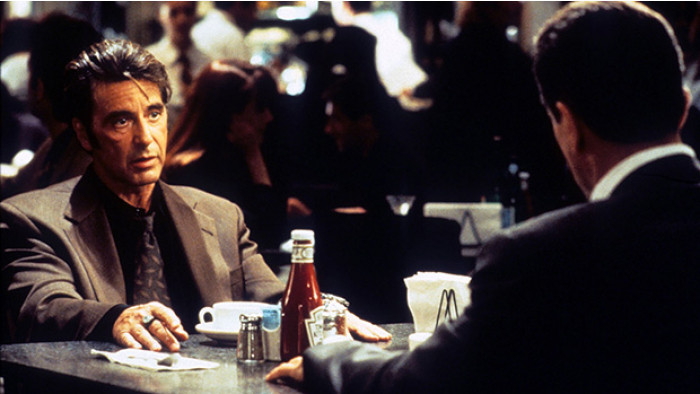
The only way to make “hard mode” work is through relatable characters, compelling character development, and compelling character dynamics. In short: through character. And the reason that’s so hard is because 90% of all screenwriting results in cliched characters, people we feel like we’ve seen before doing things we’ve seen them do before. Once we feel like we’re watching a tired “been there done that” group of people doing the same old shit, we tune out.
Is there a way to write in “hard mode” and make it work?
Yeah.
It’s just… harder.
You start by creating main characters we can relate to. So, for example, you create a character who’s struggling with their purpose in life. They’re not sure they’re on the right track. A lot of people can relate to that. If you can relate to someone, it’s easy to root for them. That’s why this first step is so important.
From there, you have to make the character feel REAL. This is the hardest part of hard mode. Because if you don’t make the character feel like they could exist in the real world, they will come off as cliched. How do you achieve this? It’s delicate. But, generally speaking, you can’t lead the character. You have to let the character lead you.
Let’s say your hero is running away from a bad guy. And then the hero comes up on a parked car with someone in it. Now, as a writer, you might want to evolve this foot chase into a car chase. If that’s the case, you might have your hero rip the driver out of the car, jump in it, and drive off, with the bad guy getting a car of his own and going after him.

You wrote the character doing that simply because you wanted them to. But you never asked the key question: would my hero actually do this? For example, if your hero is truly selfless, would that person really throw someone out of their car to save themselves? No. In that case, you’re forcing the character to serve your needs, instead of letting the character act according to their own nature and volition.
This is an extreme example but the point I’m making is, your hero will need to make dozens of decisions throughout a story. How many of those decisions are *you making for your character* and how many of those decisions *is your character making for themselves?*
By the way, I’m not saying to never make your character do something because you want the plot to move a certain way. I’m saying that the characters who come off as the least believable and the most cliche are the ones where the writer ALWAYS makes their decisions for them.
The last piece of this puzzle is coming up with compelling character dynamics. You want to think of character relationships similar to how you think of characters on an individual level. You’re trying to come up with the most compelling ones possible.
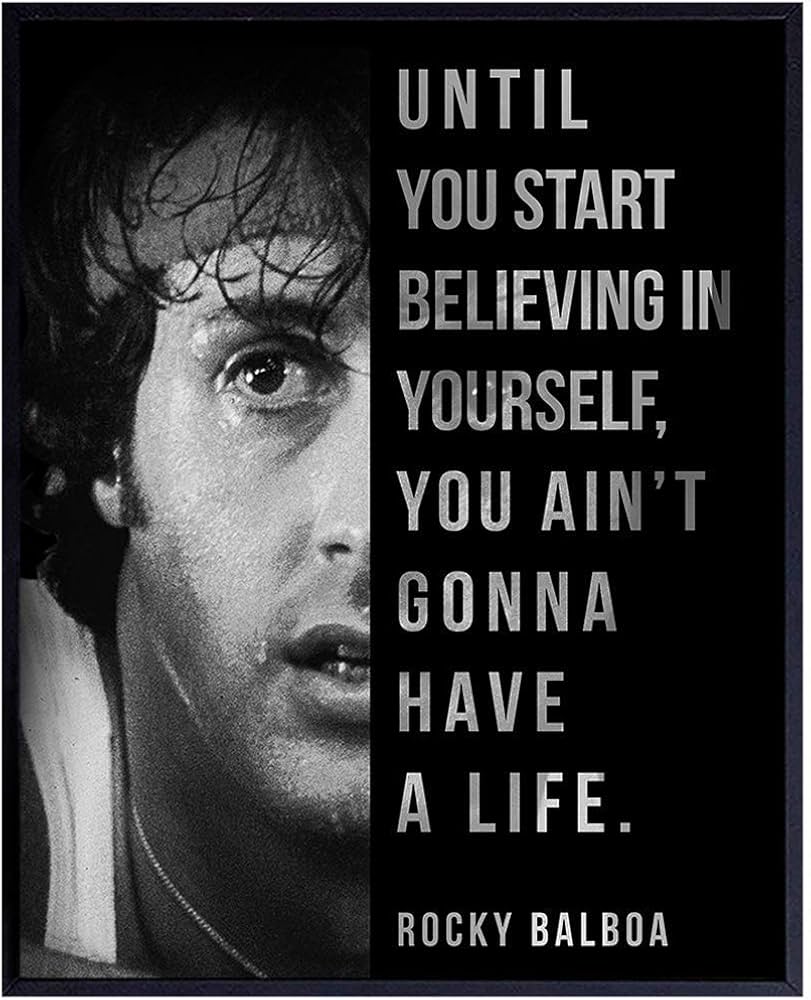
For example, just like a character who’s battling some inner conflict (i.e. they don’t believe in themselves) is compelling to watch because they’re trying to overcome that weakness in pursuit of their goal (Rocky Balboa), a character relationship can be battling its own conflict (Luke Skywalker sees everybody as good and approaches the world selflessly, Han Solo sees everybody as out for themselves and approaches the world selfishly – therefore every scene they’re in will be a clash).
Doing these three things effectively is writing on hard mode, because you don’t have concept-rich, built-in scenarios like zombies that automatically make a scene entertaining. Even the best writers struggle with this. That’s because there’s a frightening fourth factor you can’t control: character creation luck. Sometimes you can do everything right and a character still doesn’t work. There’s an indescribable X-factor that brings characters to life, and it’s one of the most frustrating aspects of screenwriting.
How do you deal with something you can’t control? Unfortunately, you go with your gut and hope for the best. But if you get those other three things right, the chances of you getting that fourth thing right improve dramatically.
Bringing this back to Pluribus, the final episode is 95% character-driven and, therefore, screenwriting on hard mode. Manousos finally gets to New Mexico to team up with Carol and stop the bad guys. But there’s a problem. Carol has fallen in love with bad guy, Zosia (who, remember, is an accumulation of 8 billion other people).
Hard mode activated.
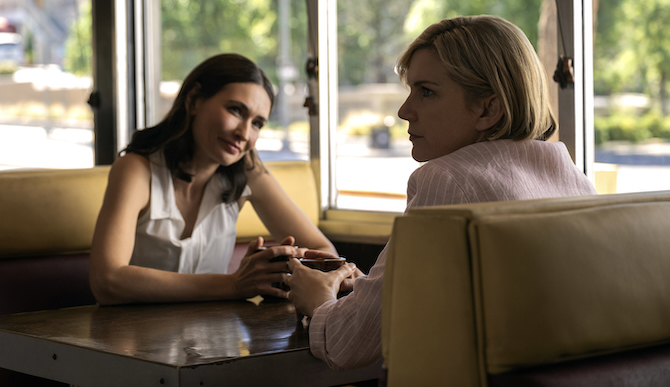
While it’s true that we do have this sci-fi element to spice things up, the finale doesn’t really explore that sci-fi element. What it explores is that Carol finally has someone to team up with to try and take back the world but she’s fallen in love with someone on the bad guy’s team. That’s your strong character dynamic. That’s the reason the reader wants to keep reading. What is Carol going to do? Will she prioritize love over humanity or will she prioritize humanity over her love?
Now, this next part is beyond the scope of today’s conversation but it’s worth noting because it’s an example of what good professional writing looks like. This is not a straight “A” or “B” answer. If Carol decides to go with Manousos, it’s still a .1% chance that they figure out how to save humanity. The odds are still heavily against them. When you add that variant into the mix, Carol’s decision becomes that much harder. If it was 50/50, it’d be easy. But it’s more like 99.9/.1.
But the point is, everything in this episode is character-driven. There’s very little plot. And because of all the hard work that Gilligan and his team did in creating these characters, we care about them enough individually that we care what happens between them.
In a decision that can only be described as insane, Sentimental Value embraces hard mode and asks, how can I make this even harder? What’s wild is that writer-director Trier actually had the option of writing on easy mode. His concept — an actress daughter who despises her director father being offered the lead role in his latest film — is inherently dramatic and capable of generating plenty of juicy, entertaining scenes. It’s not quite easy mode on the level of a killer robot sent back in time to murder the future resistance leader’s mother, but it is the kind of premise that organically creates conflict. An actress is being directed by someone she hates, yet she forces herself to endure it in order to advance her career.
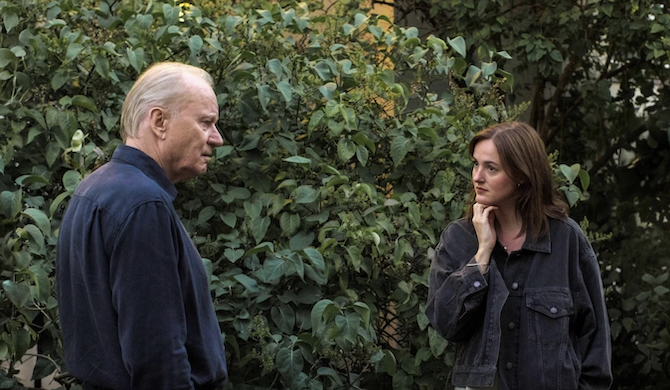
Except Trier completely abandons that setup and inexplicably imposes hard mode on himself. The story should have centered on a daughter who desperately wants to become a successful actress but can only achieve that goal by working with her tyrannical father, whom she despises. Instead, Trier creates a daughter who has no interest in becoming a famous actress at all and therefore has no trouble saying no to him. It completely undermines the premise.
This choice forces Trier to introduce a second actress, a famous movie star, to take the role, and it immediately deflates the tension. Why should we care about this new, random relationship? He has no history with her, and he doesn’t even need to win her over, since she’s the one eager to work with him. As a result, there’s very little conflict or dramatic tension in their scenes. Trier ends up tripping himself up by setting the difficulty level unnecessarily high.
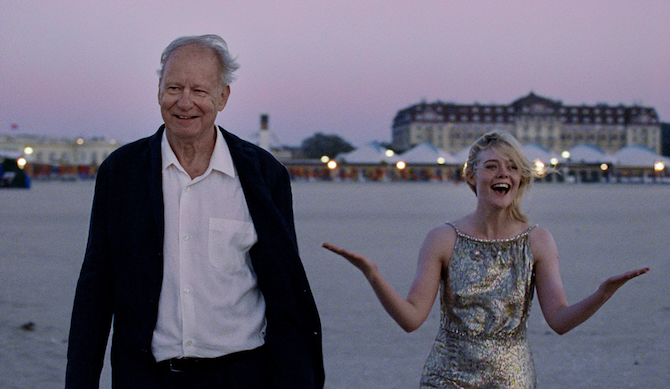
Now, that’s not to say the movie doesn’t work. Trier did a great job creating complex characters in Nora and Gustav. And did an even better job creating all this conflict between them. So, when they do have scenes together, those scenes are dripping with dramatic conflict. But because Trier, for whatever reason, designed the story to keep them out of the same scenes for much of the movie, he made what should’ve been a solid dramatic movie setup into more of a meditation on life, which is a nice way of saying “boring.”
But here’s where things get interesting. Remember when I said earlier that you want characters to make choices that are true to who they are, rather than what the writer wants? That’s exactly what Trier does here. You could argue that he avoids the more obviously dramatic version of the movie because it would feel inauthentic to real life. By staying true to the characters he created, Nora says no to the inciting incident, her father asking her to be in the film, instead of yes.
Because of that choice, the characters all feel VERY REAL. And for the people who love this film, that’s a big reason why they love it. Because every character in this film feels like a real person. It can therefore be argued that Trier won the game on hard mode. Not easy to do.
With that said, I do not recommend writing on hard mode. The whole reason I advocate so aggressively for generating strong concepts is because when you come up with a good concept, the script writes itself. If you create a character who’s determined to be the number one nighttime news videographer in Los Angeles (Nightcrawler) plotlines throw themselves at you. You know he has to go on the next run sooner or later. You know there’s always going to be other nightcrawlers trying to beat him to the story. You know his greed is going to drive him to be the best at any cost. That script writes itself for you.
But the second you enter the arena with a soft premise, you make your life miserable as a writer. Your life is already miserable as a writer. Why make it more difficult? I can’t imagine trying to generate scene after scene for a concept-less script like, say, The Banshees of Inisherin. Not saying it can’t be done. But it’s just 10x, 100x, 1000x harder. If you think you have the writing skillz to pull that off, go for it. But I wouldn’t call you a writer, then. I’d call you a masochist.
Write on easy mode by picking a concept that does the work for you. If you embrace this advice, the rest of your screenwriting career will be loads more enjoyable. :)
HAPPY NEW YEAR!
