
The most ambitious movie of Paul Thomas Anderson’s career
Genre: Drama/Thriller
Premise: A former revolutionary who gets high all day must spring back into action when his teenage daughter is taken by the very group he used to fight for.
About: Paul Thomas Anderson burst onto the scene as a directing superstar with his one-two punch of Boogie Nights and Magnolia. The auteur continues to try and push the boundaries of cinema in an industry that seems determined to push the auteur aside. One Battle After Another, which stars Leonardo DiCaprio, brought in 22 million dollars on its opening weekend, and attempts to have staying power for the rest of the year in hopes of becoming Warner Brothers’ big flashy Oscar hopeful.
Writer: Paul Thomas Anderson
Details: Almost 3 hours long!!!
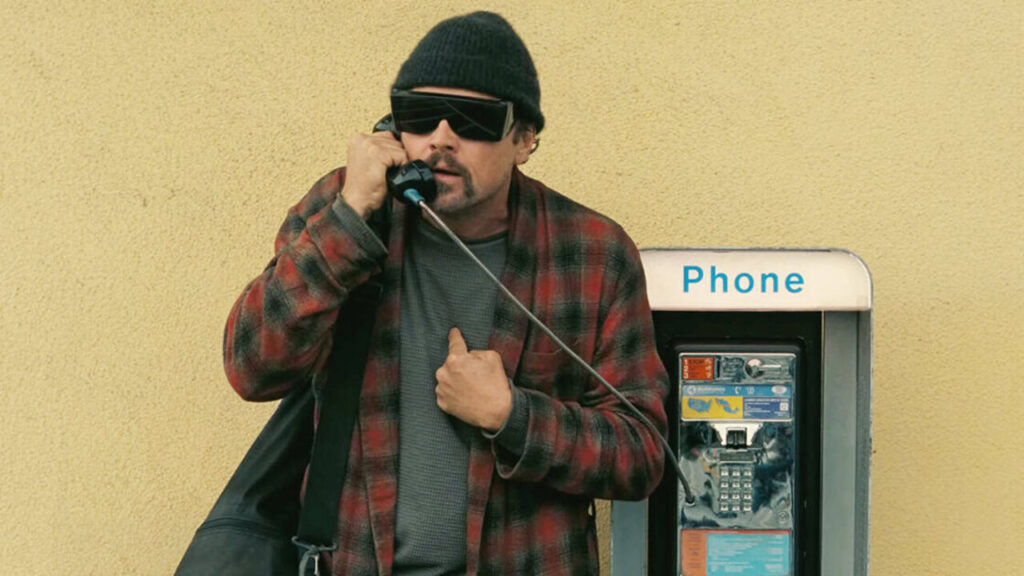
A month and a half ago, I started seeing a lot of publicity for this movie, which was confusing because Paul Thomas Anderson movies don’t usually get marketing campaigns this big. Sure, it had Leonardo DiCaprio in it. But it’s not like he was playing Jack Dawson again.
Paul Thomas Anderson hasn’t exactly been hitting the ball out of the park lately. The worldwide box office for his last film, Licorice Pizza, was 33 million. For The Phantom Thread, 48 million. Inherent Vice, 15 million. And The Master, 28 million.
So why is his latest movie getting the same marketing push as a Marvel movie?
Finally, the answer revealed itself.
Warner Brothers paid 150 million dollars to make this movie.
150 million dollars!!!
That’s four times the budget of any previous Paul Thomas Anderson film.
So of course WB was promoting the heck out of the movie. They had to after sinking 150 million dollars into it.
Did the movie deliver on that huge investment? Not exactly. It squeaked out 22 million bucks, officially killing the overtly political movie going forward. I mean, if audiences won’t show up for a film that mirrors the biggest political story in the country, when will they?
Everybody knows that if you want to make a political movie, you do it through sci-fi or horror. How do I know this? Because James Cameron made a movie about the environment in 2008 and it made 3 billion bucks. It was called Avatar.
Look, I’m not here to sugarcoat it — I’ve always had mixed feelings about Paul Thomas Anderson, who invented his own lane, aka, “the sloppy auteur.” He’ll present his movie as if it’s set in 1983, like he does here, yet have cops taking selfies at the end of the sequence. Maybe in his late-night drug-addled writing sessions, choices like that felt inspired. To me, they just feel careless. Have a plan. Build a consistent world that makes sense so we can believe in it. It’s not 1992 anymore — you can’t cram 72 storylines into a two-and-a-half-hour movie and expect critics to call it genius. The internet changed that. It raised the bar. But Anderson still seems to be playing by the old rules.
If you haven’t seen the film, and I hope you never have to, it follows a terrorist group called the French 75 (yet the movie looks like it’s set in 1983, though we later find out it starts in 2009, only to eventually to be set in 2025). Leading the group is a black woman named Perfidia. She and Bob (Leonardo DiCaprio), the French 75’s resident bomb expert, are in a relationship.
Colonel Steven Lockjaw (Sean Penn) has been tasked with stopping the French 75, but quickly falls for the sexy Perfidia. He tells her she can do all the terrorist things she wants if she just has sex with him. That’s an easy decision for her and she does so without telling Bob.
Perfidia later stupidly kills a cop, gets arrested, and the only way to lighten her sentence is to name names. She gives up everyone but Bob.
16 years later, a severely lazy Bob is raising his daughter, Willa, he had with Perfidia (or so he thinks). Willa just wants a normal life but gets taken by a reestablished wing of the French 75.
They’re saving her because word is Colonel Lockjaw is looking for her, as he believes she’s his daughter. Lockjaw’s pursuit is complicated by the fact that he’s a part of a secret white nationalist group that doesn’t allow interracial relationships. So Lockjaw wants to erase the evidence by killing his half-black daughter.
Meanwhile, Bob, who’s been laying on a couch for 16 years getting high, is pulled back into service. The lazy forgetful bumbling druggie teams up with Willa’s karate sensei to go and save her. Turns out it’s hard to do stuff, though, when you’ve become the physical embodiment of Jeffrey Lebowski.

Hmmmmmm…
I’m trying to think of anything I liked about this movie. The closest I’ve got to a positive would be Sean Penn’s character, Colonel Lockjaw. I wouldn’t say I liked the character. But the combination of the character and Sean Penn’s weird interpretation of it was, at least, interesting.
I don’t know what Leonardo DiCaprio is doing these days. This is the second major role in a row where he plays a half-witted dolt. At this point, if your script has a moronic main character, just send it to Leo’s people — he clearly loves these guys.
The frustrating part is that there was a version of this character — Bob — that could’ve made the whole movie work. Here’s what I mean. The film revolves around a group of ultra-progressive revolutionaries determined to change the world, and Bob is one of them.
Then comes the fallout (Perifia names names), sixteen years pass, and Bob gets pulled back into that world. Now, from a dramatic point of view, the most interesting version of this setup writes itself: Bob’s grown up. He’s changed. He’s become a middle-aged, 9-to-5, moderately conservative guy. The polar opposite of who he used to be.
That’s where the tension (and the humor) would’ve come from. A man re-entering a culture he no longer understands. A rebel turned square who suddenly has to face the ideals he abandoned. That’s conflict. That’s irony.
And you can tell Anderson wanted that contrast. Like when Willa’s friends come over and one of them is transgender. Bob awkwardly asks what pronouns he should use. It’s a great setup for a generational or ideological clash… except it doesn’t track, because Bob’s still progressive. He’s still this aging hippy whose identity was built in the same world that would obviously be comfortable around a transgender person.
The same issue pops up later, when Bob’s trying to call the French 75 number and forgets the old code words that will allow him access to his daughter’s whereabouts. He starts yelling at the operator, who chirps back, “You’re invading my safe space!” Bob snaps, “Invading your space? We’re not even in the same room!”
Again — Anderson wants that contrast, that sense that Bob has drifted so far from his roots he no longer speaks the language. But it never lands, because Bob isn’t fundamentally different. He’s only slightly less progressive than before. And “slightly” doesn’t create drama. It just creates noise.
All of this ties back to the larger point: Paul Thomas Anderson is a screenwriting cautionary tale. He came up in an era that celebrated anti-storytelling — where craft was considered “square” and traditional structure was seen as a prison. As a result, he never fully grasped that to make this premise work, Bob needed to be a true fish out of water. Instead, Anderson seems to think that simply moving Bob from one pond to another is enough.
By the way, one of the easiest tells of a weak screenwriter is an inflated page count. Long scripts are what happen when a writer can’t make decisions. Instead of committing to a clear direction, they throw everything in — every tangent, every side character, every half-idea that should’ve been cut. The result? A screenplay equivalent of the director’s cut. The one that no one asked for.
Look, I don’t love cutting scenes I like either. But that’s literally the job. You have to serve the spine of the story. This whole subplot about Colonel Lockjaw’s wannabe–white nationalist group that forbids interracial relationships? It’s so ludicrous it drags the film into parody. You didn’t need it. His motivation was already clean and compelling: he wants his daughter. That’s enough.
Unless you are heavily into leftist politics, a self-proclaimed cinephile, an uptight critic for one of the major newspapers, or a die-hard Paul Thomas Anderson fan, I would not watch this. I wouldn’t even bother when it shows up on streaming. It’s long. It’s aimless. It’s self-serving. And it’s ten drafts and a much better screenwriter short of anything watchable.
[x] What the hell did I just watch?
[ ] wasn’t for me
[ ] worth the price of admission
[ ] impressive
[ ] genius
What I learned: “The Level Above The Level” – In both this movie and Eddington (a movie I liked), both writers create this level of people above the central antagonists. Here, it’s this group of white nationalists who supposedly rule the world. And in Eddington, it’s this black ops military unit that protects ultra-progressive ideology. I don’t believe “the level above the level” works. Without enough time to let the plotline blossom, it always feels forced. I thought the wild gun shootout at the end of Eddington was fun. But I had no idea why this black ops unit was interested in killing a random small-town sheriff. And here in One Battle after Another, the white nationalist storyline had such a weak payoff that you clearly didn’t need it. Which meant you could’ve chopped off 10-15 minutes of your movie just by dropping it. So, the next time you’re thinking of adding a level ABOVE the level, don’t do it. It’s probably not going to work.

These scene showdowns always end up being a little more controversial than I expect. Some people have said that by creating this challenge, it forces writers to write bigger scenes than they otherwise would have. I don’t think that’s true. As unknown screenwriters, you have to hook a reader right away. So starting with a great scene is, dare I say, essential.
And how do I respond to these criticisms? By announcing another scene showdown!
So you know I’m not trolling, the main reason I’m holding this new showdown is TO KEEP YOU GUYS WRITING. I’ve already heard several of you complain that writing your scripts has been difficult. So, anything I can do to push you forward and continue to write, I’m going to do.
What’s this latest showdown?
It’s called the “THAT SCENE” SHOWDOWN.
Every good movie has THAT SCENE, that amazing awesome scene that everyone remembers. Technically speaking, your climax should be your best scene. But, for whatever reason, it never ends up that way. The best scene is usually somewhere in the second act. So that’s the scene I want you to write. I want your best scene that occurs in your second act (it’s fine if it isn’t in your second act but that’s what I want you to aim for).
If you want examples, the Deli scene in The Wrestler comes to mind. Will confronting the Harvard Douchebag in the bar in Good Will Hunting. Anton Chigurh’s coin toss in the gas station in No Country for Old Men. The cars waiting at the border crossing scene in Sicario. The blood test scene in The Thing. Clarice’s first meeting with Hannibal Lecter. Georgie talking to the clown in the storm drain scene in It. When the marines inspect the colony for the first time in Aliens. The clown doll attacking the boy in Poltergeist.
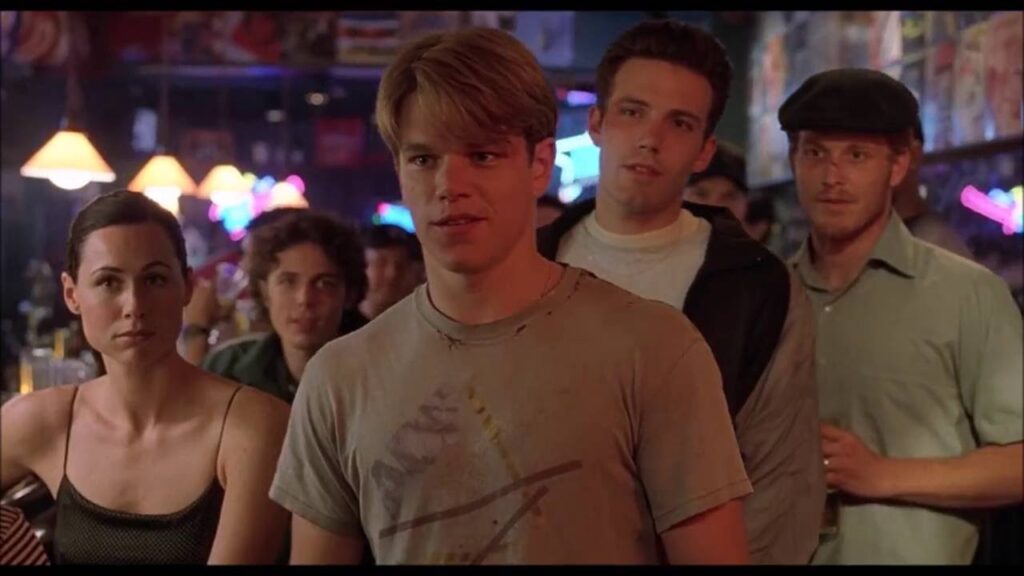
It’s that scene that people talk about for years. It’s that movie that you put on JUST SO YOU CAN GET TO THAT SCENE AND WATCH IT. It’s your movie’s best scene. And I want to see what that’s going to be for all the Blood & Ink participants.
Even if you haven’t gotten that far in your screenplay yet, you should already know what that scene is going to be. So, don’t wait to get to that scene. Jump ahead and write it. That should actually help those of you who aren’t writing fast enough. It’ll give you a checkpoint to write towards.
Don’t worry about context. I’ll give you 100 words to set up your scene for the readers if need be. And we’re going to post this showdown on Halloween – this October 31st. Which gives you about a month to write it. I would think that’d be plenty of time! And, you can start sending in your entries RIGHT NOW.
By the way, a few Blood & Ink participants seemed to think that, by not making the First Scene Showdown, they were no longer in the contest. Let me be clear: ALL 97 BLOOD & INK ENTRIES ARE STILL IN THE CONTEST. You don’t have to enter these Blood & Ink showdowns if you don’t want to. But you should still be writing your script so that it’s ready in February.
Okay, here are the details for ‘THAT SCENE’ SHOWDOWN
For Blood & Ink Contest Participants Only!
What: “That Scene” Showdown
When: Friday, October 31st
Deadline: Thursday, October 30th, 10pm Pacific Time
Send me: title, genre, logline, up to 100 words of context for the scene, a PDF of the scene
Sent to: carsonreeves3@gmail.com
Should today’s scene have been included in the First Page Showdown? A lot of you thought so!

This week, I’ve been breaking down the top scenes in my Blood & Ink Screenwriting Contest. This is a contest writers had to pitch for—you had to come up with a good enough idea just to get in. Of 2500+ pitches, only 97 got through. Last weekend, I did a “showdown” for those 97 writers where they could compete to see who had the best first scene.
The six best scenes were featured on the site. However, Eldave, who’s in the contest, posted his scene in the comments section and got a ton of positive feedback, with many readers proclaiming he should’ve won!
Should he have?
Let’s find out!

I love the first three paragraphs of this page. They’re simple. They’re effective. They’re descriptive. They imply a strong sense of craft. I know, after reading these first three paragraphs, that I’m dealing with someone who’s written a lot of scripts. However, that’s not always an advantage. More on that in a sec.
When you read a lot, you come across patterns. Writers tend to make similar choices since we’re all drawing from the same pot of ideas. And it can be said that what a reader is looking for is a writer who disrupts the pattern. Not haphazardly. But with a plan.
So when I read this opening page, my first thought was, “It’s the old suicidal person on the other line scene and our heroine is going to save them.” It’s a scene pattern I’ve come across a lot.
Now, that doesn’t mean I’m tuned out. If the writer can give the main character a clever way to solve the problem, I’ll call the scene a success. Or if the scene goes in a different direction than I expected, that’s also appealing to me. So let’s see what happens.

When I read this second page, the big word that popped into my head was “competent.” The writing is very competent. It’s very professional. It’s doing the job.
But a screenplay needs something beyond competence. It needs a special quality, wherever that quality is going to come from. And when I read this page, this fear started to creep in that this scene was going to be adequate and nothing more. Because I feel like I’ve read hundreds of scenes just like it.
All of this is going through my head as I’m trying to decide if this scene is going to make the cut for the weekend.

This was probably the page where I decided this wasn’t going to make the cut. Because this is the page where our main character solves the problem. And my question is: what special or unique or clever thing did she do to solve the problem? As far as I can tell, nothing.
She just got the guy to stay there long enough so the cops could pick him up. Remember, when you’re introducing a character, you’re trying to create something the reader will either fall in love with or become fascinated by. Anything less, and the reader isn’t going to be interested in them.
I’ll give you an example. The famous Lethal Weapon Mel Gibson suicidal jumper scene. In that scene, a guy is about to jump off a building and Detective Martin Riggs (Mel Gibson) is tasked with stopping him. What does Riggs do? Instead of trying to stop him, he says, “Let’s do it!” The jumper is so confused he’s not sure how to react. Riggs keeps pushing him. Let’s do it. Let’s do it! And eventually, they jump!
It’s a scene that both goes against what we’re expecting and creates a fascinating character in the process.
Those are the kinds of things I’m looking for when I get introduced to characters.

The explanation of using the word “darling” didn’t make this feel any more clever. If the idea is that she goes against the handbook to save people, I’m down with that. But if sometimes using an unapproved word is breaking the rules, it’s the tamest rule-breaking I’ve ever seen. So much more could’ve been done here.
For example, if this would’ve been some incel lamenting the fact that no girls like him and Zoey exploited that to save his life by pretending to be romantically interested in him. Maybe even agreeing to go on a date with him if he stepped back, only to go cold the second the cops snatched him up, that’s a character I would’ve been interested in. But just calling someone ‘darling’ doesn’t move the needle for me.

In every script, I’m always looking for honesty. For truth. In other words, are the people in the story acting out truthful moments, saying truthful things? Or are they just puppets for the writer to say what he wants or do what he wants? The more I see of the latter, the more tuned out I become. The more I see of the former, the more invested I get.
I have a hard time believing this call center goes cuckoo over “the q word.” That feels made up to me. It feels like a lie a writer concocted. I want the truth. And I want the details of that truth.
Whenever I hand myself over to a writer, I want to be pulled into their world, to the specificity of that unique place. I just read this interview with James Cameron where he talks about how obsessive he is with every single little detail on Pandora. Which is a huge reason the movies work. The details feel like they could only exist in that specific reality.
I would’ve liked to see more of that specificity highlighted in this call center. It should almost feel like an alien planet. Because it is to someone who’s never been inside one before. And it’s up to the writer to convey that.

Essentially what’s happening here is that the scene is rebooting. It’s starting over. We’ve got a brand new call. And the good news is, there’s something different going on with this call. There’s something glitchy, both in the connection and the way that connection is interfering with the nearby electronics.
Yesterday we talked about dangling carrots. This is the first true carrot being dangled in this scene. And it’s taken me six pages to get here. I’m not saying that’s too long. I think if some of the issues I brought up earlier were improved, this moment would hit harder. But as you can tell, I’m on the fence with these pages. So this moment feels more like a Hail Mary to bring me back into the fold than a continuation of an organically building sequence.
The good news is, it’s a pretty big carrot, which is the right move. We’ve waited through a handful of pages of what was, essentially, exposition. We deserve a reward. So you have to make that reward plump and juicy.

For some reason, I’m only casually interested in this boy’s plight. I don’t know if it’s because the rest of the pages haven’t fully pulled me in or if it’s something with the boy himself. If I had to guess, I’d say it’s because the scenario feels too obvious. First we have the drug addict tweaking out. Now we have the little child. None of these things feel different enough.
I can’t emphasize enough how much I read and, because of that, I read stuff like this all the time. Something that might help you guys is to put yourself in my head and ask, “Is this something Carson has probably seen a lot?” If the answer is yes, go back to the drawing board and write a scene that’s more original.


There’s a beat on this page that is the key to this entire scene living up to its promise. It’s when the boy says, “I got a bike. Santa already came.” And Zoey says, “Why would Santa have already—?”
This is supposed to be our introduction to the hook—the strange situation our operator finds herself in. Receiving calls from the future. But it’s such a blink-and-you-miss-it moment that it doesn’t register. I wouldn’t be surprised if someone reading this completely missed it.
Again, you’re trying to HOOK A READER. It’s one of the hardest things to do in the world. Reading takes work. So you need to give people a reason to do it. I would’ve built an entire page around the confusion surrounding what the boy is saying as opposed to just one half-line. Have him talking about several things that don’t make sense.
There’s this great sequence in Back to the Future where Marty is at his mother’s parents’ house in the past (1955), trying to find Doc. There are so many great lines in this scene, but my favorite is when Marty asks where Riverside Drive is. The dad says it’s on the other end of town, “a block past Maple.” Marty says, “A block past Maple? That’s John F. Kennedy Drive.” The dad looks at him like he’s crazy. “Who the hell is John F. Kennedy?” That dinner scene really mined the deliciousness of its concept – a kid getting stuck 30 years in the past with his young parents.
I get that Eldave doesn’t want to show his cards too soon, but you need to hook us here and this scene BARELY mines its hook. Even the scene at the house afterwards is rushed. You want to SLOW DOWN as we get to the house. Show that the cops believe someone is in danger. Have them carefully go up to the house, maybe even knock the door in when nobody answers. And they just see this family casually dining. That would’ve hit a lot harder.
To summarize, this scene was very competently written, but I think there were a lot of much stronger choices left on the table, which is the main reason it didn’t make the cut.
But as I said earlier this week, THIS IS FINE! Nobody writes a great first scene right off the bat. What often happens is, as you continue to write the rest of your screenplay and you understand your characters and world better, you go back to this scene with new information and improve upon it. I think this scene could be great. But it’s definitely at a 6 right now and it needs to be at a 9 by the time the script is finished.

Grendl’s been getting a little testy in the comments the last 24 hours so I’m going to preface today’s review by saying if Grendl goes full Grendl in the comments section, turning the post into a war on the screenwriting and Hollywood community, I’ll have to shut him down. And since I want to hear what Grendl has to say about today’s review, I hope and pray that he engages in civil discourse.
If you haven’t been here for a while, I’ve been using this week to go in-depth into the first scenes of our Blood & Ink Showdown writers. Let’s check out Grendl’s entry, The Devil in 5D, which finished second in the First Scene Showdown voting. Here’s the logline: “A woman begins to suspect the man living in the floor above her is actually Satan, and the building itself a portal to hell.”

This first page is interesting because it’s nothing like Karoshi: The Drive, which starts out in fifth gear. It’s more like Bite After Bite but with a little more confidence.
There’s something undeniably assured about the writing. I like the way Tommy is introduced. The specific sandwich. Him using any little bit of downtime to listen to sports radio where he can get his Jets fix (for those out of country, the Jets are a very specific football team in that they’ve been marred in mediocrity for years).
It’s a page that doesn’t make me turn it because of some great story reveal. I’m turning the page because the writing feels confident and assured.

The second page provides us with our first official “dangling carrot.” A dangling carrot is anything that promises a reveal later on. These carrots can be big. They can be small. It’s up to the writer. But you should definitely use them in your first few pages because, as we’ve established throughout the week, readers are finicky and are ready to give up at the first sign of script weakness.
“It’s just…it’s grown since I emailed your brother that photo.” “Can’t have grown that much in a week.” “Uhm…I’ll show you when you finish.”
I like that small detail of “Uhm…” It hints at a strange reveal, which makes the carrot a little bigger.
The only part I don’t like is when he says, “I’ll show you when you finish.” I read that as, “I’ll show you when you finish the job.” Which was confusing. It was only after Tommy said, “Show me now,” that I realized Neil was referring to finishing the sandwich. A small hiccup but still a hiccup.

As we entered this building and were walking through it, there could’ve been more detail added to the description of the place.
For example, when they reach the elevator, Tommy says, “Wow, now we’re talking.” Neil replies, “The Exeter does have its charms.” What are they referring to? The elevator?? The elevator has literally been described as, “A cast iron elevator.” Is that supposed to be exciting? Cool? If so, the description needs to reflect that.
Then we introduce the ivy. This changes the scene significantly. I wasn’t a big fan of it, to be honest. A lot of that is due to expectations. When Grendl first pitched this idea, I was imagining a modern day version of Rosemary’s Baby. And part of what made that movie so distinct was that it felt REAL. It was very much grounded in its approach.
Out of control ivy being introduced on page 3 doesn’t feel grounded to me. It feels like we’re jumping the gun and including a story development that doesn’t quite gel with what I expected.
Now, you can argue that this is my fault for expecting something the writer never intended. But I’m just taking you through my mind so you understand why I’m reacting this way.

At this point, I’m in a weird place. I’m admiring the writing, which I find professional and confident. But I’m rebelling against the content.
This happens all the time in reading by the way. You like the writing but not the storytelling. You like the characters but not the plot. You like the voice but the hero is annoying. It’s why writing is so finicky. There are so many variables, any of which can trip a reader up.
There’s another line here that I rebelled against. Tommy asks why’d you grow the ivy? Neil says I didn’t. Tommy asks who did. Neil says, “They just grew.” It’s supposed to be this poignant line, the kind that a director might punctuate with an eerie piano note.
But, again, I don’t care about this ivy. I find ivy to be mostly uninteresting (unless it’s on the walls of Wrigley Field). I honestly don’t care that it just grew.
But, if we’re diving deeper into what the reader is actually thinking in this moment – I’m assuming that the devil, who’s been mentioned in the title and logline, is responsible for it. That’s got me thinking, “This is kind of a lame devil. He likes to grow ivy??” So, that’s where my head is at.
With that said, I still want to keep reading. The writing is strong and there is an unresolved issue. As long as something is unresolved in a scene, it’s hard for a reader to stop reading. So I want to find out what happens here, as I’m assuming it will be horrific.

A couple of things of note on this page.
First, I love that he almost gets impaled by the shears. I don’t know why but I always love those moments – a seemingly mundane task out of nowhere places you within inches of losing your life (maybe why I love the Final Destination franchise so much). As long as it’s been properly set up, these moments work well. And we know he needs the shears. They’ve been set up. So their payoff works.
You then introduce another character. She’s mysterious. Anything mysterious gets us turning the pages. You keep hearing me say this all week but I can’t emphasize it enough. It’s the only thing that matters – getting the reader to keep turning the pages. It doesn’t matter how you do it as long as you do it.
The writers whose scripts fail are the ones who take too long between dangling carrots. They let you catch up to one and then they take their sweet time introducing the next one.
In your first scene, that time between carrots should be less than half a page AT MOST. But once you get a script going and the reader has invested in it, you can take a few pages now and then between carrots.

Of the six pages so far, this is probably the weakest. We finish the job and chat with the girl and get ready to go. There’s a *little bit* of a hook here in that the ivy may have turned off the radio, implying that it’s sentient, which means it’s dangerous. So it isn’t like all tension is gone. But I think the fact that this page feels a little flat tells me we probably could’ve achieved this scene in 7 pages instead of 8.

A small screenwriting hack for anyone reading this. Characters are almost always more interesting when they’re busy, when they’re being pulled in multiple directions.
I think this scene plays better if Tommy planned the job off the original picture that he received, when the ivy wasn’t as extensive. And so he’d scheduled something else today after this job. So he’s working twice as hard to finish the job so that he can get to this next appointment. This creates more urgency and tension in the scene and builds agitation into the character, which tends to manifest in more dramatic ways.
As it stands, he’s only got to be home for dinner. Which is fine! There’s nothing wrong with that. But you can supercharge these scenarios if you want to. The screenwriting tools are there for you if you want to use them.
Again, when he comes back and sees the ivy regrown, we’ve now moved into the “magical” realm. I’d hoped to read a grounded story like Rosemary’s Baby. Like The Exorcist. But we’re already getting magical on page 7.
As I look back at the logline, I’m realizing that I focused almost exclusively on the first part, since that’s the part that I like the most. But I didn’t give much credence to the second part. And now I’m realizing that the reason this building can change form is because it’s part of Hell. I guess I thought that it was just a portal to hell and wasn’t hell itself. That’s where the disconnect is. I don’t like that the building can change and morph. I’d rather the Devil be the only one who can do shit.

We’re now expanding the magical rules from the ivy to the building itself. The stairs can turn into razors.
I think of the opening of Rosemary’s Baby and it was just so simple. A woman had jumped from the building and committed suicide. It was horrifying yet grounded (no pun intended).
Here’s the thing. When you are a newbie writer or a self-admitted weak writer, you have to use gimmicks. You have to use bigger wilder moments to keep the reader paying attention.
But when you have natural writing talent as well as an extensive screenwriting education, you don’t have to write openings like this. You can write your hero doing something as simple as moving into the building. And I think that’s what Grendl should do here. I don’t think he needs regenerating ivy and razor staircases. I think he can write a Rosemary’s Baby opening and just hook us with his strong understanding of craft, his scene-writing, his confidence, his characterization, a little suspense, and some solid dialogue. I’m confident that kind of scene would work for him and I’d still want to read on.

Yesterday, I proclaimed that I expected Bite After Bite to rule the weekend and win the Blood & Ink First Scene Showdown. And now I’m going to explain why. The Bite After Bite pages were the only pages out of the 62 submissions where I felt that the writer had captured the exact promise of their pitch. These pages are giving me the movie that I imagined.
If you missed yesterday, I’m doing a deep dive into the first scenes of the Blood & Ink Contest. Yesterday was winner, Karoshi: The Drive. Today, we’re getting our zombie on with Bite After Bite.
Let’s take a look.

You’ll notice that this page starts quite differently from yesterday’s first page. We don’t start in the middle of an action that’s already taking place. This scene is more of a slow build.
I point this out so that writers understand that there’s no universal “correct” way to start a script. You can start fast. You can start slow. Up to you. I will say that the slower you start, the better the writer you have to be. Because it takes a more skilled writer to keep the reader invested while things are moving along slowly.
I consider the opening page a great example of my newsletter article about pages 0 and -1. Bite After Bite is a first scene that is helped tremendously by what the logline promises. Here’s that initial logline: “From Bite to Bite, we follow the zombie infection as it spreads – each victim’s story unfolding from the moment they’re bitten to when they pass it on.”
That logline helps the reader power through a page where seemingly nothing is happening. And some of you might be saying, “Carson, do you really need extra fuel to get the reader through the very first page?” I’ll answer that question this way. Have you ever stopped reading on the first page? My guess is that you have. Well, Hollywood people have less patience than you. So, there’s your answer.

It turns out we didn’t have to wait that long for something to happen. This is, essentially, the inciting incident of the screenplay. Elliot has been bitten. Presumably, he’s now infected. This is going to propel the narrative for the rest of the screenplay.
So, even though the script starts “slow,” we’re still introducing a major plot point just two pages into the script.
Something I also noticed here was that Andrew is using even shorter paragraphs than Mike was yesterday. Most of the paragraphs are one line. And, if they’re two, they’re finishing very quickly on the second line. This moves the eyes down the page even faster than yesterday.
I strongly recommend doing this if there’s a lot of description in your story. Description can feel like a chore once those paragraphs get up to 4 lines or more. However, if you have a ton of dialogue, which is the fastest part of the script to read, then it’s okay to have longer paragraphs, as the reader is okay with reading them every once in a while.

To be honest, this page is a teensy bit clunky. The interaction between the family feels off. Amber seems to be working against her husband rather than with him.
I also think more clarity surrounding the bite could’ve been conveyed. I always go back to this directive: “If this conversation were happening in real life, how would it go down?” That’s not to say you have to use that conversation in your script. But it should be the foundation of the conversation you use because it is the most truthful. And, in writing, we writers can sometimes lose the thread and focus more on what we want to put in the script rather than what would actually happen.
Here, I feel like there’d be more discussion regarding what happened. “Wait, did you see anything?” “No, I was swimming and then I felt it and I shrugged it off.” The kid would probably ask, “Was it a shark?” “No.” The wife might say, “Hold on, take me through what happened.” I then think there would be a longer conversation about whether to go to the hospital or not. Instead, we’re taking pictures of the thing and moving on.

This is a good example of the difference between being a wordsmith and being a good storyteller. The most important thing you must do as a writer is get the reader to turn the page. To do this, you must be a good storyteller. There are lots of ways to be a good storyteller and the use of suspense is one of the big ones. If you can learn how to build suspense, you can consistently hook a reader. And if you can do that, you don’t need to be a wordsmith.
Even though there’s not a lot going on this page, there’s one line in particular that stands out. “My leg is on fire.” It establishes a ticking time bomb that we know, because of page -1, is going to kill him. And it’s going to be responsible for killing millions of others as well.
That one sentence compels us to keep reading. Because even though we know that he turns into a zombie, we can still hope we’re wrong. We can still hope (even if it’s impossible) that he figures it out before it’s too late. We’re also wondering if he’s going to turn and infect his family or if he’s going to be separated from them before things get bad. So there are still questions to be had.

We now have escalation. We talked about this yesterday. You want your scenes to evolve. You don’t want them to stagnate. One page ago, his leg was burning. Now he’s vomiting. Things are escalating which means we have to act fast.
Just two pages ago, we were watching a family enjoy their day at the beach. Now, things have gotten very bad very quickly. Real danger is rushing in. At this point, I would say it’s impossible to stop reading until the scene is over. Which is where you want to be with that first scene. You want to make it so that they HAVE TO finish the scene. Not even WANT TO. They HAVE TO.

The scene continues to evolve with a new character – the lifeguard. Things are getting bigger. Which is what you want. You want to BUILD with a scene. You don’t want it to stay the same. Writing a screenplay is about building pressure then releasing it. You can build within a scene. You can build within a sequence of scenes. You don’t want to go too long in your screenplay where you’re not building towards something.
I noticed some readers complain that we don’t care about this family because we don’t know anything about them.
That’s a choice we all have to make as writers. Do you want to go the traditional route, where you use your first 15 pages to introduce your hero (or heroes) in their everyday environment so that we get to know them and sympathize with them, and only THEN hit them with the inciting incident?
Or do you jump into the story right away and teach the reader about your characters while all the action is happening? With Bite After Bite, we’re going to be following 8 different stories which is why I’m guessing we don’t have time to set this family up. By the time this sequence is over, we’ll be moving on to another character. So, in this case, Andrew has no other choice but to do it this way.
And even if he didn’t, I still think jumping into things is a perfectly viable option. I will say, however, that you should look for quick ways to set up characters to create the “mini” effect of a larger character setup.
For example, maybe when Elliot is about to swim out, he sees a little girl who’s by herself in water that’s almost up to her chest. She’s perilously close to losing her footing and being swept out. He moves her out of the water, spots a family down the way, and says, “Hey! Is this your daughter!?” And they look over. The mother realizes, ‘Oh,’ and comes and grabs the girl. In other words, it’s a quick way to make us like Elliot a bit more. So you should be doing that in these scenarios to help make up for the fact that you weren’t able to set the characters up traditionally.
And by the way, I should point out, the writers who get paid the big bucks are the ones who can do what other writers can do in 1/4 the time, or 1/8 the time. They can make you like a character in one page as opposed to eight pages. So, you should definitely know how to set up a family like this quickly if you want to work in this industry.

I will say that there could be more specificity in this scene. I don’t know much about this beach other than it’s your garden variety generic beach. As someone who used to ride his bike down the beach from Santa Monica to Torrance, I can tell you that each beach has its own personality.
Santa Monica is all tourists. Venice is the pothead beach. Dockweiler has the planes taking off from LAX. Manhattan Beach was the glitzy beach. Hermosa Beach was beach volleyball central. Redondo has the giant pier that’s still stuck in the year 1993. Each beach had its own demographic.
It adds something extra when you bring those details into your story. Not just for the beach. But for the characters. For the community. For the types of people who are around. That’s how you make things feel real on the page.
The good news is, this is not something you have to worry about in the first draft. So I’m fine giving Andrew some leeway here. For your first draft, it’s okay to be a bit generic cause you got to get the pages down. That’s what’s most important. But once you get to draft two, you have to start populating these scenes with more detail.

I’m not entirely on board with “I’m going to do bad things.” That sounds like something Bruce Banner would say. I think it’s a lot scarier for everyone if he doesn’t know what’s coming.
Then again, these are STORY CHOICES. When I give notes, I’m usually using dramaturgy to inform the writer about what he should or shouldn’t do in his story. But sometimes, I’ll give an opinion.
When it comes to opinion notes, that’s up to the writer. I can convey my concern but if he doesn’t like my suggestion, he’s the writer. He’s the one who, ultimately, has to face the fire. Which is why, as a writer, you should go with choices that you believe in.
George Lucas famously got flak for “The Force” and Obi-Wan becoming a ghost in Star Wars. His director friends (DePalma especially) told him it was a dumb idea. But Lucas believed in the choice, kept it, and created one of the most iconic mythologies ever. So I won’t get mad at Andrew if he believes in this choice.

Yesterday I said to think of your first scene as a pilot episode. At the end of every pilot episode, you want to include a cliffhanger so that the reader wants to see episode 2. Likewise, at the end of your opening scene, create a cliffhanger that makes the reader want to read scene number 2.
The reason you want to do it this way is because of the way a reader thinks. A reader will start reading that first page. If there’s enough there that they like, they’ll mentally say, “I’ll read the rest of the scene.” But, if they don’t like that scene, they’ll stop reading. Which is why you use this little cliffhanger trick to FORCE them to read the second scene. Once someone starts reading a scene, they’ll usually finish it. So keep giving them reasons to start the next scene.
