
How one cataclysmic screenplay decision doomed the most joyful franchise in the Marvel Universe.
Genre: Superhero
Premise: When Dr. Hank Pym uncovers information that his wife, who went missing decades ago after descending into the “quantum realm,” may still be alive, he sets out to find her.
About: The new sequel to Ant-Man had the difficult task of being the first Marvel Film to follow Avengers: Infinity War. And yet it did pretty well, finishing with 76 million dollars at the box office this weekend. With a low budget by superhero movie standards (120 million), that ain’t so bad.
Writers: Chris McKenna & Erik Sommers and Paul Rudd & Andrew Barrer & Gabriel Ferrari
Details: 2 hours long

I am always entertained by Marvel movies.
I may not be bowled over by them. But the combination of solid screenwriting, great casting, and a set piece or two that you’ve never seen before, makes me feel like my money was well spent.
Ant-Man and The Wasp is the first Marvel movie where I wanted my money back.
Scott Lang (Ant-Man) is on house arrest for his participation in some crime from the last film. Across town, Hank Pym, the man who built the original Ant-Man suit, and his daughter, Hope, start having mysterious dreams that Hank’s wife, who he lost during a mission when she went into “subspace” forty years ago, is still alive. So he wants to go save her.
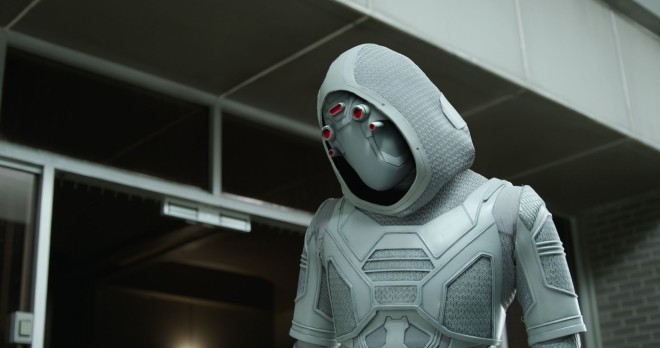
Scott, who had a similar dream, likely due to his journey into subspace himself, is recruited to help Hank and Hope find Hank’s wife. When they try and buy a piece of technology from Walter Goggins that will help them get to the quantum realm, a superhero named Ghost, whose molecular structure is so unstable, you can’t hit her, shows up to steal Hank’s lab (which has been turned suitcase-sized) so SHE can get into subspace and fix her molecular issues.
The suitcase-sized lab then works as a McGuffin. Everyone is after it for their own reasons. Because the tunnel to subspace will close soon, time is running out for Hank and Hope to save their wife/mom. They will have to get the lab, figure out where the wife is, then rescue her, all before the movie is over.
Here’s the thing about Ant-Man and The Wasp. It should’ve worked. The core of the plot is not only character-driven, but emotionally poignant. Hank is trying to rescue his wife who disappeared 40 years ago in sub-atomic space. Building a superhero movie around something so personal is usually a recipe for a good film.
On top of this, you had, in theory, a complex villain in Ghost. Here’s this woman whose power is also the source of all her misery. That’s the best kind of power to give a superhero, one that’s also a burden, as it adds a complex layer to every choice the character makes.
So then what happened?
Well, for starters, Ant-Man and The Wasp had enough exposition in it for four Marvel movies. And it’s not hard to figure out why. You had Hank and Hope’s story with their mom. You had Scott’s story with his daughter. You had Scott’s house arrest story. You had the story for why Hope and Hank needed Scott’s help. You had Ghost’s story. You had Ghost’s dad’s story. You had Michael Pena’s Security Company story. And you had Walter Goggins thief story.
The more storylines you add, the more explaining you’re going to have to do. Explaining is exposition. Exposition is a MOMENTUM-KILLER. Therefore, every time this movie felt like it was getting somewhere, we’d stop and have to explain 20 million things. There’s a scene where Ghost has tied up Scott, Hank and Hope to extract information from them and it goes on and on and on because of how much everybody needs to say. Why does everybody need to say something? Because there’s SO MUCH INFORMATION the audience needs to know in order to understand what’s going on.
I don’t even know why I say this anymore since clearly nobody’s listening. But the more characters and storylines you add, the clunkier your screenplay is going to be. The only time this isn’t true is when you have forever to smooth everything out. That wasn’t the case here. They were on a typical rushed sequel deadline. So they signed their own death warrant when they decided to include 6 simultaneous story threads amongst a script that already was going to be exposition-heavy with all the quantum realm stuff that needed to be explained.
At the very least, they should’ve cut Walter Goggins out of the story. What was he doing here?? He was just some random dude. He didn’t even understand the technology he was after. At least with Ghost, the technology had the capability to save her. So her pursuit made sense. But come on. That simple cut would’ve brought your movie down from 90% exposition to 80%, which is still 60% too much, but it would’ve been an improvement.
Now you may say to me, well hold on Carson. Avengers: Infinity War had a really complex plot and it worked. Actually, Avengers: Infinity War wasn’t as complex as you think. A guy was trying to get 5 crystals so he could destroy the universe. That plot engine was so prevalent throughout every scene (save for some of the Thor stuff), that we were never confused about what was going on. Ant-Man and Wasp, by contrast, had to give us updates every five minutes on where the characters were, why they were doing what they were doing, and what needed to happen next.
But it was only as the movie was wrapping up that it occurred to me what the true problem was. And it was a mistake so baffling, I can’t believe nobody making this film caught it.
Ant-Man and The Wasp has nothing to do with Ant-Man.
Think about it. This storyline has zip to do with Scott Lang. He has no emotional tie to Hank’s wife or Hope’s mother at all. It’s their story. They’re the characters driving the plot. As a result, the entire movie is one big series of scenes where they’re trying to come up with reasons for Ant-Man to be in the movie.
It got so bad that at one point, I kid you not, they have Scott BECOME THE WIFE! She pulls a Whoopi Goldberg and somehow takes over Scott’s brain so that she can let her husband and daughter know where she is. That’s how desperate they were to figure out ways to include Ant-Man.
In retrospect, this may be the worst plot decision ever made in a superhero film. You’ve created a plot that doesn’t need your main character!!! How dumb is that??!!!!? And look. Maybe – MAYBE – they could’ve saved face if the people going after the mom were, you know, likable. But Evangeline Lilly’s Wasp was a big fat whiner who sucked the happiness out of every scene. And I don’t think Michael Douglas even knows what a superhero is. He’s the equivalent of a dad at his teenage daughter’s birthday party pretending to understand Snapchat. Good god is he miscast.
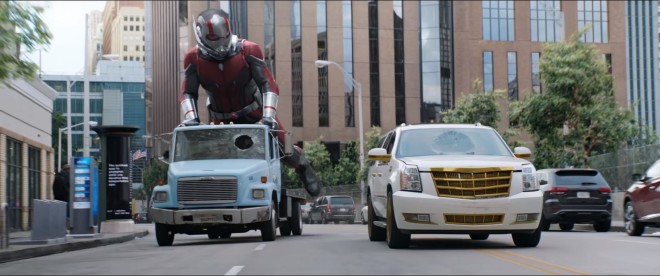
The final problem is the budget. They had 120 million dollars and decided to spend 10 of it on the first 90 minutes and 110 on the last 20. Therefore, the first hour and a half is people in rooms talking about really exciting things such as where they have to go next. The next 10 minutes is all the big special effects shots, every one of which was already shown in the trailer. And then, when we get to the culmination of the story – the quantum realm – the place where we assume all the moola has been spent, it’s a big fat nothing-burger. Sub-space looked like a half-rendered effects shot for one of those early computer generated Saturday morning cartoons. We’ve spent the entire movie building up to this moment and this is what we get??
The reason I’m so passionate about this is because Ant-Man was my favorite Marvel superhero. Now I kind of hate him. He’s pointless. I hope this isn’t a new trend going forward. Will Black Panther 2 focus on Martin Freeman’s daughter getting kidnapped and his quest to get her back? Maybe, if Black Panther is lucky, he’ll get to fight side-by-side with Martin. What a disaster.
[x] What the hell did I just watch?
[ ] wasn’t for me
[ ] worth the price of admission
[ ] impressive
[ ] genius
What I learned: There are screenplays where the hero drives the plot. There are screenplays where the villain drives the plot. But I don’t know many screenplays where a secondary character drives the plot. I’m not saying it can’t be done. There are probably a few examples in history where it’s worked. But I will say that if that’s the way you’re structuring your story, you’re doing it wrong. When you trace all the problems of this script back to their source, it’s that the best thing about your property, Ant-Man, aka the TITULAR CHARACTER, is a background player. I can’t fathom why they did this.
Genre: Comedy
Premise: When a young woman with #metoo anger-related issues hits her head and believes she’s a pirate queen, she acts out on a group of hapless guys in an attempt to even the score.
About: This script began life as Let’s Be Famous, which was featured on Scriptshadow in August of 2017. It was basically a story which started as one idea and then veered into another and SS notes reflected that there was a disconnect. The feedback was spot on and made me realize my main character had gone off the rails after the midpoint without a proper set-up for her behavior. — The odd behavior of my character in the back half became the most interesting aspect of the story to me, so, I embraced it and discovered there was a #metoo component already present, which only needed to be developed. The revision resulted in Captain Susan: Pirate Queen, a story about an angry young women who acts out on a somewhat innocuous group of guys. I’ve tried to tackle the #metoo movement in an unexpected way and rather than have men be the bad guys, show how we all need to recognize when we act badly and try to remedy those behaviors. I also wanted to write something a tad darker than my usual fare and although no one dies in this story many, many spankings are given. — Susan was a tricky character to write, she might not be entirely sympathetic, but hopefully I’ve made her compelling enough for an audience to want to follow. — I hope you enjoy this new version and a big thank you to Carson and others who gave me notes on Lets Be Famous. I guarantee you’ll see evidence that I was listening.
Writer: Stephanie Jones
Details: 90 pages

Page 1 rewrites are never easy decisions.
You’ve written a draft. You’ve decided (or been told) it doesn’t work. Now you have to figure out whether to cut bait and write something new, or go at it all over again.
There’s no magic formula for how to make this choice, but the main factor you want to pay attention to is, how did people respond to the earlier draft? Were readers saying it had potential? Or were the compliments few and far between? If a lot of people liked the idea but not the execution, it could be a candidate for a page 1 rewrite.
A secondary factor is passion. If you absolutely love the idea, that should play into your decision. You’re more likely to get something right if you’re passionate about it as opposed to if you’re writing marketable material because it has a better chance at selling.
One thing’s for sure though. If the second iteration doesn’t get a markedly better response, it might be time to shelve the concept and work on something new. Let’s see where the new iteration of Captain Susan docks.
25 year-old Susan Lucre is a typical millennial who’s obsessed with becoming internet famous. Her and her boyfriend, Fred, who has a cat vlog, are kicking around ideas one day and Susan comes up with a whopper. Go sail the high seas without any cell phones or navigation equipment and vlog about it!
After deciding such an activity may be above their pay grade, Susan comes up with an alternative. They PRETEND to sail off in a boat, then go hang out at a hotel for a couple of weeks, and fake vlog their adventures on the high seas.
They find a man, Captain Caboose, who’s a member of a mid-life crisis group who pretend to be pirates, and rent a boat from him. After having their big bon voyage party, Susan, Fred, and Fred’s cat attempt to sail away safely to a nearby port, but instead get caught in a storm and have to ditch the boat, escaping on a life raft.
Susan, who bumped her head and passed out during the escape, wakes up believing she’s a pirate. “Susan? Are you sure you’re okay?” “Well. Me still have the hunger, but I no longer thirst.”
Lucky for them, Captain Caboose catches up to them on another boat and saves them. Fred then watches in confusion as pirate-like Susan exchanges pirate-banter with Captain Caboose, and the two head down to the Captain’s quarters where we can only assume very strange things are about to happen.
Fred takes his cat and jumps ship, heading to a nearby island, where he meets a weird shipwrecked French woman. Back on Captain Bottom’s boat, Susan’s gone full bonkers, becoming some sort of pirate-dominatrix hybrid, tying Captain Bottom up and either sexually pleasing or torturing him. It’s unclear which.
Eventually, Captain Susan decides to save Fred from the island, but first tricks Captain Bottom into luring his entire fat middle-aged wanna be pirate crew onto the boat, and turning them into her slaves. Off they go to the island to reunite with Fred and the cat and, hopefully, sanity.
Let me start off by saying this is a much cleaner draft than the first draft I read. A lot more care has been put into the setup. I remember reading that first draft and thinking, “This is soooooo sloppy.” Nothing made sense. In this new draft, I understood why we were doing this and what the plan was.
With that said, there are issues that remain.
For starters, I’m unconvinced that a character who acts like a pirate should be the centerpiece of a movie. This is the kind of character that’s funnier in the background – someone we get in small doses.
Remember how Zach Galiafianakis had the perfect amount of screen time in The Hangover as this semi-background character who only popped in to say something weird or funny? But then when they made him the main character in Hangover 3, he wasn’t funny anymore? That’s how I feel about this pirate thing.
Not only that but I found it strange that we already had a character who erroneously believed he was a pirate in Captain Bottoms. So when Susan turns into a similar character, it’s redundant. He kinda took the wind out of her sails.
Another big issue is Fred. I didn’t believe for a second that these two were a couple. They didn’t show any affection towards one another. He seemed more like the gay best friend.
The reason this is relevant is because later in the story, finding and saving Fred becomes the main engine driving the narrative. If we were never convinced that they were a couple or that they cared for each other in the first place, why would we care whether she saved him or not?
You could make the argument that they were never meant for each other in the first place, which we see play out in the end (Susan ends up with Captain Bottom). But that’s a tough plank to walk. I’m reluctant to use any payoff in a script that weakens the earlier narrative.
One thing I believe Stephanie needs to work on is contrast in character pairings. If you’re going to have characters sharing lots of screentime together, you want there to be contrast between them. The more contrast, the more conflict. The more conflict, the more fun a scene is.
When we begin, Susan and Fred have a lot of scenes together, yet there’s little contrast between them. They’re both whiny losers who bemoan their boring lives. Hence, little conflict. It isn’t surprising, then, that their scenes don’t have a lot of pop.
Then, when Susan becomes a fake pirate and finally does have contrast with Fred, we move her over so that she’s sharing scenes with Captain Bottom, who’s also a fake pirate. Therefore, once again, we have two characters sharing screentime who are more similar than different.
But if I’m being honest, I think the problems here run deeper. Like I said, I’m not sure the pirate-talking character can be the hero. It’s a great comedic setup for a background character. But can it sustain an entire feature? My gut tells me no.
I do think this draft is better. And I like how there’s no extra fat. I just had a hard time buying into the premise. Without that suspension of disbelief, it’s almost impossible for me to get invested in a story.
Script link: Captain Susan
[ ] What the hell did I just read?
[x] wasn’t for me
[ ] worth the read
[ ] impressive
[ ] genius
What I learned: Figure out the three sets of characters who share the most screentime in your script and make sure there’s an adequate amount of contrast between each pairing. That will result in conflict, which will in turn up the entertainment value of those scenes.
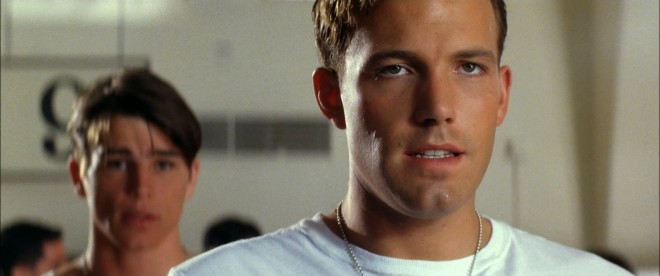
Yesterday’s celebration of the great country we live in led to thoughts of the not so nice things about the country we live in. I’m talking, of course, about Michael Bay movies. I remember July 4th of 2001 like it was yesterday. It was the day Michael Bay’s Pearl Harbor came out (it actually came out May 25 but just go with it for the sake of the article). The highly hyped film was suppose to be Bay’s version of Titanic. It was Titanic alright. A Titanic disaster. Actually, it was worse than a disaster. It was forgettable. The reason Bay’s movies are so forgettable is because he’s awful with character. He has zero understanding of what a character needs in order to emotionally resonate with audiences. Which makes sense when you consider he emerged from the world of commercials, where it was more about the product than the character selling the product. So to Mr. Bay and all other storytellers out there, today’s article is a cure for the Bad Character Blues. That’s right. Ten tips… to improve your characters right now!
Clear objectives – A character without a clear objective is an aimless wanderer. The audience becomes frustrated by that aimlessness and inevitably finds the character boring, or worse, annoying. The thing about objectives is that it’s so simple to incorporate them. In Jumanji, our characters’ objective is to return the jewel to its statue. Then they get to go home. How easy is that?
Unresolved relationships – Characters should have an unresolved issue with at least one other character in the movie. How compelling you make this issue plays an enormous part in how entertaining your script is. That’s because issues lead to conflict, and conflict is what you need to write good scenes between characters. Therefore, you want to get this right. In A Quiet Place, the dad has a broken relationship with his daughter, who’s become sick of all the rules they have to abide by as well as not allowing her to grow up. Take note of how simple that conflict is. I’m pointing that out because writers often think they need relationship conflict that’s really complex. No, it’s often simple universal things that every person experiences.
An inner battle – Give your main character something they’re battling internally. It could be a compulsion, like OCD, a vice, like meth, a fear or flaw, like standing up for themselves, or anything that involves an unresolved problem from within. This is one of the most important ingredients to breaking a character out of the 2-D mould and making them 3-D. A huge component of the human condition are the battles we fight within ourselves. Your characters should be no different.
Conflict with the past – Characters should have some unresolved conflict with their past. I call this the “fourth dimension,” as it takes your character from 3-D to 4-D. A character will have conflict with the external (1-D), other characters (2-D), the internal (3-D), and the past (4-D). It might be a traumatic event. It could be a death that wasn’t properly mourned. But it often has something to do with family. Every human being has a complex relationship with their family growing up, which is why it’s such a great place to look for this conflict. Good Will Hunting had to get past his abusive father in other to move forward.
A dash of good in the bad and a dash of bad in the good – A character who’s 100% good is boring. A character who’s 100% bad is boring. So you want to mix a little of each into the other. Denzel Washington in The Equalizer is a REALLY GOOD GUY. But he’s got a dark side. He’s a relentless killer, even enjoys it a little. It’s that edge that makes the character pop. Thanos is a REALLY BAD PURPLE GUY. But he’ll also sit down and talk to you in a calm logical manner. Those little splashes of good and bad are what keep a character from becoming cliche-bait.
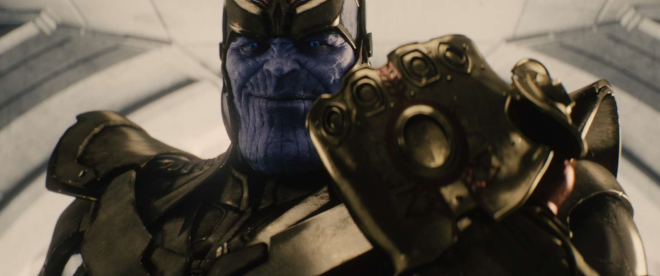
Personality – This is one of the BIGGEST omissions I see in character-creation. Characters with zero personality. The writer then wonders why readers aren’t engaged. These are MOVIE CHARACTERS, guys. You thought them worthy of entertaining audiences for two hours. So give them some personality dammit! That doesn’t mean they have to be big and outlandish like Jim Carrey in The Mask. Personality can be dry humor, sarcasm, charm, attitude, arrogance. And every trait is scaleable. You can go big with humor or you can make it subtle, dependent on genre and tone. Thor was a dead MCU character until they gave him some personality.
Arc your character – Have your character start in one place and end in another. I don’t care how they change, but they need to change somehow. Or else the character becomes stale. In Paddington, the father starts off skeptical and resistant towards Paddington. By the end, he’s Paddington’s biggest supporter. Audiences love watching characters transform.
Give them a secret – In real life, we feel closer to people who share secrets with us. It’s a form of bonding. The same thing works with characters. If you know about their secret, you feel closer to them. Superman. Simon in Love, Simon. Jerry Lundegaard in Fargo – had his own wife kidnapped. If a character isn’t popping, try adding a secret and see if it helps.
Create contrast within the character – One of the biggest challenges in character creation is creating characters that feel fresh. A great way to overcome this challenge is to build contrast into character. So whoever the character is assumed to be, you balance that out with the opposite. A priest with an attitude. A comedian who’s a drag. An inappropriate HR rep. A bully with a lisp. A pacifist war vet. A cop who’s a drug addict.
Make sure something personal is on the line – I recently read a script where the hero succeeded at his goal, yet I felt nothing. I realized it was because there was nothing personal on the line for him. If this sounds like your script, let’s add some personal stakes to your hero’s journey! It could be a daughter who’s been kidnapped. It could be losing the love of your life. It could be saving a friendship. If you want to make it stick, make it personal.
One final note. You will never be able to use all of these tips on a single character. Every story is unique. Sometimes they require counterintuitive things from your characters. For example, Ferris Bueller needs to stay the same (violating tip #7) so that Cameron, his friend, can have the big powerful arc in the movie. With that said, you should be able to apply everything here to every script’s ENSEMBLE of characters. In other words, tip 5 may not work for your hero. But I’m sure you can add it to another character in the story. And with that, we’ve ended thin boring characters for all time. You’re welcome, Michael Bay.
Let’s put aside our differences and opinions for one day and celebrate one of the greatest countries in this planet’s history!



Genre: Family/Adventure/Comedy
Premise: (from Black List) When bad guys break into their home and kidnap their parents, siblings Kevin and Clancy are forced to confront the fact that there may be way more to their stay-at-home mom than meets the eye.
About: Today’s script leapt and grabbed onto the bottom rung of last year’s Black List and pulled itself into one of the final slots. Sarah Rothschild is a relatively new screenwriter. She has a project in development at Universal called 24-7 that has Kerry Washington and Eva Longoria attached.
Writer: Sarah Rothschild
Details: 111 pages
Sometimes I feel like every script is an attempt by a writer to rewrite their favorite movie growing up. And look, I get it. That’s the reason we got into this business! Because we fell in love with movies! But I also believe that one of the first breakthroughs a writer has is when he/she learns to stop trying to be someone else, and starts being themselves.
I know an amateur writer whose work I used to read six years ago. He’d send me script after script for consultations and he might as well have slapped a picture of Quentin Tarantino on each title page because they were beat for beat remakes of all of Tarantino’s films. But he was a good writer! And I told him this. But I said “If you’re going to gain any traction, you have to stop trying to be Quentin Tarantino.”
It took him five years but last year he got a script on the Black List and got an A-list actress attached to the project. Lo and behold, it was as opposite of a Quentin Tarantino script as you can imagine. I’ve since realized that you can tell a person to stop aping a writer or a favorite film all you want, but the change has to come from within. They have to see that light themselves.
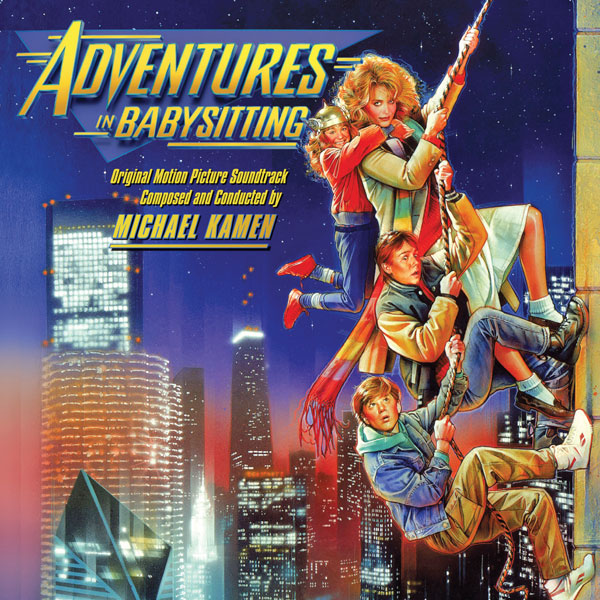
Today’s script is an obvious riff on Adventures in Babysitting, which is a sub-genre I see pop up in script form a couple of times a year. Let’s see if it’s able to differentiate itself enough to justify a Black List placement.
15 year old Clancy and 10 year old Kevin live in a tiny Northeastern town called Cape Vincent that is SOOOOOO boring. Not only is their town sooooo boring, their parents are soooooo boring too. There’s their dorky dad, Glen, who might as well be called #DadJokeDadBod, and there’s Margot, a mother who’s so lame she actually works as a lunch lady at Kevin’s school.
When Clancy and Kevin invite their friends Mim (cool Asian girl) and Lewis (allergic to everything bedwetter) over for a sleepover, everything seems to be going well until two scary people in masks BREAK INTO THEIR HOUSE AND KIDNAP THE PARENTS.
After a little research, the group finds out that their mom is in the Witness Relocation Program, something not even their dad knew. The people who kidnapped her are her old criminal buddies who she ratted on, and there’s a good chance they’re going to kill her.
Meanwhile, Glen and Margot are brought to Leo, Margot’s sexy former partner in crime and lover, who needs Margot’s expertise to help him with a job right this moment! While heading up to Canada, where the job is, Glen’s entire life comes crumbling down as he realizes his marriage was built on a lie.
Not far behind them, the Super Kids put some clues together that allow them to follow their mom, who ends up at a royal ball in a Canadian mansion. Each kid will have to use their unique set of skills to con their way past those cunning Canadians and rescue their mom before Leo the Sexy Loser gets what he wants and tosses poor Margot and Glen into Lake Ontario for a permanent swim.
You know that guy or girl in your life who you think is kinnnnnda cute but you’re not quite sure if you would ever actually date them? That’s this script.
I was lured in by The Sleepover’s cuteness. Lewis the human allergy was a personal favorite. I liked how he was scared and allergic to everything. And every once in awhile, there was a laugh out loud line of dialogue, such as when Mim was trying to explain to a dejected Clancy that it was perfectly normal to have lame parents: “Look, the world is a scary place for our parents. They grew up in the old days, when there were only two genders and no streaming.”
With that said, I kept waiting for the script to find its footing amongst all the stumbling. It wanted to be so many things at once. For example, at first it’s this fun reality-based adventure, where they’re using real-life solutions to find their parents, like calling Uber. But then later they’re in a Toronto library where they find a secret Da Vinci Code like passage that takes them to a sacred underground home base for their mom’s former agent life.
But the real problem with the script was its reliance on plot convenience. It just so happens that on the very day the bad guys find out where Margot has been hiding for the last 15 years, they need her help to steal a crown at a Ball that’s happening THAT NIGHT. That’s got to be the coincidence of all coincidences.
And the problem with sloppiness is it begets more sloppiness. The audience starts asking questions like: “Don’t multi-million dollar theft jobs take months of planning?” How are they able to know what to do in the two hours it takes them to get to the Ball?
A lot of new screenwriters don’t think this stuff is important. But these can be deal-breakers with a reader. Once a reader thinks you’re not even trying to fill in your plot holes, their all important suspension of disbelief goes the way of the Vine video. That’s what happened with me. I liked these characters and wanted to root for them badly. But nothing about Leo’s plan made sense.
With that said, if you’re going to make a family film, I’d rather studios made films like this again (Adventures in Babysitting, Goonies, The Parent Trap) than the live-action family films they’re signing off on these days, which mostly consist of dogs that are dying and kids with facial deformities. I mean would it kill them to give us some live-action fun every once in awhile? If I’d grown up watching movies where deformed dogs were always dying, I’m not sure I’d have ever moved to Hollywood.
The Sleepover needs a good old-fashioned simplifying. Simplify the characters (probably make Margot a struggling single mother – the dad storyline was a mess), simplify the tone (is this Goonies logic or is it real world logic?), and simplify the plot (the whole Canadian Ball thing needs to be totally rethought). The focus should be on the four kids solving real-world problems with their unique strengths. That’s when the script was at its best.
[ ] What the hell did I just read?
[x] wasn’t for me
[ ] worth the read
[ ] impressive
[ ] genius
What I learned: A simple way to add depth to a character is to write in something they really want. In Clancy’s case, she’s desperate to get into Julliard. It’s her entire focus in life right now. The reason this is so effective is because a) we admire characters who passionately want something. And b) it helps us place a label on the character that we can use to identify them. It’s like if you meet someone at a party and they tell you they play tennis. You now remember them as “the tennis player.” It’s a quick and dirty way to solidify a character in the reader’s mind, not to mention surprisingly effective.
