
Genre: Drama
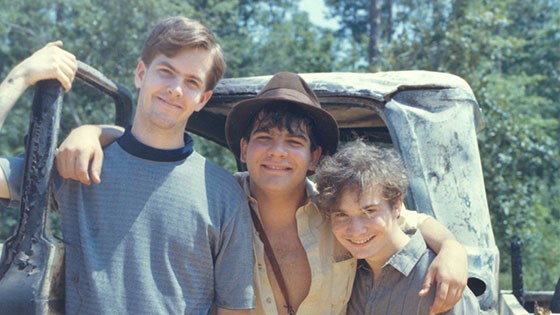
Premise: Based on a true story, in the summer of 1982, three kids innocently attempt to recreate Raiders of the Lost Ark, a task that ultimately ends up taking them seven years.
About: Today’s script is based on one of the most heartwarming filmmaking stories of all time. Maybe the biggest fan-film ever made, these kids were able to adapt a 20 million dollar movie for 5000 dollars. A fun factoid. There was no way to get the Raiders of the Lost Ark movie on any medium at the time. This meant the kids had no way to know exactly what happened in the film. Luckily, the film was re-issued in their small town for a few weeks, allowing the kids to audio-record the entire movie, and hence construct a working screenplay. The choice of adapter here is unorthodox. Daniel Clowes is mainly known for films like Ghost World and Wilson. I suppose they thought he’d bring a quirky sensibility to the kids. But, traditionally, he hadn’t written anything like The Raiders Project before.
Writer: Daniel Clowes
Details: 115 pages
I watched two things this weekend. The rest of Cobra Kai, which was awesome. And the This Is America video from Childish Gambino that everyone’s talking about. I don’t care what the storytelling medium is. If something’s good, I’m interested in it. And I’m even more interested in figuring out why it works.
This is America works, in part, because it tackles hot button issues – race and guns. In a way, it’s sort of cheating when you use these. They’re always going to get a reaction, regardless of the level of skill behind the artist. Hot button topics, by definition, get you hot!
But the reason this one stands out is that it’s not on the nose. It’s not sending a clear message. There’s tons of mystery behind the choices made in the video. And trying to put those puzzle pieces together isn’t only fun, but it gets you asking other people what they think, which grows the conversation.
Getting back to today’s script, I’m still searching for the actual movie these kids made. It sounds like a blast. So if anyone knows where I can find it, holla at ya boy.
It’s 1982. 12 year old Chris has just moved to a small town in Mississippi with his newly single TV anchor mother. The only thing making this bearable is Indiana. Oh, I’m not talking about the state. I’m talking about Indiana Jones, the greatest movie character of all time. Chris is kinda obsessed with him. He even owns a replica of Indy’s famous hat, which he wears everywhere.
Chris’s immediate goal at his new school is to be popular. And he’s a charming chap, so he succeeds. However, he can’t help but be drawn to a little nerdy kid named Eric, the only other kid in school who understands how important Raiders of the Lost Ark is.
Chris sacrifices popularity to team up with Eric, who he immediately pitches an idea to: Let’s remake Raiders of the Lost Ark. Eric points out that they have no way to make a film. I mean, how do you create a giant boulder? Or, if you really want to talk impossible, how are they going to get a girl to be in their nerdy movie??
But Chris’s enthusiasm is contagious, and soon, they’re recruiting a third member to the production team, Jayson, a lover of obscure cinema (he’s more THX-1138 than Star Wars). The group starts shooting their film, recreating scene after scene, and before they know it, the local news does a story on them, turning them into mini-celebrities.
The problem is, each of these scenes takes tons of time to set up. Weeks, if not months. A couple of years go by and they’re not even halfway done. Then Chris goes off to boarding school, limiting the time they have to shoot Raiders to the summers. Finally, they finish the film (except for one scene that was infamously too expensive) and have a big premiere at the local Coca Cola plant, making all those seemingly endless hours worth it.
The funny thing about screenwriting is that every screenplay you write is the first time you’re learning to write that story. So you won’t know the unique challenges of that story until you’re knee-deep in it.
The challenge with this screenplay was the seven summers (ooh, that’s a good title). I’m not sure Clowes has ever written a movie that needed to be spread out like this. And we feel it. The more the script has to jump forward in time, the more uncomfortable the writing gets.
Remember that whenever you jump forward, you pop the balloon, which forces you to start blowing up another balloon. And it’s hard to get readers to stick around for new balloons. Yet that’s what kept happening here. The kids would shoot a scene, they’d go their separate ways, they’d come back again next summer, meet again, plan another scene, shoot it, go their separate ways, etc., etc.
It was so boring.
The bigger problem with this screenplay, though, is the motivation. We’re never clear on why they’re making this movie. And since “making the movie” is the point, it’s frustrating that we’re never clear on why they’re doing it.
It’s okay in real life if there isn’t a reason. But movies need a point. The characters need motivation, even if it’s something they’re not aware of. It’s up to the writer to find that.
A good example of this is the upcoming movie, “Tag.” Personally, I don’t think the true story of a group of friends who have been playing the same game of tag for 30 years is a good idea for a film.
But to the writer’s credit, he did with that story what Clowes couldn’t do here. He realized that the reason these friends were still playing this stupid game of tag as adults was because it was a way for them to stay in each other’s lives as they grew older. That’s the theme. And having that theme adds purpose to the game.
In The Raiders Project, even the characters are unsure of why they’re doing this. They keep asking each other, “Why are we doing this??” And nobody has an answer!
The answer probably should’ve been, “You can do anything you want to if you try.” It’s cheesy but it’s a powerful theme. Everyone here is telling them they’re idiots for trying this. Why not have it be about proving them wrong? The power of perseverance? It seems obvious in retrospect.
I think I know how to solve the seven-year structural challenge as well. In real life, the kids famously couldn’t shoot one scene – the one where the Nazi plane blows up. Years later, after completing the film, they finally raised enough money to shoot that scene.
The script should’ve been built around that scene, using it as an anchor to keep coming back to. You build up the GSU of the scene (They only have this location for one day. The plane isn’t working. The explosives haven’t arrived). And as we get closer to shooting the scene, we jump back to each individual time period of them making this movie.
That way you don’t have this weird time-jumping problem of trying to cover seven summers in the final sixty pages.
If there’s one positive I’ll take away from this script, it’s that we’re way more capable of achieving things than we think we are. These kids did something that everyone thought was impossible. And sometimes things are impossible. But it you don’t at least try, how will you know?
[ ] What the hell did I just read?
[x] wasn’t for me
[ ] worth the read
[ ] impressive
[ ] genius
What I learned: I think one of the reasons this didn’t get made was because it’s one of the most difficult casting situations I’ve ever read. How do you cast actors to play 12-20? This is puberty, the time in life where people physically change the most. You can’t cast different actors to play the same part. It would be too distracting. And I don’t know a 20 year old who can also play 12. It’s a casting nightmare! So don’t create any casting nightmares in your own scripts, folks.

Sneaky me snuck off on vacation these past two weeks. I tried to rig my WordPress to automatically put up posts. The result was, um, not what I had hoped for, which meant I was constantly popping in to do maintenance, all on my phone. It’s not fun to try and fix a post when you’re in the middle of a castle! Or looking at the biggest Picasso painting ever painted. For those interested, I went to Dublin and Spain. The above picture I took in a park in Spain called the Retiro (in Madrid). Easily the most beautiful park I’ve ever been in.
Anyway, this post is meant to keep you accountable. You are now 5 months into the year. You should be closing in on one completed script. So, are you there? If not, write more! Or vent your frustrations. Or offer encouragement. Or whatever you want to say. As long as it’s about writing or vacations! :)
Genre: Action/Adventure
Logline (from writer): After jumping ship on a remote island, a sailor must escape from his new captors, a fabled tribe of cannibals named the Typee.
Why You Should Read: “Typee” was Herman Melville’s best-selling book in his life time, NOT Moby Dick. The story was a hit with audiences because it was written by a man who “lived with the cannibals.” Yet for some reason, Hollywood has continued to overlook this hidden gem, which has everything a big cinematic movie needs: unique setting, high stakes, lovable characters, mystery, twist and turns, and a dramatic ending. The truth is no one really knows about this book. Moby Dick will always reign supreme as the iconic Melville text, but Typee deserves some love, too. It would make a much better movie! — There was one big theme I noticed throughout the book: identity. During his adventures on the island, the main character always walks a fine line between engaging in the native cultural and rejecting it outright. He is afraid of losing his western identity, yet he is forced by his captors to participate in the rituals and ways of the Typee. I used this as a central point of conflict in the script. — One last thing. This script has a lot of what I call “Oh, shit!” moments. You know, when you’re reading a script and something crazy happens and you say “Oh, shit!” out loud. I really worked to put these moments in there because the original text didn’t have enough of them. There’s one particular “Oh, shit!” at the end of Act II that you really shouldn’t miss.
Writer: Kent Sariano (based on the novel, “Typee: A Peep Into Polynesian Life” by Herman Melville).
Details: 104 pages
I loved this pitch. Who would’ve thought that Moby Dick, one of the greatest novels of all time, wasn’t even Herman Melville’s best selling book when he was alive? Throw some cannibals into the mix and of course I’m hungry to find out more.
The year is 1841. 23 year old Tom is a deck hand on a whaling ship (write what you know, I guess!) that’s ruled over by a power hungry first mate named Hall. Hall has his sights set on making Tom’s experience as miserable as possible, always having him do extra work and calling him, “Thomasina” to embarrass him in front of the crew.
Tom’s lone ally is 18 year old Toby, an eager newbie who’s keen on making a good impression. Despite the danger in associating with Tom, Toby is always there for him, even when he gets whipped in front of the crew for publicly challenging Hall.
When their ship reaches a Polynesian island and the crew is given a few days to play, Tom and Toby hatch a plan to hide out in the island’s center in order to get away from Hall, figuring they’ll catch the next ship that comes along. One problem. There are rumors that this island houses a tribe of cannibals known as the Typee.
Cannibals? Hall? Both the same as far as Tom is concerned. So he and Toby venture into the island where they, indeed, meet this mysterious Polynesian tribe. Toby freaks out, tries to run, and pays the ultimate price for it – he’s killed.
Tom, injured from earlier, has no choice but to stay with the group. And you know what? They aren’t so bad. The tribe’s King, Mehevi, takes a liking to Tom, and helps him learn the ways of the Typee, namely how to hunt. Also, Mehevi warns Tom of their rival tribe, the Hapaar, who are constantly threatening war with the Typee.
Tom falls in love with a Typee woman and is on good terms with almost all of the residents. But as interesting as these people are, Tom longs to go home to America. Unfortunately, his buddy Mehevi won’t let him. Which means if Tom’s going to get away, he’ll have to escape. Tom knows that his plan will need to be perfect. Because it if fails, the Typee will kill him. Or worse.
I can see why this won. The writing is slick. It’s succinct yet also descriptive. You usually only get one or the other. Not only that, but we jump right into things. We’re on a ship. Conflict is thrown at us in the form of Tom battling Hall. I was drawn in immediately.
But as the script made its way into the second act (when we get to the island) I noticed that something was missing. The storytelling was becoming too casual. For example, instead of building up the mysterious horror of our looming cannibalistic tribe, we learn about them through some random deck hand who informs us of their existence as casually as one might give directions. “Are we making port?” “Aye. We are. But it’s an island of cannibals.”
We needed some mystery. We needed to get to that moniker – cannibalism – gradually. To throw the word out there so haphazardly sapped it of all of its power.
Also, it didn’t make sense why Tom and Toby would head directly towards the cannibals. Cannibals are dangerous, right? So why are we walking towards them? I get that they wanted to hide from Hall, but surely there’s a better plan than hiding amongst cannibals.
Toby’s death happens way too easily. This was a major character, a likable character, and his death doesn’t even occur on screen.
From there, it took me awhile to understand what kind of movie I was watching. I was promised cannibals, but instead I got Dances with Wolves – a film about fitting in with an unfamiliar culture. It wasn’t bad. And Melville provides plenty of conflict (there’s a frustrated Typee second-in-command who wants to kill Tom). But I couldn’t help but feel that I was a victim of false advertising. Where’s the cannibalizing???
Towards the end, we finally get what we’ve waited for (Cannibal Time!). But it wasn’t as exciting as we’d hoped. It’s simply Tom sitting down and eating human meat with the tribe. This might have been a fine plot point 100 years ago. But today? It needed to be bigger. I would’ve kept Toby alive and maybe they cook and eat Toby while he’s still conscious. Lol. That’s pretty sick but I mean, come on! It’s a movie about cannibals. You need to deliver “that scene,” that perfect cannibal moment that an audience never forgets.
The key to fixing this script is to add bigger plot developments throughout the story and deliver more on the promise of the premise. I mean, I was promised this big “Oh shit!” moment at the end of the second act, but I’m still not sure what moment Kent is referring to. Is it when Tom eats human flesh? That’s not big enough for today’s audiences.
And then there’s Hall. What a great villain! Yet we never get the satisfaction of taking him down. Once we leave the boat, the character is gone for good. Why not have Hall and his men come looking for Tom. It would provide you with an opportunity to close his story arc. Hell, he’d be a perfect candidate for Tom’s first cannibal feast.
Some of you might be wondering if it’s okay to radically change plot points like this. My experience has been that the further back in history and the more obscure the material, the more leniency you have. I’ve never met anyone who’s read Typee. It’s the first time I’d heard of it myself. So I think it falls under the category of “obscure enough” to make changes. Hell, Alex Garland changed tons of plot points in Annihilation, and that book was written less than a decade ago.
Writing was good here. But the script never leaves 3rd gear. You need to step on the gas more, Kent!
[ ] What the hell did I just read?
[x] wasn’t for me
[ ] worth the read
[ ] impressive
[ ] genius
What I learned: A good pitch doesn’t alway mean selling your concept. A good pitch can be any fun fact or piece of information that creates curiosity in the reader. Sometimes that means finding the story surrounding the story, which is what Sariano did here. That one factoid – Melville had a book that outsold Moby Dick – convinced me to give this a shot.
It’s easy to tell if a movie’s not going to work. You watch the trailer and instantly sense that something is off (check here and here for exhibits A and B). You don’t always know what it is. But you know you’re not going to waste 2 hours and 15 bucks of your life on it. For the average moviegoer, this reasonless choice is fine. But the aspiring screenwriter must know why every marketed release fails so that they don’t make the same mistakes themselves. And yes, you can often identify giant screenwriting mistakes right there in the trailer. So today, I’m going to take you through 15 failed films and the screenwriting reasons why they bombed. Let’s get into it.
Downsizing – It’s unclear what the point of the movie is. After our hero shrinks, what’s his goal? What’s the story’s destination? For example, when I watch Infinity War, I know the goal is to stop Thanos. That point is clear as day. These trailers displayed no point to the story. So it wasn’t surprising, then, that the movie didn’t have a point either.
Tomorrowland – The premise promises a movie that never arrives. You tell us a movie is about Tomorrowland, yet we barely spend any time there. Not only that, but Tomorrowland is lame. If you’re going to promise us something, make sure your script delivers it.
Logan Lucky – It’s a genre-less movie. Young writers commonly assume that genre doesn’t matter. Despite all his experience, Soderbergh keeps making the same mistake as well. You have to write in a genre or sub-genre that has a proven track record of turning a profit. “Wacky indie dark comedy heist” is not a genre that’s ever proven to be successful. So of course the movie didn’t catch on.
127 Hours – Just because something happened in real life doesn’t make it a movie. A movie still needs movie-like elements to work. Having only one character stuck in a visually unappealing rock crevice… there’s nothing cinematic about that. Nor is it a situation that lends itself to 2 hours of dramatization. Maybe you could make a 20 minute short about the subject (at most). But the point is, just because something dramatic happened in real life doesn’t mean it’s right to turn into a movie (see also: Sully).
The Five Year Engagement – I don’t know if this movie is any good or not. I never saw it. The reason I didn’t see it? The title. This shows just how badly a terrible title can hurt a film. A title needs to be either creative or clear. This is neither. It slams you over the head with its bluntness yet leaves you confused. So it’s a movie about… a sort of long engagement period? Why is that funny? Why is that topic worthy of a movie?
Inside Llewyn Davis – An example of how a miserable main character can destroy any chance of drawing an audience. Every hero must have something about him we can root for. This character had nothing.
The Place Beyond The Pines – The Place Beyond the Pines is what happens when a writer writes to impress film school classes as opposed to real people who go and see movies. Sprawling, unfocused, hyper-serious, long. You can write films like this if you want. But don’t expect anyone besides hardcore cinephiles to like them.
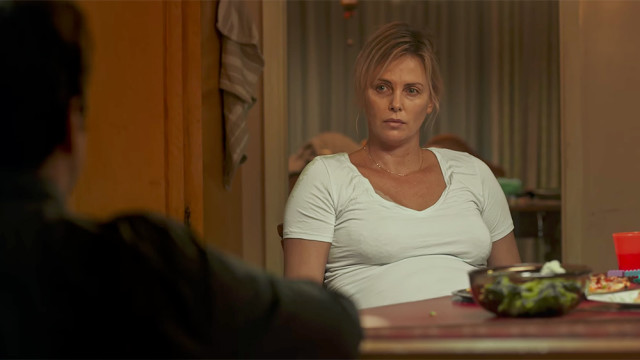
Tully – The concept is simply too small. A mother gets help raising her children. Um, okay. The only thing marketable about this movie – its twist – can’t be marketed. So what’s left?
Foxcatcher – Your script can be slow. Your script can be depressing. But your script cannot be slow and depressing. People typically see movies to escape reality and be entertained. To give them something that embodies the opposite of that is a risk that always ends in failure.
Ghostbusters – Tried to force an agenda on audiences at the expense of telling a great story. If you start putting agendas first, whether they be social, political, personal – the movie comes off as a commercial for your way of thinking rather than a piece of entertainment. Audiences are too savvy for that.
Valerian – “Everything-and-the-Kitchen-Sink” Syndrome. There isn’t any focus. Only a desire to throw as much crazy as possible at the screen and see what sticks. Every movie, even sprawling fantasy or sci-fi, must feel focused in some way. Without a strong story engine and clear goal, scripts like this can quickly descend into messes, which is exactly what happened.
Draft Day – Outside of boxing, fictional sports movies are almost always bombs. People who go see sports movies want to feel like what they’re watching happened. Of course, it didn’t help that both the director and lead actor constructed what was originally a fast-paced fun script and turned it into something that plays to the 80-and-older crowd.
Sex Tape – Dated material. The worst thing you can be is late to the party on a subject matter. This is why it’s advisable to stay away from trends. Although, going off of interviews, it sounds like this was made solely because Sony Studios head Amy Pascal just learned about sex tapes in 2013. Stay current people!
The Mummy – Absolutely positively nothing new. Even Tom Cruise’s Mission Impossible films have a stunt or two that’s never been done before. This had nothing new. When you don’t have a single new thing to offer with your screenplay, why would anyone show up to see your movie?
Blade Runner 2049 – A tsunami of self-indulgence killed this one. Nearly every scene took twice as long as it needed to. Don’t fall in love with your stuff so much that you forget to keep your story moving.
Genre: Biopic
Premise: The true story of how a CIA agent used his contacts he made in the agency to sell explosives to Libya after he was fired.
About: This script made the 2013 Black List and got Matthew McConaughey attached half a year later. Unfortunately, the project became a casualty of McConaughey’s busy schedule. This is one of the curses of getting a hot actor attached to your project. On the one hand, you become one of the most buzz-worthy projects in town. On the other, these hot actors are always over-booked and end up dropping out of a lot of projects. You risk becoming one of those projects. Once that happens, you’ll never regain that initial buzz again, so there’s a chance that no A-list actor signs on to your movie. Was it really that great to bring that actor on then? To avoid this mistake, you have to depend on your agents and producers. Ask them, “Is he really going to do it?” If that actor is signed on to 7 other movies, you might want to think twice about making the leap.
Details: 137 pages of boring

Sometimes you have to admit to yourself that you don’t have a movie.
You can rearrange the cards in your hand as many times as you want. But if it’s shitty hand, you’re not going to win it. I suppose you can try and bluff, which is what The Company Man attempts to do. But it’s hard to fool seasoned producers who are all too aware that one shitty movie can bankrupt their company.
And I’m not bashing the writer here, believe it or not. The writing is actually quite energetic. But where’s the story man? This isn’t a story.
Allow me to explain.
Edwin P. Wilson was a nobody farmer’s son who grew up wanting better things for himself. He fought in the end of the Korean War, then afterwards stumbled into a position at the CIA. Wilson’s job there was lame. He was, essentially, an errand boy.
Then one day the CIA director sent him to Libya, where he amassed a large network of political friends. To achieve this, he needed to operate a pretend company and do business with these politicians. However, one day, the government discovered that the CIA were torture-happy lunatics and cleaned house. Wilson got swept out with everyone else.
At this time, Libya was under extreme sanctions, and Wilson realized that even though he was no longer in the CIA, he could use his old contacts to make money. So he started selling weapons to Libya, specifically C-4. Lots of C-4.
After becoming very rich off these deals, two guys in a completely unrelated country are killed by a car bomb. The CIA believe that Wilson is responsible for this even though, it turns out, he isn’t. So the rest of the story is the US government relentlessly pursuing Wilson to link him to this murder.
I have read some all-timer boring scripts in my years. But this is up there.
The script spends the first half of its running time showing us how Wilson became an underground arms dealer to Libya. Why do I care about this? What makes selling arms to a backwater 3rd world nation that has little-to-no influence on the world stage a relevant story to follow? Why should I care that this is happening? The script never explains that. There are zero stakes to what’s going on.
Let me explain that further so aspiring screenwriters don’t make the same mistake themselves. If Wilson was selling nuclear weapons to Cuba in the 60s, during the height of the Cold War, that is a world-stage high-stakes event that is worthy of a story. He would’ve been putting the U.S. in direct danger of being blown to smithereens. But instead he’s selling C-4 to Libya so that they have a few extra explosives in their archives. Who cares?
The second half of the script focuses on how Wilson gets blamed for a car bomb killing that he had nothing to do with. So let me get this straight. The engine driving this story is whether our main character is going to be put in prison for an insignificant pair of deaths in another country that he has nothing to do with and that, even if he did, has zero global implications?
Where the fuck are the stakes?
You may answer that with: the stakes are high for Wilson, Carson. If he gets caught, he goes to prison. Yeah, but you’ve established that this story takes place on a global level. The stakes can’t just be our hero. They have to be bigger than that.
So how did this script gain traction?
Through the actor loophole.
The actor loophole is when you write a part that an actor will want to play and then who the hell cares what the plot is. The goal is to get the big actor. You get the big actor, you don’t need a plot. You’ve got a greenlit movie. And this is a showy character that I can see actors wanting to play. Wilson is cocky. He’s got a shaky moral compass. He’s got a lot of those cool Scorsese voice over lines that actors love.
But this is what drives me nuts about biopics. The writers are so focused on the main character that they don’t pay attention to the story. And there’s no story here. Waiting to see if a guy goes to prison because of some random bombing he had nothing to do with isn’t a story.
Also, I don’t think anyone wants to see these international weapons sales movies. You had that Nicholas Cage “Lord of War” movie that nobody liked. You had the more recent “War Dogs” with Jonah Hill. I get the idea behind these concepts. Ooh, it’s ironic, cuz, like, we’re selling weapons to our enemies! But that’s just a thought. It’s something you literally think about for 3 seconds, then go, “Yeah, that’s kind of interesting,” and then you’re done with it. There’s zero reason to spend 2 hours expanding that thought.
Like I said earlier, you have to be honest with yourself about if your idea is worthy of a feature treatment. The Company Man is half-worthy. It’s got the character. But it never figured out the story.
Will this ever get made? I don’t know. The actor catnip is strong with this one. That’s always a wild card. But it needs to restructure its story so there are some actual stakes. Everything here feels intensely insignificant, to the point where after finishing each page, you ask, “What’s the point of all this?”
[ ] What the hell did I just read?
[x] wasn’t for me
[ ] worth the read
[ ] impressive
[ ] genius
What I Learned: I love italicizing voice overs, particularly if you have a character who’s going to be talking in voice over a lot, such as Wilson. It’s a big flashy visual aid, so you know you’re reading voice over every time it starts. And it’s great for scripts like this because there will be times where Wilson speaks out loud then speaks in voice over right away. It’s great to have that visual aid that allows us to make that mental switch so we understand why the character is speaking twice in a row.
