
Genre: Romantic Comedy
Premise: Two assistants for high-profile workaholic bosses decide that the only way they’ll ever have free time again is if they get their bosses to fall in love with each other.
About: If I see one more article about Jon Freaking Snow on the internet, I may have to murder the season of winter. He’s alive. No he isn’t. Yes he is. No he isn’t. I even had to suffer through an SNL Jon Snow skit! I don’t watch Game of Thrones anymore after I realized that nothing ever happened on it. Why am I bringing this up? Because none other than Denareus Targarian (no, not spell-checking) is playing the lead in Set It Up, a script that made the Black List last year, was purchased by MGM this year, and is the break through screenplay for its scribe, Katie Silberman
Writer: Katie Silberman
Details: 111 pages

A couple of years ago, female comedies were the hottest thing in town. It was the trend that kept on trending. As long as you had a reasonably fun concept and a woman in the lead role, your script vaulted to the top of the pile. This is how Hollywood works, folks. All scripts are not given equal treatment. They are given a priority status that aligns with what the industry is looking for at the moment.
Biopic – top of the pile
Torture Porn – bottom of the pile
Pure action – top of the pile
Dramas not based on a book – bottom of the pile
We are now at a fork in the road with female-led comedies, in the female-led film in general. Even the bread-and-butter female-led films – the young adult novels – are showing weakness. With the last Hunger Games stumbling. With nobody going to see these Divergent movies anymore. And with the next 5th wave not even being a blip on the radar…
So where will this all come to a head? Ghostbusters. Ghostbusters is the crown jewel of this movement. It is the film, the franchise, that is holding the torch for the female comedy. It’s betting a story that doesn’t dramatically or creatively need four women in lead roles – they’re just there because of this trend – will entertain audiences. And if this movie isn’t received well, prepare for the studios to re-think things. Maybe not on the action front yet (I hear that Star Wars movie with a female lead did okay). But definitely on the comedy front.
27 year-old Harper Hall is a sports enthusiast who works at one of the most popular online sports blogs, run by her evil obsessed boss, 39 year-old Kirstin. To give you an idea of how evil Kirstin is, after making Harper spend two days returning an expensive dress and somehow getting them to refund the full amount, despite not having a return policy, Kirstin tells her she’s changed her mind and wants the dress back.
Working in the same building across from Harper is 26 year-old Charlie, who works for the devil incarnate, Rick, a 45 year-old psychopath who loves to hurl things at his window, even if they’re giant and cost a lot of money, like computers. Like Kirstin, Rick doesn’t allow Charlie a single second to spend on his own life.
One night, when Harper and Charlie bump into each other after desperately trying to get late-night food for their bosses, they exchange horror stories and come up with a solution. If they could somehow set their single bosses up with each other, maybe they’ll fall in love, get on normal schedueles, which would free up real-world time for Harper and Charlie!
The two coordinate the old “stuck in the elevator” trick, and are amazed when the two bastions of bitchiness somehow make a connection, all while a freaked out unhealthily claustrophobic UPS guy strips off his clothes, opens the package he’s delivering and pees in a bowl (hey, elevator claustrophobia is real, my brother has it).
Naturally, things start to go wrong. These are two terrible people, their bosses. So they’re going to get in irrational arguments, do irrational things, and this requires Harper and Charlie to manipulate the relationship in the background to keep the bosses together. And wouldn’t you know it, along the way, the two start to like each other. Maybe this is all going to work out after all……. yeah right.

There is another genre that goes to the bottom of that depressing priority pile that I didn’t mention. Romantic Comedy. There are a lot of theories on why the rom-com has died a slow painful death, but it may just be that there are no actors who currently fit the rom-com archetypes. We had Tom Hanks, then Hugh Grant, then Matthew McConaughey, and that was pretty much the end of it for the boys. When Julia and Sandra got too old, that was it for the girls.
If they can find actors that audiences love in these roles, the rom-com could have a comeback. And it looks like they’re pushing Emilia Clarke as one of those actors. She’s doing Me Before You before this. And then this one. Hey, she’s pretty damn adorable so who knows.
Okay, the trick with the rom-com is – since it’s THE MOST CLICHE OF ALL THE GENRES – to look for an angle that hasn’t been explored yet. Personally, I think you need to turn this genre upside-down to get any traction out of it. But absent of that, don’t give us what we’ve already seen.
I was watching a reality show recently and one of these clueless reality women wanted to start her own “online magazine.” And because she had connections, she was able to pitch a huge tech investor in New York. After she pitched it, he stared at her with these impatient “I’m-losing-money-every-second-I’m-in-this-room-talking-to-you” eyes and said, “So, how is it any different from other online magazines?” She stared back blankly, clearly only expecting praise for her idea. She then stumbled out something like “Well, um, well, it’s like… well, it would be me who’s doing it. So nobody else is me…” It went downhill from there.
The point is that too many screenwriters (especially new ones) approach screenwriting the same way. They aren’t thinking, “How is this different from what other people are doing?” And therefore they give us the same old shit.
Now do I love the idea of two assistants setting their bosses up so they have more time in their life? It’s a bit of a forced concept. But I haven’t seen it before. So at the very least, I know the writer is approaching things from an angle that’s going to provide us with some new situations.
And that’s something that writers don’t realize. Coming up with a fresh concept or new angle isn’t just about possessing a shiny new object. It’s using the object to shine a light on scene-options we haven’t seen before. Because that’s one of the hardest things to do in screenwriting – come up with scenes we haven’t seen before.
If you go with a standard premise (Man’s wife gets kidnapped and he has to get her back within 24 hours), you’ve ensured that you’re going down a road that doesn’t provide any unique new scenes. Because there have been too many writers there first.
But once you come in with a new angle… Maybe the man is deaf. Maybe it’s the wife who has to find her husband. Maybe this takes place on Mars in the future. Now your script goes down different roads where other writers haven’t been before and therefore, there are all these new scenes available to you.
Getting back to this script, coming at it from a fresh angle is just the beginning. It’s an important beginning. But you still have to execute. I’ve seen writers come up with killer comedy concepts who just didn’t have the comedy DNA or the experience to pull off the idea. Silberman is not one of those writers.
The structure here is very tight. The characters always have some checkpoint to reach. That’s important, and it’s something we talked about last week with our “13 Week Script Challenge.” If you have checkpoints in the script, you’re always writing towards something, which means the characters are going to be active, they’re going to have a purpose, and the script doesn’t feel like one of those, “Writing by the seat of my pants” thingeys where you can tell the writer’s going to run out of gas (ideas) at any moment.
With the structure in place, it’s now about writing tight scenes with sharp witty dialogue. And this, unfortunately, is one of the hardest things to teach in screenwriting. I actually go back and forth on whether it can be taught. Sharp witty dialogue has an innate personal quality to it. You have to almost be that way in real life to pull it off.
Some of that is understanding how to set up and pay off a joke. Some of it is knowing how to come into a scene late and leave early. Some of it is knowing how to move the plot forward while your characters are making jokes. But in the end, it’s really about, “Are you funny on the page?” And unfortunately, most screenwriters aren’t.
So how do you solve this? I don’t have a universal answer. But what I noticed with Silberman is that she seems like she’s having fun. When comedy isn’t working, the writer tends to be focusing on the technical aspects of the script – if we’re arcing the character correctly, moving this piece of exposition along invisibly. And while that stuff does need to happen, we can’t see you making it happen. This is comedy. You have to have fun on the page and really let yourself go. This script is available on the internet so you can check it out yourself. Just notice how Silberman feels like she’s having fun and letting go.
Ironically, that’s the whole point of the outline and the checkpoints we talked about in our Week 1 Post. Because if you can get those out of the way early, you don’t have to think about them. You can think about making the scenes as funny as they can be.
I’ll say this about Set It Up. It’s not perfect. But it’s a lot better than our last comedy spec, Stuber. So you can read those two and get a sense of what good comedy looks like on the page.
[ ] What the hell did I just read?
[ ] wasn’t for me
[x] worth the read
[ ] impressive
[ ] genius
What I learned: One of the joke types that gets the easiest laugh in a comedy script is the adjective-character. You just name a character “funny adjective [Name].” So “Weird Frank” or “Clepto John” or, in this script, “Creepy Tim.” Not only does it get a chuckle, but these characters, because they’re just a name, tend to be the easiest for the reader to understand and remember. They don’t need any description. You immediately get them.
Genre: Period Political Thriller
Premise: Set in one of the most volatile cities during one of its most volatile eras – Beirut in the 1980s – High Wire Act follows a bottomed-out alcoholic diplomat who’s called upon to negotiate the release of a CIA agent who used to be his best friend.
About: From the writer who brought you Michael Clayton and FOUR of the Bourne scripts (Tony Gilroy) comes this hot project, which will star Jon Hamm and Rosamund Pike.
Writer: Tony Gilroy
Details: 120 pages
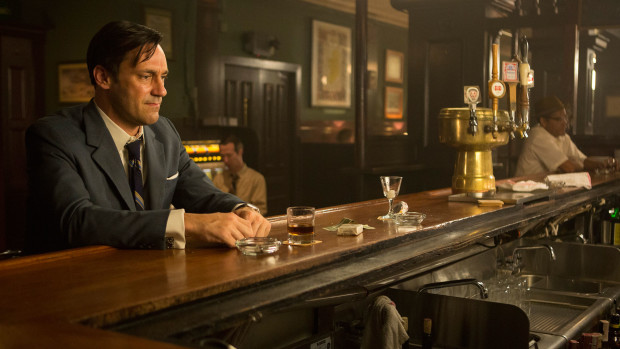
High Wire Act got me thinking about the types of movies Hollywood makes these days. Cause it ain’t movies like High Wire Act. Unless you have a prestige director and an Oscar campaign ready to roll, I know execs who’d be more welcoming to the Zika Virus than an obscure period political thriller.
Remember when they used to make movies like Boiler Room? Or Rounders? You didn’t even need a concept! All you needed was a subject matter. Uhh… traders on Wall Street. Uhh… poker players! We’ll figure out the story later.
Truth be told, I’m kinda glad those movies don’t get made anymore. They sucked. I mean go back and try and watch one of them. You’re sitting there going: This is basically about a guy named Matt Damon playing poker. They didn’t even try and hide it.
Luckily, High Wire Act is more sophisticated than those scripts, plus it has the benefit of being written by someone who actually understands screenwriting.
Mason Skiles, an American diplomat in 1972 Lebanon, has managed the rare feat, along with his wife, of becoming friends with many of the locals. There’s one boy in particular, 15 year old Kamir, who Mason has personally mentored and will soon send to school in the United States.
Unfortunately, however, school will not be in session for Kamir. A group of masked men crash one of Mason’s parties and take Kamir, who it turns out is the brother of a high profile terrorist. During the scuffle, Mason’s wife is shot and killed.
Cut to 10 years later and Mason is a drunk back in the states with a bargain basement arbitration practice. Just when things can’t sink any lower, he gets a call. It’s the CIA. They want him on a plane to Beirut pronto. But they won’t tell him why.
Mason reluctantly goes, where he finds out that his former best friend and fellow diplomat, Desmond, has been taken. And the kidnappers are requiring they deal with Mason only. Hmmm… that’s interesting.
So Mason goes to meet them and wouldn’t you know it, guess who the kidnapper is? That little boy, Kamir, is all grown up and ready to make a deal. The Israelis have kidnapped Kamir’s troublemaker brother. If Mason can get him back, Kamir will deliver Desmond.
And that’s where things get REALLY complicated. Kamir’s brother is essentially Osama Bin Laden to the Israelis. There’s no WAY they’re going to give him up. Which means Mason is going to have to pull off the greatest negotiation of all time in order to save his friend. Can he do it?
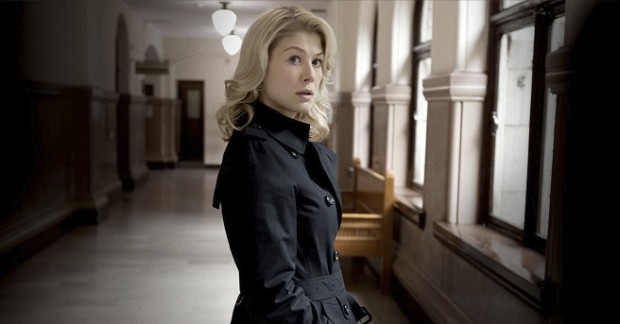
This script starts with a bang and never lets go. My issue with these scripts is that the writer will get too wrapped up in the politics side of things. That stuff isn’t interesting to me. Nor is it interesting to most. What audiences care about are people. If you can set up a cast of characters who are interesting and put them in dramatic situations that are compelling, it doesn’t matter what the overarching storyline is. WE WILL CARE.
And that’s what Gilroy does. He opens with a flashback that introduces us to our happy main character, his happy wife, his happy best friend, and the happy teenage boy he mentors.
Immediately after making us fall in love with them, the terrorists arrive and kill Mason’s wife. I was devastated. And why? It’s just words on a page. But this is the power of good screenwriting. You create moments between characters, make us care about them, then take those characters away.
Even more brilliant? PERSONAL STAKES. What bad writers do in these scripts is they introduce a bunch of random people with random ranks who we don’t know, and expect us to give a shit if one of them is kidnapped.
What Gilroy does is he makes the kidnapped guy our main character’s best friend (PERSONAL STAKES). And who’s the kidnapper? The kid Mason mentored (PERSONAL STAKES). Everything here is personal, which makes the bonds and thus the plotlines stronger.
Gilroy doesn’t stop there. He utilizes what I’ve deemed the “mystery goal.” The mystery goal adds flavor to a goal, it adds a spike. When Mason is called upon 10 years later to go back to Beirut, he isn’t told why. It’s a MYSTERY. So you’re not just sending your character somewhere (their goal) but strengthening it with a mystery along the way. Of COURSE we’re going to want to keep reading. Just like Mason, we want to find out what the fuck they want him for.
Another key tip is to make your mystery goal IMPORTANT. Typically, when you lay down a mystery, you can keep that mystery going for 10-15 pages and the reader’s going to stay invested. People naturally will stick around until the mystery is solved. But the more IMPORTANT you make that mystery, the longer you can stretch out the reveal.
The way the CIA talks to Mason about this Beirut trip, they make it sound like a really big fucking deal. Like this is one of those things you can’t pass on. As a reader I’m going, “Ooh, this seems big time. I have to know what this is about.” If the same person had come to Mason and said, “I heard these people are sorta interested in talking to you. Maybe you should check it out.” Does that sound important enough to make you care? Of course not.
Lots of great scenes here too. Bad writers take common scenes and play them out the way they alway play out. Good writers take common scenes and they TURN THEM in a way where they play out unexpectedly. So when Mason goes to meet with the kidnappers for the first time, there are two men in masks he’s talking to. The main one, the older guy, is screaming and yelling at Mason, telling him that Mason’s going to play by their rules. After about 3 minutes of this, the other masked man calmly raises his gun and shoots the man in the back of the head for being difficult. He then takes over the negotiation.
WHAT THE FUCK?? Wasn’t expecting that.
After all this, you’re probably expecting me to give this an impressive. I was actually going higher than that at the midpoint. This was going Top 25. But then the script started doing exactly what I said you shouldn’t do at the beginning. It started focusing on the politics, the web of lies, the world of the impersonal as opposed to the personal.
One of the issues here was that Beirut had a dozen warring factions inside of it in the 80s. So there were SO MANY bad guys. So many different clubs who were part of the problem. Add onto that people double-crossing each other and after awhile, you couldn’t keep track of it anymore.
It’s the double-edged sword with these types of scripts. As they move towards their climax, they have to get bigger. But the bigger they get, the harder it is to keep track of what’s going on. So you have to either deftly calibrate how much the audience can take, or be an expert at keeping loads of information clear and easy to digest.
I eventually got lost in all the madness. And that’s too bad, cause this script had a hold on me for a big portion of its page count.
[ ] What the hell did I just read?
[ ] wasn’t for me
[x] worth the read
[ ] impressive
[ ] genius
What I learned: One of the oldest writing tricks in the book. Place your hero where he least wants to be. The last place Mason wants to be after his wife was murdered there is Beirut. So where is he sent to? Beirut. You do that and I’m telling you, most of your movie will write itself.
What I learned 2: You’re never going to write the perfect screenplay. The goal is simply to do more good than bad. If you can achieve that, you’ll have a script worth reading.
Genre: Superhero
Premise: When the government attempts to gain control over the Avengers, it fractures the team, leading to an inevitable battle between those who believe they should be contained, and those who want freedom.
About: People in the industry have been calling this Avengers 2.5 for awhile now, not just in scope, but in budget. Apparently this was one of Marvel’s toughest productions, with the top brass complaining that way too much money was being spent on something that wasn’t an official Avengers film. Maybe the 180 million dollar opening (just 11 million less than the more heavily hyped Avengers 2) has alleviated some of those fears. The script was written by the top writing duo at Marvel, Christopher Markus and Stephen McFeely. The two also wrote the upcoming Avengers 3 & 4, which will be filming back to back.
Writers: Christopher Markus & Stephen McFeely (comic by Mark Millar) (characters by Joe Simon and Jack Kirby)
Details: 147 minutes long!
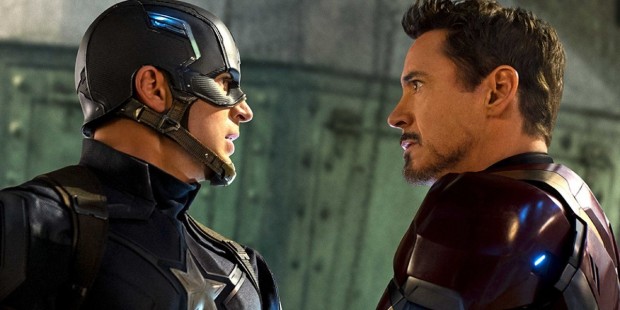
Whenever I write about these superhero movies, people say, “These movies have nothing to do with screenwriting.” And while I can understand where they’re coming from, they’re wrong. In fact, scripting a superhero film, especially one like Captain America: Civil War, is one of the hardest things a screenwriter will ever have to do.
Because you’re not just trying to please 20 different people who all have their own ideas of how the script should go. You’re balancing a ton of characters. And that’s probably the hardest thing to do in screenwriting, is balance a huge cast of characters.
I’m still of the old-school belief that movies are best served with a single dominant hero. It’s the formula that works best for the feature film format. Indiana Jones, John McClane, shit, even the recent Deadpool.
Every scene where you focus on a character who isn’t your hero, you are taking time away from your hero. And when you do that, it becomes difficult to develop the hero, to arc the hero, to give them any sort of meaningful journey. And with a movie like this, you’re jumping around to so many damn people, all Captain America has time to do is say, “I don’t like what’s going on.” And how fucking interesting is that?
But franchises like Harry Potter and Marvel and Fast and Furious have made this the new norm for summer films. It’s not about character development anymore. It’s about character variety. And I’ve come to realize how they’ve handled this change.
Fast and Furious and Avengers films have become giant TV shows. What do TV shows do? They stuff their shows with lots of characters and each scene moves along a couple of those characters at a time. That’s what Civil War was. We’d jump to Cap and Buckey, then Scarlet Witch and Vision, then Iron Man and Spider-Man.
The difference is, movies weren’t built for that. With TV shows, you always have a new episode next week. So you can afford to go 15 minutes without mentioning a key storyline between characters because we know we’re going to see those guys next week. With movies, everything has to be figured out by the end of the film.
So we get this weird hybrid movie-TV structure that never feels comfortable with itself, like a dress that doesn’t fit right. And that was my beef with Civil War. We’re jumping around so damn much that I’d forget what the fucking movie was about.
Honestly, I think that’s why they called it Civil War. So that anytime you forgot, you’d go, “Oh yeah, this is called Civil War. So the superheroes are going to fight each other. That’s what this is about.”
But is it what it was about? Not really. Captain America: Civil War is about the latest trend in superhero films – PUBLIC DESTRUCTION. It’s as if everyone’s just figuring out now that when Iron Man knocks over a skyscraper, there may be a few hundred people inside that just died. Which is kind of cheap when you think about it. Because the whole reason you placed your characters in a city in the first place was because it looks cool. Superheroes fighting in the Sahara is never going to be able to convey as much visual awesomeness as an 80-ton metal slab colliding with the Hulk.
So for them to conveniently just be figuring this out now? Come on.
Anyway, Tony Stark (Iron Man) gets all emotional about these real-world people dying and wants to sign a treaty with the United Nations where they would hand over control of the Avengers. Strangely, this takes everything about Stark that’s cool and fun and emasculates it, turning Tony into a depressing little whiner. Captain America, for no other reason than the plot requires it, steadfastly disagrees, and the rest of the Avengers are forced to take sides.
This leads to what is probably the best action scene in superhero history, the showdown at the airport. These Russo Brothers guys are incredible directors and, in many ways, saved a script that was burdened with trying to do too much for too many.
My favorite moment was when the tiniest superhero (figuratively and literally), Ant-Man, became the most influential in the whole battle. And it reminded me that right now, Ant-Man is probably the most interesting thing Marvel has going for it. He’s the only character that allows you to do things that you haven’t previously done in these movies.
The problem was, once that scene was over, you wanted to go home. I mean, isn’t that why we came? It’s not like we were on the edge of our seat, desperately wondering where the story was going to go next. Especially because you needed a spreadsheet to keep track of all the storylines.
With that said, the writers tried. There was this Buckey storyline – a superhero from Captain America’s past who was either good or bad, we couldn’t tell – that Civil War kept coming back to. But a) how are we supposed to care about little old Buckey in a movie where there’s going to be a full on war between the Avengers, and b) Buckey as a superhero is fucking lame.
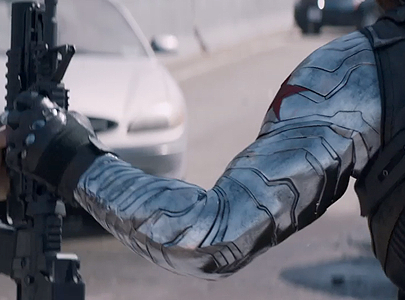
The dude has a MECHANICAL ARM. That’s your superhero? A strong arm? Ooooh, what’s next? A superhero with a disease-free toe? One with a leg that has 70% more endurance than the other leg?
And why don’t we make this a call out to Marvel. Marvel: GET RID OF ALL YOUR LAME SUPERHEROES. Guy with mechanical wings? Not a superhero. Guy who shoots arrows? Not a superhero. Girl who jumps on people with her legs and twists them onto the ground really hard? Not a superhero. The only people who should be onscreen in these movies are real superheroes. Seriously now.
Captain America: Civil War has confirmed a truth I’ve found to be correct 90% of the time. The bigger a script gets, the more it suffers. That’s why the previous Captain America was better than this iteration. Simpler story. And it’s why Deadpool, a super-simple story about revenge beat out Batman vs. Superman, which got lost in its dense and unfocused storyline.
I understand that going lower-budget scares the hell out of executives. There’s pressure to give the audience a visual experience that they’ve never had before. And you can’t do that without lots of money. But they need to keep the simple storytelling spirit. They need to ask what makes a good movie. Because, believe it or not, it is possible to have a big movie also be a great story.
I thought this movie was okay. But superhero fatigue, a forced superhero war, and a lame b-story with Buckey the one-armed bandit, kept this out of recommend-territory.
[ ] What the hell did I just watch?
[x] wasn’t for me (except for the airport fight)
[ ] worth the read
[ ] impressive
[ ] genius
What I learned: For those of you resisting those character bios I’m making you write, every superhero in this movie has at least 30 years of backstory/biography to draw from. In essence, these characters have lived entire lives already. This is what you’re competing against so figure out as much about your characters’ pasts as you can.
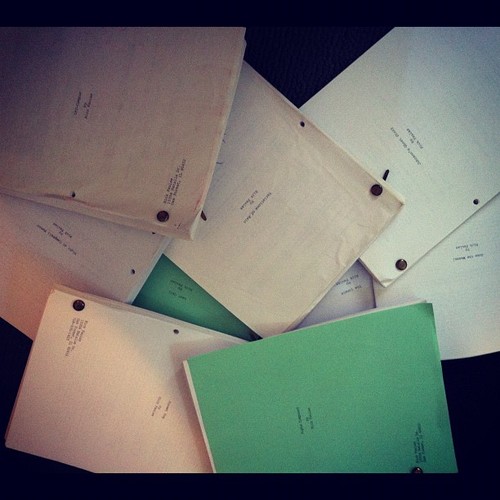
You’re allowed to play around here on Amateur Offerings for a teensy bit, but you should really be working on your outlines and character bios, especially if the weekend is one of the only times you get to write. With that said, here are this week’s entries. Read and vote on your favorite (just add a comment with your vote). Whoever gets the most votes gets a review on the site next Friday! May the best script win…
Title: Onion
Genre: Psychological Thriller
Logline: In order to fend off a home invasion, a troubled man descends into a fierce, animal-like state – from which he seems unable to emerge – and goes on the run in an increasingly violent, single-minded quest to return to his childhood home.
Why you should read:
– Received both a 5 and a 9 on the Blacklist website. What’s with that – or more importantly, which one is it really closest to?
– Vicarious wish fulfilment for anyone who’s been bullied;
– Some jaw-dropping ‘can’t believe that just happened’ moments;
– An amazing third act TWIST – which I bet you won’t see coming.
Title: Pandora’s Box (this week it works!)
Genre: Supernatural horror
Logline: After the tragic death of their five year old son Ryan, the Taylor family begin to experience
paranormal phenomena. In a desperate attempt to contact their son, the family turn to a Voodoo
witch, who is cursed with the gift, to see the dead.
Why you should read: Do you love rainbows? Cute and cuddly care bears? Unicorns? Rose smelling farts? If so, this is NOT a script for you. I repeat, this is NOT a script for you. I eat cute and cuddly bears and shit out unicorns for breakfast. This is a script that will make your legs quiver (like a dog taking a shit), this is a script that will make The Sixth Sense look like a romance movie (That’s just trash talk, The Sixth Sense is one of my all time favorite movies). If, like me, you love suspenseful horror, and you love to shit your pants (like a crying baby) then maybe… Just maybe, this is a script for you. A low budget horror, in the genre of The haunting (1991), Insidious, The Conjuring, and The Shining, “designed to jack you up”.
I hope you enjoy guys, and thank you for taking the time to read Pandora’s Box, co-written with my sister, (yes, we need MORE female writers)!
Title: The Other Princess
Genre: Comedy, Romance (live action)
Logline: When a broke kingdom gets a second chance with a sponsored contest to find the “next Cinderella,” a common girl who competes to help her family must decide if all the drama and a charmless prince are really worth it.
Why you should read: A while ago I was watching Shrek with my toddler niece, and thinking “I would’ve loved a whole movie on the funny fairy tale kingdom stuff.” That thought led to: “imagine if after the Cinderella story, Fairy Godmother became a washed up drunk”…and “imagine if another kingdom tried to find the next Cinderella through a “Bachelor” like competition”…those were just a couple of the “imagines” that resulted in this script, and if it’s something that might appeal to you, I hope you enjoy whatever you have time to read! (as for me: my background began in narrative fiction, and after publishing 3 novels, I started learning all I could about screenplays, as it seemed natural given my love of writing dialogue. A previous script was a top 20 finalist with Script Pipeline in 2014, and with this new one I’m just trying to see if readers find it interesting and fun!)
Title: Game. Set. Match.
Genre: Sports/Drama
Logline: On the day of the U.S. Open Championship, a washed up tennis-star, facing his last chance at winning a Major, is presented with a tempting offer to throw the match to his opponent: his younger brother.
Why you should read: I’ve been writing screenplays for about 5 years now, but in the last year I’ve gotten very serious about it and am moving out to LA next month. Over the past year, I’ve really pushed myself to write as many scripts as possible, and I think that Game Set Match might have some potential. I know that sports dramas aren’t exactly the sexiest drama and neither is tennis (despite Maria Sharapova’s efforts), but I think this story is told in an interesting way and will pull people in. Other than that, there’s some racket smashing and John McEnroe… what more could you ask for?
Title: Fiesta (The Sun Also Rises)
Genre: Drama/Adaptation
Logline: A eunuch suffering from PTSD makes a trip to Spain with the woman he loves, succumbing to the hedonism and despair consuming post-war America in the 1920s. Don’t worry. There’s also bull-fighting.
Why you should read: I can’t remember Script Shadow ever reviewing an amateur script that’s ALSO an adaptation. I understand there are a bunch of reasons for this
1. An unproven writer should not be adapting major material he doesn’t own the rights to.
2. See above dummy.
But…
1. I really wanted to see this wonderfully poignant and romantic story as a movie. There is a version (50s), but it kind of blows. So I wrote it. Out of love, passion and with absolutely no notion it could ever be made. I’m very proud of it, and just wanted to have an advanced reader let me know what they think. After all, getting screenplays read is hard, but getting screenplays read that require literary rights is impossible.
2. Wouldn’t it be cool to examine an amateur adaptation? It’s certainly something that’ll probably prove unique from other reviews. I can definitely take the licks that might arise from such a scenario.
I’m probably really dumb. But I wanted to see this thing as a movie. This was the way to do it. It would be amazing to hear what you think.
Genre: Psychological Horror/Thriller
Premise (from writer): When ancient relics wash ashore in the south pacific, a team of scientists set sail to investigate. The closer they draw to their origin, the further they flail from reality. (A Modern day take on The Call of Cthulhu. The Shining on a boat).
About: Craig Mack first hit the airwaves here on Scriptshadow, when he submitted The Devil’s Hammer for Amateur Offerings. I really liked the script, and others took notice, allowing Craig to land a couple of assignments, one of which was a sequel to the hit indie horror film, “Contracted.” Craig has always valued the feedback of this community, so I’m sure he’s eager to hear what everyone, including myself, has to say today. Let’s check out his latest.
Writer: Craig Mack
Details: 99 pages

So last week’s Amateur Offerings got a little testy. Craig tried to come in under the radar, submitting his script anonymously. But I think some people are upset that someone who has a couple of produced credits is competing in Amateur Offerings.
I have mixed feelings about this. Everyone assumes that the second you get something made, you’re inside the golden palm trees and never have to worry about struggling again. The reality is, even if you get in, unless you write a major studio release, you’re basically an advanced amateur, or a fringe professional. You still struggle to get people to pay attention to you. You’re still writing specs, desperately hoping someone will like them enough to hire you. As Craig points out, he’s not in the WGA, nor does he have an agent. And plus he’s a longtime Scriptshadow reader and contributor, so heck, why not give his latest a shot.
Professor Joseph Wexler is just getting back into teaching after a horrible tragedy when a visit from Alexandra Young, an oceanographer, throws everything off-axis. Wexler and Alex clearly have a history together, but how deep that history goes is something we won’t find out until later.
Alex is here because a recent earthquake in the South Pacific seems to have triggered a bunch of ancient relics washing up on nearby islands. Strangely, local island tribes are entranced by these relics, chanting to them in strange languages and drifting in and out of consciousness while doing so.
Alex convinces Wexler to join her and her crew to sail off into the ocean and see if they can locate the source of this phenomenon. Wexler and his plucky t.a., Steve, join the club, only for Wexler to immediately start experiencing intense daydreams.
In these dreams, we learn about the tragedy that’s shaped Wexler. While on a ship, his wife, Lily, and son, Carter, got up and walked off the side of the boat, never to be seen again. Eventually, we learn that the reason Wexler’s relationship with Alex is so complicated is that he was banging her when this happened. And oh yeah, Alex is Lily’s sister! You’re not a true mister until you’ve had the sister.
So it shouldn’t be surprising that Wexler is on a full cocktail of drugs. But that’s making his scientific analysis skills spotty at best. And as they get closer to ground zero, Wexler goes crazier and crazier, mistaking everyone and their mom for his dead wife and son.
Will he be able to pull it together in time to solve the relic riddle? Methinks Iron Man has a better chance of convincing Captain America to hand over control of the Avengers to the United Nations.
So Craig is going to kill me because he sent me an updated draft of this – I’m sure one where he addressed all of your concerns. But I’m a man of routine. When it’s time to read the amateur Friday script, I go to the Amateur Offerings page and download the winning script there. So Craig, I apologize.
A quick glance through the comments section seems to reinforce the big issue I had here – the dream sequences. Holy Moses were there a lot of them. It felt like every five pages, Wexler or someone else was having a dream, usually about how Lily was dead and so was Carter.
I’ve said this before but I hate dream sequences. So a script that’s built around them isn’t going to fare well on my judging scale. But even if that weren’t the case, there were way too many. Anything you do too much of in writing loses its impact with each successive iteration.
Put a magician in front of a group of kids at the beginning of a birthday party, and they’re on edge with every trick that magician does. Bring that magician back an hour later for a second round, half the kids are bored. Try to pull the magician card a third time – those kids won’t even pretend to be interested. They’ll just get up and walk away.
I was also trying to determine if these dream sequences were necessary. As long as something is pushing the story forward, the writer can make the argument that it’s necessary. And Eternal Lies pushes the argument that these relics are causing people to lose their minds. So the sequences have a little more going for them than simply, “I’m going to write a fucked up dream sequence cause I don’t have any other ideas at the moment,” which are scenes I’ve read a lot of.
Still, every time the sequences came around and Lily would give us yet another version of, “He’s waiting for us,” I felt like I’d washed up on Deja Vu Island. This was compared by Craig to The Shining in his logline. But I’m thinking Groundhog Day might be more accurate.
The bigger problem here, though, is the lack of originality in the story. Do you know how many scripts I’ve read in the last month that involved a main character who wasn’t sure if they were going insane or not? Nine. That’s no exaggeration. NINE.
And this goes back to something I said the other day. One of the ways you beat out your competition as a writer is being diligent in your script reading and movie watching so you know what else is out there – you know what everyone else is writing. That way, you can make sure you’re not writing the same thing.
The “am I going insane or not” main character trope is one that’s been used for half a century. So you either want to avoid it altogether or bring something new to it. And I’m not sure this does. In fact, if you read my last newsletter, you read my review of one of the highest profile spec sales of the year, Max Landis’s Deeper.
What is Max Landis’s Deeper about? About a man who’s going to the bottom of the ocean while he slowly goes insane. What’s the final act of Eternal Lies about? About a man and a woman who head towards the bottom of the ocean while they slowly go insane.
I’m trying to think back to The Shining, which I haven’t seen in a decade, but which I liked quite a bit. And I’m trying to remember how many dream sequences they had in that movie. Cause they didn’t bother me. The question then becomes, is that because dream sequences just work better onscreen? Or is it because Kubrick’s story was simply better? I don’t know. Someone else can answer that in the comments section.
What sucks for screenwriters is they never know what’s going to turn a specific reader off. I don’t like dream sequences. So any script that has them enters a mental wrestling match with me that they lose 99% of the time. For another reader, it may be main characters who are alcoholics, or comedies where the characters don’t take anything seriously. You don’t know. Which is why you should never let one opinion sway you. Always try and get multiple opinions on your script.
My opinion on Eternal Lies is that it ignores exploring what could be an interesting story in favor of a wild trippy pseudo-psychological mindfuck. If that’s your jam though, you might end up digging this.
Script link (new draft): Eternal Lies
[ ] What the hell did I just read?
[x] wasn’t for me
[ ] worth the read
[ ] impressive
[ ] genius
What I learned: Avoid patterns in your script. The more established a pattern becomes, the easier it is for the reader to predict what comes next. That’s what hurt Eternal Lies for me. We established this pattern of: Wexler is fine, Wexler dreams of his wife and kid, Wexler is fine, Wexler dreams of his wife and kid. This must’ve happened between 8-10 times. Once we know what’s coming next, we’re bored. It’s your job as the writer to BREAK THE PATTERN so we keep guessing.
