
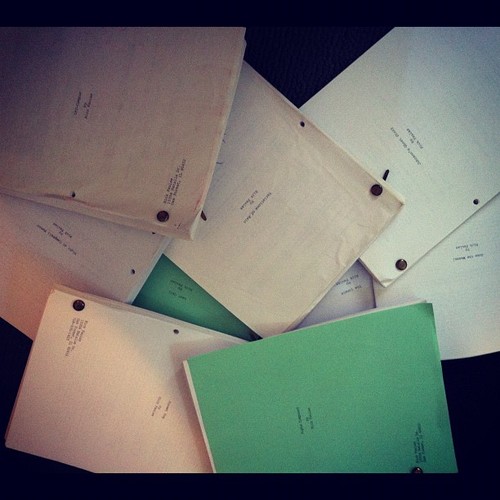
This is your chance to discuss the week’s amateur scripts, offered originally in the Scriptshadow newsletter. The primary goal for this discussion is to find out which script(s) is the best candidate for a future Amateur Friday review. The secondary goal is to keep things positive in the comments with constructive criticism.
Below are the scripts up for review, along with the download links. Want to receive the scripts early? Head over to the Contact page, e-mail us, and “Opt In” to the newsletter.
Happy reading!
P.S. The newsletter link to ‘Waking Up in Vegas’ led to the wrong script. It should be fixed now! Apologies for the inconvenience :)
TITLE: Taking Bacon
GENRE: Comedy
LOGLINE: In a last ditch effort to sell his screenplay, a self-absorbed writer kidnaps actor Kevin Bacon.
WHY YOU SHOULD READ (from writers): “Carson, according to our mothers, we’re a couple of sexy, cool screenwriters with a fun little screenplay. According to us, we think you’re going to enjoy reading TAKING BACON. Why? Well, for starters, we’re already getting attention from some of Hollywood’s biggest movers and shakers. Who you might ask? Do Steven Spielberg and J.J. Abrams ring a bell?
Matt & Mike: Steven, you think you’d be interested in Taking Bacon as your next project?
Steven Spielberg: Yeah, yeah, I’m putting it at the top of my list.
M&M: But that’s the garbage can.
Steven Spielberg: Security.
TITLE: VOSTOK
GENRE: SCI-FI/THRILLER/ACTION
LOGLINE: A team of scientists at an Antarctic research facility unleashes a deadly prehistoric creature from two miles beneath the ice.
WHY YOU SHOULD READ (from writer): “The script was a ‘Featured Submission’ on Triggerstreet and top three in Zoetrope’s monthly competition, so I believe it’s on the right tracks. A solid script that could make a solid film if paired with the right filmmaker.”
TITLE: NETHER
GENRE: Psych Thriller / Neo-noir
LOGLINE: A man with an identity disorder becomes the prime suspect in a gangland robbery and must evade police and a legendary kingpin in order to carry out a mysterious personal vendetta.
WHY YOU SHOULD READ (from writer): “Nether” is a sleek neo-noir psych thriller set in modern-day Los Angeles. I love classic noir and wanted to create a tale that could be shot reasonably inexpensively ($3 – 5 million). I’m a graduate of Columbia University’s MFA directing program, and have written and directed an indie film in the past, and am currently seeking representation. I’ve done my 10 specs that no one will probably ever see, logged my “10,000 hours,” and am a perpetual student of the craft. It’s my hope that “Nether” incorporates some of the best elements of noir, and yet also brings a riveting commercial sensibility to the genre.”
TITLE: Waking Up in Vegas
GENRE: Rom Com
LOGLINE: Follows a small-town college student and her high school sweetheart as they begrudgingly reunite to keep their rash friends from eloping in Las Vegas.
WHY YOU SHOULD READ (from writer): “Because I’m positive it will entertain you. Drag queens, chases through casinos, road trips, girl fights, and a heartfelt story of young love.”
TITLE: It’s a Long Way to Tipperary
GENRE: Comedy
LOGLINE: When a wealthy Jewish man is buried in a Catholic cemetery in Ireland, he comes back from the dead and forces a grave digger to carry him to Tipperary, USA before he decomposes and his soul ends up in hell.
WHY YOU SHOULD READ (from writer): “Who I am: I’m the guy that wrote the Alien Diaries and I’m taking a stab at a zombie comedy which can be hard to pull off. You talked about conflict in a logline – well what’s funnier than a dead Jew being buried in a Catholic cemetery and having to dig his way out as a zombie? You talked about ticking time bombs – the dead guy has gotta be buried in a Jewish cemetery before sundown in three days, and there’s a kleptomaniac priest as well.”
Many of you feel rejected and enraged about not getting your pilots reviewed this week. If I told you how many e-mails I’ve received that started with, “Why are you reviewing all these shitty pilots instead of mine,” you’d think I was the victim of some mass practical joke. Ahhh, but here’s your opportunity! If you had a pilot that wasn’t picked, go ahead and pitch it in the comments below, as well as provide a script link. Get people to read and comment on it and anything that gets a big favorable response, I’ll review on the site. It’s time to prove you have the goods!
Genre: Sci-fi
Premise: (from writers) A young woman who dies and resurrects every 72 hours strives to untangle the mysteries behind her uncanny ability, her missing father, and her shadowy “benefactor;” all while evading a company bent on capturing her and trying to fake a normal life enough to blend in.
About: The last of this week’s pilot scripts. Pilot Week was held exclusively through my weekly newsletter. To make sure you’re aware of future writing contests and opportunities (like the upcoming “Scene Week”), sign up for the newsletter here.
Writers: Edward and Alvin Case
Details: 58 pages
 Scriptshadow pick: Hillary Duff primed for a comeback!
Ah, here we are at the end of TV Pilot Week. Would I call this week a success? Moist soitenly. I mean I’d be lying if I said I hadn’t learned a thing or two. My ignorance definitely hurt me when choosing pilots though. The feature world is so dependent on concept that that probably influenced my choices too heavily.
The best TV, the TV that stays on for 7-8 seasons, is always TV with at least one great character. Someone dynamic or complex or ironic or contradictory or over-the-top or mysterious or all of the above. Someone like John Locke from Lost, where you just HAD to know what was going on with the guy. Or Dr. Gregory House from House M.D., where you’re not sure what the fuck the man is going to do next. I didn’t see that this week. The closest I got to a memorable character was Connor Maxworthy.
But what disappointed me just as much were the lack of any compelling relationships! Relationships are everything in TV. The disagreements people have. The secrets they’re keeping from one another. The old issues that need to be resolved. I know I’m too in love with Orange Is The New Black (the Netflix show) but it set up such great relationships.
You had Piper, who goes to jail for a crime she committed 10 years ago because she was in love with a female drug dealer who took advantage of her. And when Piper gets to jail, she learns her old girlfriend is there too. She still has unresolved feelings for her, must keep that from her fiancé to keep their relationship strong, while also needing to find out why her ex sold her out, while also trying not to act on those unresolved feelings so she doesn’t ruin her relationship! And pretty much every character in that jail has some issue going on with someone else. Every scene is entertaining because every scene is crammed with conflict. And I’m not seeing that this week. Not enough interesting relationships means not nearly enough conflict.
Ahhh, but I’m getting too negative. We haven’t reviewed Sara Lazarus yet, which hopefully will save us all. But before I get to it, I have some good news. If you feel like your pilot is a lot better than what I reviewed this week, I’ll put up a post this afternoon and let you pitch your pilots along with a link to your scripts. If a pilot gets a lot of attention, you better believe I’ll review it on the site. Expect that around 3-4pm Pacific Time. In the meantime, it’s time for Sara Lazarus. Save us, Sara!
The other day I learned that networks put a premium on the opening teaser of a pilot. And Sara Lazarus has a good one. A 21 year old woman is wheeled into the morgue, tagged and left for… well, dead obviously. After an extended moment, however, she BURSTS up, regaining her breath. She then sneaks out of the building and hops on a bus, but not before a tall man emerges from the shadows, watching her.
Sara hurries through the bus station where she locates a locker with money, a phone, and an I.D. A ringing follows. She answers and is told by a mysterious male voice to go to her new apartment, which has been paid for. She’s skeptical, but doesn’t have anywhere else to go. Once there, she learns she’s at a pseudo dorm for a nearby community college and meets college neighbors Dash and Michelle. Dash takes an immediate interest in Sara while Michelle isn’t so sure. Cat fight. Rreow!
Sara quickly enrolls herself in the college, but is more interested in the shadowy genetics company, Intergen, situated nearby. Once at school she applies for an internship there, in what we assume is an attempt to find out why she’s dying and coming back to life. As this is happening, the Tall Man gets closer and closer to finding her and, we believe, taking her away (back to the lab)?
In the meantime, Dash and Michelle debate whether it’s worth getting involved with this chick who seems to have way too many issues. But in the end, they can’t just leave her to fend for herself. So as the Tall Man closes in and the lab dudes finally find her, Sara and her new buddies will have to come up with some nifty tricks to escape it all, a task made all the more difficult by the fact Sara dies and reanimates every 72 hours.
Sara Lazarus has that “Person of Interest” quality to it. I’ve only seen that show once but, like that one, Lazarus has a nice hook to it. This woman has something that keeps killing her and bringing her back to life and we’re obviously going to want to know what that is. Throw in a shadowy corporation and you have the beginning of a TV show.
My question to the writers is, do you want this to be a SyFy show or a network show? Because right now, it feels a little too simple and by-the-numbers. I felt like I was 20 pages ahead of the story at all times. I knew the Tall Man would get closer and closer. I knew Whispery Phone Guy would say a bunch of mysterious things. I knew Dash and Michelle would eventually help Sara.
I wanted to be behind the writers, not ahead of them. So I think the first thing you want to do is look for a non-traditional spin to the idea or look to add more shocks/surprises/twists. Because while this hit the beats, it never surprised me, and this is a problem I see in the feature world as well. Writers know the writing books out there so well that they forget to add the unexpected moments and tone and voice required to make these stories unique, and not just glorified beat sheets. This is a serialized mystery. Execute it too predictably and there is no mystery.
Despite being ahead of the story, I was still confused by a few things. I couldn’t figure out where Sara was in this die-come-back-to-life process, as there were a lot of contradictory things going on. She wakes up in the morgue and seems to know exactly where to go to get her secret stuff. This tells me she’s done this before. But then she seems utterly confused by the guy on the phone and why she has a new apartment. So that tells me this is the first time she’s done this. I was constantly wondering which one it was. Had she or hadn’t she done this before?
On top of this, I was never sure what her objective in the episode was. Was it to survive? Get into Intergen? If so, didn’t she escape Intergen? Weren’t they the ones who did this to her? So why would she want to go back? It’s not like you can just waltz in there and nobody will recognize you. Which leaves me wondering what the long-term prospects of this show are. What is every episode going to be about? She’s not a detective so there isn’t going to be a new case every day. She’s not a doctor so she isn’t going to save lives every day. She’s going to community college. I’m having a hard time seeing a lot of relevant drama at community college besides which professor’s going to be the most stoned that day. I wouldn’t mind hearing what the writers’ ideas for this were in the comments so maybe I could suggest ways to make that clearer in the pilot.
Sara Lazarus is a fun concept that has potential. I’m not sure the writers have cracked it yet, though. There’s something missing here. Our main character needs something to do every episode (i.e. Sydney in Alias had missions to go on) and since we’re not seeing what that’s going to be, it’s hard to jump on board for the long run. I’m sure the commenters might have some clever suggestions for this so I’ll leave it to them.
Also, let me know what you thought of Pilot Week and if you’d like another one. And maybe some suggestion on ways to find the best pilots out there. Cause it would be cool to help someone get an actual TV show on the air. That would be awesome.
Script link: Sara Lazarus
[ ] what the hell did I just read?
[x] wasn’t for me
[ ] worth the read
[ ] impressive
[ ] genius
What I learned: Remember that the reader needs to be able to envision dozens of episodes after the pilot. We have to see obvious objectives and goals and storylines for our hero. Like the other day, with Connor Maxworthy. We knew that every episode he was going to have to solve some issue at school. Or with Lost, every episode was going to be about them trying to figure out how to get off the island. The biggest problem for me with Sara Lazarus was I had no idea what the future episodes were going to be about.
Genre: Horror/Drama
Premise: (from writers) The residents of the small town of Grover’s Mill are trying to put their lives back together, make sense of what they had to do for survival, and remember those lost during the Week of Hell, the seven days the dead walked the earth and then, just as mysteriously, stopped. It’s the one-year anniversary and fear and uncertainty are rampant. Could it happen again?
About: You probably remember Nathan Zoebl. He wrote a script I really liked last year called “Keeping Time.” Now you may be mad that I’m bringing a ringer back on TV Pilot Week. But what can I say? I get excited when I see a writer I like and the opening to this was good. I was intrigued to see what Nathan would do with the zombie genre. Plus now he’s got a partner!
Writers: Ben Bailey and Nathan Zoebl
Details: 58 pages
I was talking to this really talented up and coming director, Tze Chu (who directed Bryan Cranston’s new movie) and I asked him about selling pilots, since he had recently sold one himself. And he told me that when he goes in to pitch pilots, the things they tend to be most interested in are the teaser (the opening scene of the pilot) and the characters. This made sense. The teaser is that thing that has the potential to hook a viewer so they watch the whole pilot, and well-crafted characters have the potential to hook a viewer to watch a whole season. So get those things in order, my friends. You do that and you’re well ahead of your competition.
So how does State of Decay fare in these categories? Let’s find out.
State of Decay’s structure is hard to get used to. We basically start in the past, one year ago to be precise, in the small town of Grover’s Mill, where a zombie outbreak terrorizes the town. We meet characters like Alex, a 20-something who gets cornered by zombies only to watch them all mysteriously die right before they’re about to kill him. Then there’s John, who’s on a fishing trip with his son, takes his eyes off him for a second only to find him being attacked by a zombie when he looks up again.
We then cut to the present, one year later, long after the zombie outbreak has died (it only lasted a week). The town’s kind of nervous, a little fidgety about the reunion, as there’s something in the back of their minds telling them that since they never found out what caused the outbreak in the first place, who’s to say it couldn’t start up a second time?
However, except for a few exceptions (like John losing his son), many of the people seem to be doing okay. It was one wild ride for a week there, but now they’ve pretty much put their lives back together.
The driving force of State of Decay’s pilot episode is rather elusive, but seems to be guided by two motors. The first is a town hall memorial ceremony for everyone to remember the men and women who fell during that terrifying week. And then there’s Brian, our narrator, who keeps us on track by describing how everything went down via both webcam and voice over.
And that’s pretty much it. We’ll occasionally jump into the past to see gruesome scenes where zombies kill town members (like when a group that’s locked themselves inside a building would rather play it safe than let a begging fellow town-member inside), but for the most part we establish there was a zombie outbreak and meet all the people who were associated with it.
So the first thing that worried me did so before I even opened State of Decay. This was a big issue I had with one of the early drafts of World War Z, which followed the book’s storyline, which had us watching the world try to get their lives back together after the zombie outbreak had been contained. My big issue with that was, “How do you make a zombie movie interesting when you don’t have any zombies?” The producers of the film eventually felt the same way, which is why they changed the setting to the ACTUAL zombie outbreak (a VERY good move in my opinion). However, I knew Nathan was a clever writer so I had confidence he’d come up with a way to circumvent this.
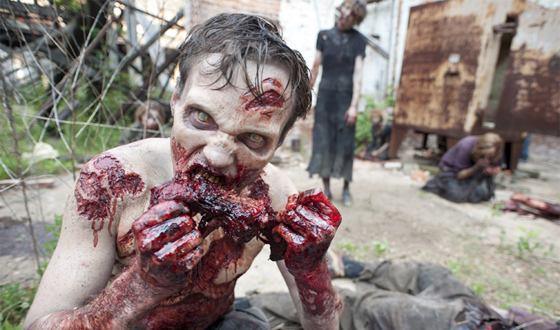
Unfortunately, in my opinion, that issue wasn’t addressed. We get shots of zombies killing people in the past. But nothing where the zombies are killing now. Which left us with a lot of moody, broken-down characters and not a lot of action. I feel like Nathan and Ben are trying to echo the tone of Walking Dead here. The problem with that is that Walking Dead had active zombies. You can get away with those thick dramatic melancholy moments because there could always be another zombie right around the corner to infuse tension and suspense into the episode if needed.
And that’s an important word here. Suspense. I didn’t feel it here. And I think we need to feel it when we’re dealing with this kind of subject matter. There’s no real problem, real issue, in this story. Everyone (when we’re in the present) isn’t doing much. They’re chatting with each other. They’re talking about the memorial. But there’s nothing driving the story. No goal. No problem. No mystery. No suspense. I kept waiting for something fun or unexpected to jump start the story, but it never did.
True, we did have the zombie attacks from the past to jump back to, but every zombie attack was very basic, stuff we’ve seen hundreds of times before. Turn around, there’s a zombie. A person outside being attacked by zombies. Someone wants to save him. Someone else doesn’t. We’ve SEEN that. I mean remember the scene in The Walking Dead when Rick goes into the city and is surrounded by hundreds of zombies and he goes under the tank and they’re reaching in on him and we’re wondering how the hell this guy is going to get out of this situation. That’s the kind of fun innovative never-before-seen zombie moment I was waiting for.
I maybe would’ve been able to deal with this IF the characters kicked ass. But these characters are too low-key. There’s nothing dynamic or memorable about them. John’s still sad about his family’s death. Jenny’s sleeping with Alex behind her boyfriend’s back. The gas station attendant lost his friend and co-worker. There are a lot of sad people, which keeps the tone dark and restrained. But never let tone take precedence over drama. You need interesting people who have interesting problems with other people.
There’s actually a great movie Nathan and Ben should watch if they haven’t already that has a very similar set-up to this. It’s called The Sweet Hereafter and, like State of Decay, it takes place in a small town. The difference is, instead of a zombie outbreak, it’s a school bus accident that ends up killing a lot of children. The story jumps back and forth between the past, with the town happy and optimistic, to the present, with the town beaten down and undone.
The big difference is that in the present, all the characters have carried over the baggage from the crash and turned against each other. Daughters are turning on fathers. Parents are blaming the bus driver. Families are fighting over the best way to get the most settlement money out of their children’s deaths. In other words, there’s CONFLICT! Blame is being tossed around. Everything that everyone had was changed by that bus crash and NOBODY’S relationship with anyone else in town has been the same since. I’m not getting that from State of Decay. Everyone here is too agreeable. Everyone’s patting each other on the back, saying, “Glad we beat that, right?” I wanted to see repercussions here. I wanted to see problems. Too many people here seem fine. And “fine” isn’t dramatic.
Now all of this may become moot as the season progresses. It’s hinted at that another zombie outbreak is coming. But no one’s going to get that far unless the pilot is awesome. And right now I’m sensing Nathan and Ben think they can get by on tone alone. We need cooler more original zombie kills. We need more dynamic characters with bigger secrets (Locke anyone?). We need way more conflict in the character relationships. We need more suspense. And we need something more to drive this first chapter of what will hopefully be a 100 chapter story. A memorial isn’t going to cut it.
I mean what if you add ONE mysterious character to the mix (like Robert Hawkins in Jericho) or an out-of-towner, a lawyer even (just like The Sweet Hereafter), who’s helping people settle zombie-related lawsuits. Someone who just gets in there and MIXES SHIT UP. Because nothing’s getting mixed up right now and the pilot is too restrained as a result.
While I know this review is harsh, it’s only because I know what Nathan is capable of. We’re never as good as when someone’s pushing us to be our best.
Script link: State of Decay
[ ] what the hell did I just read?
[x] wasn’t for me
[ ] worth the read
[ ] impressive
[ ] genius
What I learned: Don’t hold back too much in the pilot — TV shows are tough because there are so many surprises you plan on unveiling in future episodes. And I’m sure that’s what Nathan and Ben were saying as they read this review. “But, but, but we’re going to do all that in Episode 3 and Episode 6 and Episode 9.” I understand that. But you don’t want to hold too much back for later episodes. You need to give us some crazy shit in the pilot. Something to get us excited and make us want to come back. ESPECIALLY in a genre pilot. This needed one or two much bigger surprises. Had that happened, I probably would’ve been more accepting of the slow pace.
Welcome to the week where I review Amateur TV pilots. This competition was held exclusively through my weekly newsletter. To make sure you’re aware of future writing contests and opportunities, sign up for the newsletter here.
Genre: Hour-long Drama
Premise: (from writer) In a world where superheroes are real, a shell-shocked journalist obsessively follows the exploits of a city’s new vigilante. All the President’s Men meets Heroes.
About: (from the writer) I’m a comic book nerd and I wanted to see what happens between the panels, to the people who have to live in a world of super-powered battles. The series will follow a vigilante, but through the eyes of a normal newspaper reporter, Eugene McGuire. The catch is that McGuire isn’t starry-eyed over the superheroes of his world. He doesn’t trust them. And if no one else is going to question these “walking weapons of mass destruction”, he will. Moreover, in The Times, figuring out the vigilante’s identity will be half the draw of the show. It’s the story that we would see if Superman was about Lois Lane.
Writer: Kyle Jones
Details: 55 pages
So how has Amateur TV Week been going so far? Not bad, I suppose. It’s forcing me to look harder at what’s on TV and why those shows are on TV and what kind of script to write to also get on TV. There’s definitely a similarity to looking for amateur features. A lot of the writers and pilots are pretty good. But “pretty good” isn’t good enough. This is the top of the heap. This is fucking Hollywood. Your pilot needs to knock someone over to get noticed. And too many of the pilots I’ve read feel like those safe middle-of-the-road episodes you get in the middle of the season that pass the time until the good season-ending stuff comes. They’re polite. But they’re not a PILOT. A pilot’s got to engross you. It’s gotta be fucking exciting or earth-shattering or mind-blowing or dramatically gobsmacking. It’s got to make someone think they could build 100 episodes out of this. It’s got to make a viewer go, “Holy shit. I’m in.” You know when you love a show so much that you mentally block out the period of time next week when it’s on? That’s what a pilot needs to do.
There hasn’t been a pilot yet (from all the entries or the ones I’ve reviewed so far) that’s made me do that. Everything is about potential. And potential’s fine. Potential’s great. But you never know when potential is going to turn into fulfilled potential. So you’d prefer for a pilot to just be… ready. “The Times” felt like it could be ready. It had a big idea (superheroes) and it had a new spin (told from the perspective of mortals). And it had some tight writing. Now I’ve seen this kind of thing before. And it’s a tricky thing to get right. I mean, how are you going to convince us, in a world of really cool fucking superheroes, that it’s actually more interesting to follow a normal person? That guy better be the most fascinating person ever, because otherwise, you run the risk of a bewildered audience going, “Why aren’t we following one of the super heroes again?” Funny enough, this is the same curiosity I have for the Fall’s upcoming Avengers show. Now the advantage of that show is that they’re talking about super heroes we actually know. The Times is building its super-heroes from the ground up. Let’s see if it succeeds.
30-something Gene McGuire’s been a stellar journalist all his life. But at the moment, he’s just trying to find a job. He’s back from Afghanistan and the world over here is a little less exciting. Well that’s about to change. While at a job interview for a magazine, the building McGuire’s in blows up. Well, mostly up anyway. As McGuire stumbles around trying to save the few survivors, he sees two superheroes. One, a man who can become fire, and another, a masked vigilante.
The vigilante (superhero name: Vigilante) ends up saving McGuire but despite the near-death experience, he’s not fazed. You see, this is the world we live in. Superheroes (or meta-humans, as they’re called) run rampant. The bad ones kill people. The good ones save people. It’s kind of old hat by this point. Nobody points into the sky and says, ‘Look, it’s a bird. It’s a plane. It’s Superman!” It’s more like, “Is that Supes again? His hair is getting thin.”
McGuire’s quickly able to find a job at the city’s top newspaper, and starts looking into the bombing. What he finds is that the bad meta-humans were trying to destroy some biotech server on the floor below the magazine, which housed the DNA breakdown of their kind. You see, scientists are obsessed with learning the genetic code of these mutations so that, one day, anyone who wants to can become a superhero. The superheroes aren’t too keen on that.
McGuire becomes convinced that the key to finding out the deeper meaning of all this is to find Vigilante. So he heads to the recesses of the city’s underbelly where he ends up running into Fire Dude again. Fire Dude tries to kill him, but once again Vigilante comes to the rescue. Despite saving him twice now (I’m thinking he must have a human-crush on McGuire), Vigilante warns him to stop following him. He then disappears, and we’re left with McGuire. It’s clear Vigilante’s words have no effect on him. He will not be satiated until he knows who the mysterious crime-fighter is!
Okay, I’m not the president of the comic book geek squad, but I like a good comic book movie or TV show. Remember Heroes? That was awesome (for about 7 episodes – until it was clear the writers had no idea what they were doing).
The Times is a cool little pilot. But there’s something nagging at me here. There’s a certain… I don’t know… lack of sexiness. In trying to make the super hero world SOOOOOO nonchalant, I think Kyle’s actually gone too far. Part of the fun of these shows is watching the characters experience super-heroic acts for the first time and be wowed by them.
I get that that’s not this show, but I’m wondering if there’s a middle ground somewhere. Maybe a certain superhero (or villain) shows up and does something that no one’s seen before? Because otherwise, it’s all so bland. Everyone is so blasé about everything (McGuire isn’t even shaken after he’s saved by a superhero from a burning building!). And because they’re blasé about it, I’m blasé about it.
With that said, the pilot is well-written. And it does have a different take on superheroes. We’ve always known that Superman was secretly Clark Kent. That Batman was secretly Bruce Wayne. Imagine if we were one of the billions of people who didn’t know. I could see us wanting to find out.
Ahh, yet that was another issue I had with The Times. I think Kyle is banking too much on us wanting to find out the identity of Vigilante. To him, that’s going to be enough to drive interest through the entire series (or first season). I beg to differ. Remember, you’ve established that nobody cares about these superheroes (someone even says to McGuire – “No one wants to read about the Supers.”). And that blasé-ness is the exact same reason we (or at least, I) aren’t desperate to find out who he is.
So if I were Kyle, I’d try to come up with a mystery that’s much bigger. Like Lost. I want to see a bunch of people looking at a fucking big-ass thing in a forest and going, “What is this place?” I’m there for the long-haul after that. Once McGuire figured out why the building had been blown up (the supers were trying to destroy bio data), I was like, “What’s left to keep me reading?” All my questions had been answered. At that point, I was kind of done with the series.
You know, maybe it’s as simple as making Vigilante a new superhero. Instead of everyone being like, “Oh yeah, there’s that Vigilante guy again. I just saw him getting a burrito on 4th and Madison last night,” make him a new kind of superhero with a new approach. It’s the first superhero people can’t explain. Make people excited about it, wanting to know more about this guy. And because they’re excited, WE’LL be excited. And it will make sense for the story, because our main character’s a reporter. He wants to find out too (and am I the only one who’d like to see the lead change to a female for that situation? Following Lois Lane in her quest to de-mask Superman?)
Ironically, Kyle, a self-professed comic book geek, may love comic book heroes so much that he’s become numb to them. Because that’s what this feels like. I don’t feel the passion on the page that a superhero lover would have. If we can get more passion, more sexiness, a bigger feel to this comic book show (keeping the same general approach to the material) it could be really good. I’m afraid that now, it’s a few damsel-in-distresses from being a worth the read.
Script link: The Times
[ ] what the hell did I just read?
[x] wasn’t for me
[ ] worth the read
[ ] impressive
[ ] genius
What I learned: I never understand these dark shadow characters giving a puzzle to our hero instead of giving them the freaking information they need! Our secret shadowy informant (who knows everything) tries to help McGuire solve his case by saying, “Go back to the beginning. There’s something you’re not seeing.” Why the puzzle? There’s no logical reason whatsoever for the character to not just TELL HIM what the answer is. Writers do this because it’s cooler but it’s not realistic. That’s movie (or TV) logic. If a character has the information our hero needs and doesn’t tell him, there has to be a reason for it. Don’t just create a puzzle to make the plot cooler. It must make sense!
