
Genre: Period/Horror
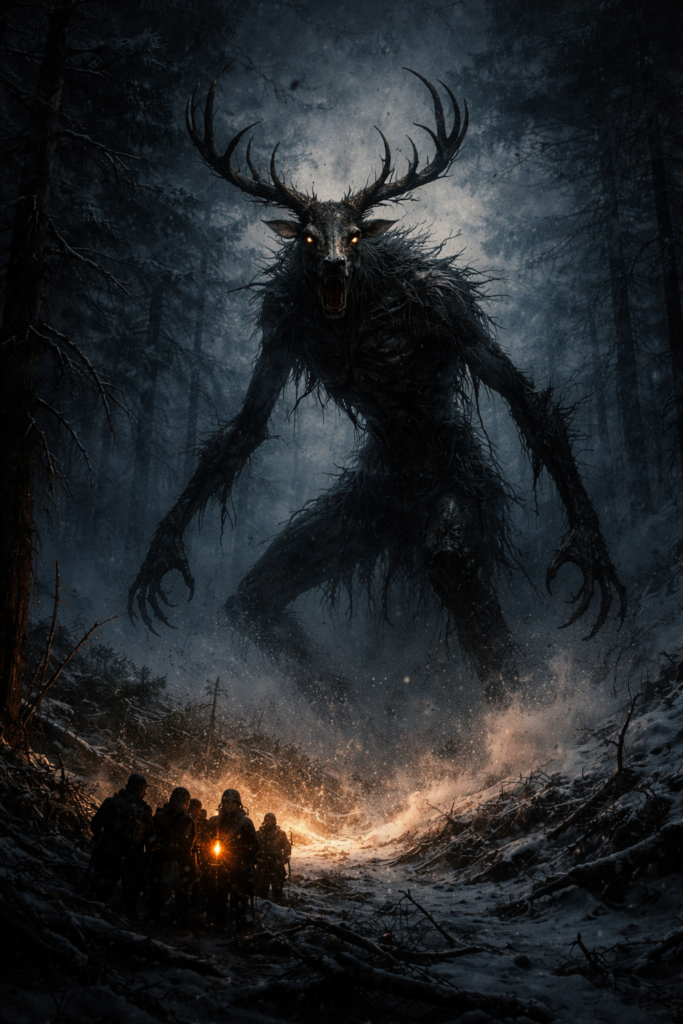
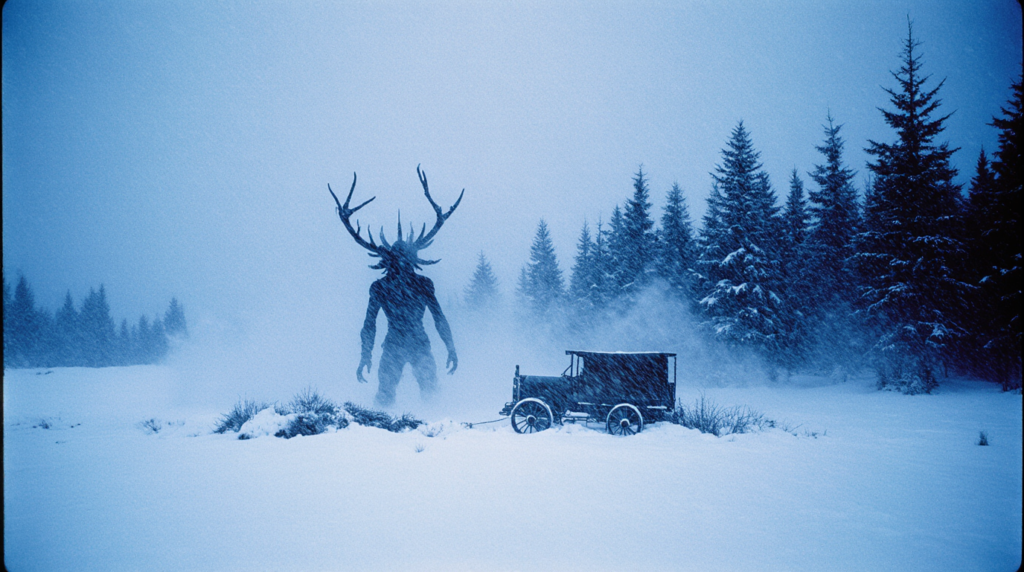
Premise: When a young preacher’s wagon train to Oregon becomes trapped in a frozen valley, he must confront his waning faith and ally with a Native guide to protect the survivors from starvation and a monstrous Wendigo that hunts them.
About: Last week, I invited anyone to query me and promised to review the script behind the strongest query. This query won! You can read Caleb Hermann’s query in yesterday’s post.
Writer: Caleb Hermann
Details: 97 pages
This was a trip down memory lane for me. Back in the day, I used to have screenwriters send cold queries into my inbox then I’d just review whatever sounded interesting each Friday.
There was an excitement in having no idea what I’d get. Sometimes it would be Where Angels Die. Other times it would be Orbitals. It’s screenplay reading at its purest. I don’t know if I have the patience to do that anymore but having one of these random pitch sessions every once in a while sounds like fun. What do you guys think?
Godforsaken is my kind of logline. Contained. Heavy conflict. Marketable. A monster. Let’s see what today’s writer does with it.
Godforsaken starts by throwing us on top of a bullet. We’re in a horse-pulled wagon, shooting through the forest, some time in the 1800s, somewhere in middle America at the start of winter.
One of the men we meet is trying to aim his rifle at the Indians who are zipping around on their horses outside. But the wagon hits a rock, the rifle falls, hits something, accidentally fires, and blows half the man’s head off. What a way to start a movie!
We eventually realize that a whole caravan of these wagons is shooting through the forest, trying to evade the Indians. Another wagon spins out of control, detaches from its horse, and goes flying into a tree, where two women and six babies are instantly killed. Yoooooooooo!
The leader of this caravan is a man named Calhoon. Second in charge is, unofficially, the priest, Patrick. Once they clear the woods, they’re surprised to see that the Indians don’t kill them. They instead hurry off. Their desire to get far away from here is some not-so-subtle foreshadowing.
The rest of the band collects itself. The group includes the leering potential rapist, Bill. The beautiful and caring potential love interest for Patrick, Theresa. There are the Jones’s, who are about to have a baby. There’s bible-thumper Miss Foster. There are the Smiths, who lost a baby to a heavy trunk during the forest chase. And then there are several others.
That night, one of the Indians, Takoda, shows up. Calhoon nearly kills him before he explains that they need to get off this land. This land is haunted. Up ahead is a bridge that will take them to a ridge, where they’ll be safe. Unfortunately, nobody’s about to listen to the guy who was trying to kill them several hours ago. His tribe wasn’t trying to kill them, he explains. They were trying to guide them away from this place.
As the group fixes up its wagons, they try to figure out their next move. The next night, the Jones woman goes into labor. Her baby is born, but it’s deformed. This sends Miss Foster into a religious hissy-fit, saying that the baby is evil. Immediately after the baby is born, during heavy winds, the Joneses are caught up in a tarp that simultaneously catches on fire. They are swept away and burned to death.
Patrick is starting to have second thoughts about Takoda. What if he’s right? What if this land is haunted? Unfortunately, no one has any desire to trust Takoda. For all they know, he could be leading them into a trap where his tribe slaughters them. But when more “bad luck” continues to befall the group, they get to the point where they have no choice but to leave. The question is: Will it be too late?
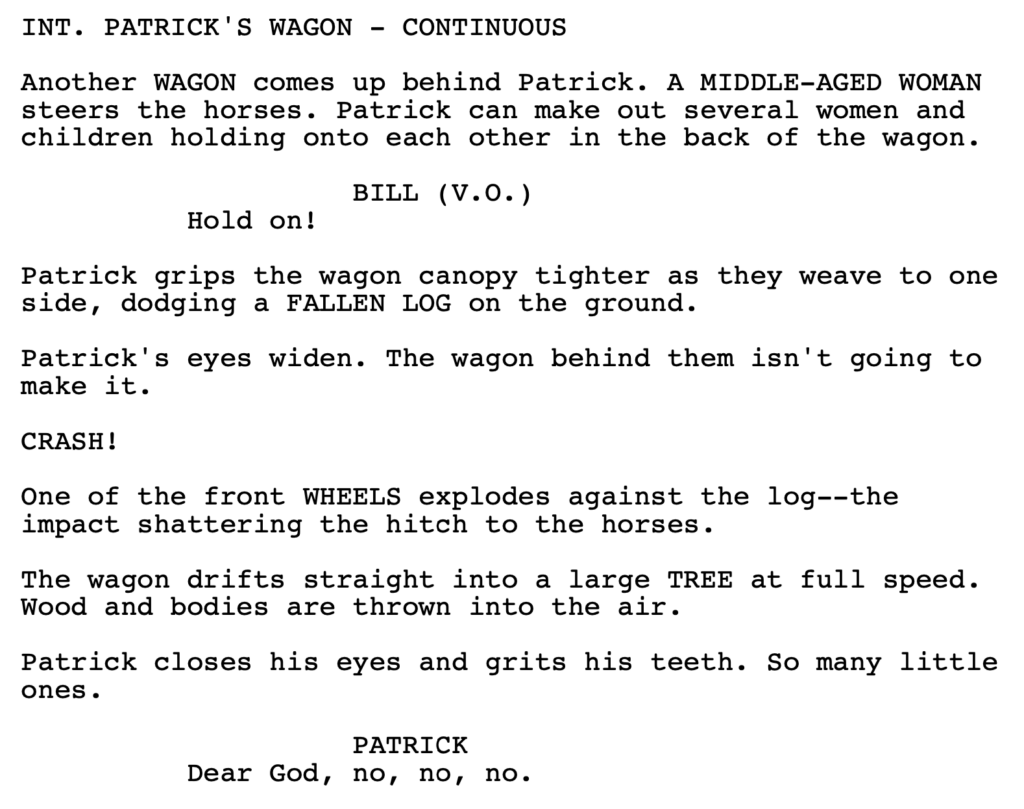
Godforsaken has a VERY STRONG first half. That opening scene is next-level. A few days ago, I talked about the power of creating DOUBT in the reader. Caleb shows you how to do it in a single scene. After this first sequence, you know that nobody is safe. Which kept me on my toes for, literally, the next 60 pages. That one scene made me terrified of what was around the corner next.
Ironically, Godforsaken is at its best when it focuses on reality. It’s got this birth scene about 40 pages in that destabilizes the screenwriting medium. You have this deformed baby that’s born. And then you have this crazy accident that results in the parents being whipped away by a tarp and burned alive in the process. You don’t see that scene every day!
That’s the way you want to do it. Get the best out of your key moments. Don’t expect the key moments to do the work for you. Most writers would’ve written a harrowing birth scene. But nothing like this. They would’ve stopped well before it got this crazy. And that’s what separates a scene. When the writer is determined to elevate it.
On top of this, Caleb did an excellent job distinguishing all the characters. I know this because almost every script I’ve read over the past month has had a difficult time distinguishing its characters. Cause it’s hard to do!
But there was never once where I said, “Who is this person again?” when a character returned. And I do that a lot in the screenplays I read. I always have to check the notes I took about the characters to remember who’s who.
How do you do this? You focus on key characteristics of each character early, then keep hitting them for the reader. Miss Foster is always using the Bible to make her points. Bill is always leering at kids and women. Theresa is always healing others. Calhoon is always arrogantly bossing people around. It sounds simple but most writers don’t do this. They expect you to know who their characters are because they know who their characters are.
Just, in general, I thought this was a great spin on the infamous Donner Party story. Throw a little bit of supernatural in there to give it a boost.
However, the second half of Godforsaken didn’t work nearly as well as the first half. And there are several reasons why. For starters, you run into trouble when you try to do two things at once. We’re making this the Wendigo creature’s land. And we’re making it a magic land. Which means both monster and magic can occur.
While I’ll never say that’s impossible to pull off, it’s a lot more challenging because it’s confusing to the reader. We’re unsure if this is more about the magical stuff or more about the threat of the creature. And then what tends to happen is that you start throwing both at the story and now things get messy. If there’s a major criticism I have for Godforsaken, it’s that the second half gets messy.
You guys know I hate messy. I hate it. And here, it felt like so many random things started happening that the rulebook got tossed out the window. You cannot throw out your rulebook in a supernatural narrative. That rulebook is the foundation for every creative decision you make. It all has to track.
(Spoiler) When Calhoon suddenly becomes half-monster, my reaction was: what is this story even about anymore? You already have an iconic creature in the Wendigo. So why are we turning Calhoon into a monster for the climax? I didn’t understand.
I see this all the time in scripts. Writers want a chaotic ending so they write chaos. But chaos still needs structure. There has to be a method to the madness. Otherwise, it doesn’t feel wild or bold. It just feels messy.
My rule for scripts that have one really good half is that if the good half is the last half, I give it a ‘worth the read.’ Because I’m leaving on a high note. But if the good half is the first half, that means you’ve raised my expectations and, if you don’t then deliver afterwards, I leave frustrated. So, unfortunately, today’s script gets a ‘wasn’t for me.’ But it’s a very respectable ‘wasn’t for me.’ A couple more drafts where you work out the second half will definitely elevate this to a place where someone might buy it.
Script link: Godforsaken
[ ] What the hell did I just read?
[x] wasn’t for me (but very close to ‘worth the read’)
[ ] worth the read
[ ] impressive
[ ] genius
What I learned: Use conflict to hide exposition. Let’s say you needed to make it clear that Calhoon was leading this expedition. How do you do that invisibly? Without it obviously sounding like exposition? You put him in a fight with Patrick and he responds with this line: “Who do you think you are, preacher? I’m the one who calls the shots around here. I’m the one y’all settled on to lead you to paradise. You’d best stick to what you’re good at.” Note how we learned something about Calhoon yet we didn’t for one second realize we just read pure exposition. That’s because it was hidden in conflict.
If you want to clean up your own query, I do query consultations for 60 bucks. That includes three follow-up e-mails where we make adjustments to your query until it’s perfect. E-mail me at carsonreeves1@gmail.com if you’re interested. Or, if you need a consultation on your entire screenplay, we can do that too!
Okay, so last week I put out an open call: anyone could query me and pitch their screenplay. The best query would win, and I’d review their script on the site.
But the script review wasn’t really the point. The point was the query itself. Learning how to reach out to agents, managers, producers, anyone, is an essential skill that’s rarely talked about. It’s discussed so infrequently that I thought I’d dedicate an entire week to it.
I’ll be reviewing the winning script tomorrow. But today, we’re going to talk about the winning query.
This turned out to be harder than I anticipated. When it comes to querying, 90% of the query is the logline itself. Often, that’s what the recipient will be jumping to. Because even if they like you or like your personality through your writing, that doesn’t matter if they don’t think the script itself works for them.
But, at the same time, if I only went off the loglines in these queries, then it’d be a logline contest. So I had to pass over some of the better loglines in order to focus on the point of this exercise: the query itself.
With that said, there were a couple of really good queries with really poor loglines. And since part of the deal here is that I review the winning query, I wasn’t about to reward a query with a weak concept/logline.
Exhale Carson!
Needless to say, I’m happy to report that I located the best of the bunch.
***********************************
In third place is Patrick McNulty!
Subject Line: QUERY – A DARK BREED
Dear Carson Reeves,
I’m reaching out with a contained horror feature, A DARK BREED (90 pages).
Logline:
After a blizzard traps a family in a remote mountain cabin, they rescue a caged pregnant woman being held on the property—only to discover she’s not the prey, she’s the predator. And she’s not alone.
A DARK BREED is a single-location survival horror built around clear rules, contained scope, and escalating siege tension. It’s written with practical production in mind while delivering strong suspense and trailer-driven set pieces.
I’d be happy to send the script at your request.
Thank you for your consideration,
Patrick McNulty
***********************************
In second place is David Lamberston!
Subject Line: QUERY – WHEN AN EMOTIONALLY WRECKED STAR TREK NERD DECIDES HE MUST BECOME MR. SPOCK
Hi, Carson:
Title: IN SEARCH OF VULCAN
Logline: After a socially awkward science teacher and lifelong Star Trek collector is left at the altar and robbed in a memorabilia scam, a near-fatal electrocution leaves him convinced he’s Mr. Spock — forcing his recently retired military brother to take him on a road trip to Vulcan, Canada to recover a stolen Bitcoin fortune and convince him he’s human again.
Comps: Rain Man – meets – Lars and The Real Girl
Why I am sending this request to you
I believe IN SEARCH OF VULCAN fits the lane of commercial, character-driven high-concept comedies that balance big set-pieces with real heart — and your track record in that space makes you an ideal match.
May I send IN SEARCH OF VULCAN to you for your review?
Thanks in advance for your consideration.
Sincerely,
David Lambertson
dlambertson@hotmail.com
***********************************
And in first place, our winner is…. CALEB HERMANN!
Subject Line: Horror Feature Query
Hi Carson,
My name is Caleb Hermann, and I’m a screenwriter based in Kansas City, MO. Through a writing program over the past year, I wrote and polished a horror feature under the mentorship of a literary manager from Navigation Media Group.
I’m currently seeking representation, and I’ve seen that some of your clients are in the genre space!
Title: Godforsaken
Logline: When a young preacher’s wagon train to Oregon becomes trapped in a frozen valley, he must confront his waning faith and ally with a Native guide to protect the survivors from starvation and a monstrous Wendigo that hunts them.
Comps:
The Witch
The Ritual (Netflix)
The Revenant
I would love to send you my script if it is of interest!
Best Regards,
Caleb
Okay, so let’s break our winning query down because, if I’m being honest, it’s not perfect. But it’s strong where it matters most.
What I like about Caleb’s entry is that it’s simple and to the point. I want all of you to internalize that. Cause that’s the key to writing a strong query. I’d say about a third of you stashed too much text inside your queries. People in this business don’t have time to read all of that.
Caleb gets right to the point. He says hello. He tells us just a teensy bit about himself (where he’s from). He gives us a very succinct backstory about the script (writing it with a literary manager). He then gives us THE MOTIVATION for his query (he’s seeking representation).
Now, if I’m being fair, I wouldn’t include the mentorship stuff. You never want to give out too much information, especially information that might hurt you. I have no idea who Navigation Media Group is. So that hurts the writer. Cause it indicates they’re working with “nobodies.”
I can’t emphasize this enough. Every extra word you write is more information that the recipient can use to dismiss you. In that sense, a query is similar to a screenplay. You only want to write as much as you have to and not a word more.
With that said, I had a handful of writers who queried me with just the logline alone and that’s not enough. You still have to provide context and include basic professional etiquette.
Luckily, Caleb’s logline is strong. It’s a unique movie scenario. It’s a marketable idea. And, in the end, that’s the name of the name. If you’ve got a good screenplay idea, you just don’t want to get in your own way when querying people about it. So many of you got in your own way. You wrote and wrote and wrote about stuff that just wasn’t relevant.
Now, Caleb also gives us comps after the logline. You don’t have to do this. But what I like about his strategy is that the comps take up no space at all. I can read all three of them in under a second. Some of you went on these long paragraphs describing other movies that inspired your script. This is better.
And then he says exactly the right sentence to end the query. If you’re interested, I’d love to send the script to you.
It’s such a clean, to-the-point query and that’s why it won.
If you want to clean up your own query, I do query consultations for 60 bucks. That includes three follow-up e-mails where we make adjustments to your query until it’s perfect. E-mail me at carsonreeves1@gmail.com if you’re interested. Or, if you need a consultation on your entire screenplay, we can do that too.
As for this week, what we’re going to do is: Tomorrow I’m reviewing Caleb’s script. Wednesday I’m writing an article on crafting the perfect e-mail query. And then Thursday, I’m going to include some of the queries that didn’t make the cut and explain why, as well as what the writers could’ve done to improve them.
In the meantime, here’s a link to Caleb’s script so you guys can all read it and participate in tomorrow’s discussion!
How easy character wins are killing modern screenwriting

So I was watching 90 Day Fiancé the other day. For those who don’t know the premise, this is a reality show where people from different countries meet online, form a relationship, then move to the other person’s country to be with them.
In this particular season, one of the cast members was a woman in her late 20s who was a homebody. She meets this guy in England, they engage with each other for a year online, and she decides to upend her whole life, along with her career, to go live with him in the English countryside.
Around Episode 3 is when she finally gets to England. They meet at the airport, go back to his home, put all her stuff away, and prepare for the long “happily ever after” journey they’re about to enjoy together.
Except that three days later, the girl decides that she was wrong. Once she met the guy in actuality, there wasn’t any chemistry there. So she told him she was moving out, stayed in a hotel for a few days, then flew back home.
Great story right before Valentine’s Day, huh!!
There’s a purpose to me telling you this, I promise. I’ll explain what that is in a minute.
As I continue to read screenplays, read pilots, watch movies, and watch TV shows, there’s an issue with the large majority of these stories in these different mediums that is causing people to tune out. Or at least be less excited about what’s out there.
And that is: the lack of uncertainty in today’s stories.
I’m not going to pretend like the structure of storytelling isn’t antithetical to creating doubt. When we watch Die Hard, we know that there’s going to be a confrontation between John and Hans at the end. We know he’s going to save his wife. We know he’s going to save everybody. All of that is working against the creation of doubt within the story.

But that’s where the real screenwriters step up. They know that you know what’s coming. And yet they still create scenarios that instill doubt in you. It’s magical stuff when you think about it. You know how this will end yet you’re still unsure the hero can pull it off. That’s because writers, back in the day, worked their asses off at constructing scenarios in a fashion where you were always unsure if or how the hero was going to overcome them.
These days, it doesn’t even feel like writers are pretending anymore. It’s as if they’re saying, “We know that you know what’s coming next. So why do this song and dance where I try and deny it? Let’s give you exactly what you think is going to happen.”
The problem is, that’s exactly what’s made so many shows and movies so boring. Is that writers aren’t trying to create doubt about what’s going to happen next. In their scripts, in their acts, in their scenes, in the very next moment.
Without doubt, there is no anxiety in the audience’s brain. There is no worry. There is only a calm assured demeanor. And if the audience is calm and assured for any length of time, they grow bored and give up on the story.
The reason I brought up a reality show on a screenwriting website was not to troll you. It was to point out that an episode of 90 Fcuking Day Fiance is able to create more doubt in its narrative than the last 10 things out of Hollywood I watched combined.
Believe me, it was not in the producers’ plans for that woman to get to England and immediately decide she was leaving. They put a ton of money into a months’ long production schedule that was there to follow that relationship. And then it’s just… over. The production didn’t expect it. The boyfriend didn’t expect it. We didn’t expect it.
And once that happens in a story, even on reality TV, we’re suddenly awake. Because now anything can happen. That’s the whole engine of storytelling. The unknown. The instability. The risk. We keep watching to find out what happens next. If we already know, there’s no tension. No anxiety. No urgency. Just inevitability. And inevitability is death on screen.
But there’s a more sinister component to all this. A lot of writers are manufacturing doubt. But it’s Milli Vanilli doubt. It’s lip syncing. The hero “might” fail, except we know they won’t. The relationship “might” fall apart, except we know it won’t. It’s the appearance of instability without the conviction that it’s really going to happen. And audiences can smell that.

Let’s stop speaking theoretically and give you the best recent example of doubt I’ve seen. Granted, this isn’t a 10 out of 10 execution of doubt. But it’s stronger than what most shows are giving us, that’s for sure.
In the latest Game of Thrones show, Knight of The Seven Kingdoms, the main character, Dunk, a large oaf of a young man, is headed to Ashford Meadow to compete in a knights skills competition in hopes of winning and becoming an official knight of the kingdom.
Note what the goal is here: Win the tournament.
The character goal is the beginning of the process by which the writer either creates certainty or uncertainty. I was fully expecting certainty – the opposite of doubt. In which case, I would’ve probably turned the series off.
But instead, the writers do something interesting. Dunk goes to the tournament head and asks for instatement into the tournament. And the head says no. You can’t prove you’re a real knight so I can’t let you into the competition. This is the first step towards creating doubt. Cause now we’re thinking, “Okay, well, how is he going to get in the tournament then?”

Dunk then goes to one of the wily but powerful people in town to try and get into the tournament through the back door. He parties all night with the guy. But the guy tells him, “No, there’s nothing I can do for you.”
Now my doubt is fully activated. We’re already into episode 2. Forget about winning the tournament. We can’t even get into the tournament! Those are the seeds that create doubt within the reader. And now we’re genuinely wondering how the character is going to achieve their goal.
But that’s not even the best thing about creating doubt. When you create doubt, you make your hero have to work harder. You make them have to be more clever. You make them have to outthink everybody else. And it’s when your character does this that we truly start to like them.
Think about it. Why would we like somebody who has everything handed to them? We like characters who must overcome obstacle after obstacle – GENUINE OBSTACLES, NOT LIP-SYCHED ONES – because that means they’ve EARNED our admiration.
And I just gave you the secret sauce to creating doubt : OBSTACLES. You want to put obstacles in front of your hero. The bigger those obstacles are, the better. The more formidable those obstacles are, the better. The more GENUINE those obstacles are, the better.
So why is this so prevalent? How has doubt been quietly erased from dramatic writing?
Because it’s easier.
The harder you make things for your hero, the harder you make things for yourself, the writer. If you send a crew into a bank robbery, it’s much easier to post one sleepy security guard at the door than five former black ops soldiers guarding the vault. So you go with the crappy guard. The scene writes itself. You might even finish it in an hour.
But figuring out how your team outsmarts trained killers? That’s going to cost you days. You’ll hit walls. You’ll have to rethink the plan. You’ll have to earn the outcome. And that’s exactly why it works. The struggle on your end translates into struggle on the page.
So moving forward, hunt for doubt in your screenplays. Make the goal feel impossible. Then make it worse. And worse again. Not cosmetic obstacles. Not limp setbacks. Real ones. The kind that, if you were in that position, you genuinely wouldn’t know what to do.
Because if you don’t know what happens next, the reader definitely won’t.
That’s doubt.
Genre: Erotic Thriller
Premise: A couples therapist is drawn into a dangerous triangle of lust, lies and manipulation when she begins an affair with a stranger—who turns out to be the husband of her new client.
About: This script was a spec script that was purchased by New Regency. The writers, Erika Vázquez & Siena Butterfield, wrote on the Netflix hit, Wednesday.
Writers: Erika Vázquez & Siena Butterfield
Details: 110 pages
 Kendrick for Pau?
Today’s script actually covers a lot of great screenwriting topics. It’s packed with them! So let’s jump into it!
40-something Dr. Paulina Cuevas Strom is just minding her business as the great couples therapist she is when, one night, at a party, she’s propositioned by a sexy man with a wedding ring named Oliver. She almost has sex with him in the bathroom but thinks better of it.
Paulina (Pau), can’t stop thinking about Oliver though. It doesn’t help that her marriage with the weak and wimpy Anders contains a lot of boring sex. So one day, she texts Oliver back, meets him at a hotel, and they start banging.
Meanwhile, Pau is trying to help a fairly new patient, Mare, fit in better at work. Mare is tall and beautiful and looks like a model. But she’s also a bit crazy and controlling, which is what they’re working on.
Well, that work gets a bit tougher when Mare shows up to her session one day with her husband, Oliver. Pau tries not to freak out and, after that session, Oliver sneaks back in to apologize. He didn’t know. And then they have sex again.
Pau knows what she’s doing is bad but can’t quit this sexy guy! She can’t get away with it forever though (spoilers) and, one day, Mare comes into their session telling Pau she knows she’s sleeping with her husband. But it gets worse. It turns out, Mare orchestrated all this from the beginning. She’s been controlling her helpless husband, who does whatever she wants.
Pau knows to get the fuck out of the situation now. But it may be too late. The State Licensing Board gets a complaint about Pau’s practice and now she considers this all-out war. But war with Mare is not a war you want to be in. Pau may be way in over her head.
For some weird reason, Hollywood keeps forgetting that sex sells. I mean, that phrase (Sex Sells) was born in this town. So I don’t know why they go through these giant time chunks where they completely forget how thirsty people are. Especially women.
I know a female friend who STILL TALKS ABOUT the film, Unfaithful, to this day cause of the sex scenes. And if you’ve seen that movie, you know that they really don’t show that much. That’s the thing with this erotic-romance genre. It’s more about the lead-up to the sexual acts than the acts themselves.
This is exactly why Wuthering Heights is being hyped up. And “Fixation” wants to be the next movie in this very lucrative genre space.
The first thing I want to talk about when it comes to Fixation is AMPLIFYING CONFLICT.
You want conflict in every movie you write. But there are levels to conflict. And good writers look for ways to amplify conflict so it’s more powerful.
For example, if you’re covering infidelity, like this script is, you could write about a woman being unfaithful and that’s it. Which is, ironically, the plot to Unfaithful. But why not “plus it up?” You achieve this by amplifying conflict.
So, instead of just having a man and a woman cheating on their partners, why not make it so a therapist is unknowingly sleeping with the husband of one of her patients? Notice how that amplifies the conflict in two ways. She’s betraying the trust of someone paying her to be the most trustworthy person in their life. And she’s also risking her career.
Now, getting caught isn’t just about two people cheating. It’s about a lot more. Which means getting caught has bigger consequences, which is how you raise the stakes.
In order to make this sort of setup work, though, you have to solidify a couple of things. The bond between Pau and Mare has to be super close. Mare needs to trust her with her life. And Pau’s self-identity has to be built around how professional she is. These two requirements were not met. But they would’ve amplified the conflict even more had they been.
One of the reasons I love therapy-focused scripts is because they’re a cheat code for character development. Creating characters who are deep and who the reader feels like they know, is one of the harder things to do in screenwriting.
Therapy scripts allow you to do this easily. Cause you can ask characters very direct questions about what’s going on in their head. “Why do you feel like you need to control everything?” The answer to that question is going to tell us a lot about Mare. But if Mare was in a non-therapy screenplay, asking a question like that feels on-the-nose.
Another thing you might notice about this script is that there’s no goal. The main character isn’t trying to achieve some primary objective. So then you might ask, “Well, what’s the engine powering the story then?”
In a script like this, the engine is that we know the train is going to crash at some point and readers will always keep reading until the crash. It’s a classic story engine and it works very well. It works here too. I wanted to see what happened when this tightrope walk came tumbling down.
Another thing the script executes well is its midpoint. You have to make a decision with a script like this whether you’re going to take the train all the way to the third act or if you’re going to take it to the midpoint.
If you’re going to take it to the third act, it has to be a really compelling situation. And, to be honest, I think this script had enough juice to take its infidelity storyline to the third act. But they opted to come clean with the cheating at the midpoint. And this is usually what you want to do because it creates an amazing midpoint scene and it changes the nature of the story going forward so that the second half feels different from the first half.
So, here, Mare storms into Pau’s office, says she knows she’s sleeping with her husband and they fight it out. The scene takes some unexpected turns and becomes what will be the most talked about scene in the movie. So that’s good!
However, if you’re going to end your movie’s hook at the midpoint, you need to have a stellar plan for what’s going to happen in the second half of the movie. And this is where Fixation stumbles.
It’s not a catastrophic stumble. But here’s the problem. Everything up to the midpoint was authentic. You could imagine something like this happening in real life. After the midpoint, the writers fell victim to what I call “the movie-logic seduction.”
This is when a script quietly stops behaving like humans would… and starts behaving like a movie that knows it’s a movie. For example, Pau and Anders get away for a remote vacation (so Pau can escape the madness). And then, the next day, Mare and Oliver show up, saying they just happened to be in the neighborhood.
That’s not happening in real life.
And I’m not saying you can’t get away with this sometimes. But something about it feels sloppy, and most of your audience is going to feel that too. Worse, that kind of sloppiness is usually a warning sign. The Sloppy Monster almost never shows up alone. It brings friends. Which is exactly what happens here. By the end, the movie doesn’t even make sense.
Spoilers ahead. The two women are easily the worst people in the story. They are the ones doing all the terrible things. And yet Oliver and Anders are the ones who get punished, with Oliver turned into a handy scapegoat so everyone else can emotionally move on, consequences optional.
Despite that, the script was still good overall and a great example of exploiting marketing blind spots in Hollywood, which occasionally happen. Although I don’t know how you can forget that sex sells. I mean, duh.
[ ] What the hell did I just read?
[ ] wasn’t for me
[x] worth the read
[ ] impressive
[ ] genius
What I learned: In addition to all the other great screenwriting tips in this script, another is dramatic irony. This is a great dramatic irony situation. Pau is doing marriage counseling therapy sessions with a couple while sleeping with the husband. Every word she utters in these sessions has dual meanings. That creates great subtext which, in turn, leads to compelling scenes.
Best pitch gets a script review next week!

While I’m tempted to spend 1500 words chastising Jon Favreau and Disney for spending 10 million dollars on the most poorly produced trailer in the history of Star Wars (and potentially cinema)…
WE’RE HERE TO BE POSITIVE TODAY!
Next week, I want to focus on the query letter. It’s a little talked-about component of screenwriting but an insanely important one. I’ve probably received more query e-mails than anyone else in Hollywood so I consider myself somewhat of an expert on what makes a good one.
I’ll get into the secret sauce of a good query letter next Thursday. But, the skinny of it is this. Most writers overdo it. And, in overdoing it, they expose their writing weaknesses. What you need to remember is that the star of your query is your logline. That’s the only thing that the person receiving your query really cares about. So, you want to make sure that’s featured.
This is how this is going to work.
You’re going to pretend I’m a producer at Scriptshadow Productions. And you’re going to pitch me a REAL SCREENPLAY. That’s it. And whoever has the best query, I will review their script next week.
A couple of caveats to this. Don’t pitch me your Blood & Ink screenplay. We’re saving those scripts for the official contest. But you can pitch me any other script. Also, include an attachment of your screenplay. In a real query, you wouldn’t do this. You would wait for them to request your script. But since I’m going to review the winner on the site, I need the script.
Send all query e-mails to carsonreeves3@gmail.com. You have all the way until Sunday at NOON PACIFIC TIME to query me. You can only send one query.
If you’re not interested in putting your script out there for the world to see but you’d still like to know how to write a good query letter, I offer a query consultation service. It’s 60 bucks and includes three follow-up e-mails, allowing us to make a couple of extra tweaks beyond my initial fixes. If you’re interested in that, e-mail me at carsonreeves1@gmail.com.
Can’t wait to see what you guys have got!
