
Genre: Comedy
Premise: Delaney Pitts is a nerdy, teenage virgin who has a secret online life as an erotic fan fiction author. But when a publisher tasks her with writing a book about her (non-existent) high school love life, she’s forced to team up with a top expert in the field: the slutty quarterback of the football team.
About: This script sold after a big bidding war. Emma Stone’s production company, Fruit Tree, is attached and A24 is the buyer. Maya Erskine, who played Mrs. Smith opposite Donald Glover in the Mr. & Mrs. Smith Prime video adaptation of the film, will make her directing debut. The script comes from Morgan Lehmann. This was Lehmann’s second spec sale of 2025. She also sold a female-driven sports comedy project in the vein of Miss Congeniality. Lehmann has also sold a couple of TV pilots. The Harvard grad’s best known credit is writing on numerous episodes for the TV show, Bless This Mess, which ran for two seasons.
Writer: Morgan Lehmann
Details: 99 pages
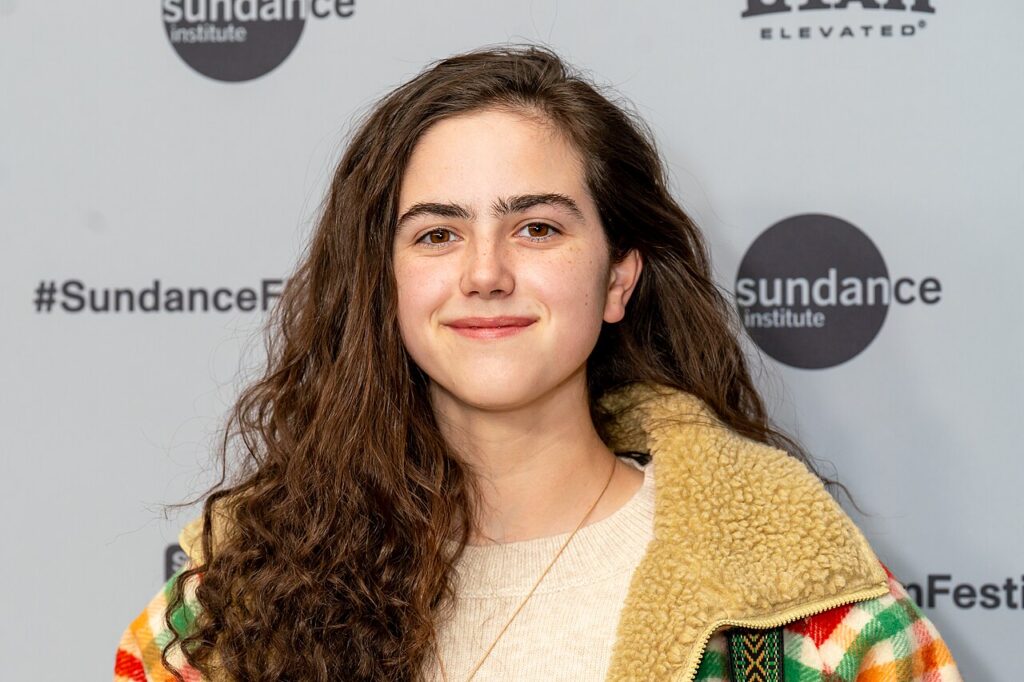 Abby Ryder-Forsten (Ant-Man & The Wasp) for Delaney?
Not long ago, I was at the Hollywood Farmer’s Market when I got into a conversation with a couple visiting from Ohio. It was one of those easy, drifting exchanges that starts in an ordinary place and expands into something unexpected. The woman was a writer, and they had come to Los Angeles for a book fair where she was appearing as a featured author and doing signings.
Curious, I asked what she wrote, expecting a standard answer, and she immediately said erotica. But not just general erotica. A very specific subgenre of erotica that’s suuuuuper dirty. She was describing this to me with complete ease, giving lurid examples of her work as casually as someone might describe how they cooked their chicken last night. Her boyfriend stood a few feet away, looking a little uncomfortable, as she laid out the details.
What struck me wasn’t the shock value, but how matter-of-fact it all was. Like there was a whole ecosystem of erotic subgenres I had never been aware existed. I knew about Fifty Shades of Grey, of course, but I’d always assumed that that was more of a cultural outlier than anything.
That’s why I chose to read today’s script. It takes that same idea (the existence of a much more specific, niche world of erotic writing) and filters it through a fun lens: a high school girl who has no real life sexual experience. Let’s take a look!
17 year old nerd author Delaney Pitts has a decent sized audience who reads her writing online. Which might surprise you considering that her current story follows Timothee Chalament as Willy Wonka dominating a young tied-up housewife. Yes, Delaney writes about graphic sexual experiences with nerdy pop culture characters.
The irony is that Delaney has zero real-life sexual experience. She hasn’t even kissed a guy! Her only friend is Kira, a super-horny Filipina girl whose parents are insanely religious and don’t let her do anything. As Kira likes to point out, they’re not even cool enough to get bullied. Literally nobody knows they exist.
On the flip side of this you have Ty Reynolds, the high school quarterback and every girl in school’s wet dream (including the teachers). But Ty isn’t even on Delaney’s radar. It’s like the Stapler guy from Office Space wanting to date Margot Robbie. At some point, you gotta be realistic about your options.
But then something interesting happens. Delaney gets a call from a publisher who saw her work online. He says if you can write a whole book of this stuff and it’s good, we’ll give you $50k. There’s only one stipulation. It has to be about the REAL LIFE of a high school girl. It can’t be about Thanos banging Blackpink.
Uh oh.
Delaney doesn’t have any original ideas! Nor would she know where to start. She has zero real life social high school experience. She’s never kissed a guy. Never been to a party. Don’t even get started on how far away she is from sex. But Delaney finds out that Ty got busted for submitting several English essays written by AI. If he doesn’t rewrite those essays and get a good grade on them, he won’t go to college.
So Delaney makes a deal with him. I’ll help you write those essays. You help me learn what high school and socializing and hooking up is really like. Ty agrees and they’re off to the races, with Delaney going to her first party that weekend.
But when the backup QB starts hitting on Delany, Ty gets unexpectedly jealous. And when Ty’s girlfriend, Sabrina, learns of this nerd-chick trying to lure her boyfriend into her weirdo nerd lair, she goes on the offensive, determined to get Delany out of the picture. Which may mean exposing her dirty sex-lit musings to the entire school.
Untitled Erotic Fan Fiction is a solid script. I think my big question, while reading it, was, why did A24 want this? Because this is about as formulaic as a script gets. It’s the same slightly raunchy teen comedy that they’ve been making since Pretty in Pink. I guess I was expecting something a little more avant-garde.
You guys know my feelings about comedies. You have to lean into what’s unique about your premise. Cause that’s the only area where you’re going to find jokes that haven’t been used in other comedies. And, in this case, those are exactly the funniest moments in the script, when we flash to one of Delaney’s weird erotic scenes she’s writing.
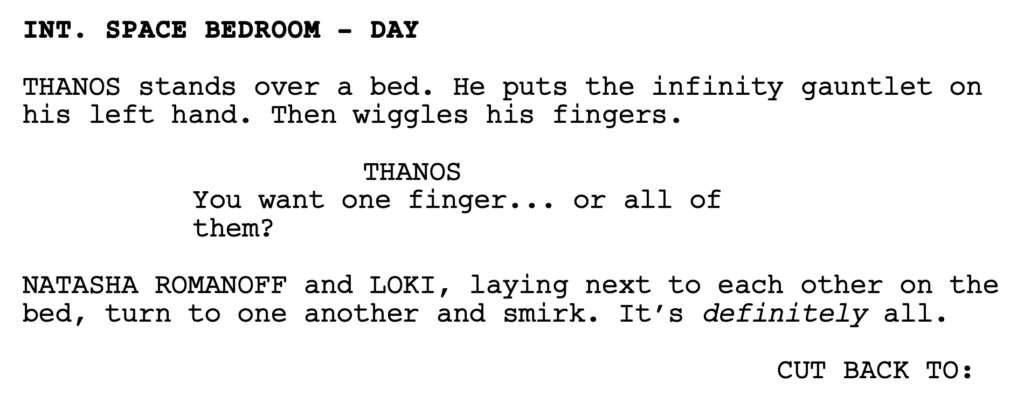
The problem was, there wasn’t enough of this! And because of that, Lehmann was instead depending on making teens in a high school setting funny, an arena with millions of other writers competing against you. I mean, how many different ways can you write the scene where your main characters are in a bedroom, talking about homework, with the sexual chemistry boiling underneath?
Again, it’s not that you can’t make that scene good. If the characters are strong and we want them to be together, it’ll work. But it’s still a scene we’ve read a million times before. So, in a way, we’ve already read the scene. We’re just waiting for you to finish it.
My writing strategy is: Look for the avenues that give you an advantage over other scripts. And mining the uniqueness of your concept at every turn is one of the easiest ways to do this. Especially with this premise. The moments I laughed the loudest were always the ridiculous yet alarmingly dirty sexual escapades Delaney would dream up.
I will say this, though. This script is perfectly structured. I’m talking absolutely perfect. It’s 100 pages long. The acts are divided perfectly (Act 1 = Pages 1-25, Act 2 = Pages 26-75, Act 3 = 76 – 100). The inciting incident happens between pages 12-15. We’ve got the midpoint (Delaney’s first party). And the majority of it is invisible. It doesn’t feel like you’re noticing those key script moments when they’re happening.
That’s the moment I’d say that a solid intermediate screenwriter becomes an advanced intermediate screenwriter – when they can structure out their story in a way that’s invisible to the reader.
And just to be clear on why that’s important – because a lot of people think that the 3-act structure and all the sub-beats of that structure are only done to make screenwriting teachers happy. They don’t believe they’re actually useful for telling a story. Not true. This is something I’ll get into Friday, with my new article – the point of good structure is to move the story along. When you nail your structure, your script is always pushing forward. When you don’t, that’s when it feels to the reader like not enough is happening.
Another thing I want to bring up here is the party scene. Cause a very quick way for me to know if I’m dealing with a real writer is to see how they handle a party scene. Not just a high school party scene but any “gathering” scene.
The secret to writing a good party scene is to give the key characters one of two labels. Either they are active or reactive. If they’re active, give them a goal they’re after. If they’re reactive, then you need to have something interesting happen to them (which they can then react to). If a key character doesn’t have one of these two things going on, your party scene will be in trouble.
In the party scene in Untitled Erotic Fan Fiction, Kira loses her phone. Kira has snuck out of her house. Has to sneak back in by 11pm. And we establish that if she goes back to her parents without a phone, her life will be over. So her goal is to find that phone. That’s her directive during the party scene.
Then we have Sabrina, Ty’s girlfriend. Sabrina has noticed Ty becoming distant lately. So she created this party (it’s taking place at her house) with the specific intent of getting her boyfriend obsessed with her again. So that’s Sabrina’s active goal: GET MY MAN BACK.
Then we have Delaney. Delaney doesn’t have a goal really at this party. She’s been forced to come here by Ty so she can experience what a real high school party is like so she can accurately write about it. But that’s not an active goal really. It’s too vague. So, we need to have something happen TO Delaney. In this case, we have Vaughn (the backup QB) notice her and start hitting on her. So Delaney spends the party reacting to that. Does she want to get involved? Does she not want to get involved? That’s her journey at the party.
Finally we have Ty. As we already established, Ty is the target of Sabrina. But Ty is starting to lose interest in his girlfriend. He’s starting to have more fun hanging out with Delaney. So Ty’s journey at this party is to deal with the incessant pressure that is Sabrina trying to get him back. She’s pulling every trick in the book to win him over, which is keeping him from where he really wants to be, which is with Delaney.
Now, all of this might seem obvious to the casual screenwriting eye. “Duh, Carson. You just have them each do something.” Trust me, it’s not that simple, lol. And I can give you about 1000 examples from the 10,000 scripts I’ve read where writers don’t give their party characters a clear directive or a clear action to react to. Actually, I just saw a terrible example of a party scene last night. I had on this awful movie called Palo Alto for 30 minutes (don’t ask why). And there was a party scene where none of the characters had any clear directive or action to react to. They just wandered. And the scene was boring as hell as a result.
All in all, Lehmann has a good understanding of the craft here, which has resulted in a solid script. But when it comes to comedy, you need to step on the gas. And it felt like we were mostly on cruise-control throughout this. More fun scenes surrounding Delaney’s sexual scribblings could’ve easily doubled the laugh count. But I’d still say this is worth the read.
[ ] What the hell did I just read?
[ ] wasn’t for me
[x] worth the read
[ ] impressive
[ ] genius
What I learned: A good joke option is to connect two things that don’t go together at all. The juxtaposition of those things is what makes the joke funny. Of course, there’s an art to this. You can’t just say “bears and popsicles” and expect people to laugh cause the two things are different. You have to play with some combinations to find out which ones sound the funniest against each other. But when you land on a good one, it’s gold. In this scene, Ty has read Delaney’s most recent pages and has feedback.
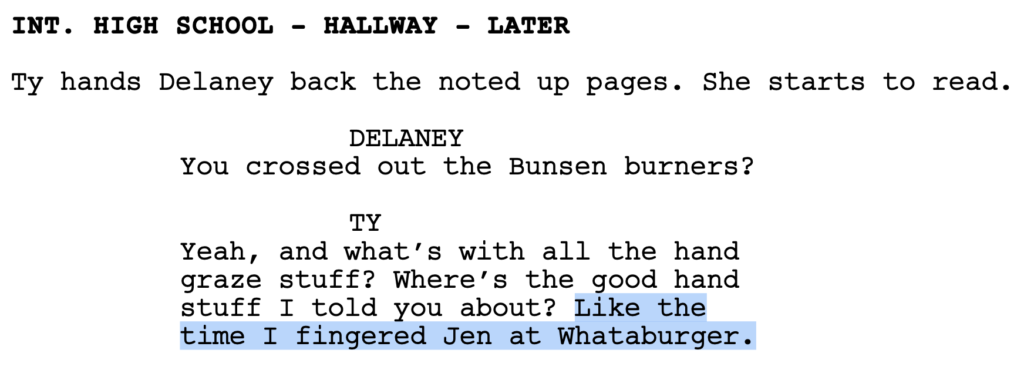
“Fingered Jen” all by itself would not have been funny. The juxtoposition of placing it at a cheap fast food joint is what makes the joke pop.
What is the gangbusters screenwriting lesson within Project Hail Mary that nobody’s talking about?
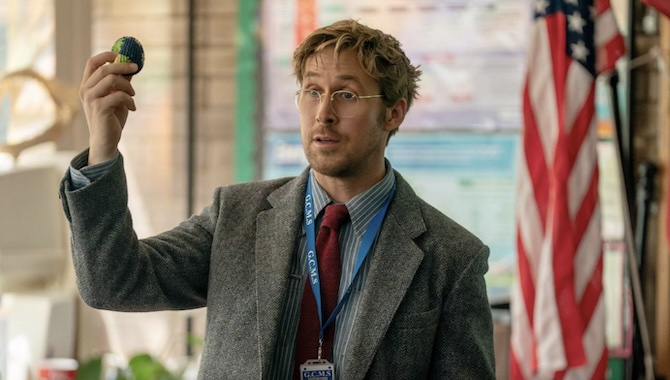
Project Hail Mary dropped just 23% in its third weekend. Is this amazing hold because of Ryan Gosling? Yes. Is it because of a stellar marketing campaign? Yes. But when a movie holds this well, there’s one reason that rises above all others – THE SCRIPT.
Only awesome stories have 23% drops. Because awesome stories hit audiences more powerfully. Which means audiences come back from this film and tell other people about it, who then go see it themselves. It is the oldest and most effective form of marketing there is.
Now, there are many reasons why this screenplay is great. I’ve gone over some of them on the site. But I want to tell you a secret screenwriting reason this movie is killing at the box office that nobody’s talking about. It’s a reason that Hollywood keeps forgetting. But it’s been around forever and a day.
Here are some of the movies that should cue you in on the tip…
Step-Brothers
Bridesmaids
Swingers
Back to the Future
Good Will Hunting
Midnight Cowboy
Know what it is?
Okay, let’s put up the final movie that represents this tip, what some say is the greatest movie of all time.
The Shawshank Redemption.
Now do you know what the tip is?
It’s FRIENDSHIP.
Actually, it’s more specific than that. It’s a love story told through the lens of friendship. A platonic love story. Audiences absolutely love this simple formula. Two people fighting against the world to achieve what they need to achieve.
And Project Hail Mary falls into that category perfectly. It’s a love story told through the lens of friendship between Grace and Rocky.
Here’s how to make this formula work. You imply that the friendship has to end at some point. Just like a love story. You have to tell us that the lovers may not get together at the end.
I was just watching Back to the Future the other day again. Doc and Marty’s future is threatened by the fact that Doc is dead in the future. So, the very act of succeeding results in a friendship dying. That’s what makes these narratives so special.
And it’s the same thing here in Project Hail Mary. Grace and Rocky are trying to save the galaxy together but by doing so, they will never see each other again. That creates this looming feeling of worry and sadness in the audience, that makes things all the more amazing when the two end up together at the end.
So, why aren’t there more movies about friendship? We’ve established it’s a powerful blueprint to create an exceptional film. Well, until recently, Hollywood always thought you needed the female love interest to make a movie work. So, that was the relationship that always took precedence.
That’s why, when you saw The Shawshank Redemption back when it came out, it felt so different. There was no love interest.
But anyway, building a story around friendship can be dramatically powerful. And if you can couple it with a high concept like Project Hail Mary did, well then watch out, because you can take that movie to the box office stars.
Not all the entertainment news out there is as peachy as Ryan Gosling’s hair, unfortunately. There’s a really bad show that just debuted this week. It’s called The Miniature Wife. Now, you may say, “Uhhhh, Carson? Why would you think that show would be anything other than terrible?”
I assumed it was probably bad, yes. But I love Matthew McFaddyen! And I like Elizabeth Banks. Also, I really want someone to make the movie, “Kitten,” (scroll down in link for review) from a script I reviewed a few months ago. And I was wondering if this show would, in any way, negate that project.
That answer came pretty quickly: DEFINITELY NOT.
Cause this show is terrible.
I mean ACHINGLY terrible.
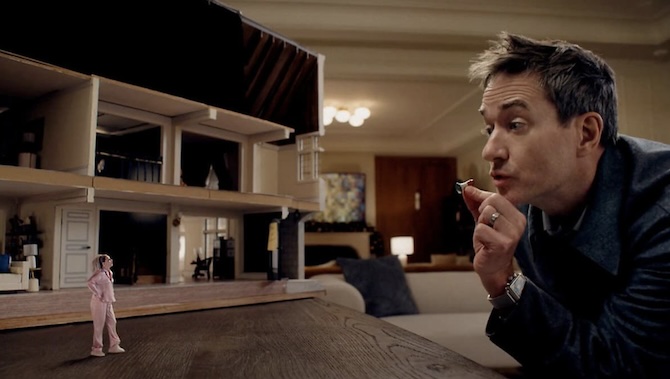
But here’s the good news. Failures like this can teach writers something and this show actually has a powerful lesson you can learn from the poor writing on display.
It’s something I call “SETUP BLOAT.”
I’m highly aware of Setup Bloat at the moment because I’ve consulted on several scripts recently, all of which had setup bloat in them. And setup bloat is a uniquely evil issue in that it kills your script immediately. Because it’s happening during the setup. And the setup is where readers decide, quickly, whether they’re in or out. If you have Setup Bloat, the reader will not make it through your first act.
So, what is Setup Bloat?
It consists of two things.
One: THERE’S WAY TOO MUCH GOING IN YOUR STORY
Two: THE EXPOSITION REQUIRED TO INTRODUCE ALL OF THOSE PLOT ELEMENTS
Exposition will always be required in your first act. You need to set up your story. Which means you need to write exposition. But here’s the thing about exposition in your setup: The reader only allows for you to provide so much exposition before they tap out. (if you want to learn how to effortlessly add exposition, my dialogue book has an entire chapter dedicated to it)
I think you know where this is going. If you don’t have a ton of plot to set up, then you won’t have to write that much exposition.
However, if you have a super complex plot with a ton of moving parts, then the majority of your first act is going to be exposition. Every moment is going to be you introducing information that the reader needs in order to understand the story. That’s Setup Bloat: When your first act is so over-stuffed with exposition that very little entertainment is allowed to breathe through.
Which is exactly what happens in The Miniature Wife. First we set up the unnecessarily complex situation that two people who are already married are deciding to stay married. Then we set up the husband’s miniaturization invention. Then we set up the complex funding requirements for this invention. Then we set up the wife breaking up with her secret boyfriend. But not a boyfriend she physically cheated on her husband with. This was just an emotional affair. We also set up that she used to be a famous author but hasn’t had a best seller in 15 years. Then we set up that her emotional affair boyfriend secretly pretended to be her agent and submitted a short story she wrote without her knowledge to the New Yorker. But what he didn’t know was that she stole that short story from one of her university students. Stole it to secretly keep on her hard drive in order to pretend to herself that it was hers. So now she has to go to that student and convince her to leave the country for six months, isolate, all so that she’ll have no idea that she, the wife, stole her short story when it gets published in the New Yorker.
And that’s just some of the setup!!!!!!
Do you see, now, how Setup Bloat can destroy a script before it even gets going? I don’t think William Goldman in his prime would’ve been able to manage that level of setup in a first act.
To be clear, part of what makes a good screenwriter a good screenwriter is making exposition invisible. It’s finding ways to make scenes entertaining on their own, before covertly slipping the necessary exposition into them. But if you don’t know how to do that, you end up with setups like The Miniature Wife, where it’s not only all exposition, but it’s clunky obvious exposition. It’s clunky setup scene after clunky setup scene.
How do we avoid this? Don’t write a billion threads into your plot. Or, if you do have a lot of plot, space it out. Especially if you’re writing a TV show. You have so much more time to delve into your plotlines in TV writing. You don’t have to stuff all of them into the world’s biggest trash bag and dump it on your reader in the first act of the first episode.
I’m kinda disappointed. I wanted a cool Matthew McFaddyen TV show to watch. But if there’s a silver lining to this, it’s that he’ll be able to look for another job right away after this one gets canceled next week.
As we get closer to the Blood & Ink deadline (that would be Cinqo De Mayo), we’re going to have to, you know, finish our scripts. I could write a book on finishing scripts. There’s actually a lot to it. But for the purposes of today’s article, I want to focus on the final act. Because, chances are, as you approach finishing, the area of your script that’s going to be the least complete is that ending.
It’s an issue I’ve always had with the screenwriting process. We get so caught up in writing that first act (we keep going back to it to improve the opening scene and set up our heroes better and make sure the inciting incident is perfect) that the other two acts don’t get nearly as much of our time. Which equates to an uneven “percentage of time spent on each act in a screenplay” ratio.
Time Spent on First Act: 60%
Time Spent on Second Act: 25%
Time Spent on Third Act: 15%
If you want to know why so many movies fall apart, this is the reason. And it’s why almost every Hollywood movie freaks out about the third act during production and brings in a writer to rewrite it AS THEY’RE SHOOTING THE FIRST TWO ACTS OF THE MOVIE.
It’s because they didn’t put in the time when originally writing the script to make the ending good enough that people wouldn’t question it. Cause people only question bad or average third acts. They don’t question anything when that third act is awesome.
Look at Back to the Future. Arguably the best third act in the history of cinema. They weren’t rewriting that during production, I can promise you that. They notoriously rewrote that script until they got it right and THEN went into production with it.
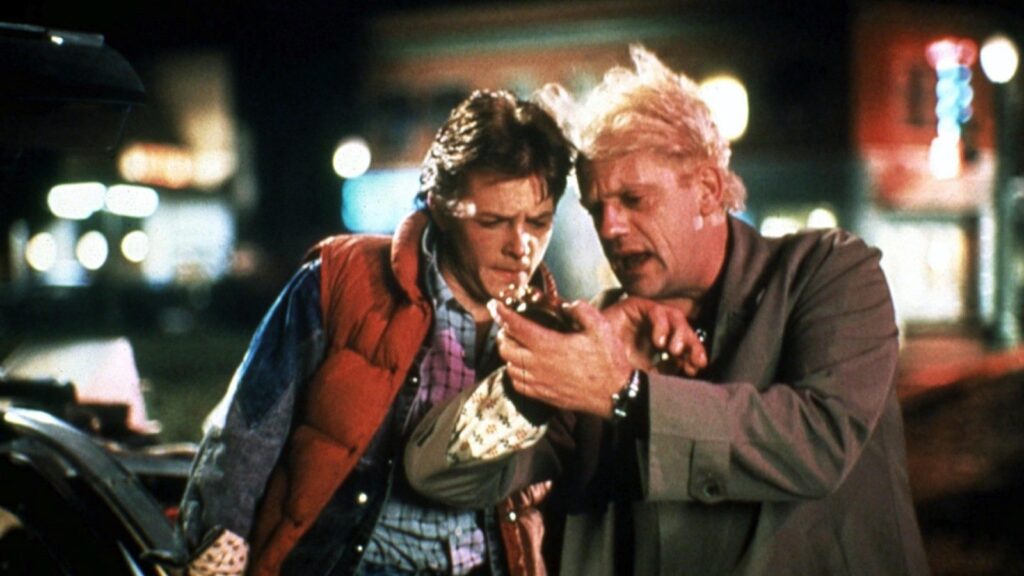
But how is my saying, “You need to spend way more time on your third act” going to help you now? Well, lucky for you, I’m going to give you a little hack on how to massively improve your third act without having to spend another one thousand hours on it. And Back to the Future is actually the perfect movie to use as inspiration for this screenwriting hack.
The key to massively upgrading your third act is this: PAYOFFS.
Payoffs are your secret weapon for turning a bad third act into an awesome one. Because the mistake that so many writers make is they just write a logical conclusion to their story. It’s enough to get the job done but it doesn’t contain any of those moments that emotionally invigorate the reader.
You can create those moments by simply setting up things throughout the first and second acts, and then paying them off in the third act. And the great thing is? There’s no limit to how many payoffs you can use. Readers and audiences absolutely love payoffs. The setup and payoff formula always feels clever. The reader feels like they’ve earned something because they’re rewarded for paying attention earlier. It makes readers feel smart cause they had to add a couple things up. It’s very rare that a setup and payoff doesn’t work.
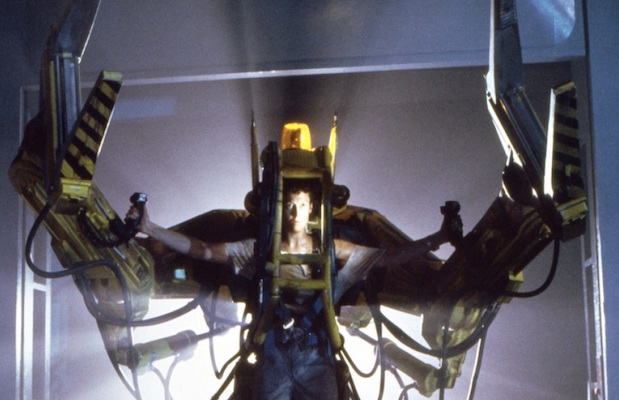
And here’s why this is relevant to the position you’re in now. Because you can retroactively add setups. For example, if you’re writing a movie about marines going to a planet to take down aliens and you’re at the end of your story and you don’t know how to end it but you think, “You know what? It would be really cool if I could put my hero inside a big mechanized suit and have her battle the mother alien that way.”
Perfect! All you have to do is write that scene then GO BACK TO THE FIRST ACT and set it up. Write in your hero, in this case Ripley, telling one of the marines that she can operate one of those mechanized loader suits, show her doing it, and now you’ve just set up that ending.
Would Aliens have still worked had there never been a setup scene for that construction loader suit? Sure. But when you create the setup scene, it operates as this line connecting the earlier part of the screenplay to this part of the screenplay, and, therefore, it makes the story feel unified. Or, to put it more bluntly, it doesn’t feel like the writer was just making up the ending as he went along.
I brought up Back to the Future earlier because I don’t think it’s a coincidence that the best third act in history also has the most third act payoffs in history. If there’s ever an argument to be made about how important payoffs are to making a third act great, look no further. It’s one payoff after another here.
- The Photograph Restoring
- George overcoming his cowardice to knock out Biff
- The entire Enchantment Under the Sea Dance Set Piece
- Marty’s guitar skills required to make his parents kiss again
- Doc refusing to read the warning in Marty’s letter (then changing his mind)
- Marty’s mom acting like a slut despite earlier painting herself as a nun
- The lightning striking the clock tower
And these are just some of the big ones. There are a million smaller payoffs that come into play in that film as well.
So, how do you apply this to your own script and your own ending?
Well, as you’re trying to figure out how to make your third act work, don’t think two-dimensionally. Think three-dimensionally. For example, if you’ve written a slasher film and you’re looking for a final location to create the big showdown between your hero and the killer, don’t just ask, “What’s the best location to have this showdown?” Ask, “Is there a location that’s either already set up, or that I can set up retroactively, that would make the location more powerful?”
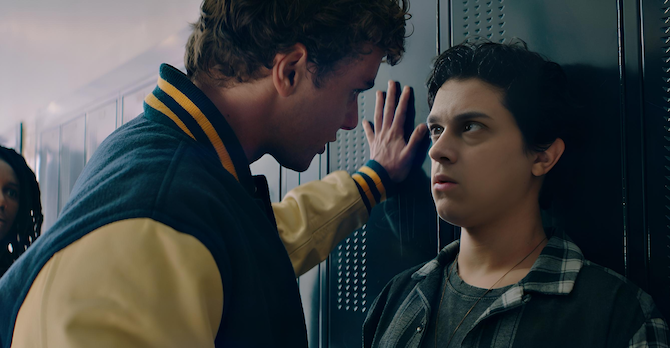
I remember a couple of years ago, I was consulting on a slasher screenplay that was dealing with this exact issue. A lot of the backstory revolved around the killer’s years at high school and him getting bullied. Twenty years later, he was taking out his bullies one by one. And the writer placed his big climactic ending in this random place. I think it was a loading dock or something. And I told him, “Are you crazy?? The climax needs to happen at the high school!”
That’s where you want your head for all of your creative choices as you’re writing that third act. You’re trying to connect back to as many moments in the story as you can. When you first add these to your script, many of the connections will be clunky. But you can rewrite them quickly, smoothing them out more and more each time. And the next thing you know, you’ve got a third act with 5-10 payoffs and your script feels way more interconnected and planned than your competition. And the ending’s just better. We enjoy it more.
And even if you aren’t struggling with your ending, I can promise you that it would benefit from a couple more payoffs. Again, you can’t add enough setups and payoffs in a movie. Audiences absolutely love them.
So what are you waiting for? Get to it.
Today’s script is a rarity – a script that sold to Netflix without any director or actors attached. Which typically means either the concept is gangbusters or the execution is awesome.
Genre: Serial Killer/Horror
Premise: When several bodies are found along the highways of the American Midwest, a divorced state trooper and her estranged FBI husband must work together to find a trucker murdering young women for his sick wife… a vampire.
About: Today’s writer, Connor McIntyre, is a pretty hot commodity at the moment. He just got hired to write Lights Out 2. He also wrote Ben Affleck’s just completed next directing project, Animals. Here’s the logline on that one: Desperate to pay their son’s ransom, a mayoral candidate and his wife resort to extreme measures, revealing dark secrets they never intended to bring to light. And then this current script seems to be a rare example of a script that sold to a streamer (Netflix) that didn’t have anyone attached – director or actor. I suspect that he sold it on the heat of Affleck directing Animals.
Writer: Connor McIntyre
Details: 121 pages
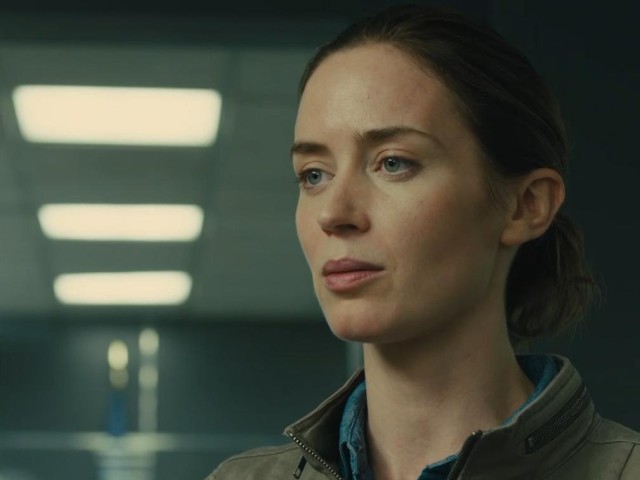 Emily Blunt for Alissa?
Something we talk about a lot on this site but is constantly misunderstood, is this idea of finding a new way into an old concept. Here’s what writers typically push back on when this is brought up: Everything under the sun has already been done. You can’t generate new ideas anymore. So, this advice is basically useless.
Take the buddy-cop genre. Every iteration of it has been conceived already. You’ve got the OG buddy-cop movie (Lethal Weapon). You’ve got the buddy-cop movie but with a dog as one of the partners (K-9). You’ve got the sci-fi buddy cop movie (Men In Black). You’ve got the buddy cop movie but with two women (Heat). You’ve got the found footage buddy cop movie (End of Watch). You’ve got the animated animals buddy cop movie (Zootopia).
So, yes, it’s true, with these popular genres, that they’ve thought of almost every angle. But you’d be surprised at what’s still available. Just when you think someone can’t update a well-known movie setup anymore, they do it. Arrival comes to mind. An alien arrival movie about language and communication.
But you do kind of have to stumble upon the idea. It usually doesn’t come to you simply by trying to generate fresh new takes out of nothing. But the great thing about when you do this right is that everybody kicks themselves when they hear your idea, saying, “Now why didn’t I think of that?”
That encapsulates today’s idea perfectly. A serial killer movie about a man who abducts victims to feed his vampire wife.
Now why didn’t I think of that??
We meet this trucker, Hud, at a truck diner in the middle of nowhere. He sees a young woman, Natasha, eating as well, and engages in a little bit of pleasant conversation with her before leaving. She makes sure he’s long gone before leaving and getting in her car. Except that several miles down, her car breaks down.
Guess who’s there to help though? It’s Hud! Awww, good old Hud. In no way is this going to end badly for Natasha. Natasha is totally going to walk away from this with all of her intestines in place. NOT. In a tense scene, Hud eventually pulls Natasha back to his truck, and then sticks needles in her and starts extracting blood. It’s our first glimpse into Hud’s unique situation. He constantly needs fresh blood to feed his vampire wife.
The next day we meet Captain Alissa Forrest (45) and her only cop on the payroll, Michael Faro, barely 24 years old. Later we’ll meet Alissa’s 17 year daughter, Clara, who hates her mom. And for good reason. Alissa cheated on her husband, excommunicating the two from the family, and forcing them to live out here in the boonies in a trailer park. Yeah, Clara ain’t happy one bit.
Alissa and Michael are called to a dead body on the side of the road. That would be Natasha’s dead body. And it looks like her insides have been drained from her. Michael’s grossed out. When a few other bodies pop up in adjacent counties, all near the highway, Alissa puts the pieces together that they’ve got a serial killer on their hands. Which means they need to bring the FBI in.
That’s funny because guess what Alissa’s husband, Peter, does? That’s right. He’s an FBI agent. So Peter unofficially comes down to help, which brings the band – the family – back together. But things are far from cool again for the Forrests. Especially because the latest highway killing includes a cop. And he’s not sucked dry, like the others. He’s been slashed up. But by what? We quickly find out that Hud’s wife, Lydia, is like me in the In & Out drive-thru: she’s getting really impatient. Unlike me, though, she’s willing to kill to speed up the process.
I’m going to tell you why I liked this. These days, I’m not a huge fan of serial killer movies. There’s a darkness to them that puts me off. I can still respect them if they’re written well. But I don’t seek them out like I used to. With American Midnight, the whole vampire angle sort of softens the serial killer angle. Because, we know we’re not in the real world here. We’re in a world with vampires. And that makes this all fiction and, therefore, easier to stomach. I thought that alone was really clever. Cause it made me more interested in the story than I’d usually be.
Also, one of the tougher choices you run into as a writer of the serial killer genre is whether to humanize your villain or not. On the plus side, it makes them more interesting as a character. But, on the flip side, you don’t really want the bad guy who’s chopping up a bunch of innocent people to be human. You want to root against them.
Yet here, the bad guy’s plight is organically sympathetic. I hated Hud but, at the same time, I understood why he was doing what he was doing. Imagine that the person you love more than anything is going to die but you can save them if you do terrible things. I’d imagine that lots of people would do terrible things. I actually think that’s one of the best ways to create a captivating character – put someone in an un-winnable position – a position that we, ourselves, don’t know what we would do – and watch them make choices. Hud: “Nobody knows what they’ll do until it comes knocking. Then everything changes. Everything. Forever and always.”
A quick aside here, though. This is something I’ve never understood about vampires. Part of the whole vampire curse is that they live forever, right? But then, there are all these vampires in movies like this and Let the Right One In, who need blood to survive. So, do they live forever or do they die without blood? Somebody in the Anne Rice book club chime in in the comments and help me out.
Okay, let’s talk about this family because it’s actually a risky creative choice to bring the dad into the mix as an FBI agent. There’s a term a screenwriter used with me the other day that I liked. Too “small world.” It’s when you the writer create this almost “too perfect” tight setup between the characters and his story.
That’s sort of what the Peter situation feels like. It’s a little coincidental that their family is reeling – they’ve fallen apart. And then these serial killings start. Alissa needs an FBI agent. Oh, what do you know? Her husband who she just broke up with is an FBI agent! You could definitely argue that that’s too “small world.”
However, you can make this work if you treat the broken family dynamic authentically. If you make choices between them that feel like they could happen in the world. If, however, you “movie logic” your way through those choices (the characters act like they know they’re in a movie and talk about things or wrap things up in an artificial way), then the movie falls apart. And I thought McIntyre was pretty authentic in the way he treated this family so it ended up working.
The one final thing I liked about this script was the evolution of the Lydia character. Throughout the first half of the script, she’s this helpless character who Hud is out there doing terrible things to save. In the second half of the script, she becomes more active. She starts making choices on her own. Killing people she shouldn’t kill. And now there’s a new problem beyond the original scope of the problem – Lydia.
That’s exactly what you want to do as a feature screenwriter. You want to evolve the story. If this stayed as a traditional serial killer plot, I’m not saying that it wouldn’t have worked. But it might’ve gotten stale as we moved towards the ending because we would’ve felt the familiar beats and been ahead of the writer and that’s never good.
This was a cool concept and strong execution of that concept. If this would’ve come to me through the Blood & Ink contest, I would’ve been very happy. It for sure would’ve contended for the top spot. :)
[ ] What the hell did I just read?
[ ] wasn’t for me
[xx] worth the read
[ ] impressive
[ ] genius
What I learned: Make your characters have the tough conversations in a place where at least one of them DOESN’T WANT TO HAVE THE CONVERSATION. Not when conditions are perfect. Peter and Alissa haven’t seen each other since she moved out (after cheating on him) and when he comes into town to help her with this serial killer case, they meet up at this diner, and when they’re about to split up into their own cars, Peter says, “I want to talk about what happened.” And Alissa basically says, this isn’t the right time. If a character thinks that, that’s actually a great time to force those characters to have the conversation. Because conversations are always more interesting when someone in the dynamic isn’t comfortable having them. I would’ve actually taken it a step further, though, and had Peter force the conversation INSIDE the diner, which I would’ve made full. Cause now you’ve got a scene. It’s not that having this conversation in the privacy of a living room where no one else is around is going to kill the scene. If the content of what they need to talk about is strong enough, it’ll work anywhere. But why not turbo-boost the scene if you can? Why not upgrade an 8 out of 10 conversation into a 10 out of 10 one?
As you know, I’m always closely watching the tennis world. And, recently, I’ve encountered several top tennis players discussing what’s changed in tennis over the last ten years. How is it different from how it used to be?
And the answers they gave were, essentially, “Players don’t play defense anymore. They only play offense.” For example, in the past, if you got stuck 15 feet behind the baseline on the far corner of your backhand side (the weaker side for most players), the smart play was to hit a high looping topspin shot deep crosscourt (diagonal), which would force your opponent to back up, and it would give you time to recover back to the middle of the court.
Nowadays, however, the operative play is to try and crush a winner down the line (straight ahead). Or, to put it simply, you are always trying to crush the ball no matter where you are in the court. It’s so prevalent that players don’t even know how to hit topspin lobs anymore if their opponent comes to the net. It’s a class of shot that has simply left the game. Nowadays, if someone comes to net, you try and hit a winner past them every time. Even though they’re expecting it.

This got me thinking of the obvious correlative question: “What’s changed in screenwriting in the last ten years?”
The answer to this one wasn’t as simple. I suppose there are differences in which genres have the best chance at selling. But that always changes. The genres that have been left behind very well may be the ones you want to write five years from now.
The one key change that you can latch onto is that, not unlike the change in tennis, you need to move faster. You need to set things up faster. You need to grab the reader with good scenes faster. The time between your best scenes needs to be shorter.
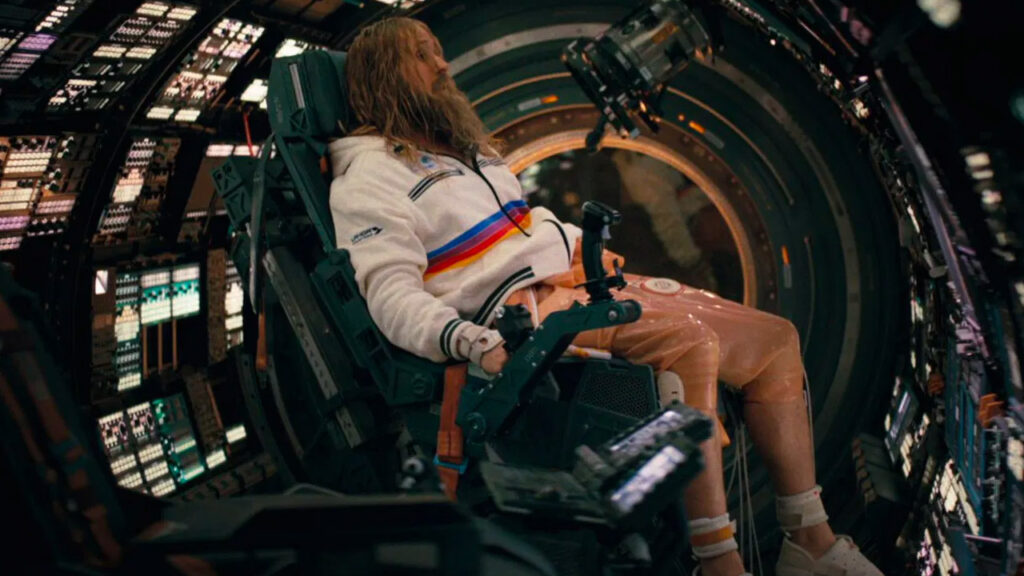
If you look at Project Hail Mary, we wake up in space and we’re ready to go. Even though that movie is long, the story is constantly evolving and moving forward. There are virtually no slow sections.
And just to be clear, I’m not only talking about “time” here. Not every script needs to be like 1917 or Osculum Infame where there’s this intense ticking clock. But the story needs to constantly have forward momentum, and at a faster pace than it used to. Plot beats need to come more frequently. Interesting developments need to keep happening at a faster pace than in the past.
There is only one exception to this: WRITER-DIRECTOR THEATRICAL PROJECTS. Sinners. One Battle After Another. The Secret Agent. All of those scripts take forever to set their stories up. But those guys are working under a different set of rules than you. And because their movies are shown in theaters, you are a captive audience and, therefore, can’t leave. So they know they can pull this crap. Trust me: If they were writers only, in which case they’d have to win readers over right away and, likely, audiences over right away (since their movies would probably debut on streaming), all of them would learn REAL FAST how to speed things up.
Moving on, I was really bummed to hear that JJ Abrams Bad Robot has gone the way of the dodo bird. One of the coolest meetings I’ve ever taken was at Bad Robot. The interior of that production house was so freaking fun. It literally felt like a movie in there, like someone could pull out a movie camera and start filming and it would look like the inner workings of a production house movie set.
I’ve always been a huge fan of JJ and, therefore, his downfall has been baffling to me. Because it wasn’t like he came out with a string of consistent bombs. He didn’t create ANYTHING for a really long time. And one of the biggest mysteries in Hollywood is that he received half a billion dollars to shuttle in the DC Justice League Dark world, and didn’t make a single film or TV show out of it.
At the time, I got a little bit of info on this and spoke to the person who, arguably, was the closest person to JJ of anyone. And they said that JJ was devastated by Star Wars Episode 9. They said that when he went to the premiere, the cut was not the cut he made as the director. Which is kinda crazy when you think about it. That means that someone else – someone big and powerful enough that they had to be a known director – was secretly putting together another cut of the movie unbeknownst to JJ. And I think he just felt betrayed. And probably hated the industry afterwards.
And it’s not like you or me where, when we get disillusioned, we can disappear for a while until we get our enthusiasm back. JJ was running a business with hundreds of employees.
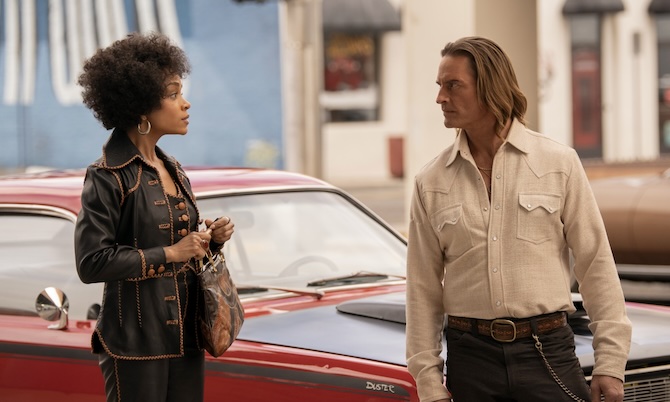
But, look, I’m not going to excuse JJ completely. I mean, dude. Duster? What year is this? 1994? What kind of lame concept is that? Maybe a show like that works if you can update the look and feel of the genre. But it was produced and shot in such a cheesy way. It was set in the 1970s but it totally looked like 1975 through a 2025 lens. He has to wear that. Cause he knew that they were hemorrhaging money over there at Bad Robot. They needed a hit to stay alive. And they came up with Duster?? This dude used to be THE CONCEPT GUY. And Duster is probably the lowest-concept TV show I’ve come across all decade.
The great thing about Hollywood, though, is that it loves a comeback. And JJ has a couple of projects that could place him back on the Hollywood A-list. He’s produced the dinosaur flick, The End of Oak Street. And he’s directed The Great Unknown, about a young newlywed couple who struggle to survive against a supernatural entity, that one with Glen Powell and Jenna Ortega. I have a lot more hope for Oak Street than Unknown but we’ll see what happens!
Finally, let’s talk some AI. It’s always fun to see what’s going on in that digital sandbox, right? AI took a big hit a couple of weeks ago. Open AI, who created Sora, one of these AI video creation generators, and who had a billion dollar deal with Disney, just gave up on it one day!
TechCrunch reported that it cost too much to run the servers for these things and OpenAI is already operating at billions upon billions of dollars of loss. So, they didn’t think it was worth it.
But the sneaky hidden news that they’re not talking about here is that Sora, which was a leader in this space, had a giant initial flash of users using it when it debuted. But that usage plummeted after a week, when everyone realized the limitations of what this thing could do.
Why is that relevant? Well, because all we hear is that this technology is taking over the industry. And yet people don’t seem to be that interested in it. They liked posting goofy videos on social media for a week. But once those videos got lost in the millions of other AI videos that looked exactly the same, they left. Maybe AI is not the savior of Hollywood after all.
But don’t tell that to David Ellison, the guy who bought Paramount and Warner Brothers. Ellison has an interesting approach to AI. He thinks it’s going to revolutionize the quality of films.
How?
Ellison points out that Pixar movies have such a good track record because they can make their movies 8 times before the final cut. Animating allows them to test their films almost immediately with temporary animation. And then they just keep making new cuts, continually testing them with audiences, so that, once they get to the final animated version, the story is airtight.
Ellison believes that AI is going to allow Paramount to do the same with live-action movies. He didn’t go into detail about the process but what I gathered from his explanation was that, let’s say you make Top Gun 3. Well, you can have AI turn the script into a movie right away. You can even have Tom Cruise come in and record all the lines in the way he wants to say them. And then you can test that movie. And, if it sucks, you can then start rewriting it, just like they do at Pixar.
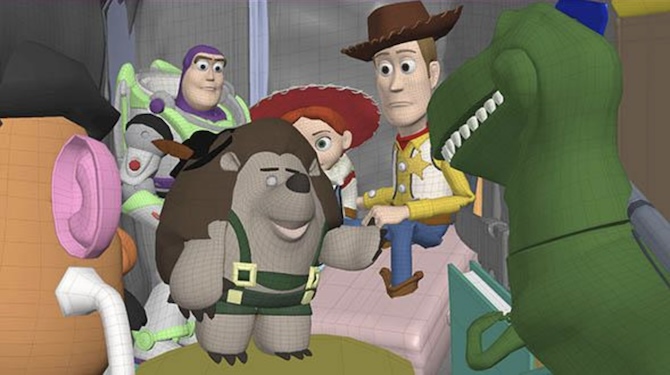
Once you have the perfect movie, you go and actually shoot it. And you just do exactly what the proven AI movie did. So it’s kind of like an advanced version of pre-viz.
I have to admit I’m a little skeptical of how AI’s “proven version” is going to translate once you shoot it. Because quirky little things happen along the way when you’re shooting a movie that you didn’t plan for. I mean, Benecio Del Toro notoriously came up with this wacky character out of nowhere in The Usual Suspects. Nobody, including the director, knew it was coming. But he became a scene-stealer. Well, how is AI going to know to include that unique performance in the pre-movie?
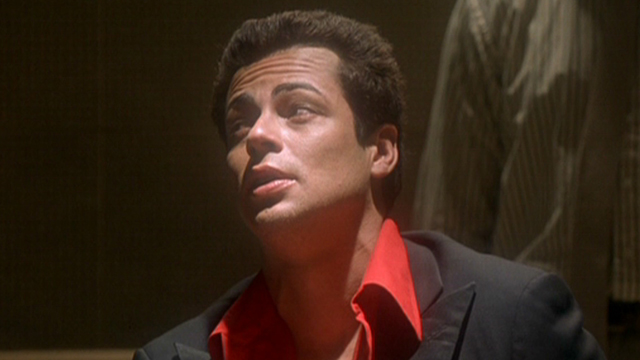
This is where the whole, “AI is going to take over Hollywood” argument loses steam. AI doesn’t seem capable of understanding unique human choices when it comes to performances. And those are things we latch onto the hardest as film lovers. So, if you can’t mirror that, then all you’re really good for is creating cool backgrounds.
But I like that, in Ellison’s vision of this new Hollywood, the screenplay is still needed. That part needs to be written by a human. Lucasfilm’s Kathleen Kennedy was just talking about this in a recent interview. How does AI account for taste? Taste is a bargain that’s made exclusively between the writer and the audience.
Of course, it’s silly to think that they’ll be able to master this process right away. There’s going to be a lot of trial and error. But that seems to be their plan and, I think it’s a good starting point. If a movie isn’t working, you’ll at least have a shot at being able to fix it. Whereas, before, if you had a bad film, like The Running Man, you were basically screwed.
Thoughts on screenwriting in 2026, JJ Abrams, or AI? Share them below!
