
Search Results for: F word
Amateur Submission Process: To submit your script for an Amateur Review, send in a PDF of your script, a PDF of the first ten pages of your script, your title, genre, logline, and finally, why I should read your script. Use my submission address please: Carsonreeves3@gmail.com. Your script and “first ten” will be posted. If you’re nervous about the effects of a bad review, feel free to use an alias name and/or title. It’s a good idea to resubmit every couple of weeks so your submission stays near the top.
Genre: Sci-fi/Noir
Premise: (from writer) In the year 2068, a rough and tumble Detective who moonlights for organized crime is forced to solve a series of crimes wherein android prostitutes have been killing their clients, before a zealous US Attorney succeeds in his mission to destroy him.
About: Rarely do I review an amateur script if it’s not Amateur Friday, but I have an unwritten rule that if you send me a kick-ass query letter or have the most amazing unbelievably awesome premise ever, I will review your script right away. Such was the case with James Thoo, who sent me this hilarious query letter, which I’ve included below.
Writer: James Thoo
Details: 101 pages
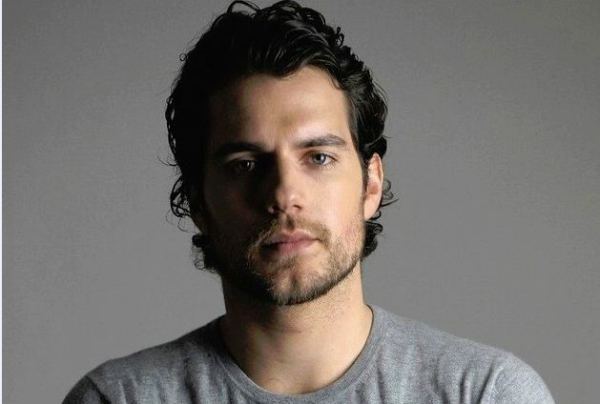 Henry Cavill for Patterson?
Hi Carson,
So this is the first time that I’ve had to come up with two stories to sell one screenplay. One for the screenplay itself, and one for me and the process behind the writing of the screenplay, to get you to read it. I think I have both though, so here goes.
I’ve actually sold work before. Bear with me though, because I’m still pretty sure I qualify for Amateur Friday. Mostly because I am a total amateur now with zero residual ties to the film industry remaining. I started out in film (ish) as a News Editor for JoBlo.com, which is a pretty major movie news website. I got that job when I was 18. People seemed to really dig my voice before I was fired two years later for taking a few too many jabs at Eli Roth – whom I loath and whose films I avoid like I would avoid fraternity rape – who in turn emailed my boss to tell him that he was tired of me “being a persistent asshole to him.”
After that I was approached to write a screenplay by a small studio in LA, who optioned it, but never made it. I was sad about this for a while. That was kind of parlayed into being hired to write a modern adaptation of Shakespeare’s Othello for a Malaysian film studio (where I went to school; my dad moved around a lot). I had some meetings set up in LA but I declined them because I really wanted to do something in Malaysia. I had gross delusions of grandeur wherein I changed the face of the infant film industry over there and local government declared a James Thoo day and elderly women and small children alike high-fived each other amid tears of pure joy. Virgins were offered up and I chose which ones I was interested in with the flick of a cane fashioned for me from pure gold and unicorn bones. I’m sure you can imagine.
So I signed to make the Othello movie. Which would end up being perhaps not the, but certainly one of the biggest crimes perpetrated internationally, ever, and not just in film: in general. Good lord was this film an abomination.
As I mentioned, the film industry in Malaysia isn’t very developed and so there are a lot of restrictions. One of which is on run time, which shouldn’t really be a problem, but quickly becomes one when your director (who has final cut) has been subsisting for the past month on a steady diet of marijuana, self-praise and Terrence Malick films. As such the film was an unmitigated disaster. Back story and some pretty substantial plot points were extradited for inconsequential, self masturbatory lingering shots of snakes and foliage and shit. The producer also pulled a Street Fighter: The Legend of Chun Li and added in some voice-over that he had written himself, which was also added to all promotional materials, because, you know, why not?
Beyond all reason the film actually won a couple of awards and got an extended cinematic run but I was so disillusioned with the whole thing that I tried to take a page out of Tony Kaye’s book and change the writing credit to Humpty Dumpty. When I couldn’t make that happen I never wrote again. There was a funny instance of me picking up a film magazine one day and flicking to the review section where I went straight to the verdict and saw four out of five stars. I was pretty proud. And then I glanced over at the next page and saw Alvin and the Chipmunks. Five stars. There’s probably some similar stories to mine floating around, but I should point out that all of this happened when I was 22 years old. I don’t think that there are many people you meet who effectively, completely burnt out as writers by the age of 22. That was over 5 years ago now.
So yeah, I’ve been working since, as Editor in Chief of an online news portal in Malaysia, which consists largely of curating news aggregation and editing for a team of mongoloids who wield the english language with the kind of accuracy a drunk shows a urinal. These guys are like the anti-grammar. It is mind numbing. Up out of nowhere, 6 months ago I started writing again. I had a sudden bout of genuine inspiration. And I found my passion again. Maybe it is totally misplaced and whatever minor talent I once had is long gone, and whatever I came up with this time around is total garbage, but here it is nonetheless. I’d truly appreciate it if you would take the time to read my screenplay and then decimate it publicly on your blog.
In all honesty, I’m not an every day reader of Script Shadow, but I do check in a couple of times a week. I really think you’re doing a wonderful job, and I hope my relative lack of dedication to your lessons does not preclude me from writing a script that you appreciate. Or don’t hate. Let’s see…
You can’t read a query letter like that and not think, “This guy’s gotta be good.” I mean he obviously has a natural ability to tell stories and be funny, and if you have that, you’ve got a shot. But then I opened the first page of “Keep Us Safe.” My heart sank. James’ intro page suffered from “Wall of Text” syndrome. It’s a disease that’s commonly found in young writers who are still learning the craft. Their main source of reading entertainment up to this point has been books, so they start off writing their scripts like books, packed with way too much description.
And readers HATE this. They hate it. I hate it. Because it’s going to tack 45 more minutes onto my reading time. Which would be fine if those minutes were spent word-smithing together an enhanced story. But 80 out of 81 times, the opposite is true. The excessively long passages gum up the story, making the script the literary equivalent of the 405 at 6pm on a Friday. However, I still had some confidence in James. I knew he could write. Yeah, the first page was wordy, but it wasn’t “I can’t string a sentence together” wordy. The descriptions painted a strong picture. So I figured – Let’s still give this James guy a shot, Carson.
The year is 2068. The location is Los Angeles, CA. Shades of Blade Runner abound. Also some shades of A.I. In fact, if I were to describe “Keep Us Safe,” I’d say “It’s Blade Runner meets A.I meets I-Robot.” Tommy Patterson is a crooked cop for hire. The man can be bought for a 5 dollar footlong (or a 50 dollar footlong in the year 2068). However, despite being described as such, he seems to be very un-crooked in his policing – as we meet him chasing down a nasty drug dealer. Which was confusing. If you’re introducing a character who’s dirty, you probably want to show him doing something dirty. And if Patterson IS doing something dirty here, it isn’t clear.
Afterwards, Patterson’s told by his boss, Police Chief Martin Deinard, that the newspapers know he’s dirty and are going to destroy his reputation. Which means Deinard has to demote him (I was a little unclear on why he didn’t just fire him), giving him, in his words, the worst jobs in the precinct. Strangely then, Patterson’s placed on homicide for a string of cop murders perpetrated by a rogue android prostitute. I don’t know about you, but that sounds like the coolest assignment ever!
Patterson’s case takes him to the maker of these prostitute-bots, Lux Kubotu Robotics, where he learns that a high-profile employee recently quit. It’s the CEO’s belief that the employee may have implanted some code that made the robots killers. So he bounces around from bars to nightclubs, talking to a lot of seedy folks, trying to trace down this dude, eventually learning that someone HE knew actually sent this robot into the red light district to take down Patterson himself, who was known to frequent the area. Patterson will have to go back into his own ranks, then, to take this asshole down.
I’ll be the first to admit this summary may not be 100% correct but that’s only because I couldn’t always tell what was going on. And this takes us back to all that text I was complaining about earlier. You see, many writers believe that writing a ton of description gives the reader MORE information. However it often works the opposite way. The reader’s focus starts drifting. Or meaningless things (like the smell of the air) are highlighted, imposing on the reader that he doesn’t need to read all the text as it doesn’t contain relevant information, resulting in him starting to skim. Or the plethora of words start to get jumbled around, confusing the essence of what the writer is trying to say. Let me give you an example. Here’s the beginning of an early scene in the police chief’s office…
Patterson slumps into a leather couch that occupies the far corner of the office. He rests his head in his open palm and leans into the shadows.
On an extravagant mahogany chair in front of the main bureau sits a man, broad, rough around the edges but trying to make clean: D.A. HENRY CAHILL. He turns his seat to face Patterson, who nods familiarly in his direction.
POLICE CHIEF MARTIN DEINARD is all business. He wears a flawless pinstripe suit with a transparent brace around his neck the catches hair as his PERSONAL BARBER trims at the grey, close around his head.
He stands by the window of his office and looks down at the city. He sighs and turns to Patterson with a TABLET PC in his hand. The Barber follows his every move. He tosses it into his lap and Patterson caches it instinctively, twisting it to read what is being shown.
The image rotates to fit the screen and he sees a middle-aged man, thin, strong, definite jawed, no-nonsense, like he was carved from granite. If anything, maybe like a younger more idealistic Deinard himself.
Holy Word Explosion Batman! Here we have five huge paragraphs (note that the paragraphs have been thinned out due to the format change: they are 3, 4, 4, 5, and 4 lines respectively in the script) to set up a scene. We never need this many paragraphs to set up a scene unless extremely complicated and/or relevant things are going on. Honestly, this is how I would rewrite it…
Patterson slumps in a leather couch. He’s surrounded on either side by D.A. HENRY CAHILL, a slimy crooked type, and POLICE CHIEF MARTIN DEINARD, who’s being tended to by his personal barber.
The chief stares out at the city, cutting off the barber momentarily to hand Patterson a tablet PC. On it is a middle-aged man, a no-nonsense type, who looks like Deinard may have looked like 20 years ago.
Now I understand that you want to convey SOME atmosphere and description in your writing, but you want to do so in moderation because this is screenwriting, not novel writing. Check out The Equalizer or When The Streetlights Go On to see writers convey atmosphere yet still keep their prose sparse.
Because “Wall Of Text” Syndrome has a trickle down effect. It leads to what’s known as “Reader Mind Slip.” This is when a reader’s mind gets overloaded with unimportant information, so they stop paying attention. When this happens, they can’t keep up, as they’re constantly having to re-read paragraphs that they only sorta grasped the first time, which leads to frustration, which leads to them eventually saying “Fuck it” and charging through, even when they don’t entirely understand a scene. From that point on, they’re operating in “Murkyville” territory. They sort of understand what’s going on, but don’t get all of those finer points you’ve meticulously plotted in there. Which is why it’s so important to keep your prose sparse and only tell us what we need to know. You want to avoid “Reader Mind Slip” at all costs.
There are other problems here as well. The story played out too predictably. I felt like I’ve seen it before. The love story comes in too late, making it feel like an afterthought. But if I were James, I would just focus on thinning out his prose for now. Learn how to say a lot more in a lot less. Because obviously, James can write. I mean he can string a sentence together. Even though the writing was thick, it was never bad. And a lot of the dialogue was right up there with professional-level dialogue. But none of that stuff matters unless the story is easy to grasp, and right now all this text is getting in the way.
Also, I have a personal plea for James. Write a comedy script! From your e-mail, you obviously have the chops for it. It seems like it suits your sensibilities better anyway. In fact, write about that experience you had going to Malaysia. It sounds hilarious. I’ll be the first in line to read any comedy you write. And don’t let this review get you down. You seem a bit sensitive. You obviously have talent, I just think you need to tweak your writing approach a little. I wish you luck my friend.
Script link: Keep Us Safe
[ ] what the hell did I just read?
[x] wasn’t for me
[ ] worth the read
[ ] impressive
[ ] genius
What I learned: Your query letter is a key part of your marketing. The tone should reflect you, but more importantly, your script. So if you have a heavy drama, be professional and serious in your query. If you have a comedy, be funny! By the same token, try not to act one way in your query then give a script that’s completely the opposite. After James’ hilarious query, I was hoping for a comedy. So it was a little confusing getting a dark sci-fi script.
What I learned 2: Beware pages that look like walls of text. Beware multiple pages in a row that look like walls of text. But most importantly, beware of a FIRST PAGE that looks like a wall of text. It will put your reader off right away.
The Great Gatsby had the best use of 3-D I’ve ever seen. But how many dimensions did the actual storytelling have!?
Genre: Drama/Period
Premise: Set in the 20s, a former writer moves next to one of the wealthiest men in New York. When the man, a shadowy figure known as Jay Gatsby, invites him to one of his famous parties, he finds his life forever turned upside-down.
About: So if the frustration of coming up with a title for your script is beating you down, note that as far back as 1925, writers were still battling the issue. Believe it or not, F. Scott Fitzgerald was set on calling his novel “Trimalchio in West Egg.” It was only after friends convinced him that the title was non-specific and un-pronounceable that he turned to the title we know today. Something tells me had he not made that choice, none of us ever would’ve heard of the novel. Which makes me wonder: How many unknown classics are out there because of bad titles? Speaking of, here’s a little known fact: Gatsby was not a hit when it was first published. It was actually a bomb, leaving Fitzgerald to die believing he was a failure. It was only during World War 2 when schools started using Gatsby in their curriculum that it went on to obtain the status it has today. Baz Lurman and his longtime writing collaborator Craig Pearce adapted the novel for the screen.
Writer: Baz Luhrman and Craig Pearce (based on the novel written by F. Scott Fitzgerald)
Details: 2 hours and 20 minutes long
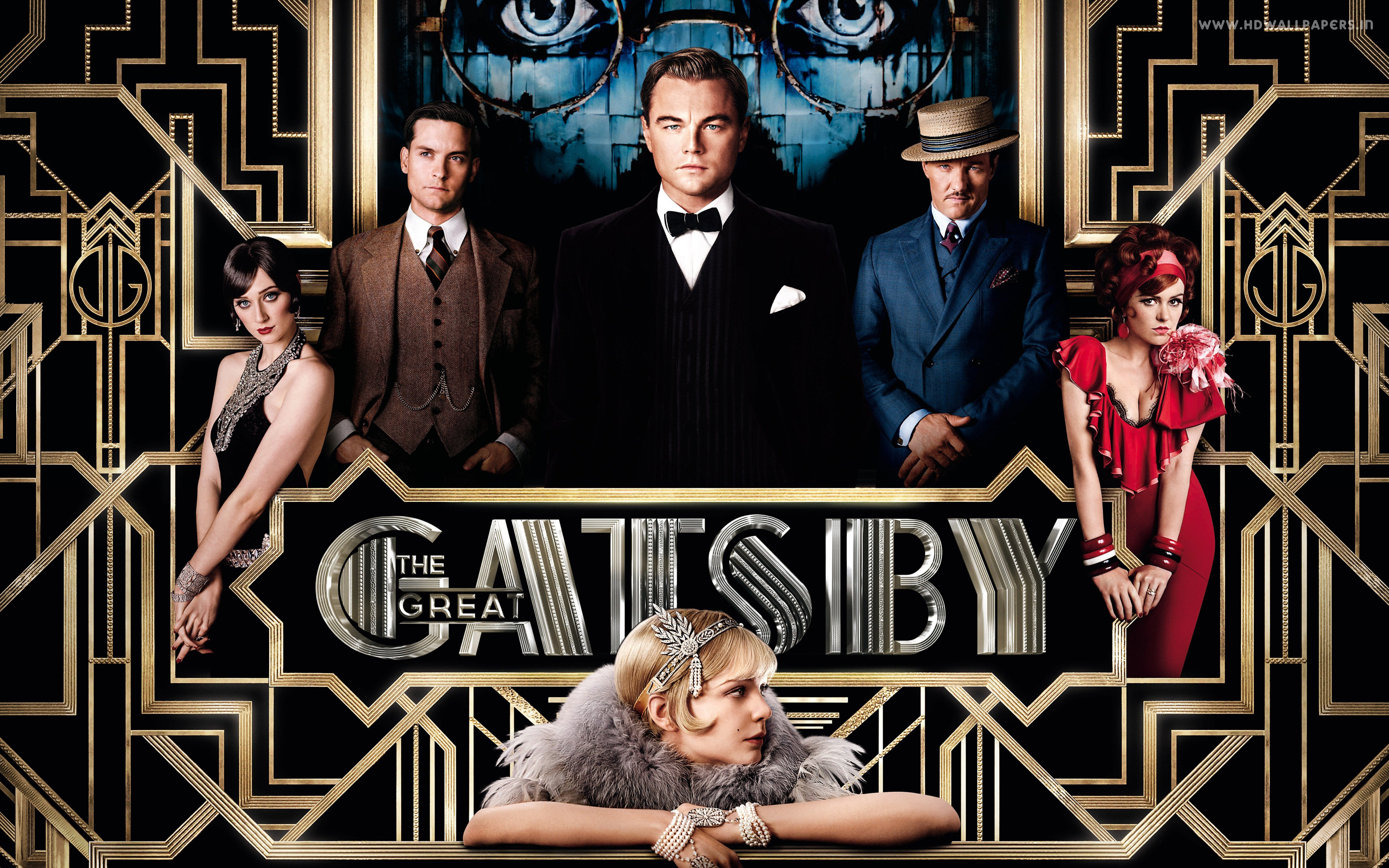
I love this shit!
A non-comic-book, non-franchise, non-sequel, non-YA-novel-adaptation, non-Johnny-Depp, non-Pixar CHARACTER PIECE comes out in the most competitive part of the year and cleans up 50 million at the box office. Now THAT is encouraging. It makes me believe in the purity of the screenplay again. True, it did have one of the biggest movie stars in the world and the script is an adaptation of a book. But The Great Gatsby is hardly what I’d call a surefire hit. It’s a character study from the 1920s!
Now believe it or not, I’ve read The Great Gatsby. I realized a few years back that there was an off chance I might run into a literary snob at a party who saw screenwriting as an inferior type of storytelling, and this literary jerk-off might corner me with the inquiry, “And what book have YOU read recently, Carson? Or do you even READ books?” In which case I could answer, “Oh, I actually recently read The Great Gatsby. I try to revisit a classic every month or so.” And then I’d triumphantly march off, leaving a bunch of startled partygoers in my wake, amazed at my unending literary know-how. This moment hasn’t happened yet. But it will. Oh trust me – it will.
Now for those of you who ignored your reading assignments in high school or don’t revisit the classics every month like I do, The Great Gatsby is about this guy named Nick Carraway, a writer turned bond trader who moves to Long Island. While Nick is a man of modest means, he seems to have tons of friends who are uproariously rich – like his cousin Daisy, Daisy’s bestie Jordan, and Daisy’s husband Tom (a polo star).
Coincidentally, Nick’s shack is located next to another rich man, Jay Gatsby. Though he holds the biggest parties in town, nobody seems to know who Gatsby is or what he looks like. Well, one day the mysterious Gatsby sends an invitation to Nick to join one of his parties, and despite senators and mayors and celebrities and sports stars attending, Gatsby only seems interested in speaking with Nick.
Fast-forward a bit and we find out that the reason Gatsby is so keen on gaining Nick’s friendship is his secret past with Nick’s cousin, Daisy. It appears the two fell in love many years ago when Gatsby was a poor nobody soldier. The two couldn’t be together because of his lack of wealth, though, so Gatsby went about amassing as much wealth as possible over the last half-decade (most of which came from underground bootlegging) and has come back bigger and richer than everyone in town, all in the hopes of snagging Daisy, a task that’s become tricky seeing as she’s now married. In the end, the lives of all of these rich (and not so rich) folks will collide (literally) in an explosive finale, one in which Daisy will decide who she wants to spend the rest of her life with, Tom or Gatsby.
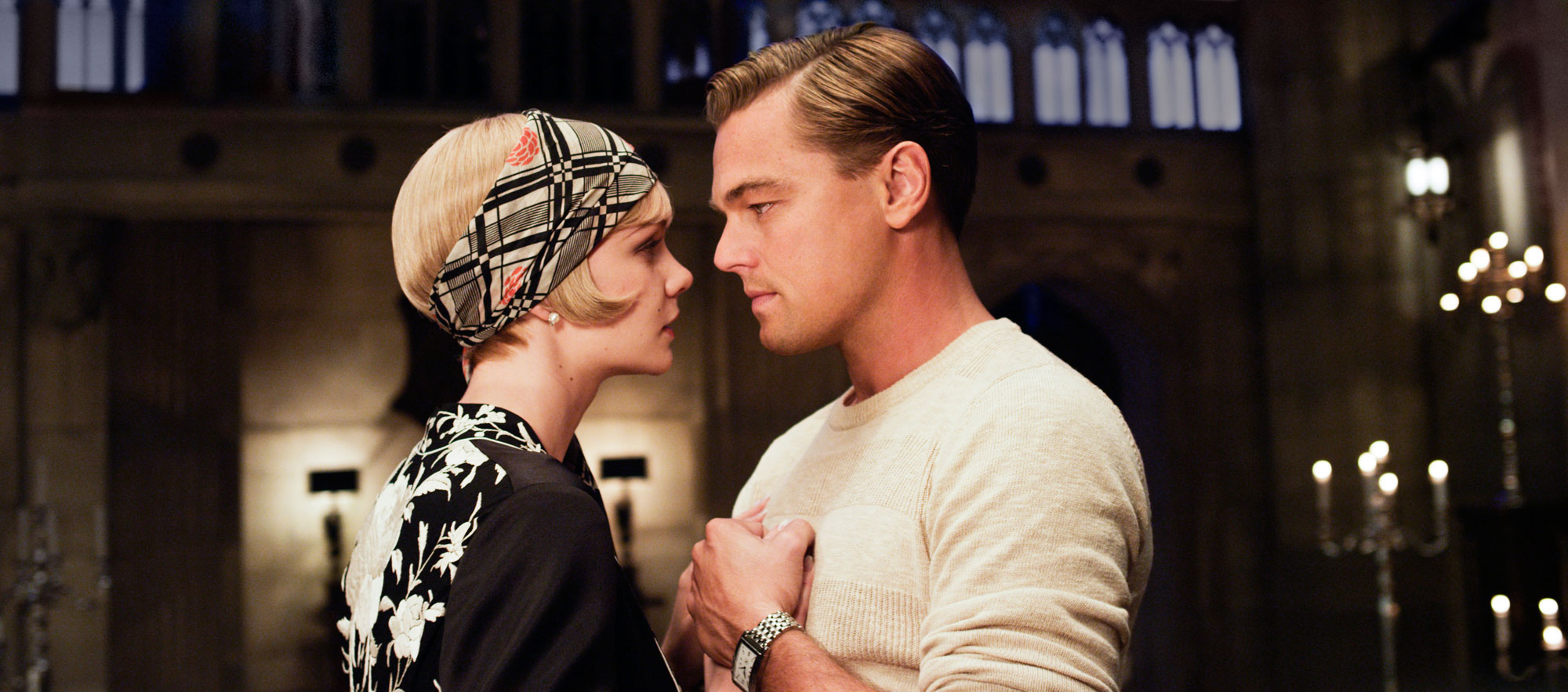

There is so much screenwriting shit to talk about here, I’m not sure where to begin. Let’s start with this: Gatsby should not have worked as a screen story. It does too many things that should sabotage a narrative, the most egregious of which is having its main character be the least interesting character in the movie. Yes, Nick Carraway doesn’t have jack going on. He’s meager, insular, reactive, boring. The man’s got nothing going on in his life of interest. No intriguing backstory or flaw to talk about. Yet he’s the one taking us through this tale. What’s the deal?
The deal is that he’s a “narrator,” a device that worked quite nicely in the 1925 literary world, but which has since lost its luster. Why? Because at some point someone realized that a narrator who has absolutely nothing to do with anything is probably not main character material. If Gatsby was being written today – ESPECIALLY as a spec – undoubtedly the story would be told through Gatsby’s eyes. This is the man enduring all the interesting shit in the movie. This is the man being active, making things happen. He has the most character development, the most layers. Think about it. He’s the most powerful man in New York, yet the most insecure person you’ll ever meet. He’s draped in the most expensive clothes and vehicles and houses you’ve ever seen, yet he’s unable to see himself as anything other than a penniless nobody. He projects a fantastic life, yet it’s all a lie. He has all this money, but it was all made illegally. It’s no wonder this book has lasted as long as it has. Gatsby is the definition of a fascinating character.
Here’s where the movie ran into trouble though, and I’m not sure if it was entirely the writing or the actors portraying the characters– almost everyone here wilts in the shadow of Gatsby. There’s Nick, of course, who’s only there to offer up exposition. There’s Tom Buchanan (Joel Edgerton) who couldn’t be more of a cliché asshole husband if he tried. And Carrie Mulligan….hmmm, I’m starting to think her time is up. There’s something very…forgettable about her. She has these beautiful sad eyes, which make you want to pick her up and carry her to safety. But she can’t seem to parlay those eyes into any kind of charismatic or memorable performance.
The character who had the most potential within the second string was Jordon, Daisy’s friend, who was always leading Nick around everywhere. However, Fitzgerald created this strange dynamic by which Nick was never allowed too deeply into these characters’ lives, preventing any sort of compelling relationships to occur. Even when the opportunity presented itself, Nick always seemed to pull away from it, as if to say, “Oh, wait, you want me to actually be IN the movie? No, thank you. I’m just going to watch from afar.” It was one giant tease watching him walk around with the flirty Jordan over and over again, only for NOTHING to happen. It almost convinced me that Nick was asexual.
For those interested in discussing structure, Gatsby does offer some talking points. Just the other day we were talking about the “mystery box.” Well, much of Gatsby is driven by the mystery box. The first mystery box is Gatsby himself! What does he look like? Why does he hide in his own parties? Who is this man?? People are constantly talking about him in hushed whispers. There are rumors, guesses, assumptions, all different, all in constant flux.
Once we meet Gatsby, there’s another mystery box (remember – always replace an answered mystery with a new mystery box!). Gatsby seems to want something. We just don’t know what. Eventually, it’s revealed to be Daisy. Finally, there’s one more mystery box, and that is: How did Gatsby accumulate his wealth? This is a big one because the man seems to be one of, if not the richest, men in New York. Everyone wants to know how he became this way.
After all the boxes are opened, the writers realize they need a final force to drive us to the end of the story. Instead of another mystery, however, they choose a goal – for Gatsby to steal Daisy away once and for all, but more specifically, for her to tell Tom that she never loved him. It’s sort of an awkward goal and I’m not quite sure if wanting someone to say a string of words is weighty enough to drive a climax, but it does end up working, as it leads to the most powerful scene in the movie, when Gatsby and Tom battle over Daisy in a steamed up New York apartment.
More importantly, from a screenwriting perspective, there’s something to learn here. You can drive your story forward with a series of mysteries, then insert a late arriving goal to take the story home. Not every movie is going to be Raiders of the Lost Ark, where the goal is established right away. A “late arriving goal” is perfectly fine, as long as you find other ways to keep your readers interested before we get there (in this case, using a series of mystery boxes).
It would behoove me not to mention the amazing use of 3-D here, the best use of it I’ve ever seen. Not so much from a technical standpoint, but from a motivation standpoint. All these other movies seem to use 3-D for the wrong reasons, as a way to make explosions seem more explosion-y. Here, it’s used to bring us back to the early 20th century. I felt like I was inside this world, however exaggerated it may have been. The costumes, the set design, the shots of the cities – it’s all immaculately put together and we’re pulled inside that world, almost to the point where we feel like we could touch it via three dimensions. Add a smashing soundtrack to the mix and this was one of the best pure cinema-going experiences I’ve had in a long time. My only complaint is an over-long second act (did this really need to be 140 minutes long??). But the pure spectacle on display almost made you forget about it.
Script
[ ] what the hell did I just read?
[ ] wasn’t for me
[x] worth the read
[ ] impressive
[ ] genius
Movie
[ ] what the hell did I just watch?
[ ] wasn’t for me
[xx] worth watching in the theater for sure!
[ ] impressive
[ ] genius
What I learned: A great reminder that many of the most fascinating characters in history are those steeped in irony. Gatsby is powerful but insecure. Successful but a crook. Irony often creates struggle inside a character, and struggle within one’s self is often the most interesting struggle for an audience to watch.
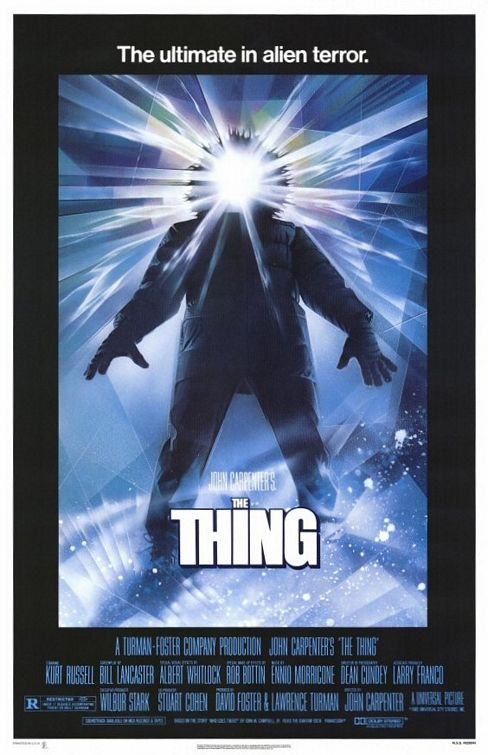
The Thing is probably one of the scariest movies ever made. People haven’t always seen it that way since it’s not set strictly in the horror genre. But man, I remember watching this film as a kid and being freaked the hell out. When the spider-legs grew out of that man’s decapitated head and began walking around? That image is still burned into my brain. The screenwriting situation behind “The Thing” is kinda interesting. Bill Lancaster, the writer, is Burt Lancaster’s son. His credits include only 2 other movies, “The Bad News Bears” (the original), and “The Bad News Bears Go To Japan.” He also wrote the Bad News Bears TV series. That was back in 1979. He didn’t write anything after that and died of a heart attack at the age of 49 in 1997. I’m baffled as to why Bill didn’t write anything else when he showed a clear mastery in two completely different genres. Was this his choice? Hollywood’s choice? Did the pressures of having a famous Hollywood father play into it? I’d love to know more. But since I don’t want to depress the hell out of all of you, I’m going to break down The Thing.
1) Use Clip-Writing to spice up action sequences – Clip-Writing is when you write in clips, highlighting primary visual queues. Clip-Writing can be very effective in action scenes as it helps the reader focus on the centerpieces of the battle, fight, or chase. We see it in The Thing when a Scandinavian crew has followed an infected dog into an American base.
CLOSE ON A .357 MAGNUM
As it efficiently breaks through a windowpane and into the cold. A steady hand grips it firmly.
THE SCANDINAVIAN
Getting closer. Kablam! Suddenly, his head jerks back. He falls to his knees and then face down into the snow.
NORRIS AND BENNINGS
Stare blankly, but relievedly at the fallen man. The dog whimpers in pain.
2) If Dialogue isn’t your strong suit, look to show more than tell – There’s actually some good news if you’re not a great dialogue writer. It means you’ll be forced to SHOW rather than TELL us things, which is really what you should be doing anyway. I noticed from reading and watching “The Thing” that a lot of the dialogue from the script was cut. Carpenter chose instead to focus on the visuals and the actions. For example, there was a scene early in the script where they’re walking to the helicopter and there’s a lot of explanation going on of what they’re doing. Carpenter cut a lot of that out, focusing instead on them simply getting in the helicopter and leaving. We know what’s going on. We don’t need a big long talky scene to explain it.
3) Only have your characters speak if they have something to say – This is an extension of the previous tip, and an important one. Your characters should be talking because they have something to say, not because you (the writer) have something to say. You might want to write a big monologue about how your character lost his sister or your opinion on the earth’s eroding ecosystem. That’s great. But would YOUR CHARACTER say that? I don’t think enough writers really ask that question. There’s nothing worse than reading a bunch of words coming out of a character’s mouth that you know are only there because the writer wanted to include them.
4) ALWAYS WORKS “There’s something else you should see” – I don’t care how bad of a movie or script it is, variations of this line ALWAYS work: “There’s something I need to show you.” You will have the audience in the palm of your hand until you show them what that character is referring to. With The Thing, that line brings us to a giant mutated gnarled mass of a body. If you can milk the time after the statement until the actual reveal, even better, as our anticipation will grow.
5) MID-POINT SHIFT ALERT – The Thing has a great midpoint shift. The first half of the script is about the discovery of this alien organism invading the base. Remember, a good midpoint shift ups the stakes. So the shift here is when they learn that any one of them could be the alien entity. It’s no coincidence that this is when The Thing really gets good. A great mid-point shift will do that.
6) Carefully plot how you reveal information – Always be aware of what order you reveal your information in and how that affects the reader. One omission or one addition can completely change the way the next 30 pages reads. For example, here, the movie starts with an alien ship crashing. This gives us, the audience, superior knowledge over the characters. We know they’re dealing with an alien. This means we’re waiting for them to catch up. Now imagine had Lancaster NOT included this opening shot. Then, everything that happens is just as much a mystery to us as it is the characters. I don’t want to rewrite a classic, but the opening act may have been a little more exciting had we not received the spaceship information. We’d be equal amounts as baffled and curious as the characters.
7) SHOW DON’T TELL ARLERT – In the script, the characters have about a page and a half dialogue scene talking about how if the alien makes it to civilization, it could destroy the entire world. It’s not a bad scene. But they replaced it in the movie with a simple shot – Blair staring grimly at a computer chart that states: If the organism reaches one of the other continents, the entire world population will be contaminated within 27,000 hours.
8) Foreplays not Climaxes (Aka Don’t reveal all your fun stuff right away) – I see this all the time with amateur writers. They’re so excited about the cool parts of their script that they can’t wait to write them! So when it’s time, they drop all their reveals on you simultaneously, like a giddy kid who’s been waiting to tell you about his trip to Six Flags all day. For example, the Americans find the Norwegian crew’s video tapes from their destroyed camp and start watching them to figure out what happened. An amateur writer might have slammed us with all the crazy reveals immediately (alien ship, alien body). But Lancaster takes his time with it, showing the Norwegians having fun on the tapes, basically being boring. It isn’t until a handful of scenes pass that we see the Norwegians blow up the ice and discover the alien ship. If you throw all your climaxes at us at once, we get bored. Give us some foreplays beforehand.
9) Lack of Trust = Great Drama! – Once characters stop trusting each other, the drama in your story is upped ten-fold. You now have characters who are guarded, suspicious, not saying what they mean, probing. This ESPECIALLY helps dialogue, since it’ll create a lot of subtext. Whether it’s because they think another person is secretly a shape-shifting alien or because they think their husband cheated on them with their best friend, it’s always good to look for situations where characters don’t trust one another.
10) Use Cost/Value Ratio to determine whether a scene is necessary – There was an entire cut sequence in The Thing where the dogs escaped the compound and MacReady went after them with a snowmobile. It was a nice scene but it wasn’t exactly necessary. Producers HATE cutting these sequences after they’ve been shot because it’s cost them millions of dollars. Which is why they try to cut them at the script stage. This is where you can benefit from pretending you’re a producer. Simply ask yourself, “Is the VALUE of this sequence worth the COST of what it would take to shoot?” But Carson, you say, why should I care about the budget? I’m not the director or producer. That’s not the point. The point is, you’ll start to see what is and isn’t necessary for your script. If you say, “Hmm, would I really pay 5 million bucks to shoot this chase scene that doesn’t even need to happen?” you’ll probably get rid of it, and your script will be tighter for it.
These are 10 tips from the movie “The Thing.” To get 500 more tips from movies as varied as “Aliens,” “When Harry Met Sally,” and “The Hangover,” check out my book, Scriptshadow Secrets, on Amazon!

So over the last few weeks, you guys have seen me bring a certain term up time and time again: CLARITY. Or, more specifically, lack there of. Clarity isn’t as sexy to talk about as character arcs or the first act turn, but unclear writing is a way-too-common problem for beginners and low intermediates, particularly because they’re not aware it’s a problem in the first place. Tell them you didn’t understand something, and they think the onus is on you. They believe that if it makes sense in their heads, it should make sense in yours.
The problem is that what works inside your gray matter doesn’t always work on the page. For example, say you’re writing about a movie that jumps back and forth between Present Day and the Old West. As the writer, you’ve been prepping this dual-time story forever. So by the time you start, everything about it makes complete sense to you. Your first scene, then, follows a detective walking into a murder scene. After the scene is over, you cut to a whorehouse in the Old West. Now to you, this cut makes perfect sense. To a reader being introduced to the story for the first time, however, it’s confusing as hell. How did we get from a murder scene to a 19th century brothel??? The solution to orientating the reader is quite simple. Just insert a title card that says “1878 – The Old West.” Now the cut reads as structured and intentional, as opposed to random and bizarre. It seems quite obvious but beginner writers often don’t know to do this.
And that’s the problem. If a script contains as little as three or four confusing moments in the first act, the script is shot. It gets too confusing for the reader to follow along. I mean sure, we have a vague sense of what’s going on, but the particulars are hazy, and the particulars are what make a script a script. Now the more I started thinking about this problem, the more I realized there weren’t any articles out there specifically addressing it. Which seemed strange to me because it’s an issue that comes up three or four scripts a week in my reading. Hence, why I decided to write today’s post. I want to give writers the tools to BE CLEAR in their writing. So here are some guidelines to follow that should keep your screenplay easy to understand.
A CLEAR GOAL – One of the simplest ways to write a clear story is to set up a big goal for your main character in the first act. In Trouble With The Curve, we establish that Eastwood’s character must correctly scout a minor-league player or lose his job. In yesterday’s script, The Almighty, I was never clear on what the ultimate goal was. Stop Lucifer maybe? But we had to get through a lot of gobbledy-gook to get to that point, and even then, I wasn’t sure if that was the ultimate goal. So, as a beginner, instead of having a bunch of changing or shifting goals during your story, keep it simple. Your hero should be going after one thing (Indiana Jones goes after the Ark). Following this one rule is going to take care of most of your clarity problems.
GET RID OF UNIMPORTANT SUBPLOTS – Lots of writers will add subplots that feel completely separate from the main storyline. So instead of enjoying them, readers spend the majority of the time trying to figure out what they’re doing there in the first place. This detracts from the primary story (the main goal), making the story difficult to follow. Subplots are good. Just make sure they’re plot related.
GET RID OF UNIMPORTANT CHARACTERS – I can’t tell you how many times I stop reading a script to ask the question, “Who is this person???” Characters that have only a minimal effect on the story should be ditched or combined with other characters. The more characters there are in a script, the harder it is for the reader to keep track of everyone, and the more confused they get. They’ll start mixing people up, forgetting who’s aligned with who, and just outright forget characters. This is a big reason for reader confusion.
REMINDERS – Depending on how complicated your story is, you may need to remind your reader every once in awhile what the goal is. Even if your story isn’t complicated, you’d be surprised at how quickly a reader can lose track of why we’re on this journey. In The Hangover, Bradley Cooper’s character is constantly reminding us that they need to find Doug. For simple stories, you may only need to remind the audience twice. For complex ones, you may need to remind them as many as six times. Feel out the complexity of your story and determine the number from there. But a good reminder of what we’re doing and why is always helpful to the reader.
STAY AWAY FROM FLASHBACKS, FLASHFORWARDS AND DREAM SEQUENCES – In the hands of beginners, these devices are script suicide. I’m not even sure what it is, but when new writers attempt them, they almost always occur at random times and result in total confusion. I just read a script two weeks ago that started with a woman getting married. The very next scene had that same girl walking into a pharmacy and flirting with a different guy. Questions: Why was our protagonist going to a pharmacy right after her wedding? And why was she trying to pick up a guy hours after getting married? Eventually I figured out that this was a flashback. But how was I supposed to know??? This kind of thing happens ALL THE TIME, even with more advanced writers. So the best solution is to just keep your story in the present. Use these devices if they’re necessary for telling your story (Eternal Sunshine Of The Spotless Mind). But make sure that they’re properly notated and that there really is no other way to do it.
KEEP YOUR WRITING SIMPLE – I was just discussing this with a writer the other day. He’d written this huge lumbering opus and peppered every paragraph with 20 adjectives and 90% more description than was needed. Even when I did manage to understand what was being said, it felt like I’d run a marathon through quicksand. After awhile, it became so laborious to read through even the most basic scenes, that my mind tired out, and it became difficult to follow what was going on. Therefore, it wasn’t that the information wasn’t on the page. It was that we had to dig through a pile of words to get there. Do that too many times and the reader gives up. And when that happens, your script becomes unclear by reason of exhaustion.
MAKE SURE EACH SCENE HAS A CLEAR GOAL – Believe it or not, there are tons of writers out there who can’t even write a clear scene. ONE CLEAR SCENE. And it’s usually because they don’t have a gameplan. They just sort of write what comes to mind. So make sure going into a scene that you’re doing four things. First, make sure you have a goal for the scene. For example, you want your two leads to meet. Second, make sure the scene moves the story forward. In other words, the scene should be required to get your protagonist (either directly or indirectly) closer to his ultimate goal. By “indirectly” I mean, yes, Indiana Jones wants the Ark, but the scene where he goes to Marion is required because she has a piece of the puzzle required to find the Ark. If she doesn’t have that piece, this scene isn’t moving the story forward, and therefore isn’t needed. Third and fourth, make sure both characters in the scene have a goal. So in the Marion Intro scene, Indiana’s goal is to get that puzzle piece, and Marion’s goal is to keep it from him. This basic setup should ensure that every scene you write makes sense.
IF YOU DON’T TELL US, WE WON’T KNOW – In your mind, Indiana might be standing right next to Marion, but if you don’t tell us, how are we supposed to know? In your mind, the bar might be full of people. But if you don’t tell us, we might assume it’s empty. In your mind, the bad guys are in the room adjacent to our hero, ready to strike. But if you don’t convey that, we may assume they’re in a room all the way across town. Writers leaving out basic information is one of the quickest ways to scene confusion. For example, I just read a script where two friends were sharing secrets about a guy named “Joe.” But Joe was right there in the room next to them! I was so confused. How could they secretly be talking about a guy who was right there??? The writer later explained that Joe was actually on the other side of the room, so he couldn’t hear them. Well how the hell was I supposed to know that? Again, it’s a matter of assumption with a lot of beginners. They assume things are obvious. But the reality is, if they don’t tell the reader, how the heck is the reader supposed to know?
Now in the end, sound storytelling principles have the biggest effect on clarity: A strong goal. A hero we want to root for. An interesting story with exciting developments. Escalating stakes. If you do that, you’ll keep the reader’s interest. If you don’t, the reader will get bored and start checking out, missing things because they’re just not into your story anymore, and hence start getting confused. And one last thing. When you’re finished, give your script to a friend to read and just ask them if it all makes sense. Drill them on parts of it. Ask them questions. Make sure it’s all clear. Then, and only then, should you unleash your screenplay into the world.
A spoon full of sugar wasn’t needed to make today’s screenplay go down. It looks like we have a new entry into the Top 25!
Genre: Drama
Premise: The story of how Walt Disney got the rights to Mary Poppins.
About: This script finished on last year’s Black List with 13 votes, so somewhere in the middle of the pack. It’s been getting a lot of heat lately because Tom Hanks has been circling the role of Walt Disney. And who couldn’t see that working? Kelly Marcel created the series Terra Nova. And she was also the script editor on the film “Bronson.” I have to admit, though, that I have no idea what a script editor is.
Writer: Kelly Marcel
Details: 109 pages (This is an early draft of the script. The situations, characters, and plot may change significantly by the time the film is released. This is not a definitive statement about the project, but rather an analysis of this unique draft as it pertains to the craft of screenwriting).

I’m about to drop a barrel of honesty on you guys. I wasn’t looking forward to this script. It had all the makings of a biopic. Dull play-by-play of successful folks facing “adversity” in their journey towards immortality. Awww, times were tough for you before you became a billionaire and achieved international fame and success? I’m sorry. However did you cope?
I only opened it because I thought Tom Hanks was perfect casting for Walt Disney. Wanted to see what he’d gotten all excited about.
P.L Travers, who has about six names in this script (besides P.L., she’s also Ginty, Pamela, Pam and I’m pretty sure a few others. What is this, a preview of Friday’s amateur entry, “We, Myself and I?”), is the creator of the Mary Poppins books back in the U.K. The books have been popular enough to give her a financially stable career, but the reality is, it’s been 20 years since they came out, and the money is running out. If Pamela doesn’t do something soon, she’s gonna be camping outside of Big Ben with a big cup of change.
So you’d think that the most popular movie maker in the world desperately wanting to turn her books into a movie would be “a spoonful of sugar” to her ears. Alas it is not. In fact, Walt Disney has been trying to secure the rights to Mary Poppins for 20 years now. And Pamela has never thought twice about it. The answer’s always been “no thank you.” Without the “thank you.” But times they are a changin’. Pamela needs a spoonful of money in her bank account. So she decides to go to America to hear Walt out.
Now Pamela is not a happy person. To give you an example, when she’s having trouble stuffing her baggage into the overhead bin on the plane, a woman with a baby kindly offers to move her own bag so Pamela can get situated. Once Pamela sits down, she turns to the helpful woman and says, “Is your baby going to be loud during the flight?” What a charmer.
Once Pamela gets to Disneyland, she’s greeted by her writing team, who’ve already written the script she must now approve. But Pamela isn’t interested in them. She came here to meet Walt Disney and that’s the only person she’s going to give any respect to.
When the two do meet, Walt Disney is as advertised. He’s a big kid, full of ideas and energy, optimistic to the core. In other words, the exact opposite of Pamela. Pamela quickly reminds him that she has script approval and if any of her demands are not met, she will cancel the movie immediately. Walt isn’t used to people making demands, but since this is the last leg of a race he’s been running for 20 years, he assures her that they’ll do everything they can to accommodate her.
One of my favorite moments in the script is when Pamela sits down to go over the script with the writers. She starts at the top of the first page: “Scene one. Exterior. 17 Cherry Tree Lane, London. Day.” She pauses. “Yes, that’s good. That can stay.” The writer looks at her incredulously, “That’s just the scene heading!” lol. Boy do I love screenplay humor!
As the script goes on, Pamela makes things as difficult as humanly possible for everybody involved in the project. For example, at one point she decides she doesn’t like the color red. So she makes a demand that there can be no red in the movie. Everybody is rightfully flabbergasted by this demand, but Walt Disney knows that he has no choice but to give her what she wants. So no red in Mary Poppins!
Probably the most daring decision Marcel made was to include flashbacks to Pamela’s life as a child. You guys know how I feel about flashbacks. They’re script killers. But if that wasn’t daring enough, Marcel decided to explore an alcoholic father in these flashbacks. The drunk father trope?? Uh-oh. A double dose of script killer!
And yet it’s handled beautifully! The best I’ve ever seen of anyone handling an alcoholic father. I’ll get into this more later but we learn that her issues with her father are the main reason she’s held onto Mary Poppins for so long.
So what did I think of Saving Mr. Banks? I loved it! Almost every single choice was perfect. I don’t even know where to begin and will probably start rambling but I’m very passionate about this screenplay so I’m just gonna wing it.
It all starts with an interesting protagonist. Pamela isn’t the most likable person in the world, but she’s intriguing. She has a huge flaw – that she’s untrusting of others. I’m still not sure why we’re occasionally attracted to characters like this (big meanies) but I think the fact that we all know people like Pamela helps us find her relatable. And in a way, we feel that if Pamela can overcome her flaw, that those friends of ours can overcome their flaws too! Or maybe we even see a bit of Pamela in ourselves. So we think WE can change.
The script also does a bang-up supercalfragilistamakespeealadocious job with conflict (come on, you knew I had to bust it out). Whenever you write a screenplay, you want to establish some sort of central conflict between two main characters. If you do that, it’s hard to make your story boring.
In this case, it’s Pamela and Walt. He’s on one side, desperately wanting to make this movie, and she’s on the other, intent on sabotaging any chance of the film being made. Even though she’s here to work with Walt, it’s clear that she has no intention of doing so. She will keep pushing and pushing and pushing until Walt gives up. Because the divide between the two wants is so great, the conflict is supercharged. And that’s what you want in a screenplay – supercharged conflict! Weak conflict rarely gets you anywhere.
But here’s the real thing that surprised me about Banks – the flashbacks. I thought for sure Marcel was digging her own grave when she did this, particularly when she wanted to focus on the alcoholic father. But I’ll tell you why this worked where so many other alcoholic father storylines die a quick cliché death. Are you ready?
Because she got specific.
We didn’t get the standard scenes of daddy coming home and beating mommy up then yelling at the daughter. Instead, we took a serious look at alcoholism. Her father, who’s the most loving man in the world, simply can’t stop drinking. No matter how hard he tries, he has no power against the disease. So even though he loves his daughter and his family and knows they’re falling apart around him, he keeps drinking. And it gets so bad that he’s eventually put on bed rest. Every day, then, Pamela has to wake up and see her father in this bed, weak, crippled, and still pining for his next drink. It was so detailed, so specific, so UNLIKE what we’ve seen before in these kinds of stories, that it resonated immensely.
And what’s great about this backstory is that it’s the reason Pamela created Mary Poppins. She needed a “Mary Poppins” to come in and save her when her father couldn’t. That’s why she didn’t want to give this book away. She was afraid of Walt Disney tainting and ruining this person who allowed her to make it through childhood.
I cannot stress how difficult it is to pull something like this off. I see so many writers try it and so many of them fail because you have to walk this thin line of not being too cliché and not being too melodramatic, yet still building those moments that have real emotion and connection. You have to take those chances of putting a little girl by her dying father’s bedside and write it in such a way that it doesn’t feel melodramatic or dishonest. Not easy!!!
But the script didn’t stop there. Another one of my favorite parts was Ralph the driver – who’s been hired to drive Pamela around while she’s in town. He couldn’t be more different from Pamela. He wakes up, excited for every day. He always sees the positive in everything. And he’s absolutely infatuated with the weather, particularly when it’s a sunny day outside. Of course Pamela hates him for it but he’s so damn earnest that she has no choice but to warm up to him. There’s a great moment near the end where we learn why Ralph is so obsessed with the weather, and if it doesn’t have you in tears, then I’m afraid you don’t have tear-ducts my friend.
And then there’s the monologue. When I say “the monologue,” I mean the best ending monologue I’ve maybe ever read in a screenplay. I’m going to get into a little bit of a spoiler here so you might want to turn around. But basically, Pamela leaves Disney World at the last second, deciding not to give Mary Poppins to Walt. When she gets home, she’s quickly disturbed by a knock on the door and when she answers it, there’s Walt Disney.
Walt then gives the most heartfelt convincing thoughtful meaningful plea as to why Pamela should give him the rights to the book. It’s so moving and so TRUE, that it grips your heart and won’t let go. I’ve seen so many of these ending monologues and they’re usually just a bunch of words that don’t matter. But this monologue/plea is so authentic and true and honest that *I* wanted to give the rights to *my* book up to Walt Disney. It was just such a great final moment for this character and without question, this reason Tom Hanks signed on.
I loved this script!
[ ] Wait for the rewrite
[ ] wasn’t for me
[ ] worth the read
[x] impressive (Top 25!)
[ ] genius
What I learned: Whenever you have to write a big moment in your screenplay where one character has to convince another character of something, such as the ending monologue in Saving Mr. Banks, you want to step out of the fictional world, and bring the argument into the real world. Write the argument as if you’re trying to convince A REAL PERSON. And not just any real person – a person who has already made up their mind to say no to you. Because if you try to write your argument to a fictional person, it will be fictionally convincing. You know you don’t have to be that persuasive cause all you have to do is write “Sounds good to me” from the other character after it’s over. Push harder. Make that argument REAL WORLD convincing.