
Search Results for: F word
Get Your Script Reviewed On Scriptshadow!: To submit your script for an Amateur Review, send in a PDF of your script, along with the title, genre, logline, and finally, something interesting about yourself and/or your script that you’d like us to post along with the script if reviewed. Use my submission address please: Carsonreeves3@gmail.com. Remember that your script will be posted. If you’re nervous about the effects of a bad review, feel free to use an alias name and/or title. It’s a good idea to resubmit every couple of weeks so your submission stays near the top.
Genre: Action Thriller
Premise (from writer): An amnesiac security officer must solve the mystery of the night he and his daughter went missing in order to find her before the rogue network of sophisticated criminals tracking him.
Why You Should Read (from writer): What I did here is set out to write a script that used the gothic surroundings of Prague as a noir character. While the thematic elements of both Bourne & Taken somewhat inspired what I did here, this is designed for an A-list actor to sink their teeth into because it’s largely the story of one man, who remains the focal point throughout, and his struggle to get his memory back and find his daughter. It’s not conventional in its approach and I’ve been told the ending is wickedly un-Hollywood. Because it’s not exactly conventional, I thought this may be a good discussion piece for the variety of writers on your site.
Writer: Nolan Treaty
Details: 107 pages
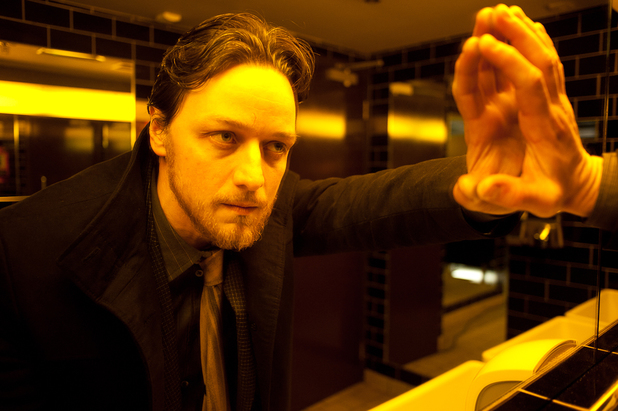 James McAvoy for Sam?
The Followed barely won out an evenly matched Amateur Offerings Weekend. The readers continue to lambast the fact that none of the scripts sound exciting or original. Hey, give these guys a break. It’s hard to come up with a flashy exciting idea. If it wasn’t, everybody would be a millionaire.
But at the same time, I understand their frustration. These loglines do feel a little dull. And while it’s true that it ultimately comes down to execution, it’s much harder to execute the 20 major elements that make up a great screenplay than it is to brainstorm one cool idea.
With that said, the big movie coming out this weekend is John Wick, about as straightforward an action flick as you can get. Let’s hope that taking this same approach turns out well for Nolan Treaty.
30-something Sam has amnesia. And if that’s not bad enough, he’s got some guy named Max calling him every day telling him to get the job done. What job? Sam has to neutralize some target before that target “cripples the system.” Seems a lot to take in for someone who can barely remember his own name.
But Sam soldiers on, listening to this random Max fellow because, we assume, he believes it’s his job to. A few pages later and we learn there’s a big economic summit in Prague and that the SEC director was murdered a few days ago. Now, apparently, whoever murdered him is planning to murder again. That’s what Sam’s trying to prevent. Or so we’re led to believe.
When Sam heads to the hotel where the summit’s being held, he’s stopped by someone named Jakub, who informs Sam that he used to work here! And that the cops are looking for him! Could Sam have been involved in the murder somehow? Jakub assures Sam that the police only want to talk to him, and that he should do so unless he wants to get into more trouble.
Sam also starts remembering something else. He has a daughter! Alison. And she’s gone missing since the big murder. So Sam shifts his focus from taking out the target to looking for his daughter. As all this is going on, Sam keeps getting little flashback memories of his life before the amnesia, which puts all this new information he’s been given into question! When it’s all said and done, Sam will have to trust his own instincts if he wants to save his daughter and the summit.
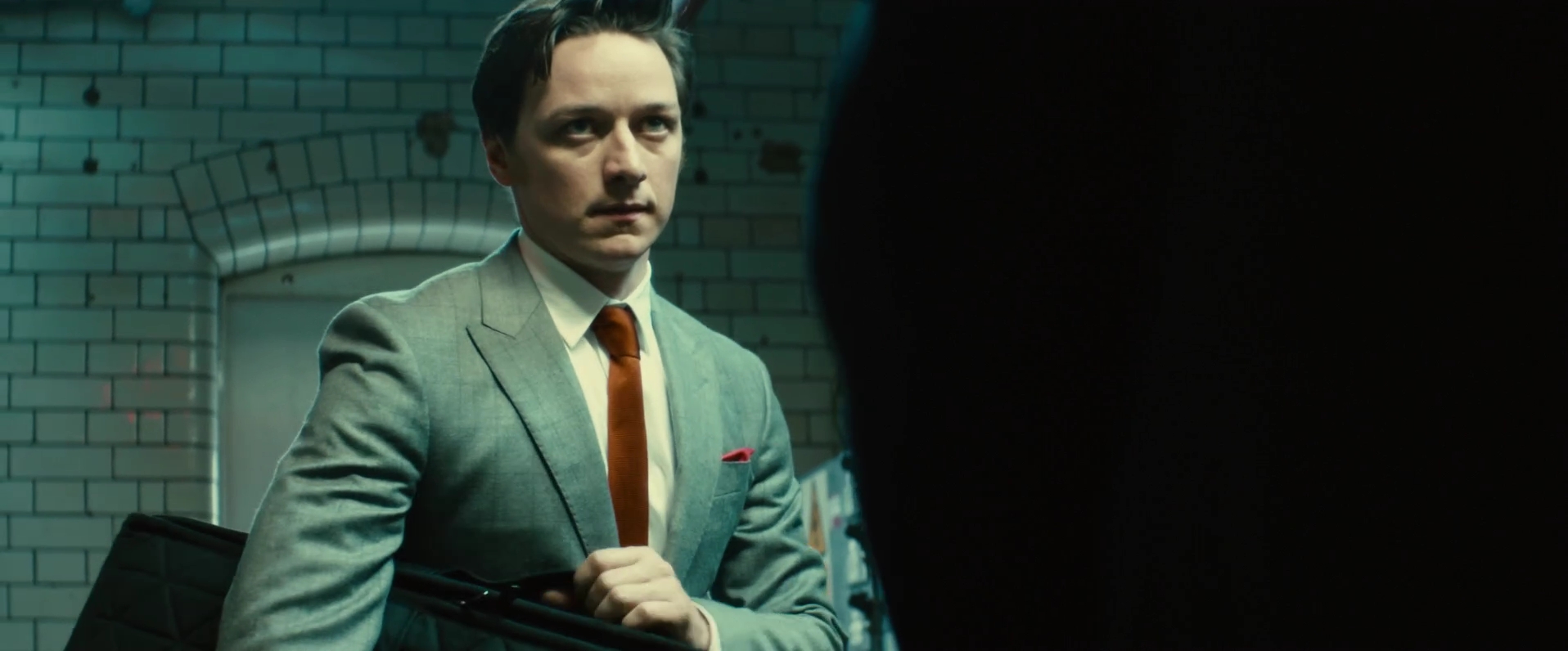
I was kinda flabbergasted after reading this one. It certainly felt and read like a thriller. It was sparse. There was plenty of mystery. And yet I never once found myself engaged. I always felt like I was standing outside of the story instead of in the middle of it. Figuring out the exact reasons for this proved challenging at first. But I eventually discovered five major problems that plagued the story.
RUSHED – The writing felt rushed to me, as if the writer had watched Taken and The Bourne Identity back-to-back, then wrote this in the next 48 hours. The very thing that makes it read like a thriller (the sparse breezy writing) also hurts it. There’s a lack of specificity. There are so many variables without a constant in sight. So the story felt floaty. Mystery men giving directions. Economic Summits whose existence were never satisfactorily explained. Missing daughter storylines arriving out of nowhere, as if they were thought up on the fly. I apologize to Nolan if this took him a long time to write. But it sure felt to me like it was written quickly.
FAMILIAR – Rushed and familiar usually go hand-in-hand. When you write quickly, you tend to write obviously, which amounts to a lot of clichés and familiar elements. There’s a moment where Sam is attacked by a cop and he does some super cool beat-down move with no idea how he did it. Isn’t that exact same scene from The Bourne Identity?
VAGUE – I’m not sure I ever understood what was going on here. Every plot point was so vague and sparsely explained that instead of gaining clarity as the script went on, I became more confused. I think if Nolan would’ve solidified A FEW PLOT POINTS early, this could’ve been fixed. Look at the screenplay for Unknown White Male. In that script, our main character and his wife check into a hotel together. When his wife goes missing and he finds her at the Gala later, she claims to have no idea who he is. Since we started on solid ground (we knew they were married), this plot development gives us a sensical objective (find out why my wife doesn’t recognize me). In The Followed, we were never on solid ground, so every plot development that came at us just made things more confusing. Starting on shaky ground can work sometimes, as it did in Source Code. But Source Code did a much better job giving us clear answers as the screenplay went on. The Followed appears set on doing the opposite.
GOALS CHANGE – At first the script is about finding out who’s trying to kill this second SEC guy. But then, halfway through, this daughter character enters the picture, and we go through a murky dual-goal period where Sam’s trying to find the target AND his daughter, two seemingly disconnected objectives. Eventually, he stops searching for the target altogether and simply focuses on his daughter, which, quite frankly, wasn’t a very interesting storyline. I never knew the daughter in the first place and therefore didn’t care if she was safe or not.
PLOT NEVER EVOLVED – I remember reading a scene around page 75 with a character sneaking around in a hotel. I then remembered that I’d read a scene around page 10 where a character was sneaking around in a hotel. I paused, thought about it, and realized there had probably been a dozen scenes up to this point of characters sneaking around in hotels. This was a major reason I didn’t enjoy the story. It never evolved. Characters were always doing some variation of the same thing.
When I really look at The Followed, I think the biggest problem is that there’s no intricacy in the plotting. The reveals weren’t solid or exciting enough (a mysterious outfit is taking out several members of the SEC so they can get their own guys in there). And there were too many things left up to question (how does this guy know how to take down police officers? If you lost your memory, why are you taking orders from a random person on the phone?). It was one of those scripts that felt more like a dream than a carefully plotted thriller where every beat connects seamlessly with one another.
I didn’t think The Followed was bad. Just uneventful. It’s the kind of script mistake a lot of intermediates make. They have the skill to write up something that looks and acts like a script. But they don’t put in the hard work to make the story unique and stand out. Unfortunately, The Followed wasn’t for me.
Screenplay link: The Followed
[ ] what the hell did I just read?
[x] wasn’t for me
[ ] worth the read
[ ] impressive
[ ] genius
What I learned: Watch out for word gunk. These are unnecessary words (or groups of words) that gum up sentences and make them difficult to read. Here’s an early sentence in The Followed: “A nervous quality to a more than average all-American guy who should be anything but.” What?? There’s way too much word gunk in here: “…to a more than average…” “…who should be anything but…” This is the epitome of rushed writing. Take a step back and look for ways to simplify this sentence. “Despite his all-American disposition, there’s a nervous quality to Sam.” Simple and easy to read.
 More dialogue!
All this week, I’ll be putting one of YOUR dialogue scenes up against a pro’s. My job, and your job as readers of Scriptshadow, is to figure out why the dialogue in the pro scenes works better. The ultimate goal, this week, is to learn as much about dialogue as we can. It’s such a tricky skill to master and hopefully these exercises can help demystify it. Here’s yesterday’s “You vs. Pro” if you haven’t read it yet.
In this opening scene, which takes place 50 years in the future, SAM FREEMAN, a “memory diver,” is preparing to go inside the brain of a comatose soldier to try and save him. The soldier’s father, ADMIRAL BLOCK, and Sam’s boss at the hospital, TRENT HARKNESS, head into the operating theater with him.
SAM, admiral BLOCK, and HARKNESS enter the operating theater. Block’s son HARRISON is already hooked up to the Rig.
SAM: Listen, Admiral… I think, given your son’s prognosis, speaking as his therapist… I don’t want you to get your hopes up, ok.
BLOCK: What the hell are you saying? He’s my son!
HARKNESS: No no no, what Dr. Freeman is saying, sir, with this kind of procedure-
SAM: What I’m saying is that maybe it’s time to let go. Do the decent thing, let your kid fade out. Lord knows he could use some peace.
Harkness, mouth agape. Block, turning fire engine red.
BLOCK: You may want to think carefully about the next words that are going to come out of your mouth.
SAM: Or maybe you want to think about what you’re signing your son up for. The years of therapy. The pharmacy’s worth of drugs to get him even remotely close to stable. The drain he’ll be on his family, financially and emotionally. He’ll know. Oh, he’ll know. And he’ll hate every minute of it.
Harkness is turning white as a sheet. Complete shock.
SAM (CONT’D): That’s what you want for him, I won’t stop you. But maybe you should think on whether death isn’t kinder than your selfish need to prolong a life that’s already over.
Block, teeth bared, GRABS Sam. PUSHES him against the wall.
BLOCK: You…
Harkness snaps out of it. Frantically calls for some orderlies to pry Block off Sam.
SAM: Go ahead, get it out. Let loose. Come on. Do it.
Block, muscles taut with fury. We realize Sam genuinely wants Block to beat the shit out of him. And after a couple of tense seconds, Block sees it, too.
BLOCK: You’d like that, wouldn’t you?
He releases his grip. The ORDERLIES burst in, ready to regulate. Block holds up his hands; the orderlies hang back.
BLOCK (CONT’D): You don’t know my son. You don’t know shit. (to the orderlies)
It’s okay, I’m good.
HARKNESS: I’m terribly sorry, Admiral. I assure you, Dr. Freeman will-
But Block’s not paying attention to Harkness. He stands next to his son, strapped into the Rig.
BLOCK: When he was seven, Harrison brought home a stray dog. Mr. Tails. Ugly mutt. Kid loved that damn thing.
Block runs a hand through his comatose son’s hair.
BLOCK (CONT’D): One day, they’re out playing, dog gets hit by a car. I see the animal’s in pain, dying. Try to explain to Harrison what’s the humane thing to do.
Block fixes Sam with a hard stare.
BLOCK (CONT’D): Wouldn’t let me near the dog. Kept kicking me. Punching. Kid’s seven, and he’s putting up one hell of a fight. Knew he’d get his ass whooped, too. Didn’t care. Just needed me to take his damn dog to the vet. Wouldn’t back down.
There’s a stillness in the room, punctuated only by the sound of biomonitors beeping in the background.
BLOCK (CONT’D): I know my son. I know what he’d want me to do. If there’s even the smallest chance…
A silent understanding passes between the two men. Finally, Sam nods.
SAM: I’m sorry for what I said. It wasn’t my place.
BLOCK: You said what you thought you had to. No harm in that. But next time you suggest euthanasia to a parent, I recommend you keep your trap shut.
Sam clicks his cyberdeck into the Rig. Removes the dust plug from the datajack in his skull.
Harkness is staring daggers at Sam. This isn’t over. As he lies down and reaches for the data cable:
SAM: So what happened to Mr. Tails?
Block’s eyes cloud over.
BLOCK: You got work to do, doc.
SAM: Yeah. I suppose I do.
Sam jacks in. His eyes close.
RIG OPERATING SYSTEM (V.O.) Begin playback: March 18, 2057.
Loading memory…
FADE TO WHITE.
In this next scene, a father, Matt, is preparing his daughters, 17 year old Alexandra and 10 year old Scottie (yes, Scottie is a girl), to have their last moment with their mother, who’s been in a coma and has just now been taken off life support. Matt is particularly concerned about Scottie, who’s been slow to grasp the magnitude of her mom’s situation.
[Elizabeth] now lies with no machines at all. Around her BALLOONS droop, FLOWERS wilt, get-well CARDS lie in a pile. Elizabeth too is wilting and drooping. Her skin is pasty, and her cheeks are hollow.
SCOTTIE: How come Mom isn’t on any more machines? Is she getting better?
The adults exchange glances. Dr. Herman approaches Scottie.
DR. HERMAN: You must be Scottie. (off her nod –) Scottie, I have a present for you.
Dr. Herman hands her a little squeaky RUBBER OCTOPUS she pulls from her pocket.
DR. HERMAN (CONT’D): That’s right. It’s an octopus. Such a funny creature with its eight legs. But did you know octopi are actually extremely intelligent, like dogs and cats? They have unique personalities, and just like us they have a lot of defense mechanisms. I’m sure you know about the ink sac. She uses ink to confuse her predators. She can camouflage herself. She can emit poison, and some can mimic more dangerous creatures, like the eel. I keep her to remind me of our defense mechanisms — our ink, our camouflage, our poison, all the things we use to keep away hurt. The reason Dr. Johnston invited me here today is to meet you, Scottie. I’ve heard a lot about you.
SCOTTIE: Like what?
DR. HERMAN: I’ve heard that you’re a wonderful and unique and spirited girl.
Dr. Herman shoots a look at Matt before continuing.
DR. HERMAN (CONT’D): And I’ve heard your mom’s not doing too well and that she’s going to die very soon.
All watch Scottie react to this news.
SCOTTIE: Dad, is that true?
MATT: Yes, Scottie. It’s true.
DR. HERMAN: You’re going to have to be a very brave girl right now, and you’re surrounded by people who love you. I came to meet you and tell you that if you ever want to talk about what you’re feeling, I would like to talk to you too. I can help you face what’s going on without all the silly defense mechanisms that work for an octopus but not for us.
DR. JOHNSTON: Okay. Thank you, Dr. Herman.
Dr. Herman looks at everyone with great sincerity before leaving. Scottie is left holding the octopus. She drops it, and it squeaks a little.
ALEXANDRA: What the fuck was that?
DR. JOHNSTON: Yes, well, they say she’s very good one-on-one.
SCOTTIE: So Mom’s going to die for sure?
DR. JOHNSTON: Yes. We worked really hard with her, but three other doctors and I agree she’s in what we call an irreversible coma. Do you know what that means?
SCOTTIE: It means she doesn’t have a brain anymore.
DR. JOHNSTON: Not exactly, but… yes, that’s the general idea. So we’re doing exactly what she wanted us to do if that ever happened. That’s why she’s not attached to the machines anymore.
ALEXANDRA: It’s for the best, Scottie. Look at her. She’s not happy like this.
DR. JOHNSTON: The purpose of medicine is to heal, and we can’t do that now.
MATT: Do you understand?
SCOTTIE: Yes. What will we do with her body?
Dr. Johnston looks to Matt for this one.
MATT: First Mom’s going to give some of her organs to other sick people, so she can
help save their lives. That’s a really neat thing she’s doing. Then we’re going to… we’re going to scatter her ashes in the ocean. You know how Mom always loved the ocean.
SCOTTIE: Her ashes?
Scottie looks at her mother, picturing her as ashes.
SCOTTIE (CONT’D): When will she die?
DR. JOHNSTON: Any day now, I’m afraid. But you still have some time.
Beat.
DR. JOHNSTON (CONT’D): Well. Let me know if you have any more questions.
MATT: Thanks, Sam.
The doctor leaves, and the room is quiet. Scottie is in a sort of trance.
ALEXANDRA: Come here, Scottie.
Scottie goes to her sister, who takes her in her arms.
SCOTTIE: Do eyeballs burn?
SID: Hey, Scottie. Don’t think about stuff like that.
Okay, let’s take a look at our first scene, which is from an amateur script called “Firstborn.” At the outset, the scene appears to have a lot going for it. We have clear goals (Block wants to save his son. Sam’s trying to convince Block it’s a bad idea). We have conflict (stemming directly from this difference in opinion).
We approach the scene from a slightly unique angle. You’d expect a doctor to fight for a patient’s life. In this case, Sam’s fighting to end the patient’s life. So the scene has a slightly different flavor to it. And yet, something feels off about it. The dialogue isn’t popping the way it should. Why?
Well, the first thing I noticed was that a lot of lines had what I call “hiccups,” additions or pieces of text that screw up the rhythm of the line. Take this line for example: “You may want to think carefully about the next words that are going to come out of your mouth.” The hiccup here is “that are going to.” “That are going to” shouldn’t be in this sentence. It should just be, “You may want to think carefully about the next words out of your mouth.” Reads better, right?
Or check out this line: “No harm in that. But next time you suggest euthanasia to a parent, I recommend you keep your trap shut.” This sentence doesn’t even make sense. “The next time you suggest euthanasia, keep your trap shut.” How can he keep his trap shut about euthanasia if he already suggested it? What’s meant to be said here is that the next time Sam thinks about suggesting euthanasia, he should keep his trap shut. It’s a small oversight, but a hiccup that gives the reader pause. Once these hiccups start piling up, the read becomes difficult and frustrating.
Next, there were a series of cliché/cheesy lines. Stuff like, “He’ll know. Oh, he’ll know.” The second “Oh, he’ll know,” is overly dramatic and unnecessary. Later, when Block realizes Sam wants him to beat him up (for reasons that aren’t clear to me), Block replies, “You’d like that, wouldn’t you?” How many times have we heard this line in movies and TV before? Hundreds? Thousands? Once something becomes overused, it feels lazy and cheesy.
But, of course, the worst line of all is, “When he was seven, Harrison brought home a stray dog. Mr. Tails.” Adding the dog’s name is a hiccup here. Stopping after “dog” would’ve been preferable. But the real problem is that by going back in time to tell a story, you take us out of the immediate conflict of the scene. This is why I advise to stay away from flashbacks or mono-backs (monologues focusing on backstory) if possible. It’s not that they can’t work. It’s that they rarely work.
To better understand why this dialogue doesn’t work, let’s examine why the dialogue in the second scene does work. For those who don’t recognize the scene, it’s from the film, “The Descendants,” which starred George Clooney. The script, written by Alexander Payne, Jim Rash, and Nate Faxon, won an Academy Award.
So what’s so good about this scene? Well, I’m guessing none of you picked up on this while reading it, but notice how this is the most heartbreaking scene in the script, the finally-letting-go scene, and it contains zero emotion. What I mean by that is, there’s no yelling here, no crying, no fighting. It’s a very calm matter-of-fact scene. With that in mind, ask yourself which scene is more emotionally moving to the reader, the first or the second? The second, right?
You’re going to hear it again and again on this site. Irony plays such a huge part in making the elements of a screenplay work. This is a scene about death with no emotion. That’s exactly why it works. Because it’s unexpected. It’s not the way you traditionally see the scene going down.
Speaking of untraditional, let’s take a closer look at the octopus. I think the octopus dialogue is genius, and I’ll tell you why. Imagine your version of a dying hospital scene. What’s the last thing you’d expect to be in that scene? An octopus. And that’s exactly why this works, because it’s so unexpected. It comes out of nowhere and throws this weird energy into the scene that tells the audience, “You do not know where this is going.” And when we don’t know where something is going, we pay closer attention. Because we want to see where it goes.
Contrast this with the first scene. We all knew exactly where that scene was going. There was nothing unexpected about it, which was a big reason why you probably grew bored reading it. This was a problem yesterday as well. I was never in doubt about where that amateur scene was going. And the more expected something is, the more boring it tends to be.
The octopus becomes this weird failed attempt to placate Scottie. And when it fails, the rest of the room is left to pick up the pieces, leading to yet more unexpectedness. Who’s going to clean this up? What are they going to say to clean it up? These are the questions that drive the scene, that make us want to keep reading.
Yesterday, there were those of you who saw the amateur scene as better than the pros. Do you feel the same way today? If so, why? Share your thoughts. But try to articulate WHY you think the dialogue works (or doesn’t). “The second one is better” doesn’t help anyone. It’s only once you understand why something is or isn’t working that you’re able to apply that knowledge to your own screenwriting.
What I learned 1: The octopus – In well-worn scenes that we’ve seen a thousand times before, inject your own “octopus” into the scene to make it feel different.
What I learned 2: Hiccups – Hiccups are any additional words in your dialogue that aren’t necessary. But it can also be incorrect use of words, tenses, subjects, phrases. Hiccups are just as bad as spelling errors. On their own, they’re not a big deal. But once they pile up, they can spell doom for your script.
Genre (from writer): Satirical Dark Comedy
Premise (from writer): When his girlfriend becomes an overnight movie star, a lady shoes salesman must now become famous or he risks turning into the next Kevin Federline.
Why You Should Read: Everyone nowadays dreams of becoming famous. You hit upload, wait around like a child on Christmas Eve, only for someone to eventually gift you a “like” on social media. Our melting pot is currently overflowing with fame whores who move to Hollywood, begging her to make their dreams come true. — As a fame whore myself, let me tell you… life is tough, life in Hollywood is impossible. — Imagine being one of the few in Hollywood who’s not a fame whore. You finally meet the only “great girl” in town, and then somehow you get her to fall for you. Sounds like a perfect Hollywood ending, right? But the only things in Hollywood that have Hollywood endings are Hollywood movies. — Your “great girl” lands the lead in the biggest movie in the world, becoming the next Jennifer Lawrence overnight. You sell ladies shoes. The “great girl” thinks that’s fine, and loves you for you… but the world thinks that makes you a loser, the next Kevin Federline. — Your name is Ernest Pope, and #TRENDING is your story. It’s a satirical dark R-rated comedy.
Writer: James L. Leary
Details: 109 pages
 Suki Waterhouse for Molly?
My initial impression of #trending was, “Catchy title.” It’s something that can be overlooked in the process, the title. But when everything else is equal and your script is on the table with several others, it may well be the catchy title that gets your script read.
Here, the “#” sign gives the title an untraditional but intriguing look, and “trending,” ironically, is a trendy word on the internet, so it’s no surprise that it grabbed more attention on Amateur Offerings than generic titles like, “Watching Over Remie” and “Treasure of Fate.” And I’m not saying anything about the quality of those scripts. I’m just saying “#trending” stands out as a title.
Now before I read the script, I have to admit I did a little pre-judging. Readers always do, despite the best of intentions. This was called #trending, implying some light fun faire, yet when I opened the script, I saw 110 pages. Ugh. That long? Really? This feels much closer to a 100 page idea. So I’m already on the writer’s case, even before I’ve read a word. If I see anything here that feels like it’s dragging, I’m going to be thinking, “Yup, I knew it. I knew the script was too long.” I don’t say this bitterly. I just want writers to know what’s going on in a reader’s head when they pick up a script so they can avoid making the same mistake. With that said, I hope I’m wrong, and that #trending is #trending tomorrow on Twitter, which would be so meta.
24 year old woman’s shoe salesman Ernest Pope is a lucky man. He happens to have found love with Molly Taylor, an out-of-his-league aspiring actress who’s doing a lot more aspiring than acting. How Ernest landed Molly is anyone’s guess, but it’s clear she loves him more than anything. For now, that is.
While dining at a Chinese food dump, the couple are bombarded by the paparazzi, who start snapping Molly’s photo and yelling her name. After narrowly escaping photographic death, the two learn that Molly’s landed the role of a lifetime, in a new novel adaptation called “Dawn,” where she’ll co-star with meaty heartthrob Channing Tatum.
I think we know where this is going. Cut to the premiere 9 months later and while Molly and Ernest are still together, he’s getting increasingly insecure. Rumors of an on-set romance between Molly and Channing are everywhere. And the public loves it. They’d much rather celebrate a Molly-Channing coupling than anything to do with this Ernest loser. I mean, the guy has a mustache!
Eventually, the two drift apart, and Ernest’s best friend, Juan Camacho, convinces Ernest that the only way to get Molly back is to become famous too. The quickest route to fame, of course, is to become an actor. With a little luck, Ernest gets a small part in a movie, and when the director’s a dick on-set, he pulls a Christian Bale and goes nuts.
The rant goes viral and, what do you know! Ernest is famous! Well, famous in that cheap internet sort of way. But everyone knows who he is now. This gives him the confidence to rekindle his romance with Molly, but Molly can see that Ernest has turned into a fame whore and leaves him. Ernest uses his fleeting fame to bang a lot of girls, but (major spoiler) he eventually is killed by fucking too much. The End.
#trending started out great. Every character introduced popped off the page. There were these weird asides (a male Sexy Santa contest) that had nothing to do with anything but were still hilarious. I loved James’s portrayal and deep-seated hatred of hipsters (drinking coconut water and standing by their vespas). And there’s this great “doggy bag moment” where we learn all about the thirty mile zone (the acronym for TMZ), which was fascinating. I said to myself, if he can keep this up, we have ourselves a winner.
But as is so often the case with amateur work, it didn’t keep up. The first time I blinked was Molly’s instant-fame moment. People find her at the Chinese restaurant because TMZ tweeted out she just won the Dawn role. But I didn’t know she was even up for the role. Come to think of it, I didn’t see her go up for any roles. I’d forgotten she was an actress. So this came out of nowhere, giving the scene that awkward “did I miss something” feel to it.
From there we make a nine month time jump. You guys know how I feel about huge time jumps in the middle of screenplays. I understand why James did it – he wanted to get to the Dawn premiere, where the fame would be at its highest. But coming on the heels of the sloppy Dawn role reveal, it felt like double sloppy joes to me.
From there on, the script had major structural issues. Molly sort of breaks up with Ernest, although it’s unclear if that’s what really happened or not, leaving the narrative in a confused purgatoric state. I mean if it was a break-up, we know he must get her back. If not, we know he’s got to keep her around. But if it’s neither, we don’t know what he’s supposed to do.
From there, Juan Comacho comes up with this idea that Ernest needs to become a movie star to get Molly back. That’s where the script officially lost me. Not only was I unsure if he and Molly were actually broken up, but now he and his friend are just making up rules for how this is going to work. When there’s no evidence that Molly even cares whether Ernest becomes famous or not, creating an entire section where Ernest pursues fame is strange. There’s zero stakes attached to that choice.
This is what structure is. It’s creating strong goals with high stakes, so that whatever portion of the script we’re in, something important is happening. Your hero is going after something and there are major consequences to not getting that something. When the importance of those goals becomes muddled – if we’re not even sure that what our characters are doing matters – the script is dead.
If I were James, I’d stick with the opening, which is good. Just make sure we know Molly’s an actress trying out for big roles. Then, once Molly gets famous, I wouldn’t jump forward 9 months. You can create everything you got from the 9 month jump right here in the present. If you want Channing Tatum in the mix , maybe he wants to meet Molly so they can start “going over their lines.” This results in paparazzi photos of the two together a lot, which starts screwing with Ernest and Molly’s relationship. I actually think it’s funnier if you show all these Dawn fans going crazy NOW instead of once the movie premieres. It shows how freaking crazy they are (“Who are these people?? The movie hasn’t even shot yet!”).
From there, you follow the traditional formula that’s worked for a hundred years. Molly leaves him and he has to get her back. I don’t think the becoming an actor thing works. It appears out of nowhere (he had no acting ambitions prior to this) and therefore feels lazy (“made up on the spot” syndrome). It might be funnier if he tries to become an internet star. That’s such a crazy world and it hasn’t been fully explored in movies yet, giving you the opportunity to really do something original. If he tried to figure out the top 10 most famous internet people and replicate their success (he tries auto-tuning himself, kitten videos, saving a kidnapped woman from a home, a la Charles Ramsey), there could be something there.
I’m just spit-balling. You’ll want to come up with your own solution to this. Because the truth is, James, you’re a funny guy. Your first 20 pages had me lol’ing a ton. You just have to build a stronger narrative into the second and third acts. I wish you luck, my friend. Thanks for letting me and the rest of the world trend with you for a couple of hours.
Script link: #trending
[ ] what the hell did I just read?
[x] wasn’t for me
[ ] worth the read
[ ] impressive
[ ] genius
What I learned: I want writers to know that when they submit a weird combination of words for their script’s genre, I immediately know it’s an amateur. It’s a huge red flag. The accepted genres are: comedy, period, fantasy, sci-fi, action, thriller, drama, biopic, sports, romantic comedy, black comedy (or ‘dark comedy’) and then there are some accepted derivations. Buddy comedy, action-thriller, science-fiction horror. What you don’t want to do is start using strange combinations of these words and then adding your own twist to them. “Satirical Dark Comedy” should just be “Dark Comedy.” Likewise, you shouldn’t submit things like, “Elevated Science Fiction” or “Coming-of-Age Dramedy.” Even if your script doesn’t fit perfectly within one of these genre tags, it’s better to use that tag than create your own.
Wanna submit your script for a review?: To submit your script for an Amateur Review, send in a PDF of your script, along with the title, genre, logline, and finally, something interesting about yourself and/or your script that you’d like us to post along with the script if it gets reviewed. Use my submission address please: Carsonreeves3@gmail.com. Remember that your script will be posted. If you’re nervous about the effects of a bad review, feel free to use an alias name and/or title. It’s a good idea to resubmit every couple of weeks so your submission stays near the top.
Genre: Supernatural Horror
Premise: (from writer) When an angelology professor and his wife lose their daughter to tragedy, they are invited to a mysterious retreat which promises communion with the dead. The cost? Only one of them will survive.
Why you should read: (from writer): “A lean 87 pages, BETH AVEN is written for the $1 million / limited location model. In style and tone, it is THE BLAIR WITCH PROJECT meets THE EXORCISM OF EMILY ROSE. It is intensely character-driven, but delivers the actions and scares inherent to the genre. At its core it is the tale of parents who’ve lost their only child, and the harrowing journey to the gates of death that will mark their lives forever.”
Writer: Sean Whitnall
Details: 87 pages
 Christian Bale for Daniel?
I’m not exactly chomping at the bit to read today’s script. I’m just… tired. This would appear to be bad news for Sean. But it’s also a wonderful reminder that writers are writing for human beings. They’re not writing for robots whose sole purpose is to read through screenplays. Readers are tired just like you. They look forward to finishing work, just like you. They look forward to laying down on their beds, just like you. They dream of being in better places just like you. Which is why nothing less than awesome keeps their interest. Which is why you must write to make the reader forget about the 32 other things they have to do that week. You must dazzle them from the first page and never let go. It’s your only chance really. Anything less and a reader sees you as just another script to finish.
Beth Haven challenges all that wisdom by starting out with a dog murder and a four year old girl with cancer. Not gonna lie. Mental check-out countdown began when I saw that. But the thoughtful Sean Whitnall did limit his script to only 87 pages. Which means he WAS thinking about the reader at least a little bit. Maybe it’s not time to give up on Beth Haven yet.
Darma is the name of the young cancer girl. And she dies immediately after the opening scene, leaving her parents, Daniel and Irma Ventriss, to mourn. The two knew this time was going to come, making church a regular part of their routine in order to give Darma the impression that there was a life after this one.
But neither really believed. It was a just a show. And now that show was over. But then Irma starts hearing voices, Darma’s voice in particular, calling to her. She’s convinced that there’s some crossover going on and begs Daniel to look at alternative ideas. After some resistance, he agrees to go to a secluded retreat where a mysterious woman who claims to have contact with the dead will connect them with their daughter.
Once there, they meet others who are hoping for the same, to speak with their loved ones from beyond. The retreat is led by an eerie hippy-ish woman who refers to herself as “Silver.” Along with her equally trippy assistant, “Blix,” these two inform the small group that there will be a contest of sorts. Only one of them will get to speak to their loved one.
What follows is a sort of game where Silver and Blix force everyone to confront their fears, weaknesses, and failures, blunt-trauma therapy, you might call it. There’s a sex addict, for example, who must learn that his addiction to sex is what’s preventing him from becoming whole, with communicating with the other side. I think. The way these two women talk is so abstract that they could literally be saying anything. Not gonna lie. It was tough to follow.
Eventually, Daniel realizes that the strange pair are tearing him and Irma apart. He’s just not sure why. But Irma, being the more weak-minded of the two, is falling for it, and it seems like only a matter of time before she makes this retreat her permanent residence. That is until Daniel learns that Silver and Blix’s plans for all of them is much more nefarious. I’m not going to spoil anything but let’s just say, there’s demons involved. Like Silver’s going to turn into a demon. And then try to kill them. Will Daniel be able to pull his wife back to the light side and get her out of there before it’s too late? Good question. Check the comments to find out.
Okay, I’m going to start with the obvious here. You probably shouldn’t start your script with a dog murder then a 4 year old girl who dies from cancer. I still don’t even know what the opening dog murder was about or what it had to do with the story.
But it led into one of the script’s biggest weaknesses – that being the writing is too on-the-nose. For example, when you’re selling the sadness of a daughter dying, you don’t want to hit us over the head with, “Does this mean I won’t get to go to kindergarten?” Just a sad look between the two parents is enough. There was way too much of this (i.e. the parents would sleep, sadly, in the dead girl’s room instead of their own). You have to trust that the audience is going to get what you’re saying. Then you won’t feel the need to keep telling them.
Now as for the overall script, its’ a script that on the surface, I should like. It takes place in a contained area the characters can’t leave, which ups the tension. There’s a clear goal – try to communicate with their dead daughter. The stakes are relatively high. We get the sense that this is going to be their only shot at this. And while there isn’t a ticking time bomb, there’s a short time frame. So the story escalates quickly.
But there was something keeping me from getting on board. Honestly, I think it was the parents’ on-the-nose reaction to the daughter’s death. A screenplay is kind of like putting someone under hypnosis. You, the writer, are the hypnotist, and we’re your subject. If you do your job, we stay “under” the whole time. But if anything distracts us, we’re brought back to the real world. As soon as a reader’s brought back to the real world, the gig is up. It’s impossible to get him under again. And after the kindergarten line and the sleeping in her bed, that was it for me. The spell was broken.
So I can certainly critique the rest of the script, but it’s like critiquing something I experienced from a distance. I guess what I’m trying to say is, for those readers who stayed hypnotized, they may not have been bothered by the rest of the things I did. They still believed.
Keeping that in mind, there was something about the dialogue that I wasn’t connecting with. At first I thought it was the rhythm that bothered me. You know how sometimes you’re reading dialogue and the way people speak makes it difficult to read. Instead of a smooth pour, it’s more like a turbulent plane ride. As I looked closer, though, I think it was a combination of using too many big words as well as characters talking for longer than they needed to.
For example, at one point Silver says to Daniel, “You needn’t worry about the box. Something as simple as holding my gaze and yet you find it full of connotations: fears of exposure rife with secret desires, perhaps.” Daniel replies. “Or questioning a deconstructed retreat scenario meant to disarm your guests.” I understand that both of these characters are smart and speak accordingly, and we have to take into account my tiredness here, but reading through an entire screenplay of this back and forth was tough. I’d constantly have to re-read everything to understand what was being said. And the surest way to end a love affair with a reader is to write something they must go back and read again.
And then, as we get towards the end, a full-on monologue party breaks out. It seemed like every time someone spoke, it was 15 lines or more. It was just too much. And oftentimes, it could’ve been streamlined to a sentence or two. For example, on page 59, one of the other retreat members, an actor, confronts Daniel while he’s trying to steal a box. Towards the end of their argument, he says this, “I got fifty pounds of muscle on you easy, so mad props you got the balls to call me dumb to my face. Second, you’re paranoid. I work with some of the brightest minds in the industry. Folks like these are free thinkers. I get that. You don’t. I’m exposed to fringe concepts all the time. I even tweak the scripts before we shoot’em. I may not be a real detective, but my instincts tell me getting in Silver’s favor ain’t a bad thing at this point. I’m here to break through to my brother. Not your daughter. Lock up when you leave smart guy.” That’s a lot of words for not saying very much at all. And there was a lot of this.
So I want to apologize to Sean that I wasn’t full-on one hundred percent while reading this. But I’m pretty sure I’ll wake up tomorrow and still agree with these points. My big notes to him would be to trust the audience more. You don’t have to drill something into their head five times melodramatically for them to get it. Sometimes just a look will do. Also, chop that dialogue down and smooth it out a bit. In the next draft, I’d like the conversations here to be easier to read. Good luck and happy Labor Day Weekend everybody. :)
Script link: Beth Haven
[ ] what the hell did I just read?
[x] wasn’t for me
[ ] worth the read
[ ] impressive
[ ] genius
What I learned: Sometimes we writers overcomplicate things. Remember that 95% of the time, saying something the simplest way is usually the best. So in that big monologue of Warren’s above, why not just write something like: “You take that box, you’re going to have to deal with me. I’m not letting you screw up my chances to talk to my brother.” Keep it simple!
I don’t give ratings like this to amateur scripts (or any scripts these days) very often. But I’m giving one today!
Amateur Friday Submission Process: To submit your script for an Amateur Review, send in a PDF of your script, a PDF of the first ten pages of your script, your title, genre, logline, and finally, why I should read your script. Use my submission address please: Carsonreeves3@gmail.com. Your script and “first ten” will be posted. If you’re nervous about the effects of a bad review, feel free to use an alias name and/or title. It’s a good idea to resubmit every couple of weeks so your submission stays near the top.
Genre: Drama
Premise: (from writer) A young Jewish woman in occupied France escapes the Nazis by changing places with a shop owner. But as her love grows for the other woman’s husband and child, so does her guilt.
About: This is…. Amateur Week SMACKDOWN – 5 scripts, all of which have been pre-vetted by the SRF (Scriptshadow Reader Faithful), vie for the Top Prize, an official endorsement from whoever the guy is who runs this site. Good luck to all!
Writer: Michael Whatling
Details: 111 pages – NOTE: This is a NEW DRAFT from the one originally posted on Amateur Offerings, with notes incorporated from those who read it.
 Natalie Portman for one of these two hot female roles?
Amateur Week Smackdown is coming to an end. Going into today, Tuesday’s entry, Ship Of The Dead, is the clear leader. It didn’t quite garner a “worth the read,” since its second half didn’t live up to its first. But it was the most marketable script, and the easiest to tweak, should someone want to buy it and turn it into a movie.
With that said, I’d been saving Patisserie for last because this one had gotten the best reception from all of you guys. Word on the street was that even a French A-list actress requested the script for a read. So if all else failed, I had a feeling Patisserie would save us from a trip to The Burning Fire Pit Of Forgotten Screenplays. Let us engage our Google Translation apps, jump on the Chunnel train, and dip our heinies in a little croissant butter. Time…..FOR SOME PATISSERIE!
It’s 1941. France is occupied by Germany. This means that every French town is infested with Nazi soldiers. Soldiers who are amping up their search for Jews. This is where our story begins. A group of Jews have been rounded up and marched through the streets of a small town, chained together, for everyone to see and understand who’s in control. These Nazis want the townsfolk to know that with the flick of a wrist, they could be heading to a concentration camp near you.
Emilie is one of these Jews. She’s stuck on the line. But when a fortunate trip by one of the older men occurs, it provides her with an opportunity to escape. So she darts over to a nearby Patisserie and scurries inside, all while an owner of the shop, the beautiful and innocent Mireille, is too stunned to say or do anything about it.
When the Germans realize they’ve lost the girl, they start freaking out. Realizing that they can’t show up to the camp one girl short, they grab Mireille, who somewhat resembles Emilie, clobber her unconscious, and go on their merry way, numbers intact.
When Mireille’s husband, Andre, comes home, he finds former Jewish prisoner Emile hiding in his shop, which he’s a little more than confused by. But Andre’s a nice guy, so he gives Emile some food and lets her play with his 2 year old son while he waits for Mireille to come home. Of course, Mireille doesn’t come home. Not that day, not the next day, and not the next.
Andre’s confused at first, then angry, and then obsessed about his wife’s disappearance. Unfortunately, nobody will talk to him about what happened that day. Nobody wants to piss the German soldiers off. So they tell him to shut up and stop making trouble. Eventually, Andre comes to grips with the reality that his wife isn’t coming back. And slowly, almost by default, Elise assumes that wife/mother role in the family, even taking Mireille’s official identity.
It doesn’t take long for the Nazi soldiers to get suspicious, particularly a snide little rat named Egger, who takes a liking to both Elise and Andre’s baked goods. He notices that Andre and Elise don’t look right together, and lingers at the shop after his nightly shifts, asking questions that neither of them can easily answer. We get the feeling that sooner or later, this is all going to blow up. The question is, on which side will the casualties lie? And will Andre ever see his real wife again?
About midway through Patisserie I let out a big sigh, pushed my computer away, and took a drink of water. This is a longstanding cue for Miss Scriptshadow to look at me and say, “Good or bad?” I needed to think about that question. It wasn’t a simple answer. I finally offered a reserved, “Good.” Then I paused. “But boring good.”
I wasn’t aware what I meant by that at first. I mean, I don’t think there’s any question that Patisserie is the best-written script of the week. The writer transports you to a place and time via a mastery of prose and atmosphere that leaves most writers in the dust. Good writers seem to have this ability, where you’re not even aware you’re reading a script while you’re reading it. It all flows so naturally. It all feels so real.
But still, even though I was enjoying Patisserie, there was nothing jumping out at me. It was all very understated. “Boring good” might actually be a harsh assessment. But it was definitely the kind of good that’s hard to get excited about. So yeah, I wanted to finish the thing, but I didn’t NEED to finish the thing. And that’s an essential difference between a good script and a great one.
Well, not so fast, Carson. As I entered phase 2 of the script read, something happened. Every five pages, the script got better than the previous five pages. And I’ll tell you when I realized I had something special – it was the scene where Egger (huge spoiler) lets Andre and Emilie know he knows their secret, so they kill him. It was just a really tense well developed scene with tension and suspense and dramatic irony and surprise. Whatling had done a great job with all the previous Egger visits setting this moment up, and the result was this victorious feeling for finally taking down one of the bad guys, mixed with horror as we feared the repercussions of the act. From that point on, I was president of the Patisserie Fan Club.
But there’s nothing that could’ve prepared me for the climax. Now I’m going to get into some major spoilers here so I recommend you read the script before continuing. But here’s why I was so revved up about this. I always say that if you REALLY want to give us a character to remember, give them an impossible choice. Give them a choice where there is no right answer, and where the stakes for the choice are sky high. And if possible, place that choice during the climax.
When we’re looking at Mireille screaming at Andre in the middle of the street, to please tell the German officers that she’s his wife, I mean… I had to do the “Readjust.” The “Readjust” is when you sit straight up, make sure you’re totally comfortable, then go back to reading. Bad scripts never get the Readjust. I remain slouched back the whole time during a bad script.
But even WITH that piece of advice I so often preach, I couldn’t believe what Whatling did with that final chapter. A German officer brings Mireille over to Andre and says she’s claiming that Andre is her husband, and that Ellie is a Jew. With Ellie standing next to Andre, the soldier demands that he tell him which one of these women is his real wife. I honestly had no idea what he was going to say. It was one of the most tension-filled climaxes I’ve ever read. It was that good. And it’s that scene that pushed this up to an impressive for me.
And you know what else made this an impressive? It’s another thing I always preach. You want your main characters to be the kind of characters that actors would die to play. Make them Academy Award worthy characters. I’m not kidding with what I’m about to say. If this script gets into the right director’s hands? If the right people are making it? I could see it garnering TWO Academy awards, one for the lead (Emile), and one for supporting (Mireille). Female actresses just don’t get the opportunity to play characters like this very often.
But there’s a lot more to celebrate here. I love how the entire movie is built on one of the most dependable screenwriting tools there is – dramatic irony. We and Emilie know what Andre does not – that his wife was taken by the Germans. And it was Emile’s fault! This provides an undercurrent of tension and suspense throughout the entire script, as we’re wondering when this information is finally going to be disclosed to Andre, and how.
And Egger – what a brilliant villain. One way I know I’m dealing with a good writer is when the villain isn’t an over-the-top evil asshole. Egger was a coward. A conniving slimy two-face who smiles and pretends he’s your best buddy, all while stealing from you. These are the villains that really stick with audiences – the ones we truly want to see go down. And boy were we happy when Egger went down.
Besides the slow first half, I really only have one complaint. (spoiler) I don’t think Emilie should give herself up in the end. When Andre tells the officers that Emilie is his wife, and he’s walking away with Mireille pleading to him on her hands and knees, I think that’s the end of your movie. It doesn’t get any more powerful than that moment. And to end on that…holy shit would that have everyone talking as they leave the theater – creating the kind of word-of-mouth that only much bigger movies with much bigger budgets and marketing campaigns can achieve. Something about Emile going back to give herself up felt like an extra ending to me.
That’s my one suggestion. But this isn’t a script that needs a lot of suggestions. It’s freaking that good!
Script link: Patisserie
[ ] what the hell did I just read?
[ ] wasn’t for me
[ ] worth the read
[x] impressive
[ ] genius
AMATEUR SMACKDOWN WEEK WINNER: Patisserie!!!
What I learned: There’s something about a villain who smiles while he steals from you that always gets audiences. A person who charges in and demands you give him money or he’ll shoot you in the face is boring. If that same person pals around with you for half an hour, then gently implies that for protection, you might want to fork over 30% of your paycheck? We will always hate that character more than the Obvious Guy. That’s why Egger was so genius here. He WAS that character.
Why this script SHOULD be purchased: Look, there’s no question this is a tough sell. However, there’s always going to be a market for World War 2 films. You should have no problem attaching two well-known actresses to this script, which should get you financing, which should get the film made. This ain’t going to be a The Purge return on investment. But it could be one of those “little engines that could” that battles for Academy votes come the end of the year.