
Search Results for: F word
Remember the days when you were a young gullible screenwriter and assumed that whoever you sent your script to sat down in front of a warm fire, a glass of expensive red wine by their side, and read your script from start to finish with the determined focus of a surgeon?
Ahhh, those were the days.
Eventually, you learned the truth. That most people who open your script don’t finish it. Sure, people who have been paid to read your script, such as readers doing coverage, will finish it. But the people who actually matter – the producers, the execs, the directors – they’re out the second they’re no longer entertained.
Most screenwriters don’t know that someone finishing your screenplay is a big deal. Even if they only thought the script was okay. The fact that they actually read your script cover to cover is an amazing feat. I still contend that entertaining people with words written on a page is the most difficult form of entertainment to hold someone’s attention.
It sucks that you never know *when* someone gave up on your script. People are generally nice. They don’t want to destroy your dreams. So even if they stopped reading on page 5, they tell you they finished it but it wasn’t for them. And how does that help you? You’re trying to become a better writer yet nobody’s identifying where it is you need to get better.
While I can’t tell you the exact moment readers give up on your script, I can give you the two most likely places. If you can master the writing in these two sections of the screenplay, you will reach your ultimate goal of writing a script that someone reads from beginning to end.
The first of these moments is THE FIRST TEN PAGES.
There is so much going on in the first ten pages from the reader’s side. For starters, they’re seeing if the first scene draws them in. They’re deciding if you can write. Is the writing professional? Is it easy to read? Or is it choppy and clumsily written? They’re deciding if they like you as a writer. Do they like your style? Do they like your voice? I just read a script by a well-known writer that I hated because I hate the writer’s style.
But what the reader is really looking for in those first ten pages is to get lost. I don’t mean that in a bad way. I mean that what you’ve written is so compelling that they forgot about everything else that’s going on in their life and only care about one thing – what the next page holds. That should be every writer’s goal with those first ten pages.
This is why I tell writers to start their script with a mystery or a problem or an objective. All of these require a character to be active. They’re already moving through the story. And if the mystery or problem or objective is interesting, you’ve got us hooked. There’s a reason Raiders of the Lost Ark is considered to be the greatest movie opening of all time. You’ve got this big objective that’s seemingly impossible. And we get to watch this bad-ass motherf&%$#er try to obtain that objective. It immediately thrusts us into a fun entertaining situation.
But that’s not the only option. It can be a scene that plays to your biggest strength. If you’re great with dialogue, for example, drop us into a conflict-filled dialogue scene with 2-4 characters and let the dialogue fly, like the breakup scene in the opening of The Social Network. If you’re truly good with dialogue (and don’t just *think* you’re good with dialogue cause your mother told you so), readers will recognize that and not need a big flashy opening. The crispness of the dialogue will tell us, “This guy has talent. I need to keep reading.”
And don’t take your foot off the gas in those first 10 pages. I’ve read a lot of good teaser scenes that last 4-5 pages and then the writer reverts to clunky character setup and exposition. You don’t have the luxury of doing that. Your script isn’t already greenlit. As unfair as it is, once a script is greenlit, they can take their time in the first 10 pages. But you’re still trying to win people over. So you don’t get vacation time. You have to keep pressing. You have to constantly ask yourself, “Is this moment boring?” If it is, rewrite it until it isn’t.
If you manage to write a great first ten pages, readers will almost certainly give you until the end of the first act. The first act is where the big problem in the movie is set up (save the princess, get into the exclusive party, retrieve the infinity stones) and the beginning of the second act is where the characters set off on their journey. That stuff is inherently structured and usually fun to read.
This brings us to the second most common place a reader gives up on your script, which is 10-15 pages into your second act. The reason for this is that most writers know how to set up a story. But very few know how to tell the middle act of a story. They don’t have a plan. This becomes evident almost immediately. The goal isn’t clear. The characters seem unsure. The direction from the writer, if there is any, is vague. It just feels like they’re making things up as they go along (probably because they are).
And the threshold for how long a reader will put up with that is about 15 pages. Personally, I’ve seen so many scripts fall apart at this stage. You can almost read the writer’s mind. You can see the lack of confidence building with each subsequent scene.
The trick to getting this section right is, first, understanding what the second act is. It’s the obstacle act. Your hero will be pursuing something – the ultimate goal in the movie – and you will then throw a bunch of obstacles at them. Sometimes these obstacles will be overcome. Other times they will set your hero back. If, at any point, you let your foot off the gas with either of these (character no longer pursues goal, interesting obstacles stop appearing or don’t appear frequently enough), you will start to lose the reader’s interest.
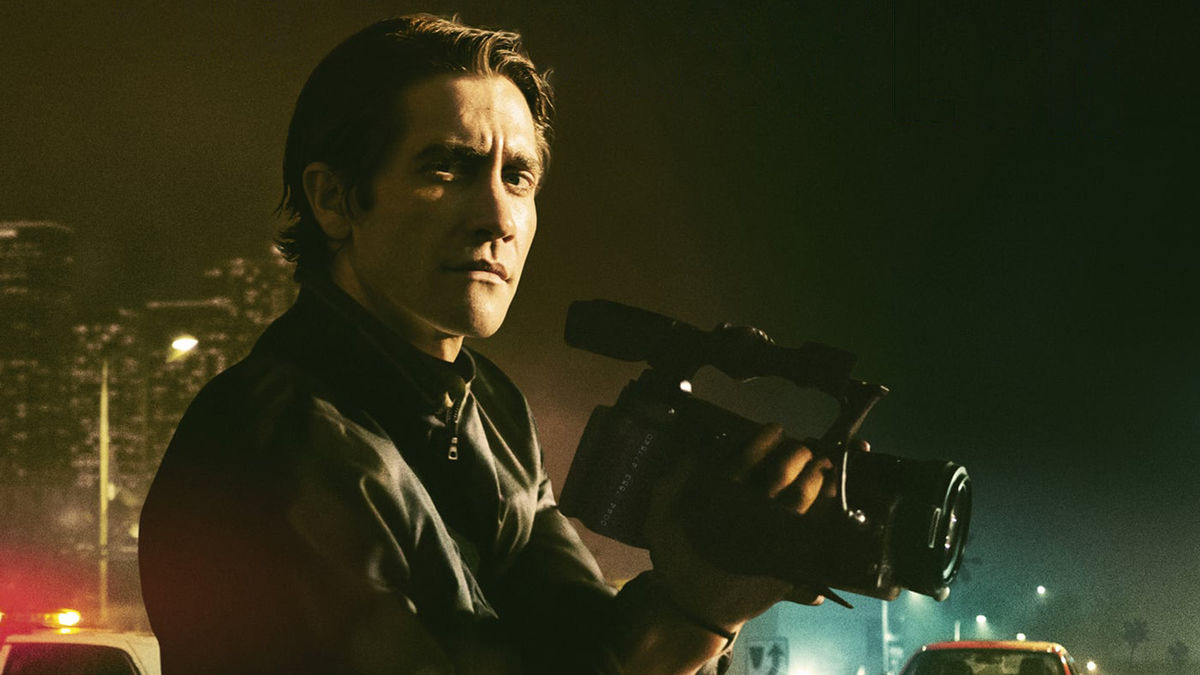
In the movie Nightcrawler (one of my favorite screenplays ever), the ’15 minutes into the second act’ marker has Louis Bloom getting to a crime scene too late because his newly hired assistant, Richard, accidentally sent him the wrong way. It’s an obstacle he did not overcome. He gets right back on the horse, speeding 90 miles an hour through the streets of Los Angeles to get to the next crime scene where he’s able to get some gruesome footage that he sells to the local news.
He then parlays that into a meeting with the station’s news producer. He wants to set terms for future deals.
Louis Bloom’s determination – his goal to become the number one nightcrawler in the city – creates a narrative where, when we reach 15 minutes into the second act, he’s going to be doing something. And readers LOVE THAT. They love when the main character is ACTIVE and DETERMINED and will do anything to achieve their objective.
Conversely, in Gilroy’s and Gylenhaal’s next collaboration, Velvet Buzzsaw, if you fast forward to 15 minutes into the second act, you see Gylenhaal’s art critic character lazily waltzing through an art showing, chatting up others at the gallery. It feels random. Not to mention, the story hasn’t established which direction it plans to take. You take Gilroy’s name off of this script, I guarantee you no one makes it past page 45. Such is the importance of establishing a direction by the writer and a purpose for the main character.
If you can get this section right, I’ve found that most readers will read the rest of your script. If they make it to page 45 and they’re still into the story, they’ve decided your script is worth their time. So pay extra attention to these two sections of the script. When they’re good, it usually means the entire script is good. Good luck!
P.S. Look for a new SCRIPTSHADOW NEWSLETTER in your Inboxes Friday night!!! Update on Kinetic! Yayyyyyy!
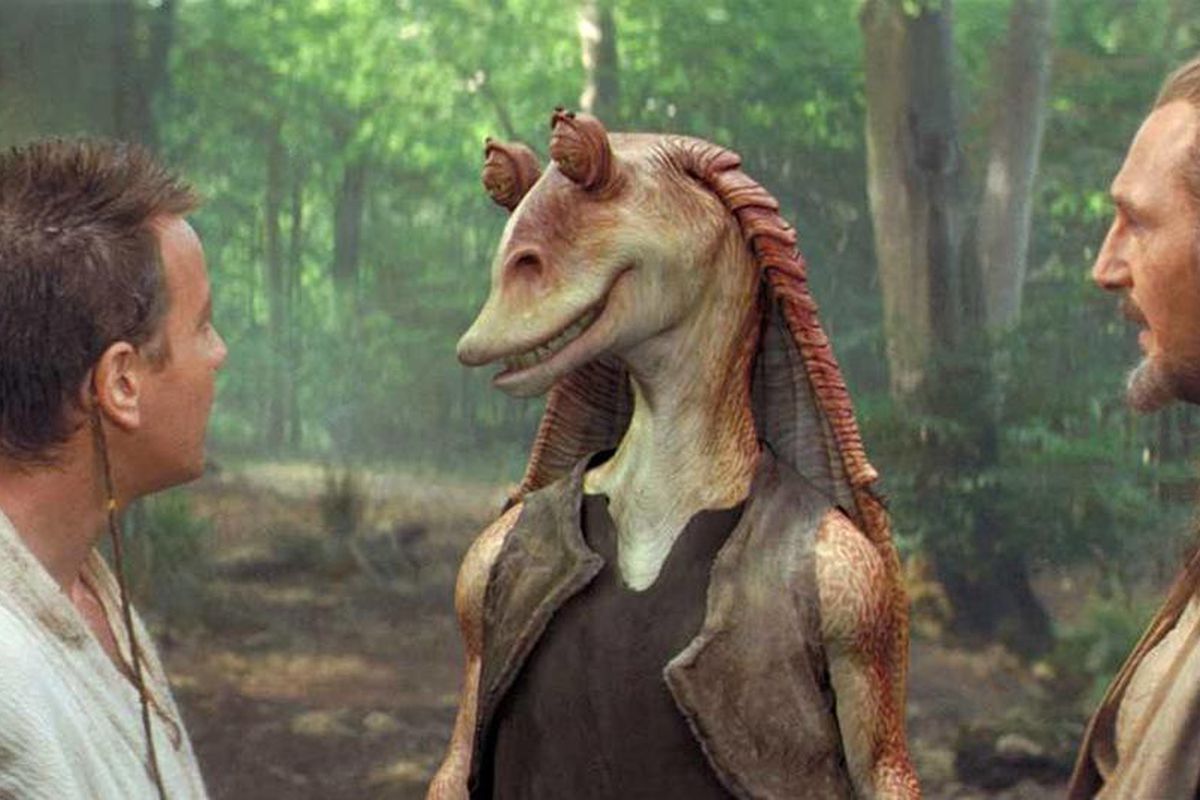
Today, I want to bring you back to one of the defining characters in cinema history. He was introduced to the world on May 19, 1999.
His name?
Jar-Jar Binks.
Jar-Jar Binks was the brainchild of George Lucas. And while you wouldn’t know it today, he was supposed to be the most important character in the prequel trilogy. He would start out as the comedic relief in Phantom Menace before becoming a wise master in Revenge of the Sith.
That never happened because the world revolted against him. But I’m not concerned about Jar-Jar’s fate in today’s post. I’m focused on how Lucas made a critical comedy mistake when constructing this character. A mistake that ensured he would not be the comedic relief he was meant to be. Want to know what this mistake was?
GEORGE LUCAS ACTIVELY TRIED TO MAKE JAR-JAR FUNNY.
Now we’re going to get into a trippy thought-provoking topic today so stay with me because it’s admittedly confusing but here’s the premise of the post: The act of trying to make something funny is what makes it unfunny.
You’ve probably met that person at the party who’s desperately trying to make everybody laugh. And, yet, the more he tries, the less funny he becomes. Why is that?
Well, when somebody is actively seeking validation from you through laughter, it creates a “try-hard” vibe that dilutes the humor. It becomes more about them getting you to laugh than you actually laughing.
That’s the vibe Jar-Jar Binks gives out whenever he’s in a scene. He is not interested in talking to Ani. He’s not interested in figuring out how to outwit Watto. He’s not concerned about how they’re going to get off this desert planet. Jar-Jar Binks is only there to stand in front of all of the other characters, look directly into the camera, and make you, the audience laugh.
He is the ultimate embodiment of a try-hard comedic character.
For comparison’s sake, let’s take a look at an earlier comedic character of Lucas’s, Yoda. Yoda is hilarious. He gets in a fight with R2-D2, whacking his cane against him. He makes a bunch of jokes that only he thinks are funny and he doesn’t care if you agree or not. He has this weird way of talking backwards. He orders this giant human around. He steals food.
Yoda doesn’t care if the audience laughs or not. He is existing inside the reality of the movie, which is why what he does is so funny.
This leads me to the three cornerstones of writing a good comedy script. They are the concept, the characters, and the scenes. However, it is how you approach these three cornerstones that decides whether your movie will be funny or not.
You are not trying to come up with a funny movie idea. You are trying to come up with a movie idea that will provide the opportunity for comedy. You are not trying to come up with funny characters. You are trying to come up with characters whose personas lead to organically funny actions. You should never try to write a “funny scene.” You should construct scenes that best open up the opportunities for funny moments.
Let’s go through these one at a time.
When coming up with a concept, you’re looking for a giant situation that creates the most opportunity for comedy. Wedding Crashers. That’s a concept that, in the title alone, you can start to see the opportunity for a bunch of funny scenes. And they come to you organically. You don’t have to force anything to find them.
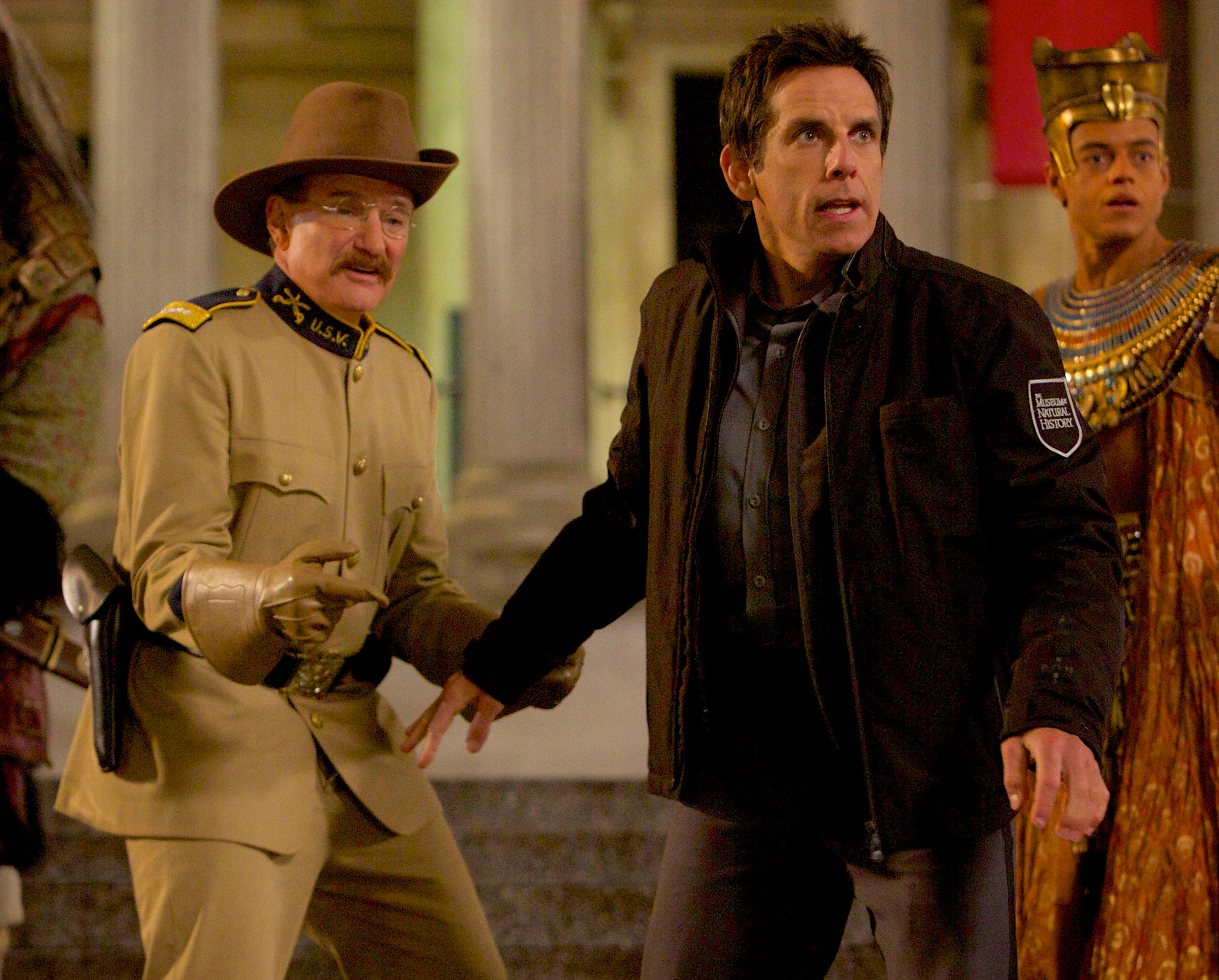
Same thing with Night at the Museum. You get stuck in a museum overnight where everything inside the idea comes to life. So many funny scenes are going to come from that premise without you even having to try.
Conversely, look at the Adam Sandler comedy, Hubie Halloween. That movie is about a weirdo who stumbles around his town on Halloween night. It is the definition of “try-hard.” There’s no clear concept where you can imagine funny scenarios. It is solely about a character TRYING TO BE FUNNY on an unusual night of the year. Even before the movie has started, we get the sense that characters will be desperately attempting to make us laugh, just like the unfunny guy at the party.
This extends into character-creation as well.
You don’t want to be in the headspace of, “I need to make this character really funny.” That thought-process is what creates the problem. You’re going to bypass the movie and directly focus on making the audience laugh. Which is when they never laugh. It’s the Jar-Jar Binks effect.
Instead, create characters who provide the potential for being funny within the situations they’re in. Annie (Kristin Wiig) in Bridesmaids is this really jealous person. That’s the core of her character. It’s not, “Wacky Girl.” It’s “Jealous Girl.” Then, all the movie has to do is put Annie in a bunch of situations that expose her jealously.
Like a pretty teenager coming to buy a necklace at the jewelry store Annie works at. She’s excited about hanging out with her best friend later. Annie, meanwhile, has lost her best friend to this other chick who’s fast replacing her. So Annie starts making nasty quips to the teenager about how friendships never last, which devolves into insult-hurling, until Annie finally calls the customer the c-word.
It’s a really funny scene. But I never got the sense that the character was trying to make me laugh. All of her humor came via the insecurity she harbored due to her jealousy.
Finally, you want to extend this to your scene-writing. You should never try to write a “funny scene.” You should, instead, come up with a scene that provides you with the most potential for funny moments.
If you’re writing a golf comedy, for example, you want to look for unique scenarios that mine the best opportunities for laughs. So you put the angriest golfer in the world in a mini-golf course. Or you put him in a celebrity pair-up tournament. Without me even having to explain these scenes, you’re already thinking up funny moments.
All of this seems obvious after-the-fact. But I’m the one who has to read all the amateur comedies where the writers don’t think of this stuff. They don’t think of forcing Happy Gilmore to learn how to putt on a mini-golf course. They focus on the golf tournaments and love story only and their comedy ends up being bland.
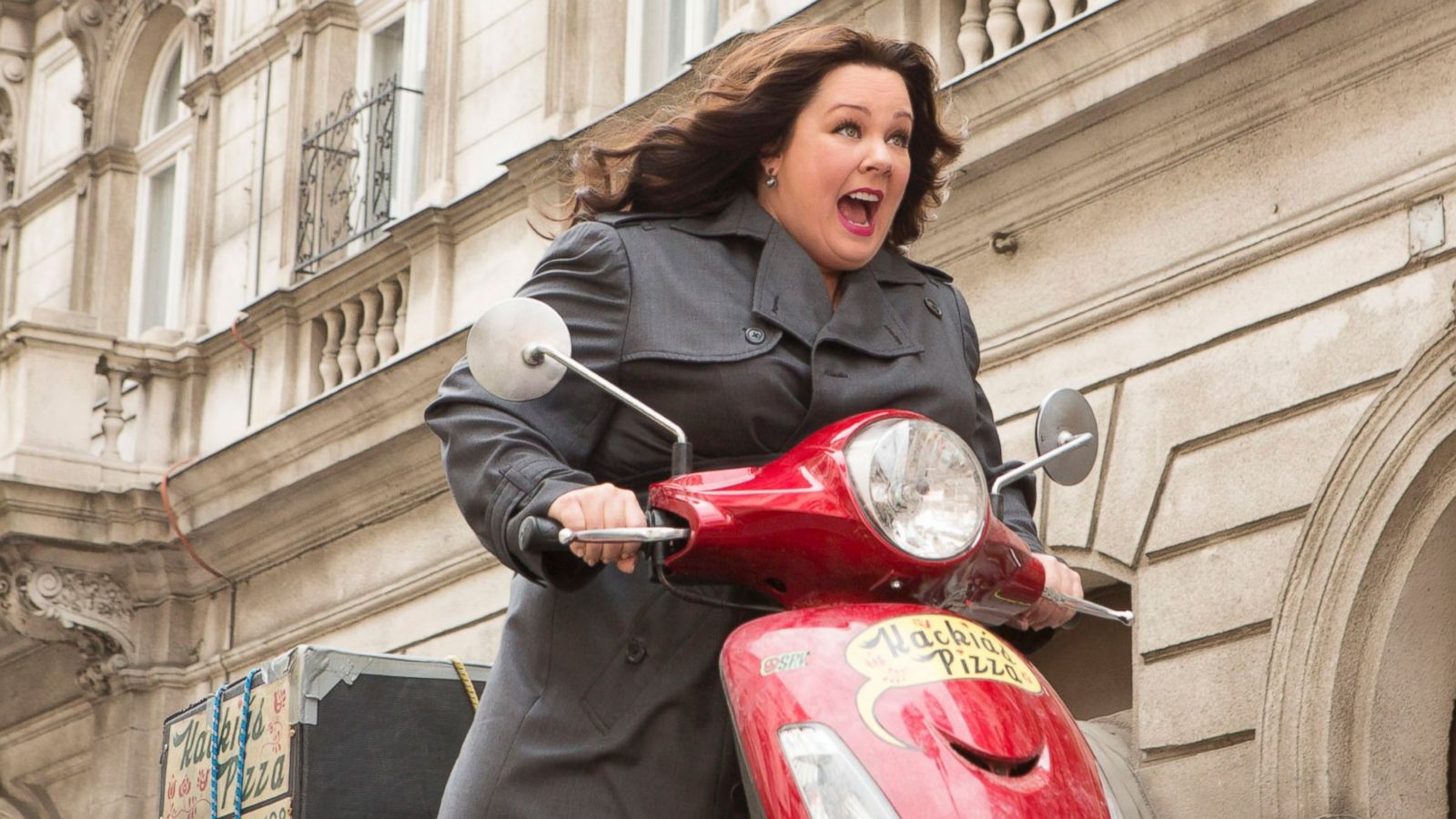
When you do all this right, it comes together in a beautiful way and leads to lots of funny scenarios. For example, the movie, “Spy.” That movie is about an introverted CIA desk agent who must become a field agent for the first time. That idea creates a bunch of funny scenarios. The main character is going to be funny just through the sheer act of trying to learn the practice of spying on the job. And there are going to be plenty of scenarios that offer potentially funny outcomes. Just having to sit down with an international kingpin during lunch and convince her that you’re a regular person — that offers plenty of opportunities for jokes.
Finally, I’m the first to admit that the rules of comedy are complicated. We often laugh at things we’re not supposed to laugh at. Or didn’t think we’d laugh at. There are times, such as in “Ace Ventura, Pet Detective,” where the main character is clearly interested in making the audience laugh, and it still works. So I’m not saying that this is only way to write comedy.
What I am saying is this formula gives you the best chance of writing a good comedy script. Even if you can only get two out of the three in there, you still have a good chance of writing a good comedy. In the meantime, if you catch yourself writing lines, characters, or scenes in a desperate attempt to make people laugh, I can guarantee you that’s when your comedy isn’t going to work. And if you ever need a reminder of why, pop in every scene of Jar-Jar Binks in The Phantom Menace. He’ll remind you. :)
Week 0 (concept)
Week 1 (outline)
Week 2 (first act)
Week 3 (first half of second act)
Week 4 (second half second act)
Week 5 (third act)
I had a contemplative moment this weekend.
I was trying to find something to watch after a long day of work. I checked Netflix. I checked HBO Max. I checked Disney Plus. I checked Hulu. I checked Peacock. I checked Amazon Prime. I even sat around for several minutes convinced that I owned another streaming service that I’d forgotten about.
Long story short, I couldn’t find anything to watch.
But that’s not what made me introspective.
The sheer volume of movie/show thumbnails I scrolled through was an eye-opener. There was so much. I still remember the days when you turned on the TV and you had five choices. You went to the movie theater and you had one, maybe two choices.
To see all of this stuff in front of me available with a single click was almost scary. How can any writer possibly surprise an audience anymore? Or write something original?
There are only so many ways you can arc a character. There are only so many plot tricks you can use. There are only so many ways you can tell a story. Is it even possible, anymore, to write something that feels unique? That feels honest and original? Has this ocean of media swallowed that option up?
I thought about that for a long time. I had two good hours since I wasn’t able to find anything to watch, remember.
I came to the conclusion that, yes, it is still possible to achieve these things. The analogy that convinced me was that we have billions of people on this planet. We run into people all of the time. And yet we still end up meeting people we really like. Maybe as a friend. Maybe as a romantic interest. Maybe as mentor or a business connection.
In other words, we never get bored of people, despite how many of them there are.
That tells me that we’ll never get bored of good TV shows and good movies.
However, we must concede that there is more competition for storytelling than ever before. And, for that reason, giving 65%, 75%, 85%, even 95%, of what your story could be isn’t enough. It has to be 100%. You have to give your all. You have to be able to look at your script and say, “This is the best I can do.” If you want ANY shot at breaking into the business, that’s the bar you need to clear. Because there are plenty of above average projects floating around Hollywood. You need to write something beyond that to get noticed.
The question then becomes, what gets you to 100%?
The answer is REWRITING.
Most first drafts will be lucky to cross the 50% threshold. That means, after one draft, your script is 50% of what it could be. Which, obviously, means, you’ve got 50% to go. While it would be nice if that 50% was writing a second draft, that’s not how it works. If you’re doing it right, your second draft might get you to 65%. And, from there, you’re aiming for each draft to get you another 5%. If you can write a great script under 10 drafts, you’ve done an amazing job.
Remember that Good Will Hunting was rumored to have 50+ drafts. Uncut Gems had something like 200 drafts. But I consider that overkill if you’re doing your job right. A good rewriting strategy can get you to that 10 draft marker.
So what is rewriting?
Rewriting is about identifying problems in the current draft and coming up with solutions. And that’s what we’re going to do this week. We’re going to read our script and we’re going to figure out the five (rough estimation, could be more or less) biggest things that are wrong with it. But in order to do that well, you need to put your script down for at least a few days. That means, either Wednesday or Thursday, you’re going to pick your script back up and read the whole thing from start to finish.
What I want you to focus on while reading is how you feel during the read. Don’t focus on characters or plot yet. Just focus on, are you bored? Are you annoyed? Is this section good? Is this section bad? Your emotions will signal to you when something isn’t working. Write all that down. Note every time where something doesn’t feel right. Or even doesn’t feel as good as it could be.
Once you’ve done that, go back through your notes and ask WHY you felt that way. The WHY is where you will find your answers for how to approach the next draft.
I’m working with a writer on a sports script right now and one of the first things we noticed while re-reading the script was how disinterested the main character felt. This was by design, something that the hero would learn and correct over the course of his character transformation. But it didn’t work. The disinterest led to a passive character, and that’s something you can’t have in a sports movie. Your hero needs to be active.
There were also subplots that didn’t work. Whenever our hero was around certain characters, their scenes would drag. It was a telling sign that those characters weren’t working.
There were also parts of the script that felt disconnected from the main storyline. This was a sports movie and yet certain situations had our character a thousand miles away from his sport. There were legit reasons why these choices were made during the writing of the script, but if something doesn’t work, it doesn’t work.
One of the hardest things to get right is your hero’s transformational arc. They start with a flaw. They gradually learn about their flaw. And then, at the end, they overcome the flaw. This is hard to execute in a first draft because flaws are negative and you want your hero to be likable. So you’re trying to find that balance between likable and flawed. And then you’re trying to set up an ending that organically allows your hero to overcome the flaw. It’s asking a lot of one draft. So you almost always need to play with this and fine tune it over multiple drafts.
Sometimes things just don’t work out the way you thought they would. Your amazing villain turned out to be cheesy and forgettable. All of this is common in a first draft and none of it should deter you. This is what rewriting is about.
So I want you to read your script Wednesday or Thursday with fresh eyes. I want you to write down everything that isn’t working. And then just start to consider solutions. Some solutions will come to you quickly. For example, if your hero is unlikable… give him a couple more likable traits! Or add a save the cat moment.
Some solutions you won’t have answers to right away. I once wrote a comedy script with four main characters (think Eurotrip). Three of them were guys. One was a girl. And it just wasn’t working. The energy my female character was bringing wasn’t funny for some reason. So I battled over getting rid of the female character and replacing her with a guy. But then it’s an all guys movie and that didn’t feel right either. So maybe I needed to reinvent her so she was funnier.
You have to make decisions like that all the time in screenwriting. Sometimes you have to marinate on these problems for a while before you come up with a solution. That’s what this week is about. It’s about reading your script, figuring out what isn’t working, writing down the obvious solutions, then taking the rest of the week to try and solve the more complex issues.
The good news is, you don’t have to figure everything out this week. Normally, I prefer you have at least a month before you write your second draft. You want a solid plan going into this draft. But we’re working on an accelerated schedule, so we’re going to do this in two weeks. This week is about identifying the problems. Next week is about coming up with an official outline for our second draft.
For those of you who want to rush this and start your second draft right away, I encourage you to try this method instead. At the beginning of this post, I talked about the unbelievable volume of media you’re competing against. To be better than all those other thumbnails, you need to take this seriously. You need a plan of attack every time you write a draft. That’s what I’m trying to teach you. Have a plan of attack so that you get the most out of each draft. That way, you’ll get 15% closer as opposed 3% closer.
A big shout out to everyone who’s stayed up to date with their writing. Awesome job. I’m super proud of you!
And how can we steal their secrets for features?
The only thing that matters right now is that they’re finally building a real lightsaber. Not those fakey glorified glow-sticks but a real live lightsaber that rises up from the handle. I will be the first one to buy this when it comes out, even if it means dipping into my retirement fund. There are some things that are more important than long-term financial security. Five Guys French fries and lightsabers are near the top of the list.
In non-lightsaber related news, I was recently thinking about how rare it is to find a funny movie. Yet there are a ton of funny television shows. That got me wondering why television seems to be such a better format for comedy. I was hoping that, if I examined that paradox today, I might be able to discover a few things about why TV is better for comedy and steal those lessons for the feature world.
Let’s get into it!
The sit-com seems to be the master laugh-generating format. From The Jeffersons to Cheers to Seinfeld to Friends to Modern Family to South Park to Broad City to Curb Your Enthusiasm. These shows figured out a formula to keep you laughing for 30 straight minutes. And they do it week after week after week.
Meanwhile, how many great comedy features did we get last year? The most recent comedy studio release was The War With Grandpa. Anybody see that? I didn’t think so. 2020’s comedy behemoth was Like a Boss, a movie with a trailer so unfunny, it reportedly killed the editor’s ability to laugh. 2019’s big comedy was Goodboys, which is, arguably, the best studio comedy of the last three years. If that doesn’t tell you where we are in the feature comedy world, I don’t know what does.
Part of the problem is that all the things that make movies great don’t transfer well to comedies. With Hollywood movies, the sets are always bigger. The effects are always bigger. The locations are always bigger. The overall production design is stronger. This is what helped them create Titanic, The Avengers, Terminator 2, Fast and Furious, The Dark Knight Rises.
But none of those things matter in comedy. I suppose bigger locations and bigger sets are important for action-comedies like Spy. But there has never been a correlation between bigger budget and bigger laughs. In fact, I’d argue the opposite is true. The more expensive a gag, the dumber it usually is.
There’s a scene in Spy where Susan is on a private plane that gets hijacked and we get a five minute “comedic” sequence where they’re going in and out of zero gravity. There wasn’t a single laugh in the scene. And I’m guessing the sequence took 4-5 days to shoot and was one of the more logistically complicated scenes. I wouldn’t be surprised if the price for that scene came out to 4 million dollars. For zero laughs!
A good laugh usually costs nothing but the the actors you’re paying and the writer who wrote the joke.
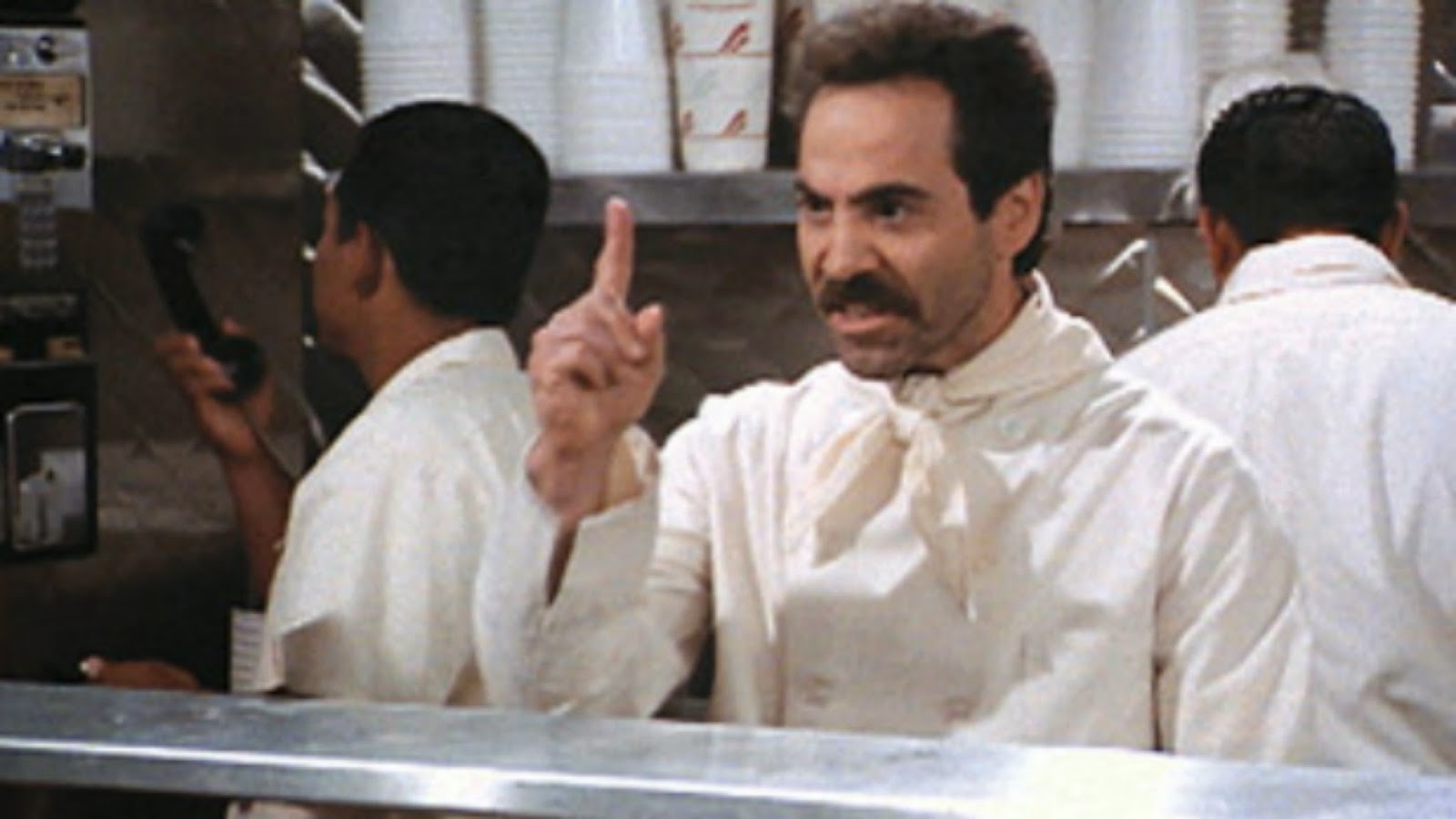
One big advantage TV has over movies is that, other than the pilot episode, TV doesn’t have to set up its characters. That is huge. Character set up is public enemy number 1 for feature writers. Before you can laugh at a character, you must understand who they are. You must first understand the contradiction of George Costanza (neurotic, dim-witted, yet oddly entitled) before you can appreciate his interaction with the soup nazi, a man he’s been told never to question, yet when he’s not given any bread with his soup, he can’t help himself. He must bring up the injustice.
But that George is not present in Seinfeld’s first five episodes. It takes a while for us to understand that that’s who George is. Unfortunately, movies don’t give anywhere near that much time to establish a character. You have two, maybe three scenes, to convey to an audience exactly who your character is. And that creates some limitations. Out goes complexity. Out goes subtlety. This forces you to create one-dimensional on-the-nose characters who don’t feel like real people.
That’s a key detail that a lot of people forget about comedy. Yes, almost every comedic character is an exaggeration. However, they still need to be based on people we feel like we know. In other words, they have to be based in reality. We all know someone like George Costanza who can’t help himself. He *must* die on that hill, even when all the data suggests it’s not a hill worth dying on.
So, character is the first hurdle feature comedy writers must leap. Spend as much time as possible coming up with really funny characters then figure out how you’re going to convey that particular brand of humor in a few short scenes at the beginning of your screenplay. I mean who doesn’t know who Annie in Briedesmaids is after her first scene?
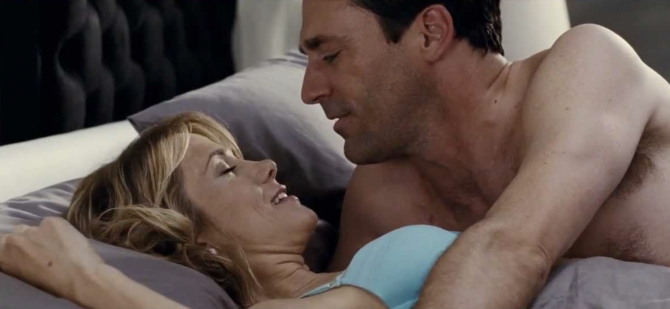
That’s the scene where Annie’s having sex with a douchebag character played by Jon Hamm and even though the sex is horrible, she’s desperate to be his girlfriend, sneaking into the bathroom before he wakes up the following morning to do her hair and make-up so that when he does wake up, she can pretend this is how she always looks. That desperation to find someone helps us understand Annie’s jealousy issues at her best friend getting married AND having to share maid-of-honor duties with the bride’s new best friend. Annie’s jealousy is the engine for almost her entire comedic performance and the setup of that character was a big reason why that worked.
The second big difference I noticed between comedy in TV and film is the way they go about their laughs. TV is mainly about creating a series of comedic situations. “Situation” is the “sit” in “sit-com.” “Situation-comedy.” So as a sit-com writer, you’re basically looking to find funny situations. Plot isn’t that important. There obviously needs to be some setup involved and that requires exposition and, possibly, an earlier scene or two. But if something requires too much setup, you don’t want to mess with it in television.
I’ve noticed that a lot of comedic TV situations are based on misunderstandings. One of my favorites occurs in Modern Family when Phil (the well-meaning but clueless dad) befriends a guy at the gym (played by Matthew Broderick) who he has no idea is gay. Phil invites the gym friend to his house to watch a basketball game (they share the same alma mater), having no idea that the friend is interpreting this as a hook-up opportunity. The *situation* plays out with Phil cluelessly rooting his basketball team on while high-fiving and hugging the gym friend, who keeps attempting to escalate the physical contact into something more (signals that Phil always misses).

Meanwhile, feature films, for some reason, shy away from situational comedy. Instead, they replace this with “set-piece” comedy. Set-pieces such as the famous dinner scene in Meet the Parents where Greg attempts to tell Jack that anything that has nipples can be milked. This both sort of makes sense to me and sort of doesn’t.
It would make sense that, because a movie is longer, you have the opportunity for longer scenes. But longer scenes require more setup to make them work. And setup is often unfunny. You try and make it funny, of course. But the underlying purpose of a setup scene ensures that it always feels like setup. And those scenes are always the most boring. One of the things that separates A-list comedy writers from everyone else is the ability to construct their setup scenes so that they’re individually funny scenes themselves and the audience doesn’t realize they’re being set up.
Think about that dinner scene in Meet The Parents – how much setup that required. You needed to establish that Greg had a ‘wussy’ job. This will be important later when you set up that Jack had a ‘manly’ job. You need to setup that Greg was just about to ask his wife to marry him before learning how important it is in their family to get the father’s approval first. You need to have Greg lose his suitcase on the flight. You need to set up her family and the wedding that’s going on that weekend. All of that stuff works its way into the dinner set-piece.
If you don’t do that or don’t know how to do that, you won’t have enough jokes to pay off. A joke punchline needs a joke setup and a set-piece is often the climax of a bunch of joke setups.
However, there’s something deeper going on here. I’m trying to imagine putting the Modern Family situation I mentioned above into a movie. Could you do that? I’m not sure you could. There’s something about a movie having a bigger overall theme and plot that would make a surface-level misunderstanding like that seem insignificant. And yet I don’t want to deprive comedy writers of such a strong comedic device. Obviously, something is wrong with the feature comedy format. We should be getting more than one funny studio movie every three years. Is the fact that it is so set-piece driven, and set-pieces are so much harder to pull off than situational comedy, the problem?
I need more time to study this but something tells me we can blend both situational comedy and set-piece comedy into a hybrid ‘situational set piece’ scenario that offers the best of both worlds. I’m sure some of you will point out movie scenes that do just this so I’m all ears. I’m ready to learn.
For now, though, those are the two lessons I want you to take away from today’s article. You need to put an insane amount of focus on figuring out your comedic characters and then even more focus on introducing them in a way where the audience immediately understands them AND what’s funny about them. Some sit-coms benefit from the fact that they’ve had two seasons to fully discover a comedic character. You don’t have that luxury so you need make up for it by nailing the introductory scenes.
The second lesson is that situational comedy is easier to pull off than set-piece comedy. And situational comedy is used so frequently in television shows that when a situation doesn’t work, you immediately have a shot with another one. Meanwhile, there’s so much time between set-pieces in movies that if even one of them doesn’t land, it could be the difference between a good and a bad comedy. Because who wants to wait 25 minutes for the next big laugh? For this reason, you must nail all the setup for your upcoming set piece so that you have a lot of jokes to pay off. And if a set piece isn’t working, you need to get rid of it and find another one. You don’t have the flexibility, like sit-coms do, to fail. Your set pieces all have to be the best you’re capable of.
I hope this helps!
I’m thinking of reviewing Stone Thunder or whatever that dreadful new Melissa McCarthy Ben Falcone superhero comedy on Netflix is called this Monday. I wouldn’t normally bother but it is a comedy and it’s obviously terrible so maybe we can learn something from it? Vote in the comments below!

Guess what day it is?
It’s SCRIPTSHADOW WRITE A COMEDY SCRIPT IN 3 MONTHS BEGINNING OF WEEK LIST OF THINGS FOR YOU TO DO THIS WEEK day.
For those unfamiliar, Comedy Showdown is going down June 17th. That’s the submission deadline. In the meantime, I’m helping you write your script. I’ve already done Week One here and Week Two here. But even if you didn’t know about this until now, there’s still plenty of time to write a script. You’ll just need to up your pages-per-day. At the moment, I’m asking for 3 and a half pages a day. You might have to up that to 5 pages. Or, if you’re okay with not doing a final polish on your script, you can stay at 3 and a half pages.
Now, a little structure talk here so you understand what we’re going to be doing over the course of this week. For starters, we’re structuring our comedy assuming it’ll be 100 pages long. For our first draft, we are writing 1/4 of our script a week. Last week we wrote the first quarter (pages 1-25). Now we’re going to write the second quarter (pages 26-50).
This will take us to the script’s halfway point.
To make things easier for you, we’re going to be using the Sequence Approach and dividing this quarter into TWO SEQUENCES, each of them 12 and a half pages long. The first of those (pages 26 – 37.5) is commonly known as the “Fun and Games” sequence and is, arguably, the whole reason your came up with your idea. This is the section where you aggressively deliver on the promise of your premise.
Think about that first moment when the guys woke up in The Hangover. There’s a baby. There’s a tiger. Someone’s missing teeth. Those next 12 and a half pages delivered on the promise of the premise of waking up after a crazy night out and having no idea what happened the night before.
Or take Coming To America (the original). This is the moment where Prince Akeem and Semmi show up in Queens for the first time. You got the crazy New York cab driver who speaks his mind. The guys finding out that “Queens” is nothing like it sounds. Trying to get an apartment in New York for the first time. You are literally leaning into all of the funniest gags you can come up with from two guys who have never been to America… coming to America.
In other words, this should be the most fun you have the entire script. If you’re not laughing as you come up with fun new scenes for this section, you probably picked a lousy idea.
Where things get tough is in this second of the two sequences you’ll be writing this week (pages 37.5 to 50). This section isn’t as clear. In fact, I don’t know if anyone in screenwriting history has given it a name yet (feel free to suggest a name in the comments). But the good news is you know the exact number of pages it has to be – 12 and a half – which isn’t that many. And you know exactly where this sequence ends – it ends at your screenplay’s midpoint. Which means you can write towards your big midpoint moment.
The midpoint of a script tends to be the time where something big happens. That thing could be negative or positive. As long as it’s A BIG DEAL. It should also, preferably, alter the script in some way whereby the second half of the movie doesn’t feel exactly like the first half. This is a common newbie mistake. New screenwriters make the same jokes for 100 pages. You need something that alters the plot so that the jokes (and story) feel different.
I recently rewatched “Spy,” and the midpoint of that script is a positive one. It’s the moment where our spy, Susan Cooper (Melissa McCarthy), finally befriends target Rayna Bayanov, while having to maintain her cover. The entire first half of the movie was built around Susan trying to get to Rayna. In the second half of the movie, she befriends her, but must keep her cover. That change creates a whole new set of plotlines and jokes.
In Guardians of the Galaxy, which is essentially a comedy, the midpoint is a negative one. Peter Quill and his team lose the orb to big baddie, Ronan. This, of course, sets the stage for the second half of the script, which will require our misfit team to retrieve the orb before the bad guys activate it, destroying the universe.
During both of these sections, I want you to be focusing on two things. One, keep throwing obstacles at your hero. Especially in the second sequence. The first sequence – our “Fun and Games” section – is more about having fun with the concept. But having fun is often about throwing things at your hero that they have to deal with. So you’re going to pepper some of that in there as well.
Once out of the Fun and Games section, you’re in slightly more ‘serious’ territory. So you’re going to ramp up the obstacles. For example, in “Spy,” you’re going to throw an assassin at Melissa McCarthy. You’re going to blow her cover when she’s in the middle of a difficult task. Think of yourself as the “Obstacle God.” Your job is to create obstacles that you then drop into your film.
Comedy is often about being as shitty as possible to your hero and watching them squirm. That’s where the fun is! If you aren’t challenging your hero consistently, there isn’t going to be a lot of opportunity for laughs. If you find yourself writing dialogue scenes where you’re desperately looking for the next joke between two characters, chances are you’re not throwing anything at them. You’re leaving them to blow aimlessly in the wind – and that’s where comedy dies. When you throw obstacles at your hero, you don’t have to look for laughs. The laughs organically come to your heroes as they swat away all the shit you’re throwing at them.
The second thing I want you to focus on is reminding the reader what your hero’s flaw is. You do this by continuing to give them opportunities to overcome their flaw only for them to not be up to the task yet. Obviously, if they were up to the task, your movie would be over.
Look at Steve Carrel’s character in The 40 Year Old Virgin. His flaw was arrested development. He’s still stuck in his childhood, which explains why he hasn’t had sex yet. As a writer, you want to challenge that flaw to remind the audience what it is your hero has to overcome. In this case, Steve Carrel’s girlfriend suggests he sell his valuable childhood action figures to start his dream business. Carrel resists this, at first, to let the audience know he’s not ready. He hasn’t overcome his flaw yet.
If you don’t occasionally remind the audience of this over the course of your screenplay, then, at the end, when you try and write your big heartstrings-tugging moment, there ain’t gonna be any tears. And you’re going to ask people, “Why aren’t you crying?” And they’re going to say, “Because that whole ‘he’s finally ready to grow up’ moment came out of nowhere!” “Came out of nowhere” is code for you didn’t set it up properly. Which is why you need to keep reminding your reader that your hero hasn’t overcome his flaw yet.
One last thing. Don’t worry if your page count is a little long. If it feels like you’re going to hit 120 pages instead of 100, that’s okay. I’ve found that, in comedies, there are always going to be a few characters you don’t “get” the first time around. You’re trying to find where their ‘funny’ is in that first draft. And the best way to do that is to let some scenes run long so that your ‘trouble’ character gets a chance to find his voice. That might even mean changing him in the middle of the script because he wasn’t working in the first half. In the end, the biggest thing you’re going to be graded on is, “Is this funny?” So if characters aren’t working, you need to play with them and give them opportunities to let go. Sometimes it’s a single line you write that helps you finally ‘get’ a character.
Wow, at the end of this week we’re going to be halfway through our script! Who said writing a screenplay was hard?
Onwards and upwards!