
Search Results for: F word
Genre: Science-Fiction/Fantasy
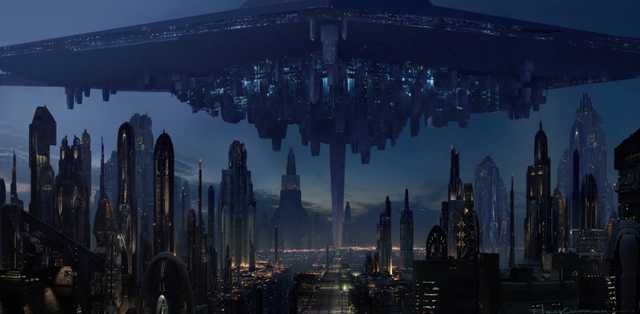
Premise: A ragtag group of resistance fighters infiltrate the First Order-ruled world of Coruscant in an attempt to ignite an ancient communication beacon that will recruit thousands of worlds to come join the fight and defeat the First Order.
About: Before Rise of Skywalker, there was what was supposed to be the original 9th movie in the Star War franchise, Colin Trevorrow’s, “Duel of the Fates.” But Kathleen Kennedy ain’t being Kathleen Kennedy if she’s not firing a Star Wars director so she canned Trevorrow right as the film was about to start shooting. She then called up JJ Abrams, the director of mega-hit, Episode 7, and asked him to come back and direct the final film, which he did. Many seemed confused by the fact that Derek Connolly and Colin Trevorrow received half of the writing credit on Rise of Skywalker considering Kennedy so publicly cited a bad script as the reason Trevorrow was fired. Will that mystery be solved today via a Scriptshadow review? Grab your brooms, channel the force, and let’s find out together.
Writers: Derek Connolly & Colin Trevorrow
Details: 130 pages
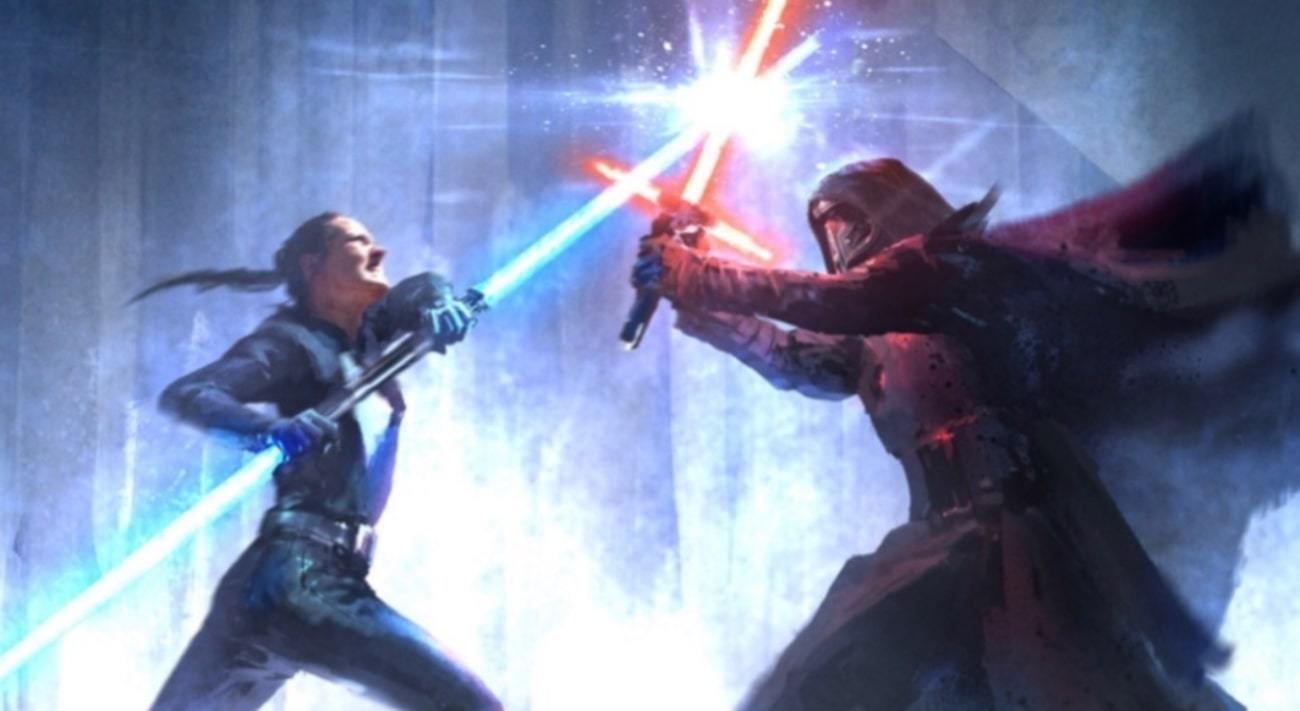
Yesterday’s post ended up being pretty divisive so I asked myself, “What can I do to bring everyone together again?” The answer came to me like a beam of light. What brings people together more than STAR WARS?
So I clicked open the script that was originally meant to be Episode 9 to definitively find out if Kennedy made a crucial mistake, allowing the superior Star Wars movie to be lost forever in the pages of a screenplay.
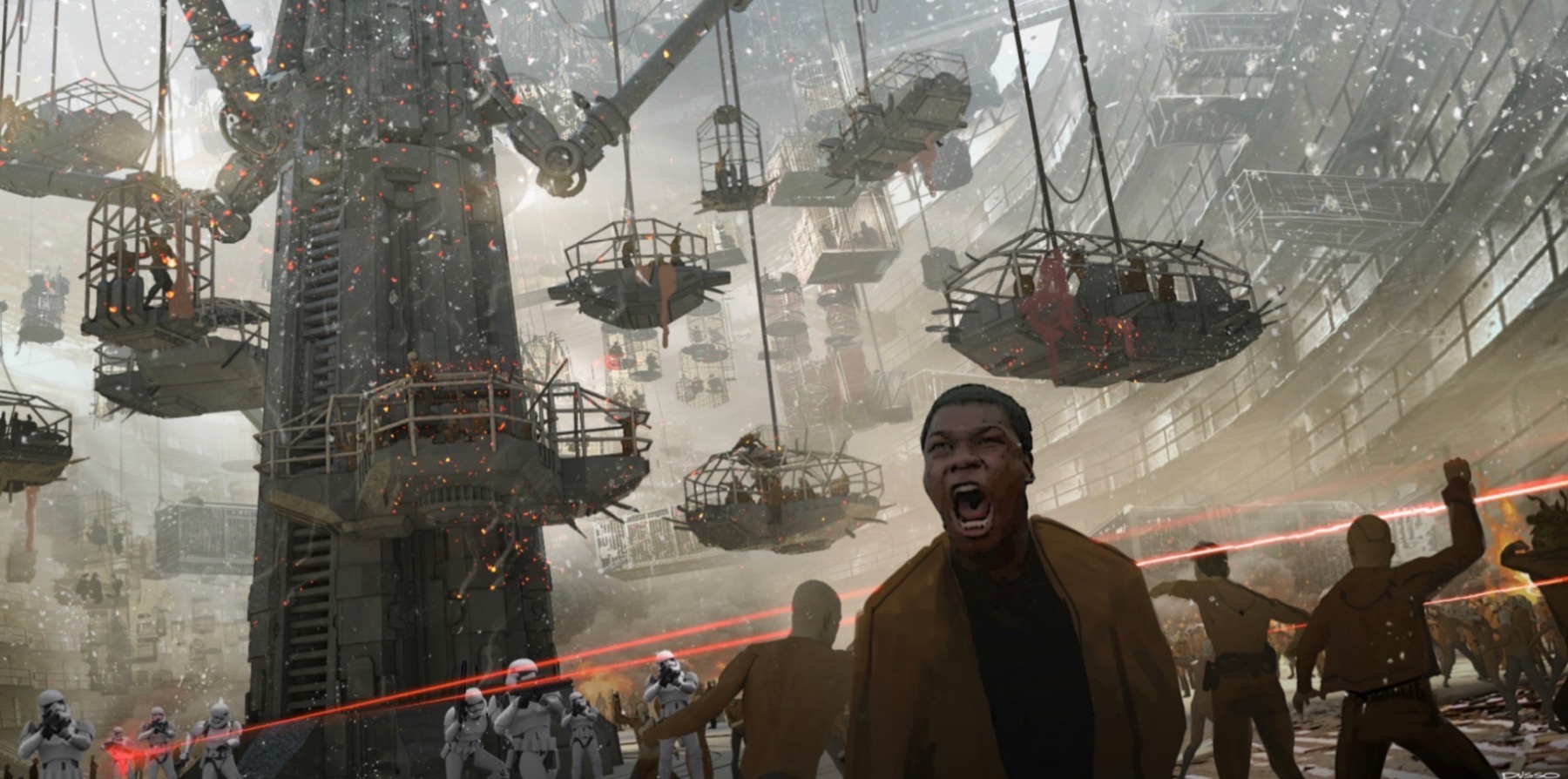
After the opening crawl tells us that things are, like, REALLY bad for the Resistance, we settle in on something called the “Kuat Orbital Ring.” Our good buddies Poe, Finn, Rose, and BB-8 have snuck into a migrant worker site run by the First Order hoping to free all the slaves. Unfortunately they get sniffed out and have to run for their lives. As they’re fighting, Rey appears out of nowhere with her two-sided lightsaber. She then gets the idea to steal one of the Imperial Starships hovering over the planet.
Rey’s able to take the ship using a stronger version of Obi-Wan Kenobi’s Jedi mind trick, informing the ship operators to do what she says. They then fly the ship back to the Secret Resistance Base that Hux is trying to sniff out from the First Order’s new headquarters on Coruscant. Leia is waiting for them and, after a little chat, someone brings up that there’s this Old Republic technology underneath the Jedi Temple on Coruscant that, if used, could alert all the planets in the galaxy to come and fight for the Resistance. The whole clan agrees to try and activate it except for Rey, who’s having visions pulling her towards Kylo.
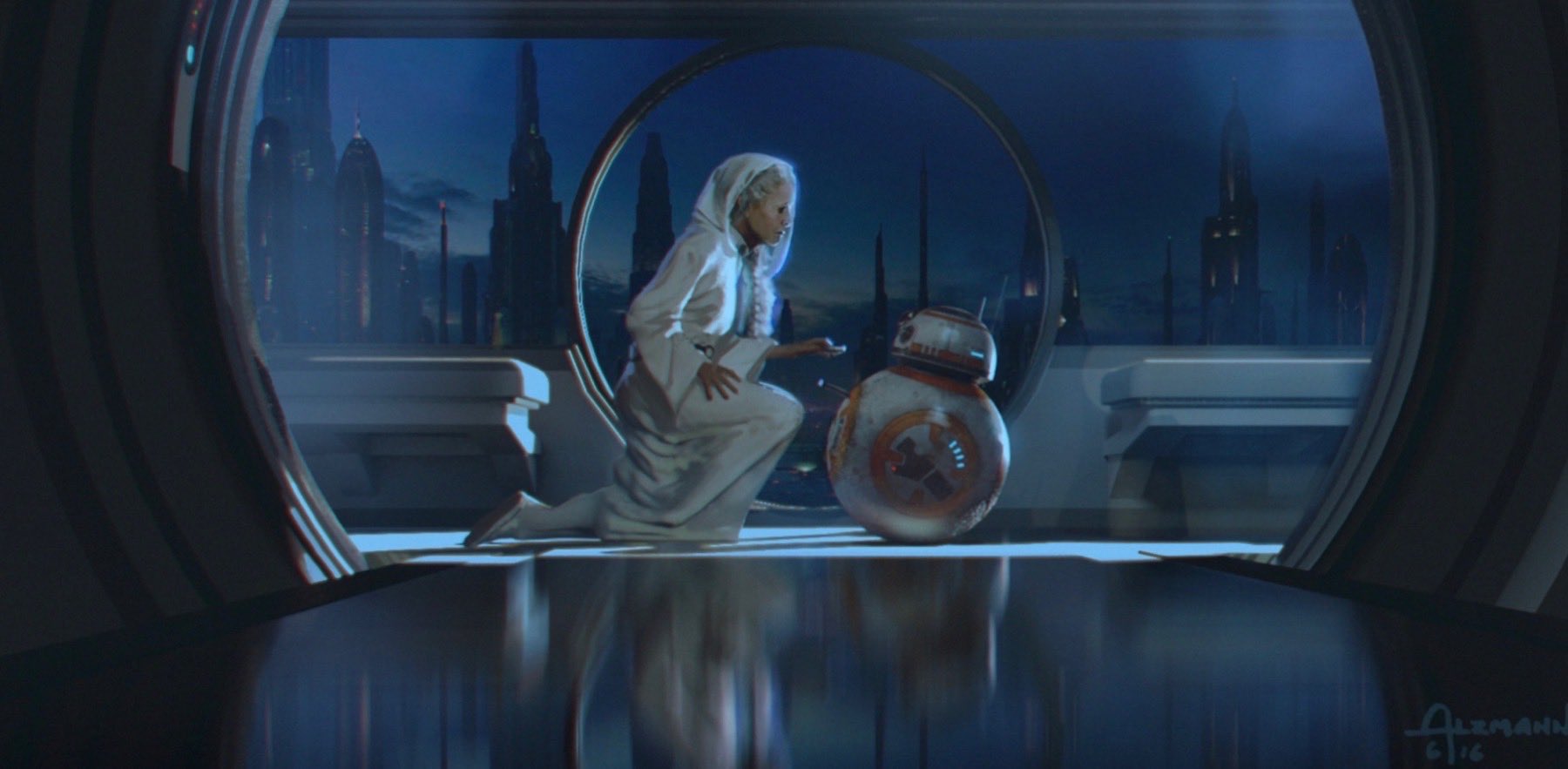
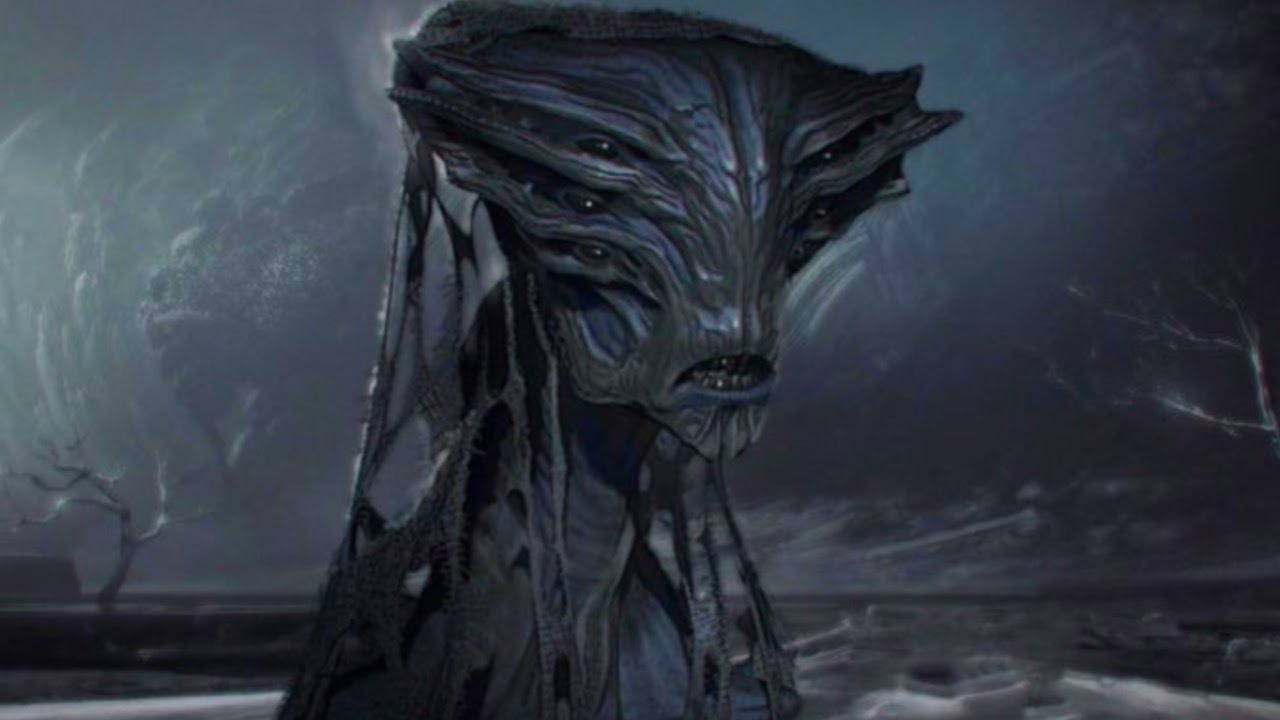
Speaking of Kylo, he’s in the Remincore System being trained by 7000 year old Master Sith Lord Tor Valum, a dude so versed in the dark Jedi arts that he taught Master Plaegius! Valum teaches Kylo a new trick that allows him to suck the life out of other life forms. So what does Kylo do? HE SUCKS THE LIFE OUT OF TOR VALUM, turning Jedi knowledge into a form of fast food. Kylo still needs to learn some dark secret underneath the temples of this planet, however, to become all-powerful. If that happens, he will be more powerful than 1000 Death Stars, able to crush planets from anywhere in the galaxy. Yikes!
Back on Coruscant, Finn is running around the sewers, looking for this darn beacon thing. He eventually stumbles upon an underground society of displaced Coruscant residents. He asks them if they’re ready to rise up and fight and they say, you bet we are! Hux learns about their plan, though, and orders his troops to find and squash these cellar dwellers. But that’s going to be difficult, since Leia has just shown up with the stolen First Order starship – a starship filled with Resistance fighters and tons of ships and AT-AT walkers to attack the First Order with.
Rey finally arrives on the Dark Jedi planet to stop Kylo. But Kylo ain’t having any of it. The two fight and Kylo easily has the upper hand. Rey tries to recruit all her Jedi powers to stop him, but then Kylo uses Tor Valum’s life-sucking power to suck out Rey’s soul! It’s not looking good for the Resistance either, as they’re getting pummeled by the First Order on Coruscant.
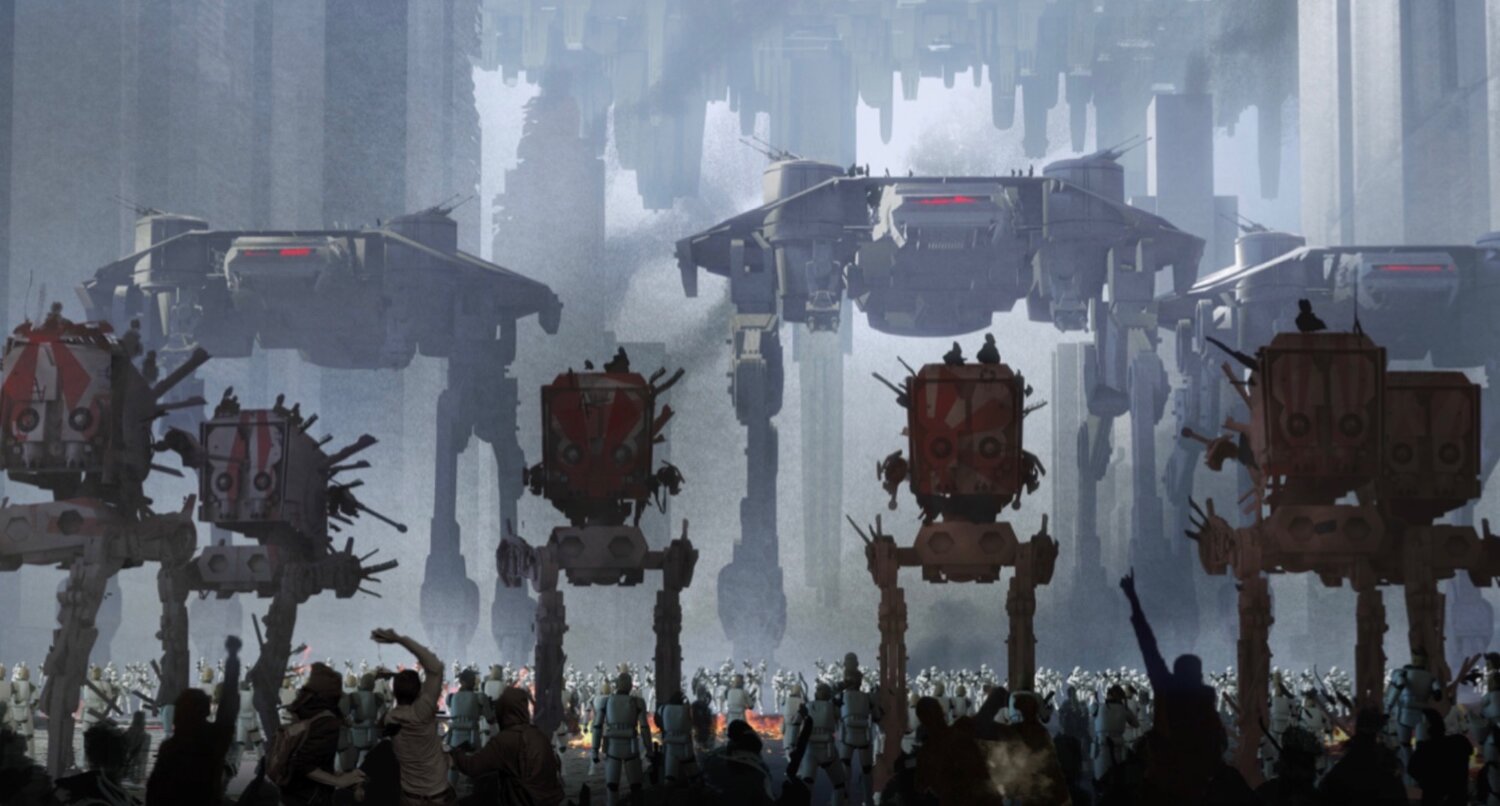
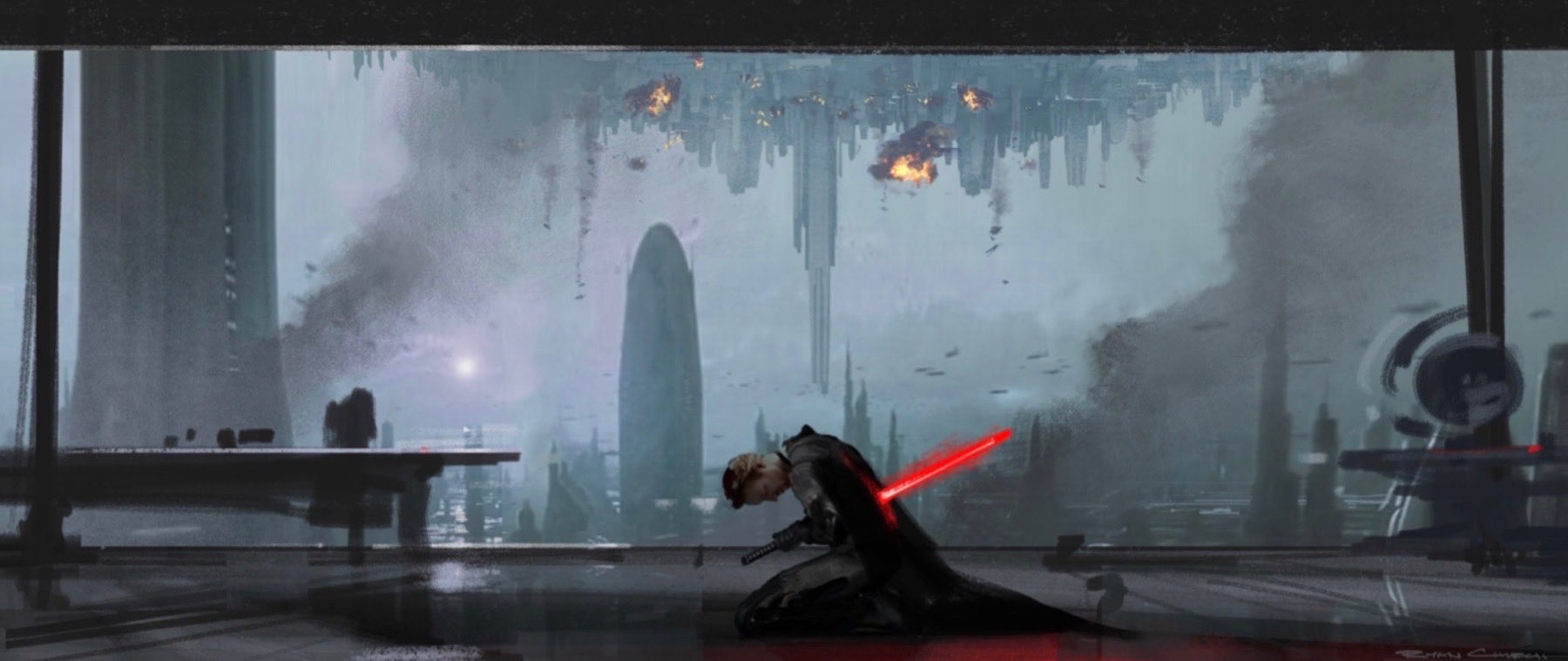
Luckily, at the last second, Leia force-calls Kylo, tells him to stop being such a meanie, and Kylo gives Rey her soul back, sacrificing his own life in the process. And on Coruscant, Finn finally got that message out, so all the planets come to help the Resistance. Hux is really upset that he lost so he goes over, grabs one of the many lightsabers he’s collected over the years, ignites it (it’s a purple one!) and sepaku’s himself. The Resistance wins and Rey comes back to teach a new generation of Jedi. Oh yeah and Rey’s blind now. I don’t remember why.
Let’s deal with the obvious question first. Is this a better script than Rise of Skywalker? No. Not by a long shot. It’s not bad. It’s actually decent most of the time. But the knock against Tervorrow has always been he doesn’t surprise you. He doesn’t make any bold choices. And you can see that here. People who complained about Rise of Skywalker being generic and safe – read this script. You’ll see what actual generic and safe looks like.
The first moment I knew the script wasn’t going to be great was the opening. It wasn’t clear why we were at this Orbital Ring place. I think it was to save slave workers but I’m not positive. One of the reasons the Jabba the Hut sequence in Return of the Jedi is so strong is because the objective is so strong – rescue Han Solo. And clear! We know why they need to infiltrate Jabba’s palace. We didn’t know anything like that here.
Then there was the stealing of the Star Destroyer. In screenwriting, the bigger the objective is, the bigger the plan needs to be, the more convincing everything needs to be, the harder everything needs to be. You’re stealing a giant ship here. It can’t be as easy as waving your hand at the captain and saying, “You’ll do what we say now.” There’s even a moment where Hux asks his side general what’s going on with the ship and he says, “Oh, everyone from that ship is on leave. Only the bridge crew is inside.” In other words, they made stealing an impossible-to-steal element the easiest thing to steal in the world. Storytelling works best with the opposing logic. You want to make stealing something the hardest thing in the world because that means your characters will need to overcome genuine obstacles to succeed. Everything your characters are after in a story must be earned, not handed to. So that was a major faux pas right away.
Also, the sequence that held the most promise ended up being the biggest dud. Kylo Ren learning from this 7000 year old Sith Master. We’ve already seen Jedis learning from masters in past Star Wars stories. But we’d never seen Siths learning from Sith Masters. So there was potential to really have fun with that. But we only get a couple of scenes with this Master Tor guy before Kylo kills him. You can’t build someone up as surviving 7000 years worth of Jedi obstacles and then kill him in two scenes. It’s inconsistent.
Also, I’d heard that Luke’s ghost was going to haunt Kylo in this. That’s another cool idea that we hadn’t seen in Star Wars before. But that happens for all of one page. So it was another letdown.
There was one set piece that stood out in the script. When everyone is trying to escape the Rebel Base as its being attacked by the First Order, the First Order shoots this giant laser beam down and blows this big chunk of planet up just as Poe and Rey have left in their ship. And the Knights of Ren come in, chasing them in their ship, in a sequence that has all this floating planet debris in the way. So, for example, they’re having to zip up the side of mountains that are floating in space. One of the hardest things to do in these giant event movies is come up with original set pieces. They’ve all been done. So any time someone comes up with a fresh idea, I give them props.
Now that I’ve read the script, I think I know what happened with the firing. The thing studios and executives and producers are most terrified of is the ending. The ending has to be great. Why? Because that’s what the viewers leave with. If you have 90 minutes of a good movie and the last 30 minutes are bad, that’s what the audience remembers. So that’s what they tell everyone else ( “The ending blew.”). This is why they did a 50 million dollar reshoot of Rogue One’s ending. They wanted to get that right.
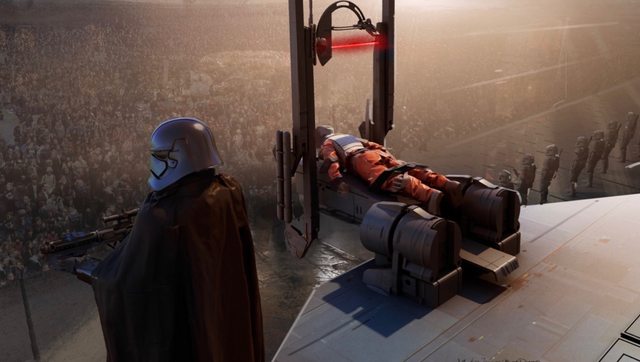
I suspect that Kennedy fired Trevorrow because of the script’s ending. It’s weak. For starters, Rey and Kylo are off on some planet in the middle of nowhere fighting each other while the war was going on on Coruscant. So it felt insignificant. Especially because they didn’t do a good job establishing the power Kylo would gain and what he would do with it. There’s a reason the ending of Star Wars is so great. We see the Death Star rounding that moon. And we know what it’s capable of once it clears the moon and has a shot at the Rebel planet. We were told earlier in Duel of Fates that Kylo will have the power to crush planets from anywhere in the galaxy, but there’s no visual representation of that to scare us. The implication is that maybe it’ll happen some day. That’s not nearly as scary as seeing a Death Moon seconds away from blowing up a planet.
We may have forgiven this if Rey’s personal battle with Kylo would’ve been great. But all the fight beats, with the exception of him taking out her soul, were lackluster. For example, we learn the real reason Rey was left on the planet was to be hidden from Kylo. It wasn’t exciting. And fights are supposed to build. It should feel like air is being pumped into a balloon that’s getting bigger and bigger. But Rey and Kylo’s fight was more like, she got tired and beaten down and the two of them sort of limped their way to the end. And then Kylo deciding to give Rey’s soul back because his mom Skyped him didn’t feel earned at all.
So I’m guessing that when Kennedy hired JJ back, her primary directive was, “We need a huge ending.” And while I don’t have inside information, I’m guessing that was the motivation for JJ bringing the Emperor back. He knew he had to make that ending huge and the Emperor offers you that opportunity. And I will say this. You may not have liked that Emperor-Rey-Kylo finale in Rise of Skywalker. But I promise you that it was a hundred times better than the Rey-Kylo ending in this script.
I’m still confused about why Connolly and Trevorrow got half-credit for Rise of Skywalker. The only connection I see between the two films is that Leia does a lot of force-Skyping in this. She’s leading the Resistance. And then the life-force grab at the end of Rey and Kylo’s fight inspired the Emperor’s life-force grab at the end of Rise of Skywalker. But outside of that, the plots are very different. I guess that mystery will have to be solved another day.
Next Star Wars we’re going to see is October, when Mandalorian Season 2 debuts. In the meantime, there is no official Star Wars movie on the Disney calendar. Will we ever see a Star Wars feature film again?
[ ] What the hell did I just read?
[x] wasn’t for me
[ ] worth the read
[ ] impressive
[ ] genius
What I learned: You don’t get points for connecting the dots – The problem multi-narrative scripts (like Duel of the Fates) have is that there are a lot of plot points and a lot of plot points that need to intersect. For example, you have Rey over on one planet, Poe over on another planet. And you know that by page 60, you need them to meet up. This forces you to create some dots that must be connected in order to get the characters to the place where you need them. This can be tough to do. And what happens in a lot of the scripts is that the writer is so happy to JUST GET ALL HIS DOTS CONNECTED, that he thinks he’s done once that’s finished. This is especially true of beginner writers who just want to be applauded for bringing everything together in a way that makes sense. Unfortunately, this is just the beginning of your work. Once you’ve connected all the dots so that they make sense, you must go back into the individual narratives and make them as strong as they can be. Duel of the Fates had a very “happy I’ve connected the dots” feel to it. Technically everything made sense. But none of the individual storylines, nor the larger storyline, were as good as they could’ve been.
Genre: Comic Book
Premise: Harley Quinn tries to figure life out after the Joker dumps her and gets caught up in a diamond theft that ignites Gotham’s newest baddie, Black Mask, to try and kill her.
About: Harley Quinn was projected to make 45-55 million dollars this weekend. That was down from the projections Warner Brothers had when making the movie, which were closer to the 75-85 million dollar range. Sadly, the film finished with a measly 33 million bucks and is considered a full-blown box office disaster.
Writers: Christina Hodson
Details: 110 minutes
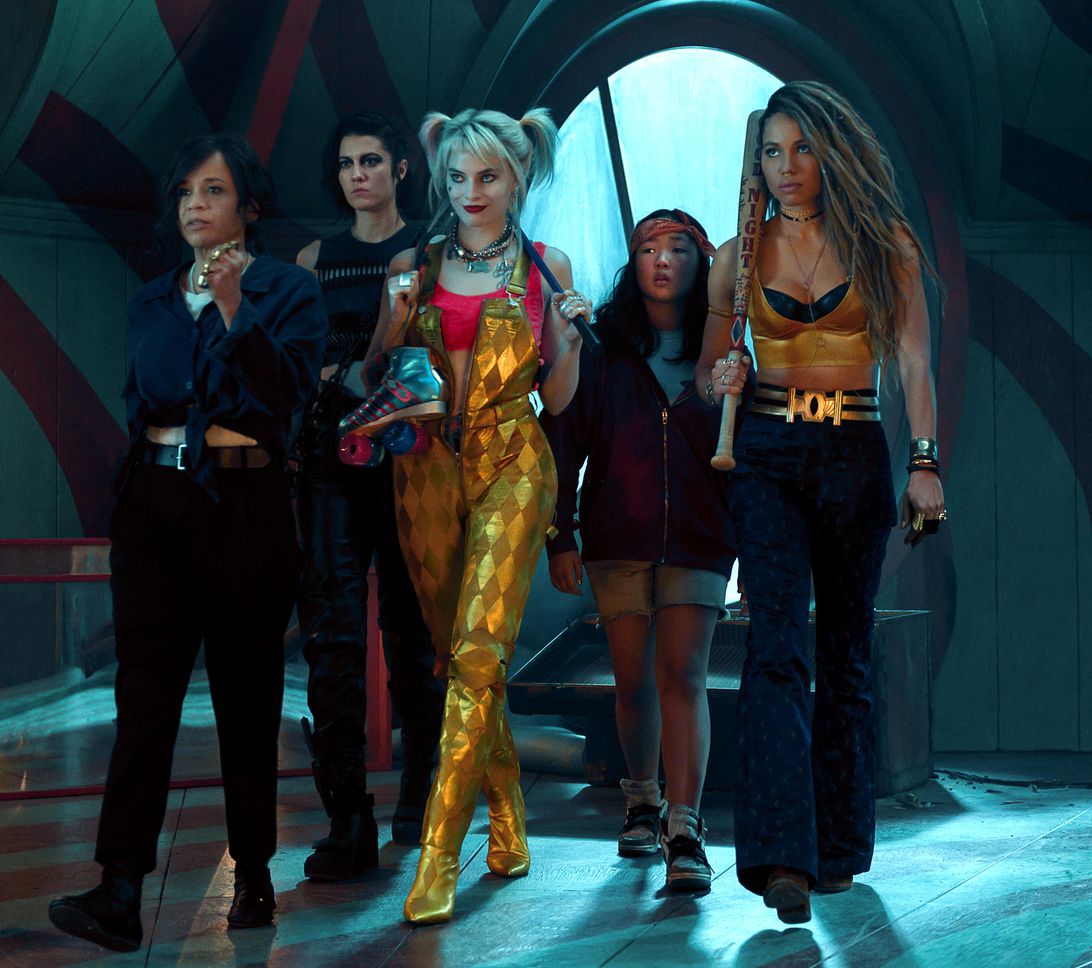
Harley Quinn.
I’m not here to dance on this movie’s grave. A lot of people worked on this film and, unlike a lot of movies that come out of this town, these people really cared. It’s said that there was a woman heading up every major department in the film. And all of them felt they had something to prove.
Nobody was more determined to make Harley Quinn work than its star and producer, Margot Robbie. I saw an interview where Margot was asked what her favorite Harley Quinn tattoo was and she didn’t skip a beat, going into an extensive explanation about Harley’s first tattoo and how she got it and what it meant to her. All I could think was, “Wow, Margot really cares about this character.”
Unfortunately, somewhere along the way of this film’s development, they decided to embrace an anti-male slant. In retrospect, I guess this makes sense. The movie was being written and prepped during that rabid six month stretch where everyone thought Twitter was real life and if you were Caucasian and had an xy chromosome, you were the devil incarnate.
The first white man to enter this story is a drooling bald-headed creepy pet salesman who says he accepts sex for payment. Harley feeds him to her hyena. The next white man is an a-hole who calls Harley a slut. Harley breaks his legs. The next four white men introduced are gunned down while eating dinner by the Huntress. They don’t even have time to protest their death. The next two white men introduced try to rape Harley after a long night out.
Put simply, if you are white and a man in the Harley Quinn universe, it ain’t going to end well.
Finally, about 15 minutes into the film, we see that Harley has one Caucasian male friend – the cook who makes her daily greasy egg sandwich. The two are smiling and jovial. I thought, okay, I’m glad they’re at least portraying one white guy as cool. And then as Harley’s leaving, her voice over reveals that the man is Armenian.
Look, anybody can make any movie they want. If you want to portray an entire demographic in a negative light, you are well within your rights to do so. It’s art. It has no rules. However, you have to then be accepting when the demographic you’re destroying has no interest in seeing your movie. I mean who wants to spend two hours being told that people who like you are bad?
I guess I’m surprised because it’s such an odd business choice. You’re hating on the demographic that spends the most time in movie theaters. It’s weird. Why didn’t somebody come in and say something? “Maybe we should be inclusive and positive about all races and genders?” In the immortal words of Dana Carvey as George Bush: “Neht gunna dew it.”
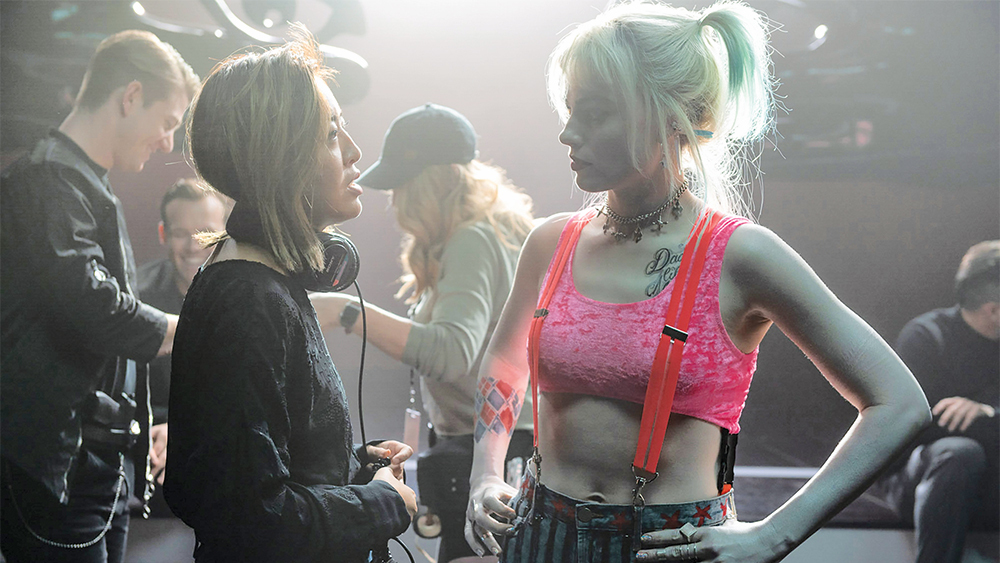
Eventually, a movie emerged out of this. Sorta. The plot follows Harley Quinn as she’s coming out of a bad breakup with the Joker. The film shamelessly attempts to be this year’s Deadpool, with Harley Quinn bee-bopping her way through an endless “listen to how clever I am” voice over narration, all of which could’ve been distilled down to a single sentence (“The Joker and I broke up.”).
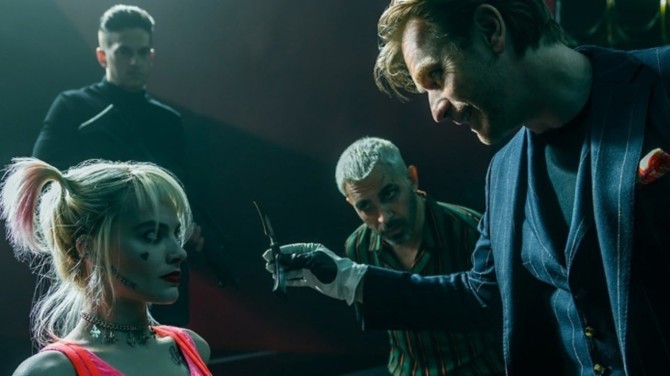
The plot then decides to take a bathroom break, forcing the audience and the characters to wait around for him. In the meantime we learn something about mobsters in Gotham and that someone’s going around shooting people. None of it ties into anything that you would call “relevant” but we do meet club owner Black Mask, played by the only person who comes out of this movie unscathed, Ewan McGregor. He has a few funny lines.
Finally, after a good twenty minutes, the plot waltzes back in the room with a theatrical, “fiiiiiiiiiine!” and gives us some direction. A young Korean pickpocket girl inadvertently lifts a million dollar diamond off of Black Mask’s second-in-command and Black Mask, who has captured and is about to kill Harley Quinn, for some reason hires her to go after the girl and get the diamond back.
Harley finally finds the girl, who by this point has swallowed the diamond. This means Harley can’t turn her in until the diamond passes through her system. So Harley takes her back to her hideout where, within the span of five minutes, she becomes best friends with the girl, and now she’s not so sure she wants to give the diamond or the girl up to Black Mask. Unfortunately, that doesn’t matter because Black Mask is coming to get them.
I wish I had anything good to say about this movie.
But I don’t.
Most of the badness here is baked into the script itself.
The narrative is uber-weak. It’s Harley Quinn whining for half an hour about I don’t even know what. Then, out of nowhere, a random girl steals a diamond, a diamond we only learned about two minutes prior, and then everybody is after the diamond and that’s the plot. I bring up the fact that we only learned about the diamond two minutes prior because it shows how low the stakes are in this movie. The thing everyone is after had zero significance in the audiences’ eyes. The only reason it exists is to engineer some semblance of a plot.
Then there are all these little things that conveyed how amateurish the writing was. At one point, in the middle of the first act, Harley’s getting beat up, and, while talking to us in voice over, says, “In the storytelling world, this device is known as a complication.”
Um, no it isn’t.
A complication requires that your character have an objective to complicate. At this point in the story, there is no goal. Nobody is after anything. It was just Harley Quinn rambling in voice over while we meet a bunch of people we’d later learn had nothing to do with the story. So if you’re going to try and be clever and fourth-wall breaking and bring up screenwriting vocabulary, you might want to actually learn what the device is you’re talking about.
But there’s a much bigger problem at the heart of this movie and it’s something I’ve been asking ever since it was announced that Harley Quinn would get her own movie. What is it that Harley Quinn DOES? What makes her special? In other words, why does she deserve her own movie? I spent two hours with this character this weekend and I still can’t answer that question. As far I can tell, she’s just some loudmouthed eccentric person who likes to play dress up. What is it about that that makes someone think she deserves her own movie? I don’t get it.
And then there was the directing, which vacillated between generic and extra generic. The action scenes felt like the director was learning on the job. Many sequences came across as if the crew ran out of time and had to stick in a bunch of those garden-variety stunt moves you can see in a thousand 1985 B-action movies. There were occasional flashes of inspiration, like a couple of shots where Harley beats someone up with a bat. But they’d be surrounded by tons of locked down wide-angle shots that any second year film school student at USC could’ve pulled off. Where is the vision here? Where is the specialness that separates the good directors from the wannabes – that makes you say, “Oh, I understand why this director got the job over everyone else.” Cause those qualities were not evident in the finished product.
This was a misfire on every level.
And the problems started at the conception stage. Nobody ever asked the question, “What makes this character special?” You then coupled that with an aggressive campaign to exclude a group of people. So should you really be surprised that no one showed up to your movie? Maybe there are a few lessons to learn from this if the people involved are willing to have honest conversations with themselves.
If you’re looking to watch a good female-driven movie this week, go to Netflix instead and watch Horse Girl. It’s weird and trippy and unique and it doesn’t try to paint any one demographic as bad.
Finally, props to the two screenwriting Oscar winners this year. The Academy got it right! JoJo Rabbit and Parasite were my top two favorite screenplays of the year!
[x] What the hell did I just watch?
[ ] wasn’t for me
[ ] worth the price of admission
[ ] impressive
[ ] genius
What I learned: Make sure your title and your movie line up. I know this seems obvious. But it’s a mistake I encounter fairly often. And it happened with today’s film. This movie is titled “Birds of Prey,” but it’s not about this “group” known as the Birds of Prey at all. They’re barely in the movie. This movie is 98% Harley Quinn doing Harley Quinn stuff. Have the title reflect that.
It’s the WWEEEEEEKKKK-EEEENNNND.
Which means we’ve got THREE new movies being offered up at the cinemas. And it just so happens these three films give us the perfect snapshot of what the industry is looking for. We’ve got Gretel & Hansel – our horror movie. We’ve got The Rhythm Section – our Jane Wick flick. And we’ve got The Assistant – our socially conscious entry of the week. All three films, it should be noted, have female leads.
While none of these movies will do huge box office, this is the kind of stuff that Hollywood is looking for from spec screenwriters. The Jane Wick flick might be on the way out, especially if Rhythm Section doesn’t do well. But with the well-written “Ballerina” coming soon under the John Wick banner and therefore with a ton of those Wick marketing dollars, the Girl with a Gun genre might not be dead yet.
What are your thoughts on this weekend’s crop of films?
Let’s move on to Amateur Showdown. Is it ever coming back? Or is it DEAD? Let’s find out together, shall we? On March 13th, we will have SCI-FI SHOWDOWN. My favorite genre. Or wait, wasn’t contained thriller my favorite genre? Who cares. Sci-fi is my favorite genre now.
This gives you 43 days to get your s%#@ together and polish that sci-fi gem you’ve been tirelessly working on for the last six years. Oh wait, that’s me. We’re talking about you guys. Yes, starting today, you can send in your script for Sci-Fi Showdown. Just e-mail carsonreeves3@gmail.com and put “SCI-FI SHOWDOWN” in the subject line. Include the title, genre, logline, why you think the script deserves a shot, and, of course, a PDF of the script. You’d be surprised at how many people send me entries with no script. You have until Thursday March 12th, 8:00 PM pacific time to get your entries in.
And, if you’re still getting that Last Great Screenplay Contest script ready, a reminder that the deadline is Sunday, June 14th. I need the title, genre, logline, and PDF sent to the same e-mail (carsonreeves3@gmail.com). Except the subject line should be: “LAST GREAT CONTEST.”
Meanwhile, for those who’ve got time to waste, let’s talk about The Outsider. If you haven’t been on the site for a while, I gave a glowing review to the first couple of episodes of this show. I liked it so much, I thought I was watching one of the great TV shows of all time.
Two weeks later I find myself struggling to finish Episode 4. Welcome to the challenge of TV writing, where great television can nosedive in as few as two episodes. So what happened to The Outsider? I’m not sure. But I can tell you exactly when I sensed it was in trouble.
It came in episode 3 with the introduction of a new character named Holly Gibney, a private investigator. Since this character is so all over the place, I’ll leave it to the Stephen King wiki webpage to describe her: “Holly suffers from OCD (Obsessive Compulsive Disorder), synesthesia, sensory processing disorder, and she’s somewhere on the autism spectrum.” In other words, she’s a “LOOK AT ME AND HOW WILD AND WACKY AND DIFFERENT I AM” character, one of the worst characters a writer can write.
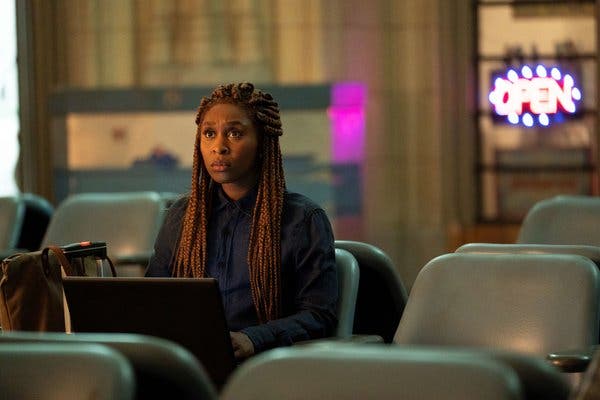
Up until this point, the reason The Outsider was so good, outside of the fact that it had a great hook, was that it had embedded itself in authenticity. These felt like real people. This felt like a real town. These felt like real consequences. This felt like real mourning.
By writing in a totally unrealistic desperate attempt at a scene-stealing character, all that authenticity went out the window. We now had a WRITER (notice the capitalization) who wanted us to know he was WRITING. It doesn’t help that the actress is awful, but the important thing to note here is that, before, characters were authentic. I mean who’s more believable as a person than Detective Ralph Anderson? Holly Gibney might as well be in the next Bad Moms sequel (Bad Moms “Easter Shenanigans!”) she’s so outlandish and unrealistic.
It doesn’t matter what you’re writing or how good it is. The second you start writing to impress the reader – whether it’s with your purple prose or outlandish plot twists or crazy characters – you lose. Because that’s the moment when the reader or viewer becomes aware that someone is writing this. And that’s when you’ve lost your audience, when they’re no longer suspended in disbelief. I wouldn’t say that Holly Gibney single-handedly ruined this show. But it’s hard to stay invested in a show when you’re rolling your eyes half the time.
I’m going to keep trying though. Ben Mendelsohn is such a good actor that it’s worth continuing to watch just for his scenes. I mean what other actor could’ve made Captain Marvel watchable? But I’m worried. I’m going to pray this Holly abomination gets knocked off at some point. And that they can ramp up the mystery again. There were full loaves of mystery early on. Now they’re trickling little breadcrumbs at us and expecting us to clap like dolphins.
What do you guys think? Am I being too hard on it? What’s your take on the last few episodes?
Lonestarr357 had a great question in yesterday’s comments. After Scott S. eviscerated the uncomfortably detailed opening scene of I Heart Murder, Lonestarr asked this:
I’m unmistakably reminded of a script from a couple months ago and the indelible scene where the investigating hero was caught, paralyzed and fellated by the villains, who told him to back off or they would not only kill his daughter, but deposit the sperm they just extracted inside of her, so it’d look like he raped her before killing her.
I feel like this ought to be an article in the making. We’re told to create memorable scenes to get the attention of readers, but how far is too far? Does the reaction you hope to elicit fall more toward ‘This is a memorable scene! Let’s give the writer lots of money!’ or ‘This is a memorable scene. I need a fucking shower?’
This is a great question.
I know it’s a great question because as soon as I began typing up my response, I realized I didn’t know the answer. I thought I knew. But this is a far more complex question than it first appears to be.
I remember the exact scene Lonestarr is referring to. And I thought the same thing he did when I read it. This is way too far. It’s uncomfortable. It’s a weird choice. And yet, I DO REMEMBER it. I’ve read thousands of scenes since then and have forgotten almost all of them in the process. But I do remember that scene. So does that mean the scene is a success? You must be doing something right if your scene is more memorable than two thousand others, right?
This leads us to a broader question of, “What makes a memorable scene?”
Strangely, when I tried to compile a list of standout scenes over the last few years, not a lot came to mind. I even googled, “Most memorable scenes of 2019,” and a lot of the scenes they listed were okay. But I wouldn’t call them TRULY MEMORABLE STANDOUT SCENES.
A few that people seem to agree on were The Spahn Ranch scene in Once Upon A Time in Hollywood. The Baby Delivery scene in A Quiet Place. The Birthday Party at the end of Parasite. And The Beheading scene in Hereditary. Some of my personal favorites over the last few years would be the Pennywise sewer scene at the beginning of It. The failed Deadpool Team attack in Deadpool 2. And the highway border shootout in Sicario.
What do almost all of these scenes have in common? They’re SPECIFIC TO THEIR SUBJECT MATTER. The Spahn Ranch was Charles’ Manson’s spot in a movie where Charles’ Manson’s shadow is leaning over the whole movie. It made sense to set a major scene there.
What’s the worst thing you can put your characters through in a world where you can’t make a noise or you die? Force a woman to have a baby under those circumstances. A Quiet Place.
Parasite had been setting up the son’s infatuation with Native Americans the whole movie. So it was only natural to have a Native American themed birthday party that all of a sudden becomes violent and murderous.
What’s more “super heroey” than trying to put a new superhero team together. Hence a superhero interview process that ends with six heroes going after the bad guys, only for all of them to die horrible embarrassing deaths, was very specific to that genre.
When you have a movie about a clown who lives in the sewers who likes to eat children, you probably want to write a featured scene where a clown in a sewer lures a young boy in so he can eat him.
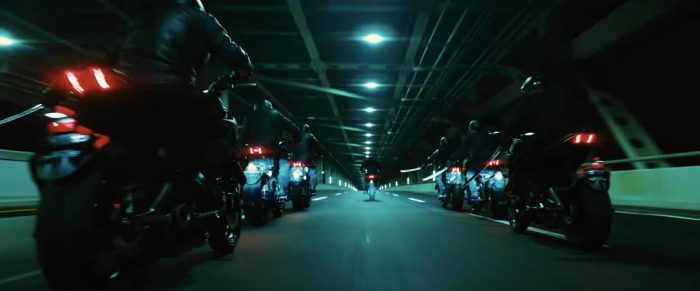
The best way to understand the power of writing a scene specific to your subject matter is to see what happens when a movie TRIES to write a memorable scene and fails. Look no further than the motorcycle chase scene in Gemini Man. Now this isn’t a bad scene. But it’s far from a memorable one. Chances are you’ll forget the details of it within 48 hours.
While I’m not saying a lack of specific subject matter is the only reason the scene is memorable, it is a major one. WE’VE SEEN MOTORCYCLE CHASES BEFORE. We just saw one in John Wick 3. And that one had freaking samurai swords. Yet you’re here trying to make a nuts and bolts motorcycle chase scene your big memorable scene of the movie? Of course it’s going to be forgotten. And the big reason for that is that motorcycle chases are a dime a dozen in action movies. You needed to come up with a scene that was SPECIFIC TO YOUR SUBJECT MATTER.
So let’s go back to Lonestarr’s original question. What is it about that fellatio sister rape-framing scene that, even though it *is* memorable, doesn’t place it in the same category as the scenes I highlighted above?
The main problem is you’re introducing SHOCK for shock’s sake. A truly shocking moment *will* be memorable. For example, I could have a character butcher a live elephant over the course of five minutes. It would be shocking. It would be memorable. But would it be the good kind of memorable? No, of course not.
These scenes also become a problem when the writer makes it more about them than the story. Again, if you look at all of the examples I used above, those scenes organically fit into the story. But when you’re having characters say and do things that are utterly disgusting and way further than they need to go, that gives off the impression that the writer is trying hard to make his scene shocking. And in those cases, it’s more about them than the story.
But that brings us to the curious case of Hereditary. As some of you remember, I hated Hereditary’s script. I thought it was the epitome of desperate shock-value writing. There’s no movie here. It’s just a collection of “look at me” shocking moments. And no moment was more “look at me” and shocking than the sister decapitation scene.
However, in director Ari Aster’s defense, it’s legitimately in the top 5 most memorable scenes of 2018. Many Hereditary fans will use it as proof positive of Aster’s genius. But this is a scene that does not pass the SPECIFIC TO ITS SUBJECT MATTER test. You could’ve written this scene into any horror film of 2018 without much story rearranging.
So that’s what’s tripping me up on creating a clear set of rules regarding MEMORABLE GOOD scenes and MEMORABLE BAD scenes. Clearly it’s in the eye of the beholder. However, I do think that focusing on creating a big clever well-set-up scene that’s specific to your subject matter is always going to yield better results than writing a shocking or vile or uncomfortable scene. Those will be memorable. But for all the wrong reasons.
Genre: Thriller
Premise: A fixer who brokers off-the-books exchanges for powerful corporate clients finds himself being hunted after he’s hired to protect a whistleblower and the evidence she’s uncovered.
About: This script finished in the top ten of last year’s Black List. This is the writer’s breakthrough screenplay.
Writer: Justin Piasecki
Details: 108 pages
Just yesterday I was talking about how Sundance movies don’t make money anymore. Well today shows just how much stock Hollywood puts in my opinion. In a most unlikely alliance, Neon and Hulu (??) teamed up to pay the most money for a Sundance film EVER – 18 million bucks – that being for the Andy Samberg time-loop black comedy, Palm Springs. Wondering what the movie is about? Scriptshadow’s got you covered. I reviewed the script last year. Immediate thoughts – the time loop conceit is alive and well. But, also, SOME CATCHY HOOK is better than NO CATCHY HOOK, even if that hook’s a little tired.
On to today’s script, which has a much more subdued hook. Actually, I don’t know if this constitutes a hook. It should lead to some good debate in the comment section (what is a hook?). I would say a hook is any strong unique quality in your concept that begets intrigue. I’d never heard of this unique job before, and I *was* intrigued by it, so I guess that makes it a hook, no?
Karen Grant has found herself in a quandary. She decided to blow the whistle on her company, which develops a synthetic tobacco strain which she knows causes the same types of cancer as regular tobacco. Her 400 million dollar company is about to be purchased by a billion dollar company and let’s just say that if this info gets out, it’s not going to be good for either company.
But Karen gets cold feet when both companies learn of her plan and send people after her. Scary people. Karen is in no man’s land. The bad guys are so powerful they’ll probably find a way to bury the story before it spreads, and afterwards, they’re going to make the rest of her life miserable. But she can’t just give the documents back either. She knows too much. And when gigantic companies encounter problems like this, they tend to dispose of said problem.
So Karen is referred to a guy named Tom, or as he’s known in the business, a “broker.” This is a man whose specific job it is to broker high profile behind-the-scenes deals, such as this one, so that nobody gets in an accidental car crash and that the company in question can be assured that this compromising info never reaches the public. A broker has no allegiance. He’s not here for Karen. He’s here to broker a deal for both sides.
But as you’d expect, the billion dollar company would prefer to do things their way. So their M.O. is to track down these brokers and introduce them to the old concrete feet in the local river routine. Except they’ve never run into a guy like Tom. Tom uses old school technology to communicate – old phones, p.o. boxes. If he needs to have a conversation with his clients, he calls an operator and does what deaf people do, use an old machine to type out his responses and the operator reads them out loud for the other person.
This frustrates the heck out of Karen’s company, who can’t seem to get a beat on this guy. So they eventually decide to do the deal, a deal that will net our broker a cool 40 million bucks. But then something unexpected happens. Tom starts to fall for his client. And that compromises everything.
This one did not start out strong. The problem was voice over.
Here’s the thing with voice over. It’s a great tool. It can be used effectively in a handful of situations. For example – Fight Club. Voice over there is a part of the story’s DNA. It would be weird if that story didn’t have voice over. That’s how well-woven it is into that movie.
The Broker does something you don’t want to do early on in a screenplay, which is to give us voice over that doesn’t clearly connect to the people or the images we’re seeing. We’re watching two people have a conversation at a diner. We meet a couple of other folks also. During this, we hear some random voice from some random guy talking about something vague.
I understand why writers like to do this. There’s something artsy and creative about using voice over with a series of unrelated images. In the rare cases where it’s done well, it creates a sense of mystery that drives the reader to turn the page. But when it’s done badly, which it almost always is, it creates a sense of confusion. I don’t know who ANYBODY IN YOUR STORY IS YET. So when you’re showing me one face and you have some other person talking about something different, it’s frustrating.
And while I did eventually figure it out, there’s no guarantee that the reader will give you that much time. I only did because it was a Black List script, a script that lots of other readers had vouched for, and therefore something I had some assurance would get better. But if you’re a random writer with a random script, I wouldn’t give you the same length of rope. Not because I hate you. But because I’ve read thousands of scripts that started badly and never got better.
So you can get fancy all you want in your opening. But do so knowing that there’s high risk involved.
The good news is, once this story hit its stride, it got good. I liked this broker character. It made sense to me that there are high profile unique situations that occasionally pop up where there isn’t some yellow pages number you can call for help. The only help you could get would be from a specific person who does this specific job, and because of that job, lives in the shadows.
And the writer took that one step further by giving the broker old school technology. It provided the story with an opportunity to create set pieces you don’t traditionally see in movies these days because everyone is using cell phone tracking software and back door sniffers to steal passwords. You can’t do that when the target’s primary communication method is postcards.
I was really digging that aspect of the story. However, the writer takes a calculated risk by adding a love story to the plot. And while I didn’t have a problem with that in theory, it’s not executed very well. First of all, these two can’t communicate face to face. Most of the time when they’re talking to each other, one half of the conversation is coming from the telephone operator, not Tom.
So for Karen to all of a sudden become interested in this guy – she begins asking him personal questions, wanting to get to know him – it doesn’t make a lot of sense. It does open up a fun plot development, though, in that Tom starts getting sloppy because he’s starting to have feelings for her too. But the physical separation aspect of the story becomes too much of a hurdle for that plot development to work.
The script makes some other good choices, though. I’ve read a lot of scripts like this where we only see the story through Karen’s eyes. But The Broker puts us in the room with the bad guys almost as much as the good guys. This allows the writer to create fun dramatically ironic scenes, such as Karen going to the airport and us knowing that the bad guys have already tracked her here. So she doesn’t know she’s being watched but we do. They’re hoping she’ll lead them to Tom. But the climax of the scene is that Tom was playing them the whole time to get them out in the open so he could get a visual on who was following her. You can’t write that scene if you’re only telling the story through Karen’s eyes.
So I’d say The Broker is worth the read. It’s by no means perfect but it’s got enough going on to keep you interested, that’s for sure.
[ ] What the hell did I just read?
[ ] wasn’t for me
[x] worth the read
[ ] impressive
[ ] genius
What I learned: Beware complicated family dynamics. And if you do have complicated family dynamics, spell them out for us. The reader understands “mother,” “father,” “son,” “daughter.” But things can get confusing when you run into cousin and step-father and step-son and father-in-law and daughter-in-law territory. To the writer, the connection is obvious. But if you don’t spell it out for us, we can easily be confused. I spent half this script trying to figure out who Ray was. At first I thought it was Tom’s brother. But then later we learn they have different moms. So I made an educated guess that their moms were sisters, which would make them cousins. And then Ray has a daughter who Tom has a strong family bond with. What’s the relation when your cousin has a daughter? A cousin-niece? At a certain point, you have to ask if complicated family dynamics are worth it, especially when most of the people reading your script are reading it faster than you’d prefer.
What I learned 2: Why is this a big deal? Have you ever had a reader ask you a question about something in your story that you thought was obvious? Like, “So did John kill Sarah or not?” And you want to point to page 54 where John is being interrogated and he clearly says, in the scene, “I killed Sarah.” Why did your reader miss that? It may be because they were trying to figure out something as stupid as how two characters are related.