
Search Results for: F word
Genre: Action
Premise: When a talented hacker is recruited by the mysterious Cicada 3301, she gets wrapped up in a plot that threatens to destroy the entire world. Based on the real organization.
About: This script finished number 4 on the 2019 Black List. The writer of the script, Lillian Yu, made last year’s Hit List with her script, Singles Day.
Writer: Lillian Yu
Details: 108 pages
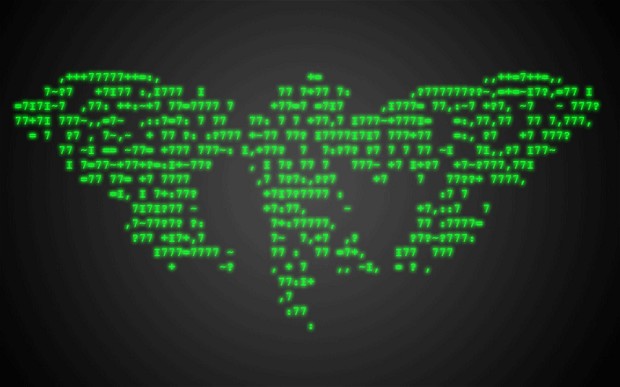
One of the reasons it’s so hard to make hacker movies work is because there aren’t a lot of ways to make typing on a computer interesting. Even with the fancy graphics, it’s a bit like chronicling the life of a famous writer. The act of writing is boring to watch, just as the act of hacking is boring to watch. I found this out the hard way a long time ago when I wrote a hacker script. No matter how cool I tried to make the hacking process, it always came back to my hero sitting in front of a screen pounding buttons. I could never figure it out.
The more interesting approach is probably to have your hero be operating in the real world and your villain be the one who’s the hacker. That way, they’re controlling the elements around you and you have to constantly adjust. I think The Net, with Sandra Bullock, took this approach. Enemy of the State as well. And probably some recent movies that I’m forgetting. So how does Yu solve this problem? Let’s find out.
Jane is a computer genius, so much so that she got a full-ride to Harvard. Jane is also a bit of a social justice warrior, and when she tries to expose one of Harvard’s premiere fraternities for covering up sexual assault, she finds out that Harvard is more interested in keeping up its pristine image than being Ronan Farrow’s next expose. So Jane is kicked out of school.
She eventually gets a crappy job at an insurance company where she secretly retroactively adjusts policies so that poor people don’t get screwed over. This catches the eye of a secret organization known as Cicada who recruits Jane to be a member. She’s flown to Paris via a remotely controlled airplane, passes a bunch of a tests, then meets the team, which is basically a techno-savvy version of the Mission Impossible group.
The leader, Adam, explains that Cicada is an organization whose sole job is to do right in the world. For example, there’s a guy running a Ponzi scheme 10x worse than Madoff. Cicada digitally transfers all that money back to its rightful owners. All in the background.
The problem is there’s another organization called Zero whose mission is the same as Cicada’s. To save the world. Except their business plan has gone awry recently and their current plan is to infuse North Korea with trillions of dollars so it can launch a nuclear war against the world. All of this is happening at the end of the month, so they need to act now.
There’s a major gathering of the most influential people in the world at a castle and the head of Zero is going to be there. They need to get there and kill the guy. Unfortunately, hacking isn’t going to be enough to do the job. So Jane must go through action training to get her up to speed in hand to hand combat and shooting peeps in the face. She barely passes and off they go.
Everything at the castle goes cleanly at first, but then Jane runs into a Zero member, who informs her that Cicada is lying to her. That she was recruited specifically to be the fall guy when all of this hits the press. Unsure of who to believe, Jane must decide who to align herself with, the company who recruited her, or the apparent enemy.
One of the best ways to convey a script read is to take people inside the mind of the reader as they were reading. Which is what I’m going to do here. The first thing I noticed about this script was that the writing was strong. There was a vibrancy and energy to it that was exciting. The description, in particular, was a cut above what I usually see.
So I was excited. However, I then ran into my first issue with the script. The main character was really angry at the world. And angry main characters rarely work. It’s hard to root for them, plain and simple. Whenever you’re unsure of what you can get away with with your main character, just imagine them in real life. Do you like angry people in real life? I don’t. Most people don’t. So that’s probably not going to work as a main character. It can work with a side character since they don’t need our emotional investment. But it’s a major risk when you’re doing it with the hero.
I think Yu sensed this and, therefore, gave Jane a couple of save the cat moments. Her mom dies. And she helps a wronged insurance customer get their money back. This can sometimes work to balance the character out. But only if the implementation is invisible. I saw these moments for what they were – attempts to get us to like the character. Once we see the hand of the writer writing, we know we’re being manipulated.
Regarding the problem I brought up in the intro, Yu made the wise decision to train Jane in more than computer hacking. She’s taught how to kill and fight and drive which allows her to get into more interesting situations in the big set pieces. The issue there was that it wasn’t believable. She’s trained to be an action star in a week.
This is a common problem in these “ordinary hero thrust into extraordinary situation” movies and writers have developed all sorts of tricks to make the leap passable. For example, in the movie Wanted, didn’t James McAvoy’s character have a father who was special and therefore he’d inherited special abilities as well? He just needed someone to open them up?
To this day, the best movie that’s ever done this is The Matrix. It was instantly believable that a nobody who doesn’t know how to fight could fight like a master since when you’re in a computer system, any skill can be uploaded into you. It’s one of the many reasons that movie was a classic (Matrix 4 coming, baby!).
But the biggest problem with this script is that 75 pages into it, I stopped and thought to myself, “I know I’ve read this somewhere before.” I went into my archives, did some research, but eventually realized that, no, I hadn’t read it before. It was that the script’s beats were so familiar, it just FELT like something I’d read before. And that’s where I mentally gave up on the script.
A few of you have indicated I should add a “Is this produceable” section to my reviews since I’m moving into producing. It’s a great question with this script. Because it feels like a movie. But if I’m going to produce something, I’m looking for some element that’s unique enough to make the film stand out amongst the crowd. And I didn’t feel that here. This is very much Mission Impossible meets James Bond. A few years ago, the female lead might’ve helped it stand out. But now everyone’s writing female action leads.
Then again, who knows. John Wick was the most generic action movie plot ever. A retired assassin comes back to kill a bunch of bad Russians. And after the Action Showdown Contest, one of the conclusions we came to was that it’s really hard to make an original action movie. So I suppose the answer to this question is in the eye of the beholder. We’ll have to see what happens.
[ ] What the hell did I just read?
[x] wasn’t for me
[ ] worth the read
[ ] impressive
[ ] genius
What I learned: When writing hacking scenes, avoid a bunch of character + computer screen gobbledy-gook that sounds like hacking. Stuff like, “Did you close down the firewall?” “I’m still trying to find out if he’s using a password sniffer!” In my experience, that stuff never works. Instead, you need to create a situation – preferably something visual – that the reader can understand. Maybe this isn’t the best example, but in The Social Network, instead of Mark Zuckerberg writing some weird techy hacky program in real time, Sorkin had him competing against six other people in a circle of computers in the midst of a drinking contest. That’s always going to work better than literal lines of code.
Genre: Sci-fi/Rom-Com/Drama
Premise: Teddy thinks he’s the only living person left in a world where humanity is frozen in time… until his ex-girlfriend, Leyna, shows up at his doorstep. Together, they must go on a journey to find the cause behind the freeze and in the process, confront the issues that plagued their relationship before it’s too late.
About: This is the number 1 script on the 2019 Black List. The writer, Ken Kobayashi, graduated from USC Film School. This project is set up at Sony with Will Gluck producing. Gluck is no stranger to championing breakout scripts. He directed Easy A, one of the biggest spec scripts of 2009.
Writer: Ken Kobayashi
Details: 104 pages
Late last night, someone posted a comment regarding the low vote count for this year’s Black List. Writers don’t have agents this year, they reminded me. Duh! How could I forget?? And agents are the ones doing the heavy lobbying to get their clients on the Black List.
But it goes deeper than that. Yesterday, I championed the death of the biopic, as the dreaded genre was practically absent from the 2019 Black List. But now I realize that was almost certainly because the big agencies weren’t involved. Agencies promote projects for their talent arms, and biopics are actor favorites, since the actors get to play famous flawed figures and those movies always get Oscar noms. Once you remove the main people incentivized to promote that genre, however, you’re not going to have as many of them on list.
Which means maybe biopics aren’t dead after all. :(
This would also explain the uptick of original concepts in this year’s list. Managers are more willing to take chances on and develop original projects and they’re now the primary lobbyers. It’s a reminder that these things are never black and white. You take away one variable for a list and there might be 20 scripts out and 20 new scripts in. I suppose we’re going to find out if this change results in a better list or not. And it starts today with the top screenplay, Move On.
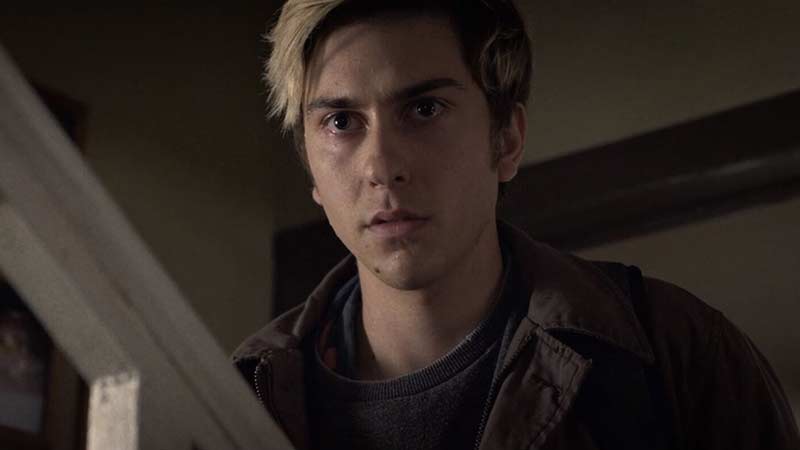
28 year-old Teddy has just asked his girlfriend, Leyna, to marry him. Leyna doesn’t mince words with her response. “No,” she says, and walks out the door. Teddy is devastated, lamenting to his best bud, Squid, who came to cheerlead, that nothing matters anymore. On his drive home, he tries to call Leyla but gets clipped by a truck, nearly dying. But it gets worse. A few minutes later, the entire world freezes.
Cut to three months later and Teddy is biking around a frozen world. Some things still work, like hot water and all the food stays fresh (since it’s frozen in the moment) but other than that, being alone in the world blows. But on his way home from biking, Teddy sees an impossible sight. It’s Leyna! She’s unfrozen as well!
She pops into his place and the two lament the situation they’re in. For some reason, they don’t discuss her marriage rejection. They hang out and the next morning Teddy shows her a google map of this giant black line off the west coast. He saw a black wall in person off the east coast and he wants to see if this other black line is also a wall. So the two go on a road trip together to find out.
During the trip, we occasionally cut back in time to the two meeting, getting to know each other, and starting their adult lives — all the things that led up to the proposal. What we learn is that Ted’s a moron. He took a job in Japan without clearing it with Leyla and then tried to save face by proposing to her. It turns out that rejection is the least of his worries, though, as Ted is about to find out the shocking reason why the world is frozen.
I saw a lot of people commenting on “Move On” in the comments yesterday and the consensus seemed to be that nobody made it past the first 20 pages. I can see why. The writing here doesn’t crackle loud enough to inspire that page-turning tick all writers strive for.
So what would’ve happened had you kept reading? Well, the script has a nice twist. There’s no doubt about it. And that led to an interesting final act. But before we get to that, let’s talk about everything else.
There were too many small but frustrating miscalculations in Move On to buy into it. For example, we get hit with the most gigantic story development ever. THE WORLD IS FROZEN. That’s something you need to sit in for a while. It’s not something you flippantly throw in before sprinting to the next plot point. But that’s exactly what happens. Less than ONE PAGE after the world freezes, Teddy sees Leyla. I knew at that moment the script was in trouble.
Understanding time and pacing and when to draw things out and when to move things along is an essential skill in screenwriting. Some writers do it naturally. For others, it takes time to learn. But, I mean, one page of Frozenville and we’re already throwing the girlfriend back in there?
Then, our lead characters aren’t acting like real people would. If two people lived in a frozen world for three months then ran into each other, it doesn’t matter who they are, they would spend the next 48 hours talking about this bizarre event and how it’s changed their lives and how scared they were and everything they saw and experienced. Instead, we get a brief conversation between Teddy and Leyla before she says, “We’ll continue this conversation tomorrow.”
The trifecta for me was when Teddy says he’s found this black line on the West Coast on Google Maps. He’s already been to the East Coast and seen a black wall off the beach. So he wants to “check to see” if this line is also a black wall. Here’s your answer, Teddy. Yes. Yes it is. What else would it possibly be? Yet that’s the goal we use to drive the story. At that point, I mentally gave up on the script and only read on because I was going to review it.
To the writer’s credit, we do get that twist. —SPOILERS— It turns out that on his way home that day, Teddy didn’t get clipped by a truck. He got flat-out T-boned and was killed. This is a simulation (both the world and Teddy) for people who need to find closure with those who they’ve lost. Leyla was devastated because she never got to discuss what happened and why she did what she did. So, five years later, she’s finally gotten a chance to get that closure.
I’ve read a lot of scripts where people are in simulations. I’ve even read a good number of scripts where people create simulations to connect with dead loved ones. But I’ve never read a script where we take the point of view of the simulated dead person inside the simulation.
It just goes to show how powerful POV can be in story creation. If you’ve been doing this long enough, you’ve come up with a hundred concepts, many of them discarded because they were too similar to other movies. But what if you changed the obvious POV to a non-obvious one? For example, everyone’s come up with a Die Hard idea. But what if you wrote a Die Hard idea from the point of view of Hans? The villain? It would be a completely different movie (I’m not saying it would be good – I’m talking off the top of my head here – but it would be different). So I give credit to Kobayashi for finding a cool angle that no one else thought of. I’m guessing that’s why he made this year’s list.
Unfortunately, the script wasn’t up to snuff in many other areas. I loved the twist. And I even liked the dark tone the script shifted to in those last 20 pages. But then you have stuff like Teddy learning he’s a simulation and, within one scene, being okay with it, and then, in the next scene, cheerfully ready to be turned off for good. There were so many story beats like this one that lacked genuine human reactions that I was constantly being pulled out of the script.
But it does show you how powerful a big concept and a big twist can be. If you’re a young writer who’s a long ways away from mastering this skill, those two things can act as turbo boosters. Because both of them are memorable. You remember the concept. You remember the twist. In most cases of reading screenplays, you don’t remember anything about a script after a couple of weeks.
Move On is a fun screenplay when viewed in totality. But it’s an uphill battle getting to the twist that saves it. It wasn’t enough for me to recommend the screenplay.
[ ] What the hell did I just read?
[x] wasn’t for me
[ ] worth the read
[ ] impressive
[ ] genius
What I learned: Screenplays where a character acts bizarre for reasons that aren’t revealed until late in the story are hard to pull off. Once we hit the twist on page 70, we get a better understanding of why Leyla is acting so strangely (why she just conveniently appeared out of nowhere and why she’s so laid back in spite of the outrageous circumstances). This is her simulation. She doesn’t have to talk or answer anything from Teddy if she doesn’t want to. She just wants to spend time with him to get closure. Think about what you’re doing to the reader here, though. You’re having a character act unlike any rational human being would for 70 pages before you tell them why. It’s not that you can’t pull this off. But you have to creatively find ways to make the character feel real in the meantime. Or else the reader sees this character who’s doing all these things that no normal person would do and they give up on the script before they get to the great twist. So travel down this road cautiously.
Welcome to The Mandalorian Teleplay Chronicles. I will be reviewing every episode of The Mandalorian’s first season with an eye towards helping writers learn TV writing. Here’s a link to my review of the first episode here, a link to the second episode here, a link to episode 3 and here’s episode 4.
Genre: Sci-fi/Fantasy
Premise: The Mandalorian gets stuck on Tatooine where he must help a young bounty hunter pursue a dangerous assassin.
About: This is Episode 5 of The Mandalorian. Only three episodes left! Star Wars trivia maven Dave Filoni is back in the driver’s seat. But unlike the pilot episode, he’s not just directing here, he’s writing too, making this the first episode not written by Jon Favreau.
Writer: Dave Filoni
Details: 30-35 minutes.
“Mando!”
I love the way Carl Weathers calls out to the Mandalorian. There’s something vocally pleasing about mimicking the way he says it.
But I’ll tell you what I don’t love.
Dave Filoni’s writing.
This episode is about what you’d expect from the Star Wars Trivia Guy. A jaunt down memory lane. Lots of old Star Wars lines and Star Wars spots. It’s a fan service party. I’m sorry but Filoni needs to be placed back in the cartoon side of Star wars. He works best in situations where he can give characters pink helmets and have everyone say, “I have a bad feeling about this” twice an episode.
I’m tempted to spend the next 2000 words ripping this episode apart, but I want to stay true to the purpose of these articles and focus on improving our television writing.
For those who didn’t see the episode, here’s a recap.
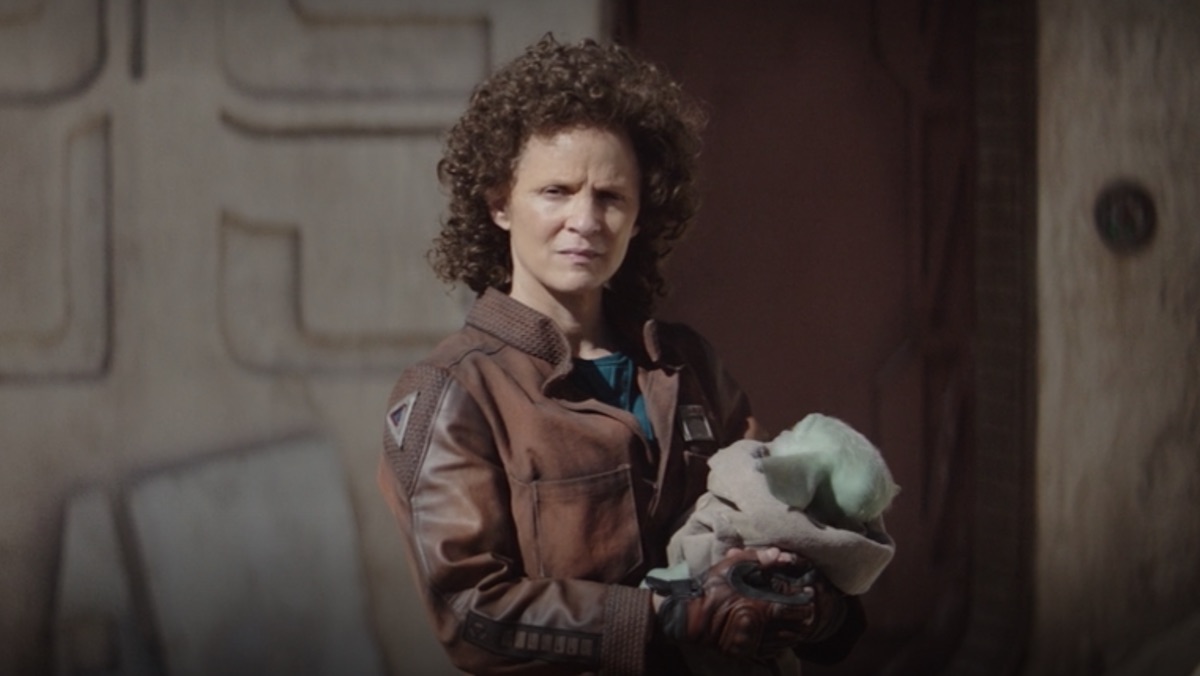
After Mando injures his ship in a space battle, he flies down for repairs on Tatooine! You know, from the original Star Wars! Once he lands, we meet the extremely cartoonish Rhea Pearlman who I know isn’t Rhea Pearlman but I’m going to call her Rhea Pearlman. Rhea Pealman is a space port mechanic or something. She tells Mando she can’t fix his ship without deniro and Mando doesn’t have any. Uh-oh. What’s a bounty hunter to do?
Mando leaves Baby Yoda and his viral memes in the ship to grab a beer at, you guessed it, the Cantina bar from Star Wars! There he meets Toro Calican. If that’s not a fan fiction Star Wars name, I don’t know what is. I bet I could find a better name on one of those Star Wars name generator websites. Actually, I’m going to test that theory. Hold on. ——- Back! Here’s the first one they gave me: Thes Lerann. Already better.
Toro Calican, played by someone who took his first acting class last week, is sitting in the exact seat where we first met Han Solo and even sits the same way Han Solo does!! Toro is a young bounty hunter who needs help with a bounty out by the Dune Sea (THE DUNE SEA!? WAIT, DIDN’T LUKE REFERENCE THE DUNE SEA IN THE ORIGINAL STAR WARS!?!?). He says he’ll split the payout with Mando, which will allow Mando to pay for his ship repairs and blow this joint.
They head out to the Dune Sea and get in a sniper battle with the assassin. Realizing they need to get closer, they wait til night and use flash-bang explosions to blind her gun site. This makes it so she can’t shoot them as they approach. Eventually they capture her and she smooth-talks Toto Barnacle into going after Mando. Fortunately, Mando sniffs it out and defeats Toto first. The end.
Oh, and then there’s a cliffhanger where we see a random character’s feet.
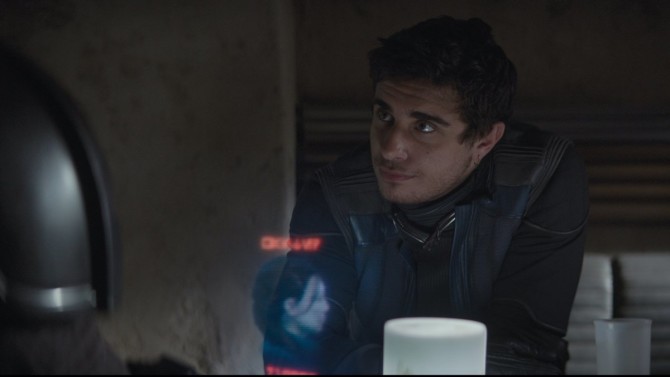
The big problem with this TV series right now is that the show doesn’t seem to be going anywhere. When you’re writing serialized television, you want to connect the episodes as much as possible. You want multiple characters pursuing multiple things. You want unresolved conflict between characters. You want overarching goals, immediate goals. You want new relationships to form, old ones to fall apart. You want conflict at every turn. And you want it all to exist within a giant web of connectedness. All of this helps your show feel like it has purpose.
So it’s strange that The Mandalorian is doing the opposite of all these things.
Each episode is singular. Not only in its mission, but with its characters. The press tour for this show focused on all of these actors who were going to be a part of this series. But so far, all of them are only getting one episode. It’s bizarre.
We continue to watch because we’re Star Wars fans and this is a new way to enjoy the franchise. But they need to get their bantha s%$# together. What is the ultimate goal of this show? There’s no big bad guy. There aren’t any real unresolved conflicts between Mando and other characters. Maybe Greef Carga, but come on. He’s had 5 minutes of screen time.
And that’s another issue with the show. Every drama I’ve ever known has been in that 48 to 60 minute length. The reason for that is that dramas are about character and it takes time to develop characters. You have to experience them in a lot of different situations and witness a lot of their conversations in order to connect with them. We’re not doing any of that. When you combine that approach with these short individualized [side] quests, the experience feels as empty as talking to a droid.
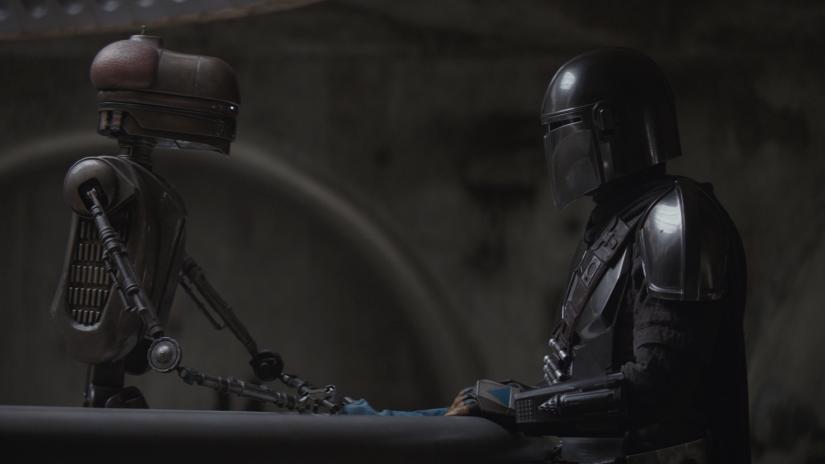
It’s funny because one of the things I was worried about going into this series was whether Star Wars could work as a “talking heads” show. Yet here I am now begging for more talking heads. If we’re not invested in multiple character storylines in a show, we’re eventually going to tune out. Focusing on a single hero’s storyline is a feature game. This is television.
Okay, back to Filoni. Everything in this episode from the characters to the dialogue was cheesy and cartoonish. However, if you look back at the original Star Wars, you could argue that it’s cheesy and cartoonish as well. A major storyline in the second film is a man hunched over in a tiny hut talking to a green frog creature who speaks backwards. But the original Star Wars is still a thousand times better than this episode. So there’s a clear line between good cheesy and cartoonish and bad cheesy and cartoonish. Where is that line and how do you know if you’ve crossed it?
I think it’s a matter of degree.
If you create overly goofy characters, it’s hard to rein them in to anything approaching authenticity. The two characters Filoni introduced into this episode were Toto Barnacle and Rhea Pearlman. Rhea is WAAAAAY over the top. And Toto is WAAAAAY cheesy.
Interestingly, they’d probably work well in a cartoon. Cartoons embrace exaggeration whereas live action requires a sense of grounded-ness. Cartoon characters don’t possess the necessary depth to make you believe that they exist outside of the moments we see them. For example, can you imagine an average day with the Rhea Pearlman character? Of course not. She wasn’t constructed to exist in real life. She was constructed to bounce off the walls and give Mando dime store life lessons in five minutes of screen time. If you want characters who feel like real people (or real aliens!) you need to think of them beyond the scenes that you write for them.
And, actually, a great exercise is to sit down and write a typical day that your character goes through. Once you’re forced to think about the mundane moments of your character’s life, that’s when you really start to understand them. Filoni clearly hasn’t done that. And that’s why Toto sounds so cliche. You can’t get original lines out of a cartoon character. You only find original dialogue through a fully lived life.
That friend of yours who always seems to come up with the funniest most original observations – that didn’t come out of nowhere. His extensive life experiences shaped his reality and, over time, all of that built into a unique world view. It’s the same thing with characters. The more you know about them, the deeper the well there is to pull dialogue from. The less you know about them, the more you’ll rely on cliches. This is a monster point so I want to stress it:
The majority of generic and/or cliche dialogue comes from a lack of understanding of the characters speaking. The more you know about someone, the more specific their lines will be, moving you further and further away from cliche.
If there’s one thing I want you to take away from this misadventure, it’s the importance of character in television. Spend more time coming up with your characters. Try to get to know their pasts as much as possible. Think about the relationships of your characters in your show. Make them complicated and interesting and full of unresolved conflict. Think about their individual storyline throughout the season and think about how it will weave in and out of other characters’ storylines. And think about the arcs of your supporting characters. In features, it’s all about the hero. But in TV, everybody needs to arc and so everybody needs to be on their own difficult journey. That’s not happening in The Mandlorian, and if it doesn’t start happening soon, this show is in major trouble.
[x] What the hell did I just watch?
[ ] wasn’t for me
[ ] worth the stream
[ ] impressive
[ ] genius
What I learned: One of the reasons I’m not a huge Stranger Things fan is that, like The Mandalorian, they depend too much on fan service. Everything is a reference to something else. I like it when writers do the hard work and come up with fresh ideas. However, the one thing Stranger Things has over The Mandalorian is that it cares a lot more about character development. There’s a real desire to get to know what makes those characters tick that I’m not seeing in this show. You can only get by for so long on plot in TV. Sooner or later, you have to let us into multiple characters’ lives.
What I learned 2: Singular POV doesn’t work well in television. The Mandalorian is a Singular POV TV show. We see every scene through the hero’s eyes. The reason this is so hampering is because television depends heavily on great characters and if we’re limiting the point of view to just one person, we’ll only get to know the other characters through the limited point of view of our hero’s eyes. I mean even Star Wars cuts around to different points of view and that’s a feature. This is a strange choice that’s slowly killing the show.
Don’t forget. You have one week left to turn your script in for the HOLIDAY AMATEUR SHOWDOWN. Must be a late-year holiday-themed script. I’m giving you til next Thursday, December 12, at 8:00 pm Pacific Time. Send the title, genre, logline, why you think it deserves a shot, and, of course, a PDF of the script (you’d be surprised at how many people forget that part), to carsonreeves1@gmail.com
Genre: Action
Logline: A disaffected NYPD cop visiting her daughter in a state-of-the-art hospital is unwittingly caught in a hostage situation when extremists raid the building seeking the cure of a deadly virus.
Why You Should Read: I got my start writing for B-Movie King Roger Corman, which basically means your creative flexibility gets completely strapped by ultra-low budget constraints. I wrote “Hemorrhage” to break free of such restrictions and focus on telling a story about a hard-pressed mother struggling to mend old wounds between her sick daughter, albeit with armed extremists threatening to rip apart what little bond they have left. I love the thrill of a good action movie, especially ones with compelling antagonists whose motives aren’t simply black or white and make us truly fear for the principal characters’ lives. If you get a kick out of the same thing, then you’ll have a blast reading “Hemorrhage.”
Writer: Justin Fox
Details: 108 pages
When I conceived of Action Week, this is exactly what I imagined. A good old-fashioned balls-to-the-wall action flick. But I realized something while reading “Hemorrhage,” which is that reading action scripts is challenging. Action is meant to be experienced visually. It isn’t meant to be conveyed in words. There are only so many “He jumps,” “She shoots,” “They runs,” “It explodes,” a reader can take before they tune out.
This is why I encourage writers to come up with action concepts and set pieces that are unique in some way. The more uniqueness you can bring, the more you disrupt the pattern. “Gravity” comes to mind. That movie had so many unique action scenes because of the story’s unique setup. Or that library book attack scene in John Wick 3. That’s the sort of stuff you need to put on the page.
Let’s see how Hemorrhage fared in this department.
An American doctor in Afghanistan is trying to help contain a deadly virus when she, herself, gets infected. She’s tossed on a plane and flown back to New York City so she can be treated. Meanwhile, 35 year old cop Laken Atwood is finishing up the day’s beat so she can get to her daughter, Piper’s, lung surgery. Piper’s lung was punctured due to a car accident where Laken was driving. So Piper’s not exactly thrilled to see her mom.
While this is going on, terrorists led by creepy frenchman, Cedric, creepier fake doctor, Mateo, and Mateo’s angry younger sister, Ana, show up at the hospital the Afghanistan doctor is being sent to and start killing everyone they see. They then withdraw blood from the woman, which no doubt they will use to kill large portions of populations at some point in the future.
In case you were wondering, this is the same hospital Piper is staying at. So when Laken and Piper hear all the shooting, Laken knows it’s time to high-tail it out of here. There are a few problems though. One, Piper is connected to a computer thing that’s keeping her lung pumping. Two, Laken’s husband, Danny, is downstairs grabbing snacks. And three, New York is in the midst of a storm so bad the streets have turned into lakes.
Laken tries to construct an escape plan but the terrorists are on them quickly. Laken kills Emil AND Ana, which makes Mateo so angry, he momentarily ditches his plan to destroy the world so he can find this pesky cop and kill her. Eventually he’s able to get his hands on Piper and does the unthinkable – HE INJECTS HER WITH THE VIRUS!!! This gives Piper a couple of hours to live. So now Laken will have to retrieve her daughter from the terrorists and somehow find the vaccine before Piper bites it. Will she succeed?
I like what Fox did with his characters.
He made this about the mother-daughter relationship. A lot of action writers don’t care about character stuff. But if you can create characters who a) we want to root for, and b) have a conflict that we want to see resolved, we’re going to be a heck of a lot more invested in your story.
I also liked the way the setup made our hero’s job more challenging. Laken isn’t the female John McClane. She doesn’t get to roam free through a building wherever she wants. She has to protect her daughter who’s only got one lung and has to lug around an apparatus in order to breathe. That was good.
And my favorite part of the script was when they jammed the virus into Piper. Now you’ve got this literal ticking time bomb that’s going to go off ON TOP OF Laken needing to get her daughter back from the terrorists. All of that was great.
But every time it felt like this script took a step forward, it would take two steps back. Let’s start with the storm. If you’re using something to create a convenience in your story that is so big it could be a movie on its own, that’s a problem. Fox needed to create a reason why cops couldn’t just descend upon this hospital and rescue everyone. So we get a storm so intense it’s creating rivers on the streets. I don’t know if that’s ever happened in New York history. If the thing you’re using to plug up a pot hole is so big it could be its own film (A flooded New York City!), people aren’t going to buy it.
Then you had the dad. He was clearly the weakest character in the script. The guy goes missing for long stretches of time without an explanation. What I’m guessing happened is that Fox never truly understood the dad so there wasn’t any commitment to the character. All writers run into this problem. At a certain point, if you’re not going to fully commit to a character, you have to cut bait. The dad could’ve died a few years ago. He and Laken could be divorced and he lives in another state. But he definitely shouldn’t have been here in this hospital.
And, finally, I didn’t understand Mateo’s plan. At first we learn that the terrorists fighting for him are doing so because he planned to use this virus to save people. How do you use a virus to save people? It didn’t technically matter since he was lying to them and was always going to use it as a weapon, but we still have to buy into why the terrorists believed such a thing in the first place. And even once we learn that he’s going to use it as a weapon, it isn’t clear who he’s going to target or how. And then, late in the movie, we establish that Piper needs to get the vaccine which means that… there’s a vaccine. So how is this virus going to kill a bunch of people if we have a vaccine for it? As your villain’s ultimate plan emerges, we should feel more and more satisfied, not more and more confused.
But hey, this is Amateur Action Showdown. So what about the action, Carson!?
The action was fine. My favorite sequence was the sky-bridge. That felt unique to the situation and therefore it popped as the most memorable of the action sequences. But everything else was standard shoot-shoot-duck-hide-shoot-fight-shoot. There wasn’t a lot of creativity. I implore action writers everywhere to do as little of the generic action stuff as possible. We can get generic action anywhere. What action can we only get from your movie? Figure that out and you’re going to come up with tons more creative action scenes. Like the “attacked at the border highway” scene in Sicario. I’d never seen anything like that before.
This is probably stale advice to you, at this point. I talk about it all the time. But, it’s one of the main things that distinguishes the writers who stay stuck on the outside from the ones who make millions of dollars. The writers who can come up with original situations within the genres they specialize in will stand out PRECISELY BECAUSE the majority of writers do not bother to go the extra mile.
This isn’t to say Fox’s script was too generic. Not at all. It’s simply that it wasn’t creative enough. If I were to rate it on a scale of 1-10, I’d give it a 6. Which is respectable because most of the action scripts I read are 5 and below. I could even see Hemorrhage sneaking into the 9 or 10 slot on my Best Amateur Screenplays of the Year list. However, I think this script has another gear or two to it and that Fox needs to really push himself if he wants to get it there.
Script link: Hemorrhage
[ ] What the hell did I just read?
[x] wasn’t for me
[ ] worth the read
[ ] impressive
[ ] genius
What I learned: “The Baby Yoda” – In order to make your hero’s journey more difficult, add something fragile that they have to protect. In Mandalorian, it’s Baby Yoda. Here, it’s a physically impaired daughter.
When you’re writing a screenplay, every little thing counts. Even spelling words correctly counts. So if you can make your script 1% better by adding a cool plot development on page 40, you do it. And if you keep doing that over and over, making little improvements here and there? Before you know it, your script is pretty darn good. But improvement take time. Heck, writing takes time. So I got to thinking, how could I help you guys significantly improve your current script in as short a period of time as possible? That’s how we got this article. Here are a handful of things you can do to make your script a full 25% better THIS WEEKEND. Enjoy!
Write a Better First Scene
Improvement Potential: 8%
Implementation Time: 3-5 hours
I want you to go read the first scene in your script right now. I’ll wait. Now I’m going to ask you a question. Is that the best you can do? Because I’m going to go out on a limb and say it’s not even close to the best scene you can write. Screenwriting is challenging in that there’s a lot of things you have to do at the same time. Set up characters, provide exposition, write strong dialogue, start the scene as late as possible, end it as early as possible, blah blah blah blah blah blah blah BLAH BLAH BLAH. Blah. You shouldn’t be thinking about any of that stuff in your first scene. The number one thing you need to be focused on in that scene is ENTERTAINING THE F#%@ OUT OF THE READER. So write a scene that entertains. Yes, hopefully you’re setting up character. Yes, hopefully you’re setting up plot. But if at any point in the opening scene you have to make a choice between entertaining and anything else, choose entertaining. Cause we’re not going to keep reading unless we’re enjoying ourselves.
Eliminate Your Three Most Boring Scenes
Improvement Potential: 3%
Implementation Time: 2-4 hours
It is a rare script reading experience where I say, “Man, this is all going by too fast.” It’s more often the opposite. “Oh my God, this script is so sloooooowwww.” There are many reasons your script might be reading slow but one of the most common is that you’re adding scenes you don’t need. These scenes aren’t pushing the story forward in any significant or entertaining way. The solution to this is simple. Get rid of them! You probably already know the weakest scenes in your script but do a quick skim, note your three most boring scenes, then drop them. If there’s plot or character information in those scenes that are required for the story to work, move them to other scenes. Pro Tip – You’ll find most of these scenes in your second act.
Just Raise The Stakes Man
Improvement Potential: 5%
Implementation Time: 9-12 hours
A big reason why so many screenplays are boring is because there isn’t enough on the line. Whatever your hero’s journey is, make sure there are genuine high stakes attached to it. Yesterday, a lot of you liked my plot suggestions to improve First Harvest. All I did was raise the stakes. Here was a man who was struggling to take care of his dying wife. He’s given this baby to take care of after a local tragedy. The baby has powers. The baby causes a few hiccups around the farm but that was it as far as stakes. I changed it to: the hero *secretly* takes the baby, the baby’s powers begin healing his wife, and the FBI starts looking for the baby. The Feds taking the baby means losing his wife. What is all comes down to in writing is making the reader care. If they care, you’re good. And one of the best ways to make someone care is to increase what’s on the line. One extra point about this. There’s a sliding scale of effectiveness with this tip the more uninspired or generic the stakes are. For example, your hero has 12 hours to deliver a package or the bomb in his head blows up. Sure, there’s a lot on the line, but it’s so artificially orchestrated, so “basic action movie setup,” we don’t feel anything. You want to come up with your stakes in a way that’s creative and organic to the story. If you nail this, every single scene in your script becomes better because you’ve raised our overall investment in the character’s journey.
Give Your Hero the Best Save the Cat or Kick the Dog Moment You Can Come Up With
Improvement Potential: 5%
Implementation Time: 90 minutes – 3 hours
You guys hear about that tiny movie that came out a couple of months ago? “Joker?” The first character piece film to make a billion dollars at the box office? Do you know why that movie made so much money? Because of its Kick the Dog scene. Here Arthur is, dressed in his clown suit, advertising for a store, doing his best to bring joy and happiness to the world, and then a bunch of thugs steal his sign and beat him to within an inch of his life with it. After that moment, after getting kicked by the dog, we feel MASSIVE SYMPATHY for Arthur. Which is why we care so much about his journey. Even when he goes all psycho killer Qu’est-ce que c’est on everyone. Okay okay, maybe that’s not the ONLY reason the movie made a billion dollars. But it was a critically important introduction to the character that shaped our feelings towards him. And that’s what a good save the cat or kick the dog scene can do for your hero. So come up with the best one you can think up and write it. I promise you it will pay huge dividends down the line.
Give Us One Set Piece We’ve Never Seen Before
Improvement Potential: 4%
Implementation Time: 4-5 hours
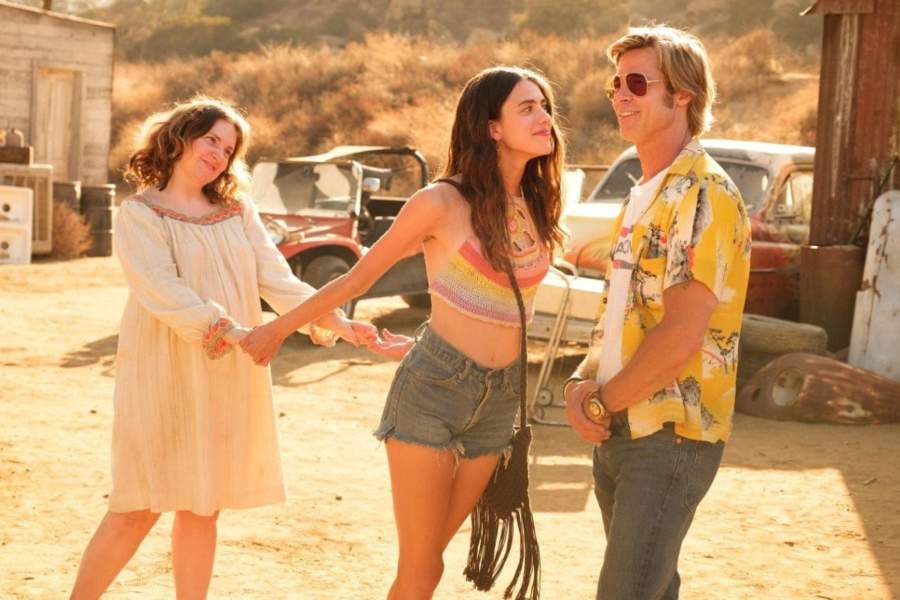
The best scripts I read almost all have one thing in common – A great set piece scene I haven’t read before. You should think of your set pieces as commercials for why your concept is so awesome. For that reason, they shouldn’t be standard generic car chases or shootouts or explosions. They shouldn’t be that scene that’s in every 200 million dollar movie now where a plane starts falling apart and everyone flies out. They should be creative and original and unique. Take A Quiet Place. What’s a commercial for a movie about not being able to make noise or else you’re killed? A wife giving birth. Who can give birth without making a noise? Or say you’re writing a movie about Hollywood in 1969. What’s a commercial for that setup? A mini-horror movie about trying to see an old friend on the Manson farm with 50 crazy cult followers in your way. The Wrestler. A former star wrestler working at a deli has a mental breakdown in front of all the customers. You can usually figure out these scenes by asking what’s unique about your concept and then building a scene around that. If you nail one of your set pieces, that’s the scene people will leave the theater talking about. So it’s important you come up with the best set piece you can possibly come up with.
Happy Writing this weekend!
Carson does feature screenplay consultations, TV Pilot Consultations, and logline consultations. Logline consultations go for $25 a piece or $40 for unlimited tweaking. You get a 1-10 rating, a 200-word evaluation, and a rewrite of the logline. They’re extremely popular so if you haven’t tried one out yet, I encourage you to give it a shot. If you’re interested in any consultation package, e-mail Carsonreeves1@gmail.com with the subject line: CONSULTATION. Don’t start writing a script or sending a script out blind. Let Scriptshadow help you get it in shape first!