
Search Results for: F word
Genre: Horror
Premise: After her abusive boyfriend commits suicide, a woman begins to think he’s found a way to haunt her from the grave.
About: Leigh Whannell directed a cool little sci-fi movie that nobody saw called “Upgrade.” Jason Blum was impressed enough with the result that he gave him this film, a new take on Universal’s monsterverse character, the Invisible Man. The film beat out expectations this weekend, taking in a “monster” 29 million bucks. The film is also getting very high praise from critics, snatching up a 90% score on Rotten Tomatoes. Oh to be Jason Blum. One weekend, you’re dodging calls after Fantasy Island tanks, and a brief month later you’re back on top of Hollywood again.
Writer: Leigh Whannell (based on the novel by H.G. Wells)
Details: 2 hours long

You’ve been invisibly penetrated with hyperbole everywhere you turn.
“Elizabeth Moss in the greatest female role in a decade.” “Horror will never be the same after The Invisible Man.” “Is The Invisible Man a modern masterpiece?”
You guys come to this site because I’m not in the pockets of the studios. I don’t have anyone to answer to. In an increasingly “my team vs. your team” business, I’m one of the last reviewers who can look at a movie objectively and tell you whether it’s good or bad.
So is The Invisible Man good?
The answer is: !!!
You like that? I made the answer invisible. If you want the uninvisible answer, you’ll have to get through the plot summary.
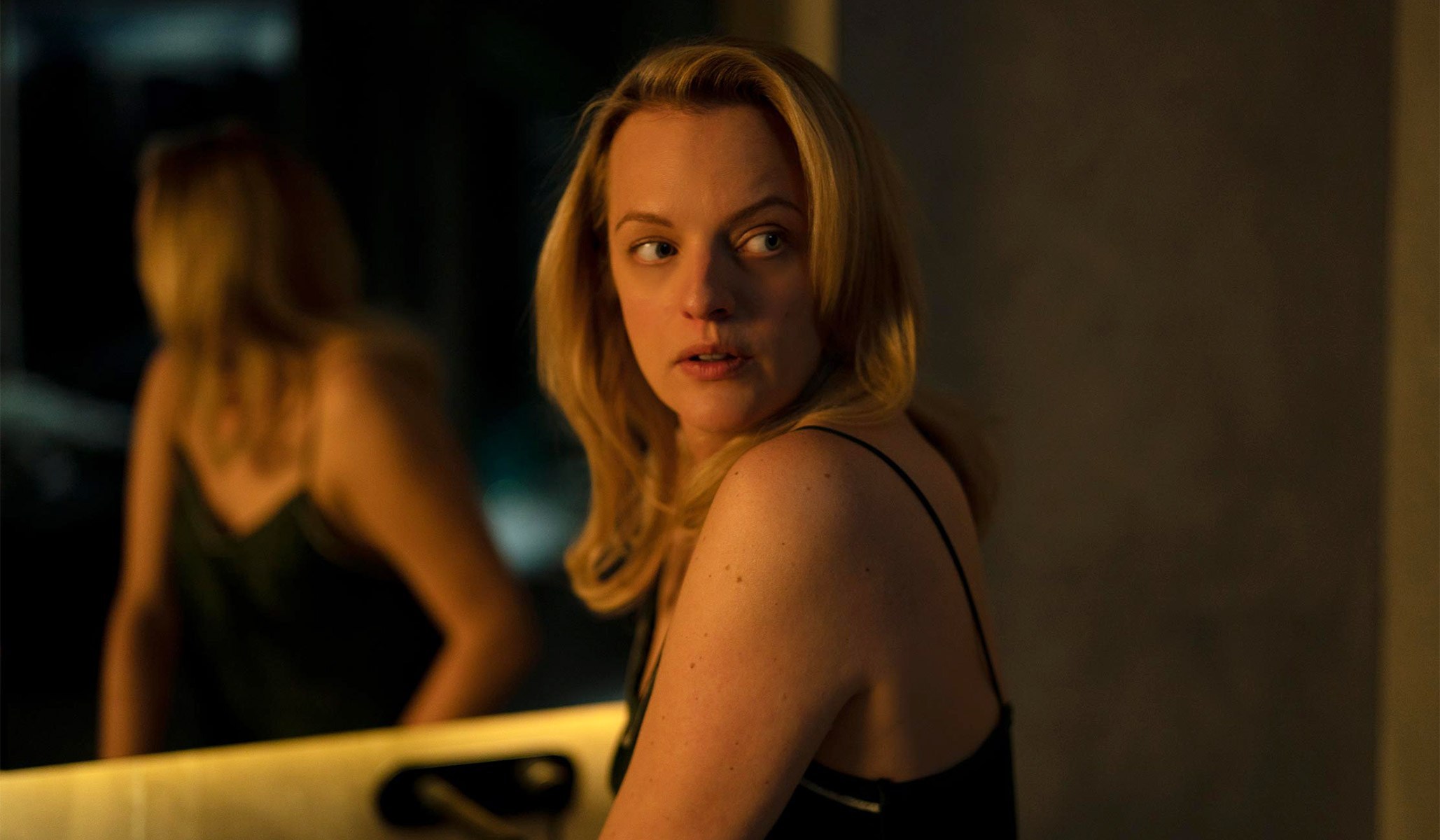
The Invisible Man starts with our heroine, Cecilia, escaping a big rich Tony Stark like home on the bluffs of an ocean. She dashes for a remote road where she’s scheduled her sister to pick her up and whisk her off to freedom. Just before they leave, Cecilia’s scientist boyfriend, Adrian, crashes into the car window screaming at Cecilia. They drive off and we realize that Cecilia has just escaped from a living nightmare of a relationship.
Two weeks later we catch up with Cecilia at her African-American friend, James’, home. James lives with his daughter, Sydney, and are acting as a hideout home since Adrian doesn’t know that Cecilia knows them. But that turns out to be a moot point because a few days later, Cecilia gets the news that Adrian committed suicide. She’ll never have to deal with him again.
At least that’s what she thought. Cecilia begins to see and hear strange things in the home, like when she drags a blanket along the floor only to have it stop mid-stride. She looks down to see what appears to be a footprint holding the blanket in place. After several of these unexplainable moments occur, Cecilia believes that Adrian has found a way to cheat death and is now haunting her. Unfortunately, when she shares her opinion with James, he kiiiiiin-da thinks she’s losing it.
When Cecilia receives a large sum of money in Adrian’s will, she suspects it’s another form of control. And Adrian’s creepy brother, Tom, is doing nothing to dispel that notion. When Cecilia’s sister gets e-mails that Cecilia never sent telling her she hopes she dies and Cecilia gets blamed when Sydney gets punched out of nowhere, Cecilia realizes what’s happening. Adrian is slowly and meticulously driving her insane. The question is, how is he doing this? And can Cecilia stop it?
I posed the question before the plot summary? Does this movie live up to the hype?
The answer, without question, is yes!!!
There’s a whole lot of good going on here, specifically on the screenwriting front. Whannell makes a lot of great choices that elevate this beyond typical horror fare.
Let’s take the opening scene. I always tell you guys you gotta have a great opening scene that pulls the reader in. This movie has that. Cecilia is trying to leave Adrian and must do so at 5 in the morning in this big empty echo-y house without making any noise. It’s a very tense scene. But the reason I liked it is because it wasn’t the typical teaser scene I see most writers write.
Most writers either do the flash-forward thing to get a cheap scare in, before writing, “2 weeks earlier.” And jumping back in time to before everything that led to that moment happened. It’s so lazy and overdone. I love when a writer can give us a tense teaser that organically fits into the beginning of the movie’s timeframe. All Cecilia is doing here is leaving a house. And yet it’s one of the best scenes in the film.
The moment I knew this movie was going to be good happened during this sequence. The house has a complex security system. She needs to turn the security off in order to escape without any alarms going off. Now we could’ve easily had her covertly snag Adrian’s laptop right there in the adjacent room and turn off the security system that way.
But here’s what Wahnnell does instead. He has Cecilia go downstairs into Adrian’s “Iron Man” like lab and access the security system from a computer in that room. Why am I telling you this? Because good screenwriters look to achieve multiple objectives in a scene. We needed to explain to the audience that Adrian was a high-level scientist. One look at this lab and we now know that. So by accessing the computer in this lab as opposed to upstairs, allows us to multitask. We’re giving the reader more info in less time.
Any writer can set up 17 different important story points in 17 different scenes. It’s the good screenwriters who can take 17 things and convey them in 3-4 scenes.
But the biggest achievement of this movie, by far, was its ability to take a premise where the novelty could die off quickly and extend it into an exciting piece of entertainment that lasted two hours.
How did it achieve this?
This is one of the most problematic things I see in contained and horror specs. For example, I read a lot of home invasion screenplays. And, at a certain point, it becomes silly that the bad guy hasn’t killed our good guys yet. The only reason it hasn’t happened is because the writer is pulling out every trick in the book to try and extend the story out for a full feature-length running time.
It took me a minute to figure out how Invisible Man wasn’t suffering from that. But then it hit me like a bolt of lightning.
Adrian wasn’t trying to kill Cecilia. He was trying to drive her insane.
Note the difference. If all he cared about was killing her, he could’ve done that within the first five minutes of entering her friend’s house. Movie over. Therefore, if he didn’t kill her within those five minutes, we, the audience, would know that it’s only because the writer is stalling to draw out the running time.
But if you’re trying to drive someone insane, you do that over time. It’s like a chain where you’re adding one link after another. This character’s motivation is control. He wants to get her into her weakest mental state so he has total control over her. This was the key to this screenplay working. It makes sense that the villain was taking his time.
But even by doing that, the story is still too simple to extend to a full 2 hours. So the writer had to do ONE MORE THING that would justify the length. And that thing is something all screenwriters have to do at least once in their screenplay. We’re all terrified of it. Most of us instead take the safe route. But you need to do this if you’re going to keep the audience interested.
And that’s to create, either at the midpoint or a little after the midpoint, a big moment that the audience never saw coming. (Major Spoiler by the way). That occurs here after Cecilia breaks into Adrian’s home and hides a physical piece of his cloaking technology just as Adrian returns home. Cecilia gets her skeptical sister to meet her at a restaurant and explains to her that Adrian is invisible and she’s got the proof.
Right at that moment, a steak knife lifts all on its own, slits the sister’s throat, and then slams into Cecilia’s hand to make it look like she did it. It’s a completely shocking moment cause we didn’t think the sister was gonna die. And especially not here in this safe public place.
But there’s more going on here than meets the eye. The reason people are afraid to make choices like this is because they’re afraid to deal with the consequences of that choice. If you don’t kill off the sister here, you have a clear path to the climax. She and the sister team up, break back into the house to steal the technology, of course Adrian will be there in his invisible suit and attack them. Will they or won’t they get out alive? Blah blah blah. Cecilia somehow tricks him and kills him. The End.
But when you have your hero murder someone in public, there’s no way out of that. You have to deal with the real world consequences of that action. Cecilia has to get taken to jail. She’s not Sara Connor so it’s not like she’s going to break out of prison. So now you’ve got your hero stuck in a prison with no way out. If I went down that potential road in my head, I would’ve seen a narrative dead end. I just couldn’t see a believable way of getting Cecilia out of prison. She can’t escape herself (without the writer’s help). Everyone saw her murder her sister so a judge isn’t going to release her (unless the writer cheats). And if she does manage to escape, every cop in the city is going to be after her. It almost becomes a different movie that we didn’t pay to see.
But here’s the thing. When you put your hero into tough situations, it forces you to be creative and come up with ideas to get them out. Whannell embraces the setting of the mental holding facility, eventually bringing Adrian there to continue his torture of Cecilia, then using the conflict between those two to cleverly create a break-out situation that was believable.
At that point, I was really impressed with what I was seeing. This is good screenwriting. And it continued to kick butt all the way to the climax.
Finally, Whannell did the right thing when it came to making his “message” movie. HE PUT THE MOVIE FIRST AND THE MESSAGE SECOND. When you put the message first, it’s a commercial for your beliefs. When you put the movie first, it’s a good movie that gets you thinking about the social message later.
Yes, there were a few “message” things that bothered me. For example, no white man comes away unscathed in this film. Even the throwaway job interview character had to make some inappropriate remark about how hot Cecilia looked. As if none of us white dudes are capable of getting through a conversation without being an a-hole. But I didn’t care because Whannell so clearly put the focus on making a great movie first. I mean, this was a high-quality riveting suspenseful screenplay. And Elizabeth Moss does a great job in the role of Cecilia.
In other words, the hype train was right about this one. It’s one of the best movies of the year so far.
[ ] What the hell did I just watch?
[ ] wasn’t for me
[ ] worth the price of admission
[x] impressive
[ ] genius
What I learned: If your hero is not active, your villain must be EXTREMELY active. Cecilia spends the majority of this movie in rooms thinking she sees things. It’s as passive a character as you can write. If you’re writing this kind of storyline, you MUST make your villain active or else there’s nothing pushing on the narrative. The villain, her boyfriend, is always on the hunt, always planning his next deception. That ACTIVITY keeps the plot moving along.

We’ve said it a million times on this site. One of the best ways to get noticed as a writer is to create a great character. It’s such a powerful trick, in fact, you don’t even need the rest of the script to be that good.
The funny thing about this is that we all know what a great character is after we’ve watched one — Arthur Fleck, Forrest Gump, Louis Bloom (Nightcrawler), Mildred Hayes (Three Billboards), Tiffany Maxwell (Silver Linings Playbook), Annie Wilkes — yet when we’re staring at the blank page and we ask ourselves the question, “How do I write a great character?” we all of a sudden have no idea.
In fact, one of the most common issues I run across as a reader is plain characters. Specifically, plain MAIN CHARACTERS. There are a few of reasons for this but the most common is that we’re afraid if our main character is too complicated that he won’t be able to ground the story. So we give him a little quirk (he’s afraid to open up to the world!) and convince ourselves we’ve created someone juicy. In reality, he’s one more forgettable movie character with a generic flaw.
Before we dive too deep into this, let’s cover the basics. You find character through conflict. And there are three main forms of conflict when it comes to character creation. One is inner conflict. There’s a battle going on inside your character. Rick Dalton in Once Upon a Time In Hollywood spends the entire movie battling with whether he’s a good enough actor to keep trying to be a movie star or if he should settle and accept being second-tier villains in bad TV shows.
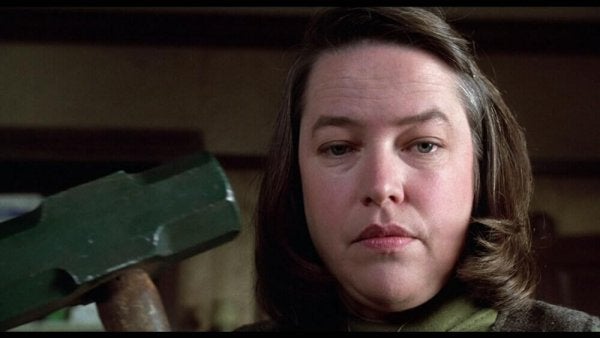
The second is inter-personal conflict. This is the conflict your character will have with others. You want to create relationships in your story that challenge your characters because challenged characters are forced to react. And that’s where you find the interesting stuff. In Misery, if Paul Sheldon lays over for everything Annie Wilkes wants, Annie can never clash with him. So Paul is always looking for ways to escape, pushing his luck, trying to trick her. This creates that interpersonal conflict that brings out the crazy in Annie. And, of course, the crazy is what makes that character so memorable.
Finally, there’s external conflict. This is the conflict your character has with the outside world. An easy way to test a character is to have the world you’ve created throw something at him. It could be a deadly storm just minutes after he’s survived a plane crash. It could be a horde of zombies standing between him and the only exit in the building.
You don’t need all three of these to create a great character, but you usually need two of them. And the first two are where you’re going to get the most bang for your buck. Something your hero is battling internally and a few unresolved conflicts with the main characters surrounding him. If you execute this well, at the very least you’ll have a solid character. Although, you probably won’t have a juicy one.
Another staple of good characters is that they’re active. The reason active characters yield better results than passive ones is because when somebody is being active, they’re routinely running up against problems in the world. If they stay home and don’t do anything, though, there isn’t a whole lot you can throw at them.
It would’ve been so easy to make Arthur Fleck (Joker) a passive reclusive character. That definitely fits his persona. But I’m guessing the writers realized that if they did that, it would be hard to put Arthur into enough interesting situations. So they made him active in two ways. One, he needed that clown job to pay the rent. And two, he was an aspiring comedian. You’ll notice that the comedian plot line is what dictated everything that happened in the plot. That’s how important active characters are in movies.
Still, these are just the basics. They only get you so far. How do you find the special sauce that elevates a character into something extraordinary?
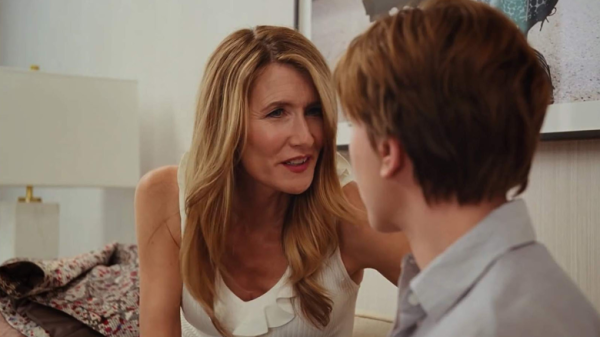
The bite-size answer to this question is to think of the actor who will be playing the part. When an actor reads the script, they don’t read it like you or I do. They read it from the perspective of, “Is this a meaty role? Is this someone I could do something with?” They want something that’s going to blow people away.
Think about it. Let’s say you’re an actress and you received the scripts for “Yesterday” and “Marriage Story.” In Yesterday, you’d be playing Jack Malik’s manager/love interest, a down home girl who isn’t interested in all the glitz and glamour of the rock star life. In Marriage Story, you’d be playing the cutthroat heartless divorce lawyer for Nicole, who’s more interested in “winning” than she is serving the best interest of her client. Which role would you want to play?
Unfortunately, the “actor hack” doesn’t give us any technical direction. Still, it’s a quick way to see if the character you’ve written is interesting at all. If you can’t imagine actors climbing over each other to play the part, it’s probably not that compelling of a part.
Another “quick-fix” tip on creating juicy characters is to build HEAVY CONTRAST into them. If you think of your character as a spectrum, you want to play with both ends of that spectrum. If you only play with the middle keys, the character is going to be pretty boring.
Annie Wilkes is the jolliest woman in the world in one scene, then she’s the angriest woman in the world in the next. Or a character who has terminal cancer but is always happy. Or a Nazi skinhead who’s at the forefront of stopping child trafficking. A cheerleader who’s diagnosed with depression. It’s an admittedly cheap way to create depth but it works! So if you’re trying to write something fast, this may be the way to go.
Now let’s get into the deeper stuff.
One of the big ones is THE HAND YOUR CHARACTER HAS BEEN DEALT. A lot of the most interesting people in this world are people who were dealt a bad hand. Naturally, these characters stick out in movies. Forrest Gump was dealt a bad hand. Arthur Fleck was dealt a bad hand. Stephen Hawking was dealt a bad hand. The reason these characters play so well on screen is because they have to deal with much higher levels of adversity than the average person. And we like to see people overcome adversity. The bigger the wall they have to climb, the more we root for them. If you look at all the Oscar winning roles, you’ll see a lot of characters who were dealt a bad hand.
Backstory is another biggie. If you can get backstory right, it will be the most effective way of creating a deep interesting character. The reason you don’t see it utilized well often is because it takes a lot of work to explore backstory and since a lot of that isn’t on-the-page writing, writers don’t want to do it. But most people are in deep conflict with their past – either who they used to be or a specific event that changed their life. So if you can find something meaningful in your character’s past that shapes who they are today and package it in a manner where the true journey of your story is them resolving this issue? Those tend to be the characters that stay with people the longest.
Mildred Hayes (Three Billboards) is an angry vindictive woman who hates almost everyone. But we know why. Her daughter was brutally raped and murdered and nobody is doing anything about it. That event is the main source of conflict dictating this character’s actions. She clearly needs to resolve this issue if she’s ever going to be “normal” again.
And it doesn’t have to be heavy like that. Cliff Booth (Brad Pitt in Once Upon a Time) is a feel-good happy-go-lucky guy. Taken at face value, his character is almost forgettable. But Cliff has a major event in his past dictating who he is today. His wife either accidentally drowned or he killed her. That extra detail from the past makes that character so much more interesting. Because if he killed her, that means he has to live a lie the rest of his life. If she died accidentally, he lost his wife.
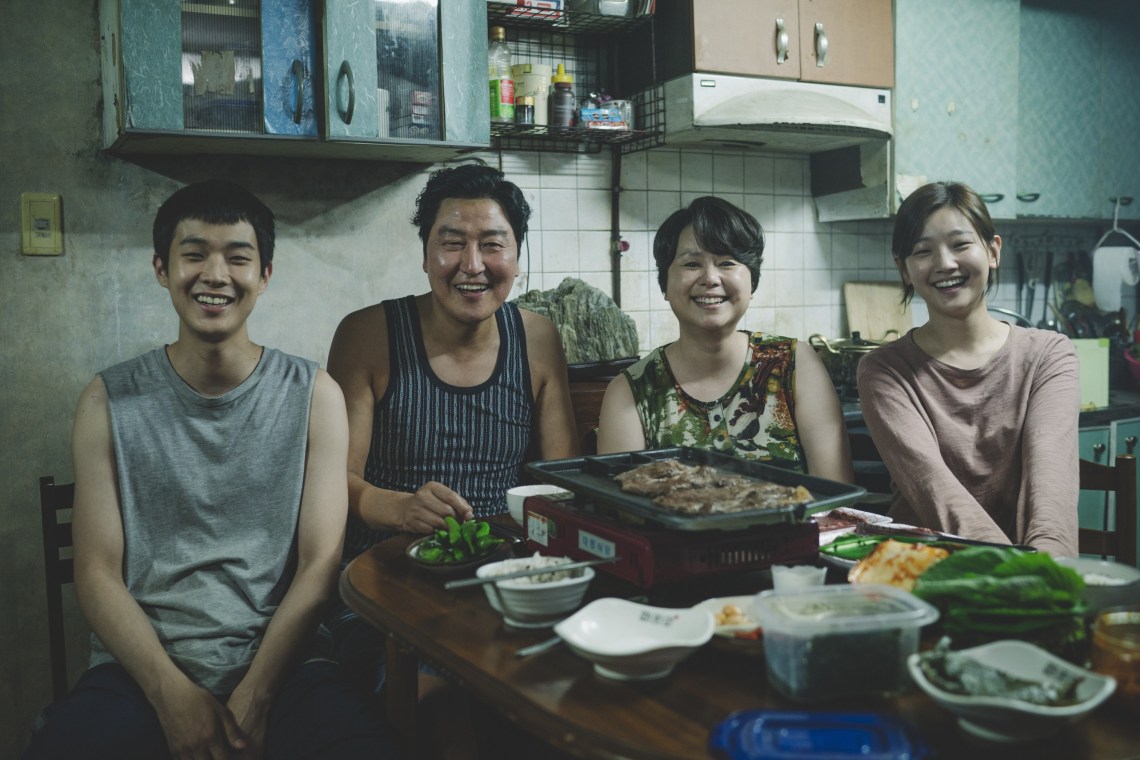
Which brings me to another powerful concept when it comes to character creation – deceit. This kind of falls into the “contrast” category. But we’ll deal with it on its own since it’s utilized so often. Deceit is a character who is built on a lie. They’re presenting themselves to the world one way, when in reality they’re someone completely different. Patrick Bateman in American Psycho. Walter White in Breaking Bad. The entire family from Parasite. It’s not surprising that these characters pop off the page so easily. Whenever you’re pretending to be someone you’re not, you’re creating a duality that naturally translates into depth.
Finally, I want to talk about addictions because there are a lot of juicy characters who are built around addictions, mostly drugs and alcohol. It’s true. These characters can be memorable. But ONLY if you make a key adjustment. It can’t be about the addiction itself. It has to be about WHAT CAUSED THE ADDICTION. So if someone’s an alcoholic, that’s an empty shell to an audience member. But if they started drinking due to the death of someone close to them, now the addiction is LINKED to something. And once you have something to link to, you have an actionable journey for your character. They’re not trying to kick alcoholism. They’re trying to move past that death.
Let me finish off by saying that it’s really hard to make PASSIVE or QUIET characters work. If you mix those two things into a single character, it’s virtually impossible to make them interesting. And even individually they’re hard to make work. Finally, there is no equation out there that says, if you mix all of these elements together in “this way,” you’ll create a great character. But if you think of them as musical notes, everything discussed today are the notes you want to play with. Some combination of them is going to give you your juicy memorable character. Good luck!
Carson does feature screenplay consultations, TV Pilot Consultations, and logline consultations. Logline consultations go for $25 a piece or $40 for unlimited tweaking. You get a 1-10 rating, a 200-word evaluation, and a rewrite of the logline. They’re extremely popular so if you haven’t tried one out yet, I encourage you to give it a shot. If you’re interested in any consultation package, e-mail Carsonreeves1@gmail.com with the subject line: CONSULTATION. Don’t start writing a script or sending a script out blind. Let Scriptshadow help you get it in shape first!
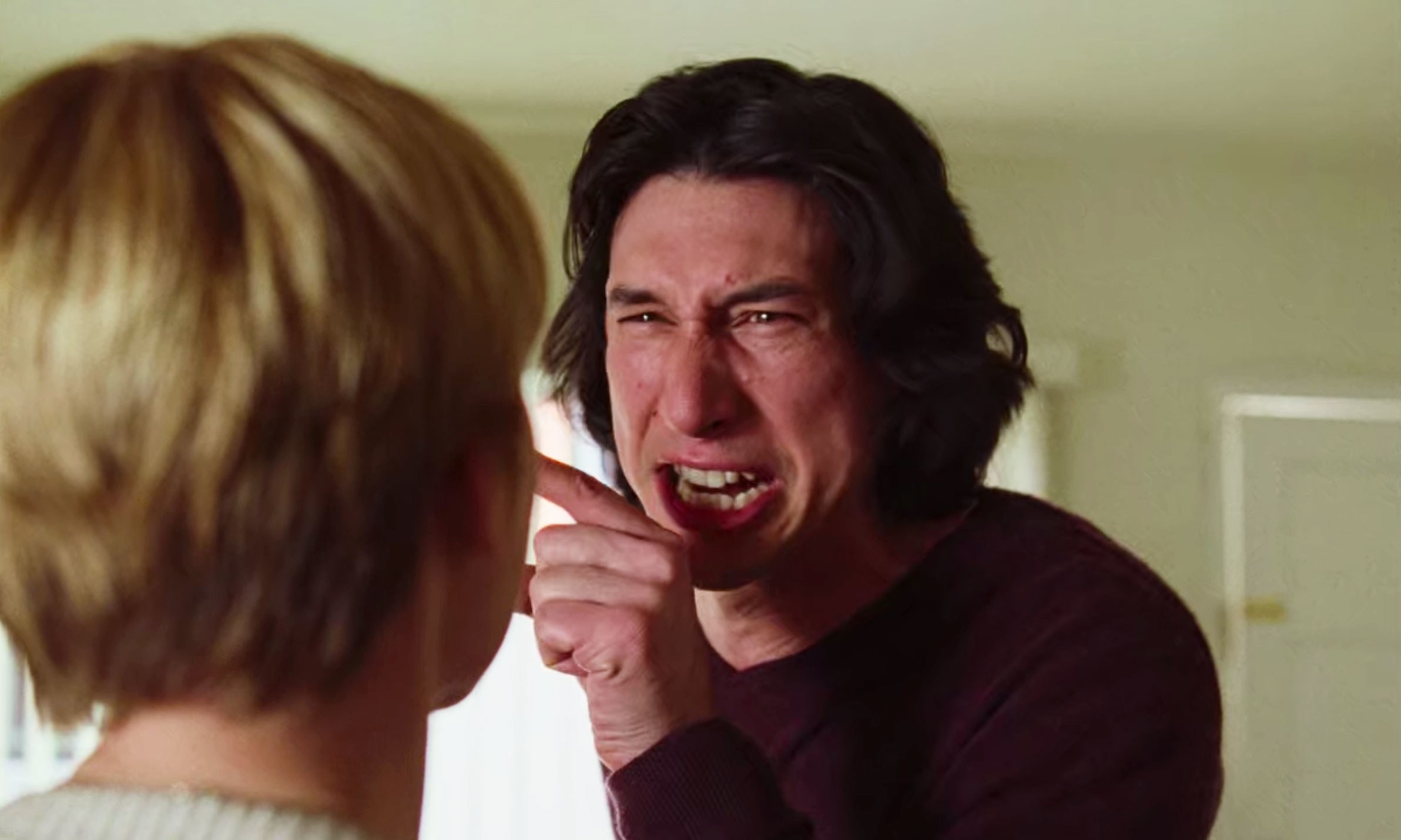
I believe it’s time for another installment of, “Wait, that’s a pro script and mine’s not??”
One of the most frustrating things that an aspiring screenwriter faces is identifying the line where amateur ends and pro begins. I’m not talking about official titles here. Everyone knows a pro script is one where a writer gets paid. So maybe the better way to classify it is, where is the line for “Hollywood Ready,” – a script that gets sold or optioned by a reputable production company, a script that wins one of the big contests, or a script that makes the coveted Black List.
How do you know when you’ve written a script deserving of one of these accolades?
This post idea came to me after reading that hauntingly poor haunted house real estate script that made the Black List last week.
I hate when this happens because it’s confusing to writers. They read this terrible script and wonder, “Wait, this made the Black List yet I’m the one still struggling on the outside??” I feel your pain because scripts like this make this whole process feel random. And I promise you it isn’t. Everyone out there is looking for good material. I know because I talk to these people and they want nothing more than the next great script.
It’s important to remember that there is often information you’re not privy to with these bad script success stories. For example, I noticed with the haunted house writer that he was also a director. Therefore, he may have gotten repped by CAA as a director. Not a writer. This gave him an obvious leg up over unrepped writers when he wanted to send a new script out there. It doesn’t explain why 10 people voted for it, but still, it provides more context into how he might have gamed the system.
I remember reading an awful sci-fi script years ago that sold for a lot of money. I didn’t understand the business as well back then so I was miffed as to how anyone thought buying this script was a good idea. Then I learned that the writer was best friends with Channing Tatum at a time when every single studio was desperate to make a Channing Tatum movie. This studio thought that by buying Channing’s buddy’s script, who knows? Maybe he’ll star in the movie. Or, if not, we’ve built up some good will with him so he’ll want to make other projects with us.
But here’s an important thing to remember about these bad scripts. You don’t get to carry them around and when somebody rejects your script, pop them out and make the argument that “This script is worse than mine and it sold. Henceforth, you should buy mine so Hollywood remains a fair place.” Being better than the weasels who backdoor their way into success isn’t a convincing argument. Nobody cares if you write something better than that piece of garbage that sold.
At the same time, this is not a random system. Yes, there are outliers on both sides. But by and large, the scripts that are optioned and developed and purchased and made, these scripts and these writers are better than the slush pile of amateur scripts available. A lot better. And there’s nobody more ordained to make this claim than me. I’ve read more scripts on both sides of the line than anyone save for that Robservations guy. So I have a good feel for where that line is.
But how do YOU know where the line is?
The first thing we need to establish is that there is no line. There are too many variables that affect a screenplay to be able to say, “If you do a, b, c, you’ve written a Hollywood Ready script.” Someone can be weak with plot but if they write a game-changing character, their script can be pro-worthy. Look no further than Joker. Someone can have a weak voice but if they plot something together as strong as Parasite, their script can be pro-worthy. Marriage Story is a plotless wandering journey. But the characters, dialogue, and voice are strong, which makes it, you guessed it, pro-worthy.
If you’re GREAT at one of these four things – plot, character, voice, dialogue – you can write a pro-level script. But most writers will never be great at any of those things. So you have to become really good at two or three of them. I even know some working writers who aren’t ‘really good’ at any of them. But they’re ‘good’ at all of them. These are the “Gemini Man” working professional writers in Hollywood. They can do everything well but nothing exceptional. That should be inspiring. It lets us know that you don’t have to be brilliant to succeed in this business.
Another huge one is writing with strong concepts. I know SO MANY writers who have the chops to break in but they write weak concepts. Weak concepts often come in two flavors. Unexceptional Dramas and Tired Movie Ideas that no longer get people excited. In the Unexceptional Drama category you have stuff like Marriage Story and Call Me By Your Name. In the Tired Movie Ideas category you have stuff like Taken. Or even Die Hard. In both cases, the execution has to be exceptional for these scripts to stand out. And there are maybe 5-10 movies a year where you can legitimately say that the execution was “exceptional.” In other words, you can’t count on exceptional.
There’s a new show coming out called “Beforiegners.” It’s about a group of Vikings who get sent to the present day and have to integrate into modern society. Do I know if this show is going to be any good? No idea. But I know this. It’s a flashy concept. And flashy concepts GET MORE READS, which increases the odds you’ll get your ‘yes.”
They also increase the “yeah but” factor. The “yeah but” factor is when you’re reading average or below-average material, but you keep saying to yourself… “Yeah but, the concept is so fun.” The reader is willing to stay with the script longer. And that’s all this game is, folks. You’re trying to buy more time. Cause the longer somebody invests in your script, the more likely it is they’re going to want it.
Now let’s talk about something uncomfortable.
One of the biggest reasons it’s hard for writers to know where that Hollywood Ready line is is because most writers overestimate their ability. They’re great at pointing out what everybody else’s weaknesses are but are legally blind when it comes to identifying their own. In order to make this next statement, I’ll preface it by saying this was a FORMER COMMENTER. Nobody here right now. But this guy would tear screenplays apart left and right on this site. And I’d read a number of this person’s screenplays. All I kept thinking every time I read one of their critiques was, “Yeah but… you can’t even write a story that makes sense.” I mean they LITERALLY couldn’t put a coherent storyline together.
All of us have some level of that blindness in us. Which is why I tell writers to assume they’re not as good as they think they are. And therefore to work hard to make up for the weaknesses they’re ignorant to. Also, try to un-ignorant yourself. Give your script to people. Beg them for HONEST FEEDBACK (not ‘be kind to me’ feedback). When you get more than one person complaining about some aspect of your writing, you’ve been given a GIFT. You now have something you can work on!
You can attack this in two ways. One, stop writing scripts that highlight your weaknesses. If people keep telling you your character work isn’t good, maybe don’t write Marriage Story. Write Snowpiercer. Or Jane Wick in space. Or two, go out and study everything you can about that subject matter so you can get better at it. Not enough screenwriters work to improve their weaknesses.
Finally, be aggressive and get your script out there. This is a business of no’s. Even people who like your script are going to say no. I once read a friend’s husband’s script that was pretty good. The friend was thrilled because she’d given it to a bunch of people and none of them liked it and finally she had someone to work with on the project and get it made. But the subject matter wasn’t my jam. It was good for what it was. But it’s not a movie I was interested in making. So I had to clarify that to her.
If you’ve been at this screenwriting thing for a while? If you’ve written more than six screenplays? If you’re consistently getting positive feedback from multiple people? You breaking in might just be a matter of getting your scripts to more friends, more contacts, more contests, more screenwriting sites, more Amateur Showdowns. Put your script in front of more pairs of eyes. Funny enough, I find that the people who aren’t ready (who’ve written less than 3 scripts) are good at this. Whereas the people who are ready, don’t do enough of it.
Outside of that, it’s a matter of knowing that every script you write is going to be better than the last. And as long as you’re writing strong concepts that make getting reads easy, your odds are going to go up with each new script you write.
But please… PLEASE. Don’t buy into this idea that it’s all a game of luck and randomness. Trust me, this town is desperate for good material. Keep giving them your best and when you’re ready, your time will come.
Genre: TV Pilot – Drama
Premise: A girls high school soccer team flying to nationals crashes in the remote wilderness. Here, the girls descend into madness while trying to survive.
About: This upcoming Showtime show comes from Ashley Lyle and Bart Nickerson, who created the Netflix show, Narcos: Mexico.
Writers: Ashley Lyle & Bart Nickerson
Details: 65 pages
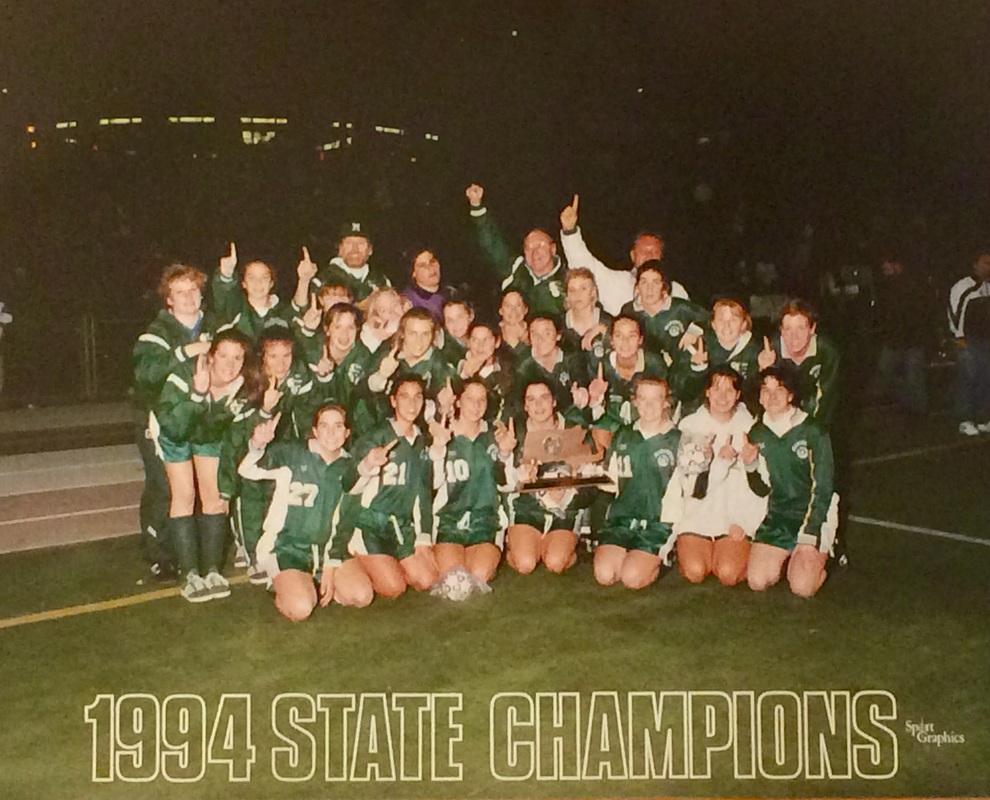
The other day I was reading a consultation script and I found that one note kept popping into my head. I kept dismissing and dismissing it because I didn’t see any way it would improve the story. So the question was, why was this note so determined to be expressed? I realized, after finishing the script, that the reason the note wouldn’t leave me alone is because the industry is high on it right now.
That note was “Change the main character to a woman.”
There was literally no story reason for the writer to do this, though. Yet the note wouldn’t leave me alone. Which is frustrating because your character choices should be dictated by your story, not what Tinseltown’s latest obsession is. Yet the female-led project is so hot at the moment that when I looked up Yellowjackets, I learned that it wasn’t even the only girls in a plane crash who must fight for their lives in the wilderness show in production (there’s another one called “The Wilds” that’ll be on Amazon).
So if you’re a writer out there, what should you be doing?? Follow the trend or do what you want to do? I think a few things come into play. You shouldn’t blindly ignore a trend. If something markedly improves the chances of your script’s success, you should consider it.
Another big consideration if you’re *not* a female writer is how comfortable you are writing outside your gender. I remember early on when I started writing, I gave my script to a female friend and she eviscerated my main female character. She pointed out half-a-dozen things I’d written that “a woman would never do.” That was a big lesson for me.
Then again, you have writers like Nicholas Sparks and John Green who seem to have an effortless feel for writing female characters. So you need to do a self-assessment on how comfortable you are writing the opposite sex. Cause the advantage you gain from following the trend might be offset by the weakness of the character.
But the most important factor in determining the gender of your protag should be your story. I’m not going to say Fight Club couldn’t be made with all women but that’s an example of a movie specifically about masculinity. Exploring masculinity in an age where men were feeling less masculine than ever was one of Chuck Palahniuk’s main objectives when he wrote the novel. Same thing as I wouldn’t suggest re-imagining “Sisterhood of the Traveling Pants” as “Brotherhood of the Traveling Pants.” It’s probably not going to work. So that’s the biggest thing that needs to be considered.
Okay, despite this introduction, I’m super excited about today’s pilot. I hated every book they made me read in high school. EXCEPT FOR ONE. Lord of the Flies. It’s one of the most powerful setups I’ve ever seen for a story. Plus it’s got a plane crash. And I love plane crash stories! Let’s take a look.
We start off in a snowy wilderness where some kind of ritual is taking place. A teenage girl is running from something before falling into a tiger trap where she’s impaled by numerous wooden spikes. A group of similarly aged girls emerge looking emaciated and wild. They seem satisfied with their kill.
Then we learn that that event we just saw? It happened back in 1994. The people we’re following – the girls who crashed on that island – we’re watching them now in their 40s, long after they returned to society.
There’s Taissa, a popular player on the team who’s now a senator. Shauna, once the team’s best player, now a depressed housewife who masturbates to pictures of her daughter’s boyfriend. And Natalie, a gothy outcast on the team who, when we meet her as an adult, is leaving her latest rehab center.
We’re given bits and pieces of what happened since that life-changing crash but not much. We do know, however, that an eager reporter, Jessica Cruz, wants to do a new story on what happened after the plane crash. And from Shauna’s reaction, we get the feeling that these girls covered up a lot of terrible things, and if those things got out, they’d all be f%#@d.
The narrative jumps back and forth between the present day and the days leading up to the soccer team leaving for Nationals. It’s fun as we get to contrast who these people have become with who they once were. Taissa, for example, orchestrates a plan to injure the weakest character on the team, Allie, so she won’t be a liability on the field. Meanwhile, in the present, Taissa has become a senator.
The pilot wraps up with one big high school party before they head off to nationals and, in the present, Shauna realizing that Jessica Cruz could be a liability if she keeps digging into what happened. So Shauna calls up Taissa, the senator, and tells her that Jesscia has to be “taken care of.” All as we get one final look at a horrid ritual deep in the forest, as a group of teenage girls cook one of their own. Fade to black!
Can I just say something?
THANK YOU!
Thank you to these writers for not only being good writers but for taking a concept and pushing it to its limits. Too many times I read scripts where concepts are barely pushed at all. And when you don’t expand upon a concept to see its potential, you give audiences exactly what they expect. Which leaves them bored out of their minds.
As soon as I realized that this show was going to take place in the present *as well as* in the past, I knew they had a winner.
What usually happens when writers take a familiar concept and put a new spin on it is they execute the story exactly how it was already executed, just with different characters. That’s a recipe for a boring show.
To create a good show, you have to ask WHAT YOU CAN DO to make your version DIFFERENT. And once they decided, “We’ll show both what happened on the island AND what’s happening when these girls grow up,” they added an entirely new dimension to the idea.
For example, the team deliberately injuring their worst player so she can’t fly to Nationals is petty high school shenanigans in your typical one hour teen drama. But in this show, the first thing that comes to mind when they break Allie’s leg during practice is, “That injured girl doesn’t know it yet. But they just saved her life.” When people talk about stories that have depth, this is one of the qualities they’re referring to. The things that happen on screen extend beyond the initial event. There’s a contrast to them that allows the reader to experience a bigger picture.
Also, I think there’s this fear going on with writers right now where they’re afraid to write anything that could potentially offend someone. As a result, we’re getting all this safe p.c. boring nonsense. Lyle and Nickerson have zero interest in that. They know that this is a story where you need to lean into the things that you’re not supposed to lean into. People get killed here. People need to survive here. Peoples’ lives could be destroyed if secrets are exposed. You can’t sugarcoat a story like that. And they don’t. Characters are going to do horrible things in this show. Which is exactly why it’s going to be so good.
Whatever you’re writing, always try to find the truth of it. If you try to write what society says is right to write, you’re going to bore people. Guaranteed. It all has to be organic to the story of course. You never want to write controversial things just to be controversial. Just be honest with what your story is asking of you. For example, early on, we see a 40 year old woman masturbating to a picture of her teenage daughter’s boyfriend. It’s shocking. But it makes sense. A part of Shauna is always going to be stuck back in that traumatic experience that happened to her in high school. You’d be suspicious if she *wasn’t* f&%@d up in some way.
I loved about every decision here. I went into this pilot thinking I was getting a plane crash and a lot of girls trying to survive the aftermath. Instead, 95% of the pilot occurred in the present. And that created this intense level of suspense throughout because I so wanted to keep reading and get to the actual crash.
I’m telling you guys. This show is going to be savage. It’s Lost for grownups. I can’t wait.
[ ] What the hell did I just read?
[ ] wasn’t for me
[ ] worth the read
[x] impressive
[ ] genius
What I learned: A “beat” is a screenplay-specific term that denotes a small pause in time. “A beat as Joe recovers from the fall.” You can play with what comes before a beat to give it more of a mood. “A loaded beat.” “An extended beat.” “An unexpected beat.” Have fun with it. Here, in Yellowjackets, we get “An infinitesimal beat.”
What I learned 2: In one of the loglines I found for Yellowjackets, they used the word “talented” to describe the soccer team that was going to nationals. So, it was close to my logline but approximated this: “A talented girls high school soccer team flying to nationals crashes in the remote wilderness. Here, the girls descend into madness while trying to survive.” With loglines, you’re trying to say as much as possible in as few words as possible. One of the ways to do this is to eliminate redundant and repetitious words. We can already assume that a team going to nationals is talented. Which is why it’s a no-brainer to eliminate the word. (e-mail me to get a logline consultation at carsonreeves1@gmail.com)
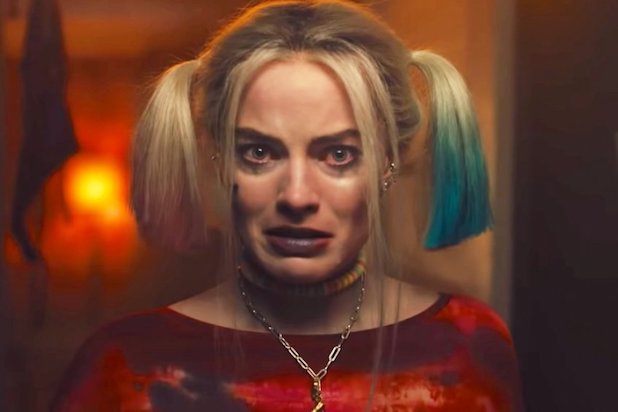
While I continue to root for Margot Robbie, a part of me is happy that Birds of Prey underperformed. The message of that film wasn’t one of exclusivity. But it certainly wasn’t inclusive. That word has to work on both ends of the spectrum. So I’m hoping that sends Hollywood a message to give us films that unite us, as opposed to divide us.
A lot of people are saying that if Birds of Prey came out on Valentine’s Day weekend, it would be a totally different box office story. The film is about a breakup so the subject matter was perfect for the holiday. It also used Deadpool as its template. That film changed the game for Valentine’s Day openings, proving that it could offer humongous box office.
I realize now what happened. Birds of Prey got greedy. They thought to themselves, if we open the weekend BEFORE Valentine’s Day, we get that opening weekend money AND we get that big Valentine’s Day Deadpool haul as well. The problem with that strategy was they weren’t able to market the movie as a Valentine’s Day film. Who knows how much of a difference it would’ve made but if the difference was 10 – 15 million dollars, that’s the difference between the trades labeling the film a bust and labeling it a solid opening. And in this town, perception is reality.
I often wonder how big a difference a release date makes. People used to think you couldn’t open an action movie on Valentine’s Day. Then Deadpool came around. Studios supposedly scratch and claw to get one of those big summer slots. But in the summer, all your second weekend box office is swallowed up by the next big shiny blockbuster. So how desirable is one of those weekends really?
James Cameron famously thanked 20th Century Fox for moving Titanic from the summer, where it was originally slated, to a winter holiday opening. The film went on to break every box office record in the book. It begs the question, what if it had opened in the summer? Would it have made way less money? Would the world not have fallen in love with Leonardo DiCaprio?

The box office comeback story of the year may go to Sonic the Hedgehog. That film was dead as a doornail when that first trailer came out. Everyone proclaimed it the single worst animation of a creature’s face in history. In one of the rare instances of Hollywood admitting they were wrong, the director, Jeff Fowler, publicly apologized then had Paramount push the release date back so they could redesign the face. Flash-forward to today and Sonic the Hedgehog had the biggest video game adaptation opening in history with a 4-day holiday haul of $65 million bucks. Which equals its Rotten Tomatoes score. Not bad.
Let’s sit on that for a second. Sonic the Hedgehog is the BIGGEST VIDEO GAME ADAPTATION OPENING EVER. This continues to be one of the bigger curiosities in the movie business. Of all the things that should be a slam-dunk to adapt, you’d think video games would be at the top of the list. They take all their cues from movies anyway. In some cases, they even improve upon them. Go watch a level from Uncharted for proof. And yet they always land in theaters with a big thud. Assassin’s Creed is such a cool movie concept. But the film was unbearable, to the point where it made you retroactively dislike the video game.
I’m not sure what the reason is. My guess is that video games are built on top of flimsy mythology. Lord of the Rings was such an extensively researched world. Everything that came out of it felt solid and believable. That set the stage for a fully-fleshed out adventure. But these video games – all they care about is cool levels. And whatever janky paper-thin backstory helps them get there, that’s good enough for them. So when you extrapolate that out into a story, all the pillars holding up your screenplay are weak and crumbly. Curious what your thoughts are on this.

Speaking of adaptations, Blumhouse underperformed this weekend with their latest film, Fantasy Island. Blumhouse is in an interesting place at the moment. They blew up because they elevated the most reliable money-making formula in Hollywood – make horror films cheaply. Before Blumhouse, a lot of low-budget horror was schlocky and cheap looking. Blumhouse gave their movies a slightly shinier production design which allowed them to play in theaters as opposed to going directly to digital.
The problem with that is, it’s an easy formula to copy. There’s nothing proprietary about what they do (for example, nobody else can make Marvel movies but Disney – you can’t replicate that). This has allowed other horror movies to eat into their market share. Lights Out. A Quiet Place. Hereditary. The only thing keeping Blumhouse above these production houses is the fact that they make so many films. This allows them to take more chances and increases the odds that one of the movies breaks through and becomes a media darling, like Get Out.
Jason Blum knows this so he’s trying to innovate and take the next step forward that no one else is thinking of. This weekend, he adapted a successful TV show in “Fantasy Island,” but instead of staying true to the material, he put a horror slant on it. That was the innovation. I don’t know what their projections were but I know they were hoping for more than 14 million for the 4-day weekend.
I actually like this idea. Any “stuck on an island” horror concept has potential. And I liked the irony of characters stepping into what they believed was a fantasy, only for it to become a nightmare. But it just didn’t capture the public’s interest. The problem when you open things up in the horror world – when you try to be bigger – is it becomes more apparent that you’re in over your head. Audiences don’t think about the lack of production value when an entire haunted house movie takes place inside the house because it’s organic to the concept. But when you start incorporating more space, more sets, bigger shots, additional characters, we can see where you don’t size up with the Marvels, DCs and Fasts and Furiouses of the world. It’s almost like by going bigger you actually look smaller.
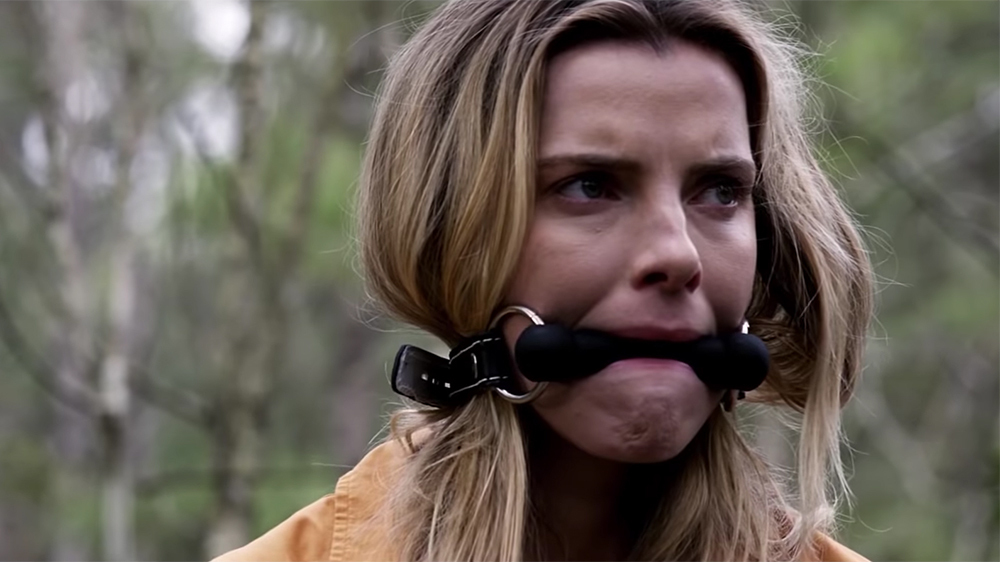
On the plus side, Blumhouse still has The Hunt, which is finally being released. I’m curious to see how this does. They’ll be able to sell it as “the movie they wouldn’t let you see!’ And what gets people more interested in something than being told they can’t see it? What’s your prediction on The Hunt? I think it could open in the $25-30 million dollar range assuming they open wide (3000 theaters). But they might do one of those “feeler” releases (800 theaters), in which case I have no idea how much it’ll make.
A movie that continues to impress me is 1917, which has been around for 8(!) weeks and pulled in another 8 million dollars this weekend. I’m learning a lot from this film. There’s this giant potential audience of History Channel geeks – people who watch shows like “Hitler’s Bunker” and “World War 2 in color” who are dying for a larger-than-life version of what they get in those shows. Because History Channel shows have relatively low budgets. They can only do so much. So if you promise them something that’s just like those shows but bigger and more expensive with great production value, they’ll leave their houses and pay for it. 1917 proves that.
Another thing this movie’s taught me is to look for fun angles in war movies. I don’t mean fun as in “comedic.” I mean using war movies as a ride as opposed to being big glorified dramas. War films are traditionally downers. I mean, it’s war. Lots of people are getting killed. So there’s a dire tone tugging at most of these films. If you can find a way to make a war movie fun, that’s a huge advantage because people generally go to the movies to have fun and feel good.
That’s why these Oscar movies, despite getting endless advertising, often struggle to make money at the box office. Audiences know that it’s not going to be a traditional “fun” experience. The way 1917 became fun was by condensing the timeframe.
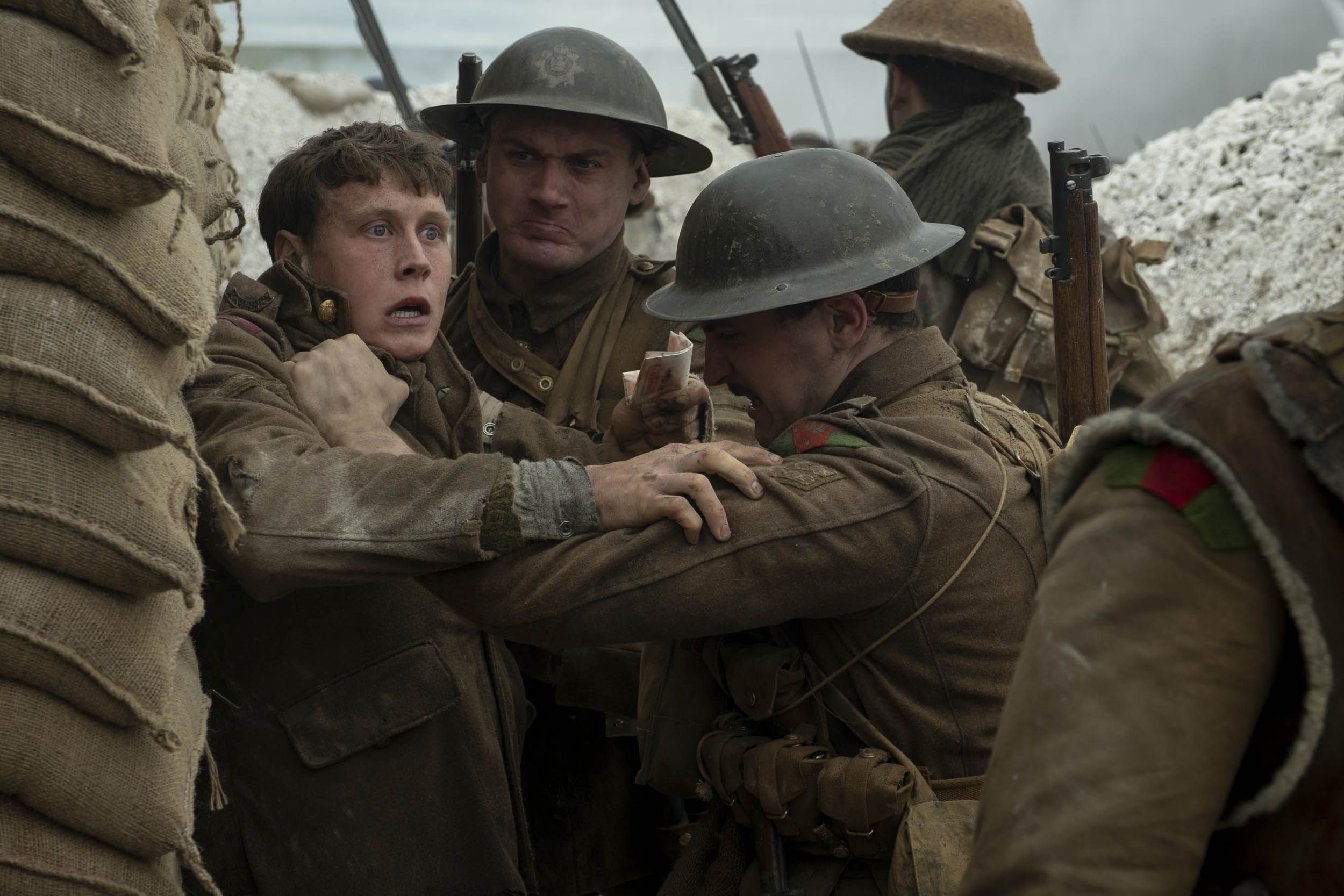
I’ve been telling you this for years. One of the easiest ways to supercharge an idea is to create a condensed timeframe. An idea that feels tired and played out can all of a sudden seem fresh and exciting if the right timeframe is applied. Where writers make the mistake is to apply this advice to the usual suspects – pairing it with an action or thriller concept – “A guy’s fake heart is actually a bomb so he’s got to get from the top of a skyscraper to the bottom in 2 hours or everyone in the building dies.” But, actually, where a tight timeframe stands out is when it’s paired with a non-traditional concept. When we think of World War 1, we don’t think of narratives taking place in less than 24 hours. That’s what helped 1917 stand out. You can apply this to any non-traditional setup. A Western. A drama. A romantic-comedy. Just in my head right now, that sounds exciting. A romantic comedy told in a single day.
As for the rest of the box office, I’m shocked to see that Jumanji crossed the 300 million dollar mark. I didn’t think anyone saw that movie due to the risky but ultimately failed choice to have The Rock and Kevin Hart mimic a couple of old men for two hours. Parasite got a small bump from its Oscar win and it’s cool to see Bong Joon-ho celebrate his most successful movie ever. Finally, in what can only be titled “The Ultimate Revenge,” Star Wars Episode 9 fell out of the top 10 to number 15, whereas Rian Johnson’s Knives Out has now pulled ahead of it, taking the number 12 spot. Why is this significant? Because Rise of Skywalker has been out for 8 weeks whereas Knives Out has been out for 11! Does this mean that Rian Johnson was right to kill Luke Skywalker all along? Should every movie from here on forward subvert expectations? Are Rey’s parents’ nobodies? I have to revaluate everything!!!