
Search Results for: F word
Genre: Drama
Premise: A circus family attempts to keep its lucrative business going by utilizing a dark and horrifying secret.
About: Katherine Dunn, the author of the 1989 breakout novel, Geek Love, was a single mother working three jobs when her novel became an unexpected best seller. The Portland-based writer was, all of a sudden, thrust into the position of the city’s most recognizable female author. Portland author Rene Denfeld said of her: “She believed the job of a writer is to tell the truth—not the truth that Aunt Mabel wants to hear, not the truth that will sell books. She always said she was waiting for a male writer to write a memoir that was not about all the women he’d slept with, but about having a problem with premature ejaculation.” Geek Love is said to have inspired many artists, including Terry Gilliam and Kurt Cobain. Magician and actor Harry Anderson optioned the book for film rights and wrote this script, which still hasn’t been made.
Writer: Harry Anderson (based on the novel by Katherine Dunn)
Details: 107 pages – 1990 draft

Haven’t you heard? Circuses are all the rage. The Greatest Showman continues to have a strong hold at the box office, finishing in the Top 5 for the 7th weekend in a row. Sounds like Hollywood might be interested in a new circus project. Make no mistake. The misleadingly-titled “Geek Love” doesn’t have any dance numbers. But it does have darkness, secrets, and kids who swear a lot.
I love that truth statement Dunn uses above. As our society moves in a direction where saying anything that doesn’t tow the company line gets you beaten up on social media, it’s become harder for writers to be brave and tell the truth. So what we get instead is a bunch of safe vanilla b.s. with whip cream and cherries on top. The more I read, the more I realize that TRUTH is the secret ingredient that lights up a screenplay. When characters say and do things that REALLY HAPPEN in life, it gives the script an authenticity that can’t be matched.
Which is an odd way to begin this review, since Geek Love is about a freak show circus family. But it’s not so much the situation that’s truthful as it is the characters.
Geek Love introduces us to 40 year-old Oly, a humpback dwarf. Don’t feel sorry for Oly, though. She’s a tough woman who’s managed to become a successful DJ at a local radio station. After we observe her daily routine, we cut back to 30 years ago where we meet the Binewski family and their circus company.
There’s Al, the father, Lil, the mother. There’s Arty, a little boy with flippers for hands and feet. And then there’s Elly and and Iphy, Siamese twins. Arty and Elly and Iphy are the show’s main attractions, while Oly is the operations manager. Her deformity, you see, isn’t flashy enough to make an act out of. She’s just… ugly.
The family, as you’d expect, is an eclectic group. Al seems like a cool guy. Lil is sweet as can be. But Arty is pure evil, the devil incarnate, and has plans to kill off his parents so he can take over the business. Elly and Iphy hate Arty, and the three are always bickering. And when I say bickering, I mean there isn’t a curse word that isn’t used in this story.
When Lil becomes pregnant with another child, we learn the family’s dark secret. Al, you see, is feeding his wife insecticide. Why? Because the more poison his wife ingests, the more likely it is that she’ll have a deformed child, which means one more performer for the show! Al experiments with each pregnancy, having his wife take in a variety of poisonous artificial supplements. And what happens if the child is born normal? I don’t want to say because I don’t think you can take it.
When the new child is finally born – Chick – they realize he’s unlike any of the other children. As in, he has the power to levitate people and heal things. He also ages at a rapid rate, quickly catching up to the other kids. Chick’s powers allow Al to add new acts that he never could’ve dreamed of. But this new attention angers Arty, who sees his star fading.
Suffice it to say, you can only poison your family to create deformed children to work in your circus for so long before it backfires. And boy does it backfire. The only one who makes it out of the mayhem in one piece is Oly, who has some business to settle in the present day before she, too, joins that great big circus in the sky.
Is it possible to write a plotless script that’s entertaining?
That’s the question Geek Love poses (unknowingly).
And the answer is yes. But it’s a complicated yes. I only experience it every so often and it’s always for the same reason – the writer has such a unique voice that that voice overpowers the absence of plot. You read because everything is so fresh and different. Not because you’re trying to find out if the main character’s daughter will be saved.
So I say to all you plot haterz, go ahead and write something without a 3-act structure or GSU… but only if you’ve been told you have a voice unlike any other writer. You are Charlie Kaufman. You are Quentin Tarantino. You are Kurt Vonnegut. You are Katherine Dunn. Otherwise, I would stick to the basics.
With that said, Harry Anderson, the writer who adapted this, missed an opportunity to build a plot into the story. If you have a movie that takes place in the past, you can give it a “plot” by introducing a present-day storyline with a mystery. You then occasionally cut back to that present day mystery throughout the movie. This allows you to be weird and formless in the past. But the audience still feels like there’s a purpose to everything since there’s that unanswered question in the present.
Here, Anderson starts the story with Oly in the present, secretly obsessing over a strange woman who lives near her. It’s intriguing, but it’s completely abandoned once we jump back in time. It’s only at the end of the screenplay that we revisit the mystery, which does have a nice payoff, but because it’s been so long since the setup, we don’t care.
Anderson should’ve made this mystery storyline a bigger deal, cutting back to it throughout the screenplay. Instead he adds an unrelated present-day storyline that was kind of interesting, but because it didn’t have anything to do with the first one, it made the present-day stuff feel just as random as the past.
Luckily, JUST ENOUGH happens every 20 pages in the past that you keep hanging on. It was the revelation that Al poisons his wife to get freaks for his business that kept me reading a little longer. Then the emergence of Telekinesis Baby that kept me a little longer. Before I knew it, I was invested in all of the characters. They were all so weird and interesting, I had to find out what their fates were.
And that advice Dunn gives about truth is on full display in this story. Parents take advantage of their children in unimaginable ways. We just saw it with basement dungeon family. So as uncomfortable as the Binewski secret is, there’s truth in there. That’s why this book sticks out. And probably why people are afraid to make it into a movie. It’s too close for comfort.
I don’t know if I Geek Loved this. But I Geek Liked it. It’s unlike any script I’ve ever read.
Script link: Geek Love
[ ] What the hell did I just read?
[ ] wasn’t for me
[x] worth the read
[ ] impressive
[ ] genius
What I learned: (re: truth) Neil Strauss, who wrote The Game, a book about sleeping with a bunch of women, uses the book to chronicle his failures in seduction as well, such as the only time he’d ever had a chance with a Playboy model, but couldn’t get an erection due to performance anxiety. The book went on to become an enormous best seller. I wonder if Strauss knew that Katherine Dunn had predicted his success just ten years prior!
Genre: True Story
Premise: (from Black List) Google’s Larry Page, Sergey Brin, and Eric Schmidt struggle with their corporate motto, “Don’t Be Evil,” in the face of their meteoric rise to a multi-billion dollar valuation and a major Chinese hacking incident.
About: This script finished with 10 votes on last year’s Black List, putting it in the top 25. It’s based on a couple of books, the more popular being “In the Plex,” about Google. The three writers who adapted this are all newbies. Two of them, Diani and Devine, have mostly focused on acting.
Writers(!): Gabriel Diani & Etta Devine & Evan Bates, based on “In The Plex” by Steven Levy & “I’m Feeling Lucky” by Douglas Edwards
Details: 122 pages (June 2017 draft)

The Big Short and The Social Network ushered in a new quasi-genre I like to call the Tricked Out Geek True Story. They take what should be nerdy subject matter and INFUSE it with a hip style, cool characters, and loads of energy. The reason the genre’s worked so far is that it orders up a powerful item on the screenwriting “secret menu,” that being irony. They present a GEEKY story in a COOL way. If you present a geeky story in a geeky way, that’s kind of on-the-nose, isn’t it?
“Don’t Be Evil” is Google’s introduction into this genre and boy does it want you to love it. This script is so intent on winning you over that it will do whatever it takes. Ongoing hip voice over narration. You got it. Staring into the camera and breaking the fourth wall. You better believe it. Recklessly cutting between six different time periods. You bet your ass we’re not stopping at five. Characters constantly referencing screenwriting terminology. Oh, hell yes. We got that too. How does this overcranked CPU stack up? Let’s find out.
It’s 2009 and Google’s just been hacked by the Chinese. At least that’s what Larry Page, the co-founder of Google, believes. Larry is our eyes and ears in this story, our “Ferris Bueller” if you will. That’s a good way to think of him because… well because the script tells us to think of him that way.
The story uses the Chinese hack as a starting point into how Google was born. We jump all the way back to Larry’s childhood, when he read a biography on Nikola Tesla, the famed inventor. The moral of Tesla’s biography was – you can’t just be a good inventor. You have to be good at business too.
Larry’s right hand man is Sergey, a programmer who grew up in communist Russia and therefore hates other communist countries, like China. He’s joined by Google’s head of security, Heather Adkins, and Google’s CEO, Eric Schmidt, a man who was forced upon Larry by his investors since Larry didn’t know jack about running a business.
Amidst this Chinese hack, the team desperately tries to hold onto its company motto: Don’t Be Evil. After jumping back through a million time periods, we learn that this motto came about due to Larry’s belief that all corporations put their profits in front of their customers and he wanted Google to be the first company that didn’t do that.
The Chinese hack is the first time Google is faced with a decision that threatens their fabled motto. The quandary goes like this. The group feels they have a moral obligation to let their users know that their data has been compromised by China. However, if they do this, it would expose the Chinese, who would likely then kick Google out of their country. Since China represents billions of dollars in potential profits, this is an extremely hard decision.
As we get closer to the decision, we continue to take more diversions into the past, where the characters self-referentially remind us that they know they’re relying heavily on backstory and flashbacks, but that it will all make sense in the end. That end comes with Larry making the final call on the hack, which will inform the path that Google takes from this point forward.
Something we haven’t talked about in awhile is level of difficulty. If your routine incorporates six triple-axels and this is the first time you’ve ever skated, you’re probably not going to execute your routine. Don’t Be Evil was like three skaters trying to win the Olympics their first time out. Not even a brand new Zamboni could clean up the aftermath.
My newbie antennae goes up whenever I see FLASH. If a script is dominated by flashiness – talking to the camera, lots of self-referencing, tons of flashbacks, etc. – it’s usually an indication of a new writer. Here’s an example of what I’m talking about. After an NSA agent is introduced, we get: “She’s completely fictional because there’s no way anyone is giving the screenwriters any information about Google’s very real relationship with the NSA.” Seasoned writers have failed enough times to know that flash is fool’s gold and that substance – deep characters, a well-designed plot, conflict-filled scenes, etc. – is your best bet at writing a good script.
What complicates this analysis is that the theme of this story is actually pretty strong, this question of is it possible for a corporation not to be evil? So it masks, at times, the attention deficit disorder writing that surrounds it. But, in the end, the script can’t escape this obsessive need to make you love it. It wants to be The Big Short. But it’s like The Big Short written by Max Landis, if that makes sense.
For example, the creation of deep characters. Outside of that first Larry Page flashback scene where he reads Tesla’s biography, I can’t remember a single scene where we actually get to know someone. And that’s because the script was so intent on never staying anywhere for any amount of time. It was like BAM, time to jump to the next flashback!! Contrast this with The Social Network, which gave you 8 entire minutes with our main character in the film’s very first scene (the breakup scene). We learned so much about Mark Zuckerberg in that scene.
Not to mention, reading a book is a lazy way to introduce a character. If you want to introduce a character in a way where we get to know them, do it through action. Preferably, give them a tough choice. We learn so much about characters when they’re faced with a choice. If you try and jump the line and never write the 4-5 scripts that teach you this, you’ll never know how to properly introduce a character, which is one of the most influential moments in a screenplay.
And I couldn’t for the life of me understand why the writers kept referencing screenwriting! Here’s a real exchange between characters in the story: “I found something important.” “I thought you were in New Zealand?” “I came over during that flashback.” It was bizarre. This story had nothing to do with screenwriting. It’s about Google and hacking. Maybe had they referenced movie cliches, that would’ve made more sense. But for some reason screenwriting became this huge theme in the script.
Now does all of this mean you should never use too-cool-for-school writing techniques? No. The Big Short obviously proved that it’s possible. But The Big Short was written by one writer, Charles Randolph, whose credits dated back over a decade, and another, Adam McKay, who had over 30 credits. These guys know how to navigate the potholes that come with this kind of writing style.
Figure out how to write simple stories first. Introduce a big problem, which results in a strong goal, for a compelling main character, with some urgency and high stakes. There wasn’t a single compelling character in this movie. The problem the characters are dealing with is arguably compelling. But we know nothing about anyone so it doesn’t matter. And that’s the kind of thing writing a simple story forces you to learn – how to construct a compelling character.
Reading my review back, it sounds harsher than I meant it to. This is the kind of thing everybody who jumps into a new medium does. They go for big and flashy because big and flashy gets noticed. And with this making the Black List, you can say that it worked. But if you want to work in this business a long time, you gotta learn the basics. And no basics were on display here.
[ ] What the hell did I just read?
[x] wasn’t for me
[ ] worth the read
[ ] impressive
[ ] genius
What I learned: If you jump around in time too frequently, the reader never gets pulled in. I’d say this script jumped to a different time period, on average, once every 5 pages. I couldn’t get invested in the story because the story never slowed down enough for me to understand what I was investing in.
The Queen of Dialogue is here. A new Diablo Cody script. We’ll be learning a few dialogue tips today as well as whether Cody is back.
Genre: Drama
Premise: An overworked borderline depressed mother of two is forced to hire a “night nanny” to take care of her newborn.
About: Tully is Diablo Cody’s latest. But don’t close your browser window while simultaneously rolling your eyes just yet. Cody is teaming up with the director responsible for her two best efforts – Juno and Young Adult – Jason Reitman. Charlize Theron, who starred in the latter film, will be joining the two again.
Writer: Diablo Cody
Details: 91 pages

I was going to review Cloverfield today but everyone’s saying it’s terrible. That’s a bummer because the Super Bowl release strategy (“Here’s our trailer – go watch the movie now!”) was possibly the greatest of all time. Here’s my old review of the script. Keep in mind this is before they Cloverfielded it.
Not to worry because we’ve got the latest Diablo Cody script. Let’s jump right into it!
Marlo has an 8 year-old daughter, Sarah, and 5 year-old son, Jonah, who is autistic. She’s also nine months pregnant. Already overworked and under-slept, Marlo is afraid of what this new baby is going to do to a life that’s already in Stage 3 survival-mode. Even with a loving husband, she knows she’ll be testing the limits of human ability.
While at her brother’s house for dinner, he tells her of this thing that helped his wife – a night nanny. The night nanny shows up in the evening and stays with the baby all night, bringing her to you when it’s time to nurse, then whisking her away when it’s over. It’s the perfect solution, according to her brother, and saved his marriage.
Marlo is resistant at first, but comes around when her sleep deprivation hits the breaking point. Tully, a 20-something cool chick, arrives a night later, and wins Marlo over immediately. Not only does Tully remind Marlo of herself when she was younger, but she’s so damn calm. She can handle anything. Within days, Marlo’s life turns around. She’s getting sleep now. She has more energy. She’s the life of the dinner party.
But Tully isn’t just here for the baby. She wants to help Marlo. She wants to get to know her. And so Marlo confides in this perfect yogi-like presence about what her life used to be like (fun!), about what her life is like now (not fun!), about her sex life (nonexistent!). This leads to the script’s most controversial scene. Marlo, disgusted by her worn down baby-bearing body, has Tully have sex with her husband as a “gift” to him.
Things take a turn when Tully confesses she’s thinking about quitting. Marlo sensed this was coming, and the two decide to have one last crazy night out. Unfortunately, that night ends in disaster.
They say write what you know. But what if what you know is boring? Clearly, Cody is writing about her ongoing experience with motherhood. The question is, does she find a way to make it interesting? The answer is mostly yes. We know that something is up with Tully and we’re willing to go through this journey to find out what it is.
But before I talk about the plot, I want to talk about dialogue. I don’t care what any of you say. Cody is still one of the better dialogue screenwriters in the business. I’m sure she’s made a ton of money doing uncredited dialogue polishes for huge movies. And while I don’t have time to get into all the reasons her dialogue rocks, I’ll highlight a couple of things.
Early on, Marlo’s brother, Craig, and his wife, Elyse, visit her in the hospital after she’s had the baby. One of the best ways to gauge whether your dialogue is working is if the characters are reacting to things differently. If they’re reacting the same, there’s no contrast, and contrast is where you’re going to find a lot of good dialogue.
So Craig apologizes that they can’t stay but their daughter “is in the middle school musical tonight.” Marlo asks what show they’re doing. Elyse answers, proudly, “Rent.” Craig then says, “I don’t get it. It’s like, just pay your fucking rent. Problem solved.” As you can see, these two react to the same information differently. It would’ve been easy (and lazy) to have Elyse say, “Rent,” and Craig respond, “She’s been working so hard on it.” Losing that contrast instantly softens the dialogue, making it boring.
Another dialogue tip is to steer away from absolutes. When Marlo first meets Tully, she’s shocked by how young she looks. This woman is about to take on an immense amount of responsibility. So the first thing Marlo asks is, “How old are you?” Tully smiles. Marlo ‘checks herself,’ then says, “I’m sorry; I just wasn’t expecting—“ “Don’t apologize,” Tully says. “I get that a lot. I’m older than I look.”
In this exchange, most writers would’ve had Tully answer the question, “How old are you?” with her age. That’s boring. Steer away from absolutes. As you can see, Tully doesn’t even answer the question! She just smiles, forcing Marlo to respond to her own question. Already this exchange has become more interesting. Then, to top it off, Tully doesn’t directly answer the question. She just says, “I’m older than I look.” By avoiding the absolute, you write better dialogue.
One of the hardest parts about writing good dialogue and what Cody excels at is sprucing up responses. Not all the time, but sometimes when a character says something, the other character gives us a clever or “spruced-up” response. After Tully unexpectedly cleans the house one night, Marlo thanks her. “I just wanted to thank you for cleaning the house. You really, really didn’t have to do that.” Okay, now think for a second. The other character in this scene, Tully, is going to respond. What is she going to say? 9 times out of 10, the writer is going to have her say, “Oh, it was nothing.” I know because I read everything. That’s what everyone writes. But if you have in your head, “I’m going to spruce this response up a bit,” you come up with something more interesting. Tully’s response in the script is, “I enjoyed it. I have an energy surplus. Like Saudi Arabia.”
Now that’s pretty clever. But here’s the real trick in writing a line like that. You have to create a character who says interesting things (or says things in an interesting way) to begin with. Cody gave Tully two qualities. One, she was ultra-mysterious. And two, she had an endless storage of high-school-like facts at her disposal. So this line wasn’t created in a vacuum. It was something Cody integrated into the character from the start.
As I wrap this up, I’m going to talk some BIG SPOILERS. So if you don’t want to know, turn away now. Okay, so the big reveal is that our night nanny, Tully, isn’t real. This whole thing has been happening inside of Marlo’s head. I have to give it to Cody. I didn’t figure it out until page 75. I knew something was up, obviously. Tully was just too weird not to have something going on. But for some reason my mind didn’t go there. I kept waiting for her to kidnap the baby or something.
Does the twist work? Sort of. It’s set up well. We know that Marlo already had a mental breakdown. So it makes sense that she would have another one. The blowback might come from the husband character. He conveniently goes straight to the bedroom every night at exactly the same time so he never sees Tully. I think Cody sensed this, which is why she created the free sex with our hot nanny scene. But that scene was so weird and so out-of-place, it only got my spidey sense tingling more.
But who knows, this ending might dupe audiences. And a great twist ending is word-of-mouth gold. We’ll have to see if that happens with Tully.
[ ] What the hell did I just read?
[ ] wasn’t for me
[x] worth the read
[ ] impressive
[ ] genius
What I learned: Script Bait – You guys all know what click bait is, right? You give’em an article title that’s impossible not to click on. Well scripts have that too. It’s called “Script Bait,” and what it is is a line of bait that makes it impossible for the reader not to read on. Script bait is ESPECIALLY IMPORTANT in character driven scripts where you don’t have a ton going on plot-wise. So early on, when Marlo’s brother is encouraging her to get the night nanny, he lays out this script bait line: “I don’t want what happened last time to happen again.” We’re not informed what he’s referring to. But you bet your ass we want to know. Which means we’ll keep reading until we find out. Script Bait baby. Make sure you’re dropping it.
Who won a wild weekend? Was it Altered Carbon, Solo, Cloverfield, Avengers, Jurassic World, an unknown Swedish movie? The Super Bowl itself? Mish-Mash Monday has the answer and so much more!

I have a request to anyone who wants to join the “rip off Blade Runner universe” movement.
Stop.
Please.
Just stop.
It’s done. It’s over. It’s 30 years ago. The aesthetic is tired. From the overpriced sequel to Ghost in the Shell to Altered Carbon to Mute. Stop.
First of all, it’s proven that the audience for this stuff is niche. I’ve seen more Bronies than Bladers. But more importantly, writers need to come up with their own shit! Duncan Jones’s Mute script (the next in line of the Blade Runner ripoffs) is terrible. It’s beyond awful. It makes no sense. There’s no story. It only exists so that Jones can play in his ripped-off version of the Blade Runner universe. Stop people. It’s over. Time to come up with something other than floating cars and giant TV ads on the sides of buildings with Japanese women. It’s over.
I’m so glad I got that out of my system.
Speaking of originality, I saw a movie this weekend I’m still trying to process. It’s called “The Square.” I sat down expecting, as I usually do when I’m about to watch a movie, something that made sense. But The Square had no intention of adhering to logic. I’ve never seen a movie like this. David Lynch’d walk out of this one scratching his head. It seemed to be written via a series of individualized sequences linked together by nothing other than they involved the same characters.
The movie, which takes place in the art world, starts out with a great scene. A man is leaving the subway with dozens of other people, and all of a sudden this woman comes running towards him, screaming. “Help! Help! He’s after me! Hellllp!” The man, a curator at a museum, is thrown into the role of protector. The fleeing woman leaps behind him while another man joins him as the crazed man approaches. They prepare for battle. The chaser barrels up, grabs our hero, then says, “Eh, never mind,” then walks away.
What’s so cool about this scene is the way it’s shot. We never cut away from the curator. We hear the crazed guy coming, but we can’t see him. We only see our guy preparing, the woman grabbing him from behind, screaming for help. In a Hollywood movie, we’d be cutting through 20 different angles as he got closer and closer. But staying with the man made the scene so much more harrowing.
The woman thanks him afterwards. Our hero high-fives the other guy who helped, then everyone goes their separate ways. A minute later, hopped up on adrenaline, our hero reaches into his pocket, only to realize that his wallet and phone are gone. He was scammed. It was such an unexpected development, I thought, “This is the way to start a movie! I’m in.”
The movie then cuts to the museum, a place that curates only the most cutting edge contemporary art. One of the exhibits is a giant TV screen with a video on loop of a 50 year old muscled man with bad teeth growling into the camera. To say it’s unsettling is an understatement.

This is followed by a 7 minute staff meeting that is shot so realistically and deals with details so mundane, you wonder if it was put in the movie by accident. Soon after, we get another endless scene, this time an interview with a famous artist. The scene focuses on a man in the audience with Tourette’s Syndrome who keeps screaming out horrible things, like “Show us your cunt” to the female interviewer. You get the sense that maybe this is an exhibit? Performance art? But the movie never lets on. It’s up to the viewer to decide.
Afterwards, a woman (played by Elizabeth Moss of The Handmaiden’s Tale) mistakes the curator for the artist in the interview, and, in an attempt to endear herself, mocks the event, “Show us your cunt!” she belts at him. The curator, who has no idea what she’s talking about because he wasn’t at the interview, mistakes it for a come-on. He then goes to her place and sleeps with her, only to find out she lives with an orangutan. Yes, you read that right. She lives with a giant monkey. You can’t make this stuff up.
Usually I HATE these movies where the script is all over the place. But the movie is shot so beautifully, so uniquely, and the events are so unexpected, it’s impossible to look away. If you’re tired of watching the same old stuff and need a movie that surprises you, by golly I’ve found it. Check out The Square and report back. I’m curious to see what you think.
I can’t do a Mish-Mash Monday without an update on The Last Jedi. The movie’s box office take has fallen even quicker than expected in recent weeks. Three weeks ago, a lot of box office experts had the film hitting $670 million. I thought it’d get to $630. It’s middling now at $615, making a paltry 2 million bucks over the weekend.
It’s finally safe to say that the majority of people who saw this film hated it. I know there are people out there who genuinely like the film. But they’re in the vast minority. More and more people are being honest with themselves and admitting the truth. This is a bad script on almost every level – pacing, plotting, characters, choices. And hey, if you’re still trying to convince yourself you liked it, I understand. I convinced myself I liked The Phantom Menace for a full year after it was released.

What’s odd about the whole Last Jedi thing is the Riansplaining Tour. I know Rian Johnson is just answering questions people ask him. But I’ve never seen a director spend this much time defending his movie. Ever. Tell me one director who’s ever done this. Some people didn’t like The Force Awakens. I think JJ Abrams did, maybe, two interviews responding to the criticism? Rian Johnson has done like 50.
For the purpose of sites like these, these explanations give us a rare glimpse into the screenwriting process of major franchises. It also highlights a rarely talked about trend that can be dangerous in screenwriting – using the tools of the craft to talk yourself into bad ideas.
I discussed this the other day, actually – this notion of tools. And how tools are there to help you. But they only work when used in conjunction with your gut. In a recent Collider Interview, Rian rehashed why he made the now infamous choice for Rey’s parents to be nobodies. This is what he said:
It was more a dramatic decision of ‘What is the toughest thing she could hear about her parents? What is the thing for her and for us what will make her have to stand on her own two feet and will make things the hardest for her?’ Because she’s the hero and that’s her job—to have things be the hardest for her.
This is a well-known screenwriting tool – making things as hard as possible on your character. But used in isolation, it can lead to some seriously bad choices. For example, if I wanted to “make things as hard as possible” on the hero of my latest screenplay, Lou, I could kill off his entire family. If critics who disliked the choice said, “Don’t you think that was a bit harsh? Killing off his entire family?” “No,” I’d say. “Because in storytelling, you want to make things as hard as possible on your hero. And you have to agree this made things hard on Lou, right?”
Uhhhh…but…well… I guess?
The missing element here is gut. While the tool is used to build the choice. It’s your gut that must decide if the choice is correct. If something in your gut tells you it doesn’t feel right? That means it’s the wrong choice. Rey’s parents being nobodies doesn’t FEEL right for a Star Wars film, regardless of whether the tool said the choice should work. And that’s the component Rian Johnson forgot to apply. Just remember, guys, a tool is something that builds a possibility. But ultimately it’s up to you to decide if the choice feels correct.
Moving on to the Super Bowl spots. I think it’s pretty clear who won the night. It’s Cloverfield, baby. For those who didn’t hear, not only did Netflix debut the first trailer for the film during the Super Bowl, they’re releasing the film TONIGHT! SAY WHAT!!??? First off, kudos to Netflix for continuing to change the game. They said, “What can we do that nobody else can?” What they can do is debut a movie whenever they want. They don’t have to send it to 10000 theaters. That’s what good screenwriters do. They ask, “What can I do with my concept that nobody else can do with theirs? What’s unique about my story and how can I exploit that?” Nobody has EVER DONE THIS BEFORE. Released a major movie trailer and then had it come out ON THE SAME DAY!!! Kudos to JJ for continuing to surprise us. Kudos to the marketing team for thinking up this clever stunt. When is a movie ever going to be in more demand than right after its Super Bowl commercial? Genius.
Sadly, not everyone hit a home run. I’m going to wait to talk about Solo since they’re releasing the new trailer tomorrow morning (I’ll add my thoughts to the end of this article when it debuts). Someone forgot to tell the people at Avengers Headquarters that a trailer is more than 5 close-ups and the words, “May 8th.” The Jurassic Park trailer was so bland. Rule number 1 for a sequel trailer. Show us what’s different this time around. They’re hoping that adding a girl’s bedroom will be different enough to bring in crazy box office? Yeah, good luck with that. Skyscraper, a script I reviewed here on the site, did nothing to improve my thoughts on the project. But The Rock is The Rock so maybe that’s all that matters. Mission Impossible looked pretty good but it’s the same problem. What’s different this time around? Tom Cruise broke his foot?
I’m stoked for the Stephen King Universe on Hulu. I’ve been DYING for a good TV show. This one highlights Shawshank AND has Pennywise in it? The exact same actor as in It? Uhhh… dial me up and call me Sally. This looks tremendous. I’m torn on Annihilation. It looks unique. It’s directed by Alex Garland, who wrote and directed one of my favorite scripts of 2015, Ex Machina. But I’ve started and stopped reading the book 5 times now. I can’t get through it. There’s something about it that doesn’t work. Paramount trying (and failing) to sell it off doesn’t bode well either. I’m actually shocked they’d pay for a Super Bowl spot. Usually when studios are unsure about a movie, they give it a smaller marketing campaign, not a bigger one. I’m hoping this is good.

I’ll be back when the Solo trailer debuts. The word on the street is that Alden Ehrenreich either can’t act, is unconvincing as Han Solo, or both. Some people who claimed to see footage have even floated the rumor that they’re considering dubbing him with a different actor. I doubt that’s true but, hey, it would stick with Star Wars tradition, right? So that’s what I’ll be looking for in the trailer – Han speaking. Because based on the small sampling of footage in the Super Bowl, the movie looks pretty cool. Almost to the point where you’re like, “What’s the big worry?” The big worry is a movie called “Solo” where the actor playing Han Solo is the worst part of the movie. Nothing else matters unless they get that right. I’m praying they do!
****Solo Trailer Reaction – Coming Soon!****
It’s here! The full Solo trailer. So what do I think?? I think it looks good! I tried to watch the trailer through the eyes of someone who had no idea about the film’s troubled production. As a trailer, all by itself, was it good? And I’d say the answer is a resounding yes. You’ve got lots of action. There’s a distinct look to this thing. There are some really cool aliens (who’s that badass masked drifter dude?). Han originally trying to work for the Empire. Even Woody Harrelson looks cool.
The question mark has always been Alden Ehrenreich. And while I don’t think he blows anyone away in this trailer, he doesn’t seem nearly as bad as rumors have suggested. One thing to keep in mind here is that Han Solo is not “Han Solo” in this movie yet. He wasn’t always a carefree wisecracking shit-grinning rogue. I think they were hoping to do three of these Solo movies, and one of the ideas was to show how Han got to that place. Which would mean starting from another place – one that was more serious. If you’re younger and more idealistic, your personality is going to be different. I’m guessing that’s what’s going on here. I’m not saying that it’s going to work. But that was probably their thought-process.
If we’re ranking pre-interest based on trailers for Star Wars films, I put this behind Force Awakens, but definitely ahead of Last Jedi and Rogue One. Actually, this feels like the movie Rogue One should’ve been. We were told with that film we were getting all these cool rogue Star Wars underbelly characters. Instead we got a bunch of lame boring losers. Solo seems intent on correcting this. These characters look more colorful (literally!) and more fun. By the way, is that Maz Kanata at 36 seconds in??

As Han would say, though, we’re not in the clear yet, kid. This is supposed to be the first “full” trailer and the title card arrives at 1:06. That seems early. Like they don’t have enough cool stuff to fill an entire trailer. Then again, I think they’re still shooting this thing. They literally might not have enough footage! I’m intrigued, though. I think this movie could be cool. Let’s hope so for the sake of this franchise! It has to win back fans after Last Jedi.
There was a fun little debate going on in the comments section of this Monday’s book review, Killers of the Flower Moon. It came up when I pointed out that the biggest problem with the book was that the main character, Tom White, was so vanilla, so uninteresting, that I had a hard time understanding how they were going to make him work. A few of you chimed in by saying, “Actually Carson, that’s how movies are. The main character is usually the grounded everyman, while it’s the surrounding characters who are the flashy interesting ones.”
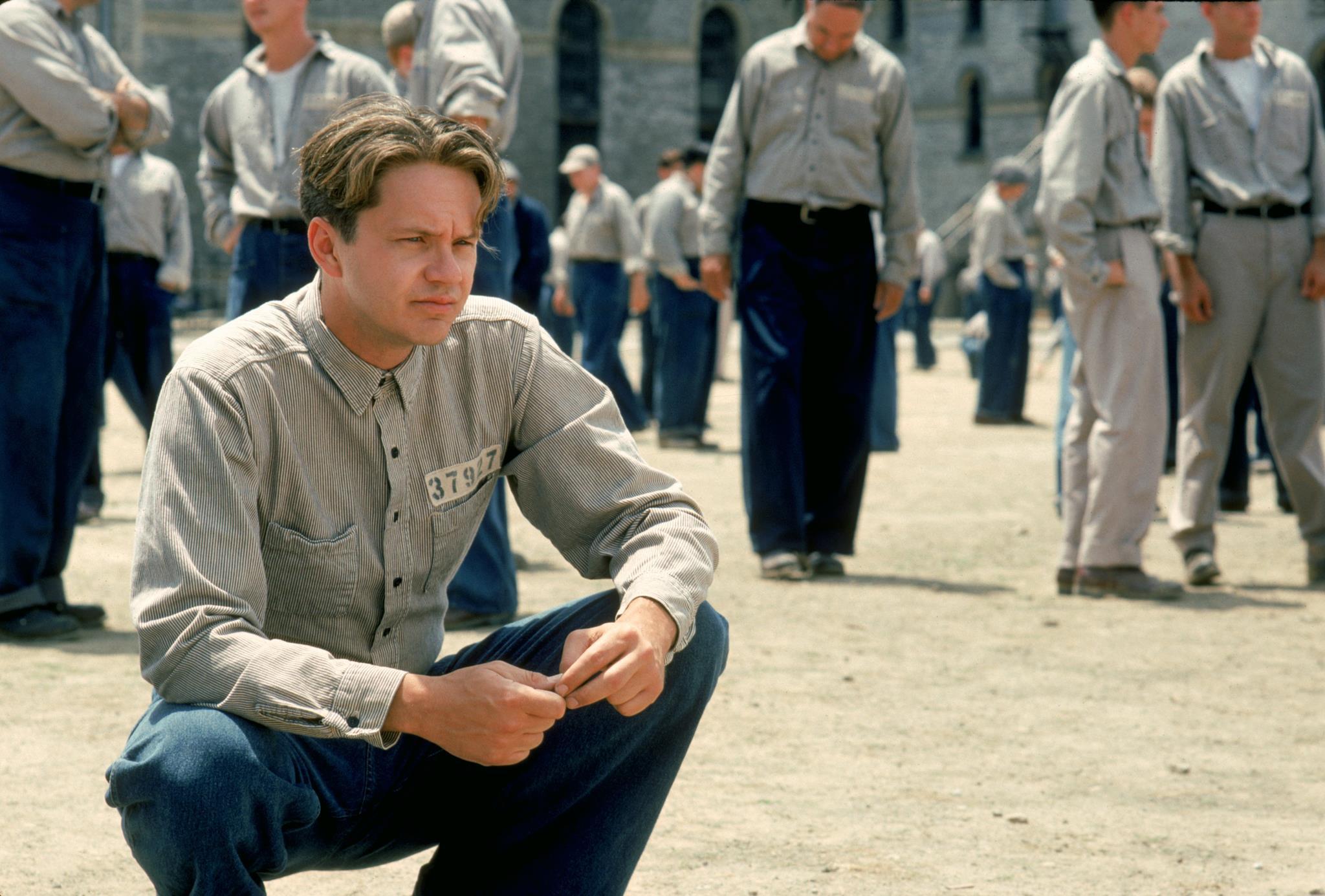
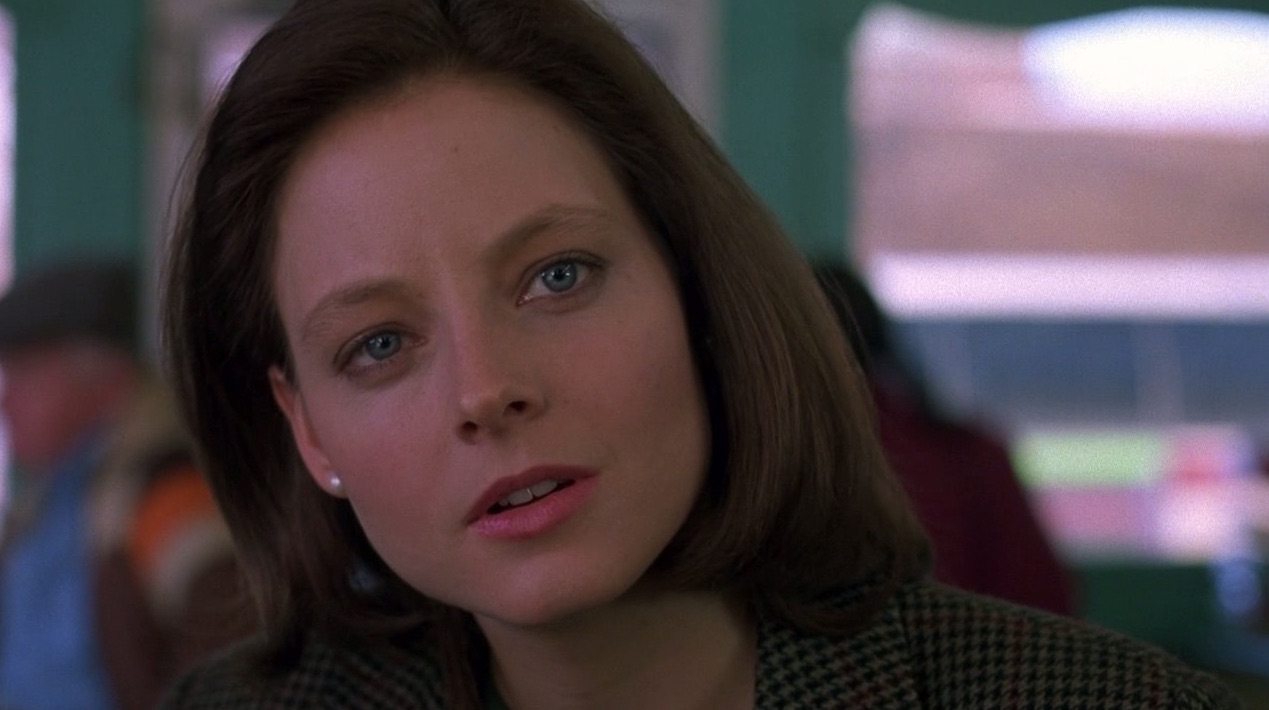
As the evidence was laid out before me, I found that my entire understanding of a main character was shattered. Luke Skywalker certainly fit this bill. As did Clarice Starling in Silence of the Lambs. Andy Dufresne in The Shawshank Redemption DEFINITELY fit this mould. And let’s not forgot Neo. These were some of my favorite movies ever. And all the characters were, if not “uninteresting,” certainly not stand-out crazy memorable types. What the hell was going on?? Was it true that in order to write a good movie, your main character had to be, gasp, plain?
So then I started going back through some of the best movies of the last 3 decades to see if this applied across the board. What I quickly found out was that this theory didn’t hold up… at all. Tony Stark. Peter Parker. Ferris Bueller. Louis Bloom (Nightcrawler). Deadpool. Jason Bourne. Forrest Gump. Jordan Belfort. Pat (Silver Linings Playbook). John McClane. Indiana Jones. Juno. William Wallace. Leonard (Memento). When in doubt, go to the data. And the data clearly shows that there are more movies out there where the main character is big, memorable, and interesting than small, ordinary, and plain.

With that said, there are clearly movies where an ordinary main character works. Luke, Neo, Agent Starling, Andy Dufresne. So what’s going on there? A few things, I think. The first is to figure out what your story calls for, an ordinary hero or an extraordinary one? In movies like Star Wars and The Matrix, the entire make-up of the story is built around an ordinary person being thrown on an adventure where they learn to become “extraordinary.” It’s the classic “Hero’s Journey.” For those movies, an extraordinary hero wouldn’t make sense because then there’d be no need to go on the adventure.
Also, each of the worlds those characters existed in were interesting. The world of Star Wars, the world of the Matrix, the world of sordid serial killers, the world of this prison. You could throw Michael Corleone in there from the Godfather – that universe was fascinating as well. These movies could withstand an “ordinary” hero because the worlds themselves were so big and vibrant, characters in themselves. If you tried to place an ordinary character into, say, Die Hard, which takes place in a building, it doesn’t work. The smaller the world, the bigger the character has to be, since he’s going to be carrying more of the load.
So what does this mean for you who’s starting up that next screenplay? Should you go with a more reserved “everyman” or do you try and make your hero flashy and memorable? Unless you’re writing a story that fits squarely into the Hero’s Journey structure, you should try and make your main character stand out IN SOME CAPACITY. How crazy you want to make your character will depend on what you’re going for.
One of the easiest ways to answer this question is to ask if this is a character based movie or a plot based movie. Star Wars is plot based. Nightcrawler is character based. The plot is almost incidental. Therefore, in a movie like Nightcrawler, you’ll want to go big with the character. Do something interesting with him. What that is is up to you (they went with psychopathic whereas a movie like Flight went with addict) but a movie like Nightcrawler won’t work with an ordinary character.

Now, let’s say you decide that your movie is plot-centric. Does that mean you have to go with a reserved main character? No. What it means is that you HAVE THE OPTION to go with a reserved main character. There’s evidence, based on past movies, that it can work. But that doesn’t mean you can’t go big with your main character. And I would suggest that, if you have a choice between one or the other, you make your main character interesting as opposed to not.
Could Iron Man have worked if Tony Stark was a quiet average guy? Maybe. We’ll never know. But I know this – as a fast-talking narcissist, he sure was an interesting character to follow. Could Indiana Jones have worked if Indy was more mild-mannered, didn’t have a sense of humor, sex appeal, or was bit of a dick? Maybe. But it was those added traits that turned him into one of the most memorable characters of all time.
With that said, we can’t discount the evidence that there have been HUGE movies over time with vanilla main characters. So if you write one of those movies yourself, how do you avoid making the main character too boring? How do we make someone work despite the fact that they don’t naturally stand out?
All we need to do is look at the data to find our answer. In the case of Andy Dufresne, Luke Skywalker, and Clarice Starling, there’s one common trait in all of them. Do you know what it is? THEY. DON’T. GIVE. UP. In fact, they’re quite the opposite. They are constantly charging forward despite the odds. Audiences LOVE characters who never stop fighting no matter how bad it gets (mostly because we, as human beings, wish we were that way ourselves). So that’s a big factor. Even though Clarice, Luke, and Andy are kind of “meh” on the outside. We like that their internal guide is always trying. If Andy Dufresne would’ve walked into Shawshank and moped around for 120 pages, that’s the worst movie of all time.
One of the more obvious things is to give the character an internal struggle. It can be in regards to a flaw, an addiction, their past, mourning, anything – as long as they have something to battle with. But this advice comes with a warning label. If it isn’t truthful, IT WILL DO MORE HARM THAN GOOD. If whatever you add only works to tick some screenwriting book box, it won’t work. It needs to feel honest, like something a person in real life would be going through. For Luke, it’s that he has doubts. He wants to be great but he has doubts he can be. And that’s a very honest relatable struggle since we all doubt ourselves. With Agent Starling, the whole saving the lambs backstory —- ehhhh, let’s just say it wasn’t the best part of the film. It felt a bit manufactured. When applying a conflict to these types of characters, better to be understated than over the top.
But for me, the secret sauce in adding spice to a character yet still keeping him grounded is a sense of humor. The great thing about a sense of humor is that it’s one of the easiest ways to connect the audience to a fictional being. If someone says something you think is funny, you immediately like them. The greatest example of this is Rocky Balboa. On the surface, Rocky is the prototypical “everyman.” But the reason Rocky is seen by many as the best everyman of all time is that he’s got personality and he’s got a sense of humor. He’s not afraid to make dumb jokes to get a girl. He’s not afraid to give advice to random kids who flip him off. He’s not afraid to talk to pet turtles. If Rocky was a classic personality-less everyman, he would’ve gotten swallowed up by the burning star that was Apollo Creed. But it was his understated sense of humor that made him stand out.
When it’s all said and done, the type of movie you’re writing will inform you what kind of person your hero should be. But it’s my contention that you’re better off trying to make your hero interesting REGARDLESS of the circumstances, than going with the safer, and only occasionally successful, vanilla everyman.
Carson does feature screenplay consultations, TV Pilot Consultations, and logline consultations. Logline consultations go for $25 a piece or 5 for $75. You get a 1-10 rating, a 200-word evaluation, and a rewrite of the logline. I highly recommend not writing a script unless it gets a 7 or above. All logline consultations come with an 8 hour turnaround. If you’re interested in any sort of consultation package, e-mail Carsonreeves1@gmail.com with the subject line: CONSULTATION. Don’t start writing a script or sending a script out blind. Let Scriptshadow help you get it in shape first!