
Search Results for: F word
The topic of villains has been hovering in the Scriptshadow background for the last month or so. We found out what a great villain can do for a movie like Black Panther. We found out what no villain does to a script like The Man From Tomorrow. Tuesday’s script was straight-up titled “Villains.” Yet when I thought about it, I realized we haven’t directly discussed villains in ages. Let’s change that. And let’s change it by identifying the number one mistake writers make when trying to create a villain. Are you ready for it?
They try to create a villain.
There’s no such thing as a “villain” in real life. It’s a made-up term to identify fictional characters who do bad things and want to hurt the hero. And therein lies the problem. When most writers put their villain together, they make them a vague bad dude who does bad things because… well because he’s the villain! This is a guaranteed way to make a villain forgettable.
The first thing you need to understand about villains is that they’re real people. They don’t not exist until it’s time to hang the hero over a lava pit, or when it’s time to hold the hero’s wife hostage. Even when they’re off-screen, they’re doing something. And if you don’t see them as a real person, you won’t know what those somethings are.
It doesn’t stop there. Your villain has had an entire life with ups and downs just like your hero. It’s just that somewhere along the way, due to a series of unfortunate events, their perception of right and wrong got warped. Which is how they ended up being the bad guy. But here’s the catch. They don’t believe they’re the bad guy. Villains believe they’re the good guy. And that the hero is the bad guy.
In other words, a villain doesn’t rob a bank because he’s a villain and that’s what villains do. He robs a bank because he believes the system’s been fucking him over the last 40 years. That the government and the banks have pushed him around, stolen what’s his, and disposed of him in the process. He’s robbing that bank because he believes he’s OWED THAT MONEY. That’s an important detail when it comes to villains. They always have a reason for why what they’re doing is right.
Keeping all this in mind, I’ve compiled some miscellaneous thoughts on villains that I think should help you the next time you need to write one. Let’s get started…
MAKE SURE YOUR VILLAIN’S BACKSTORY IS AS EXTENSIVE AS YOUR HERO’S
The reason most villains suck is because they’re too simplistic. They’re “the bad guy” because they’re “the bad guy.” For this reason, the more you know about your villain’s history, the more you’ll be able to fight this, adding dozens of unique characteristics that build life into the character. One of the simplest ways to achieve this is to write a big fat backstory for your villain, as big as your hero’s. Hannibal Lecter is considered the greatest villain of all time in part due to how extensive his backstory is and how much Thomas Harris, the author who created him, knew about the character.

IF POSSIBLE, MAKE IT PERSONAL BETWEEN YOUR VILLAIN AND YOUR HERO
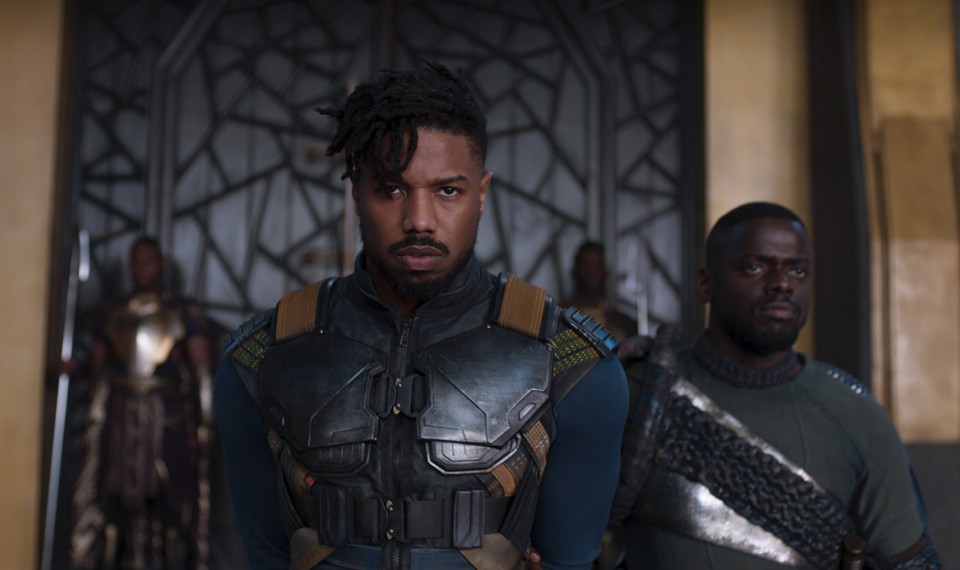
It’s a good idea for your villain to have a personal motivation for taking down the hero. Black Panther’s Killmonger hated T’Challa because T’Challa’s father killed his father and left him to grow up on the streets. He’s not just coming back to be the king of Wakanda cuz. He’s doing it to avenge his father’s death. There’s so much more weight to a hero-villain dynamic when the two have history with one another.
VILLAINS ARE OFTEN RIGHT, THEY JUST TAKE IT TOO FAR
A lot of great villains are villains sheerly because of how much further they take their pursuit than is acceptable. Glenn Close’s Alex Forrest in Fatal Attraction is technically right. This married dickhead lied to her, fucked her, then ditched her. But it’s how far she took the retribution that made her the villain. Ditto with Principal Rooney in Ferris Bueller’s Day Off. He’s right! This smarmy little entitled dipshit shouldn’t be able to keep ditching school and get away with it. But it’s the lengths to which Rooney goes to catch him that make him the villain. Remember, villains are heroes in their own minds. They believe they’re doing the right thing.
GIVE YOUR VILLAIN AN ANGLE TO PLAY OTHER THAN ‘VILLAIN’
I would go so far as to not even think of your villain as a villain. Once you see them that way, you start making them do a bunch of generic “villain” things. Instead, be as specific as possible in how you categorize them. Maybe they’re a weasel, like Paul Reiser’s lawyer character in Aliens. Or a bully, like Prince Joffrey in Game of Thrones. Or controlling, like The Governor in The Walking Dead. The right negative-skewing adjective can do wonders for focusing your villain.

THE MOST MEMORABLE VILLAINS PRESENT THEMSELVES AS ANGELS
There’s nothing more terrifying than a villain who acts as if she’s your best friend right before bashing your feet in with a hammer. From the ultra-polite Hannibal Lecter to the bubbly Annie Wilkes (Misery) to the gospel-spewing Warden Norton (Shawshank) to the friendly Colonel Hans Lunda (Inglorious Basterds). This formula is the best shot you have at creating a villain for the ages. But even if you don’t use it, the spirit of the tip – that every villain has an offsetting positive trait – is something to keep in mind. Even the ruthless Hans Gruber was charming.
GIMMICKY VILLAINS ARE THE HARDEST TO PULL OFF
Beware of gimmicky villains who are known more for their eccentric qualities than their broken humanity. I’m talking about characters like Anton Chigurh from No Country For Old Men and even Buffalo Bill from Silence of the Lambs. These are the flashiest of the villains but they’re hard to pull off because writers approach them the wrong way. Instead of asking, “How did this person get this way?” they ask, “How can I make this guy really fucked up?” So they try and come up with the dance moment with Buffallo Bill tucking his penis in or Anton’s unique weapon. But those things don’t come out of nowhere. Thomas Harris and Cormac McCarthy are authors who are willing to do the deep dive into characters’ psyches to find out how they got to this place. The average screenwriter is lazy as shit and thinks a half-hour brainstorming session is enough is to come up with the coolest villain in history. If you’re going to write weird quirky villains, make sure you do a deep dive on how they got to this point in their lives.

CHANGE THE WAY YOU SEE BAD PEOPLE BY ASKING HOW THEY GOT THAT WAY
When you read about a man who robbed a 7-11, don’t think of him as a bad person. Ask WHY they would do such a thing. Chances are they needed the money. Okay, why? A lot of times it’s for drugs. Okay, why do they want drugs so bad? Because they’re likely an addict. Okay, how did they become an addict? They probably got mixed up with the wrong crowd when they were young and never learned how to properly discern right from wrong. Okay, why did they get mixed up with the wrong crowd? Maybe their dad was never around and their mom had to work three jobs. They had no parental guidance or father figure, leaving them to make their own decisions. Hard to know the right path when you’re 12. Knowing this, would you consider our robber a villain? A bad person? Maybe. But, as you can see, it’s never as simple as a label. Every “villain” has a past and it’s up to you to figure out what that past is so that you can build some authenticity into them.
And there ya go. The advice I most want you to leave with today is to stop thinking of your villains as villains. Think of them as misguided souls who got shoved down the wrong path at some point in their lives and now have an axe to grind. That axe might be against society, it might be against a symbol for who they believe wronged them, and it might be against your hero himself. The more you know about how your villain got to this place in life, the deeper and more memorable a character he’ll be.
Genre: Contained Thriller
Premise: (from Black List) Two small time robbers become prisoners when they break into a house and discover a ten year old girl chained up in the basement.
About: This one popped onto my radar because they just signed up two actors who I really like. The first is Bill Skarsgård, who played Pennywise on “It.” And the second is Maika Monroe, who played Jay in “It Follows.” The script comes off of 2016’s Black List, where it finished in the middle of the pack with 13 votes. The writers, Dan Berk and Robert Olsen, are trying to take that next step in their careers, as they have, up until this point, only worked with actors like Dolph Lundgren. Not that I have a problem with Dolph “If he dies, he dies” Lundgren. But it’s much better to be writing for two of the hottest young stars in Hollywood as your leads.
Writer: Dan Berk and Robert Olsen
Details: 89 pages

Today we’re going back!
Back… to the screenplay.
That’s right. We’re actually reviewing a script today, folks! Let me hear ya’ll in attendance give me an “Amen!”
I can’t hear you! I said give me an “Amen!”
We’re going to be reviewing one of the standard sub-genres in the spec screenwriting world – the Contained Thriller. Why are so many specs written as Contained Thrillers? Limited location equals cheap. Small character count plus a simple situation equals a fast easy read for overworked readers. And the Thriller genre is easy to market.
If you want to write something that has a legitimate chance of getting made, I’d put Contained Thriller or Contained Horror at the top of the list.
The ONLY reason I’d tell people not to write in this genre? Is because the competition is stiffer than the ubiquitous corpse that shows up in Act 2. That and the limited location makes it hard to keep the plot fresh. Let’s find out if today’s writers pull it off.
20-somethings Mickey and Jules are an aspiring Bonnie and Clyde. Not that they have any idea who Bonnie and Clyde are. You get the feeling neither of them are very cultured. Hell, I’d be surprised if they made it past their sophomore year in high school. Which is probably why they’re robbing a gas station when we meet them.
Because they’re high on coke, the stick-up gets sloppy, and they forget to do the one thing you’re supposed to do at a gas station – fill up your car with gas. So their runaway lasts barely five miles, and the baffled duo stumble up to a nearby farm house with plans to steal a car. After they break in and can’t find any car keys, they explore the basement, where they find a 10 year old girl chained up to the wall.
Mickey wants to jet and pretend none of this ever happened. But Jules looks at him like he’s a monster (which he is. He’s Pennywise). There’s no way they’re leaving this girl here. Mickey reluctantly agrees and when they go upstairs to look for a saw to break through the imprisoned girl’s chains, they run into 50-something homeowners George and Gloria, who’ve just walked in. Mickey and Jules scream at the couple that they’re taking the girl with them, but former salesman George asks them to sit down and think this through. They just committed a crime. Do they really want to make things tougher on themselves?
It’s all a trick to buy time, of course. And the suave George gets the upper hand soon enough. The next thing you know Mickey is tied to a bed with a sexually repressed Gloria ready to turn him into her love slave and Jules is tied up in the basement in place of the little girl they were trying to save. It seems as if Mickey and Jules are 48 hours from becoming human manure. But these two feisty criminals aren’t going down without a fight. No matter how ugly that fight gets.

Remember what I told you last week? 4-6 characters is ideal for a spec script. This keeps your story focused AS WELL AS allows you to spend the time to properly develop all the characters. Every new character you add is time taken away from the characters you already have. So you want to add characters judiciously. That doesn’t mean you never do it. I’m not against movies with 10 characters or even 20 characters as long as the story calls for it. But when you’re writing specs, concepts that focus on 4-6 characters are the sweet spot.
Onto the story. Villains is a classic example of where most successful Contained Thrillers end up – in the “decent” category. Actually, let me retract that. The vast majority of amateur Contained Thrillers end up being terrible. But I’m talking about the ones written by competent writers. Most end up in the “yeah, that was pretty good” category. And that’s because this genre is hard! What’s hard about it is that after the hook, it’s nearly impossible to come up with fresh fun ideas.
Cause that’s where the real writing begins. Writing to where there’s a girl in the basement is the easy part. It’s almost impossible to do wrong because the reader already knows that moment is coming (assuming they read the logline). So they’re excited to get to that point. From there, they give you about a 10 page grace period. A sort, “Okay, now let’s see what you’re going to do.” And what most writers do is retread a bunch of scenes from other Contained Thrillers.
Villains hangs on for awhile. My favorite scene was when George and Gloria arrive and suggest talking this out like adults. A lot of writers would’ve jumped right into the violence or the running around and hiding. This scene worked specifically because it goes against that expectation. Not just that. But George made a lot of good points. You two are criminals. Is saving this girl really the best way to handle this? A lot of writers would’ve written this scene with George spouting out a bunch of movie logic. It was refreshing to hear some arguments that actually sounded convincing.
The stuff where Gloria is prepping Mickey to become her sexual toy was also pretty good. But you could sense that the writers were running out of creative steam. I find that whenever writers dip into weird sexual territory, they’re running out of ideas. Strange sex plotlines contain a certain amount of shock value. But shock is the antithesis of substance. It has a short shelf-life. I’ve encountered a few scripts where the sex stuff was so unique that I remained engaged. But it’s rare. And it turns out I was right. Quickly after this scene, the script turns into a conventional series of scenarios where the characters try and escape.
Another key problem the writers should address before production is that George and Gloria aren’t scary enough. They’re too rational. And so I was never worried that something bad was going to happen to our heroes. If you’re going to lock our characters in a house with two supposed psychos, you need to sell their psychoness. That never happened.
With that said, this is worth the read in that I genuinely wanted to know how it was going to end. That’s my litmus test for a ‘worth the read.’ If I want to read the ending, something’s working. Because the large majority of the time, if you told me I could stop reading a script whenever I wanted, I would stop. These two made me like Mickey and Jules enough that I cared about their fate. Which is saying something. If you’re thinking about writing a Contained Thriller, add this one to the list.
[ ] What the hell did I just read?
[ ] wasn’t for me
[x] worth the read
[ ] impressive
[ ] genius
What I learned: A recent obsession of mine is differentiation in dialogue, which is a fancy way of saying make sure your characters sound different. Check out these slices of dialogue. The first is from Mickey and Jules after the gas station robbery and the second is from George when he encounters Mickey and Jules in his house.
MICKEY: FUCK yeah! That’s what I’m talkin’ bout baby! You were incredible in there! The way you ripped that thing of chips down? Fuck!
JULES (excited; flattered) I don’t know, I was just, like in the zone you know? I don’t even remember doing it!
And now George…
GEORGE: I understand. You’re the ones with the gun, you’re making the rules. All I’m asking for is a chance to state my case, maybe enlighten you as to a couple of things you may not have thought of. You can keep the gun pointed at me all you like, I just ask that you sit down and listen to what I have to say.
Notice all the ways the dialogue is different. There’s a difference in education level, in command of language, in the use of swearing, in length. If I told you to close your eyes and I read those two blocks of dialogue to you, you’d have no doubt that they came from different people. And that’s what you want your dialogue to do.

I was going to try to get out to A Wrinkle In Time this weekend until I found out it wasn’t playing at the Arclight Hollywood! It was the first indication that something was up. Arclight ALWAYS has the best movies. For them to say, “No thanks,” told you what they thought of the film’s financial prospects. Then I saw the RT score, remembered that abysmal trailer… and all of a sudden getting in my car and driving to that nightmare parking structure at the Grove sounded like the worst thing I could do with my day. It turns out I made the right choice. The film bombed.
While we’re on the topic, I don’t get the protective bubble being placed around Ava DuVernay. Why is everyone so scared to say her movie was bad? I’m reading these reviews, many of which have negative scores, yet 95% of the review is qualified by how much the reviewer loves DuVernay and loved “certain aspects” of the movie. I bet every director in Hollywood is wondering where that positivity is when their films are being reviewed.
I think three things pushed people away from this film. The first is DuVernay herself. There’s a self-importance to her presence that’s off-putting. The second is that Wrinkle promoted itself too aggressively as a “diverse female empowerment” film and, in doing so, pushed half of America away. I was not surprised to hear that the demo split for this film was an unheard of 70% female, 30% male. Finally, the film looked bad. Plain and simple. When a film looks bad, people don’t show up.
I hope Hollywood learns a lesson here. People don’t go to the movies to support messages. They go to be entertained. It seems like Wrinkle failed at that basic level.

Documentary watch! A couple of documentaries I need to comment on. One that I hated, the other that I lurrrved. The first is called Icarus. It’s the Netflix documentary about doping that won Best Doc at the Oscars. I am here to tell you that THIS IS ONE OF THE WORST FILMS I’VE EVER SEEN!!! Do NOT. EVER. SEE THIS FILM. Everything about it is scammy and weird and suspicious and manipulative.
I’m going to let you in on a secret. Always be wary of out-of-work actors making documentaries about themselves. They have zero interest in pursuing anything resembling the truth (which is the whole point of making a documentary). All they care about is promoting themselves. And you could see that right from the start with Icarus. There isn’t an honest bone in the main subject’s body. From the second the cameras are on, this guy’s looking for his close-up.
For those who don’t know anything about the doc, it’s about an American cyclist who wants to see if steroids will help him win a bike race so he hires a Russian doping specialist who lives in Russia to help him. That sounds kind of interesting until you learn that the race he’s entering isn’t the Tour De France. It isn’t even the Tour De French Toast. It’s some low-level non-professional event where it doesn’t matter if you dope or not! You could literally show up and say, “I’m on steroids” and nobody cares. And why exactly am I rooting for a cheater again?
Anyway, he meets this Russian doper who they then try and turn into a sympathetic figure. But this guy is so creepy and weird, your skin crawls every time he’s on screen. To provide some context, our star (aka “the out of work actor”) has to keep sending urine samples to the Russian to get them cleaned so they don’t test positive. On multiple occasions, it’s implied that the Russian guy has a sexual fetish with the urine. Oh, okay. Yeah. That’s what I want to see. A weird 55 year old Russian man swirling urine in a tube and staring at it sexually. Sign me up, brother.
You’re probably wondering how in the world this won an Oscar then. The answer is surprisingly simple. Nobody in the Academy watches the documentaries they vote for. They saw “Russia” in the description. They saw, “scandal,” in the description. And they voted for it based on that. I would not be surprised if not a single person who voted for this movie knew it was about cycling. Consensus: Steer clear of this movie!

Now on to a documentary that you MUST see as soon as possible. Yes it came out a couple of years ago. But it ran into so many legal snafus, it became impossible to find. Just to give you a teaser of how crazy the production of this film got, here’s what happened during a Sundance screening when a representative for the film’s subject encountered the co-director in the lobby beforehand.
The film is called Tickled. It’s about a gay New Zealand journalist who finds out, through the glories of the internet, that there’s a competitive tickling league. As in, people tie each other down and tickle each other. They have to endure as much tickling as possible to “win.” The “sport” is so bizarre that the journalist can’t help but dig deeper. And what he finds is that, strangely, this league of ticklers only includes young fit good-looking men between the ages of 16-22.
So he e-mails the league’s president, a woman, and says he’s interested in doing a story about the league. The woman instantly e-mails back and berates the journalist for being “gay” and a “faggot,” telling him that if he does a piece on the league, he’ll regret it. Keep in mind he never told this woman he was gay. So how did she find out?
The president then continues to e-mail the journalist every day with similar e-mails. This only piques the journalist’s interest more. Why was this woman so cruel in regards to his homosexuality when the sport she was funding was so… well… gay?
And thus began a deep dive into the history of this league and its mysterious president that has a shocking revelation every 10 minutes. The deeper they dig, the crazier this insane president gets, to the point where we’re certain these filmmakers are going to be spending the rest of their lives crawling out of a mountain of legal debt.
There are a couple of reasons why Tickled succeeds while Icarus fails. The first is something I always tell you guys to look out for – IRONY! Who would think that a documentary about tickling would tackle bullying, aggression, homophobia, legal threats and anger? Irony can sell a concept like nothing else. The second is that, unlike the fraud at the center of Icarus, the Tickled journalist is interested in getting to the truth. He wants to expose a man who’s used his lies and money to destroy dozens of young men over the years. You won’t believe where this one goes, guys. I’m telling you.

A few other quick reviews. I finally saw Jumanji, which I loved. I may do an article on it because they successfully went back to the 1996 screenwriting playbook to write this one and I’m curious if that winning formula was specific to this movie or if more screenwriters need to start using old school screenwriting tactics to write great scripts. I would argue this is perfect high-concept non-superhero blockbuster execution. It got EVERYTHING right.
I also saw Ladybird. This was either the best average movie I saw all year, the most average decent movie I saw all year, or the worst great movie I saw all year. What’s interesting about Ladybird is that, 10 years ago, this is a random coming-of-age indie that makes 10 bucks at the box office. In 2017, it’s a defining piece of inclusive art. There’s something to be said for timing, folks. Oh, and I saw this great little Icelandic movie on Netflix called, “The Oath.” It’s about a man whose drug-addicted daughter falls in love with a dealer. He does everything possible to get her out of his clutches but she’s so far gone that no matter what he does, she won’t leave the dealer. It’s so frustrating to watch but the movie takes some unexpected twists and turns that only a non-American movie could pull off. I really liked it.
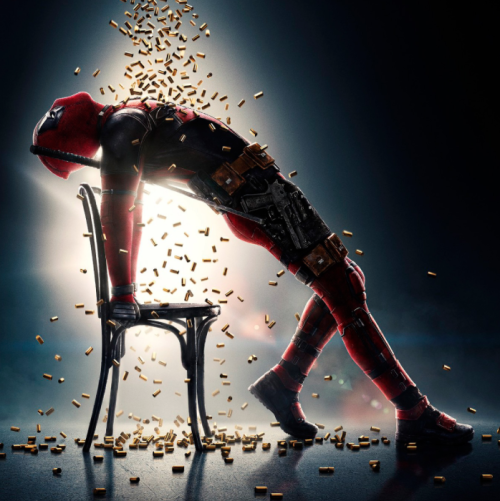
Finally, what are these rumors about a disastrous Deadpool 2 screening?? How is this not bigger news? They’ve been forced to do reshoots with less than a month until release! What the fuhhhh???? I’ve been worried about Deadpool 2 for a couple of reasons. The first is Tim Miller leaving the project. It’s never good when a key collaborator leaves a project. Deadpool may be Ryan Reynolds’ baby. But it was Tim Miller’s movie. He’s the one who came up with that fx reel that brought that project out of development hell. On top of that, it’s hard to pull off the “breaking the fourth wall” thing two movies in a row. It’s always cute the first time around. But by definition, gimmicks don’t have staying power. I’m guessing the asides to the audience are inducing eye-rolls this time around (“Haven’t we already seen this?”). With that said, I’d be first in line to see Deadpool team up with the Avengers. That’d be so rad.
Usually I give you guys formal screenwriting advice. But today I’m going to change things up and give you screenwriting HACKS, flashy tips that aren’t meant to guide you to the perfect screenplay so much as spice your script up. You can use two of them. You can use seven of them. It’s up to you. They will never make nor break your script. But they will HELP. Let’s begin!
1 – A concept you don’t have to defend – I see this all the time. Someone will pitch me an idea like, “A group of people trying to make it in Los Angeles endure a series of obstacles but eventually come out on top.” The writer will then immediately launch into a defense of his logline before I even say anything. “I know that sounds generic. But what it’s really about is this guy who runs an acting workshop and see…” I’m not saying the above idea would make a terrible script. If the writer knows character, it could be great. But we’re talking about hacks here, things to make your job easier. You do this by coming up with a concept that speaks for itself, that isn’t so boring that you have to defend it. “A young African-American man visits his white girlfriend’s creepy parents for the weekend, and begins to suspect that they’ve brought him here to hurt him.”
2 – At least one big character – Big characters jump off the page and get big actors attached. The kind of character you’re generally looking for here is a chatterbox with opinions who’s a little bit crazy. Juno. Ladybird. Walter from The Big Lebowski. Louis from Nightcrawler. Mildred from Three Billboards. Dixon from Three Billboards. This is one of the easiest ways to make your script stand out.
3 – A flashy opening scene – This is a TV pilot staple. But they’re available to you feature writers as well. Give us a scene that grabs us right away. If it doesn’t fit into the timeline of your story, you can make it a flash-forward. Those first 5 pages are when you’re being judged the harshest. It’s when the reader is literally thinking, “I have to read another terrible script before I can get to my own writing??” Give’em a hell of a great scene, like the opening of Scream (one of the most famous spec scripts ever), Inception, or all the James Bond films, and they’ll want to stick around.
4 – Efficient description – Keep your paragraphs to THREE LINES AT MOST. Make most of them TWO LINES AT MOST. If that scares you, good! Scripts are supposed to be easy to read. Not a chore. Learn to be a poet, to say as much as possible in as few words as possible.
5 – A small group of strong characters as opposed to a large group of average characters – Spec scripts work best with a tight cast of characters. Fight it all you want. It doesn’t change the fact that the screenwriting format LOVES setups with 4-5 main characters. Cloverfield 13, Get Out, Ex Machina, Room. All of these superhero movies with 30 characters are not spec scripts and therefore don’t require an overworked reader to keep track of all 30 people. Also, a small group of characters allows you to focus the story and give those characters more attention. So look for ideas that favor this setup.
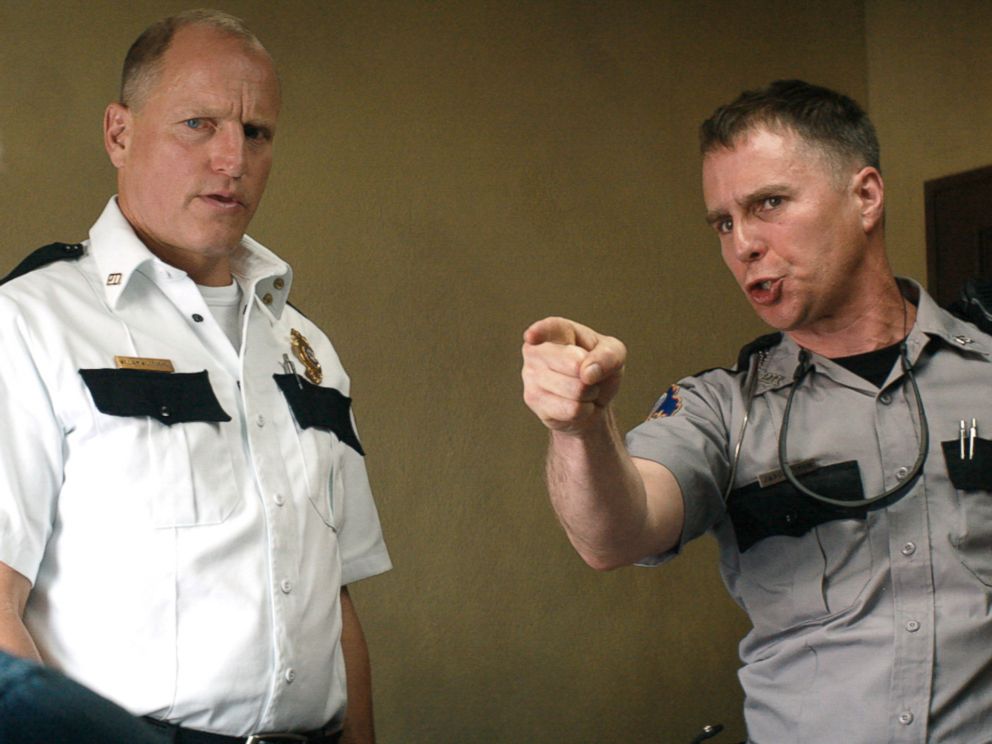
6 – Dialogue that’s a model, not a mannequin – Mannequin dialogue is the bare essentials. It’s the shape of the human, but there’s no expression or individuality to it yet. A model, on the other hand, has a face that can express emotion. Hair that can be styled. You can dress her in something classy, sassy, slutty, distinguished, whatever you want. Here’s a scene from Three Billboards, where Dixon (Sam Rockwell) is drunk and badgering Mildred at the bar. A patron tells Mildred she sounded great in her TV interview yesterday. Here’s the “mannequin” version of Dixon’s dialogue: “Why are you encouraging her? What she’s doing is wrong.” Note how straightforward and generic that is. Anybody in the world could’ve said it. Now here’s the “model” version, which was used in the movie: “I didn’t think you came across really good in the things you were saying. I thought you came across stupid-ass.” Dixon is an idiot, a 6th grader in a man’s body. We see that here in his butchered grammar and low level vocabulary. This is how you dress up dialogue. You have it express the individual who’s speaking.
7 – An antagonist with personal motivation rather than general motivation – Marvel keeps screwing this up but there are signs of course-correction. Having a bad guy who wants to collect some item so they can harm the world is boring because it’s generic. But a bad guy who has a personal beef with the hero, as we saw with Black Panther, is interesting because it’s specific. If that doesn’t work, consider a personal beef adjacent to your hero. This is what Spider-Man: Homecoming did. The Vulture wanted to hurt the city because they went back on their contract with him, leaving him high and dry in his career and his family. Villains with solid motivations juice a story up.
8 – One giant setup and payoff – You can have as many setups and payoffs as you like. But you need one great one. Setups and payoffs are so fun and audiences LOVE them. Unfortunately, I don’t see as many of them as I used to. The Rita Hayworth poster in The Shawshank Redemption. The snakes in Indy. The clock tower storm in Back to the Future. Where are my current setups and payoffs at?
9 – A twist ending – I hesitate to put this here but nothing affects a reader more than a twist ending they never saw coming. It’s got to make sense for the movie. But there isn’t a single device that can upgrade a script faster than a great twist ending.
10 – At least one scene you KNOW everyone will be talking about when they leave the theater – I can’t tell you how many scripts I read without a SINGLE memorable scene. You need a scene that defines your movie. Achieving this is easier than you think. Just come up with a scene idea that you know audiences will have a strong reaction to. Fish sex for The Shape of Water. The peach scene in Call Me By Your Name. Dixon throwing the advertising agent out the window in Three Billboards.
There ya go. Now go hack at it!
Is Apple’s flagship “See” the “Game of Thrones” slayer it so desperately wants to be?
Genre: Science-Fiction
Premise: In the distant future, after a virus has left less than 2 million souls on earth, tribes of people attempt to survive without the most basic human sense – sight.
About: When a media company worth 900 billion dollars lets everyone know they’re entering the TV space, everyone in that space gets really f’ing nervous. We live in a TV world that’s increasingly becoming harder and harder to stand out in. The only way to do it is with big money. And no one has more money than the house that Jobs built. “See” is one of their flagship programs, and it comes from Francis Lawrence (Red Sparrow, The Hunger Game sequels) and Steven Knight (Eastern Promises). Lawrence is quoted as saying that they’re going to be able to do stuff with this show that you never get to do in TV. Can’t wait to find out what that’s all about!
Writer: Steven Knight
Details: 69 pages (Third Draft)

With all of the screenplays I read, it is rare that I come across an idea that I truly consider original. I’ve never seen an idea like this in the television world. I’ve seen a movie covering similar territory – Blindness – but that was one of the worst movies I’ve ever had the misfortune of sitting through.
Sight-challenged subject matter, unless you’ve got Al Pacino, is a TOUGH thing to film. I mean, you’re watching people literally stumble around in the dark. To put an entire cast into that world is one of the riskiest things I’ve ever seen. And when you’re introduced to the world-building here, with entire towns built around strings and ropes that the inhabitants use to pull themselves around, you’re thinking, “They’re going to do this for 70 episodes?”
I kept waiting for the moment where some miracle light came down and all of a sudden everyone could see. But I don’t think that moment’s coming. We’ve got babies who can see. But that isn’t going to pay off for another 15 years. What do we do in the meantime?
Maybe I should break down the plot for you. The year is 2600-something. We’re high up in the mountains in a weird village that has, like I said, ropes and pulleys and shit. Through some title cards, we learn that back in the 22nd century, a virus swept through the planet that killed almost everyone. Anyone who remained was left sightless.
Over in a cave, a strange woman, an intruder of sorts named Maghra who only joined this clan weeks ago, is pushing out twins. Meanwhile, the clan’s leader, a giant of a man named Baba Voss, is dealing with an approaching army. He can’t see this of course. No one can. But in a world with no sight, you use your other senses acutely, and sense-specific generals use their hearing to note that hundreds of horses are coming up the mountain. They will be here soon.
Via a series of conversations throughout the village, we learn of a mysterious man named Jerlamarel. He was the man who got Maghra pregnant then disappeared. It is rumored that Jerlamarel had sight (vision is considered witchcraft in this time, so sight is never talked about). Jerlamarel left a message (messages are written via a series of knots in ropes) that there is a secret bridge off this mountain that will take everyone here to a new land.
Because they are vastly outnumbered by the approaching army, the village decides to flee to this rumored bridge. After they cross it, they find their way into a valley, a valley overlooking a once-familiar but now dead skyline, that of New York City. What they don’t know is that they’re moving towards another village, a village led by a woman with one goal – to find and kill the witch babies who have inherited the power of sight.
Does the word prayergasm mean anything to you?
Oh, it will.
What I really liked about “See” was that it had an extremely complex world it needed to set up, but said, “Fuck it. I’m not only going to set this world up. I’m going to entertain you while I do it.” It kills me when young writers make the mistake of believing that because everything in their fantasy world is soooooo complex, it needs 70 entire pages of dry setup. There can be no fun when you’ve got the Squybar language to establish, and the Tenth Thistle Law that the reader has to know to understand why the War of 2119 ended in the Calagar Revolution.
Your job as a writer is to tell us those things WHILE ENTERTAINING US AT THE SAME TIME. Trust me. However complex you think your world is? It’s not a tenth as complex as this one. And yet we already have a war on page 10 in “See.”
This is a testament to the old advice: Start your story as late as possible. Sure, Knight could’ve given us 30 pages of setup before the war. But that’s not how good storytelling works. Especially these days when viewers have LITERALLY 400 other options to turn to. You have to grab people fast. So we grab and go with a war and then an evacuation.
I was shocked they made that choice, to be honest. Usually, when you have TV shows, money is tight. If you’re going to build an elaborate village on a mountain with an intricate system of movement and engagement? In a normal show, you’re going to use that set for AT LEAST your first season. That set gets torched by page 50 here. I guess this is what Apple was talking about with their deep pockets. You think you’ve got money Netflix? That’s pocket change for Apple.
So I didn’t know what the hell was going to happen once they left. But I’ll tell you one thing that happens. Prayergasm. Queen Kane, who rules the only town in the world that still has electricity, masturbates whenever she prays to God. And hey, why not? Nobody’s going to catch her. Even if they hear her, it’s easy to deny. “Queen? Are you buttering your muffin again?” “Um, no!” “I thought I heard something.” “Prove it.” Argument won.
The cool thing about this concept is that it places the audience in the unique position of knowing more than the characters. So, for example, in the scene where the fleeing village people are approaching the cliff and looking for this rumored bridge. Everyone is desperately looking around, dangling perilously near the cliff that the bridge crosses, tempting fate with each step. WE can see that the bridge is right there. But they’re clueless. That adds a unique form of dramatic irony that allows us to ball our fists and scream out, “It’s right there! It’s right in front of you! Just keep walking.” This opens up avenues you can explore on multiple levels throughout the series.
What I wonder about is the staying power of this hook. Its biggest asset is also its biggest weakness. Will audiences stick with characters flailing around like drunken sailors season after season? I don’t know. There are no old comps to compare this to. Everything is brand new and therefore unknown.
But I like that. If these are the kinds of risks Apple is going to be taking, then they can definitely take on “I don’t know how to make good movies” Netflix and “We Only Have One Good Show” HBO. All you need is a couple of winners and you’re a player baby.
[ ] What the hell did I just read?
[ ] wasn’t for me
[xx] worth the read
[ ] impressive
[ ] genius
What I learned: Knight will occasionally use a tactic where we meet an important character, but due to the way the story’s set up, the intro to that character needs to be brief. So Knight will write, right after the character intro: “We will get to know this person well.” Knight understands that when tons of information and new characters are being thrown at the reader, it’s difficult to know what needs to be remembered and what can be filtered out. Adding that little tag is a thoughtful way of saying to the reader, “I don’t have time to get into this person’s deal now. But since you have to remember so much shit, I want you to know he’s important. So don’t forget him.”