
Search Results for: F word

Okay I can’t keep it in anymore!!!
I have to speak about The Last Jedi!!!
The newest Star Wars entry is having its premiere tonight. This will be followed by tons of positive social media reaction since Disney will stipulate that you can only tweet if you loved the movie, with Patton Oswalt and Kevin Smith leading the charge.
The film will make 200 million opening weekend solely because it has “Star Wars” in the title.
But then what?
But then what indeed.
While I have my reservations about the film, I love that it’s given us no shortage of things to talk about.
For starters, what nobody’s discussing is that an entire new trilogy is resting on the fate of this film. Everyone’s acting like that trilogy is a foregone conclusion. But mark my words, it won’t be if this movie doesn’t hit 500 million domestic (half of what Force Awakens made).
The magic of Star Wars films has always been in their re-watchability. If a Star Wars movie delivers, nerds like myself will keep going back again and again, pushing that domestic number up higher and higher. If a Star Wars movie doesn’t deliver, someone who was planning on going eight times only goes one. Do the math.
Here are some reasons why this Star Wars may not deliver.
First of all, this is the only Star Wars movie so far that Kathleen Kennedy didn’t clash with the director on. She even clashed with JJ, for goodness’ sake, the nicest guy on the planet. From all accounts, her and Rian Johnson became best friends on The Last Jedi. That may be great for future Christmas Card lists. Not so for creating a good movie. Good movies tend to be born out of conflict. The battles between sides tend to result in the best ideas winning. When everyone’s copacetic, there’s no stimulation to push yourself. The original Star Wars was famous for these battles. I remember reading about a producer – I think the guy who produced The Bridge on the River Kwai – who so believed conflict produced greatness on productions, that if a production was going too smoothly, he would deliberately stir shit up.
Second, the casting on this movie isn’t just bad, it’s uninspired. The three new faces we got are… Laura Dern, Benicio del Toro, and someone named Kelly Marie-Tran. Is the casting of any of these actors getting you excited to see this film? Think about how exciting the casting was for Awakens, particularly Adam Driver, who was a nobody when he got the role. Del Toro is the most interesting of the bunch. But he was just in another space opera movie. Guardians of the Galaxy. Usually, uninspired casting leads to uninspired movies. Not a single sexy casting choice. That seriously worries me.

Third, the running time. We’ve been told that this will be the longest running time of all the Star Wars movies at 2 hours and 30 minutes, which shows a decided lack of understanding of what makes a good Star Wars movie. The best Star Wars movies have tight running times (Star Wars, Empire). The worst have long running times (Phantom Menace, Revenge of The Sith). Long running times usually indicate a writer-director who’s undecided about where he wants to take the movie, so instead of making the hard decisions to focus the story, they instead leave everything in and let the audience make sense of it. This attitude is what led to Matrix 2 and 3, all three prequels, and numerous other bad films.
Is there anything that gives me hope? One thing and one thing only. The trailers are so decidedly average that I’m hoping a decision was made at the studio level to hide all of Last Jedi’s best parts until the movie came out. I imagine a conversation that went something like, “Empire, another second film of a trilogy, became what it was because of its surprises. Let’s do the same thing here.” So I’m hoping I walk into that theater and 90% of what I see is stuff that wasn’t in the marketing campaign. If that’s the case, not only will I be ecstatic, but I’ll give Johnson and Disney major props for doing something that not a single studio has had the guts to do in two decades.
Oh, and I want to see Luke and Kylo have an awesome lightsaber battle.
And I want to see Luke and Snoke have some sort of trippy Force-showdown. That would be cool, too.
Oh, and I want to see this thing kill someone.
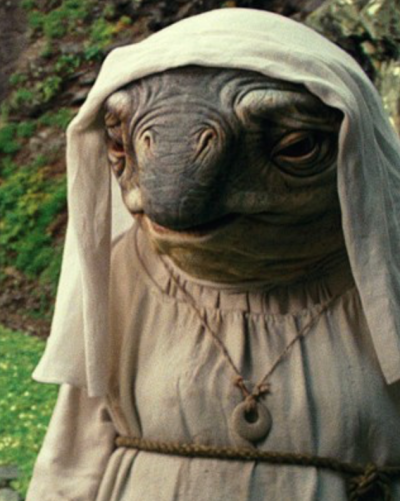
Okay, I’m done now.
And a Yoda sighting would be nice, too.

I was going through the Talkback of last weekend’s Amateur Offerings, and I came upon this comment which unabashedly ripped into the entries. I don’t necessarily like comments like this. I prefer feedback to be more constructive. But if I sense a raw truth to the comment, like the commenter really feels this way and isn’t just trying to stir shit up, I think that’s worth discussing. The truth is, some of the things 7 Against 7 says here, are true. And maybe by talking through them in a calmer more productive fashion, I can help some of you improve the types of ideas you come up with and the scripts you write. So I’m going to go through 7 Against 7’s entire comment, piece by piece, and give you my thoughts along the way. Some of this might be hard to hear. Prepare to be triggered. But hopefully, we’ll all be better writers in the end.
I’ve often wondered why writers couldn’t make a career out of selling spec scripts. These amateur offerings have shown me why.
If a production company had 50 million dollars to spare and wanted to spawn a successful film and possible franchise, these offerings would make them cringe. I imagine these offerings are akin to what’s circulating around Hollywood, and wow, are they bad.
7 Against 7 makes a great point here that writers often forget. If someone has 50 million dollars to spend, and every line of Hollywood box office data suggests that buying a pre-existing property is a better investment than buying an original spec script, why the hell would they buy your spec script? You need to imagine you’re in a room with a big time Hollywood executive and he’s asked you that exact question. Why your script? You better have an answer. The only three answers I know of that hold weight are… 1) You’ve come up with a kick-ass concept that everyone agrees is good. 2) You’ve hit on a current trend, finding an angle just unique enough to separate your script from the pack. 3) You’re an awesome fucking writer who can execute any story, no matter how mundane it sounds. Sadly, if you’re a nobody, people might not even read your script to find out if you’re 3. Logan Martin told me that before Meat landed on Scriptshadow, only 1 guy on Reddit would read his script because the logline wasn’t anything special. So it’s best, even if you are a great writer, to nail number 1 or 2. Increase your reads. Increase your odds.
1) Title: Plummet
Genre: Horror/Thriller/True Story
Logline: Lured by a sadistic killer, a young woman fights for survival in Central Park during the dead of winter. Based on true events.
Based on true events doesn’t negate the fact that it’s the same often retreaded story of a woman being stalked by most likely a male killer.
In this age of Hollywood revelations about stalkers and rapist terrorizing women at work, home and in hotel rooms; this story will motivate no one to go to a theater. Especially not with it taking place in Central Park, NY where there has been many women raped while jogging and walking. Why even write something like this?
“Because this is a contained thriller that really happened about a real serial killer you’ve never heard of?”
I want escapism when viewing movies, not a bludgeoning from reality.
All the complaints about “lack of originality” that ring out from writers whenever Landis makes a sale; yet every week the amateur offerings on this site are terribly unoriginal and uninspiring.
You say “Plummet,” terrible title by the way, is about a woman being stalked by a serial killer. I say it’s just another crumby slasher pick. And I’d rather watch the original “Texas Chainsaw Massacre” or “Friday the 13th” or “Halloween,” or “Sleepaway Camp,” or “Black Christmas” or “Fear,” or “Scream,” or “P2,” etc.
If you’re writing contained thrillers why not tweak the genre like “Get Out,” and “Split” did? If you had an idea like one of the aforementioned, it would be easier to sale; because it’s what producers, managers and agents are looking for right now.
I’m not sure I agree with everything 7 Against 7 is saying here. There is an audience for this kind of movie. There’s something primal about survival and overcoming evil that will never go away in cinema. And something as simple as seeing the girl get away from the killer can be exhilarating. But I agree that the specific concept shaping this getaway isn’t that original. And I like the movies he’s suggesting you look to instead. Get Out and Split. Be a little more creative. A girl running around a park… I suppose that could be okay if it’s executed realllllly well. But the ho-hum setting mentioned in the premise implies that the decisions being made in the script will also be ho-hum. I can’t know for sure. But that’s where my mind goes after reading a logline like this.
By the way, I agree with him about Max Landis. Guys – NEVER use Max Landis or anything he sells as a reason for why your like-minded script should sell. Max Landis is an enigma. There’s never been anyone like him. He posts insane videos on Youtube that go viral. He has a following. He openly trashes major blockbusters then gets hired by the studios that released those blockbusters. He wrote scripts for something like 10 years before he sold anything. There are too many factors going into his success that you can’t quantify or replicate. Don’t worry about Max Landis. Worry about becoming the best writer you can be.
2) Title: MONSTER ASSASSIN
Genre: Supernatural Action
Logline: When the love of his life is murdered by a group of demons, a legendary monster assassin sets out to exact revenge.
There are no stakes, and I can’t figure out who the main character supposed to be exacting revenge against. Some random group of demons? Who is their leader and did they do this for a specific reason? If so, that needs to be mentioned in the logline; otherwise it seems like this will be a pastiche of action scenes with no clear goal and tons of flashbacks divulging backstory. Typical amateur stuff.
Also, demons and angel as warriors has yet to translate well into boxoffice success, religious people don’t like seeing their religion displayed in such a manner. And none religious people think of angels and demon combat as being silly.
“Constantine,” “Dogma,” “Legion” “Ghost Rider,” and “End of Days” all flopped.
I don’t see how any producer or production company could get excited about an idea like yours; which would be better compared to “Constantine” than any of the aforementioned. And that failed as a movie and tv show.
“I poured into it my passion for the Gothic and macabre, my love of wildly imaginative action and my heart’s yearning for a magical world hidden within our own.”
Cool, but what about stakes? Conflict? Conflict resolution? Irony? An antagonist with an coherent goal? Urgency? Set ups and payoffs?
This feels unnaturally harsh, like me reviewing a Rian Johnson film, even though I still don’t understand why the Cinephile community gave this guy a pass for using Photoshop 6 to digitally alter his actor’s faces in Looper. I can only imagine what weirdness he’s going to employ in The Last Jedi. But I digress. 7 Against 7 is right that the logline here is a bit general. I like specificity in loglines because it’s what identifies your script as unique. Still, I understood the problem and goal just fine. Kill the demons. And something about this feels more fun than the failed movies 7 Against 7 listed. “Fun” means a broader audience. Not sure what he means about no conflict. What’s more conflict-filled than taking on demons?
3) Title: Righteous Anger
Genre: Thriller/Drama
Logline: A 17-year-old Syrian refugee becomes entwined in a dangerous world of deceit and human trafficking in his Atlanta community.
Hey kids; let’s skip that live action version of the Lion King and go see this rousing movie about a Syrian refuge and women forced to be sex slaves…it’s in 3d!
Why would I pay to be shown fictional misery, when I can walk down the street and see it in reality? Movies about human trafficking have a terrible track record of not only being snubbed by the Globes and Oscars, but poor box office returns. Which production company would dip into their hard earned coffers to fund this knowing it will neither win awards or be boxoffice hit?
I have to admit I snickered at the idea of choosing between Lion King and a Syrian refugee movie. And 7 Against 7’s sentiment is correct here. This sounds really fucking depressing. However, we have to remember that not every script is vying for a 4000 theater release. If you want to make a more serious movie, you just have to make it cheap. With that said, you have to understand that these types of “heavy subject matter” scripts don’t do well on the spec market unless they’re tapping into an existing hot button topic. Almost everyone who writes this kind of stuff has to raise the money and shoot it themselves. On top of that, Righteous Anger’s logline trails off into obscurity instead of telling us what the script is about. It would be like, if I was writing the Raiders logline, I wrote, “An archeologist who searches the world for rare artifacts goes off and encounters a wild adventure…” You have to give us a more definitive goal, not summarize the general “feeling” of your script.
4) Title: Two-Time
Genre: Crime Drama
Logline: After allegations of game fixing derail his career, an ex-college football star is recruited by a disgraced university booster to steal the three National Championship trophies they helped win.
Why is it called “Two-Time,” if there are three titles being sought-after?
There are no stakes. What happens if they don’t get the trophies back? Nothing, I presume. So they’re willing to be arrested, and have their reputations further ruined, just to get trophies that have no true value?
This idea makes no sense.
Seven Against Seven is right on this one. It’s a script that I resisted posting for a long time for the very reasons he brings up. The story doesn’t make sense. What if he doesn’t get the trophies back? Nothing. He’s in the exact same spot as before. That’s stakes guys. If your character ends up in the same place whether he succeeds or fails, that means there are no stakes. Not to mention, what’s the point of getting these trophies back? You can’t make money off trophies. The only thing they’re good for is displaying. And you can’t do that since it would prove that you stole them back. The more you dig into this idea, the less it makes sense. But at least there’s a story with a goal. And that’s more than a lot of entries offered. So I gave the script a shot.
5) Title: …’Scape The Lightning Bolt!
Genre: Dark Comedy
Logline: Henry has the purest intentions. All he wants is to see his sister happy, but when he accidentally sets her up with a violent psychopath with a peculiar motto (‘Scape the Lightning Bolt)… his life takes an unexpected turn for the worse.
Did you write an entire screenplay around a phrase?
Bazinga! the movie.
What is the main character’s goal? Weather the storm? Kill the psychopath? Couldn’t he just tell her the guy’s a crazy person, show her some footage, and be done with it? I mean, the psychopath isn’t married to his sister.
Now if the guy found out that his sister’s longtime husband was a psychopath that would be more interesting. There would be more attachment and a harder goal of breaking them up. But, as is, your logline is weak and confusing.
Harsh critique but he’s right. Producers would pick this up and think the same thing 7 Against 7 did. The screenplay is about a phrase? How did that end up for Waboom Guy on The Bachelorette? The bigger problem, however, is that you’ve built a movie around the phrase, then don’t tell us what the phrase means. At the very least you’ve got to give us that. But I’ll tell you why I picked this anyway. It sounded different. And sometimes, that’s enough. Readers see so much of the same day in and day out, that something unique will catch their eye. So even with the concept’s limitations, I thought, “Why not?”
Reeves man, stop wasting your time and effort reviewing amateur offerings that aren’t market ready, or saleable. You’re not doing yourself any favors. Find another “Disciple Program,” and get yourself some production credits or something. ‘Cuz this crop of script here, are disheartening.
Just last month Amateur Offerings led to the beginning of a writer’s career. And I’d say we’re consistently finding better material on Amateur Offerings than at any other time. It’s still the best place on the net to discover new talent, in my humble opinion. :)
7 Against 7 is also forgetting something – the power of execution. If a writer has a strong sense of craft or a really unique voice, you can’t always see that in logline form. Also, there’s a bit of a secret involved in logline creation that’s never talked about. When you become a professional, you no longer have to write loglines. The funny thing is that it usually takes the same amount of time to get good at writing loglines as it does to get good at writing screenplays. So by the time we finally have a writer who can write a good logline, they no longer need to. Which is why all the loglines we see in the amateur world are, for the most part, flawed. It’s because they’re not ready yet. They’re still learning.
I think what 7 Against 7 is really railing against here are the ideas. They’re not exciting enough. They’re not the kind of idea where you go, “Oh my god, I have to read that.” Granted, that’s not easy to do. But that should be what you’re aiming for. Also, it’s a hell of a lot easier to write a good logline when you have a good idea. You do that by coming up with a fresh concept that we haven’t quite seen before. Add an interesting main character who encounters a compelling problem. This leads to the primary goal that will drive the story. Then just throw a lot of shit at them to make it hard. There ya go. Now let’s see some kick-ass Amateur Offerings entries!
Carson does feature screenplay consultations, TV Pilot Consultations, and logline consultations. Logline consultations go for $25 a piece or 5 for $75. You get a 1-10 rating, a 200-word evaluation, and a rewrite of the logline. I highly recommend not writing a script unless it gets a 7 or above. All logline consultations come with an 8 hour turnaround. If you’re interested in any sort of consultation package, e-mail Carsonreeves1@gmail.com with the subject line: CONSULTATION. Don’t start writing a script or sending a script out blind. Let Scriptshadow help you get it in shape first!
Genre: Period
Premise: A priest is brought in to be the puppet Bishop for the Emperor of Rome. But when he sees the suffering that the Roman people are going through, he dares to disrupt the status quo.
About: Leo Sardarian used to work in casting and broke onto the scene in 2013 with this script, which made the Black List. He just sold another script yesterday, that one about a rookie female marine who gets stranded on a hostile planet during earth’s attempt at colonization. Is it even possible to sell a script with a male lead anymore?? Inquiring minds want to know.
Writer: Leo Sardarian
Details: 112 pages
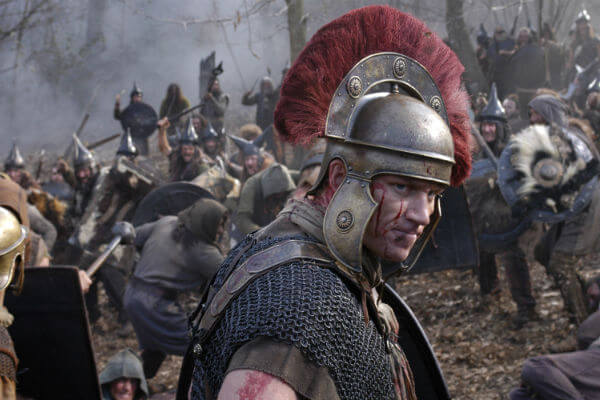
Yesterday’s kick-ass script got me all riled up for some period piece action, baby! This time, however, it’s back in the time machine 1600 years to Rome! Rome’s always good for some spicy conflict and sassy drama. They practically invented entertainment (killing people for sport? uhhh, geeee-nius). Also, it’s been a while since we’ve had a Roman swords and sandals pic. So you know one is coming soon. It’s either going to be Nicholas or it’s going to be something one of you guys write. Let’s check out your competition.
A note before I start. I’m probably going to get some things wrong here. This script attempts to cover so much ground that you spend the majority of your reading time trying to keep up.
We’re in Rome in the 3rd century. We’re quickly told, via voice over, that Rome is in a state of flux. Things aren’t going well. One of the biggest problems is religion, specifically Christianity. Diocletian, the Emperor of Rome, hates the religion, and routinely plucks Christians out to be sacrificed in the gladiator ring.
But Christianity is growing, and more and more people are standing up to Diocletian’s harassment. So Diocletian hires some nobody Christian named Nicholas and appoints him to be the Bishop of Rome. The plan is to make Nicholas a puppet, have him calm down the Christians whenever they get out of line.
But Nicholas isn’t as passive as Diocletian assumed. In one of the Gladiator matches where some Christian thieves are being slaughtered for sport, Nicholas leaps into the ring and reveals himself to be a seasoned warrior, killing all of the Gladiators easily. This surprise only makes Diocletian more wary of Nicholas.
So one night while Nicholas is out, Diocletian sends a group of orphans Nicholas has been taking care of to Crete, where they’ll be sold into slavery. Nicholas goes after them and Diocletian celebrates the victory of no longer having to deal with this disruption.
However, Rome continues to clash from within, and it feels like only a matter of time before the Christians rise up. An unexpected Nicholas team-up with one of the most famous figures in Roman history, Constantine, fortifies an army that actually has a shot against Diocletian. Rome. Get ready.
I’ll give Sardarian this. He’s done his homework. This is one of the best-researched scripts about Rome I’ve ever read. Every single page is dripping with detail about the famous city.
But it was far from an easy read. In fact, Nicholas was one of those reads where you looked up expecting to be on page 60, only to learn you were on page 15.
Not all stories need to be fast. But if you’re writing something this complex, something that requires tons of exposition and dudes in rooms talking, you need a plan counteract the pace.
Overwriting was a key problem. The script would often lose itself in its desire to write the perfect line. “He divests his breast plate and stakes his sword into the mud. His blue eyes gaze west — where the lands beyond the mountains are awash in golden sun-rays… The sublime beauty slightly breaching the darkness that’s clouded his eyes.” That was par for the course. Lines like “Moonlight BEAMS through the oculus of the coffered rotunda…” were common.
The reason this is a problem is because the writer is trying to impress rather than convey. As readers, all we want is to understand what we’re seeing, understand what’s happening. And if we have to read every fourth sentence twice because the writer was trying to win the Pulitzer with it, it’s very easy to lose patience. And loss of patience is the final step before boredom.
Overwriting is a common beginner mistake and should be avoided if possible. No, we don’t want our stories told in cave man vocabulary. But over-vocabularizing is just as odious…err… I mean bad.
This wasn’t the biggest problem with Nicholas, however. The main problem is that the script is trying to do too much. One of the first screenwriting tips that really resonated with me was: ZOOM IN.
Tell a SPECIFIC STORY. Don’t try to cover too much ground. For example, if you want to cover terrorism, write Die Hard. Don’t write about the five biggest terrorist countries in the world, jumping back and forth between each one, introducing us to dozens of characters and a similar amount of plotlines.
I know what you’re going to say. “Tell a serious story about terrorism with a movie like Die Hard? You crazy Carson??” I’m not talking about the tone. I’m saying it’s much easier to explore terrorism through the tight lens of a single terrorist than it is trying to cover five terrorists. You use specifics to make a bigger statement about the world.
Can that intricately woven five terrorist movie be written? It can. But only the best screenwriters in the world – those who have seen every kind of story and understand what they need to do to counteract and rein in that that narrative will be able to pull it off. And even then, it will be a writing nightmare. There will be a bigger chance that they fail than succeed.
And that’s because movies were meant for tight narratives. If your idea doesn’t fit into a tight narrative, go write a TV show or a novel. Those mediums are built for that stuff.
There was this moment in “Nicholas” where the title character sails into Rome and Sardarian details the elaborate harbor of this ancient city. Capable of docking 1200 ships. Half the ships are out of business because times are so tough. So there are criminals and barterers. It’s its own little crazy city.
And I thought: THIS IS A MOVIE! This here! I’ve never seen a film about Rome’s harbor before. That’s how you ZOOM IN. But therein lies the problem with “Nicholas” as a script. There are so many lovely details like this that get lost due to its novelesque narrative.
As much as I tried to stay invested in Nicholas, the story was too sprawling, too unfocused, and too overwritten, to keep me around. It’s a script that tests your patience. Which is unfortunate, because there are obviously many stories within this setting worth being told.
[ ] What the hell did I just read?
[x] wasn’t for me
[ ] worth the read
[ ] impressive
[ ] genius
What I learned: “The endless montage.” Guys, don’t write long montages. What you’re trying to do with a screenplay is DRAMATIZE EVENTS. That’s why we tune in! To be entertained by your dramatization. A montage is a list. ANYBODY CAN MAKE A LIST. Lists are the OPPOSITE of dramatization. I advise never using them outside of comedies. But if you are going to use them, keep them short. There’s a montage in this script with, like, 20 events. That’s a huge no-no.
Genre: Horror
Premise: During their annual trip to an isolated cabin for Christmas, a family begins to suspect a supernatural force may be haunting them.
About: This script finished high on this year’s Blood List and comes from the writing-directing duo best known for giving us that creepy image of a mom with her face all bandaged up in the 2014 Austrian film, Goodnight Mommy.
Writer: Sergio Casci (current revisions by Veronika Franz and Severin Fiala)
Details: 78 pages
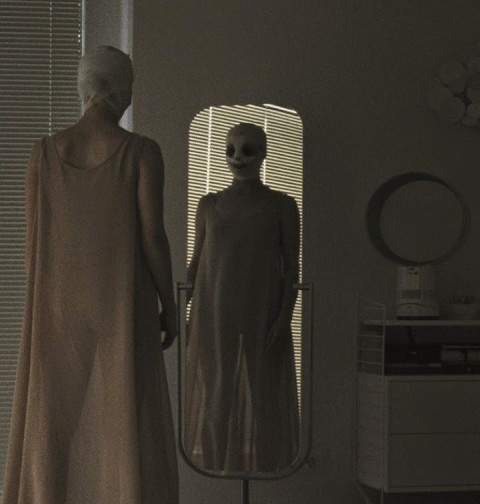
Yeah baby.
The micro-screenplay is baaaaack!! 78 pages! Join the revolution. 78 is the new 100.
Truth be told, I watched this duo’s previous film after seeing that creepy ass trailer that played all over the indie circuit, but came away asking, “Did I just watch a movie or a David Lynch fever dream?” It’s the blessing and curse of foreign films. You’re thankful to see something outside of the American movie system. But by the halfway point you’re always saying, “This writer sure could’ve benefitted from learning inside the American movie system.”
A recent example is Personal Shopper. That movie felt like one of those goofy writing experiments where one writer writes the first 20 pages, passes it on to another writer for the next 20 pages, who passes it on to a third writer who writes another 20 pages, and so on and so forth til the end. The movie LITERALLY starts out as a ghost movie and ends up a murder mystery. For some reason, the word “focus” seems to get diluted whenever it crosses the Atlantic.
So I don’t know what to expect from The Lodge. But let’s check it out.
10 year-old Mia and her brother, 15 year-old Aiden, are prepping to stay with their dad, Richard, for the weekend. While they get ready, you can sense that their newly separated mother, Laura, isn’t happy with the arrangement. And when she gets to Richard’s, he drops a bomb on her. The woman he’s seeing? Grace? They’re getting married.
Laura casually drives home, retrieves a gun, puts it in her mouth, and pulls the trigger.
Cut to a few weeks later where Richard proposes something to the grieving kids. They’ll go stay at their holiday home in the snowy wilderness of Silver Lake and get to know his new fiance, Grace! Oh, Mia and Aiden are just soooooo excited about that! Especially since Richard plans to head out to work for the week, leaving the kids alone with Grace to bond.
Mia and Aiden have good reason to be skeptical of Grace. Richard is a psychiatrist, and Grace was one of his patients. I don’t know what that doctor-patient thing is called. The Hippocratic Oath? Whatever it is, banging one of your patients is definitely not one of the tenants.
Oh, but it gets better. The whole reason Grace needs psychiatric help in the first place is she grew up in some creepy cult where they had you stab people and pour their blood on you during dinner and kill animals and all those other neat culty things. You get the feeling this woman probably isn’t the most stable domino in the row.
After Richard leaves, Grace tries to bond with the kids, but only pushes them further away. Her creepy sleepwalking isn’t helping matters. But where it really falls apart is when everyone wakes up one day to find everything gone. No clothes. No food. No power. No firewood. Grace blames the kids, but as the days pass, it seems like something more sinister is at play. Could the trio have died? Have they all turned into… ghosts?
Man, I loved this script at first. Then hated it. Then loved it again.
Let me explain.
The Lodge had a kickass setup. The mom killing herself was a shocker. Didn’t see that coming. Learning that Richard was a psychiatrist and Grace was one of his patients? Juicy. Grace having that cult past? Loved it. The kids being forced to stay in this remote house with this woman to get to know her? Conflict written all over that setup.
But then the movie got dumb. It became clear that the writers hadn’t thought about this relationship nearly as much as I thought they did. Richard is a non-factor. He leaves the kids here and is no longer a part of the movie – a plot piece so plastic, he should’ve had his own casing. The cult stuff started out cool, but was never expanded on. It felt very generic and vague, the kind of cult activities you would find in any Cult 101 Storytelling Manual.
And Grace was thinner than that 4k TV you bought on Black Friday. Outside of her cult backstory, we know NOTHING about her. The writers make the mistake of not allowing us to get to know the “real” Grace before she goes crazy at the lodge. For that reason, the “crazy” Grace was our normal. And that didn’t work. It would be like if in The Shining, Jack Torrance started off as “Here’s Johnny!” Jack Torrance.
Overall, there was a decided lack of detail in the details. Bathroom mirror scenes where someone has traced crosses in the fog, for example. The “crazy” horror character who’s no longer taking her crazy pills. Little kids speaking to people who aren’t there in the dark. Lots of spooky nightmares assumed to be prophetic. It wasn’t the cheapest form of horror storytelling there is (that would be jump scares), but it was whatever resides just above that level.
However, once the characters began to suspect they were dead, the story found its way back home. It was an interesting story choice. What if the characters in The Others found out they were dead at the mid-point of the movie instead of the end? What would they do? Naturally, you start to go insane, as you suspect that you may be stuck in this house forever. And that’s when this became more than your average haunted house flick.
But it was the subsequent twist and the ending that really placed this in the “must see” category. There are two great scenes at the end, one that involves a woman who believes she’s already dead playing chicken with a fireplace fire, and the other a shocking turn of events when the entire family is brought back together again. A great ending can deodorize so much shitty writing in a script. And that’s what happened here. The ending made me completely forget about all those earlier problems. And solidified The Lodge as a creepy flick that should do a proper job haunting you next October.
[ ] What the hell did I just read?
[ ] wasn’t for me
[xx] worth the read
[ ] impressive
[ ] genius
What I learned: Your horror script needs ‘TALK ABOUT’ scenes – scenes that are creepy, weird, odd, unsettling, shocking – the kind of stuff people WILL TALK ABOUT after the movie. If you don’t have those scenes, you don’t have a horror film. You have a compilation of copycat scares from previous horror movies. The Laura suicide scene was unsettling. But it was the fireplace scene, where a Grace who thinks she’s already dead picks up a burning log, stands there with it, and allows it to burn her face, while we cut to the kids upstairs, and hear a screaming Grace slowly burning alive, that really freaks us out. Seriously, one of the first questions you should ask yourself after your horror script (and really after any script), is “What scene will everyone be talking about after this movie?”
Genre: Sci-Fi
Premise: A janitor on an off-world secret prison is tasked with helping the prison’s biggest criminal escape or his family dies.
About: Today’s writer is one of the few out there who can say he’s sold a spec for 7 figures. Sascha Penn is known as a writer with lots of fun sci-fi ideas and sold this script, The Ditch, to Warner Brothers in 2009.
Writer: Sascha Penn
Details: 4/9/09 draft – 120 pages

I tried to get myself up to the Arclight to see Coco this weekend but there was something about the film that wouldn’t allow me to justify the $20 cost. Studios have to be careful right now. I’ve seen them up the prices across the board in both theaters and home rental. I’ve noticed that those extra few bucks have made me much more likely to think through a purchase. This isn’t a good time for the industry to be doing this. They need more people watching movies. Not less.
I begrudgingly opted instead for Atomic Blonde, hoping my instincts about the film were wrong (it looked cold and inaccessible). But they turned out to be dead on. The film was cold and inaccessible. Seems like the director forgot what made John Wick so good. The fun factor. There was zero fun factor in this movie, a grim action piece with perfectly choreographed fights and slick cinematography, hampered by a main character who was as fun to root for as a bully at a chess meet. It continues to prove my theory that the Cold War is one of the worst subject matters to base a movie around. There have been like 2 good Cold War movies in the past half-century. And that’s being generous.
My weekend felt like it was heading towards failure until I got one of those pleasant surprises – a kick-ass consultation script. It was a Western from a Canadian writer who’d injected the very thing Atomic Blonde was missing – FUN! I was hoping to go 2 for 2 on the script front with this sci-fi offering. Let’s see if I scored.
The year is 2119 A.D., a year where they still need, unfortunately, janitors. Which is what our main character, Jake Pryor, is. Jake’s occupation is a sore spot for his family – his wife, teenager daughter, and newborn – but at least they get to experience the pioneer life, living on Ganymede, Jupiter’s largest moon.
Jake is a janitor at The Ditch, a giant prison outside of Ganymede’s main city. This mega-prison houses over 500,000 prisoners and 125,000 employees. And Jake’s under the impression that when he shows up at work, it’s going to be just another day of cleaning.
Boy is he wrong. Armstrong Praxis, the most ruthless terrorist on earth since Osama Bin Laden, has been sent to The Ditch to be executed, old-school style (electric chair), today! Jake senses something’s off when, while passing Praxis, Praxis asks how his wife is doing – BY NAME. Yeah, that’s never a good sign.
Jake is then contacted by some ex-workers, who inform him that they’re holding his family hostage. And if he doesn’t rescue Praxis and get him out of that prison, they’re all going to die.
With time-a-tickin’, Jake blows the main fuse to the building and manages to intercept Praxis’s escort back to his cell. After beating some ass (you knew this guy wasn’t always a janitor, right?), he leads Praxis through a series of back-alley rooms in the prison he knows so well, and out to safety. But will they be caught before they can get back to the city? And will Jake’s family become a casualty after all?
The Ditch is a cool, if standard, sci-fi script.
You’re not going to get anything too imaginative here. And that’s a reality of the genre. There isn’t a genre more copied than sci-fi. That’s why, if you’re one of those unique talented sci-fi writers who can come up with a bunch of shit that nobody’s ever seen before? You WILL work in this industry. Because all I see? And all anybody sees? Is sci-fi writers regurgitating the same four movies – Terminator, Aliens, Star Wars, and The Matrix.
I’ll give you a scene from The Ditch, though, that got my originality vote.
Penn cleverly sets up a main elevator that is the only elevator serving the entire prison tower. This elevator is so smart, it can actually detect extra heartbeats. So if an employee signs into the elevator but there is a second person that isn’t checked in, the elevator won’t move.
Well, there’s a moment where Jake has to use the elevator to take Praxis down to the first floor. So he tells Praxis to take these pills that basically kill him, and he’ll revive him once they get to the bottom. Keep in mind, it’s been made clear to Jake that if Praxis dies, his family will be killed.
We establish that Praxis can be dead for maybe 3 minutes before he has to be resuscitated, which happens to be the same amount of time the ride will take. So they initiate the plan, but because the building is still reeling from the earlier power outage, the elevator is only moving at 40% speed.
It’s a great little tense scene, with some lovely irony in it to boot. Paxis was brought here to be killed. But Jake’s whole world depends on bringing Paxis back to life.
If you can come up with 4 or 5 scenes like this in a single sci-fi film? People WILL make your movie. Only because it’s so rare that you get scenes that are actually original in science-fiction. It’s usually people shooting lasers at each other or driving futuristic cars after one another. You have to be crafty. You have to be clever.
The rest of the script never reached the heights of that scene but the setup was strong enough to keep me engaged. In these situations, if you give us a main character we care about and you give us a family (or wife) who needs to be saved that we care about as well, even if you execute a ho-hum plot, we’ll still be invested because we want to see the characters survive.
In no movie is this better proven than Die Hard. Die Hard is a super generic premise. Terrorists take over a building. But we love John McClane. And even though we met his wife for only a couple of scenes, we love her too. So we want to see them survive and be together again.
Just think if you could do both these things? Write an insanely original sci-fi script with characters we love and want to see survive? You’d freaking clean up. You’d be getting checks in the mail for the rest of your life.
Easy right? :)
[ ] What the hell did I just read?
[ ] wasn’t for me
[x] worth the read
[ ] impressive
[ ] genius
What I learned: Judgeable Moments – There are moments in a script where the reader is judging the writing heavily. These are moments that shine a light on just how hard the writer is trying. I know if the writer nails that moment, they’re giving it their all. In The Ditch, there’s a moment right before Paxis is about to be executed, when the warden asks him, “Any last words?” Now think about that for a second. As a writer, this is one of the highest honors you can take on. You are crafting the LAST WORDS a human ever thinks they’re going to say. This is not something to take lightly. You need to come up with a line that’s not only powerful and memorable, but that encapsulates everything that character is. You have some understanding of who Paxis is. What last words would you write for him? Because I’ll tell the last words that were chosen. They were: “Fuck all of you.” I don’t know about you? But that’s the most generic line that could’ve been chosen. And I say that because ANY CHARACTER could’ve said it. There’s nothing unique about it. To bolster this point, think about what Darth Vader would’ve said here. Or Hannibal Lecter. Or Annie Wilkes. Or Nurse Ratched. Or The Joker. Or Gollum. Their answers would’ve been entirely unique to their character. Which is why I need for these moments in a script to be perfect. Because they’re the moments that highlight your writing. So, I ask you. What line would have you chosen for Paxis’s last words?