
Search Results for: F word
Genre: Thriller
Premise: When a major volcano in Hawaii is slated to erupt within a week, the scientist responsible for managing the eruption learns that the US military has been hiding a secret on the outskirts of the island that threatens to turn the eruption into a world-ending event.
About: This is an interesting one. This was Michael Crichton’s (Jurassic Park) final book he was working on before he died. The unfinished novel, which is nearly 20 years old, made its way to super-seller James Patterson, who decided to finish it for him. The package recently went to auction this year and sold for 7 figures to Sony. The directors who will helm this film? None other than Jimmy Chin and Elizabeth Chai Vasarhelyi, who directed one of my favorite films from 2021, Free Solo. Keanu Reeves is loosely attached to the project but is expected to officially attach soon.
Writer: Michael Crichton and James Patterson
Details: 420 pages
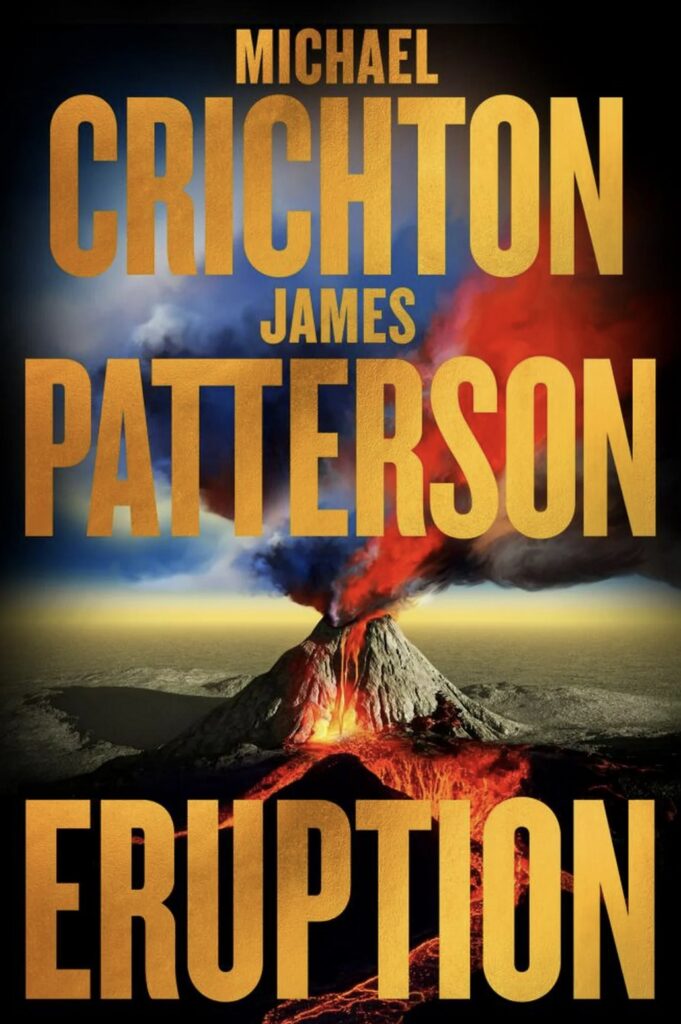
Michael Crichton is responsible for the most high concept movie idea of all time: Jurassic Park.
When you hit it big in Hollywood, you have this moment. That moment becomes bigger than you. It becomes bigger than the industry. You are “THE PERSON” that everyone and everything orbits around.
That moment happened with Crichton after Jurassic Park and, for a good five years there, every one of his books was slotted to become a movie. For some writers, that’s more than they can handle. But for Crichton, he was ready for this moment. Every one of his books was a big idea that felt tailor-made to become a summer blockbuster.
But the problem with having that big breakout hit movie is that it’s hard to live up to. How many writers can write a hit movie and have two, three other stories that will do just as well? The answer is very few. But Crichton gave it his best shot.
Not many people know this but he co-wrote the novel for Twister. That’s two bona fide monster hits there. Reality then caught up with Crichton as his follow-up films, Congo, The 13th Warrior, and Timeline, fizzled.
But that takes nothing away from a master of the “big idea.” Let’s see if his final book, ironically, is the beginning of a comeback.
36 year old John “Mac” McGregor, is the director of the Hawaiian Volcano Observatory. He lives on the big island, in a town called Hilo, which has always been a tricky place to live since it’s right at the bottom of active volcano, Mauna Loa. There have been a couple of times in history where an eruption nearly destroyed the town.
When earthquakes start happening, it’s confirmed that Mauna Loa is going to blow, once again, in a week. Just as John starts preparing for that reality, he’s ushered away by the local military who bring him to a nearby cave.
It’s here that they reveal hundreds of containers of radioactive waste being stored. Mac is enraged that they would be this stupid but it gets oh so much worse. The containers are old enough that they’re starting to splinter. Even trying to pick them up will likely cause them to break.
Oh yeah, and this isn’t just normal radioactive waste. It’s been mixed with herbicide, which makes it insanely easy to spread. In layman’s terms, if these containers were to break, every human being on earth would be dead within four months.
Mac immediately gets to work on a plan to divert the lava as far away from those containers as possible. His plan is to build a wall along the side of the volcano to steer the lava. But then a douchey billionaire shows up with his own plan, creating all sorts of conflict regarding what to do next. They better figure it out soon because the hours are ticking away. Any time now, Mauna Loa is going to blow.
I can’t tell you how refreshing it is to read something other than one of these so-so-so-very-serious Black List scripts. Everything’s so SERRRRIOUUSSSSS on the Black List. So insanely SERRRRIOUSSSSSS.
I don’t know when movies that are made for entertainment got such a bad rap but imagine the alternative? All these SEERRRRIOUUUSSS movies. Who comes away from those feeling anything other than bummed out? We have enough bum-outy things going on in the world. Movies should be there to make us feel better!
Which is exactly what today’s movie – err… book – is about. I nearly said ‘movie’ because this novel is written like a movie. There are 108 chapters here. In other words, each chapter is insanely short. Crichton and Patterson did this so that each chapter would read like a scene.
In the spirit of the high-concept idea, Crichton makes a decision here that every high-concept writer faces the choice of making. Which is whether to add a “multiplier” or not. A “multiplier” is when you take a big idea and add a similar big idea that “multiplies” the scope of the concept.
To understand this, let’s note what this idea looks like without a multiplier. Without a multiplier, this is a BIG ERUPTION movie. You could’ve even made it a “super eruption” which I hear is something certain major volcanos are capable of which could end mankind. That would be a big idea. But there wouldn’t be a multiplier in it. The concept is told to you straight away.
Here, we get the multiplier of the nuclear waste containers. I didn’t go into it in the plot but, basically, the herbicide acts as a virus whereby if birds or insects come in contact with it, they can easily spread it to other places. Which is why the entire planet would be in danger.
But the multiplier here is those containers at the bottom of the island. That’s what elevates this idea into something that feels BIGGER. With high-concept ideas, that’s what you should be looking for. You should be looking for any elements that make your idea BIGGER.
With that said, there’s a way to use multipliers and there’s a way not to use them. If I wrote a movie about dinosaurs and then, at the end of the first act, I introduced aliens, sure, by the letter of the multiplier law, this would be a “multiplier.” But for multipliers to work, there has to be an elegant or clever connection between them, which there was here.
Hawaii is a major military base for the United States. It makes sense that they would secretly store nuclear waste out there. And, for those of you hemming and hawing about why in the world would the US place nuclear waste at the bottom of a volcano, Crichton actually spends a good portion of the story explaining it and it made perfect sense (it essentially comes down to the government trying to cover its ass by hiding this stuff away).
Another thing I liked about this book was that it created a world-ending event that had nothing to do with nuclear bombs. When you’re writing these REALLY BIG ideas, you get lazy, and you go with the lowest-hanging fruit (nuclear bombs!). Writers have been using them for decades now.
Push yourself!
Come up with something fresh and new, like Eruption did. I’ve never seen this particular combination of concepts before and it was really fun.
My only pushback on the novel is that these ideas tend to have a “worth the read” ceiling. They focus so much on the plot and the bells and whistles that the characters rarely resonate. If you’re going to write one of these, put some extra work into the characters because if you can elevate a high concept to a double-worth-the-read or even an impressive, it’s like discovering plutonium. It’s a rarity and it will make your script unstoppable.
[ ] What the hell did I just read?
[ ] wasn’t for me
[x] worth the read
[ ] impressive
[ ] genius
What I learned: One of my favorite phrases in screenplays is, “It’s better if I show you.” When the military picks up Mac to explain to him that this impending eruption is actually much worse than he realizes, he asks, “Why?” Their response: “It’s better if I show you.” From there, we get to see the actual containers. How fragile they are. A demonstration of what happens when an insect interacts with the herbicide. We SEE all this. That SEEING is our golden example of SHOW-DON’T-TELL and it’s so much more effective than a character just doling out exposition dialogue.
In the lead-up to this month’s “Scene Showdown,” the question must be asked: ‘What, exactly, is a scene?’
Before we break down what a scene is, here are the submission details for Scene Showdown. Literally EVERYBODY who reads this site should enter. Here’s what I need from you…
Title
Genre
Logline
Up to 50 words to prep the scene (up from 30)
A PDF of your scene (no minimum length, maximum is 5 pages long)
Send submission to: carsonreeves3@gmail.com
Deadline: 10pm Pacific Time, Thursday September 26th!
It’s funny because when I came up with the idea for Scene Showdown, I assumed it was self-explanatory. I thought that everybody knew what a scene was. But after all the questions that popped up in the comment section, I realized that a scene is not clear at all. So, let’s talk about what a scene is.
I started off by asking Chat GPT and I can’t say I’m a fan of his answer:
A scene is a distinct narrative unit where characters interact within a specific time and place to advance the story.
I then asked Miriam’s Dictionary for help and this is what they told me:
A division of an act presenting continuous action in one place.
I didn’t love that definition either so I googled a few other options:
A complete unit of storytelling, usually consisting of a sequence of events and dialogue taking place in a specific location and time.
A scene is a section where a character or characters engage in action or dialogue. You can think of a scene as a story with a beginning, middle, and an end.
Change (the writer of this article defines a scene as anything where a character expects one thing but something else happens)
Color me surprised that defining a scene is so difficult because, on a macro level, it seems obvious. Similar to how we inherently know what a paragraph is because we’ve read so many books, I figured we inherently knew what a scene was because we’ve watched so many movies.
But the more we get into the micro – nailing down the specifics of what makes a scene – the harder it becomes to define.
There are common threads in these definitions, however. Continuous time is one. A single location is another. There is action, dialogue, or both. Maybe the one thing that these definitions are missing is that there’s an actual point to the scenario. I like to think of it as a little story (which may align with the writer above who defines a scene as “change”).
With that in mind, our definition of a scene might look like this…
A storytelling unit where characters engage in action or dialogue within a single location during a continuous time frame.
Now, for those of you already getting wound up about the restrictions of that definition, calm down. This is a BASELINE definition to work with. It’s not the law.
If, for example, you write a scene where a married couple is fighting and they take the fight from their kitchen to their backyard, then to their car as they drive to work, that has three location changes but it’s still considered to be one scene because it’s continuous.
I think where writers get the most confused is with the time continuation thing. Because sometimes you’ll write three “scenes” that have time breaks between them, but they’re all so intricately woven together, you could make the argument that they’re one scene.
For example, let’s look at Kinds of Kindness, which I reviewed yesterday.
One of the scenes, from the middle story in Kinds of Kindness, has Robert, who’s mentally deteriorating rapidly in his marriage, coming to his wife, Rita, and asking her to chop off her finger, cook it, and include it in his dinner. This is, I guess, technically, one scene.
Right after that, we show Rita wrestling with whether to oblige her husband. She eventually decides to do what he says so she chops off and cooks her own finger. Again, this could be considered its own scene.
Finally, we have Rita serving Robert his dinner, with her finger, and him being confused as to why she would do this (remember, he’s going insane). That’s its own scene as well, you could say. But, really, all three of these moments, when combined together, make up about 5 minutes of screen time, and could, conceivably be pitched as one scene, even though there are time breaks between them.
Now some of you may say, “No, Carson. That’s a sequence (a “sequence” being a series of scenes).” And I wouldn’t say you’re wrong. But I think this speaks to why the question of “What is a scene” has perplexed so many of us. There is a greyness to the definition.
But what I hope this does for you, in regards to the showdown, is help you relax a little. As you can see, there’s some flexibility regarding what makes a scene.
I don’t want to stifle anybody’s creativity because some of the best writing I receive is from writers who have their own creative ideas and don’t try and retroactively engineer stories to my liking. BUT if I were you entering the showdown, I would be thinking in terms of a short story that fits within the constraints of our scene definition. Something that could, if not completely live on its own, is entertaining enough that we’d enjoy it without context. Get that clear beginning (setup), middle (conflict), and end (resolution), in there.
If you want to get more specific, use GSU. Have a character who wants something (goal), will gain much if he succeeds or lose much if he fails (stakes), and has a limited amount of time (urgency).
Some recent examples of mini-story scenes that have clear beginnings, middles, and ends, would be the scene in Furiosa when Dementus enters the Citadel and tries to convince the ruler, Immortan Joe, to hand the city over to him.
In The Killer, the Killer gets a taxi/uber ride with a specific cab driver and demands information on the person the driver gave a ride to three days ago who went to kill his wife. Simple beg, mid, end. Simple GSU.
In Parasite, the family who invades the home is surprised when the real family, who is supposed to be gone, comes back unexpectedly. They all must hide within the house and not be seen until the family goes to sleep and they can sneak away.
In Emily the Criminal, a good scene is when Emily is tasked with stealing her first car. She has to go into a dealership and buy the car with a fake credit card from the salesman. But she’s told that 8 minutes from the moment he swipes the card, she has to be out of there, or else the card company will call the salesman and tell him it’s a fake.
As you can see, all of these scenes feel important. They’re not just casual things going on between people. There are stakes involved. The moments are larger than life. That’s where you want your head when submitting for the Scene Showdown.
I hope that clears a lot of things up. But I noticed there were other questions in Tuesday’s post so let me answer the relevant ones here…
Does it have to be the first scene of your script? – No.
Can it come from a screenplay that hasn’t been written yet? – Yes
50 words to prep the scene – What I mean by this is, if the scene comes deep in your script, you can provide some context as to who the characters are and what was going on before the scene. This is not mandatory.
Logline and Title – As best you can, create a logline and title for the scene (not the script). I know it’s hard and you don’t have to be too specific (you can be mysterious if you want, i.e., “A young woman wakes up to find her dead child alive and well in her arms”).
Winner – Winner gets a deep dive review of the scene on the site and a collective kick in the behind to write the full script!
SINCE I HAVE NO IDEA IF THE NEWSLETTER IS GETTING TO PEOPLE, I’M JUST GOING TO INCLUDE IT HERE ON THE SITE. ENJOY! AND IF YOU WANT FUTURE NEWSLETTERS, E-MAIL ME AT CARSONREEVES1@GMAIL.COM. THAT’S ASSUMING I CAN GET THEM SENT OUT!

I was talking to an aspiring writer the other day and we got onto the topic of movies, specifically what we’d seen lately. He said that he’d rewatched this old movie that both of us liked and I said to him, “Have you ever read the script for that movie? It’s even better than the film.” What he said next shocked me. “I don’t read scripts.”
I gasped and replied, “What do you mean, you don’t read scripts? Like you don’t read them that often?” He said, no, he’d read maybe three scripts in his entire life and they were all classic film scripts. “You’ve never read a screenplay that hasn’t become a movie yet??” I asked. “No,” he said. “Never.”
This wasn’t the first time I’d heard this from a writer. In fact, I once knew a writer who didn’t just *not read* scripts, he was so uninterested in doing so, he’d go on 20-minute villain monologues about how pointless (and boring) reading scripts was. And he had proof to back it up! He actually sold a screenplay! For mid-to-six figures!

How the heck did that happen? Well, to his credit, he was really good at picking high concepts and injecting GSU (goal, stakes, urgency).
But there was always something off about his writing that I couldn’t put my finger on. The rhythm wasn’t quite there. The sentence structure was slightly odd. And just the whole experience of reading his scripts felt like you were reading a “highlights reel” of a script, ” if that makes sense. His scripts never felt like true screenplays.
Not that I wish any ill will on writers, but I wasn’t surprised to hear that the writer hung it up three years later, failing to experience any more success. You can sometimes get a lucky invite into the game. But it’s hard to stay if you don’t know what you’re doing. People figure that out sooner or later.
I have no doubt that the fact this writer had never read any screenplays before hurt his writing A LOT. Let me explain why.
I’m currently working with an actress who’s writing her first screenplay. It’s a true story about the birth of a particular tech industry. One of the issues she’s running up against is explaining the complicated world of that industry which is clear to her but foreign to us. So I sent her the Sam Bankman-Fried script I reviewed the other day, which did a lousy job of explaining its industry, in order to show her how the lack of properly conveyed exposition makes it hard for a reader to follow along.
It’s only when you experience writing weakness as a reader that it clicks for you what you have to demonstrate in your own scripts. How can you possibly understand how to keep someone interested in your story if you have never read a screenplay that’s kept your interest before? How can you ever understand how to keep someone from getting bored if you yourself have never been bored reading a screenplay before? How can you understand the rhythm of a screenplay if you’ve never been subjected to good screenplay rhythm? How can you know how much information the reader needs about your world if you’ve never read a script that effortlessly disseminates a lot of information?
You can’t just answer, “I can do that because I watch movies” because you’re not yet writing for a movie audience. You are writing for a reader. A series of readers must approve of your script before it can become a movie. So you have to be hip to THAT PERSON’S EXPERIENCE, not the audience member’s experience. And believe me, it’s a different ballgame. Movies are a passive experience. Reading is an ACTIVE experience. Or, to put it bluntly: Reading is harder than watching. So the bar for keeping the person engaged is higher.
I’m not saying you need to read as many scripts as I do. But you need to read at least a couple of scripts a month. Lucky for you, I have some reading material to pass on! I’m giving you four good scripts and two bad ones. You may be wondering why I’m including bad scripts. It’s because you need to know what types of things frustrate readers. You can’t write a good script unless you’ve been on the receiving end of a bad one. Because those are the scripts that drill into your head, “I’m going to make sure I never do that myself.”
Here are the scripts. Start your reading TODAY.
GOOD EXAMPLE #1
Title: After The Hunt
Logline: A Yale professor up for tenure must navigate a rape accusation from her most cherished student against another professor, who happens to be her best friend at the school.
Why I included it: This is considered to be the best script of the year so it’s definitely one you’ll want to check out.
GOOD EXAMPLE #2
Title: The Nowhere Game
Logline: Two young women are kidnapped, brought deep into the woods, given a head start, and then hunted down by their sadistic captor all for the pleasure of the online fans of “The Nowhere Game.”
Why I included it: This is a great example of how to write a script that reads quickly. Those tend to do well with readers because readers don’t have a lot of time.
GOOD EXAMPLE #3
Title: Dying for You
Logline: A low-level worker on a spaceship run by a dark god must steal the most powerful weapon in the universe to save his workplace crush.
Why I included it: This is one of my favorite scripts from last year. It’s really fun and effortless to read.
GOOD EXAMPLE #4
Title: Anaconda
Logline: A group of 40-something friends decide to remake their favorite film, Anaconda, in the real Amazon forest, only to learn that an actual giant Anaconda snake is out there.
Why I included it: I don’t love this script. But it’s a great example of how to come up with a fresh angle on an old property that the studios might get excited about if you pitched it to them. This film is being made with Paul Rudd and Jack Black. (More details on this project later)
BAD EXAMPLE #1
Title: Return to Sender
Logline: A woman who’s moved into a new home and is buying a lot of things from a giant delivery company learns that she is being used for a new delivery scam.
Why I included it: This script only got recognition because the writer directed a short that did okay. But the feature adaptation of that short is awful. Note how boring it is. Note how the story barely moves. Note how small the story feels. It’s an exercise in how easy it is to make it nearly impossible for the reader to turn the pages.
BAD EXAMPLE #2
Title: Star Blazers
Logline: A rag-tag group of space pirates come together to travel to a mysterious planet to retrieve a technology that will help them defeat the alien presence that has annihilated earth.
Why I included it: This is an old script that Hollywood never made. You can see that there’s not a single original idea in the script. It also takes waaaaay too long for the main plot to get started, a COMMON problem I see in screenplays, especially for newer scriptwriters.
It’s fine if you dislike any of the scripts I recommended here or like the ones I didn’t. The objective isn’t to have you mirror my taste. It’s to help you develop your own. Regardless of which side of the fence you end up on, take note of *WHY* you like something or *WHY* you don’t. That way, you can apply (or not apply) that same approach to your own material.
NOW TAKING SUBMISSIONS FOR “SEPTEMBER SCENE SHOWDOWN!”
This month’s showdown is a SCENE SHOWDOWN. I enjoyed the process of posting the first five pages of the Mega-Showdown finalists. So I thought I’d capitalize on that theme this month. Hence, we’re going to have a SCENE SHOWDOWN. Your scenes can be five full pages long and not a word more. Write the best scene possible, submit it to me, and I will post the best five entries on the site. Another reason I’m doing this is so as many of you can enter as possible. You can write a scene in a single day. So take advantage of this. Help me discover a writer who’s ready to blow up!
For the submission, it’s going to be a little tricky, cause it’s hard to write a title or a logline for a single scene. But the good news is, I’m going to read every scene that’s submitted. And I’ll be choosing on strength-of-scene rather than the title or logline. So do your best. Also, I’m going to give everyone 30 words to prep the scene if they want to. So, here are the submission details:
Title
Genre
Logline
Up to 30 words to prep the scene
PDF of scene (up to 5 pages long)
Send to: carsonreeves3@gmail.com
Deadline for entries is 10pm Pacific Time, Thursday September 26th!
AROUND TOWN

Mega-Showdown Winner, “Bedford” – The Scriptshadow Mega-Showdown winning script won me over just as it did the readers. It is a taut contained thriller in the vein of The Vast of Night. But it stirred quite a bit of controversy in the comments, with a lot of readers claiming it’s more of a stage-play than a film, since the majority of it takes place in one room and focuses on a single character. If the script were to be filmed, they argued, it would be boring because there’s nothing cinematic about it. It’s the age-old dilemma every aspiring screenwriter faces. The best way to get the most interest is to write something contained and low-budget. However, by doing so, you risk writing something static and boring. I, personally, think you could make a cool movie out of Bedford. Keep the camera moving when possible. Maybe get the hero out of the control tower a couple of times so that the location doesn’t get too stale. It was fun to see all the responses to the script. We haven’t had that spirited of a discussion about a screenplay in a long time. You can read the script for yourself here then head over and read my review!
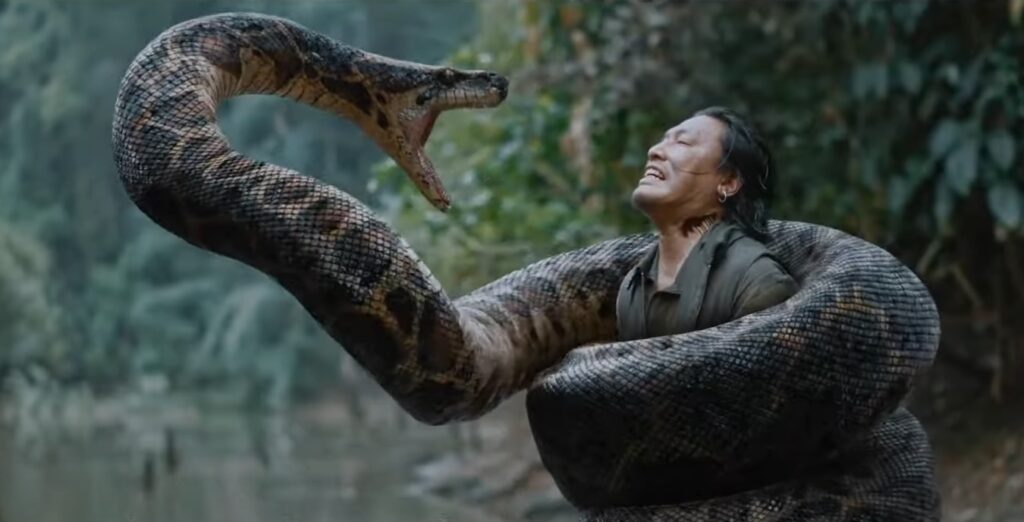 Weird Anaconda Reimagining Somehow Going Forward at Sony – When I read this Anaconda reboot script, I thought it was a fun experiment but, by no means did I think they were going to make it. It was too weird – like something a couple of stoner college kids would write in between parties on Spring Break. But guess what? Sony’s actually going through with it! They’re signing Jack Black and Paul Rudd to play the leads, which certainly makes the project more enticing. For those who don’t know, the new Anaconda movie is going to follow a group of former aspiring filmmakers who loved the original Anaconda so much, they head to the jungle to film a low-budget version of the film in the hopes of selling it to Sony. Except they quickly learn that the giant anaconda snake is real! And it’s after them! Sony is obviously trying to do what they did with the Jumanji franchise. They took a sort-of popular movie from the past and reimagined it as a video game. So there’s some logic to the offbeat approach. But I’m just telling you – the script was really sloppy. It literally feels like the characters are making things up as they go along. If this movie is going to work, they will need to massively tighten up the story. Cause it’s a loosey-goosey premise as it is. When you add a casual narrative to a loosey-goosey premise, it has the potential to become a “What the fuck did I just watch” movie.
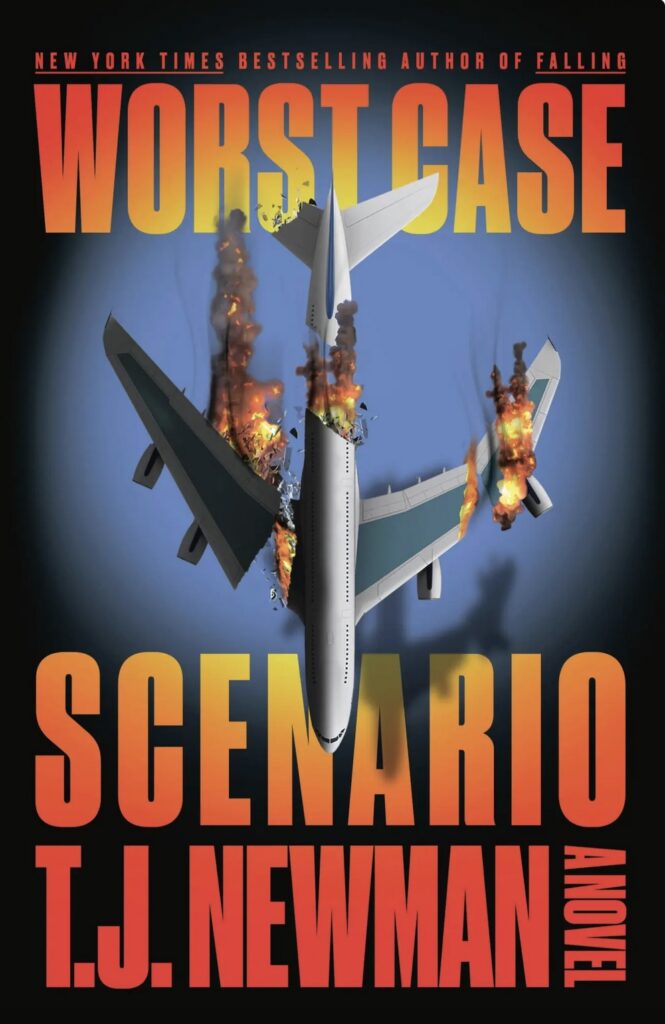
Worst Case Scenario – TJ Newman is back with her third big thriller book. For those who don’t know Newman’s journey, she’s the flight attendant who wrote a book in between serving passengers on transatlantic flights. She then sent her first book, Falling, to 40+ agents, all of whom rejected her. Until finally she landed one, which helped her secure a million dollar movie deal for the book. What I like about TJ is that she writes these high concept ideas as fast-moving thrillers. In that way, they mimic screenplays. This allows for quick and dirty reads that present the core concept in a digestible way. In other words, they’re easy for a producer to say ‘yes’ to. Newman said this idea – a plane crashing into a nuclear reactor – came to her because, in a search for story ideas, she asked all the pilots she knew what their biggest fear was. One of them said, that a terrorist not only hijacked their flight, but flew the plane into a nuclear reactor. Pro tip: Be ready for success like TJ Newman was. She wrote her second novel QUICKLY and, therefore, was able to take advantage of the buzz surrounding her first sale, grabbing a second flashy movie deal with “Drowning.” And she wrote this third book pretty fast as well. If you wait too long and a movie falls apart before production or the movie gets made and it sucks, you lose all that buzz, which makes it much harder to sell stuff. But if you can write more books and scripts BEFORE any of that happens, you can really cash in. That’s what Newman did.
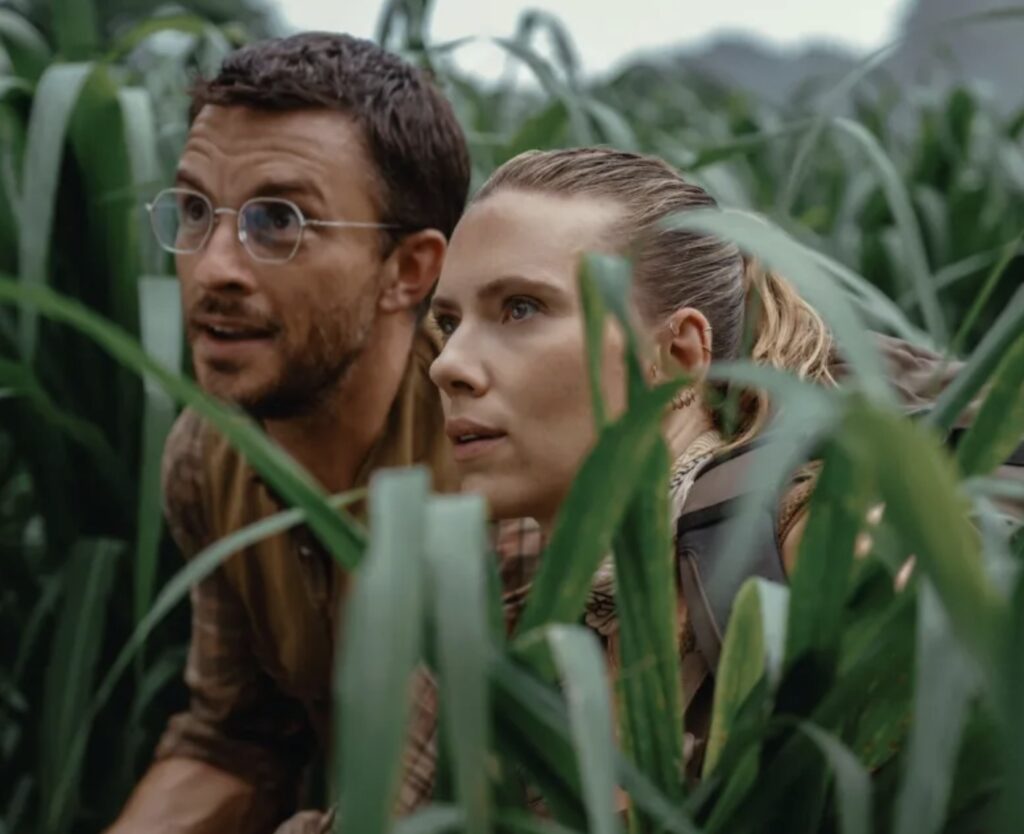
Jurassic World Rebirth – Things have gotten so competitive in the content space that studios aren’t even waiting the minimum amount of time to reboot franchises anymore (that would be 5 years). They’re now trying to do it in 3 years! The last Jurassic World movie came out in 2022. This new one, starring Scarlett Johanssen, will come out in 2025 (funny enough, the setting for the new story will take place 5 years after the previous film). Here’s the premise: The three biggest dinosaurs have a genetic secret that will help save a bunch of human lives. So Scarlett must travel across the world and get DNA samples from these three rogue dinosaurs. But, in the process, she gets stuck on an island with them. Let’s be honest – it’s an uninspired, borderline clumsy, premise. You would think that if they were rushing to get this made, they’d have something sexier. But this feels like par for the course. It is interesting to note how Anaconda is rebooting itself in a risky way whereas Jurassic World is taking zero creative risks. There is a mystery as to what is on the island in this movie. It could be the long-rumored “Dino-humans” that found their way into earlier Jurassic Park sequel drafts. But I don’t think Dino-humans are going to cut it for audiences. This feels like a cash-grab and the stench of that greed is so thick, I’m anticipating nobody showing up for dinner.
Don’t Forget to Grab The Greatest Dialogue Book Ever Written!
This Labor Day, it’s time to finally improve your dialogue. I keep running into amateur scripts with weak or average dialogue. My dialogue book gives you specific instructions on how to add more flavor to your characters’ interactions. It’s just $9.99 and has over 250 dialogue tips in it. That’s 240 more than anybody else is going to give you. What are you waiting for!?
Book Review – Caught Stealing
Genre: Crime/Thriller
Premise: A baseball-loving lowlife agrees to cat-sit for his neighbor, inadvertently getting pulled into the seedy underworld of New York crime, where people will do anything to get the money they deserve.
About: This is uber-auteur Darren Aaronfsky’s (The Whale, Requiem for a Dream) latest project. It has a flashy cast list that includes “Elvis,” wannabe Oscar-winner Austin Butler, House of The Dragon’s Matt Smith, and borderline Hollywood royalty, Liev Schrieber. The writer, Charlie Huston, has written six books and tons of comics.
Writer: Charlie Huston
Details: about 250 pages
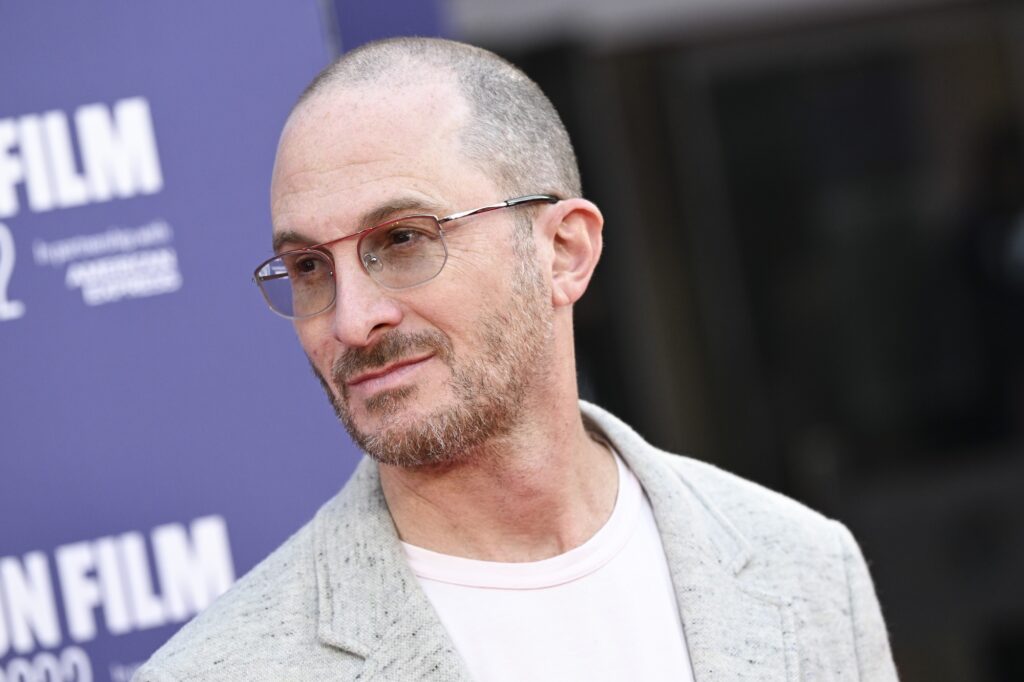
It’s always interesting to see which projects great directors, actors, and producers choose, as it’s a window into their decision-making process and, therefore, knowledge you can use if you ever get an opportunity to pitch them yourself.
But, with this one, there isn’t a lot of guesswork as to why Aronofsky chose it. His previous movie was all about a man glued to his chair (The Whale). This movie is all about a man who never stops moving. Whether Aronofsky was conscious of that radical shift or not, he obviously wanted to go in the opposite direction of “guy on chair.”
New York City. Hank is a professional drunk. He used to have a future as a major baseball prospect but nowadays, in his 30s, his only proximity to baseball is betting on it. After a particularly gnarly night of drinking, Hank is asked by his apartment neighbor, Russ, to take care of his cat while he’s gone. Hank thinks nothing of it and agrees.
The next day, after he feeds the cat, he moves the cat litter box and finds a key taped to the bottom of it. Hank shrugs and heads out to drink again. When he gets back, some Russian guys want to talk to him. They explain that they’re looking for his neighbor, Russ, and they really REALLY need to find him. Hank tells them the truth – he doesn’t know where his neighbor is or when he’ll be back – and they begrudgingly leave.
But the next day, the Russians come back, and this time they’re a lot less kind. They know Hank knows where Russ is as well as where the key is. Then they beat him up badly to let him know how much they need that key. Hank says fuck this and calls the cops. A policeman named Roman comes over. Asks him a bunch of questions. Roman says be more careful. And leaves.
The day after that, two large black men in cowboy attire show up and THEY want to know where the key is. They drive him around and rough him up in order to let him know how much they need that key. As soon as they’re gone, the Russians come back to beat Hank up some more. But this time, they bring Roman with them. Yes, Roman the Cop is working with the Russians.
Fun and games are over. If Hank doesn’t give them the key, they’re going to kill him. Okay fine, Hank says. I’ll get you the key. There’s only one problem – Hank hid the key when he was blackout drunk. So he doesn’t remember where it is. His best guess is at the bar he always hangs out at. But telling Roman that is a big mistake. They all head there and Roman’s men mow down everyone at the bar when they don’t offer up access to the key. This makes Hank the most wanted man in New York.
Just when things can’t get any weirder, Russ returns, finally providing clarity to the key’s importance. That key is for a storage unit that contains 4.5 million dollars. Hank will have to figure out how to push Russ out of this equation, get the money back to the bad guys so they’ll leave him alone, and oh yeah, get the cat back from Roman. Spoiler alert. IT’S NOT GOING TO BE EASY!
The one thing I’ll give Caught Stealing is that, once you read it, it’s impossible to get it out of your head.
It’s one of the most raw, visceral, intense, violent, things I’ve ever read. And it isn’t just the 50,000 punches thrown that you feel. It’s the limitless amount of alcohol being poured down our hero’s throat. It’s the devil-like screaming at Hank from every character he encounters. Even the anguish in this book feels like physical punishment.
But the story has a pretty glaring weakness. And while I believe that Aronofsky is the director best suited to tackle this weakness, I’m not convinced he can overcome it. That weakness is that the story is led by one of the most passive characters I’ve ever come across.
60% of this story is Henry getting his ass handed to him. He’s a punching bag. Again. And again. And again. And again. And again.
I suspect that’s the point. There’s some sado-masochist thing going on with Aronofsky where he wants to show someone get relentlessly beat up for 2 hours. I just don’t know if audiences are going to be able to handle it. Cause it’s so uncomfortably relentless!
But the passivity really bothered me. I’m trying to think of movies that have attempted this before. There was Equalizer 3. Denzel’s character sat back and waited most of the movie. But that was a unique situation in that we knew, from his two previous films, what he was capable of and that it was only a matter of time before he beat some ass.
And then there was Fury Road, where Mad Max gets thrown on the front of a truck for the first 45 minutes and doesn’t do anything. But he eventually got out and began kicking ass.
While it’s true that, once the midpoint hits, Hank starts becoming more active, I’m not sure it made up for the first half of the movie where the dude was just thrown around like a rag doll for an hour. I want you to imagine watching a friend of yours get beat up for 2 straight minutes. How painful would that be to watch? NOW MULTIPLY THAT BY 30! That’s what we see Hank go through.
I will say that we’re all looking to give audiences something fresh – something they haven’t seen already. One of the best places to do that is in your set pieces. If you can come up with three memorable set pieces, you’ve probably written a really good movie. And while there’s nothing outwardly original about the set pieces here, the sheer magnitude of violence on display acts as its own set piece. It’s very much “Resevoir Dogs ear-cut-off scene.” But imagine after that scene was over, you got another ear-cut-off scene, and another one, and another one. At what point, as a viewer, do you surrender!??
In that sense, Caught Stealing makes me think of early Quentin Tarantino with a healthy dose of Fight Club mixed in. I mean the budget for this film is going to see a quarter of it spent just on the Foley artists crafting the thirty-some variations of the sounds of skulls cracking.
Just like all of Aronofsky’s movies, when you see the trailer, it’s going to be different. You will note how you have not seen a movie like this before. Even Fight Club and Reservoir Dogs are not as violent as this film. So it’s going to stand out. But will that lead to people wanting to see the movie? I don’t know, man. It’s a tough call. I’m emotionally spent just reading it. I can only imagine the toll it will take on me watching it.
[ ] What the hell did I just read?
[ ] wasn’t for me
[x] worth the read
[ ] impressive
[ ] genius
What I learned: We talk a lot about the midpoint shift in a story. It’s the thing you use to create a different SECOND HALF of the movie that doesn’t feel like the first half. Here, we have a very prominent midpoint shift. Russ (the neighbor), the one who’s responsible for all this, returns. So, whereas, before we had zero knowledge of what was going on, Russ’s entrance allows us to have ALL THE KNOWLEDGE. This changes everything for our hero and how he approaches the problem.
Today’s script reminds us of the power of the underdog
Genre: Comedy/Drama/Sports
Premise: A forty-three-year-old snowplow driver decides to get his high school hockey team back together to play a state championship game.
About: Today’s writer may be familiar to some. He’s a Chicago kid who wrote the script 8-Bit Christmas a few years. It was a fun little Christmas script and Kevin stays close to his bread-and-butter here: SNOW. Skydance has purchased the script for Gary Ross to rewrite and direct.
Writer: Kevin Jakubowski
Details: 111 pages
 Jason Sudekis for Tommy?
This script is currently competing with Carlos Alcaraz’s match on my TV. Has a screenplay ever hit a 130mph serve? Is courier font able to handle a deep backhand? Can character development massage a drop volley over the net? We’re about to find out the answers to all of these questions… right now.
Back in 1997, Tommy Maloney was the goalie for the Fox River High School hockey team that made it to the state championship game, where they were slated to play bougie Jersey hockey mainstay, Hillstone Prep. But there was a giant snowstorm and the game had to be canceled.
Roughly 30 years later, with Tommy now 43 years old and running his father’s old snowplow business, Tommy reads an article in the paper celebrating the three state hockey championships Hillstone won in a row back in the 90s. The only problem is, Hillstone didn’t win that third one. The game was snowed out.
A day later, while reluctantly bringing his daughter, Chloe, to Hillstone for an interview, he runs into the captain of that team, JT Radzack, who he overhears telling some friends that they won 3 titles in a row. Tommy comes in to correct him and JT is unfazed. “Might as well be three,” he says. “We would’ve beaten you anyway.”
Tommy goes home fuming and later ends up at the bar, where he shares the exchange with his old hockey buddies. They get mad and one of them goes on Twitter and challenges JT and his team to a make-up game. A 30 year old make-up game. Twitter loves it and everyone starts retweeting the social media battle that ensues. Tommy wakes up thinking it was all drunken nonsense but then learns that JD has set a date for the game.
Now Tommy and his buddies have to get the band back together. This includes the Chan defensive twins, who fight with each other all the time. The cousins, who sit in their backyard and shoot things all day. And then everyone else who’s not dead already, they put in a call in for. They’re going to be up against a tough opponent since JD and his teammates still play three times a week. JD even played in the NHL for a year. Can our ragtag crew somehow defeat them? Or are they about to learn that hockey games aren’t the best venues for a midlife crisis?
There’s a trick to getting these scripts right.
Because they *are* tricky.
You see, when you’re writing a small-town story that doesn’t have murder in it, the script is going to live or die on its PERSONAL STAKES.
Personal stakes are different from EXTERNAL STAKES. External stakes are things like: end of the world, your daughter gets murdered if you don’t find her in time, if the heist goes bad, you’ll be in prison for the rest of your life.
Scripts like this don’t have that. In order to compete with that, we must feel strongly about the personal stakes. In other words, we must feel strongly about Tommy winning this game. Because if we don’t care about that, the script doesn’t work.
And the writer does a good job of handling that with some basic screenwriting tools. One, he makes the bad guys huge jerks. They’re elitist. They look down on Tommy and his team. They make his, and his family, out to be failures. The more we dislike the bad guys, the more personally invested we become in the story.
The other way the writer does it is by having Tommy face the disappointment of his life. He plows snow for a living. He always thought he was going to be something bigger but somehow ended up in this crappy existence. That’s highlighted, very cleverly, by the fact that his daughter wants to go to Hillstone, the very school that symbolizes who he isn’t. People who go to Hillstone lead successful lives.
It’s important to get that right. Cause when you’re only dealing with personal stakes, you can’t casually commit to your hero’s flaws. You have to fully commit to them. When we’re with our protagonist, we have to *feel* their pain. Cause if you treat their flaw like an Adam Sandler movie would – a passing funny scene in the first act that shows they’re frustrated with life – it’s not going to linger deep inside the reader. And, therefore, your personal stakes-driven story will fail.
I always want to give credit to scripts for the scene that drew me in. You’re reading along. You’re half-interested. You’re not sure if you’re going to like the script. And then a scene comes along that makes you go, “How bout that. I care now.”
What never fails to surprise me is that these scenes are usually basic, as was the case here. Tommy is taking his daughter to Hillstone for her big school interview. While waiting for her in the school’s entrance hall, a group of good-looking well-off dudes his age are taking a picture in front of the trophy case.
It turns out these are the guys from the Hillstone hockey team that Tommy’s team never played. Because Tommy is kind of in the way, one of them says, “Hey, you mind stepping aside for a second? Trying to get a photo of our hall of famers here.” Tommy moves aside. “You mind moving your bucket too.” He points to a janitor’s mop and bucket nearby. “That’s not mine,” Tommy said. “Well, I don’t care if it’s your’s or a coworker’s, just move it.”
That moment, right there, made me hate these guys. And now I wanted Tommy and his team to defeat them at all costs. Isn’t it funny how one simple moment can create such emotion within the reader?
It takes courage to write a script like this because, let’s be honest, these types of scripts aren’t in favor these days. This is the kind of movie that you could imagine getting made in 2001. But they don’t greenlight stuff like this anymore. With that said, I’m constantly telling you guys to write AGAINST the grain, not with it. Because, if you do so, you’re going to stand out from the pack. That’s what Jakubowski did and guess what? Someone bought the script.
[ ] What the hell did I just read?
[ ] wasn’t for me
[x] worth the read
[ ] impressive
[ ] genius
What I learned: The underdog storyline is about as good of an “invested reader” guarantee as you can get, especially in sports scripts. But today’s script taught me that you can supercharge the underdog storyline by making it a “rich vs. poor” battle. The fact that the villains are rich and elitists makes us want Tommy and crew to beat them so much worse!
What I learned 2: You need set pieces before the final game! In a script like this, you can’t wait until the final act to give the reader fun hockey play. And no, montages of them practicing don’t count. You need at least one fun hockey set piece because that’s why we’re here. We’re here to watch these guys play hockey. So Jakubowski wisely includes a fun scene in the latter part of the second act where they play a scrimmage against a local top-tier 16 year old girls hockey team. It’s a really funny sequence.
Is today’s genre really the most efficient way to break into Hollywood as a screenwriter?
Genre: True Story
Premise: On November 1, 2022, FTX was valued at $32 billion. On November 11, 2022, it filed for bankruptcy. This is the incredible true story of the meteoric rise and catastrophic fall of FTX and its enigmatic founder, Sam Bankman-Fried.
About: This script finished on last year’s Black List. Jake Disch graduated from Northwestern’s Writing for Screen & Stage program. He was a top-ten finalist in the 2022 Nicholl Fellowship contest. He also had another script on the 2018 Black List called “Gunfight.”
Writer: Jake Disch
Details: 116 pages

If you were a betting man and you somehow found yourself inside a brand new Las Vegas casino called “The Screenwriter’s Casino,” where you could only bet on one thing: What kind of script is most likely to lead the writer to money and success – which type of script would you bet on?
Because I think today’s script represents the best odds at winning that lottery. Hollywood loves true stories, they love stories about tons of money, and they love stories about scandal. Today’s script hits all three of those beats.
Now, you may counter that your odds are better writing a music biopic. But the big difference there is that music biopics require music rights. True stories, like today’s script, don’t require the rights to anything.
So then why do I always review these scripts begrudgingly? If they are a screenwriter’s best shot at breaking into the business, shouldn’t I be promoting them?
I’ll tell you. Because these stories have already been told. I could kind of see the appeal if this was the 1980s and there was no other way to experience the story of something without the movie being made. But these days, if you want to learn about Sam Bankman-Fried, there are 50 Youtube documentaries about him. You don’t NEED to make a movie about him to tell his story.
But let’s find out if the script is able to overcome that.
It’s 2017 and Nishad Singh, a young engineer, meets a guy named Sam Bankman-Fried (SBF), a young stock trader and obsessive player of the game, League of Legends. They’re both young. They’re both fresh out of the Ivy League. And they’re really into this thing called “EA,” which means every dollar you make from your company, you give it to helping the world. Buying mosquito nets for children in third world countries so they don’t get malaria – that sort of thing.
But Sam is consumed with this idea that they can’t TRULY change the world unless they make a TON of money. As in, a trillion dollars. And he thinks he’s found a way to do it. Basically, Sam wants to buy bitcoins in Japan and sell them in the US for a huge profit. Nobody else has caught onto this opportunity because the bitcoin trading industry is so new.
The plan works so well and they start making so much money that SBF is already thinking bigger. He wants to create an entire platform to trade Bitcoin. So he splits his company in two (to Alameda and FTX) and quickly becomes one of the top two trading platforms in the world for Bitcoin. Things are going well.
They’re going so well, in fact, that Sam buys a mansion in the Bahamas for the team and he and one of the employees, Caroline, start hooking up. Soon, they’re boyfriend-girlfriend. And oh yeah, now everyone wants a part of SBF.
But then the pandemic hits and some highly-specific weird Bitcoin regulatory stuff happens and they’re struggling. SBF makes the difficult choice to use the money in Alameda to save the floundering FTX. Which is illegal (I think) because Alameda is propped up by a Bitcoin stock that SBF decides the value of (I think). So he basically borrows 8 billion dollars that he made up (I think).
Originally, nobody understood Bitcoin trading, making the Bitcoin stock market the Wild West. But now, people are getting hipper to what’s going on and the Feds start moving in. In one shocking day, the company collapses while SBF plays League of Legends, reminiscent of the band playing while the Titanic sinks. To the very end, SBF thinks he can save the company. But he’s about to learn that the game’s over and it’s time to let the adults in the room.

One of the reasons I wanted to read this script was to understand how the heck Sam Bankman-Fried made so much money so fast. Unfortunately, I still don’t know the answer to that.
It’s one of the trickiest components of writing a script like this. How do you convey complex subject matter to the reader? Cause if we don’t understand what’s going on, it’s hard to feel the drama.
The reason Dumb Money worked was because they kept things dumb: Keep buying GameStop stock to bankrupt the big rich bad guys. Then the big rich bad guys rig the system to get their money back. It was beautifully simple.
But here, we get multiple companies under the same umbrella moving money back and forth and, for some reason, that’s not legal, though it’s never clear why it’s not legal, especially when your brainpower is being mortgaged by some new crypto term every two pages.
The thing I tell writers in these scripts is that analogies are your friend. It’s a major tip in my dialogue book. And not just any analogy. It has to be a good one. There’s a point early in this script where the writer uses an analogy to explain what a “blockchain” is and he says it’s like “lines on a notebook.” I’m sorry but that doesn’t help me understand blockchains at all. You need to dig deeper and find the BEST ANALOGY you can come up with. Cause this stuff is not easy to understand.
You can offset this weakness if you have great characters. But you don’t have that here. SBF is an INTERESTING character. But he’s very thin. He plays League of Legends. He wants to grow the company so he can help the world. That’s it. That’s his character. Even his romantic relationship with Caroline is paper-thin. It’s not even clear if he likes her or not.
This is where true stories always frustrate me because you had the opportunity to create an AMAZING character in SBF. Here’s a guy who only cares about helping the world. That’s the only reason he wants to make billions.
Well obviously, then, you want to evolve that character into someone who’s greedy and materialistic. That’s the logical path to expose the hypocrisy of the character and make him more complex. Instead, Sam only dabbles in hypocrisy. He gets a big fancy house in the Bahamas and it’s definitely a splurge. But did I believe he’d gone full capitalist? No, not at all. Cause, in writing, you can’t just give one example. There has to be a repeating pattern.
There’s even this moment late in the script where Nishad says to Sam, “Did you ever even believe in EA?” It’s supposed to be this gigantic character reveal moment. But, in screenwriting, the reader believes with their eyes not their ears. Show don’t tell. You’ve SHOWN us this guy is way more into saving the world than being some greedy corporate type. So of course I believe he always wanted to save the world (for the record, he doesn’t answer Nishad’s question. He, instead, deflects).
I do think Disch made the right choice in regard to who leads the story. It’s hard to make Sam Bankman-Fried a main character when he’s ultimately going to screw so many people over. So Disch, instead, placed Nishad in the protagonist role. Nishad is more sympathetic as he’s constantly questioning Sam’s decision-making throughout the story. It also allowed Disch to include all this commentary on Sam through the eyes of Nishad. Which was smart because Sam was so easy to make fun of. The guy can’t stop playing League of Legends even as his company is crumbling around him. I don’t think you can show that effectively if you’re telling the story through Sam’s eyes.
In the end, with this script, I wanted to go deeper. I wanted to know a lot more about the FTX team. I felt like I knew Sam sort of. I felt like I knew Nishad pretty well. I felt like I knew Caroline a *little bit*. But that was it. I needed more.
There’s this moment late in the script when Caroline screws up, stupidly posting what FTX would settle for as a valuation of the company. It’s the nail in the coffin for the company. And Sam calls her and just rips into her. Tells her she’s stupid. She’s a horrible human being. And that she destroyed everything.
This had the potential to be a giant moment. But because I didn’t even know what Sam felt about Caroline, or what Caroline felt about him (were they in love with each other or just having fun??), it’s only a good moment. Which speaks to how much more powerful this script would’ve been had you written a draft ONLY focusing on improving all the characters and defining their relationships better.
Adults in the Room is not a bad script but it could’ve been so much more.
[ ] What the hell did I just read?
[x] wasn’t for me
[ ] worth the read
[ ] impressive
[ ] genius
What I learned: Get inventive with these screenplays. These scripts can get lost in their technicalities if you’re not careful so it’s important to have fun with them. Disch used this really fun device where we’d be in the past, hanging out with the SBF crew. Then this stuffy old lawyer would appear out of nowhere and say something like, “Wait a minute, what this the heck is a bitcoin?” And then we’d cut to present-day, in the courtroom, and see that the old man is a lawyer. So Disch would physically blend the courtroom scenes into the FTX journey. I found that really clever and enjoyable. He probably could’ve done it even more.