
Search Results for: F word
Genre: Thriller/Horror
Premise: An overworked mother, frustrated with the lack of duty-sharing in her marriage, gets wrapped up in a community of career-focused women who may be turning their husbands into mindless robots.
About: Author Chandler Baker is primed to make a lot of noise in Hollywood. Not only did her werewolf short story just sell, but this book of hers was snatched up by producing powerhouse Plan B, with Kristin Wiig attached to play the lead.
Writer: Chandler Baker
Details: about 340 pages

I picked this book up the second I finished short story Big Bad, which I loved. The thing I noticed about Chandler Baker while reading that story was: THIS GIRL CAN WRITE. There’s a difference in her writing compared to some of the trash you see gumming up the 405 and the 10 here in Hollywood. She’s got real talent.
So it didn’t take much convincing for me to read this. Let’s find out if it’s movie-worthy, though.
Lawyer and pregnant mother Nora Spangler lives in Austin, Texas with her occasionally annoying but, overall, sweet husband, Hayden. Now in her second pregnancy, Nora needs help every day doing things. But Hayden only casually offers that help. It’s getting to the point where Nora is pissed. She can’t do EVERYTHING herself.
The two are thinking of moving to a nearby pristine housing community called Dynasty Ranch. Nora, in particular, is enamored with the area because it has so many high-profile working women there. Not only that, but all of the husbands are super helpful! One even stops to help her when she gets a flat. And when she meets one of the ladies, she notes that *her* husband is eagerly cleaning out her closet!
Nora is more sold on the home but Hayden’s skeptical. So they’re not buying anything right away. However, while there, a woman named Penny recruits Nora to look into a devastating house fire that not only burned down her house but killed her husband. Nora accepts the case and starts investigating.
Not long after, one of the more popular women in the community, Cornelia, a psychiatrist, nudges Nora to do couples therapy with her. She has a unique method that has transformed the community as nearly every couple in Dynasty Ranch gets along great. Nora thinks Cornelia is a little weird but decides to give it a shot. And, to her surprise, Hayden takes to it well. He almost immediately becomes more helpful around the home.
The deeper Nora digs into this house fire, the more she suspects foul play was involved. Could someone have been… murdered? As soon as she starts operating on that theory, Cornelia becomes squirrely. She interjects whenever Nora wants to speak directly to Penny. Eventually, Cornelia admits that she has a bigger goal – one that involves deprogramming men and women until they reset back to their natural identities, identities where women are the breadwinners changing the world, and their men live to support them. What will this mean for Penny and Nora? I can tell you that when you live in Crazy Town, like Cornelia, you will do everything to make sure your vision is accomplished.

A big reason this sold was because it was pitched as a female-centric Stepford Wives. It’s kind of like Get Out in that way. Base your social horror concept around an old 70s movie and add a twist. I find it to be a great pitch. If I was a producer in the room and someone pitched me this idea, I would be excited. Especially 3 years ago, when this book was written.
But I’m not sure Chandler Baker was able to wrangle that concept into an exciting enough story.
She makes an interesting choice right off the bat. 99 out of 100 writers would’ve had Nora and Hayden buy the house in Dynasty Ranch within the first 30 pages. But they don’t buy the house. The connection between Nora and Dynasty Ranch is, instead, explored through this arson case. And I’m not sure that was the best idea.
If you want to create fear, which I think this story is keen on doing, then you place your characters inside that dangerous community. If they’re a million miles away and safe in their own home, where is the fear? It was a strange choice.
Also, the big hook here is the husbands being turned into obedient drones. But the manner in which this happens is a huge letdown. You’re thinking it’s some advanced lobotomy procedure that permanently changes them. But, instead, it’s this nebulous therapy that Cornelia uses. And it’s never clear why they’re changing. She asks them questions. She does a couple of jedi mind tricks to get them to do things they wouldn’t otherwise do. But nothing ever occurred where we understood why the man had turned into a mindless drone. I guess it was up to us to make that leap.
And the conclusion to this arson investigation was lame. It didn’t have that “Holy Shit” moment where everything comes together in some shocking way. It was basically Cornelia working her vague magic over this guy and that’s why he’s dead. In other words, it was something we could’ve predicted ourselves.
Now, this all might be confusing to you because I just told you how much I liked Chandler Baker’s writing. But let me reiterate what I said. I said I like: HER WRITING. This book was going to decide whether I liked HER STORYTELLING. Completely different things (as we talked about the other day).
Her storytelling was not good. A critical component of good storytelling is THE PAYOFFS to all of the earlier SETUPS. The payoffs here were lame. It’s never clear why the men have turned into drones. The payoff to the arson storyline – which was THE PRIMARY PLOT – was so casual, dare I say it was nonexistent.
And for a movie about turning husbands into drones, we know very little about Hayden in this story. I see this happen with weaker writers often. They know their main characters intimately, but any of the characters orbiting that main character get little-to-no depth. And it’s because the writers don’t want to do the work. They know that creating a fully-rounded husband character that feels like a living breathing human being takes time. It’s easier to convince yourself that secondary characters don’t need as much depth and leave it at that.
In that sense, it strikes me as the kind of story that was written too fast and not rewritten enough. I can tell when writers didn’t give everything and that’s definitely the case here. I don’t know if there was an unrealistic deadline involved but something prevented this story from reaching its potential. I’m sad to say The Husbands wasn’t for me.
[ ] What the hell did I just read?
[x] wasn’t for me
[ ] worth the read
[ ] impressive
[ ] genius
What I learned: I know it’s cheap. I know it’s easy. But gosh darnit, using the “mysterious thing that happened to our hero in the past” carrot WORKS ALL THE FREAKING TIME. Especially in these novels. We keep hearing about some crippling accident that happened in this family and we have to keep reading to find out what it was.
What I learned 2: Powerful payoffs. That ‘crippling accident’ carrot I just talked about? It had a really weak payoff. It amounted to a child crawling out onto the porch because Nora fell asleep. That was the big “accident” that had 250 pages of setup. Something Chandler Baker needs to work on as a writer is her PAYOFFS. Her payoffs sucked. This accident payoff sucked. The arson payoff sucked. The ‘turning husbands into drones’ payoff sucked. You have to go bigger and flashier with all these things if you’re going to make us wait 200+ pages to get that payoff. The payoffs here were worth 20 pages at most.
The viral book is now being turned into a movie starring Sydney Sweeney
Genre: Thriller
Logline: Hard up for a job after spending 10 years in prison, a young woman is hired by a seemingly perfect family to be their housemaid, only to learn that her boss, the mother, is a raging gaslighting lunatic.
About: This project just came together last week. It will star current Sydney Sweeney, Sydney Sweeney, former Sydney Sweeney, Amanda Seyfried, and be directed by Paul Feig. It’s an adaptation of the enormous literary sensation that has garnered over 300,000 reviews on Amazon. It’s being adapted by The Boys staff writer, Rebecca Sonnenshine. Novelist Frieda McFadden generated her success all on her own, self-publishing her first book, The Devil Wears Scrubs, on Amazon a decade ago.
Writer: Rebecca Sonnenshine (based on the book by Freida McFadden).
Details: Roughly 330 pages
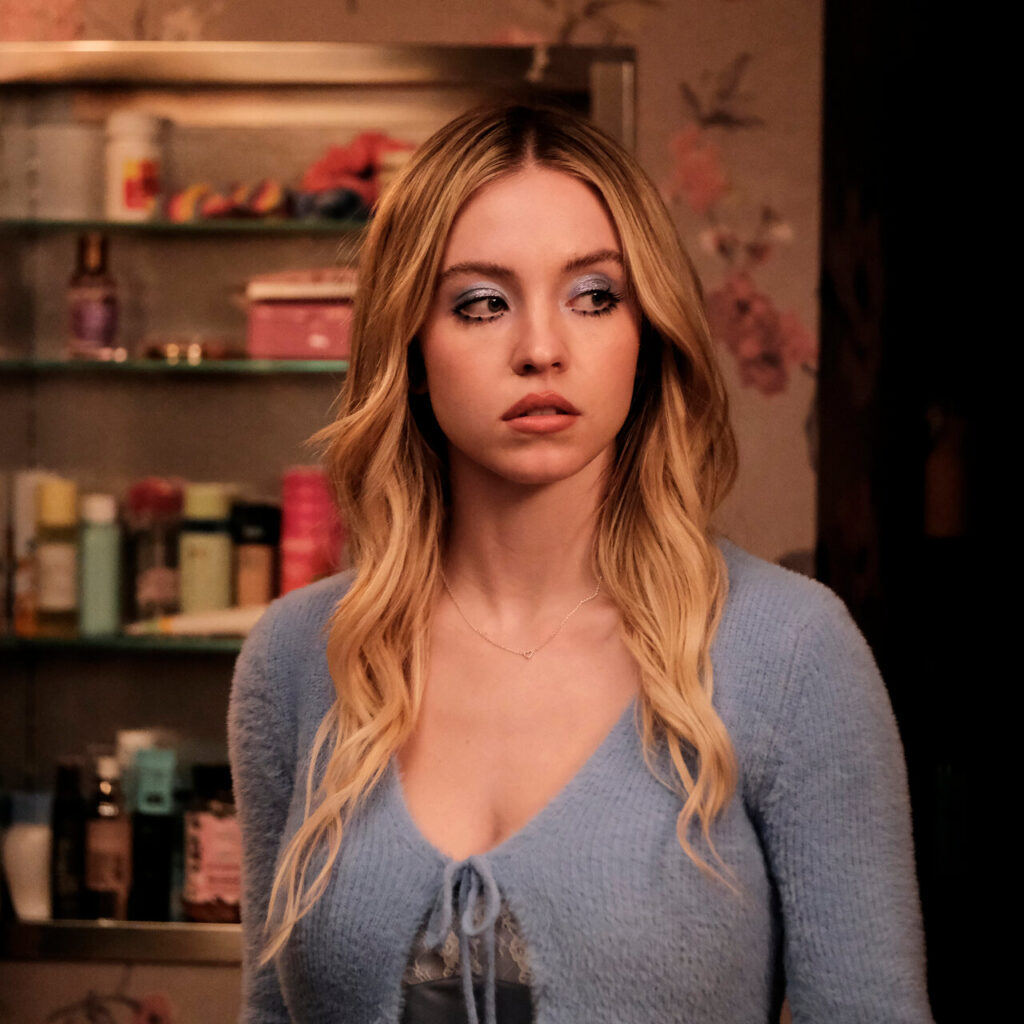
As the self-appointed leader of the Sydney Sweeney Global Fan Club, I consider it my God-given duty to track every project she signs up for. Well, except for that boxing movie where she looks like a man. As soon as I saw this project announced on Deadline, I clicked straight over to Amazon and downloaded that sizzling piece of digital magic onto my Kindle.
I was going to find me out what The Housemaid was about!
Word on the street was that it had the twist of all twists. And I loooooovvvvve a good twist. Little did I know, I was about to go on a journey that I would never be able to come back from, a journey so fraught with gaslighting that I just filled up my car on the book rather than from the 76 station down to the street.
But this gaslighting came with a special side of OMG. OMG good? OMG bad? You’ll have to read the book to find out. And if you’re worried about spoilers, I’ll alert you when they’re coming. Okay, time to synopsize the plot.
Millie, who’s in her late 20s, just got out of prison (for reasons we’ll never learn) and is therefore having a tough time finding even a minimum wage job. So she’s shocked when Nina, a well-off wife, hires her to be a live-in maid at her gorgeous upper middle class home with her perfect husband and psycho 9 year old daughter.
Everything seems fine when she shows up on her first day until Nina introduces Millie to her attic bedroom. Millie notices that the door locks FROM THE OUTSIDE as opposed to the inside. And don’t worry if you didn’t catch that detail. Because the author, Freida McFadden, is going to tell you 691 more times over the course of the story.
Almost immediately, Nina starts acting weird. She’ll tell Millie to go pick up her daughter, Cecelia, at school, then once Millie gets there and learns Cecilia is going to practice with her friends instead, she’ll call Nina and ask what happened and Nina says she never told Millie to go pick up her daughter. Huh?
This gaslighting happens frequently to the point where Millie starts to wonder if she’s going nuts. But Millie’s got other problems, dude. Like the fact that she’s falling HARD for Nina’s husband, Andrew. Millie finds Andrew very handsome by the way. How do I know that? Because McFadden tells you 14,722 times.
One night, when Nina has to unexpectedly leave town, Millie makes the unthinkable decision to go to the broadway play with Andrew that he and his wife were supposed to attend. After 792 more reminders that Andrew is handsome, stupid Millie sleeps with him!
Just a couple of days later, Nina finds the playbill of the Broadway show, which erupts into a home-destroying drag-out-all-night fight. Andrew does the unthinkable. He declares he wants to live with Millie instead of Nina and kicks Nina out! Nina is beside herself! Millie is over the moon! Until the next evening, when she goes to her attic bedroom to move everything downstairs, and she finds that she’s been LOCKED INSIDE.
(Big Spoilers Follow)
We then switch into Nina’s POV for the first time and we learn THE TRUTH. Which is that Nina is actually a really nice person. She married Andrew and found out he was a psychopath who would lock her in the attic to punish her. Andrew threatened hellfire if she ever left him so Nina concocted the whole “housemaid” plan as a way to get Andrew to fall in love with a younger hotter girl so that she could leave! But once she’s done so, she’s burdened with the guilt of leaving Millie out to dry. Will she come back and help her? Or let her suffer like she did?
I don’t know if I’ve ever read a book as poorly written as this one.
This writing is so garbage, I could actually smell the stink coming off the page.
The level of writing here is SO BAD that you’ll often stop and stare at the page with your mouth open. There are a million examples of this but the biggest is how embarrassingly on-the-nose McFadden is throughout the book.
For example, there’s this handsome (yes, handsome!) Italian gardener (no, I’m not kidding, he’s Italian) who seems to warn Millie in Italian on her first day. Millie goes to look up the Italian words he said online and they translate to, “Danger!” McFadden then has 50 other scenes with Enzo where he KEEPS SAYING THE EXACT SAME THING. Danger. Danger. You’re in danger. Stranger danger. Leave, you’re in danger. Danger danger danger danger danger danger danger. I honestly thought it was a joke book at a certain point with how much she repeats everything.
There is zero subtlety to anything and I was previously under the assumption that being on the nose was a writing no-no. But with this book selling millions of copies, I’m starting to wonder if subtlety is dead. Because whatever she did definitely worked.
Okay, let’s get to the root of the question here, which is, why is this book so big? Why is it being turned into a movie with a major package of actors and director? If it’s as bad as I say it is, how can it be so successful?
I think I know.
Two reasons.
One, McFadden does something kinda genius here. You know romance novels, right? They used to sell like hotcakes and various versions of them still do today. McFadden did what I tell all of you to do. Take an established genre or established story and put a spin on it. McFadden took the romance novel and spun it into a thriller.
Cause this is, essentially, mommy porn. Wish-fulfillment central. Moms imagine themselves as younger Millie, working for a strong handsome (you guys can’t imagine how handsome this man is – I have no idea what his actual physical appearance is. But I know he’s handsome!) older man. The temptation of romance is in the air at every corner. I don’t know women that well but I know most of them love this sh*t.
So that’s number 1 for why the book was a success.
And number 2 is because the book’s twist *is* pretty good. It’s not going to rewrite the twist book or anything. But I could see most casual readers not seeing it coming. *I* knew something was up with Nina, of course. She was acting too weird for there to not be some secondary motivation. But that’s only because I’m trained to figure out character motivations after reading billions of scripts. The average reader will be duped for sure.
So that’s the reason for the book’s success. It’s not complicated. What it is is a writer who gets two very important areas of the story right. The wish-fulfillment aspect and the surprise ending. Those two things can definitely result in a breakout hit.
This isn’t my jam. It’s too silly. And the writing – oh my god you guys, the writing is SO BAD. But I understand why it’s become successful. Not to mention, it’s a very simple story, like I always tell you guys to write. :)
[ ] What the hell did I just read?
[x] wasn’t for me
[ ] worth the read
[ ] impressive
[ ] genius
What I learned: Check how many times your favored words are used. A quick search for the word “Handsome” would’ve alerted McFadden that she had used the word way too many times. It’s often not until you see a number next to your favorite words that you realize just how excessively you’ve used it. I use the word “just” a lot in my writing, for example. Do a quick search for the word, find out you used it 300 times in your script, be shocked, and get to work erasing most of them.
What I learned 2: I mean, you really don’t have an excuse not to find time to write after you learn about Freida McFadden’s story. She was a doctor RAISING 2 KIDS when she wrote her first novel. Imagine how easy it would’ve been to say, “Eh, I’m too tired to write today.” Yet she always found time. Now, according to the New York Times, she’s the “fastest-selling thriller writer in the United States.” Stop making excuses! Pick up that pen! It ain’t going to write itself!
What if I told you I could shave dozens of hours of work off your next screenplay? It’s simple. Stop putting so much time into description!
Not long ago, I was consulting on a screenplay. After I sent back the notes, which detailed some plot issues (the script lost a lot of its momentum in the second act) and some character issues (I didn’t feel like the main character was clear enough), I was surprised that the writer seemed unconcerned with either of these problems.
Instead, he was consumed with questions about his description. He asked me about a specific line describing a location on page 13, the introductory description of a secondary character not long after, and a couple of lines during a fight scene which he was concerned did not describe the fight in an exciting enough manner.
I’m not going to lie. I was frustrated. The script had way bigger issues than a random line on page 13 and whether a relatively unimportant character was described well. But then I remembered that when I first started writing, I was obsessive about this stuff as well. I would much rather spend a week on an already finished scene, trying to make sure every single word in the description was perfect, than tackle the glaring unlikability of my female love interest (haha, remember that terminology!)
There’s a reason for this. It’s because, when we start writing screenplays, we think that the most important thing is the WRITING. Which isn’t a surprise. “Screenwriting” has the word “writing” in it. Of course we’re going to think it’s about the writing.
It takes a while before we realize what screenwriting is really about. The storytelling. What is “storytelling” exactly? How does it differ from “writing?” Storytelling is the creative way in which we tell our story. From our plot choices to our character choices to our narrative choices. How we concoct that recipe has a massive effect on how the final dish tastes.
For example, when it comes to Strange Darling (major spoilers follow), another writer may have written that movie straight up. They may have told you, from the start, that the woman was the bad guy and the man was the good guy. To keep that information a secret for half the movie is a STORYTELLING CHOICE. And a strong one at that. It’s what makes the movie so enjoyable.
Think about that for a second. If that writer had spent 300 extra hours making sure every single descriptive line in the script was perfect BUT he told that story in a linear fashion (letting us know from the start that the woman was the bad guy), do you think the script would’ve been better or worse? Sure, it might have read cleaner and more descriptive on the page. But that pales in comparison to the feeling we got when that midpoint revelation arrived.
This is not to say that description isn’t important. Or that you shouldn’t pay attention to it. Description is kind of like sound in movies. We never think about sound unless it’s bad. Likewise, we don’t notice description unless it’s bad (clunky, lazy, or overtly generic).
Can sound actually improve a movie? Of course. In movies like The Zone of Interest, for example, the sounds of torture in the distance enhance the impact of the storytelling. But, in the end, we just want the sound to work, just like we want the description to work.
To that end, here are the three most important tips to remember when it comes to writing description in screenwriting.
Two lines per paragraph (or less) is best. Three lines if you’re writing a script that requires more description than usual.
These days, you really want your reader’s eyes moving down the page. So don’t write big paragraphs. Try to keep them short and to the point. “The woods were dotted with debris from the previous day’s vicious storm. Joe noticed many of the woodland animals up high in the trees, where they were safe, as if awaiting some official call from Mother Nature that going back to their daily routine was okay.” Do we really need the part about the animals? Couldn’t you get away with, “The woods were dotted with debris from the previous day’s vicious storm.” Ultimately, it’s up to you. But I find the second sentence to be unneeded.
Now, this changes if you’re writing the type of script that requires a lot of description. Ant-Man and the Wasp: Quantumania involves an entire universe that the reader is unfamiliar with. So you’re going to need to include a lot of description for that world. I might even say you can use some 4-line paragraphs in a script like that. But beware of writing too many of them as your description will start to look like a wall of text, which readers rebel against.
Prioritize description for the things that matter.
This is where a lot of newbie writers go astray. They treat description the same across the board. But that’s not the way to do it. Every element in your script has a “description priority level.” Wherever that element falls along that hierarchy determines how much description you want to use.
In the movie, “Wonka,” Willy Wonka is imprisoned at a “hotel” for most of the movie. This means that the hotel has a high description priority level. We’re going to see it again and again and again. So if your only description for a place like that is, “The hotel has an old-world charm, but the closer you look, the more decrepit it appears,” that’s simply not enough.
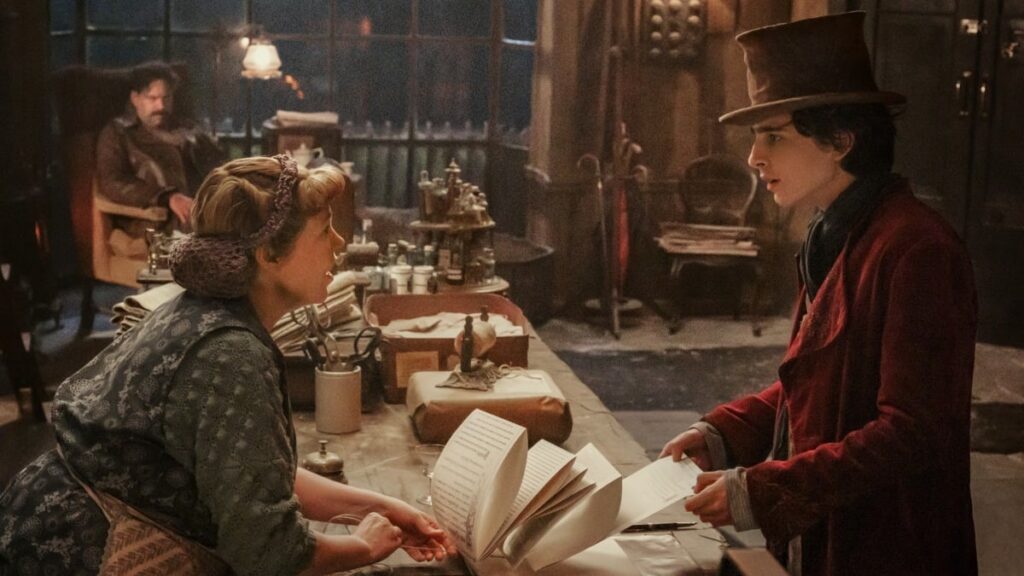
You’re going to need to tell us what the lobby looks like, how big the hotel is, if the rooms are big and cavernous or tight and claustrophobic. Is it clean or are there insects and rats scurrying about? Since we’re going to be in a lot of rooms here, it would be beneficial to lay out the geography of the hotel as well.
In comparison, if I remember correctly, there’s a scene in Wonka at a zoo. Because the zoo is one singular scene and because everybody has a good idea of what a zoo looks like, this description would have a very low priority level.
You describing it in some overly-detailed manner isn’t going to have a huge effect on how much the reader enjoys the scene. So it’s probably best to keep the description simple. “The sprawling urban zoo is complete with towering enclosures and winding paths, the air buzzing with distant roars and the chatter of children.” Boom, you’re done.
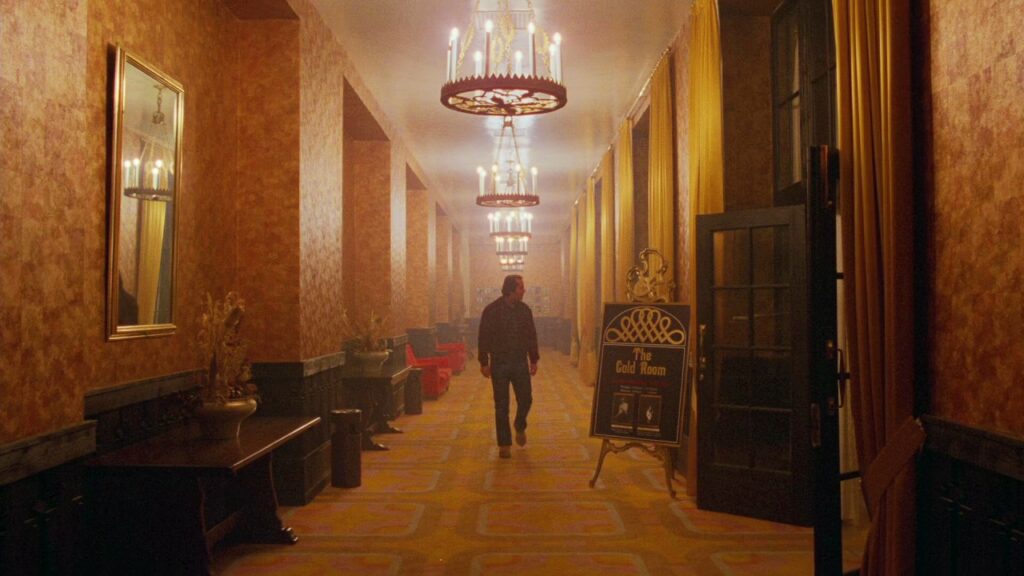
Now, let’s say you’re writing a movie like The Shining, where the entire movie takes place in that giant looming hotel. That’s a scenario where you want to – need to – go description crazy. Because the movie is built atop the atmosphere of this hotel. Every detail helps add to that atmosphere so it is okay to go hog-wild on your description.
Describe up to your writing ability level, but never above it.
One of the ways description stands out in the negative is when a writer tries to describe things in a manner above their writing level. Have you ever spoken to someone who throws SAT words into their sentences that aren’t used properly in an effort to sound smart? Same concept here.
“The golden-sand beach stood tall against the prospect of time, fighting a losing battle as every wave swooped at it like a thief in the night, taking one more coin from its pocket.”
Do you see the attempt to sound thoughtful and clever, when all the description does is give the reader a clunky not-so-clear picture of the beach? Luckily, description works best when it’s simple and clear. Which means you don’t have to be a wordsmith to write effective description.
“A quiet beach stretches along the coastline, golden sand meeting the gentle rush of waves.”
That’s 3rd grade English BUT IT WORKS. That’s the most important thing to remember when it comes to writing description. If it works, that’s all that matters.
Wrapping things up, I promise you that your story represents 95% of what the reader cares about. While strong description can help a script, particularly if it’s a highly visual concept, clarity and simplicity will pay higher dividends on the whole. Be visual but be CLEAR. Do that and you’ll be a-okay.
I’m still offering October screenplay and pilot consultation deals. $100 off my full rate. Plus an extra $50 off if it’s a horror or thriller related story. E-mail me at carsonreeves1@gmail.com and mention this post if you’re interested!
Genre: Horror
Premise: A group of workers at an Ikea-like store find themselves lost within its maze-like interior after a late-night seance goes wrong.
About: Horrorstor was published in 2013. New Republic Pictures optioned the book to turn it into a movie in 2020. Before that, it was conceived as a TV series, with screenwriting royalty Charlie Kaufman set to adapt. The heat off the Horrorstor sale led to writer Grady Hendrix’s latest novel,The Southern Book Clubs Guide to Slaying Vampires, selling to Amazon in a ten buyer bidding war.
Writer: Grady Hendrix
Details: about 250 pages
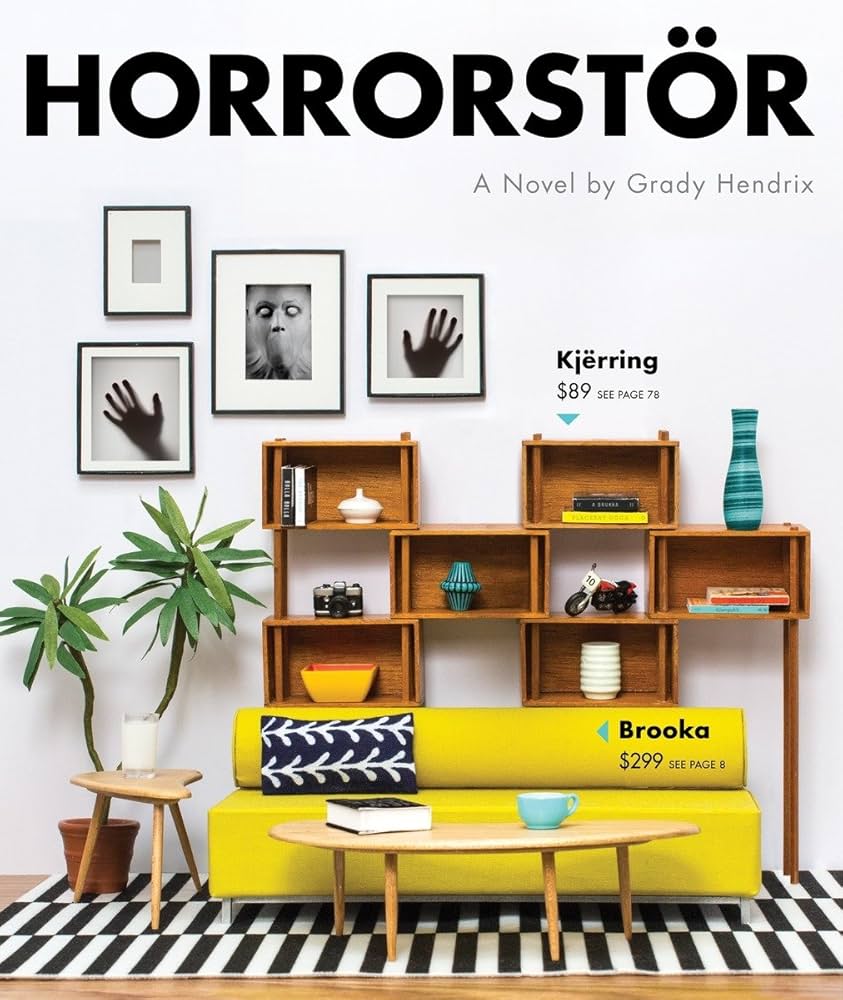
I had my eyes on this one ever since it sold.
It’s a genius idea. Placing a horror film in an Ikea store!? Story perfection.
Why?
Because I like fresh angles into old genres. I’d never seen this combo before. And it gets more clever the more you think about it. I remember when I used to go to Ikea (back when everybody was going) and thinking, “This place is kind of like Hell.” It’s this never-ending maze that sucks you in and forces you to buy a lot of things you don’t need.
I was curious to see what the author would do with it. Let’s find out.
24 year old Amy works at Orsk, an Ikea knock-off that somehow has even lower prices than the infamous Swedish furniture store. Amy has had a tough life. She grew up in a trailer. Her mother has had numerous boyfriends. Without higher education, she’s been stuck in a cycle of barely-above-minimum-wage jobs. Orsk is the culmination of that cycle.
But even though she hates her job, she needs it. Which is why she’s freaking out on this particular morning. Word on the street is that firings are coming. And Amy is the most fireable employee there. She shows up one minute before work and leaves the second the clock strikes 5. She is the epitome of a worker who only thinks about herself.
So when she’s called in to see her boss, Basil, she’s surprised to see Ruth Anne waiting outside his office. 42 year old Ruth Anne is the hardest worker there. She can’t possibly be getting fired as well? Turns out her instincts are correct. Company man Basil tells them he’s not firing them. He needs them for a special top secret job.
Someone is sneaking into the store after hours and smearing their feces on the furniture. He needs Amy and Ruth Anne to help him monitor the building that night. Amy agrees only because Basil promises to give her a transfer to another better Orsk store in the city. So away they go.
Amy and Ruth Anne think they find the culprits but it turns out to be co-workers Matt and Trinity, who have secretly been hooking up after hours. Tonight, Trinity is leading the two on a ghost hunt, complete with a running camera. Her dream is to get a real ghost on video so she can start her own ghost-hunting show (“Ghost Bomb”). Matt, meanwhile, is clearly going along with it to get laid.
Matt and Trinity join Amy and Ruth Anne, eventually finding the real culprit, a guy named Carl. Carl is homeless and has been sneaking in here at night to sleep. But Carl swears he’s not smearing any bodily functions on the furniture. Trinity, who’s pissed off that Carl isn’t a ghost, implores everyone to join her in a seance, since seance scenes always do well in these ghost hunting shows.
At first, the seance is fun, until Carl takes on the persona of someone named “Josiah.” Josiah informs all of them that they’re dead meat. And he’s very convincing, speaking in a different voice and everything. It’s enough to get them to stop the seance. But the damage has already been done. When they try to get back to the main showroom, they keep going in circles for some reason. That’s when they realize that Orsk is no longer a fun store. It’s a giant maze and there’s no way out.
Except that somehow, Amy does find a way out. She gets to her car in the parking lot and is ready to get the hell out of there. But something tugs at her. She’s been selfish her entire adult life. Does she really want to leave her co-workers here to die? Or should she go back into this panopticon and get them out of there?
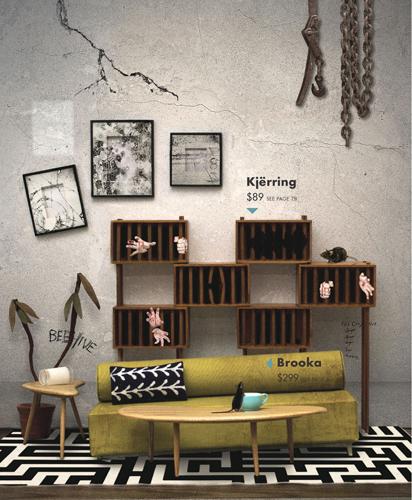
Horrorstor is, basically, a screenplay. It’s written like one so it can be treated like one for the sake of today’s analysis.
I want to bring particular attention to how the story starts. A lot of writers know they need to start their screenplays with something happening in order to grab the reader. But they erroneously believe that “something happening” means something big, such as a car chase or someone getting murdered or an exciting flash-forward.
That’s not true.
With a little knowledge, you can use more restrained story mechanisms to “make things happen” early on and pull the reader in as a result.
For example, Amy shows up to work at Orsk. For the sake of argument, I want you to imagine you’re writing this movie. You’re bringing your main character to work in the morning. How are you going to write these opening scenes to pull the reader in?
I’ll tell you what bad writers will do. They’ll show the beginnings of the protagonist’s day. They’ll show them get to work. They’ll show them talking with their co-workers. They’ll show them prepping for opening. They’ll show them dealing with the first customers.
I can see how, in one’s head, that would make sense. You’re setting up the main character and the main location. So you are achieving something.
But, what you aren’t doing is giving the reader a reason to keep reading. What’s making me want to turn the page here? To see my main character at work? Why would that be interesting? Why would I want to see someone at work? I see people at work every day of my life. Why would you think that showing more people at work would capture my interest?
Here’s what author Grady Hendrix did instead. He zoomed in on the fact that firings are coming and our main character is, likely, first on the chopping block. Not only that. But he establishes that Amy *cannot* lose this job. She’s about to be kicked out of her place by her roommates for being late on her end of the rent again.
Do you see the difference in terms of storytelling here? This isn’t just someone showing up to work. This is someone trying to avoid getting fired. Now I have a reason to turn the page. I have to see if she’s going to get fired or not! Storytelling can be as simple as that. You put out a carrot. You stack some stakes on top of that carrot. And people will keep reading. As soon as you get to the carrot, introduce another carrot. And so on and so forth.
But Horrorstor runs into some problems once it moves into its horror storyline. I don’t like when story points emerge accidentally. I like them to feel planned. Carl the Homeless Guy shows up. Turns out he’s just a normal dude. This puts the plot on ice for a chapter. We’re not sure why we need to keep reading other than the author is still typing words.
And then Trinity says, “Let’s do a seance!” It sort of makes sense in that she needs footage for her ghost-hunting show. But it’s a lazy development that comes out of nowhere. And when Carl takes on this Josiah personality, it’s too convenient of a plot beat. Seconds ago Carl was a dead story thread. Now he just happens to channel this evil entity who will power the rest of the narrative?
To be clear, Josiah was set up beforehand. He’s the warden of an old prison back in the 1800s which used to reside on the land Orsk is built on. But it still felt entirely convenient that this homeless dude happens to channel this guy during a seance that someone came up with five minutes ago as a spur of the moment idea that seemed to spring from the fact that the story had lost its plot.
But then the story rebounds when it focuses on them getting lost in Orsk due to the fact that it was building on the clever idea that people get lost in Ikea all the time and the only way out is to go through every single entire room in the building to ensure that you purchase as many things as possible. It was reminiscent of the kind of social commentary you saw in George A. Romero’s, Dawn of the Dead, with the zombies crawling back into the malls so they could consume consume consume.
So whenever our heroes were trying to find their way out, only to find themselves deeper and deeper within the caverns of the Orsk maze, I liked the book.
I also liked what Hendrix did with Amy’s character. She’s established as this woman who only cares about herself and doesn’t subscribe to the “family” theme Orsk promotes, that everyone who works there should help each other. I always tell you guys that, late in your script, your main character should face a choice, preferably one that challenges her primary character flaw.
That’s what we get from Amy. She’s in the parking lot. She’s free and clear to go. But then she realizes that, if she leaves, these people may die. Does she stick with her selfish approach to life and save her own ass? Or does she help the others?
Why hasn’t this movie been made yet?
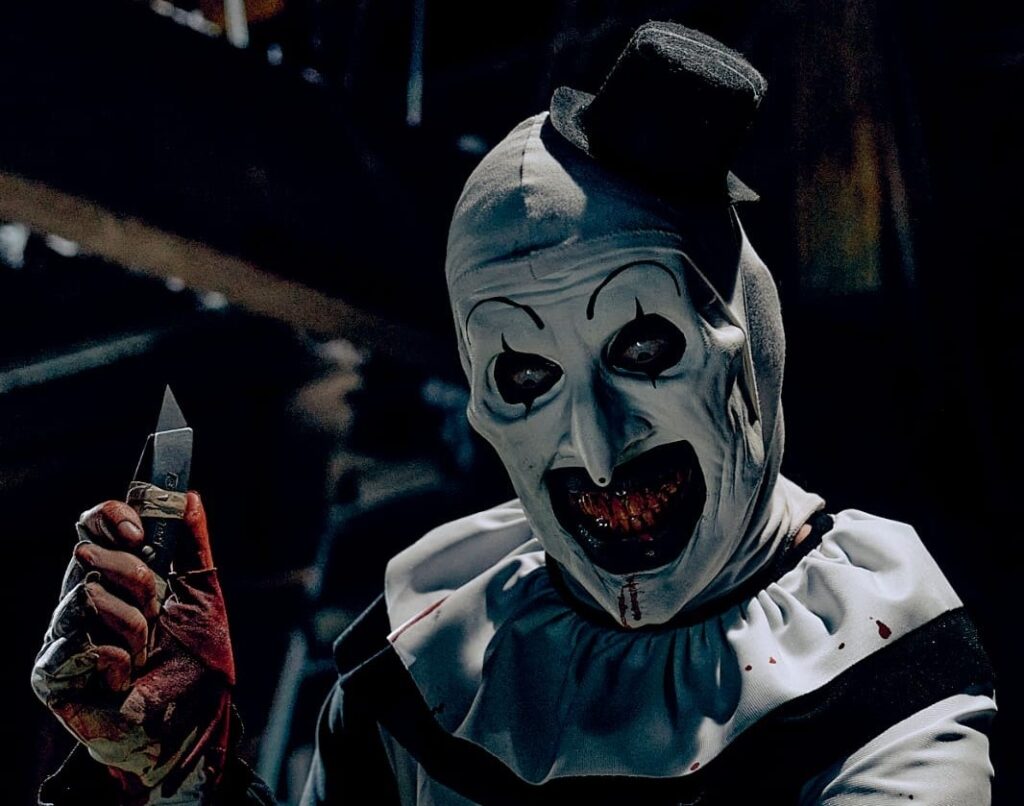
It’s a challenging sell! Terrifier 3 is doing well because of how unapologetically it leans into the horror genre. “Scary clown” is the logline. That’s all it needs to be. Setting a horror film in an environment like an Ikea doesn’t come anywhere close to the marketability of a scary clown. It’s a risk. True, it’s a risk that, if it pays off, it looks amazing. But it’s still a risk.
What sucks is that Ikea is no longer a pop culture store like it used to be. So any movie set in one is going to feel dated.
But, you never know. I still think it’s a fun idea.
[ ] What the hell did I just read?
[ ] wasn’t for me
[x] worth the read
[ ] impressive
[ ] genius
What I learned: Cerebral Horror is a great screenplay “feature” but it should never be the main attraction. The reason this sold is because of the cerebral nature of the concept. People in Hollywood love that stuff. But audiences don’t care about that as much, especially when it comes to the horror genre. Imagining Ikea as Hell is fun. But it’s not as scary as a crazy clown killing people. So make sure if you come up with a cerebral horror idea, it still has something genuinely scary in it.
We also take a mini-mish-mash-monday look at this weekend’s box office!
Genre: Thriller
Premise: A woman escapes a brutal attack during an impromptu late-night date and races into the countryside with her attacker hot in pursuit.
About: This is writer-director JT Mollner’s second feature film. Before that, he had written and directed four short films over five years. The film took over Fantastic Fest in 2023, landed a theatrical release with Miramax, and is just starting to come down to affordability on streaming. Oddly enough, actor Giovanni Ribisi is the cinematographer on the film.
Writer: JT Mollner
Details: 97 minutes
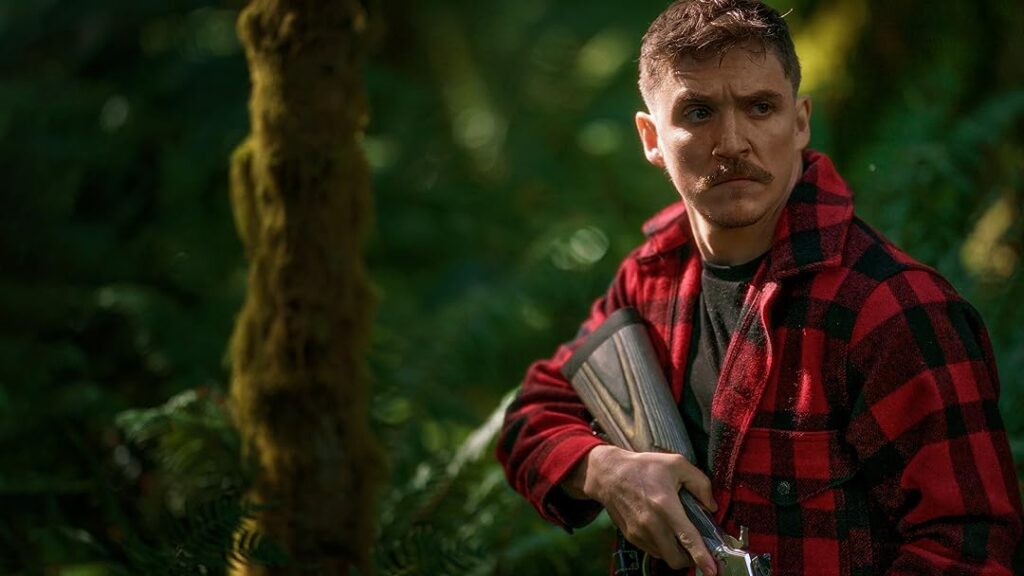
Joker 2??? There’s something otherworldly going on here. I don’t know what it is. I’ve never seen anything like it before. But a billion dollar movie whose sequel fell 80% at the box office is unprecedented. Not even The Marvels did that poorly.
And, the thing is, we all knew why The Marvels didn’t live up to expectations. The original Captain Marvel was sandwiched between two of the biggest movies of all time, Infinity War and Endgame. Its box office was guaranteed.
A major culprit in the failure of Joker 2 has to be the marketing. I was walking into the movie at the Westfield Mall here in Los Angeles and I bumped into someone I knew. She asked me what movie I was seeing and I said Joker 2. She was shocked. “Wait. That’s out??” She said. She had no idea. Not only that. She was a huge fan of the first film.
If your marketing isn’t able to let fans of the first movie know when your sequel is coming out, that’s a major failure on your part.
As for the movie that’s beating it this weekend, Terrifier 3, I don’t know whether to celebrate or castrate this film. It looks like it was put together by a couple of college buddies with 20 bucks and a clown costume they found in their parents’ basement. I’ve always encouraged the “make your movie any way possible” approach so, on the one hand, that’s awesome. But, as a movie, it looks less baked than the sweet potato I threw in the oven for 15 minutes last night. Terrifier 3’s success makes me want to conclude that scary clowns are box office magic but the tanking of Joker 2 says otherwise.
I will say that Todd Phillps’ refusal to screen his movie likely did it in. Whenever you’re making a complicated risk-taking movie like Joker 2, feedback is invaluable. He could’ve gotten important notes that told him what was and wasn’t working and recut it. But he said, nope, this is my vision for better or worse.
There’s a screenwriting lesson to take away from this. Always get feedback! If someone as successful as Todd Phillips can be wrong about creative choices, I got news for you: YOU CAN BE WRONG TOO. There’s nothing wrong with finding out what your script’s blind spots are.
Okay, let’s move on to Strange Darling.
Strange Darling is a perfect movie to review on Scriptshadow because it shows that it’s possible to get that coveted theatrical release despite having an indie-sized budget.
The script does several great things on the screenwriting side that all of us can learn from. Before I get into what those were, let’s summarize the plot, since I know a lot of you didn’t see the film. You should know that the movie is, in itself, a spoiler. So read at your own risk.
The script starts off with a crazed serial killer dude in a truck, chasing down a battered woman in a car on a two-lane road in the middle of nowhere. The guy finally screeches to a stop, gets up on the back of his truck, aims a rifle, and shoots out one of her tires, resulting in her crashing.
The crazed dude then chases her into the forest. She finds an odd older couple (they do Scott Baio puzzles together) living on a farm. They let her in. And we cut back to last night. We realize we’re on a date with the guy and the girl. They just met. She seems to be into some weird aggressive sex stuff. She asks if he’s down. And away they go to the motel.
Back to the present, but a little later on. The crazed guy is now in the house, gun out, hunting this woman down, looking in every nook and cranny of the home, shooting anything that looks even remotely suspicious. Cut back to the past, later in the date, and now the girl is asking the guy to do all sorts of violent sexual things to her. It’s getting weird. She’s getting suspicious.
Cut to the present again and now we see that the farm owner is dead. And this is when we realize we’ve been duped. The guy isn’t the bad dude. The girl is. She’s a serial killer. And when we cut back to the past, we see that he only barely survived her attack. She had to run and he’s been chasing her all day. This all culminates in a wild unexpected ending where you genuinely have no idea how things will conclude.

This was a really exciting movie. It has that 90s indie “can do” filmmaking spirit to it. I think they even shot it on film, giving it a weathered gritty look. The script is very clever in the way that it feels big (there’s a lot of chasing in this movie) but, in order to keep the budget lean, it stealthily inserts these long close-up centered dialogue scenes. It really is a perfect exercise in finding that balance.
Let’s talk more about that screenwriting because I think a lot of people continue to believe that screenwriting is 90% about dialogue. Dialogue is important, don’t get me wrong. I wrote an entire book on it. But the dialogue is the weakest part of this movie. Yet it didn’t matter. Because the storytelling was so strong.
So that’s your first lesson. Focus on writing a great story. Make sure it has a strong plot engine, that the characters are interesting, that the developments are exciting. Throw in a couple of twists to keep the reader off-balance. If you do that well, you don’t need to be a great dialogue writer. As this film proves.
The big screenwriting lesson to come out of this movie, though, is that you can elevate a basic story by playing with time. These are always the movies that tend to get screenwriters mentioned in the reviews.
Think about it. If this was just about a guy chasing a girl, the screenwriter gets zero credit. But because of the out-of-sequence nature of the script, you leave this movie thinking about the script. That puts you in a powerful place as a screenwriter since screenwriters usually get the blame when a movie is bad and never get the credit when it’s good.
The other big tip here is a bit controversial. So, if you’re easily triggered, step away. The note is: Take advantage of society’s expectations. Once society has a locked-in belief, you can control them with your storytelling. Strange Darling does an exceptional job at this.
Society, at the moment, is partial to the ‘toxic masculinity’ narrative. Therefore, if a violent event has occurred between a man and a woman, what are 99% of people going to assume? They’re going to assume that the violence is of the man’s doing. Writer-director JT Mollner knows you will assume that and uses that expectation against you.
When we realize that it’s actually the girl who is the serial killer, our entire world flips upside down. We did not think that was possible. It’s a great midpoint twist that not only supercharges the movie, but ensures you will not forget the movie anytime soon.
I always like to say that using an audience’s expectations against them does double-duty. It doesn’t just set up the great twist where you reveal things are the exact opposite of what they assumed. But it sets a storytelling precedent whereby the viewer can no longer assume what’s going to happen. Anything that unfolds after that revelatory moment is a mystery because once the reader knows you can do that to them, they know you can do it again. Indeed, the movie ends on a note we weren’t expecting.
If you’re missing those gritty indie movies from the 90s, this movie will be your jam, and bread, and butter, and maple syrup. It’s that good!
[ ] What the hell did I just watch?
[ ] wasn’t for me
[ ] worth the price of admission
[x] impressive
[ ] genius
What I learned: I always tell writers to think about marketing in regards to the script concepts they choose. But Mollner disagrees. Here is his take on the topic from The Hollywood Reporter: “I actually disagree. If I had been thinking about how to market this movie while I was writing it, I may not have written it. It’s so difficult as an artist to discipline yourself to sit down and write and complete a screenplay. I’m compelled to do it and I have to do it, but it never stops being a grind. The only way I’m able to get through that process is to have it be something that totally inspires me, artistically, or somebody hires me to adapt a novel. It then becomes fun because it’s a high level of work. But when writing something original, it’s got to really get me excited. I’ve got to love the idea, and it’s got to gestate in my brain and in my heart for a good period of time before I finally have to write it.”
I’m still offering October screenplay and pilot consultation deals. $100 off my full rate. Plus an extra $50 off if it’s a horror-related story. E-mail me at carsonreeves1@gmail.com if you’re interested!