
Search Results for: F word
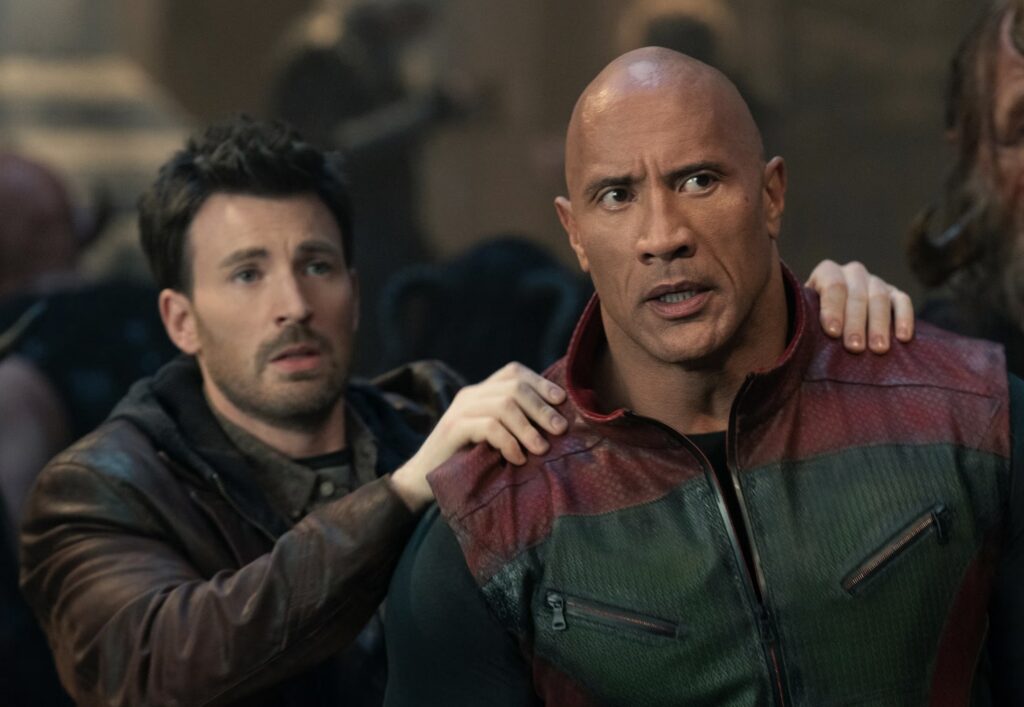
A lot of people are going to look at Red One’s box office this weekend and categorize it as a failure.
The film cost 250 million dollars and made only 34 million this weekend.
But whether this movie is a failure or not depends on your perspective. As a movie that needs to make money, yes, it is a failure.
But as a screenplay, this script is beyond a success. That’s because IT GOT MADE. This is something a lot of screenwriters either don’t know or forget. Sure, we all want the glory of that box office hit. But when only 1 of every 10 purchased screenplays/concepts makes it to the big screen, you’ve won the lottery JUST BY GETTING MADE.
So the question to screenwriters shouldn’t be, why did this fail? It should be, why did this succeed? It succeeded because it was a big concept that came at the genre in a fresh way, utilizing an “IP Adjacent” strategy.
Let’s break that down.
The big concept is Santa’s been kidnapped and they hire a real life secret service agent tracker to rescue him. The fresh angle is that they position it like a superhero movie, complete with superheroes Dwayne Johnson and Chris Evans. And since they don’t have actual IP (Marvel, Star Wars, etc.) they lean into Christmas IP (characters like Santa Claus and Krampus).
I don’t want to undersell the value of the CIA tracker angle. I read a lot of “Santa Claus gets kidnapped” scripts. More than you could ever imagine. But no one’s ever come to me with that tracker angle. It’s almost always some little kid and one of the reindeer who have to rescue Santa. By turning the protagonists into Jason Bourne and Batman, it gave the overused concept a fresh feel.
If I were a producer, I would’ve bought this pitch 10 out of 10 times in the room. It’s not Marvel but what is? Marvel isn’t even Marvel anymore so you need to take chances on projects. This project had way more good going for it than bad so I don’t fault the movie at all.
The only change I might’ve made was to go with more of a comedic actor in the Chris Evans role. Chris Evans and The Rock often play the same role in movies. They’re both big tough guys. You probably needed more contrast there. But, with that said, the two looked to have pretty good chemistry.
Speaking of becoming a screenwriting success, it’s important to remember that, for most writers, success is not a linear journey. It may appear that way to anyone who came into the business between the years of 1998-2008. You get that big sale, you get the follow-up story in the trades, and your career is launched “overnight.”
But, more often than not, your ascension is a series of smaller less visible steps. Look no further than Scott Beck and Bryan Woods. The two were unknown screenwriters when they wrote A Quiet Place. Even after selling it, nobody talked about the film until it became an unexpected hit. Only then did their profiles rise, allowing them to direct their first film in the sci-fi thriller, “65.”
That movie didn’t have enough money to live up to its high concept premise but it established the two as legitimate writer-directors and now they just came out with Heretic, which has a 92% Rotten Tomatoes score and has banked a respectable 20 million dollars in 10 days.
Once again, this all started because they wrote a really good high-concept script in A Quiet Place. What’s the theme today? High concept. Red One is a huge concept. A Quiet Place was a high concept. It’s not that you have to write high concept every time out. But, as you can see, if you want to be the 1 out of 10 purchased projects that actually gets made, high-concept material is often the factor that gets you past the finish line.
The other theme of the day is IP-adjacent subject matter. You don’t have the rights to gigantic IP. So you have to look in the public domain and get creative. Red One may not technically be IP. But it feels like IP. Because who doesn’t know Santa Claus?

Next weekend, we get more IP-adjacent subject matter in Gladiator 2, which is projected to dominate the box office. A big reason for that domination is the Roman Empire. Who hasn’t heard of the Roman Empire? So by setting a movie there, you get the advantages of IP without actually having to foot the bill for IP. These are the things that smart screenwriters think about. Any one of you could write a script about Caesar or Tiberius or Caligula or Constantine tomorrow and wouldn’t have to pay a dime for the rights.
You can still write smaller scripts but, if you do, you have to be a lot more strategic about it. If you want Hollywood people to buy your script, you probably need to write in the horror, thriller, or sci-fi genre, and keep the budget under 5 million (which means a somewhat contained story). If you want to write character-driven material, you have to have a great main character (Nightcrawler, Promising Young Woman, The Whale, Wolf of Wall Street).
But let me be very clear about something: The lower the concept, the more it becomes a writer-director project. I loved Anora. It will probably be my favorite movie of the year. But if it came to me as a script? To buy? I’m not buying it. It’s so character-driven, non-traditional, and execution-dependent that I wouldn’t know what to do with it once I got it. That kind of script needs a writer-director.
Of course, nobody knows anything. All of this can change tomorrow. Someone could sell something that doesn’t fit any Hollywood formula. Heck, that just happened. That big 2 million dollar spec that sold bucked every trend in the business by being a character-driven love story. So you could just go by the strategy of: Write whatever movie you would want to see (the Jordan Peele method of writing). But if you’ve been in this racket for a long time, I find it silly not to strategize what script you’re going to write next. Writing a script always takes longer than you think it’s going to take and one of the biggest mistakes writers make is starting a script without thinking about how easy it will be to sell when it’s finished. In other words, strategize however you want to strategize. As long as you strategize. :)
What’d you see this week? Anything good?

There is an ebb and a flow to what I obsess over in the screenwriting space. Sometimes I’m obsessed with high concepts. Sometimes I’m obsessed with a great opening page. Sometimes I’m obsessed with second acts.
But as time has passed, there is one obsession that seems to keep coming back to the forefront again and again. Wanna take a guess what it is? While you rack your brain, let me explain WHY I continue to be obsessed with this particular element. It’s because if you are good at this thing, it is one of (if not the) biggest indicator that you are good at writing screenplays.
Wanna know what it is?
Scene writing.
I know, I know. I talk about this all the time. But that’s the point! It’s so important that I keep coming back to it.
The reason it got triggered this time is that I was doing a script consultation while I was in a pretty lousy mood. In script-reading parlance, I was a “tough crowd.” Since my baseline is “tough crowd,” this made me an extremely tough crowd. Despite that, I was pulled into this screenplay immediately. I can’t give you the opening scene for privacy reasons but it amounted to a woman letting a stranger in need of help into her home and the stranger being suspicious. In other words, we know bad things are coming. And if the reader knows bad things are coming, they have no choice but to keep reading.
But if that’s all the scene is, it won’t be enough. You have to build, you have to create conflict, you have to deliver a satisfying resolution, maybe do something unexpected along the way. That’s writing. You’re TELLING A STORY in that scene. Which seems like such an obvious point to make but it should shock you when I tell you I read entire screenplays (a lot of them!) that don’t have a single entertaining scene within them. They’re all scene fragments or exposition or setup for later scenes or a bunch of crap the writer stuffs into the scene to get it out of the way.
Let me make this clear: If you are incapable of consistently writing compelling scenes, you will never advance anywhere as a screenwriter.
In other words, stop focusing on the bigger picture of finishing your scripts if you haven’t even been able to write good scenes yet. How do you know you’ve written a good scene? The reader brings it up! “Oh man. The house invasion where they try and tie Anora up (in the movie, “Anora”). That was a crazy scene!”
Now… does the ability to write a good scene mean the writer will write a good script? Of course not. This is because someone can get lucky. Which I see happen all the time. See, there are these things called “dramatic situations.” These are naturally compelling situations that effortlessly keep a reader’s interest. In the example I used above, a potentially dangerous man alone with a woman in her home… that’s a dramatic situation. Conversely, if those same two people, under the same pretense (he’s a dangerous person), started talking in the middle of Times Square? The scene would lose much of its dramatic punch.
What I’ve learned is that writers can stumble into dramatic situations accidentally. There was never a plan to find the situation. They just got lucky and picked one that was naturally dramatic. Therefore, when you have that writer extrapolate that scene into an entire script, they will rarely, if ever, include a dramatic situation again. And even if they do, it *too* will be an accident.
Once you become a writer who has accumulated enough experience that you have a breadth of dramatic situations to choose from, you will increase the number of dramatically compelling scenes you write, which, in turn, vastly improves the chances that the totality of your script will be good.
Now, does it GUARANTEE it will be good? No. Because writing a series of individually compelling scenes does not equate to telling a story. The challenge with writing full scripts is connecting those scenes together in a story that, like the scenes themselves, builds, then conflicts, then resolves.
The reason that’s so challenging is that a script is long. And there’s a pacing element to all of this. A storyteller needs to know when they’ve been on a road for too long. They must know when to deviate onto a new road – maybe smaller, maybe bigger – that has new things to see, new things to throw at the driver. Learning how to bob and weave and twist and turn to always stay on the road that best maximizes your story takes a lot of trial and error.
Once you become good at scene-writing, you want to become good at SEQUENCE WRITING. That may sound fancy but it isn’t. It’s just the next measurement up from scene-writing. If scene-writing is a teaspoon, sequence writing is a tablespoon (and a script is the entire bowl).
It just means that several scenes will be strung together to create their own story. Let’s say a married couple trying to repair their marriage is having dinner at a restaurant. The act of driving to the restaurant, getting their table, ordering their food, and then eating – that’s technically four scenes. But it’s one sequence that all relates to the same thing (going out for dinner).
Do you need to write four individual dramatically compelling scenes there IN ADDITION TO a dramatically compelling sequence? No, you do not. I would encourage you to try. But I get that sometimes, due to the nature of the script, it doesn’t make sense. Maybe this is a section of the script that needs to move quickly. In that case, staying too long in a couple of these scenes is going to hurt the pacing.
However, let me make something very clear. If you are not including a dramatic situation in each individual scene, you BETTER be creating a dramatic situation with the sequence those scenes reside in. Cause if you’re doing neither, I GUARANTEE you the reader will not make it past that sequence. They WILL stop reading.
The simplest way to create dramatic situations is to introduce a problem to your character, either one that requires a physical solution or a conversational one, try to have them solve it, but put things in the way that make solving the problem uncertain. That’s a key word: UNCERTAIN. If we are uncertain that they will be able to solve the problem, we need to keep reading. But if we’re REASONABLY CERTAIN they’ll figure it out, that scene or sequence loses any trace of drama and we don’t need to keep reading to know what happens.
The best scene in the movie Civil War operates under this formula. A rogue soldier is casually murdering people. He has two of our protagonists with him. The rest of our protagonists have the problem: Their co-workers are about to be assassinated by this dude. They need to convince him not to. Their attempts to persuade him and the uncertainty of his response are what make the scene a dramatic tour de force.
This is NOT the only formula for creating dramatic situations. Just the most used one. In fact, I would love it if you guys shared some of your favorite go-to dramatic situations you pull from when writing your scenes. Together, maybe we can come up with a big enough list that nobody from this site will ever write a boring scene again. :)
If you mention this article, I will give you $100 off a screenplay consultation and $5 off a logline consultation. E-mail me at carsonreeves1@gmail.com if you’re interested!
A 2 million dollar spec sale in 2024!
Genre: Drama
Premise: A young woman meets a man and they fall in love quickly. But then they encounter a devastating setback that will change the direction of both of their lives forever.
About: Last week, there was a big bidding war for this script and Amazon/MGM won it for 2 million dollars. It was like the spec script days of old! The writer, Julia Cox, has one feature screenplay credit, for Nyad, the Jodie Foster film about the real-life swimmer who swam from Cuba to Florida. As of today, Sydney Sweeney is being tabbed to play the main character, Maya, although no official deal has been made. Ryan Gosling is producing and I’d be surprised if he didn’t star in some capacity (there are three main male roles).
Writer: Julia Cox
Details: 120 pages

NOBODY. KNOWS. ANYTHING.
The famous words of William Goldman that assessed the competency of the people who run Hollywood.
After you hear the plot and analysis of today’s script, that phrase will be tattooed to your brain.
Because everything I’ve told you to do in order to sell a script… is the opposite of what this writer does.
How can any screenwriter understand anything going forward?
I don’t know.
But I do think there’s a bridge between the high-octane storytelling I preach and how this unconventional spec script sold. So let’s talk about it!
20-something Boston nurse, Maya, meets 20-something Charlie (who specializes in audio synthesis) while buying an end table from him. The sparks fly immediately so Charlie suggests they meet again and Maya doesn’t even try and play it cool. She’s in.
Over the next 20+ pages, the two fall into that kind of love that everyone around them rolls their eyes at. Cause it’s that annoying! But neither Maya nor Charlie care. They are so smitten that they spend every waking second together, oogling and smoogling each other. A couple of years pass and then they get married.
(Spoilers follow)
The year? 2020. The year of Covid.
Charlie gets sick. And sicker. Being an ER nurse, Maya is concerned. She keeps pushing Charlie to go to the hospital, especially because he has asthma. She finally convinces him to go but a couple of hours later, his health deteriorates and he dies. Maya is devastated. She shuts down. There isn’t a life for her without Charlie in it.
Cut to years later and Maya lives in Portugal. She basically eats, drinks, screws dudes, and sleeps. She is on autopilot. Until she meets a sexy Portuguese man named Felix. For the first time, Maya feels positive emotions again. She really likes Felix. And he likes her enough to push her towards a future together.
But emotions scare Maya and she bails, traveling through Europe, getting lost again. The years pass until she’s in her 40s and she finally feels like she can go back to the U.S. It is there where she must face the people she left when Charlie died. And one person, in particular, helps her see through her pain. A person who, in the most unexpected of ways, could be the love of her life.
Does this sound like a 2 million dollar spec sale to you?
I’m guessing not.
Which is why I’m sure your first question is: WHY THE HECK DID THIS SELL FOR 2 MILLION DOLLARS?
Luckily, I think I can answer that question.
You see, there are two types of scripts that sell. The first is a good movie concept. Something like Leave The World Behind. But there is a lesser-known type of script that sells, and that’s the script that does an amazing job of emotionally connecting with the reader.
Which is the category that Love of Your Life falls under.
Because think about it. If you’re crying at the end of a screenplay, that story has succeeded in connecting with you. Which means it has a good chance of connecting with movie audiences as well. Which is the endgame here. All the studios and streamers care about is people watching their stuff. It doesn’t matter how those people get there – concept, emotion – as long as they get there.
The thing is, scripts that connect with readers on an emotional level are significantly more challenging to execute than concept-driven stuff. It takes way more skill to pull one of these off. Which is why it’s so rare. I can’t remember the last time a script blew me away on character and emotion alone.
So, you have to be someone who’s in tune with writing authentic characters who say authentic things. You have to understand what’s too melodramatic, what’s too cliched. If you don’t know exactly where those lines are, then when you write one of these scripts, they turn out like bad Hallmark movies. I can’t emphasize enough how hard these are to execute.
Because look at how many screenplay rules this breaks. It’s 120 pages (too many!). There are lots of 5, 6, 7 line paragraphs (too long!). There’s no clear goal driving the story. You’re working with an elongated time frame, which is always hard to wrangle.
But the hardest thing to get right is the characters. You have to write authentic characters and Julia Cox does a really good job of that. Maya feels real from the very first page.

Another thing that scripts like this need is scope. Because they don’t have a concept, they need to feel big in other ways. This script includes the death of the main love interest on page 45, which is a big moment. And then the character travels the world to forget it. Time then passes. All of these things create scope.
If, however, your main character’s love interest had died and the whole movie takes place in a small town, that’s not enough scope to sell a script for 2 million dollars.
Not only that, but the themes are gigantic and universal here. A big reason why I think this script sold is because it’s arguably about the meaning of life. I know that’s not going to get the kiddies pressing play on Roku but for the adults, they won’t just press play, they’ll toggle the subtitles onto the largest font.
It really comes down to the characters, though. I can’t emphasize enough how weak the characters are in the majority of the scripts I read. They’re either thin, boring, uninspired, or plain. They rarely have personality. They always seem to act inauthentically. In other words, they don’t act like people. They act like writers are writing them.
That’s where Julia Cox excels. I didn’t detect a single inauthentic moment in this script. The characters always acted consistently and realistically. There’s a conversation Maya has with Charlie’s mother late in the script that’s a de facto apology for disappearing after his death. That’s such a tricky scene to write because there are so many temptations to go for the “make the reader cry” line. And those are the lines that always bomb, that always feel like a reach. Cox never gets over her skis in the scene. She just allows the characters to speak to each other. Here’s a small part of that conversation…

(Spoilers)
For the majority of this script, I was going to give it a double worth the read. But the thing that pushed it up to an impressive was the stuff regarding Jason, her best friend. Jason is a huge ally to Maya in her romance with Charlie. So when she reunites with him back in the U.S. and the two decide to push it beyond friendship, I realized that it was actually Jason who was the “love of her life.” Maybe not the love she wanted. But definitely the love she needed. And it got me. Just like I suspect it got everyone else who read the script. Which is why it sold for 2 million dollars.
[ ] What the hell did I just read?
[ ] wasn’t for me
[ ] worth the read
[x] impressive
[ ] genius
What I learned: Resist writing what you WANT the character to say and instead write what that person WOULD say. If you can master this one tip, your dialogue will be better than 90% of the screenplays out there. You can get a lot more dialogue tips like this in my DIALOGUE BOOK!
What I learned 2: Between this and Tomorrow and Tomorrow and Tomorrow, we might be hitting a “feels” trend in screenwriting. Scripts about family, love, death, universal themes. Something to keep an eye on!
A Hugo Award Winning author adds a high concept twist to the giant monster space.
Genre: Sci-Fi
Premise: A Door Dash driver is recruited to a secret parallel world where humans attempt to preserve giant monsters, carefully preventing them from transporting to earth.
About: Today’s book, The Kaiju Preservation Society, was optioned by Fox Entertainment two years ago, before the book was published. This is what agents do, by the way. Before a book is officially released, they try to build buzz and sell the movie (or TV) rights. It’s sort of like what they do with spec scripts. The difference is, even if the book fails to get a deal, it’s still going to be published so people can read it. John Scalzi has been a popular sci-fi writer for over a decade now. He won the prestigious Hugo Award (best science fiction novel) for his book, Redshirts, in 2013. He also wrote the Old Man’s War trilogy, which is a sci-fi franchise about an intergalactic war that needs soldiers, so they place a bunch of old people into young bodies to go fight the war.
Writer: John Scalzi
Details: about 264 pages
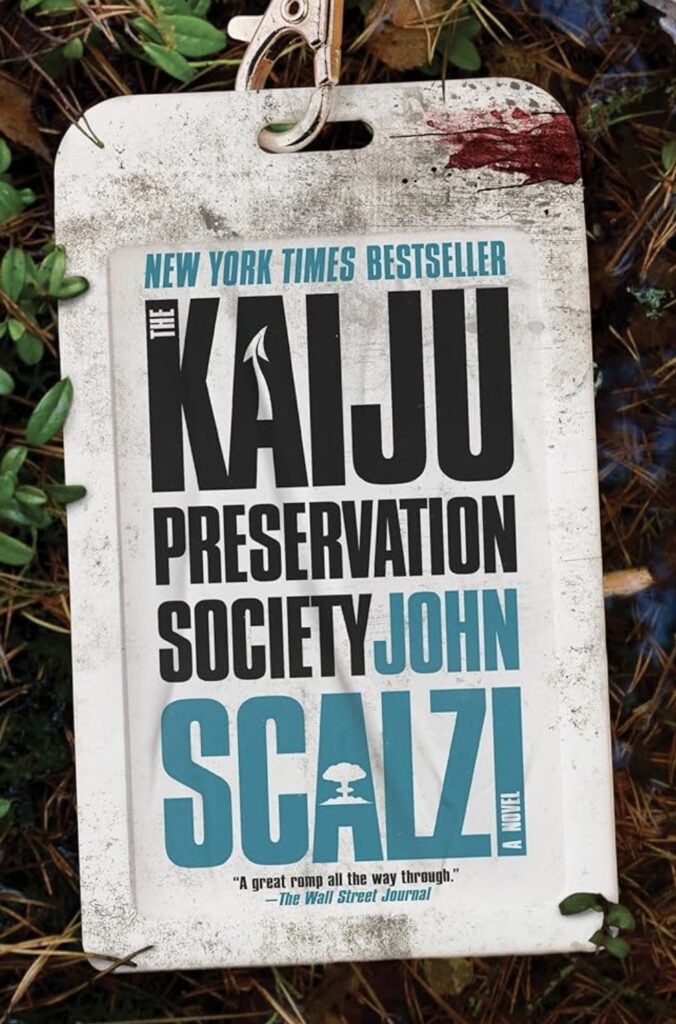
This is the kind of thing you want to write about to cast the widest net of potential suitors for your concept possible.
Hollywood is obsessed with giant monsters. But the challenge is finding new avenues into the giant monster space. Scalzi did that. Technically speaking, Godzilla is a kaiju. But nobody has the IP on the word “kaiju.” So, if you create some world where there are a bunch of new kaiju you invented, you’ve created a potentially lucrative franchise for a Hollywood studio. So it’s a forward-thinking move by Scalzi.
Not to mention, it’s a unique angle. The first thing you think of when you think ‘giant kaiju’ is not a preservation society. That, therefore, creates an intriguing contrast. You want to open the book to see how those worlds collide.
That’s why I wanted to check this book out. Now let’s find out if Scalzi nailed the execution.
Jamie Gray is an exec at a Door Dash like company called Fudmuud (Food Mood). But when Covid hits, his evil CEO billionaire boss, Rob Sanders, demotes him and he’s forced to be a driver. One night, he delivers food to an old friend who says, “Why don’t you come work with me?” Even though the guy doesn’t tell him what Jamie would be doing, Jamie says, ‘sure, why not?’
Several days later, Jamie is transported to another earth-like planet in a parallel dimension. On this planet, a bunch of giant monsters called “kaiju” roam. Along with 150 other people working for the organization, Jamie is tasked with preserving these kaiju. For example, one of his first missions is to fly a plane and spray pheromones over a kaiju (named “Bella,” in honor of Twilight) so that another kaiju (named “Edward”) will mate with it.
But what they’re really trying to prevent is when kaiju spontaneously transport between that earth and our earth, which happens during high nuclear activity. This is complicated by the fact that kaiju are made of nuclear energy. So, if one blows up, it thins the veil between the two earths, and other kaiju can cross over.
One of the only ways to fund the Kaiju Preservation Society is through donations from billionaires. And, occasionally, those billionaires want a return on their investment. Aka, they want to come see the Kaiju with their own eyes. Jamie is tasked with taking the latest billionaire out on an expedition and who should that billionaire be? ROB SANDERS!
Jamie is pissed but their little walk is the least of his worries. That’s because Bella, who has since been impregnated, has disappeared! Nobody from the KPS knows where she is. It doesn’t take a bunch of brain cells to figure out that Rob Sanders has something to do with it. But what has he done with Bella? And what might the consequences be back on the real earth???

No doubt you’ve heard the metaphor that a story is like a house. And if you build a shaky foundation for your house, it doesn’t matter how pretty the house looks inside or outside, it’s only a matter of time before it collapses.
I like this metaphor because it best describes how books like this are failed ventures. This entire story was built on a shaky foundation and it never recovered as a result.
What does “shaky foundation” mean, exactly? Think of your foundation as a series of pillars. If any of those pillars are weak, the house will probably fall down. And, if more than one is weak, the house will definitely fall down.
In this case, you have a Door Dasher who shows up at a guy’s house. The guy knows our protagonist from school and says, “Hey, why don’t you go to a parallel world and help the organization I work for preserve giant monsters.”
Let’s think about that for a second. Before we even get to the monster part, we are telling a random citizen that there are parallel worlds out there. That would be one of the most top secret pieces of information on the planet. And we are just inviting random Door Dashers to not only BE TOLD about that planet, but travel to it!? Oh, and also to work with giant monsters!!??
None of this makes any logical sense. That is how you build a weak pillar, a pillar that is going to crumble when you pack your story on top of it. Because you’re building everything on something that would never happen. If this were real, the government would spend millions upon millions of dollars to recruit very specific people into these jobs. The second your evaluation criteria for saving monsters is, “Can they get Thai food to my house before it gets cold,” your story loses all credibility. As do you! For even thinking that would work!
If you look back at Jurassic Park, they recruit paleontologists. They recruit scientists. They recruit people who make sense in that world. That’s a strong pillar. This is one of the weakest pillars I’ve ever seen an established writer build a story on top of. And I know why he did it, which I’ll share with you in the “what I learned” section.
I suppose if you looked at this book as a comedy, the Door Dash thing wouldn’t bother you so much. So let’s say that’s not an issue for you.
Even if you were able to ignore that, the book is bogged down by glaring structural flaws. The inciting incident doesn’t come until 80% of the way into the story! The inciting incident is Bella disappearing. Nothing of consequence happens before that. It’s all set up of the world and how things work. It was almost like Scalzi was planning to write a 500 page book, got bored, and conked out at page 250.
My biggest pet peeve of all when it comes to writing is when it’s clear the writer didn’t give 100% effort. This space is too competitive to only give 90% of yourself. Or 80% of yourself. If you want something that will resonate with people, you have to give every ounce of what you’re capable of giving to the story. This feels like Scalzi barely gave an ounce.
[ ] What the hell did I just read?
[x] wasn’t for me
[ ] worth the read
[ ] impressive
[ ] genius
What I learned: You’ve heard countless times (including here) to write what you know. Because when you write what you know, you’ll be able to write specifically, which makes the story feel authentic. That DOES matter. However, this advice doesn’t always work. And this book is a prime example as to why. It is clear that all of this Door Dash nonsense that permeates the plot was born out of Scalzi writing this book during Covid, and ordering a lot of food from Door Dash, like many people did at the time. So he used that as a jumping off point for his main character. But it’s a tonally disastrous choice, as it clashes oddly with the subject matter. Jamie’s job needed to be better integrated into this subject matter. Whether that be a scientist or a geneticist or an animal behaviorist or a government figure. All of those would’ve been better choices than a Door Dash delivery guy. The second Scalzi made that creative choice, he doomed this book.
What I learned 2: John Scalzi made his own way. His big break came with Old Man’s War. In 2002, instead of pursuing traditional publishing right away, he published the novel on his website, offering it as a free e-book. The novel gained popularity online, and through this, he caught the attention of readers and eventually the industry.
Includes a tip that will get the reader to turn all 110 pages of your script!

Today’s article was born out of this realization I had the other day that the entire goal of screenwriting boils down to making the reader turn the page.
I can’t emphasize this enough. The reader must have an insatiable appetite to turn the page. Because the second they don’t feel that need, they’re done with you.
That’s an important distinction between screenwriting and novel-writing because it’s different when you sit down and read a novel. You get the novel for the specific purpose of being entertained by it. So you’re willing to invest more time into it.
With a screenplay, the goal is different. It’s to determine if the script can be turned into a movie. The second the reader determines that it cannot, he’s free to stop. So that trigger is much faster on a screenplay, which is why understanding what makes a reader turn the page is so important.
Of course, I can’t give you universal reasons why readers turn pages. But I can tell you my reasons. And most of those reasons are going to line up with the people around town who read scripts. So let’s get into it.
A KICK-ASS CONCEPT
I can’t stress this one enough because it gives you a huge buffer for the start of your script. If someone sends me a really good marketable concept – like A Quiet Place or The Platform or Inception – you get 20 pages right off the bat. Even if the writing is bad, I will still give you 20 pages.
This is because a good marketable concept is hard to find. So even if the writing sucks, I’m thinking, “Could I bring another writer on to fix this?” I can see the movie so I’m willing to invest more of my time to see if there are solutions to the problems in the script.
But if it’s some indie concept or low concept (a road trip between a mother and daughter through the south), you don’t get any pages. I will literally stop reading on page 1 if the writing doesn’t capture me in some way. So, if you want 20 pages right off the bat, write that big concept script of yours. It’s going to make your post-script life so much easier.
VOICE
If the writer has a unique voice that sparkles on the page, that’ll get you 15-20 pages. I won’t go into what voice is in detail. I’ve written other articles on that. But, basically, it means the uniqueness in how the writer sees the world and their ability to translate that into their writing. It often involves a unique sense of humor. And you can see it by reading writers like Diablo Cody, Quentin Tarantino, Charlie Kaufman, Taika Waititi, Phoebe Waller-Bridge, and Yorgos Lanthimos.
WRITING IS A CUT ABOVE
If the writing is a cut above, that earns the script anywhere between 10-15 pages right off the bat. By writing, I mean the way the writer writes. Their sentence structure, their word choice, their turn-of-phrase, their intelligence, the way they weave their thoughts together. If that’s done in an advanced way, it usually (but surprisingly not always) means the script is worth reading. Look at Chandler Baker’s “Big Bad” short story that I reviewed. That’s what I mean by writing that’s a cut above.
Now, I’m not going to lie. If you have none of those things, your script is probably in a heap of trouble. But I’m about to surprise you. If you can be good at a few nuts and bolts things in screenwriting, you can still get that reader to turn the page. And if you keep rolling these things out, like breadcrumbs, throughout the script, the reader is going to be at the end of the screenplay before they know it.
A MAIN CHARACTER WHO I REALLY WANT TO BE AROUND
This is the biggest cheat code in all of screenwriting. Because as I said: The goal is to get the reader to turn the page. That goal remains the same whether we’re on page 1 or page 40. Interest can be lost so quickly during a read, it would shock you. The reader could be deeply invested in your story on page 27. But by page 35 they’re bored out of their mind. I’ve seen it happen more times than I can count. So you want a situation where you don’t have to keep coming up with something amazing every single page in order to get the reader to turn to the next one.
Enter a main character I want to be around. Either I like him or I’m intrigued by him or he’s funny or he’s caught up in something crazy that I have to see how he’s going to get out of. Giving us a main character who we want to be around is the thing that makes us turn all 110 pages. Even if the rest of your script is average, the reader will keep turning the page. I’m talking about Jordan Belforte, Arthur Fleck, Tony Stark, Peter Parker, Bella in Poor Things, Erin Brokovich, and Mildred Hayes in Three Billboards Outside Ebbing, Missouri.
The large majority of the scripts I read have weak forgettable main characters. The writers seem comfortable with everyman and everywoman types who have no outstanding qualities. The story becomes the big star of the script and the main character, because he’s so bland, is overshadowed in the process. At the very least, give us a character with something to overcome. Because anything that is unresolved is a reason to turn the page. I must turn the page to see if it gets resolved.
If my character is a coward, I must turn the page to see if he ever becomes brave. But if my character is fine and has no flaws, what do I get by turning the page? To keep finding out they’re fine? Do you really think that’s enough to make me keep reading?
GOOD SCENE-WRITING
As many scenes in your script as possible should have a beginning, a middle, and an end. If you do this well, we will want to turn every page because every page gets us closer to finding out how the scene ends. However, I don’t care how a scene ends if you don’t set up a problem that needs to be resolved. If you don’t set up a goal that needs to be achieved. Pretend each scene is a mini-screenplay. It should have a setup (which gives us the goal or the problem), conflict (things get in the way of solving the problem or achieving the goal), and resolution. If you’re able to do this consistently in each and every scene, then the reader has to keep reading to see how each scene resolves. But if you’re just showing snippets of characters lives without structure, then hell no am I going to turn the page. I’ll be bored within 2 pages, 3 pages tops.
DANGLING CARROTS
Getting down to the nitty-gritty – the way to get a reader turning each and every page is to dangle carrots in front of them. If there are no carrots, there’s no reason for the donkey to keep walking. Let’s say your opening scene is your hero getting ready for work. Why should I keep reading about that? Honestly, tell me why. Cause you thought of it? Cause you wrote it? This is the error in so many writer’s thinking processes. The reader owes you NOTHING. They don’t turn the page to be “a good person.” They only turn the page IF YOU GIVE THEM A REASON TO TURN THE PAGE.
So, what you might do here is, while your hero is getting ready for work, have his wife trying to calm him down about his big meeting with the boss today. Today is the day that he’s going to ask for that raise. This is called DANGLING A CARROT. Now I have to turn the page to find out what happens when he asks for the raise! Does he get it or is he turned down!
Even better, the more meat you put on the carrot, the more pages the reader will turn. For example, if you open your script with a murder and you make that murder brutal and you make it so we really want to find out who did it, that’s a meaty freaking carrot right there. So you might get 10-15 turned pages out of it before the reader demands more information about the murder.
SUSPENSE
Any time you can create suspense, readers will turn the page. Suspense is the skillful withholding of information to keep the audience in a state of anxious anticipation. In screenwriting, it’s almost always tied to the negative. So, if you show us a terrorist secretly planning to blow up a plane AND THEN you show our clueless protagonist get on that very plane, you are creating an open line of suspense.
Any time you open a line of suspense, the reader has to turn the page. And, as you can see, that line of suspense can cover 5, 10, 15 pages easy, until the plan either succeeds or fails. But we’ve seen suspense work for even longer. Look at Titanic. That whole movie is suspenseful because we all know what the passengers do not: That the boat sinks. So we have to turn the page in a script like that so we can see who lives and who dies when the boat sinks.
UNEXPECTED THINGS HAPPEN
I read more screenplays than you can possibly imagine that never do anything surprising in them. As a result, I don’t want to turn the page. But when you do unexpected things, you STAY AHEAD OF THE READER. Which means the reader has no choice but to CATCH UP. What’s the only way they can catch up? By turning the page.
Strange Darling is a good example (spoilers). We think the killer is the guy. It turns out to be the girl. Scream kills off who we think is the main character in the very first scene. Kinds of Kindness has all sorts of unexpected things happening in its multiple stories. Poor Things goes bananas with some of its early creative choices. If I don’t feel like I have a handle on something, I have to turn the page to get a grip on that thing. Don’t overwhelm your script with unexpected moments. But a few smartly placed unexpected moments can keep the reader riveted (and riveted readers turn the page!).
Let’s wrap things up here. The most powerful thing you can do as a writer is to ask yourself, at every single point in your screenplay, “Why would the reader keep reading?” And the answer can’t be because you worked hard on your screenplay and you deserve it. I wish the world worked that way but it doesn’t. You need to be able to logically convey WHY the reader should turn the page. Whether it’s the concept, the writing, the voice, the main character, the unexpectedness, the suspense, or something out of your own bag of tricks! Whatever you have to do to get the reader to turn the page, do it. Cause they’re bored and they’re ready to give up the second they open your script. Don’t let them!