
Search Results for: F word

Everybody in Hollywood is talking about the weak opening for The Fall Guy. Not just because of the movie itself but because it’s the official movie kicking off the summer movie season. That movie is always pulling double-duty. It’s got to do well for itself and it also has to get people in the movie-watching spirit for the rest of the summer.
The Fall Guy made only 28 million dollars. Which is, on average, a third of what movies usually make in this weekend slot.
The reason I didn’t see this movie is because I didn’t notice anything new in it. The movie may be about a unique subject matter (stunt men) but that’s not the impression the trailers gave. The trailers gave me a bunch of generic-looking explosions and guess what? I’ve seen about 10,000 generic movie explosions in my lifetime. Why would I pay 20 bucks to see a dozen more?
As I always say, YOU NEED TO GIVE US SOMETHING UNIQUE to have a shot at us showing up for your movie. The only chance you have at getting people to show up for a generic concept is if the direction is visionary. That’s, ironically, how Fall Guy’s director, David Leitch, got started. He took the most generic script ever – John Wick – and gave the world a tight slick carefully curated production that elevated a B-movie premise to look like an A-movie. No one had ever done that before.
Since then, Leitch has become sort of Michael Bay Jr. His movies are very slick-looking. They have that high production value with splosions everywhere you turn. But, just like Bay, there isn’t any soul in them.
Which is interesting because part of the reason John Wick worked was because of the soul. But I suspect it was Keanu Reeves who brought that soul. There’s something about that guy that elevates everything he’s in.
The Fall Guy’s failure is another reminder of how competitive the entertainment world has gotten. Cause, this morning, while eating breakfast, I watched a chess streamer on Youtube and then a “First Time Watch” video of The Princess Bride. Both of those videos, which added up to 1 hour of time, were highly entertaining. And that’s one hour I’m not spending on watching a new movie.
In other words, concepts have to be more compelling than ever to draw us away from countless other options. The only thing we know that gets butts in seats these days is the creme de la creme of comic book movies. Deadpool and Wolverine. Joker 2.
But, outside of that, you need to think long and hard about what’s going to get people into the theater. Challengers is a unique concept. So that did pretty well. Civil War as well. The Beekeper – a fresh spin on ‘guy-with-a-gun’ movies. Barbie felt completely different than anything that had come out. Even Anything But You, a generic rom-com if there ever was one, felt fresh to audiences because it had been forever since they had made a rom-com with a young cast.
It’s a bit of a mind-f**k, Hollywood. Because, on the surface, it seems like they only release generic stuff. But if you look closer, you realize that’s not true. Yeah, they love sequels, but those sequels were built on top of movies that broke out because they were fresh and new.
Wonka was different. The new Mean Girls is a musical. Guardians of the Galaxy was a total wildcard when the first movie debuted. As was the original Avatar. John Wick, as I pointed out, was sleek and cool and polished for a B-movie. Scream may have just come out with Scream 6, but the original blew the traditional slasher format out of the water.
Don’t get caught up in the fact that Hollywood loves IP because almost all of that IP was built on top of a movie that felt unique and fresh at the time. So that should still be the goal for you as a writer.
Speaking of uniqueness, how bout a movie about the Pop Tart?
I know this movie is getting a lot of sour milk poured on it, but you’re not going to see me bashing a Jerry Seinfeld film. You’re just not. I love Seinfeld. And if I can just get a few more jokes from him that remind me of the original sitcom? I’m happy.
Unfrosted feels like it was made in a vacuum. Which is both its biggest strength and biggest weakness. It’s a strength because you can tell nobody came in and “notesed” the writers to death, leaving them with a stale middle-of-the-road box of cereal. The joke-writers were unleashed. There were no restraints put on them.
Unfortunately, that led to the movie’s biggest weakness, which was an endless stream of the silliest jokes imaginable. I mean, there were at least 100 cereal-related puns in this script. But that’s a conservative estimate. It was probably closer to 200. I can handle a dozen cereal puns. I’m not sure anyone can handle 200.
What surprised me is that Jerry Seinfeld is 70 years old and yet he embraces some of the most juvenile humor this side of Johnny Knoxville. At one point, a rogue pop-tart comes alive and turns into a little creature that runs around and hides in drawers. It’s beyond wacky.

But the script does have its moments. My favorite set piece by far was the first test of the pop-tart. Our heroes are all safely hiding behind a big bunker (as if they’re preparing for a nuclear bomb test) and one of their assistants (in full oxygen hazmat suit) is tasked with putting the first pop-tart ever in the toaster. He has to operate within this “Fallout-esque” fake kitchen with fake family dummies and everything.
During the process of trying to toast the pop-tart, his oxygen tube gets loose and starts squirming around everywhere, then accidentally goes into the top of the toaster, causing the whole thing to explode and he just BLOWS UP AND DIES, lol. It was so wacky.
And they didn’t stop there! They follow this with a Kellog’s-funded funeral where, after they lower the casket into the ground, two people with giant boxes of cereal walk up and pour the cereal into the hole in the ground with the casket. Then another guy comes and pours a giant vat of milk into the hole. And then a final person comes with a giant spoon and starts stirring the milk and the cereal together. I admittedly could not stop cracking up, it was so stupid. But stupid funny!
And there were some good lines too. Hugh Grant plays this failed pissed off Shakespearean actor forced to be Tony the Tiger for Kellog. One day he’s drinking in a bar and a guy sees him and says, “I saw your one-man show of 12 Angry Men.” So there was at least one clever joke writer on this team.
Once you realize just how absurd the movie wants to be AND YOU ACCEPT THAT, it’s quite an enjoyable film. But I suspect some people aren’t going to be able to handle it. It’s one thing to not take yourself seriously. It’s another to be so dumb in places that it feels like you don’t care. This movie rode that line the whole way through.
It’s not going to be for everyone. But if you liked Seinfeld and you’re having a lousy day, this is definitely the movie for you. It’s going to cheer you up.
So, are there any lessons we learned from this weekend’s box office? The one lesson I’m reminded of is that the concept is always bigger than the actor. Hollywood bigwigs thought, “I’m Just Ken” was going to lead to a 75 million dollar Fall Guy opening no matter what. But people don’t see actors that way – at least not anymore. They see CHARACTERS. They see CONCEPTS. If they like a character, they’ll show up. They would definitely show up if this were a Ken spinoff movie. But as a totally new film about a stunt man? They don’t care that he was once Ken.
I’ll never forget the biggest example of this ever, which was Leonardo DiCaprio post-Titanic. There was never IN HISTORY a bigger actor than DiCaprio post-Titanic. You would’ve assumed that any movie he was in would’ve made 300 million at least. But the next movie he was in was The Man in the Iron Mask and NOBODY CARED. Nobody went to see it! It was a shocking lesson to me.
People don’t care about the actor. They care about the character and the concept. Which means YOU, the screenwriter, have the power. Give us that great concept. Give us that killer character. And we’ll show up, baby! :)
Genre: Action/Horror
Premise: A Miami cop joins a secret Black Ops team who are fighting a gang war against a mysterious, possibly even supernatural, opponent.
About: Blood Rush comes from Scriptshadow vet, Andrew Ferguson! The script made last year’s Black List.
Writer: Andrew Ferguson
Details: 113 pages

You know how yesterday I bitched about writers not giving their all in a script, and how easy it is for readers to tell when that’s the case? Well, we can also tell when a writer puts everything into a script. And today’s script is what that looks like.
From the extremely-detailed description:

To the personality-driven dialogue: “Half ton of grade A nazi prime, cut and cooked medium rare. Don’t see that on an average street beat.”
This is a writer who came to play. And guess what? He reads Scriptshadow. So of course he knows you gotta come correct. Let’s check out his script…
We’re in Miami, the city of big behinds and even bigger clubs. 35 year old cop, Vick Lake, heads into a building to take down a perp when she stumbles upon 10 dead neo-nazis tied to the ceiling, all of whom are pale as a ghost.
Miami has been experiencing a giant uptick in gang activity recently, due to a mysterious new gang that’s been going around killing the old guard. The question is, how are they doing it so easily? They’re slicing through these punks as if they were random pedestrians. But these are some of the most violent gangs in the world!
After Vick gets back to the station, she’s introduced to a guy named Mark Bishop and his quiet partner, Atticus. The two want to recruit Vick onto their team. Vick’s intrigued but doesn’t understand why they’re so vague about what they do. But when they tell Vick all they want is to take down this evil killer gang, she accepts.
They first head to a dark side of town run by a Haitian gang that hasn’t been seen in months. They figure these guys might be the ones doing the killing. But when they meet up with the head guy, he tells them a Keysar Soze story about some mysterious dudes who killed a bunch of his buddies as well!
Vick starts getting annoyed by the fact that Bishop and Atticus seem to know more about what he’s talking about than they’re letting on. But the more Vick questions them, the less they reveal.
Off they go to their next lead at some warehouse dock and that’s when a bunch of guys on Ninja motorcycles show up. A firefight ensues and when Atticus takes one of them down, the guy evaporates into smoke. This is when Vick realizes that she’s way above her pay grade. But there’s no time to complain cause they’re in the middle of a battle!
Once they’re free and clear, (spoiler) Vick learns that Atticus is… well… a vampire. And that he once had a kid with a human. That kid is being kept from him. So in addition to stopping this gang of crazy-ass vampires from killing at will, they also want to find Atticus’s kid. But will Vick be able to normalize all this and contribute? Or will she say, “Seeya” to this blood-sucker and her keeper? Curious cats are itching to uncover the truth!
Andrew wrote the sheeeyite out of this script. I mean, the word “exsanguination” is used. I checked online and learned that that word hasn’t been written in 23 years. So kudos to Andrew for bringing it back.
To be honest, I thought the script was a bit overwritten at times. This is an action movie so you want those eyes moving down the page quickly. But at least Andrew got his money’s worth. He’s not just writing big chunks of text without thinking about them. He’s clearly obsessed over every word. It actually reminded me a lot of early Andrew Kevin Walker, who I’m sure Andrew is inspired by.
A couple of things popped out at me right away.
This is a tri-team-up as opposed to the typical two-hander you get in these movies. Why is that relevant? I actually don’t know. But I know it’s not *irrelevant.* One of the things I’ve been focusing on lately is DYNAMICS.
Every group of characters, whether it be a group of 2 characters like Training Day, three characters like Challengers, or a group of characters, like Knives Out, has a dynamic. And how little or how extensively you explore that dynamic can be the difference between a boring movie and an exciting one.
You really want to think about how all of the characters in the dynamic connect to each other. You want to make each of those connections as interesting as possible. That’s why Challengers worked for me. The writer meticulously explored each individual relationship within that trio to make sure there was something compelling going on with each edge of the triangle.
There’s a version of today’s screenplay that doesn’t include Atticus. It’s just Vick and Bishop. But you know what? We’ve seen that dynamic before. By adding Bishop, you not only disrupt the cliche, but you give yourself an opportunity to charge the overall dynamic. Which Andrew does successfully.
Atticus is mysterious. He doesn’t say much. He’s cool and collected and a little bit weird. It takes what was your bargain basement 2-man cop team with a little sexual tension and it builds it into something more ethereal, more exciting. One of the main reasons I kept turning the pages was cause I wanted to know more about Atticus. He was cool.
Another thing I liked about this script was how long Andrew held onto the vampire information. Amateur writers all pop their balloons too quickly. Why not hold onto the fun information as long as possible? Even if we know it.
I knew these were vampires within the first 15 pages. However, THE MAIN CHARACTER DIDN’T KNOW. So there’s still value in seeing our hero catch up to us. It’s fun. It’s fun seeing Vick realize she’s dealing with something supernatural. So hold onto that information. Andrew holds on to it all the way until page 50.
This is a great showcase script for the site. It tells me that people who are reading the site are actually listening to what I say. Cause sometimes I wonder if anybody listens. I do these reviews cause I want everyone to get better. I say these things a thousand different ways in the hopes that you internalize them and use that knowledge to write great scripts.
We’re on a hot streak now. Been reading lots of good scripts lately! Let’s keep it up!
[ ] What the hell did I just read?
[ ] wasn’t for me
[xx] worth the read
[ ] impressive
[ ] genius
What I learned: Every genre has its typical number of characters it uses. Cop movies have 2 partners. Whodunnits have 6-8 characters. Teenage horror movies where the characters head out to some cabin in the woods tend to have 2 or 3 couples. Don’t be afraid to disrupt the standard number for these setups. Play with them. Cause different numbers really do change things. For example, if you’re writing a cabin in the woods horror movie, having two couples go to the cabin is going to give you a different movie than if you have one couple along with one other person. Cause that person is now a third wheel, which is a totally different scenario than two couples. So play with that number as you’re conceiving of your plot. Sometimes going with a number that scares you is exactly what’s going to make your movie different from every other movie out there.
Genre: Drama
Premise: Two aging tennis players who were once best friends play one final match under the watchful eye of the woman they both love.
About: The day has finally come. A tennis movie finished number 1 at the box office. Challengers beat the odds and topped the weekend with 15 million dollars. The writer is the husband of Celine Song, who recently wrote and directed the movie, Past Lives.
Writer: Justin Kuritzkes
Details: 131 minutes.

It’s been a while since I’ve gone to the theater so if there was a film that was going to get me there, it would have to be something personal, something I connected with on a deep level. And since I spent 15 years of my life chasing the dream of becoming a tennis champion, Challengers became that film.
Now, I’d already read the script, which you can check out my review of here. But it’d been long enough that I didn’t remember everything and could therefore go into the movie fresh.
So, did the movie live up to the script? Let’s find out.
For those who know nothing about the story, here’s a recap. 30-something tennis professionals Patrick and Art are playing in the final of a small professional tournament. We immediately learn that these two used to be best friends, but not anymore. Whereas Art has gone on to win several Grand Slam tournaments, Patrick is barely holding on to his 150 world ranking.
We cut back to the two in their teens when they used to be doubles partners. It’s there where they meet the young beautiful phenom, Tashi. The two corral Tashi into hanging out after a tournament and the three become fast friends (with tons of sexual tension). Tashi likes the more dangerous Patrick at first. But, over the years, as the flashbacks continue, she moves over to the safe (and more successful) Art, who she eventually marries.

After a career-ending injury, Tashi becomes Art’s coach and is one of the primary reasons he wins so many tournaments. But the truth is, Tashi hates her husband. She still pines for Patrick. But the problem is, she hates him too. Tashi believes that if her husband can beat Patrick in this final, he could win one last grand slam. But there’s a problem. Art has never beaten Patrick. And Patrick wants to keep it that way.
*****INSIDE NERDY TENNIS RANT BEGINS HERE*****
If you want to fast-forward to my thoughts on the actual characters, plot, and story, I’ve denoted below where this rant ends. But I cannot, in good conscience, not comment on the tennis in the movie. So let’s go at it.
My first thought when I saw the actors playing was: They look better than I expected. Their strokes were clean. Their form was good. You can always tell a good tennis player because they extend their racket out through the ball as far as their body will allow them. Amateur players have shorter hackier swings. So they obviously had some good coaching to teach them how to swing correctly.
When Elad and I were discussing how to make the actors in Court 17 look like tennis players, we realized that the only way we could possibly accomplish this was by inserting the actors’ heads on the bodies of real professional players via digital replacement. Cause we both agreed that, even in the best case scenario, where we’d get Ryan Gosling to play the lead (the lead was originally a man), we couldn’t make him look like 1/10th of a professional player even if we coached him 4 hours a day for six months.
So I was impressed by the fact that all three actors in Challengers, for the most part, swung the racket well. I was particularly impressed by Zendaya’s footwork. A tennis player’s footwork is a series of short quick intense bursts. It’s so fast. And her footwork was shockingly good.

But I quickly noticed what I feared going into the movie. Which is that they weren’t using real tennis balls. Instead, they had the actors run around and swing their rackets at imaginary balls then added the balls in digitally later. From a filming perspective, I know why they did this.
When teaching tennis, one of the things you do is you stand next to the player and take them through the tennis stroke. You show them the beginning (racket back), middle (extend out through the ball), and end (follow through). If you do this enough times with the student, you can make their swing look pretty close to a professional swing.
However, the second – AND I MEAN THE SECOND – you introduce a ball into the equation, THEIR ENTIRE SWING FALLS APART. And I’m not talking just a little bit. I’m talking, imagine a deer gliding through the forest. Now imagine a three-legged pig stumbling through that same forest, bouncing off trees and rolling around half the time. That’s the equivalent of a student swing without and with a ball. That’s because, once a ball is introduced, all the student cares about is hitting the ball. They don’t care about the swing anymore.
This is why they did it this way in Challengers. If you’re not going to use body doubles, you have to have them swinging at nothing. Cause once they start swinging at real balls, they’ll look like hacks.
But here’s why not having actual balls when filming hurts the tennis. If you watch
Zendaya swing in this movie, she does something NO PROFESSIONAL PLAYER WOULD EVER DO. Which is she NEVER LOOKS AT THE BALL. She just swings while staring forward.
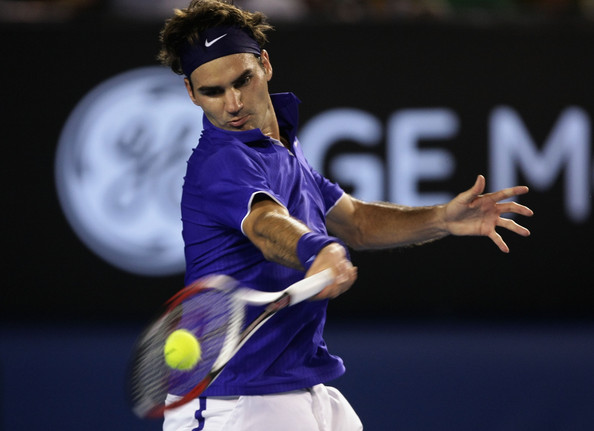 Note where Federer’s eyes are at contact point.
It looks bizarre to real tennis players because you can’t hit a ball you’re not looking at. And the whole reason she’s not looking at the ball IS BECAUSE THERE NEVER WAS A BALL. They just told the players to run and swing at nothing.
 Zendaya contact point.
This issue was so distracting, I couldn’t stop thinking about it while I was watching the film. I kept imagining calling Luca Guadagnino and explaining to him this mistake and how he should’ve done more test footage and had real tennis players watch it so they could’ve pointed it out and corrected it. But, eventually, once I accepted that I was never going to have this conversation, I moved on and just focused on the movie.
*****INSIDE NERDY TENNIS RANT ENDS*****
Okay, let’s chat about the actual film. I had the exact same experience with the movie as I did the screenplay. I didn’t like the first hour of the movie. For starters, it was extremely homoerotic for no other reason than the whims of the director. At times I thought I was at the STUDS theater on Santa Monica Boulevard in West Hollywood.
I wasn’t interested in the main match either. I didn’t understand why I should care about two old friends trying to win this tiny tennis tournament.
But what the movie does really well (and the script did the same thing) is it uses its flashbacks to give the viewer more information about the characters. And that information always relates back to the match being played in the present.
So, for example, in one flashback, we might find out that Patrick slept with Tashi at a tournament two years ago. Therefore, when we come back to the present-day match we see the points a little differently. There’s added subtext to the battle. Or (small spoiler), in another flashback, Tashi asks Patrick to throw the match. So when we jump to the game, we have THAT extra detail in our head. Is Patrick going to throw the match or isn’t he?

One of the things that annoys me so much about flashbacks in screenplays is that they take more than they give. They stop all story momentum to go backwards. You are TAKING from the reader whenever you do that. Sure, flashbacks often give us details about the characters but the details are never interesting enough to warrant stopping the main story for.
Challengers shows you how to do it right. Every flashback gives us RELEVANT information about the characters that CHANGES THE WAY we experience their finals match. That part of the script works so well that by the time we get to the end of the movie, I was on pins and needles. I had no idea who was going to win and I wanted to know.
This movie is so strange. It has so many quirks, so many times, early on, where it isn’t working. But somehow it manages to overcome all its weaknesses to put it together at the end. And I think its success is due to one single word. STAKES.
This movie is all about stakes. There are no stakes at the beginning. We don’t care about the match. But the more we learn about the characters, the more we learn that this match means EVERYTHING to each of these players. This script really reminded me about the power of beefing up the big events in your story by adding to the “all or nothing” recipe of that event. The more that’s riding on that battle, the more the reader cares. So for that reason, I think this movie’s worth checking out. As long as you’re prepared for churro-penis metaphors, you’re going to love it.
[ ] What the hell did I just watch?
[ ] wasn’t for me
[x] worth the price of admission
[ ] impressive
[ ] genius
What I learned: The importance of setups and payoffs in your climax. So, in big Hollywood movie climaxes, they keep the audience’s attention with spectacle. But in drama, you have to be more clever because you don’t have spectacle. The best way to make up for that is with a killer PAYOFF to a SETUP you used earlier in the movie. So here, in Challengers, there’s a scene when they’re teenagers and they’re playing and they’re joking around about if Patrick slept with Tashi or not. And Art says, “If you slept with her, put the ball right on the throat of your racket when you serve. If not, use your regular service motion.” And they build the suspense of Patrick prepping to serve. Finally, right before he serves, he puts the ball on the racket confirming that he slept with her and they both have a laugh about it. — Cut to 20 years later, the night before the finals match, and (big spoiler) Patrick has sex with Tashi. Then, the next day in the final match, in the third set, the score is tied. Patrick goes up to serve and… as Art is preparing to return… Patrick moves the ball to the throat of his racket (conveying that he just slept with Art’s wife). It’s a well done payoff that hits with the impact of Thor’s hammer. And that’s it. That’s all you need to do in your low-budget movie climax to compete with the big boys who have all that spectacle money.
There will be no Thursday article but MAKE SURE TO SUBMIT FOR LOGLINE SHOWDOWN! Entries are due Thursday by 10pm Pacific Time! I’ll post the five winning contestants at 12:01am Friday.
Genre: Thriller
Premise: A high-end courier has three hours to transport a liver from LAX to a Santa Barbara hospital to a dying seven-year-old girl with the rarest blood type on the planet while contending with the head of the Southland’s most dangerous crime syndicate, who needs the organ to survive.
About: I believe these are the writers who wrote “The Shave,” that thriller script from a previous Black List. The thing is, I know I reviewed that script but I can’t find the review. So I can’t be sure. If these are the same writers, then they’re good! Cause I thought that script, which was a thriller about a guy getting a shave (I know!) was fun.
Writers: Tommy White & Miles Hubley
Details: 105 pages
We are going OLD SCHOOL Scriptshadow today.
Say it with me now.
G.
S.
U.
Look, there are many ways to tell a story but when it comes to cinema, the way that best jostles the DNA cinema matrix is to give us a strong character, and give that character a GOAL, some HIGH STAKES, and some EXTREME URGENCY.
Disagree with me?
Well, you’re wrong. Wrong according to who? According to obviousness.
How GSU is this script? It doesn’t even start with FADE IN. It starts with LET’S GO. No, I’m serious!

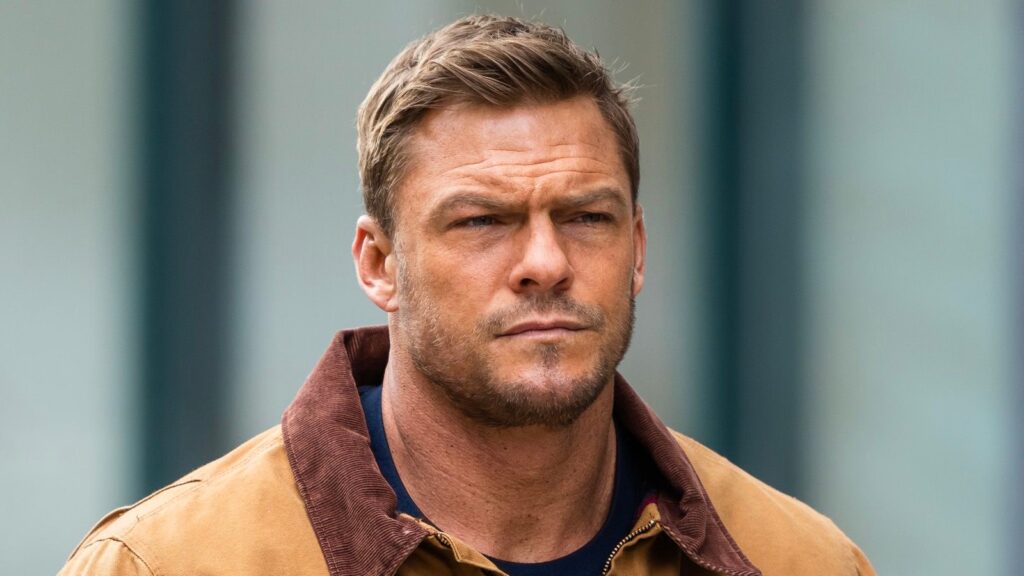
Hank Malone, 40, is that actor on Reacher. At least that’s who I’m imagining. He’s giant and huge and big and strong and aggressively agitated. Hank is kinda like a fixer. He works for suspect people and takes care of a lot of ‘criminal adjacent’ problems (politicians who need clean up after a big orgy, rich old men who need their exotic birds transferred to their angry ex-wives). But the guy doesn’t kill anyone. He’s your friendly neighborhood ex-SEAL fixer.
Hank then gets a call from his handler, Izzy, to grab a liver from LAX and deliver it to Santa Barbara, about 90 minutes away, where the weather is preventing any planes from landing. That liver needs to get to Santa Barbara within 2 hours or a little girl, Ellie, 7, will die. This is a rare liver blood enzyme type (or something) that only comes around once in a decade. So this is this girl’s only chance.
When Hank gets to the airport, he’s met by Ben, who’s carrying the liver. Ben chats him up as he walks along until Hank finally asks him, “Yo, are you going to give me the liver or not??” Ben says, “Oh, no. I *am* the delivery. I’m the medical courier.” Hank is delivering the deliverer. This is something Hank was not told so he’s already pissed.
But he’s going to get more pissed – don’t worry. Half an hour into their trip, Hank spots an SUV trailing them. Hank’s spidey sense starts tingling and he calls Izzy. What’s going on, dude? Why do I have company? Izzy starts sounding all suspicious and it’s then when we realize Izzy’s under the control of someone else. SOMEONE ELSE WHO NEEDS THAT LIVER. A bad bad criminal man named Damien Gallow.
Damien hops on the phone and says, “Yo, all you have to do right now is stop the car, let us have the liver, and we’re gone. Or…… I kill Izzy.” Hank does about five decades worth of introspection in 10 seconds and decides that he’d rather help a little girl live than whoever this asshole needs the liver for. So Damien delivers on his promise and kills Izzy.
It turns out that Damien’s mom is some psycho crime boss named Donna who ALSO needs that liver in order to live. So Damien’s not going to go quietly into the night just because Hank decided he had a heart. Oh no. Damien is going to get that liver at all costs – Hank and Ben just don’t know it yet.
Runner is an odd duck of a GSU showcase.
Its first 30 pages are spectacular. The way it sets up Hank and the rest of the characters – I got a strong sense of who everyone was. And then it’s written in this fast-paced kinetic style, yet it never skimps too much on detail, preventing it from ever feeling thin.
There’s this scene around page 35 where Hank and Ben are pulled over by these bad guys. The scene just sits there in its suspense, soaking the silence up, as we wait for the bad guys to move. What are they going to do? That was the peak of the screenplay for me. The story AND the writing were firing on all cylinders.
Where things started to sputter was with Ben. I have no idea what this character was doing in the movie! He’s just there to hang around and talk to Hank. It’s very frustrating because the deeper into the script I went, the more I kept waiting for SOMETHING to happen that would indicate why Ben needed to be here. When nothing arrived, I thought for sure Ben was going to be a late 3rd act bad-guy twist. But no. Nothing. He’s literally just there to hold the liver.
I think I understand what the writers were doing. They thought, “If we have Hank in the car alone, there’s no dialogue. So we have to have someone there for exposition and to introduce important plot beats.” But that’s not how screenwriting works. You can’t just put a character in your script ONLY to provide an expository function. He needs to be his own character. He needs to justify his own existence. He needs to have a storyline of his own.
That’s another area where I felt the script could’ve improved. There’s this early moment where Hank and Ben are driving and Hank’s talking to Izzy on the phone and Izzy’s acting confused about why Ben is there and I thought, “Hmm, wait, is Ben bad?” And then I thought, “How cool would it be if Ben is the wrong guy and he’s taking him in some completely opposite direction?” It felt like a situation was brewing where Hank couldn’t trust anyone and every 15 pages of the story was going to have a surprise reveal. But after that initial, “Bad guys are after us” moment, the script didn’t have any huge twists, which was a missed opportunity.
In the continued spirit of assessing dialogue this month, we get an example of Tip 137 from my dialogue book, which is, “Have one person who wants to talk and another who doesn’t.” That resistance creates conflict within the conversation and conflict is one of the major keys to writing good dialogue.


By the way, one last point here about this script because it relates to problems I’m seeing in a lot of the scripts I’ve been consulting on lately: If you have a character like Hank, who’s grumpy and tough and negative – traits that commonly lead to an unlikable character – do what these guys did at the start of their script.
They send Hank out a montage of his daily activities – which amounts to the errands he does daily in his job. One of them includes taking an exotic bird from one person to another. So you have this huge Jack Reacher thug walking around with a cage that has a rare bird inside. The ridiculousness of that image (and that job) makes him easy to cozy up to. We kinda like this guy now because of all the silliness he has to deal with every day.
It’s taking a page out of Rocky’s book when he has to go collect money from that guy and he ends up being nice to him. These are small things in screenwriting but they have a big impact. Character likability is REALLY IMPORTANT, especially when you’re dealing with an inherently cold or mean protagonist. So you have to figure out little ways for us to connect with them.
Overall, I thought this script was good, not great. But it will definitely finish Top 15 on my 2023 Black List re-rankings.
[ ] What the hell did I just read?
[ ] wasn’t for me
[x] worth the read
[ ] impressive
[ ] genius
What I learned: Backboard characters (characters whose only purpose is to give the main character someone to talk out loud to – like hitting a ball against a backboard), are inherently thin. When producers complain about one-dimensional characters, this is one of the varieties they’re talking about. Never create characters JUST for expositional purposes or just to give your hero someone to talk out loud to. Once you create a character (in this case, “Ben”), regardless of their function in the script, you must give them a purpose for being in the story and some sort of arc over the course of the script if you can.
Have you been struggling with your dialogue? I have over (that’s right, OVER) 250 dialogue tips in my new book, “The Greatest Dialogue Book Ever Written.” You can head over to Amazon and buy the book, right now!
Who says Civil War gets to be the only film about a modern day civil war?
Genre: Black Comedy
Premise: A recently heartbroken resident of LA hipster neighborhood, Los Feliz, is called into battle when the civil war that has been ravaging America finally reaches his doorstep.
About: Today’s writer, Sam Zvibelman, is best known for creating the highly niche yet beloved “Pen15.” I’d heard about the show, which follows two 7th graders trying to make it through those tough years of junior high. But I couldn’t for the life of me get past the bizarre decision to have full-grown adults play the 7th graders. I know that people who love this show claim that’s why it’s great but some creative choices are too weird for me and this was one of them. I’m open to people convincing me otherwise in the comments, though. So if you loved Pen15, give it your best shot!
Writer: Sam Zvibelman
Details: 96 pages
 Pat-attack for Neil?
Welcome to Civil War meets 1917 meets Edge of Tomorrow meets Juno.
Today’s script asks a question that I don’t think has ever been asked in movies before. A question so deep, so poignant, that the answer could rip apart the very fabric of space and time.
What would a hipster war look like?
There are a handful of ways to write a good script. But one of the best ways is to find a new spin on something old. War has been around forever. But nobody’s seen a war come to Los Feliz.
Los Feliz, by the way, is a giant hipster paradise in LA. You need 3 of the 5 to be able to enter the area: ripped jeans, tattoos, a handmade bag, those earrings that stretch your earlobes to quadruple their size, and a cynicism so deep that you can only pet puppy dogs ironically.
Los Feliz is in this weird section of the city, about 20 minutes east of West Hollywood, that feels like a dozen giants mashed up 50 blocks of space into 20. Half of it is crammed into the hills, and the streets up there are so twisty turny that nobody knew how to make it out of them until GPS arrived.
30-something Neil Mudd hasn’t gotten off his couch in weeks. This EVEN THOUGH a civil war began in the country three months ago. The thing is, the war was mainly relegated to the east coast and midwest. Up until this point, California’s been able to stay out of the fray.
That all changes when a plane crashes into a bunch of houses just down the street from Neil. The war is finally here. By the way, the whole reason Neil’s been moping around is that his ex-girlfriend, Emma, doesn’t want him back. Oh, and Emma just so happens to be the leader of the Resistance, aka the “Union.” So everywhere Neil goes, Emma’s face is all over the place.
Neil writes for a local Los Feliz paper but ever since the Emma breakup, he’s got writer’s block. His boss, Jacob, keeps begging him to come back and write. “People need to hear your voice right now!” “I’ve got writer’s block,” Neil proclaims. “During a war??”
As the war around Los Feliz heats up, Sean Penn and Jane Fonda, both major figures in the Union, come to Neil and ask him to head across enemy lines to deliver a critical message to the Union leader (aka, his ex-girlfriend). Neil resists at first, but when an abandoned horse named Guernica starts randomly hanging outside his place, he decides to join forces with the horsie and deliver that message!
Neil and Guernica unexpectedly become best friends as they endure their adventure across war-torn Los Feliz. Neil runs into a midget who fights for the other side (the Founders) and becomes temporary frenimies with him. He runs into his ex, who claims to know nothing about the mission he’s been sent on. And he also runs into his best friend from childhood, who’s become this script’s version of Civil War’s Jesse Plemons. As his journey winds down, Neil will have to figure out his most important battle – breaking free of his writer’s block. That way, he can write the words that just may save the Union, at least in Los Feliz.
Love and War and Guernica is kind of like Civil War in that it doesn’t really take a political side. It definitely demeans the evil conservative empire but it also makes fun of the fact that if war ever came to California, it would be up to a bunch of “liberal snowflakes” to defend the state and maybe that isn’t encouraging. In the end, I liked that it kept it all funny and light. It never gets mean-spirited. And that’s due to the writer’s voice, which is strong throughout.
This script reminded me of the value of adding HUMANITY to a screenplay. I’ve been reading so many paint-by-numbers thin-charactered scripts lately and you know EXACTLY where they’re going to go within the first ten pages. You see the entire movie in your head and don’t even need to read on.
But this script was different. There’s soul here. The writer is leaving his heart on the page. That’s worth something. And, as far as the plot goes, Neil achieves his goal (delivering the message to Emma) by page 65. So I had no idea where the script was going next. In fact, I didn’t know where it was going before that.
Sam Zvibleman keeps us entertained with a steady diet of offbeat humor. There’s this funny ongoing joke about how unsympathetic everyone is to Neil’s writer’s block. “How can you have writer’s block during a war?!” Neil is so devoid of any warring skills that he has to search YouTube for how to ride a horse. You’ve got Sean Penn showing up in the movie. On the one hand, I dislike celebrity cameos, but I think Sam is dead-on accurate with this one. Sean Penn would definitely be the face of the Union should a civil war come to Los Angeles.
In fairness, the script is messy. But it’s messy in the good way. Not the bad way. What do I mean by that? Most messiness comes from sloppiness and laziness when putting a plot together. The messiness here comes more from a lot of ideas. Our hero is trying to get over his ex. His ex is the leader of the resistance. We’ve got the writer’s block thing. There’s this “Paul Revere” theme running throughout the movie. There’s this relationship with this horse. We’re not sure if Sean Penn and Jane Fonda are real.
The reason it still works though is because each individual idea is fun. And Sam writes with this charming energy where you forgive all of the bumps and bruises. Also, the way he connects certain threads are quite clever. For example, our hero isn’t just delivering an important message a la 1917. He has to deliver it to HIS EX-GIRLFRIEND who he still pines for. That gives the objective extra stakes. Extra emotion.
Not to keep ripping on Rebel Moon Part 2 but when I said it was thin and that it reeked of a first draft, that’s what I meant by it. Zack Synder could never, in a million years, connect two plot threads like that in a clever way because he can’t be bothered. It’s not interesting to him to go deeper, to find those more exciting story avenues.
Continuing my month-long crusade of highlighting script dialogue (I encourage you to buy my new book on dialogue, the best dialogue book available in the world!), today’s script has a wonderful example of tips number 132 and 133, which cover dialogue “agitators.” Agitators are anything you place in a scene that complicate the conversation your characters are having. I talk about how a strategically chosen location can be a great agitator, which is exactly what Sam does here.
Our hero, Neil, finally gets to his ex-girlfriend, Emma. Note how this scene could’ve happened anywhere. They could’ve put it outside at a coffee shop, inside a bedroom, in the back of a car. But no. We use AN AGITATOR to give the scene more life. In this case, that agitator is A WAR GOING ON IN THE BACKGROUND.


Sam even took my tip to the next level. The agitator creates a layer of irony over the scene. Their talk is thick with subtext and “elephant-in-the-room” conflict (Tip #134!). That heaviness plays humorously as those heavy pauses are accompanied by people dramatically dying in the background.
This scene is a great representation of this writer and of his script. It’s more thoughtful than the average script on the Black List for sure and should’ve finished way higher than it did. In my annual end-of-the-year Black List re-ranking post, I predict this will finish in the top 10.
The only reason it doesn’t score that elusive “impressive” that I rarely award these days is that there were a few threads in the story that annoyed me. There’s way too much emphasis placed on Neil’s friends’ religious book. I had no idea why someone else’s book mattered in a script that had much more pressing goals to accomplish (winning a war, getting back your ex-girlfriend). Yet this book (that wasn’t even Neil’s!!) gets the third biggest storyline in the film. Come on.
To get that ‘impressive,’ I would’ve needed a simpler more streamlined narrative where we focus on the things that matter and nothing more. But it’s still way above most of these other scripts on the Black List. I tried to read that fruit one (where every woman’s name is a fruit) and it was borderline unintelligible. Yet somehow it got 13 more votes than this? Time for the Black List to rework its rating system or it will continue to be up to me to fix it at the end of every year. :)
[ ] What the hell did I just read?
[ ] wasn’t for me
[xx] worth the read
[ ] impressive
[ ] genius
What I learned: Know when to hold’em, know when to fold’em (subplots). Subplots are necessary in every script. But one of the worst things you can do is put too many in your script. Because what happens is every subplot TAKES TIME AWAY from the bigger plotlines. So when the reader is stuck reading some second-rate subplot that doesn’t have a huge effect on the story, they get restless. Or even angry. So choose those subplots carefully. Only include them if they’re REALLY DOING SOMETHING for your script. We could’ve gotten rid of Jacob’s religious book here and this script loses nothing. It actually gains something since we’d no longer have to endure it.
Have you been struggling with your dialogue? I have over (that’s right, OVER) 250 dialogue tips in my new book, “The Greatest Dialogue Book Ever Written.” You can head over to Amazon and buy the book, right now!