
Today’s script feels like the movie Tarantino was writing as his final film before abandoning it. That script was called “The Critic,” about a movie critic. I can imagine today’s antagonist being exactly who Tarantino envisioned for his own critic.
Genre: Dark Comedy/Thriller
Logline: A long-suffering sous chef seeks revenge after a chauvinistic food critic’s zero-star review destroys her debut restaurant – and everything is on the menu.
About: Today’s review has more storylines than the Bible. The script comes from amateur screenwriter Michael Wightman. It was originally entered in the Mega Showdown. It did not make the finals. So I recently put it up with four more scripts in the Second Wave Showdown, which gave a chance to screenplays that didn’t make the Mega Showdown cut. What I didn’t know until today is that Michael Wightman is the same writer who wrote “The Best and the Brightest,” another script that didn’t make the finals of a contest but would win some readers over and eventually go on to get sent all over Hollywood. Here’s that logline if you forgot it: “After the president of the United States is poisoned aboard Air Force One, a no-nonsense Secret Service agent reluctantly teams up with a hotshot White House staffer to investigate a flight of high-maintenance VIP suspects and solve the murder before the plane lands.” So now Michael is back writing the opposite of high concept. Let’s find out what that looks like.
Writer: Michael Wightman
Details: 107 pages

In a perfect world, I would only review screenplays from the writers of this site. The reason I don’t do that is because I need at least SOME positive reviews. And whenever I read an amateur script for the site, 95% of the time, it isn’t worth the read.
So, if you want more homegrown scripts reviewed, you gotta bring the heat. You have to be able to play with the big boys, write on par with the professionals. I liked today’s idea. I tend to always like dark scripts about chefs, mainly because that job is one of the most pressure-intensive in the world. We all saw what that looked like in the first two seasons of The Bear.
I’m hoping that this latest amateur script is good because it will allow me to review more amateur scripts on the site.
Chef Kat Winnick is at the culmination of years of hard work. She’s opened her own restaurant. And the first night is going well until 55-year-old New York Times food critic Jonathan Croxton shows up in disguise. He’ll be grading the food on the restaurant’s very first night.
It does not go well. Jonathan’s voice-over of his review plays over shots of the first night’s struggle. And as the review continues, we realize he’s eviscerating the place. After the scene ends, we cut to months later and the restaurant went out of business due to that review. Kat is devastated.
Kat must grovel to get a sous chef job at another restaurant and, by coincidence, Jonathan shows up there too. He doesn’t like the way Kat cooked his steak and so he gets her fired from that job as well. This dude is relentless!
But Jonathan’s life isn’t going perfectly either. The New York Times tells him that he’s close to being a fossil in this business, which doesn’t appreciate written reviews anymore. All food reviewing is online now, a place that Jonathan despises. They tell him he needs to step down.
Jonathan drifts through a series of encounters with the world – a book tour, a mentorship, and eventually partnering with a wealthy backer to open a restaurant.
He’s later poisoned by raw carrots at a random restaurant and presumes it was Kat. He gets the sense that he’s being watched wherever he goes in the city. He comes home to his apartment one night to find his precious bird has been let out of its cage with the apartment window open. And he even comes home another night to find that dinner has been made for him (his favorite, foie gras).
When Jonathan is finally invited to dinner by an elusive ‘pop-up’ chef he’s been desperate to try, he goes there expecting to experience the best culinary night of his life. And he experiences exactly that. Unfortunately, he experiences so much more.
Starcrossed is a strange script. But it’s strange in so many good ways!
There are a lot of unique choices here that help this script stand out. And I want to go over some of the more prominent ones because if there’s one big lesson to learn from today’s script, it’s to make creative choices that don’t always line up with what you’re “supposed to” do. The reason this is important is because the choices that are “wrong” are also the choices that make your script different from others. There’s still the challenge of getting those “wrong” choices to work. But, if you’re a good writer, and today’s writer is, you can make it work.
The first bold choice was to primarily follow Jonathan, the villain of the story, as opposed to Kat, our “good guy.” 99 out of 100 writers would’ve followed Kat. So, just by doing the opposite, the script already has a different feel to it.
The problem that I’ve discovered in the past when writers do this is that we so dislike the villain that we don’t enjoy being around them. But Michael has crafted a really interesting character in Jonathan. He is this pompous a-hole who believes he walks on water and yet he’s also being phased out of the business. So he’s having to face his career mortality head-on.
For many people, especially men, they tie their identity to their profession, especially if they’re successful. So, being told to step down from that profession forces the character to evaluate who they are (if they aren’t their job). And I loved that contrast here. Jonathan is an arrogant self-important prick who believes he’s god’s gift to food criticism who’s terrified that, in a year, he’ll be jobless.
What that contrast does is it creates a level of unpredictability when Jonathan interacts with others. In one scene he’s gleefully tearing down some new restaurant’s signature dish. And in the very next scene he’s watching from afar as the cool new kids at the paper talk about the hot new mysterious pop-up chef they’ve all experienced, a chef that Jonathan can’t seem to get an invitation to no matter how hard he tries.
I love that. I love when a character is unpredictable. It keeps me on edge. The most boring characters are the ones who you know exactly what they’re going to say every scene before they say it.
Another choice Michael made – this one plot-related – was something nobody else would’ve done because screenwriting books tell you not to. Yet it was incredibly effective. He gave us the big scene in the beginning where Jonathan’s review destroys Kat’s restaurant on its very first day.
But then, months later, Kat has to swallow her pride and become a sous chef at another restaurant. And it just so happens that Jonathan comes there for a meal. Kat cooks him a steak. He gets mad at the way the steak is cooked, complains to the restaurant owner and gets her fired.
Wow.
Imagine ruining someone’s career and then additionally ruining their sad Plan B career as well. Normally, screenwriting teachers would say this second ruining was unnecessary. The first one did the job. You’re just repeating a plot beat, which you’re never supposed to do. But this scene was a pivotal one in pulling me into the story. It turned Jonathan from an annoyance to a verified a-hole. An a-hole that I now wanted to see go down.
Once you can pull a reader in emotionally, such as the case here with me wanting to see Jonathan taken down, you’ve got them. That’s one of the most effective ways to connect with a reader.
Finally, I loved the Máximo mystery chef. Because Michael has a tough job for himself here. There isn’t a big narrative engine driving the story forward. Jonathan doesn’t technically have a goal. We’re essentially waiting for the next big strike by Kat. That’s a story engine in a way, but it’s not usually one that can drive an entire movie. You need more.
Michael recognized this and looked for other ways to complement the story engine. Máximo was the perfect way to do this. He’s this culinary mystery man who carefully curates his guest lists and his moving restaurant never pops up in the same place twice. Jonathan becomes obsessed with making the list. And that becomes a sort of minor story engine.
By story engine I just mean anything that creates page-turning momentum. If the reader wants to keep turning the pages to find out what happens, he’s doing so because the writer has created either one powerful, or a series of medium to small, story engines. So, I thought that was really clever on Michael’s end to recognize that issue and plug something in there to make sure we remained invested.
So, if this script is so good, you’re probably wondering why it didn’t do better in the contest. It didn’t even make the main Mega-Showdown. It only made the more recent Second Wave Showdown.
I know the answer to this.
The first scene was not good.
Michael makes a classic mistake which was to use that first scene (where Jonathan’s review of Kat’s restaurant plays over her opening night) as information.
Don’t get me wrong. The scene does a good job setting everything up. But that’s only half of what you’re supposed to do with your opening scene. The other half – and arguably the more important half – is that you have to entertain us.
If I’m your average reader, I am not entertained by this opening scene. I’m more trying to keep up. Trying to keep tabs on who’s who. I’m trying to figure out what this voice-over is about, which wasn’t clear at first. It feels like work. And that’s just a script killer right there. If your opening scene feels EVEN A TEENSY BIT like work to the reader, they’re probably not going to continue reading. And that’s what I suspect happened with the site members who gave this a shot.
Because for those first ten to fifteen pages, I was already thinking about the negative things I was going to talk about in the review. And then everything started to come together and the script got significantly better as it went on.
This is apropos since we have the big First Scene Showdown for the Blood & Ink participants coming up. So those writers need to keep in mind that you don’t get points for your well-written setup. Setup should be a given. It’s the entertainment part that matters most.
This script was excellent overall, though. It kept getting better. And it has a really fun ending.
Script link: Starcrossed
[ ] What the hell did I just read?
[ ] wasn’t for me
[ ] worth the read
[x] impressive
[ ] genius
What I learned: I don’t know what kind of process Michael went through where he came to the conclusion to follow Jonathan over Kat. But it was the right decision. And I think what aspiring writers need to take away from that choice is that you should always consider following the best character that you’ve written, even if doing so is nontraditional. Jonathan is simply a more interesting character than Kat. If we had followed Kat in her pursuit to take down Jonathan, this script isn’t nearly as interesting. So if a supporting character that you’ve written is unexpectedly awesome, at least ask the question to yourself, “What does this script look like if I make them the main character?”

I’m swamped today but didn’t want to leave you hanging. And there’s actually Scriptshadow-relevant movie news since yours truly may possibly be – nothing has been confirmed yet but there are multiple witnesses testifying as such – obsessed with Star Wars.
Quick side story: Getting my rackets strung today, I ask the stringer her name and she says ANAKIN. I kid you not! Anakin is stringing my rackets! There’s a 30% chance my rackets will turn into lightsabers the next time I play.
Does that make me… a tennis jedi???
Anyway, The Mandalorian and Grogu trailer dropped today and it’s not trending. Not even a little bit. Which is frustrating cause there’s a lot of littleness going on in this trailer. While I know we’ve beaten the Lucasfilm dead bantha 10,000 times already, neither Celine’s nor my heart will let this franchise die. Near. Far. Wherever we are. Our Star Wars hearts WILL go on.
I said in my Rise of Skywalker review that I wanted Babu Frik to have his own movie. He basically gets that here! He’s the real co-star, seemingly in every adventure with Baby Yoda. And I have absolutely no issues with that. Babu Frik’s brother is in this movie and his name is Keeto. KEETO! Without a doubt, the most adorable name ever invented. Keeto is my new Jesus. This movie’s going to be hilarious.
But the big criticism against Mandalorian and Grogu is that this feels like a slightly bigger episode of The Mandalorian. Why are people saying that? You guys should know! You’re screenwriters. You follow my site. I talk about it constantly. Think hard! Why doesn’t this feel like a big movie?
The answer? No stakes. Movie stakes need to be high. Movies are chronically larger-than-life scenarios. And in a Star Wars movie, the demand for high stakes is even bigger. Characters just hopping from planet to planet getting into shenanigans won’t cut it for a movie.
To be fair, Jon Favreau hasn’t given us the full story yet. I’m hoping when he does, it will have very high stakes.
But here’s what worries me: Mandalorian and Grogu have yet another use of AT-AT Walkers! And not just use—they’re the trailer’s climax. This reiterates Star Wars’ primary problem: they’re not being inventive anymore. They keep relying on old crusty ideas. How about creating some cool NEW vehicles every now and then? Just a thought.
Let’s end with a screenwriting tip. Figure out what your script does best and LEAN INTO THAT. Favreau knows people love Baby Yoda. He’s the only thing that’s worked in Star Wars in a decade. So what does this trailer do? It leans heavily into Baby Yoda.
You need to do the same in your script. If you have a character who’s working amazingly, feature them as much as possible. Maybe Ken had a smaller role in Barbie’s original draft. But Greta Gerwig realized he was working, expanded his role, and he became the best thing about the movie. It’s HARD to come up with anything that works in a story. Most things are boring. So when you strike gold, mine as much of that gold as you can!
You are going to be SHOCKED at the movie I endorse at the end of this post
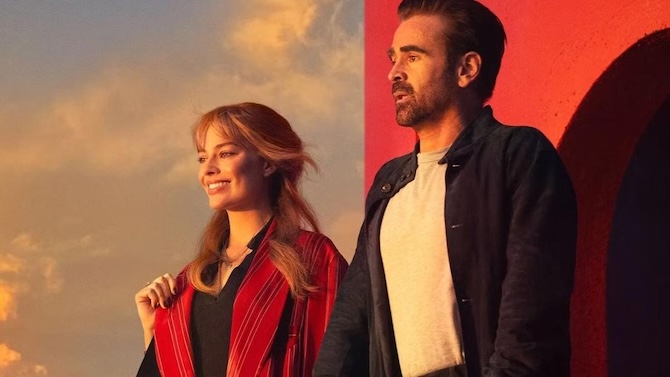
A lot of people in Hollywood are asking the question: how did A Big Bold Beautiful Journey bomb? It’s the follow-up film for THE STAR OF BARBIE, one of the biggest hits in movie history, a movie that made $635 million at the domestic box office. Yet Big Bold couldn’t even squeak out $4 million. What is going on here? Make it make sense!
This is actually a multi-faceted answer, so I want you to pay close attention. Because I really wanted this movie to succeed. It’s unique. I like the genre. I think this director is a visionary. And when movies like A Big Bold Beautiful Journey do well, it opens the doors for Hollywood to take more risks.
This is a big reason Hollywood is so reluctant to give up the superhero genre despite its deteriorating quality and increasingly lackluster box office. It’s because on the other side of that is darkness, is uncertainty, and A Big Bold Beautiful Journey shows you what can happen with that risk. It can go south quickly.
But there’s a lot going on here, so let’s get into it. The first reason this didn’t do well is obvious. Margot Robbie has been gone for two years since Barbie took over the world. All that buzz she created got swallowed up into a black hole of stagnation. If this would’ve come out six months after Barbie, it would’ve made at least $20 million.
Big Bold’s failure is also a reminder that concept matters. It used to be that it didn’t matter what the concept was for movie stars. Arnold Schwarzenegger could literally appear in the dumbest movie idea ever – Kindergarten Cop – and people would still show up because it was Arnold Schwarzenegger. But these days, the concept’s gotta be good. Actually, before the concept can even be good, it’s gotta be clear. What is the actual movie? I’m not sure people knew what this movie was about.
That brings us to the screenplay, what we here at Scriptshadow are experts at assessing. And I read this one back in 2021. To me, it felt like, if not a writer’s first screenplay, their second or third screenplay. Let me explain.
Two of the things that a lot of beginner screenwriters write are quirky coming-of-age-ish romantic stories and magical realism. Both genres are like threading a needle in the dark – there’s this incredibly narrow target you have to hit to make them work. Magical realism, in particular, is tough because it’s never entirely clear what the rules are. How magical are things allowed to get? And when the writer starts deciding those rules on the fly, the reader/viewer starts losing trust in the story quickly.
That’s what I remember from reading this. The writer was playing fast and loose with the rules of his world. It’s 20 years ago and we’re in high school and the adult version of the character is in the play instead of the high school aged version of the character and everyone just goes with it while we’re sitting there thinking, WTF.
When you look at something like A Christmas Carol, that story did a great job setting up its rules. It laid everything out for us. Ghosts of the past, present, and future are coming. Once we were in these different times, we could only watch, not participate. That’s how you do magical realism. You can’t just roll with it or things start to feel very loosey-goosey. We don’t understand what’s happening.
And I would argue that when you watch the trailer for this movie, that’s what you see. You sort of understand what you’re looking at. But you don’t totally get it. And that’s a big deal when you’re trying to sell a movie. It needs to make immediate sense to the potential audience member what the movie’s about!
Finally, you’ve got the cast. And this is probably the reason that trumps all of these reasons. There was no chemistry here. You can see the actors doing their best to force the chemistry. But that’s exactly when you know there is no chemistry. Chemistry between actors either happens or it doesn’t. And you saw that here. And if the chemistry doesn’t work in a romantic movie, you’re done.
Which is too bad. Because I love Kogonada as a director and I know exactly why he picked this movie to make. His talent lies in his visual aesthetic. He read this script and realized how much he could do in that area. And there’s also this underlying sadness to the story, which I know he also loves. But if you’ve got a quirky script that feels try-hard and you’ve got two actors whose chemistry feels try-hard, you can’t salvage that.
The news wasn’t all bad for Black List scripts over the weekend. “Him,” with its odd pairing of sports and horror, made $13.5 million to finish in second place behind Demon Squabble: Zanzibar’s Revenge. But all is not touchdowns and playoff appearances for this film, which is getting murdered by critics and audiences alike. The word of mouth seems to be so bad that, after some nice Thursday preview numbers, they were thinking the movie could make $18 million. But word got out that it was worse than a Chicago Bears draft night and receipts plummeted quickly.
I reviewed the script when it was called Goat and I saw these issues in big shiny flashing letters back then. In some ways, the script is similar to A Big Bold Beautiful Journey in that it contains magical realism as well, just a more “horror” version of it.

But what I remember most about the script is that it was sloppy. And even though this director is the real deal – he added a ton of style to the finished product and made this movie look interesting – you can’t overcome a) lack of effort in writing, and b) sloppiness in writing. And “Goat” had both. And all of the complaints about the movie are in line with these issues. You can see it in the trailer as well. In the same breath as you say, “That looks cool,” you say, “But it also looks like a total mess.”
Which brings me to our final movie critique of the day. And folks, it doesn’t happen often. But once every 20 years or so, I’m wrong. I am here to admit that I was wrong about a film. I’ve been hard on this film ever since it was announced, ever since it came out with its first trailer, ever since the publicity tour leading up to the movie. I’ve been extremely hard on this writer-director. I’ve given one of his scripts a “what the hell did I just read.”
But look, we all get it wrong every once in a while. And I got this one wrong. How wrong? I can confidently say that this movie will end up in my Top 10 of the year.
The film?
Eddington.
That’s right. I said it. Ari Aster’s movie. I don’t know if I’d go so far as to say it’s genius. But it has genius-ness within it.
I originally watched this movie last week but, because I had already read the script, I wasn’t giving it my full attention. As the week progressed, I noticed that I kept thinking about the film and, once the weekend rolled around, I decided to watch it again. And I’m very glad that I did because this is a movie that deserves a lot more attention than it’s gotten.
For starters, I thought Joaquin Phoenix was spectacular. He plays a very difficult character, this sort of simpleton spineless sheriff who decides to run for mayor despite being way in over his head. And he’s captivating to watch. Because, despite him being a total moron, he’s the only person in town who is being rational about Covid (which plays a big part in the story). Everyone else is yelling at him and recording him in the supermarket when he won’t wear a mask.
This is probably one of the reasons this movie didn’t get pushed more by the industry. It definitely puts a mirror up to the absurdity with which the industry was acting at the time. But I would argue that one of the great things about this movie is that it doesn’t take a side. It expertly maneuvers right down the middle politically, always choosing dramatic impact over message. For example (spoiler), a big plot point at the end is that Joaquin’s character is compromised because he catches Covid due to the fact that he walked around without a mask the whole movie.
The movie does a great job capturing the chaos of that time. And maybe people don’t want to revisit that. I get it. But from a screenwriting perspective, it’s good stuff. He keeps the drama taut throughout. And he DEFINITELY improved the draft that I reviewed on the site.
This is an incredibly complex story. There are lots of moving parts, both on the character end and the plot end. When you have that much complexity in a script, you have to rewrite the shit out of it. I would argue that scripts like that have no end point. You literally can ALWAYS improve them because you can always better set something up or better connect Plot Thread #13 with Plot Thread #6. Which I saw Aster do. The draft he shot was a lot cleaner and more cohesive than the earlier draft.
With that said, Aster made a critical screenwriting mistake that all of us make and it’s something that’s very hard to avoid as writers. But conquering it ALWAYS makes the script better. And I’ll explain by going back to another Joaquin Phoenix movie, this one his first official leading role, where he played the older brother in M. Night Shyamalan’s “Signs.”
In that movie, which is about a family privately dealing with an alien visitation, M. Night got some feedback about his script from a producer friend. And the producer friend said, “You know, the script is great. And I thought the one scene with the family trying to get the alien radio signal from their transistor radio was interesting. Too bad it will never make the movie.”
And M. Night said, “What are you talking about?” “Oh,” the friend said, as if obvious. “You know. It’s one of those scenes that’s fun to write but never works in the movie. It’s the first scene the studio always has you cut.” If you haven’t seen the movie, it’s this scene where this rural family is trying to get a signal from the aliens and the baby monitor is giving too much noise so they have to reach the monitor up higher into the sky to get the signal but it’s still not getting it so they get on top of their car. But it’s still not getting it. So they all start climbing on top of each other and creating this small little human hill on top of the car in order to get the radio up as high as possible until they finally get the signal.
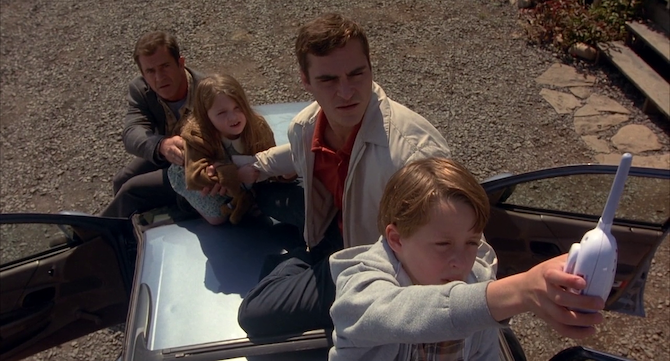
M. Night was miffed by this critique and because he had carte blanche with making movies at the time, he put the scene in his movie anyway. And it was… not good. It was exactly what the friend said. It was forced, it was try-hard. It didn’t make real-world sense. And the most important detail: It could’ve been axed and nothing would’ve been lost from the movie. In fact, the movie would’ve had a much faster pace without it.
As writers, we fall in love with certain scenes and plotlines, usually early on in the screenplay’s life. And then when the script evolves into something slightly different, we hold onto those initial scenes and plotlines, even though they don’t really make sense in the story anymore.
The Emma Stone Austin Butler weird wife cult leader plotline in Eddington is one of the worst plotlines I’ve ever encountered in a movie. It didn’t connect with anything at all. It didn’t make sense. Why is this nationally known young handsome charismatic cult leader who can literally have any woman in the world, falling in love with the weirdo half-comatose 40 year old crazy lady in the middle of nowhere town Eddington, New Mexico???? There’s literally nothing about that that makes sense.

It’s your job as a writer to kill those storylines when they’re not working. Because you know they’re not working. You know it! Every time you read your script, you feel the awkwardness and the clumsiness of those sections. But you keep convincing yourself that you’ll figure it out in the rewrites. Some things can’t be figured out! You gotta kill your babies sometimes.
Had Aster been honest with himself about this and cut this storyline, he could’ve cut 20 minutes out of this movie, which would’ve massively improved the pacing and the running time, which was too long. And now, every plotline we would’ve cut to, we would’ve been interested in, as opposed to before when, sometimes, we had to endure this boring plotline.
And the thing is, he still could’ve salvaged it if he’d ditched the whole cult stuff. If it were just about his wife potentially being sexually assaulted by the mayor when she was younger, that could’ve worked. But Aster reached too far and got lost in a plotline that didn’t work.
With that said, I’ve found that the best movies often have some messiness to them. They’re imperfect. So, maybe this is just the price you pay to get a movie that’s so inventive and thoughtful and different and unexpected. It’s not going to be for everyone. But I’m more than happy to admit that I was wrong about this and that Eddington may low-key be the best movie of the year.
I have another screenplay consultation deal available! $150 off full price. If you want it, e-mail me at carsonreeves1@gmail.com
First screenwriter to e-mail me gets $150 off 4 pages of notes for their screenplay! – carsonreeves1@gmail.com
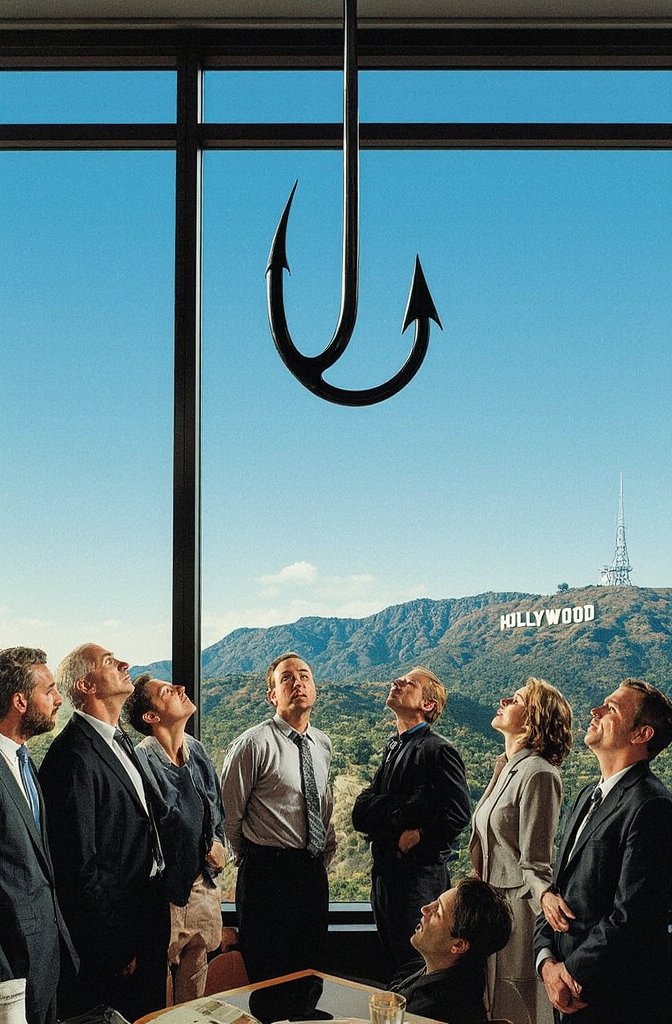 We gotta hook that reader!
Guessssss whaaaaaatttttt?
Next weekend is a FIRST SCENE SHOWDOWN for the Blood & Ink participants. In fact, let’s make it official. Starting this minute, you can send me your opening scenes for the Showdown.
What: Blood & Ink First Scene Showdown
Rules: You can only enter if you are a Blood & Ink participant
Length: Scenes can be as long as you want them to be
What I need: Script Title, Genre, Logline, a PDF of your first scene
Deadline: 9 pm Pacific Time, Thursday, September 25th
Send to: carsonreeves3@gmail.com
I’ll review the winning scene Monday and dig into why it works.
Now, if I’m being honest, I’m both excited and nervous about this experiment. In my experience reading thousands of screenplays, the first scene says a ton about what will follow. Which is why first scenes are so important.
However, I will say this: Coming up with a great first scene is not a requirement to write a great script. I’ve read plenty of good scripts that didn’t blow me out of the water with their first scene. With that said, I can count on one hand the number of good scripts that I’ve read after reading a weak first scene. Also, an awesome first scene is one of the better indicators that you’re about to read something good. So, it’s important.
Another thing that’s important to remember here because I’m sure it’s going to come up in the comments: The first scenes you see in movies are not a good indicator of the first scenes you should be writing in your script.
A lot of things can be going on that result in an uneventful first scene in a movie. For one, if a studio is developing a movie in-house, they’re not worried about hooking a reader. They’re just trying to make the best movie possible. And, generally speaking, if you’ve gone to the theater or rented a movie, you’re probably not turning the movie off after the first scene. So they don’t worry about that as much.
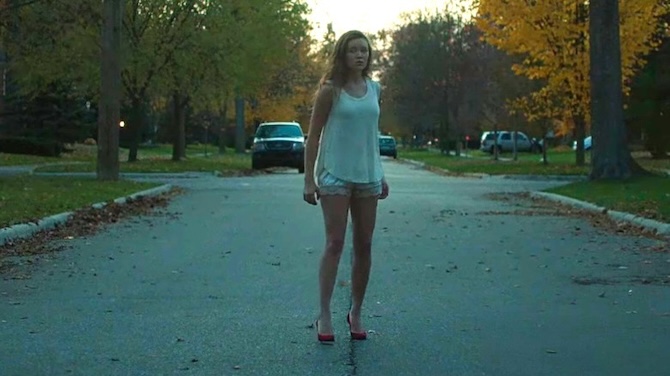
This is true for writer-directors as well. They don’t need to win anyone over with their script. They know the movie is getting made. So, they take the same approach as studios. They care about making the best movie possible, not hooking a reader with their first scene THEN making the best movie possible. However, the smart ones will write great first scenes into their script, such as Tarantino with Inglourious Basterds and David Robert Mitchell with his creepy “girl being followed by no one” opener in It Follows.
Another variable that screws up movie openings is title card sequences. You don’t have to write those into a script but you do need to add them when you make the movie so there’s something to put the title credits over. I will never forget how terribly they ruined one of the best scripts ever, in Source Code, which opened with this shocking scenario of a man waking up in another man’s body on a train, with a bomb about to blow up within minutes. And because they needed a title card sequence, they instead started with these wide sweeping endless shots of a train shooting along tracks in the countryside. It was the exact opposite tone of what you wanted that movie to start like.
So, don’t use ho-hum opening scenes in movies as an excuse for why it’s okay to open with a ho-hum scene in your script. Trust me, the reader is not thinking that way. All they’re thinking is, “Am I entertained?” And if the answer’s no, they’re already considering giving up on your script.
Weak first scenes have become one of the most common things I call out in screenplay consultations. Let’s get into why.
CHOOSING THE SCENE ITSELF
The number one note I give about opening scenes is: “Why did you choose to start with this scene?” You can literally write anything – ANYTHING – for your opening scene. Yet I read so many opening scenes that are beyond tame, that are beyond bland. Nothing interesting happens in them. And I’m just baffled by it. This is what you chose to open your script with?? Knowing that nobody in this town has any time. Knowing that nobody likes to read. Knowing that every person who opens a script from an unknown screenwriter expects it to be terrible. And this is the scene you’re going with? I get so frustrated because I don’t think writers understand the level of urgency they’re facing with readers.
Which leads me to my solution to this problem: Win them over right away. That’s how you want to treat your opening scene. There should almost be this desperation to write the single best scene ever to hook the reader. You may think that’s overkill. I promise you it isn’t. It is so so soooooo very hard to write anything that someone likes. So, if you’re not trying your best from the jump, you don’t have a shot. Think VERY hard about your first scene and what it’s going to be. Do not casually come up with something because I guarantee that the reader is going to feel that casualness and they’re going to have one foot out the door. From there, if you give them one more reason to stop reading, they will. You want to create the opposite effect with your opening scene. You want it to be so good that it automatically buys 30 more pages from the reader.
SETUP-ITIS
One of the biggest roadblocks in writing a great first scene is the fact that you have to deal with setup. In any screenplay, you have to set up your characters and your plot ASAP. And so what ends up happening is that writers go into that first scene with a huge handicap. They’re not just thinking about writing a great scene. They’re thinking about “How do I write a great first scene and set up my characters and plot along the way?” It’s like trying to write with one hand tied behind your back.
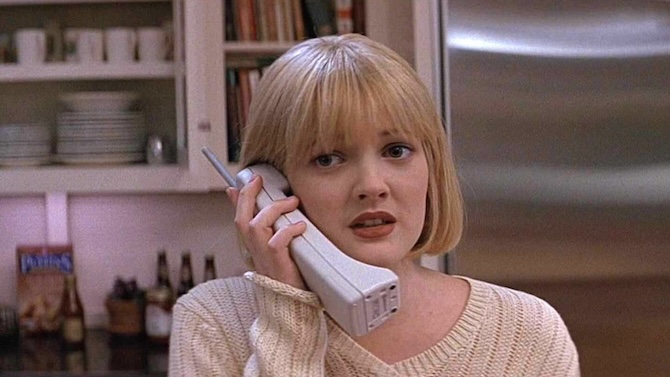
Ideally, you want as much freedom as possible when writing that first scene so that all the entertaining options are on the table. You have every tool available to you to write something great. To prove how valuable this is, look at one of the greatest horror first scenes ever, which occurred in Kevin Williamson’s spec script for Scream. One of the reasons that scene was so great was because Williamson didn’t have to worry about setting up any of his characters, as the scene only consisted of characters that weren’t in the movie (save for the villain, of course). You can see how that freedom allows you to just focus on entertaining the reader.
I recently was dealing with this in a consultation. The writer had a particularly hefty set of things he needed to set up in his story in the first act. And so every time we would rewrite the scene, we’d run up against the same problem. The scene couldn’t breathe because we were always so focused on setting up this character and establishing this plot point that was going to pay off in the third act, etc.
So I finally said to the writer, “Here’s what we’re going to do. You are going to write the most entertaining scene you can without worrying about setting a single character or plot point up.” And he went back and he ended up writing a scene that was 50 times better than anything he’d written before. And then we just went back through that scene and found little areas where we could set up the things he needed to set up. So, if you’re having that issue that this writer had, that may be a good solution to it.
BEWARE THE OBVIOUS OPENING SCENE
You have to be aware of this specific issue because it’s the one issue where you FEEL like you’re doing the right thing but you’re actually writing a weak scene. This occurs when you write the opening scene that 99 out of 100 writers would’ve written as well. For example, since Wednesday’s review is still fresh in my mind, let’s say that you’re writing a movie about a haunted house and your opening scene is a kid sees something scary in his closet. Or if you’re writing a zombie outbreak movie and the first scene is us trying to drive home during a zombie outbreak.
Technically, something exciting is happening during the scene. There’s tension. It’s scary. But it’s so obvious that we (the reader) already feel like we’re ahead of you (the writer). I mean, we already know what’s going to happen in the scene. That alone means you’re not being creative enough.
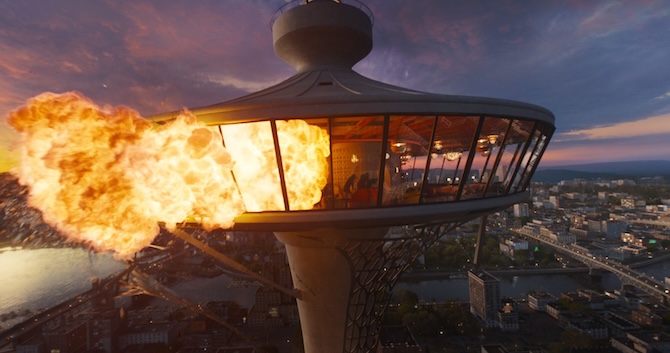
Instead, you should be digging deeper and looking for a scene that still stays true to your premise, of course, but that isn’t obvious enough that every writer would’ve thought of it. There are so many death scenes you could choose to feature in a Final Destination movie. One that occurs on a “Space Needle” restaurant is the last one I would’ve come up with. Which is a big reason why the opening scene in Final Destination: Bloodlines remains my favorite movie scene of the year.
SO WHAT SHOULD YOU ACTUALLY WRITE?
The four best options for your opening scene are: a) a mini-movie, b) drop us into an already occurring situation, c) something with heavy conflict, or d) something that plays, in an interesting way, with the specific conceit of your concept.
A mini-movie is something that builds like a movie. It has a setup. It has the conflict, and then it has the resolution. A great example would be the opening to Scream. Bonus points if the story focuses on suspense, which the Scream scene obviously does. A strange caller keeps calling the babysitter, building up the suspense of what he’s going to do.
Drop us into something exciting that’s going on. It’s hard not to be invested in an emerging situation that has some stakes attached to it. The Dark Knight, for example. We’re dropped into a bank robbery scene just as it’s about to happen. Again, you’re looking for scenes that it would be hard for a reader to stop reading. I don’t know why you would stop reading if you were dropped into the beginning of a bank robbery. It’d have to be one boring ass bank robbery.
Conflict should always be your safety net if you can’t think of something that creative or surprising for your first scene. Conflict is the lifeblood of drama so as long as you come up with a compelling scenario that’s packed with conflict, it should hook the reader. And the great thing about conflict is that the scene doesn’t even need to match the genre. It can just be two characters at odds about something. This is great if you have a horror script but the variables don’t line up for you to start your script with a scary scene. You can pull out a good conflict-filled scene and hook a reader easily if it’s well written.
For example, if your horror movie is about a single mother and her child being haunted, maybe the opening scene is the father coming home late from work one night and the wife is suspicious that he was out with another woman. If you write that scene well, and it’s not on-the-nose, and you play it so that we’re not entirely sure if he was out with another woman or not, that scene can easily hook a reader. That blowup then leads to him leaving. And we cut to several months later with the woman and son moving into an old house temporarily. And the haunting can begin.
Finally, you have “concept-specific” openings. You should be looking for these if you have a unique concept. It Follows is a great example. It’s a movie about these entities, who no one else can see but the target, who must constantly try and avoid being caught. The opening scene plays into this unique setup perfectly. We watch as a woman inexplicably runs out of her house at dawn continuing to look behind as if someone’s chasing her, despite the fact that there’s no one there. That’s the kind of opening that creates curiosity and intrigue. I’d definitely keep reading after I read that opening scene.
Now, I’m only trying to guide you here. If you feel lost, I’m hoping this post will give you some ideas. But the best opening scenes to me are scenes that I wouldn’t have been able to think of myself. That’s what makes me truly feel like I’m reading somebody who has a special idea. So, don’t let these rules constrain you in any way. You don’t have to abide by them. If you have a strong feeling that you’ve got a good opening scene and it doesn’t match up with my advice today, by all means write it. Cause sometimes it is just about intuition.
I’m very excited to see what you guys come up with. So, start sending me those scenes! And if you’re really struggling, you can always order a scene consult from me. If the scene is 5 pages or less, they’re 100 bucks for 1 page of notes. Every additional page is 10 bucks more. carsonreeves1@gmail.com (anybody can get this consult. You don’t have to be a Blood & Ink participant).
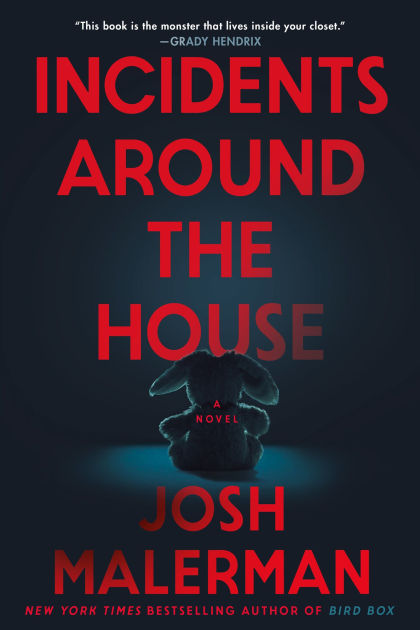
Can the writer of Bird Box get lightning to strike twice?
Genre: Horror
Premise: A young girl gets secret visits from a woman in her closet who calls herself “Other Mommy,” until the girl’s mother finds out and looks for ways to terminate the ghost.
About: Horror titans Blumhouse and Atomic Monster seem to be retooling this after their recent bomb of the movie where they oddly thought it was a good idea to turn female Chucky into a superhero. Incidents Around The House is most certainly a return to form for Jason Blum’s production company. It is simple, it is contained, it focuses on a freaky ass monster. The film will star Jessica Chastain as the mother. The screenplay adaptation will be written by Nathan Elston, who was one of the big staff writers on Succession. The book’s author, Josh Malerman, wrote the book, Bird Box, which is one of Netflix’s most watched films ever.
Writer: Josh Malerman
Details: about 370 pages
Before we get things rolling today, let’s ask the question a lot of you are dying to know. Would Incidents Around The House have made it into the Blood & Ink Showdown based on its logline alone?
The answer is…. no.
It would not.
It’s not a juicy enough concept.
Before everyone freaks out and says what’s the point of the Blood & Ink Showdown if you wouldn’t even accept a script that would’ve turned into a giant Hollywood movie, these questions are always more complicated than they first appear to be.
The reason this is getting made has nothing to do with its concept. It’s getting made because it comes from the author who created a giant hit movie for Netflix, in Birdbox. There is no time in your career when your ideas are less judged than when you’ve come out with a hit movie. You could write a movie about growing arugula in the Congo and the studios would all bid millions for it.
The Blood & Ink Showdown is attempting to capture Hollywood’s interest from nothing. We don’t have a hit movie we can rest on. So we have to win Hollywood over with a flashy strong concept.
Now, the bigger question, as it applies to today is, despite the small concept, is the story any good?
A young girl named Bela (I’m assuming she’s around 9 or 10) is being visited at night by a woman from her closet who has asked Bela to call her “Other Mommy.” This story is told through Bela’s point of view. And so every experience that occurs is seen through her eyes and ears.
When Other Mommy isn’t pestering her, Bela is fighting off concerns about her parents’ (Ursula and Russ) marriage. Ursula is staying out much later each night. She always comes home smelling like booze. And, as Bela puts it, her parents don’t “hold hands as much anymore.”
While watching her parents’ marriage deteriorate in real time, Other Mommy is becoming more aggressive. She doesn’t just want to hang out with Bela anymore. She wants permission to “go into Bela’s heart.” Bela doesn’t know what that means but she gets the sense that it’s bad and begins to pull away from Other Mommy.
One night, when Other Mommy tricks Bela into thinking she’s her real mom, she tells Bela about her deepest darkest secrets, namely that she lives her life for lust, that she’s slept with more men than she can count, that she doesn’t love Russ and is much more interested in other men. As this is happening, the bedroom light switches on and Bela’s real mom is standing in the doorway. She sees Other Mommy (who was impersonating her) and has a full-on meltdown.
Ursula quickly grabs Bela and they leave the house to stay with friends. Soon, Russ is with them, and the three are trying to figure out what to do about this. When they realize that Other Mommy can follow them wherever they go, and that Other Mommy plans to use Bela’s body to reincarnate herself, they gear up to take the monster on. If only they knew what they were up against.
There’s no doubt that Incidents nails its creepy-factor. The way Other Mommy slithers out of the closet each night to talk with Bella. The way her eyes are sometimes at the bottom or sides of her face. The way she manipulates her. The uncomfortable mystery behind her ongoing question: “Can I come into your heart?”
And I thought it was a genius move to tell the story through the point of view of a child. One of the harder things to do in any genre is to avoid being on-the-nose. But when you tell a story through the eyes of a child, their innocence gives you permission to be on-the-nose.
For example, Ursula and Russ’s marriage is deteriorating. In normal third-person perspective writing, you would have them get into a lot of fights, it would all be on the nose and, as a result, it would feel clumsy.
But here, with Bela observing, she can say the obvious things and they don’t feel obvious because they’re coming from the innocence of a child who is experiencing all of this for the first time. “Mommy and daddy don’t hold hands as much as they used to.” There are a lot of observations like that which all feel natural behind the perceptive eyes of Bela.
But Incidents Around The House suffers from too simplistic of a narrative. Not only is the antagonist simplistic but the whole setup is simplistic. The entire first half of the story, save for two scenes I think, takes place in their small little house.
And there’s not even a good reason for it. It’s established that Other Mommy can follow them anywhere. So it’s not like we need to stay at the house to get the scares.
I’m okay with narratives that keep things contained WHEN IT’S ORGANIC TO THE STORY. For example, in Alien, there’s nowhere to go. They’re in the middle of space. So they have to stay on this ship. But to spend 150 pages in a house that we don’t have to be in? Get us out more! Create some variety in the story. Variety isn’t just the spice of life. It’s the spice of storytelling.
With that said, you don’t want to focus *only* on the scares. Too many scares delivered too frequently will numb your reader. Effective horror builds towards each scare over several scenes (typically 3-6), delivers the payoff, then begins building toward the next one.
During these buildup phases, you develop character storylines that emotionally invest your audience. Incidents Around The House executed this well. I found myself genuinely curious about this deteriorating marriage. What was Ursula hiding? How devastating would her secrets prove to be? What would happen when Russ inevitably discovered the truth? The script clearly established Bela’s desperation to keep her parents together, which raised the emotional stakes considerably. All of this character work was genuinely compelling.
The problem arose in how these human elements connected—or failed to connect—with Other Mommy. Rather than weaving together cleverly, the two narrative threads often felt at odds. At times, the script seemed to position Other Mommy as some kind of shadow-version of Ursula, suggesting a psychological doubling. But pages later, Other Mommy would be presented as an entirely separate entity from the void, desperate to return to the living world.
This represents a common writing pitfall. The author develops the story’s connections to about 75% completion—just enough for readers to glimpse how elements might relate—but stops short of fully realizing those connections. That missing 25% of clarity leaves the entire narrative feeling frustratingly murky.
The end here, which I won’t spoil, is beyond murky. I have no idea what I’m supposed to feel and that’s the result of poor writing.
Which is why I can’t recommend Incidents Around The House. But, if you need a cheap quick scary read, you could do worse.
[ ] What the hell did I just read?
[x] wasn’t for me
[ ] worth the read
[ ] impressive
[ ] genius
What I learned: Incidents Around The House and Bird Box are the perfect two concepts to compare in regards to The Blood & Ink Showdown. One is very high concept and would’ve been one of the top entries in the competition. The other idea just isn’t big or unique enough and, as a result, is probably going to struggle at the box office. Never underestimate the power of a good concept. It’s like being the celebrity at the party. It doesn’t mean you’re going to get laid but it sure as hell increases your chances.
