
My relationship with AI continues to evolve.
One day I think it’s amazing that I can theoretically create a movie in a computer without ever having to step outside and shoot a frame of video. The next day I think AI movies are soulless, evil, and antithetical to the actual purpose of storytelling, which boils down to evoking emotion from an audience.
With that said, AI is becoming a really good partner in the writing process. And today, I want you guys to share your experiences with AI writing so far. I want this to be a shame-free safe space. I know some of you are passionate in your hatred of AI as it pertains to writing. But let’s try and keep the conversation around this tool positive only because there are parts of AI that could really help some writers out which they may not know about. So, I was hoping that if we all shared what we use AI for in the writing space, it could help others who never would’ve thought to use AI in that way.
I’ll give you an example. I know this ESL writer whose dialogue, as a result of English being his second language, is really on-the-nose. I’m talking like some of the most on-the-nose dialogue you’ve ever read. And I’ve been trying to get him to make the dialogue less on-the-nose. Even if it’s just by 10%. But he continues to struggle with it.
Finally, I said, “Look. Run one of your dialogue scenes through AI. Claude or ChatGPT. And tell it to make the dialogue sound more like real-world conversation. Do not use the dialogue it gives you. But use the dialogue it gives you TO HELP YOU UNDERSTAND HOW TO MAKE YOUR DIALOGUE LESS ON-THE-NOSE AND MORE LIKE REAL LIFE CONVERSATION.” Then use that dialogue as a reference point to rewrite the dialogue in that scene.
He did this and the dialogue got better! Not a ton better. But definitely improved.
I find that to be one of AI’s biggest strengths. If you have a weakness and you know it’s a weakness, you can have AI write up something for you to help you see, in general, how the “correct” way to write it is.
Another thing that AI is really good at is working through scenes with you. And I’ve used it sporadically for working out scenes in my novel. One of my big writing philosophies is that your script isn’t ready until every scene is at least a 7 out of 10. And preferably, you want to get as many of those scenes into the 8 out of 10 category, or higher, as possible.
I had this scene that just wasn’t working. It was a 4 out of 10 at best. You guys know what I’m talking about. There are those scenes in your script that you just can’t figure out for the life of you. And so I put it through a couple of AI sites and I laid out, very specifically, why I thought the scene was slow and what I thought needed to get better.
Here’s the funny thing. Just by thinking so deeply about why the scene wasn’t working, I actually figured out the solution to making it better before AI responded. But the point is, whenever I do this, AI lays out why it believes the scene isn’t working and gives you some alternative ideas.
Which leads to another funny reality. It’s actually never come up with a scene that I’ve liked. But just reading through the logic of all of its alternative ideas, helps me see the scene in ways I haven’t thought about before and THAT usually gives me an idea on how to fix the scene.
So it’s like virtual brainstorm buddy. And I think it’s great for that. I believe all writers should be using that aspect of it.
Another thing that AI is absolutely stellar at is describing locations that you know nothing about. Like if a scene of yours takes place in a 1930s factory in Germany, and you need to describe what it’s like in there – what it looks like, feels like, smells like – AI is amazing at that. You say, “Describe the setting in three paragraphs” (for a novel) and it will give you a very detailed description of the place, that you can then use as a reference point for writing your version of that location.
It’s a game-changer because one of the easiest ways for me to spot newbie writers is they’ll set a scene, a sequence, or even an entire script, in a world they barely understand. And you can tell they don’t understand it from how sparsely they’ve described it. This eliminates that issue. Don’t know anything about hospitals? With AI by your side, you can create the most realistic fictional hospital series ever.
But let’s get to the ultimate question. Which is: Can AI actually write? As in, all by itself? Can you tell it to write a scene for you? And the answer is, it can. I test it at least once a week to see where it’s at. It turns out, it has two gigantic weaknesses that keep it from being able to write.
The first is that it’s not good at anything that deals with emotion. It can describe a room for you as well as some of the best writers in the world. But the second you want it to convey the complicated relationship between the mother and the daughter in that room, and how the two interact with each other, it starts breaking down. It just doesn’t understand what that looks like or feels like.
Which makes sense. A big part of making writing authentic is being able to place yourself inside each character’s head and understand what it is they’re going through and using that filter to build a mechanism for them to interact with the rest of the world.
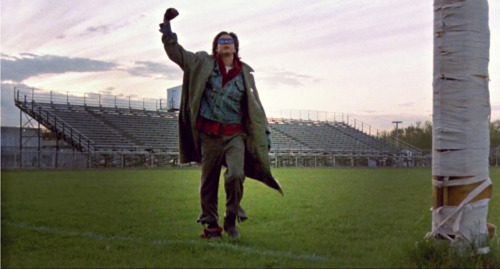
For example, Bender, from The Breakfast Club, grew up in a violent household with a stepfather who always beat him. So, the way that he interacted with the world was to challenge it, to berate it, to displace that energy off of him and onto others. And once you understand that, you know how to write that character.
AI just can’t get there. It mimics what other characters like this have done in the past. But, again, as every good writer knows, each character, like each human being, is its own unique individual. The second you copy and paste someone into a new script, something feels off. I would go so far as to say that one of the ways you become a good writer is to understand that. Because those little unique things that separate your bully character from the last bully character in a movie are what make them stand out. I just don’t see AI ever figuring that out.
The second big weakness is that AI is not you. One of the most common things I’ve heard in Hollywood over the last 25 years is that people are looking for someone with a voice that’s unique. They write in a unique way. Their sense of humor is different. Their story choices aren’t like other writers’ story choices. They tell stories in a way that feels unique. And just the way their writing moves through your head as you’re reading it has its own unique rhythm and cadence.
When I have AI rewrite a scene of mine to see how it does, sometimes it writes something that’s better. But when I go through the actual text, I’m constantly saying to myself, “That doesn’t sound like me.” “I would never use that word.” “That sentence feels off for some reason.” I have a distinct style and way that I write and once I give that job to AI, I lose the very thing that makes my writing me.
And if the writing doesn’t sound like you, that means it sounds like someone else. In this case, since it’s AI writing it, it sounds like whatever AI has decided is the “proper” voice to tell this story in. And since AI’s very existence is built on top of it pulling millions of writing styles in, it’s literally writing in that middle generic space that doesn’t evoke any sort of point of view at all.
What this tells me is that AI is a writing tool. A valuable one. One you should definitely be experimenting with. But it can’t write things for you. It can assist you. It can inspire you. But everyone here who has a voice they consider unique should stand proud knowing that as long as you’re loyal to that voice every time you write, you will always be an asset in this industry. It is only once you give AI all the power in your writing that you are no longer of value as a writer. Never forget that.
What do you guys use AI for these days? Be as specific as possible. And try to be supportive of people here. In some meetings I’ve had, I notice a lot of writers hiding the fact that they use AI cause it’s stigmatized. We’re not going to stigmatize you here. We want to share the strengths of this tool with everyone so we can all get better as writers. :)
Genre: Comedy
Premise: Alex O’Hara is struggling through a divorce when everyone in Los Angeles County starts receiving emergency alerts on their phones, revealing the details of Alex’s depressing life. Unable to stop the alerts from coming, Alex decides to lean in and try to use the newfound accountability to turn his life around.
About: This script was bought by Sony! All hail! The comedy spec…… is back????
Writer: Donald Diego
Details: 99 pages
I’ll start off with this.
Fun idea!
I’ve seen just about every idea under the sun so it’s always nice when one pops up that feels fresh. And I’d be lying if I said it didn’t remind me of those late 90s early 00s high concept comedy spec sales.
I’d also be lying if I said it’d be nice to have those days back! Especially comedy specs. I don’t know what happened with comedies. Actually, I do. But whatever the reasoning for why comedy movies went out of style, I’d be shocked if a Hangover-level premise didn’t bring in plenty of buckaroos for a studio.
Buy some comedy specs, guys!
I guess that’s exactly what Sony did. Let’s see if they did it well.
Alex O’Hara has been married to Dana for 20 years and has an 18 year old daughter named Sloane who’s heading off to college. On the eve of her leaving, Sloane confesses to Alex that she overheard mom and Aunt Cara talking and that mom plans to leave Alex as soon as Sloane leaves for college.
That turns out to be true and when Alex is faced with living in a giant house all alone, he breaks down and starts crying. But that isn’t the worst moment of his day. The worst moment is when an alert goes out all over Los Angeles that says this: “Alex O’Hara, a grown man and resident of La Cañada Flintridge is currently in the fetal position, crying his eyes out next to his kitchen island because his wife just left him.”
More alerts start shooting out, all of which appear to be motivated by emotion. So, whenever Alex feels something very powerfully, an alert goes out. “Alex O’Hara, a grown man and resident of La Cañada Flintridge has just furiously masturbated to a picture of his ex-wife in a red bikini.” Alex races over to city hall to ask what’s going on but they don’t have any idea. In the meantime, he’ll just have to get used to these alerts going out.
What follows is Alex living a life of misery. He hates his car dealership job. He hates living home alone. He hates that his wife has a new boyfriend. But something funny happens. Alex becomes a sort of mini-celebrity and people start rooting for him. With the warm embrace of the masses behind him, Alex takes a hard look at his life and realizes everything he did wrong that led to his divorce.
Alex then decides that he wants his wife back. But in order to get her back, he has to change. So he starts going to the gym again. He quits the job he hates. He develops new friendships with people he’d otherwise overlook. He starts taking initiative for the first time in his life. And because these are all emotional highs, they go out as text alerts, letting not just all of LA know what’s up, but Dana as well. And slowly, but surely, she becomes intrigued by her ex-husband again.
That is until Alex sees an IG post about Dana’s new boyfriend. He gets so mad about it that his thoughts go out as an alert, and the next day, masses of people who are rooting for Alex destroy the boyfriend’s house. Dana is furious and says that’s it, that Alex needs to give up on rekindling their marriage because she’s done with him.
Soon after that, LA discovers the reason for the errant text alerts (which is shockingly believable) and is able to shut them down. Which means that Alex is just a regular guy again. In spite of this, he still wants to get his wife back. So he decides to do one final grand gesture in the hopes of convincing her. It’s a long shot. But maybe, just maybe, it will work.
Alex Alert is a script that falls on its face in the first half and, much like Alex does at the end of the movie, somehow redeems itself when it’s all said and done. It is not an accident that this happened. There is a very specific script-related moment that took this screenplay from forgettable to charming. And I’ll tell you what that is in a second.
First, I want to talk about mining your premise. Because when you have a big flashy premise like this, you need to mine it for every script possibility it can provide for you. Most writers never get past the 70% mark of mining a big premise. And a ton don’t even get that much out of their scripts.
That’s where I’d put Alex Alert. This is a 70% mining of the premise. It could do so much more. And I’ll tell you exactly where you mine those extra percentage points. You find them in rewrites. With big concepts, every rewrite is an opportunity for you to figure out even more regarding the uniqueness of your premise, and then utilizing that by building story developments and character advancements around it.
Back to the Future is a great example of this. As I’ve stated before, the time machine was originally a refrigerator. It was only through rewrites that it became a car. And once it became a car, the multitudes of awesomeness the script improved by were unquantifiable.
Where did Alex Alert fall short? I loved this idea that people started to become Alex fans. And it made perfect sense, too. This guy was struggling in his life and every struggle was being shared with everyone. It only makes sense that people would feel sympathy for him and start rooting for him. Almost like a character in a movie. There’s a version of this screenplay where that becomes a much bigger part of the story. These people coming to him and supporting him and pushing him to become better. We get a little of that here and there. But the writer could’ve gone much further with it.
Then there were small things. For example, one stage of the script is Alex utilizing the alerts to let his wife know that he’s changing for the better. And she’s taking notice. Then that alert happens that gets her new boyfriend’s house destroyed and she’s done with Alex. Then, AFTER THAT, LA stops the alerts.
What would’ve been better is if LA stopped the alerts WHILE ALEX WAS IMPRESSING HIS WIFE. Cause, as a dramatist, that’s when you want to hit your character – when they’re on a high and they’re getting closer to achieving their goal (get my wife back). It’s way less interesting if they stop after he’s already failed at his goal.
Okay, so getting back to how this script saved itself. It’s pretty “Screenwriting 101.” The mistake that was made here was there was no goal in the story. The first half of the script was objective-less. Sure, it was kind of fun to see Alex’s life fall apart and all the alerts go out. But 40 pages of that without any story direction? That’s storytelling suicide. I was bored out of my mind.
The script saved itself at the midpoint by simply adding a goal with high stakes attached to it: GET WIFE BACK. As soon as the story did that, it gained purpose. It gained momentum. It gained A POINT. And pretty much everything after that was good. Not game-changing. But good.
So, writers? Add a goal. It does wonders to your screenplay.
Now, if this writer were debating this choice with me, I assume he’d say that he first had to establish the gravity of losing his wife in order to introduce a storyline where he tried to get her back.
To that I say… dude? This is screenwriting. Tons of screenwriting is about doing as much as possible inside as little space as possible. It’s the nature of the beast. If you’re efficient, you can have your hero introduce the goal of trying to get his wife back at the beginning of the second act. Worst case scenario, you can get it in at the 3/8ths mark (around page 40 for a 100-page script). To wait all the way to the midpoint before the story has a point? That’s too risky.
But as I always say here, it’s better to have the bad part of your script be the first half than the second half. Cause that means we finish the script happy. And that’s what happened here.
[ ] What the hell did I just read?
[ ] wasn’t for me
[x] worth the read
[ ] impressive
[ ] genius
What I learned: Jerry Seinfeld talks about this a lot – the idea that there are funnier words out there for you to use when you make a joke. It’s why he made that Pop-Tart movie. He thinks the word “Pop-Tart” is an inherently funny word. It’s more funny, for example, than “bread.” So, you always want to look for the funniest word or expression, especially at the climax of the joke. There’s this moment where an alert goes out after Alex leases his ’divorced guy’ apartment, talking about how sad and lame it is that he’s done this. Alex is in public at the time, and tries to defend himself to the people around him who just read the alert. “Okay, just so everyone knows, the apartment I just leased isn’t crappy. It’s totally nice! It’s conveniently located next to the grocery store I like. There’s a pool that I have access to everyday until 10. None of that is in the alert, but it should be!” “10” isn’t funny. It’s too bland. “9:30” is funnier. It’s funnier because it takes longer to say, it sounds goofier, and it’s more specific. These are small things in a comedy. But if you’re writing comedy, these are exactly the kinds of details you should be obsessing over. Comedy lives and dies in tiny choices like this. If you’re not constantly hunting for the funniest possible word, you’re leaving laughs on the table.
The network with the stingiest vetting process, unafraid to say no to titans like Martin Scorsese and David Fincher, challenges writers to come up with their absolute best. Today we’re going to discuss how you can wow them
Since this year has the second worst Oscar movie line-up in history (sitting only above the Covid year), I didn’t think it was worth breaking down. But feel free to discuss the winners in the comments. In the meantime, I’d rather discuss some actual good writing.
For a long time there, I was thinking either TV was dead or my interest in TV was dead. Because there was a lot of mediocre TV going around in 2025.
But then a couple of months ago brought us Knight of the Seven Kingdoms and I thought, “Finally, somebody knows how to write again.” And, as I pointed out in my assessment of that show, everything about it felt different. It didn’t give us any of the usual suspects from the Game of Thrones universe.
Not long after that show concluded, HBO came out with a new show that wasn’t on anyone’s radar called “DTF St. Louis.” The show was written by Steve Conrad and, if I’m being honest, that threw up some red flags for me. Conrad has been making stuff for 25 years now that draws you in with its nonsensical juxtaposition (a weatherman who walks around New York City with a bow and arrow) only to ultimately disappoint when it comes to resolving these juxtapositions.

But I like every single actor in DTF St Louis so I fired it up. And it immediately reminded me of an age-old screenwriting hack that gives your storytelling an elevated, as well as, unpredictable feel, which is exactly what you need to get on HBO’s radar.
HBO considers itself the storytelling capital of Hollywood. And they’re right. Nobody develops programming as consistently good as HBO does. And it’s because their emphasis on writing is so extreme. They understand how important character is. And they understand the intricacies of good plotting as well.
Before we get into what DTF St. Louis is doing on the writing front, let me give you a low-down of the show through the first two episodes (the third is airing tonight). And this is a show that’s impossible to talk about without spoiling things so, if anything I’ve written so far has made you curious about the show, I’d encourage you to watch it before you read on.
No misdirect here. The story takes place in St. Louis and follows local weatherman, Clark Forrest, who’s married with kids. The reserved Clark strikes up a friendship with a kind of goofy big guy named Floyd Smernitch. Floyd sometimes does sign language work for the news program Clark is on. Floyd has an attractive wife named Carol, who brings a very troubled son into their marriage.
Clark is searching for some kind of excitement in his life and becomes intrigued by an app called DTF St. Louis, which is a discreet hook-up app for married St. Louis residents. Even though Floyd is struggling with intimacy in his marriage, he’s resistant to DTF. It takes a number of hang-out seshes for Clark to finally convince him.
The finale of the pilot is a shocker. Floyd is found dead from poison at a local public restroom surrounded by, in part, gay Indiana Jones porn magazines. It should be noted, however, that as episode 2 gets started, we’re with Clark and Floyd once again, having backed up to before all of this had happened. The series then proceeds to jump back and forth between the police’s investigation of the murder, and Clark and Floyd’s odd friendship.
So, what’s the big writing hack here that got a show like DTF St. Louis through the impossible-to-get-anything-on-air tournament that is HBO? There are actually two things. One is the hard one. And two is the overlooked one.
Let’s start with one: moving non-linearly through time. This is not a new writing technique. But it does go in and out of style in Hollywood and if you develop something with non-linear timelines during one of its dormant periods, it’ll help your show feel fresh, which is obviously what happened here with DTF St. Louis.
When you’re jumping around non-linearly, you can kill off a character yet keep them around. This doesn’t just work as a quirky way to evolve a plot. Or an interesting way to set up a mystery. But it also provides you with dramatic irony, a powerful storytelling device whereby the reader knows more than the characters, making them feel particularly close to the ones who are in danger. In this case, that’s Floyd. We know he dies and now we have to keep seeing him around, hoping that, against all logic, he somehow sees what’s coming before it’s too late.
Beyond that, jumping back and forth in time keeps things very unpredictable. And in this time of too many stories, where the average viewer has become smarter than the average writer, it is one of the rare times where the writer is in total control over the viewer. There’s a helplessness that occurs when you watch DTF St. Louis whereby you don’t feel like you have any control over the story because it could go in so many directions. And that’s exciting.

One of the plotlines in the series is that Clark starts secretly sleeping with Carol, Floyd’s wife. And later in the second episode, Clark and Floyd are doing their daily workout routine at the gym and Floyd says to Clark, “Hey, you wanna keep working on your sign language?” as Floyd has been teaching Clark. Excited, Clark says, “Sure!” And Floyd proceeds to sign something to him. But we don’t know what he’s signing. We only see Clark’s reaction. His face goes from excited to terrified.
The episode continues on. We eventually get to one of many scenes where Clark is being interrogated by a cop about Floyd’s murder. When the cop starts asking about Carol, we go back to that workout scene a second time, but this time, Conrad uses subtitles for when Floyd signs to Clark. And those subtitles read, “I know… you’re fucking… my wife.”
That moment is a microcosm of the power screenwriters have when they manipulate time. By choosing when the audience receives certain information, the writer can completely reshape how we interpret earlier scenes. It’s a reminder that the writer isn’t just telling a story. They’re controlling the timing of the audience’s understanding.
It’s also a great hack for seeming like a smarter writer than you actually are. And when you’re trying to get onto HBO, “smart” is something they reward.
So, what’s the second thing that DTF does that most writers overlook? It’s simple. It’s something I’ve talked about before. IT CREATES AN IDENTIFIABLE STORY WRAPPER TO PLACE THE STORY INSIDE – In this case: A DEAD BODY.
This is a quirky show. As we discussed, it plays with time in an interesting way. However, if that’s all it was, it wouldn’t have gotten on air. It needed a structure. And the most reliable structure for character-based storytelling is a dead body. Add a dead body to your “people going about their lives” story and it goes from mildly interesting to legitimate TV show.
Not enough writers understand this, especially younger writers. They think the quirk is the only thing they need. And Conrad could’ve convinced himself of that here. Floyd is a sign language interpreter for rappers. That’s his actual day-to-day job. It is the quirkiest job I’ve ever encountered in anything I’ve read. And Conrad could’ve rested on laurels like that. But it looks like he’s learned a thing or two over the years and that if you want to create a show that’s watched as opposed to tolerated, you need life or death stakes. You need a dead body.
I don’t yet know if this show is going to deliver the ball into the end zone. I don’t even know if it’s going to be able to get past midfield. If it does, it will be the first time Steve Conrad has done so. But I know that I’m enjoying the show so far. I like the tone. I love how unpredictable it is. I love the authenticity in a lot of the character stuff (Floyd’s reason for losing attraction for his wife is both hilarious and oddly truthful). I’m absolutely obsessed with every one of these actors. I think they’re all top shelf. And that makes this my top new show.
What about you? What did you guys think?
Arnold’s gearing up for a comeback. Here’s a sequel script to one of his most underrated flicks
Genre: Action
Premise: Former Special Forces Colonel John Matrix is back! After saving his daughter from the clutches of an evil South American dictator, he’s hired to become a security consultant for an American weapons manufacturer, who he slowly begins to realize is not on the up-and-up.
About: Arnold Schwarzenegger has been in the news lately as he’s planning on revisiting several of his old franchises, starting with Conan The Barbarian (not many people remember this but Conan was Arnold’s breakout film, not The Terminator). He was originally supposed to do all these sequels back in the 80s and 90s. He just didn’t have the time. This was one of those sequels he was slated to star in, and according to our own film historian, Scott Crawford, the film was canceled because the script called for so much action, it would’ve been the most expensive film in history. We may not have gotten to see that film, but we can finally find out what that movie would’ve looked like! The script was not only written by mega-writer at the time, Steven E. De Souza. But it was also rewritten by screenwriting titan Frank Darabont. Talk about screenwriting royalty!
Writer: Steven E. De Souza (Revised by Frank Darabont)
Details: 124 pages
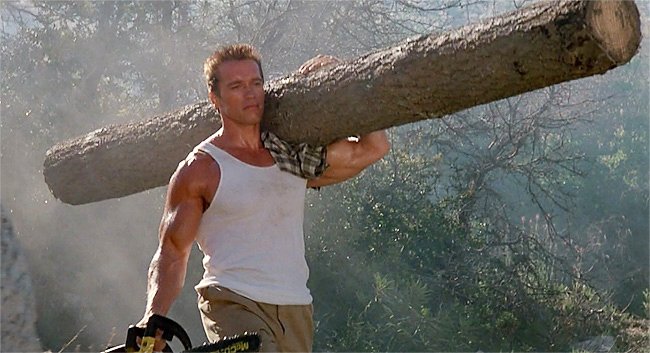 Baller!
Believe it or not, there was a time when Alyssa Milano was the hottest thing since power steering. This was before she went full online psycho. Hey, I don’t blame her. Hollywood is a tough place. It doesn’t exactly inspire people to become their best selves. But the point is, Alyssa Milano was a mega-crush to a young boy going to the movie theaters in the 80s and when I found out she was kidnapped by terrorists and Arnold Schwarzenegger was the only one who could save her, you can bet your bottom dollar I was gonna be there opening day.

Had you then told me that Arnold and Alyssa would be back for a second film? You bet your ass I would’ve been there. Let’s find out what that young Carson would’ve experienced.
The big new drug titan in South America is a guy named Nestor Pedrosa. When the U.S. sends a team down to Panama to destroy him, John Matrix’s old friend, General Franklin Kirby, is slaughtered, along with his entire team. How did Pedrosa have access to the kind of weapons that could make mincemeat out of the richest military in the world? Hmmmmm….
Meanwhile, back in the US, John Matrix heads to the compound of current king of U.S. Military weapons manufacturing, Mr. McCarren, demanding to know how Kirby was slaughtered. After some back and forth, the arrogant McCarren is impressed with John’s knowledge of security systems and hires him to head up his own security.
Several weeks into the job, John goes to pick up a weapons shipment when one of his team can’t do it, only to find that the shipment isn’t weapons. IT’S DRUGS. Seconds later, John is arrested for smuggling drugs into the U.S. McCarren’s attorney, Melinda, comes to get John out of this. But John smells a rat. Someone seems to want him in prison. So he charges out of his arraignment with the judge in hand, and is now on the run!
After doing some “Fugitive-like” research, John learns that McCarren sent that team into Panama knowing they’d get slaughtered. So John takes it upon himself to execute McCarren. And guess what? He built the security system that protects him so McCarren is a sitting duck!
John Matrix breaks into the compound like only he can but McCarren escapes, leading to a helicopter chase, with John hanging off one of the helicopters, above the city. Just after John (spoilers) finally takes out McCarren (throwing him into the blades of another helicopter), he’s met with an impossible reveal! Kirby is in the helicopter too! Kirby is alive!
Once they get back on land, Kirby admits that the U.S. is working with Pedrosa. They give him weapons. He gives them drugs. And Kirby is getting kickbacks for it! Why you dirty little…! There’s only one way to put an end to this. It’s time for John to re-embrace his alter ego, Commando, go down to Panama, storm Pedrosa’s compound, and cut off the head of the snake.

I’ve read so many scripts at this point that I can actually read the history of the development of a script between the lines of a screenplay.
And when I read Commando 2, I thought, “Man, it must’ve been hard to work on this script.” At this point in his career, Arnold had done Conan, he’d done Terminator, he’d done Predator and The Running Man.
I remember it was around this time that Arnold wanted to stretch his acting muscles a bit. He was looking for different stuff. Which is why he ended up doing Twins and Kindergarten Cop.
Here’s what I think happened with Commando 2. The studio wanted badass Arnold marching through more forests and killing people. But Arnold was sick of that stuff and wanted something a little more cerebral, thoughtful, emotional. Which is how this screenplay came together. Cause you can feel these two entities (the studio vs. Arnold) battling on the page.
Commando 2 is a movie that really doesn’t know what it wants to be and I’m guessing that’s because the writers knew that they needed Arnold on board more than they needed the studio on board. Cause if they had Arnold, they’d have the studio. And so they were listening to Arnold’s notes. And, unfortunately, actors aren’t good writers. They understand character motivation and a character’s internal state. But they don’t understand things like tone and story consistency and genre consistency.
I mean, the first half of this movie is the most passive Arnold Schwarzenegger movie I’ve ever read. It’s Arnold being a nerdy security consultant. We’ve got numerous scenes of him sitting around a desk putting together his security plan. Studios do not pay actors 20 million dollars to sit at desks.
Now, to the writers’ credit, everything in the first half of the script is setup. And every single bit of it pays off. I was actually surprised at how intricately-woven this story was. This was not some script they whipped up in a month. There are enough setups and payoffs here to make Bob Gale and Bob Zemeckis blush.
And when we do get to that second half, it’s almost pure action the whole way through. I think that the reason it never quite met that “must make” threshold, though, was that it is always searching for what kind of movie it wanted to be.
It starts off as an ex-special forces guy retiring into a security consultant role. Then it briefly turns into a legal film. Then it’s a break out of prison film. Then it’s a revenge film. Then it’s travel to Panama to take out the big bad drug lord film. It’s like five movies in one.
Contrast this with Commando. It’s a “go rescue my daughter” movie.
This is what I always go back to and I know I beat this dead horse to numerous deaths on this site but, honestly, simplicity is your best friend in screenwriting. The more genres you throw into your story, the more plotlines, the more plot developments, you’re just juggling too many pins. Even the best jugglers in the world start dropping those pins if the volume is too heavy.
Now, how would this movie have played back in 1990?
I don’t see how it wouldn’t have been a hit with Arnold’s star power at the time. These movies are always about how much the hero kicks ass and how awesome the set pieces are. Arnold definitely kicks a lot of ass. The set pieces were strong overall. The star set piece is a helicopter chase with Arnold hanging from one of the copters during rush hour in Los Angeles. This is the sort of scene that would’ve been written up in every trade magazine and major newspaper as the selling point of the movie. Especially if they convinced Arnold to actually be up there on the helicopter.
Arnold going in to take down Nestor Pedrosa’s compound was the second big set piece in the movie and it was good. The problem was that we’ve seen this before. This is something Arnold already did in the first film. Rambo was doing this same kind of scene at the time. So it suffered a bit from “been here, done that.”
It’s always been the challenge of writing sequels. You have to give the audience what they fell in love with but also evolve things. If you evolve too much, the audience doesn’t recognize the original property anymore. If you don’t evolve it enough, you’re a one-hit wonder repeating the same song. To the writers’ credit, they really tried to make a different movie here. I just think, in the process, they learned that there wasn’t much to work with as far as mythology and lore when it came to John Matrix. This is just a special forces dude who tried to save his daughter. How much can you really evolve that?
But even with Arnold throwing all this choppy ass shit at the writers, the script’s mechanics are quite sound. They divide the story in half perfectly. They use that opening half to set up characters and seed a bunch of big reveals. The mystery aspect of the story is stronger than it deserves to be. It really almost reads like a murder-mystery. And I give the writers credit for taking such a strange swing at a genre whose demands are so different. And probably the most interesting thing about this script is that, outside of a goofy fax machine gag, the story is quite timely. Going into other countries and taking out drug lords? It’s almost uncanny how relevant that is in 2026. Might Fox revive the franchise with a new character? I could honestly see it happen.
Script link: Commando 2
[ ] What the hell did I just read?
[ ] wasn’t for me
[x] worth the read
[ ] impressive
[ ] genius
What I learned: This is something I personally love in screenplays – teachable moments regarding cool things. When Pedrosa first takes out the special forces unit, we’re introduced to the weapons he’s using. Now, normally, a writer would probably write, “Big guns. Shoots big guns. People riddled with bullets. The end.” But if you have something legitimately cool, it’s fine to get detailed in your description and provide a teachable moment. Which is exactly what the writers do here.

The catch is that the thing you spend all this time describing MUST BE COOL. If it’s not cool, don’t describe it. Cause we won’t care.
Genre: Supernatural Mystery
Premise: An infamous investigator of the unexplained phenomena and a highly skilled audio repair engineer work together to solve a perplexing cold case murder mystery.
About: This UK director has directed four episodes of Doctor Who. More recently, he’s been mastering the podcast mystery space, with series such as The Lovecraft Investigations, Who is Aldrich Kemp, and Temporal. This script ended up on last year’s Black List. Julian Simpson is managed by Kaplan/Perrone.
Writer: Julian Simpson
Details: 110 pages
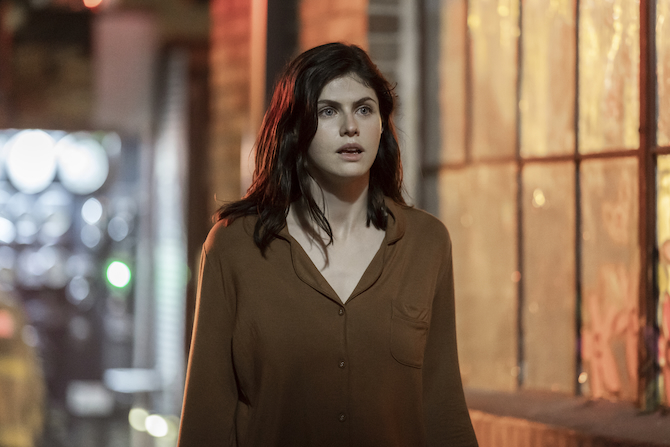
Ghost story told in a unique way.
CHECK.
If you can do that one thing – come at your genre in a unique way – you are ahead of 99% of other screenwriters. No doubt, that’s the main reason this writer got noticed with this script.
In Bad Memories, sound technician Rachel Weir is tasked with looking into a cold case mystery. An attractive man named Jim comes to her with an old SD card that contains a number of corrupted sound files.
Eight years ago, the Blakes, a family of three, disappeared. Recently, some kids were playing on the now abandoned lot of the Blake house and fell into a basement that, it turns out, was the basement to a much older building that was there before. The Blakes’ dead bodies were found in that basement (and this SD card in the pocket of one of them).
But there are a couple of twists. One, there are two extra unidentified bodies that were also found in this secondary basement. And, also, the decomposition of the bodies is dated back to 1935. Which, of course, doesn’t make sense. So Jim is hoping that Rachel can fix the corrupt sound files on this SD card and figure out what happened.
Rachel doesn’t believe in ghosts or aliens but she can’t deny that the situation is intriguing. She fixes the files and the two start listening to them. They follow an occultist named Phillip Gibson, who’s staying at the Blakes’ home and looking into supernatural activity. The mother, Imogen, believes in this activity. The father, Jonathan, does not.
The issue centers around their child, Matthew, who seems to be able to talk with someone named Mary. But the parents can’t hear Mary. However, Mary does appear on the SD card. She can be heard chatting away with Matthew and saying creepy things. As they dig deeper, they learn that Mary was the daughter of a family that used to live on this land in 1935 and she slaughtered her family while they slept.
The deeper into the files Rachel dives, the harder it is to explain this away. As her worldview begins to collapse, she starts to go a little crazy. She even starts seeing Mary in her own home. Eventually, Jim tells her that Mary is still alive. She’s an old woman now. So they go to visit her to see if they can glean any new information.
Rachel also learns, through one of the sound recordings, that Phillip Gibson may have dropped a video file card at the home while being attacked by Mary. So Rachel goes to the Blake home to see if she can find the video card. This puts her, unwittingly, face to face with Mary, where she will finally, once and for all, learn how all of this insanity went down.
Whenever you write a screenplay and give it to other people to read, there is an unavoidable gap between what you know and what the reader knows. You might know that your protagonist lost his best friend to a drug overdose in high school. That history may shape how you understand the character. But if it’s not relevant to the story, it never appears in the script. As a result, you are carrying around more information about the world and the characters than the reader.
This gap will always exist. You will always know more about the people and situations you created than the reader does.
The problem is that this gap is where many writers lose their audience. Because the writer understands so much about the world of the story, the movie playing in their head is rich, layered, and emotionally coherent. But the version that exists on the page often contains only a fraction of that information. What feels full and alive to the writer can feel thin or confusing to the reader.
A major part of being a strong screenwriter is recognizing that disparity and compensating for it. You must supply the reader with the specific pieces of information they need in order to experience the story the way you intended. If you fail to do that, the reader can’t see the movie you’re seeing.
Mastering this skill requires understanding what the audience actually needs to know. Not every detail of a character’s life needs to be on the page. For example, we never needed to see Luke Skywalker bullseye womp rats in his T-16 to understand that he was a capable pilot. Those scenes were written and even filmed for Star Wars, but they were ultimately removed because the story worked without them.
However, there are other kinds of information that absolutely must be shared with the reader. If those pieces are missing, the script collapses. This is especially true in supernatural mysteries, where the rules of the world and the mechanics of the mystery are not optional. They’re the foundation of the entire narrative. If the reader doesn’t understand those rules, they can’t follow the story.
This is one of the most common mistakes I encounter in these scripts. Writers become so afraid of revealing too much that they withold critical information. They worry that if the audience learns something too early, the mystery will disappear. So they hold things back. Then they hold back more. And then even more. Eventually, so much essential information has been withheld that the reader has no idea what’s happening or how the world works. At that point the mystery doesn’t feel intriguing. It simply feels confusing.
This was my experience reading the aptly titled, “Bad Memories.” There are about six layers to this highly intricate mystery so when and how much each piece of information is disseminated is critical. That information seems to come at us either too late, or when it does reach us, without enough detail. This makes it hard to understand what, exactly, is happening.
Cause I thought the setup to Bad Memories was good. Dead bodies from 8 years ago. But the bodies have been decomposing for 90 years. Found in a previously undiscovered basement. And two extra bodies that haven’t been identified? There’s a lot to play with. And the way in which we’re exploring this mystery – through a series of sound files – feels unique and refreshing.
But the script just starts getting soooooo confusing in the third act. It turns out Mary isn’t dead. She’s still alive (as an old woman). No matter how hard the script tried to explain this, it could not convey how Mary could both be alive and a ghost at the same time.
Which brings me back to my original point. The writer has constructed an elaborate mythology in their head that neatly connects all the dots and makes the paradox feel logical. But much of the critical information required for us to understand that logic never makes it onto the page. Without those pieces, the reader is left struggling to keep their head above water in a fast-moving current of mystery.
This brings me to another screenwriting note I end up hammering home hundreds of times a year. The more moving parts you build into your mystery, the harder the script becomes to execute. Every additional element raises the degree of difficulty. It’s not that it can’t be done! It certainly can. But to pull it off, you either have to a) be an advanced screenwriter, b) be willing to write 10-20 more drafts than usual, or c) drop the number of variables in your mystery.
You have the power to lower the degree of difficulty at any point by simply dropping plot elements. If you’re going to keep those elements for pride alone, well then you’re going to pay the price when someone reads your script. They’re going to give you that side-eyed look before asking, “Well, I kinda liked the first part but what was happening with Mary? How did they time travel again? How did the video card transfer Rachel to the past exactly?” That isn’t stuff you can just drop in there and sorta explain and hope for the best. No no no no no. For that to work it needs to be flawlessly set up. And it just wasn’t here. Probably because there was too much going on to begin with.
I only recommend complicated time-jumping concepts to advanced screenwriters who are also willing to do the extra work that these scripts require. Cause they ALWAYS REQUIRE extra work. Always. For an advanced screenwriter, at least 5 more drafts than a normal script would require. For an intermediate, 10-20. And fuggetaboutit if you’re a beginner. You could spend 50 drafts and never figure it out. These screenplays are not for the faint of heart.
[ ] What the hell did I just read?
[x] wasn’t for me
[ ] worth the read
[ ] impressive
[ ] genius
What I learned: I believe that in intricate mysteries like this, you need to know the ending before you write the script. Because if you try to figure the ending out through a bunch of drafts, what often ends up happening is that we just see you trying to figure the story out on the page. We can see you grasping at explanations and surprise reveals and, in doing so, we know you didn’t figure it out. But when you know the ending ahead of time, you end up writing these scripts with so much more confidence, especially in that last lap of the script, where it’s crucial that the writer write with certainty and purpose.
