Understanding this one TV writing trick gives you a gigantic advantage in feature writing

I’m confused by Hollywood’s shock that “Michael” is doing so well at the box office. He’s literally the most popular pop star in history. And he had one of the most interesting lives ever. Of course a movie about him is going to do well. Especially when you consider how great his songs are. That alone gets people to the theater.
I don’t know if I’ve ever talked about this on the site, but I was briefly involved in developing a musical biopic. I know, I know. Ironic with how much I hate them. But the opportunity arose and I saw it as a fun challenge.
What I learned is that these movies are all slam dunks. They always make money. But the reason why you don’t see them getting made that much is because they’re so hard to get made. Especially if it’s a band. Because the band always ends up hating each other (don’t expect music biopics of The Police or Pink Floyd anytime soon). There’s always one band member who refuses to have his likeness used. It’s incredibly hard to get everyone on board.
Which was the case with the project I was on. It was a two-member band and the two hated each other. And don’t even get me started on what writing the script looks like. Each member of the band is, obviously, going to want their character to look as good as possible, get a ton of attention, have the best lines, have the best moments, etc.
On top of that, if you wait for your solo singers or your band members to die, now you’re dealing with the estates. Which can be even worse. Cause they may be controlled by multiple people (the five kids of the singer), and all of those people are going to have different opinions. So getting everybody to sign off is near impossible.
This is also why, when these movies do get made, they’re so vanilla. Because the people involved, whether it be the living singers or the estates of those singers, can veto the script. So, if you put anything even mildly negative in there, it gets vetoed. Which is why you’re seeing all this talk over the weekend about how sanitized “Michael” is. Of course it’s sanitized! They wouldn’t have approved it otherwise.
Whenever you see one of these movies get made, it really is a miracle.
So, how did this get made? My guess is that they needed the money. The Michael Jackson estate is notorious for being in debt. That’s usually the only way that you can get these things made. If all the people involved are really hurting for money. And this looks like it’s going to make them PLENTY OF MONEY.
I opted not to see the Michael Jackson biopic mainly because the movie I’m imagining in my head is the exact same movie that I would’ve seen if I bought a ticket. So why go see the movie if I’ve already seen it?
It is a case study in the paradox of concept-generation. On the professional side of Hollywood, everyone’s looking for the fresh new thing. But on the consumer side, a large portion of the world is okay with going to see exactly what they expect to see. There are people just like me who already know what this movie is going to be and that’s exactly why they go. It’s strange because those two approaches don’t line up and I’m not sure how to reconcile them. I just know that TO GET SOMETHING MADE, because you have to push it through the professional side of Hollywood first, you should be trying to write something fresh.
Okay, let’s move on to my current TV obsession, the second season of Beef. Beef follows the manager, Joshua, of a ritzy country club, and his strained relationship with his wife, Lindsay, who wants him to quit and focus on the Air BnB project they’d agreed to make their business when they got married.
It also follows a young naive couple who work at the club, Austin and Ashley, who have used a violent argument video they secretly recorded of Joshua and Lindsay, to blackmail themselves into better jobs at the club.
In episode 3, Ashley learns that Austin, whom she helped con his way into a physical therapy job at the club, may be giving physical therapy lessons to the attractive Korean assistant of the club’s Korean owner. Freaked out, she manically charges down the street, and accidentally falls down a steep hidden hill where she gets badly injured. This leads us into episode 4, where Austin takes her to the ER. The entire episode takes place in the ER, as they wait to get Ashley into a room.
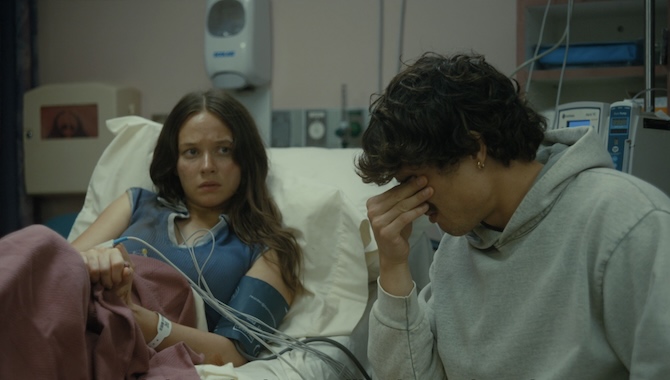
For those unfamiliar with TV writing parlance, this is called a “bottle episode.” This is an age old practice whereby, to save money, the show writes an episode that is limited to a single location. The reasoning is not dissimilar from why I advocate writing contained horror or thriller scripts. Because it’s cheaper!
The reason I bring up the bottle episode is because bottle episodes are rarely designed to move the plot forward. Their job is to create as entertaining an episode as possible under the less-than-ideal circumstances, allowing the production to extend its season out to the full number of episodes contracted, while saving money for the bigger flashier episodes.
In almost every form of storytelling, the most prioritized directive is TO MOVE THE STORY FORWARD. Each scene must move the story closer to its destination. In feature writing, this is a must. In TV writing, it’s “do as well as you can.” And in bottle episode writing, it’s “if you can push any of the story forward great, but if not, that’s okay too.”
This is where you’re challenged the most as a writer. How do you keep things entertaining if you aren’t moving the story forward? If you can learn to do this, you are a major force in the feature screenwriting world. Because it means that, should the thrust of the story be taken away from you, you can still make things entertaining. For example, if Indiana Jones isn’t allowed to search for the Ark of the Covenant for a scene, you would be able to make that scene entertaining still. And TV is where you get to practice this skill.
How do you do it? I’m going to tell you right now. So take notes!
If you don’t have forward story momentum in a scene, you must move to your second most dependable dramatic option: CONFLICT. You must make sure there is conflict in the scene. By conflict, I do not mean characters yelling at each other (although that is an option). By conflict, I mean anything that’s out of balance between the characters in the scene.
What happens is a sort of “pseudo-forward-momentum” is created by the characters speaking to each other, since it creates the hope that they will figure things out and everything will come back into balance.
Let’s say fictional couple Dan and Shelly are at a dinner party. Dan doesn’t like that his wife drinks a lot at these parties. So, during the party, he publicly makes passive aggressive comments about her drinking. Shelly is embarrassed. After the night is over, they drive home and that’s where we write a scene. We write the scene of these two getting ready for bed.
Notice how, technically, there is no overarching goal for either character that’s pushing the story forward in this scene. Indiana Jones is not trying to find the Ark. And yet, you can still write an entertaining scene. You achieve this through imbalance.
Shelly is upset about Dan embarrassing her at the party. Dan is upset because she always drinks too much. These two are living in imbalance in this scene. So maybe Shelly brings it up. Or Dan brings it up. Or maybe neither brings it up. They just go about their nightly routine. Just the fact that there is imbalance in their relationship in this moment creates forward momentum. Because we want to see if (we are hoping) they can bring their problem back into balance.
And that’s pretty much all there is to it. The caveat I’d add is that you do the work to get these scenes WAY BEFORE THE SCENES. So, ideally, you want to create an imbalance in the relationship early on, and then that way, whenever you need a scene, you can put those two in a situation and we’re going to feel that imbalance start to move. It might move in a negative direction. It might move in a positive direction. But it’s going to move itself regardless. And the entertainment comes from us hoping that the imbalance is resolved.
So, in Beef’s fourth episode, the primary unresolved issue is that Austin has been secretly giving physical therapy to the Korean assistant at work. Ashley knows there’s some romantic interest on the assistant’s end. And it’s starting to seem like there’s interest on Austin’s end as well.
This gives us our imbalance and the majority of the episode’s entertainment structure is built around this imbalance. For example, Austin goes to the vending machines, leaving his phone with Ashley. The assistant happens to text Austin at that moment, except Ashley has his phone. So Ashley starts texting “as Austin” to try and extract information of any wrongdoing from the assistant.
There’s a lot more that goes on than that. But most of the interactions are built around that issue getting resolved. And since getting anything resolved feels like progress, it creates the illusion of a “forward-moving” story even if the plot itself hasn’t moved forward at all.
To be clear, when you’re writing a feature script, you should be trying to move your story forward in every single scene. So, for example, in Star Wars, every scene ends with characters a little closer to their goal (get to Alderran for the good guys, find those droids for the bad guys) than they were before.
If you can’t do that for whatever reason, then you can use what they do in TV writing as a substitute. Make sure there is conflict in the scene between your characters. And then, simply play out their interaction in a way where we, the reader, can hope that we’re getting closer to bringing things back in balance. And, by the way, it rarely does come back into balance. That’s what keeps us watching: The hope that this time will be different.
All right, folks. Get back into those scripts and keep writing because the Blood & Ink Showdown deadline is Cinco de Mayo!
Someone sent me a consultation script that was 180 pages. It was damn good. Now what!?
Telling a screenwriter they can’t write a script over 120 pages is the screenwriting equivalent of walking around Los Angeles in a MAGA hat. In other words, it’s gonna trigger some people. Never have I seen screenwriters react so passionately than when I tell them to get their scripts down to a more industry-friendly page count.
But Long Page Count Screenwriters rejoice! Because I have found your champion!
I just read an awesome 180 page script.
This script was a consultation script. It’s from an amateur screenwriter. I’m going to try and convince him to let me review the script on the site. I don’t know if he’s going to say yes. But, until then, I can’t speak about the specifics of the script. I can only speak in generalities.
Here’s what I can tell you.
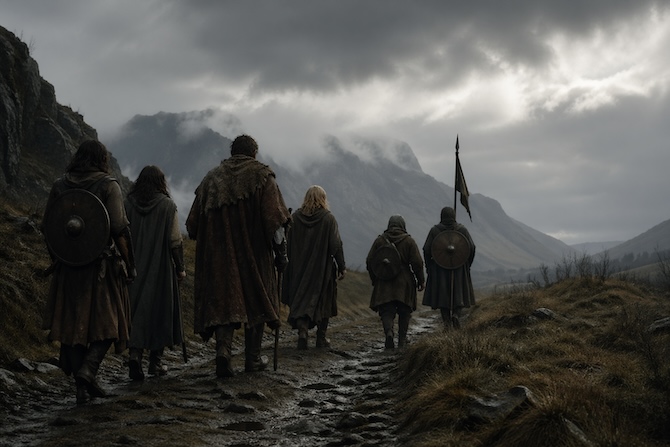
It’s a classic hero’s journey tale. This writer goes right back to the heart of Joseph Campbell’s teachings.
How good are we talking? I think there’s been only one truly good hero’s journey piece of screenwriting in the last decade. And that was Knight of the Seven Kingdoms. This is on par with that.
This is great news for anyone who wants to write a long script. But, in order to do so, you must understand the single biggest roadblock to writing a long screenplay. And that is: It’s incredibly difficult to keep a reader’s interest over that many pages.
How difficult?
Think about how many times you’ve read the first five pages of amateur scripts I’ve posted on this site. Like for showdowns. I’ve seen so many of you post in the comments that you weren’t even able to get past the first page of those scripts.
ONE PAGE!
That’s all it took for you to lose interest. So, imagine how difficult it is to keep someone’s interest over 180 pages.
Obviously, I don’t expect the majority of you to ever write a 180 page script. You’re handicapping yourself if you do. I mean, the very first thing I did when I saw that this script was 180 pages, was say to myself, “Awwww shit.” I was pissed off, I’m not going to lie. Cause it almost always means a script that’s scattered and goes nowhere. Like receiving the script for Southland Tales. Try getting through that monstrosity without a fifth of whiskey.
But here’s the thing about writing a 180-page script: if you can make that work, you can make any script work. A 100-page screenplay is the same game, just tighter. The difference is that at 180 pages, the underlying fundamentals have to be rock solid. Starting with your characters.
When our 180 page script writer introduces his main character, he does something very smart. He creates a really really really really gnarly bad dude who does something really really really bad. And then he brings in his main character to take down this gnarly bad dude.
Boom.
We now love the hero.
This is something so many writers get wrong. Or they never think about it in the first place. But if you can just win us over right away with something your hero does? You’ve got us. We now love your hero.
The reason this is so important is because if you’re going to ask us to stick around for 180 pages, you have no chance of doing so if we don’t love your hero. I mean, look at what happened in the script I just reviewed, Leverage. That writer did the opposite. He created this money hungry lady who didn’t do anything to make us like her. If anything, we thought she was too greedy. Which means that you’re now asking me, the reader, to stay engaged for 118 pages, for someone I don’t even like.
By the way, most writers don’t make the mistake that the Leverage writer made. But they make a mistake that’s almost as bad. They don’t create a main character we dislike. But they create a main character we feel nothing for. We don’t feel good about them. We don’t feel bad about them. We feel neutral.
It’s better than the reader disliking your hero but it buys you, maybe, 10-20 more pages before the reader checks out. You want to create a very strong character in some capacity if you’re going to write a 180 page screenplay because you need us rooting for that character the whole way through if we’re going to stay engaged.
What’s great about this Hero’s Journey script is that the writer understands that, at 180 pages, giving us a scene where the hero takes down a bad guy isn’t enough. So, in addition to that, our main character is steeped in mystery. He has a very messy past, which gives us yet another reason to keep reading. We want to learn what happened to this guy to make him this way.
Honestly, if you can learn that one skill of making us fall in love with a character right away (or just be fascinated by them or super intrigued by them) — if you can do that? That will solve 80% of your script problems. Cause you don’t actually have to be a great screenwriter if you can write great characters. So, learn that skill first!
But, with that said, you still have to know how to plot if you’re going to keep our interest over a long period of time. And this writer is a master at plotting. No exaggeration. I was saying that to myself as I was reading the script. The way he pushed the plot forward, revealed key details (such as the main character’s mysterious past), mixed in overarching goals (the goal driving the entire story) and mixed in temporary goals (goals for the next 15-20 pages) — all of it was acutely constructed.
I remember thinking, “If he would’ve moved this reveal up one scene earlier or pushed it back one scene further, the script would’ve fallen apart.” That’s how precise his plotting was.
So, with plotting, there’s actually no end point to how long you can plot a story. We know this because of TV. Breaking Bad went on for six seasons. That’s far more screenplay pages than 180.
Ironically, I think this writer used that method of thinking to write his story. Instead of seeing the script as this giant never-ending piece of storytelling, he broke it into episodes. I believe it was six episodes of roughly 30 pages each. Each had its own title. And the goal for each of those episodes was different.
So, for example, one episode might be — we get stuck in this town and we need to get out. That doesn’t actually happen in the script. But that’s how you want to think as a writer. Your characters visit this town and something bad happens. Maybe one of them gets taken hostage or disappears. And now the goal is, find them and escape.
Again, the idea is that you want to break your giant story down into more manageable pieces. I can’t even imagine trying to write a straightforward story about a guy attempting to achieve something over 3 hours. But, if he only has to achieve something over 30 minutes, that’s doable. Then you just add the next 30 minute story. And then the next one.
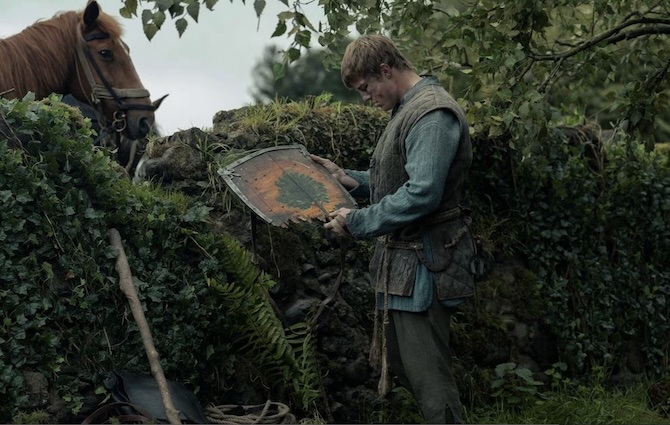
So the idea is, come up with the overarching goal for the entire season (or, in this case, screenplay). For example, in Knight of the Seven Kingdoms, that’s for Dunk to become a knight. And then each episode has a goal unto himself. For example, for the second episode, after Dunk’s arrived in town, his goal is to simply sign up for the tournament. But he needs a sponsor. So he has to go find the sponsor and then go back and sign up before time runs out. That’s how you create an episode of TV. And you can mirror that writing strategy in long feature scripts.
And that’s how this writer was able to write a 180 page screenplay without it ever slowing down.
Now, to be clear, writing a long script is still very hard. The act of creating a character that people love might as well be screenwriting’s version of the City of Atlantis. If doing so was easy, every movie we watched would be great. But even though Hollywood knows this is the most important rule, and puts all of its mental resources into figuring it out for each movie, we still have a lot of bland protagonists who we barely care about. So, obviously, skill is needed to achieve this feat.
And it also takes skill to write a 30 page goal-oriented sequence in a script. That doesn’t just flow off the fingertips. But at least you now have the knowledge that that’s what you need to do. Cause most aspiring screenwriters (and a fair amount of professionals) don’t even know that. They just write whatever’s coming to their head in the moment and pray that it’s all going to come together.
The other two areas where this writer separates himself are in his scene-writing and in his secondary character construction.
We’ve talked about scene-writing a ton on this site. But, despite that, most of the amateur scripts I receive may have a total of one or two genuinely good scenes. And that’s because most writers think of scenes as “segments of the script I have to cram all of my relevant plot and character information into.” It’s more about fitting in exposition than it is figuring out how to write the most entertaining scene possible.
In this 180 page script, 9 out of every 10 scenes are strong. Which is an insane ratio. It’s very rare that I see that kind of ratio. And it’s because the writer understands that each scene is its own little movie that needs to entertain. And therefore, he builds scenes around that mindset.
So, for example, instead of writing a scene where our primary group of characters trade dialogue as they walk down the road to their next destination, he’ll have them go into a bar and, just like Star Wars, this is not a pleasant bar. It’s dangerous in here. And we can see that, already, people don’t like them. The writer can then add any exposition he needs to during this scene, but now that exposition is happening in a situation that is worsening by the minute. There’s a threat looming, which adds so much more entertainment value to a scene over characters casually walking down a road chatting to each other.
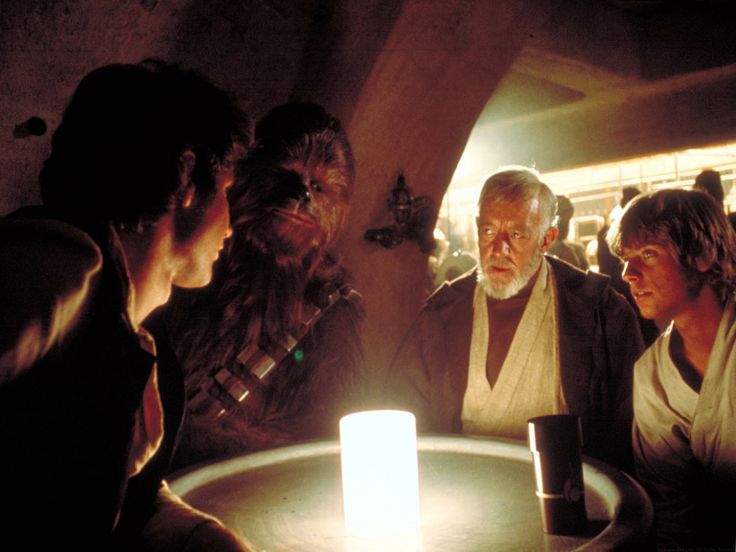
To be clear, that scene is not in the script. But there are similar scenes like that. That’s the mindset this writer has. Each scene needs to entertain all on its own. Each scene is driven by a situation occurring rather than people talking in random locations. That mindset ensures that the reader is always going to want to keep reading. Cause they know that each scene is being maximized for entertainment value.
And then finally, the writer REALLY FLESHES OUT all the secondary characters in this story. This isn’t just where advanced writers separate themselves from intermediates. This is where the super-advanced writers separate themselves from the advanced.
Cause nobody wants to do this extra work of making every character in the group interesting. That’s why we’re still getting Star Wars movies 50 years later. Because George Lucas made sure that every character in that original Hero’s Journey group rocked. Ironically, Lucasfilm can’t come up with a new great character to save their life. But that’s the power of doing that extra work. Is that it can literally pay dividends 50 years later.
I am going to do everything in my power to convince this writer to let me review his script. Because it would not only get an [x] impressive. It would probably end up somewhere in my Top 25. I don’t know how it would get made. I’m racking my brain about that cause it’s a period piece and it’s not IP and it would cost between 100-150 million. But who knows? If we can get some buzz building for it on this site, it just may happen.
In the meantime, if you’re looking to get feedback so that you can get your script up to this level, shoot me an e-mail (carsonreeves1@gmail.com) and we’ll get to work!
Today’s script makes two critical screenwriting mistakes that doom it. Make sure to read the review so that you never make these mistakes yourself!
Genre: Thriller
Premise: After a high-profile murder threatens a multi-billion dollar hostile takeover, an embattled Wall Street titan emerges as the prime suspect and must win a war of perception in order to protect her empire at all costs.
About: This script was optioned by Imagine, Ron Howard’s company. They’re developing the project, which almost surely means Howard is considering directing it. The script appeared on last year’s Black List.
Writer: Joe Ferran
Details: 117 pages
 She wouldn’t even have to act!
Let’s get right into it. Shall we?
If you’ve written a thriller and your thriller is 118 pages, you have not written a thriller.
Thrillers need to be 100 pages!!!
Thrillers need to… ya know… THRILL. And not enough thrilling goes on, per page, if your thriller is stretched out to 118 pages.
Look, I’m not a genre page nazi. One of the biggest misconceptions in screenwriting is that every long script is boring and every short script is exciting. Not true! I have read a million short scripts that are boring. While it’s true that I’ve read a lot less long scripts that are great, I’m reading a consultation script as we speak that’s 180 pages and moves like it’s 80 pages.
But when it comes to genres like Thriller and Comedy, you don’t want long page counts. They work against you in so many ways. I suppose you can become the exception to the rule. But why handicap yourself? I mean this is already a very unforgiving medium where almost everything agitates or bores readers. Line up the variables, as best you can, so that they work in your favor.
Oh, and this isn’t even one of the two mistakes I alluded to above. Those mistakes are much worse. I’ll share them with you after the plot breakdown. And this is going to be a tough one to summarize, guys, cause I did not understand a hell of a lot that went on here! Oh, and that isn’t one of the two mistakes either! That’s a totally separate mistake.
Evelyn Carter is the CEO of Veridan Capital, a private equity firm. I have no idea what private equity is. My brother tried to explain it to me once. Totally clueless. But Evelyn’s company is worth like 20 billion or something.
And she’s not happy with that. She really wants to buy up this company called Revio for 2 billion dollars. Revio is a software editing company whose primary app doubles as a social media porthole. I think? It’s confusing. Revio is run by a guy named Magnus Voss. And Magnus has no interest in selling his company to Evelyn.
At a high profile party that Evelyn and Magnus attend, one of the Revio board members, a guy named Grayson, is found stabbed to death. It will later be learned that Grayson was rallying the board to vote down Evelyn’s purchase. So the assumption is that Evelyn may have killed Grayson. Which she denies wholesale.
There are 8 days before the sale and it now becomes a behind-the-scenes chess game for Magnus and his ilk to stop the sale while Evelyn and her ilk do everything they can to make it happen. Magnus has the upper hand since the assumption is that Evelyn was involved in Grayson’s death somehow. All he has to do is use his billion dollar bank account to prove it.
The ice-cold Evelyn, who is a lone wolf with nobody close to her, is determined to make this deal happen no matter what. So as everyone schemes to expose her, she uses all the tricks in the PR handbook to take them down, one by one. But when she finally lets someone in, will that someone actually be able to be trusted?
Okay. What are these two things that destroy this script before it even has a chance to get out of the gate?
Problem Number 1 – Weak stakes. Why do we want Evelyn to succeed here? She’s already a billionaire. Her company is worth 12 times what this company she’s buying is worth. So it’s not like it’s that important to her success. She goes from a 24 billion dollar company to a 26 billion dollar company?? Why do I care about that?
Succession started its show out with a similar situation. However, the focus was on the unproven son of Logan Roy, Kendall. For Kendall, the stakes were enormous. He had to prove that he was able to pull a takeover like this off in order to succeed his father, who was retiring soon. In Leverage, it’s just a really rich woman trying to get richer. I’m not sure what I’m supposed to be rooting for about that.
This is a particularly surprising problem considering that Ron Howard is the godfather of the rule: We must have a great reason to root for the main character. He notoriously lost Bill Murray as a friend when Murray sent him a script back in the 80s to direct and Howard said he wasn’t interested because there was nobody in the story to root for.
Problem Number 2 – The main character, Evelyn, is ice cold. It is extremely hard to make audiences root for ice cold characters. We just finished talking about this in regards to Julia Roberts’ character in After The Hunt. Everybody hated that movie because they couldn’t access her.
We need access to a person to root for them. We must feel an emotional connection with them. If they are cold and bitter and lack empathy… there’s no way in for us.
Now, here’s the thing. Very skilled screenwriters can make scripts work in spite of ONE OF THESE drawbacks. I actually liked Julia Roberts’ character in After the Hunt. But it’s basically impossible to make a script work when you have both of these issues in the same script. We have no emotional connection to your character AND it doesn’t matter if they succeed at their objective. Then what’s left to root for?
At first I thought the murder mystery was the stakes. But then I realized the murder mystery is here to serve as a distraction. If you’re wondering if Evelyn is the killer, it’s less likely you’ll be thinking about how cold she is and of how insignificant this takeover is. And the writer doubles down on his distractions. There’s also a cold open where a bunch of people at Revio get blown up by a bomb.
A lot of times, if you’re having to write flashy stuff like this, it’s because you’re insecure about your main plotline. Cause your main plotline should be able to work all on its own. And, unfortunately, none of it works. Like, literally, not a single beat within a single scene works here.
This script has way too many characters. It’s very confusing how everyone is related. For example, a major character named “Charles” is introduced. We’re told simply that he’s the “Chairman.” Chairman of what???????? Her company? Revio’s company? Some other company?? And what does that mean?? I don’t know anything about chairmen. Is a chairmen more important than a board member? There’s a LOT of that going on here, making it very hard to keep up with even basic plot developments.
I want to point something out from the reading side of things real quick because whenever I review one of these sloppy scripts, and I’m confused, a few commenters try to say I missed key stuff.
YEAH, I DID MISS KEY STUFF! I’M SURE OF IT!
Let me explain, as a reader, why that happens. I’m reading the script. There’s a lot of information being thrown at me. There’s a lot of setup. A lot of exposition. A lot of characters. And a lot of it isn’t being introduced in an entertaining way. So it feels like work when I read it.
And what often happens in that situation is that I’ll be on page, say, 7, and I’m so bored that I’ll realize that my mind has wandered during the last half page. So I go back and reread that half page. Then, a few pages later, the same thing happens. So I go back and reread from where my mind started wandering. And then it happens again three pages later, and then again four pages after that.
And you know what I do once that happens a fifth time? I stop going back to reread. Because if you’re not a good enough writer to have me focused on your story, it’s not my job to double my reading time so that I understand this clumsily written script. Especially because I don’t think the script is written well enough whereby if I did read it all, I would understand it.
This goes back to all of these problems that I’ve mentioned since the start of the review. The script is too long. Which means there’s a bunch of stuff that’s not important enough to be in the script anyway. There are too many characters. Which means I’m constantly having to strain my brain to remember who’s who, how they’re related to each other, and how their jobs are related to one another. I don’t like this ice cold main character. So my mind’s drifting whenever she’s in a scene. And she’s in every scene. And I’m not invested in her success because I don’t see how her success is important.
That’s a very fast recipe for a bad script. Which this is. So much so that it almost got a “what the hell did I just read?”
[ ] What the hell did I just read?
[x] wasn’t for me
[ ] worth the read
[ ] impressive
[ ] genius
What I learned: There’s an old rule in screenwriting. It’s been around since the 80s. “Never make a billionaire your main character. People have no sympathy for billionaires.” Now, obviously, we have proof that this “rule” is not universally true. Tony Stark was a pretty popular character. Batman movies tend to do all right. But it’s a rule worth considering. Cause, generally speaking, the closer you create a character to the average person, the more we can sympathize with them.
Is Beef officially Netflix’s White Lotus?
There isn’t a whole lot going on in the movie box office world at the moment. The kind of people who go to Super Mario Galaxy aren’t the types who run to movie websites and excitedly taunt how much money their favorite video game turned movie is making. Which has made box office talk pretty boring the last couple of weeks.
A couple of small notes are that horror is not bulletproof, despite being the only genre Hollywood has been able to bank on as of late. Lee Cronin’s The Mummy only took in 13 million bucks.
I liked the angle on Cronin’s script. I wrote about how, when you pitch major IP, or anything that’s been in Hollywood for a while, you need an angle to your pitch that’s going to stand out from everyone else who’s pitching. Shifting the mummy lore over to a little girl felt different and fresh and, no doubt, is the angle that got the movie greenlit.
But here’s the funny thing about this town. The thing that gets you greenlit isn’t always the thing the audience wants. Sometimes, audiences want a good old fashioned mummy movie. But, as a Hollywood producer, when you get pitched that, you think, “Been there, done that.” You’d feel like you failed at your job if you greenlit that take.
“Nobody knows anything,” right? The famous William Goldman quote.
Which is bullshit by the way.
The mantra is a useful myth. But it’s not literally true. Hollywood, as a system, understands a great deal, arguably 90% of what drives outcomes. There is deep institutional knowledge around story construction, star value, release strategy, and audience segmentation. These variables aren’t random.
What remains unpredictable is the final 10%, the intangible convergence of taste, timing, tone, cultural mood, and audience reception. That margin resists modeling. It is where otherwise well-calculated projects fail to connect, and where outliers like Iron Lung emerge and outperform their tracking.
In other words, the industry isn’t blind. It’s operating with high clarity right up to the point where clarity stops being possible.
I’m sad to see Normal do so terribly (3 million bucks). It probably signals the end of Bob Odenkirk’s unique leading man career. They should’ve limited that film to streaming and it probably wouldn’t have hurt him so much. But those are risks you take when you go theatrical! Somebody’s got to take the fall.
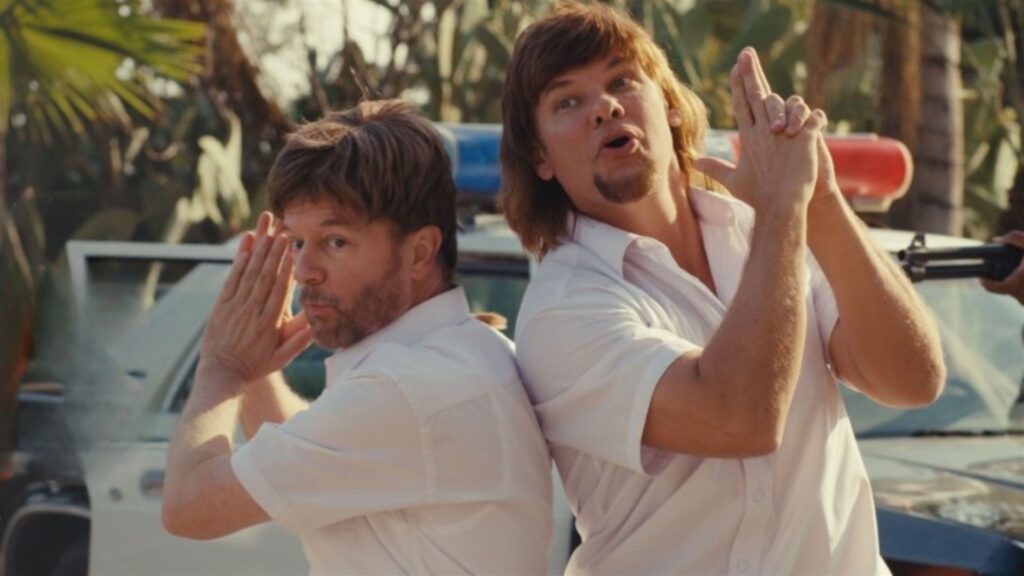
I was keeping an eye on the comedy, “Busboys,” starring Theo Vonn and David Spade. I was asking the question, could comedy podcasters usher in a new theatrical comedy renaissance? But the flick barely made a million bucks. The error with this one is pretty obvious. Why are you casting a third tier aging comic in a role that doesn’t even make sense (why is a 55 year old trying to become a busboy). For any comedic 2-hander, the audience has to look at the pairing and laugh even before they’ve seen a single second of footage. When you looked at this pairing, you thought, “Huh?”
Since there was nothing dragging me to the theater this weekend, I checked out the pilot for the second season of Beef. This is a powerhouse cast here, a creator with a lot of buzz, and a show with a lot more money. What has that resulted in?
A mixed bag.
The first thing I noticed is that Netflix is trying to make “Beef” its “White Lotus.” It’s a very specific voice that’s aggressively character-driven, built around strong filmmaking, an incredible cast, and an affecting score. And I don’t think it’s a coincidence that the main character, Joshua, runs a ritzy country club. The shades of Murray Bartlett’s “Armond” from season 1 of White Lotus are strong.
The writing here is quite awesome at times.
Early on, we see country club manager Joshua (Oscar Isaac) and his wife, Lindsay (Carey Mulligan) get home after working a long day at the club, and get into this big fight. Meanwhile, two young workers at the club, Ashley and Austin, are head over heels for each other. Every single moment for them is bliss. Just being around each other and getting to kiss makes their day.

So, creator Lee Sung Jin does this really clever thing where he cuts back and forth between these two couples, one trying to rip each others’ heads off, the other trying to love each other as much as humanly possible. And the reason why this works, besides the fact that it creates a jarring juxtaposition, is that one of the strongest ways to reveal character is through comparison.
If you want to make it clear that one of your characters is a bad person, you can just show them doing bad things of course. But if you want to turbo-charge that message, put them in a scene with the nicest person possible. That way, their meanness will truly pop.
Why is this important? Because easily one of the biggest mistakes I see in screenwriting is writers not clearly conveying who their characters are right away. So you want to look for any tools you can that help you set up exactly who your character is. And comparison is one of those tools.
We leave this montage knowing, very overtly, that one of these couples has deep deep set problems and the other loves each other more than anything.
Despite this, there are a couple of things that keep this from becoming the prestige event that is White Lotus. The first is that the stakes here are low. The pilot is built around this moment where Joshua left his wallet at the club. Austin is asked to return it by the president, and Ashley comes with him.
The two go to their house at night just as Joshua and Lindsay are in that huge fight. Ashley starts recording it on her phone through the window (unbeknownst to Joshua and Lindsay) and even though Lindsay is the aggressor, Ashley starts recording at a moment where it looks like Joshua is the aggressor. Right then, Joshua and Lindsay spot the two outside, and Ashley and Austin run away.
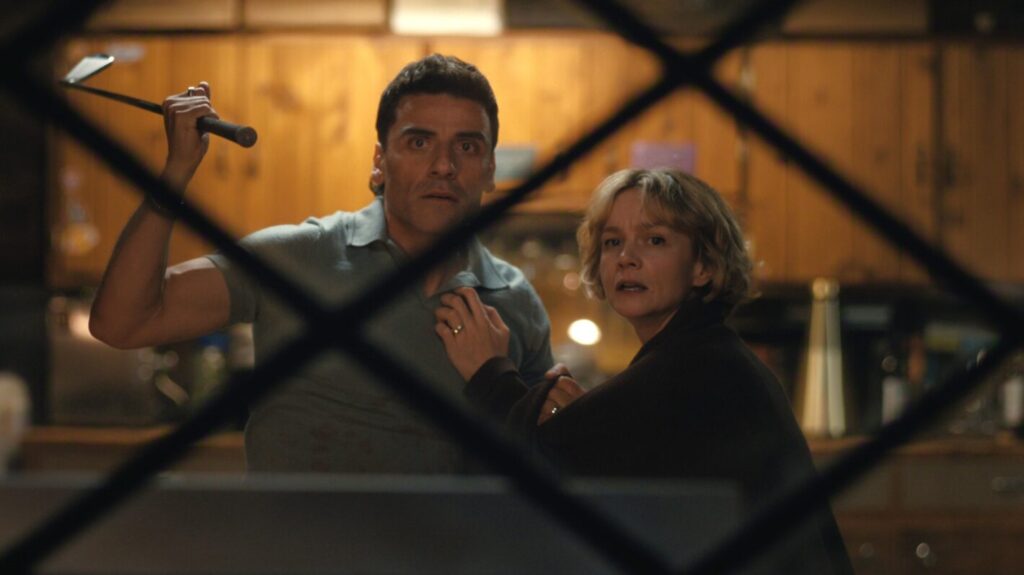
So, looming in the background of this story is Ashley’s possession of this video. And, presumably, she’s going to choose to show that to someone at the club, or post it online. And that will probably start the season’s “beef.”
Those stakes are pretty low. In real life, the insanity we’ve seen through peoples’ worst behaviors being published via video are way way worse than anything that happens here. So it doesn’t really feel like Ashley has that much on Joshua. I suppose it’s enough to get him fired. And it probably will get him fired. But just as the inciting incident of a show, it’s pretty tame.
Compare it to White Lotus, where the inciting incident is always a murder. Those are real stakes. A video of an aggressive fight where nobody’s technically done anything illegal is not a high stakes situation. It’s a medium stakes situation. And you don’t want to build 8 episodes on top of a medium stakes situation.

I suppose the stakes could grow. We’ll see. But, for your sakes, as screenwriters who’re writing pilot scripts, you want to set up your stakes in that very first episode. Cause that’s the one you send out to everyone. You don’t send episode 2 out to anybody.
That’s another thing I find kind of weird about Beef. Nobody dies in Beef. There’s all this threat but the threat is all bark and no bite. At least in the first season and I’m guessing this season as well. So, despite the darkness it touts as its calling card, it doesn’t actually go to the furthest depths it can (death). I find that strange.
One thing that separates White Lotus from Beef is how they manage the audience’s emotional experience: whether the show pays you back for what it puts you through.
Every movie or show asks something of you. Your time, your attention, your emotional energy. If it’s going to lean into discomfort, tension, or ugliness, it has to return something on the other side. That can be humor, insight, release, momentum, even just the pleasure of watching it all unfold.
White Lotus understands that. It gets dark (sometimes very dark), but it constantly offsets that with sharp humor, absurdity, and a kind of voyeuristic fun. You’re never stuck in the discomfort. You’re riding it like a wave.
Beef, on the other hand, often sits in the discomfort longer without giving you the same kind of release. The tension accumulates, the situations tighten, and the emotional experience starts to feel heavier than what you’re getting back.
And that’s where you start to lose people. Not because it’s too negative but because the exchange stops feeling balanced.
The difference isn’t that one show is darker than the other. It’s that one understands how to make the darkness enjoyable, and the other sometimes forgets to.
With that said, it’s by no means severe. I’d say White Lotus is 60% positive and 40% negative whereas Beef is 55% negative and 45% positive. Which is why it remains watchable. And why I will continue to watch this season. Because I like all the actors here and the acting between Isaac and Mulligan, in particular, is next level. And creator Lee Sung Jin is good with plotting. He knows how to weave things around in unexpected ways. So, we’ll see what happens.
What did you think of Beef or any of the movies that came out this weekend?
This may low-key be one of the best dialogue tips on the planet
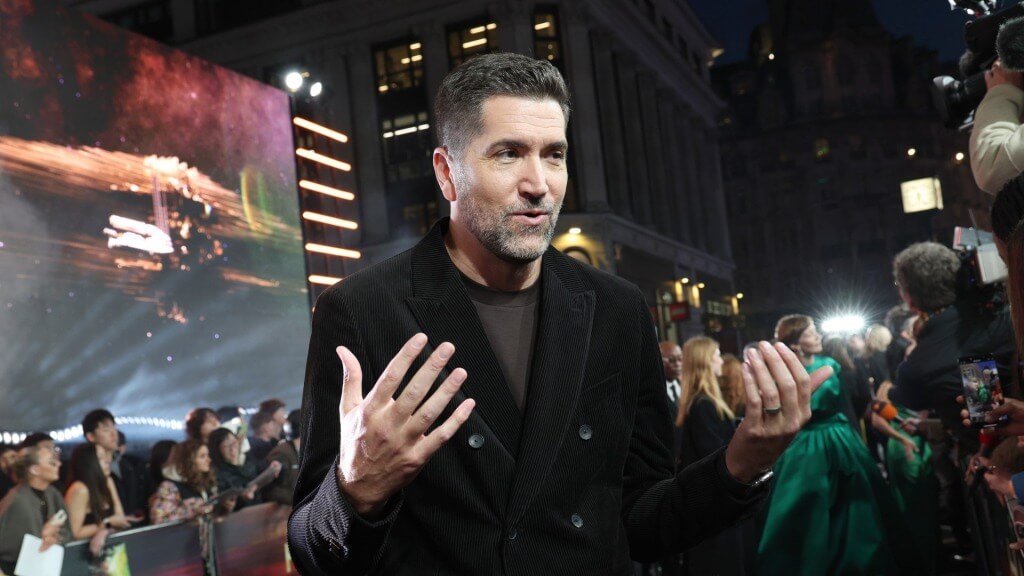
So, the other day, I was watching an interview with Drew Goddard for Project Hail Mary. I’ll be honest, I don’t read or watch a lot of screenwriter interviews these days. Mainly because I don’t learn anything new from them anymore. But this is one I wanted to check out because I think this guy is one of the best writers in Hollywood. He took two very hard books to adapt and made great movies out of them. And, if I’m being honest, after reading the book, I didn’t think this one was going to be very good. I thought the alien stuff had the potential to be a movie killer. Which is something I’m going to talk more about in this month’s newsletter. Stay tuned.
But getting back to Drew, he said something that struck me. He was asked how difficult writing dialogue was for this film and he immediately replied, “Dialogue is easy if you get the outline right.” Now, if I were a beginner screenwriter, I would hate that advice. Because outlining and dialogue don’t connect in any obvious way. But, having the benefit of hindsight of reading a million scripts and writing an entire book on dialogue, I can now tell you that this is one of the best pieces of advice for writing dialogue that you’ll find. And I want to break down why.
The first thing you need to understand is why we write an outline in the first place. Most people will tell you it’s a way to plan your story out. That’s obviously part of it. But the sneaky important reason you write an outline is to set up a story that always has FORWARD MOMENTUM. You’re making sure there is always an ENGINE underneath every sequence of your story. Because if you resolve a major thread early on in your script and you don’t replace it with a new engine, there’s nothing pushing your story forward. Which means your story will sit there, languishing, unclear where to go or what to do.
That’s what an outline should be doing. Making sure that each act has momentum. Making sure that you’re threading in plots and subplots that are always pushing things forward. How do you do this? The easiest way is to create characters with goals. A goal that spans the entire story, like Liam Neeson’s goal to save his daughter in Taken, is the easiest way to accomplish this. But not all stories are like this.
So if goals fade, you need to replace them with new goals. Or you need to switch the focus onto another character who has a goal. At first, in Star Wars, Luke Skywalker has no goal other than to get off his farm one day. So what’s the engine driving that section of the story? It’s Darth Vader trying to find those droids to retrieve the Death Star plans. Only once Luke’s parents are killed does he now have a goal – to help Obi-Wan deliver the Death Star plans to the Rebels.
You can, of course, have multiple characters pursuing multiple goals, which is the best case scenario, because it supercharges your story engine. But as long as at least one major character has a goal, and that goal has some level of importance behind it, it will be enough to keep the engine revving and keep the story moving along.
So, how does this relate to dialogue? Well, if you have a strong outline, and you’ve used that outline to make sure that there’s a strong engine underneath each part of your story, then we get to the real nitty-gritty of how this all works. Creating engines for pieces of your story ensures that each individual scene is moving the story forward. More specifically, the characters in the scenes want something (their “goal”). That want, that desire to get something (often from the other person) is what creates good dialogue.
Why is this? Well, one of the elements of strong dialogue is that, when a character speaks, he’s speaking because he wants something. That want is what gives his speech direction. Now the scene has a point. Main Character wants something. Will he get it or not? In that scene, because the character is speaking to achieve something, every line of dialogue will have purpose. And then, when he either succeeds or fails at achieving the goal, the scene is over.
When Goddard says that poor outlines result in poor dialogue, what he’s saying is that the opposite chain of command occurs. The outline is thin. There are parts of it where you don’t yet know what’s going to happen. This creates large gaps in the story where no clear engine is pushing the story forward. When you try to write a scene inside one of those gaps, characters often don’t have clear goals. Or if they do have goals, they’re weak. When you try to write dialogue inside a scene like that, it becomes infinitely harder.
Think about it. What does a character say if they don’t want anything?
In fact, if you’ve ever had that scene in your script where you’re constantly trying to rewrite the dialogue because it never quite feels right, there’s a good chance that that section of the script is weak, which is creating a lack of a story engine, which is weakening the goals inside the individual scenes, and if you try and place two characters speaking inside one of those scenes, you’re basically guiding lambs to the slaughter. Why are these characters speaking if they don’t have anything to say?
What then often happens, is you start trying to jestermaxx your dialogue. You try to make the jokes funnier. You try to liven up the observations and hot takes, pushing with everything you’ve got to make the conversation entertaining. Sometimes you even come up with some really clever stuff. But deep down you know the truth, which is that your characters are just babbling at each other. And when people read that scene, they’re not praising your dialogue for being clever. They’re bored out of their mind because nothing’s actually being said. That’s the dirty secret of dialogue. Nobody cares unless you’ve written an entertaining story where people need to say things to move storylines forward. And if your outline isn’t in place to make sure that that’s always happening, no amount of clever dialogue is going to save your script.
How does this look in practice? Let’s say you’re writing a scene about a young man meeting up with his father. The two don’t have the best relationship. They haven’t seen in each other in a while. The young man is struggling in life. He and his girlfriend are close to getting kicked out of their apartment. So he’s called this meeting with the intention of asking his dad for money.
It’s easy to write good dialogue for this scene. Why? Because the young man has a clear goal and the goal is important.
How would you write this scene? Well, the son knows he can’t come right out with, “I need money.” He’s got to at least pretend he cares about his father’s life a little. So he might ask his father what’s going on right now. Maybe ask about mom. Ask about work. The ultimate goal of getting money from the dad is buying time in the scene. The subtext is strong since we know he’s only saying all this other stuff to make the money ask feel more organic. That’s the ideal situation for a scene. Clear directive. Resistance from somewhere that creates doubt. You can write a million different variations of that scene and most of them will work.
Now let’s change the setup a bit. Let’s just say it’s a 22 year old young man meeting up with his father after they haven’t seen each other in a while. The son doesn’t want anything. The dad doesn’t either. It’s just them reconnecting after a long time.
I want you to imagine writing that scene. Notice how much more difficult the plan for the scene becomes. Where do you even start? You can start with, “Hi,” then awkward silence. Yeah, there’s something here because of the scarred relationship. But without establishing what each character wants, chances are you’re going to have these two mumbling at each other for two and a half pages and call it a scene. You’ll justify it by saying it’s “true to real life” but readers don’t care about that shit. They care about being entertained. And a vague meeting scene between father and son without any real direction is not entertaining.
I want to make something really clear here. Because when most screenwriters think of dialogue, they think of flash. They think of trying to make the dialogue as interesting as possible. In reality, though, what the reader really cares about is being pulled into the emotion of the scene. They want to wonder what’s going to happen next. And so “great lines of dialogue” are not what’s going to win them over. What’s going to win them over is: This character wants something important and, therefore, I want to see if they get it.
As long as you have that, your dialogue can be pretty barebones and readers will still be pulled into your scene.
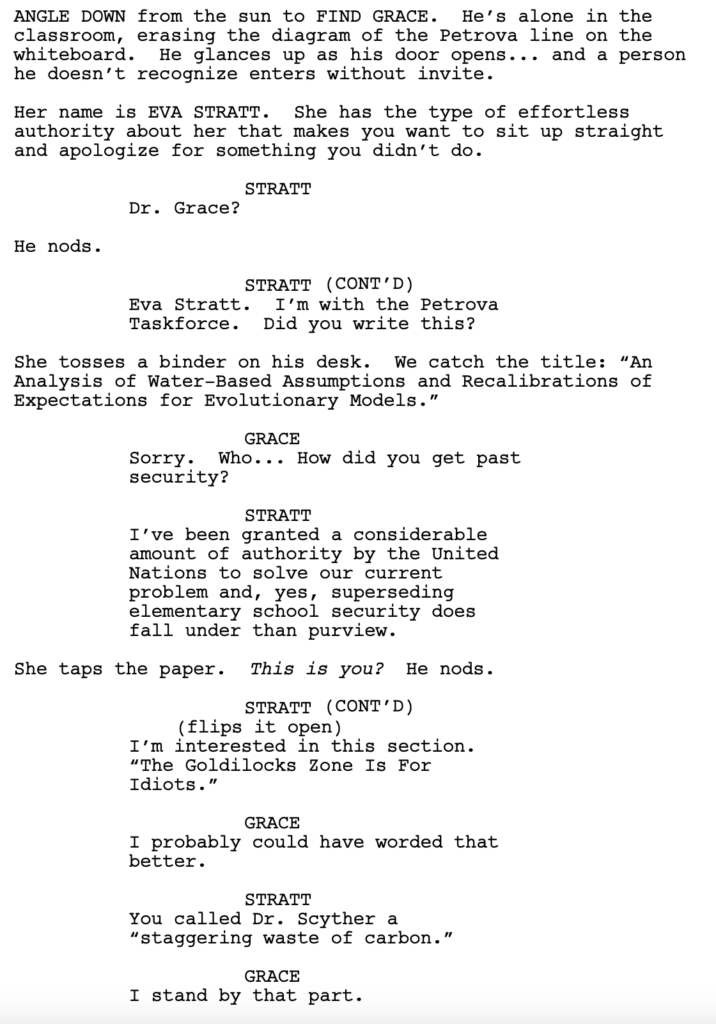
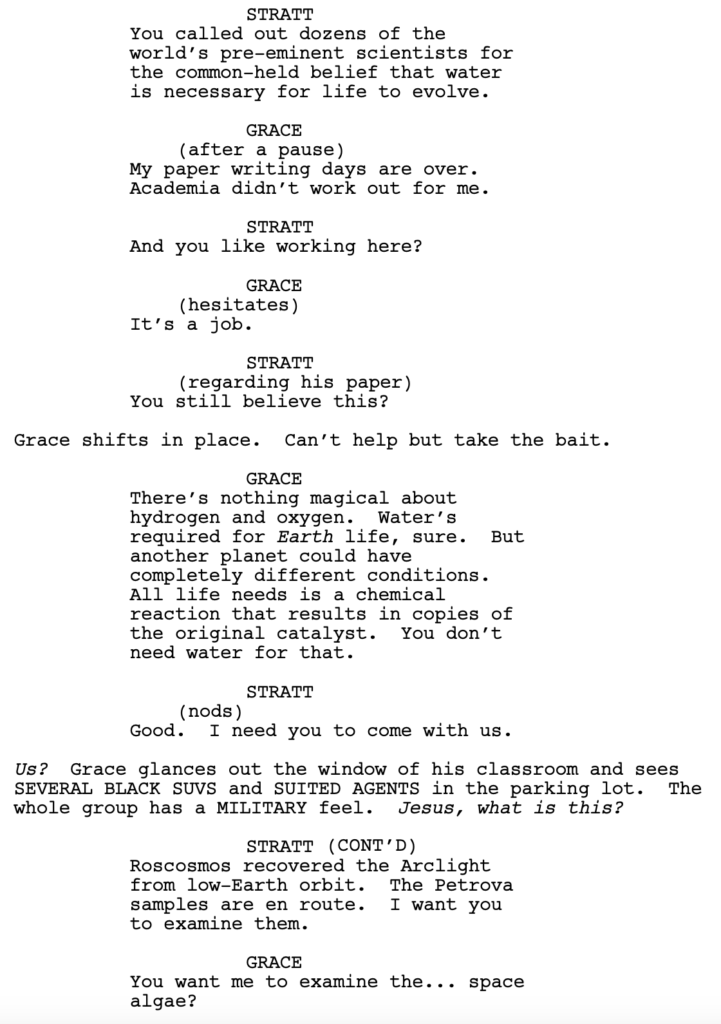
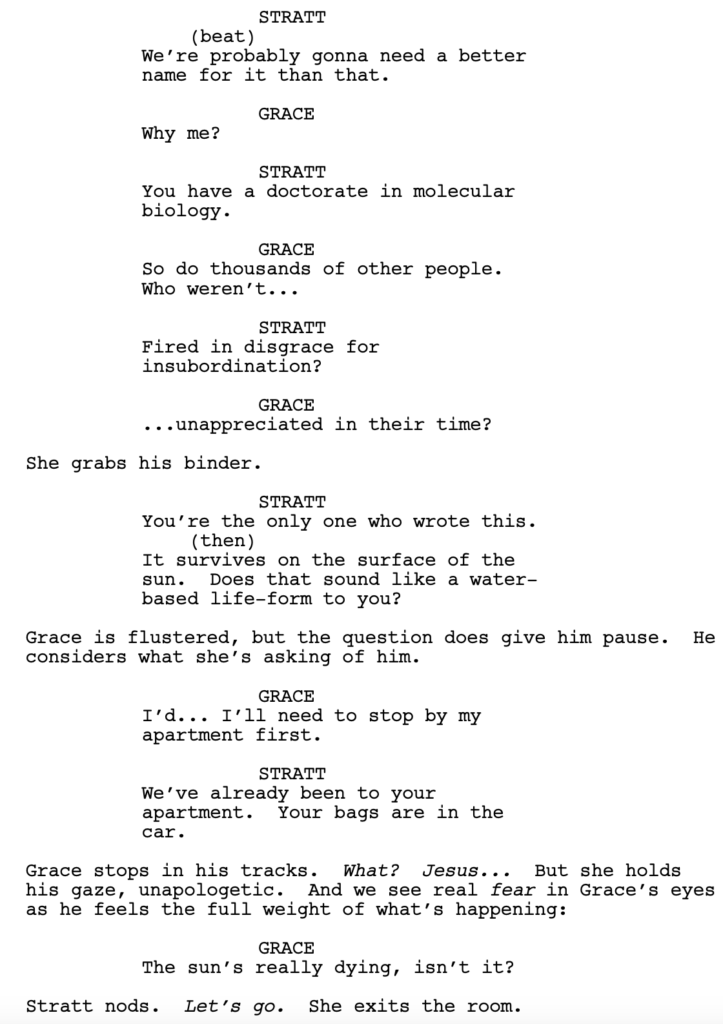
Again, this all goes back to the outline. Make sure that every section in that outline, that takes you from page 1 to page 100, from Act 1 to Act 3, from Sequence 1 to Sequence 8, all of it needs at least one primary character with a strong goal. That will ensure that each section has a powerful engine running beneath it. And every scene you write within that section will have a character with a goal in it, which’ll make your dialogue write itself. I’ll leave you with a very simple example of this from Project Hail Mary. This is where government worker Eva first shows up to Grace’s work to recruit him. She has the goal. The goal drives the dialogue. Happy weekend!