
 Tip #13!
You will not get sceeewriting tips like this anywhere else on the internet. That’s why Scriptshadow is the best. You’ve got a dude reading thousands of scripts who sees real-life writing patterns every day and learns what works and what doesn’t then shares it with you.
ENJOY!
1) A good concept makes writing a script so much easier – A good concept doesn’t just get you more script requests. It actually makes writing your script easier because a good concept informs structure, scenes, and direction. Project Hail Mary gives us that clear accessible goal of saving the galaxy. Consider the alternative, writing this concept: a famous musician battling insomnia and a mental breakdown during a tour, is drawn into a dark, surreal odyssey after meeting a mysterious fan (Hurry Up Tomorrow). The latter concept has you lost, unsure, desperately trying to come up with logical scenes that move the story forward.
2) Twists are sexy, but they’re often fool’s gold – For every great end-of-script twist I read, I read 99 terrible ones. A good twist is one of the hardest things to pull off in screenwriting as it requires you to lie to the audience for the entire movie. And if you’re lying to the audience, you’re hiding so many things that can make your characters richer, make your scenes clearer, make your plot snappier. I would stay away from twists unless you have a whopper of one that you know works perfectly.
3) Keep your prose lean but descriptive – If you’re verbose and descriptive, it’s too much. If you’re lean and sparse, it’s too little.
4) Many scripts start strong then get messy – Writers become obsessed with their first act, going back to it again and again to make it perfect, then give 1/8th the amount of commitment to the rest of the script. I can’t convey to you how many scripts I’ve read that started off great then got messier with every ten pages that passed.
5) If you’re writing for studios, write a likable main character. If you’re writing for indies, write an anti-hero main character – Never do the opposite.
6) A day in the life of your hero – Open a new document and write down what happens in every single hour of your hero’s life on a typical day. I promise you you will learn new things about your character that you never knew and those things will inform the character in new ways that make them feel more real.
7) Give your hero one legitimate negative trait and your villain one legitimate positive one – Most characters are straightforward and boring. This little trick automatically makes your characters more complex.
8) Figure out the thing in your script that’s a refrigerator time machine, then upgrade it – As I love to remind you guys, the most memorable car in movie history, the Delorean in Back to the Future, was once a refrigerator in early drafts. That change resulted in several of the most memorable sequences in the history of movies. Some would say it turned that movie into a classic. There’s something in your script right now that is the equivalent of the refrigerator time machine. Figure out what it is, and find a way to upgrade it to a Delorean.
9) Reward characters who stand out, execute characters who don’t – We often go into scripts believing that “this” character will be a standout or that “that” character isn’t going to be important. But then you start writing and something changes. The awesome character turns out to be a dud and the side-dude ends up being awesome. Poor writers stay the course, trying to save the character they originally loved, while marginalizing the one that’s working. Good writers realize that they’ve struck gold and change course, giving the overlooked character a featured role.
10) Come at an old genre in a new way – It’s an oldie but a goodie because it’s one of the most reliable ways to write a standout script. This is what Zach Cregger did with Weapons.
11) Place your hero in as many scenes as possible that force them to make difficult choices – We love watching characters who have to make a hard choice. And when I say a hard choice, I mean a choice that we, ourselves, wouldn’t be able to easily make. To be clear, if the choice is even a 55/45 type of choice, it won’t work. It must be exactly 50/50.
12) Give at least one character in every scene a goal, and make that goal as big as you can get away with – I promise you that if you do this, your scenes will read a lot better. Most scenes falter because nobody in the scene wants something and, even if they do, the thing they want isn’t big enough for us to care.
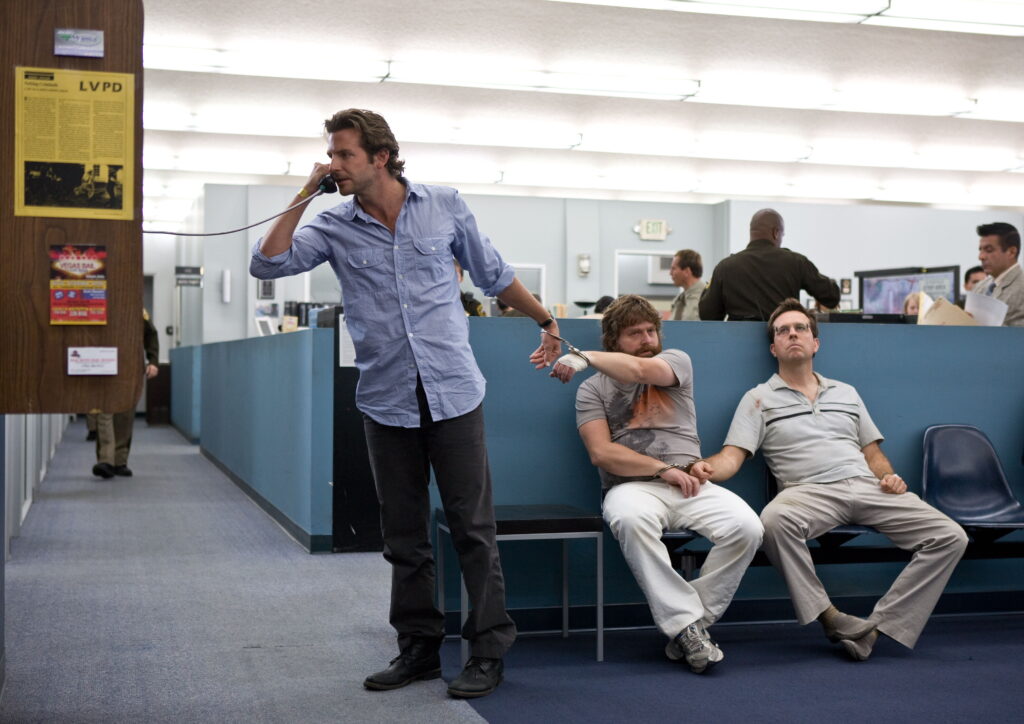
13) If there’s a shit-ton going on in your story, you need to add a hand-holder character – A lot of writers write complex plots with tons of characters and tons of subplots, then never hold our hand during the process. As a result, we’re already confused by page 30. Enter the “hand-holder,” a character designed to ask questions of the other characters and/or remind them of the current objectives so that we’re always up to date on what’s going on. See Bradley Cooper’s character in The Hangover. He spends most of the running time reminding everyone what it is they’re supposed to be doing right now and why.
14) If you need to cut pages, cut that subplot that, deep down, you know isn’t working – People get attached to subplots that add little to the overall story. But if pages need to be cut, cutting a 4 out of 10 subplot can easily erase 10 pages from your screenplay.
15) If you have to bulk intro a bunch of characters at once, give them highly distinctive names – If you bulk intro (introduce 5-10 characters in a span of two pages) there is literally no way we’re remembering all of them. So the trick you want to use is to make each name very distinct and, if possible, representative of that character (Seamus for the geek, Rocco for the stud). Some writers find this to be below them. Well, good luck to you when you bring a key character back 20 pages later and the reader has no idea who they are. Which happens ALL THE TIME when I’m reading.
16) Don’t write a low-concept or no-concept idea unless your character writing is literally at an A+ level – Writing something Low concept (Sentimental Value) or no concept (Sorry, Baby) is like showing up at a glitzy Hollywood party dressed in a t-shirt and sweats. But if you have the charm and personality to be the life of the party, you can make it work. Same thing with screenplays. These low concepts get NO SCRIPT REQUESTS. But if you write amazing memorable captivating interesting deep characters, then the tiny portion of people who do read your script will fall in love with it and recommend it to others. But even if the characters are only B or B+, it will never be enough to override a low or no-concept idea. What’s “A+ character writing?” Mike White.
17) “And then, things got worse” – This phrase will make your screenplay awesome. Every ten pages, say that line to yourself, and then make it true in your script. Keep making things worse and worse for your hero. The harder they have to fight to claw their way to victory, the more we’re going to love them.
18) Win the reader over – I think most writers try to write something good. But I don’t think good is good enough. Instead, I want you to imagine a tired overworked reader reading your script at the end of the day. Starting with your very first scene, I want you to write to win that reader over. Watch your script come alive when you do this.
19) One of your opening three scenes should establish what’s missing in your hero’s life — A story is ultimately about your hero growing. They can’t grow if we don’t understand what’s missing in their life. And since you want to establish a character as quickly as possible, understanding what’s missing in their life should be conveyed within your first few scenes.
20) Cliches are fine as long as you write them with authenticity – Dude who gives his character a crack addiction to add “depth” but has no experience with drugs and does no extensive research to figure out how to write that character believably? That character will come off as cliche. Dude who was once a crack addict himself who writes his protagonist as a crack-addict and goes into all the deep-cut shit about what being a crack addict is REALLY LIKE? That character will never come off as cliche.
Yo! Want some amazing feedback on your screenplay? Let me help you out! E-mail me at carsonreeves1@gmail.com and let’s get your screenplay in world class shape!
Genre: Adventure/Thriller
Premise: When a husband and wife research team travel to a remote African jungle to look for a real-life Yeti, the biggest problem turns out not to be the monster, but their mutual best friend scientist, who is secretly in love with the wife.
About: This script finished in the top 15 of last year’s Black List.
Writer: Paul Levitt
Details: 109 pages
 Pattinson for Noah?
Today’s script is going to teach you something new.
Which is that some subject matters are not meant to be combined.
33 year old geeky scientist, Noah Garland, has been spending the better part of his career searching for something called “Aby” with his wife, Emery Luis-Garland. “Aby” is actually a Yeti. Yes, these two believe that Yetis are real and that if they can find it, it will give them new information about the human genome, which they can use to help humanity (or something – I was never clear on why they needed this thing – but it was basically the same plot as Jurassic World Rebirth).
They are joined by rockin’ badass Ryder Burk, who has a PHD in fucking. Well, not really. But based on the events in this film, for all intents and purposes, he kinda does really. The three of them have earned a grant from Proxima Industries, which allows them to descend deep into the Congo jungle, with a trio of locals helping them as guides, to find the Yeti.
As those first days go on, Noah notices that Emery (who’s been slapping him with the headache excuse whenever he wants to have sex) is cozying up to Ryder in ways that feel like they’re crossing a line. But it’s never bad enough to justify Noah freaking out. So he quietly tolerates it.
A few nights in, one of the guys, a young man, is mutilated by the Yeti. But the scientists aren’t sad. They’re stoked! They can use the guide’s body to study what this Yeti is. That pisses the other guides off but the scientists don’t care because they’re only funded for a few more days and need hard data before they go back.
Not long after that, Noah overhears a secret conversation between Ryder and Emery where they discuss whether they should tell Noah about their secret. Noah storms over to Emery’s laptop, logs into her e-mail, and looks through every e-mail between her and Ryder. And he finds out he was right! They’ve been in love with each other this whole time! So Noah then ties them up, douses them with some pheromone that Yeti’s like, and then leaves them so that it will come eat them. The end.
I’m going to start off with a pet peeve here. Because, whenever I see it, I know the writer is either a) a beginner, or b) someone who doesn’t read scripts. Look at these two names…
RYDER
EMERY
You are murdering a reader’s head if you use these two names for main characters in your story. They have THREE of the same letters in them – E, Y, and R – and they are the exact same length. What that means is that your reader is going to have to constantly double-check who’s speaking. Because as your eyes are moving down the page to read dialogue, those two names look exactly the same.
Advanced screenwriters don’t make this mistake. And it’s not as small of a deal as you might think. The big goal of screenwriting is to have the reader disappear into the story so deeply that they’re no longer aware that they’re even reading anymore. And if your reader is constantly having to stop to check who’s speaking, they can’t do this.
Check this out…
RYDER
JOSEFINA
Notice how different these two names are visually and, therefore, how much easier it is to tell them apart.
It’s stuff like this that’s really made me question who the Black List is rewarding.
Moving on…
Once you start getting into the advanced stages of screenwriting, your scripts start becoming less about the big marketable concept and more about the thing *you’re really trying to say.*
So, if you were one of these advanced screenwriters pitching your brand new giant tarantula heist script to a room full of fellow writers, you’d say, “But what my script is REALLY ABOUT is the destructive forces of capitalism.”
And writers LOVE talking about this shit because it makes them feel like REAL WRITERS. And I’m all for that. There’s definitely something to say about using marketable concepts to say something bigger about the world we exist in.
But there’s a caveat to that.
IT ACTUALLY NEEDS TO BE EXECUTED WELL.
Because if you’re trying to make some grand point about the world in your Hollywood film and it’s either sloppy or nonsensical or just plain bizarre, then all you’re really doing is ruining a fun premise. Because most movie goers who pay money to see a giant tarantula heist movie… WANT TO SEE GIANT TARANTULAS AND HEISTS.
The decision to make a Yeti movie ACTUALLY BE ABOUT a sexy love triangle is………
…… a choice.
It is definitely a choice. But I’d be lying if I didn’t say I spent the majority of my read trying to figure out how this storyline and this concept had anything to do with each other. Cause I couldn’t figure it out.
The best I came up with was that this Yeti is the ultimate alpha male and Noah is the ultimate beta male. And Ryder was the ultimate human alpha male. And so Ryder is using this opportunity of hunting down the ultimate alpha male to show Noah that he’s not alpha enough for his wife.
I’m sorry but that connection isn’t very clever, nor is it very clear. Nor is it even logical.
Look, if you have a Yeti in your movie and the goal of your characters is to find that Yeti, and yet your movie always places the Yeti in the background… I don’t know many people who are going to watch that without wanting to kill you afterwards.
I mean, it’s not even the same genre.
You’re putting a dangerous thriller love triangle in your movie, the kind of setup that would’ve had Michael Douglas starring in it in 1994, and combining that with a pseudo sci-fi adventure story. Those two genres don’t gel together.
It’s not lost on me how much this was like Challengers. There’s even a ménage à trois in the climax (oops, spoiler). And, the truth is, I don’t think that movie worked for the same reason. Those two worlds never came together in a harmonious way.
If you forced me to throw some credit at the writer, I’d say that at least he’s written something that’s different. But as I say around here all the time: “Different” just gets you to the cool kids table. You still now have to be a cool kid. And this script was the painfully pale weirdo kid who snorted strawberry milk up his nose while humming Hanson’s “Mmmmbop.”
This script isn’t bad, by the way. It’s just like all the Black List scripts. It’s disappointing. It’s muddled. It’s confused. It’s a writer who’s still trying to find their way. We’re getting ideas scribbled on napkins here instead of fully fleshed-out final draft screenplays.
[ ] What the hell did I just read?
[x] wasn’t for me
[ ] worth the read
[ ] impressive
[ ] genius
What I learned: Don’t try and outthink the system. Deliver on the promise of your premise. The reason Project Hail Mary is a runaway hit is because it perfectly delivered on the promise of its premise. If your hook is scientists going into a jungle to find a Yeti, don’t give us Fatal Attraction.
Is Project Hail Mary the Best Studio Movie of the Century?
Genre: Sci-Fi
Premise: With all the stars in the galaxy dying, a middle school science teacher with a wild theory about life is sent on a suicide mission to study the one star that isn’t affected in the hope of somehow, some way, saving earth.
About: All hail Ryan Gosling, who’s aiming to become the biggest movie star in the world. Gosling spearheaded this entire project. It was he who read the book and sought out Lord and Miller, then sent them the manuscript, telling them, “Let’s make this.” Apropos of last week’s post, Lord and Miller are not fans of AI. From their Guardian interview: “AI could never conjure up any of the film’s happy quirks and accidents: the jumper Gosling demanded he wear in tribute to a fox he encountered while locked out of his London flat at midnight, say; or the scene where Hüller’s character belts out a karaoke rendition of Harry Styles’s Sign of the Times, included on the spot after Gosling and the crew noticed her terrific singing voice between setups.” Miller says AI “can only regurgitate the average of things that have come before it.” If this is the best and most popular movie of the year and the directors hate AI, does this mean the AI debate is over?? Screenwriter Drew Goddard adapted the novel (by Andy Weir). Goddard is the same screenwriter who adapted Weir’s “The Martian.”
Writer: Drew Goddard (novel by Andy Weird)
Details: 156 minutes!

I’m just so pumped that it’s still possible to make an awesome movie.
And a studio movie at that!
I always go through these periods of doubt that it can be done anymore. That maybe Hollywood isn’t relevant anymore. Or I’ve watched so many movies, I’m incapable of being affected by them anymore.
This movie blew those theories out of the water.
Not only that. This is an EXCELLENT screenplay. If I were a film school, this is the new movie I would be using to teach screenwriting. Goddard, Lord and Miller do SO MANY good things here and they end up making a great movie as a result.
Let’s take a look…
We meet scientist (and science teacher) Ryland Grace as he wakes up in a coma in a spaceship very far from home. Grace has no idea why he’s here or what’s going on. It takes him quite a long time to learn that he’s on a ship 11 light years from earth heading to a star that happens to be the only star in the galaxy that isn’t dying.
You see, years ago, back on earth, scientists realized that the sun was dimming. And upon some more research, they learned that, actually, *all* the stars in the galaxy were dimming. That there was this stuff called “astrophage” that was essentially eating stars. If they didn’t find out how to stop this, then in 30 years, earth would cool to a point where all the crops would die out and everyone would starve.
So the governments of the world came up with this idea called “Project Hail Mary” where they send a ship to a star called Eres, which is the only star that isn’t dimming. Three people will be sent – a pilot, an engineer, and a scientist – to figure out what’s happening, send their data back to earth, and then, since they don’t have enough fuel for a round trip, die.
Well, two of the crew die while in an induced coma on the trip, leaving just Ryland Grace, the scientist who was chosen, to save the world. And Ryland is completely out of his depth. He’s been working as a school teacher for the last few years. And Ryland just doesn’t believe he can do this alone.
Which is why he lucks the hell out. He finds that there’s another ship in that solar system – an alien ship – there for the same purpose he is. Grace eventually makes contact with the lone alien on that ship – a rocky crab-like creature Grace nicknames “Rocky.” And the two start working together to save their respective planets, while also building an amazing friendship in the process.
When Rocky learns that Grace isn’t going back to earth, he offers him half of his fuel. It looks like they’re both going to survive this. But then one final perilous, but critical, experiment puts them in grave danger and everything about the mission is thrown into doubt.

I can’t remember the last time I felt this confident that a movie was going to work than when I started watching Project Hail Mary.
This is a movie that knows exactly what it wants to be and it aces every single test on the way there. From the drama to the plot to the humor to the emotion to the characters to the risks it takes. It’s a rare achievement in Hollywood when a studio film is this good.
Because the studio system is designed to stifle any risk – anything in the movie that may bring the meter too far to the extreme. Because any extreme (trying for a big emotional moment, for example) is at risk of creating the opposite effect. Which is why studio films live in that bland middle space. They want you having just as much of a positive experience that you leave better than you arrived, and not one iota more.
Project Hail Mary is not that movie. And I’m guessing the main reason for that is Amazon. Cause MGM would’ve never been able to make this movie. I mean, it would’ve literally been impossible. That place had a bunch of dinosaurs working for it, none of whom were good enough to work at any of the more celebrated studios. An infusion of new blood always inspires people to take more risks and they not only took those risks. They knocked them out of the park.
What kind of risks are we talking about?
The time-jumping was the main one. Time-jumping always creates issues because it chops up the narrative. And when you’re chopping up a narrative, the pacing gets a lot tougher. The plotting itself gets tougher. It’s not nearly as easy, in screenwriting, to know where to place moments because your traditional 3-Act structure is constantly being invaded by the past. I know it doesn’t look all that difficult from the outside. But any screenwriter who’s tried to get that balance right knows what a bitch it is.
The culmination of the time-jumping choice comes towards the end of the movie. Spoilers, of course. We see Grace finally figure out the solution to destroying the astrophage. And then we cut back to 10 years ago, on earth, when project manager Eva asks him if he’ll go on the mission. And Grace says, “I’m just not that guy. I’m not brave. I’m not a hero. I can’t do this.” Even though we just saw him do it! I don’t think I’ve ever seen a screenplay do that before. Officially introduce the character’s flaw AFTER he’s overcome it. That was really cool. And the reason it worked so well was because of that pre-established time-jumping.

But that was just one of many great moments in the movie. We’ve spent countless hours on this site discussing how to create a hero that the reader falls in love with. And Project Hail Mary shows you exactly how to do it. One thing that was really reinforced here, on that end, is how important humor is to the reader liking the hero. I’d say it’s a cheat code but then you still have to execute it. Some writers are not naturally funny. So they don’t really have this option. Lord and Miller may be the number 1 guys in Hollywood for executing “big movie type humor.”
They understand that exact tone and where the ceiling is and where the floor is. And they never go above or below those levels. The humor in this was perfect and it made us fall in love with both of these characters.
But they didn’t stop there. They didn’t just stay with humor the whole time. They were unafraid to get emotional – to hit those big emotional beats unapologetically. And that’s a choice, guys. Some writers are afraid to lean into emotion so they choose sarcasm instead. But as long as you have balance in your script, it’s okay to lean into the emotion of a moment. I mean when Rocky breaks out of his container to save Grace, that sequence was so well done that I would put it right up there with E.T. as far as the emotion it evokes from an alien character dying.
You know who’s not happy about all this? Kathleen Kennedy. She HATES these guys. Absolutely hates them. And she thinks they’re hacks. Which is why she fired them in the middle of Solo. The success of this movie is going to inspire a movement to release the Lord and Miller version of Solo. Disney will never do it because they want to bury the fact that that movie was ever made.
But Project Hail Mary shows us that it’s easy for Lord & Miller to be misinterpreted before they’re finished. When I saw this trailer, I thought it was too goofy. There was way too much humor. And that’s exactly what Kennedy said was the reason she fired Lord and Miller. But when they put their final cut together, it all makes sense. You can’t judge them in parts. They’re a duo where you need to see the final product to understand what they’ve done.
How good is this movie? It’s an instant classic. That’s how good I think it is. And I don’t think there’s been a classic movie in Hollywood for a decade now. This is a reminder of what’s possible if you connect with material and dedicate yourself to write the best possible version of that story and you will stop at nothing until you get that version on the page.
Cause this was awesome, man. The music is something I probably wouldn’t get to until 10 or 11 on the list of things I liked about this movie. And the music was awesome! Everything about this was awesome. This movie was literally ten minutes away from scoring a ‘genius,’ which you know I rarely ever give. I actually don’t think I’ve given it to a finished movie yet.
Why didn’t it get there? Ahhhh…. I’m honestly not upset about it because the movie is still great and the ending delivers. But anybody who watches this film will know what I’m talking about. It sticks around ten minutes too long. It had THE PERFECT FINAL MOMENT between Grace and Rocky and then… I don’t know what happened. Maybe Spielberg saw a cut and suggested one of his classic 4-ending structures.
It’s still awesome, though. I don’t see a single person going to this movie and not enjoying themselves. It will probably be my movie of the year.
[ ] What the hell did I just watch?
[ ] wasn’t for me
[ ] worth the price of admission
[x] impressive
[ ] genius
What I learned: This script does some very sophisticated things that 99% of audiences won’t be aware of. One of those things is that the narrative has to deal with constant large chunks of time that must be bridged. For example, Grace’s ship is in the outer portion of the solar system and needs to move closer to the destination planet. Well, that doesn’t take ten minutes. It takes weeks. So the writers have to figure out a way to seamlessly bridge these huge time gaps that are constantly popping up. Without looking ahead, how would you handle this? The way Lord & Miller do it is simply to cut back to a key moment back on earth before the mission started. We watch a scene from back then, and then, when we cut to Grace on the ship again, those three weeks are over. We’re at the planet. And no audience member will notice this. AND THAT’S THE POINT. Your job as a screenwriter is to make these things invisible. And Goddard, along with Lord and Miller, are experts at it.
My relationship with AI continues to evolve.
One day I think it’s amazing that I can theoretically create a movie in a computer without ever having to step outside and shoot a frame of video. The next day I think AI movies are soulless, evil, and antithetical to the actual purpose of storytelling, which boils down to evoking emotion from an audience.
With that said, AI is becoming a really good partner in the writing process. And today, I want you guys to share your experiences with AI writing so far. I want this to be a shame-free safe space. I know some of you are passionate in your hatred of AI as it pertains to writing. But let’s try and keep the conversation around this tool positive only because there are parts of AI that could really help some writers out which they may not know about. So, I was hoping that if we all shared what we use AI for in the writing space, it could help others who never would’ve thought to use AI in that way.
I’ll give you an example. I know this ESL writer whose dialogue, as a result of English being his second language, is really on-the-nose. I’m talking like some of the most on-the-nose dialogue you’ve ever read. And I’ve been trying to get him to make the dialogue less on-the-nose. Even if it’s just by 10%. But he continues to struggle with it.
Finally, I said, “Look. Run one of your dialogue scenes through AI. Claude or ChatGPT. And tell it to make the dialogue sound more like real-world conversation. Do not use the dialogue it gives you. But use the dialogue it gives you TO HELP YOU UNDERSTAND HOW TO MAKE YOUR DIALOGUE LESS ON-THE-NOSE AND MORE LIKE REAL LIFE CONVERSATION.” Then use that dialogue as a reference point to rewrite the dialogue in that scene.
He did this and the dialogue got better! Not a ton better. But definitely improved.
I find that to be one of AI’s biggest strengths. If you have a weakness and you know it’s a weakness, you can have AI write up something for you to help you see, in general, how the “correct” way to write it is.
Another thing that AI is really good at is working through scenes with you. And I’ve used it sporadically for working out scenes in my novel. One of my big writing philosophies is that your script isn’t ready until every scene is at least a 7 out of 10. And preferably, you want to get as many of those scenes into the 8 out of 10 category, or higher, as possible.
I had this scene that just wasn’t working. It was a 4 out of 10 at best. You guys know what I’m talking about. There are those scenes in your script that you just can’t figure out for the life of you. And so I put it through a couple of AI sites and I laid out, very specifically, why I thought the scene was slow and what I thought needed to get better.
Here’s the funny thing. Just by thinking so deeply about why the scene wasn’t working, I actually figured out the solution to making it better before AI responded. But the point is, whenever I do this, AI lays out why it believes the scene isn’t working and gives you some alternative ideas.
Which leads to another funny reality. It’s actually never come up with a scene that I’ve liked. But just reading through the logic of all of its alternative ideas, helps me see the scene in ways I haven’t thought about before and THAT usually gives me an idea on how to fix the scene.
So it’s like virtual brainstorm buddy. And I think it’s great for that. I believe all writers should be using that aspect of it.
Another thing that AI is absolutely stellar at is describing locations that you know nothing about. Like if a scene of yours takes place in a 1930s factory in Germany, and you need to describe what it’s like in there – what it looks like, feels like, smells like – AI is amazing at that. You say, “Describe the setting in three paragraphs” (for a novel) and it will give you a very detailed description of the place, that you can then use as a reference point for writing your version of that location.
It’s a game-changer because one of the easiest ways for me to spot newbie writers is they’ll set a scene, a sequence, or even an entire script, in a world they barely understand. And you can tell they don’t understand it from how sparsely they’ve described it. This eliminates that issue. Don’t know anything about hospitals? With AI by your side, you can create the most realistic fictional hospital series ever.
But let’s get to the ultimate question. Which is: Can AI actually write? As in, all by itself? Can you tell it to write a scene for you? And the answer is, it can. I test it at least once a week to see where it’s at. It turns out, it has two gigantic weaknesses that keep it from being able to write.
The first is that it’s not good at anything that deals with emotion. It can describe a room for you as well as some of the best writers in the world. But the second you want it to convey the complicated relationship between the mother and the daughter in that room, and how the two interact with each other, it starts breaking down. It just doesn’t understand what that looks like or feels like.
Which makes sense. A big part of making writing authentic is being able to place yourself inside each character’s head and understand what it is they’re going through and using that filter to build a mechanism for them to interact with the rest of the world.
For example, Bender, from The Breakfast Club, grew up in a violent household with a stepfather who always beat him. So, the way that he interacted with the world was to challenge it, to berate it, to displace that energy off of him and onto others. And once you understand that, you know how to write that character.
AI just can’t get there. It mimics what other characters like this have done in the past. But, again, as every good writer knows, each character, like each human being, is its own unique individual. The second you copy and paste someone into a new script, something feels off. I would go so far as to say that one of the ways you become a good writer is to understand that. Because those little unique things that separate your bully character from the last bully character in a movie are what make them stand out. I just don’t see AI ever figuring that out.
The second big weakness is that AI is not you. One of the most common things I’ve heard in Hollywood over the last 25 years is that people are looking for someone with a voice that’s unique. They write in a unique way. Their sense of humor is different. Their story choices aren’t like other writers’ story choices. They tell stories in a way that feels unique. And just the way their writing moves through your head as you’re reading it has its own unique rhythm and cadence.
When I have AI rewrite a scene of mine to see how it does, sometimes it writes something that’s better. But when I go through the actual text, I’m constantly saying to myself, “That doesn’t sound like me.” “I would never use that word.” “That sentence feels off for some reason.” I have a distinct style and way that I write and once I give that job to AI, I lose the very thing that makes my writing me.
And if the writing doesn’t sound like you, that means it sounds like someone else. In this case, since it’s AI writing it, it sounds like whatever AI has decided is the “proper” voice to tell this story in. And since AI’s very existence is built on top of it pulling millions of writing styles in, it’s literally writing in that middle generic space that doesn’t evoke any sort of point of view at all.
What this tells me is that AI is a writing tool. A valuable one. One you should definitely be experimenting with. But it can’t write things for you. It can assist you. It can inspire you. But everyone here who has a voice they consider unique should stand proud knowing that as long as you’re loyal to that voice every time you write, you will always be an asset in this industry. It is only once you give AI all the power in your writing that you are no longer of value as a writer. Never forget that.
What do you guys use AI for these days? Be as specific as possible. And try to be supportive of people here. In some meetings I’ve had, I notice a lot of writers hiding the fact that they use AI cause it’s stigmatized. We’re not going to stigmatize you here. We want to share the strengths of this tool with everyone so we can all get better as writers. :)
Genre: Comedy
Premise: Alex O’Hara is struggling through a divorce when everyone in Los Angeles County starts receiving emergency alerts on their phones, revealing the details of Alex’s depressing life. Unable to stop the alerts from coming, Alex decides to lean in and try to use the newfound accountability to turn his life around.
About: This script was bought by Sony! All hail! The comedy spec…… is back????
Writer: Donald Diego
Details: 99 pages
I’ll start off with this.
Fun idea!
I’ve seen just about every idea under the sun so it’s always nice when one pops up that feels fresh. And I’d be lying if I said it didn’t remind me of those late 90s early 00s high concept comedy spec sales.
I’d also be lying if I said it’d be nice to have those days back! Especially comedy specs. I don’t know what happened with comedies. Actually, I do. But whatever the reasoning for why comedy movies went out of style, I’d be shocked if a Hangover-level premise didn’t bring in plenty of buckaroos for a studio.
Buy some comedy specs, guys!
I guess that’s exactly what Sony did. Let’s see if they did it well.
Alex O’Hara has been married to Dana for 20 years and has an 18 year old daughter named Sloane who’s heading off to college. On the eve of her leaving, Sloane confesses to Alex that she overheard mom and Aunt Cara talking and that mom plans to leave Alex as soon as Sloane leaves for college.
That turns out to be true and when Alex is faced with living in a giant house all alone, he breaks down and starts crying. But that isn’t the worst moment of his day. The worst moment is when an alert goes out all over Los Angeles that says this: “Alex O’Hara, a grown man and resident of La Cañada Flintridge is currently in the fetal position, crying his eyes out next to his kitchen island because his wife just left him.”
More alerts start shooting out, all of which appear to be motivated by emotion. So, whenever Alex feels something very powerfully, an alert goes out. “Alex O’Hara, a grown man and resident of La Cañada Flintridge has just furiously masturbated to a picture of his ex-wife in a red bikini.” Alex races over to city hall to ask what’s going on but they don’t have any idea. In the meantime, he’ll just have to get used to these alerts going out.
What follows is Alex living a life of misery. He hates his car dealership job. He hates living home alone. He hates that his wife has a new boyfriend. But something funny happens. Alex becomes a sort of mini-celebrity and people start rooting for him. With the warm embrace of the masses behind him, Alex takes a hard look at his life and realizes everything he did wrong that led to his divorce.
Alex then decides that he wants his wife back. But in order to get her back, he has to change. So he starts going to the gym again. He quits the job he hates. He develops new friendships with people he’d otherwise overlook. He starts taking initiative for the first time in his life. And because these are all emotional highs, they go out as text alerts, letting not just all of LA know what’s up, but Dana as well. And slowly, but surely, she becomes intrigued by her ex-husband again.
That is until Alex sees an IG post about Dana’s new boyfriend. He gets so mad about it that his thoughts go out as an alert, and the next day, masses of people who are rooting for Alex destroy the boyfriend’s house. Dana is furious and says that’s it, that Alex needs to give up on rekindling their marriage because she’s done with him.
Soon after that, LA discovers the reason for the errant text alerts (which is shockingly believable) and is able to shut them down. Which means that Alex is just a regular guy again. In spite of this, he still wants to get his wife back. So he decides to do one final grand gesture in the hopes of convincing her. It’s a long shot. But maybe, just maybe, it will work.
Alex Alert is a script that falls on its face in the first half and, much like Alex does at the end of the movie, somehow redeems itself when it’s all said and done. It is not an accident that this happened. There is a very specific script-related moment that took this screenplay from forgettable to charming. And I’ll tell you what that is in a second.
First, I want to talk about mining your premise. Because when you have a big flashy premise like this, you need to mine it for every script possibility it can provide for you. Most writers never get past the 70% mark of mining a big premise. And a ton don’t even get that much out of their scripts.
That’s where I’d put Alex Alert. This is a 70% mining of the premise. It could do so much more. And I’ll tell you exactly where you mine those extra percentage points. You find them in rewrites. With big concepts, every rewrite is an opportunity for you to figure out even more regarding the uniqueness of your premise, and then utilizing that by building story developments and character advancements around it.
Back to the Future is a great example of this. As I’ve stated before, the time machine was originally a refrigerator. It was only through rewrites that it became a car. And once it became a car, the multitudes of awesomeness the script improved by were unquantifiable.
Where did Alex Alert fall short? I loved this idea that people started to become Alex fans. And it made perfect sense, too. This guy was struggling in his life and every struggle was being shared with everyone. It only makes sense that people would feel sympathy for him and start rooting for him. Almost like a character in a movie. There’s a version of this screenplay where that becomes a much bigger part of the story. These people coming to him and supporting him and pushing him to become better. We get a little of that here and there. But the writer could’ve gone much further with it.
Then there were small things. For example, one stage of the script is Alex utilizing the alerts to let his wife know that he’s changing for the better. And she’s taking notice. Then that alert happens that gets her new boyfriend’s house destroyed and she’s done with Alex. Then, AFTER THAT, LA stops the alerts.
What would’ve been better is if LA stopped the alerts WHILE ALEX WAS IMPRESSING HIS WIFE. Cause, as a dramatist, that’s when you want to hit your character – when they’re on a high and they’re getting closer to achieving their goal (get my wife back). It’s way less interesting if they stop after he’s already failed at his goal.
Okay, so getting back to how this script saved itself. It’s pretty “Screenwriting 101.” The mistake that was made here was there was no goal in the story. The first half of the script was objective-less. Sure, it was kind of fun to see Alex’s life fall apart and all the alerts go out. But 40 pages of that without any story direction? That’s storytelling suicide. I was bored out of my mind.
The script saved itself at the midpoint by simply adding a goal with high stakes attached to it: GET WIFE BACK. As soon as the story did that, it gained purpose. It gained momentum. It gained A POINT. And pretty much everything after that was good. Not game-changing. But good.
So, writers? Add a goal. It does wonders to your screenplay.
Now, if this writer were debating this choice with me, I assume he’d say that he first had to establish the gravity of losing his wife in order to introduce a storyline where he tried to get her back.
To that I say… dude? This is screenwriting. Tons of screenwriting is about doing as much as possible inside as little space as possible. It’s the nature of the beast. If you’re efficient, you can have your hero introduce the goal of trying to get his wife back at the beginning of the second act. Worst case scenario, you can get it in at the 3/8ths mark (around page 40 for a 100-page script). To wait all the way to the midpoint before the story has a point? That’s too risky.
But as I always say here, it’s better to have the bad part of your script be the first half than the second half. Cause that means we finish the script happy. And that’s what happened here.
[ ] What the hell did I just read?
[ ] wasn’t for me
[x] worth the read
[ ] impressive
[ ] genius
What I learned: Jerry Seinfeld talks about this a lot – the idea that there are funnier words out there for you to use when you make a joke. It’s why he made that Pop-Tart movie. He thinks the word “Pop-Tart” is an inherently funny word. It’s more funny, for example, than “bread.” So, you always want to look for the funniest word or expression, especially at the climax of the joke. There’s this moment where an alert goes out after Alex leases his ’divorced guy’ apartment, talking about how sad and lame it is that he’s done this. Alex is in public at the time, and tries to defend himself to the people around him who just read the alert. “Okay, just so everyone knows, the apartment I just leased isn’t crappy. It’s totally nice! It’s conveniently located next to the grocery store I like. There’s a pool that I have access to everyday until 10. None of that is in the alert, but it should be!” “10” isn’t funny. It’s too bland. “9:30” is funnier. It’s funnier because it takes longer to say, it sounds goofier, and it’s more specific. These are small things in a comedy. But if you’re writing comedy, these are exactly the kinds of details you should be obsessing over. Comedy lives and dies in tiny choices like this. If you’re not constantly hunting for the funniest possible word, you’re leaving laughs on the table.
