
Genre: Comedy
Premise: Two rival North Carolina politicians with congressional aspirations tangle with one another.
About: Dogfight also went by the title “Rivals” and has been changed, once again, to “The Campaign,” which is the final title for the film. Writer Chris Henchy has been around forever. He wrote Land of the Lost and The Other Guys. But he’s also produced a ton of stuff, including Eastbound and Down, Entourage, and Spin City. He’s also one of the creators of “Funny Or Die.” And I don’t want to turn this into PerezHilton.com, but it should at least be mentioned that Chris is married to Brooke Shields. I know less about co-writer Shawn Harwell, but it looks like he was a writer on Eastbound and Down who Henchy took a liking too. Today’s script is the result of that hookup. Will Ferrell and Zach Galifianakis star.
Writers: Chris Henchy and Shawn Harwell
Details: 117 pages – first draft

I’m not sure how I feel about Henchy. I think the man is pretty hilarious, which is the biggest prerequisite to writing comedy. But I’m surprised that someone who’s been in the business so long lacks some of the most basic storytelling skills. The Other Guys had some great ROTFL scenes. But the story was almost incomprehensible, and the movie felt like it was 30 minutes too long, with endless scenes that had very little, if anything, to do with pushing the story along. That’s one of the first things they teach you in screenwriting – Only write a scene if it pushes the story forward.
Comedy’s the one genre where you get a little leniency in this area only because if you have a really hilarious scene, the reader’s going to forgive you if it’s not the most plot-relevant in the world. But when you start putting three, four, five, or six of those scenes in a script, they can just obliterate the story’s momentum, and that’s what happened to The Other Guys. The movie was funny. But it could’ve been a freaking classic had someone with story sense came in and said, “Dude, we need to get rid of a dozen of these scenes and tighten up the financial plot.” Any good movie leaves you wanting more. The Other Guys felt like the drunk couple who stayed at your house an hour after the party was over.
Dogfight has a lot in common with that film. It’s two guys squabbling with each other for two hours. But did we at least get more of a story here? Or are we back to square 1 with a bunch of comedy sketches loosely held together by a campaign plot? I’m not sure we’ll find the answer today as this is a first draft. However, a lot of the moments in this script are in the trailer, so it’s probably pretty close to the final film.
40-something Cam Brady is a Republican congressman who can do no wrong. Every election, he runs unopposed because everyone knows they have no shot against him (when you have a slogan as powerful as “America! Jesus! Freedom!” who’s going to stop you?). This lack of competition, unfortunately, has gone to Cam’s head. He doesn’t take his job seriously unless it involves the numerous perks that come with it – including getting head from political groupies.
Things are going so good, in fact, that Cam is being seriously considered as the next vice-president of the United States. That is until he incorrectly dials one of his many lady friends and leaves a drunk message on a Jesus-loving family’s answering machine that amounts to telling the “woman” that tonight they’re going to get into some serious ass play. The Jesus-loving family is mortified and pretty soon Cam’s voicemail is all over the internet.
The highly influential political brothers known as the Motches are tired of this dingbat giving their party a bad name and decide to find someone new to take Cam’s place. It seems like every politician they know who would actually give Cam a run for his money is in jail, though, except for a man named Marty Huggins. Huggins’ biggest asset is that he comes from a very powerful political family. The only problem is that Huggins is a big weirdo. He spends almost all of his time on a Pug message board aggressively defending his stance on Pugs. No problem, say the Motches. They’ll just bring in Tim Wattley, the best campaign runner in America, and also Seinfeld’s dentist.
Tim quickly whips the impressionable Huggins into shape. Gone is the weirdness, which is replaced by a cold-hearted desire to win at all costs. Marty Huggins is now a machine. And he will take down Cam in any way possible.
Naturally, this results in a lot of seriously intense debates (one that ends in Cam trying to punch Huggins but instead accidentally punching a baby), a lot of mud-slinging ads (one in which Huggins insists that Cam is dead and therefore there’s no reason to vote for him) and the obligatory “bill subplot” whereby Huggins realizes he’s being used as a pawn by the Motches to pass a bill that will allow the U.S. to build businesses on sacred landmarks such as the Grand Canyon.

So does this result in a funny script? Wellllll…yes and no. Mainly no. But yes sometimes. Particularly in the first act. And this is usually the case when writing a first draft. You tend to have a solid understanding of those first 30 pages, whereas anything beyond that gets kind of murky.
The setup of these two characters is perfect. Cam’s infamous voice mail message is hilarious. But even better is how he tries to get out of it. “We need to do something about these messages” he proclaims to a blood-thirsty media. “But YOU did it,” they point out. “YOU left the message.” “This is just absolutely unacceptable on Capital Hill, in our towns, our homes! You hear me! I’m saying heads need to roll!” “Congressman, you’re yelling at us! Once again, you’re the one who made the call.”
The setup of Huggins is equally hilarious. I loved his obsession with Pugs (he dons a shirt that reads, “Pugs not drugs.”). I loved his God-fearing home-schooled family. His awkward relationship with his doting wife, who he hasn’t had sex with in eight months because he needs to stay focused. And when Tim comes in to get Huggins transformed, scripting his every move in the race – the screenplay is poppin.
But then the rails fall off. The second act is sooooooo repetitive. We get about 16 scenes that are exactly the same. Cam’s arrogance continues to undo him in the debates. Huggins and Tim effortlessly make Cam look like an idiot every time out, gaining points in the polls each time. There are literally NO surprises. It’s just a version of that same scene OVER and OVER again.
It’s hard to make something funny if we’ve just seen six variations of it in a row. Something different needed to be done here, and it never was. To me, that was the script’s undoing.
Now there’s a kind of funny twist near the end where (spoiler) Cam has sex with Huggins’ wife, but since Huggins doesn’t even care (or react really), that desperately needed reversal of power (or ANYTHING to mix things up) never comes.
The final act revolves around “the bill” and when that happens the story regains some needed focus (we even get a funny scene where the two candidates ban together to make the public aware of the bill – since the candidates aren’t mud-slinging or bitching at each other, however, everyone just becomes bored and pissed off at them) but that second act is so redundant that we’ve sort of already checked out.
All in all, I guess I’m disappointed. I think these writers lean too hard on “We have Will Ferrell and Zach Galifianakis. Let them do their thing and we’ll be good.” I think if you’re lucky enough to have those actors attached to your project, you should write your script like you don’t. Write it like you have two guys who you have no idea if they’ll be able to pull it off. Make the story amazing. Make every scene count. Try! I’m not sure we’re getting 100% here and that’s a shame. ☹
[ ] what the hell did I just read?
[x] wasn’t for me
[ ] worth the read
[ ] impressive
[ ] made me blush
What I learned: The repetitive second act. Danger Will Robinson, danger! If scenes are essentially doing the same thing over and over again (debate scenes that show Cam doing bad and Huggins doing good): that’s bad. Things need to evolve, change, twist, reverse. The second act is the longest act in your screenplay so the last thing you want is to fall into a rhythm of repetition. It might’ve been cool to see Cam hire his own shark, a guy even slimier than Tim, and watch Cam get control of the race again, just to mix things up. Or just…ANYTHING that mixed things up. The same for too long can quickly kill a script.

Update: This is your last chance to get a script to these guys. So far, they’ve been getting a lot of films with female leads, but they’ve decided they’re specifically looking for a MALE lead 25-50 years old, multi-dimensional with some fatal flaw. Middle-aged washed-up struggling man going through a mid-life crisis like Lester in American Beauty, Miles from Sideways or Jack from Fight Club. Also think any Dan Fogelman script. If you have something like this, definitely send it to these guys!
Original Post:
As Scriptshadow continues to evolve, one of the things I want to start doing more of is giving writers more opportunities to break in. Well, here’s one of those opportunities!
I recently met an indie producer who’s looking to break into the business with his first film. He’s looking for a low-budget dramedy in the vein of American Beauty, Little Miss Sunshine, Sideways or Crazy, Stupid, Love. On the wider range, any low-budget Sundance style drama or comedy might be of interest. The budget will probably be somewhere between 500k – 1m and he has between 20k – 50k to spend on a script. This is a very unique opportunity since, as you all know, selling a dramedy/indie-type script through traditional Hollywood outlets is almost unheard of. The producer would like to jump into pre-production as soon as possible, so it’s a good chance to get a movie made and have an actual produced credit on your resume. Anybody can submit, even if you’re repped and have sold scripts before. The producing team just wants to find a great script.
If you’re interested, send a PDF of your script along with your TITLE, LOGLINE, and a 2-3 page SYNOPSIS, to artrebelproductions@ymail.com.
Good luck everybody!!!
Amateur Friday Submission Process: To submit your script for an Amateur Review, send in a PDF of your script, a PDF of the first ten pages of your script, your title, genre, logline, and finally, why I should read your script. Use my submission address please: Carsonreeves3@gmail.com. Your script and “first ten” will be posted. If you’re nervous about the effect of a bad review, feel free to use an alias name and/or title. It’s a good idea to resubmit every couple of weeks so your submission stays near the top.
Genre: Comedy
Premise: After learning that his family is leaving the town he grew up in, a heartbroken 13 year-old boy convinces his best friends to go trick-or-treating one last time in a daring attempt to break their town’s unbreakable trick-or-treating record and become legends. Writer: Eric Gegenheimer
Details: 109 pages
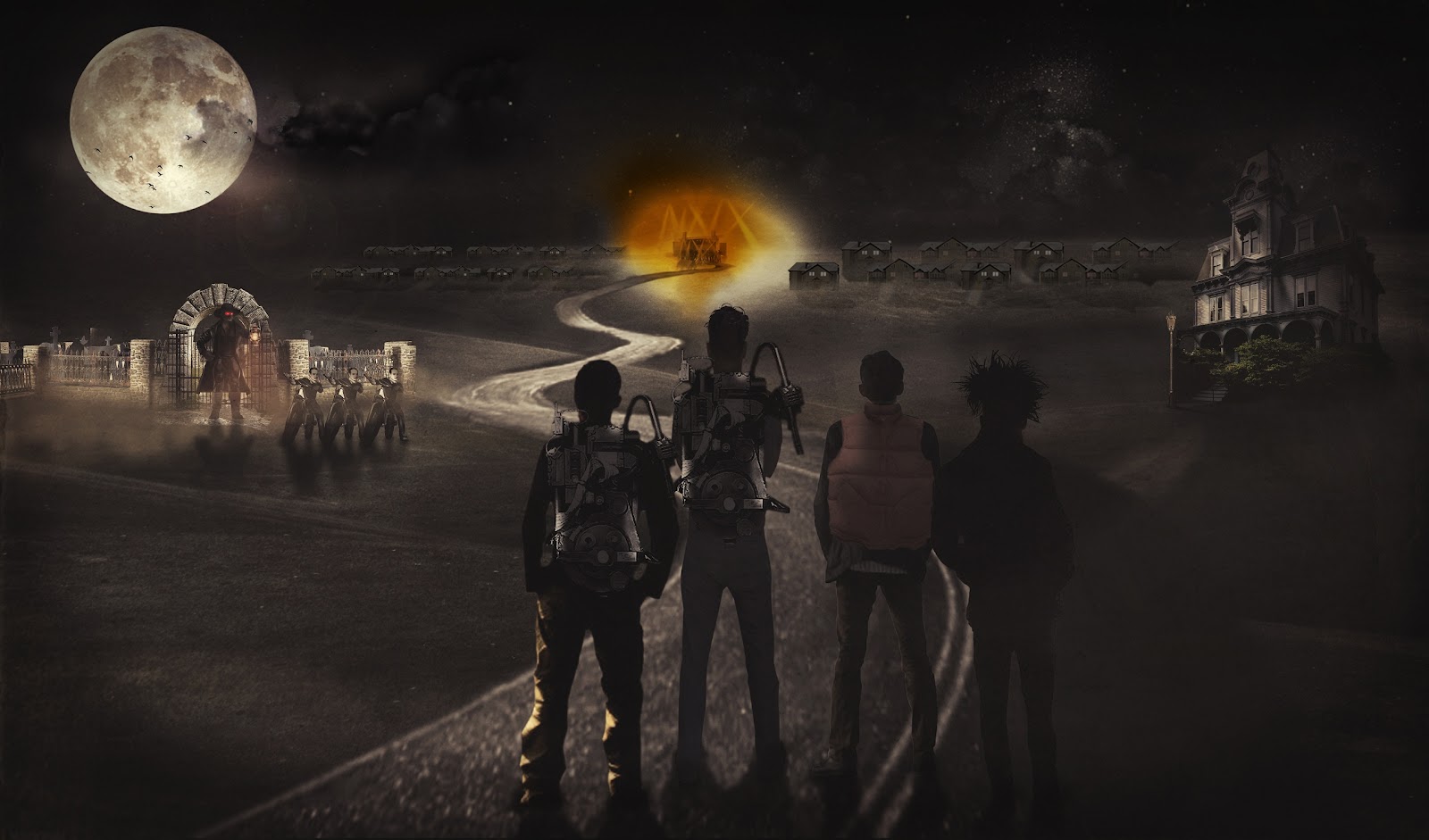
Okay, full disclosure here. I GREW UP in the town where today’s script is set! Oak Park, Illinois. As a result, I had a rather personal experience with the material. Everything Eric talked about, I knew. Lake Street? Walked it every day. Razzle Dazzle Costumes on the Oak Park Mall? That’s where I bought MY Halloween costume!
Needless to say, this was like walking down Nostalgia Lane. But even if I hadn’t grown up in Oak Park, I’d still be impressed, as it’s rare an amateur script is the best of the week – especially when the competition includes Alexander Payne, an Academy Award winner!
But that’s what happens when you write a smart, funny, heartfelt comedy.
Best Friends Forever, appropriately, introduces us to four best friends in the year 1987. There’s the “leader” and our protagonist, Daniel. There’s the “stud” of the group, Devin. There’s the “nerd” of the group, Will. And there’s the eternally quiet fourth member, Brian.
These four 13 year olds are in their last year of Junior High and things are starting to change for them, especially Devin, who’s pulling away in favor of going to parties and meeting girls. But the real change occurs when Daniel’s parents hit him with some shocking news – the family is moving in two weeks. His father got a job in another city.
Daniel is destroyed. He’s about to lose his friends forever. But after a little pouting, he’s inspired by a wild idea. The best times he and his friends had were during Halloween. What if they all went on one last trick-or-treating jaunt? And not only that, what if they tried to beat the 20 year old Oak Park Trick or Treat record?!
Naturally, his friends (who don’t yet know he’s moving) are skeptical. They’re 13 years old! 13 year olds aren’t supposed to trick-or-treat. Devin, especially, is against it. Trick or treating is SOOO not cool. But after a desperate plea, they reluctantly get on board.
We meet a few more players in the meantime. There’s, of course, classic 80s bully Carter Burke. All he cares about is humiliating nerds like Daniel and his gang, and after Daniel’s father embarrasses him, he’s really got it in for Daniel. Then there’s my favorite character – maybe ever – Miles Fisher. He’s four foot five and 68 pounds, loves Star Wars, and is king of the nerds. He’s also arrogant as f#$% (“While my fellow academics may turn their noses up at the thought of asking for candy, I find the rituals of Halloween quite rewarding.”) He may not be Carter Burke, but he makes things just as difficult for our heroes, especially Will, who he tortures relentlessly. Fisher is one of those characters who if Best Friends Forever ever got made, he’d become a cinematic icon.
The rest of the story is pretty simple. The group zips around Oak Park (and River Forest, our sister community – yes, Chicago’s suburb planners had a creepy hard-on for trees) trying to get enough candy to beat the record, running into a bunch of obstacles along the way. There aren’t many surprises or twists here – which is okay, since Eric keeps the screenplay focused squarely on the characters.
My initial thoughts after reading “Best Friends Forever?” Warm and fuzzy. Eric incorporates into his screenplay something so few comedies do these days – heart. And it leaves you with a richer more fulfilling experience at the end.
That and he has a unique ability to capture familiar moments that we all remember so well. For instance, there are a ton of lines like this one: “Allison’s friends giggle in that teenage girl way where it’s impossible to tell if they’re being cute or cruel.” Seriously, right!!?? If you can make a reader identify with enough moments in your script, they’re going to give themselves to your story. Eric is a master at this.
He also does a great job putting you in the time period. I read a lot of “period” scripts where the writer gives us no visual cues of what time period we’re in. It might as well be the present. The costumes the boys wear alone (Ghostbusters, Marty McFly, The Cure) let us know exactly where we are. But there are plenty of other hilarious 80s references that continue to remind us.
But where Eric really excels is in his character development. The very first scene – a sleepover between the four friends – shows us how much these guys mean to each other. We have them arguing over what movie to watch on cable (the focus being on nudity), telling scary stories, reading comic books, sleeping in sleeping bags. After that scene, you know these four are BFF, so when we find out Daniel is moving, it’s sort of devastating. It leaves an undercurrent of sadness to their pursuit that adds a layer of depth I don’t usually see in these scripts. And that’s the way it should be. We should feel some sort of conflict in the characters’ pursuit if you want to connect with the reader.
But it ain’t all reeses peanut butter cups and 100 grand bars. There are a few apples and candy corn packets in here that keep this trick or treat bag from winning the grand prize.
Simply put, the whole “trick or treat contest” was confusing. They were trying to beat this famous trick or treater, but I didn’t understand any of the rules. Were they going to combine all their candy? If so, isn’t that kind of cheating? And I’m not saying cheating is the worst thing in this scenario but because nobody monitors this contest, “honestly” beating the champ is really all you’ve got. If you know you didn’t really win, what’s the point?
There’s also something about a “stamp card” (houses stamping your card to prove that you trick or treated) that I didn’t understand and had never heard of before. It was another unclear rule in a contest full of them.
Also, a ton of emphasis is put on this former champ, a kid who, in order to get the record, ditched school at lunch so he could start trick or treating early. Yet our friends start trick or treating four hours later and somehow still beat the record?? Not only that, but they get involved in a number of diversions that steal big chunks out of their 3 hour trick or treat time. In my estimation, they trick or treated for maybe 90 minutes total. And they still won? This is why I was wondering – did they pool their candy together? Was that always the plan or did they come up with that at the last second?
And on top of all this, there’s this sort of leisurely pace they set for trick or treating. They never seemed in a hurry. It just didn’t seem like a group of kids who had to work their ass off to get the record. And the reason this is a big deal is because this is the PLOT OF THE MOVIE. The movie is about a group of kids trying to break a record! So if you don’t convince us that your characters are doing everything possible to break it, how can I be satisfied when it’s over?
I told Eric he needs his characters to ditch school at lunch just like the former champ. And to just create more of a sense of urgency.
There were a few other things that bothered me. I thought the haunted house set piece was a collosol waste of time. It was one of those classic sequences us writers convince ourselves works because there’s a lot happening. But because it didn’t have anything to do with anything else in the movie (resulting in rock bottom stakes), it just sat there like a giant rotting potato.
Also, the fourth friend, Brian, needs to be re-written. He doesn’t say anything ever. And what do I tell you guys about characters who don’t talk? They disappear on the page. And that’s exactly what happened here. Okay, he’s quiet. That’s what makes him different. But that just doesn’t work in screenplays. Whenever he came up, I was like, “Who is he again?” I might just ditch this character altogether.
BUT, like I said – the character work with almost everyone else was top notch. Daniel’s storyline about moving was powerful. Devin’s obsession with girls worked well. Will’s nerdy battle with Fisher was top-notch. And Carter and his goons were great.
I think this script needs to be clarified from a plot point-of-view. But character-wise, it’s light years better than most of the amateur scripts I read.
Script link: Best Friends Forever
[ ] what the hell did I just read?
[ ] not for me
[x] worth the read
[ ] impressive
[ ] genius
What I learned: Don’t use words that misrepresent the moment. There’s a scene early on where Carter corners Daniel at school. This is what Eric writes: “Daniel’s eyes drop. He’s suddenly incredibly interested in the tile pattern on the floor.” While we understand the meaning of the sentence after we read it, the words “incredibly interested” conflict with the tone the moment is supposed to represent. The idea is to show that Daniel is scared. “Incredibly interested” doesn’t convey that. So the sentence initially reads confusing. I would go with something simple like, “Daniel’s eyes drop to the floor.” Or, “Terrified, Daniel’s eyes shoot to the floor.” Make sure the words in your sentences properly represent the moment!

For those playing catch-up, Twit-Pitch was a contest I held where anyone could pitch me their screenplay on Twitter as long as it was contained within a single tweet. I chose the top one hundred loglines from those pitches and read the first 10 pages of each, which I live-reviewed on Twitter every evening (join me on Twitter – just yesterday I reached 10,000 followers!), giving writers a rare look into a reader’s head as the screenplay was being read. It was an interesting experience. To read the original discussion of the loglines and contest, head over to the 1300-comment post that occurred afterwards.
So where are we now? Well, the contest resulted in seven scripts whose first 10 pages were so good, they automatically advanced to the finals. There were then twenty “maybes,” pages that were good enough to catch my interest, but not good enough to automatically advance. I went back through those 20 “First Tens” and read them again, picking 13 to join the other 7 in the finals.
Now before I get to the finalists, I want to point out the biggest problem I ran into while reading everyone’s first ten pages. It’s something that happened too many times. There were a LOT of great first scenes, but a lot of bad SECOND scenes.
This is a devastating mistake to make because it speaks to a bigger issue. New writers LOVE writing first scenes. They LOVE pulling the audience in with something wild or weird or different or exciting. But the second they get to their second scene, which usually involves meeting their main character, they stumble around a formless scenario that only barely resembles a movie scene.
In other words, they don’t approach their second scene with the same gusto and “this has to be great” approach they do their first scene. And not surprisingly, this approach continues throughout the script. There are key scenes (the inciting incident, the scene where the hero gets his powers, the scene where the hero meets the female lead, the final battle) where the writer puts everything he has into them. But every other scene? They’re just trying to get through it.
Please – CHANGE THIS APPROACH! Sure, a scene where we meet our main character may not initially seem as exciting as that opening scene where the aliens land on earth. But your job as a writer is to make it JUST AS ENTERTAINING!
Out of curiosity, I watched John Carter yesterday, and was shocked to see that even the highest level professionals make this mistake. We start off with some sort of Mars battle (which wasn’t very good – but at least something was happening). Then we cut to our main character, John Carter, being secretly followed by someone through an Old West town. Carter realizes he’s being followed and knows he has to ditch the tail. So what does he do? He darts behind a group of people. The tail keeps walking, losing him, and we see that John Carter has blended in by keeping his back turned towards us while flirting with a random woman.
THAT’S YOUR FREAKING ESCAPE SCENE???? THAT’S HOW YOU INTRODUCE YOUR MAIN FREAKING CHARACTER??? BY COMING UP WITH THE MOST UNINVENTIVE STANDARD DITCH SCENE IN THE HISTORY OF MOVIES??? HE BLENDS IN WITH THE CROWD AND FLIRTS WITH A GIRL???
At that moment, I knew the movie was screwed. If the writer wasn’t trying to come up with an inventive ditch scene in the very second scene of the movie, then how could I expect him to try on the 20th scene in the movie, or the 30th? I mean look at another chase scene – the Millennium Falcon trying to ditch a Star Destroyer in Empire Strikes Back. You know what happens in that scene? Han Solo turns around and ATTACKS A SHIP 10,000 TIMES BIGGER THAN HIS. The Empire is so surprised, they don’t know what to do. Then, the Falcon disappears from their radar. We eventually learn that Solo has attached his ship to the side of the Star Destroyer, making him invisible. THAT’S a clever scene. THAT’S a scene where the writers actually tried.
The point here is that you can NEVER TAKE SCENES OFF IN A SCRIPT. There shouldn’t be a single scene where you say, “I just need to get through this.” You should try to write the best scene possible every time out. Even if it’s a freaking exposition scene. You need to try and write the best exposition scene you can possibly write. Because I guarantee you, if you take scenes off, we’ll get bored. Don’t EVER let the reader get bored. Always do your best.
Okay, sorry about that. Done with my rant. Here were the original Top 100 of the First Annual Scriptshadow Twit-Pitch Contest. And now HERE are the Top 20 finalists. I will be reading these scripts in full (possibly on Twitter – but still haven’t decided yet) and announcing a winner in 6-8 weeks. Read the first 10 of each yourself and let me know who your frontrunners are.
DEFINITES
1) RE-ENACTMENT – A civil war expert and his son must fight to survive a reenactment organized by a dangerous southern cult.
2) THE TRADITION – 1867 After losing her father, a woman unwittingly takes a job as a maid at a countryhouse of aristocratic cannibals.
3) SECOND CHANCE – After winning a nationwide lottery a man must decide what to do with his prize, fifteen minutes of advice to give to his younger self.
4) THE PROVING GROUND – 9 strangers wake in a deserted Mexican town besieged by killing machines: they must discover why they’ve been brought there to survive.
5) TUNDRA – When a U-Boat vanishes in the 1940s, it leads a team of American GIs to a terrifying secret trapped beneath the ice of Antarctica.
6) GUEST – After checking into a hotel to escape her abusive husband, a woman realizes guests in the next room are holding a young girl hostage.
7) GUNPLAY – A terrorist with a $10 mill bounty, a callous soldier of fortune and a mysterious man with no name walk into a bar in Afghanistan.
MAYBES THAT MADE THE CUT
8) FATTIES – When a lonely masochistic chubby chaser is abducted by two fat lesbian serial killers, it’s the best thing that ever happened to him.
9) RING OF LIAR – A lifelong bachelor accidentally proposes to his clingy girlfriend then tries to trick her into dumping him, but the tables soon turn.
10) THE MAN OF YOUR DREAMS – Man loves woman whose dreams predict future, but future she sees isn’t with him. Can he convince her to choose love over fate?
11) THE LAST ROUGH RIDER – It’s 1901. Terrorists have just taken over the White House. And only Theodore Roosevelt can stop them.
12) WOODEN – 22yrs old and tired of the pain and suffering of being a real boy,Pinocchio embarks on a journey to get turned back into a puppet.
13) EVERYTHING FALLS APART – When the world’s biggest superhero agreed to grant a dying boy’s last wish, he didn’t count on the boy wishing for all his powers.
14) UNTITLED WRIGHT BROTHERS – In 1903 North Carolina, the Wright bros attempt the first flight, but shenanigans arise when they fall in love with the same woman.
15) CUT, COPY, PASTE – A group of friends returns from a time-travel fieldtrip to find a nerdy student has altered his past turning him into a living legend.
16) CHAMPAGNE HIGHWAY – A man trying to solve the mystery of his con artist grandfather must overcome his own beliefs and the resistance of his broken family.
17) RIDING THE GRAVY TRAIN – With his favorite fast-food sandwich facing its final week before it’s phased out forever, an obsessed man leads a protest to save it.
18) SANTA MUST DIE – A group of last-minute shoppers trapped in a mall on Christmas Eve are stalked by a demon-possessed Santa. Horror/Comedy.
19) CRIMSON ROAD – Can it get any worse than living next door to a serial killer? It can if you live on CRIMSON ROAD… the whole street is full of them.
20) DOUCHE PATROL – Two partners in the newly created Douche Patrol try to expose a plot to douchify the masses through a reality TV show.
The writers of these scripts have 2 weeks FROM TODAY to get their full scripts to me. If they don’t, I have one alternate ready to take their place, “The Giant’s Passage.” – So hurry up guys!
Genre: Drama? Sci-fi? Comedy?
Premise: In the near future, a new scientific procedure allows people to shrink themselves to four inches tall, which reduces their carbon imprint on the planet, putting less stress on the environment. But this shrinking leads to a whole new set of problems.

Am I in the Twilight Zone?
This has to be one of the strangest scripts I’ve ever read by a professional screenwriter. Even Charlie Kaufman is going, “Dude, you went off the reservation with this one, buddy.”
Now going off the reservation can be a good thing. Most writers write stories smack dab in the middle of the reservation. Which is why they’re so predictable and boring. This is anything but predictable. However, there’s a point when you have to say, “Maybe I’ve gone too far.” And, actually, it appears that this Academy Award Winning writer realized that, which is why he made The Descendants instead.
So what is Downsizing?
Maybe I’ll find out during this review.
A Norweigen scientist named Dr. Jorgen Asbjornsen accidentally discovers how to shrink living matter down to 1/6000thof its original size. The implications of this are extraordinary. In a world where we’re destroying our resources on an hourly basis, the idea of shrinking someone down to the point where they leave 1/6000th of a carbon footprint on the planet could be the difference between losing our world and saving it.
Four years later, “downsizing” is becoming a niche trend. It’s not just about saving the environment, either. Because you consume so little as a little guy, downsizing makes you RICH beyond your wildest dreams. A couple hundred thousand bucks translates to the equivalent of 20 million bucks in the downsized world. Think about it. A normal big mac could feed 4000 downsized people. A downsized mansion only needs eight feet of space.
The central hub for most downsized peeps is a place called Leisureland Estates – the first full-time city dedicated to downsized folks. It’s here where our hero, the underachieving painfully unambitious Paul, is thinking of spending his future. Paul doesn’t have a lot of money. He’s one of many Americans feeling the pinch of that day to day grind. Miniaturizing himself would change all that. He’d be rich. He’d never have to worry about money again. It seems like a win-win.
After speaking to his wishy-washy wife, Audrey, she agrees to go through the process with him. So after all the prep and legalese, the two are split up, shaved, oiled, and thrown into the gamma-ray shrinking whatchumacalit. But when Paul comes out, he notices that his wife isn’t around.
Uh-oh.
Yup, turns out his wife chickened out. She doesn’t want to be miniaturized. Paul is furious, but in that way that some ladies are known to do, ahem, she turns it around and blames it on him. Either way, it’s over. Miniaturizing is irreversible and it’s kind of hard to have a relationship with someone 20 times your size.
But this is where Downsizing gets really freaky. We switch gears to a group of downsized Chinese immigrants who try to sneak into America via a TV box. All of them die except for one, a woman named Gong Jiang, who’s just barely survived, even though she lost her foot in the process.
Apparently China was illegally miniaturizing people to put less strain on the country and these test subjects had escaped. So we’re going to get a feel-good story about this miniaturized woman overcoming adversity, right?
Errr, no.
Gong is the most annoying person you can imagine. And not in a subjective way. She’s written to be REALLY ANNOYING. She barely speaks English and spends the majority of her time chastising everyone for not doing enough to help the world. She’s baffled by how much the Americans waste, going so far as to recycle their trash, since much of it could still be used in China.
What this has to do with the story, I have no idea.
Eventually, some international businessman named Javier enters Paul’s life and tries to get him back on track. But Paul is still devastated by the loss of Audrey, even though it happened over a year ago. Move on buddy. It’s over. Nope. Instead, Paul is inactive and boring and whiney. Is there ANY character we want to root for here??
Even now, I’m not sure what happens at the end. I know they go off to some Mexican version of Leisureland where everyone’s much poorer. It’s there where Paul and Javier and Gong all connect. A love story develops between Gong and Paul, even though she’s annoying and the two have absolutely no chemistry. It’s as if Payne said – “well, they’re the male and female leads in the film, so they HAVE to get together!”
Paul continues to be depressed. Gong continues to be annoying. And Javier continues to derail the story with random missions. And that, my friends, is Downsizing!
There are so many things wrong with this script, I don’t know where to begin. I’m desperately hoping this is an early draft and Payne was just trying to get all his thoughts down on paper. I also have to take into consideration that Payne is such a unique voice that some of the things that don’t make sense on the page will make sense on the screen. And finally, all writer-directors tend to overwrite, since they use the script to remind them what to shoot later on.
But even with all that, this is a mess. First of all, the main character is passive. This is like Screenwriting 101 – one of the first things you learn. If your main character isn’t after anything, the whole movie’s going to sit there. Look at Payne’s last movie, The Descendents. Clooney had to take care of all the logistical stuff before pulling the plug on his wife. Not the most heartwarming story but at least he was ACTIVE. At least he had things to do.
Paul just sits around feeling sorry for himself 75% of the time. When you do that, it makes the character boring and by association the story boring. So the script was pretty much doomed from the start. Even if everything else was perfect, that component of a story is so important that it’s a bona fide script killer.
Then Payne makes the decision to have about a dozen time jumps in the movie. Pulling off ONE time jump in a script is hard enough. And it usually needs to happen right away, like within 10 pages of the opening after a flashback sequence or something. But here we get 4 month jumps, 4 year jumps, six month jumps, 2 year jumps. When you have so many jumps, it sucks all the urgency out of your story. And as we all know from GSU, you want SOME sense of urgency in your story.
Again, to use The Descendents as an example, the urgency came via the need to sign the deal with the hotel owners to net himself and his family members millions of dollars. I think it was something like a two week deadline. This gave that story a sense of urgency. Imagine if we would’ve taken a 2 year jump in the middle of that story. Then a 2 month jump. Then an 8 month jump. We would’ve been like, “Huh?”
And I get that Downsizing is a different story with a trickier setup – one that seemingly requires time to pass so we can push the evolution of downsizing along. But that’s one of the challenges you have to figure out as a screenwriter. You have to figure out a way to place us in the now, not in twelve different “nows.”
I mean sure, Mad Max could’ve had a 50 minute prelude that took place over several time periods to show us how we got to a point where the last remaining people on earth were fighting for fuel, but instead they gave us a 2-minute opening montage/voice over and put us smack dab in the “present” in order to give the story urgency.
But where this script really went off the rails for me was Gong. I have no idea why this character was included or what the hell she had to do with the rest of the story.
I mean, why give her an amputated foot? What did that have to do with ANYTHING? It just felt like the entire movie turned into something else once she arrived. And worst of all, that movie could’ve taken place outside the downsized world. Why create a movie about downsizing if you’re not going to explore the specific issues of being downsized?
And who is Javier? I still don’t know. All I know is that on page 100, he practically becomes the protagonist.
I am BEYOND BAFFLED by this screenplay. It’s so bizarre. It’s so off. It’s so all over the place…I’m still not sure what I read. And you know what that means…
