Search Results for: F word

One of the most common e-mails I get is: “Hey Carson. I just saw that Deadline/Variety/Hollywood Reporter article about [Movie X]. Do you have the script? I’m writing a similar script and I want to make sure I’m not f&*%$.” I’ve gotten three of those e-mails just this week! Then I see a trailer for this movie called, “Sweetheart” and lookie what we have here. A woman gets stranded on an island with a monster. Does that sound familiar? Yeah, Bad Robot was developing the same exact film, titled, “Beast,” which I reviewed in my newsletter and was very much looking forward to.
This leads us to today’s question. What if you find out that the script you’ve been working on for the past five months is strikingly similar to another project? Should you give up? Most writers do. But I have news for you. Finding out there’s a project out there that’s similar to yours is a common occurrence in the industry. In fact, seasoned writers expect there to be similar projects announced while they’re writing scripts. The reason being, we’re not all as original as we think. Three years ago, I remember seeing five separate thriller scripts about hotel owner peeping toms who witness a murder.
So you discover there’s a project out there like yours. What do you do? First of all, you need to gather as much information as you can. Ideally, like the writers e-mailing me, you want to read the script. The more you know about their story, the more you can make sure your story is different. But often times, their script is nothing like yours. It’s actually rare that two people are executing a story in a similar way. But even if it has some similar story beats, don’t fret. The script actually isn’t the most important thing.
You need to find out how much juice is behind the project. Are they putting a RELEASE DATE behind this? Are they saying things like, “Production starts in two months?” Are they announcing cast members outside of the one or two leads? If it sounds like the studio is fast-tracking the project in any way, that’s trouble for you. Cause it means the movie is probably getting made.
However, if this is just something that a big director has attached themselves to. Or even a big director and a big actor, that doesn’t necessarily mean anything. Spielberg attached himself to Roboapocalypse. I’m still waiting for that one to come out. James Cameron and Guillermo Del Toro attached themselves to Mountains of Madness. That wasn’t playing at the Arclight last time I went there.
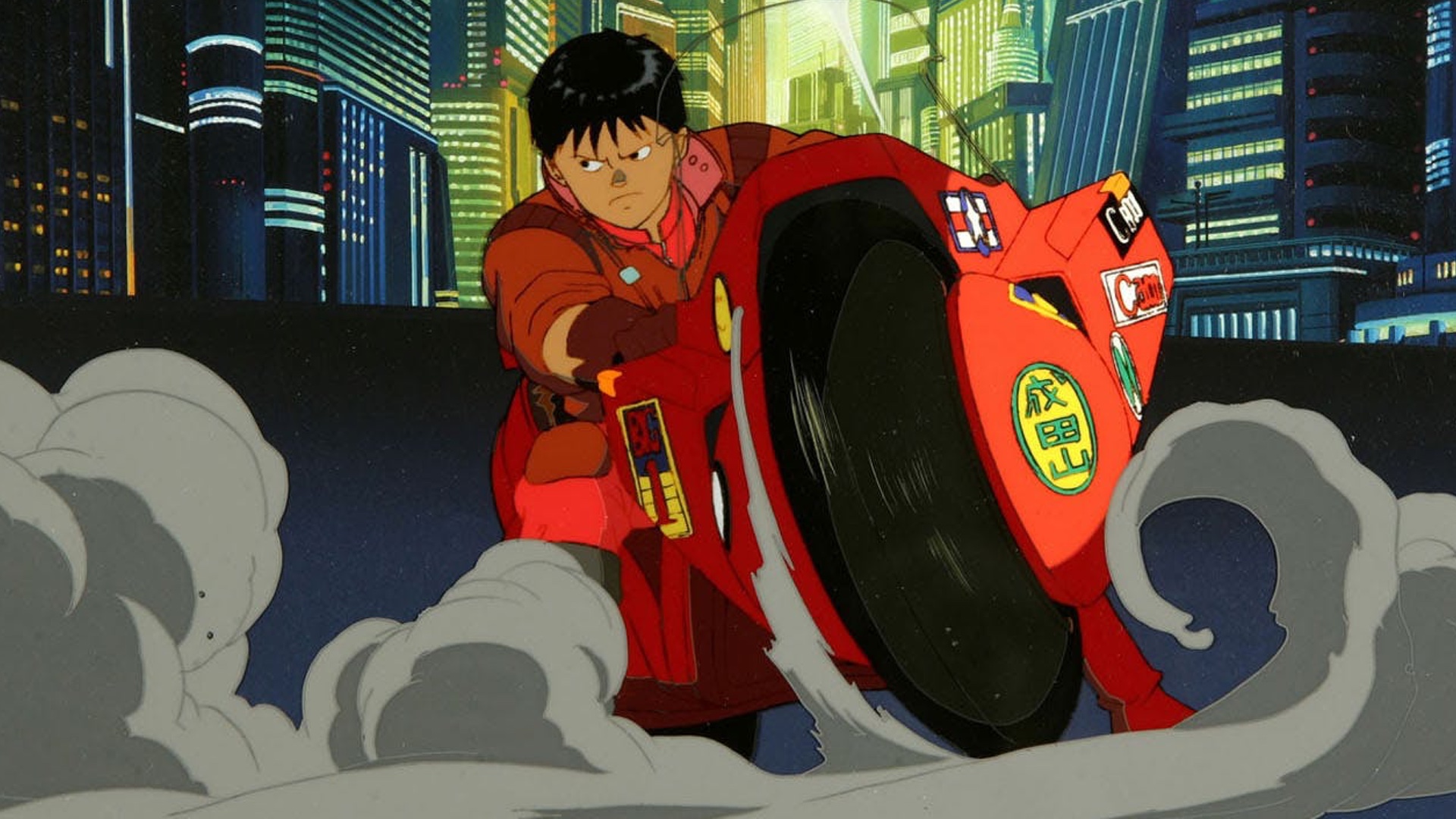
Back in the day, I’m talking early 2000s, I had this script that took place in the future and involved motorcycles. Then I read a big splashy Variety article about how they were making a live-action Akira, a movie that also took place in the future and revolved around motorcycles. Aww, man, I thought, I can’t write that script anymore and threw the idea in the trash. Well, 20 screenwriters and a dozen directors later, Warner Brothers still hasn’t made Akira.
What you have to remember about Hollywood is that it’s more likely that something doesn’t get made than gets made. So even if you hear about a similar project, you shouldn’t worry. Most projects get stuck in development. Development is a process whereby producers work with a writer to bring the script to a level that can attract talent and financing. Those things are hard to attract. And scripts are hard to write. So what usually happens is that the writer writes something “professional” that checks all the boxes, but is missing that je ne sais quoi.
Think about that for second. The writers and producers spent 6-9 months working meticulously on the script, hammering out all the issues, out only to find out, when it was all over, that it wasn’t any good. This is a momentum-destroyer and what often happens is whoever was attached to the movie moves on to another more exciting project, or puts this one on the back burner. The project gets placed into stasis until they decide to revive it and put some money towards hiring another writer and trying again. This process rinses and repeats and usually ends in failure. Which is kind of depressing when you’re thinking about it from the development side. But it’s good news if the project is similar to yours. Because it means you don’t have to worry about it.
This is why I tell amateur writers who find out another amateur writer has the same idea as them, “Dude, that is the last person you need to worry about.” The chances of an amateur script getting purchased and produced is small. So that’s not the writer you need to concern yourself with. If you learn that David Koepp is writing a similar idea, then yeah, you might need to put your worry boots on. But don’t worry about other amateur writers.
The only time you should worry about something is if they’ve already shot the film or it’s being fast-tracked by a major studio. I wouldn’t even be scared if you find a similar idea from an independent production company that’s already been produced. The industry has so much content right now that anything that doesn’t get a wide release or an Oscar push isn’t well-known. An A24 movie might make 1.5 million dollars at the box office. So if you have a similar idea to that film that’s larger in scope and therefore doesn’t cross over into that audience, you should be fine.
You want to know what matters most? It’s going to sound cliche but it’s true. Write a great script. Write complex scene-chewing characters. Come up with a plot that zigs and zags in ways the reader never expected. Focus on creating an emotional connection between your characters and the audience. Create two AMAZING scenes that nobody will be able to stop talking about.
Because even if you write something that’s too similar to another project, you’ll still have a script that demonstrates your talent. And this industry is more about interviewing for the next job than trying to sell your next screenplay. I know some writers who have used a single writing sample for going on ten years to get work. So focus on writing that great script and not panicking every two weeks when you hear that someone else has the same idea as you. Cause chances are, that’s the last thing that will get in the way of your script’s success.
Want proof? I know a recent script that had FOUR other similar concepts in various stages of development and production to compete against. And that script still sold. What script am I talking about? I can’t tell you yet. But hopefully I’ll be able to soon. :)
Yo, do you have a logline that isn’t working? Are those queries going out unanswered? Try out my logline service. It’s 25 bucks for a 1-10 rating, 150 word analysis, and a logline rewrite. I also have a deluxe service for 40 dollars that allows for unlimited e-mails back and forth where we tweak the logline until you’re satisfied. I consult on everything screenwriting related (first page, first ten pages, first act, outlines, and of course, full scripts). So if you’re interested in getting some quality feedback, e-mail me at carsonreeves1@gmail.com with the subject line: “CONSULTATION” and I’ll get back to you right away!
Genre: Sports Drama
Premise: A former high school hoops star turned alcoholic is called upon to coach his former school’s basement-dwelling basketball team.
About: When all of “The Batman” controversy was going on (would Affleck still be the Batman? Did he want to be the Batman?), this is the movie Affleck decided to sign onto instead. It comes from long time spec shaman, Brad Ingelsby, who’s sold as many spec scripts as any writer this past decade.
Writer: Brad Ingelsby
Details: 124 pages
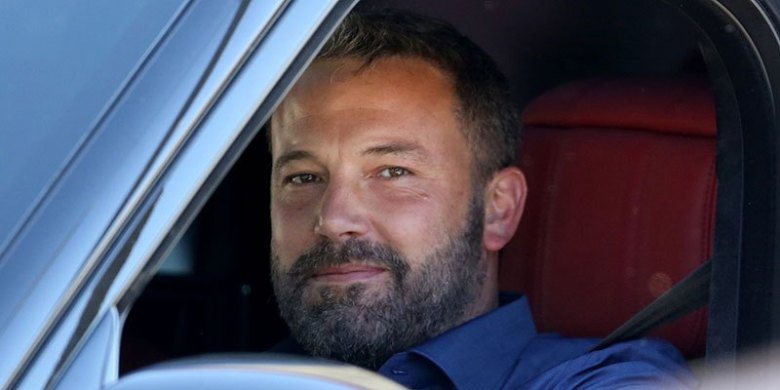
Well look at that. Just days after I pronounced the sports drama an express trip to Ignore E-mail Query Alley, I’m reviewing a sports drama that got Ben Affleck attached. What’s going on here? Well, for starters, it’s not so much a sports drama as it as a “Down-On-His-Luck Dude Coaches Kids” drama. If a formula has won over Hollywood before, it can do so again. At least that’s the industry mentality. Also, Ingelsby’s a writer with several produced credits and a reputation for writing some of the best spec scripts in town. In other words, there are extenuating circumstances.
Reading Affleck projects is always an inadvertent trip into his psyche. We know he has drinking problems. Today’s character has drinking problems. We know he loves sports. This is about sports. We know he loves that East Coast blue collar vibe, as that’s how he got famous (Good Will Hunting). I don’t know if all this was calculated by Ingelsby, but in retrospect it would’ve been more of a surprise had Affleck NOT signed on.
Just outside Philly, 30-something Jack Cunningham works construction, lives alone, and drinks on the daily. We get a good idea of what this man’s life is like when he strolls into a bar after work… on Thanksgiving. Problem with booze? Check.
But that’s not the only problem Jack’s got. He’s got a pushy sister who’s always nagging him about isolating himself and an ex-wife he still loves who’s just found herself a rich boyfriend. He’s also got another issue which we’ll find out about later.
One night Jack gets a call from Father Tierney at Bishop Hayes High School, where Jack used to go to school. Back then, Jack was one of the best high school basketball players in the nation. But that was a long time ago. Father Tierney tells Jack that the head coach position is vacant and he wants him to take it. Jack mulls it over and finally decides, why not?
On the first day of practice he realizes he’s got a pretty good team. They’re just not well-disciplined. When Jack starts instituting that secret ingredient, the team gets better. Unfortunately, Jack is slipping into the locker room every chance he gets to down a few beers. He just can’t get away from that sweet sweet Coor’s Light.
And then we learn why Jack’s an alcoholic and no longer with his wife. DEAD KID BACKSTORY. Yup, that rascally favored trope of overwrought dramas is back again. Jack’s son died when he was nine and it destroyed his life. So in addition to trying to get this team in order, Jack has to come to terms with the loss of his son and repair his broken relationship with his ex-wife. Who knows, maybe they’ll even get back together again.
Yes indeed. As you can tell from the sarcastic manner in which I summarized Dead Kid Backstory, I’m not a fan. In fact, when I sensed that we’d learn why Jack lost his wife and became an alcoholic, I kept repeating to myself, “Please don’t let it be a Dead Kid Backstory. Please don’t let it be a Dead Kid Backstory.”
Why do I hate Dead Kid Backstory so much? Because it’s the default go-to for bleak dramas about adults. I see it ALL THE TIME. And the only time it works is when there’s a genuine depth to it, when you know the person writing about it has a personal connection to the experience. And if it runs that deep, it’s usually too depressing. Nobody wins if your only choices are Too Cliche or Too Depressing. But I’m not going to harp on that. I’ve already rambled about DCB enough on the site.
Despite DCB, Ingelsby remains one of the best character writers in town. And you can see that from his character descriptions….
His older sister, BETH, 37, a feisty, stubborn homemaker. Annoyed at the moment that her younger brother is holding up the dinner she spent the entire day slaving over.
Her husband, KURT, 38, an innocuous, big-hearted family man who drinks his coffee out of a Worlds #1 Dad mug. He wears a cashmere seater embroidered with the words, Graham Mercedes- Benz Dealerships.
Their son, RYAN, 8, a shy, sensitive boy. The only thing Ryan loves more than basketball is his Uncle Jack.
He’s one of the few writers where I know exactly who his characters are just from their descriptions alone. And it’s not only that. He’s great at showing character instead of telling character. For example, one of the first things Jack does after construction work is get in his car, reach into a back seat cooler, and pour himself a beer.
One of my favorite “show don’t tell” moments in the script was when Jack had to look nice for his first game. So he goes to the back of his closet to find a suit, takes it out, puts it on, then feels something in the suit pocket. Brings it out. Movie tickets to “Meet the Parents.” In that moment we know exactly when the last time was Jack wore this suit. Seems like a small thing, but so much better than the lame “tell” version, which I read all the time. “When’s the last time you wore that suit, Jack? The Clinton era?” Show is always better than tell.
If only we didn’t feel like we’ve seen it all before. There’s a storyline where the father of the best kid on the team doesn’t want him playing in college, so Jack has to convince him to let him follow his dreams. Hasn’t that been done a thousand times already? With that said, you like everyone here enough that you care what happens to them. That’s Ingelsby’s talent. He knows how to construct a character.
What this script needed was a clear conflict at the center of the coaching storyline. Something we could latch onto. In Hoosiers, a big inspiration for this script, it was about a town that was used to doing things one way. And a coach came in and wanted to do them the opposite way. That was the conflict. We understood that whenever a big scene came around, that conflict would be at the center of it.
What’s the conflict here? I have no idea. There was a moment in the middle of the script where Jack gets mad at the team and curses them out. Afterwards, the assistant coach conveys his discomfort with that outburst and I thought, that could’ve been your conflict right there. This is a Catholic religious school. Yet we never lean into that. In fact, the players are just as foul-mouthed as Jack is. Had the school been by-the-book and highly religious, then Jack comes in as this atheist has-been alcoholic, now you’ve got a clear conflict that needs to be resolved. But we don’t get anything close to that.
Usually when a script has problems, it’s on the character end. With Has Been, it’s the plotting. It’s all too obvious. Again, if feels like several movies we’ve already seen. When the biggest surprise in your script is DCB, you need to get back in there and come up with something better. Ingelsby is lucky he’s so good at crafting characters we like, cause normally, the issues in this script would’ve sunk it.
[ ] What the hell did I just read?
[ ] wasn’t for me
[x] worth the read
[ ] impressive
[ ] genius
What I learned: If you’re going to use DCB, you need to tie the child’s death into the plot in a creative way. Here, Jack’s son was 9 when he died. It’s random. It would’ve worked better if his son was in his teens. Why? Because Jack is coaching teenagers. Coming to work every day would be like facing his biggest fear. These kids would remind him of his own kid. Instead, we get generic DCB, which is always a let-down.
Genre: Psychological Horror / History
Premise: Ten years after the vicious atrocities of the Partition, a Pakistani woman attempts to make peace with the brutal murder of her family when a vengeful spirit returns to haunt her.
Why You Should Read: This is a setting and historical event that has never been depicted in Indian film, let alone Hollywood and is one of the most overlooked humanitarian crises of the 20th century as it came in the immediate aftermath of World War 2. Up to 2 million people died as a result of this mass migration, and the trauma and violence that occurred has formed the rigid backbone of the Pakistan-India conflicts we see today. By taking a supernatural angle, I’ve attempted to manifest the inner turmoil felt by the survivors as well as present a moral conflict for the reader to constantly have in mind throughout. As a Pakistani, this is an extremely important topic to my cultural history, and after hearing some of the absolute horror stories my direct ancestors faced just 70 years ago shook me to my core. This is an event that had a direct impact on every single Pakistani and Indian, and fearlessly showcasing the terror of it all will be something I’ll forever strive to accomplish.
Writers: Raza Rizvi
Details: 88 pages (updated draft from the one that competed in Amateur Showdown last Friday)

Not gonna lie.
As I can see the golden shades of the weekend shining just over the Hollywood hills, and all the happiness that comes with them, I was a mite under-prepared for the brutality of this subject matter. With that said, I’ve always been curious about this region of the world. And I was excited to read something from one of the site’s most active contributors. I admire how dedicated Raza is to the craft and how active he’s been in grabbing fate by the horns. He’s really going for it, which is the best way to make it in this business. Let’s take a look at this very personal project of his…
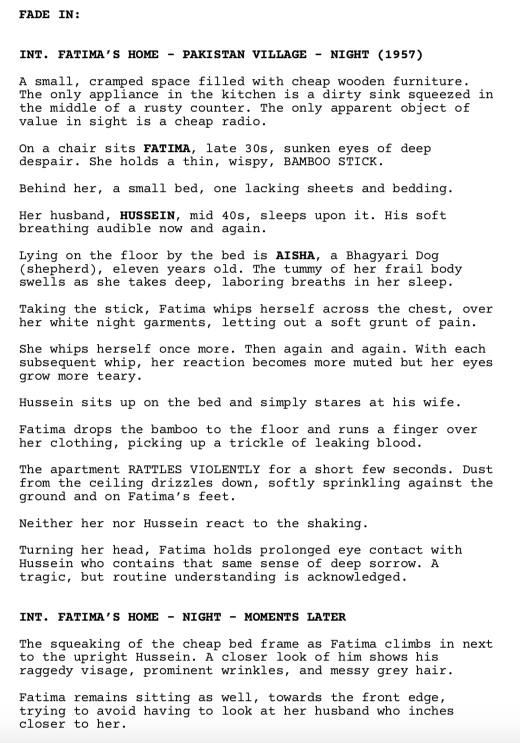
The Well starts off with a preface explaining that in 1947, the British separated India and Pakistan into two separate countries in order to solve the region’s complex religious disparity. For those people who needed to travel to the opposite country, many of them were slaughtered and raped. This story takes place 10 years later in Pakistan and follows Fatima, a 30-something nurse who canes herself every night for unknown reasons. She lives with her husband, Hussein, who works in the mines.
The only light in Fatima’s life is Aisha, her dog, who she found on the day her train to Pakistan was attacked and derailed. Quickly after we meet Fatima and Hussein, an evil spirit in a 17-year-old girl’s body, Jinn, appears in a lake and stumbles into their house. They clean her and clothe her and decide they’ll figure out what to do with her tomorrow.
The next day, Hussien goes off to work in the mines while Fatima does her nursing rounds in the village. While they’re away, Jinn spirit-attacks the dog, leaving it near death. When Fatima returns, she’s furious, convinced Jinn did something to the dog, and takes Aisha out to her friend, who she hopes can save the canine. Meanwhile, Jinn starts walking around the village, sending bad voodoo in every direction. This causes several explosions in the mine which obliterates many of the children who work in its deepest caverns.
We flashback to Fatima’s past where we learn that she once had a daughter. And one day, while getting water from the well, a group of bad men rode up, wanting to hurt and possibly rape them. Fatima and her daughter run to their house and hide, but when it’s clear it will be only a matter of time before the men find and rape her daughter, Fatima repeatedly stabs her daughter in the heart to kill her. It is here where we realize that Jinn is a recreation of who her daughter would be if she were still alive today. And she’s still angry about being murdered by mommy. To drive her point home, she spends the rest of the day laying carnage to the village and everyone in it.
This movie includes a train ride of beaten down souls who then have their train blown up in an attack and the survivors slaughtered by groups of men with swords. For those who survive the attack, they are riddled with bullets. This movie includes a dog that suffers for an excruciatingly long time before he’s finally put out of his misery. It includes 5 year old children pushed into tiny passages in a mine to do their jobs… who then die in a horrifying mine fire. We literally watch them scream as they burn to death. It includes a woman and her daughter who run from a group of evil men. When the men get close enough, the woman stabs and kills her daughter so that she won’t be raped. And that’s just a fraction of how much violence and suffering goes on in this story.
Before I say what I’m about to say, I have to be clear. I’m not a fan of sadness packed on top of sadness. I need balance in my movies. And I need my movies to provide an overall sense of hope. When it comes to horror, I think the formula that works best is when evil disrupts joy, happiness, contentedness. It is the sour added to the sweet that creates a juxtaposition that makes horror work. When you interrupt a terrible situation with an even worse situation, it creates such a sense of despair that the events become uncomfortable to watch.
I’m not sure I know anyone who wants to see a 5-year-old boy who’s been forced to work 16 hours a day in a tiny mine tunnel die as fire melts his skin off in real time. To me, that’s a huge miscalculation in the understanding of what audiences are comfortable with. And also a weakness in understanding how to balance the positive with the negative to keep the viewer engaged. Balancing those opposite ends of the spectrum is often what defines the best storytellers. They know when you’re too down to see another scene of suffering. They know when you’re too comfortable and happy and therefore the perfect moment to throw a death at you. To hit the audience over the head with misery after misery after misery… I don’t know of any successful movies that do this. Even Schindler’s List had its fair share of happy moments. And that was about the Holocaust.
If I could only convey one lesson to Raza in today’s review, it would be to study tone. Understanding tone is natural to some but unnatural to others. And what’s so frustrating is that when it’s unnatural to you, you can’t see the mistake you’re making. To you, it’s obvious you would take a 5-year-old boy who was living a life of suffering and burn him alive in a long torturous death scene. To everybody else, it’s obvious that you would never do something like that in a movie. So what Raza has to do is watch all his favorite movies and take stock of the lowest moments to understand what audiences can handle. Also, take stock of the ratio of positive to negative scenes and how many positive scenes writers will write before they hit them with a negative scene, and vice versa.
Cause the truth is, this story is flawed at the concept level. Like I said, you don’t want to interrupt misery with even worse misery. I don’t think audiences find that compelling. That would be my advice here. With that said, I’m interested in hearing from you cinephiles with a darker palette. Are there movies out there like this that have done well? I openly confess I’m not as knowledgeable about these types of films cause they’re not my cup of tea.
Script link: The Well (new draft)
[ ] What the hell did I just read?
[x] wasn’t for me
[ ] worth the read
[ ] impressive
[ ] genius
What I learned: Suffering can be used to create sympathy for a character. But there’s a threshold for what the audience can take. Once suffering goes past a certain level, the audience checks out. It becomes too much. And that’s what happened here. Everything was too much.

Duh-duh-duhhhhhhhhhhh!
It’s time, once again, for the dreaded “Why Your Script Didn’t Get Picked For Amateur Showdown.” So here’s the dealio. I WANT TO HELP YOU. I want to put you in the head of the person who’s receiving your query. Most writers never learn why their query was rejected. It’s one of the most frustrating parts of being a screenwriter. It’s like getting dumped but never told why.
One thing you have to remember is that it takes effort to read something. That’s why very few people do it. And most of them only do it if they’ve been told by ten different people and all of the internet that it’s great. That’s why your query is being judged so harshly. People are so lazy, they don’t even want to go through the hassle of clicking the PDF document, downloading it, and then opening it to read the first page.
You have to both excite them with your idea and not say anything that raises any red flags. For example, I might receive a solid logline, then, one sentence later, the writer boasts that it’s his first screenplay. My eyes immediately roll because I now know the script will be bad. To be clear, this post is all about love. It’s about helping you see your pitch through a reader’s eyes. I encourage everyone in the comments to keep the critiques helpful, not hurtful. Let’s get the ball rolling!
Hey Carson – What would happen if you combined the psychological depravity of THE GOOD SON with the science-fiction horror of THE QUIET PLACE?
You’d have GLOBAL POSITIONING, my 71-page, tightly written, fast-paced new sci-fi horror script that I’m submitting for your consideration for Amateur Friday (attached here).
Here are the details:
Title: Global Positioning
Genre: Sci-Fi Horror
Premise: After their iPhone’s GPS is hacked by tech-savvy aliens and they’re re-routed to a remote area to be devoured, a family that’s stranded in their car must survive not only the flesh-eating creatures outside – but their mentally unstable son inside.
Why You Should Read: In a lot of horror/thriller movies, it’s the squeaky clean good guy versus the pure evil bad guy. To me it’s more interesting if the so-called good guy is flawed in some way, even borderline bad, which makes for more interesting characters and a richer story. That’s what I’ve tried to accomplish with this script – combine the psychological depravity of THE GOOD SON with the science-fiction horror of THE QUIET PLACE. I’d appreciate any and all feedback on it. Thank you very much!
Sci-fi Horror is a good genre to write in. One of the most difficult challenges in making movies is the marketing aspect. So when you write in a genre that’s highly marketable, you’ve got an instant leg up on the competition. Why didn’t I choose this, then? For starters, I got worried when I saw 71 pages. I know micro-scripts are becoming kind of a thing. But 71 pages is too short for a feature. The main thing that concerned me, however, was that the logline contained shades of comedy even though the script isn’t comedic. An iPhone’s GPS being hacked by “tech-savvy aliens” makes me think comedy immediately. Also, the use of the word “devoured” has comedic roots when you’re talking about aliens coming after you. It has me thinking of movies like Critters or Tremors. Not The Good Son or A Quiet Place. Word choice in a logline is EXTREMELY important. So you want to make sure that the key words you’re using are conveying the proper tone. Finally, it kind of felt like two different movies with the kid aspect. I would say that getting attacked by aliens is enough (we just saw it in the spec sale “Out There” about a family who gets attacked on the highway). To throw a crazy spooky kid into the mix feels like one idea too many. These are the reasons I passed on Global Positioning.
Hi Carson,
This is again XXXXXXX from Germany. I’d like to present you my 2nd screenplay, the Horror-Thriller “Full Moon Above Central Park”. This is a classical werewolf-stroy in a modern setting. It would be great if you’ve got the time to read it and give my some needed advices and help with imrpoving my writing.
Logline: When an investigative journalist discovers that a werewolf is responsible for a series of brutal killings in Central Park, she soon has to learn that the real monsters in New York aren’t those who come out at moonlight.
Why you should read: In the last decade, the genre of werewolf-movies almost disappeared, thanks to the s*** “Twilight”-teen-stuff. I can’t remember any good or scary movie in recent years that was as good as classics like “Wolfman” or “American Werewolf”. With my screenplay I want to tell a thrilling, scary and entertaining story with all the well-known elements of the above mentioned movies.
Additionally, I tried to pack a political message about the current greed and egoism of some politicians in my story, so that my script becomes, if you like, a monster-movie at serveral levels ;).
I respect you und your work at scriptshadow. It would be a real honor if you could read and review my screenplay.
Greetings from Germany,
I have a lot of love for my readers from different parts of the world. Their journey as a screenwriter is often harder than those of us who live in the US. So I root for you. But you guys have to bring it! As unfair as it sounds, you will be judged more harshly. The people who move to LA tend to be the most serious. So, on average, those scripts are better. But it doesn’t mean you can’t succeed from Germany or Russia or even Iraq. However, YOU HAVE TO BRING YOUR A GAME! The very first sentence in this query is grammatically incorrect. It should be, “This is XXXXX from Germany, again.” What that tells me is that the script is going to have ESL (English Second Language) issues. Also, I’m going to make a blanket statement here because this is routinely a problem regardless of experience. Don’t tell anyone how many scripts you’ve written. It’s not a number that helps you. If it’s too low, people think you’re not ready yet. If it’s too high, people are wondering what’s wrong with your writing that you haven’t succeeded yet. So let’s keep that number to yourself.
The logline itself isn’t bad. But it feels too familiar. We basically have a werewolf killing people in Central Park. What I would tell this writer is to set his werewolf movie somewhere interesting in Germany. Half the screenplays written are set in New York and yet you’re intimately familiar with this entire country that most Americans have never been to. Use that to your advantage, like the way Neill Blomkamp used South America to create a unique alien movie with District 9.
P.S. For you non-English speakers, find someone from the U.S. or U.K. (or the Aussies!) to proofread your e-mail queries. And if you need someone to do a full script ESL proofread (would cost $$), e-mail me (carsonreeves1@gmail.com) and I’ll hook you up with someone. This stuff matters, guys. You don’t want to shoot yourself in the foot before they’ve even gotten to your script.
HORROR, DRAMA.
LOG LINE – During WW1, Russian and German soldiers agree to a cease fire due to attacks by a super pack of Wolves. Joining forces they fight in this tour de force.
Hey Carson, I’m hoping you read my script! I’m a Father of three, who got this writing bug a year and a half a go. I work a labor intensive and monotonous job but that’s alright it gives me a lot of time to think and dream up these characters and worlds. I get support from my wife and kids, even though they think I’m a little crazy, but I’m just crazy enough to believe my scripts will be made into MOVIES one day.
These queries kill me because I know how many of you out there are working these jobs you don’t like, having to dedicate all your time and money to your family, giving you very little time/resources to pursue your screenwriting dream. But here’s the thing you have to realize – Hollywood doesn’t care how bad your struggle is. They care how good your script is. And there’s a certain level of professionalism that is expected of you in order for someone to open your script. This query sub-communicates that you’re still in the beginning stages of learning the craft. The logline isn’t bad. I like the visual of World War 1 and wolves. But the end of the logline is a classic, “I don’t know how to finish a logline” ending where you sort of taper off into a general implication of what’s going to happen. The end of the logline needs to be STRONG. It needs to have punch and tell us what’s happening. “When a group of scientists come for an early look at the world’s first dinosaur theme park, a giant storm derails their tour and unleashes a T-Rex and a pack of velociraptors on them.” That’s Jurassic Park. Notice how the end gives us these intense images of needing to escape these deadly monsters. Again, I wouldn’t tell anyone how long you’ve been doing this. It’s too often used to make assumptions. But yeah, the main thing here is that the writer didn’t seem ready for prime time.
Hey Carson!
This is my first time submitting, but after following your site for about two years now, I feel confident enough in it to throw it out there!
Title: A Left Swipe
Genre: Coming-of-age Drama
Premise: A morally righteous high schooler aims to lose his virginity before heading off to college by using the notorious hookup app, Tinder.
Why You Should Read: Everyone remembers the tumultuous period that follows immediately graduating high school. You’re told that you just lived through the best years of your life, your parents start to stress about whether or not you plan to live with them for the next twenty years, and, for the first time, you have to actually make a decision for yourself as to what you want your future to be. All this stress and more befalls my protagonist who, like many high school graduates, is deeply concerned over how he’s still a virgin. In this sometimes funny, sometimes heart-wrenching story, I look into the awkward expectations placed onto high school graduates, the tragedy of expectations, and the depersonalizing nature of modern relationships, all in a clean 89 pages! Hope you enjoy.
Love that this writer finally had the courage to put his work out there for others to read. That’s not easy to do! So props for that. Here’s the problem with this idea. It’s too simplistic and general. There’s nothing unique about it. And I get what the writer is saying. He wants to tell a universal story. Which is smart. Your characters need to be experiencing universal problems so that the audience can relate to him. But that doesn’t mean you get to package it in such a simplistic manner. I mean, this is a movie about someone trying to get laid. That’s not just a regular plot I’ve seen thousands of times. It’s a SUBPLOT I’ve seen thousands of times. That’s a good indication that your concept is weak – if it’s something that could be a subplot in another film. Also, Tinder. People: technology ideas date quickly. I’d stay away from them unless the technology is BRAND NEW and the concept is worth the risk of its short shelf life. I do give the writer credit for adding “morally righteous” to the character description as it adds some irony to his situation. But it’s still not enough to get past the unoriginal premise. But keep at it! You just have to continue to write and get better. Oh, and here’s a tip. Get your super-honest friends to look at your concepts ahead of time. If they’re not excited about them, maybe you want to keep generating ideas before you commit the next six months of your life to something.
Hi Carson,
Grateful if you would consider my vampire ice hockey script “Five For Biting” for a spot on AOW. Details below:
Title: Five For Biting
Genre: Adventure/ Mystery
Logline: When a visiting hockey team turn the population of their town into bloodthirsty vampires, it is left to the only people who can match them on the ice to stop them – the local school figure skating team
WYSR: Ever wondered what you’d get when you mixed The Lost Boys with The Mighty Ducks and added a splash of The Goonies?? Well now you can find out! This script is inspired by the fascinating historical account of the remote Colorado mountain town that was descended upon by “vampire-like personages” during the silver rush of the late 1800’s. “Five For Biting” both incorporates and builds upon that famous folklore in a supposition of how a similar event may occur in the present day, told from the perspective of a group of small town kids each dealing with the growing pains of adolescence in addition to the imminent destruction of their home by bloodsucking vampires. Hopefully those things appeal to enough people to get some reads and feedback. I’d love to know what you guys think.
I’ve come across this submission a few times and each time I read it, I have the same thought, which is, “There’s too much going on here.” For starters, it’s not the easiest logline to understand. “When a visiting hockey team turn the population of their town into bloodthirsty vampires…”. If they’re the “visiting” team, and they’re turning the population of “their” town into vampires, wouldn’t that mean that the vampires were miles away, back in their home town? I think you’re saying they’re turning *this* town into vampires, but that’s far from clear in the logline. Then it seems that the vampires – your big hook – aren’t relevant to the story, as you point out that the local figure skating team is going to take on the hockey team. So where do the vampires come in? One of two things is going on here. Either the idea is too complicated. Or you’re not conveying the idea clearly enough. This is why I encourage writers to get feedback on their logline. You’re so close to it that any version of the story you write down will make sense to you. But to somebody unfamiliar with your script, the logline might seem like a jumble of dissociated ideas. I will say that the idea is original. I like the use of real lore as inspiration. But the logline’s got to be clear!
And that concludes another episode of “Why Your Script Didn’t Get Picked For Amateur Showdown” Use your comments to help these writers out. And if you want to submit to Amateur Offerings, follow the instructions at the top of this post!
Yo, do you have a logline that isn’t working? Are those queries going out unanswered? Try out my logline service. It’s 25 bucks for a 1-10 rating, 150 word analysis, and a logline rewrite. I also have a deluxe service for 40 dollars that allows for unlimited e-mails back and forth where we tweak the logline until you’re satisfied. I consult on everything screenwriting related (first page, first ten pages, first act, outlines, and of course, full scripts). So if you’re interested in getting some quality feedback, e-mail me at carsonreeves1@gmail.com with the subject line: “CONSULTATION” and I’ll get back to you right away!
I don’t want to sway anything here (I haven’t opened the script) but I’m excited that the Scriptshadow 10 Pages Contest winner is participating in this week’s Amateur Showdown. If you’re curious about what happened to that winning script, I’ll let him field questions in the comments.
Now before we get started, I want to share a quick piece of screenwriting advice. Don’t send me scripts that center around slackers. That’s not because I have a prejudice against slackers. But a “slacker” is all of the things that a good movie character is not. He’s lazy. He’s passive. He’s reactive. And because he’s rarely active, we have to wait for the movie to come to him. There are a few comedy situations where slackers work. But whenever I see “slacker” in a logline, my eyes inadvertently roll. I would never presume what other readers like. But it’s safe to say that a slacker hero isn’t going to get anyone excited to read your script. UNLESS it’s the most hilarious premise ever. I’m bringing this up because I read five slacker submissions today.
Okay, onto the contest. You know how we do it!
Screenwriter Showdown is a single weekend tournament where the scripts have been vetted from a pile of hundreds to be featured here, for your entertainment. It’s up to you to read as much of each script as you can, then vote for your favorite in the comments section. Whoever receives the most votes by Sunday 11:59pm Pacific Time gets a review next Friday.
Let’s get some fresh blood into the next showdown! Send a PDF of your script to carsonreeves3@gmail.com with the title, genre, logline, and why you think your script should get a shot.
Good luck, everyone!
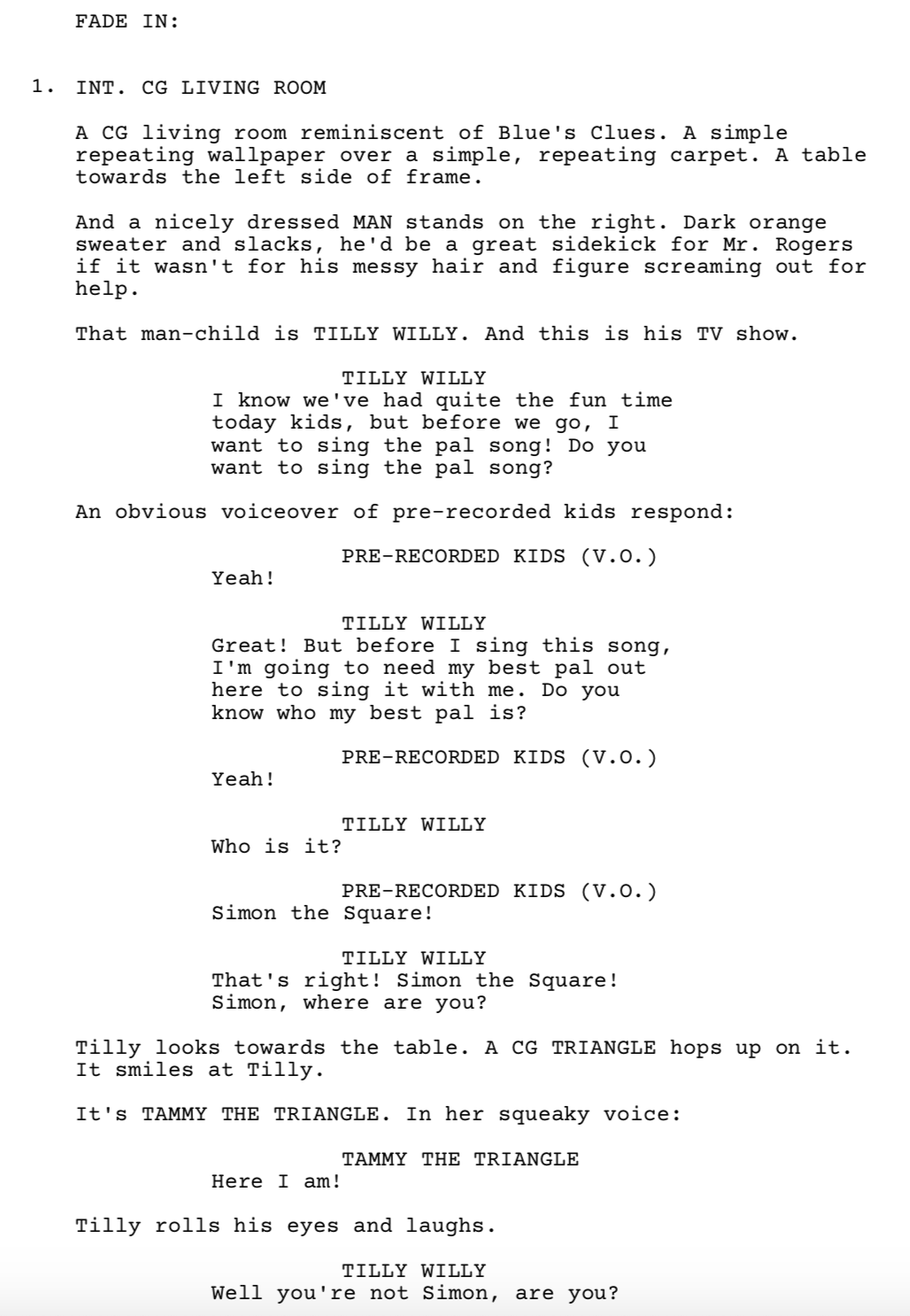
Title: Tilly Willy and his Neighbourhood Pals
Genre: Psychological Horror
Logline: A kidnapped children’s TV show host tries to earn his freedom.
Why You Should Read: Because who doesn’t love a children’s tv show in the horror genre? Also, I know you like a strong opening and I think I have exactly the type of opening you’re looking for. It’s also a contained story because I plan on filming it, which is nice with all the Blockbusters coming out.
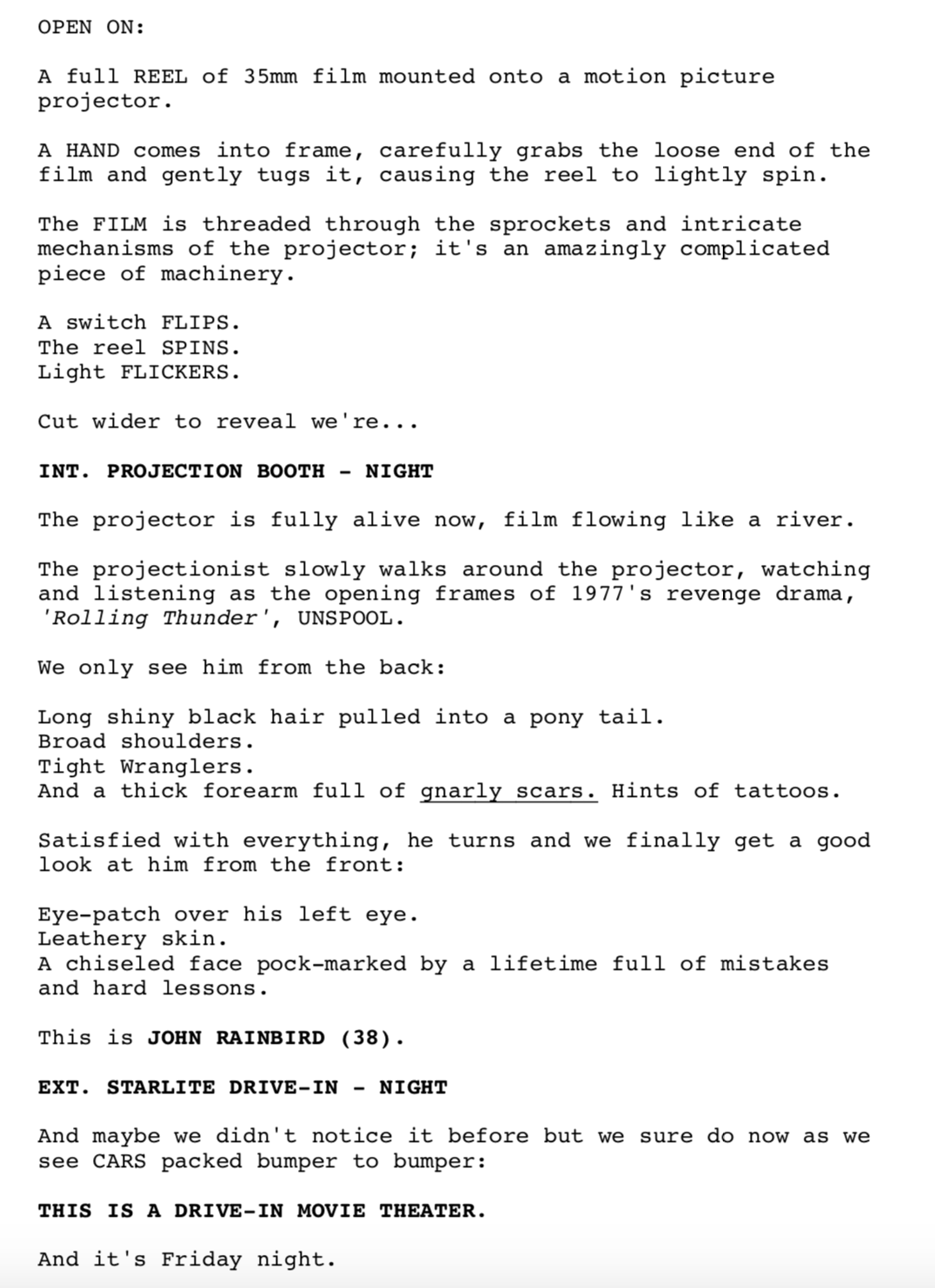
Title: Blood Law
Genre: Revenge Thriller
Logline: A Native American ex-con looking into the disappearance of his niece finds himself on a rage-fueled journey into snuff filmmaking and 1970’s Hollywood.
Why You Should Read: Sometimes a character pops off your imagination and demands a story be written about them. John Rainbird is that character and ‘Blood Law’ is that story. It’s a gritty, unexpected, unique script with a life of its own. It’s quirky. It’s violent. It’s full of colorful and engaging characters. ‘Blood Law’ scored a coveted 8 on the Blacklist (their take: “This bloody and visceral thriller doesn’t pull any punches when it comes to its depictions of brutality and violence, but it also sports top-notch characterizations, finely crafted dialogue, and a setting absolutely dripping with tone and style: a modern love letter to the classic “revenge” films of the drive-in cinema age.”), garnered some interest from an independent producer and a major production company where the the Head of Story Development is a major advocate (Email I got from him shortly after he received the script, word for word: I wanted to let you know that I’m on page 43 of Blood Law and I had to stop and shoot you an email to tell you how much I’m loving this script.) I’m very proud of this script and eager to keep the momentum going. Would be thrilled to get the Scriptshadow community’s take. Thanks a million.
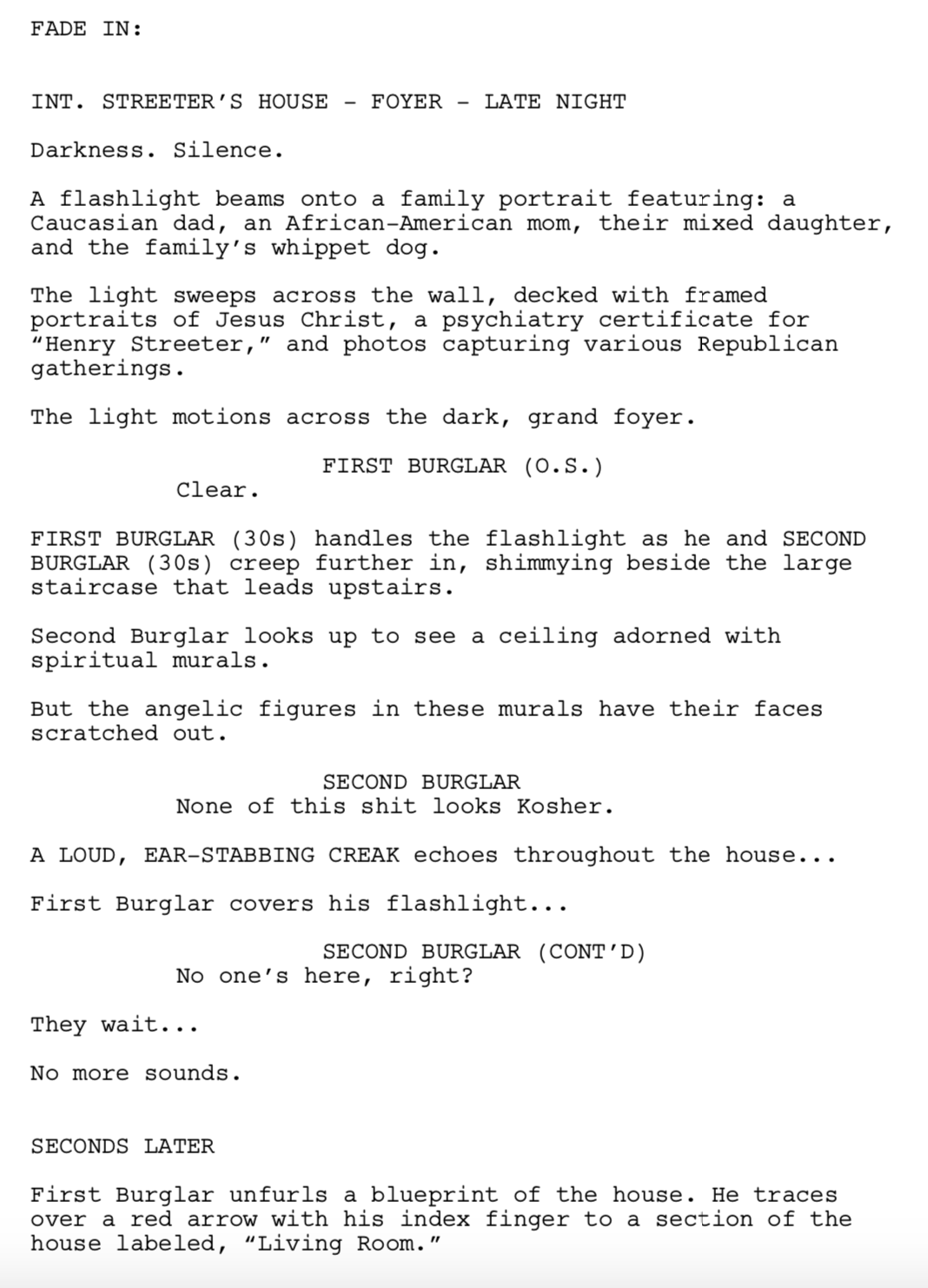
Title: The Gateway
Genre: Horror/Thriller
Logline: After losing his day job, a struggling artist and his progressive girlfriend move in with her Christian-conservative parents in an attempt to get back on their feet… only to realize that her parents release demons from hell through a doorway hidden in their house.
Why You Should Read: I’m a Nicholl quarter-finalist of 2018 and I read the site every day. One notion that always stuck out to me, is the importance of having “that scene.” I believe there are couple here; one of which was inspired by something on your ‘favorite movies’ list of 2018. Also, the social commentary came to me upon conception of the idea and I can’t ignore its ties to current trends. I had a ton of fun writing the characters (most important to me, anyway), but I’m hoping to get the your take on how it stacks up.
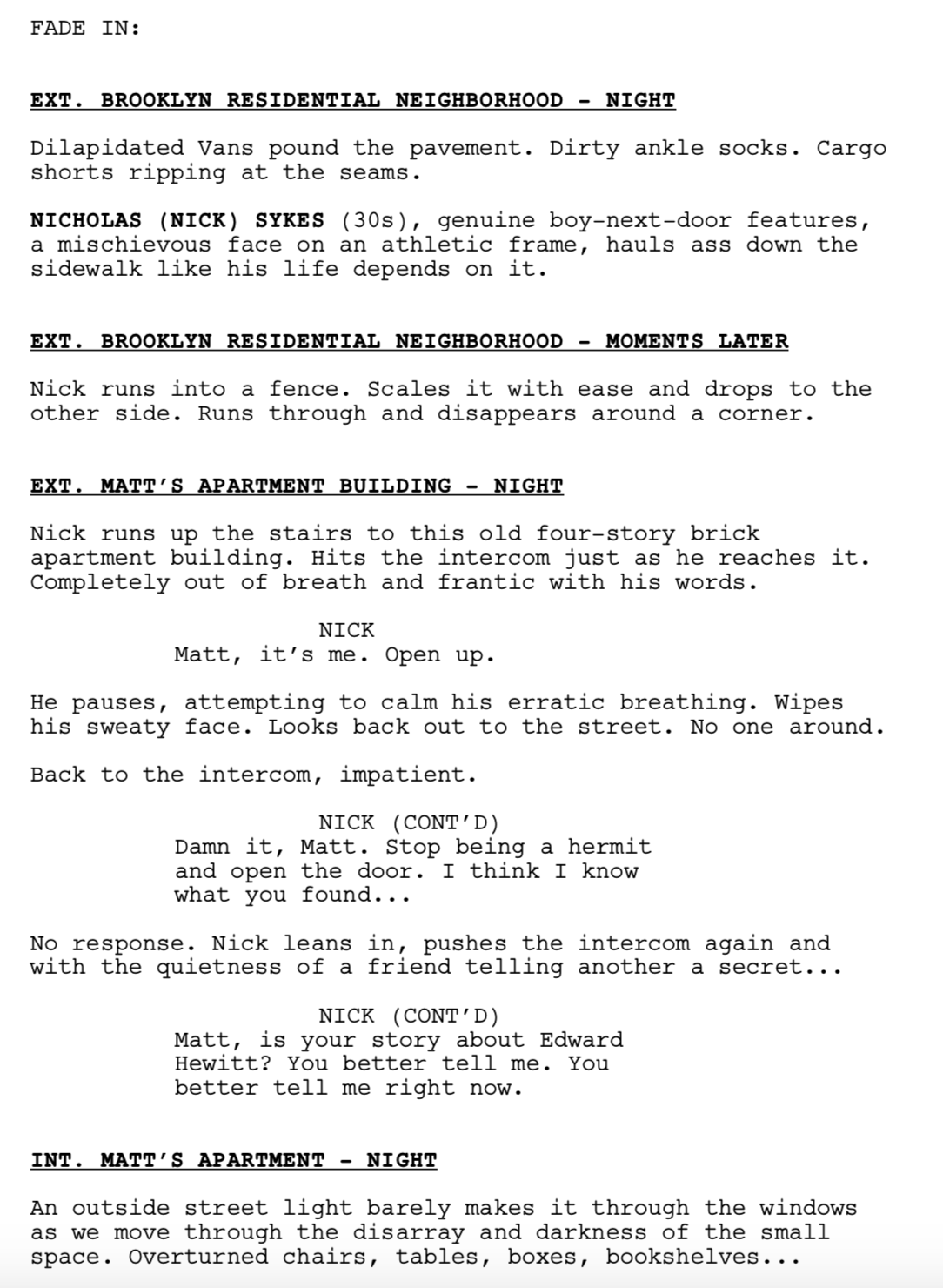
Title: THE GRID
Format: Pilot (hour long)
Logline: When an up-and-coming journalist is tasked with finding the story that caused his mentor to disappear, he will uncover a shocking conspiracy that will threaten his news outlet’s very existence and shake the entire country to its core.
Why You Should Read: With so many cop, lawyer and doctor shows everywhere, I’ve always found it odd that journalist shows never really break out. There’s suspense, intrigue, secrets, great characters and plenty of shows use those characters as sub-plots, but none as the primary. The exception was The Newsroom, but that was much more political than anything else, based on tv journalism and not remotely the direction this goes.
I find the profession fascinating (politics aside) and would love to have the opportunity to explore characters and plotlines in and around this field. This particular pilot isn’t written with any act breaks because I received feedback that it would be better to write with an online target audience in mind.
I’d love to get any feedback available to make this as great as it can be.
Thank you for the consideration!
Title: The Well
Genre: Psychological Horror / History
Logline: Ten years after the vicious atrocities of the Partition, a Pakistani woman attempts to make peace with the brutal murder of her family when a vengeful spirit returns to haunt her.
Why You Should Read: This is a setting and historical event that has never been depicted in Indian film, let alone Hollywood and is one of the most overlooked humanitarian crises of the 20th century as it came in the immediate aftermath of World War 2. Up to 2 million people died as a result of this mass migration, and the trauma and violence that occurred has formed the rigid backbone of the Pakistan-India conflicts we see today. By taking a supernatural angle, I’ve attempted to manifest the inner turmoil felt by the survivors as well as present a moral conflict for the reader to constantly have in mind throughout. As a Pakistani, this is an extremely important topic to my cultural history, and after hearing some of the absolute horror stories my direct ancestors faced just 70 years ago shook me to my core. This is an event that had a direct impact on every single Pakistani and Indian, and fearlessly showcasing the terror of it all will be something I’ll forever strive to accomplish.