
Search Results for: F word
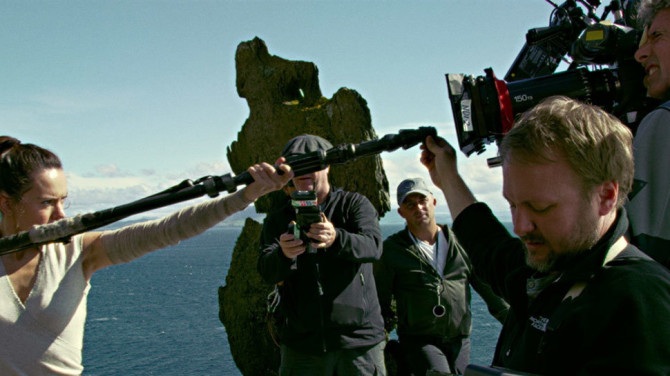
We’re sticking with Star Wars, folks, since that was our theme for the Scriptshadow Newsletter. If you didn’t receive the newsletter, go here to find out how. Now I’m well aware that today’s topic is a contentious one. I never thought a screenwriting term would become synonymous with the destruction of one of the biggest franchises of all time. Yet Rian Johnson’s brazen decision to zag at every plot point we thought The Last Jedi was going to zig on, introduced the term, “subverting expectations” to the general public.
What expectations am I talking about? Instead of Luke accepting the lightsaber, he throws it away. Instead of the main villain thriving and growing stronger, he’s killed in the middle of the movie. Instead of Rey’s parents being relevant to the mythology, she’s a nobody. Instead of Luke using his massive knowledge of the Force to battle Kylo and defeat the First Order, he’s a hologram who was never really there.
While some moviegoers found these choices exciting, most fans had a problem with some or all of them. Which is too bad. Because you know what? Subverting expectations is one of the single most important tools in a screenwriter’s arsenal. If you don’t know how to subvert expectations, you shouldn’t be writing movies. The opposite of a subverted expectation? Is a met expectation. And if you meet expectations over and over again in any script, you are boring your audience. These people didn’t come to your movie to see exactly what they expected. They came to be surprised on some level. That’s the exciting part of moviegoing. It’s, “Luke, I am your father.” It’s “I see dead people.” It’s Thanos gets killed within the first 20 minutes of the movie.
So the question becomes, why is it that Rian Johnson’s expectation subverting failed so badly yet there are many instances in film where subverted expectations not only worked, but created iconic moments? And how can you effectively use subverted expectations in your own screenwriting?
The first problem here is something you won’t have to deal with until later on in your careers when you become a 7-figure quote screenwriter. Rian was playing with a beloved world and characters. Therefore, he was subverting expectations based not just on this movie, but on many that came before it. I don’t think Rian respected that as much as he could’ve. He seemed to be more into doing what he wanted rather than what was right for the franchise.
However, one of his early choices is something that is relevant to any writer. And that is never prioritizing a surprise over character. Luke throwing the lightsaber away in a comical manner isn’t something Luke Skywalker would do. Now Rian would probably argue that it’s something HIS version of Luke Skywalker would do. But it’s clear at this point that he fundamentally didn’t understand the character. The actor who played Luke publicly contested this over 30 times. My feeling is that Rian wanted Luke to throw that lightsaber over his back so badly that he created that moment then retroactively built his Luke around that choice. The lesson here is to get into your character’s head and be honest with what he would do in that moment. If you choose to subvert expectations in a way that is inconsistent with that person, the audience won’t buy it.
The next big lesson with expectation subverting is that you don’t want to do it too much. Because if you do, two things happen. One, we start to EXPECT the subvert, which defeats the whole purpose of it. And two, we become AWARE OF THE WRITER. A subverted expectation is a heightened moment that draws attention itself. Do it over and over and the audience starts thinking about the person doing it rather than characters experiencing it, which breaks the suspension of disbelief. The very nature of subverting expectations requires that you carefully pick and choose the moments when you do so. Rian relied on subverting so often that each successive surprise lost impact.
To expand on that, you need to meet the expectation to subvert the expectation. Stories are a dance. And most dances follow a set sequence of steps. This is why it’s okay to write 30 pages of screenplay that follow a traditional storytelling pattern. You’re luring the audience into a sense of comfort. But there are times when you’re dancing that you improvise or break into freestyle. And the same goes for storytelling. Every once in awhile, you throw something at the audience that they don’t see coming. Let the audience be right about a bunch of things so that when you do subvert an expectation, it’s a surprise. Rian was so set on making some arthouse Star Wars masterpiece that he forgot the basics. And the basics dictate that, for most of your screenplay, you are following a structure.
This next decision by Johnson is probably the biggest because it implied a disregard for the well-being of the Star Wars brand. And that was killing Snoke in the middle of the movie. Clearly, this was going to be Rian’s defining moment, the thing that pushed Last Jedi into ‘classic’ territory. But by destroying the ultimate villain, he drastically lowered the stakes. If the puppet master stops pulling the strings, there’s no more puppet show. Which is why YOU DON’T WANT TO SUBVERT AN EXPECTATION IF IT LEAVES YOU STRANDED ON AN ISLAND LATER ON. Sure, it would be shocking to kill John Wick in the middle of John Wick 3 and have Halle Berry’s character take over the protagonist role. But is that in the story’s best interest? Make sure to project where your subverted expectation takes you before you write it. Because, if you’re not careful, you could kill your movie right then and there.
Finally, we have what Rian was accused most of, and that’s subverting expectations for the sake of subverting expectations. What does that mean? It means that the act of subverting the audience’s expectation is more important to the writer than writing what is best for the story. It means going into a scene and saying, “I need to do the opposite of what the audience thinks I’m going to do. I’ll try to have it make sense but even if it doesn’t, I’m doing it.” For a movie to work, the choices need to feel organic to the story. The characters need to act in a way that’s consistent with how they’ve been acting. Once you start messing with that cause you want to jolt the audience, you’re playing with fire.
Now that does’t mean there aren’t shades of gray here. Sometimes you know your script needs a jolt and maybe that jolt doesn’t entirely jibe with what your characters would do, but you go back and add a few set-ups that make it, if not believable, plausible. But if you get sloppy, you get the Charlize Theron Is A Superhero Too twist in Hancock. I don’t know if Rian set out to subvert expectations just to do so, but if this were a court case, there sure is a lot of evidence to support that claim.
Okay, let’s wrap this up. Screenwriters everywhere – YOU SHOULD BE SUBVERTING EXPECTATIONS IN YOUR SCREENPLAYS. To what degree will depend on the genre, the type of movie you’re writing, and how good you are at the practice. Just like some writers are better at dialogue than others, some writers are better at subverting expectations than others. They effortlessly do it in a way that’s both invisible and believable. Just remember that, above all else, a subverted expectation must feel organic. As long as the choice is a natural extension of the story, we’ll love it. Now go subvert away!
Yo, do you have a logline that isn’t working? Are those queries going out unanswered? Try out my logline service. It’s 25 bucks for a 1-10 rating, 150 word analysis, and a logline rewrite. I also have a deluxe service for 40 dollars that allows for unlimited e-mails back and forth where we tweak the logline until you’re satisfied. I consult on everything screenwriting related (first page, first ten pages, first act, outlines, and of course, full scripts). So if you’re interested in getting some quality feedback, e-mail me at carsonreeves1@gmail.com with the subject line: “CONSULTATION” and I’ll get back to you right away!
Genre: Dark Comedy
Premise: A backwoods dry county is turned upside down by a bored housewife’s investigation into their bootlegging operation – and a crashed meteor.
Why You Should Read: I absolutely love the Coen Brothers, so I wrote this as if they might consider directing it, as long as a shot as that is. It’s got dumb people making bad decisions that leads to a lot of bloody death. It’s got a great starring role for an older actress. Most of all, I think it’s a funny script with a weird and interesting cast of characters and I really want to make it the best it can be. AOW has proven invaluable historically to writers open to feedback and I am hopeful with some help this can be the script that gets my foot in the proverbial door. (Carson note: Currently in the Nicholl QF)
Writer: Benjamin Hickey
Details: 92 pages

Benjamin has the unenviable task of following what may end up being the most successful amateur script story ever on Scriptshadow. And he’s not making it easy for himself. Dark comedies are arguably the hardest genre to get right. It’s difficult to make people laugh without comedy restrictions. Specifying that the humor can only be dark and you shrink the dart board down even more.
The Coen Brothers are the only modern screenwriters to routinely pull this genre off. And even they’ve had a tough time with it lately. Inside Llewyn Davis and Hail, Caesar were not exactly crowd-pleasers. But you have to admire a writer who’s willing to take on a big challenge. So as I slide my mouse over to click open this script, I wish Benjamin good luck!
We’re told Graham County is the last “dry” county in the state. That means no booze for anyone. Which also means there’s nothing to do around here! That is until dimwitted siblings Joe and Bobby Bird come upon a crashed meteorite which “smells like raspberries.” The glowing blue center implies this thing very well might make them rich, so they throw it in the back of their truck and bring it back home.
Meanwhile, 40-something Isabella Bailey is tired of sitting at home all day waiting for her traveling husband to come back from work trips. The only satisfaction she gets is from making sure everyone in town abides by the law. And she’s convinced that there’s illegal booze being passed around, which she’s determined to expose.
When word gets out that something alien has crashed in the outskirts of town, amateur astronomer and out-of-towner, Clay, zips into Graham County to learn more. Clay’s thrilled when he finds out that NASA themselves are here inspecting the matter. That must mean it’s a big deal.
We eventually learn that Joe and Bobby are secretly brewing beer, and that the meteor “juice” has accidentally dripped into a batch. This creates what may be the best beer ever. It’s too bad that Isabella ain’t having any of it and is determined to take down anyone who breaks this most precious of laws. Will Joe and Bobby survive Isabella’s wrath? Or will their brew, “Black Hole Blue,” make them famous?
This was a fun script.
But it was also a script that felt 3-4 drafts short of where it needs to be.
I’ll have Ben give me the lowdown in the comments but something felt off about the time and place here. It was as if the script was originally written to take place during the Prohibition and then was later re-drafted to take place in the modern day. I say that because nearly everything in this script felt like it belonged in 1925, except for one person mentioning “websites.”
I know there are a few places left in the U.S. where liquor is outlawed. I think this occurs in Utah maybe? But it’s so rare that it overshadowed the story. I was always thinking, “Why is this set in the present again?”
Another thing I had an issue with was the meteor. It wasn’t integrated into the plot enough. I know there are two paths you can take when you come up with an idea like this. You can make the “magical thing” an integral part of the plot, or you can make it a neutral McGuffin that acts as a motivator for all your characters to do crazy things. My belief is that if it’s in the story, it needs to be integrated into the plot. And the meteor was barely integrated into this.
The problem with that is there was so much to play with! What if the strange blue liquid inside this meteor were to get mixed up with their illegal beer brew? Everyone started drinking it and weird things began happening on a day-to-day basis. Instead of that, we get one late scene where everyone drinks the beer together and then… passes out? It was such a weak payoff for all that setup.
That brings me to the main screenwriting lesson I want to teach today. A common thing that happens in screenwriting is that we start with the “coming in too early” version of the story. Then, in each subsequent draft, we move that storyline up until it’s eventually where it should’ve been all along. I’ll give you a classic example of this. You might write a script where your main two characters, a married couple, are having problems in their relationship. Then, a couple of drafts later, you realize that it might be interesting if those problems result in a divorce. So you decide to have them get divorced at the midpoint. Then, a couple of drafts later, you realize that, wait a minute, we’d have a way more exciting opening if we start on these two getting divorced. That way we’re dropped right away into the thick of things.
I feel that the meteorite storyline in Black Hole Blue isn’t coming in early enough. It takes forever for an interesting plot development to happen with the thing. Why not get it going sooner?? We see Bobby stash the meteorite in their house in that opening, and then the very next time we see the brothers, Joe notices it’s been leaking into the brew. They have to make a delivery TONIGHT! What are they going to do? They decide to sell the tainted brew. And before we even hit the second act, people start acting bizarre.
Now if Ben isn’t interested in that story, I’m not going to tell him it’s the only way Black Hole Blue works. But I will say that the plot here didn’t move fast enough, and if it’s not going to be the meteorite that speeds things up, it needs to be something else.
I’m trying to think if I were a producer, would I encourage Ben to keep working on this. Dark Comedy has such a tiny bullseye and is such a gamble at the box office, that the script probably won’t go anywhere. With that said, it’s kind of an ideal writing sample script. It shows that Ben isn’t your typical writer writing your typical cliche Hollywood trash. So if he can make the plot more interesting, this could be a great resume script. It’s not there enough to get a worth the read. But if I worked at a production company, I would definitely ask to see any future scripts from Ben.
Script Link: Black Hole Blue
[ ] What the hell did I just read?
[x] wasn’t for me
[ ] worth the read
[ ] impressive
[ ] genius
What I learned: There are two kinds of McGuffins as far as I’m concerned, active and inactive. The active McGuffin plays a large role in the story. It becomes involved in the plot in a more intricate way (think R2-D2). The inactive McGuffin is the McGuffin that’s just there as an excuse to get everybody doing things (think one of those cliche USB drives in a spy movie). The meteor here wasn’t completely inactive. But it wasn’t active enough. And I think with a couple more drafts, it could be. — The more active you make your McGuffin, the less it feels like a McGuffin.
I remember back in the day where all I needed to start a screenplay was an idea and a little inspiration. I wrote a lot of bad screenplays with that approach. The problem with those scripts was that there wasn’t a whole lot of substance to them. Either the idea was too light, the characters too bland, or the plot petered out. Over time, through my own experience and by reading a lot of screenwriter interviews, I learned that professionals approach movie ideas a lot differently than beginners.
Most beginners will get a new idea and, just because the idea excited them, start writing the screenplay. They don’t need anything besides that. Some of the advanced beginners (a screenwriter who’s written 2-3 screenplays) might go one step further and ask, “Is this a movie I would pay to see?” If the answer is yes, they write it. Believe it or not, there’s an advantage to this approach. If the only question you have to ask is that one, you cut through all the bulls*&$.
But there’s an advantage to the Hollywood approach as well. A lot of the criteria they ask for does end up helping the script. So if you completely ignore these things, you are potentially ignoring stuff that would make your script better. What are the questions pros asks themselves before starting a screenplay? Let’s take a look.
1) Is the idea fresh? – All this means is, is your idea current in some way? Are you giving us something new? Or, if you’re giving us something old, have you found a new spin on it? I’ll give you a couple of examples. The “Don’t Worry, Darling” spec that had a huge bidding war last month was exploring #MeToo issues as well as creating a new spin on that subject matter, with its “1950s altered reality” component. “The Hunt” spec is another good example. It follows a group of elite liberals who’ve created a game of hunting down conservatives. Ironically, the idea turned out to be a little too current, and therefore, too hot to handle. But that’s why it got made. Because it was a fresh take on an old idea. An example of an un-fresh idea would be the 2017 Reese Witherspoon movie, “Home Again.” Haven’t heard of it? Exactly. Look it up. It’s a movie about a woman coming back home. There isn’t a single fresh exciting element to that concept, which is why nobody saw it.
2) Is there at least one character that an actor would die to play? – Seasoned professionals know that a project doesn’t take off and start getting people excited unless it’s got a hot actor or a hot director attached. So you want to create at least one character that would be exciting for an actor to play. Maybe they get to chew up the scenery like Tony Stark. Maybe they’re extremely complex – they’re a high school teacher heroin addict, like Ryan Gosling in Half-Nelson. Maybe they live a double-life. Maybe they’ve got complicated medical issues. There’s a reason Chris Pratt signed onto the project, “Cowboy, Ninja, Viking,” where a somewhat mentally deranged guy slips in and out of those three characters. The project was later delayed, but that’s not the point. If you can come up with a character that one of the top 10 grossing actors in the world wants to play? Hollywood will eat out of the palm of your hand.
3) Is the idea/genre trending? – A long time ago, when I was thinking about trading stocks for a living, my dad talked some sense into me. He explained that the people who were successful doing this were people who spent every waking hour inside of it, and therefore had all the information way before I did. The same could be said for the professional screenwriter. They are on top of what’s trending, what trends are ending, and what trends are right around the corner. Ideally, you want to write something in a trend that’s just starting. You wanted to be writing the female-centric comedy one day after Bridesmaids came out. Or, if you’re really on top of it, you know of a unique movie coming out in four months, you’re convinced it’s going to be a hit, and you’re writing a script in the same spiritual genre. That way you’ve got your script ready right when that trend begins.
4) Does the concept have legs beyond the first act? – As creatives, you’re coming up with ideas all the time. Or, at least, I hope you are. But not every idea is a movie. Some ideas are just a hook (see yesterday’s review – The Phantom Hook). This is a spot where professionals have a HUGE advantage over beginners. They’ve written so many screenplays that they have a better sense of which concepts are going to peter out and which can last an entire 110 pages. Namely, you’re looking for ideas that have a clear goal after the first act, and also, enough character conflict that you have something to do with your characters in the second act. Remember that the second act is the “conflict act.” So if you don’t have any character relationships that are hampered by deep-seated conflict, your second act will be all plot, and we won’t feel a deeper connection to the story.
5) Am I passionate about this?/What am I trying to say with this story? – Passion is like gasoline. There’s a finite amount of it. So you want to start with as much passion as possible. Seasoned writers know that there will be second drafts, third drafts, if they’re lucky and a producer becomes interested, 10th drafts, 15th drafts. So if you’re not all-in on an idea, you will run out of gas at some point. Also, do you have something to say with this story? It might seem like an unimportant question initially. “It’s a cool idea, Carson. Who cares about all that deep English class nonsense.” One of the reasons writers give up on scripts 6, 7, 8 drafts in, is because they’re empty. It was a cool idea and nothing more. When Jon Favreau was at a low point in his career, having made the dismal Iron Man 2 and the dismaler Cowboys and Aliens, he came up with this idea, “Chef,” about a disgraced Michelin Chef who decides to start a food truck, and the reason it grossed 20 times its budget can be attributed to Favreau wanting to say something with the movie. He talked about it in his interviews. This movie was all about making mistakes in life, owning up to them, and getting back on the saddle. Because that’s a universal theme everyone can relate to, it helped that movie become something more than a lol food truck flick.
So look, am I saying that you have to do it like the pros do it? No. The pro way has its own downside in that these writers are so far inside the system, they sometimes struggle to see the forest through the trees. I’ll give you a real world analogy. There’s this NBA player, Joakim Noah. He was on the Chicago Bulls for awhile and even made the All-Star team. But Joakim Noah started breaking down in his last couple of years with the Bulls to the point where he was a fraction of his former self. The following summer, when Joakim became a free agent, the New York Knicks shockingly signed him to a 72 million dollar 4-year contract!
Here we have a general manager who’s being paid tons of money for his expertise and who has an entire staff dedicated to understanding the value of players around the league. And not only did they get it wrong, they got it REALLY WRONG. Joakim would average 5 points a game his first year with the Knicks and 2 points a game his second year before they booted him. Now here’s the remarkable part of this story. There wasn’t a single NBA fan surprised by this. In fact, they all said at the time of the signing that it was one of the worst signings they’d ever seen a team make. How is it that the casual fan knows more than the general manager? The answer is the same as the professional screenwriter evaluating an idea. Professionals have a propensity to over-think things. Whereas all the beginner cares about is whether he likes the idea.
So which way is right? That’s up to you. I like the way Jordan Peele puts it: “Write the best idea you have that hasn’t been a movie yet.” But I think it’s worth going through these five questions just to see where your idea stands. Because good ideas are rare. I know that as I’ve seen over 10,000 loglines. So the more punch you can start your script with, the better the chance you have of writing something great.
What boxes must be ticked for you to write a screenplay?
Yo, do you have a logline that isn’t working? Are those queries going out unanswered? Try out my logline service. It’s 25 bucks for a 1-10 rating, 150 word analysis, and a logline rewrite. I also have a deluxe service for 40 dollars that allows for unlimited e-mails back and forth where we tweak the logline until you’re satisfied. I consult on everything screenwriting related (first page, first ten pages, first act, outlines, and of course, full scripts). So if you’re interested in getting some quality feedback, e-mail me at carsonreeves1@gmail.com with the subject line: “CONSULTATION” and I’ll get back to you right away!
Genre: Drama/Sci-fi
Premise: A young man man tragically loses his wife on the day of their wedding. He is devastated, until four years later on their wedding anniversary, he awakens to find his beloved wife alive and well beside him.
About: This script crept onto last year’s Black List with eight votes. Alanna Brown used to be an actress, where she was able to get a few small parts. But she seems to have moved on full time to writing. This script caught the eye of Greg Berlanti who currently has 6000 shows on TV.
Writer: Alanna Brown
Details: 110 pages

Today I want to talk a screenwriting no-no that is so powerful in its no-ness, you want to avoid it at all costs. We’re going to be looking at another one of these drama sci-fi concepts. As I told you last week with The Second Life of Ben Haskins, these are tough sells. TOUGH TOUGH TOUGH sells. That’s because the thing that makes them cool – the sci-fi element, is always neutered by the dramatic element. Sci-fi seems to work best when it can fly. And drama keeps it from flying.
The 29th Accident is about a guy named Bennett Carter. Bennett is a Californian who got a full swimming scholarship to the University of New Orleans. It’s here where he meets Dulcie, an African-American girl, and it’s love at first site between the two. In fact, they don’t wait long before they decide to get married.
But Dulcie’s father, Robert, is not a fan of Bennett, and doesn’t approve of the marriage. It doesn’t matter what either of them think, though, since one night when Robert’s driving Dulcie home with Bennett right behind them, they swerve off the road and plunge into a lake. Despite Bennett’s kick butt swimming skills, he is only able to save Robert and not Dulcie.
Cut to four years later. A subdued unhappy Bennett heads back to New Orleans for the first time to find some closure with Robert, and the strangest thing happens. While at the airport waiting for his bags, he spots Dulcie’s bag. And then he spots Dulcie! And then he spots his young daughter, Emma! That’s right, cause Dulcie was secretly pregnant when she got into that crash.
Bennett is trying to make sense of all this, despite the fact that Dulcie and Emma are like, chill dude, we’re real. They head back to their house and Bennett experiences the best day of his life! His wife is still alive! Except that the next day he wakes up and the two are gone. Were they ever really here? Bennett seeks help from anyone he can find, his dad, Robert, a shrink, a doctor, a psychic. Some of them say he imagined it. Others think there’s more to this. Specifically, he gets this idea that the multiverse may be involved in his wife’s reemergence.
A few days later, Dulcie and Emma are back! This time, Bennett comes clean with her. He thinks she’s dead, that she’s not real. But she keeps insisting that he is. Eventually, he buys into this multiverse theory and starts looking for something called an “anchor” that will lead to a “porthole” that connects his world to Dulcie’s world. Will he find it? Will he make the leap? Or is this all just a really sad guy who can’t get over his dead wife? What do you think?
Writers LOOOOVE mutliverses. LOVE THEM. I have been reading multiverse scripts for over a decade. But recently, for some reason, they’ve become really popular. I’m guessing the multiverse has been in the news more? Maybe that’s why?
Whatever the case, the multiverse is not a great story device. I mean, go ahead. Count the number of good multiverse movies out there. I’ll save you the trouble. There aren’t any. And the reasons for that is the multiverse is the ideal writing crutch. It’s a catch-all explanation for anything weird the writer wants to come up with. There’s three versions of Jake? That’s cause of the multiverse! Only our minds can travel through parallel dimensions, not our bodies. That’s cause of the multiverse!
The biggest problem I have with multiverse stories is that the writer usually thinks they’re first ones to have thought of them. That leads to them believing the word “multiverse” alone will hypnotize the reader.
There’s another problem problem with this script. It’s got a PHANTOM HOOK. A phantom hook is a movie hook that sounds good but has no legs. A great example of a phantom hook is Flatliners. Some people flatline themselves to see what the other side of death is like. Except once they do this on page 30, there’s nowhere left for the story to go. You’ve shown us the cool thing. Now what? Yesterday’s script, Spontaneous, about spontaneous combustions, was also a phantom hook. It’s cool to see people spontaneously blow up the first couple of times. But then what is the movie about?
So here I was, reluctantly turning the pages of 29th Accident, feeling very much like I’ve been here before. And then, about midway through the script, it actually started to get better. And I can tell you exactly when that was. It was the moment THE MAIN CHARACTER DECIDED TO PURSUE A GOAL.
What do I tell you guys? I drone on and on about it all the time. But the reason I have to keep saying it is because writers keep not doing it. The big problem with yesterday’s script was that the main characters weren’t pursuing anything! People were blowing up and our characters kept walking around, doing absolutely nothing about it, talking to each other. You want your characters to be drivers in your story, not passengers.
This script was boring when Bennett was a passenger. When he was stumbling around, sometimes seeing Dulcie, sometimes not, the script went nowhere. But once he started trying to figure out if this was real and coming up with a plan to permanently be with Dulcie, the story took shape. It still had the wishy-washiness of the multiverse weighing it down. But Brown did a better job explaining the rule-set of the multiverse than most writers. For example, coming up with specific words like “anchor” and “porthole” give us physical things we can envision and places we know we have to go. A lot of these multiverse-as-catchall-explanation writers fudge their way through the mythology, making weird stuff happen and then screaming out “multiverse!” As if that explains all.
You guys know at this point that I like structure in my stories and I like simplicity in my stories. If you’re not simple, you’re going to have to do an ace job explaining the rules of your world so that I understand what’s going on. The 29th Accident did enough of that that I was able to get to the end. It even had a nice little twist ending I didn’t see coming. But I can’t cosign the first half of this screenplay. It was too directionless and if I wasn’t reviewing the script on the site, I definitely would’ve stopped reading. So I’m afraid this wasn’t for me.
[ ] What the hell did I just read?
[x] wasn’t for me
[ ] worth the read
[ ] impressive
[ ] genius
What I learned: Beware the Phantom Hook – The phantom hook is an idea that has a great first act hook, but then gives the rest of the story no structure to work with. It’s easy to figure out if you have a phantom hook. Just ask if you have a story to tell after the big hook in your movie arrives. If you don’t? And you’re merely hoping to “figure it out along the way,” it is HIGHLY LIKELY you are wasting your time.
Genre: Sorta Horror/Teen
Premise: A high school begins to fall apart when its students start spontaneously combusting.
About: This project is based on a recent novel written by Aaron Starmer. It will star Katherine Langford from 13 Reasons Why. Brian Duffield not only adapted the screenplay but is also making his directorial debut. The movie was shot in January of last year so I’m not sure why it hasn’t come out yet. Spontaneous is one of the first films to come from AwesomenessTV, which is one of the biggest channels on Youtube.
Writer: Brian Duffield (based on the novel by Aaron Starmer
Details: 110 pages (First Draft)

I like going into Brian Duffield scripts as naked as possible. Not physically of course. But I don’t want to know anything. One of the great things about Duffield scripts is that crazy things can happen at any moment and I don’t want to spoil them before they happen.
With that said, I heard through the grape vine that this was an adaptation, and that definitely colored my reading experience. Duffield has worked almost exclusively on original material, which has been great because his mind doesn’t work like anyone else’s. So if he’s working off of someone else’s idea, he has to reign in some of that famous creativity.
And as we’re about to find out, that’s not the best way for him to work.
Spontaneous is Thirteen Reasons Why meets John Hughes meets Warm Bodies. 17 year old Mara is sitting in Pre-Calc when the girl in front of her, Katelyn, explodes. At first, everybody assumes it’s a school shooting so they run around the hallways like chickens with their heads cut off. But eventually they learn that Katelyn wasn’t shot. She spontaneously combusted. Or exploded.
While Mara and her best friend, Tess, struggle to make sense of what happened, fellow senior and kinda weirdo, Dylan, crashes the party to say hi. Dylan, it turns out, has been in love with Mara from afar all throughout high school. Lucky for Dylan, Mara’s kind of liked him, too. So the two start dating. Which should be a happy time. Until another senior, a gay football player, spontaneously explodes.
Now it’s an epidemic. Which means the media and the authorities descend on this small town, E.T.’ing it so no one can come in or out. They start doing all these experiments on the kids, until they eventually develop a pill that keeps people from spontaneously exploding. And so it’s BACK TO SCHOOL for everyone, where it seems like everything is normal again. That is until a mass of spontaneous explosions occur (spoiler) including Dylan!
With the love of her life gone, Mara suspects that she’s the curse that killed everyone. I mean, Katelyn was right in front of her when she exploded. Dylan was around her all the time and he exploded. So it must be true. But eventually Mara philosophizes that life sucks no matter what and that all you can do is your best before you die. The end.
Hmmm…
I don’t know who to direct my disappointment towards here. While Duffield wrote the script, everything is based on the book. And, as the saying goes, you’re only as good as your source material.
Look, the good news is that this is an original premise. No zombies. No vampires. No aliens. No monsters. The spontaneous combustion premise is unique.
The problem is, the author didn’t know what to do with that premise. For starters, it’s a terrible premise for building tension. At least when you have zombies, you can create suspenseful situations as those zombies slowly move in on our trapped characters. But with spontaneous combustion, it’s random. There’s no way to build tension with randomness. You’re sitting around for 25 pages of dialogue and then you hear how a new person just blew up. I’m not sure there’s any way to fix that problem.
Nor is the structure here story-friendly. It’s a car ride where nobody tells us where the destination is. So we’re not even the annoying kids in the back screaming, “Are we there yet?” We’re the annoying adults screaming, “Where are we going?”
Theoretically, this sets the stage for what Duffield does best. He can plant two characters in a room and let them dialogue away. Indeed, the dialogue here feels effortless and flowing. The problem is, because there’s no plot, and therefore nobody’s trying to get anywhere in these scenes, they start to get tiring. And repetitive.
And this is why it’s so important to figure out your structure ahead of time. Because if you repeatedly drop characters into scenes where they don’t want anything other than to talk to each other, the story’s never going to feel like it’s advancing.
When you’re writing a story like this, you have two directions you can go in. Direction 1 is to create a mystery behind the problem (spontaneous combustions) that the characters are trying to solve. This gives your heroes a goal and therefore a purposeful journey. “Why are people exploding,” Mara can say. “Let’s investigate.” They don’t do that here. Scientists come in and try to figure things out. But our heroes spend that time sitting around waiting. The other option is to use your story as a metaphor for something. At least that way, we get the feeling that there was a purpose to the experience. If this teaches us a powerful lesson about life, it can work.
But this didn’t do that either (or, at least, this draft didn’t). And I think it’s a source material problem because I went to Amazon afterwards and I was seeing the same complaints in the reviews. The author had his characters talk the whole time while a bunch of people blew up without explanation and in the end, capped it off with, “that’s the randomness of life.” I think I speak for writers everywhere when I say that if your theme is, “randomness of life, bro,” you probably haven’t dug deep enough.
I’ll say it again: you’re only as good as your source material. You’re never going to teach Danny DeVito to be Roger Federer. Then again, it’s important to note that this is a first draft, that Duffield likely added more structure in the subsequent drafts. But for this to have worked, somebody would’ve needed to come up with a radical idea on how to make this concept movie-friendly. I hope that’s what Duffield did. Cause if this movie does well, he’ll get to make some of his own scripts. And that’s what I’d really like to see.
[ ] What the hell did I just read?
[x] wasn’t for me
[ ] worth the read
[ ] impressive
[ ] genius
What I learned: It’s dangerous to give characters other than your heroes the active storyline. In other words, the goal here is to find out why these spontaneous combustions are happening. But that goal is given to the FBI and scientists while our heroes sit around and wait for them to finish. You want your heroes to be involved in the ultimate goal of the screenplay. 99 times out of 100, that results in a better script.