
Search Results for: F word
Schedule Change Alert! – Tomorrow, I’m reviewing Solo. Monday, Memorial Day, I’ll be off. Tuesday-Friday will be Dialogue Week. That pushes the Amateur Offerings Winner to June 8th.

As we get ready for Dialogue Week, I want to remind you of the basics. Because in order to write good dialogue, you have to first set up a situation that allows good dialogue to be written. The majority of the time, this will boil down to one law:
One character in the scene needs to want something. Another character in the scene needs to resist.
There’s a reason for this. You need “want” in a scene to give the scene direction. If someone doesn’t want anything, then why would we care what they say? In the same way a goal gives your character reason to act. A “want” gives your character reason to speak. The reason you want the other character to be resistant is because this creates CONFLICT in the conversation. And conflict is where dialogue is the most charged.
A simple version of this is a nerdy high school kid going up to ask a popular girl to prom. These scenes almost always work and the reason is that the dialogue “pedestals” holding the scene up are so sturdy. Character A wants something. Character B doesn’t want to give it to him. This is the secret nature of good dialogue. Even if you don’t dress this scene up with Diablo Cody like word magic, it’s still going to work because the situation is so strong.
On the flip side, if you write a scene where two friends get together to have coffee, and neither of them wants anything from the other, chances are the scene’s going to be boring. Audiences have a threshold for listening to conversations that don’t go anywhere, and it’s getting shorter every year. This is why, whenever you see a scene like this, it almost universally segues into, “I need your help with something.” Or the other character might say, “What do you want?” “What do you mean?” “You never ask me to coffee unless you want something. So what is it?” The scene then segues into the proper format for good dialogue. Want + resist = conflict = charged dialogue.
It’s also important to note that a “want” doesn’t have to be on the surface. In fact, most writers will tell you that it’s better if it isn’t. For example, let’s say a married couple who haven’t had sex in awhile are having a dinner night. The husband is hoping to get lucky. The wife isn’t. So the husband has put together this really romantic dinner in the hopes of convincing her.
Of course, he doesn’t say this out loud. He’s just hoping to spark the mood. So you have your want (to get lucky) and you have your resistance (she doesn’t want to). Therefore, when they talk about their day or how good the food tastes or that annoying co-worker, the dialogue’s still charged because we know what’s going on underneath that conversation.
Out of curiosity, I threw on Jumanji: Welcome to the Jungle to see if it adhered to this rule. It’s a movie that has a lot of fun dialogue so it seemed like a great test bed. Indeed, it follows it closely. Here are the first seven scenes…
1) Spencer’s mom WANTS to make sure he has everything for the day. Spencer is upset that his mom busted in on him and is invading his space.
2) Fridge’s mom WANTS to make sure her son is studying so he doesn’t get cut from the football team. Fridge is elusive and assures her he’s fine.
3) Spencer uses the favor of doing Fridge’s homework to ask him if he WANTS to hang out this weekend. Fridge resists.
4) A scary old man from the nearby house WANTS to know what Spencer is doing there. Spencer resists, apologizes and walks away.
5) A teacher WANTS to know why Bethanny is on her phone during a quiz. Bethanny resists by saying she deserves to finish the call, ultimately leading to detention.
6) The gym teacher WANTS Martha to join the activities. Martha resists, giving her several reasons why gym is stupid.
7) The principal calls Spencer and Fridge into his office. He WANTS to know if they cheated. The two are elusive at first, but eventually Spencer cops to it.
I want to make something clear. Dialogue doesn’t fit into this perfect formula every time. Just most of the time. And that was on display in Jumanji as well. For example, after Spencer and Fridge leave the principal’s office, they start arguing with each other. There’s no apparent “want” here. It’s more of a reaction to something that already happened. But there was CONFLICT, which is why the dialogue still popped. It’s going to be fun discovering more of these variations next week.
But this is your starting point. Make sure a character wants something. Have there be some level of resistance from the other character, and you’re bound to write, at the very least, DECENT dialogue. As for writing great dialogue? Well, gosh-darn, you’ll just have to wait until next week for that. :)
Genre: TV Pilot – Drama
Premise: A group of Boston friends’ lives are changed after a member of their group unexpectedly commits suicide.
About: Today’s pilot comes from former comedy writer DJ Nash, who took a chance in writing his first drama. That chance paid off when ABC made it their first pickup of the season, positioning it as a This is Us counterstrike. Nash formally created Growing up Fisher and Truth Be Told. Ron Livingston and Romany Malco star in the show.
Writer: DJ Nash
Details: 57 pages
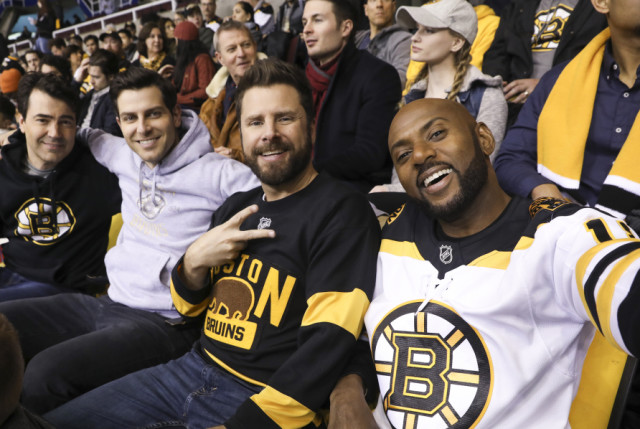
TV pilots are funny things. The shows with the longest staying power tend to have the weakest concepts. That’s because TV shows are character-driven as opposed to concept or plot-driven. Why is that? Well, if you’re writing 20 hours of television per season, that’s 18 hours more than a feature film. Seeing as it’s hard enough coming up with a series of cool plot points for a feature, you can imagine how hard it must be when you multiply that by ten.
Therefore, TV has no choice but to focus on character.
But this is what’s always confused me about TV. How do you get anybody’s attention with a lame character-driven concept? Like if you pitched me, “Four Boston friends have their lives uprooted when their friend dies,” I’d be like, “Annnnnnnd???” With a movie pitch, you know what you’ve got after the logline. With these things, it seems like a crapshoot.
Anyway, I’ll continue to stir fry that thought in my head while I dish out today’s review.
Rome, an almost-30 commercial director with the perfect life, is two minutes away from ending it. He’s got the pills. He’s prepping the deed. It’s only a matter of time. But before we watch him kill himself, we cut to his friend Jon, who has an even better life. The master of the deal and a real estate titan, Jon is currently on the phone, closing a deal in his kick ass high-rise office. How easy is it to love life when you’re killing it?
Cut to friend numero 3, Gary. Gary is getting the results from his doctor about whether his cancer’s back. His breast cancer. Yes, Gary is in the one percent of males who have breast cancer. But the good news is, he’s making it work for him. Gary bangs a new breast cancer survivor every week at his breast cancer support group.
Finally, there’s Eddie. Eddie hates his wife. Every day she drags him deeper into the pits of married hell. And while Rome’s about to off himself and Gary’s ready to get his results and Jon is ready to close the deal, Eddie is throwing all of his clothes into a suitcase. Eddie’s about to run away with another woman.
But then he gets the call from Gary that changes everything.
Jon just committed suicide.
That’s right. Not Rome. Jon. After he closed that deal, he leapt out the window.
The rest of the script has the guys coming together for Jon’s funeral and the gathering afterwards. The wives are all there, including Maggie, the latest girl Gary banged from his support group. Yes, their first date is officially a funeral.
As the group ponders the impossibility of someone like Jon, who had everything, ending his life, little hints pop up that there may be more to the story. When the guys go get tonight’s Bruins tickets from Jon’s office (going to Bruins games is a long-standing tradition), they get into Jon’s phone and find out that he made one call before he jumped. To Eddie.
The guys turn to Eddie, who looks back cluelessly. He never got a message. But later that night (major spoiler), when Eddie is alone, we see why he’s being so coy about that call. We finally find out who Eddie’s been planning to run away with. It’s none other than Jon’s wife.
I had mixed green feelings about this script.
I loved the early misdirect. Nash totally got me with Jon’s death. And I liked the ending twist, that Eddie was running away with Jon’s wife. Not only for the twist. But because you’re setting up a line of dramatic irony that can be drawn out for 5-6 episodes. Us and Eddie know that Jon may have killed himself because he found out that Eddie was sleeping with his wife. But the other friends don’t know that. And like any good line of dramatic irony, it’s the kind of thing that viewers will stick around for to see what happens when that bomb explodes.
My problem with A Million Little Things was the rest of the script, the middle part.
It’s mainly just a bunch of characters being sad, talking to each other, remembering things. And I think the problem here is that Nash didn’t use a good old fashioned goal. There are some writers who don’t think you should use goals in TV one-hours. That it’s more about “covering the bases” of each subplot. But I find that when there’s an overarching goal pushing the characters along, it gives the narrative an engine. We feel like there’s a PURPOSE to the story.
It’s not to say you HAVE to do this. If we’re inside of a particularly dramatic portion of a season, then each storyline (the A, B, or C) in an episode can be powerful enough that a uniform goal isn’t required. But my theory with pilots is that you can’t take any chances. You can’t even RISK a 3-5 minute down period. Because 3-5 minutes is all it takes these days for someone to decide your show is boring and never watch it again. TV viewers are not a forgiving bunch. I’ve met them.
With that said, there are still plenty of good things to talk about. When you’re writing a character driven pilot (as opposed to concept-driven pilot), you want to get an inciting incident into the story ASAP. Usually within the first 5 pages. This is to alleviate any suspicion that your show will be a group of characters talking for an hour. You need that “thing” to happen so that they know you mean business. A character dramatically killing themselves, via a misdirect, was a great way to get audiences hooked.
Building off of yesterday’s character development talk, we see again today how important it is to establish characters immediately. The first scene we meet each character in A Million Little Things is a scene where we learn the essence of who they are at this moment in their lives. Gary has breast cancer. Eddie is about to leave his marriage. Rome is suicidal. One of the biggest mistakes I see amateur writers make is they take 3, 4, 5 or MORE scenes to tell us what professional writers can tell us in one.
That’s not to say you can’t have characters of mystery, like John Locke in Lost. That’s a different discussion. But when dealing with straight-forward characters, you want to start developing them from their first frame.
A Million Little Things is obviously ABC’s attempt at a This Is Us killer. But it’s not as good as that show. One thing Dan Fogelman is great at it is he knows exactly how hard to press the melodrama pedal in each scene. He knows when it’s too far. He knows when it’s not enough. He knows when to alleviate tension with a joke. He knows the right tone that joke needs to be.
A Million Little Things is more hit and miss in these categories. There’s a scene late where they’re at the hockey game and Rome reveals out of nowhere that he tried to commit suicide. It’s an odd moment for the admission and the aftermath is too heavy-handed (“With nothing to say, Gary does the only thing he can do. He puts his arm around Rome and gives his friend a hug. Rome cries harder. So Gary just squeezes harder.”)
But hey, Fogelman’s the master at this stuff so let’s not hang any competitors out to dry here. The pilot isn’t great but it’s got just enough presence to make it worth your time.
[ ] What the hell did I just read?
[ ] wasn’t for me
[x] worth the read
[ ] impressive
[ ] genius
What I learned: Whether it’s a movie or a TV show, the simplest plotline you can use that uniformly works is to start with a dead body. In other words, I don’t think this pilot gets picked up if it’s this same group and we don’t get a suicide at the beginning of the show.
Genre: Horror
Premise: A young teacher who’s recently moved into a small blue collar town tries to help a lonely boy, only to find out that he’s harboring something terrible in his home.
About: Antlers director Scott Cooper is on the verge of becoming the next big mainstream auteur. He’s got a really interesting resume, with movies like Black Mass and Crazy Heart, and most recently, Hostiles. It’s only a matter of time before he’s hired onto one of these mega-projects. And congrats to screenwriter Nick Antosca. His last movie, The Forest (a horror film with Natalie Dormer), wasn’t received well. To jump from that to this is a major coup. It’s the kind of jump that sets you up for those big studio gigs. A lot has been made over the years of how screenwriting is the one profession in Hollywood where people fail upwards. They have a box office bomb or a critically “rotten” film, yet they keep moving up the ladder. I see it the opposite way. How great is it that you can bomb with one movie yet, if you follow that up with a really good script, they don’t hold that previous movie against you? Antosca’s co-writer on this film, Henry Chaisson, is just coming into the business. Up until this point, he’s only written shorts.
Writers: Henry Chaisson & Nick Antosca (based on the short story by Nick Antosca)
Details: 95 pages (3/3/17 draft)
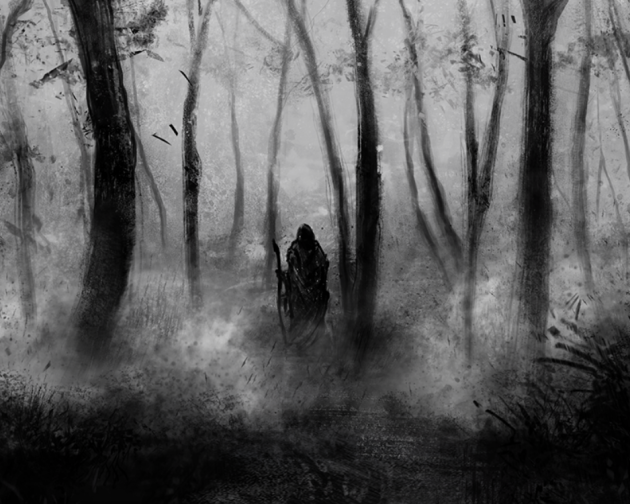
One of the things I’ve been telling you guys is that you can’t think linearly. It doesn’t work like that in this business anymore. Sometimes you need to go backwards to go forward, sideways to go up, and inside to make it back out. It’s why I wrote that article about fiction podcasts last month. And today we have an example of the buzziest version of that philosophy at play – short stories.
This is the 7th or 8th short story being turned into a feature this year. This is a legitimate way in, guys. I’m guessing this trend is rising because short stories are less of a commitment than scripts. In a world where everyone’s looking to cut time out of their day (as long as it isn’t the 2 hours they waste on the internet every morning), spending 20 minutes on a short story is a welcome break from the usual feature script commitment.
And the bar isn’t that high. I STILL can’t believe that terrible Mars short story sold. And it was like 800 words (a screenplay is 20,000). You guys are all capable of writing 800 words. Anyway, let’s check out if today’s short story fares better than that one.
Julia Grey is a 23 year old teacher who’s just moved into a small conservative poor town in the south. Like a lot of young teachers, Julia is full of hope and eager to change the tide of this place. She believes she can make a difference!
But the truth is, the kids who grow up here aren’t interested in learning anything. Kinda like their parents. The principal tells her as much. Your only job, he says, is to make sure they don’t light themselves on fire when they’re at school.
But Julia takes an interest in a young boy in her class named Lucas who is a talented artist. The problem is that he’s a social outcast and any attempt to communicate with him ends with him running out of the room. Julia senses there’s something wrong at home and decides to make a visit.
Lucas’s house is a disaster. It’s all boarded up. It’s rotted. It doesn’t take long to discover that Lucas doesn’t even live in the house. He lives in a tent out back. But if he’s living outside the house then… who’s living in it?
Even Julia’s not naive enough to find out on her own. But when she hears a child crying inside, she rips open the boards and runs in. What she finds are the corpses of two people on the floor, long since dead, a man and a child. It looks like the mystery of Lucas’s weirdness is finally solved. But not the crying child. That’s something Julia will find out about soon enough. You see, Julia just inadvertently released a monster…
This was a really well-written script. A couple of things stuck out to me right away.
In the first scene, we see Julia teaching a class of 4th graders. I want you to think about this scene for a second. Imagine you’re writing it yourself. How do you make a teacher teaching 4th graders interesting? It’s harder than it seems, right? And yet, I was totally into it. I had to stop reading to figure out why. And then it hit me.
Chaisson and Antosca introduced a third party into the scene – the principal. As Julia is teaching, the principal slides into the room and starts observing. She notices him and becomes nervous. What we realize is that he’s judging her. Specifically, he doesn’t believe she has control over her students. And as the kids get more and more out of control, that belief is proven. So the reason we’re into the scene is because we’re rooting for Julia to get this class back under control.
All of this is happening while the writers are slyly setting up the characters, as well as the main myth that will become the story’s centerpiece later on – the Wendigo. That’s good writing, folks.
From there, we cut to Julia sitting across from the principal in his office. This scene teaches us the value of SETTING UP AN INTERACTION with your description. Remember, you have the option not to set up anything before an interaction. We can just cut to these two talking. Or we can prep the situation and use that to add tension to the scene before it even starts. That’s what Chaisson and Antosca do with this brilliant setup paragraph:
He’s staring at her, hard to read. All kinds of distances between them – age, gender, culture. He was born and raised in this town — and it is significant to him that she wasn’t.
I mean WOW. We already know from this paragraph – before a word has been spoken mind you! – that this moment is CHARGED. I can’t wait to read what happens next. That’s good writing!
Yesterday I brought up character development and I want to expand on that because Antlers is an example of a story we’ve seen before, and therefore could potentially be boring. But it’s not because it creates two really great characters.
And it does this by following a simple rule: Establish what you want to establish about the character early, and hit it hard. Don’t tiptoe around what you’re trying to say. This is the time when you want to be blunt.
Right away, with Julia, it’s established that she’s not from here, she doesn’t get the class’s attention despite desperately wanting to, the principal hates her, and she’s an outcast in this town. All of this is conveyed in her first couple of scenes. I can’t tell you how many scripts I’ve read where I don’t know one-tenth this much about a character AFTER READING THE ENTIRE SCRIPT!
Moving onto Lucas, we know he’s a loner. We know he’s a weirdo. We know he’s sad. We know he’s good at drawing. All of this in his first three scenes. To me, both of these characters are 80% developed and we haven’t even made it out of the first act! So if there’s a lesson here, it’s that you can tell us so much about your characters in their first few scenes. And if you do that well, we’re going to care what happens to them regardless of how the plot turns out.
Because the truth is, the plot to this is almost too simple. Once we find out that the Wendigo is out there looking for them, it’s your basic “try to survive” horror film. But it works because of that heavy dose of character development early on.
Really enjoyed this one. A great example of how to write a marketable spec script.
[ ] What the hell did I just read?
[ ] wasn’t for me
[ ] worth the read
[x] impressive
[ ] genius
What I learned: In general, bringing in a third party to any stale situation usually spices it up. That opening classroom scene went from a 3 out of 10 to an 8 out of 10 due to that ONE DECISION to bring the principal in and have him watch. So if you have two characters in a scene and it’s boring, you now know what to do!

Sneaky me snuck off on vacation these past two weeks. I tried to rig my WordPress to automatically put up posts. The result was, um, not what I had hoped for, which meant I was constantly popping in to do maintenance, all on my phone. It’s not fun to try and fix a post when you’re in the middle of a castle! Or looking at the biggest Picasso painting ever painted. For those interested, I went to Dublin and Spain. The above picture I took in a park in Spain called the Retiro (in Madrid). Easily the most beautiful park I’ve ever been in.
Anyway, this post is meant to keep you accountable. You are now 5 months into the year. You should be closing in on one completed script. So, are you there? If not, write more! Or vent your frustrations. Or offer encouragement. Or whatever you want to say. As long as it’s about writing or vacations! :)
Genre: Action/Adventure
Logline (from writer): After jumping ship on a remote island, a sailor must escape from his new captors, a fabled tribe of cannibals named the Typee.
Why You Should Read: “Typee” was Herman Melville’s best-selling book in his life time, NOT Moby Dick. The story was a hit with audiences because it was written by a man who “lived with the cannibals.” Yet for some reason, Hollywood has continued to overlook this hidden gem, which has everything a big cinematic movie needs: unique setting, high stakes, lovable characters, mystery, twist and turns, and a dramatic ending. The truth is no one really knows about this book. Moby Dick will always reign supreme as the iconic Melville text, but Typee deserves some love, too. It would make a much better movie! — There was one big theme I noticed throughout the book: identity. During his adventures on the island, the main character always walks a fine line between engaging in the native cultural and rejecting it outright. He is afraid of losing his western identity, yet he is forced by his captors to participate in the rituals and ways of the Typee. I used this as a central point of conflict in the script. — One last thing. This script has a lot of what I call “Oh, shit!” moments. You know, when you’re reading a script and something crazy happens and you say “Oh, shit!” out loud. I really worked to put these moments in there because the original text didn’t have enough of them. There’s one particular “Oh, shit!” at the end of Act II that you really shouldn’t miss.
Writer: Kent Sariano (based on the novel, “Typee: A Peep Into Polynesian Life” by Herman Melville).
Details: 104 pages
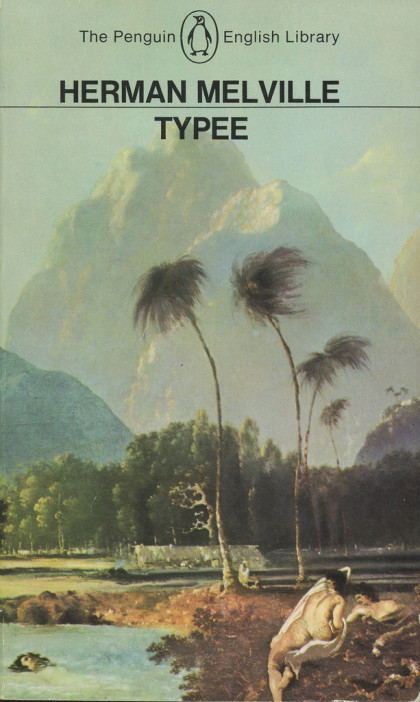
I loved this pitch. Who would’ve thought that Moby Dick, one of the greatest novels of all time, wasn’t even Herman Melville’s best selling book when he was alive? Throw some cannibals into the mix and of course I’m hungry to find out more.
The year is 1841. 23 year old Tom is a deck hand on a whaling ship (write what you know, I guess!) that’s ruled over by a power hungry first mate named Hall. Hall has his sights set on making Tom’s experience as miserable as possible, always having him do extra work and calling him, “Thomasina” to embarrass him in front of the crew.
Tom’s lone ally is 18 year old Toby, an eager newbie who’s keen on making a good impression. Despite the danger in associating with Tom, Toby is always there for him, even when he gets whipped in front of the crew for publicly challenging Hall.
When their ship reaches a Polynesian island and the crew is given a few days to play, Tom and Toby hatch a plan to hide out in the island’s center in order to get away from Hall, figuring they’ll catch the next ship that comes along. One problem. There are rumors that this island houses a tribe of cannibals known as the Typee.
Cannibals? Hall? Both the same as far as Tom is concerned. So he and Toby venture into the island where they, indeed, meet this mysterious Polynesian tribe. Toby freaks out, tries to run, and pays the ultimate price for it – he’s killed.
Tom, injured from earlier, has no choice but to stay with the group. And you know what? They aren’t so bad. The tribe’s King, Mehevi, takes a liking to Tom, and helps him learn the ways of the Typee, namely how to hunt. Also, Mehevi warns Tom of their rival tribe, the Hapaar, who are constantly threatening war with the Typee.
Tom falls in love with a Typee woman and is on good terms with almost all of the residents. But as interesting as these people are, Tom longs to go home to America. Unfortunately, his buddy Mehevi won’t let him. Which means if Tom’s going to get away, he’ll have to escape. Tom knows that his plan will need to be perfect. Because it if fails, the Typee will kill him. Or worse.
I can see why this won. The writing is slick. It’s succinct yet also descriptive. You usually only get one or the other. Not only that, but we jump right into things. We’re on a ship. Conflict is thrown at us in the form of Tom battling Hall. I was drawn in immediately.
But as the script made its way into the second act (when we get to the island) I noticed that something was missing. The storytelling was becoming too casual. For example, instead of building up the mysterious horror of our looming cannibalistic tribe, we learn about them through some random deck hand who informs us of their existence as casually as one might give directions. “Are we making port?” “Aye. We are. But it’s an island of cannibals.”
We needed some mystery. We needed to get to that moniker – cannibalism – gradually. To throw the word out there so haphazardly sapped it of all of its power.
Also, it didn’t make sense why Tom and Toby would head directly towards the cannibals. Cannibals are dangerous, right? So why are we walking towards them? I get that they wanted to hide from Hall, but surely there’s a better plan than hiding amongst cannibals.
Toby’s death happens way too easily. This was a major character, a likable character, and his death doesn’t even occur on screen.
From there, it took me awhile to understand what kind of movie I was watching. I was promised cannibals, but instead I got Dances with Wolves – a film about fitting in with an unfamiliar culture. It wasn’t bad. And Melville provides plenty of conflict (there’s a frustrated Typee second-in-command who wants to kill Tom). But I couldn’t help but feel that I was a victim of false advertising. Where’s the cannibalizing???
Towards the end, we finally get what we’ve waited for (Cannibal Time!). But it wasn’t as exciting as we’d hoped. It’s simply Tom sitting down and eating human meat with the tribe. This might have been a fine plot point 100 years ago. But today? It needed to be bigger. I would’ve kept Toby alive and maybe they cook and eat Toby while he’s still conscious. Lol. That’s pretty sick but I mean, come on! It’s a movie about cannibals. You need to deliver “that scene,” that perfect cannibal moment that an audience never forgets.
The key to fixing this script is to add bigger plot developments throughout the story and deliver more on the promise of the premise. I mean, I was promised this big “Oh shit!” moment at the end of the second act, but I’m still not sure what moment Kent is referring to. Is it when Tom eats human flesh? That’s not big enough for today’s audiences.
And then there’s Hall. What a great villain! Yet we never get the satisfaction of taking him down. Once we leave the boat, the character is gone for good. Why not have Hall and his men come looking for Tom. It would provide you with an opportunity to close his story arc. Hell, he’d be a perfect candidate for Tom’s first cannibal feast.
Some of you might be wondering if it’s okay to radically change plot points like this. My experience has been that the further back in history and the more obscure the material, the more leniency you have. I’ve never met anyone who’s read Typee. It’s the first time I’d heard of it myself. So I think it falls under the category of “obscure enough” to make changes. Hell, Alex Garland changed tons of plot points in Annihilation, and that book was written less than a decade ago.
Writing was good here. But the script never leaves 3rd gear. You need to step on the gas more, Kent!
[ ] What the hell did I just read?
[x] wasn’t for me
[ ] worth the read
[ ] impressive
[ ] genius
What I learned: A good pitch doesn’t alway mean selling your concept. A good pitch can be any fun fact or piece of information that creates curiosity in the reader. Sometimes that means finding the story surrounding the story, which is what Sariano did here. That one factoid – Melville had a book that outsold Moby Dick – convinced me to give this a shot.