
Search Results for: F word
Genre: Action-Adventure/Sci-Fi
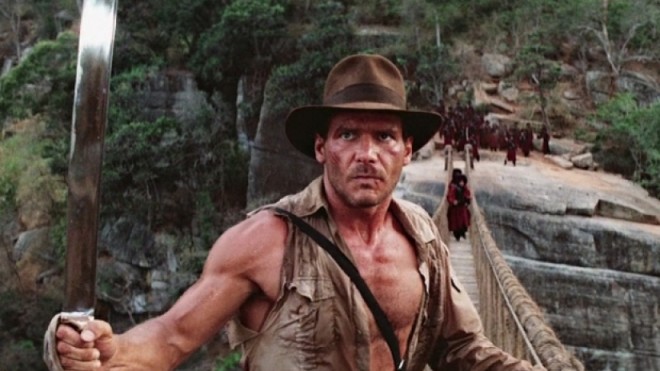
Premise: After being left at the alter, Indiana Jones tracks down his would-be wife only to find out she’s part of a top secret military clean-up of a mysterious crashed airplane.
About: This was the biggest Indiana Jones project that never got made. George Lucas was serious about its development, hiring one of his favorite writers at the time, Jeb Stuart, who wrote both Die Hard and The Fugitive. The legend goes that a very busy Spielberg and an even busier Harrison Ford were primed to do the film as soon as Spielberg finished Schindler’s List, but that they didn’t like all this hooky-pooky sci-fi stuff in regards to an Indiana Jones movie and therefore passed. It would take another 13 years before the three titans could find time to finally film another Indy film.
Writer: Jeb Stuart (story by Jeb Stuart and George Lucas) (characters created by George Lucas and Philip Kaufman)
Details: 2/20/1995 (Revised Draft)
There were some comments in my Ant-Man and The Wasp post questioning why people even go to see these giant Marvel films. They’re vapid emotion-free adventures designed solely to sell you merchandise. I pushed back on that because I find Marvel movies to be entertaining and that’s the only reason I physically go to the movies these days. I want to be entertained. I don’t want to spend 20 dollars to watch Jon Hamm in “Beirut.” I’m sorry but I can wait for the small screen for that.
With that said, I see the Indiana Jones franchise the same way commenters see Marvel movies. It’s a franchise that’s dangerously close to sliding into ATFT. Yes, I’m talking about Alien Terminator Franchise Territory. They just announced that the 5th film in the franchise has been pushed back to 2021, this after previously announcing that the co-writer of Solo, Lawrence Kasdan’s son, would be taking over writing duties.
So let me get this straight. They’ve got the co-writer of one of the biggest box office bombs in history to shape a script around a 79 year old action star. Does anybody see anything wrong with this? I’m asking honestly. Do you have any hope that this movie could be good? Because I don’t find any data that suggests it would be.
Which is why I’ve decided to go back to a more innocent time. A time when George Lucas still loved movies. The year was 1995 and George was actively developing the next Indiana Jones film. The reason I’m curious about this script is that it includes aliens, which was George’s only “MUST HAVE” for Indiana Jones IV. A big reason Crystal Skull suffered was because Spielberg didn’t want to do the alien thing. So the two kind of meshed their opposing visions into a single film and, well, you saw what happened.
With Mars, we have George Lucas’s unimpeded vision of how that alien storyline would play out. Let’s see if a potentially great movie was overlooked.
It’s 1949 and good old Indiana Jones is out of the game. Welllllll, at least until he finishes stealing a gold idol in Borneo. After that adventure, Indiana runs into a hot linguist named Elaine McGregor who he’s forgotten he promised to escort upriver to search for an old temple. Indie falls head over heels for Elaine and within a couple of months, they’re getting married!
Except that just before the ceremony, Elaine gets cold feet and runs away with her former boyfriend. Indiana is heartbroken and must hear it from Elaine herself why he wasn’t enough. He gets word that her and her former man, Robert Bolander, have flown to New Mexico, so off he goes.
Once there, he learns that things are more complicated than he assumed. Elaine didn’t run away with Robert because she loved him. She ran away because Robert, a military officer, was working on a top secret project that he needed her help on. After Indy shows up, he learns that Robert and the rest of the army believe they’ve found a crashed flying saucer.
Indy is skeptical until Robert shows Indy an old object from the crashed ship that’s covered in multiple ancient languages. They must translate these languages to see what the object says if they’re going to understand why these aliens are trolling them. But before anybody can do anything, THE RUSSIANS SHOW UP and STEAL THE OBJECT. Not only that, but they take the one person who can figure out the scripture on it – Elaine.
Indy’s able to catch up to his not-quite-wife and recover the object before getting chased through the desert by a flying saucer. At some point, they realize that this object is some sort of timer and when it gets to zero – game over! Pretty soon, the Russians, more aliens, and a suspiciously frantic Robert Bolander are all in pursuit of the timer object. Who will get it? And once it reaches zero, what will happen?
Before I get to the analysis, I need to address something for the Indiana Jones geeks. The NUKE THE FRIDGE scene IS in here. Which I find curious. This version of the script was developed, supposedly, without Spielberg. Spielberg famously copped to adding the “Nuke the Fridge” scene in Crystal Skull. So now I’m wondering if he was just sticking up for his friend. Of course, Spielberg could’ve suggested this scene to George even back then. But it’s always been presented as a scene that came about recently. The mystery deepens, I guess.
Now let’s get down to brass tacks. We need to use brass because all the gold was stripped out of this franchise a long time ago.
Raiders of the Lost Ark was famously constructed as a series of set pieces that Steven Spielberg wanted to shoot. Lay the set pieces out and let some screenwriter figure out how to connect them. Turns out that screenwriter, Lawrence Kasdan, did a pretty good job, since Raiders remains one of the most beloved movies ever.
Saucer Men From Mars attempts to do the same thing. We have a boat chase on the river. We have fridge nuking. We have a military plane being chased by a flying saucer. But there’s one major difference between the two films.
Raiders uses an overarching goal. Saucer Men does not. Raiders has the goal of getting the Ark. That objective dominates the entire movie. Saucer Men has no ultimate objective. It’s more about Indy and Elaine finding a mystery cube and trying to figure it out while running from aliens and Russians.
Why does this matter when building a story off pre-established set pieces? Because when you have a final destination worked out, it’s easy to guide the story to that destination. We know that Indy has to get that Ark. So the story will come to a conclusion once he does. You don’t have that in Saucer Men, which means you’re linking pre-established set pieces randomly. There’s no framework to guide the major story beats to a clear conclusion.
It’s like preparing a meal when you don’t know what you’re trying to make.
What happens in this scenario is that the plot becomes bigger than the characters. You’re not making decisions based on where the characters need to get to. You’re making decisions based on which set piece you need to get to. That’s going to result in a movie where the characters are dragged along. They have no free will (a common theme this week).
I’m telling you. When you give your hero an overarching goal, writing a good script is so much easier.
But there’s a bigger problem here. The character of Indiana Jones isn’t built for this story. George Lucas is obsessed with the idea that every iteration of a franchise has to give us something new. That’s what he did with the prequels. And that’s what he did with Crystal Skull. And I understand where he’s coming from. You don’t want to repeat yourself.
With that said, you created Indiana Jones for a very specific type of adventure. Look at his weapon. It isn’t a gun. It’s a whip. A gun helps you against spies. A whip helps you in a cave. Everything about this character was built around raiding tombs and finding treasure.
Therefore, when you put him in the desert against aliens, everything feels off. This character wasn’t built to fight aliens. He wasn’t built to avoid nuclear missile blasts. As a result, Indiana Jones stops being relevant in his own movie. You could put any alpha male hero in this role and it would be the same.
So there’s a balance here that Lucas ignores. Yes, you have to create something new. But you can’t go so far away from the source that the hero’s unique skills become irrelevant. And this is coming from someone who loves alien storylines. So if there’s anybody who’s going to buy into this premise, it’s me. But I didn’t, and that’s because of this error.
Did I like anything about the script?
I liked the opening boat chase. You had this little steamer being chased by a WW2 PT boat. That was fun. I liked that Indiana got stood up at his own wedding. That was unexpected. Cause now we’re wondering, what woman would leave Indiana Jones? And I liked the design behind the love triangle. Love triangles are often on-the-nose. Two people like the same person. Big whup. But in this case, Robert and Elaine used to be together. She left him. Now, she’s run off with him, but only because he needs her for a top secret mission. Yet we get the sense that he’s slyly taking advantage of this proximity to weasel his way back into the mix. So it’s not as simple as two guys fighting over the same woman. It’s a bit more nuanced.
But there are no game-changing set pieces in the script. Which isn’t surprising. Anything that had a modicum of potential was ushered into Crystal Skull. It goes to show how difficult it is to come up with original set pieces, in that even when something isn’t right for a movie, they’ll put it in there because it’s hard to come up with something better.
One final thought. If they changed just one letter in this title – ONE LETTER – this movie would’ve been awesome. Change the “R” at the end of Saucer to a “Y.” Boom, you have a movie for the ages.
Indiana Jones and the Saucey Men From Mars
[ ] What the hell did I just read?
[x] wasn’t for me
[ ] worth the read
[ ] impressive
[ ] genius
What I learned: Every time you write a line of description, you have the option of turbo-charging the line. I’ll give you an example. Early in the script, when we’re boating down this river, Stuart describes the crocodiles that are hovering nearby. The functional description of these crocodiles is this: “ALONG THE RIVER – crocodiles, twenty feet long.” It’s a serviceable but ultimately boring line. It does the job and nothing more. Stuart turbo-charges the line, however. This is what he writes instead: “ALONG THE RIVER – crocodiles, twenty feet long and six months between meals.” It’s a small change, but a powerful one. In our minds, these imposing beasts become imposing beasts that are starving and looking for any opportunity to gulp down a human. Always look to turbo-charge key descriptions. It makes a difference.
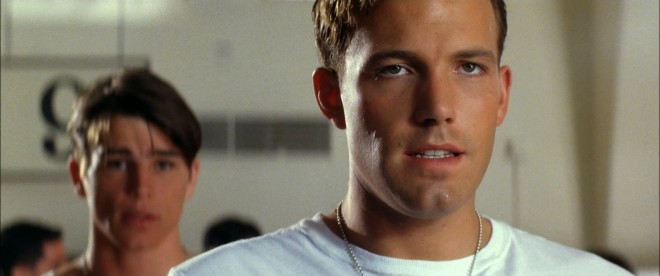
Yesterday’s celebration of the great country we live in led to thoughts of the not so nice things about the country we live in. I’m talking, of course, about Michael Bay movies. I remember July 4th of 2001 like it was yesterday. It was the day Michael Bay’s Pearl Harbor came out (it actually came out May 25 but just go with it for the sake of the article). The highly hyped film was suppose to be Bay’s version of Titanic. It was Titanic alright. A Titanic disaster. Actually, it was worse than a disaster. It was forgettable. The reason Bay’s movies are so forgettable is because he’s awful with character. He has zero understanding of what a character needs in order to emotionally resonate with audiences. Which makes sense when you consider he emerged from the world of commercials, where it was more about the product than the character selling the product. So to Mr. Bay and all other storytellers out there, today’s article is a cure for the Bad Character Blues. That’s right. Ten tips… to improve your characters right now!
Clear objectives – A character without a clear objective is an aimless wanderer. The audience becomes frustrated by that aimlessness and inevitably finds the character boring, or worse, annoying. The thing about objectives is that it’s so simple to incorporate them. In Jumanji, our characters’ objective is to return the jewel to its statue. Then they get to go home. How easy is that?
Unresolved relationships – Characters should have an unresolved issue with at least one other character in the movie. How compelling you make this issue plays an enormous part in how entertaining your script is. That’s because issues lead to conflict, and conflict is what you need to write good scenes between characters. Therefore, you want to get this right. In A Quiet Place, the dad has a broken relationship with his daughter, who’s become sick of all the rules they have to abide by as well as not allowing her to grow up. Take note of how simple that conflict is. I’m pointing that out because writers often think they need relationship conflict that’s really complex. No, it’s often simple universal things that every person experiences.
An inner battle – Give your main character something they’re battling internally. It could be a compulsion, like OCD, a vice, like meth, a fear or flaw, like standing up for themselves, or anything that involves an unresolved problem from within. This is one of the most important ingredients to breaking a character out of the 2-D mould and making them 3-D. A huge component of the human condition are the battles we fight within ourselves. Your characters should be no different.
Conflict with the past – Characters should have some unresolved conflict with their past. I call this the “fourth dimension,” as it takes your character from 3-D to 4-D. A character will have conflict with the external (1-D), other characters (2-D), the internal (3-D), and the past (4-D). It might be a traumatic event. It could be a death that wasn’t properly mourned. But it often has something to do with family. Every human being has a complex relationship with their family growing up, which is why it’s such a great place to look for this conflict. Good Will Hunting had to get past his abusive father in other to move forward.
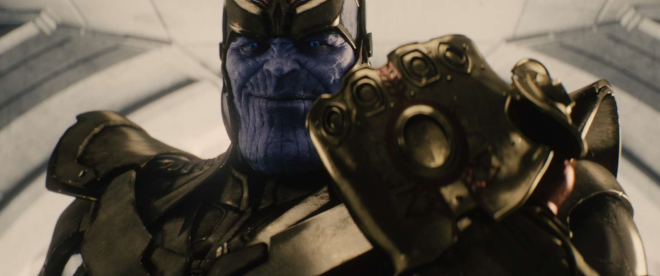
A dash of good in the bad and a dash of bad in the good – A character who’s 100% good is boring. A character who’s 100% bad is boring. So you want to mix a little of each into the other. Denzel Washington in The Equalizer is a REALLY GOOD GUY. But he’s got a dark side. He’s a relentless killer, even enjoys it a little. It’s that edge that makes the character pop. Thanos is a REALLY BAD PURPLE GUY. But he’ll also sit down and talk to you in a calm logical manner. Those little splashes of good and bad are what keep a character from becoming cliche-bait.
Personality – This is one of the BIGGEST omissions I see in character-creation. Characters with zero personality. The writer then wonders why readers aren’t engaged. These are MOVIE CHARACTERS, guys. You thought them worthy of entertaining audiences for two hours. So give them some personality dammit! That doesn’t mean they have to be big and outlandish like Jim Carrey in The Mask. Personality can be dry humor, sarcasm, charm, attitude, arrogance. And every trait is scaleable. You can go big with humor or you can make it subtle, dependent on genre and tone. Thor was a dead MCU character until they gave him some personality.
Arc your character – Have your character start in one place and end in another. I don’t care how they change, but they need to change somehow. Or else the character becomes stale. In Paddington, the father starts off skeptical and resistant towards Paddington. By the end, he’s Paddington’s biggest supporter. Audiences love watching characters transform.
Give them a secret – In real life, we feel closer to people who share secrets with us. It’s a form of bonding. The same thing works with characters. If you know about their secret, you feel closer to them. Superman. Simon in Love, Simon. Jerry Lundegaard in Fargo – had his own wife kidnapped. If a character isn’t popping, try adding a secret and see if it helps.
Create contrast within the character – One of the biggest challenges in character creation is creating characters that feel fresh. A great way to overcome this challenge is to build contrast into character. So whoever the character is assumed to be, you balance that out with the opposite. A priest with an attitude. A comedian who’s a drag. An inappropriate HR rep. A bully with a lisp. A pacifist war vet. A cop who’s a drug addict.
Make sure something personal is on the line – I recently read a script where the hero succeeded at his goal, yet I felt nothing. I realized it was because there was nothing personal on the line for him. If this sounds like your script, let’s add some personal stakes to your hero’s journey! It could be a daughter who’s been kidnapped. It could be losing the love of your life. It could be saving a friendship. If you want to make it stick, make it personal.
One final note. You will never be able to use all of these tips on a single character. Every story is unique. Sometimes they require counterintuitive things from your characters. For example, Ferris Bueller needs to stay the same (violating tip #7) so that Cameron, his friend, can have the big powerful arc in the movie. With that said, you should be able to apply everything here to every script’s ENSEMBLE of characters. In other words, tip 5 may not work for your hero. But I’m sure you can add it to another character in the story. And with that, we’ve ended thin boring characters for all time. You’re welcome, Michael Bay.
Recently, I’ve been reading a lot of consultation scripts with scene issues. Writers are staying inside of their scenes for too long. My advice for this has always been the same. The average scene should be somewhere between 1.5 and 2.5 pages. Anything over that needs justification. If you’re writing a big set piece, that’s justification. If you’re writing the climax, that’s justification. If you’re writing a big confrontation between two characters, that’s justification. Otherwise, you should be keeping your scenes lean and mean.
However, it occurred to me, that as often as I gave this advice, I’d never actually tested it. I was going mostly on feel and, admittedly, the advice that had been handed down to me long ago. So today I decided to change that. Get some real world data. What I did was I chose three screenplays, and counted how long each scene was. I then divided the scenes by the page number to get an actual average of pages per scene.
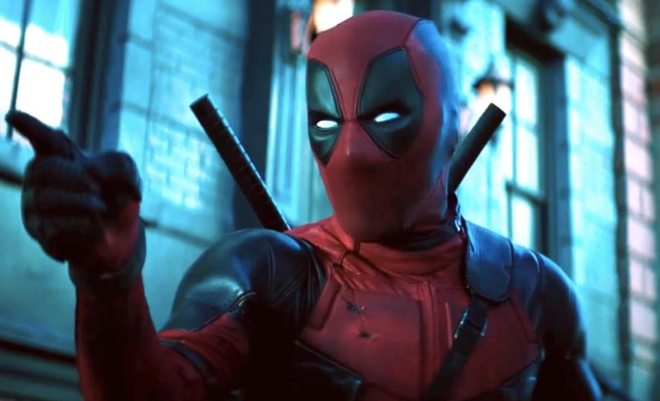
This process was trickier than I expected. There’s some subjectivity in what constitutes a scene. For example, Deadpool does a lot of bouncing back and forth in time. Sometimes, when we bounce to the past, it’s for an isolated scene. Other times, it’s part of a series of scenes you could argue are one continuous (montage) scene. So I had to use my judgement on which was which.
Also, I didn’t want to break down scene numbers into quarters, as it would get too messy. So if a scene was, say, 65% of a page, I would round down to half a page. If it was 75% of a page, I rounded up to a full page. I didn’t measure down to the millimeter or anything, which, when going through the whole script, gave me some imperfect page counts. That’s why the numbers don’t add up EXACTLY to the official page count. With that said, it’s accurate enough for the purposes of this article.
Here’s what I came up with…
DEADPOOL (ORIGINAL SPEC DRAFT)
1.5, .5, 3, 10, 3, 2.5, 2.5, 1, 1.5, .5, 4, 2.5, 2, 1.5, .5, 2, 4.5, 3.5, 1.5, 1, 2.5, 1, 2, 1.5, .5, 1, 3, .5, 2, 2, 2, 1.5, 1.5, 4, 3, 1, 2, .5, 1, 3.5, 2, 14, 6, 3
Page Count: 113
Number of Scenes: 44
Average: 2.6 pages per scene
THE BABADOOK (SHOOTING SCRIPT)
3.5, 3, .5, 1, .5, 2.5, 3, .5, 1, 3, 1, .5, 2.5, 1, 3, .5, 2, 1, 1.5, 1, 1, 1, 2.5, .5, 1, 1, 1, 2, 6.5, 1, 2.5, 1.5, 2, 1.5, 1, 2, 1, 3.5, 1.5, 1, 3, .5, 1, .5, 1, .5, 3, 1.5, 2, 2.5, 6, 2, 5, 2.5, .5, 2.5
Page Count: 100
Number of Scenes: 56
Average: 1.8 pages per scene
THE HANGOVER (ORIGINAL SPEC DRAFT)
1.5, 4, 2.5, 3, 3, 2.5, .5, 2.5, .5, 5, 4.5, 1, 1.5, 4.5, 1, .5, 3.5, 1, 4, 7, 3.5, 4, 4.5, 1, 1.5, 8.5, 3, 2.5, 5, 1, .5, 6, 2.5, 1.5, 1, 1.5, 1, 2, 5.5, 1
Page Count: 111
Number of Scenes: 40
Average: 2.7 pages per scene
So what did I learn here? Well, writing style has a lot to do with how many scenes you’re going to have. Jennifer Kent (The Babadook) had a lot of brief scenes with her protagonist in a car coming back home. Or sitting in a room while her kid was asleep. She seemed to be drawn to moments, as opposed to writing fully fleshed out scenes.
On the flip side we’ve got The Hangover, which has the most long scenes of our three examples. A reason for that may be that comedy needs to rev up in a scene before it gets going. And also, there’s more dialogue in a comedy, since the characters are making lots of jokes. This naturally leads to longer scenes.
Deadpool is such a crazy script with all the jumping around. But I wanted to include at least one action script. Not surprisingly, the long scenes in the script are the major set-pieces. But I was surprised how short some of the scenes were. I remembered being in the theater and watching Wade Wilson yap his mouth off in a bar for awhile. But in the script, those scenes are under 3 pages.
Despite all of this, the average scene length is surprisingly close to the advice myself and others have been giving. Deadpool and Hangover are a little over 2.5 pages per scene. But that might have dropped had I been stricter about what a scene is and isn’t. Likewise, with Babadook being a very stream-of-conscious type movie, you could make the argument that many of those individual scenes were part of bigger scenes. With those adjustments, all of these movies would be in that 1.5-2.5 page sweet spot for how long the average scene should be.
I want to make it clear though that this doesn’t mean every scene should be 2 pages. A scene should be as long as it needs to be. If all you need to convey is that a character is an asshole, take half a page and show him cut someone in line at Starbucks. Boom, you’re done. But if you’ve got your hero and your villain, who you’ve been building up for 80 pages, finally confront each other in a diner (Al Pacino and Robert DeNiro in Heat), of course that scene should be longer.
What you don’t want is to make newbie mistakes like coming into a scene too early. Or leaving a scene well after the scene is clearly over. I’ll see this happen in comedy specs a lot. The writers want to get as many jokes in as possible and therefore a 3 page scene becomes a 6 page scene with half the impact. The lesson I would take away from today is that if your scene is over 2.5 pages long, there better be a good reason for it. It has to be an important scene in some capacity.
I hope that helps!
Carson does feature screenplay consultations, TV Pilot Consultations, and logline consultations. Logline consultations go for $25 a piece or 5 for $75. You get a 1-10 rating, a 200-word evaluation, and a rewrite of the logline. If you’re interested in any sort of consultation package, e-mail Carsonreeves1@gmail.com with the subject line: CONSULTATION. Don’t start writing a script or sending a script out blind. Let Scriptshadow help you get it in shape first!
Genre: TV Pilot – 1 Hr. Drama
Premise: A family is turned upside-down when their flight back from vacation experiences an impossible phenomenon.
About: The high-concept network show is back! We’ve got this one premiering on NBC in the fall. And we’ve got a new zombie show, The Passage, also in the fall, coming from Fox. Manifest is created by Jeff Rake (The Mysteries of Laura) and newcomer, Matthew Fernandez. It’s being produced by Robert Zemeckis.
Writers: Jeff Rake & Matthew Fernandez
Details: 60 pages
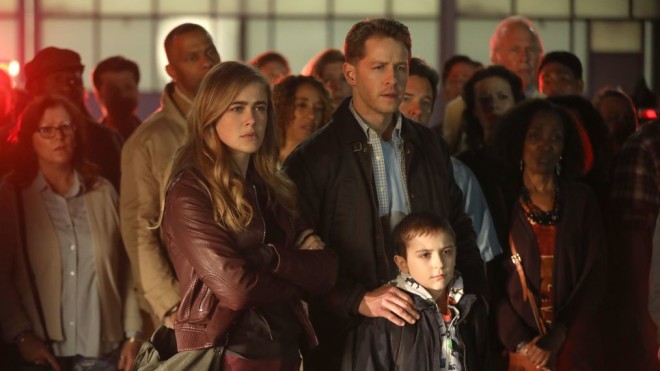
Here’s something I’ve never shared on the site.
I’m obsessed with plane crashes. I’m talking, after a plane crash, I will hunt down the black box recording and listen to it repeatedly. I will read accident reports. If there’s a flight that had turbulence so bad it was reported in the news? I will eviscerate the internet to find in-flight cell phone footage of the event. I have watched every single episode of both plane crash shows, Mayday, and Air Disasters.
This may have something to do with my mom being convinced that every plane we were on growing up was going down. Hearing the words, “I have a bad feeling about this flight, I don’t think we should get on it,” was as common a phrase to me growing up as “Do you want me to make you a sandwich?”
This has fueled my morbid curiosity about plane crashes and mysterious plane occurrences (that Malaysian flight was an obsession of mine for over a year), and it’s also led me to want to write or produce or find the ultimate plane-related project. I’m open to pitches. So if you’ve got a good idea, throw it up in the comments. Don’t limit the genre. The best plane-related story to date is plane/horror hybrid, “A Face in the Window,” (from The Twilight Zone movie). If you want to know what I looked like on every flight through my 20s, this is an accurate depiction.
It shouldn’t be a surprise, then, that I’m obsessed with this Manifest show. As soon as I heard about it, I screamed, “I MUST FIND THIS SCRIPT!” I’m such an easy sell with this material that I’d be shocked if I didn’t like it. But it’s a script, so you never know. Let’s check it out.
Ben and Grace, a married couple in their 30s, are at the airport after a Jamaican vacation with their twins, 10 year old Cal and Olive. Cal, we quickly learn, has leukemia, and will be lucky if he makes it past six months. Also with them are Ben’s sister, Michaela, a cop who’s recovering from a traumatic car crash, and Ben’s parents, Steven and Karen.
When the opportunity to give up seats for money-vouchers arises, Ben suggests that him, Cal, and Michaela take them, since the Mayo Clinic is bleeding them dry and a little extra cash will help. So Grace, Olive, and the parents take this flight, and Ben, Cal, and Michaela the next.
That flight is uneventful except for a brief bout of severe turbulence. Once they arrive in Baltimore, they find themselves oddly moving towards a warehouse instead of a gate. A group of federal agents are waiting for them. Once outside, they’re told that their plane disappeared 5 years ago, and that everyone on board was assumed dead. But the real kicker is when he informs them that they’ve all missed their connecting flights.
After a lot of questioning, the miracle passengers are allowed to go home. Olive is now 15 years old, which makes the twin connection between her and Cal a lot weirder. Grace had given up hope on Ben, and can’t believe that he’s returned. Ben’s mother died. Oh, and good news for Cal. In the five years that he’s been gone, they found a breakthrough treatment for his cancer. It’s looking like he’ll be cured.
The rest of the pilot focuses on Michaela, who keeps hearing voices in her head. One voice keeps telling her to “let them free!” and grows louder when she’s jogging past an old junkyard. She eventually breaks into the junkyard, where the voice guides her towards an old shack. She opens it to find two girls who were recently kidnapped and is heralded as a hero.
The only person she can tell about this power is Ben and he tells her to keep it quiet. He has a feeling that the government isn’t going to let these weirdos integrate back into society easily. And if they give them any reason to snatch them back into custody, they’ll take it. And so Michaela, along with the rest of the passengers, begin their new life after this bizarre event.
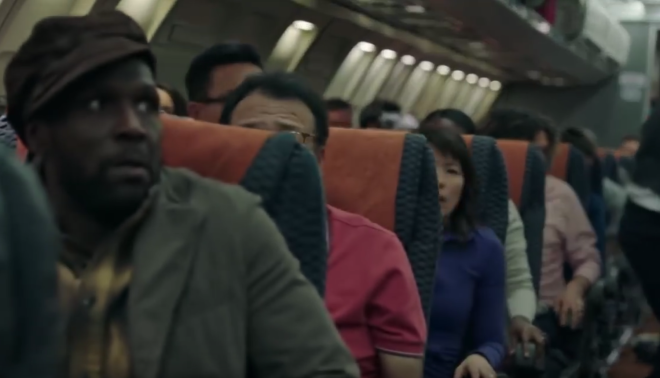
We’ve talked about this before. The high-concept TV show is a tough one. It gets you eyeballs early. But you have to wonder if a show can sustain itself if the coolest event that happens in the entire series occurs in the first five minutes.
If you look at shows like X-Files – that show ensured that every episode would be high-concept. Then there’s Lost. The brilliance of that show was that the exciting plane crash was only the beginning. The island itself was the real star.
I’m not convinced that there’s much of a story here beyond the awesome teaser. The only character with anything going on is Nostradamus Michaela. And my problem with that is, her premonition power doesn’t evolve organically from the event on the plane. I mean, you can explore premonitions without a 5 year plane trip, can’t you?
As is the case with every TV show, the characters need to be great. That’s the key to adding longevity to your show. I would go so far as to say you should spend just as much time writing backstory for your six biggest characters as you spend writing the pilot itself. And when I say that, I mean EACH character. Not combined.
You may balk at that but what do you think is going to happen if you slap some half-realized characters on the page? The reader can tell. Trust me. It’s so easy for me to tell when a writer has put a lot of work into someone, when they’ve put barely any time into them, and when they’ve put in just enough.
That’s definitely how I feel about these characters. Who’s the stand-out here? Michaela I guess? And even she’s vague (when we meet her she’s unsure if she wants to get married, yet when she arrives in the U.S., she’s devastated to find out her fiancé has moved on to someone else). Cancer Boy has no personality or development outside of the fact that he has cancer. Cancer can’t define a character. There’s gotta be more there.
And yet… dammit… because I like plane stuff and weird sci-fi stories, this still kept my interest until the end. The moment early when the family decides to split onto two planes – that was a pro screenwriter move right here. Most writers would’ve had the family on the plane together. It was so much more interesting to split them up and see the family reunite afterwards.
I just question whether they have enough to move forward. This needs more mysteries. It needs more questions. Either more characters needed the premonition power or each character needed their own unique power. I hope I’m wrong. I still miss the trippy WTF world of Lost, where you never knew what was coming next week. Is there a mind out there that can recreate that excitement? I hope so.
[ ] What the hell did I just read?
[ ] wasn’t for me
[x] worth the read
[ ] impressive
[ ] genius
What I learned: Network TV shows (and all TV shows to some degree) need to embrace their soapy elements. TV is about character. Which means plots are going to be dictated by character. That means things like death, cancer, cheating, pregnancies, characters romantically getting together – these will fuel a lot of your plot points. Not all at once! You will spread them out over the course of the season. But when something big needs to happen, soapy reveals are usually your go-tos. So here (SPOILER), a late reveal is Grace (the wife) having a hushed call with a man. We realize that she’s fallen in love with someone else, and is deciding when the best time to tell Ben is. It sounds a bit hacky, but TV thrives on this stuff as long as you don’t overdo it.
Genre: Action/Adventure
Premise: (from IMDB) When the island’s dormant volcano begins roaring to life, Owen and Claire mount a campaign to rescue the remaining dinosaurs from this extinction-level event.
About: Three years ago, Jurassic World took the world by storm. The movie nobody thought they wanted became a mega-hit, grossing 1.6 billion worldwide. In a strange twist of fate, the first film’s director, Colin Trevorrow, was fired from his Star Wars Episode 9 job, allowing him to come back and spearhead the back end of the new film in a producing capacity. The sequel is directed by J.A. Bayona, who directed one of my favorite horror films ever, The Orphanage. The sequel grossed 150 million this weekend.
Writers: Derek Connolly & Colin Trevorrow (based on characters by Michael Crichton)
Details: 128 minutes

Jurassic Park has always felt like a hard franchise to embrace. For the longest time, I wondered why that was. After watching Jurassic World: Fallen Kingdom this weekend, it hit me. Unlike franchises such as Star Wars, Marvel, Indy, Harry Potter, etc., Jurassic Park has always been about the dinosaurs. And as awesome as dinosaurs are, they’re not people. They’re not characters we can emotionally connect to. This is why no matter who we plop down into the park, we’re left feeling empty. The characters have always been interchangeable in this universe.
Fallen Kingdom tries to solve this issue with “Blue,” the velociraptor who Chris Pratt’s character, Owen, trained as a raptor pup. Maybe, the theory went, they could turn him into a Disney animal, like reindeer Sven from Frozen. But the problem with these darn dinosaurs is if you make them too cute and cuddly, they come off as dishonest. These are predators and you have to stay true to that. Which means we can only feel so close to them.
The plot for Fallen Kingdom isn’t as bad as I thought it would be. After the events of the previous movie, a volcano on the island has become active. Once it erupts, it’s likely that all the dinosaurs in the park will die. There’s a debate going on about whether we should save them from extinction, or “let nature take its course.” After an impassioned speech by Jeff Goldblum (who never liked us “playing God”), nature wins. It’s decided that they should be left to die.
The estate of the Jurassic Park’s creator, Hammond (the old guy who always said, “No spared expense”), doesn’t want this to happen. They’ve found an island to sneak the dinosaurs off to and let them live in peace. They can do most of the work themselves, but if they’re going to find the elusive “Blue,” they’ll need someone who can find him. Claire says, “I can’t catch him.” And they say, “But you know someone who can.”
So Claire recruits Owen to go to Jurassic World to help lure Blue, only to find out it’s all a sham. There’s no second island. They’re going to take these dinosaurs back to the mainland and sell them off to the highest bidders! After being jailed at the head mansion by the bad guys, Claire and Owen orchestrate an escape, and run to the room where the auction is taking place. Of course, a few dinosaurs get free, and then all hell breaks loose. Now it’s back to basics. Get the hell off this compound without getting eaten.
The plot is by no means perfect. But it’s hard to come up with sequels to “monster-in-a-box” scenarios. You can’t repeat the plot from the first film, even though that’s the only way to make these concepts work. So you’re stuck stitching together plots like these, which have sections that are fun, but don’t add up to a complete experience.
The best stuff in the film, by far, is the stuff on the island. There were four, arguably five, good set-pieces. My personal favorite was running down the hill of the island with all the dinosaurs while a volcano blows up behind them. But the set piece I was most invested in was the drowning scene. Claire and her assistant are stuck inside one of those glass bubble vehicles which has plunged into the ocean and it’s filling up with water. Owen is able to come down and jimmy open the door just in time to save them.
This was a reminder of something I preach all the time here. The simplest set pieces are often the best. There are no dinosaurs in this scene. Just characters. But the scene is so perfectly paced and the threat of death so prominent, that I was holding my breath along with them. Really good stuff.
Ironically, this placed the script in a huge predicament – how do you follow such a strong island sequence? Unfortunately, they failed with their choice, setting the second half of the movie in a mansion. You cannot, under any circumstances, make the second half of your blockbuster action movie smaller than your first half.
Yet that’s what happens. We regress into small rooms and small scenes (time to sell the dinosaurs!). The whole time I kept wondering how they were going to get all the characters and dinosaurs to a final location where the giant climax will be. But it never happened. The movie remains inside the mansion/compound the whole time. The choice was so baffling, I assumed it had to be a budget issue. But who puts budget constraints on sequels to movies that gross 1.6 billion dollars?

Another problem with this dinosaur world is that the writers try to have it both ways. When it suits them, the dinosaurs are nice loving animals that need to be saved. When it doesn’t, they’re cruel heartless predators that you have to run from. This happened all the time. Help the raptor, THEN RUN FROM IT! Help the T-Rex, THEN HIDE! In defense of Connolly and Trevorrow, I’m not sure this is any different from the original Jurassic Park, but I noticed it a lot more here. And it left me confused about what I was rooting for. Are these things good? Are they bad? What am I supposed to be feeling? And if you’re going to say to me, “That’s the point Carson. It’s complicated!” Give me a break. This is Colin Trevorrow’s Jurassic World. Not Jean-Luc Goddard’s Breathless.
The one big talking point coming out of this film is the ending (MAJOR SPOILERS moving forward). Some people have praised the film for finally “moving the Jurassic franchise forward.” I’m calling B.S. What happens at the end of the film is they let all the dinosaurs free, which allows them to scurry into the mainland, into society. For the first time, Jeff Goldblum post-scripts, man and dinosaur will co-exist.
Mark my words. This will doom the sequel.
Monster-in-a-box movies only work when there’s a monster and a box. You take either one of those away and you don’t have a movie. They’re taking the box away. So what’s the plot going to be? Are we going to cut between Japan, China, the U.S., France, and the U.K., observing how different nations adapt to the dinosaur phenomenon? That may work as a National Geographic series. But it won’t work as a movie, which needs something more contained, both in location and urgency. If you disagree with me, pitch your “Dinosaurs are everywhere in the world now” idea for Jurassic World 3 in the comments. Watch as it gets shot down. And it’s not your fault! There’s no way to make this setup work.
You may say to me, “But Avengers Infinity War, Carson! That took place all over the universe.” But that’s not a monster-in-a-box story. We’re dealing with characters there who have their own goals, their own flaws and fears and conflicts to overcome. That’s the inherent problem with dinosaurs. They’re not smart. They can’t have dino-arcs.
If I were grading this on the first half alone, I would say it’s worth the price of admission. But once we get to the mansion, each sequence is less compelling than the previous sequence. Not only that, but the writers didn’t recognize that while even though the dinosaurs are the stars of the show, the audience needs to connect with the characters. And they don’t give us anyone to connect to.
[ ] What the hell did I just watch?
[x] wasn’t for me
[ ] worth the price of admission
[ ] impressive
[ ] genius
What I learned: Never go smaller in your second half. Movies need to build. This was a problem I had with Looper as well. We went from this giant time-traveling world-traveling opus to hanging out on a farm.