
Search Results for: F word
Hey guys, I’m running around today so I don’t have time for a normal post. But I just wanted to remind everyone who’s struggling with this journey to keep at it. Keep writing. Keep getting better. Your time will come. Unless you’re new to this, I’m sure you’ve had that moment where you’ve wondered if you should give up. Well, here’s something that may make you reconsider that option.
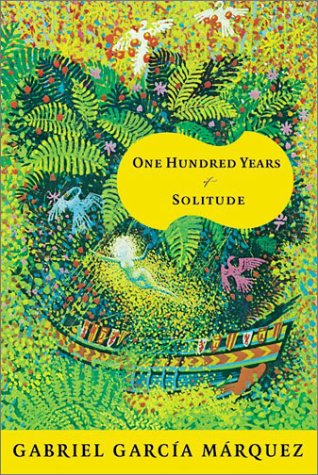
There was an author who became so discouraged with writing that he gave it up, not writing a single word for five years. The thing is, he couldn’t get this one idea out of his head. At a certain point, he couldn’t keep it in any longer. So he broke out the typewriter. “I did not stop writing for a single day for 18 straight months, until I finished the book.” He wrote this book as the husband and father of a family, so he had plenty of excuses to use if he wanted to (“There’s no time!”) But he made that effort to write every single day. That manuscript turned out to be One Hundred Years of Solitude, which would go on to sell over 50 million copies worldwide.
Think about that. You may have the next One Hundred Years of Solitude in you but the world will never get a chance to see it because you gave up. Now that would be a real tragedy.
GET TO WRITING!
Today’s script and the film it spawned just became THE big story at Sundance this year, selling for a boatload of money. But is this classic indie drek here to depress us to death, or is it the next Ordinary People?
Genre: Drama
Premise: When his brother dies a long-time-coming death, a janitor beaten down by tragedy learns that he’s reluctantly been made his nephew’s legal guardian.
About: So far, this is the big movie coming out of Sundance. It sold for 10 million bucks to Amazon, and is written by embattled writer-director Kenneth Lonergan. You may remember Lonergan as the guy who wrote and directed the movie, “Margaret,” a film that, even though it had some of the biggest stars in the business in it, was stuck in purgatory because Lonergan refused to edit the sprawling film down. As a result, it wasn’t released until eight years later. I reviewed the script on the site to see if it was, as some had proclaimed, a “masterpiece,” and instead found very good evidence as to why the film wasn’t being let anywhere near a movie theater. It was a sprawling unfocused mess. Manchester-by-the-Sea is supposed to be a lot tighter, and is said to give star Casey Affleck an Oscar-worthy performance.
Writer: Kenneth Lonergan
Details: 134 pages (July 25th, 2014 draft)
![MBTS_2711[1]](https://scriptshadow.net/wp-content/uploads/2016/01/MBTS_27111-e1453822773697.jpg)
Don’t you just love feeling lousy?
I know that’s how I like to start my days.
Well, lucky for you, I’ve got a script that’s depressing as shit!
Look, I like character pieces when they’re done well. I don’t need a huge plot to be happy. But what I do want from my character pieces is some element of hope. I can get through the depression if I feel like there’s hope on the other side.
I just read this dystopian book, actually, The Dog Stars, by Peter Heller, and this book is really depressing. Spolier Alert: The dog dies. And humanity is screwed. And the only people left on earth kill and eat each other. And the main character is lonely as shit. But you know what? The book eventually brings us hope. We see that there’s a silver lining at the end. And it makes the dark journey we invested in worth it.
But if you’re just going to depress me for two hours… we got a problem.
Manchester-By-The-Sea follows Lee, a 40 year-old janitor who sleepwalks through life. This guy’s clearly gone through some heavy shit, and he’s just not interested in fighting anymore. Well, more bad news is on the way for old Lee. His brother just died.
Luckily, this was expected. Joe, his bro, had congestive heart failure and had been fighting it for awhile. So everyone knew it was just a question of when. Even with that though, there wasn’t really a plan put in place for how to handle the situation. All Lee knows is that he has to go pick up Joe’s son, 15 year-old Patrick, to tell him that his dad has passed.
Patrick, who’s not the most likable kid (he has two girlfriends, neither of whom know about the other), is casual about the news. He wants to know what happens to all the money. Does it come to him? Since his alcoholic mom disappeared years ago, he figures that’s the plan. But since he’s only 15, Lee will take the money, as well as become Patrick’s guardian. This is news Lee wasn’t expecting and his first reaction is “no fucking way.”
The two spend the rest of the day doing person-just-died errands, debating where Patrick is going to live, since Lee refuses to let him live with him. During this time, we flash back to previous moments in their lives, most of which are arbitrary. Then, just when we’re getting comfortable, we’re hit with a big one. One night, a drunken Lee started a fire in the fireplace then went to get more beer. When he got back, his house was on fire, and his three young daughters were crispier than overcooked bacon.
Hey, I told you this was going to be depressing, didn’t I! The rest of the story follows Lee and Patrick around with the vague impression that at some point, Lee will officially decide whether to be Patrick’s guardian or not. At the rate things are going here, my guess is probably not.

Let’s start off with the dreaded double-tragedy. Why does it have to be a double tragedy?? Isn’t one tragedy enough for a film?? I guess there wasn’t enough depression so we needed to add more. I mean a grown man dying of heart failure is weak-sauce. Kill three young girls. Now we’ve got a picture, see!
To be honest, I don’t know what to make of this. This kind of screenplay is so out of my comfort zone, it’s hard to analyze it. Lonergan likes real life moments. He likes authenticity. He doesn’t want Hollywood bullshit. I get that.
But you have to realize that you’re making a movie. Movies aren’t life. They’re not 80 years long. They’re two hours long. So just the fact that you’re cutting 79 years out means you’re making choices as to what’s interesting and what isn’t. You’re “Hollywood-izing” your story whether you want to admit it or not.
So don’t pretend like you’re keeping it real by avoiding flashier plot points. For example, there’s a brief moment where it’s hinted at that Lee’s wife may have left him for Joe, giving us a meatier and more complicated familial drama to sort through. But the hint turned out to be nothing, keeping things straight, and for the most part, uneventful.
There are no plot developments in the present-day storyline. It’s literally like if you and I got in a car, did errands, didn’t really like each other, and then went our separate ways after two hours. That’s this movie. We needed more to happen. We needed drama. We needed an unexpected development or two.
And then there’s Lee. They’re saying Casey Affleck is going to get an Oscar nomination for this. I guess you can get a nomination then for looking really depressed? Cause, honestly, Lee doesn’t do much else. He just drives Patrick around and stumbles over his words a bunch. That’s his main character trait, saying some version of “I can’t do that… I can’t do that,” over and over again.
Which brings me to the dialogue. The dialogue here is probably some of the most realistic you’ll ever read. People don’t really say much. They stumble over their words a lot. Half the script is dual-line dialogue, implying that everyone’s talking over each other. All this gives the dialogue a “real-world” feel. But again, it’s like listening to a real life conversation. Real life conversations are boring. Your job as a writer is to dramatize dialogue, and Lonergan doesn’t do a lot of that. I guess because he’s afraid of “Hollywoodizing” everything.
Finally, one of the things I hate most in stories is one-note characters. The same emotion over and over again. Especially if it’s a negative emotion. Cause then you’re just sucking us into Depressionville. Because the truth is, I wanted to root for this guy. Lonergan did a nice job making us like him at the beginning (he works long hours as a janitor and has to do really shitty stuff just to get by). But the second he picks up Patrick, this becomes a one-note movie all the way.
And that’s my biggest thing. One-note is boring. No matter how you spin it. One of my favorite scripts I’ve reviewed, After Hailey, has a similar set up (guy becomes legal guardian of teenager) and it works because they bring other emotions into it. With even just a teensy bit of humor here, this could’ve been so much better.
[ ] what the hell did I just read?
[x] wasn’t for me
[ ] worth the read
[ ] impressive
[ ] genius
What I learned: Beware of one-note movies – movies with one emotion throughout. There are examples of them working in the past (Ordinary People comes to mind) but they are rare. Remember that an audience best feels a note when they have another note to compare it against. Depression hits more squarely when it’s juxtaposed against humor. Lonergan got that right in his debut film, You Can Count On Me, but he seems to have forgotten it here.
Get Your Script Reviewed On Scriptshadow!: To submit your script for an Amateur Review, send in a PDF of your script, along with the title, genre, logline, and finally, something interesting about yourself and/or your script that you’d like us to post along with the script if reviewed. Use my submission address please: Carsonreeves3@gmail.com. Remember that your script will be posted. If you’re nervous about the effects of a bad review, feel free to use an alias name and/or title. It’s a good idea to resubmit every couple of weeks so your submission stays near the top.
Genre: Action-Adventure
Premise (from writer): After witnessing the slaughter of her village by a rival clan, a woman warrior treks across Japan in search of revenge.
Why You Should Read (from writer): This script came out of my love for sword fighting. In every samurai film ever made, it’s always by far the highlight of the story, which is why I set out to make the plot of Onna-Bugeisha so simple. The characters have no spoken dialog. I thought it would be a great experiment to write a film in which the battles, the duels and the score were the dialog. — Uma Thurman aside, rarely do we see a woman take center stage in a samurai action film. The main protagonist in this story is not only a woman, but a mother of two. Women of the households, defending their families at sword point, is ingrained in the samurai culture, but to the best of my knowledge, I haven’t seen that story play out on film. — Please note: Although the page count is low for a feature film, I’ve timed it at around 1 hr 50 min.
Writer: Jon Sanhueza
Details: 48 pages (yes, 48 pages!)
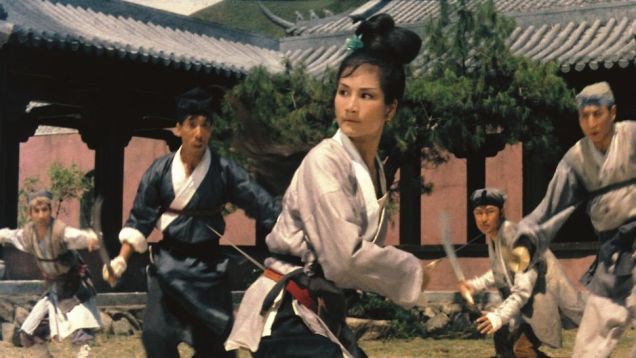
I had a feeling you guys would dig this one. There’s something about martial arts and movies that goes together like Silver Lake and hipsters. Now I’ve never been leading the martial-arts charge. Maybe it’s because, as a kid, my karate instructor used to make me hold two books out with my arms until they fell off. But, hey, what 13 year old doesn’t go through their “Enter the Dragon is the best movie ever!” phase. I know I did.
Still, we’ve got a writer who’s taking a huge chance here. I’ve read a few scripts over the years that have been dialogue-free, and while telling a story without anyone speaking is one of the purest forms of storytelling, it tends to work best in short spurts, and not for 90 minutes at a time. Let’s see if Onna-Bugeisha is an exception to the rule.
Lord Mori is dead. And that’s never a good thing. This thrusts his son, Lord Jiro, and his daughter, Lady Takara, into the kingdom-running spotlight. And with Lady Takara running off to get married, it means poor Lord Jiro will have to do everything by his lonesome. And how does he celebrate this? With a concubine, of course! Oh man. Who wouldn’t have loved to live in feudal Japan.
There’s only one problem. That concubine? She’s kind of a secret assassin. And after giving Jiro a little sexy time, she strangles him to death. Meanwhile, Lady Tanaka is riding to her new hubby’s place with her number 1 bodyguard, the Samurai, “Katsuro.” But when their carriage is attacked, not even a samurai can take on a couple dozen gun-slingers. Maybe this is the moment in time when samurais realized, “You know? This gun thing might be an issue for our longevity.”
Katsuro’s beautiful wife, Maiko, is back at home using her residual samurai knowledge to take down the raiders destroying Jiro’s kingdom. In the process, both of her children are killed. But somehow, Maiko escapes, and heads into the woods after her man. She finally finds him in a cave, rescues him from the nasty raiders, and heads to the nearest village for some food.
Unfortunately, Katsuro wants to kill himself. Something about tradition for being a failure or something. Maybe I wouldn’t have wanted to live in feudal Japan. He succeeds when Maiko’s away, and now Maiko is all alone with no home, no children, no husband, and no In and Out. So she does what anyone in her situation would do: She plots some revenge, muthufuka!
Eventually she finds out that Lady Takara and her new hubby were responsible for this whole thing, probably so they could rule more land. So Maiko heads to their kingdom, now looking like a haggard beggar, and slices her way to a local tournament, where she takes down her competition, and finally, the couple responsible for her family’s death.
Writing a script without dialogue is like eating a pizza without cheese. It’s not that it can’t be good. But you’re going to have to come up with some bomb-ass recipe to make us forget about that cheese.
One of the lesser-talked about things in screenwriting is the way dialogue helps a reader’s eyes move down the page. It’s ironic when you think about it because we’re all telling you, “SHOW! DON’T TELL!” And yet secretly, we like you to tell because a page of dialogue moves about four times as fast as a page of description.
I remember getting to what I thought was at least page 25, and I looked up and saw that I was on page 8. That’s never a good sign. The goal in any script should be for the reader to look up and NOT BELIEVE it’s already page 40 or page 70.
And it’s not that Jon deluges us with endless paragraphs. Actually, the majority of his paragraphs are 1 line long!
So it led me to wonder, is the problem here that there’s no dialogue? Or is the problem that the story isn’t very compelling?
I can pinpoint one area that might help answer that question. After Maiko’s family has been killed, she finds some sort of piece of paper that highlights a contest with Lady Takara. And it seemed to me like this was supposed to be a key plot revelation. Like it was telling us who had raided the kingdom. And yet, it wasn’t clear if that’s what was happening, leaving me to wonder if I’d just read a major plot twist (Lady Takara betrayed her brother!) or if this was some run-of-the-mill exposition to get Maiko to the contest.
If there had been dialogue in this script, I’m sure there’d be zero confusion here. You’d have that scene where a character literally said this out loud. But there wasn’t, and that left me wondering who was responsible for this attack, a major plot point in the story lost due to the vagueness of a voice-less screenplay.
On top of this, I’m not sure this would be a 90 minute to 2 hour movie. That’s another problem you run into when you don’t follow proper page-protocol. 1 page = 1 minute of screen time. That’s how Hollywood’s been doing it since the beginning. They’ve even go so far as to keep certain dead fonts alive during the personal computing font revolution of the 80s so they could accurately determine a script’s length.
This may seem trivial but remember, you’re talking about a business that wants to know EXACTLY how much something is going to cost, down to the thousand dollar mark. Warner Brothers will force you to write scripts for them in their specific template so they can have a better understanding of this number.
I don’t know if this movie is 30 minutes long. 100 minutes long. I have no idea. And if I don’t know, I’m guessing a studio exec won’t either.
All of this overshadows the fact that Jon is a really good writer. You can tell he loves this subject matter. The way he describes things is very simple and elegant (“A ninja drags the samurai onto the roof and plunges the sickle into his chest.”). There’s just something about this no-dialogue format that’s interrupting my enjoyment. I wish I felt differently but that’s the truth. And as Will Smith likes to say, “Tell the trust.”
Screenplay link: Onna-Bugeisha
[ ] what the hell did I just read?
[x] wasn’t for me (but writer is definitely someone to watch out for)
[ ] worth the read
[ ] impressive
[ ] genius
What I learned: Despite my reaction to this specific story, today is a reminder to write about what you love. It really makes a difference in the product. Readers can tell when you care. Everything feels more detailed, more vibrant, more thought-out. You can’t fake that. It’s like a born and bred country singer being asked to sing R&B. If he’s talented, he can do it. But you’re never going to feel the same passion in his voice as when he’s singing country.
Genre: Contained Thriller
Premise: When a young woman wakes up in the fortified cellar of a man’s farm house, she must figure out if the mysterious reason why he says she’s there is true or not.
About: This was just a regular spec script until JJ Abrams’ company, Bad Robot, decided to adapt it into the next chapter of the Cloverfield franchise. How “Cloverfield-y” it will be is up for debate. And since this is the original 2012 draft, before the changes were made, we won’t know for sure until the movie arrives. However, based on the recent trailer, I can confirm that a ton of it is similar. It will just somehow tie into that giant monster who destroyed New York City. Newcomers Josh Campbell and Matt Stuecken wrote the script. It’s been said that Whiplash writer-director Damian Chezelle helped with the rewrite. I wonder if that means there will be a dance number?
Writers: Josh Campbell & Matt Stuecken
Details: 95 pages (April 11, 2012 draft)
For those of you bemoaning the fact that your movie choices this weekend were limited to either Ride Along 2 or Michael Bay’s attempt at being serious, rejoice in the fact that big Hollywood movies are coming sooner than you think. Deadpool comes out in the traditionally dead month of February. Batman vs. Superman is here in March. And just last week we learned we were getting a new Cloverfield movie, also debuting in March.
While JJ has shied away from the mystery box as of late, due to the internet repackaging his box into some kind of movie-killer, he did dig back into his bag of tricks with the release of this trailer, surprising everyone last week with the news they’d getting another Cloverfield. So how good is the script that inspired this semi-sequel? No mystery box on that one. It’s very good.
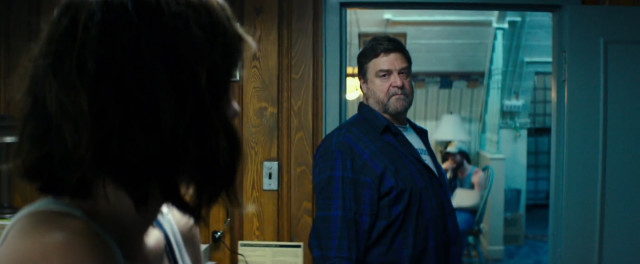
18 year-old Michelle Burke has just woken up in a small room in her underwear with no idea how she got there. No sooner is she putting the pieces together than a 40-something man, Howard Stammler (what a great character name!) walks in with food. She attacks him, but he’s too big for her. And what he tells her next is so shocking, it turns her world upside-down.
He’s not here to hurt Michelle. He’s here to help her. According to Howard, some huge attack just went down. All of the cities have been blown to bits, and there’s some sort of radioactive chemical in the air that’s killing everyone. As this was all going down, Howard spotted Michelle unconscious in her crashed vehicle on the side of the road. He couldn’t let her die there, so he took her with him.
Howard, it turns out, is one of these preppers, weirdoes who have a full service survival cellar in case the end of the world happens. And because of his weirdo-ness, he’s saved both himself and Michelle. That is, of course, if he’s telling the truth, which Michelle is pretty sure he isn’t.
But she’s stuck in a tough spot. On the 1% chance that he’s telling the truth, if she tries to escape, her skin might dissolve and her eyeballs turn to jelly. And everything Howard tells her has just enough of a ring of truth to it to make her think twice.
Complications arise when a third person crashes the party, Nate. Whereas Howard is old and chubby, Nate is young and, well, sizzling. So when he starts selling Michelle the same story, she’s more inclined to believe him. Making things even weirder, Howard and Nate know each other. But something happened between them that’s soured the relationship.
Is this really happening? Or could Michelle be the victim of some weird fucking game? Every time she thinks she’s figured it out, something new pops up to cast doubt again. This is what helps keep The Cellar a mystery until the very last page.
Arnold Schwarzenegger used to be the best bodybuilder in the world. And if you hear him talk about that time of his life, he keeps going back to one principle over and over again: You have to shock the muscles.
He says, “When I go to the gym and I’m about to work out, my muscles already know what I’m going to do. They’re already saying to me, ‘I know you’re going to go do 3 sets of 250 pound bench presses. Then you’re going to move over to the dumbbell rack and do 3 sets of 70 pound curls. Then you’re going to come back to the bench and do 4 sets of 200 pound incline presses.”
And Arnold’s whole philosophy was, “You think I’m going to do this? You’re wrong. I’m going to shock you. Today, I’m going to start out with THREE HUNDRED and fifty pound bench presses. Then instead of doing my usual bicep curls, I’m going to do pull-ups…” By shocking the muscles, Arnold argues, they have no option but to grow.
Readers are a lot like muscles. They know your routine already. And they’re used to it. So all the tricks you’ve learned along the way? They’ve seen them. And the only way to make a reader sit up and pay attention (grow), is to shock them. And by that I don’t mean some giant shocking plot twist. And I don’t mean a jump scare. I mean show them something unexpected. And preferably, do it right away, so that the reader immediately knows that this is a writer who’s going to go about the routine differently.
I’ve read so many of these contained cellar/bunker/basement scripts by now, I can’t keep track of them anymore. So I know what’s coming almost all the time. There are only so many ways you can spin this situation. Or at least I thought. The Cellar has me rethinking that belief.
Right away, we have this girl in a room. And she wakes up. And there’s a 40 year-old man. And he’s creepy-looking. And I’m thinking to myself, “Okay, here we go. Been down this road before.” But immediately, the man says something I wasn’t prepared for. As the woman attacks him, he doesn’t fight back. He holds up his hands in defense and tells her, “I’m here to help you.”
Those words completely threw me off. Help her??? Huh? How can a man holding a woman prisoner be helping her? And it was that moment I knew this script would be different.
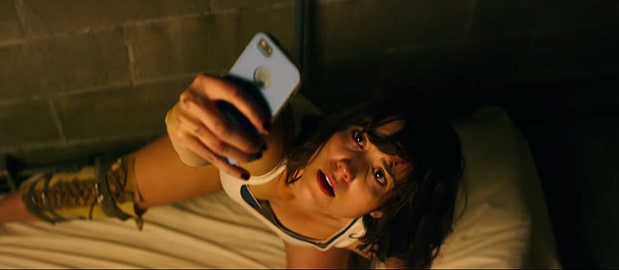
I’ll give you another example. Later in the script, the third guy shows up, Nate. Again, I’ve been down this road before. It’s really one of the only things you can do in these contained movies – is add that mysterious 3rd character who shows up around the midpoint. It adds a new dimension to the story and keeps it from getting stale.
But almost all the time, the character is weak. He’s not there as a real person, but rather as a desperate plot device to keep things interesting. Writers will ride the mystery of this character as long as they can until they have to explain him. And when they do explain him, it’s always boring and obvious.
When Nate comes in though, Howard looks at him and seems upset. There was a history between these men. Something had happened between them. And that totally threw me again. In the past, these characters have always been complete unknowns. The fact that these two knew each other opened up this whole new avenue to explore in a contained thriller. How did they know each other? Why didn’t Howard like him? How is this going to affect Michelle?
Another thing these writers do well is that they use backstory to ADD to the story as opposed to just provide context.
One of the huge mistakes beginner screenwriters make is they include backstory (characters talking about their past, or worse, flashbacks) to provide context for their characters. A character will go on a rant about how when he was in high school, he was an outcast, and it’s like, “Who cares??” Backstory works best when it CHANGES THE DYNAMICS OF THE CURRENT STORY.
So here, for example, when Nate comes in, he tells Michelle in confidence that Howard’s wife was murdered. The police never solved who did it, but there was a lot of speculation that it was Howard. So you see that we have this backstory on Howard now (his wife was murdered) that changes the dynamic of the present. We’re now more suspicious of Howard. If he killed his wife, who’s to say he won’t kill them? That’s what good backstory revelations do.
The same thing happens again with Howard’s daughter. Before Nate shows up, Howard tells Michelle a story about his daughter. But later, when Nate comes, he tells her Howard doesn’t have a daughter. And so, again, backstory is being used to affect present story.
I’m not surprised at all that this caught Bad Robot’s attention. These writers took a potentially cliché setup and turned it into something really fresh and fun.
[ ] what the hell did I just read?
[ ] wasn’t for me
[ ] worth the read
[x] impressive
[ ] genius
What I learned: One of the ways to find a new way into an old story is to shift the default character dynamic. So if you look at the “Man keeps woman prisoner” scenario, ask yourself how you could change that. Maybe the man is actually helping the woman. This creates a whole new movie. The Die Hard setup. Man must shut down a group of terrorists who have taken over a building/boat/airport. What if you found a way to make the terrorist the one who had to save the day? Change the dynamic and you have an entirely new story.
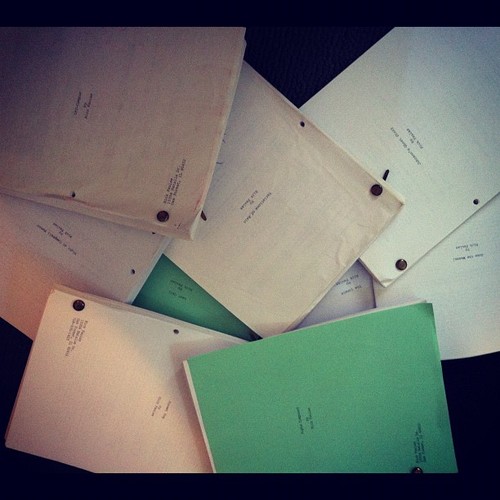
So here’s the thing. I didn’t love Aaron Sorkin’s “Steve Jobs” when I first read it. But when I saw the movie, a lot of the stuff I didn’t think would work DID work, and it turned out to be one of my favorite movies of the year. The fact that it was kept out of the Oscars, then, in favor of CAROL(????) is god-damned ludicrous. Carol was one of the most average movies I’ve ever seen. It wasn’t bad. But it definitely wasn’t good. And as a screenplay, there was nothing there. There’s one moment in the entire movie that’s unexpected. And the rest is basic and bland and safe. I still don’t know who votes for these things (do only Academy screenwriters or is it all Academy members?) but they’re clearly delusional if they’re bringing this script in over Jobs. I mean at least Sorkin took some chances as a writer. Carol is completely dependent on Rooney Mara’s eyes and Cate Blanchett’s acting. And the last time I checked, neither of those things is written! Let that marinate while you’re reading some amateur brilliance this fine weekend!
Remember, you can submit your own script to challenge your peers with by sending me an e-mail (carsonreeves3@gmail.com) with your TITLE, GENRE, LOGLINE, WHY YOU THINK IT DESERVES A SHOT, and a PDF of the screenplay. A good review tends to get writers some industry contacts. So who knows, maybe you’ll be the next “The Last Alchemist.” Keep’em coming!
Title: The Space Hotel
Genre: Action/Sci-Fi
Logline: The year 2037. When the world’s first space hotel is hijacked by religious fundamentalists, it falls to an atheist scientist and a devout ex-soldier to lead the fight back.
Why You Should Read: The Space Hotel is a high concept idea in a marketable genre, featuring a number of Scriptshadow favourites — unique location; strong female lead; proactive protagonist with a relatable flaw; high stakes; condensed time frame; unifying theme — all tied up in a manageable 102 pages. Any feedback would be greatly appreciated.
Title: Onna-Bugeisha
Genre: Action/Adventure (48 pgs – no dialog)
Logline: After witnessing the slaughter of her village by a rival clan, a woman warrior treks across Japan in search of revenge.
Why You Should Read: This script came out of my love for sword fighting. In every samurai film ever made, it’s always by far the highlight of the story, which is why I set out to make the plot of Onna-Bugeisha so simple. The characters have no spoken dialog. I thought it would be a great experiment to write a film in which the battles, the duels and the score were the dialog. — Uma Thurman aside, rarely do we see a woman take center stage in a samurai action film. The main protagonist in this story is not only a woman, but a mother of two. Women of the households, defending their families at sword point, is ingrained in the samurai culture, but to the best of my knowledge, I haven’t seen that story play out on film. — Please note: Although the page count is low for a feature film, I’ve timed it at around 1 hr 50 min.
Title: The Murder of Mae Crow
Genre: A historical courtroom drama, set in turn of the century Georgia.
Logline: In 1912, two black teenagers stand trial and face execution for the rape and murder of a white girl in the Jim Crow South.
Why You Should Read: I’m just a guy that at the age of 42 decided to try and become a screenwriter because I don’t have enough ridicule and failure in life. I’ve researched this case for over three years pouring over microfilm for countless hours. — This is a true story and the case that caused the largest African-American banishment in U.S. history. This helped bring about the re-birth of the KKK. The judge and lawyers were all the key ringleaders of the lynching of Leo Frank, and the original members of the new KKK started in 1915. Hollywood has largely been silent on the epidemic of black lynchings that took place from 1864-1935. An estimated 4,000 to 7,000 African-Americans were lynched during this time yet no movie accurately depicts this time, their struggle, or the injustice of a Jim Crow justice system. This is the most important script you will read this year, and a story you will not easily forget.
Title: The Transfer
Genre: Horror
Logline: A violinist’s arrival at an exclusive boarding school coincides with a series of sinister events.
Why You Should Read: I’m a screenwriter who appreciates a good scare. I think you should read the Transfer because it’s a fun horror thriller that I would describe as What Lies Beneath meets Heathers. I was inspired by psychopathic gangs of teenagers that often manifest at elite private schools. — I never attended boarding school but went to camp one summer at St. Andrews where Dead Poets Society was filmed. They always seemed like fun places to me but at the same time there’s that Lord of the Flies-style youth gone amuck threat lingering. — The story revolves around a talented violinist who transfers to a prestigious boarding school and unwittingly crosses a dangerous clique. What results is a harrowing semester of hazing that unravels a shocking secret that leads to the death of several high-profile students at the hands of that what can only be described as something supernatural. — I also drew tone/aesthetic inspiration from films like Repulsion, Black Swan, and It Follows.
Title: Entitled
Genre: Thriller
Logline: Three people wake up in a room with no doors or windows. They notice a casket at the far side of the room with three locks and a timer counting down. They must figure out why they are there and what happens when the timer reaches zero.
Why should you read it? It’s like Cube having a head on collision with Saw and Phone Booth. It reads fast and has a supernatural element to it. There are a handful of characters, each having their own voice and back story. It has rapid fire dialogue that comes of natural and you can cut the tension with a knife. This script will keep you interested until the last page.